Restaurant Online Ordering Trends Shaping 2026
From AI ordering to the commission-free movement, here are the trends reshaping how restaurants sell food online in 2026.
Updated Jul 11, 2026
AI Ordering
#1 Trend
Commission-Free
$0 Fees
Voice Ordering
40% Calls
Same-Day Pay
< 24 hrs
15+ Channels
Omnichannel
Social Orders
3x Growth
TLDR
The biggest restaurant ordering trends in 2026 are AI-powered ordering (voice AI capturing 15-30% more phone orders), maturing ghost kitchens (best for established restaurants expanding delivery-only brands), restaurant subscription models ($9.99-19.99/month driving 2-3x order frequency), same-day payouts becoming standard, and hyper-personalized marketing replacing generic blasts. The commission-free movement continues as restaurants reclaim margins from third-party platforms.
The Landscape Is Shifting Fast
Restaurant technology spent a decade being clunky, overpriced, and designed for chains. In 2026, that is changing. Independent restaurants now have access to tools that were enterprise-only three years ago: AI ordering, hyper-personalization, multi-channel management, and same-day payouts.
The restaurants winning right now are not necessarily the ones with the best food. They are the ones adapting their ordering and delivery operations to match how customers actually behave today. Here are the trends that matter.
1. AI Ordering Goes Mainstream
AI ordering is no longer experimental. It is production-ready and handling real customer orders at thousands of restaurants.
Voice AI answers your phone, takes orders with modifications, upsells intelligently, and routes completed orders to your kitchen. No hold times. No missed calls during the dinner rush. Restaurants using voice AI report capturing 15-30% more phone orders because calls that previously went unanswered now get handled.
Chat-based AI handles ordering through your website, Instagram DMs, WhatsApp, and Facebook Messenger. Customers type what they want in natural language ("I want a large pepperoni pizza with extra cheese and a side of garlic bread"), and the AI builds the order, confirms it, and processes payment.
AI-powered search lets customers describe what they want instead of browsing a menu. "Something healthy under $15" or "best thing for a group of 4" returns relevant results instantly.
DirectOrders Voice AI is already handling these workflows for restaurants. This is not future talk -it is live.
2. Ghost Kitchens Mature
The ghost kitchen gold rush of 2021-2023 -where investors poured billions into building delivery-only kitchen spaces -has cooled. Many overbuilt facilities are sitting half-empty. But the underlying model is not dead. It has matured.
What works in 2026: established restaurants using ghost kitchen spaces to launch delivery-only brands. A Mexican restaurant launching a wing concept from the same kitchen. A pizza shop testing a pasta-only brand for delivery. Low overhead, shared infrastructure, incremental revenue.
What does not work: creating brands with no existing reputation and trying to build awareness purely through delivery app placement. Customers learned to be skeptical of delivery-only brands with no physical presence.
The takeaway for independent restaurant owners: if you have excess kitchen capacity, a delivery-only concept can be a smart revenue stream. But build it on your existing reputation and operations, not from scratch.
3. Subscription Models for Restaurants
Starbucks proved that subscriptions work in food service. In 2026, independent restaurants are adopting the model.
The most common format: a monthly fee ($9.99-19.99) that gives subscribers free delivery, a discount on all orders (10-15%), and access to exclusive menu items or early access to specials.
Why it works: subscribers order 2-3x more frequently than non-subscribers. The monthly fee creates a psychological commitment -"I am paying for this, so I should use it." And the predictable recurring revenue helps with cash flow planning.
The key is pricing the subscription so that the customer saves money only if they order frequently, and the restaurant profits from the increased volume. Do the math on your margins before launching.
4. Same-Day Payouts Become Expected
Waiting 3-5 business days for your online order revenue to hit your bank account is a cash flow problem disguised as a technology limitation. In 2026, same-day payouts are becoming the standard that restaurants demand.
Platforms like DirectOrders already offer same-day payouts, letting you access your revenue the day you earn it. This is not a small thing for restaurants operating on thin margins where a delayed payout can mean choosing between paying a supplier on time or waiting until Thursday.
If your current ordering platform does not offer same-day payouts, ask why. The technology exists. The banking infrastructure exists. If they are holding your money, they are earning interest on it.
5. Hyper-Personalization
Generic marketing is dead. Customers expect their ordering experience to reflect their history and preferences.
What hyper-personalization looks like in practice:
- A returning customer sees their past orders prominently displayed for easy reordering
- Email campaigns segment by dietary preference, order frequency, and average spend
- AI-driven suggestions: "Based on your last 3 orders, you might like our new spicy chicken sandwich"
- Lapsed customer win-back messages that reference their specific favorite items
This is not complicated to implement. Most ordering platforms collect enough data to enable basic personalization. The restaurants doing it are seeing 20-35% higher email engagement and 10-15% higher repeat rates.
6. Multi-Channel Ordering Explodes
In 2022, most restaurants had one ordering channel: their website (or a third-party app). In 2026, customers expect to order from wherever they already are.
The channels that matter:
- Your website (still the foundation)
- Google Business Profile (direct ordering integration)
- Phone/Voice AI (capturing the 30-40% of customers who still prefer calling)
- Instagram and Facebook (social commerce ordering)
- WhatsApp and SMS (messaging-based ordering for regulars)
- AI assistants (ChatGPT, Perplexity, Google AI Overviews recommending and enabling orders)
The challenge is not having all these channels. It is managing them without losing your mind. The restaurants succeeding are using unified platforms where every channel feeds into one dashboard, one kitchen workflow, and one customer database.
7. The Commission-Free Movement
The backlash against third-party delivery commissions reached a tipping point. Restaurant owners are no longer accepting 25-30% commissions as the cost of doing business.
The commission-free model works like this: you pay a flat monthly fee for an ordering platform. Orders placed through your website, Google, social, or AI channels cost you $0 in commission. You keep the revenue.
The math is simple. A restaurant doing $30,000/month in online orders on a 25% commission platform pays $7,500/month to the platform. On a commission-free platform at $200-300/month, the savings are over $7,000.
This movement is accelerating because the technology gap between third-party platforms and independent ordering platforms has closed. You no longer have to sacrifice features to avoid commissions.
Read our breakdown of how the AI plan for direct orders aligns with this shift.
8. Sustainability in Delivery
Customers, especially younger demographics, are factoring sustainability into their ordering decisions. Restaurants that address this visibly are earning preference.
What restaurants are doing:
- Switching to compostable or recyclable packaging and labeling it clearly
- Offering a "no utensils" default option (with cutlery available on request)
- Optimizing delivery routing to reduce emissions
- Bundling deliveries to reduce individual trips
- Offering discounts for pickup orders to incentivize lower-impact ordering
This is not about virtue signaling. Sustainable packaging often costs the same or less than traditional options. Reduced packaging means lower per-order costs. And customers who align with your values tend to be more loyal.
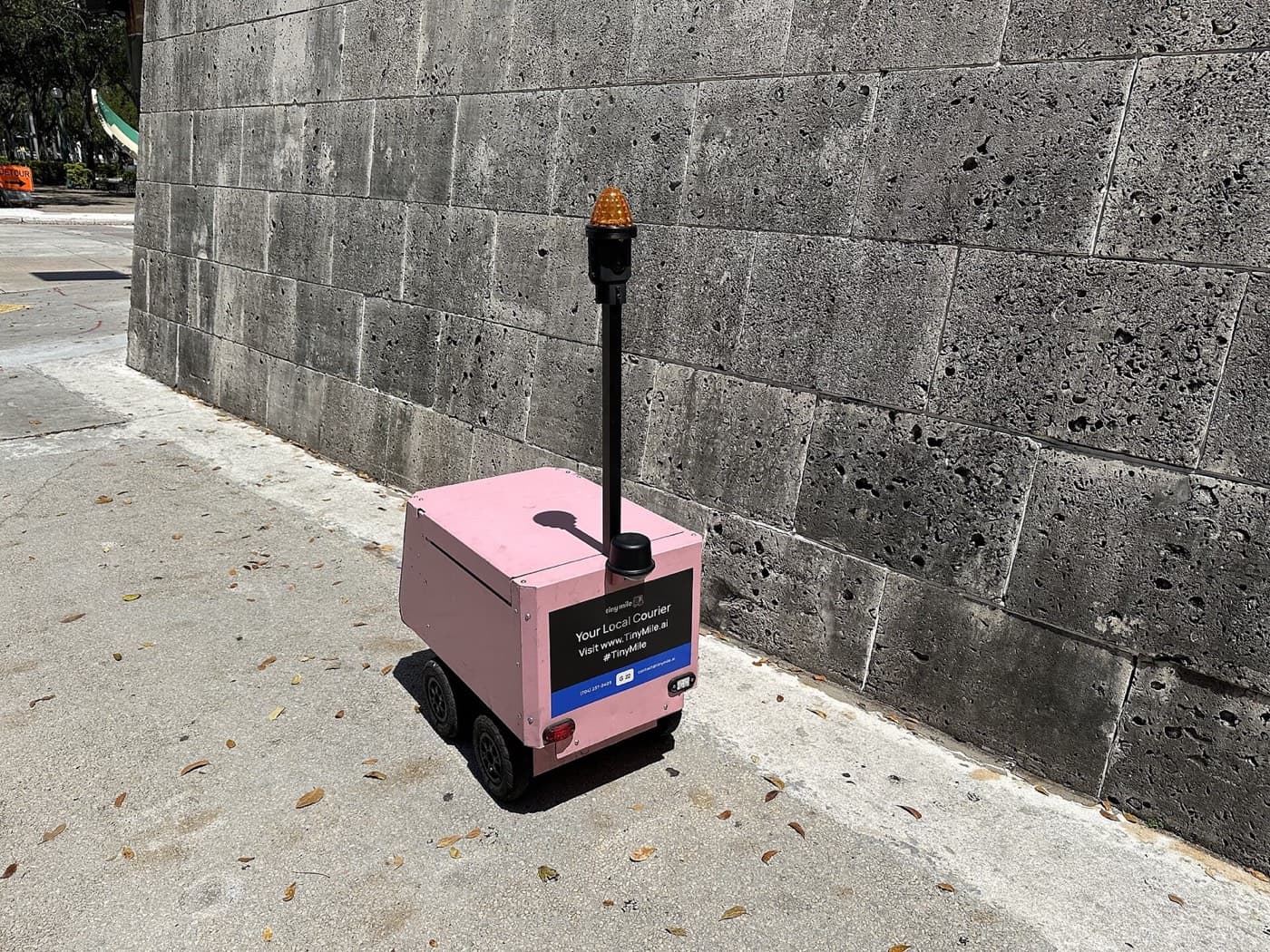
9. Autonomous Delivery (Slowly)
Delivery robots and drones are in pilot programs in select cities. They are not replacing human drivers any time soon, but the trajectory is clear.
In 2026, the most practical application is last-mile delivery robots in dense urban areas -campuses, downtown cores, and business districts. Companies like Starship, Serve Robotics, and Nuro are expanding. Some restaurants are piloting robot delivery for orders under 1 mile.
For most independent restaurants, this is a watch-and-wait trend. The economics and infrastructure are not ready for mainstream adoption. But if you are in a dense urban area, it is worth tracking pilot programs in your city.
10. Social Commerce Gets Real
Social media ordering went from a novelty to a real revenue channel. Instagram, TikTok, and Facebook are investing heavily in commerce features that let customers order directly from posts, stories, and ads without leaving the app.
For restaurants, this means your social content is not just marketing -it is a sales channel. A video of your chef preparing a dish can include a direct "Order Now" button. A story about your daily special can link directly to your ordering page.
The restaurants seeing results from social commerce share two traits: they post consistently (3-5 times per week) and they make ordering frictionless (one tap from content to checkout).
For more on marketing trends, see our restaurant marketing 2026 trends guide.
What This Means for Your Restaurant
You do not need to adopt all 10 trends at once. That is a recipe for burnout and half-finished projects.
Pick two that align with your biggest opportunities:
- If you are losing phone orders, start with Voice AI.
- If you are paying heavy commissions, move to a commission-free platform.
- If your repeat rate is low, implement personalization and loyalty.
- If you are only on one ordering channel, add Google and social.
The common thread across all these trends is ownership. Own your ordering channels. Own your customer data. Own your revenue. The platforms and tools available in 2026 make this more accessible than it has ever been.
For a complete ordering strategy framework, read our restaurant online ordering strategy guide.
The Bottom Line
The restaurant industry in 2026 rewards operators who adapt without overcomplicating. AI ordering, commission-free platforms, multi-channel management, and personalization are not luxuries for chains. They are accessible tools for independent restaurants.
The trend is clear: customers want convenience, transparency, and quality. The technology is finally making it possible to deliver all three without surrendering your margins. Use it.
Frequently Asked Questions
AI-powered ordering is the most transformative trend. Voice AI handles phone orders, conversational AI powers chat-based ordering on websites and messaging apps, and AI-driven search is changing how customers discover restaurants. Restaurants that integrate AI into their ordering workflow are handling more orders with less staff time.
Related resources
Related Articles
#1042
PICKUP
no onion
+ bacon
read back
#1042
REPRINT
1 Burger
+ bacon
do not cook
#1043
DELIVERY
Bag 2 of 2
4 items
all checked
Kitchen Order Tickets (KOT) in 2026: Stop Lost, Wrong, and Duplicate Orders
Run kitchen order tickets (KOT) so nothing gets lost, remade twice, or cooked with a missed change: routing, KDS vs printer, fire times, outage drill, 9 launch tests.
Pankaj Avhad
$325,000
Restaurant Opening Budget for 2026 and 2027: Costs, Cash, Timing
A restaurant opening budget that survives 2026 costs: setup, pre-opening, contingency, operating cash, landlord allowance timing, a 3-month cash model, and 2027 refresh rules.
Pankaj Avhad
How to Run a Restaurant Without Being There Every Shift (2026)
Run a restaurant without working every shift: audit your interruptions, give every task an owner and a backup, set decision limits, verify training, and step away in stages.
Pankaj Avhad