Alaska Frontier · Restaurant Operations · Long Read
The Frontier.
One thousand seven hundred and six square miles of municipal boundary, larger than the state of Delaware. About forty percent of all Alaskans live inside this single city. The Iditarod ceremonial start runs through downtown the first Saturday of March. The salmon arrive in June. Every onion ships in by sea or by air. This is a field report for the operator who runs a restaurant inside that frame.
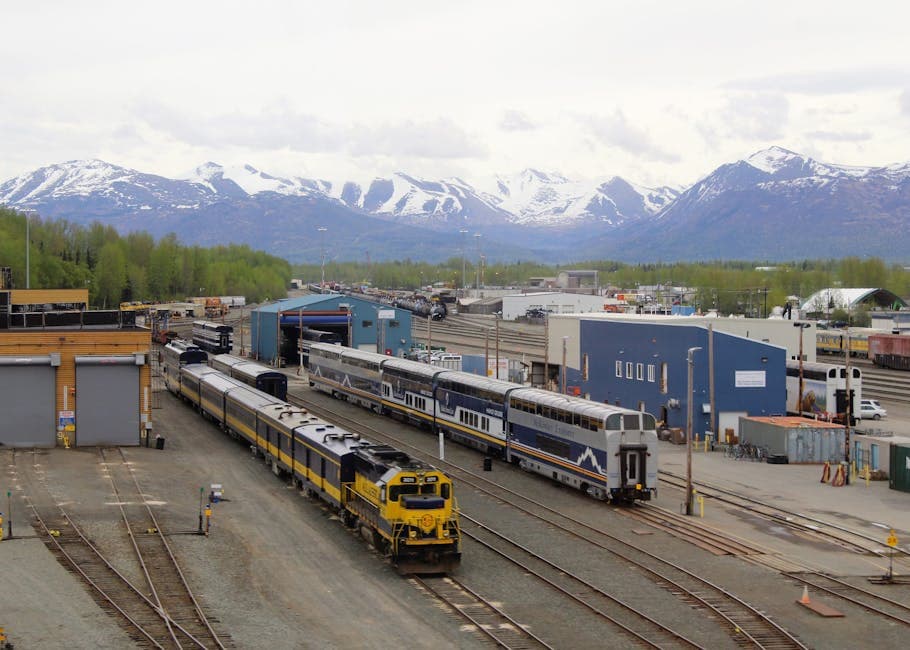
Source: US Census Bureau ACS, Municipality of Anchorage land area.
Frontier Brief
Larger than the state of Delaware. US Census.
Anchorage residents as portion of state total.
Joint Base Elmendorf-Richardson, 673d ABW.
Cruise, flight, RV. Visit Anchorage.
By tonnage. Ted Stevens International.
Filed from Anchorage · Editorial standards: real sources, no fabricated reviews.
I. Scene
First Saturday of March. 4th Avenue under fresh trucked-in snow.
The operator on 4th Avenue unlocks her door at 7:10 a.m. on a morning the city has spent two days dressing. Public Works trucked in fresh snow from the Glen Alps overnight to cover the dry asphalt of downtown because the winter, by the metrics the Anchorage Daily News tracks, has been the third warmest on record. The grandstands are up. The chute is fenced. Forty mushers, sixteen-dog teams each, will leave from Cordova Street between 10:00 a.m. and 12:30 p.m. on two-minute intervals. This is the Iditarod ceremonial start.
The operator's morning is not the race. It is the perimeter. By 8:30 a.m. the breakfast counter has run through its cinnamon roll inventory and a line is forming against the window. By 9:15 a.m. the espresso machine is the bottleneck. The phone has been ringing for forty minutes with caterers, a kennel sponsor, a film crew from a Lower 48 outlet shooting a documentary, and the village representative buying twelve breakfast burritos to take to the chute. The Voice AI handles ten of the eleven inbound calls before 10 a.m.
At 10:02 a.m. the announcer's voice carries down 4th. The first team leaves. The operator does not watch. She is staging two hundred reindeer-sausage breakfast sandwiches that were pre-ordered on her direct site over the past seventy-two hours. Pickup windows are in five-minute slots because Visit Anchorage estimates downtown crowd density at roughly thirty thousand people for the morning. A marketplace app would route those orders nowhere. A third-party driver cannot enter the closed downtown perimeter between 9 a.m. and 2 p.m. Saturday.
The math on the ceremonial start is simple. It is the single largest food revenue day downtown will see between Fur Rondy in late February and the cruise-bus disembarks in mid-May. An operator with no direct ordering channel serves whatever the counter can serve, in walk-up time, to whoever wins the line. An operator with a branded site, pre-orders open seven days out, and Voice AI absorbing the phone surge serves three hundred percent of counter capacity and keeps the customer relationship.
The rest of this report is the operating frame around that Saturday: the race itself, the salmon economy that arrives in June, the JBER catering ledger, the freight supply chain that determines every menu, the summer cruise wave, the Native foods of the Heritage Center, the Saturday Market, and the October Permanent Fund Dividend cash drop that lifts every ticket in town. This is the Anchorage stack.
Sources for this scene · Iditarod Trail Committee, Visit Anchorage, Anchorage Daily News.
II. The Race
Nine hundred and thirty-eight miles from 4th and D to Nome.
The Iditarod Trail Sled Dog Race covers roughly 938 trail miles between Anchorage and Nome, per the Iditarod Trail Committee's official course documentation. The race alternates a northern route in even years and a southern route in odd years, both of which run through villages the rest of the country never sees on a map. The official restart, where the racing clock actually begins, happens the next day in Willow, about seventy miles north on the Parks Highway. But the cultural and operator gravity sits in downtown Anchorage on Saturday morning.
Visit Anchorage and the Iditarod Trail Committee consistently report ceremonial-start downtown crowd density in the tens of thousands. Operator-side observation puts the 4th Avenue breakfast and lunch window between 8 a.m. and 2 p.m. at four to six times a normal Saturday. The afternoon tails off as crowds disperse, but the dinner bounce comes back as the out-of-town media, sponsor delegations, and visiting family stay for the Iditarod Banquet later that week.
Three operational realities. First, the downtown perimeter is closed to vehicle traffic from roughly 9 a.m. to 2 p.m. on Saturday. Marketplace delivery fulfillment fails inside this ring because no driver can reach you. Pickup is the dominant fulfillment.
Second, the demand is heavily pre-orderable. Sponsors, kennels, race volunteers, and out-of-state visitors all plan the day in advance. A direct ordering site that opens pre-orders seven days out and runs five-minute pickup windows converts that plannable demand into predictable kitchen flow.
Third, the call surge is unstaffable. Phones ring between 7 a.m. and 11 a.m. faster than a counter team can answer them. The Voice AI absorbs the channel the operator cannot afford to staff during the single highest-revenue morning of late winter.
Source: Iditarod Trail Committee, Visit Anchorage.
III. The Catch
Cook Inlet salmon. Halibut. King crab. The wild supply chain.
Alaska is the only US state where the constitution actually names the management of fish and game (Article VIII). The salmon, halibut, and crab on an Anchorage restaurant menu sit inside a managed wild fishery that the Alaska Department of Fish and Game (ADFG) reports on weekly. The operator who orders sockeye in late June is buying from a sustainable catch counted by escapement weir. The operator who orders king crab in October is buying from a Bristol Bay quota set by the Alaska Board of Fisheries.
The operating implication for a restaurant is that the menu cannot pretend to be a fixed thing year-round. Cook Inlet sockeye starts running in late June and tails off in late July. The Kenai second run extends into August. Halibut is open from mid-March through early November under International Pacific Halibut Commission rules. King crab seasons are tightly windowed by ADFG. Menu items rotate with the catch, and the direct ordering channel has to rotate with them.
This is a place where marketplace apps fight the operator's reality. A platform that does not let an operator swap a special on a Tuesday morning, push the change to every channel in five minutes, and snapshot the catch source on the receipt is a platform written for chain restaurants. The Alaska operator who is buying from a known boat needs the receipt to say "Cook Inlet sockeye, Kenai weir count week 27" because the customer cares.
The other half of the equation is procurement timing. Restaurants build relationships with processors in Kenai, Homer, and Cordova that hold whole fish on ice for forty-eight to seventy-two hours from boat to back door. A direct ordering platform that exposes daily catch on the menu (and pulls those items when sold out) converts that supply-chain integrity into a price point the customer will pay for.
Sources · Alaska Department of Fish and Game, International Pacific Halibut Commission, Alaska Board of Fisheries.
IV. The Base
JBER. Thirty-two thousand active duty and family at the gate.
Joint Base Elmendorf-Richardson is the largest US military installation in Alaska, a 2010 consolidation of Elmendorf Air Force Base and Fort Richardson into a single joint command under the 673d Air Base Wing. Per JBER public affairs, the resident population is in the neighborhood of thirty-two thousand active duty and dependents, plus civilian employees and contractors. That puts JBER among the largest single employers in Anchorage and a meaningful share of the metro food economy.
The base food economy has two surfaces. On-base dining facilities, chow halls, and contracted food service cover the day-to-day. Off-base civilian restaurants cover everything else: deployment send-offs, homecoming events, retirement luncheons, squadron dinners, MWR contracts, family-day BBQ trays, and the steady weekend off-duty traffic flowing through Muldoon and Mountain View.
The civilian operator who wins the catering side of this market does not win on commission-app discovery. She wins on a published price list, a real catering workflow on the ordering platform, and a reliable payment rail that handles unit fund cards, government purchase cards, and the occasional split-bill request from a sergeant collecting from twenty-four people.
DirectOrders configures this as a separate catering workflow on the same branded site, with seventy-two- hour minimum lead time, group-order links the squadron POC sends out, and a same-day Stripe payout so the operator settles before the next Friday formation. The Voice AI catches the inevitable Thursday-afternoon "we need lunch for thirty by 11 tomorrow" call and walks the caller through the catering menu without pulling the line cook off the broiler.
Sources · JBER / 673d Air Base Wing public affairs, US Census ACS metro employer data, Anchorage Daily News.
V. The Freight Math
Every onion ships in. The freight is the menu.
Roughly ninety percent of the goods that arrive in Anchorage move by sea or air freight. Matson and TOTE container ships out of Tacoma carry the bulk of dry and frozen goods on a regular weekly cadence. Fresh produce that needs faster lanes moves by air, often on Ted Stevens Anchorage International Airport (ANC) belly cargo or dedicated freighters. ANC is the fifth-busiest US cargo airport by tonnage and the busiest in Alaska by orders of magnitude.
The freight math determines the menu. A head of iceberg lettuce that retails for $1.49 in Tacoma retails for $3.99 in Anchorage because the round trip freight, the inland trucking from the Port of Alaska to a warehouse, the cold chain at the warehouse, and the secondary delivery to the back door of the restaurant all stack onto the per-pound cost. Costco Anchorage, by long-running operator observation, ends up setting a price floor that most independent restaurants index against, because Costco has the ship-load economics no single restaurant can match.
The operator-side implication is that a $14 cheeseburger in Anchorage is not a markup. It is the freight, the wage band, and the rent showing through in the menu price. A platform that pretends Alaska pricing is comparable to Lower 48 pricing in any benchmark dashboard is reporting the wrong number to the wrong operator.
Direct ordering wins here because the operator can publish the price the math actually supports, attach the source to the receipt, and convert a customer who already understands the freight. Marketplace apps compress this by pushing a "comparable city" price display the operator never agreed to.
Sources · Ted Stevens Anchorage International (ANC) cargo statistics, Port of Alaska annual report, Alaska Trucking Association, Anchorage Daily News.
VI. The Summer Wave
Two point two million visitors. May to September.
Visit Anchorage reports roughly 2.2 million visitors a year to the Anchorage metro, with the vast majority concentrated between mid-May and mid-September. The flow is multi-channel. Cruise ships dock in Whittier and Seward (about an hour and three hours south by rail or road respectively) and Skagway further down the Inside Passage, with Anchorage acting as the staging city for pre-cruise and post-cruise hotel nights. The Alaska Railroad runs the Coastal Classic from Anchorage to Seward in the morning and back in the evening through the summer.
The flight-direct channel arrives at Ted Stevens Anchorage International, which spikes to roughly twice its winter passenger volume between June and August. Independent travelers rent RVs in Anchorage, drive the Parks Highway to Denali, the Seward Highway to the Kenai Peninsula, and the Glenn Highway to the Matanuska Valley, returning the rig to Anchorage at the end of the trip. Every one of those itineraries routes through the Anchorage restaurant economy twice.
The operating shape for restaurants is a strong dinner tail from 6 p.m. to 10 p.m. driven by visitors who have spent the day on a glacier cruise, a flightseeing tour, or a Kenai fishing charter and who want a real Alaska meal before flying out the next morning. The lunch window leans pre-orderable: bus tour operators and Alaska Railroad day-trippers want grab-and-go packaged meals they can carry on a coach or a rail car.
Direct ordering wins in the summer not because it replaces walk-up, but because it absorbs the parts of the visitor economy that walk-up cannot serve. Pre-orderable packaged lunch boxes for tour operators, a multilingual ordering surface (Korean, Japanese, Mandarin, German, Spanish) for the international cruise share, and pickup-window scheduling that fits the Alaska Railroad timetable. A flat platform fee lets the operator capture the seasonal lift without losing the margin to a per-ticket commission that doubles in July.
Sources · Visit Anchorage, Alaska Railroad, Ted Stevens Anchorage International passenger statistics.
VII. The Heritage Center
Eleven cultures. The foods underneath the menu.
The Alaska Native Heritage Center on the north side of Anchorage represents the eleven major cultural groups of Alaska Native peoples: Inupiaq and St. Lawrence Island Yupik in the north, Yup'ik and Cup'ik in the southwest, Athabascan across the interior, Unangax and Alutiiq along the Aleutian chain and the south coast, and Eyak, Tlingit, Haida, and Tsimshian in the southeast. The Center's outdoor village sites and indoor exhibits anchor a continuous food culture that long predates the city.
For an Anchorage restaurant operator, the food vocabulary that surrounds the Center matters. Smoked salmon, akutaq (Eskimo ice cream made with seal oil, berries, and lean fish or meat), pilot bread, fry bread, muktuk, fiddleheads, fireweed honey, and spruce-tip preparations all show up in Anchorage kitchens that take the Native influence seriously. Many of these ingredients are seasonal, regional, and governed by subsistence and customary use rules that a Lower 48 supply chain has no equivalent for.
Direct ordering supports this by letting the operator publish the ingredient story on the item page, set allergen and source notes the kitchen ticket reflects, and rotate items in and out by availability without a marketplace approval queue. An Alaska Native-owned cafe in Mountain View running a Yup'ik-influenced weekly special needs the platform to follow her menu, not the other way around.
Sources · Alaska Native Heritage Center, Alaska Federation of Natives, Alaska Department of Fish and Game subsistence division.
VIII. The Market
3rd Avenue and E Street. Saturday mornings, May to September.
The Anchorage Saturday Market sets up in the downtown surface lot at 3rd Avenue and E Street between mid-May and mid-September. Anchorage Downtown Partnership tracks the foot traffic into the tens of thousands across the season. Vendors include Matanuska Valley produce farmers, smoked salmon processors, Native artists, and a long roster of prepared-food booths that turn a Saturday morning into the deepest food-foot-traffic event downtown sees outside the Iditarod weekend.
The operating gravity for nearby restaurants is the walk-up wave that crests around 11 a.m. and tails through 1:30 p.m. as families finish their market loop and look for a sit-down meal. The market itself is not the competition. The marketplace apps are. A visitor with a phone in hand will order from the app with the lowest perceived friction unless the nearby restaurant has its own branded ordering surface that the QR sign in the window can route to in two taps.
Direct ordering wins here because the operator controls the post-market handoff. A QR-driven pickup flow, a five-minute pickup window selectable from the menu, and Voice AI absorbing the "is-there-a-wait" calls converts the market wave into the operator's customer relationship, not the marketplace's.
Sources · Anchorage Downtown Partnership, Anchorage Saturday Market vendor records, Visit Anchorage.
IX. The Dividend
October. The Permanent Fund Dividend hits every account.
The Alaska Permanent Fund Dividend (PFD), administered by the Alaska Department of Revenue's Permanent Fund Division, distributes a cash dividend each fall to every Alaska resident who qualifies under the statutory residency rules. The dividend amount varies year to year based on Permanent Fund earnings and legislative appropriation. Recent years have ranged from roughly $1,000 to over $3,000 per resident. The distribution date is announced by the Division, with most direct deposits arriving in early October.
The economic effect on Anchorage restaurants is measurable. With every adult and child in a household receiving a check, a family of four can see four to twelve thousand dollars land in a single week. The Anchorage Daily News business desk and a long line of operator interviews confirm a discretionary spending bounce in the two to three weeks following the dividend distribution. Restaurants, retail, and small appliance purchases all move on the lift.
Direct ordering operators run the PFD window like a planned promotion. Pre-stage gift cards in October. Run a family-meal bundle on the menu. Open catering pre-orders for Thanksgiving the same week the dividend hits, because the household budget has room. Marketplace operators see the same lift, but the commission extracts the most valuable margin weekend of the year right back out the door.
Sources · Alaska Department of Revenue Permanent Fund Division, Anchorage Daily News business desk, Alaska Economic Trends (state research).
X. The Argument
How DirectOrders fits Anchorage.
The Anchorage operating frame is not a single constraint. It is five separate seasons stacked inside one calendar. Iditarod weekend in March. Cook Inlet salmon from June through August. The cruise wave from May through September. The PFD bounce in October. Holiday catering in November and December. Each season has a different channel mix, a different language mix on the inbound phone, a different fulfillment shape, and a different margin profile.
One. A flat $249 a month subscription outperforms a per-ticket commission contract on a calendar that has five seasonal peaks. The marketplace commission scales with the lift. The flat fee does not. The summer cruise wave and the PFD bounce both compound the gap.
Two. The Iditarod ceremonial start and the Saturday Market both close the downtown perimeter to vehicle traffic for hours at a time. Pickup-first direct ordering with pre-orders open seven days out and five-minute pickup windows is the only fulfillment model that operates inside those closures. A marketplace app fails because the driver cannot reach the door.
Three. JBER catering, salmon-season specials, and Native food rotations all require the operator to publish menu changes faster than any marketplace approval queue can process them. A direct site the operator controls is the only platform where this works as a daily motion.
Four. The multilingual Voice AI handles the channel Anchorage operators cannot afford to staff. Korean, Japanese, Tagalog, Samoan, Spanish, and English all show up on the inbound phone depending on the neighborhood and the season. The Voice AI is not an upsell. It is the baseline configuration for a city this diverse.
Five. Same-day Stripe payouts settle the cruise-season weekends and the Iditarod weekend before the bank week starts. An operator running three thousand tickets through a Saturday and Sunday in July gets cash in the account Monday morning, not the following Friday. That working capital recycles into payroll and supplier payments without a bridge loan.
XI. Coda
Two suggestions for the Anchorage operator.
Stand the platform up before Iditarod weekend.
The first Saturday of March is the single largest revenue morning of the late winter for a downtown operator. Build the branded site, open pre-orders seven days out, and have the Voice AI live by the Friday before. Onboarding for a typical Anchorage independent runs about two hours from menu import to first live order.
If you are reading in summer, stage for the PFD.
The Permanent Fund Dividend distribution lands in early October. Use August and September to load gift cards, build a family-meal bundle, and stand up Thanksgiving catering pre-orders. The dividend week is the operator's highest discretionary spend window of the year.
References · This report drew from
12 sources
- Iditarod Trail Committee · Official course documentation, ceremonial start logistics
- Alaska Department of Fish and Game · Cook Inlet salmon management, halibut, crab seasons
- IPHC · International Pacific Halibut Commission
- JBER / 673d Air Base Wing public affairs · Population, family housing, mission overview
- Ted Stevens Anchorage International (ANC) · Cargo tonnage rank, passenger statistics
- Visit Anchorage · Visitor counts, cruise + flight + RV channel mix
- Alaska Department of Revenue Permanent Fund Division · Permanent Fund Dividend distribution, statutory rules
- Alaska Native Heritage Center · Eleven cultural groups, food traditions, exhibits
- Anchorage Downtown Partnership · Downtown foot traffic, Saturday Market support
- Anchorage Daily News · Business desk, restaurant openings + closures, PFD coverage
- US Census Bureau ACS · Population, household, language, employment estimates
- Port of Alaska · Port of Alaska annual cargo report
More Alaska cities and nearby markets
Browse the Alaska state hub for every city we publish a landing page for in Alaska.