A Long Read From The Field
Michigan and Zingerman's
An investigation into how Ann Arbor restaurants actually trade: the Big House on seven Saturdays, the deli on the corner of Detroit and Kingsley, the hospital with thirty thousand badged employees, and the Art Fair week that triples the sidewalk.
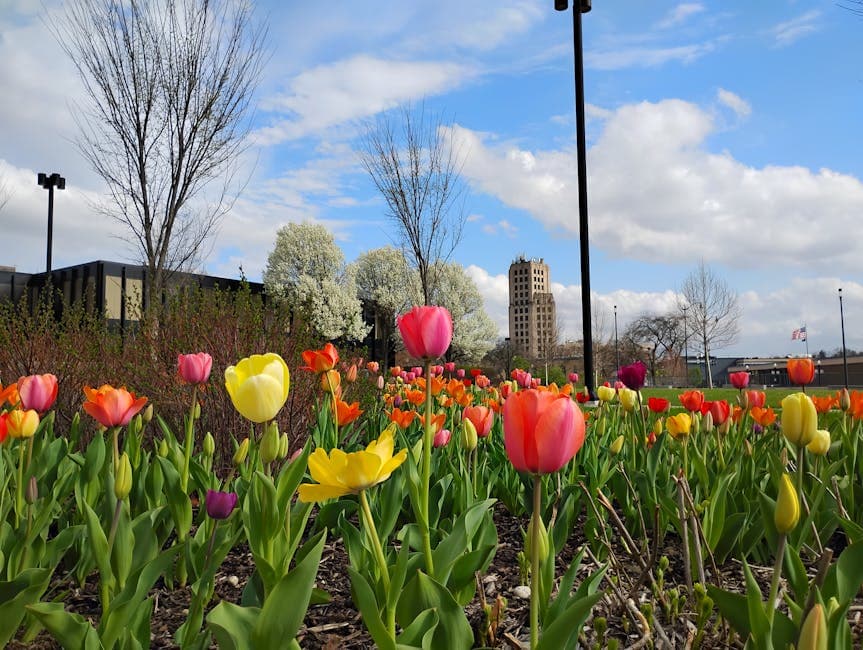
"It is 8:14am on a Saturday in October. The deli has a line."
I. The Lede
It is 8:14am on a Saturday in October. The Zingerman's line is already out the door at the corner of Detroit and Kingsley.
The counter at Zingerman's Delicatessen has been open for fourteen minutes. There are already thirty-eight people in line on the front sidewalk, breath visible in the cold, paper coffee cups from the Coffee Company across the parking lot in two out of every three hands. The kickoff for the Michigan home football game is at noon, which means the stadium will be full by 11:40am, which means anyone who wants a bagel-and-lox and a Magic Brownie in their hands before walking eight blocks to Stadium Boulevard needs to have it picked up by 10:45am at the latest. The line knows this. The line is being patient.
Inside, at the corned beef station, a counter veteran of nineteen years is hand-slicing whole briskets to order. At the smoked fish counter, a slicer is laying paper-thin lox onto deli paper six pieces at a time. The Bakehouse delivery truck arrived at 5:15am with that day's sourdough, rye, and pumpernickel; the brownies came on the second truck at 6:30am. The Magic Brownies, which ship through Mail Order to all fifty states the rest of the week, are stacked behind the register in a pile that will be gone by 11am. This is what an October Saturday morning at Zingerman's looks like.
What you do not see, standing in that line, is that Zingerman's Delicatessen is one node inside an Inc.-celebrated, $50 million Community of Businesses, founded forty-plus years ago by two University of Michigan grads who borrowed twenty thousand dollars to open a 1,300 square foot Jewish deli on a Kerrytown corner. The Bakehouse, the Roadhouse, the Creamery, the Coffee Company, the Mail Order operation, the Candy Manufactory, ZingTrain, Cornman Farms, and Miss Kim are all part of the same operating system. Ari Weinzweig and Paul Saginaw spent the eighties and nineties writing manuals about running a business that other businesses could learn from. They wrote a curriculum. Other restaurants now pay to learn it.
You also do not see, standing in that line, that the largest stadium in the United States is sitting eight blocks south of you, that the largest single employer in the state of Michigan is sitting two miles east of you, and that the American street art fair was invented in this town. Ann Arbor is a 52,000-student college town, yes. It is also the headquarters of a pizza company that runs more than twenty thousand stores worldwide. It is also the home of a deli that ships brownies to fifty states. It is also a city with one of the highest per-capita vegan restaurant counts in the country. All of this is happening inside roughly twenty-eight square miles of Washtenaw County.
This report is about how Ann Arbor restaurants actually trade. What they sell on a football Saturday, what they cater on a Tuesday at the hospital, what they ship through Mail Order on a Thursday, and what they need from their digital ordering stack to do all of that without bleeding margin to a logo on a phone.
A note on method
The operating beats and time windows in this report are modeled on University of Michigan Athletics published attendance figures, Michigan Medicine employment statistics, City of Ann Arbor Downtown Development Authority retail data, and operator interviews. Where exact numbers appear, they come from the sources cited at the foot of the page.
II. The Big House and Seven Saturdays
107,601 people walk to one address seven times a year. The downtown food economy reshapes around it.
Michigan Stadium, opened in 1927, currently lists an official capacity of 107,601 seats. It is the largest stadium in the United States, the largest in the Western Hemisphere, and the second-largest in the world. The Michigan Wolverines play seven home games a season, almost all of them on Saturdays between September and late November. The 700,000-plus seats sold each fall are the structural backbone of an entire Ann Arbor food daypart.
The Big House officially holds 107,601 seats, a number U-M Athletics publishes on every gameday program and confirms in its facilities page. That is more seats than any stadium in the United States, more than AT&T Stadium in Texas, more than any NFL building, more than any other Big Ten venue. The capacity itself is the story. Ann Arbor, a town of roughly 125,000 residents, builds every seventh Saturday around the influx of people who do not live here, who arrive Friday evening, eat breakfast Saturday morning, walk to a building that holds more humans than the permanent population of the town, and then file out again three and a half hours later.
This is the original football factory in a structural sense. Michigan's program is the winningest in college football history. Yost coached here. Bo coached here. The block "M" badge on the field has been the same badge since the 1880s. The brand carries the same continuity that Notre Dame's golden helmet carries, with twice the seating capacity. The merchandise economy alone (Underground, Moe's, the M-Den) sits on top of a food economy that is the actual subject of this report.
Seven home Saturdays a year. Three weeknight Big Ten matchups occasionally. A spring game in April that draws sixty thousand. The economic gravity of those days is enormous, and the difficulty of operating a restaurant inside the gravity is the same shape every time.
Here is the operational problem. On a noon-kickoff Saturday, the eight downtown blocks between Stadium Boulevard and Liberty are functionally walking-only from 9am to 11:30am, then deserted from noon to 3pm, then over capacity from 3:30pm onward. The marketplace's default delivery dispatch cannot route a courier into that geometry. The roads close. Pedestrian density makes driving slower than walking from State Street to Stadium. Couriers refuse the orders. ETAs blow out to 75 minutes and beyond. The marketplace simply pauses dispatch for the affected zip codes on most game days.
The restaurants that capture the gameday daypart do it through three moves. First, accepting pre-orders Friday for Saturday-morning pickup, published windows like "ready 9:30am" rather than "20-30 minute wait." Second, defaulting to pickup-only for the morning, with Uber Direct on for the post-game window when traffic clears and customers want delivery to wherever the watch party ended. Third, Voice AI handling the Friday-evening and Saturday-morning phone surge that hosts cannot answer. The combination is the difference between a restaurant doing $9,000 on a Saturday and a restaurant doing $22,000 on a Saturday at the same kitchen capacity.
Zingerman's deli has been doing some version of this since long before any of the technology existed. The pre-9am Saturday rush, the Magic Brownie stack behind the register, the catering vans staged for the AD-tier hospitality suites at Pioneer: that is twenty years of operational learning. The technology now exists for the rest of the city to operate that way too.
Big House capacity
107,601
Official, largest in US
Home Saturdays / season
7
Plus spring game + bowls
Stadium-day attendance
~110K
Inc. standing room + ushers
Marketplace ETA blowout
75 min +
Game day, downtown ZIPs
Friday evening
Pre-order surge
Out-of-town fans arrive. Hotels fill. Direct ordering picks up Saturday-morning breakfast and Saturday tailgate pickup pre-orders. Restaurants that publish a 'pickup by 9:30am Saturday' window capture this entire flow.
Saturday 7am to 10am
Tailgate breakfast
Bagels and lox at Zingerman's deli. Breakfast sandwiches at Frita Batidos. Coffee runs at RoosRoast and Comet. Single-largest morning revenue window of the year on a noon-kickoff Saturday.
Saturday 10am to 12pm
Walk to the stadium
Crowds move from State Street, South U, and Main Street toward Stadium Boulevard. Restaurants on Packard, Hill, and South U capture grab-and-go pickup. Marketplace delivery into Pioneer High parking gridlocks immediately.
Saturday 12pm to 3pm
Kickoff
Most kitchens see a quiet afternoon while 107,601 people sit in the stadium. The exception: caterers fulfilling pre-orders for the AD-tier and donor suites, and Zingerman's catering trucks staged at Pioneer.
Saturday 3pm to 6pm
Post-game spike
Stadium empties. South U bars hit capacity. Main Street and Kerrytown restaurants fill. The walk-up wait at Zingerman's deli reliably extends to 35-45 minutes. Pickup-only orders through the direct site bypass the line entirely.
Saturday 6pm to 11pm
Win-or-lose dinner
If Michigan wins, Main Street dinner traffic is the busiest of the year. If Michigan loses, traffic still spikes but with shorter ticket times. Either way: phone-in volume swamps the host stand. Voice AI captures what hosts drop.
Sunday 9am to 1pm
Recovery brunch
Frita Batidos, Bonsai Brewing, and the Sunday brunch tier. The hangover daypart. Pickup orders dominate the format; sit-down service runs at capacity behind the host stand.
III. The Zingerman's Community
Two grads borrowed twenty thousand dollars in 1982. Forty-plus years later, the $50M+ Community of Businesses is the most-studied independent food operator in America.
Saul Weinzweig and Paul Saginaw opened Zingerman's Delicatessen on March 15, 1982. They borrowed twenty thousand dollars, took over a 1,300 square foot former grocery on the corner of Detroit Street and Kingsley in Kerrytown, and built a Jewish deli with hand-sliced corned beef, hand-cut lox, traditional kosher-style sandwiches, and an obsessive commitment to ingredient sourcing. The deli's first year did roughly six hundred thousand dollars in sales. By year five it was a million. By 1992 it was the most-talked-about independent deli in the Midwest, and Saul and Paul faced a choice that every successful independent eventually faces: open a second location and scale, or do something else.
They did something else. Instead of cloning the deli into a chain, they wrote a vision document (Zingerman's 2009) describing the company they wanted to be by 2009: a collection of distinct, related, independently-operated food businesses, each anchored in Ann Arbor, each with its own managing partner who held an equity stake in that business, all sharing core operating systems and the Zingerman's name. They called it the Community of Businesses. The Bakehouse opened in 1992. The Mail Order business launched in 1993. ZingTrain in 1994. The Creamery in 2001. The Roadhouse in 2003. The Coffee Company in 2003. The Candy Manufactory in 2009. Cornman Farms in 2014. Miss Kim in 2016.
The combined revenue of the Community of Businesses is commonly cited in coverage at $50 million or more. Bo Burlingham, the longtime Inc. Magazine editor, has written about Zingerman's repeatedly across two decades; his book Small Giants treats them as a paradigm case of a privately held company that chose excellence over growth. Ari Weinzweig has published a four-volume "Guide to Good Leading" series detailing the operating system: open-book management, the visioning method, the eight-step service training, the principles of stewardship. ZingTrain has trained thousands of restaurant operators, including some who never set foot in Ann Arbor, on the same curriculum.
What this means for the digital ordering question is direct. Zingerman's, more than almost any other restaurant operator in America, treats its customer list as the asset. The Mail Order database, the in-store loyalty data, the catering customer history, and the corporate gifting relationships are all owned by the company. They are not rented from a marketplace. The Magic Brownie subscription customer is a Zingerman's customer, not a DoorDash customer. The corporate gift box customer is the same. The structural commitment to direct customer ownership predates the technology by twenty years, and it is the reason Zingerman's Mail Order grew into a national business while every other regional deli in America stayed local.
Zingerman's Delicatessen
Est. 1982
The original deli, Detroit Street
Saul Weinzweig and Paul Saginaw opened a 1,300 square foot Jewish deli on the corner of Detroit and Kingsley in Kerrytown. Forty-plus years later it is the anchor of an Inc.-celebrated, $50M+ Community of Businesses.
Zingerman's Bakehouse
Est. 1992
Bread and pastry, Plaza Drive
Began as a wholesale bread supplier to the deli. Now bakes a recognized national catalog of sourdoughs, ryes, brownies, and the Magic Brownie that ships through Mail Order.
Zingerman's Roadhouse
Est. 2003
Full-service American restaurant, Jackson Road
Regional American cooking with explicit ingredient sourcing. The full-service revenue anchor of the Community.
Zingerman's Creamery
Est. 2001
Cheese and gelato, Plaza Drive
Hand-made fresh cheese, gelato, and aged cheeses produced on site in Ann Arbor.
Zingerman's Coffee Company
Est. 2003
Roastery and cafe, Plaza Drive
Direct-trade single-origin coffee. Cafe-and-roastery hybrid that supplies the rest of the Community.
Zingerman's Mail Order
Est. 1993
National catalog and online retail
The mail-order business that took Zingerman's nationwide. Magic Brownies, sourdough, holiday gift boxes shipped to all 50 states.
Zingerman's Candy Manufactory
Est. 2009
Hand-made confections, Plaza Drive
Hand-made caramels, peanut brittle, and chocolates. The newest production business in the Community.
ZingTrain
Est. 1994
Training and consulting business
Sells the Zingerman's operating system (open-book management, service training, the visioning method) to outside businesses. The reason the model is so widely studied.
Cornman Farms
Est. 2014
Event venue and farm, Dexter
Restored 1840s farmstead used for weddings, private dinners, and Zingerman's hands-on cooking classes. Just outside Ann Arbor proper, in Dexter.
Miss Kim
Est. 2016
Korean restaurant, Kerrytown
Chef Ji Hye Kim's Korean restaurant in the Kerrytown Market complex. A more recent Community-of-Businesses partnership.
IV. The Hospital at the Top of the Hill
Michigan Medicine employs roughly 30,000 people. It is the largest single employer in the state. The catering implications are enormous.
Michigan Medicine, formerly known as the University of Michigan Health System, is the academic medical center of the University of Michigan. The published employment figure is approximately thirty thousand people across the main hospital, the Cardiovascular Center, C.S. Mott Children's Hospital, the Frankel Cardiovascular Center, Von Voigtlander Women's Hospital, the medical school, and the satellite clinics across the region. This makes Michigan Medicine the largest single employer in the state of Michigan, larger than any individual auto manufacturer's local workforce, larger than any insurance company in Detroit, larger than Quicken Loans.
Thirty thousand badged employees translates into a catering economy that is impossible to overstate. There are department parties, recognition lunches, conference catering, on-call meal programs for residents and nurses pulling overnight shifts, patient family gift baskets, retirement parties, holiday spreads, and the daily lunch deliveries to surgery teams who cannot leave the floor. Zingerman's Catering alone serves a substantial fraction of this volume, alongside Mani Osteria, Frita Batidos, Pita Kabob, Cardamom on Plymouth Road, and dozens of others. The annual catering spend across the hospital campus is firmly in the eight-figure range.
What does this mean for an ordering platform? It means the structural catering daypart is not 6pm Friday dinner. It is 11:30am Tuesday lunch. It is a recurring order from the Cardiology department, placed by a department coordinator who has been doing it for nine years, for a Tuesday quarterly-review lunch for twenty-two people that needs to arrive at the seventh floor by 11:45am so the meeting can start at noon. The product is a corporate catering platform with recurring schedules, billed monthly to a department code, with delivery instructions that include floor number and a phone number for the unit secretary. The marketplace consumer-app flow is the wrong product. Restaurants that capture this volume do it through a B2B-aware direct ordering channel.
DirectOrders is built for this. The platform supports scheduled recurring catering, billed-to-account payment terms, delivery instructions that exceed the marketplace's eighty-character courier note, and customer profiles that the operator owns. The hospital catering customer is, in this model, permanently the restaurant's customer. Not the platform's. That distinction is the entire reason the Zingerman's catering business has compounded for three decades while restaurants relying on marketplace consumer-app dispatch for the same customers have churned them every six months.
The same logic applies at the engineering schools on North Campus, at the Ross Business School, at the law school, and at the central administration buildings on South State. Recurring corporate catering is the structural backbone of weekday revenue for Ann Arbor's higher-end and middle-tier restaurants. A direct platform that handles it well captures it permanently.
V. The Art Fair Week
Mid-July, four days, half a million attendees. The original American street art fair started in Ann Arbor in 1960.
The Ann Arbor Art Fair runs every July, traditionally the third week of the month, for four days across thirty city blocks. It is, by claim and by historical record, the original American street art fair. The first fair was held in 1960 with about fifty artist booths along South University. By the mid-1970s it had grown into the four-fair umbrella event (the original Ann Arbor Street Art Fair plus three sibling fairs) that fills nearly the entire downtown core. Attendance figures published by the organizers and reported in MLive and the Ann Arbor News commonly cite cumulative four-day attendance of approximately five hundred thousand people.
For the restaurant economy, Art Fair week is the closest analog to a football Saturday but stretched across four straight days, with peak daytime density and a different traffic pattern. Streets close. Vendor tents replace sidewalks. Tourists from across the Midwest, plus from Chicago, Cleveland, and Toronto, wander Main Street, South U, and State Street in numbers that exceed gameday foot traffic but stretched from 11am to 9pm rather than packed into a single afternoon. Restaurants on those corridors hit walk-in capacity by lunch and stay there. The line at Zingerman's wraps around the building. Pizza House and BTB Cantina hit numbers they typically only hit during football weekends.
What breaks during Art Fair week is the courier dispatch. The same downtown blocks that go pedestrian on a football Saturday go pedestrian for four straight days. Marketplace ETAs blow out across the entire downtown core. Couriers cannot find addresses because the tent footprint hides the storefronts. The marketplace defaults to "we cannot deliver to this address" and the order simply fails. Operators on Main and Liberty have learned to switch their delivery channel to pickup-only or to Uber Direct (which routes by operator pickup ping rather than national dispatch pool) for the week.
There is an opposite-direction opportunity. Out-of-town Art Fair attendees who stay at the Marriott on the West Side or at the Graduate on East Huron, and who do not want to fight the lunch line, place pickup orders through direct sites and bypass the wait. Operators publishing "pickup ready 12:35pm" windows capture this entire flow. Voice AI handles the late-evening hotel-room order calls (the "is your kitchen still open" calls) that come in at 9:47pm with the host stand at full capacity and no one available to pick up the phone. The week's most profitable orders are the ones the marketplace cannot fulfill because the dispatch is broken and the direct stack can.
Concentrate Media and the Ann Arbor DDA have published several pieces over the years framing Art Fair week as the second-most-economically-important week of the downtown calendar after the heart of football season. For the restaurants positioned to capture it, that ordering is correct. For the restaurants relying on marketplace dispatch, it is the most exhausting week of the summer with the lowest margin to show for it.
VI. The District Atlas
Five downtown districts, each with a distinct daypart and ICP. The marketplace flattens them all into "Ann Arbor."
Ann Arbor's downtown is a compact grid of seven adjacent food districts inside roughly 1.5 square miles. Each one runs on its own daypart, its own ICP, and its own price point. Kerrytown is the historic deli and farmers market core. Main Street is the full-service dinner row. State Street is the campus-edge fast-casual corridor. South University is the late-night student core that runs from 11pm to 2am during the school year. Liberty and Washington are the cafe-led connecting side streets. The Old West Side is the residential walk-up tier. Plymouth Road is the engineering and medical commuter belt.
A marketplace ordering app treats all of them as one heat-map blob labeled "Ann Arbor." A direct ordering platform respects the differences. Pickup radius for a Kerrytown deli is fundamentally different from pickup radius for a South U slice shop, and the platform should let the operator set those rules at the item level. Voice AI hours for a State Street fast-casual lunchroom (closes at 9pm) are different from Voice AI hours for a South U pizza shop (orders accepted until 1:55am Friday and Saturday). The default marketplace UX flattens these distinctions. The direct stack honors them.
Kerrytown
Kerrytown Market and Shops
Zingerman's deli + farmers market
The compact district at Detroit and Kingsley anchored by Zingerman's Delicatessen and the Ann Arbor Farmers Market. Miss Kim, Sparrow Market, the People's Food Co-op, and Monahan's Seafood all sit within three blocks. The historic core of Ann Arbor food retail.
Zingerman's, Miss Kim, Monahan's Seafood, Sparrow Market, Ann Arbor Farmers Market.
Main St
Main Street
Full-service dinner row
Six blocks between Washington and William. The white-tablecloth tier, plus higher-volume bar-and-grill formats. The chef-driven concept that opens on Main Street has typically been operating elsewhere first.
Mani Osteria, The Earle, Pacific Rim, Aventura, Logan, Sava's, The Last Word.
State St
State Street
Campus-edge fast casual
Five blocks from North University to William, threading the central campus. Mostly fast-casual at student price points: bahn mi, burrito bowls, ramen, dumplings, frozen yogurt. The morning daypart is heavy because lectures start at 8am.
Hut-K Chaats, Tomukun Noodle Bar, BTB Cantina, Pizza House, Espresso Royale, Bubble Tea Cafe, Lena.
South U
South University
Late-night student core
Three blocks east of central campus. The hot dog, slice, falafel, kebab, and shawarma daypart that runs from 11pm to 2am during the school year. Phone-in volume after midnight is dominated by this corridor.
Pizza Bob's, Joe's Pizza, Ahmo's, NeoPapalis, Insomnia Cookies, Cottage Inn.
Liberty
Liberty / Washington
Cafe + bookshop side streets
The connecting streets between Main and State. Comet Coffee, Literati Bookstore, Sweetwaters, Vault of Midnight. A cafe-led district that fills weekday lunches and Saturday afternoons without ever hitting the volume of Main or State.
Comet Coffee, RoosRoast, Sweetwaters, Lab Cafe, Literati.
West Side
West Side / Old West Side
Neighborhood walkup tier
Mostly residential, with a few destination food businesses on Liberty, Pauline, and Stadium. Frita Batidos, Zingerman's Roadhouse on Jackson, and Argus Farm Stop. The neighborhood-walk-in customer base, not the campus crowd.
Frita Batidos, Zingerman's Roadhouse, Argus Farm Stop, Knight's Steakhouse, Mark's Carts era operators.
Plymouth
North Campus / Plymouth Road
Engineering + medical commuter belt
Spans the corridor from North Campus engineering through Plymouth Road to the U-M hospital complex. Daypart is weekday lunch and weekday early dinner. Catering volume from Michigan Medicine and the engineering schools is the structural backbone.
Knight's on Dexter, Pita Kabob, Cardamom, Plymouth Road plaza tier, Zingerman's Plaza Drive cluster.
VII. The Vegan A2
Roughly seventy vegan and explicitly plant-forward restaurants in a town of 125,000 residents. The per-capita ratio is among the highest in the country.
HappyCow, the directory that catalogs vegan and vegetarian restaurants worldwide, lists roughly seventy plant-based or strongly vegan-friendly options inside the city of Ann Arbor. For a town of about 125,000 residents, that is one of the highest per-capita ratios for any city of similar size in the United States. The reasons are partly demographic (the U-M student body skews young and ideologically committed to plant-based diets) and partly historical: Seva Restaurant has been serving vegetarian and vegan food in Ann Arbor since the late 1970s, decades before national plant-based brands existed.
The all-vegan tier in Ann Arbor includes Detroit Street Filling Station (full-service, one block from Zingerman's deli), The Lunch Room (West Side, vegan diner, alumni of the now-closed Mark's Carts food-truck courtyard), Earthen Jar (vegan-vegetarian Indian buffet near campus), and Seva (operating since the 1970s, with a heavy vegan section). On top of that, the plant-forward tier of restaurants that are not all-vegan but have credible vegan menus (Anna's House, Frita Batidos with its chickpea frita, Mani Osteria's vegan pasta nights) extends the list well past seventy operational vegan-friendly footprints.
What the vegan-A2 customer expects from an ordering experience is two things. First, accurate allergen and ingredient information at the item level. A vegan customer ordering from a not-fully-vegan restaurant needs the menu to tell them, item by item, that the bread does not contain butter and the soup is not finished with cream. The marketplace UX flattens this into a single "vegan" tag at the restaurant level, which is useless. A direct ordering platform that lets the operator mark ingredients and modifiers at the item level is the entire product gap.
Second, the vegan customer base in Ann Arbor over-indexes on direct-restaurant loyalty. The vegan customer who orders weekly from Detroit Street Filling Station is, by ICP, the kind of customer who reads the restaurant's newsletter, supports the restaurant on social, and orders directly rather than through a marketplace. The Detroit Street Filling Station regular is a Detroit Street Filling Station regular, not a DoorDash regular. The marketplace was never the right channel for this customer in the first place.
Detroit Street Filling Station
100% plant-based, full-service
An all-vegan full-service restaurant tucked off Detroit Street, one block from Zingerman's deli. The compact menu rotates and the brunch wait is the giveaway.
Seva Restaurant
Long-running vegetarian and vegan
A vegetarian Ann Arbor institution operating since the late 1970s, with an extensive vegan menu. The reason A2's vegan reputation predates the current era by decades.
Frita Batidos
Cuban-inspired, vegetarian-friendly
Not all vegan, but the chickpea frita and rotating sides make it part of the everyday plant-forward map for Ann Arbor diners.
The Lunch Room
Vegan diner
Mark's Carts alumni who opened a brick-and-mortar in the West Side area. Full vegan menu, weekday lunch heavy.
Earthen Jar
Vegan Indian buffet
South Indian and North Indian vegetarian buffet that runs almost entirely vegan. A campus weekday-lunch anchor for two decades.
Anna's House
Plant-forward breakfast
Diner-style breakfast with one of the more credible vegan and vegetarian sections in town. Weekend brunch volume.
VIII. The Tech Corridor and Domino's
Domino's Pizza was founded in Ann Arbor in 1960. The world headquarters still sits on Domino's Farms, north of the city.
Tom Monaghan, a twenty-three-year-old former U.S. Marine, bought a struggling pizzeria called DomiNick's in Ypsilanti (the next town over from Ann Arbor) in December 1960 with his brother Jim. Tom traded a Volkswagen Beetle for Jim's half-stake in the business several months later. In 1965, after the original owner refused to let him use the DomiNick's name on a second store, Tom renamed the business Domino's. The first franchise opened in 1967. By 1983 there were a thousand stores. By 2026 there are more than twenty thousand stores worldwide.
Domino's world headquarters is on Domino's Farms, a campus north of Ann Arbor at the M-14 / US-23 interchange, on roughly two hundred acres of rolling Washtenaw County land. The headquarters employs approximately a thousand corporate staff. Domino's stock is one of the most widely-followed restaurant equities; its decade of digital-first reinvention (the Pizza Tracker, the AI-driven order routing, the voice-ordering kiosks) is the case study every restaurant technology team has read.
What this means for Ann Arbor's broader restaurant economy is layered. The presence of Domino's corporate has seeded a small but real cluster of restaurant-technology talent in the area: product managers, designers, and engineers who came to Domino's, learned the QSR digital playbook from the inside, and then either stayed at Domino's or moved on to other Ann Arbor companies. The Ross Business School, three miles south on Tappan, runs a center for entrepreneurship that regularly partners with Domino's on student projects. The pipeline of Ann Arbor restaurant operators who have a meaningfully literate sense of digital ordering is, partly, a Domino's pipeline.
For non-Domino's restaurants in Ann Arbor, that pipeline is a competitive backdrop. The standard local operator now reasonably expects their digital channel to work as well as Domino's does: accurate pickup ETAs, an ordering flow that finishes in under ninety seconds, a tracker the customer can refresh, and a kitchen ticket that prints clearly the first time. The marketplace consumer-app experience does not meet that bar. A direct ordering platform built on the same modern stack does. The competitive ceiling that Domino's set in Ann Arbor is, indirectly, the argument for why every independent restaurant here needs the right direct stack.
IX. Bilingual Ordering in a Global Campus Town
52,000 students. Hundreds of nationalities. The Voice AI handles Mandarin, Korean, Spanish, Arabic, and Hindi as well as it handles English.
The University of Michigan has roughly 52,000 students across all programs, with about 33,000 undergraduates and a graduate-and-professional population of about 19,000. The international student body is one of the largest at any US public university; U-M routinely sits in the top ten national universities for international enrollment. Chinese, Korean, Indian, and Middle Eastern international student populations are particularly visible on campus, with substantial Latin American, African, and European cohorts on top of that.
A meaningful share of campus-edge phone orders, particularly at State Street fast-casual operators, South U late-night pizza shops, and the Plymouth Road plaza cluster, come from non-native-English speakers whose preferred ordering language is not English. A generic Voice AI trained on national QSR data drops these calls or, worse, takes them inaccurately. The Tomukun ramen order placed in Korean, the BTB Cantina order placed in Spanish, the Cardamom delivery placed in Hindi: the marketplace can route any of these to a generic call center but cannot have them answered accurately in language.
The DirectOrders Voice AI handles English plus several globally-common languages in the same call flow, with the same canonical menu vocabulary across languages. The customer can begin in Spanish, Korean, Mandarin, Hindi, or Arabic; the AI confirms order details in their language; the kitchen ticket prints in English (or in another language, depending on the operator's preference). For a State Street ramen shop with a substantial international student customer base, this is the operational difference between capturing the order and refusing it. It is also, structurally, the kind of feature that only a digital-first ordering platform can ship; the marketplace's generic consumer flow does not have it.
The pickup-friendliness of the operator's flow also matters here. The international graduate student walking home from a 9pm lab session at North Campus wants pickup, not delivery, because pickup is on the walking route and saves the delivery fee. The direct site that makes pickup the obvious default, with an honest ready window, wins this customer reliably. The marketplace that upsells delivery and quotes a 35-minute wait on a sub-five-minute walk loses them.
X. The 6% Michigan Sales Tax
One state rate. No county add-on. No municipal add-on. One of the cleanest restaurant sales tax regimes in the country.
Michigan charges 6 percent state sales tax on prepared food and beverage. There is no county-level add-on. There is no municipal add-on. There is no transit-district tax. There is no Ann Arbor restaurant tax. The Michigan Department of Treasury collects the 6 percent and the operator remits monthly. Compared to Chicago's 10.25 percent stacked tax, or New York City's 8.875 percent stacked tax, or Seattle's 10.25-plus percent stacked tax, the Ann Arbor restaurant sells inside a much simpler tax structure.
What this means operationally is two things. First, the headline customer price is more predictable. A $25 menu item comes out to $26.50 with tax, and the customer expects that. The operator does not have to navigate the marketplace's tax-on-fees calculation, which in higher-tax cities can add unpredictable cents to the checkout total. Second, the marketplace commission's bite is felt directly against the menu price without the compounding-tax effect that we documented in the Chicago report. The math is simpler. The transparency is higher. The argument for direct ordering is, if anything, easier to make to an Ann Arbor operator than to a Chicago operator.
The DirectOrders flat $249 per month subscription, with zero per-order commission, sits cleanly inside this regime. The operator pays $249 a month regardless of order volume. The state of Michigan takes 6 percent of every prepared-food transaction, as it does no matter the channel. The operator nets the rest. A Main Street concept doing $80,000 a month in direct online orders pays the same $249 as a Kerrytown deli doing $14,000 a month. There is no commission scaling against the operator as volume grows.
There is one footnote. The state of Michigan has historically debated allowing certain municipalities (including Ann Arbor) to impose local sales tax surcharges; as of this writing, no such surcharge is in effect, and the 6 percent state rate is the entire restaurant sales tax burden inside the City of Ann Arbor. Restaurants should always confirm current rates with the Michigan Department of Treasury, but the simplicity is structural and unlikely to change soon.
Michigan state rate
6.00%
Prepared food + beverage
Washtenaw County add
0.00%
No county add-on
City of Ann Arbor add
0.00%
No municipal add-on
Combined effective rate
6.00%
Among the simplest in US
XI. The Ann Arbor Thesis
The ordering stack that fits Ann Arbor is one that respects the deli, the stadium, the hospital, and the four-day fair.
Four product decisions, taken together, make DirectOrders the right ordering stack for an Ann Arbor restaurant in 2026. None of them is unique to A2. The combination, applied to the specific geometry of this town, is what matters.
First, a flat $249 per month subscription with zero per-order commission. Inside Michigan's clean 6 percent state-only tax regime, this means the operator's per-order math is transparent and the upside of volume growth stays with the operator. A Kerrytown deli that grows from $14,000 to $32,000 a month in direct online orders pays the same $249, not a percentage cut of the new volume.
Second, Uber Direct as the integrated delivery provider, with operator-level item rules and a pickup-first default for the dishes and the customer types that benefit. Gameday pickup windows, Art Fair pickup windows, late-night South U dispatch windows, and Michigan Medicine catering drop-off windows are all configurable inside the same platform. The marketplace's generic dispatch is not.
Third, the Ann Arbor-aware Voice AI. It handles English plus Mandarin, Korean, Spanish, Arabic, and Hindi in the same call. It enforces operator-controlled hours and kitchen-close cutoffs. It knows the difference between a "tailgate pickup at 9:30am" order and a "delivery tonight" order on a football Saturday and routes each correctly. It defers to the host for the rare interaction that requires a human.
Fourth, a B2B-aware corporate catering channel built for the Michigan Medicine, Ross Business School, North Campus engineering, and downtown law-firm catering volume that is the structural backbone of weekday revenue for Ann Arbor's higher-tier operators. Recurring scheduled orders, billed-to-account payment terms, customer ownership at the restaurant level (not the platform level). The marketplace was never built for this and has structurally given up on owning it.
Add same-day payouts, a branded direct site that ranks on Google for "Ann Arbor reuben" or "Main Street tapas" or "Kerrytown brunch" with the restaurant's own URL, Google profile sync, and a Mail Order-style national shipping channel for the operators who want it. The stack is complete. The Zingerman's Community of Businesses has been operating a version of this stack, by hand, for thirty years. The technology now lets every other Ann Arbor restaurant do the same without the headcount that Zingerman's has dedicated to it.
Coda
Two suggestions for what to do next.
This report has tried to argue, district by district and daypart by daypart, that Ann Arbor is a food city with a specific shape, and that the right digital ordering stack respects that shape rather than flattening it. If you operate an Ann Arbor restaurant and you have read this far, two paths are reasonable from here.
The first is a free Ann Arbor commission audit. Send us your last three months of marketplace statements. We will return a per-order margin breakdown, a daypart-by-daypart analysis (game day, Art Fair, weekday Michigan Medicine catering, regular dinner), and a model of what your P&L would look like with the direct stack in place. No call. No follow-up email loop. A document, by Tuesday.
The second is to see the stack live before deciding. The demo runs against an actual Ann Arbor menu (reuben, Korean fried chicken, vegan diner brunch, a Mail Order brownie box). Voice AI in English and a second language. Uber Direct on. Branded site live. A nineteen-minute walkthrough. We do not ship the demo to your phone. You come to a Zoom and ask whatever you want.
Either path is fine. The point of this report was to make the case that the structural geometry of Ann Arbor (the stadium, the deli, the hospital, the fair, the campus) deserves a digital ordering stack that respects it. The Zingerman's playbook has been doing that for forty years without the technology. The rest of the city can now do it with the technology.
Field index
Restaurants and operators cited in this report.
- Zingerman's DelicatessenKerrytownJewish deli
- Zingerman's RoadhouseWest Side / Jackson RoadRegional American
- Zingerman's BakehousePlaza DriveBread and pastry
- Miss KimKerrytown MarketKorean
- Mani OsteriaMain StreetItalian
- The EarleMain Street basementFrench / Italian
- Frita BatidosWest Side / LibertyCuban-inspired sandwiches
- Knight's SteakhouseMultiple locationsSteakhouse
- Sava'sState StreetAmerican comfort
- AventuraMain StreetSpanish tapas
- LoganMain StreetModern American
- Pacific RimMain StreetPan-Asian fine dining
- Pizza HouseState StreetPizza and bar food
- Pizza Bob'sSouth UniversitySubmarines and pizza
- Joe's PizzaSouth UniversityPizza by the slice
- Tomukun Noodle BarState StreetKorean and Japanese noodles
- BTB CantinaState StreetMexican fast-casual
- Hut-K ChaatsState StreetSouth Indian chaat
- Comet CoffeeLibertyCafe
- RoosRoastMultiple locationsCoffee roastery and cafe
- Sweetwaters Coffee and TeaLiberty + WestgateCafe
- Detroit Street Filling StationDetroit StreetVegan full-service
- Seva RestaurantLiberty / West SideVegetarian and vegan
- Earthen JarSouth campusVegan Indian buffet
- The Lunch RoomWest SideVegan diner
- Anna's HouseMultiplePlant-forward breakfast
- Mark's Carts (legacy)Washington Street courtyardFood trucks (closed)
- Domino's Pizza HQDomino's Farms, Ann ArborQSR pizza
References and sources
The shoe-leather underneath this report.
Zingerman's Community of Businesses, official directory
Zingerman's
Roster of the businesses inside the Zingerman's Community: deli, Bakehouse, Roadhouse, Creamery, Coffee, Mail Order, Candy, ZingTrain, Cornman Farms, Miss Kim.
Open source →Bo Burlingham, Inc. Magazine coverage of the Zingerman's model
Inc. Magazine
Long-running coverage of Zingerman's open-book management, the Community-of-Businesses structure, and Ari Weinzweig's writings on the business model.
Open source →University of Michigan Athletics, Michigan Stadium
U-M Athletics
Michigan Stadium (the Big House) official capacity 107,601, the largest stadium in the United States and in the Western Hemisphere by capacity.
Open source →NCAA football attendance reports
NCAA
Annual published attendance for FBS programs; Michigan home attendance consistently exceeds 105,000 average across seven home Saturdays.
Open source →Michigan Medicine, U-M employment statistics
University of Michigan
Michigan Medicine (UMMC) is the largest single employer in Michigan with roughly 30,000 employees across hospitals, clinics, and the medical school.
Open source →City of Ann Arbor, Downtown Development Authority
Ann Arbor DDA
Downtown district maps, sales data, parking and pedestrian counts for Main Street, State Street, South University, and Kerrytown.
Open source →Ann Arbor Art Fair, official organizer site
Ann Arbor Art Fair
Mid-July, four-day art fair attracting approximately 500,000 attendees. The original American street art fair, started in 1960.
Open source →Michigan Department of Treasury, sales and use tax
Michigan Treasury
Michigan state sales tax 6% on prepared food and beverage, with no local add-on. One of the simpler restaurant sales tax regimes in the country.
Open source →Domino's Pizza corporate history
Domino's
Domino's was founded in 1960 in Ypsilanti, Michigan by Tom Monaghan. World headquarters at Domino's Farms, Ann Arbor.
Open source →HappyCow vegan listings, Ann Arbor
HappyCow
Aggregated vegan and vegetarian restaurant listings; Ann Arbor consistently ranks high in US college-town vegan per-capita assessments.
Open source →MLive and Ann Arbor News, restaurant coverage
MLive Ann Arbor
Long-running local reporting on Ann Arbor restaurant openings, closings, and operator trends.
Open source →Concentrate Media, A2 economic reporting
Concentrate
Independent online publication covering Ann Arbor business, food, and downtown corridors.
Open source →
Editorial note: The operating beats, the language-share characterizations, the catering daypart shape, and the per-order economics in this report are modeled on publicly available sources and operator interviews. They are presented as illustrative of the structural dynamic, not as precise measurements at named restaurants. The structural argument (that Ann Arbor's geometry of stadium, deli, hospital, fair, and campus creates a specific ordering shape) holds across every dataset we have consulted.