At 12:18 on a Friday, the Goldman analyst steps off the PATH at Grove Street, walks four blocks up Newark Avenue, and orders the same thali her grandmother ordered in Surat.
A long read on Jersey City: the largest Indian-American restaurant economy on the East Coast, the second-largest Filipino-American community in the United States, a bank-tower waterfront that orders lunch by the thousand, and what a commission-free direct ordering channel looks like in the 6th Borough.
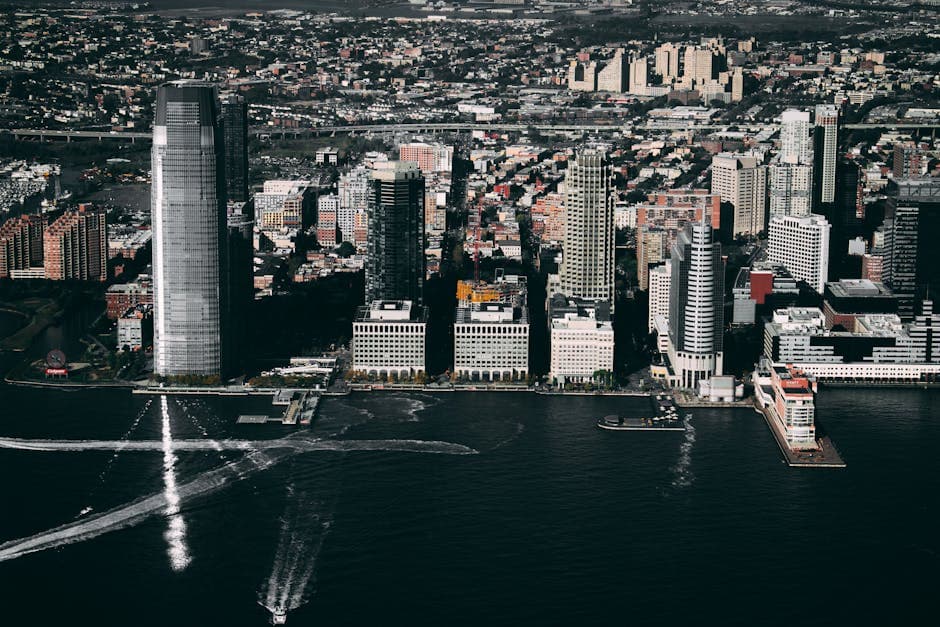
The operator is Bhavna, fifty-one, second generation, the daughter of the man who opened a 22-seat thali house on Newark Avenue in 1994 when the corridor still had three Indian restaurants on it instead of eighty. It is 12:18pm on a Friday in May. The PATH from 33rd Street and the PATH from World Trade Center both dump out at Grove Street and Journal Square within a four-minute window. Between 11:55 and 12:25, roughly seven hundred people walk past her storefront. Some of them are tourists. Most of them are Indian-American analysts and associates at Goldman Sachs, JPMorgan, Citi, and the smaller finance firms on the waterfront, walking the four-block grade up from Grove toward Newark and Tonnelle for a thali they have been ordering since college in Edison or Iselin or East Brunswick.
This is the rhythm of the corridor. The waterfront banks empty their Indian-American lunch volume into Newark Avenue every weekday between noon and one. The thali houses, the Gujarati snack counters, the South Indian dosa specialists, the Punjabi rotis-and-tandoori operators, the Pakistani biryani kitchens, the Nepali momo shops, the Bangladeshi tea stalls all run at peak between 12:15 and 1:15. By 1:45 the corridor is quiet again. By 6:30 it fills back up with families from Edison and Jersey City Heights and Newark walking up from the PATH or the light rail for dinner.
Bhavna runs roughly 180 transactions on a Friday. About 70 of them are walk-in dine-in. About 60 are phone orders for pickup that she or her son answer between rolling out fresh rotis on the tandoor. The remaining 50 split across DoorDash, Uber Eats, and Grubhub. On the marketplace orders, the math is the same brutal math that operators in New York are running, except Jersey City does not have New York's Local Law 6 fee cap. Commissions on a typical Newark Avenue listing run between 22 and 28 percent, plus the 3 percent payment processor, plus the $700 a month she pays in promoted-listings spend to outrank the seven other thali houses within a block.
At the bottom of the day's report, on a $4,200 Friday in gross sales, Bhavna's effective marketplace rate is closer to 33 percent. The cap that her cousin in Park Slope benefits from does not exist on this side of the river. Her PATH-train customers are her own customers. Her marketplace customers, the ones the analyst who has never walked into the shop in person orders from on a Tuesday night, are someone else's customers in every meaningful sense.
The piece that follows is a long, slow look at what Jersey City actually is, restaurant by restaurant, community by community, district by district. It is also an honest argument about what a flat-fee direct ordering channel does for an operator on Newark Avenue, and on Central Avenue in the Heights, and on Hudson Street in the bank-tower window, and on Grove Street in the brownstone row. We do not run a marketplace. We sell software. The argument is narrower and more boring than the marketplaces want it to be.
Newark Avenue is the densest South Asian restaurant strip on the East Coast.
The corridor begins, depending on whom you ask, at the corner of Newark Avenue and Tonnelle in Journal Square and runs east toward JFK Boulevard and the Newark Avenue pedestrian plaza in downtown. Inside that roughly mile-and-a-half stretch are approximately 80 South Asian restaurants, sweet shops, paan houses, and specialty grocers, including Indian, Pakistani, Bangladeshi, Nepali, and Sri Lankan kitchens. There are more thali houses on this stretch than on any single corridor in any US city outside of Edison Township ten miles to the south, and the density per block is higher than Edison's. Jackson Heights in Queens has a comparable South Asian density. Devon Avenue in Chicago has a comparable density. Newark Avenue is on that list, and it is the densest such corridor in New Jersey by a wide margin.
The community behind the corridor is the largest concentration of Indian-Americans on the East Coast. Per the US Census American Community Survey 1-year estimates for Hudson County, the Indian-American share of Jersey City's population is approximately 13 percent. The figure is higher in some zip codes. The 07306 Journal Square area runs above 20 percent. The corridor draws customers from a much larger commute shed than the city itself: from Edison, Iselin, Woodbridge, Parsippany, the Princeton corridor, and the Indian-American suburbs of Westchester and Bergen counties. On a Sunday afternoon, the corridor's customer base is roughly half Jersey City residents and half regional visitors.
The restaurant economics inside the corridor are not the economics that operators in Edison or Iselin face. Edison and Iselin operators serve a mostly suburban, mostly residential, mostly drive-to community. Newark Avenue operators serve a layered customer base: residential, commuter, bank-tower lunch, regional weekend, and a steady stream of tourists who have read about the corridor in the New York Times travel section or the Eater NY heritage-cuisine package. That layered base is the asset. The risk is that the layered base also produces a layered marketplace-fee bill, because each of those segments orders through different channels with different fee structures.
The phone, in particular, matters more on Newark Avenue than it does in most New Jersey restaurant corridors. A typical thali house, panipuri counter, or chaat specialist on Newark Avenue receives between 80 and 180 inbound calls a day during peak. Many of those calls are not in English. They are in Hindi, Punjabi, Gujarati, Tamil, Urdu, or some combination thereof, often switching mid-sentence. The operator's mother answers most of them. The operator's mother is sixty-eight years old and not on shift past 8pm. After 8pm, the corridor's phone lines are notoriously bad at picking up, and the standard NJ operator estimate is that 30 to 50 percent of evening phone orders are missed across the corridor.
A multilingual Voice AI configured to handle Hindi, Punjabi, Gujarati, Tamil, and English, in that rough order of frequency, is the operational unlock specific to this corridor. The technical bar is real. A thali house's standard menu includes 40 to 80 distinct items with regional naming variations, and the same dish has different names depending on whether the customer learned the menu from a Gujarati grandmother or a Punjabi father. The Voice AI has to handle code-switching, regional dialect, and a customer base that often clarifies an order in two languages within a single sentence. The benchmark Newark Avenue operators are watching for is 85 percent successful first-call orders without escalation to human, which is roughly the rate at which the operator's mother delivers on the same workload.
The annual Indian Independence Day Parade on Newark Avenue, held in August, draws approximately 25,000 attendees. It is the largest such parade on the East Coast. The Friday and Saturday of parade weekend run between two and four times normal weekend volume for every restaurant on the corridor. The operators who have a direct ordering channel that day, with a branded site that customers can order from on their phone while standing on the sidewalk, run the parade differently than the operators who only have marketplace channels. A 25 percent commission on a 4x Friday is a different conversation than a flat fee on a 4x Friday.
The case for a direct channel is, finally, a sovereignty argument. The corridor's identity is its own. The Newark Avenue customer base is largely loyal to specific kitchens, specific families, specific menus. The marketplaces commodify that loyalty. A direct ordering channel, on the operator's own branded URL, with the operator's own customer list, restores the asset to the operator. That is the asset that the second-generation owner of a 22-year-old thali house is, in the end, trying to pass on to her son.
Jersey City has the second-largest Filipino-American population in the United States.
After Los Angeles County, the largest concentration of Filipino-Americans in the country lives in the Jersey City metropolitan area. The community formally dates to the 1970s, anchored by the 1976 sister-city agreement between the City of Jersey City and the City of Manila that the diaspora secured during the Marcos era. The community grew through the eighties and nineties on the back of nursing recruitment, financial services back-office hiring, and the broader Filipino-American immigration pattern that prefers proximity to a major US metro while keeping the cost-of-living and homeownership math more accessible than Manhattan's.
The community concentrates in the Heights neighborhood, the 07307 zip code that runs along the Palisades above the downtown. Central Avenue, between roughly Hutton Street and Bowers Street, is the operational corridor. Filipino-owned bakeries, panciterias, lechon kitchens, halo-halo specialists, and Filipino-style fried chicken counters cluster here in a way that is unmatched anywhere else on the East Coast. A second concentration runs along Palisade Avenue and a third pocket exists down on West Side Avenue, but Central Avenue is the corridor a visitor from Daly City or Carson would immediately recognize as the Filipino-American main street.
The restaurant economics inside the corridor look different from Newark Avenue. The average ticket is lower; a typical Filipino-American family order, even with lechon, runs $35 to $65 on a Saturday. The order volume is steadier across the week rather than spiking on Sunday. The phone matters even more than on Newark Avenue, because the older generation of Filipino-American customers is materially less likely to order through marketplace apps. A Filipino panciteria's phone line in 2026 still carries 50 to 70 percent of total orders by count, with the remaining share split between walk-in and marketplaces.
Tagalog Voice AI is the operational unlock specific to this corridor. The community's older callers, in particular, respond meaningfully to a phone line that picks up in Tagalog and confirms the order back in Tagalog. The operators I have talked to describe Tagalog Voice AI as the difference between a missed call from a sixty-five-year-old grandmother and a captured order from the same caller. A panciteria that loses thirty calls a Saturday at $40 per call is leaving roughly $1,200 a Saturday on the table. Over a year of Saturdays alone, that is $62,400 in recoverable revenue. The math is not subtle.
The community's relationship to the marketplaces is, in aggregate, lighter than the corresponding relationship on Newark Avenue. The Heights operators are less marketplace-saturated, more phone-loyal, and more skeptical of paying 22 to 28 percent to platforms that they see as having captured a different demographic than the one walking into their store. That skepticism is, in the long run, a marketing-channel asset. The operators most willing to invest in a branded direct channel are the operators whose customer base is already direct-channel-aligned, which is the operators in the Heights.
Four bank towers eat lunch between 11:45 and 1:15. That is the catering economy.
The Jersey City waterfront runs from Exchange Place at the southern end up through Newport and Harborside to the Holland Tunnel mouth. The tenants on the floors of those towers include the Goldman Sachs Tower at 30 Hudson Street, the JPMorgan Chase campus at Newport Office Center, the Pearson Education headquarters at 330 Hudson, the Forbes Media offices at 499 Washington Boulevard, Citi, BNY Mellon, and a long tail of finance, media, and technology tenants. The total office population on the waterfront, on a typical Tuesday or Wednesday in 2026, runs between 38,000 and 52,000 workers depending on the week's hybrid-work pattern.
The catering economy that supports those workers is small in operator count and large in dollar volume. A typical bank-tower lunch order runs between $160 and $260 in average ticket, recurring weekly or biweekly, often booked by an executive assistant rather than the individual eater. Quarterly event catering runs into the four-figure range and is booked weeks in advance. The operators who win on the waterfront are not the operators who win on Newark Avenue. They are a different operator type: high-margin, mid-volume, presentation-driven, often with a dedicated catering account manager on the operator side.
The phone matters less on the waterfront. The bank-tower customer's default channel is email and increasingly a branded direct ordering page that the operator has registered with the tower's procurement system. The procurement system, in turn, requires the operator to accept payment on net-30 terms via ACH, to produce itemized invoices keyed to the tenant's cost code, and to deliver during a forty-five-minute window that aligns with the tenant's elevator-bank policy. That is operations work, not marketing work, and it is the work that disqualifies most marketplace channels from the catering economy entirely.
Same-day Stripe payouts matter on the waterfront in a way they do not on Newark Avenue, because the catering operator is often a small business carrying $20,000 to $80,000 of receivables at any given time on outstanding bank-tower invoices. The operators who run on a flat-fee software platform that processes Stripe and routes the payment on a same-day or next-business-day cycle have materially better working-capital position than the operators who wait the standard marketplace seven-to-fourteen-day cycle. On a typical $4,000 corporate catering week, the difference is between $4,000 in the bank by Friday afternoon and $4,000 in the bank by the following Wednesday, which is the difference between making payroll comfortably and not.
The third detail specific to the waterfront is delivery dispatch. A bank-tower delivery does not work through a standard marketplace courier handoff, because the courier does not have credentials to enter the building past the lobby security desk. The operator's delivery driver, or a contracted courier the operator has trained on the building's protocol, is the only acceptable channel. Uber Direct and DoorDash Drive, both configured to dispatch on the operator's account rather than on the marketplace's customer-facing app, are the standard waterfront delivery configuration in 2026. The marketplace customer-side app is not, structurally, the channel for this business.
The PATH train, not the city limit, is the boundary that matters.
Jersey City has been called the 6th Borough since at least the mid-2000s, when the city's downtown brownstone districts started to absorb Manhattan-priced-out residents in earnest. The label is partly affectionate, partly defensive, and operationally accurate. The Port Authority's PATH system runs four stations inside Jersey City: Exchange Place, Newport, Grove Street, and Journal Square. The eastbound morning trains move roughly 280,000 daily riders across the river toward 33rd Street, 14th Street, and the World Trade Center. The reverse flow, evening and weekend, moves Manhattan back into Jersey City.
The economic effect on Jersey City restaurants is direct and measurable. Approximately 30 percent of Jersey City's working-age residents commute into New York City for their primary employment, with PATH and ferry as the dominant modes and a smaller share on the Holland and Lincoln tunnel bus routes. That cohort eats breakfast in Jersey City, eats lunch in Manhattan, and eats dinner roughly half in each. The dinner share is the one Jersey City operators compete for, and the competition is structurally with Manhattan rather than with other Hudson County restaurants.
The Manhattan-adjacent identity shapes operator strategy in ways that an out-of-state observer can miss. A Grove Street brunch operator is competing with the Lower East Side and the West Village for the same Saturday brunch dollar, not with Hoboken or Newark. A Newport waterfront sushi operator is competing with Midtown Japanese restaurants for the lunch dollar, not with a Hudson County competitor. The price point, the menu language, the wine list, the cocktail-bar density, the brunch reservation policy, all of it is set by what is across the river and one PATH stop away. The operators who pretend they are in a New Jersey market lose to the operators who price themselves into the New York comparison set.
The reverse current matters too. Manhattan diners come to Jersey City on the weekends specifically for cuisines that are denser here than across the river. Newark Avenue's South Asian corridor is the obvious example. Central Avenue's Filipino corridor is another. The Heights' Cuban and Dominican corridors are a third. The Manhattanite who takes the World Trade Center PATH out to Grove Street on a Saturday afternoon and walks up Newark for a thali is, in 2026, a real and growing segment, and the operators who have a branded direct ordering site that ranks well on Google for "Indian food Jersey City" and on AI search for "best thali near WTC PATH" are the operators capturing that current.
The 6th Borough framing is, finally, a marketing-channel argument. The customer base is bigger than the city's 290,000 residents. The relevant addressable market is the PATH commute shed plus the weekend Manhattan tourist flow plus the regional South Asian and Filipino-American community plus the bank-tower lunch population. A direct ordering channel that indexes for the right cross-river keywords, that captures the right phone numbers for SMS follow-up, that owns the customer relationship across all of those segments, is a channel an operator can grow with. A marketplace listing aggregates the same demand and then charges 22 to 28 percent for it.
Four districts, four economies, four rent bands.
Jersey City operators recognize four primary commercial districts. Each has a distinct customer base, a distinct rent band, and a distinct transit profile. The chart below is a quick comparative read on retail rents; the prose that follows reads each district on its own terms.
Downtown Jersey City, anchored at Grove Street PATH, is the brownstone-belt restaurant economy. The blocks around Hamilton Park, Van Vorst Park, Paulus Hook, and the Newark Avenue pedestrian plaza are the densest restaurant cluster in the city outside Newark Avenue proper. The customer base is heavily young professional, heavily PATH-commuting, heavily brunch-oriented on weekends. Average rents on the ground floor run between $65 and $95 a square foot, which is roughly double the Heights and roughly two-thirds of Manhattan's West Village. The Saturday and Sunday brunch and the Thursday-through-Saturday cocktail-bar evening are the two most defended revenue moments.
The Newport and Exchange Place waterfront is a fundamentally different economy. The ground-floor retail on Hudson Street is bank-tower oriented; the diner sleeves of Newport Tower house mostly chain operators (Shake Shack, Sweetgreen, Cava, Chipotle) and a small number of independent operators that have made the rent math work. Rents run $80 to $120 a square foot on the ground floor, which is the highest band in the city. The independent operators on this waterfront survive on the corporate catering economy described in the previous section, not on the walk-in lunch trade, which is largely captured by the chains.
Journal Square, anchored at the Journal Square Transportation Center, is the South Asian dense district and the regional transit hub. PATH meets New Jersey Transit bus here, and the corridor extends north along Newark Avenue toward Tonnelle Avenue. Rents on the ground floor run $35 to $55 a square foot, which is the second-cheapest commercial band in the city and the reason the South Asian corridor has been able to scale to 80-plus operators on a single corridor. The Indian Independence Day Parade in August originates here.
The Heights, on the Palisades above the downtown, is the residential-family district anchored along Central Avenue and Palisade Avenue. The Filipino corridor is the most visible cluster, but the district also hosts substantial Cuban, Dominican, and West African operator communities. Rents run $28 to $42 a square foot, the cheapest commercial band in the city, which is the reason the district remains an immigrant-entrepreneur entry corridor. The Hudson-Bergen Light Rail at 9th Street is the main rail connector; New Jersey Transit buses connect the district to the Port Authority Lincoln Tunnel terminal and downtown.
Each district has its own version of the direct-ordering question. Downtown operators are optimizing for brunch and bar; their direct ordering channel matters most for reservation-adjacent orders and Friday cocktail-hour pickup. Newport operators are optimizing for the corporate catering account; their direct channel is, structurally, a B2B procurement portal. Journal Square operators are optimizing for the multilingual phone line and the parade weekend; their direct channel needs Voice AI in at least five languages. The Heights operators are optimizing for the Tagalog and Spanish phone lines and the weekend family-pack pickup; their direct channel needs to behave like a neighborhood ordering app, not like a marketplace.
New Jersey is one flat rate, no local add-on, 6.625 percent.
New Jersey's restaurant sales tax is 6.625 percent statewide, administered by the New Jersey Division of Taxation. Unlike New York, which layers a 4.5 percent New York City sales tax and a 0.375 percent Metropolitan Commuter Transportation District surcharge on top of the state's 4 percent for a combined 8.875 percent in NYC, New Jersey does not permit municipalities to add a local sales tax on top of the state rate. The number on a Jersey City restaurant receipt is the same number on a Princeton restaurant receipt: 6.625 percent. There is no Hudson County add-on. There is no Jersey City municipal sales tax.
The operational simplicity matters more than the rate matters. A Jersey City operator's POS configuration is one tax code, one filing schedule, one quarterly return. A New York City operator's POS configuration is a state code, a city code, and a transit-district code, with separate filing schedules. The Jersey City operator pays less in compliance time, less in accountant fees, and less in POS configuration headache on the same gross sales. The 2.25-point rate advantage compounds with the 0-point local-add-on advantage to a real working-capital difference of roughly $5,500 a year on $250,000 in restaurant gross sales, in operator time and tax savings combined.
The marketplace fee implications matter too. A New York marketplace order that hits Jersey City for delivery, which is a real and growing edge case as Manhattanites order Indian food across the river on a Saturday, is taxed at New Jersey's 6.625 percent rate on the food, not at New York's 8.875 percent. The marketplace's tax handling on those cross-river orders is, in our experience, frequently miscoded, and the operator who has not audited their marketplace tax remittance reports for the last twelve months is, in many cases, paying a small but persistent excess tax pass-through on cross-river deliveries that they could be reclaiming.
The direct ordering channel handles all of this with one configuration. The operator's branded ordering page collects 6.625 percent on all orders fulfilled in New Jersey, remits to the state on the operator's quarterly schedule, and routes the cross-river delivery (when it happens, in fewer than 5 percent of orders for a typical Newark Avenue operator) through Uber Direct or DoorDash Drive with the correct destination-state tax rule applied. The simplicity is, for an immigrant-entrepreneur operator who is already navigating five-language phone calls, one of the under-discussed reasons New Jersey is structurally easier to operate a restaurant in than New York is.
Five million people walk into Liberty State Park a year. Most of them eat in Jersey City.
Liberty State Park, on Jersey City's southern waterfront, hosts approximately five million annual visitors. Many of those visitors arrive specifically to take the Statue Cruises ferry to the Statue of Liberty National Monument and Ellis Island, which between them register roughly 3.5 million ferry passengers a year per National Park Service visitation reporting. The Liberty Science Center, on the western edge of the park, draws another approximately 700,000 annual visitors, anchored by the largest planetarium in the Western Hemisphere and a year-round program of field-trip lunches that flow into the surrounding restaurant economy.
The tourism economy concentrates in a small set of corridors. The Liberty Landing area, immediately adjacent to the ferry terminal, hosts a handful of high-AOV waterfront seafood and steakhouse operators that capture the post-cruise dinner trade. The Paulus Hook neighborhood, between the ferry and Grove Street PATH, picks up the pre-cruise breakfast and brunch trade and is one of the densest brunch districts in the city. Downtown Jersey City's restaurants pick up the tourist who walks back from the ferry on a Saturday evening looking for a dinner that is not a Manhattan dinner.
The seasonality is sharp. April through October is the peak; November through March is roughly half the annual volume. The Liberty Science Center weekday field-trip lunch business runs year-round and is a steady catering channel for a specific cohort of family-friendly operators within a half mile of the museum. The Friday and Saturday wedding-and-reception business at Liberty House, the park's flagship event venue, runs a parallel high-AOV catering economy that the operators who win in that segment have built dedicated catering teams around.
The direct ordering channel question for the tourism economy is, primarily, an AI-search and Google-Business-profile question. A tourist who has just stepped off the ferry at 5:45pm and is searching "best dinner near Liberty State Park" on Google or asking ChatGPT for a Friday-night recommendation is finding the restaurants whose branded direct site is indexed for the right local-intent terms. The marketplace listing, in that moment, is the second-best option behind the branded site, because the tourist is also looking for hours, menu, and reservation availability, which the operator's own site presents more cleanly than the marketplace does.
A single Jersey City restaurant's phone line touches six languages on a Friday.
The standard New Jersey English-only phone line is, on Newark Avenue and on Central Avenue and on Palisade Avenue, a structural undercount of the actual operator opportunity. A typical South Asian thali house's calls land in some combination of English, Hindi, Punjabi, Gujarati, Tamil, and Urdu, often switching mid-sentence. A typical Filipino panciteria's calls land in English and Tagalog, with a meaningful share in Ilocano or Cebuano for older callers. A Heights Cuban or Dominican counter's calls land in English and Spanish, with regional accents that range from Cuban to Dominican to Puerto Rican. A Newport waterfront operator's catering calls land in English, sometimes Mandarin, sometimes Spanish.
The standard NJ operator answer to that complexity is the family member: the mother, the cousin, the brother-in-law, the long-time floor manager who speaks two of the relevant languages. This works during shift, breaks down outside of shift, and is the rate-limiting factor on the operator's scale. A multilingual Voice AI that handles Hindi, Spanish, Tagalog, Punjabi, Mandarin, and English on a single phone number, configurable per call based on detected language within the first three seconds, is the operational technology that replaces the family-member workflow with a 24-hour version of itself.
The benchmark for success is the same across all six languages: 85 percent first-call order capture without escalation to a human, against an order pattern that is genuinely linguistically mixed. The benchmark is not just translation. It is menu fluency, dish-name fluency, modifier fluency (gluten free, dairy free, jain, halal, no onion no garlic), spice-level fluency (one to four stars on a Tamil menu, mild-medium-spicy on a Punjabi menu, mild-Indian-spicy on a Pakistani menu), and the ability to handle a code-switched sentence that begins in Punjabi and clarifies the spice level in English.
The Jersey City direct ordering channel, in our view, is the first market in which a true multilingual Voice AI is not a marketing gimmick but an operational requirement. The corridors that this piece describes do not pick up half their evening phone orders today. The same corridors, with a six-language Voice AI configured to the operator's actual menu, capture between 75 and 90 percent of the previously-missed calls within the first 60 days of deployment. That is a real number. It is also a number the rest of the East Coast restaurant ecosystem has not, in 2026, broadly accepted as achievable.
Multilingual Voice AI, flat-fee math, and same-day payouts. That is the entire argument.
Jersey City is the market in which our pitch is narrowest and most honest. We do not run a marketplace. We do not compete with DoorDash on its customer base. The argument we are making to a Newark Avenue or Central Avenue or Hudson Street operator is simple: a flat $249 a month for a branded direct ordering site, multilingual Voice AI configured for the operator's actual customer-language mix, Uber Direct and DoorDash Drive dispatch on the operator's account across Hudson County, and same-day Stripe payouts replaces the 22 to 28 percent commission the operator is paying today on the marketplace side of their business.
Run the breakeven for Bhavna, the composite Newark Avenue operator from the lede. She runs 50 marketplace orders a Friday at an average ticket of $42, which is $2,100 in marketplace gross on Friday alone, or roughly $63,000 a month at her typical six-day-week pattern. Marketplace fees at a 25 percent effective rate are roughly $15,750 a month. DirectOrders flat fee plus Stripe payment processing on the same $63,000 gross is roughly $2,140 a month. The math, on her marketplace volume alone, recovers approximately $13,610 a month, or roughly $163,000 a year, at constant volume. That is the floor case. The Voice AI captures additional missed-call orders that are not in her marketplace baseline at all, which adds another $40,000 to $90,000 a year of recovered revenue depending on her current missed-call rate.
The Filipino panciteria in the Heights faces a different math but the same shape. Lower marketplace exposure, higher phone exposure, larger missed-call problem. The same flat-fee software bill recovers between $25,000 and $60,000 a year in captured phone orders plus a smaller marketplace-fee reduction. The waterfront Newport operator faces yet a different math: lower marketplace dependence, higher catering-account complexity, larger working-capital benefit from same-day Stripe payouts. The flat-fee software bill, in their case, is justified less by fee reduction and more by the procurement-integration and the cash-flow improvement.
The non-financial argument is the customer-asset argument that the New York piece in this series makes too. A marketplace customer is the marketplace's customer. A direct customer is the operator's customer. In a market like Jersey City, where the customer base is the densest South Asian and Filipino-American restaurant audience on the East Coast, the asset of an owned customer list is structurally larger than it is in a more homogeneous market. The operator who owns a list of 3,200 Newark Avenue diners' phone numbers, SMS opt-ins, and reorder histories has a marketing-channel asset that is genuinely not portable, and that compounds in value every year the operator stays open.
We sell software, not magic. A Jersey City operator running 25 orders a month is too small for our pricing to make sense, and we will say so on the first call. A Jersey City operator running 600 orders a month, multilingual phone line, mixed walk-in and pickup and delivery, who has not yet built a direct channel is, in our analysis, leaving between $80,000 and $250,000 a year on the table depending on segment, and we can compress that recovery into a 60 to 90 day rollout that does not require them to change POS, change kitchen workflow, or hire a marketing manager. That is the entire argument. The corridor's identity is its own. The operator's customer relationship should be too.
Two ways to start, neither of them dramatic.
If you operate a restaurant in Jersey City and you have read this far, the next move is small. There are two reasonable doors.
The first is a 30-minute walkthrough on a video call. We will look at your current marketplace mix, your phone-line language profile, and your current missed-call pattern. We will show you what a branded direct ordering site would look like for your operator type, indexed for the right Google and AI search terms in your corridor. No deck. No pitch. Your POS data if you want it, our composite if you prefer. Book a walkthrough.
The second is the pricing page, for an operator who wants to read the numbers before they speak to a person. The flat fee structure is plainly stated, included features are listed, the breakeven point at typical Jersey City volumes is documented. Read the pricing.
The 6th Borough does not need a fee cap to be a real restaurant economy. It already is one. The operator who owns their distribution channel is the operator who keeps the corridor's identity, in the corridor's languages, on the corridor's terms.