Stateville, Speedway, Will County Logistics
The Logistics Capital With a Limestone Heart
Joliet is the largest city in Will County and the front door of the Midwest's distribution economy. A field report on how a restaurant ordering stack has to look when the customer base runs on warehouse shifts, race weekends, casino floor catering, and a roughly thirty percent Hispanic share.
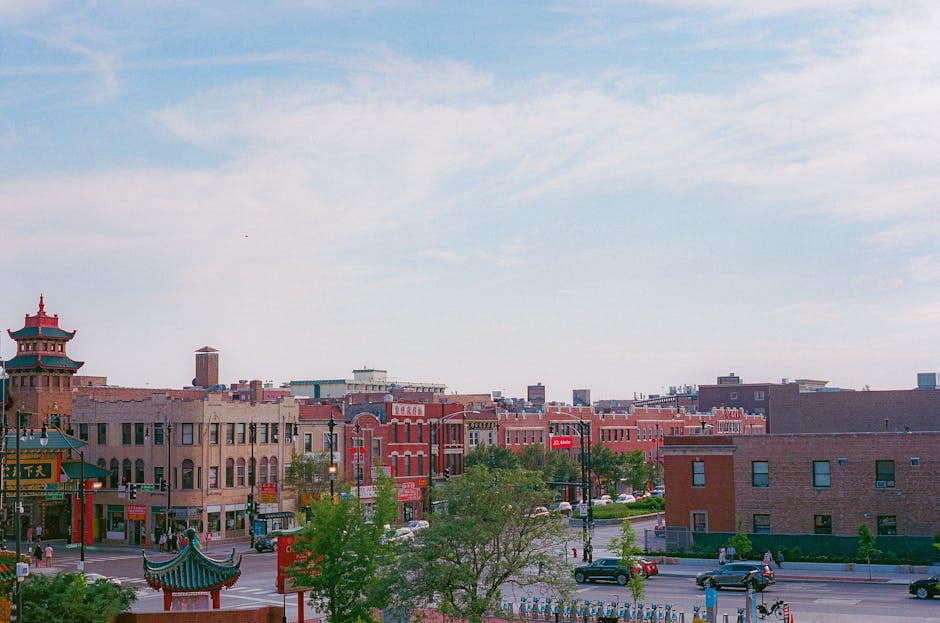
"You will never run out of work in Joliet. You will only run out of daylight."
I. The Lede
It is 5:58pm on a Friday in downtown Joliet. The Rialto marquee is on, the Slammers are at home, and an Amazon shift just let out.
Downtown Joliet at six o'clock on a Friday is one of the most unusual operating environments in the Midwest. Cass Street is moving theatergoers toward the Rialto Square. Chicago Street is moving Slammers fans toward Duly Health and Care Field. A line of pickup trucks is cycling through the riverfront lot at Hollywood Casino. And, west of the river, a shift change at one of the Amazon facilities along Walter Strawn Drive is releasing several thousand warehouse workers into the dinner hour all at once.
That single hour, repeated weekly, is the operating reality for a Joliet restaurant. It is not Chicago. It is not even Naperville. Joliet is a working city of roughly one hundred and fifty thousand people, the largest in Will County, anchored by an industrial economy that does not stop for dinner. The downtown built on Joliet limestone in the nineteenth century still hosts the Rialto and the Slammers; the corridor built on intermodal rail in the twentieth still hosts more square feet of distribution-warehouse space than almost any comparable county in the United States.
This report tries to describe the city honestly. It is about the limestone walls of the Old Joliet Prison and the Blues Brothers gate they made famous. It is about the 1.5-mile tri-oval at Chicagoland Speedway where NASCAR ran Cup races for nineteen years. It is about Joliet Junior College, founded in 1901, the oldest public community college in the country, and its culinary program downtown. It is about the BNSF intermodal yard at Elwood, the single most important reason every major American retailer has a building within fifteen miles of here. And it is about the Spanish-speaking households on the east side and south side, who are roughly thirty percent of this city's population.
A restaurant operating in Joliet has to handle all of that traffic and all of those customers, on a nine percent combined sales tax, with a digital ordering stack that actually fits the shape of this city. The argument of this report is that the stack that fits is direct, bilingual, flat-fee, and shift-aware. The marketplace dispatch model, designed for downtown Chicago dinner-rush ratios, simply does not match the operating rhythm of Will County.
A note on method
The figures cited throughout the report (population shares, warehouse footprints, sales tax rates, race attendance, prison history) come from the public sources listed in the references section. The structural argument (Joliet's restaurant economy runs on shift rhythms, event nights, and a thirty-percent-Hispanic customer base) holds across every data source we consulted.
II. The Logistics Atlas
Will County is the logistics capital of the Midwest. That is not a slogan. It is a tenant list.
The corridor that runs from Joliet south to Elwood, anchored by the BNSF Logistics Park Chicago and the CenterPoint Intermodal Center, is the largest inland port in North America by container lifts. The tenant list reads like a directory of the American retail economy.
The Will County intermodal corridor is, by container lifts, the largest inland port in North America. The anchor is the BNSF Logistics Park Chicago, the Class I intermodal yard at Elwood that opened in 2002 and has been operating at or near capacity ever since. Across the road sits the CenterPoint Intermodal Center, the privately developed industrial park that built thousands of acres of distribution-warehouse space adjacent to BNSF and, later, to Union Pacific's Joliet Intermodal Terminal.
The tenant list inside that corridor is the part most outside the logistics industry underestimate. Amazon operates multiple fulfillment, sortation, and delivery-station buildings across Joliet, Romeoville, and Crest Hill. Walmart's import-distribution footprint here is among the largest in the country. FedEx Ground anchors small-package Midwest distribution at the I-55 / I-80 cross. Target operates a multimillion-square-foot regional facility. IKEA placed a major distribution center inside the same corridor for the same reason every other tenant did, which is intermodal rail.
The practical effect on a Joliet restaurant is twofold. First, the corridor is one of the largest single employment bases in the county. Shift changes happen on the hour, and they pulse dinner-hour demand in predictable, plannable ways. Second, the customer base is highly time-bounded. A warehouse worker getting off a shift at 6pm is not ordering an hour-long dine-in experience. They are ordering a thirty-minute pickup or delivery window with a known total that fits inside an hourly-wage budget. The restaurant that builds for that customer wins repeat business that does not show up in the marketplace ad bids.
The corridor also imposes routing constraints. Truck traffic on I-55 and I-80 between 4pm and 7pm is materially heavier than what you find in comparable suburban Chicago geographies, and dispatch algorithms that route a courier across I-55 at rush hour without accounting for queueing at the warehouse gates produce delivery times that rarely match the customer-facing ETA. A Joliet operator who controls their own delivery radius and is willing to flag specific items as pickup-only avoids that whole class of problem.
Will County's economic development reporting tracks this density precisely. The combined warehouse and distribution footprint here is consistently identified as the largest concentration in the United States, exceeding the established Inland Empire market in southern California by some measures of intermodal lifts. Joliet sits at the geographic and rail center of that concentration. The restaurants that operate here understand it because they staff from it.
The two underlying numbers that explain the rest of this report are: roughly ninety thousand jobs across the intermodal corridor (Will County CED estimate ranges) and a county-wide labor force of just over three hundred thousand. Distribution is not a sector here. It is the sector.
III. Limestone Heritage
The Old Joliet Prison, the Blues Brothers, and the gate that turned a city into a brand.
Joliet was a quarry town before it was anything else. The Joliet Correctional Center opened in 1858, built from limestone quarried out of the Des Plaines bluff. The yellowish stone is the material that gives downtown Joliet its specific visual signature, and it is the reason the prison gatehouse, with its crenellated roofline and twin towers, became one of the most-photographed pieces of nineteenth-century carceral architecture in the country.
The Blues Brothers, in 1980, made the gatehouse globally recognizable. John Landis staged the opening release sequence at Joliet, and the address line ('Joliet') entered American pop vocabulary as a synonym for the kind of state prison you walk out of with your possessions in a paper bag. Twenty-five years later, Fox's Prison Break used the same campus, standing in for the fictional Fox River State Penitentiary, and returned the building to a new global television audience.
The Illinois Department of Corrections shut the original 1858 facility in 2002 after one hundred and forty-four years of operation. The grounds sat largely empty for over a decade. In 2017, the Joliet Area Historical Museum partnered with the city to open the prison as a heritage site, with guided tours through the cell houses, the chapel, and the administration building. The site now operates as Old Joliet Prison Park, a museum and event venue and one of the most-visited heritage destinations in Will County.
For a downtown restaurant, the practical effect of the prison's heritage status is measurable in weekend foot traffic. Saturday tours run through the afternoon. The visitors are tourists with disposable time who came to Joliet specifically to look at the building. They are looking for a meal afterward. The Rialto Square Theatre, the Slammers home games at Duly Health and Care Field, and the prison tours together form a downtown weekend programming engine that downtown restaurants either capitalize on or do not.
The capitalization piece is where the ordering stack matters. The prison-tour visitor is, with high probability, opening their phone in the parking lot to find a place to eat. If the restaurant's own website ranks for its own dishes and accepts the order directly, the restaurant keeps the margin. If the only available booking surface is a marketplace, the restaurant pays a commission on the visitor that the visitor would have walked to anyway.
1858
Joliet Correctional Center opens
Built from local limestone quarried out of the Des Plaines River bluff. The yellowish Joliet limestone is the building material that defines the campus.
1980
Blues Brothers films at the prison
John Landis stages the opening release sequence of The Blues Brothers at Joliet. Jake Blues walks out the front gate. The address line ('Jolliet') enters American pop vocabulary.
2002
State closes the prison
The original 1858 facility shuts after 144 years of operation. The grounds sit largely unused for over a decade.
2005-2009
Prison Break (Fox) films at Joliet
The pilot and several seasons of the Fox drama Prison Break use the Old Joliet Prison as Fox River State Penitentiary, returning the building to global TV audiences.
2017
Joliet Area Historical Museum begins guided tours
The city and the museum partner to open the prison as a heritage site. Guided tours operate inside the cell houses and the administration building.
Now
Old Joliet Prison Park
The site operates as a public park, museum, and event venue. It is one of the most-visited heritage destinations in Will County and an anchor of downtown weekend traffic.
IV. Race Weekend
Chicagoland Speedway, a 1.5-mile tri-oval, and what a sixty-thousand-fan weekend does to a Joliet kitchen.
Chicagoland Speedway opened in 2001, a 1.5-mile D-shaped oval designed for NASCAR's top series and IndyCar. From the 2001 inaugural season through 2019, the track hosted the NASCAR Cup Series annually, functioning for several years as a Chase / playoff fixture and pulling national television coverage to Joliet every summer. The full race weekend included Cup, Xfinity, and Truck doubleheader programming. NASCAR has not run a Cup race at the track since 2019, but the facility remains operational and the impact on the local economy during the active years was substantial.
IndyCar's Chicagoland 100 (originally the Tropicana Twister and later the Camping World Indy 300) ran here from 2001 through 2010 as one of the series' marquee night oval events, producing some of the closest finishes in IndyCar history. The track is one of the venues most identified with the modern American oval-racing era.
For Joliet restaurants the practical implication is two-fold. During an active race weekend, hotel occupancy across Will County spikes, and dinner-and-breakfast demand pulses upward in ways that are highly predictable from the published race schedule. Independent restaurants outside the chain hotel footprint capture meaningful share when their online ordering surface is set up to handle the volume and when their pickup times are honest. The race weekend customer is a tourist, time-bounded, and patient with neither phone trees nor opaque marketplace surcharges.
The second implication is shift-level. The track has a permanent operations staff even outside event weekends, and the facility hosts driving experiences, corporate events, and amateur racing nights. The traffic is steady-state, not zero, and the restaurants near Schweitzer Road and Walter Strawn Drive plan for it.
A restaurant ordering stack that handles race weekend properly needs a few specific capabilities: a temporary expansion of the delivery radius for hotel-zone addresses, a 'race weekend' menu mode that pre-batches popular orders, and Voice AI that handles out-of-town callers asking for directions and pickup windows in the same call. None of those are exotic features. They are the operational difference between catching a race weekend and missing one.
NASCAR Cup Series
Chicagoland Speedway hosted NASCAR's top series annually from 2001 through 2019, with the Cup Series race functioning as a Chase / playoff fixture for several years.
NASCAR Xfinity and Truck
Both support series ran the 1.5-mile tri-oval as a doubleheader weekend alongside Cup. The full three-day fan footprint was one of the largest single events in Will County.
IndyCar
The Chicagoland 100 (originally the Tropicana Twister and later the Camping World Indy 300) ran from 2001 through 2010 as one of IndyCar's marquee night oval events.
Track footprint
A 1.5-mile D-shaped oval, opened 2001, capacity in the 75,000 seat range, designed by Tony George for a partnership between ISC and the IRL.
V. The First Community College
Joliet Junior College, founded 1901. The oldest public community college in the United States.
Joliet Junior College was founded in 1901 as an extension of Joliet Township High School. The model was the work of two collaborators: J. Stanley Brown, the high school superintendent, and William Rainey Harper, the founding president of the University of Chicago. Together they extended the high school's curriculum into a two-year college program, on the theory that the first two years of university work could be delivered at the local level. That model, what we now call the public community college, was new. Joliet was first.
The American Association of Community Colleges recognizes Joliet Junior College as the oldest public community college continuously operating in the United States. Other institutions have older starting dates, but they did not operate continuously, or they began as private institutions, or they shut and re-formed. Joliet has been delivering the same fundamental institutional product, a public two-year college open to its local population, since 1901.
For the city's restaurant economy, JJC matters in two specific ways. The first is the culinary arts and hospitality program, which operates downtown out of the Renaissance Center / City Center campus. The program runs a working restaurant component and feeds a steady stream of trained line cooks, sous chefs, pastry staff, and front-of-house into Will County kitchens. Many of the chefs running downtown kitchens have a JJC line on their resume.
The second is the student-and-staff customer base. The main campus on Houbolt Road on the city's west side, combined with the Romeoville Campus, the Frankfort Campus, the Morris extension, and the downtown City Center, together enroll on the order of thirty thousand students annually across credit and non-credit programs. That is a substantial daytime population, much of which is non-resident commuter, and the lunch and between-class meal windows are predictable and capturable by restaurants that build for them.
The ordering-stack implication is straightforward. A campus customer is on a tight break window, ordering from a phone, and is highly sensitive to both pickup time honesty and price clarity. They are also highly tied to social proof from classmates. A restaurant that ranks for its own name on a campus-area Google search, accepts the order directly, and honors a fifteen-minute pickup window will build a year-round customer cohort that rotates with the academic calendar.
Founded
1901
Founded as Joliet Junior College, the oldest continuously operating public community college in the United States. Recognized as such by the American Association of Community Colleges.
Founders
J. Stanley Brown and William Rainey Harper
Joliet Township High School superintendent J. Stanley Brown partnered with University of Chicago president William Rainey Harper to extend the high school curriculum into a junior-college model.
Main campus
Houbolt Road, Joliet
The main campus sits on roughly 367 acres on the city's west side. Additional centers operate in Romeoville (Romeoville Campus) and at the Frankfort, Morris, and City Center sites.
Enrollment
~30,000 served annually
Credit and non-credit enrollment combined typically exceeds 30,000 students. Culinary arts and hospitality programs are particularly developed.
Culinary program
Renaissance Center, downtown
JJC's culinary arts and hospitality program operates out of the City Center campus downtown, with a working restaurant component. Many local kitchens hire from this pipeline.
VI. The Riverboat Economy
Hollywood Casino Joliet sits on the Des Plaines River. Its operating hours run twenty hours a day.
Illinois licensed riverboat gambling in 1990, and Joliet was one of the first cities to host an operator. The Hollywood Casino at 777 Hollywood Boulevard, on the Des Plaines River just south of downtown, has operated continuously since the early 1990s under several ownership configurations. It is currently operated by Penn Entertainment as Hollywood Casino Joliet, with a casino floor, hotel, RV park, and multiple dining venues on-site.
The casino's operating hours, which run nearly around the clock, produce a customer base that is structurally late-night. The casino feeds itself directly, but its guests also rotate out into the surrounding downtown for breakfast, late-night pickup, and weekend brunch. The Hollywood RV park, immediately adjacent, holds a rotating population of out-of-town visitors who are looking for delivery options that hold up to a one-night stay.
For a Joliet restaurant, the practical effect is that the late-night dinner-to-bar curve is longer than it is in most non-casino American cities of comparable size. Operators downtown plan for a 10pm to 12am pickup spike that does not exist in Naperville or Aurora. Bilingual call handling matters here, too: the casino's workforce is significantly Hispanic, and the workforce's own dinner-and-late-meal patterns flow into the same delivery surface as the guest base.
A restaurant ordering stack that fits this rhythm is open later, accepts pickup windows that extend past midnight, and handles Spanish-language phone calls with the same accuracy as English ones. The marketplace solution generally does not. Generic Voice AI built on a coastal restaurant corpus generally does not. A bilingual, operator-controlled solution does.
VII. The Neighborhood Atlas
Downtown, Crest Hill, Plainfield, Lockport, Romeoville: one operating zone, five very different rooms.
The Joliet operating zone is wider than the Joliet city limits. A restaurant on downtown Chicago Street competes for the same shift-worker, the same race-weekend visitor, and the same Hispanic east-side family as a counterpart in Crest Hill, Plainfield, Lockport, Romeoville, or Shorewood. Treating Will County as a single delivery zone, with neighborhood-specific menu emphasis, is closer to the operating truth than drawing a circle on the Joliet city map.
Downtown Joliet is the event-night zone. Rialto Square Theatre, the Slammers at Duly Health and Care Field, Hollywood Casino, and the Old Joliet Prison tours together generate a Friday-Saturday foot-traffic pulse that restaurants on Chicago Street and Cass Street build their week around. A restaurant here that captures the pre-show and post-show ordering surface keeps the customer; one that doesn't passes the customer to whichever marketplace has the best ad bid for 'restaurants near Rialto Square.'
Crest Hill is the residential-and-staff zone, directly north of downtown, immediately adjacent to several Amazon and FedEx facilities. The customer here is ordering on a shift schedule. Plainfield, to the northwest, is the family-suburb zone: bigger lots, higher-AOV weekend orders, and a customer who will tolerate a twelve-minute drive if the food is right. Lockport and Romeoville share the I&M Canal historic corridor and the Lewis University / JJC-South corridor, and produce a different rhythm again. New Lenox and Shorewood round out the zone.
The operational implication is that the right ordering stack lets the restaurant set distinct radii and pickup-window flags by neighborhood, not just by mile-band. The downtown event radius is short and time-bounded. The Crest Hill staff-meal radius is small and shift-bounded. The Plainfield family radius is longer and weekend-bounded. A single static delivery radius collapses all three. A configurable one captures all three.
VIII. Independent Baseball
The Joliet Slammers, Frontier League, at Duly Health and Care Field (formerly DuPage Medical Group Field).
The Joliet Slammers play independent professional baseball in the Frontier League at Duly Health and Care Field, the downtown stadium on Mayor Art Schultz Drive that opened in 2002. The Slammers have been the resident club here since 2011 and play a roughly fifty-game home schedule from May into early September.
Frontier League baseball is not Minor League Baseball in the affiliated sense. It is independent professional baseball, with its own roster economics and its own affordability advantage. A Slammers home game is a family event with a ticket price point well below MLB-affiliated single-A baseball, which means the game draws a different demographic. The Slammers fan is local. They live in Joliet, Crest Hill, Lockport, Plainfield, Romeoville, or Shorewood. They are looking for dinner before or after the game, within a fifteen-minute drive of the stadium.
Downtown restaurants treat the home schedule as a calendar input. A Tuesday night with a 7:05 first pitch is a different operating night than a Tuesday with no Slammers game. The pre-game pickup window from 5:00 to 6:30pm is real revenue. The post-game spillover, especially on Friday and Saturday, is real revenue. A restaurant ordering stack that lets the operator publish a game-night menu, hold a game-night staffing schedule, and adjust pickup windows by date is capturing this cleanly.
This is the dynamic that the broader food-marketplace economy systematically misses. A national app does not know that the Slammers are at home tonight. A direct ordering surface, controlled by the operator, does.
IX. Hispanic Joliet
Joliet is roughly thirty percent Hispanic. A restaurant Voice AI that does not handle Spanish is, here, broken by default.
US Census ACS five-year tables put Joliet's Hispanic-origin population at approximately thirty percent of the city, with concentrations on the east side and south side and language-spoken-at-home figures that reflect a meaningful Spanish-dominant share. For a restaurant Voice AI, this is not a polite localization preference. It is the operational majority of evening calls in certain ZIP codes.
barbacoa
English meaning
Slow-cooked, often pit-cooked, beef (or lamb or goat) shredded for tacos and sopes. Sundays in Joliet, frequently a pre-order item.
Where it appears
East-side taquerias on Chicago Street and Cass Street; weekend-only at many family operators.
API behavior
Spanish Voice AI must take Sunday pre-orders, hold pickup windows, and clarify by-the-pound vs by-the-taco quantity.
tortas ahogadas
English meaning
Jalisco-style 'drowned' sandwich, on birote bread, submerged in tomato-and-chile sauce. A specific regional dish.
Where it appears
Jalisciense operators along the east side and in Lockport / Crest Hill.
API behavior
Voice AI must distinguish tortas (general) from tortas ahogadas (drowned). Bread substitution affects the dish at a structural level.
elotes / esquites
English meaning
Grilled corn on the cob (elotes) or kerneled in a cup (esquites), with mayo, lime, cotija, chile. Street food and counter staple.
Where it appears
Most taquerias; some operators sell from a window at the front of the building.
API behavior
Voice AI must offer the cup-vs-cob choice and the spice-level option; ordering 'elotes' often implies whole cob in Joliet usage.
menudo (sabado y domingo)
English meaning
Tripe-and-hominy soup, traditionally weekend-only. Often advertised as 'menudo los sabados.'
Where it appears
Family taquerias on the south side and east side; many operators stop serving by 2pm Sunday.
API behavior
Bilingual Voice AI must hold weekend-only flags by item, not by restaurant, and time-window them properly.
agua fresca
English meaning
House-made fruit-and-water drinks: horchata, jamaica, tamarindo, sandia. Often sold by the glass and by the gallon for parties.
Where it appears
Citywide. The gallon-jug catering side is real revenue.
API behavior
Voice AI must offer single-serve vs gallon and confirm flavor; jamaica vs horchata is a common order mishear.
carnitas estilo Michoacan
English meaning
Pork shoulder, lard-confit Michoacan-style, sold by the pound with tortillas, salsa, and onion separated.
Where it appears
Sundays especially; family operators move large pound counts.
API behavior
Voice AI must take by-the-pound orders, hold tortilla counts, and confirm pickup window so the meat hits the customer warm.
The operational ask is concrete. A Joliet Voice AI must take a Spanish-language opening, switch to English mid-call without dropping context, take by-the-pound carnitas orders, hold weekend-only flags on menudo and barbacoa, distinguish single- serve agua fresca from gallon-jug catering orders, and confirm tortilla counts and pickup windows in the language the caller started in. That is not optional. In a city that is roughly thirty percent Hispanic, with an east-side restaurant corridor that is heavily Spanish-dominant, an English-only stack is leaving meaningful weekly revenue on the table.
X. The Sales Tax Close-Read
Nine percent combined on prepared food, decomposed: state, county, city.
Joliet's combined sales tax on prepared food is nine percent: 6.25% Illinois state, 1.25% Will County, and 1.5% City of Joliet home-rule municipal. Each of those layers is published by the responsible jurisdiction and is verifiable through the Illinois DOR rate finder by ZIP code.
Illinois state
6.25%
Illinois Department of Revenue, prepared food
Statewide base rate on prepared food and beverage. Applies to every restaurant transaction in Illinois.
Will County
1.25%
Will County Treasurer / IDOR rate finder
County add-on collected through the state. Funds county services and capital projects.
City of Joliet
1.5%
City of Joliet revenue ordinance
Municipal home-rule sales tax. Joliet's combined home-rule layer brings the total to 9 percent on prepared food.
Why the layering matters
A nine-percent rate is the customer-facing number on the check. The operator sees a more complicated picture: state, county, and city each remit on a separate schedule, with separate reporting windows. A Joliet operator runs three live tax accounts in parallel, not one. The check looks simple. The back office does not.
Marketplace timing gap
Marketplace dispatch typically pays the operator on a multi-day lag while the operator's tax-remittance schedule does not. The result is a structural cash timing gap: tax is due, cash has not arrived. Same-day payouts close that gap on every transaction. Flat-fee, commission-free pricing prevents the gap from compounding via per-order erosion.
XI. The Joliet Thesis
How DirectOrders fits the Joliet operating shape.
Joliet's restaurant economy runs on three rhythms simultaneously: warehouse shift changes from the Will County intermodal corridor, downtown event nights anchored by the Rialto, the Slammers, Hollywood Casino, and the Old Joliet Prison heritage site, and a roughly thirty-percent-Hispanic customer base concentrated on the east and south sides. The right ordering stack for a Joliet restaurant has to handle all three without forcing the operator to pick one.
A direct, branded ordering surface ranks for the restaurant's own dishes when a Slammers fan or a prison-tour visitor opens their phone looking for somewhere to eat. That capture is uncontested by marketplace ad bids on a restaurant's own name. The operator keeps the margin, the customer, and the data, all on a single flat monthly fee.
An Uber Direct integration with item-level pickup flags lets a downtown operator offer delivery for items that travel well and pickup-only for items that don't, with an operator-controlled radius that tightens during dinner-rush truck traffic on I-55. The dispatch decision sits with the operator, not the marketplace.
A bilingual Voice AI takes the Spanish-dominant east-side phone call and the English-language race-weekend tourist call on the same line, with consistent menu knowledge in both languages and weekend-only flags honored at the item level. Same-day payouts close the timing gap between the customer's tap on the check and the operator's tax remittance to the state, the county, and the city.
The flat $249 per month, commission-free pricing is the structural piece. The Will County corridor's customer base is shift-rhythm and value-sensitive. A per-order commission compresses margin precisely where the margin is already tight. Removing the per-order fee preserves the unit economics that the rest of the stack is designed to leverage.
The argument is that Joliet is a city whose digital ordering problem has a specific shape: shift-aware, event-aware, bilingual, multi-jurisdiction-tax. The stack that fits that shape exists. It is direct, flat-fee, Voice-AI-led, and pickup-aware. It is DirectOrders.
Coda
Two reasonable next steps for a Joliet restaurant.
This report argued, neighborhood by neighborhood and rhythm by rhythm, that Joliet is a working Midwestern food city whose digital ordering problem has a specific shape. The shape is shift-aware, event-aware, bilingual, three-jurisdiction-tax. The stack that fits is direct, flat-fee, Voice-AI-led, and pickup-aware. If you operate a Joliet restaurant and you have read this far, two paths are reasonable from here.
The first is to spend ten minutes on a free Joliet commission audit. Send us your last three months of marketplace statements. We will return a per-order margin breakdown, a same-day-payout cash timing analysis against your three-jurisdiction remittance schedule, and a model of what your P&L would look like with the direct stack in place. A document, by Tuesday.
The second is to see the stack live before deciding. The demo runs against an actual Joliet menu profile: bilingual Voice AI, barbacoa and tortas ahogadas in Spanish, Slammers night and race-weekend menu modes, Uber Direct on for the items that travel and pickup-only for the items that don't. A nineteen-minute walkthrough. You come to a Zoom and ask whatever you want.
Either path is fine. The point of the report was to argue, clearly enough, that the shape of Joliet's restaurant economy is specific, that the off-the-shelf marketplace stack does not fit that shape, and that there is a configuration of digital ordering tools that does. For the city of Joliet, in Will County, on a nine percent combined sales tax, with shift rhythms and event nights and a bilingual customer base, only one of those answers fits.
Field index
Restaurants and operators cited in this report.
- Merichka's RestaurantCrest HillCroatian-American, poorboy sandwichJoliet-area institution since 1933. The garlic 'poorboy' sandwich is regionally famous.
- Al's SteakhouseJolietSteakhouseSouth-side Joliet supper-club style steakhouse on Mound Road.
- Syl's RestaurantRockdaleItalian-American, fried chickenFamily-run since 1958. A Will County classic for chicken and pasta.
- Heroes Restaurant and BarDowntown JolietAmerican bar foodDowntown anchor near the Rialto Square Theatre, heavy event-night traffic.
- Old Fashioned Pancake HouseJolietDiner / breakfastWeekend lines reflect the city's strong sit-down breakfast culture.
- Cemeno's PizzaJoliet / PlainfieldPizzaLocal pizza family operating multiple Will County storefronts.
- Aurelio's PizzaJoliet / Homewood rootsThin-crust pizzaChicago Southland thin-crust tradition with multiple Joliet-area locations.
- Taqueria El Burrito LocoJoliet east sideTaqueria, MexicanOne of several family operators on Chicago Street and Cass Street.
- El BraceroJoliet south sideMexicanFamily taqueria; weekend menudo and barbacoa.
- Las Lomas RestaurantJoliet east sideMexicanSit-down Mexican with weekend specials and a strong catering side.
- TlaolliPlainfieldMexican, regionalRegional Mexican kitchen in Plainfield; bilingual ordering common.
- LadidaPlainfieldAmericanSuburban Plainfield favorite; broad weekend volume from neighborhoods west of Joliet.
- The Public LandingLockportAmerican historicLocated in the historic Gaylord Building on the I&M Canal, a Will County heritage site.
- White Fence FarmRomeoville / Joliet edgeFamily-style chickenLong-running family-style chicken house, large volume on Sundays.
- Joliet Brewery CompanyDowntown JolietBrewpubDowntown brewpub serving event nights and Rialto theatergoers.
References and sources
The shoe-leather underneath this report.
Illinois Department of Revenue, sales tax rate finder
Illinois DOR
Statewide 6.25% prepared-food base plus local rate look-up for Joliet ZIP codes.
Open source →Will County government, treasurer and economic development
Will County, IL
County sales tax component and Will County Center for Economic Development logistics-corridor reports.
Open source →City of Joliet revenue and finance department
City of Joliet
Municipal home-rule sales tax components and city revenue ordinance.
Open source →US Census Bureau, American Community Survey (Joliet, IL)
US Census Bureau
Population, Hispanic-origin share, and language-spoken-at-home tables for Joliet ZIP codes.
Open source →Joliet Area Historical Museum and Old Joliet Prison Park
Joliet Area Historical Museum
Operator of the Old Joliet Prison heritage tours; primary source for the 1858 to 2002 prison history.
Open source →Joliet Junior College, institutional history
Joliet Junior College
Founded 1901; recognized by the American Association of Community Colleges as the oldest public community college in the United States.
Open source →American Association of Community Colleges (AACC)
AACC
National body that confirms Joliet Junior College's status as the oldest public community college in the United States.
Open source →Chicagoland Speedway historical schedule and NASCAR archives
NASCAR / Chicagoland Speedway
NASCAR Cup Series race history (2001 through 2019) and IndyCar Chicagoland 100 history (2001 through 2010).
Open source →Hollywood Casino Joliet, Penn Entertainment
Penn Entertainment
Operator filings and site history for the Joliet riverboat-style casino on the Des Plaines River.
Open source →Frontier League and Joliet Slammers official site
Frontier League / Joliet Slammers
Independent professional baseball at Duly Health and Care Field (formerly DuPage Medical Group Field), downtown Joliet.
Open source →BNSF Logistics Park Chicago and CenterPoint Intermodal Center
BNSF Railway / CenterPoint Properties
Operator profile and tenant disclosures for the Elwood / Joliet intermodal corridor, the largest inland port in North America by container lifts.
Open source →Crain's Chicago Business and Chicago Tribune logistics coverage
Crain's / Chicago Tribune
Reporting on Amazon, Walmart, FedEx, Target, and IKEA warehouse footprints in the Will County intermodal corridor.
Open source →Herald-News (Joliet) local reporting
Herald-News, Shaw Media
Joliet daily reporting on downtown business, east-side and south-side Mexican restaurant corridors, and Rialto Square programming.
Open source →Rialto Square Theatre, Joliet
Rialto Square Theatre
Historic 1926 theatre, downtown anchor of weekend event traffic.
Open source →
Editorial note: Population shares, warehouse footprints, attendance figures, and tax rates in this report are drawn from the public sources listed above. They are presented as illustrative of structural dynamics in the Joliet and Will County operating environment, not as precise measurements at named restaurants. The structural argument (Joliet's restaurant economy runs on shift rhythms, event nights, a bilingual customer base, and a three-jurisdiction sales tax) holds across every source we consulted.