Market Square · Old City · Bearden · Sequoyah Hills · Fourth & Gill · Long Read
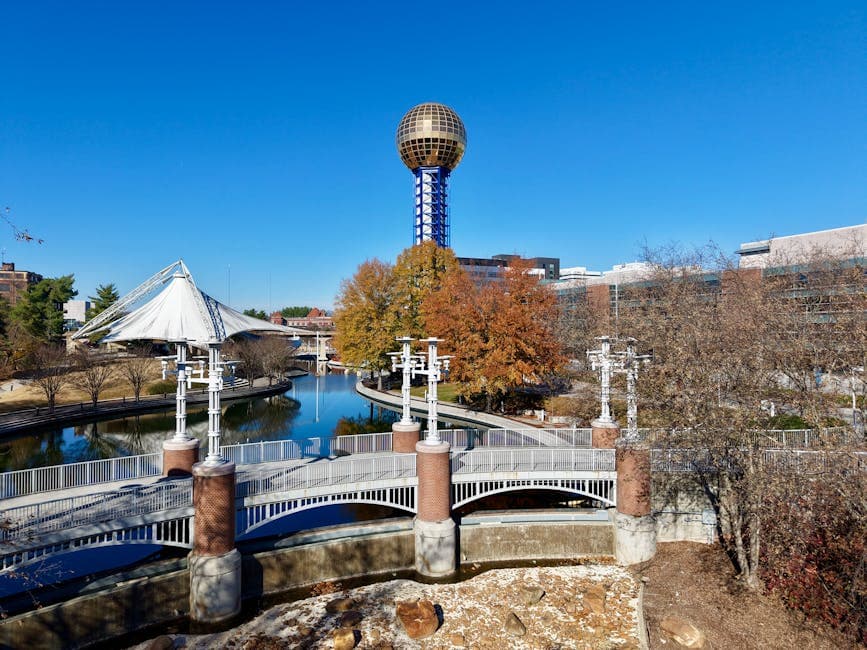
The Sunsphere
and Volunteer Country.
Seven Tennessee Vols home games a year fill Neyland Stadium to roughly 102,000, the largest seat count in the state. Twelve and a half million Smoky Mountains visitors pass through the gateway. The Big Ears Festival, the Sunsphere, the Vol Navy on the river, Pigeon Forge, Dolly. This is a field report for the operators who hold up Market Square between kickoff and last call.
Sources: University of Tennessee Athletics, National Park Service, Visit Knoxville, Big Ears Festival, Oak Ridge National Lab, TN Department of Revenue.
Volunteer Country Brief
Neyland Stadium capacity
~102,000
Largest stadium in Tennessee. University of Tennessee Athletics official.
Great Smoky Mountains visitors, annual
~12.5 million+
Most-visited US national park. National Park Service annual reports.
UT Knoxville enrollment
~31,000+
Flagship campus. University of Tennessee, Knoxville factbook.
Combined sales tax on prepared food
9.25%
TN state 7.0% + Knox County 2.25%. TN Dept of Revenue.
Big Ears Festival, late March
4 days
Alt music festival, downtown venue map. Big Ears official.
A ten-part field report · Read top to bottom or jump in
Section I.
The Lede
Saturday, 9:47am. Market Square, three hours to kickoff.
The orange wave is already three deep at the host stand on Market Square, the river is full of pontoons flying T flags, and the operator's tablet is showing forty-one missed calls since seven this morning.
She is running a brunch-and-grill kitchen on the east side of the Square, the Sunsphere visible from the patio, the Tennessee Theatre marquee one block south. Today is a conference home game. Kickoff is at twelve thirty. The Vol Navy has been arriving on pontoons up the Tennessee River since seven, tying up near the dock by Calhoun's on the River and walking the half-mile to Neyland Stadium. About one hundred and two thousand people will be inside the bowl by noon.
The phone has been ringing every ninety seconds. A nine-top tailgate party from Murfreesboro wants a curbside pickup of twenty pulled-pork sandwiches by ten forty-five. A family driving in from Gatlinburg through the Smoky Mountains gap wants to confirm an eleven-fifteen table. A bartender called in sick. A produce vendor needs to drop early because Cumberland Avenue is closed to truck traffic from eleven on.
The next inbound call is in Spanish, from a line cook running late on the bus from the Lonsdale neighborhood. The operator does not speak Spanish. She hands the phone to the dishwasher who does, but he is elbow-deep in a fryer reset and the call rolls to voicemail.
Voice AI in two languages would have caught the tailgate party. Voice AI in two languages would have caught the Gatlinburg family. Voice AI in two languages would have routed the line cook. Voice AI in two languages would have answered the next twenty-seven calls that arrived between nine forty-seven and eleven oh-two while the host stand was trying to seat the first wave of orange.
Today is one of seven Saturdays a year. We are going to walk through the gameday playbook, then the Smoky Mountains gateway economy, then the rest of the Knoxville calendar that fills in around it.
Missed calls log
Saturday, 9:47a to 11:02a
One Market Square host stand. Three hours to kickoff.
- 9:47aTailgate, Murfreesboro20 pulled-pork, 10:45 curbsideEN
- 9:53aFamily, GatlinburgConfirm 11:15 table for 6EN
- 9:58aLine cook, LonsdaleRunning 12 min late, busES
- 10:04aVol Navy, pontoon dockPickup at riverwalk, 11aEN
- 10:11aHilton KnoxvilleConcierge, 4 to room 612EN
- 10:18aProduce, Mascot RdTruck early, Cumberland closedEN
- 10:26aTour bus, Pigeon Forge32 box lunches, 12:15EN
- 10:33aCarlos, dishwasherOff-shift swap, SunES
- 10:41aBearden mom group8 brunch to-go, 11:30EN
- 10:48aORNL hostMon dinner, 8pplEN
- 10:55aSequoyah Hills, regularSun watch party, 12EN
- 11:02aUnknown, +1 865Late table for 4EN
Section II.
The Gameday Playbook
102,000 in the bowl. A river full of pontoons. A twelve-hour service window.
7a to 11a
Vol Navy + tailgate
Pontoons up the river, pre-game tailgate orders.
12:30p
Kickoff
In-bowl ~102,000. Phones go quiet for ninety minutes.
4p to 7p
Post-game dinner
Family second-half watchers, victory-or-loss dinners.
8p to 11p
Old City late-night
Bands, recruit hosts, the Mill and Mine spillover.
Neyland Stadium sits on the south end of campus, on the bank of the Tennessee River, between Cumberland Avenue and the water. Capacity sits near one hundred and two thousand seats. It is the largest stadium in Tennessee and one of the top ten in the United States by seat count. On a conference home Saturday, the city absorbs that crowd plus another twenty to forty thousand walking traffic across the Cumberland strip, Market Square, and the Old City.
The Vol Navy is the unique part. Fans pilot pontoons, cruisers, and houseboats up the Tennessee River from Knoxville-area marinas, from Lenoir City, and from down by Watts Bar Lake, and tie up at the temporary docks behind the stadium. The river fills in a fan of orange awnings starting about three hours before kickoff. Restaurants on the riverwalk and on the Calhoun's side see a separate wave that arrives by water, not by I-40.
The host-stand-side problem is volume. A Cumberland strip brunch place that does forty covers on a normal Saturday morning will do three to four hundred on a home Saturday, spread across two hours. The walk-in queue runs out the door by ten. The phone keeps ringing because the family from Knoxville-area subdivisions who has been doing this since the Fulmer years is on their fifth-generation routine and they always call ahead.
Pre-orders are the unlock. A branded ordering page that takes a tailgate hold for twenty pulled-pork sandwiches at ten thirty, curbside on Wall Avenue, lifts the host stand off the phone for twenty minutes. The bilingual Voice AI takes the call from the family on the Smoky Mountains side coming in early to beat the traffic on Highway 441. The host stand goes back to seating the orange wave.
After kickoff the curve does not collapse. It plateaus. Stadium-side concessions hold the in-bowl traffic for three hours. Restaurants pivot to family-with-young-kids parties who watched the first half and are now coming back for late lunch. The kitchen runs at three-quarter throttle from one to four, then ramps again for post-game between four and seven.
Post-game is when the Old City turns on. The Old City is the entertainment district north of the rail line, around Jackson Avenue, with live music, bars, late-night kitchens. The victory crowd, the loss crowd, the recruit-host crowd, and the ESPN-camera crowd all spill into the Old City between seven and midnight. The late-night kitchens that take direct delivery via Uber Direct beat marketplace dispatch by ten to twenty minutes on the post-game wave.
Section III.
The Smoky Mountains Gateway
12.5 million annual visitors. The most-visited national park in the US.
Great Smoky Mountains National Park draws roughly 12.5 million visitors a year, more than any other US national park. The northern gateway is Sevierville, Pigeon Forge, and Gatlinburg. The connecting metro is Knoxville.
A large share of Smoky Mountains visitors fly into McGhee Tyson Airport on the south side of Knoxville, rent a car, drive Highway 129 or I-40 east toward Sevier County, and pass back through Knoxville on the way home. That gives Knoxville restaurants two natural service windows per visitor: the first-night dinner on the way in, and the last-meal lunch on the way out.
The order profile is dominated by families. Group sizes of four to eight. Pickup-heavy because the visitor is in a rental car. A meaningful fraction of orders go to short-term rental properties on the Sevier County side, where the customer wants delivery to a Pigeon Forge cabin from a Knoxville restaurant they Googled on the drive in. The marketplace path turns that thirty-five-mile route into a forty-five-dollar delivery fee. The direct path with Uber Direct does the same drop for a flat rate and the courier goes home with the receipt.
The other share is day-tripping families staying in Knoxville hotels who drive to the park before sunrise, hike the Chimney Tops or Alum Cave, and come back into the city for dinner at six thirty already showered and starving. They are the brunch-of-the-evening crowd. They book pickup so they do not have to wait. They order family-style platters that scale to the kitchen's prep capacity. They tip well.
Gateway impact
12.5M visitors, 4 concentric rings
Most-visited US national park. Source: National Park Service, Great Smoky Mountains visitor statistics (annual).
Schematic. Concentric rings represent visitor flow from the park through gateway towns and into the Knoxville restaurant economy. The ring is illustrative, not geographic.
Section IV.
The Sunsphere, Market Square, the Old City
The downtown atlas. A 1982 World's Fair landmark, a pedestrian-friendly square, an entertainment district.
Downtown atlas
Three nodes, fifteen-minute walk
Schematic, not to scale. Sources: City of Knoxville downtown map, Visit Knoxville venue directory, World's Fair Park.
Three downtown nodes carry most of the restaurant volume. Market Square sits at the center, the Sunsphere anchors the southwest edge at World's Fair Park, and the Old City carries the late-night.
Market Square is a pedestrian-friendly block lined with two centuries of buildings. The Tomato Head, Soccer Taco, Tupelo Honey, Oliver Royale, Stock and Barrel, Yassin's Falafel House, the farmers market on Saturday mornings. The Square is the daytime gravity for office workers, families, out-of-town travelers, and the lunch overflow from Krutch Park and the public library.
The Sunsphere, the 266-foot golden orb left over from the 1982 World's Fair, anchors the west side at World's Fair Park. The park hosts festivals, concerts, and the Big Ears outdoor stages. Restaurants on Clinch Avenue and along Henley Street pick up the festival overflow.
The Old City sits a few blocks north of Market Square, centered on Jackson Avenue and Central Street. Boyd's Jig and Reel, Babalu's legacy, the Pretentious Beer Co., the Brass Pearl. The Old City carries the late-night service: bands at the Mill and Mine, post-game crowds after Vols home Saturdays, post-show crowds from the Tennessee Theatre on Gay Street.
All three nodes sit within a fifteen-minute walk. A direct ordering customer can pick up at Market Square at noon, drop off at a hotel near the Sunsphere at one, and order delivery to a friend in the Old City at ten. Same brand. Three different channels.
Section V.
Sequoyah Hills, Bearden, Fourth and Gill
The resident neighborhoods that fill the Tuesday-night dinner board.
Knoxville is not just a stadium and a national park. It is also a city with four or five resident neighborhoods that carry the weekday dinner economy.
Sequoyah Hills is the old-money neighborhood along Cherokee Boulevard west of downtown, where the river curves in toward the boulevard. Tree-lined streets, 1920s houses, dog walkers on the boulevard at dusk. The ordering profile here is small delivery orders, Tuesday and Wednesday family dinners, the occasional eight-top Sunday for a Vols-watch party at home.
Bearden sits a couple miles west of Sequoyah Hills along Kingston Pike, anchored by the Bearden Hill commercial strip and the boutiques on Sutherland Avenue. The Bearden ordering customer is a working professional, two or three kids in West Knoxville schools, a routine that runs a tight rotation of five or six restaurants on a Sunday-through- Thursday cadence.
Fourth and Gill is the historic neighborhood just north of downtown, between Central Street and Broadway, with Victorian houses and front porches that fill in around five o'clock on a spring evening. The customer profile here is young families, creative professionals, and a meaningful tail of UT faculty and grad students who walked over from campus. They order pizza from Hard Knox, biscuits from Cookout legacy spots, and a tail of the Mediterranean and Egyptian options that have grown along the Central Street corridor.
South Knoxville, across the Henley Bridge, has its own micro-economy around the SoKno neighborhoods (South Knoxville) and the Sevier Avenue strip, which has filled in with newer indie restaurants over the last decade.
The neighborhoods all share one thing: they are not on the marketplace map at the same density as the downtown core. A Bearden customer who finds a Sequoyah Hills bistro via a branded order page they bookmarked is worth fifteen marketplace acquisitions over three years. Direct ordering is how the resident neighborhoods fund the Tuesday board.
West, old-money
Sequoyah Hills
Cherokee Boulevard, 1920s houses, dog walkers at dusk. Tuesday family dinners, Sunday watch parties.
Kingston Pike strip
Bearden
Working professionals, Sutherland Avenue boutiques, a five-or-six-restaurant rotation Sun to Thu.
Historic, near campus
Fourth & Gill
Victorian houses, young families, UT faculty and grad students walking over from campus.
Across the Henley
South Knoxville (SoKno)
Sevier Avenue strip, indie restaurants over the last decade, river-trail customer.
Diverse, growing
East Knoxville · Central St
Hard Knox, Egyptian and Levantine kitchens, Hmong community, growing creative-class tail.
Section VI.
The Big Ears Playbook
Late March. Four days. Avant-garde, classical, jazz, folk, and noise across downtown venues.
Big Ears runs four days in late March, programs avant-garde music across the Tennessee Theatre, the Bijou, the Mill and Mine, and a constellation of smaller rooms on the same downtown footprint as Market Square.
The festival is curatorial. The audience travels from coastal cities, from Europe, from college towns up and down the East Coast. Average age is older than a typical festival. The customer holds a four-day pass, picks ten or twelve sets across thirty venues, and needs to be inside a different room every ninety minutes.
The dining demand profile is the opposite of CMA Fest in Nashville. It is quiet, deliberate, and pre-planned. Big Ears pass-holders book pre-show pickups for solo plates between sets, family-style platters for groups of four meeting up between rooms, and post-midnight late-night pickups for the third or fourth set of the day.
Branded ordering shines here because the Big Ears customer uses email and the festival app, not a marketplace. They look up the restaurant by name, order pickup at six fifteen for the seven o'clock set at the Bijou, and walk three blocks. The pickup window with their name on the bag is the product. The marketplace fee is not in the picture.
Festival weekend
Big Ears four-day spine
Illustrative set times across canonical venues. Actual lineup published annually by Big Ears Festival.
Thursday
3 listed sets
- 5:00pTennessee Theatre, opening
- 7:30pThe Bijou Theatre
- 9:45pMill and Mine, late set
Friday
4 listed sets
- 12:00pSt. John's Cathedral, noon
- 3:00pKnoxville Museum of Art
- 6:15pTennessee Theatre
- 10:00pMill and Mine, late
Saturday
5 listed sets
- 11:00aWorld's Fair Park outdoor
- 1:30pBijou Theatre
- 4:00pTennessee Theatre
- 7:30pBijou Theatre
- 10:30pThe Standard
Sunday
3 listed sets
- 11:00aSt. John's Cathedral
- 2:00pKnoxville Museum of Art
- 5:00pTennessee Theatre, closing
Section VII.
The Dolly Corridor
Sevierville, Pigeon Forge, Gatlinburg. The tourism corridor that bookends every Knoxville restaurant week.
Drive thirty miles east on I-40 and you are in Sevierville, Dolly Parton's home town. Another ten and you are in Pigeon Forge, with Dollywood, the Smoky Mountain Opry, the Old Mill, the Titanic Museum, and a strip of Parkway attractions. Another ten and you are in Gatlinburg, the gateway town to the national park.
The Dolly corridor pulls roughly ten to twelve million annual visitors. A meaningful share of them sleep in Sevier County cabins, hike or ride the trolley in Gatlinburg, drive into Knoxville for one big-night dinner, and drive back the same evening. They are not local. They book a reservation only if the restaurant has a reservation system. They want a clean pickup window if the reservation slot is full.
The branded ordering page handles this customer cleanly. Pickup is a one-tap action from the family group chat. The customer enters their phone number, picks a window, and drives in from Pigeon Forge. The restaurant has their order ready in butcher paper. No app. No marketplace fee. No refund-request risk if the courier batches them with a separate ticket.
The Dolly corridor is also the seasonality engine. Knoxville spring break weeks, summer peak, autumn leaves on the parkway (the Smokies are world-famous for fall color), Christmas light tours through Gatlinburg, New Year. Five or six predictable peaks a year that a downtown Knoxville operator can ride if the booking flow is built for the visiting family, not the local commuter.
Tourism corridor
The I-40 east corridor
Schematic, not to scale. Sources: National Park Service, Visit Knoxville, Tennessee Department of Transportation.
Section VIII.
UT Health Sciences and Oak Ridge
The corporate catering ledger. Net-30 invoicing. Grand Rounds. Lab visitor dinners.
The University of Tennessee Medical Center sits just south of Cumberland Avenue near the river. Oak Ridge National Laboratory sits twenty-five miles west, off Highway 58, the largest US Department of Energy science campus by staff count.
The UT Medical Center campus runs Grand Rounds, residency lunches, clinical-team catering, and visiting-faculty dinners on a weekly cadence. The order profile is steady: fourteen to twenty people, scheduled pickup at the lobby loading dock between eleven fifteen and noon, paid by a departmental purchase order.
Oak Ridge National Lab brings a different rhythm. Visiting scientists from national labs in California, Illinois, Washington, and Europe rotate through ORNL on multi-week stays. Their hosts book dinners at Knoxville restaurants for groups of six to ten. Lab-funded conferences book catering for fifty to a hundred. None of this fits a marketplace app. All of it fits a direct-ordering page with a corporate account, a saved tax-exemption flag where applicable, and net-30 invoicing.
Y-12 National Security Complex, adjacent to Oak Ridge, adds another layer of cleared-staff lunch volume on a Tuesday- through-Thursday cadence. The combined Oak Ridge science workforce runs in the tens of thousands. Most of them eat at least one expensed meal a week on the Knoxville side, either at a Bearden lunch spot, a Market Square dinner, or a delivered catering tray for a midday review.
The marketplace path does not invoice. It does not produce the clean expense receipt that a federal-lab finance team will reimburse without three rounds of email. It does not handle the saved-account workflow that a recurring host needs. It takes a third of the ticket on a customer that could have been a saved net-30 account.
Direct ordering with a corporate channel, a saved card or net-30 invoice, a tax-exemption flag where applicable, and a same-day Stripe payout to the restaurant by the next afternoon is the only stack that fits how Oak Ridge actually books food.
| Client / institution | Order type | People | Cadence | Pickup / drop window |
|---|---|---|---|---|
| UT Medical Center, Grand Rounds | Resident lunch, conference room | 14 to 22 | Weekly Wed | 11:30a pickup, dock |
| UT Knoxville, Athletics dept | Recruit-host dinner | 8 to 14 | Home-game weekends | 7:00p delivery |
| Oak Ridge National Lab | Visiting-scientist dinner | 6 to 10 | 2 to 4x weekly | 6:30p reservation |
| Y-12 National Security | Midday clinical-team | 10 to 16 | Tue / Thu | 12:00p pickup |
| ORNL conferences | Lab-funded reception | 50 to 100 | Seasonal | 5:30p drop |
| Pellissippi State Comm College | Faculty workshop | 20 to 30 | Monthly | 9:30a hold |
| Knoxville Chamber | Breakfast roundtable | 30 to 45 | Quarterly | 7:30a delivery |
| TVA HQ (Tennessee Valley Authority) | Board-prep working lunch | 12 to 18 | Monthly | 11:45a pickup |
Illustrative catering pipeline for the Knoxville corporate workforce. Sources: University of Tennessee, Oak Ridge National Laboratory, Y-12 National Security Complex, Tennessee Valley Authority public disclosures and event calendars.
Section IX.
Bilingual Knoxville
The Latino, Hmong, and Egyptian community essay. Why bilingual ordering matters in East Tennessee.
Knoxville is more linguistically diverse than the gameday postcard suggests. Three communities in particular shape the bilingual ordering case.
The Latino community is the largest non-English-speaking group in the metro, with concentrations in the Lonsdale, Mechanicsville, and Inskip neighborhoods, plus a tail across East Knoxville and the Chapman Highway corridor in South Knoxville. Soccer Taco on Market Square is the most-visible storefront, but the substrate is dense: family-run taquerias, panaderias, butcher counters, and weekend pop-ups across the city. A Spanish-language Voice AI line catches the kitchen staff calling from the bus, the supplier confirming a tortilla delivery, and the customer ordering for a family quinceanera on a Saturday afternoon.
The Hmong community has been part of Knoxville since the refugee resettlements of the 1980s, concentrated in the East Knoxville and Burlington corridors. The Knoxville Hmong New Year, held in late autumn, draws thousands. Hmong-language support on the customer side is a smaller volume but a high- loyalty service for the operators who staff it.
The Egyptian community has grown along the Central Street and Broadway corridors, with the Yassin's Falafel House story (the Knoxville falafel shop founded by a Syrian refugee, named one of the kindest restaurants in the country) as a public-facing entry point, plus a tail of Mediterranean, Egyptian, and Levantine kitchens. Arabic-language Voice AI catches the catering call from the mosque, the wedding inquiry, and the family meeting on a Sunday afternoon.
None of this is theoretical. It is the difference between twelve calls answered and twelve calls dropped on a Saturday. Direct ordering with bilingual Voice AI is how the operator actually serves the city they are in, not the demographic postcard.
Section X.
Why This Stack, For This City
One flat fee. One bilingual voice line. One dispatch network. One same-day payout.
$249 flat handles seven home Saturdays
Marketplace commission of 25 to 30% on a Vols home game or a Big Ears weekend compounds into thousands lost across a single peak. A flat $249 a month does not. The math gets better the busier the kitchen is, which is the opposite of how the marketplaces are priced.
Bilingual Voice AI catches the calls
English and Spanish, twenty-four hours, never on a smoke break. The tailgate party from Murfreesboro gets a confirmed pickup. The Spanish-speaking line cook gets a routed message. The Gatlinburg family gets their table. The host stand stays on the floor.
Uber Direct holds the post-game wave
One ticket, one courier, one drop-off, no marketplace batching. The bag arrives at minute thirteen to fifteen. The post-game victory crowd at the hotel near World's Fair Park gets a hot meal, not lukewarm leftovers. Five-star review for the restaurant, not the app.
Same-day Stripe payout funds payroll
A home Saturday clears to the restaurant's bank by the next morning. A Big Ears Friday clears the same way. Cash flow does not wait two weeks for a marketplace remittance cycle. Payroll, produce, and the week's draft both get paid out of the same receipts.
Group hold + corporate invoice + tax handling
Vols tailgate holds for twenty, ORNL visiting-scientist dinners for ten, UT residency catering for eighteen. Net-30 invoicing where required, clean 9.25% Knox County tax on the receipt, no marketplace receipt to fight with a federal-lab finance team about.
Live in 2 hours
A Market Square operator can be live on a branded ordering page, Voice AI, and Uber Direct dispatch inside one afternoon shift. If we cannot get it live in two hours, we white-glove the setup at no charge.
Coda
By Sunday afternoon, the Vol Navy is pulling off the river. By Sunday evening, the Pigeon Forge return traffic is already on I-40.
The next home game is on the schedule. The next Big Ears weekend is on the schedule. The next Smoky Mountains leaf- peeping weekend is on the schedule. The next Oak Ridge visiting-faculty dinner is on the schedule. Direct ordering is not a channel. It is the operating layer underneath all of it.
Read next
Voice AI for restaurants
English and Spanish, 24/7. The host stand stays on the floor.
Uber Direct delivery
One ticket, one courier, sub-15-minute window for the post-game wave.
$249 flat monthly
No per-order commission. Same-day Stripe payout.
The Bachelorette Shift
Nashville field report. CMA Fest, hot chicken, Music Row catering.
References · This report drew from
12 sources
- University of Tennessee, Knoxville · Enrollment, factbook, campus footprint
- Tennessee Athletics · Neyland Stadium capacity, gameday operations
- National Park Service, Great Smoky Mountains · Annual visitor counts and trail-use statistics
- Visit Knoxville · Downtown atlas, festival calendar, venue directory
- Big Ears Festival · Festival schedule, venue map, four-day program
- Oak Ridge National Laboratory · Lab profile, visiting-scientist program, conferences
- Tennessee Department of Revenue · Sales and use tax rates, Knox County
- US Census Bureau ACS · Population estimates, Knoxville MSA
- City of Knoxville · City planning, downtown map, neighborhood boundaries
- Knoxville News Sentinel · Restaurant and food coverage, Knoxville region
- Knoxville Convention Center / World's Fair Park · World's Fair Park, Sunsphere history
- Tennessee Valley Authority · TVA headquarters and Knoxville workforce profile