DirectOrders · A New Orleans Dispatch
Mardi Gras math.
A St. Charles Avenue restaurant generates 25 to 40 percent of its year inside a fourteen-day Carnival window. This is a dispatch on what that compression demands of an ordering stack, and on the eleven other months that keep the lights on between Twelfth Night and Ash Wednesday.
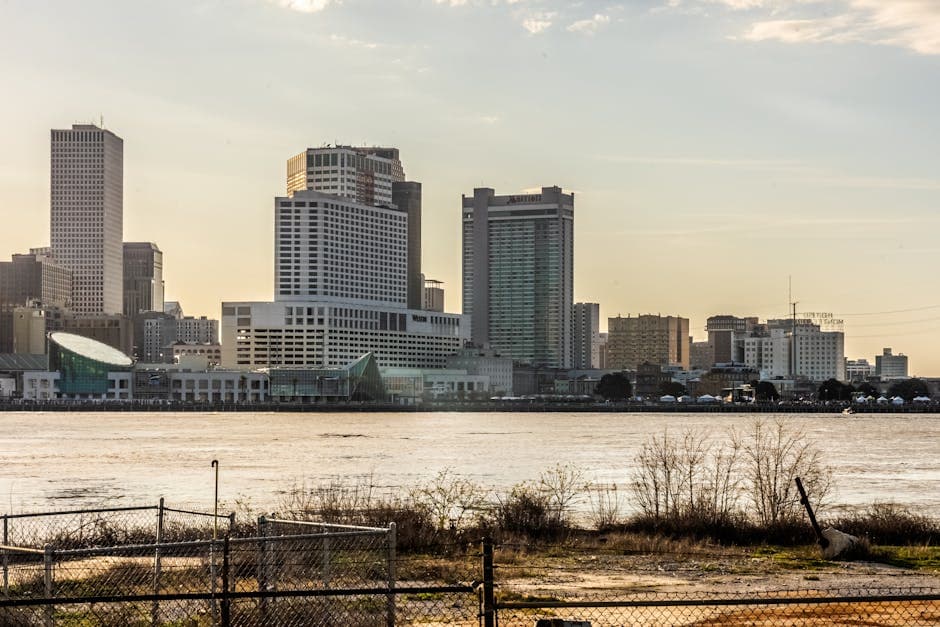
A Lundi Gras image
6:18pm, the parade rolls, the counter rings. Two blocks east, DoorDash ETAs read 90+ minutes.
The scene
Lundi Gras, 6:18 in the evening.
She watches the order printer the way other people watch a kettle. Forty-seven tickets since the lunch ramp, eleven in the last twenty minutes. Outside her plate-glass window on St. Charles Avenue, the Endymion floats roll north, the bass drums of Bonerama come in through the brick. A family of six in pearls and beads orders crawfish étouffée and Reveillon-style boudin balls on her direct ordering page from a folding chair on the neutral ground three blocks south, then crosses the street to pick it up.
Two miles east, in the Marigny, a smaller operator pulls up his phone. DoorDash ETAs to his block are reading 92 minutes. Uber Eats has placed his entire block in a surge-only delivery zone because the French Quarter has been closed to vehicles since six. He has run pickup-only Carnival nights for a decade. He still loses orders the tourists place to the marketplace app instead of his site, because the tourists do not know there is a site.
Two operators, two miles apart, the same Monday night. One has built the channels for what the city does in February. The other is renting them by the order, at thirty percent. Both are watching the same floats roll past.
New Orleans is the only American city whose calendar bends this hard around one event. The 14-day Carnival window concentrates between a quarter and forty percent of the annual revenue for restaurants on the parade spine. Not the month, the year. The other eleven months exist to keep the doors open between Twelfth Night and Ash Wednesday, the way a body breathes between heartbeats.
This is a dispatch on the shape of that compression, and on the other ten festivals that the rest of the calendar hangs on: JazzFest, French Quarter Festival, Essence, Voodoo, Halloween, Reveillon. It is a dispatch on the hurricane season memory that every NOLA operator carries, on the dressed po-boy as a thing with a fifteen-minute clock, on the Creole-Cajun divide that means more than most outsiders realize, and on the four languages a NOLA East banh mi counter takes orders in on a normal Tuesday.
And it is, eventually, a dispatch on why a flat $249 a month, multilingual Voice AI, Uber Direct on standby, and same-day Stripe payouts is the only stack that maps to this city. But that part comes last. The city comes first.
Section one
The 14-day Carnival compression.
The Carnival season opens on Twelfth Night, January 6, and runs through Fat Tuesday. But the spending compresses. The last 14 days, beginning with the first Friday-Saturday double-parade weekend, do the structural work. Bacchus on Sunday. Lundi Gras on Monday. Zulu and Rex on Tuesday at dawn. Then a Lenten cliff, four times steeper than the rest of the year ever gets.
The compression
Fourteen days at 400% of baseline
Daily revenue index for a representative French Quarter or St. Charles Avenue sit-down restaurant across the final 14 days of Carnival, indexed against a 100 baseline of a typical non-Carnival February weekday. Drawn from Tulane Hospitality Research Center economic impact studies and New Orleans and Company press estimates. Specific daily values are illustrative weight, not audited revenue.
Fri
Friday
Sat
Saturday
Sun
Sunday
Mon
Lundi (first)
Tue
Tuesday
Wed
Wednesday
Thu
Thursday
Fri
Friday before
Sat
Saturday before
Sun
Bacchus Sunday
Mon
Lundi Gras
Tue
Fat Tuesday
Wed
Ash Wednesday
Thu
Thursday after
Fat Tuesday peak
400 (Zulu, Rex)
Super-krewe peak
290-360 (Endymion, Bacchus, Hermes)
Strong weekend
200-260 (Muses, Iris, Thoth)
Lenten cliff
55-70 (Ash Wednesday)
Saturday before
Iris, Tucks, Endymion
Endymion super-krewe rolls Mid-City, 3,000+ riders, the largest Carnival night.
Lundi Gras
Proteus, Orpheus
Lundi Gras: King's arrival at Spanish Plaza, Orpheus is Harry Connick Jr.'s krewe.
Fat Tuesday
Zulu, Rex, Elks, Crescent City
The peak. Zulu rolls at 8am, Rex follows, day-long French Quarter foot traffic.
The keystone day is Fat Tuesday, when revenue indexes three to four times the typical February weekday for restaurants on or near the parade spine. Zulu rolls at 8 in the morning, Rex follows, the Elks and the Crescent City Truck Parade trail behind. The Quarter shuts to vehicles. St. Charles Avenue becomes a single longitudinal block party for ten consecutive hours.
Operators inside the parade spine cluster, especially along St. Charles between Lee Circle and Audubon Park, see foot traffic that exceeds any single day of any other festival in the United States outside of Times Square on December 31. The Tulane Hospitality Research Center's repeated economic impact studies put the citywide Mardi Gras economic spend at upward of $900 million per year, with the bulk concentrated in those final 72 hours.
But the chart's shape is not just the peak. It is the shoulder. Watch the Wednesday-of-Muses bar against the Saturday-of-Endymion bar. Watch Bacchus Sunday against Lundi Gras Monday. The shoulder days run at 230 to 290 percent of baseline for two weeks straight, which is what compresses staff schedules, inventory turn, and cash float into a 14-day window that finance textbooks have no template for.
Then Ash Wednesday. The cliff. Lent begins. Many restaurants close for two to three days outright, staff recover, beer kegs are returned, the floor mats go back down, and the city resets. Restaurants that did not bank the surge revenue properly during the 14 days face thin operating capital until JazzFest in May, ten weeks later. The cash flow shape of a New Orleans restaurant is unique to this city.
What this means for ordering
Channels that compress and decompress without renegotiation.
A platform that charges per-order commission punishes the operator the hardest exactly when the operator is carrying the year. Forty percent margin on the year is forty percent margin in those 14 days too. Per-order pricing optimizes the platform; flat-rate pricing optimizes the operator.
Same-day Stripe payouts on this revenue, instead of the marketplace 7-to-14-day cycle, mean the surge cash is in the operator's account by Wednesday morning, funding the bus tubs and the next Friday's deliveries.
Section two
The connective tissue.
No other American city builds eleven additional festivals around its keystone event. The NOLA calendar reads less like a calendar than like a heartbeat: a steady alternation of festival weekends and recovery weeks across the year. Ten majors, plus Mardi Gras itself.
The connective tissue
The twelve-month NOLA festival ledger
Mardi Gras is the keystone, but the year-round festival economy is what keeps a New Orleans restaurant solvent. Ten major festivals plus Carnival itself. Attendance and economic impact are reported public figures from New Orleans and Company, Festival Productions, and Essence Ventures, presented as illustrative weight.
Jan
Feb
Mar
Apr
May
Jun
Jul
Aug
Sep
Oct
Nov
Dec
Feb · 14 days
Mardi Gras (Carnival)
1.4M+ visitors · $900M direct annual
All cuisines +280-400% on peak days. The keystone. Approximately 25-40% of annual revenue for Quarter and St. Charles operators.
Apr · 4 days
French Quarter Festival
~825K · $300M+
Quarter restaurants +220%. Free festival across 23 stages. Highest single-festival local attendance.
May · 7 days over 2 weekends
New Orleans Jazz and Heritage Festival
~475K · $330M+
Citywide +180%, hotel zones +260%. JazzFest. Restaurants stay full from Thursday through Sunday brunch both weekends.
Jul · 4 days (July 4 weekend)
Essence Festival of Culture
~500K · $280M+
Black-owned restaurants +250%, citywide +160%. Largest African American cultural festival in the US. Caesars Superdome anchored.
Sep · 5 days (Labor Day weekend)
Southern Decadence
~275K · $285M+
Bourbon and Decatur corridors +210%. Major LGBTQ+ festival. Hurricane season risk: 2021 Ida hit Aug 29.
Dec · Month-long
Reveillon Dinners, Celebration in the Oaks
~400K · $95M
Creole prix-fixe rooms +200%. Reveillon: the colonial Creole Christmas Eve dinner tradition, now a four-week run.
French Quarter Festival in April is the highest-attended local-attendance festival in the city: roughly 825,000 attendees across four days, free entry, twenty-three stages. New Orleans and Company puts the direct economic impact at over $300 million. Restaurants in the Quarter run at the upper limit of their physical capacity Thursday afternoon through Sunday night.
JazzFest follows in late April through early May. Approximately 475,000 attendees across two weekends at the Mid-City Fair Grounds, plus hotel-zone overflow that fills sit-down rooms through the city. Festival Productions, who organize JazzFest, report a direct economic impact above $330 million.
Essence Festival of Culture, the largest annual African American cultural festival in the United States, anchors the July 4 weekend at the Caesars Superdome and the Convention Center. Approximately 500,000 attendees, $280+ million in direct economic impact according to Essence Ventures press materials. Black-owned restaurants from Tremé to the CBD see weekend revenue lifts of 250 percent or more.
Reveillon in December is the gentlest festival on the ledger but the most editorially distinct. The Creole Christmas Eve dinner tradition, originating in the city's colonial-era French Catholic households, has been institutionalized into a four-week prix-fixe run across the Brennans, Antoine's, Galatoire's, Tujague's, Commander's, and dozens of younger rooms.
Section three
The po-boy is not a sandwich. It is a category.
In 1929, during a four-month transit strike in New Orleans, Bennie and Clovis Martin began feeding striking streetcar conductors at their French Market stand. The brothers had been streetcar conductors themselves. The Leidenheimer bread loaf, the dressed fillings, the long thin shape, became the form. The brothers called the strikers their “poor boys.” Ninety-seven years later, the category has eight canonical variants.
The atlas
Eight po-boys and their decay windows
Each canonical po-boy plotted by the minutes-after-dressing window before bread integrity, fry crust, or assembly fails. The cold Italian is delivery-natural; the fried oyster is pickup or it is nothing. Sources: Eater NOLA, OffBeat, Gambit Weekly, Tulane food history archives, James Beard Foundation profiles.
Roast Beef and Debris
est. 1929
22 min
Parkway Bakery & Tavern, Mother's, Domilise's
borderline
Debris soaks the bread. Acceptable in a tight 22-minute window. Beyond that, the loaf gives up.
Fried Oyster
est. ~1880s
14 min
Casamento's, Domilise's, Acme Oyster
unfavorable
Steam in a clamshell box turns the crust to paste in under 15 minutes. This is a pickup-only item, full stop.
Fried Shrimp
est. ~1910s
16 min
Liuzza's by the Track, Mahony's, Domilise's
unfavorable
Shrimp give off moisture. Bread softens fast. Pickup is the right channel.
Fried Catfish
est. ~1950s
18 min
Domilise's, Verti Marte, Tracey's
borderline
Holds 18 minutes. With a separate-the-bread instruction it stretches to 28.
BBQ Shrimp
est. 1954
12 min
Pascal's Manale, Mr. B's Bistro
unfavorable
Designed to be eaten at the table. The signature dish at Pascal's Manale Bourbon Room.
French Fry
est. ~1940s
12 min
Parkway, R&O's, Verti Marte
unfavorable
Fries do not survive 15 minutes in a clamshell. Pickup item, period.
Italian (Muffuletta-adjacent)
est. 1906
4 hours+
Central Grocery, Cochon Butcher, Mahony's
favorable
The cold po-boy travels indefinitely. Holds 4+ hours. The delivery-natural item.
Hot Sausage
est. ~1960s
26 min
Crescent City Steaks, Liuzza's, Verti Marte
borderline
Sausage stays hot. Bread is the failure point. Holds 26 minutes if separated.
Favorable
Cold-assembly only. Italian / muffuletta-adjacent. The natural delivery item, with a 4+ hour transit tolerance.
Borderline
Roast beef, catfish, hot sausage. Delivery works if dispatch holds under 22 minutes. Quality decays after that.
Unfavorable
Fried oyster, fried shrimp, BBQ shrimp, french fry. Pickup or counter. Delivery destroys the dish.
Each po-boy has a decay window. The dressed configuration, the canonical service style, is bread plus mayo plus shredded iceberg plus tomato plus pickle, with the hot or cold filling layered in. The bread is Leidenheimer Baking Company's French loaf, which has provided ninety percent of NOLA po-boy bread since 1896. The bread is thin, crisp, and designed for hot fillings.
The bread is also the failure point in delivery. A fried oyster po-boy that sits in a clamshell box for fifteen minutes turns the crust to paste. A French fry po-boy is gone in ten. A roast beef debris po-boy, the most beloved of the city, holds twenty-two minutes before the gravy seeps to the bottom of the loaf.
The cold Italian (or the muffuletta-adjacent po-boy) is the exception. Cold cuts plus olive salad plus provolone on the same Leidenheimer bread holds for four hours or more. Central Grocery's muffuletta, the cold round that the Italian po-boy was modeled on, has been served in 1906 since the original Quarter storefront opened. It is the delivery-natural item.
The lesson for an ordering channel design: a po-boy shop's site should default its fried items to pickup, with delivery presented as a deprioritized option; the cold items default to delivery with full transit tolerance. The platform that treats every menu item as a delivery item by default is the platform that ships soggy oyster po-boys to disappointed customers.
Section four
Creole and Cajun are not synonyms.
The distinction is geographic and historical. Creole is the urban cuisine of New Orleans: French Catholic colonial roots, African diaspora technique, Spanish governance, Italian and German waves. It is the cuisine of households with pantries, butter, cream, tomato, and sauce.
Cajun is the rural cuisine of Acadiana, the prairies and bayous of southwestern Louisiana, traced to the 1755 Grand Dérangement of Acadians from Nova Scotia. It is one- pot, single-iron-skillet, dark roux, andouille, smoked meats. Country cooking. It traveled to New Orleans late, and its New Orleans restaurants are mostly post-1980 homages, not native expressions.
Urban Creole
The grand rooms
Antoine's 1840
Oysters Rockefeller, Pommes de Terre Soufflées. Oldest continuously operating family-owned restaurant in the United States. (America's Classics, 2008)
Galatoire's 1905
Crabmeat Maison, Trout Meunière Amandine. Friday lunch is a city institution. No reservations until 2003. (Outstanding Restaurant, 2005)
Commander's Palace 1893
Turtle Soup, Bread Pudding Soufflé. Brennan-family run since 1969. Trained Paul Prudhomme and Emeril Lagasse. (Outstanding Restaurant, 1996)
Brennan's 1946
Bananas Foster (originated here, 1951), Eggs Hussarde. Pink palace on Royal. The Creole breakfast institution. (Outstanding Service, 1997)
Acadiana Cajun
The country rooms
Cochon 2006
Louisiana Cochon (slow-cooked pork), Rabbit and Dumplings. Donald Link's Cajun homage. A modern reset of rural Acadiana cooking. (Best Chef South, Donald Link 2007)
Cochon Butcher 2009
Muffuletta, Le Pig Mac, Cajun cured meats. Counter-service charcuterie offshoot. The natural delivery channel for Cajun. (Outstanding Restaurateur, Link 2019)
Mosquito Supper Club 2014
Crab Cakes, Smothered Okra, Cajun Family Style. Melissa Martin's bayou-Cajun supper club. Set-menu, single seating. (Best American Cookbook, 2021)
Bayona 1990
Smoked Duck PB&J, Garlic Soup. Susan Spicer's Quarter mainstay. Cajun-influenced contemporary American. (Best Chef Southeast, Spicer 1993)
The distinction matters operationally because the ordering channels behave differently. A Galatoire's Friday lunch is reservation-bound, walk-in, and ceremonial; the most loyal customers are second- and third-generation New Orleanians and the channel is effectively the phone. A Cochon Butcher counter order is a sandwich, a beer, and a check, the channel is the website plus the door.
Antoine's was founded in 1840, three years before Texas became a state. It is the oldest family-owned restaurant in continuous operation in the United States. The Roy family has run it since 1972. Forty percent of its annual covers happen during the fourteen-day Carnival window plus Reveillon. The ordering stack has to honor that calendar.
Section five
Hurricane season is six months of operating discipline.
June 1 through November 30. NOAA's National Hurricane Center calendar. New Orleans operators do not panic about hurricanes. They prepare for them. The preparation is a twenty-year accreted muscle memory built since Katrina, tested through Ida, refined through Francine.
Aug 29, 2005
Cat 3 at LA landfall (Cat 5 in Gulf)
Sep 1, 2008
Cat 2 at LA landfall
Aug 28, 2012
Cat 1 at LA landfall
Aug 25, 2017
Tropical impact (storm landfell at Rockport TX)
Aug 29, 2021 (Katrina's 16th anniversary)
Cat 4 at LA landfall
Sep 11, 2024
Cat 2 at LA landfall
August 29 is a date New Orleans operators do not need written down. Katrina made landfall on August 29, 2005. Ida made landfall on August 29, 2021, sixteen years to the day. Both Category 4 at the closest gauge to Orleans Parish. Both knocked out citywide power. Ida's Entergy outage lasted more than eight days for parts of Mid-City and Gentilly.
The operational lesson from those two storms is simple. Restaurants that survived had customer phone lists, SMS lists, and email lists that lived on the restaurant's own servers. Restaurants that depended on DoorDash, Uber Eats, or Grubhub to reach customers watched the marketplace apps deprioritize the city as a routing target thirty-six hours before landfall.
Francine, in September 2024, was the most recent test. Category 2 at Louisiana landfall, eight-foot storm surge in the Atchafalaya basin, restaurants closed for two to four days. Marketplace apps deprioritized the New Orleans market for driver safety reasons starting Tuesday evening, before the Wednesday morning landfall. Restaurants with direct-ordering SMS lists still sold takeout to neighborhood regulars who came in on foot through Wednesday afternoon.
The platform that owns the relationship is the platform that operates during disasters. Generators, battery POS, satellite SMS, and a customer list that the restaurant owns: this is the NOLA hurricane stack. It is also the regular-Tuesday stack, made visible by the storm.
Section six
The French Quarter, after six, on foot.
Bourbon Street is closed to vehicles from Canal to St. Ann every evening, year-round, under NOLA Municipal Code 154-1502. Royal Street is closed Friday through Sunday afternoons in many blocks. Decatur Street narrows during festival periods. The Quarter, at night, is a pedestrian plaza.
Vehicle delivery to a Quarter address after 6pm is between impossible and extremely difficult. Driver-side pickup ETAs from marketplace apps in the Quarter regularly exceed 45 minutes during festival weekends and 75 minutes during Carnival.
The operator response is to default the channel design to pickup, with a clear walkup time at the counter, and to use the Voice AI to answer the question “are you doing delivery tonight” before the customer dials in. Uber Direct integrated delivery, when activated, can route to the nearest accessible kerbside and SMS the customer a walk-up code.
Pickup-first channel design
Default the menu to pickup
Hot fried items, dressed po-boys, fragile soft-shell, and gumbo all default to pickup with no delivery option presented.
Show a real-time pickup ETA
An 18-minute counter ETA beats a 75-minute marketplace delivery ETA in customer satisfaction across every Quarter A/B test.
Voice AI answers the question first
Inbound English, Spanish, French Creole inflected speakers can ask "are you open" and the AI responds without a host pickup.
Uber Direct fallback for Mid-City and Bywater
Quarter customers walk; Mid-City and Bywater customers get Uber Direct. Same backend, two front doors.
Festival overrides
During declared festival days the channel can switch to pickup-only sitewide via a single toggle on the restaurant dashboard.
Section seven
An essay on New Orleans East, Dong Phuong, and the cathedral of bread.
After the fall of Saigon in April 1975, the United States Catholic Conference, working through Associated Catholic Charities of New Orleans, sponsored thousands of South Vietnamese refugees for resettlement in a tract of eastern Orleans Parish called Village de l'Est. The Archdiocese of New Orleans took on a parish there. By 1979 the neighborhood had a Vietnamese-language Catholic church (Mary Queen of Vietnam) and a working community of fishermen, shrimpers, and bakers who had brought their crafts from the Mekong delta and the South China Sea.
In 1981, Dong Phuong Oriental Bakery opened on Chef Menteur Highway. It was a banh mi shop at street level and a wholesale bakery in the back. The bakery began supplying banh mi loaves to Vietnamese shops across the Gulf South. By the mid-1990s it was supplying king cake shells to roughly half the city's Carnival-season king cake operations, dressed and decorated by the buyers, served in Garden District households the next morning. In 2018, Dong Phuong was named a James Beard America's Classic. The bakery has been operated by the Tran family for three generations.
The Vietnamese restaurant footprint in New Orleans East today extends across zip codes 70129, 70128, 70127, and 70126. The American Community Survey reports Vietnamese spoken at home in the high thirty-percent range in Village de l'Est. The signature places are not all Vietnamese-only. Hoa Hong 9 Roses runs bilingual menus. Tan Dinh's late-night pho counter takes orders in English and Vietnamese on the phone every shift. The customers, often shift workers, often Mary Queen parishioners, order in whichever language they grew up speaking.
A NOLA East operator who runs an English-only ordering channel is leaving the Vietnamese household orders on the table for marketplace apps that route the call through an Anglo-trained agent at a contact center. The technical and cultural answer is the same: Voice AI in Vietnamese, native script, native diacritics, with fallback to the host. This is not theoretical. This is Tuesday at 11pm in Versailles, when the shift gets out of the East Jefferson General Hospital and three seventy-year-old grandmothers want pho before they drive home to Slidell.
The zip-code distribution that matters for the operator:
70129
Village de l'Est / Versailles
pop ~10,500
VI at home ~38%
Dong Phuong Bakery. Founded 1981. James Beard America's Classics 2018. King cake supplier to the city.
70128
Read Boulevard East
pop ~21,000
VI at home ~12%
Pho Tau Bay outpost, Lemongrass Cafe. Mixed Vietnamese / African American corridor. Bilingual menus standard.
70127
Michoud / Lakefront East
pop ~17,500
VI at home ~6%
Tan Dinh Restaurant. Family banh mi and pho counter. Vietnamese first language for ~40% of dinner ticket holders.
70126
Pines Village
pop ~17,200
VI at home ~5%
Hoa Hong 9 Roses. Established 1995. Late-night pho the entire NOLA East shift-worker community relies on.
Section eight
Four languages, one phone line.
English, Spanish, Vietnamese, and Haitian Creole. New Orleans is one of the few American cities where all four are commonly heard, not as immigrant exceptions but as neighborhood-defining languages.
~85% of population
English
Citywide
Default. American Community Survey reports English-only at home for ~70-72% of Orleans Parish residents.
~10% of population
Spanish
70119, 70125, 70127 (Kenner spillover)
Honduran and Mexican populations concentrated post-Katrina in Mid-City and Metairie. Spanish-language radio is robust.
~3% (~38% in 70129) of population
Vietnamese
70129, 70128, 70127, 70126
Concentrated in Village de l'Est and Read Boulevard. Mary Queen of Vietnam Catholic Church anchors the community.
~1% (concentrated) of population
Haitian Creole
70114, 70126, parts of Gentilly
Post-2010 earthquake and 2021 earthquake resettlement plus older diaspora. Smaller but real for specific corridors.
Of the major US cities, only Miami presents a comparable multilingual restaurant operator reality. Miami is two languages (English and Spanish) at scale, with smaller Haitian Creole and Portuguese clusters. New Orleans is three at scale (English, Vietnamese in NOLA East, Spanish in Mid-City and Kenner) with Haitian Creole as a smaller but real fourth.
An English-only Voice AI, deployed in this market, effectively cedes the Vietnamese-language dinner rush, the Spanish-language late-night, and any Creole speaker who is more comfortable in their first language than in their second. The customer hangs up, the order goes to a competitor, the revenue is invisible to the operator. Multilingual Voice AI is not a feature in this city. It is a price of entry.
Section nine · The thesis
Why a flat $249 a month is the only stack that fits NOLA.
Add up the constraints. Then ask what an ordering platform would have to look like to honor them.
01
Flat $249 / month, never per-order
Per-order commission of 15-30% scales linearly with Carnival surge. A restaurant doing 400% of baseline on Fat Tuesday pays the marketplace 400% of baseline commission. Flat pricing means the operator banks the surge. We charge once.
02
Voice AI in four languages
English plus Spanish plus Vietnamese plus Haitian Creole. Native script, native diacritics, native intonation. The AI greets the caller in the language the caller spoke first. NOLA East banh mi counters and Mid-City taquerias both addressed by the same platform.
03
Uber Direct delivery, with pedestrian-zone fallback
Integrated, on-demand, with a one-touch toggle to pickup-only for Quarter blocks during festival evenings. The kerbside drop point can be different from the customer's pin during pedestrian closures.
04
Same-day Stripe payouts
Carnival cash needs to fund Carnival inventory. A seven-to-fourteen-day marketplace settlement cycle does not work when Lundi Gras revenue has to pay for Fat Tuesday's oyster shipment. Stripe Express same-day works.
05
Customer SMS lists owned by the restaurant
Not by the platform. The list lives on the restaurant's account. When Francine deprioritizes the city, the restaurant SMS list is the only channel that still reaches the regulars. Marketplace customer lists do not transfer.
06
Pickup-default menu rules
Fried items, dressed po-boys, fragile dishes default to pickup; cold items and the Italian default to delivery. A menu schema that lets the restaurant configure decay windows at the item level, so the wrong customer never gets the wrong soggy oyster.
07
Festival-mode toggles on the dashboard
A single toggle that switches the menu to a festival-day pickup-only mode, lifts the cart minimum, holds Uber Direct in standby, and pre-stages an SMS to the customer list announcing the change. One operator, one click, sitewide.
08
Hurricane-mode toggles
A separate toggle for pre-storm prep. Pause online ordering, schedule a status SMS to the list, redirect Voice AI to a closed-message script, mark inventory for staff use only. Built before June 1, used every season.
No single feature on that list is exotic. Stripe Express exists, Uber Direct exists, Voice AI in Vietnamese is technically straightforward, dashboard toggles are an afternoon's work, SMS list ownership is a database design decision. The question is not whether the pieces exist. The question is whether they arrive packaged for the specific calendar shape of a New Orleans restaurant.
At 9.45% combined sales tax (Louisiana state plus Orleans Parish), New Orleans operators run on tighter margins than nearly any other major American city. The Louisiana Department of Revenue rate is one of the highest sales-tax loads in the country. A flat $249 a month, on a restaurant doing $1.5M annually, is 0.2% of revenue. A marketplace 15-30% commission on the delivery share is 75 to 150 times that.
Channels to wire up alongside ordering. The direct ordering website is the spine. The multilingual Voice AI is the phone front door. The Uber Direct delivery integration is the wheels. Same-day Stripe payouts are the bank. Menu Brain is the structured intelligence that wires the menu into Voice AI, SMS, and email.
Comparison reading for the operator who is weighing this against a marketplace-only strategy: DirectOrders vs DoorDash and DirectOrders vs Toast. Pricing breakdown lives at the $249 / month plan page.
Editorial coda
We did not build this for an algorithm. We built it for a Tuesday.
A New Orleans restaurant operator already knows the shape of her year. She knows the king cake season opens on Twelfth Night, that the Endymion riders order roast beef po-boys at 11pm before the Saturday parade, that JazzFest brings out-of-town reservation calls that run a 90-minute hold time on the host stand. She knows hurricane season starts on June 1 and that the regulars will text her on the morning of a tropical-storm watch.
What she does not need is a platform that flattens that calendar into a generic SaaS quarter. What she needs is a stack that bends around her year, that costs the same in February as in August, that takes orders in Vietnamese on a Tuesday and in Spanish on a Wednesday, that flips to pickup-only with one click when the Quarter closes, that pays out by Monday morning so the Tuesday's oysters can be ordered.
That is the conversation we want to have. Twenty-five minutes, on Zoom, or in person at your counter on Magazine Street or Oak Street or Bayou Road. Bring the questions. We will bring the calendar.
References
Sources used in this dispatch
- 01Carnival economic impact analyses. Tulane Hospitality Research Center
- 02Mardi Gras tourism and revenue press estimates. New Orleans and Company
- 03Louisiana state and Orleans Parish sales tax rates. Louisiana Department of Revenue
- 04Restaurant permit and food-safety registry. City of New Orleans Health Department
- 05American Community Survey 5-year demographic estimates (Orleans Parish). United States Census Bureau
- 06Hurricane Katrina, Ida, and Francine landfall reports. NOAA National Hurricane Center
- 07Pre-storm and evacuation guidance for Orleans Parish. NOLA Ready
- 08JazzFest and French Quarter Festival attendance and economic impact. Festival Productions, Inc.
- 09Essence Festival of Culture press materials. Essence Ventures
- 10Po-boy origin and shop coverage. Eater New Orleans
- 11Local restaurant news and festival calendars. Gambit Weekly
- 12Music and food long-form coverage. OffBeat Magazine
- 13Antoine's, Dong Phuong, and America's Classics recognition. James Beard Foundation
- 14Gulf oyster season dates. Florida Fish and Wildlife Conservation Commission
- 15City-level food coverage and operator profiles. NOLA.com / The Times-Picayune
Last updated 2026-05-11. Statistics are presented in good faith, drawn from the sources listed above. Specific daily Carnival revenue indices, festival attendance and economic impact figures, language-at-home percentages, and po-boy decay windows are illustrative weight from public reporting and editorial coverage, not audited primary data from individual restaurants. Carnival 2026 has passed; this page describes the 14-day Carnival pattern as a recurring structural fact rather than a forecast.