Carrier
Pier 2
Sewells Point pierside
Catering signature
Nimitz-class carrier moorage when a CVN is in port
It is 11:18 on a Friday in May, and a Ghent operator on Colley Avenue has four things stacked on the pass at once: a forty-cover squadron lunch order routing to Pier 7 that has to clear the Naval Station gate before the 13:00 watch change, a Tagalog Voice AI transcript from a Filipino-American family on the Ocean View side asking about a Sunday christening table, an EVMS resident dropping off a Sentara conference catering deposit, and a Festevents notice that Town Point Park goes hard at six for the first Bayou Boogaloo weekend.
This is a reading on what Norfolk actually is as a restaurant market in 2026: a Navy town built around the world's largest naval base, an urban core wrapped by Ghent and Park Place and Ocean View, a university and medical-school district anchored by ODU and EVMS, a Filipino-American capital that traces directly to a century of Navy service, and a waterfront city whose Festevents calendar runs from Harborfest in June to Grand Illumination in November.
Hampton Roads is the only major US metro where every city is independent. Virginia's peculiar municipal structure has no counties inside an independent city, and the cities collect their own taxes. For an operator that means separate meals tax filings if you cross city lines, and separate special-event permitting offices.
The metro is split by water and bridged by three tunnels: the Hampton Roads Bridge-Tunnel (Norfolk to Hampton), the Monitor-Merrimac Memorial Bridge-Tunnel (Suffolk to Newport News), and the Chesapeake Bay Bridge-Tunnel (Virginia Beach to the Eastern Shore). Tunnel traffic dictates delivery timing more than weather does. The four-thirty Friday HRBT backup is a structural fact, not an exception.
Norfolk is the urban core. Virginia Beach is the largest city in the Commonwealth by population. Chesapeake is the suburban-rural pivot. Newport News and Hampton anchor the Peninsula side. Portsmouth is the shipyard city across the Elizabeth River. Suffolk is peanut country. Williamsburg, on the Peninsula side, is the tourism anchor built around William and Mary and Colonial Williamsburg.
A storefront in Norfolk can serve a market that functions as eight cities for tax and four cities for practical drive-time delivery. A multi-location operator builds around the tunnel chokepoints, not around the straight-line distance.
Norfolk is the only Hampton Roads city where you can walk from a downtown office tower to the AAA ballpark to the cruise terminal to the streetcar-era residential blocks of Ghent in under thirty minutes.
Source: NHHC Filipino Americans in the US Navy, MPI, Pew Research, Philippine Cultural Center of Virginia.
Hampton Roads is one of the largest Filipino-American population centers on the East Coast, a footprint that traces directly to a century of Filipino service in the United States Navy. From the early twentieth century through 1992, the Philippines hosted US Navy recruiting stations (at Subic Bay and elsewhere), and Filipino sailors served in the Navy in numbers far out of proportion to the Philippine population (the stewards rating in particular had a Filipino-American majority for decades).
When those sailors finished a Norfolk shore tour, many stayed. The wife, the children, the parents, and a steadily widening cousin network anchored to Norfolk and the neighboring cities. Ocean View, Larchmont, the Pretty Lake Avenue corridor, and the Virginia Beach Newtown and Witchduck areas hold the densest contemporary residential concentrations. The Philippine Cultural Center of Virginia (just over the Norfolk line in Virginia Beach) is the community's civic anchor. Bayanihan Arts and Events Center and a dense network of Catholic parishes hold the cultural calendar together.
The community kitchen tradition is the deeper story. The Filipino-American household in Hampton Roads runs a kitchen that feeds the squadron when the squadron is home, the church when the church is hosting, the godfather's wake when the godfather has passed, and the new sailor's family when they roll up to Norfolk for the first time. A Filipino bakery on Granby Street or a karaoke and lumpia counter on Pretty Lake Avenue is not a novelty market entry. It is a continuation.
The practical operational point is multilingual ordering. A Tagalog Voice AI that takes a Sunday family order, drops the ticket into the kitchen system in English, and confirms pickup in Tagalog is not a feature flag. It is the difference between catching the order and losing it to a sibling restaurant down the block, and (more importantly) between treating the customer as a market segment and treating them as the welfare structure of the base.
An ordering stack that ships English-only into Hampton Roads is reading the city wrong. DirectOrders Voice AI ships with Tagalog in the default language matrix for Norfolk and Virginia Beach.
Old Dominion University sits west of Ghent on a Hampton-Boulevard-to-Powhatan Avenue footprint and enrolls roughly twenty-four thousand students across undergraduate and graduate programs. It is the second-largest public university in Virginia by enrollment and a Carnegie R1 research institution. The student body is heavily commuter, which has a different ordering implication than a residential campus: less late-night dorm delivery, more weekday lunch and pre-class breakfast pickup.
Eastern Virginia Medical School, the academic medical school of the Sentara health system, sits a few blocks east of ODU around West Olney Road and Sentara Norfolk General Hospital. EVMS trains physicians, physician assistants, and graduate biomedical scientists; its faculty and resident roster, combined with the Sentara Norfolk General clinical staff, runs a recurring weekday catering line that is durable across the year.
The catering signature for the corridor is morning grand rounds (breakfast trays before 7:30), departmental noon conferences (boxed lunch volume from 11:30), and the recurring resident-and-fellow training sessions that produce a steady weekday catering demand independent of the academic calendar. A Norfolk operator with a tuned EVMS account is running a Tuesday-Wednesday-Thursday lunch calendar that holds.
ODU adds a different shape. Game days at the Chartway Arena and Kornblau Field, the seasonal student-event calendar, the graduate-program executive cohorts that meet on Saturdays, and the international-student community (ODU has one of the largest international enrollments in Virginia) all run their own ordering rhythms. The Voice AI Tagalog, Spanish, and Vietnamese channels matter here for the same reason they matter on the Naval Station side.
The Sentara Norfolk General campus also runs a separate hospital-staff catering line for night-shift physicians, ICU staff, and OR coordinators. Hospital catering is its own discipline (kosher and vegetarian on the labels, hot and cold separations, real plates not foam) and a Norfolk operator that gets it right has a five-year contract waiting.
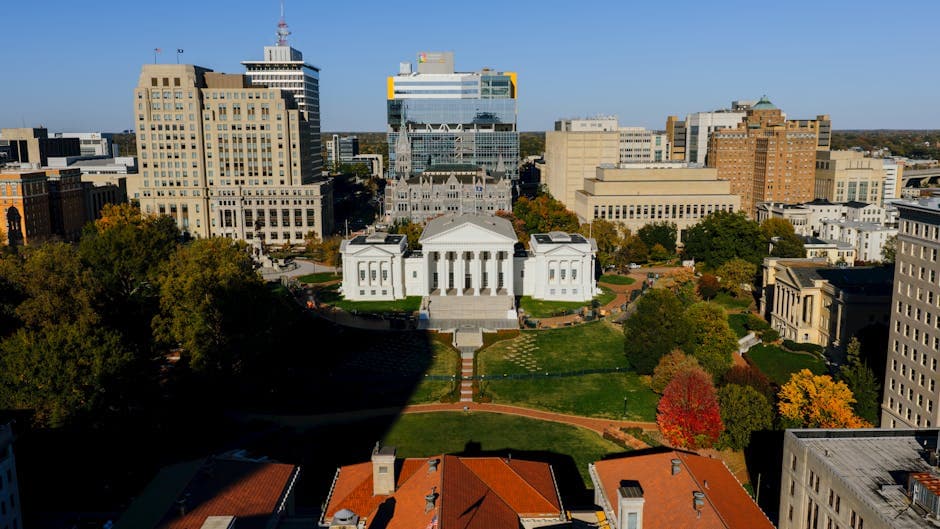
Ghent is the streetcar-era residential heart of the city. Colley Avenue runs the dining spine. The Chrysler Museum of Art (free admission, anchor cultural venue), the Naro Cinema, and the tree-lined blocks between Hampton Boulevard and Granby produce a year-round neighborhood dinner trade.
Downtown is the waterfront office core and the Granby Street entertainment strip. Town Point Park anchors the Festevents programming. MacArthur Center and Harbor Park sit a few blocks east, with the Norfolk Tides AAA baseball running from late March to September.
Park Placesits north of Ghent. The Hermitage Museum and Gardens anchors the riverfront edge; the 35th Street corridor is the growing neighborhood food spine.
Ocean View is the northside Bay-frontage neighborhood. Ocean View Beach Park, Willoughby Spit, and the Pretty Lake Avenue fish houses set the summer beach takeout rhythm; a meaningful share of the residential community here is Filipino-American and military-spouse heritage.
The Norfolk operator does not read the city by zip code. They read it by district, and they staff the calendar for the district they are in.
Independent dinner houses, third-wave coffee, the Naro Cinema, and the Chrysler Museum half-mile from the avenue.
Year-round neighborhood dinner trade; Friday-Saturday couples and Sunday brunch.
Town Point Park, MacArthur Center, Granby Street bars, Tides at Harbor Park to the east.
Office lunch Tue-Thu; concert and event windows on Town Point evenings.
Granby Street north anchor, the Hermitage Museum, and a growing food corridor around 35th Street.
Neighborhood takeout and a Sunday neighborhood brunch line; community catering.
Ocean View Beach Park, Willoughby Spit, Pretty Lake Avenue fish houses, a Filipino-American population concentration.
Summer beach takeout, fish-camp seafood, base-personnel weekend trade from Little Creek and Norfolk.
Fourteen piers, 64-plus ships, ~63,000 active duty on station; squadron and command catering.
Recurring squadron and command catering; weekday lunch, change-of-command receptions, homecoming weeks.
Old Dominion University (~24K students), Eastern Virginia Medical School, Sentara Norfolk General Hospital.
Student delivery, faculty lunch, hospital staff catering, late-night around the academic calendar.
Norfolk sits on the lower Chesapeake Bay, where the Elizabeth River meets the Hampton Roads harbor. The Lynnhaven and Lafayette rivers (on the Norfolk and Virginia Beach sides) hold the closest local oyster appellations to the city. Cold-water months (November through February) produce the fattest meat; the downtown raw bars and the Ghent dinner houses run their oyster programs against that window.
Blue crab is the second pillar of the lower-Bay menu. Hampton Roads has historically been the processing center for Virginia's bay crab landings; the soft-shell window in May and June is the menu trigger that sets the warm-season seafood program. Croaker is the everyman fish of the region, and a pan-fried whole croaker on the Ocean View side is more honest Norfolk than any rebranded Mediterranean special.
Striped bass is the regulated wildcard. The Virginia Marine Resources Commission sets the open window each season; a printed menu that names a closed species is a compliance issue, not a marketing decision. A direct ordering channel makes seasonal menu swaps a same-day edit rather than a marketplace tax.
The honest Norfolk plate is a Lynnhaven oyster in November and a soft-shell sandwich in May. The honest Norfolk menu updates the moment the lower Bay tells it to.
Lynnhaven and Lafayette River sets feed the downtown raw bars; the cold-water months hold the fattest meat.
Soft-shell window May to June. Hampton Roads is the historical processing center for Virginia's bay crab landings.
The everyman fish that put Norfolk on the seafood map. Pan-fried whole croaker remains the honest plate.
Doormat flounder out of Little Creek and Lynnhaven inlets; a Norfolk dinner-house menu staple.
Fall run on the Ocean View, Willoughby Spit, and Lynnhaven piers; a community-pier ritual.
Open window is set by Virginia Marine Resources Commission. A printed menu naming a closed species is a compliance issue.
Local clam beds feed the chowder and steamer pots from the Ghent dinner houses to the Ocean View fish camps.
Not a menu fish, but the Reedville-to-Norfolk industrial fishery shapes Bay ecology and the rockfish forage base.
The Norfolk Tides are the AAA International League affiliate of the Baltimore Orioles. Their home park, Harbor Park, sits at the east end of downtown along the Elizabeth River, three blocks from the federal courthouse and a short walk from Town Point Park. A regular season runs from late March to early September with roughly seventy home games; the home schedule produces a recurring weekday and weekend dinner-rush window on the downtown restaurant grid.
Festevents is the Norfolk non-profit that runs the Town Point Park calendar. Norfolk Harborfest in early June is the flagship event (a three-day waterfront festival programmed around tall ships, fireworks, and live music; it is among the longest-running free maritime festivals on the East Coast). Bayou Boogaloo and Cajun Food Festival in late June, the recurring Town Point Park concert series across the warm season, the Norfolk Greek Festival in May (hosted by the Saints Constantine and Helen parish for over fifty years), the Filipino-American community festivals around June and October, and the Grand Illumination Parade the Saturday after Thanksgiving round out the calendar.
The operational implication for a downtown operator is that the dinner-rush window has a calendar overlay. A Tides home game produces a 4:30 to 6:30 pre-game surge and a 9:30 to 10:30 post-game wind-down. Harborfest closes streets, saturates hotel inventory, and routes pedestrian traffic past the dinner houses on Granby and the Plume Street corridor in volumes a normal Saturday does not produce.
The unspoken cost is that marketplace delivery apps degrade through the festival weekends as the road closures multiply and the dispatch radius shrinks. The downtown restaurants that hold their margin through Harborfest and the Illumination Parade are the ones whose direct channel already has the customer relationship before the event starts.
For an operator running a hybrid menu (kitchen out of a Granby Street dinner house, a Harbor Park concession partnership during the season, and a Town Point Park pop-up booth across the festival weekend), DirectOrders handles the three channels as one back-end: same menu edit, one tax line per city, one payout reconciliation, one loyalty program.
Atlantic hurricane season runs from June 1 through November 30. The Hampton Roads coastline sits in the mid-Atlantic landfall belt and is exposed to direct tropical strikes, glancing brush-by storms that produce storm surge without a landfall, and the long Atlantic swell from systems passing offshore. The National Weather Service Wakefield office and the National Hurricane Center are the two authoritative sources for advisories and forecasts on this coastline.
The Naval Station Norfolk sortie plan is the local operational backbone. When a named storm enters a decision window for landfall in the Mid-Atlantic, the Atlantic Fleet stages a sortie and the carrier groups, amphibious ready groups, and other vessels depart the Hampton Roads basin. The vacant piers along Sewells Point are the cleanest public signal an operator has that the base catering channel is about to compress and the entire metro is entering a contingency mode.
Restaurants that operate through hurricane season build a two-stage continuity plan. Stage one is the seventy-two hour pre-landfall window: secure inventory, pre-position cash for payroll, communicate hours to customers, and shift the menu to a contingency set of dishes the prep team can produce without a full supply rail. Stage two is the post-storm window: re-open hours, coordinate with power utility schedule, and serve the recovery community. The Norfolk restaurant scene's muscle memory on this is decades deep, and the Ghent and downtown grids hold power earlier on average than the lower-lying Ocean View corridor.
The ordering stack matters more during a storm than at any other time of the year. A direct channel that the operator controls (the website, the SMS list, the Voice AI fallback) communicates hours and reopening in real time. A marketplace channel does not. The same customer who was a Wednesday repeat in August looks for real information in September when the storm passes.
Source: NOAA National Hurricane Center, NWS Wakefield, Navy Region Mid-Atlantic sortie plan.
Hampton Roads is a multilingual ordering market and Norfolk is its urban core. The Filipino-American community concentrates on the Ocean View, Larchmont, and Pretty Lake Avenue corridors. The Vietnamese community runs a small but durable network of pho houses and banh mi counters from Norfolk through the Newtown corridor into Virginia Beach. The Latino population (Mexican, Salvadoran, Honduran, Puerto Rican, and a growing Dominican set) concentrates along Newtown Road, Witchduck, and the Indian River corridor across the Chesapeake line.
The practical operational point is the inbound phone call. A meaningful share of community orders by phone are in Tagalog, Vietnamese, or Spanish. A Voice AI that takes the order in the customer's language, drops the ticket into the kitchen system in English, and confirms pickup or delivery in the customer's language is not a polish item. It is the difference between catching the order and losing it to a sibling restaurant down the block, and (more importantly) between treating the customer as a transient market and treating them as the spine of the city.
Norfolk operators that run the Voice AI in Tagalog catch the Sunday family order from the Ocean View aunties that would otherwise time out the call. Operators that run it in Spanish catch the Newtown Road family-event order. Operators that run it in Vietnamese catch the noon pho order from the EVMS resident who grew up in a Vietnamese household two cities over.
An English-only ordering stack in Norfolk is reading the city wrong. DirectOrders ships Tagalog, Spanish, and Vietnamese in the default Voice AI language matrix here.
Source: Migration Policy Institute, Pew Research, US Census ACS five-year estimates.
The argument is not that DirectOrders is cheaper. It is that the shape of demand in Norfolk (military-anchored, multilingual, neighborhood-segmented, waterfront-seasonal, and hurricane-exposed) requires an ordering stack whose capabilities line up with that shape. The marketplace stack is built for a flat weekly demand curve in a city that does not have one.
Replaces 25 to 30 percent marketplace commissions with a fixed line. On a Tides Saturday or a Harborfest weekend, where the commission stack hits hardest, the flat fee saves the most.
English, Tagalog, Spanish, and Vietnamese. Built for the Filipino-American footprint of Hampton Roads and the wider multilingual ordering market. Tickets land in the kitchen in English.
Standing-order templates, gate-window delivery confirmations, and command-level invoice flow for Naval Station Norfolk contracting officers and squadron staff.
Grand-rounds breakfast trays, noon-conference boxed lunches, and the Sentara Norfolk General overnight catering line. Recurring corporate accounts handled like contracts, not coupons.
Same-day delivery without the marketplace customer-of-record problem. Routes around Granby Street closures during Harborfest and Grand Illumination.
Operator-controlled hours, SMS broadcast, and Voice AI message routing for the seventy-two hour pre-landfall window and the recovery re-open.
English, Tagalog, Spanish, Vietnamese. Hand-off to staff on edge cases.
Read →Same-day dispatch. Closure-aware routing for Harborfest and Grand Illumination.
Read →The Oceanfront, NAS Oceana, and Pungo dossier on the bay-side neighbor.
Read →Numbers used in this article reference public datasets, federal publications, and Hampton Roads journalism. Quantitative illustrations (lower-Bay seasonal availability chart, the hurricane season clock) are anchored to those public series and are illustrative, not regression estimates.
Last reviewed May 11, 2026. Editorial illustrations stylized. No invented figures.