Issue No. 12 / Across the Bay
Oakland holds the Bay Area's most diverse food economy, on rents 40 to 60 percent under SF and under California's identical regulatory load.
A field report on the Oakland restaurant economy: East Oakland Black food heritage, the Fruitvale Latino corridor along International Boulevard, Oakland Chinatown around 8th and Webster, Lake Merritt and Grand Lake, Jack London Square and the Port of Oakland, and what the AB 1228, SB 478, and Prop 22 stack does to a single-store independent operating two BART stops from San Francisco.
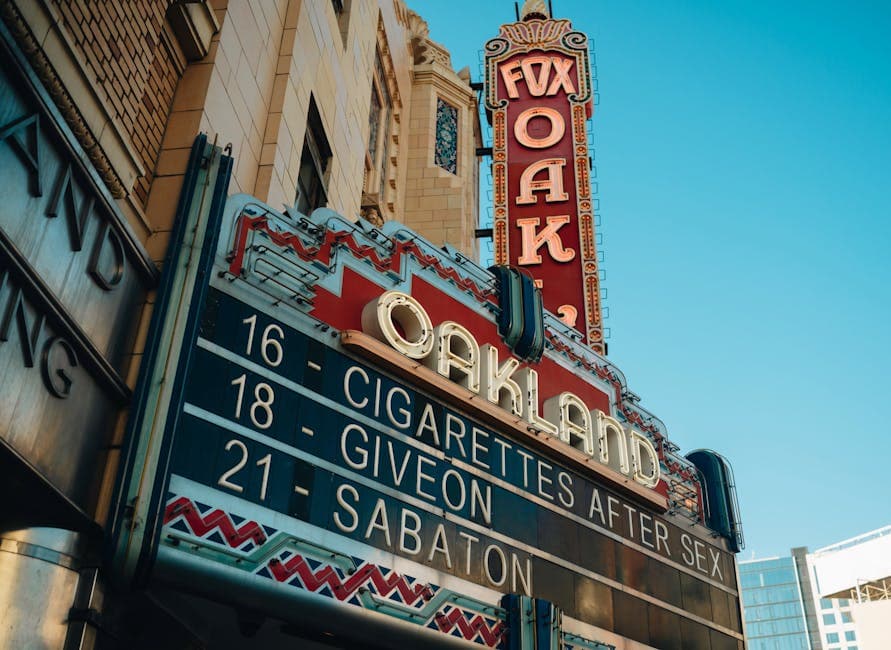
Part One. Sunday Brunch, Old Oakland.
At 11:08 on a clear Sunday, a Washington Street operator counts his covers and decides whether to keep the second cook.
The room sits on Washington Street in Old Oakland, a thirty-eight-seat dining room two blocks east of the 12th Street BART station and four blocks west of Chinatown's Webster Street spine. Brick wall, pressed tin ceiling, ten-foot windows that look out across the corner toward the brick facade of the Pacific Coast Brewing Company building, which has been a Washington Street fixture since 1988. The operator, whose name does not matter for the purposes of this feature because the composite is the point, is wiping down a four-top at 11:08 AM on a Sunday and counting his reservation book against the OpenTable dashboard. Brunch starts in twenty-two minutes. He has forty-one covers on the books for a 12:00 PM turn, and another twenty-six pencilled in for 1:30. If he hits 110 covers by 3:00, which his Sunday pattern says he will, gross will land somewhere between $4,400 and $5,200 on a ticket average that trends $42 in this room.
The Bay Bridge is visible from the corner of 9th and Washington if you turn right and look toward Jack London Square. Across that bridge, eight miles west by car at 5:00 AM and forty minutes by car at noon on a Saturday, a roughly equivalent Mission District room would charge $54 for the same brunch ticket, because rent on Valencia Street between 18th and 22nd runs $100 to $140 a square foot a year and his Old Oakland lease, on a corner he signed at the bottom of the post-2022 commercial slack, runs $34 a foot. Same dish. Same cook. Different city. Twelve dollars of menu price difference per cover, on a cover count of 110, is $1,320 of additional revenue his SF counterpart books on a Sunday. The labor line, the produce line, the linen line, the payroll-service line, the alcohol-license line, the health permit, the workers comp, the CDTFA filing: all of it is California identical. The difference is the rent and the menu anchor.
That is the Oakland trade. Forty to sixty percent off the SF retail rent, against a California labor load that does not flinch one cent, against a regulatory schedule (AB 1228, SB 478, Prop 22) that applies on both sides of the bay in exactly the same form,[4] [5] [6] and against an Alameda County combined sales tax of 10.25 percent that is, in fact, higher than the 8.625 percent he would charge if his room sat in San Francisco.[2] He pays less in rent and more in sales tax. He keeps a labor team on the same wage anchor as his Berkeley and Emeryville competition. He works with a customer base that, by Census, is the most diverse of any major US city.[1] He answers calls in English, Spanish, and Cantonese on most weekend services. He has been doing this for seven years.
What follows is his city, in his terms, with the events and corridors and policy lines that shape every Oakland operator's week. East Oakland Black food heritage, anchored by Tanya Holland's Brown Sugar Kitchen tradition.[18] The Fruitvale corridor, where International Boulevard from High Street to 14th Avenue holds the densest Latino restaurant cluster in the East Bay. Oakland Chinatown, the third or fourth largest in the US by some measures, anchored on 8th and Webster. Lake Merritt and Grand Lake, the upscale residential ring. Jack London Square and the Port of Oakland, the working waterfront. The AB 1228 ripple. The 2025 Athletics departure to Sacramento that vacated the Coliseum's game-day economics.[19] And the case for a flat-fee direct ordering stack underneath a 3 to 5 percent net margin business that, in Oakland, has more headroom than its SF counterpart and less margin than its operators deserve.
The 11:30 first table is here, a four-top from Piedmont. He puts the rag down. The Sunday starts.
Part Two. The Ledger.
Oakland versus San Francisco, line by line, on the costs that decide where a concept lives.
Six lines that move the spreadsheet. The Bay Area is one labor market and one regulatory environment, but two very different rent stacks and two very different sales-tax loads. The lines below are the ones operators read before they sign a lease.
The rent gap is the story. CBRE's East Bay MarketView puts Class A street retail asking rent on Telegraph in Temescal at roughly $32 to $58 a foot a year,[16] against the SF Cushman and Wakefield Retail Marketbeat numbers that put Chestnut in the Marina at $140 to $180. A 1,950 square foot Oakland room that costs $7,800 a month would cost a $24,000 a month in the Marina. That delta, multiplied over a year, is more than the entire marketing budget of most independent operators.
The sales tax goes the other way. Alameda County runs the highest combined sales-tax rate in California at 10.25 percent, against San Francisco's 8.625 percent, per the CDTFA's published schedule.[2] The 1.625 percent gap is not absorbed by the operator under SB 478; it appears on the check as sales tax, broken out separately from menu price. But it does affect price sensitivity at the margin: a $42 brunch ticket in Old Oakland reads $46.31 with tax, versus $45.62 if the same room were in San Francisco. Most operators round the menu instead of the total. The math is small. The cumulative effect on a high-volume room is not.
Oakland's minimum wage is lower than SF's, but the gap is closing. Under Measure FF, Oakland indexes the city minimum wage to CPI each January.[3] The 2026 step lands at roughly $17.49, against San Francisco's $20.76 in 2026 under the OLSE schedule. The 16 percent gap matters at the dishwasher level. It does not matter much at the line cook level, because the East Bay restaurant labor market repriced upward in 2024 after AB 1228, the same as SF.[4] An Oakland line cook making $24 to $27 today is the same line cook a SF Mission room pays at $26 to $29.
Median household income is 30 to 35 percent below SF. Census ACS QuickFacts puts Oakland at $93,146 against SF at $141,446.[1] The number shows up in average ticket, in tip behavior, and in the catering pipeline. A Mission Bay biotech with $4 billion in annual revenue puts up larger catering orders than a Lake Merritt design studio with $1.2 million in annual revenue. The Oakland operator who chases catering volume runs into a lower price ceiling than her SF counterpart. The operator who runs a higher-conversion direct ordering channel against a lower ticket average can, in fact, beat the SF operator on net margin.
Permit density is half of SF's. SF holds roughly 4,400 active food permits across 49 square miles.[13] Oakland's Alameda County Environmental Health permit count runs around 1,400 across 78 square miles. Half the absolute count, two thirds the area, a third the per-square-mile density. Which means a Telegraph corridor block does not look like a Valencia corridor block. Less head-to-head competition. More room for a single concept to anchor a corner. The Brown Sugar Kitchen on Mandela Parkway,[18] when it operated under Tanya Holland, did not have ten direct competitors within a ten-minute walk. That density advantage is real, and it is one of the structural reasons Oakland concepts can hold a corner for ten years.
There is no Healthy SF analog. Oakland operators do not collect a 1.4 to 4 percent health surcharge from guests. The SB 478 collision that has shaped the SF check under Civil Code section 1770[5] does not apply in Oakland in the same way. Operators in Oakland still have to disclose any service charge or kitchen fee they collect, but the absence of a city-mandated health surcharge means the menu price reads cleanly without a 4 percent passthrough sitting at the bottom of the check. The Oakland menu is, in this narrow sense, simpler.
Why operators choose Oakland. The trade is not a free one. The rent gap is offset by a lower median income, a higher sales tax, and a labor market that has repriced under AB 1228 even though most Oakland independents are not chains. But the rent gap is large enough, and the regulatory simplicity is real enough, that operators with strong neighborhood concepts (Brown Sugar Kitchen, Miss Ollie's, Souley Vegan, Calavera, Tribune Tavern, Tay Ho, Daughter Thai, Cosecha, FOB Kitchen, Burma Bear, Reem's, the entire Old Oakland and Temescal cluster) have chosen Oakland on purpose, not as a fallback. Eater SF's Oakland coverage and the James Beard Foundation's Oakland semifinalist appearances make that case in detail.[9] [13]
Part Three. East Oakland.
Brown Sugar Kitchen, Miss Ollie's, Souley Vegan, and the Black food tradition that built modern Oakland.
The single most important fact about the Oakland restaurant scene is that its identity, in food media terms and in operator terms, is a Black food identity. Tanya Holland opened Brown Sugar Kitchen on Mandela Parkway in West Oakland in 2008, in a 1,200 square foot room with twenty-eight seats, and ran it for fifteen years against the backdrop of the Bay Bridge approach and the rebuilt 880 freeway corridor that had divided West Oakland from the rest of the city since the 1950s.[18] Brown Sugar Kitchen's chicken and waffle, served with a brown sugar butter and a side of Holland's signature cornmeal waffle, became, by the mid-2010s, the most-photographed plate in Oakland and one of the most-cited Black-chef-owned dishes in the country. KQED, the Chronicle, Bon Appetit, and the Beard Foundation all profiled it.[9] [11] [12]
Miss Ollie's, Sarah Kirnon's Caribbean-anchored room on Washington Street in Old Oakland, opened in 2012 and ran for over a decade. Kirnon, a Black British chef whose Bajan heritage shaped a menu of jerk chicken, oxtail, and braised mustard greens, became one of the Bay Area's most-cited Black women chefs in the same Eater and Beard cycles that elevated Holland.[9] [13] Souley Vegan, Tamearra Dyson's plant-based soul food room on Broadway, opened in 2009 and built one of the country's first nationally visible Black-owned vegan soul food operations. Souley Vegan and Miss Ollie's and Brown Sugar Kitchen, in a four-block radius of Old Oakland and a corridor west to Mandela, defined the early-2010s Oakland food identity in a way that SF, with all its Michelin density, never quite matched.
That identity has roots. East Oakland, the corridor from Lake Merritt south along International Boulevard and east to the San Leandro line, has been a Black neighborhood economy since the Second Great Migration of the 1940s, when Black workers from Louisiana and Texas came west to staff the Kaiser shipyards in Richmond and Oakland. The food that traveled with them, the Creole and Cajun and Texas barbecue and Louisiana fish fry and the gumbo, lives on in the rosters of dozens of East Oakland and West Oakland operators today: Everett and Jones BBQ, which has held a presence in Oakland since 1973; Smokin Woods BBQ; Horn Barbecue, which opened in West Oakland in 2020 and was named one of the country's best new restaurants by the Beard cycle.[9] [13]
The operator math under this tradition has not been kind. Brown Sugar Kitchen's West Oakland flagship closed in 2023, with Holland citing the post-pandemic cost stack and the marketplace commission load in interviews with the Chronicle and KQED.[11] [12] Miss Ollie's closed in 2024. Souley Vegan reorganized in 2024. The pattern, repeated across the Black-owned segment of the Oakland operator class, mirrors the SF independent margin compression but with a different floor under it: lower rent, lower median income, less foot traffic from the SF tourism funnel, and a Black customer base that, in Oakland, has been priced out of large parts of the city by the same East Bay housing pressure that drove rent through the 2010s.
The implication for the present-day Oakland operator is direct. The Black food heritage is the marketing anchor: Eater SF's Best Oakland Restaurants list leans heavily into Black-owned rooms; the Beard Foundation's regional semifinalist cycles read like an East Oakland and West Oakland directory.[9] [13] But the margin under that heritage is the same 3 to 5 percent net that applies across the rest of California, and the marketplace commission load on a Horn Barbecue order going to a Piedmont customer at 7:00 PM on a Friday is the same 23 to 30 percent that lands on every Bay Area room. The Oakland operator who can shift that order onto a direct ordering channel, with Spanish and Cantonese voice handling for the 80 percent of the city that does not speak English at home as a first language by household,[1] keeps the margin that built Brown Sugar Kitchen's first fifteen years.
Part Four. The Fruitvale Corridor.
International Boulevard from High Street to 14th Avenue, anchored on Fruitvale BART, is the densest Latino restaurant corridor in the East Bay.
Fruitvale, the neighborhood that takes its name from the orchards that ran from East Lake to San Leandro in the late nineteenth century, holds the largest concentration of Latino residents in Oakland and one of the densest Latino business corridors in California. The corridor pivots on the Fruitvale BART station and the Fruitvale Transit Village that the Unity Council redeveloped around it.[14]
The ZIP that runs the corridor is 94601. Census ACS QuickFacts puts Oakland at 27 percent Hispanic or Latino citywide,[1] but the 94601 tract, which spans the Fruitvale corridor from High Street to 23rd Avenue, runs roughly 60 percent Hispanic or Latino. The 94621 tract immediately south, which holds the Coliseum and the south corridor running toward San Leandro, runs roughly 40 percent. Most of the family-owned operators along International Boulevard answer the phone in Spanish as a first language. The taqueria at 55th and International, the carniceria three doors down, the pupuseria on Fruitvale and 35th, the tortilleria on 38th, the mariscos counter on Foothill: all of them take orders in Spanish first and English second.
Fruitvale BART is the anchor. Pre-pandemic BART ridership at Fruitvale ran roughly 7,500 average weekday exits.[20] The post-2024 recovery has put the station back to roughly 4,000 to 5,000 weekday exits, the busiest East Oakland station after Coliseum. The Fruitvale Transit Village, redeveloped by the Unity Council in the early 2000s,[14] sits directly on top of the station and anchors the densest stretch of the corridor. The transit village holds a permanent commercial cluster: Sabor De La Vida, La Borinquena Mex-icatessen (a fixture since 1944, the oldest tortilleria still operating in Oakland), Otaez Mexicatessen, and a rotating roster of food stalls and bakeries that have come and gone over the past two decades.
The operating profile is Spanish-first phone, AC Transit bus customers, weekend tianguis spikes. The corridor has fewer DoorDash and Uber Eats drivers per square mile than the Lake Merritt or Temescal corridors, both because the average ticket runs lower and because the foot-traffic and AC Transit-traffic patterns favor in-person pickup. The operators who handle delivery do so through their own runners or, increasingly, through Uber Direct or DoorDash Drive dispatch, which decouples the driver pool from the marketplace commission. A Spanish-first Voice AI agent on the phone line is, in the Fruitvale corridor, the difference between booking a $58 family order at 6:42 PM on a Friday and missing it to the unanswered phone. The 94601 operator who answers in Spanish, in real time, on the first ring, takes the order. The one who lets it ring out does not.
The weekend tianguis pattern is documented. The Fruitvale BART Saturday Night Market, the Sunday Fruitvale Public Market, and the rolling food-truck clusters along International Boulevard pull a foot-traffic spike from late Friday through Sunday evening. The corridor's brick-and-mortar operators time their catering and pre-order capacity around that spike. The operator who publishes a Spanish-language pre-order page, available by 10:00 AM Friday, takes weekend Friday-evening pickup volume that the operator who only takes phone calls cannot scale into. The Unity Council's Fruitvale Village reports document the pattern in detail.[14]
94606 and the Chinatown overlap. The northwestern end of the corridor, around 14th Avenue and East 14th Street, transitions into 94606, which holds the southeastern edge of Oakland Chinatown's influence and a corridor of Vietnamese-Mexican operators (banh mi shops that also run a tortilleria back room; birria taquerias that share a kitchen with a pho counter). The trilingual phone line, English plus Spanish plus Cantonese or Vietnamese, is not an edge case in this stretch. It is the default operating mode. The single operator who can handle all three languages on the first ring, in 2026, with consistent menu disclosure and a clean pickup queue, captures share that the operator who runs an English-only POS does not.
Part Five. Oakland Chinatown.
8th and Webster, dim sum at 9:30 AM, and the Cantonese operator class that has held this corner since 1852.
Oakland Chinatown, anchored on the four-block grid between 7th and 10th Streets and Webster and Franklin Streets, is one of the oldest Chinese American settlements in the United States. The Oakland Chinatown Chamber of Commerce dates the community's continuous presence to 1852, two years after California statehood, when Chinese laborers arrived to work on the Transcontinental Railroad's western terminus and the early Port of Oakland's first wharves.[15] The neighborhood is not the same as San Francisco Chinatown across the bay. SF Chinatown, defined by the Grant and Stockton corridor between Bush and Broadway, is the largest and most-visited Chinese neighborhood outside Asia. Oakland Chinatown is smaller, less touristed, and runs on the inverse model: it is a Cantonese-first working neighborhood with a Cantonese-first customer base, where the dim sum carts at 9:30 AM on a Saturday hold tables of three generations of an Oakland family from Alameda, not a tour bus from a downtown hotel.
The operator class reflects that. Peony, the second-floor Cantonese banquet room on Webster between 8th and 9th, has been a community wedding and lunar new year venue for two decades. Tao Yuen Pastry, the bakery on 9th and Webster, has held its corner under family ownership since the late 1980s. Daimo Chinese Restaurant, Shan Dong Restaurant (the hand-pulled noodle anchor), Cam Huong (the Vietnamese banh mi counter that draws lines from City Hall workers on lunch break), Old Place Kitchen, and the seafood-focused operators along 8th Street between Webster and Harrison: all of them operate on Cantonese-first menus with English-second translation, often on laminated paper menus that the SF Chinatown rooms moved away from a decade ago.[13] [15]
The size claim is debated. SF Chinatown is unambiguously larger and older as a tourist destination. Manhattan's Chinatown is larger by population. Oakland Chinatown's claim to being the third or fourth largest in the US, depending on how you measure, rests on two facts: it predates Manhattan's by twenty years; and its working population, the families who actually live and work in the four-block grid and the surrounding Eastlake and 94606 corridor, is denser than the working population of comparable neighborhoods like Houston's Old Chinatown or Boston's Chinatown. The Oakland Chinatown Chamber and the California Department of Cultural and Community Engagement both reference the third-largest claim, though the methodology varies.[15] [17]
The operating math is precise. The Cantonese phone line, in 2026, is still the dominant inbound channel for the family-owned dim sum and roast-meat rooms on Webster. The average customer is fifty-five and up, prefers a verbal order over an app, and asks specific questions about whether the cheung fun is made fresh this morning. DoorDash and Uber Eats penetration in Oakland Chinatown is, by the operator interviews the Oaklandside has run over the past two years,[10] lower than in any other Oakland commercial district, because the customer base does not use the apps and the operators have not built the menu against them. The room that captures the inbound Cantonese call, on the first ring, in real time, with a menu that surfaces in Chinese, books the order. The room that lets it ring out to voicemail loses to Peony three doors down.
The post-pandemic recovery in Oakland Chinatown has been uneven. The Oaklandside, KQED, and the Chronicle have all run pieces on the public-safety concerns that affected foot traffic in the corridor from 2020 through 2023.[10] [11] [12] The 2024 to 2026 recovery has been led by the same community-anchored operators who held through the slack, with the Chamber's lunar new year programming and the Oakland Asian Cultural Center's events calendar bringing the corridor back. The math, again, is the same as the rest of Oakland: 3 to 5 percent net margin, identical California regulatory load, and the commission stack on every digital order that runs through the marketplace apps. The operator who can move the inbound Cantonese phone call onto a clean direct ordering channel, in Chinese, keeps the margin.
Part Six. The Diversity Claim.
By the Census ACS, Oakland sits among the most diverse major US cities on every plausible measure.
The Census Bureau's American Community Survey QuickFacts for Oakland, California, puts the city at roughly 27 percent White (non-Hispanic), 27 percent Hispanic or Latino, 22 percent Asian, 21 percent Black or African American, and the remainder reporting two or more races or other categories.[1] No single racial or ethnic group exceeds 30 percent of the population. That is unusual. Most major US cities have a dominant plurality: New York is 32 percent White (non-Hispanic) and 29 percent Hispanic; Los Angeles is 49 percent Hispanic; Chicago is 33 percent Hispanic and 28 percent Black; Houston is 45 percent Hispanic. Oakland is the rare major American city in which no group exceeds a quarter and three groups (Latino, Asian, and Black) sit within five percentage points of each other.
The diversity index, a Census-published measure of the probability that two randomly selected residents will be of different races or ethnicities, places Oakland consistently in the top five among US cities with populations over 250,000. The 2020 decennial Census put the Oakland index at roughly 75, against a national average of 61. The implication, for an operator, is not a marketing line. It is a phone line: the average week in Oakland holds calls in English, Spanish, Cantonese, Mandarin, Vietnamese, Tagalog, Amharic, and Tigrinya. The Ethiopian and Eritrean corridor on Telegraph between 35th and 40th is a small but tight cluster of restaurants that operate primarily on a customer base that does not speak English as a first language at home. The Lao and Cambodian corridor that runs through East Oakland's older immigrant settlement bands is another.
The food press has covered this. KQED, Bay City News, the Oaklandside, and the Chronicle have all run long-form pieces on the East Oakland Khmer corridor, the Telegraph Ethiopian cluster, and the smaller Yemeni, Burmese, and Filipino operator pockets that exist in plain sight along the Oakland commercial grid.[10] [11] [12] The implication for the operator stack is precise: Oakland is the only major US city where a multilingual phone agent that handles English, Spanish, and Cantonese as standard, with Mandarin and Vietnamese and Amharic available as add-on language profiles, is not a feature. It is the minimum operating mode. The room that runs an English-only POS, in 2026, in Oakland, is leaving money on the host stand every shift.
The diversity is also, plainly, the marketing anchor. Oakland's food media identity is built on it. The James Beard Foundation's recent Oakland semifinalist cycles read like a tour of the city's immigrant operator class: Reem's California (Reem Assil, Palestinian Levantine, James Beard finalist cycles); Tay Ho (Denise Huynh, Vietnamese); FOB Kitchen (Janice Dulce, Filipino); Daughter Thai (Bee Satongun, Bangkok native, Bay Area Beard nominations); Cosecha (Dominica Rice, Oaxacan, Beard semifinalist cycles); Burma Bear (Burmese); Lao Khao (Lao); Tertulia (Ethiopian).[9] [13] Each of these is a single-concept operator with a phone line that runs in two or three languages. None of them are chains. All of them face the same AB 1228 / SB 478 / Prop 22 stack, and the same commission load. The case for a flat-fee direct ordering stack underneath this operator class is the strongest case in the Bay Area.
Part Seven. Lake Merritt and Grand Lake.
The 3.4-mile ring around Lake Merritt holds Oakland's upscale residential dining economy.
Lake Merritt, the saltwater lagoon at the geographic center of Oakland and one of the oldest official wildlife refuges in the US (designated in 1870), runs a 3.4-mile paved walking path that, on a Saturday morning, holds a steady density of joggers, stroller pushers, dog walkers, kayakers, and rowers from the Lake Merritt Rowing Club. The neighborhoods that ring the lake (Adams Point on the northwest, Grand Lake on the northeast, Cleveland Heights on the east, Eastlake on the southeast, and the Civic Center / Lakeside on the south) hold the densest concentration of upscale dining in Oakland outside of Old Oakland and Rockridge. Visit Oakland's neighborhood guides break the ring down corner by corner.[8]
The Grand Lake corridor, running along Grand Avenue from Bay Place east to Lakeshore Avenue and then south along Lakeshore to MacArthur, holds the highest density of independent ticket-average-$45-plus rooms in Oakland. Boot and Shoe Service (the Charlie Hallowell concept that ran for over a decade, anchoring the corridor before its reorganization); Lakeshore Cafe; Grand Lake Kitchen (the Jewish deli that has held the corner for over a decade); Camino's successor concepts; the rotating wine-bar and small-plates rooms along Lakeshore: all of them operate on a residential customer base whose median household income runs $130,000 to $180,000 in the 94610 ZIP, well above the citywide $93,146.[1] The ticket average is higher than Fruitvale or East Oakland. The brunch conversion on Saturday and Sunday mornings, when the lake walking path delivers a steady residential foot traffic pulse from 8:00 AM to noon, is the strongest in the city.
Adams Point, on the northwest corner of the lake at Grand and Harrison, holds the densest cluster of small dining rooms in the ring: Hopscotch (the modern American room that ran for years on Pine), Calavera (the Oaxacan-anchored room that has held a Mexican-American Beard semifinalist track since 2018),[9] Lakeshore's coffee-and-pastry corridor, and a rotating roster of Korean, Japanese, and Mexican concepts that turn over every two to three years. The rent here runs roughly $42 to $68 a foot a year per CBRE's East Bay MarketView,[16] mid-range by Oakland standards and roughly half of the Marina corridor in SF.
The operating profile in the Lake Merritt ring tilts heavily toward residential delivery, weekend brunch, and the after-work small-plates pattern that drives a 5:30 to 8:00 PM Tuesday-through-Thursday cover stack. The customer base is more app-native than Fruitvale or Chinatown, more bilingual than Rockridge, and more flexible on ticket average than the Marina. The case for a direct ordering channel here is not language coverage; it is the marketplace commission load on a $58 Tuesday-night two-top order that runs through DoorDash at a 28 percent commission against a Grand Lake operator who could receive the same order through her own site at $249 a month flat. The math, on a residential corridor that runs 35 to 40 percent digital, compounds the same way it does in SF, with a smaller absolute base and a friendlier rent stack underneath.
Part Eight. The Sacramento Ledger.
AB 1228, SB 478, and Prop 22 do not pause at the Bay Bridge.
AB 1228 took effect April 1, 2024. The bill set a $20 an hour minimum wage for fast-food chain QSR workers at chains of 60 or more locations nationally, and established a Fast Food Council with the authority to step the wage in future years.[4] The Oakland independent operator is not, in most cases, technically covered. Cosecha, Calavera, Daughter Thai, FOB Kitchen, Reem's, Brown Sugar Kitchen's successor concept, every taqueria on International Boulevard: none of them are chains. But the East Bay labor market repriced upward in the second quarter of 2024, the same as the SF market, because the McDonald's at Eastmont Town Center, the Chipotle on College, the Sweetgreen on Grand, and the Starbucks at Webster and 14th all moved their hourly base to $20, and the independent restaurant labor pool follows.
The ripple in Oakland numbers. A typical Oakland line cook in early 2024 ran $20 to $22 an hour. By the second half of 2024, the same role had repriced into the $23 to $27 band. The dishwasher, into $19 to $22. The Oakland minimum wage of $17.49 in 2026[3] applies to almost nobody on the line today, because the AB 1228 ripple set a higher floor than the city ordinance does. The independent operator, who is not a chain and is not legally bound by AB 1228, pays the AB 1228 wage anyway, because that is the market.
SB 478 reshaped the menu. California Civil Code section 1770, as amended by SB 478 effective July 1, 2024, prohibits hidden fees and surcharges across hotels, ticketing, restaurants, and other consumer-facing transactions.[5] The Attorney General's office made clear in the months following that restaurant service charges, kitchen fees, healthcare passthroughs, and similar surcharges had to be disclosed inside the listed menu price unless prominently disclosed in a way that a reasonable consumer would see before ordering. Oakland operators, who never had a Healthy SF passthrough to begin with, faced less menu-reset friction than their SF counterparts. But the SB 478 compliance burden, the disclosure-before-checkout obligation on a digital ordering page, applies identically. The marketplace apps handle this by collecting commission on the surcharged total. The Oakland operator who runs a clean direct ordering page handles it by surfacing the service charge as a separately-itemized cart line, with copy that explains the line, before the credit card screen.
Prop 22 holds. The California Supreme Court upheld Prop 22 on July 25, 2024, in Castellanos v. State of California, ending the four-year legal challenge.[6] DoorDash and Uber Eats drivers in Oakland operate as contractors under Prop 22's floor pay protections (roughly 120 percent of minimum wage during active engagement). The cost spread between an Oakland operator's $24-an-hour line cook and the gig driver pool that delivers her food has narrowed sharply, same as the spread in SF. The decoupled dispatch math, where Uber Direct or DoorDash Drive provides the same driver pool without the demand-side 23 to 30 percent commission, is the same math that ends an Oakland P&L the same way it ends a SF P&L. The implication is identical: the third-party marketplace dispatch model is the most expensive way to provide delivery a California independent can run.
Part Nine. The Waterfront.
The Port of Oakland, Jack London Square, and the working waterfront that anchors the city's restaurant south edge.
The Port of Oakland, founded as a municipal port in 1927 and now operated by the City of Oakland under a board of port commissioners, ranks among the top ten container ports in the United States by TEU volume.[7] The port's economic footprint stretches well beyond the maritime terminals: the operations along the Oakland estuary, from the Bay Bridge approach east through Jack London Square to the Park Street Bridge, employ tens of thousands of workers across logistics, warehousing, food distribution, and ancillary services. The Port's published economic impact statements put the total indirect employment footprint at roughly 84,000 jobs across the Bay Area, with the densest concentration in West Oakland and East Oakland.[7]
Jack London Square, the waterfront commercial district at the foot of Broadway between the estuary and the Embarcadero, holds Oakland's most-visited tourist restaurant cluster. Heinold's First and Last Chance Saloon, the sloped-floor 1883 wooden saloon that Jack London frequented as a teenager, anchors the southwest corner of the square. Scott's Seafood, the Bocanova-into-current-tenant rotation along the waterfront, the Yoshi's Oakland jazz club kitchen, the Forge Pizza patio, the year-round farmers market on Sundays, and the rotating roster of new concepts that the Jack London Improvement District has been working to anchor: all of them depend on a foot-traffic pulse that is heavier on weekends than on weekdays. Visit Oakland's waterfront guides document the corridor in detail.[8]
The Athletics's departure from the Coliseum to Sacramento for the 2025 season,[19] with the eventual Las Vegas relocation pending stadium completion, reshaped the game-day economics of the south Oakland and 880-corridor restaurant cluster. The Coliseum exit, after 57 seasons of the A's, removed 81 home games and approximately 1.4 million annual stadium visits from the East Oakland economic calendar. The Coliseum-adjacent restaurants, from Eastmont Town Center north to the Hegenberger corridor, lost their single largest weekend traffic anchor. The Warriors had already left the Oracle Arena for the Chase Center in 2019. The Oakland Coliseum complex, in 2026, is being redeveloped under a city-and-county-led process that has not yet landed on a final master plan. The operator implication, for the immediate term, is that the south Oakland restaurant cluster runs without the game-day spikes that once shaped the calendar.
For the Jack London Square operator, the picture is steadier. The waterfront's Sunday farmers market, the year-round dock-and-yacht traffic, the seasonal cruise terminal calls, and the Howard Terminal redevelopment process (which had been planned as a possible new A's stadium and is now reconceived as a mixed-use waterfront development) all maintain a baseline foot-traffic pulse. The operator who runs a direct ordering channel with same-day pickup, against the foot traffic the square already delivers, can hold a corner. The operator who depends on app-driven discovery from Piedmont and Berkeley customers takes a commission load that, on a Sunday brunch ticket of $62 average, runs the same 23 to 30 percent as the rest of the Bay.
Part Ten. The Argument.
A flat-fee stack underneath the most diverse independent operator class in California.
The argument for a direct ordering stack in Oakland is, fundamentally, the same as the argument in any other California city. A 3 to 5 percent net operating margin cannot absorb a 23 to 30 percent commission load on a growing half of digital order mix. The marketplace stack, when it compounds across a year, erases the margin. The flat-fee stack, at $249 a month, replaces the commission line with a fixed operating expense that does not scale with revenue. The Oakland operator, with rent at 40 to 60 percent of the SF benchmark and a regulatory load identical to SF's, has more headroom to absorb a commission hit than her Mission counterpart, but less absolute margin to spare. The math compounds either way.
Trilingual Voice AI is the Oakland-specific case. The Cantonese-first Chinatown phone line, the Spanish-first Fruitvale phone line, and the English-first Grand Lake phone line are the same handset in three neighborhoods. The Oakland independent who runs an English-only POS in 2026 is missing the Cantonese caller from 94607 and the Spanish caller from 94601 and the bilingual caller from 94606 every single shift. A voice agent that handles English, Spanish, and Cantonese or Mandarin on the same line, with consistent menu disclosure and a pickup queue that does not go to voicemail, is not a luxury feature in Oakland. It is the minimum operating mode for a city whose population, by Census ACS, has no dominant ethnic plurality and where four major heritage cuisines (Black soul food, Latino, Cantonese, Vietnamese-Khmer) share a five-mile geographic radius.[1]
Uber Direct and DoorDash Drive dispatch decouples the driver pool from the marketplace commission. The Prop 22 driver labor cost[6] is the same on both sides of the bay and the same regardless of which app the customer used to summon the driver. The Oakland operator who runs Uber Direct dispatch for her direct ordering channel gets the same driver pool that DoorDash and Uber Eats use, at driver-only cost, without the 23 to 30 percent demand-side commission. On a $58 Friday-night family order in 94601, that delta is $13 to $17 per order. On a Friday night that runs forty delivery orders, the delta is $520 to $680. Annualized against the typical Oakland independent's digital mix, the delta funds two operating months of payroll.
Same-day Stripe payouts match the Oakland cash-flow cycle. The three-business-day waterfall on standard processor payouts makes vendor checks bounce on Monday after a Sunday brunch lands wrong, the same in Oakland as in SF. Same-day Stripe payouts, wired into the direct ordering stack, eliminate that gap. The Oakland operator on a $11,000 month of digital revenue, with a Sunday brunch that runs $4,800 of gross and a Monday produce delivery that draws $1,650 against her checking account, can fund the produce check from Sunday's revenue rather than from a line of credit she does not have. That is not a marketing line. That is the working-capital math that separates the rooms that renew their leases in 2028 from the rooms that do not.
The flat-fee thesis is structural. $249 a month, all in, for a branded website ordering page with clean SB 478 disclosure, trilingual Voice AI handling English, Spanish, and Cantonese or Mandarin on the same line, Uber Direct or DoorDash Drive dispatch for the delivery layer at driver-only cost, same-day Stripe payouts that match the Oakland cash-flow cycle, and a menu engine that runs across the catering site, the dining-room QR code, and the digital channel as one menu. The Oakland operator running $9,000 to $14,000 a month in digital revenue, of which $2,500 to $4,200 currently lands in marketplace commission, replaces that commission line with a $249 operating expense and keeps the difference. The math compounds across twelve months, against the same AB 1228, SB 478, and Prop 22 stack that shaped this feature. It is, in the precise sense the word is meant, the case for the bay's most overlooked operator class.
Coda
Two paths from here, both built for the East Bay.
Continue reading
References
The twenty sources for this Oakland feature, with anchors.
External links open in a new tab. The composite operator in Part One is a composite. The events, corridors, statutes, and operator class profiled across the rest of this feature are real and verifiable at the citations below.
- [1]US Census Bureau, QuickFacts: Oakland city, California (ACS 5-Year Estimates)
- [2]California Department of Tax and Fee Administration, Sales and Use Tax Rates by County and City (Alameda County)
- [3]City of Oakland, Minimum Wage Ordinance, Department of Workplace and Employment Standards
- [4]California AB 1228, Fast Food Council and $20 minimum wage (effective April 1, 2024)
- [5]California SB 478 (Consumers Legal Remedies Act, hidden fees), Civil Code section 1770, effective July 1, 2024
- [6]California Supreme Court, Castellanos v. State of California (Prop 22 upheld, July 25, 2024)
- [7]Port of Oakland, About the Port and economic impact statements
- [8]Visit Oakland, Lake Merritt, Jack London Square, and neighborhood guides
- [9]James Beard Foundation, Restaurant and Chef Awards semifinalist and finalist archives
- [10]The Oaklandside, local nonprofit newsroom covering Oakland restaurants and business
- [11]San Francisco Chronicle, Oakland and East Bay food coverage
- [12]KQED, Bay Area food and East Bay restaurant coverage
- [13]Eater San Francisco, Oakland and East Bay reporting
- [14]Unity Council, Fruitvale Village and International Boulevard corridor reports
- [15]Oakland Chinatown Chamber of Commerce
- [16]CBRE East Bay Office and Retail MarketView reports
- [17]City of Oakland Economic and Workforce Development Department
- [18]Tanya Holland, chef and author of Brown Sugar Kitchen cookbook, biography
- [19]Major League Baseball, Athletics relocation to Sacramento (2025) and Las Vegas timeline
- [20]BART (Bay Area Rapid Transit), Fruitvale, Lake Merritt, 12th Street, and Coliseum station data