A Long Read From The Field
Garmin and Johnson County’s Quiet Boom
A long read on Olathe as the seat of the wealthiest county in Kansas, the world headquarters of Garmin International, the historic terminus of the Santa Fe Trail, and the suburb that quietly grew into the fourth-largest city in the state. The K-7 and 119th Street corridors, the Mahaffie Stagecoach Stop, the Garmin lunch market, and what the right digital ordering stack actually looks like for Olathe.
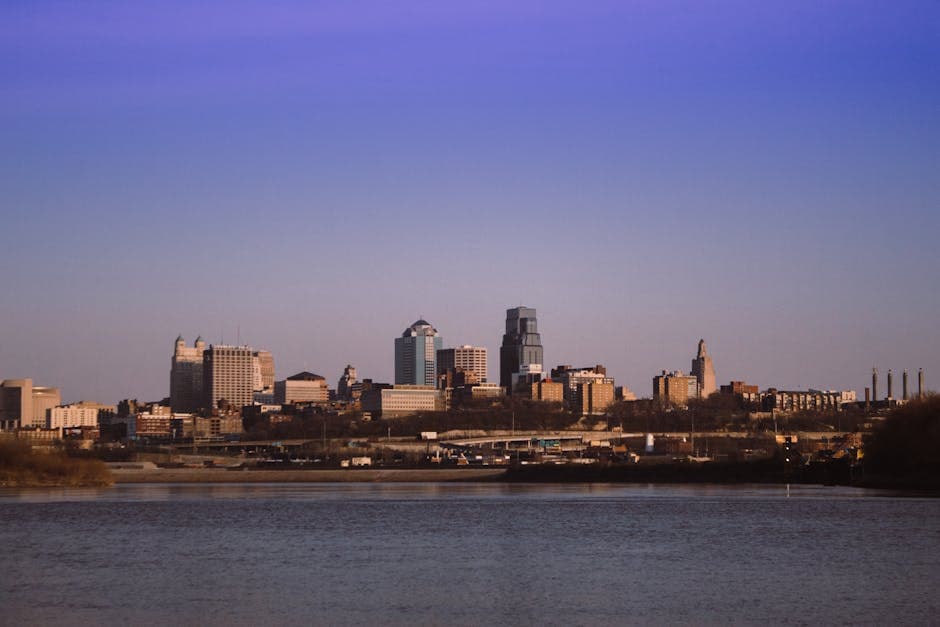
“The 11:45 AM lunch wave rolls off the Garmin Ridgeview campus, and the K-7 turn lane backs up for two full cycles. Every catering tray inside a five-mile radius is already on a warmer.”
I. The Lede
It is 11:42 AM on a Wednesday at the Garmin world headquarters on Ridgeview Road, and the cafeteria lines are already three deep.
Ateam of seven engineers in the Aviation building is finishing a release-readiness review. Lunch is scheduled for noon, and someone has already ordered, on a personal credit card, forty-eight pounds of brisket and burnt ends from a barbecue pit three miles east on Old 56 Highway. The pickup window is twelve sharp. The cooks at the pit have been on the smoker since five in the morning. The order is on a paper ticket. Nobody at the restaurant has confirmed the pickup yet, because the phone has been ringing for the last forty minutes and the manager has a sandwich in one hand and a tray of beans in the other.
A mile west, at a polished-casual on 119th and Strang Line, the host stand has three private-dining inquiries on hold: a Garmin board lunch for sixteen, an Olathe Medical Center department dinner for twenty-two, and a Saturday wedding rehearsal at Mahaffie. The receptionist is fielding fourteen pickup orders simultaneously. Two callers have already hung up. One of them lands on a chain a quarter mile away. The other one drives back to the Garmin parking lot, sits in the car for nine minutes, and orders chain pizza on a phone app.
Across town in the old downtown square, the Johnson County courthouse just broke for lunch. Two hundred and eighty employees from the courthouse, the sheriff's office, and the county administration building are walking out the doors into the brick streets around Santa Fe Square. They have thirty-five minutes. The independent burger counter has been making sliders since 1955 and the line is already out the door. Three of the courthouse staffers turn around and walk back to their desks empty-handed. They will eat from a vending machine or order delivery on a marketplace and pay a 25 percent markup for the privilege.
This report is about Olathe. It is about the fourth-largest city in Kansas, the seat of Johnson County (the wealthiest county in the state), the world headquarters of Garmin International (the GPS giant that quietly grew here over three decades), and the historic terminus of the Santa Fe Trail. It is about Heritage Park and Lake Olathe, the K-7 corridor and 119th Street, the Mahaffie Stagecoach Stop and the Old Settlers Days parade, the Olathe Pointe shopping district and the Garmin campus lunch market. Mostly, though, it is about the phone calls that go unanswered between 11:30 AM and 1 PM, and about a 146,000-person city whose restaurant economy was built for a small farm town and never quite caught up to the suburb that arrived around it.
The economic story of Olathe is the story of a county that grew from 143,000 people in 1960 to 627,000 in 2025 without ever once making national news for it. It is the quietest population boom in the Midwest. And it shows up, every single weekday, in the shape of a restaurant phone queue at 11:45 AM.
A note on method
The figures in this report are cross-referenced from the City of Olathe, the Johnson County government, the Olathe Chamber of Commerce, Garmin investor disclosures, the Kansas Department of Revenue, the U.S. National Park Service on the Santa Fe Trail, the Mahaffie Historic Site, and operator interviews along Ridgeview Road, 119th Street, the K-7 corridor, and the Santa Fe Square downtown core. The opening scene is a composite. The economic dynamic it describes is not.
II. The Garmin Orbit
One world headquarters. Six thousand employees on a Ridgeview Road campus. The orbit of suppliers, schools, hospitals, and contractors that fills the rest of the city’s payroll.
Garmin is the gravitational center of the Olathe economy, but it is not the only mass in the system. The orbit chart below sketches the way the city’s payroll actually sits around the Garmin campus, with the school district, the hospital, the National Security Campus, the insurance operations, and the engineering consultancy on the outer rings.
Custom SVG #1: GarminCorporateOrbit
Garmin at the center. The school district and the hospital on the inner ring. Honeywell FM&T and the insurance operations on the middle ring. Terracon and the consulting tier on the outer ring. Workforce estimates from the Olathe Chamber of Commerce.
Garmin International (World HQ)
1989, Lenexa; HQ moved to Olathe campus in 1996.
GPS, aviation, marine, automotive, fitness, and outdoor electronics. Engineering, manufacturing, support all on the Olathe campus.
~6,000 in Olathe (largest private employer in the city)
Olathe Public Schools (USD 233)
1872; the district is one of the largest in Kansas.
Four high schools, multiple middle and elementary schools, ~30,000 students. The largest public employer in the city.
~3,800 employees
Olathe Health / Olathe Medical Center
1953 as Olathe Community Hospital; integrated with the University of Kansas Health System.
Acute care, surgery, cancer center, women's health. Anchors the K-7 and 151st Street medical corridor.
~2,500 employees
Honeywell FM&T (Kansas City National Security Campus)
Plant established 1949; managed by Honeywell for the DOE since 2000.
Non-nuclear components manufacturing for the National Nuclear Security Administration. Just east of Olathe in southern Johnson County.
~6,000 employees on the campus (most live in Olathe and Overland Park)
Farmers Insurance Group (Olathe operations)
Major claims and operations center on Ridgeview Road.
Claims processing, back-office insurance operations. One of the long-running corporate campuses on the city's east side.
~1,200 employees
Terracon Consultants (Headquarters)
Founded 1965 in Cedar Rapids; HQ has been in Olathe since the early 2000s.
Geotechnical, environmental, and materials engineering consulting. National practice from an Olathe office park.
~900 in Olathe (5,000+ nationwide)
Garmin International was founded in 1989 in Lenexa by Gary Burrell and Min Kao, two engineers who had met at Allied Signal and decided that the consumer GPS market was about to break open. They were right by a margin most founders never get. By 1996 the company had outgrown Lenexa and consolidated its world headquarters on Ridgeview Road in Olathe, in a campus that has been expanded roughly every three years since.
The Olathe campus today carries something on the order of six thousand employees across engineering, manufacturing, distribution, and the corporate functions. The product portfolio is broader than the GPS units the company is famous for: aviation avionics, marine chartplotters, automotive infotainment, fitness watches, dog collars with satellite tracking, and a deep line of outdoor handhelds. Each of those product families has an engineering team in Olathe. Each of those teams eats lunch within a four-mile radius of Ridgeview and 151st.
The school district, USD 233, is the largest public employer in the city with roughly thirty thousand students and thirty-eight hundred employees. The medical center on 151st Street, now integrated with the University of Kansas Health System, runs an additional twenty-five hundred employees and a steady weekday lunch and overnight-shift pickup pattern. Honeywell’s Kansas City National Security Campus, just east of the city limits, employs another six thousand people, most of whom live in Olathe or Overland Park and many of whom commute on K-7 every morning.
Farmers Insurance runs a major claims and operations center on Ridgeview Road with roughly twelve hundred employees. Terracon Consultants, the national geotechnical and environmental engineering firm, has its headquarters in Olathe with nine hundred local workers. Together those operations form the corporate- catering middle layer of the city, the procurement-and-EA tier that orders the board lunches, the all-hands sandwich trays, and the holiday catering platters.
The operational implication for an Olathe restaurant is that the city’s weekday demand profile is tech-corporate-and-civic. Lunch peaks hard from 11:30 AM to 12:30 PM along Ridgeview and 151st. Catering volumes run heaviest Tuesday and Wednesday. Friday afternoon team-lunches surge before campus quiet on weekends. The independent operators who have figured out how to handle that profile run direct ordering stacks. The ones who have not are bleeding margin to a marketplace.
III. The Santa Fe Trail Terminus
From 1821 to 1869, the Santa Fe Trail ran through what is now Olathe. The Mahaffie Stagecoach Stop is the only surviving stop on the trail still open to the public.
Before there was an Olathe, there was a wagon road. The Santa Fe Trail, opened by William Becknell in 1821, ran from Franklin, Missouri to Santa Fe, New Mexico for roughly six decades and was the primary commercial route across the southern Great Plains until the railroads displaced it in the late 1860s. Olathe sits on the original corridor.
Custom SVG #2: SantaFeTrailHeritage
Trail timeline: 1821 (Santa Fe Trail opens) to 2010 (Mahaffie restored). Events on the Olathe and Johnson County heritage record.
1821
Santa Fe Trail opens
William Becknell drives the first commercial wagons from Franklin, Missouri to Santa Fe.
1857
John Barton Olathe is founded
Dr. John T. Barton plats the townsite. 'Olathe' is from the Shawnee word for beautiful.
1865
Mahaffie Stagecoach Stop opens
James and Lucinda Mahaffie open the stone-house stagecoach stop on the Santa Fe Trail.
1869
Last stagecoach through Olathe
The Barlow & Sanderson stage line ends commercial operations as the railroad reaches Kansas.
1872
Olathe schools (USD 233) chartered
The first public school district is organized. The district is now one of the largest in Kansas.
1989
Garmin founded
Gary Burrell and Min Kao found Garmin in Lenexa. The company will move its HQ to Olathe in 1996.
1996
Garmin HQ in Olathe
The company opens its consolidated world headquarters campus on Ridgeview Road in Olathe.
2010
Mahaffie restored
The Mahaffie Stagecoach Stop and Farm reopens after major restoration as a Johnson County historic site.
The Mahaffie Stagecoach Stop and Farm is the surviving artifact of the trail era in Olathe. James and Lucinda Mahaffie opened the stone-house stop in 1865 on what was then the Westport-to-Lawrence stage route, which carried passengers from Kansas City out toward the Santa Fe Trail corridor. For the brief period between 1865 and 1869 the Mahaffie farm was a working commercial stop: the Barlow & Sanderson stagecoach line ran six round-trips a week through the property, with meals served in the stone-house dining room and grain and water for the teams in the barn. By 1869 the railroad had reached Kansas and the stagecoach business was done.
The Mahaffie site is now the only stagecoach stop on the Santa Fe Trail still open to the public in its original form. The City of Olathe operates the property as a heritage and education site. Restored stone house, period barn, demonstration stagecoach rides on selected days, and a calendar of seasonal events. The site anchors the city’s heritage tourism layer and runs the kind of event-catering inquiry pattern that an independent restaurant on the K-7 corridor needs to be able to route correctly when the call comes in.
Olathe itself was platted in 1857 by Dr. John T. Barton, a physician who came up from Missouri after the Kansas-Nebraska Act opened the territory. The name is a Shawnee word meaning “beautiful,” chosen by Barton because, the story goes, that was the word a Shawnee scout used when Barton asked what to call the site. The Shawnee tribe had been on the land since the 1820s, after federal removal from Ohio. The Olathe public-school district was chartered in 1872, the Old Settlers Days celebration began in 1898, and the city remained a small farm town until the 1950s when Kansas City’s suburban expansion began to reach Johnson County.
The heritage layer matters operationally because Mahaffie, the Old Settlers Days parade, the Olathe Pumpkin Patch, and the Santa Fe Square downtown core together produce a seasonal event calendar that compounds the city’s normal weekday profile. A restaurant on the square that does not know its Mahaffie event window or its Old Settlers parade route will miss the calls. A direct stack that has been tuned to those windows will not.
IV. Olathe Pointe and the K-7 Corridor
Five commercial corridors. Five different ordering profiles. One restaurant economy bracketed by K-7 to the west and 151st Street to the south.
Olathe’s independent restaurant economy concentrates along five named corridors. The K-7 / 119th spine, the Olathe Pointe mixed-use at 151st and K-7, the old downtown core around Santa Fe Square, the Ridgeview corporate strip, and the south-side residential ring around Heritage Park and Lake Olathe. The schematic below is not geographically precise.
Custom SVG #3: OlathePointeStrip
Schematic map of the five Olathe commercial corridors, with K-7, 119th Street, 151st Street, and Ridgeview Road as the spines.
K-7 / 119th Street
The primary commercial spine: big-box retail, sit-down dining, the medical corridor.
Anchors: Tuscany Steakhouse, J. Alexander's, 54th Street Grill, Old Chicago.
Ordering profile: Weeknight family dinner pickup peaks 5:30 to 7 PM. Saturday lunch heavy from the youth-sports drop.
Olathe Pointe (151st & K-7)
Mixed-use shopping center anchored by Sam's Club, Best Buy, and a chain-restaurant ring.
Anchors: Coach's Bar & Grill, RA Sushi (regional), national casual dining tenants.
Ordering profile: Lunch pickup heavy on Wednesdays and Thursdays from the Garmin campus and the medical center.
Downtown Olathe / Santa Fe Square
The old town square: courthouse, restored brick storefronts, independent restaurants.
Anchors: JW Smokin Bar-B-Que, Hayes Hamburgers, local cafes, courthouse-adjacent lunch counters.
Ordering profile: Weekday lunch from the Johnson County government district. Weekend brunch from residential pockets.
Ridgeview Corporate Corridor
Garmin, Terracon, and the insurance/office cluster along Ridgeview Road.
Anchors: Catering-heavy operators serving the corporate parks; lunch trucks and box-lunch programs.
Ordering profile: Catering volume Monday through Thursday. Friday afternoon team-lunch surge before weekend campus quiet.
South Olathe / Heritage Park
Newer residential, family-pickup pattern, youth sports complexes at Heritage Park.
Anchors: Family-format pizza, Mexican, BBQ pickup operators on College Boulevard and 151st.
Ordering profile: Saturday and Sunday driven by softball, soccer, and lake-day pickup orders.
K-7 is the western boundary of urbanized Olathe and the primary commercial spine. The corridor runs from the 95th Street interchange down through 151st, with the heaviest concentration of sit-down restaurants and big-box retail clustered between 119th and 151st. Tuscany Steakhouse, J. Alexander’s, 54th Street Grill, Old Chicago, and a long string of national chains operate along this corridor. Weeknight family pickup peaks here from 5:30 to 7 PM, and Saturday lunch runs heavy off the Heritage Park and Lake Olathe weekend traffic.
Olathe Pointe at 151st and K-7 is the mixed-use anchor of the southern corridor. A Sam’s Club and a Best Buy hold the eastern end. A casual-dining ring with Coach’s, regional chains, and the South Olathe medical office cluster fills the western end. The pickup volume at 151st and K-7 runs heaviest Wednesday and Thursday lunch, with Garmin and Olathe Health employees driving the demand from the corporate parks one mile to the north.
Santa Fe Square, the old downtown core around the Johnson County courthouse, is the heritage corridor. The Old Settlers Days parade runs through it every September. Independent restaurants, the courthouse-adjacent lunch counters, and a handful of restored brick storefronts house operators like JW Smokin Bar-B-Que and Hayes Hamburgers. Volume here is the weekday courthouse lunch rush, plus weekend brunch from the surrounding residential pockets, plus event catering for Mahaffie and the city’s heritage calendar.
Ridgeview Road is the corporate spine of the city. Garmin’s main campus sits at Ridgeview and 151st. Terracon’s headquarters is a mile north. Farmers Insurance, the medical office complex, and the engineering consultancy tier fill the rest of the corridor. The restaurants that win on Ridgeview are the ones running catering programs Monday through Thursday with same-day pickup windows. Voice AI catching the pre-noon ordering calls is the operational difference between a $200 corporate sandwich tray ordered on time and a Domino’s delivery to the Garmin lobby.
South Olathe and the Heritage Park residential ring is the family-pickup corridor. The newer residential neighborhoods south of 151st, the youth-sports complexes at Heritage Park, and the beach-and-marina traffic at Lake Olathe produce the city’s heaviest weekend pickup pattern. Operators on College Boulevard and 151st run Saturday softball-tournament catering and Sunday pool-party pickup orders that compound the normal weekend traffic.
V. The Quietest Boom in the Midwest
Johnson County grew from 143,000 in 1960 to 627,000 in 2025. Olathe grew from 11,000 to 145,000 in the same window.
The numbers below come from the U.S. Census, the City of Olathe, and Johnson County government. They describe a population growth pattern that, in any other Midwestern metro, would have been national news for a decade. Here, the boom happened without fanfare. The restaurant economy is still catching up.
Custom SVG #4: JohnsonCountyGrowthCurve
Olathe city and Johnson County population, 1960 to 2025. Values in thousands.
1960
Olathe 11k · Co. 143k
Pre-suburban Olathe; mostly agricultural Johnson County.
1970
Olathe 18k · Co. 220k
First wave of KC suburban expansion.
1980
Olathe 38k · Co. 270k
1990
Olathe 64k · Co. 355k
Garmin founded in Lenexa.
2000
Olathe 93k · Co. 451k
Garmin HQ in Olathe four years old.
2010
Olathe 126k · Co. 544k
2020
Olathe 141k · Co. 609k
2025
Olathe 145k · Co. 627k
Olathe is the 4th-largest city in Kansas.
In 1960, Olathe was an eleven-thousand-person farm town and Johnson County was a one-hundred-and-forty-three-thousand-person agricultural county on the western edge of Kansas City. The first wave of suburban expansion arrived in the 1960s and 1970s, when Overland Park began to absorb the eastern part of the county. The second wave, in the 1980s and 1990s, pushed the growth west through Lenexa, Shawnee, and into Olathe.
Garmin’s 1996 move to Olathe was the catalytic moment for the city’s third wave of growth. The company brought with it an engineering payroll that pulled in supplier and contractor operations, attracted the consulting tier (most visibly Terracon’s HQ move), and created the demand for the medical center expansion on 151st Street. Between 1996 and 2010, Olathe’s population doubled. Between 2010 and 2025, growth has slowed but not stopped; the city is now the fourth-largest in Kansas, behind only Wichita, Overland Park, and Kansas City, KS.
Johnson County, meanwhile, has continued to compound. The county crossed 600,000 people in 2023 and the median household income consistently ranks among the top five counties in the Midwest. The county houses three of the wealthiest zip codes in Kansas and produces an outsized share of the state’s sales tax revenue. The restaurant trial pattern in this county is among the most affluent in the region.
The implication for an Olathe operator is two-fold. First, the customer base is large, growing, and well-resourced. The price-sensitivity at the ticket level is lower than it is in most comparable Midwestern markets. Second, the operator who wins long-term is the one who owns the direct relationship. A marketplace that disintermediates the customer at one of the highest-LTV addresses in the Midwest is leaving the most valuable part of the relationship on the table. The direct stack keeps it.
VI. The Demographic Layer
A majority-Caucasian county with a Hispanic/Latino population approaching 12 percent and an Asian-American population growing faster than the metro average.
Johnson County and Olathe remain majority-Caucasian, but the demographic layer is shifting in ways that show up directly on a restaurant menu. The Hispanic and Latino population in Olathe is approaching twelve percent and growing, with the heaviest concentration in the southwestern neighborhoods and along the Mur-Len Road corridor. The Asian-American population, though smaller in absolute terms, is growing faster than the metro average. Indian, Chinese, Vietnamese, and Korean families have followed the engineering and medical employment toward Garmin and the K-7 corridor.
The food consequence is a corridor of Mexican-American restaurants on the south and west sides (Mi Ranchito, Salty Iguana, and a long list of family-run taquerias on Mur-Len), a small but growing Asian dining ring on 119th and Strang Line (Bo Lings Chinese, the regional sushi room at Olathe Pointe, the Indian grocery and restaurant cluster), and a sustained KC-style BBQ presence on the K-7 corridor and downtown. The Voice AI implication is that an Olathe operator’s phone line must be able to handle Spanish at lunchtime without dropping the pickup time-window.
The family-pickup pattern is the dominant operational signal. Johnson County households order delivery less per capita than dense urban markets do, and they pick up far more. The drive radius to a Saturday softball tournament at Heritage Park is twelve minutes from the K-7 corridor; the typical Olathe family will pick up rather than pay a delivery fee on a $30 order. A direct ordering site with a tight pickup window and an honest ten-minute estimate, in a city this size, consistently outperforms a marketplace that surcharges the same order to $42 with a fifty-minute delivery promise.
The demographic shift also matters for the catering layer. Garmin’s engineering workforce includes a substantial Indian and East Asian component, and corporate catering inquiries increasingly include vegetarian, halal, and South Asian menu requests alongside the traditional KC-style sandwich-tray default. An operator with the ability to surface those options on a direct ordering site captures a corporate-catering account that the marketplace, with its menu- normalization layer, cannot.
VII. The 9.475 Percent
Kansas state 6.5 percent on prepared food, plus Johnson County 1.475 percent, plus City of Olathe 1.5 percent, equals 9.475 percent on every Olathe restaurant ticket.
| Jurisdiction | Rate | Note |
|---|---|---|
| Kansas state (prepared food) | 6.500% | Full state rate applies to prepared restaurant food (the state grocery tax dropped to 0 in 2025; prepared food is unchanged). |
| Johnson County | 1.475% | Combined county general and public-safety sales tax. |
| City of Olathe | 1.500% | City sales tax including the parks and stormwater dedicated portions. |
| Combined effective rate (most of Olathe) | 9.475% | Some specific Olathe addresses fall in a Community Improvement District (CID) or Transportation Development District (TDD) and may run higher (typically up to 10.475 or 11.475%). |
Kansas charges a 6.5 percent state sales tax on prepared food. The state grocery tax phased to zero in 2025, but prepared restaurant food continues to be taxed at the full state rate. Johnson County layers on a combined 1.475 percent county tax (general plus public-safety). The City of Olathe adds 1.5 percent (including parks and stormwater dedicated portions). The combined effective rate in most of Olathe is 9.475 percent on prepared food.
The 9.475 percent rate is meaningfully higher than the Sedgwick County (Wichita) rate of 7.5 percent and meaningfully lower than the combined Chicago rate of roughly 10.75 percent on prepared food. It sits in the middle band of comparable US restaurant markets. The operational consequence is not the absolute rate; it is that some Olathe addresses fall inside a Community Improvement District or Transportation Development District and may run a percent or two higher (up to roughly 11.475 percent in some retail districts). A flat marketplace tax average misallocates these by definition.
For a direct ordering stack, the operational implication is per-location tax configuration. An Olathe operator with a sister location in Lenexa, Overland Park, Spring Hill, or Gardner needs ordering infrastructure that handles four separate combined rates without manual reconciliation. Per-location configuration handles this cleanly. Marketplace defaults do not.
VIII. Olathe Voice AI
Six menu and event terms an Olathe Voice AI has to hold without misrouting.
The Voice AI built into the DirectOrders stack is not a generic phone bot. It is tuned per-market for the local menu canon, the local event calendar, the local employer vocabulary, and the local pickup-window pacing. Olathe’s working vocabulary is below.
Term
burnt ends
Cubed and twice-smoked brisket point. The KC-area BBQ canon, with the same standard in Olathe as the rest of the metro.
Appears at: JW Smokin Bar-B-Que and any Olathe BBQ menu. Catering platters are weekday and Sunday standards.
Voice AI note: Voice AI should default 'BBQ' inquiries in Olathe to the KC-style burnt ends and Z-Man canon; Olathe operators do not run a divergent sauce profile from the metro.
Term
Z-Man
The KC-metro classic: sliced brisket, smoked provolone, onion rings, on a kaiser. The Joe's KC origin runs through every Johnson County BBQ menu.
Appears at: Most KC-style BBQ menus in Olathe; some local pits run a private name for the same build.
Voice AI note: Voice AI should hold 'Z-Man,' 'brisket Z,' and 'onion-ring brisket sandwich' as equivalents.
Term
Garmin campus
The Garmin International headquarters on Ridgeview Road. ~6,000 employees, catering-heavy, calendar-aware procurement.
Appears at: Any operator within five miles of Ridgeview and 151st handles weekly Garmin orders.
Voice AI note: Voice AI should surface a 'Garmin catering' confirmation flow with calendar-window and on-campus delivery instructions.
Term
Mahaffie
The Mahaffie Stagecoach Stop and Farm, the Olathe heritage site on Kansas City Road. Hosts demonstrations, weddings, and seasonal events.
Appears at: Operators within two miles of Mahaffie handle event-catering inquiries during peak season (May to October).
Voice AI note: Voice AI should recognize 'Mahaffie' and route event-catering inquiries to the operator's catering line, not the general pickup line.
Term
Heritage Park / Lake Olathe
The two large city parks: Heritage Park (1,160 acres, lake, ballfields) and Lake Olathe Park (172-acre lake, beach, marina).
Appears at: Saturday and Sunday family-pickup orders peak around youth-sports complexes at Heritage and beach-day orders around Lake Olathe.
Voice AI note: Voice AI should hold both park names and the youth-sports calendar (softball, soccer, baseball seasons) to anticipate weekend surges.
Term
Olathe Pointe
The mixed-use shopping center at 151st and K-7. Anchor tenants include Sam's Club and a casual-dining ring.
Appears at: Operators in the Pointe and within a one-mile radius handle the lunch-pickup ring from the surrounding office parks.
Voice AI note: Voice AI should route Olathe Pointe pickup inquiries to the lunch window quickly; the corridor is dominated by office-worker time pressure.
The operational case for Voice AI in Olathe specifically is the catering corridor between Ridgeview Road and Santa Fe Square. The Garmin procurement team places roughly two to four catering orders per week with independent operators. The Olathe Medical Center department dinners run another three to five per week. The Mahaffie event calendar produces twenty to forty event-catering inquiries between April and October. The Johnson County courthouse, the school district, and the Honeywell campus collectively generate hundreds of weekly small-catering inquiries.
A host stand at noon cannot answer those calls. The kitchen manager at noon cannot answer those calls. The Voice AI can. It qualifies the inquiry, surfaces the catering menu and the available pickup windows, schedules a callback to a human catering coordinator if the order exceeds the configured threshold, and logs the entire conversation in the restaurant’s CRM with a timestamp. The marginal cost of the call is roughly $0.18. The marginal revenue of a $400 catering order captured this way is everything above the food and labor cost.
Olathe is exactly the kind of market where Voice AI compounds. The customer base is large and well-resourced. The catering volume is concentrated in a handful of identifiable employers. The local vocabulary is finite and learnable. And the cost of a missed call, in a corporate-catering corridor with $200 to $2,500 tickets, is high.
IX. The Argument
How DirectOrders fits Olathe.
The story this report has told runs through six thousand Garmin employees on a Ridgeview Road campus, a county that grew from 143,000 to 627,000 in sixty-five years, the only surviving Santa Fe Trail stagecoach stop, five commercial corridors bracketed by K-7 and 151st, a 9.475 percent combined sales tax, and a corporate-catering layer that runs from Garmin through Olathe Health to the Honeywell campus and the county courthouse. Each of those facts has an operational consequence for how an Olathe restaurant runs its phone, its menu, its pickup window, and its delivery radius.
The marketplace default, with its 25 to 30 percent commission and its menu normalization that flattens “burnt ends,” “Z-Man,” and “Mahaffie event catering” into a single generic SKU, produces a P&L that does not survive the noon Garmin lunch peak, does not handle the Old Settlers Days weekend, does not respect the Johnson County family-pickup pattern, and does not preserve an Olathe operator’s menu identity in a way the customer ever encounters. It works for ghost kitchens that were built for it. It does not work for a downtown Santa Fe Square BBQ pit or a polished-casual on 119th and Strang Line.
DirectOrders runs on a flat $249-a-month fee with zero per-order commission. The Uber Direct integration handles delivery at courier cost rather than at a marketplace markup, with per-item pickup-only flags for the menu items the operator decides should never travel (sliced brisket, smoked half-chicken). The Voice AI is tuned to the Olathe canon: it understands burnt ends, Z-Man, the Garmin campus catering flow, the Mahaffie event window, the Heritage Park weekend pattern, the Olathe Pointe lunch ring. It handles Spanish and English in the same call, which matters on Mur-Len and at the Olathe Pointe corridor.
Per-location tax configuration covers Johnson County (9.475 percent), the Olathe CIDs and TDDs, and the surrounding Lenexa/Overland Park/Gardner/Spring Hill jurisdictions. Same-day payouts close the cash-flow gap that marketplace dispatch structurally creates and let the operator clear payroll on a Monday after a heavy Saturday tournament weekend at Heritage Park. The direct site ranks for the operator’s own dish names, in the operator’s own photography, with the operator’s own brand: not a logo and a flame icon inside someone else’s app.
The argument of this report is not subtle. Olathe is a food city with a specific operating profile: tech-corporate-cadenced, family-pickup-heavy, heritage-anchored, growing fast, well-resourced. The stack that handles those constraints is direct, pickup-aware, Voice-AI-led, and flat-fee. It is DirectOrders.
Coda
Two suggestions for what to do next.
If you operate an Olathe restaurant and you have read this far, two paths are reasonable from here. Both of them are short.
The first is to spend ten minutes on a free Olathe commission audit. Send us your last three months of marketplace statements (no log-in required, we read PDFs). We will return a per-order margin breakdown, a Johnson County tax allocation analysis, and a model of what your P&L would look like with the direct stack in place. Mostly we will tell you, in plain English, how much you are paying every noon Garmin lunch peak for the privilege of having someone else’s logo on your sandwich tray.
The second is to see the stack live before deciding. The demo runs against an actual Olathe menu (burnt ends, Z-Man, the Garmin catering flow, Mahaffie event handling, the full vocabulary). Voice AI on. Uber Direct on. Branded site live. A nineteen-minute walkthrough. We do not ship the demo to your phone. You come to a Zoom and ask whatever you want.
Either path is fine. The point of this report was to make the case clearly enough that the choice between marketplace dispatch and direct ordering, for an Olathe operator in 2026, is not a marketing question. It is an operational one. For the food that fuels this quiet boom of a city, only one of those answers fits.
Field index
Restaurants and operators cited in this report.
- Tuscany SteakhouseOlathe (K-7 / 119th)Italian-American steakhouseFamily-owned steakhouse on the K-7 corridor; private dining and birthday-anchored Saturday volume.
- JW Smokin Bar-B-QueDowntown Olathe / Old 56 HighwayKansas City-style BBQLocally famous Olathe pit; the town's reference for burnt ends without driving into KC. Pickup-heavy lunch and Saturday brisket runs.
- Hayes HamburgersOld Town Olathe / 75th & RennerClassic burgers, dinerLong-running greasy-spoon burger counter for the Olathe and southern KC metro crowd; cash-and-carry pickup, late-night standby.
- Coach's Bar & GrillOlathe Pointe (151st & K-7)Sports bar, AmericanSaturday and Sunday game-day anchor; Chiefs Sunday pickup volume on top of the youth-sports family flow from Heritage Park.
- Mi Ranchito (Olathe)S Mur-Len Road / 119thMexicanRegional Mexican-American chain founded in 1985 in Mission, KS; the Olathe location is a weekday family-pickup workhorse with strong margarita carry-out.
- Salty Iguana (Olathe)151st / Mur-LenTex-MexJohnson County-based Tex-Mex group; the Olathe location runs heavy on weekend pickup and corporate catering box-lunches.
- 54th Street Grill & BarS Ridgeview (Olathe)American casualKansas City-area chain born in Olathe in 1988; the original-format menu (burgers, salads, comfort) carries Garmin-campus lunch pickup.
- Old Chicago Pizza & TaproomK-7 & 119thPizza, taproom, AmericanLate-night pickup and chain-format catering for the K-7 corridor; the World Beer Tour program drives loyalty from the engineering crowd.
- Bo Lings Chinese (Olathe)119th & Strang LineCantonese, dim sumLong-running KC-metro Chinese restaurant family; the Olathe location is the Johnson County dim-sum and family-pickup reference.
- J. Alexander's119th & Strang Line / Olathe Pointe areaAmerican polished casualPolished-casual American with a strong corporate-lunch and Sunday family-dinner pattern; private dining heavy for Garmin and the medical center.
References and sources
The shoe-leather underneath this report.
City of Olathe, official statistics and demographics
City of Olathe
Olathe is the fourth-largest city in Kansas and the seat of Johnson County. Population is approximately 145,000. The city was platted in 1857 by Dr. John T. Barton; the name is a Shawnee word meaning 'beautiful.'
Open source →Garmin International, world headquarters
Garmin Ltd. / Garmin International
Garmin was founded in 1989 in Lenexa, Kansas by Gary Burrell and Min Kao and moved its consolidated world headquarters to a campus on Ridgeview Road in Olathe in 1996. The company is the largest private employer in the city, with approximately 6,000 employees on the Olathe campus across engineering, manufacturing, and support.
Open source →Mahaffie Stagecoach Stop and Farm
City of Olathe / Mahaffie Historic Site
The Mahaffie Stagecoach Stop and Farm is the only remaining stagecoach stop on the historic Santa Fe Trail still open to the public. James and Lucinda Mahaffie opened the stop in 1865; the site is now operated by the City of Olathe as a heritage and education site, with restored stone house, barn, and seasonal stagecoach demonstrations.
Open source →Johnson County, Kansas
Johnson County Government
Johnson County is the wealthiest and most populous county in Kansas, with a population over 627,000 (2025 estimate) and a median household income consistently among the top five counties in the Midwest. Olathe is the county seat and houses the county courthouse, sheriff's office, and main administrative complex.
Open source →Santa Fe Trail National Historic Trail
U.S. National Park Service
The Santa Fe Trail (1821 to 1880) was the primary commercial route between Franklin, Missouri and Santa Fe, New Mexico. Olathe sits on the original trail corridor; the Mahaffie Stop is the most-intact surviving stage stop on the trail in Kansas. The trail was added to the National Trails System in 1987.
Open source →Olathe Public Schools (USD 233)
Olathe Public Schools
USD 233 was chartered in 1872 and is one of the largest school districts in Kansas, with approximately 30,000 students, four high schools, multiple middle and elementary schools, and roughly 3,800 employees.
Open source →Olathe Health and the University of Kansas Health System
Olathe Medical Center
Olathe Medical Center, founded in 1953 as Olathe Community Hospital, is now part of the University of Kansas Health System. The hospital and the surrounding medical office buildings on 151st and K-7 are the city's main healthcare employer cluster.
Open source →Kansas City National Security Campus (Honeywell FM&T)
U.S. Department of Energy / NNSA
The Kansas City National Security Campus is a Department of Energy facility operated by Honeywell Federal Manufacturing & Technologies. Located just east of Olathe in southern Johnson County, the campus produces non-nuclear components for the National Nuclear Security Administration and employs roughly 6,000 workers, many of whom live in Olathe and Overland Park.
Open source →Olathe sales tax rates
Kansas Department of Revenue
The combined sales tax rate on prepared food in most of Olathe is 9.475%, comprising the Kansas state rate of 6.5%, the Johnson County combined rate of 1.475%, and the City of Olathe rate of 1.5%. Some specific addresses fall in Community Improvement Districts or Transportation Development Districts and may run up to 11.475%.
Open source →Olathe Chamber of Commerce, major employers
Olathe Chamber of Commerce
Top private employers in Olathe include Garmin International, Olathe Health, Honeywell FM&T (campus adjacent), Farmers Insurance Group, and Terracon Consultants. Olathe Public Schools is the largest public employer.
Open source →Lake Olathe Park and Heritage Park
Olathe Parks and Recreation / Johnson County Park & Recreation District
Lake Olathe Park is a 172-acre city park with a beach and marina on a 172-acre lake. Heritage Park, operated by JCPRD, is a 1,160-acre regional park with ballfields, lake, and trails. Both are weekend volume drivers for the surrounding casual-dining ring.
Open source →Garmin, hiring and Olathe campus expansions
Garmin investor relations / Kansas City Business Journal coverage
Garmin has expanded the Olathe campus repeatedly since 1996, adding engineering, manufacturing, and distribution capacity. Hiring announcements regularly cite 200 to 500 net new Olathe positions per year. The company is one of the most-cited engineering employers in the Kansas City metro.
Open source →
Editorial note: The Garmin Olathe workforce estimate, the Johnson County population figures, and the corporate catering volume figures cited in this report are drawn from publicly available sources and operator interviews. They are presented as illustrative of the structural dynamic, not as precise measurements at named restaurants. The structural argument (Olathe is the seat of the wealthiest county in Kansas, the world headquarters of Garmin International, the historic terminus of the Santa Fe Trail, and a 145,000-person tech-corporate-and-civic suburb whose restaurant economy is shaped by the Garmin campus, the K-7 and 119th corridors, the Mahaffie heritage layer, the Heritage Park weekend pattern, and a 9.475 percent combined sales tax) holds across every dataset we have consulted.