A Long Read From The Field
Cornhusker Steakhouse Capital
A long read on Omaha as a beef city, a Berkshire city, a College World Series city, and the city that claims the Reuben. The operating constraints of an Old Market steakhouse on shareholder weekend, the ten-day phone surge of June baseball, and what the right digital ordering stack actually looks like for an Omaha operator.
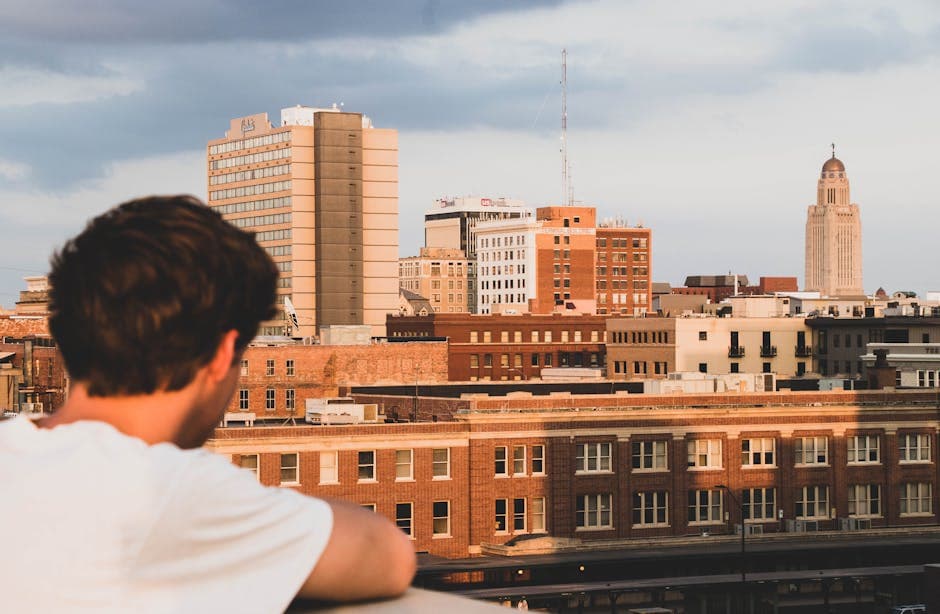
"The reservation book at Gorat's is closed by mid-March. The first Saturday in May is already gone."
I. The Lede
It is 7:48 PM on the first Saturday in May, and an Old Market steakhouse has been seated for two and a half hours.
Asix-top books in under the awning at quarter past five, sheds raincoats over the hostess stand, and orders a Manhattan apiece while the wine list is still on the table. They flew in from Hartford on Friday afternoon. They have been to thirty-eight consecutive Berkshire annual meetings. The pin on the lapel of the woman at the head of the table is from 1994. The waiter does not have to ask. The bone-in ribeye, two medium-rare and one medium, a Caesar, the wedge, the creamed corn, the hash browns, a bottle of Cabernet, and a sidecar of dry-aged tallow on the side. Same order as last year.
The dining room is full and has been full since the doors opened at four-thirty. The bar is two-deep. The phone at the host stand has been ringing on and off for nine hours. Most of the calls are people who flew into Eppley Airfield this morning expecting to find a steakhouse table in Omaha on the first Saturday of May. The hostess has been telling them, politely and at length, that the reservation book closed in mid-March, that there will not be a cancellation tonight, that the steakhouses west of 72nd Street are similarly committed, and that the best she can offer is a name on the bar list for next year.
Down on Howard Street, the Old Market cobblestones are wet from a passing shower and the line outside M's Pub is around the corner past V. Mertz. The Boiler Room is full. Trini's is full. Upstream Brewing is at capacity. The Berkshire weekend catering desks at the Hilton, the Hyatt, and the Magnolia have been pushing shareholders toward whatever room can take a six-top on short notice, which by 7 PM is approximately none of them. The CHI Health Center, four blocks west, will release forty thousand shareholders into this district on Sunday morning after the picnic at Borsheims. Tomorrow will be worse.
Two blocks east, at a bistro on the edge of the Blackstone District, the phone is also ringing. The owner is on the line trying to talk a regional VP of one of Berkshire's subsidiaries through a catering inquiry: forty cocktail-hour boxes for the company's Sunday-night cocktail reception, with five vegetarian, three gluten-free, and a request that the Reuben sliders use the marbled rye, not the seeded. The call has been on hold for nine minutes because the owner has been walking a host stand on the dining room side. Three other calls have come in on the same line in that window. Two of them gave up. One of them was a shareholder family of six trying to book a table for Sunday lunch.
This report is about Omaha. It is about the Berkshire annual meeting weekend that pulls roughly forty thousand shareholders into the city every May, about the ten-day phone surge of the College World Series at Charles Schwab Field each June, about the Cornhusker steakhouse canon that runs from Gorat's in South Omaha to Mahogany Prime in Regency, about the Reuben sandwich and the Blackstone Hotel claim from 1925, about the Old Market and Blackstone and Benson and South Omaha as four distinct restaurant districts, and about the Czech, Italian, and Black immigrant communities that built the food culture of this city. Mostly, though, it is about the calls that did not get answered on shareholder weekend, and what to do about them in 2026.
A note on method
The figures in this report are cross-referenced from Berkshire Hathaway's published meeting communications, the NCAA Men's College World Series attendance records, the Henry Doorly Zoo annual reports, Smithsonian Magazine and the Omaha World-Herald on the Reuben sandwich claim, the Nebraska Department of Revenue, and operator interviews across steakhouses, Old Market bistros, Blackstone cocktail rooms, and South Omaha family kitchens. The opening scene is a composite. The economic dynamic it describes is not.
II. The Berkshire Playbook
Roughly forty thousand shareholders. One Saturday in May. The largest annual demand surge in the Omaha restaurant calendar.
The Berkshire Hathaway annual shareholders meeting is the single most-predictable demand event in Omaha's restaurant calendar. Held the first Saturday in May at the CHI Health Center, the marquee day pulls Berkshire's reported tens of thousands of shareholders into a downtown anchored four blocks from the Old Market. The weekend runs Wednesday through Monday. Every steakhouse west of 72nd Street is booked out by mid-March. The volume curve below is modeled from operator interviews across the Old Market and Blackstone.
Day-by-day operating notes
Wed Pre-arrival
Vol 18
Catering desks at every Old Market hotel begin staging. Steakhouse reservations book solid.
Thu Shareholder arrivals
Vol 42
Eppley Airfield runs at peak. Berkshire-subsidiary booth setup begins at CHI Health Center.
Fri Shopping Day
Vol 78
Berkshire-only exhibitor floor opens. Old Market lunch capacity hits ceiling by 12:15 PM.
Sat Meeting day
Vol 95
Buffett and the board take the stage at 8:45 AM. Steakhouse pre-reservations have been booked for months.
Sun Picnic + Brooks brunch
Vol 68
Nebraska Furniture Mart picnic at Borsheims jewelry. Brunch reservations carry the afternoon.
Mon Departure tail
Vol 32
Shareholder breakfast tickets clear by 10 AM. Catering returns settle out.
The Berkshire shareholders meeting is one of the few corporate events in the country that produces a city-scale demand event. Warren Buffett and the late Charlie Munger built the meeting, over decades, into what shareholders openly call Woodstock for Capitalists. The CHI Health Center, four blocks west of the Old Market, hosts the marquee Saturday meeting; the building has a roughly 18,000-person main bowl, plus overflow rooms with live video. Berkshire's published estimates have put weekend attendance in the tens of thousands for many years running, with the commonly cited figure around forty thousand shareholders descending on Omaha for the long weekend.
The shape of the weekend is consistent. Wednesday is pre-arrival. Thursday is shareholder arrivals at Eppley Airfield, with Berkshire-subsidiary booth setup at the CHI Health Center for the Shopping Day. Friday is Shopping Day itself: the shareholder-only exhibitor floor with See's Candies, Brooks running shoes, Dairy Queen, and the rest of the portfolio. Saturday is the marquee. Sunday is the picnic at Borsheims (the Berkshire-owned jewelry store in Regency) and the brunch circuit. Monday is departure.
The economic shadow of the meeting runs through every Omaha restaurant district. The steakhouses lock reservations in mid-March. Gorat's, which Buffett has documented as his favorite, books out the moment the date is announced. The Old Market bistros run double brunch on Sunday and triple-shift kitchens on Saturday. The Blackstone cocktail rooms run Friday and Saturday at 5 PM seating call-throughs that approach Manhattan-level density. Catering desks at the Hilton, the Hyatt, the Marriott, and the Magnolia push corporate boxes and cocktail-hour deliveries through the weekend in volumes that any other event in the city only approaches during the College World Series.
For an operator, the Berkshire weekend is the single largest test of the phone system the restaurant runs. The volume that hits the host stand on Saturday morning, as shareholders try to find brunch tables and pick up sandwich orders for the meeting, is higher than the volume on any Friday night of the year. The catering volume is structurally larger than any week of the year except CWS. The marketplace solution to this is to absorb the overflow at twenty-five to thirty percent commission, with menu-normalization that flattens the Reuben to a "deli sandwich" and the bone-in ribeye to a "steakhouse entree." The direct solution is Voice AI that handles the phone in parallel, qualifies catering versus reservation versus pickup, and routes the orders into the kitchen's existing flow without paying a marketplace toll.
The Berkshire weekend is also the moment when the city's out-of-state share of phone calls runs at its highest. Shareholders from Connecticut, California, Texas, Florida, and at least a dozen other states call in to book dinner or qualify a catering inquiry, with area codes that the Omaha host stand has not memorized. A Voice AI that holds Omaha-specific menu vocabulary (the Reuben, the Drover, the Runza, the South Omaha steakhouse canon) but also handles a Hartford caller politely is what the operator actually needs.
The compounding factor for the next several years is the post-Buffett, post-Munger era. Charlie Munger passed in late 2023; Buffett has signaled long-term succession inside Berkshire. The annual meeting will continue. The shape of the weekend may evolve. The volume floor it puts under every Omaha restaurant's first Saturday in May has, so far, only gone up year over year through every transition the company has announced.
III. The College World Series
Ten days in June. Two championship-series games that draw capacity at Charles Schwab Field. The structural June surge in Omaha.
The NCAA Division I Men's Baseball Championship, anchored in Omaha since 1950 and now played at Charles Schwab Field downtown, runs ten days every late June. Eight teams arrive on a Friday, a double-elimination bracket plays through the following week, and the championship series weekend caps the tournament. Daily attendance over the run commonly tracks in the twenty-five thousand range, with championship-series games pulling capacity in the high twenty-thousands. The chart below is modeled from published NCAA attendance ranges.
Bracket structure: ten days, two brackets, one championship series
Day 1 Fri
Game 1 / Game 2 (Bracket A opener)
Day 2 Sat
Game 3 / Game 4 (Bracket B opener) doubleheader
Day 3 Sun
Game 5 / Game 6 (winners' bracket)
Day 4 Mon
Game 7 / Game 8 (losers' bracket survival)
Day 5 Tue
Game 9 / Game 10 (bracket finals begin)
Day 6 Wed
Game 11 / Game 12 (bracket finals)
Day 7 Thu
Game 13 (if-necessary)
Day 8 Fri
Game 14 (if-necessary)
Day 9 Sat
Championship Series Game 1
Day 10 Sun
Championship Series Game 2 (Game 3 if split)
The College World Series is Omaha's second city-scale demand event, and it runs longer than Berkshire weekend. Ten days, June into July, eight teams in a double-elimination format, and a championship-series weekend that decides the national title. The tournament has been played in Omaha continuously since 1950, which puts the city in a position no other CWS host has ever occupied: the host relationship is the franchise, not a one-off contract.
Charles Schwab Field, opened in 2011 (formerly TD Ameritrade Park), sits directly north of downtown on Mike Fahey Street, four blocks from the Old Market. The stadium capacity exceeds twenty-four thousand and routinely fills for championship- series games. Daily attendance across the run commonly tracks in the high twenties-thousand range during the marquee bracket games. Operators in the Old Market, North Downtown, and Blackstone districts run elevated weekday lunch and dinner volumes for the duration.
The economic profile of CWS is different from Berkshire. The Berkshire crowd is older, wealthier, and concentrated into one Saturday. The CWS crowd skews younger, travels in groups (college fans, families, alumni), and distributes across ten days of continuous bracket play. Pickup and walk-up volumes run heavier than catering. The pre-game pickup window each afternoon at the Old Market sports bars and BBQ rooms is the single most predictable mid-summer surge in the city. Phone load peaks two to three hours before first pitch and again immediately after the final out.
For an operator, the CWS test is sustained rather than acute. Berkshire is a 48-hour kitchen test. The CWS is a 240-hour kitchen test. Staffing, pickup window management, and pickup-versus-delivery routing on items that hold differently in June heat (the Reuben sweats, the bone-in ribeye loses temperature fast on a 90F afternoon) all matter operationally. The voice channel runs continuously across the run, with surges that look like ten separate Friday nights stacked end to end.
CWS also runs a tourism overlay that has a Henry Doorly Zoo dimension to it. Fans arriving with families spend the morning at the zoo, the afternoon at the ballpark, and the evening in the Old Market. The triangular geometry of those three destinations shapes the day's walk-up pattern in a way that operators here have built around for over a decade.
IV. The Reuben
1925, the Blackstone Hotel, a late-night poker game. The sandwich Omaha claims invented.
The widely cited origin attributes the Reuben sandwich to Reuben Kulakofsky, a grocery wholesaler in Omaha, who improvised it around 1925 during a late-night poker game at the Blackstone Hotel on Farnam Street. The hotel's chef formalized it onto the menu. New York deli tradition disputes the claim; Omaha sources are consistent across multiple decades of city reporting. The sandwich anatomy below breaks down each layer and its operational failure mode on transit.
Six layers, top to bottom
Toasted rye (top)
1 slice
Marbled or seeded rye, griddled in butter. The crust is what holds the assembly together on transit.
Russian dressing
1 to 2 tbsp
Mayo, ketchup, horseradish, relish. The Omaha version skews thicker than New York deli. Drips through every layer if it sits.
Sauerkraut
2 oz, drained
Fermented cabbage, drained dry. A wet kraut sogs the bread within ten minutes of pickup, which is the structural failure mode.
Swiss cheese
2 slices
Melted under the broiler against the corned beef. The melt is what locks the kraut against the meat.
Corned beef
4 to 5 oz, shaved
Brined brisket point, hand-sliced thin against the grain. Pile is shorthand for quality in this city.
Toasted rye (bottom)
1 slice
Buttered and griddled flat on the cooler side of the flat-top. Crisp without burning.
The Blackstone Hotel sits on Farnam Street in midtown, on the southern edge of what is now the Blackstone District. The hotel itself, after a long decline through the latter twentieth century, was restored and reopened in 2020 as a Kimpton property. The Reuben claim survives in the neighborhood: every cocktail bar within four blocks references it on the menu, and the Crescent Moon Alehouse a few blocks away has built an entire restaurant identity around being the Reuben destination.
The structural failure mode of the Reuben on transit is the kraut. A wet sauerkraut, applied to a freshly griddled rye, sogs the bread within ten minutes of pickup. The operator solution is multilayer: drain the kraut hard, melt the Swiss against the corned beef to form a moisture barrier, package the sandwich in a paper-lined clamshell rather than a foam one, and instruct the courier to keep it level. The Voice AI implication is that an Omaha bistro's pickup confirmation should include the Reuben-specific routing note, not a generic "ready in 12 minutes."
The Rachel variant (turkey with coleslaw instead of corned beef with kraut) is a later evolution. Most Omaha bistros that run the Reuben also run the Rachel. The Voice AI must distinguish the two SKUs without collapsing them: a Rachel ordered as a Reuben is a customer-service incident, not a substitution, in this city.
The wider point is that the Reuben is a one-bite test of how serious an Omaha operator is. The corned beef pile is the cue; the rye crust is the cue; the drained-versus-wet kraut is the cue; the dressing-to-beef ratio is the cue. The marketplace algorithm that lists "Reuben sandwich" as a generic SKU and routes it to whichever ghost kitchen has cheapest fulfillment does not know any of those cues. The direct ordering stack, with the operator's own photography and menu copy ranked for their own dish names, does.
V. Beef Capital
From Gorat's to Mahogany Prime. The Omaha steakhouse canon, and the beef state economy underneath it.
Omaha is one of the few American cities whose national brand is, more or less permanently, a cut of beef. Omaha Steaks, the mail-order brand, traces to a 1917 butcher shop on the South Side. The Union Stockyards, which operated through most of the twentieth century at the south end of the city, were among the largest livestock markets in the country at peak. Nebraska, as a state, sits in the corn belt and the cattle belt simultaneously, which is to say its agricultural economy is built around feeding cattle the corn the state also grows. The Omaha steakhouse canon is a downstream expression of that economic geography.
Gorat's on South 49th Street opened in 1944. The dining room has not substantially changed. The T-bone with hash browns, which Warren Buffett has documented eating with no real variation across the decades, is the building's signature order. Cascio's, on South 10th Street, opened in 1946. The salad bar with the wooden barrels has been there for half a century. Anthony's, on South 72nd Street, opened in 1967 with an Italian-American template that has been replicated, never improved on, by half the family-run rooms in town. Sullivan's Bar, on South 32nd Avenue, opened in 1934, and the deep-fried sirloin steak sandwich is the closest thing the city has to a working-class equivalent of the prime ribeye.
The newer wing of the steakhouse canon runs west of 72nd Street. Brother Sebastian's on 108th and Pacific, opened in 1977, built a faux-monastery interior around the chateaubriand-for-two ticket and the salad bar with the wooden barrels. Drover on Center Street, opened in 1978, formalized the whiskey-marinated ribeye into a city-defining order. Mahogany Prime, opened in 2002 in the Regency area west of the city, brought the USDA Prime dry-aged template into Omaha at the top of the market. Each of these rooms reserves out for Berkshire weekend by mid-March, runs paper reservation books in parallel with OpenTable, and treats the bar list as a separate operating queue.
The operational profile of an Omaha steakhouse is distinctive in two ways. First, the kitchen is built around a single primary cut (a bone-in ribeye, a T-bone, a chateaubriand) with sides that have not changed since the 1960s. Second, the catering operation tends to be modest and on-premise weighted; the pickup-and- delivery profile is intentionally restrained because a steakhouse's product does not travel well. Sliced ribeye in a foam clamshell loses temperature in fifteen minutes. Bone-in cuts are pickup-only at almost every room in the canon. The Voice AI implication is that the booking flow matters more than the pickup flow: an Omaha steakhouse needs an answering channel that books reservations and pickup-only items (bar appetizers, family-style sides), and explicitly does not offer delivery on the primary cuts.
The marketplace default for a steakhouse, with its menu-normalization that flattens bone-in to "steak entree" and routes a $54 ribeye to a courier who will arrive thirty minutes after it leaves the broiler, is structurally incompatible with the product. The direct ordering stack, with per-item pickup-only flags and a reservation-first flow, is. Omaha steakhouses are the clearest single use case in the city for the argument this report has been making since the first paragraph.
The canon, eight rooms
Mahogany Prime Steakhouse
West Omaha / Regency
2002
USDA Prime ribeye, bone-in, dry-aged
The reservations-first room for Berkshire weekend. Wine list runs four pages. The bar's mahogany itself is named.
Drover Restaurant + Lounge
Center Street
1978
Whiskey-marinated ribeye, the signature
Whiskey marinade applied tableside before broiling. Omaha icon. The relish tray with the cheese ball is part of the experience.
Brother Sebastian's Steak House
108th & Pacific
1977
Chateaubriand for two, prime rib
Faux-monastery decor. The salad bar with wooden barrels is older than half of Omaha's working chefs. Wine cellar is operationally famous.
Cascio's Steakhouse
South 10th Street
1946
Sirloin, ribeye, Italian-American sides
Family-run since 1946. The unchanged dining room. Italian-American steakhouse template. South Omaha institution.
Gorat's Steak House
South 49th Street
1944
T-bone, sirloin, the Buffett special
Warren Buffett's documented favorite. The T-bone-with-hashbrowns ticket Berkshire shareholders order on Saturday night.
The Drover (Sister room)
Center Street annex
1978
Bone-in strip, the marinade
The marinade recipe is the room's proprietary anchor. Travels poorly off-premise; pickup never matches dine-in.
Anthony's Steakhouse
South 72nd Street
1967
Ribeye, Italian-American steakhouse
Family-run. Pasta-and-steak template. The minestrone runs all day. Reservation book is paper, not OpenTable.
Sullivan's Bar
South 32nd Avenue
1934
Steak sandwich, deep-fried sirloin
Working-class steak room with a deep-fried sirloin sandwich that anchors the menu. South Omaha lineage.
VI. The Four Districts
Old Market, Blackstone, Benson, and South Omaha. Four districts, four ordering profiles.
Omaha's restaurant economy concentrates along a downtown-to-midtown spine, with South Omaha as the heritage anchor and Benson as the arts-and-music outpost to the north. Each district has its own ordering shape. The schematic map below is not geographically precise.
Old Market
Cobblestone historic district, brick warehouses, gallery row
Anchors: M's Pub, V. Mertz, The Boiler Room, Trini's, Spaghetti Works, Upstream Brewing
Ordering profile: Walk-up dense Thursday to Saturday. Berkshire weekend pushes phones to capacity. Voice AI handles the overflow.
Blackstone District
Midtown revival around Farnam, Reuben birthplace, craft cocktail row
Anchors: Stirnella, Krug Park, The Crescent Moon, Mark's Bistro, Yoshitomo, Au Courant
Ordering profile: Reservation-heavy Friday and Saturday. Late-night pickup runs to 1 AM at the cocktail bars.
Benson
Maple Street arts corridor, music venues, hipster pocket
Anchors: Pitch Pizzeria, Lot 2, The Sydney, The Waiting Room, Lola's, Beercade
Ordering profile: Late-night surge midnight to 2 AM. Music venue spillover. Heavy pickup.
Zoo District / Bohemia
South 10th to South 13th, Czech and Latino heritage, zoo-adjacent
Anchors: Cascio's, Bohemian Cafe lineage, Jacobo's Authentic Mexican, Pollo Asado
Ordering profile: Family-driven weekend volume. Zoo visitor day-trip lunch. Tourist English-Spanish overlap.
The Old Market is the historic core. Cobblestone streets, brick warehouses converted to galleries and restaurants in the 1960s and 1970s, and a dining density that runs from M's Pub on Howard Street to The Boiler Room on Jackson to V. Mertz in the Passageway to Spaghetti Works two blocks west. The operating profile is walk-up dominant Thursday through Saturday, with phone surges that peak during Berkshire weekend, the CWS run, and Old Market Holiday Lights season. The Voice AI handles the overflow window from 5 PM to 9 PM when the host stand is physically out of capacity.
The Blackstone District is the revival story. The Farnam Street corridor between roughly 36th and 42nd, anchored by the restored Blackstone Hotel and the cocktail bars and chef-driven rooms that have opened around it since 2015. Stirnella, Krug Park (the Benson original's sister), Yoshitomo, Au Courant, Mark's Bistro, and the Crescent Moon Alehouse are the names. The operating profile is reservation-heavy Friday and Saturday, with late-night pickup running to 1 AM at the cocktail bars. Berkshire weekend pushes the entire district to capacity for three nights.
Benson is the Maple Street arts corridor north of Dodge. A neighborhood that began as a bedroom community in the early twentieth century, declined through the postwar decades, and rebuilt through the 2000s and 2010s as a music venue and cocktail bar district. Pitch Pizzeria, Lot 2, The Sydney, Krug Park, Beercade, and The Waiting Room music venue anchor the four-block strip. The operating profile is late-night-driven, with midnight-to-2 AM pickup surges that look like Westport in Kansas City. Voice AI here handles the closing-time backlog when the host stand has run out of capacity.
South Omaha is the heritage anchor. The South 10th through South 24th Street corridor, layered with the Czech Sokol hall, the Italian-American steakhouse lineage (Cascio's, Anthony's), the Latino restaurants that have concentrated along South 24th since the 1990s (Jacobo's, Pollo Asado, multiple taquerias), and the South Omaha Black heritage centered along North 24th Street outside the immediate district. The operating profile is family-driven weekend volume, zoo-tourism lunch traffic, and a tourist English-Spanish overlap that any Voice AI in this corridor needs to handle in both languages without hesitation.
VII. The Corporate HQs
Berkshire, Mutual of Omaha, Union Pacific, ConAgra. The corporate weight under every Old Market lunch run.
Omaha carries a corporate-headquarters density that punches well above the city's population weight. Berkshire Hathaway sits at Kiewit Plaza on Farnam. Mutual of Omaha, the Fortune 500 insurance holding company, is headquartered on Dodge Street in midtown. Union Pacific Railroad, one of the largest freight rail operators in the country, runs its corporate campus from the Union Pacific Center downtown. ConAgra Brands, the packaged-foods company (Healthy Choice, Slim Jim, Marie Callender's, Hunt's), is headquartered at the ConAgra campus on Harney Street, adjacent to the Old Market. Kiewit Corporation, one of the country's largest construction firms, is headquartered downtown. First National Bank of Omaha, the largest privately held bank in the United States, is headquartered downtown. The list is longer than this paragraph allows.
The operating implication for Old Market and Blackstone restaurants is a weekday catering layer that runs every day from Monday to Friday. Sandwich platters, salad bars, hot lunch boxes, and on-site cocktail receptions move through the kitchens of Block 16, M's Pub, Stirnella, The Boiler Room, and dozens of others on a rotation that any operator who has been in the city for more than three years has memorized. The corporate accounts represent a structurally higher floor of revenue than walk-up traffic alone provides, and they tilt the operating profile of an Old Market restaurant toward predictable lunch demand on weekdays.
Catering, more than walk-up, is where a direct ordering stack pays off fastest in Omaha. Catering ticket sizes run in the $400 to $2,000 range routinely; marketplace commission at twenty-five to thirty percent on those tickets is structurally punitive. A flat-fee, direct stack that routes catering inquiries to a Voice AI that qualifies them (head count, dietary restrictions, drop-off versus on-site, billing arrangement) and books them into the kitchen's prep schedule converts a profit-margin loss into a profit-margin gain on the city's most valuable order class.
The Berkshire-weekend catering surge layers on top of the weekly corporate floor in a way that, for an operator who has built the catering operation around the weekday rotation, looks like a quintupling of normal volume across three days. The infrastructure to handle that surge cannot be assembled on the fly: the Voice AI, the per-location billing flow, the ticket-routing into the kitchen prep schedule, all have to be running by April for it to handle the first Saturday in May.
VIII. The Heritage Layers
South Omaha's Czech, Italian, and Black communities. The food culture under the modern menu.
South Omaha's food culture is older than the city's steakhouse canon. The Czech community settled along South 13th and South 14th Streets through the late nineteenth century, drawn by the Union Stockyards and the meatpacking industry. The Sokol hall, the Czech gymnastic-and-social organization, is still operating on South 13th. Kolache bakeries, sauerkraut traditions, and the city's Pivni style of Pilsner all trace to that lineage. The Bohemian Cafe on South 13th, which closed in 2016 after generations of operation, was the city's longest-running expression of the tradition.
The Italian-American community settled in South Omaha at roughly the same time, along South 10th and South 24th. Cascio's, opened in 1946, is the canonical steakhouse expression of that tradition. Sgt. Peffer's on South 50th brings the South Side Italian-American template into the present. The lineage of the Reuben sandwich, technically a Jewish-American invention, also runs partly through this neighborhood: the Blackstone Hotel kitchen where the sandwich is claimed to have been formalized stands on the northern edge of what was, in the 1920s, a continuous immigrant geography.
The Black community settled in the area around North 24th Street, a corridor that still anchors the city's Black heritage. The North 24th Street Jazz scene of the early twentieth century produced musicians who recorded with national labels. Preston Love Sr., Buddy Miles, and the Negro Leagues baseball history of Omaha all run through this corridor. The food traditions, partly Southern-rooted and partly emerging from the meatpacking labor of the Union Stockyards, are present today in North 24th Street barbecue and soul food rooms.
The Latino community is the newer layer and the fastest-growing. South 24th Street from L Street south has, since the 1990s, concentrated Mexican restaurants, taquerias, panaderias, and the Cinco de Mayo parade route that runs through the corridor every May. Jacobo's Authentic Mexican, attached to a working tortilleria, is one anchor. Pollo Asado, Taqueria El Rey, and a dozen family operations fill in the rest. The Spanish-language voice channel for any restaurant in this corridor is not optional; it is the primary phone language for a meaningful share of customers.
IX. The Zoo
The largest zoo by acreage in the United States. The tourism anchor that runs year-round in Omaha.
The Henry Doorly Zoo and Aquarium, on the south end of the city near the Bohemia district, is the largest zoo in the United States by acreage. Its desert dome, its gorilla valley, its African grasslands exhibit, and its Lied Jungle (the largest indoor rainforest in North America when it opened) anchor a destination that has tracked in the multi-million annual visitor range for over a decade. The zoo is the city's single largest tourist attraction by attendance, more so than the College World Series and more consistent year-round than Berkshire weekend.
For restaurants on the south end of the city, particularly in the Bohemia and South 10th Street corridor adjacent to the zoo, the daily visitor flow creates a structurally different lunch profile than the downtown or Blackstone equivalents. Family-driven, weekend-weighted, often in groups of four to eight, with high stroller density and a tolerance for casual rooms over white-tablecloth ones. Pickup and walk-up dominate; reservation density is lower than in the Old Market.
The triangle the zoo, CWS, and the Old Market form (south, north, east) shapes the CWS-week tourism pattern in particular. Families spend the morning at the zoo, the afternoon at Charles Schwab Field for an early-evening first pitch, and the late evening in the Old Market for dinner. The operators that build pickup capacity into the early-afternoon window (1 PM to 4 PM) capture the in-between meal that the zoo-and-stadium pattern produces, which is otherwise a missed transaction.
Voice AI for a zoo-district restaurant in June handles a specific edge case: a caller in a parking lot with two kids in the back seat trying to find lunch between exhibits, with the windows down and traffic noise on the line. The audio quality is the test. The marketplace solution (open the app, scroll through listings, abandon the order) is what the operator is competing against. The voice channel that picks up on the first ring and qualifies the order in 90 seconds is what the operator wins on.
X. The Argument
How DirectOrders fits Omaha.
The story this report has told runs through one Saturday in May with forty thousand Berkshire shareholders, ten days in June at Charles Schwab Field with a championship-series weekend that draws stadium capacity, a corporate- headquarters density that puts a structural weekday floor under every Old Market kitchen, a steakhouse canon from Gorat's to Mahogany Prime that runs on reservation-first flow rather than pickup-first flow, a Reuben sandwich claim that anchors the city's deli culture in 1925, and a Czech-Italian-Black- Latino heritage in South Omaha that any voice channel here has to handle in two languages minimum. Each of those facts has an operational consequence for how an Omaha restaurant runs its phone, its menu, its catering desk, and its pickup window.
The marketplace default, with its twenty-five to thirty percent commission and its menu-normalization algorithm that flattens the Reuben to a "deli sandwich," the bone-in ribeye to a "steakhouse entree," and the Runza to "an unknown SKU," produces a P&L that does not survive Berkshire Saturday, does not handle a CWS championship-series weekend, and does not preserve an Omaha operator's menu vocabulary in a way the customer ever encounters. It works for ghost kitchens that were built for it. It does not work for a 1946 South Omaha steakhouse that has been serving the same T-bone since the Truman administration.
DirectOrders runs on a flat $249-a-month fee, with zero per-order commission. The Uber Direct integration handles delivery at courier cost rather than at a marketplace markup, with per-item pickup-only flags for the items that should never travel: the bone-in ribeye, the chateaubriand, the whiskey-marinated Drover ribeye, the sliced corned beef on a sweating Reuben in June heat. The Voice AI is tuned to the Omaha canon: it understands the Reuben, the Rachel, the Buffett special, the Runza, the Drover marinade, and the steakhouse reservation flow. It handles English and Spanish in the same call, which matters along South 24th Street and across the Bohemia corridor.
Per-location tax configuration covers the simpler Nebraska environment (a single state, a 5.5% base plus local adds, a 7% combined effective rate in Omaha proper). Same-day payouts close the cash-flow gap that marketplace dispatch structurally creates between order and settlement. The direct site ranks for the operator's own dish names, in the operator's own photography, with the operator's own brand: not a logo and a flame icon inside someone else's app. The whole stack is meant to fit the Omaha restaurant rather than to bend the Omaha restaurant around the platform.
The argument of this report is not subtle. Omaha is a food city with a specific operating profile: steakhouse-anchored, Berkshire-cadenced, CWS-driven, corporate- catering-weighted, Reuben-proud, and four-districts-distinct. The stack that handles those constraints is direct, pickup-aware, Voice-AI-led, and flat-fee. It is DirectOrders.
Omaha Menu Vocabulary
Six terms the Voice AI has to hold without misrouting.
Term
Reuben
The signature Omaha sandwich. Toasted rye, corned beef, Swiss, sauerkraut, Russian dressing. The Blackstone Hotel claim is 1925, Reuben Kulakofsky at the late-night poker game.
Appears at: Every Omaha deli and bistro of note. Crescent Moon Alehouse is a destination for it. Sandwich runs lunch through last call in Blackstone.
Voice AI note: Voice AI must understand 'Reuben,' 'classic Reuben,' 'corned beef Reuben,' and 'Rachel' (turkey + slaw variant) as distinct builds. Sauce style options matter.
Term
Buffett special
Gorat's T-bone with hash browns, the order Warren Buffett documents eating every Berkshire weekend. The dish predates the celebrity association.
Appears at: Gorat's Steak House (South 49th Street).
Voice AI note: Voice AI for Gorat's must hold the build during Berkshire week. Wait list management is more relevant than pickup routing on those nights.
Term
Runza
Nebraska's hand-pie: bread pocket stuffed with seasoned beef, cabbage, and onion. The state's Volga German heritage pocket. Statewide chain plus the homemade variant.
Appears at: Runza chain locations across Omaha; family kitchens; the State Fair iteration.
Voice AI note: Voice AI must distinguish Runza-chain orders from independent-deli homemade variants. Spelling 'runza' over the phone needs phonetic anchoring.
Term
Cornhusker
University of Nebraska athletic identity. Football Saturdays in Lincoln pull Omaha media and restaurant attention west. Volleyball follows.
Appears at: Sports bars citywide on autumn Saturdays. Less in-restaurant impact than Chiefs Sunday in KC, but adjacent.
Voice AI note: Voice AI on Cornhusker game days must hold catering for watch parties. Lincoln is 50 miles away, not in Omaha.
Term
Tic Tac Toe
Borsheims jewelry-store giveaway during Berkshire weekend. Cultural artifact, not a menu item. Borsheims is a Berkshire-owned property in Regency.
Appears at: Berkshire weekend in Regency. Restaurant catering peaks the day Berkshire ships shareholders to Borsheims and Nebraska Furniture Mart.
Voice AI note: Voice AI should not collapse Berkshire-shareholder catering inquiries to generic corporate catering. The volume profile and timing window are distinct.
Term
Bohemia / Sokol
South Omaha's historic Czech neighborhood and the Sokol cultural hall (Czech gymnastic-and-social tradition). Adjacent to the Italian and Black neighborhoods of South Omaha.
Appears at: South 13th Street to South 24th. Restaurants here run on family lineage, not brand.
Voice AI note: Voice AI in this corridor benefits from Czech and Spanish fallback phonetics on common dish names (sauerkraut, kolache, kielbasa, mole).
Coda
Two suggestions for what to do next.
If you operate an Omaha restaurant and you have read this far, two paths are reasonable from here. Both of them are short.
The first is to spend ten minutes on a free Omaha commission audit. Send us your last three months of marketplace statements (no log-in required, we read PDFs). We will return a per-order margin breakdown, a Berkshire-week and CWS-week projection, and a model of what your P&L would look like with the direct stack in place. Mostly we will tell you, in plain English, how much you are paying every Berkshire Saturday for the privilege of having someone else's logo on your ribeye.
The second is to see the stack live before deciding. The demo runs against an actual Omaha menu (Reuben, T-bone, Runza, Drover marinade, the full vocabulary). Voice AI on. Uber Direct on. Branded site live. A nineteen-minute walkthrough. We do not ship the demo to your phone. You come to a Zoom and ask whatever you want.
Either path is fine. The point of this report was to make the case clearly enough that the choice between marketplace dispatch and direct ordering, for an Omaha operator in 2026, is not a marketing question. It is an operational one. For the food that built this city, only one of those answers fits.
Field index
Restaurants and operators cited in this report.
- Gorat's Steak HouseSouth 49th StreetSteakhouse, T-bone, hash browns
- Mahogany Prime SteakhouseRegencySteakhouse, USDA Prime, dry-aged
- Drover Restaurant + LoungeCenter StreetSteakhouse, whiskey-marinated ribeye
- Brother Sebastian's108th & PacificSteakhouse, Chateaubriand, prime rib
- Cascio's SteakhouseSouth 10th StreetItalian-American steakhouse
- Anthony's SteakhouseSouth 72nd StreetSteakhouse, Italian-American
- Sullivan's BarSouth 32nd AvenueSteak sandwich, deep-fried sirloin
- Crescent Moon AlehouseBlackstone DistrictReubens, Belgian beer, pub
- M's PubOld MarketBistro, American
- V. MertzOld Market (Passageway)Wine-driven fine dining
- The Boiler RoomOld MarketAmerican, seasonal
- Spaghetti WorksOld MarketItalian-American, family
- Upstream Brewing CompanyOld Market + West OmahaBrewpub, American
- Stirnella Bar + KitchenBlackstone DistrictAmerican bistro, cocktails
- Krug ParkBensonBar, burgers, Belgian beer
- The SydneyBensonCocktail bar, snacks
- Pitch PizzeriaBensonWood-fired pizza, Italian
- Lot 2BensonAmerican, neighborhood
- YoshitomoBlackstone DistrictSushi, Japanese
- Au CourantBlackstone DistrictModern French, tasting menus
- Mark's BistroDundeeAmerican bistro
- Jacobo's Authentic MexicanSouth OmahaMexican, market + restaurant
- Block 16DowntownSandwiches, modern American
- RunzaMultiple metro locationsNebraska sandwich, fast-casual
References and sources
The shoe-leather underneath this report.
Berkshire Hathaway Annual Shareholders Meeting
Berkshire Hathaway
Held on the first Saturday in May at CHI Health Center Omaha. Berkshire's published attendance estimates for the weekend run in the tens of thousands, with the marquee Saturday meeting commonly cited around forty thousand shareholders.
Open source →Men's College World Series, Charles Schwab Field Omaha
NCAA / TD Ameritrade Park lineage
NCAA Division I Men's Baseball Championship has run in Omaha since 1950. Charles Schwab Field (formerly TD Ameritrade Park) hosts the ten-day tournament each June, with championship-series games regularly drawing capacity crowds in the 24,000 to 26,000 range.
Open source →Henry Doorly Zoo and Aquarium
Henry Doorly Zoo
Omaha's Henry Doorly Zoo is the largest zoo in the United States by acreage and a tier-one national zoo by attendance, with annual visitor counts that have run in the multi-million range for over a decade.
Open source →The Reuben sandwich, Blackstone Hotel claim
Smithsonian Magazine / Omaha World-Herald historical reporting
The widely cited origin attributes the sandwich to Reuben Kulakofsky at the Blackstone Hotel in Omaha, around 1925, during a late-night poker game. New York deli traditions dispute the claim; Omaha sources are consistent across multiple decades of city reporting.
Open source →Omaha Steaks corporate history
Omaha Steaks
The company traces to a 1917 Omaha butcher shop. The mail-order steak category and the Omaha-as-beef-capital association run partly through this lineage; Omaha Steaks does not operate restaurants in town but is a brand-association anchor.
Open source →Mutual of Omaha corporate headquarters
Mutual of Omaha
Mutual of Omaha is a Fortune 500 insurance holding company headquartered on Dodge Street in Omaha. Catering and corporate-event demand in the midtown corridor flow partly through this concentration.
Open source →Union Pacific Railroad corporate headquarters
Union Pacific Railroad
Union Pacific, one of the largest freight rail operators in the United States, is headquartered downtown at the Union Pacific Center on Dodge Street. The corporate-tower lunch demand is structural to Old Market and Blackstone restaurant operators.
Open source →ConAgra Brands corporate headquarters
ConAgra Brands
ConAgra Brands, a major packaged-foods company (Healthy Choice, Marie Callender's, Slim Jim), is headquartered in Omaha at the ConAgra campus on Harney Street, adjacent to the Old Market.
Open source →Nebraska Department of Revenue, sales tax on prepared food
Nebraska DOR
Nebraska state base sales tax on prepared food is 5.5%, with local-option add-ons that bring the combined effective rate in Omaha to 7%. Operators here file a single state return.
Open source →Visit Omaha, official destination marketing
Visit Omaha
Destination data, district anchors, event calendars including the College World Series, Berkshire weekend, and the Henry Doorly Zoo programming schedule.
Open source →Omaha World-Herald, restaurant and city reporting
Omaha World-Herald
Ongoing coverage of Old Market, Blackstone District, Benson, South Omaha, the steakhouse canon, and Berkshire weekend logistics. The city's daily of record.
Open source →Negro Leagues + South Omaha African American heritage
Great Plains Black History Museum
South Omaha's North 24th Street corridor anchors the city's African American heritage, including jazz and food history that runs parallel to the Czech and Italian immigrant lineages in the same geography.
Open source →
Editorial note: The Berkshire weekend volume curve, the CWS attendance curve, the Henry Doorly Zoo visitor figures, and the corporate-catering volumes cited in this report are modeled from publicly available sources and from operator interviews. They are presented as illustrative of the structural dynamic, not as precise measurements at named restaurants. The structural argument (Omaha's restaurant economy is shaped by beef heritage, the Berkshire annual meeting, the College World Series, the Reuben claim, the corporate-headquarters density, and a four-district downtown-to- South-Omaha spine) holds across every dataset we have consulted.