Central Oregon · Restaurant Operations · Long Read
The High Desert Brewery Capital.
A roughly one hundred five thousand person town at three thousand six hundred twenty three feet, the highest per capita brewery count in the United States, a ski mountain twenty two miles up Century Drive at the size of a regional airport, and a climbing park thirty miles north that rewrote what sport climbing in America meant. Bend is built on three tributaries (brewers, powder, basalt) feeding one ledger.
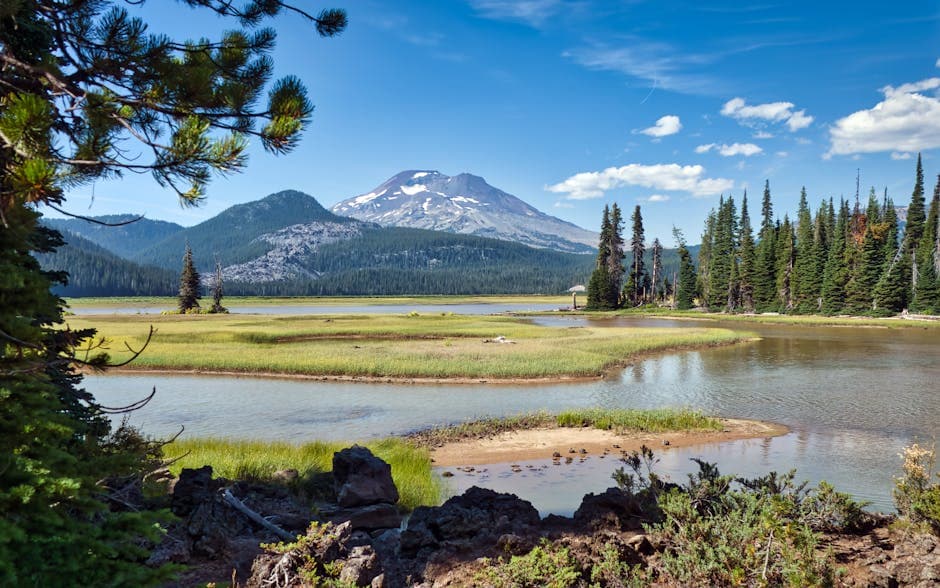
Source: Visit Bend, Oregon Brewers Guild, Mt. Bachelor (Powdr Corp), Oregon Parks and Recreation Department.
The Almanac, Page One
State sales tax, Oregon
0%
The menu price is the checkout price. Per OR Department of Revenue.
City population
~105,000
Largest city in central Oregon. Per US Census Bureau ACS estimates.
Elevation
3,623 ft
High desert, east of the Cascades crest.
Active breweries
~30+ in greater Bend
Highest per capita brewery ratio in the US per BeerAdvocate.
Mt. Bachelor skiable acreage
~4,300 acres
One of the largest ski resorts in the US. Per Powdr Corp.
Filed from Bend · Editorial standards: real sources, no fabricated reviews, no FAQPage schema.
I. Scene
Friday, 4:18 p.m. on the Deschutes Brewery brewhouse floor. A powder report from Mt. Bachelor, two firkins on the bar, and a phone that will not stop.
The Old Mill District sits along the east bank of the Deschutes River, on the same flat ground that the Brooks-Scanlon and Shevlin-Hixon mills cleared with rail-mounted slab carriers through most of the twentieth century. The mill stacks are still there. They have been kept as landmarks; everything around them is a brewery, a kitchen, a kayak shop, or a movie theater. The Deschutes Brewery taproom and brewhouse anchors the southern edge of the district on SW Powerhouse Drive, where a Mirror Pond Pale Ale firkin is being tapped at 4:18 p.m. by a brewer in a logo cap who has been on the floor since five in the morning.
The taproom is filling because the powder report has landed. Mt. Bachelor logged six inches of new snow overnight, the resort website is showing nine of fourteen lifts spinning, and the skiers coming down Century Drive in roof-racked Subarus are turning right into Old Mill before they even unload the boards. A four-top in fleece vests has just asked for the kitchen's order of an eighteen-dollar cubano sandwich, a chili-rubbed elk burger ($16), and four pints of Black Butte Porter ($7 each). The menu number on the chalkboard is the number on the card reader because the state of Oregon has no sales tax. The Old Mill operator who memorized that math has built the check around it.
The phone behind the host stand rings, and rings again. A ski group at the Mt. Bachelor base parking lot is calling in a takeout order to pick up on the way back down. A second caller, a couple at a Sunriver vacation rental, wants to know whether the kitchen can hold a four-top table for 7:30; the Voice AI on the line takes the reservation request and confirms it to the host pad in eight seconds. A third ring is a regular ordering a Bachelor Pale and a Fish Tacos for pickup in twenty minutes; the AI takes the order in Spanish, confirms back in Spanish, and the kitchen ticket prints in English. Roughly ten percent of Bend's residents are Hispanic per US Census Bureau ACS five-year estimates; in this Old Mill kitchen, three of the eight line cooks speak Spanish as a first language and the bilingual ordering flow is not a luxury feature.
Outside the brewhouse window, the Deschutes River runs south to north (the rare river in the US that does), and the volcanic-tuff ridge of Pilot Butte sits visible to the east. A climber in a chalk-dusted puffy walks past the window. He has been at Smith Rock all afternoon and is back in town to refuel; his car is parked next to a Toyota Tacoma with a Tucson sticker on the bumper, a Mt. Bachelor season pass in the windshield, and an REI flag-pattern sticker that gives him away as a remote worker who arrived in Bend during the 2020 to 2022 surge and never left.
This is the spine of the Bend argument. Almost everywhere else in the US, a high-elevation ski town runs as a seasonal economy with hospitality unit-economics that collapse in the shoulder months. Bend does not. The brewery floor, the climbing park, the river corridor, the tech remote-worker base, the OSU Cascades and COCC student calendars, and the Mt. Bachelor lift ticket each add a different note to the year. Direct ordering rebuilt around that compound is what holds the operator's margin through the late-spring slack. The rest of this report is what an operator does with that fact.
II. The Brewery Atlas
Thirty plus breweries inside greater Bend. The highest per capita brewery ratio in the United States.
BeerAdvocate, the Beer Connoisseur, and the Oregon Brewers Guild member roster put Bend's brewery count somewhere between roughly two dozen inside the city limits and thirty plus across greater Bend, which on a per capita basis is the highest concentration in the country. Deschutes Brewery (1988) anchors the roster as the largest craft brewer in Oregon and one of the largest in the United States by volume; nine other named brewpubs cluster around it across downtown, the Westside, and East Bend.
Deschutes Brewery opened on NW Bond Street in downtown Bend in 1988 as a brewpub. Gary Fish's project survived the early-1990s craft-brewing shakeout, scaled out of its original pub to a production brewery on SW Simpson Avenue, and now distributes to thirty plus states with a public taproom on the SW Powerhouse Drive brewhouse in the Old Mill District. Black Butte Porter, Mirror Pond Pale Ale, and Fresh Squeezed IPA are the three names everyone in Bend can recite.
Bend Brewing Company opened in 1995 on NW Brooks Street overlooking Mirror Pond and Drake Park, and is the second-oldest brewpub in town. The two Cascade Lakes Brewing taps (1994 founding in Redmond, with a Bend tasting room) round out the pre-2000 roster. Silver Moon Brewing opened on NW Greenwood Avenue in 2000 and stayed independent.
The 2006 to 2013 wave is where the per capita ratio accelerated. 10 Barrel Brewing opened in 2006 on NW Galveston, was acquired by Anheuser-Busch in 2014, and kept brewing locally at the same pub. Boneyard Beer opened in 2010 on NE Lafayette Avenue in a converted auto-repair shop, using salvaged equipment, which is where the name comes from. GoodLife Brewing followed in 2011 on SW Century Drive, the artery to Mt. Bachelor. Crux Fermentation Project, founded by Larry Sidor (formerly of Deschutes Brewery), opened in 2012 in the SW industrial belt with sunset views over the high desert. Worthy Brewing arrived in 2013 on NE 27th Street in East Bend with an observatory and a hop research garden onsite.
The Bend Ale Trail, run by Visit Bend and the local tourism authority, is the marketing wrapper that ties the roster together. Roughly twenty plus participating breweries print their stamp on a passport that a visitor fills as they crawl the city; complete the passport and receive a silipint or a Bend Ale Trail Sasquatch coin. It is the most successful brewery-trail program in the country and a meaningful share of incoming Bend tourism routes through it.
The economic implication for an operator is that a Bend kitchen attached to a brewpub is, in operational terms, a full restaurant. The beer pulls the foot traffic, but the food revenue is the line that has to hold the margin through shoulder months. The brewpub kitchens in Bend run deep menus: smoked elk, locally raised lamb sliders, fish and chips with Pacific cod, vegetarian forward plates for a town with an outsized share of self-identified vegetarian customers per Visit Bend dining surveys. A brewery without a serious kitchen does not survive in this market.
What direct ordering does for the Bend brewpub format is preserve the unit economics on the food side. A marketplace listing of a Worthy or a Crux puts the food program inside a national fee architecture that does not know the difference between a high-margin pint and a low-margin food ticket. A direct-ordering page on the operator's domain, with branded pickup-time slots, lets the operator route the customer to the bar after pickup and capture the second-pour revenue that the marketplace does not see.
The Oregon Brewers Guild and the Brewers Association both track Bend in their annual state and city rankings. Portland may have more breweries in absolute count, but Bend's per capita ratio of one brewery per roughly three thousand five hundred residents is what no other city in the US currently matches. The marketing consequence is that any Bend restaurant page can ride the Bend Ale Trail SEO surface; the operational consequence is that the order channel has to handle a ticket mix where a third or more of the line items are beer and the food check has to feed the beer.
III. Mt. Bachelor
Forty three hundred acres, eleven lifts, three hundred seventy inches of snow. The ski mountain that built the winter economy.
Mt. Bachelor sits twenty two miles southwest of downtown Bend via Century Drive, on the eastern flank of the Cascades crest. By skiable acreage it is one of the largest ski resorts in the United States. The mountain runs a six month operating season under Powdr Corp ownership and is the single largest driver of November through April hospitality demand in central Oregon.
The base village at West Village sits at six thousand three hundred feet; the summit is at nine thousand sixty five. The mountain has eleven chairlifts plus surface lifts, runs roughly three hundred seventy inches of average annual snowfall, and operates a typical season from late November through May. Powdr Corp, which owns Mt. Bachelor, also owns Killington in Vermont, Copper Mountain in Colorado, and a long roster of other US resorts; Bachelor sits at the top of its skiable acreage roster.
The restaurant ring of Mt. Bachelor extends along Century Drive from the base parking lots back into downtown Bend and Old Mill. On a powder Friday the drive is bumper to bumper from 3 p.m. to 5 p.m. southbound, and the Westside brewpubs (GoodLife, Sunriver Bend, 10 Barrel Galveston) catch the first wave of skiers coming off the hill. Old Mill catches the second wave. Downtown Wall Street catches the third.
The operational consequence is that the ski-day delivery and pickup channel in Bend is back-loaded into the late afternoon. From November through April, the pickup channel runs hot from 4 p.m. to 7 p.m., the cell-service window between when skiers leave the mountain (where signal is spotty) and when they get back to a Bend restaurant. The operator who lets a customer place a pre-order at the base parking lot for pickup forty minutes later, even on intermittent signal, captures the ticket that the next operator down the road loses.
The mountain also runs a substantial summer program of lift-served mountain biking, hiking, and the Pine Marten lodge dining program in the warm months. This means the ski-economy demand pulse does not fully collapse in the shoulder. Operators who oriented their Westside menus around the lift-traffic pulse during ski season can continue to pull steady summer volume on the way out to the Cascade Lakes Scenic Byway.
The other dimension that operators in Bend track closely is the Mt. Bachelor season pass, which prices around the middle of the Powdr Corp tier and which competes with Vail Resorts' Epic Pass and Alterra Mountain Company's Ikon Pass on national multi-mountain bundles. Pass-driven visitor mix tells the operator how much of a given weekend's volume is local season-pass holders (who tend to come into town only for the after-ski meal) versus visiting Epic or Ikon Pass holders staying in Sunriver, Tetherow, or Tumalo rental cabins (who tend to spend their entire ski trip dining out).
IV. The River + Old Mill
The Deschutes runs north. The mill stacks stayed. Bend kept its waterfront and put a restaurant district on it.
The Deschutes River cuts through Bend on a south-to-north axis, one of the few rivers in the contiguous United States that flows north. The Old Mill District, on the east bank, is the redeveloped footprint of the Brooks-Scanlon and Shevlin-Hixon lumber mills that operated through the twentieth century. The mill stacks were kept as landmarks; the buildings around them are now a brewery, a kitchen, an outdoor-gear retailer, a kayak shop, and the Les Schwab Amphitheater.
The Old Mill District was master-planned by William Smith Properties in the late 1990s on roughly two hundred seventy acres of former mill land. The Deschutes Brewery brewhouse opened on SW Powerhouse Drive in 2008, anchoring the southern end. The Les Schwab Amphitheater hosts a summer concert season that pulls visiting crowds from across the Pacific Northwest. The riverfront trail connects the district to Drake Park and downtown to the north.
The river itself is the city's central recreational spine. In summer, the Deschutes runs a tubing channel from Riverbend Park through the Bend Whitewater Park downtown that pulls thousands of floaters a day on hot July weekends. The Bend Whitewater Park, opened in 2015, rebuilt the dangerous Colorado Drive dam stretch into three engineered channels (passageway, whitewater, fish ladder) and now runs as a regional surfing wave for stand-up paddlers and river surfers.
For restaurant operators, the river creates the city's most reliable seasonal demand layer that is not weather dependent. The Old Mill foot traffic in July is matched by the Old Mill foot traffic in February (when the amphitheater is dark but the Deschutes Brewery taproom fills with ski returners). The river-adjacent kitchens run pickup windows of fifteen minutes or less because the walk back to the trail is the choke point, not the line inside.
Drake Park, the lawn along Mirror Pond at the downtown edge of the river, anchors the downtown public events calendar: the Bend Brewfest in August, the Munch and Music summer concert series, the Christmas Parade in December. Each pulls a compression of food and beverage volume into a ring of roughly half a mile from the park. Bend Brewing Company sits on NW Brooks Street directly overlooking Mirror Pond and is the highest-leverage operator on the calendar during the August Brewfest.
The water-driven seasonality is the part Bend operators plan their year around. The Old Mill in July is at vacation-rental volumes from Portland, Seattle, and the Bay Area; the same district in late October is at locals only volumes; and the same district in February swings back up for the ski returners. A direct-ordering page that can route customer-specific seasonal recommendations (cold pints in July, hot cocoa in February) is meaningfully better at holding the average ticket through the year than a marketplace listing that cannot tell July from February.
V. Smith Rock
Thirty miles north on Highway 97. The cradle of American sport climbing.
Smith Rock State Park sits in the town of Terrebonne, thirty miles north of Bend on Highway 97. Designated as a state park by the Oregon Parks and Recreation Department in 1960, the park's volcanic-tuff walls along the Crooked River became, through the early 1980s, the place where American sport climbing was effectively invented. Local climber Alan Watts began placing bolts on the Smith Rock walls in 1983, creating the first generation of US bolted face routes; the sport-climbing era in America begins there.
In 1986, French climber Jean-Baptiste Tribout completed To Bolt Or Not To Be on Smith Rock's Dihedrals wall, rated 5.14a, the first ascent of that grade in the United States. The park now holds more than fifteen hundred bolted routes across nearly all of its major formations, including Monkey Face (a roughly four hundred foot pillar) and the Dihedrals. The park appears in every serious American sport-climbing history, and any climber visiting Bend has Smith Rock on their itinerary.
The restaurant ring of Smith Rock runs along Highway 97 from Terrebonne south through Redmond and into Bend. Climbers tend to leave the park in the late afternoon after the sun has rotated off the south-facing walls and the temperature has dropped. The 5 p.m. to 8 p.m. pickup window on Highway 97 from Tumalo through downtown Bend is heavy with climber traffic; East Bend operators on NE Third Street and downtown operators on Wall Street catch a substantial share of that volume between October and May, the long sport-climbing shoulder season.
Pandemic-era visitation peaked at Smith Rock as urban climbers from across the Pacific Northwest and the Bay Area decamped to Bend; the park's access road and the Northern Point parking lots filled by 9 a.m. on most fall and spring weekends. The Oregon Parks and Recreation Department now runs timed permits on the busiest weekend blocks. The restaurant implication is that Smith Rock weekends concentrate climber volume into early morning breakfast pickups (in town, on the way to Terrebonne) and late afternoon dinner pickups (back in town after the climb).
For an operator on the East Side or downtown corridor, Smith Rock is the third year-round demand engine after Mt. Bachelor and the Deschutes river. A direct-ordering page with breakfast preorder pickup at 7 a.m. and dinner preorder pickup at 5 p.m., paired with a delivery fallback to the climber's vacation rental in Tumalo or Sunriver, captures the climber wallet that the marketplace cannot serve because the marketplace courier pool does not run to the Tumalo cabins or the Terrebonne campgrounds.
VI. The High Desert
Three thousand six hundred twenty three feet. East of the Cascades crest, in the Oregon high desert.
Bend's elevation, three thousand six hundred twenty three feet, places it in the Oregon high desert on the eastern rain-shadow flank of the Cascades. Annual precipitation averages eleven inches a year, a fraction of the roughly forty four inches recorded at Portland International two hundred miles to the northwest. The sun shines roughly three hundred days a year. The summer temperature swings are wide: ninety plus in the afternoon and dropping into the low sixties at night. Winter is dry, cold, and snowless at city elevation in most years, even when Mt. Bachelor records ten plus feet of base.
The operational consequence for a Bend restaurant is the opposite of the wet-quarter math that dominates Portland. Bend's brick-and-mortar floors hold steady through the winter because the sidewalks are dry and the patios with outdoor heaters can run through most of February. The summer floor at Old Mill and downtown is uncovered patio volume that no Portland operator can match. Bend restaurants build their year around shoulder-season tech tourists in spring and fall, ski returners in winter, and a four month river-and-trail blast from June through September.
The altitude matters operationally in two specific ways. First, fermentation in a Bend brewery runs different pressure curves at thirty six hundred feet than a sea-level brewery at the same recipe; the Deschutes Brewery production team has been documenting altitude adjustments for almost four decades. Second, baked goods, coffee extractions, and pasta water times all shift; a Bend pastry program runs five to seven percent more flour in a high-hydration dough than the same recipe at Portland's seventy-foot elevation. None of this is trivia; it is the kind of detail that a chef hired from a coastal market gets briefed on in the first week.
The high-desert light also pulls visiting customers a particular way. The Cascades sunset, viewed from the Crux Fermentation Project patio or from the Tetherow pavilion on the west edge of town, is the photograph every visiting customer posts to social. The operator who presents that view in their direct-ordering page hero is marketing on a visual that the marketplace listing cannot show.
VII. The Tech Hub
The COVID-era remote-work surge that bent the housing curve and rebuilt the lunch ticket.
Bend's tech-worker base predates the pandemic. Bend Economic Development and the Oregon Employment Department have been tracking a small but growing software and outdoor-product engineering cluster since the 2010s. G5 (real-estate marketing software, headquartered in the Old Mill until its 2021 sale to RealPage) and BendBroadband anchored an earlier generation of local tech employers. The Seventh Mountain corridor and the Westside tech offices have hosted remote-worker outposts from larger west coast companies for the better part of a decade.
The 2020 to 2022 remote-work surge changed the scale. The Bulletin (the city's daily paper) and OregonLive both tracked the influx of remote workers from the Bay Area, Seattle, Portland, and Denver who relocated to Bend during the pandemic, decisively shifting the city's median home price upward and pulling in a new generation of full-time residents who keep coastal salaries. The US Census Bureau ACS five-year estimates record the population growth across Deschutes County through the same period; Bend's share of that growth ran above its historical pace.
For restaurants, the surge rebuilt the weekday lunch ticket. A remote worker at a vacation-rental kitchen in Tetherow or Northwest Crossing who orders lunch delivery from a downtown or Old Mill operator three times a week is a different customer than the previous era's eight-month-of-the-year tourist. The check is steadier, the loyalty arc is longer, and the customer wants to be in the restaurant's loyalty program because they are going to be in town for years, not days. Direct ordering with same-day Stripe payouts and a customer database the operator actually controls is the right product for this customer; a marketplace listing is not.
The downside of the surge is the cost-of-living curve. Bend's median home price ran above six hundred thousand dollars at points during the pandemic peak and the hospitality wage base has had to chase a labor market that now competes with software salaries. Operators who are not on a direct-stack platform that lets them shave marketplace commission have a harder time absorbing the wage line. The flat-fee direct-ordering math from section X of this report is the operational answer.
VIII. The Campus Economy
OSU Cascades and Central Oregon Community College. Two campuses, two student calendars.
Oregon State University Cascades is the four year branch campus of OSU, opened in its present form at its current SW Chandler Avenue site in 2016. OSU Cascades enrolls roughly fifteen hundred students between the four year campus and the COCC partnership programs, a small but steady undergraduate population concentrated on the Westside near Century Drive. Central Oregon Community College, founded in 1949 on Awbrey Butte in the northwest of the city, runs a two year program with enrollment in the high single thousands across its main campus and satellite sites.
The combined campus economy is smaller than the University of Oregon's effect on Eugene (which enrolls roughly twenty three thousand) but the rhythm is the same: fall move-in week pulls a takeout volume burst, finals week pulls a delivery surge, and the academic calendar punches the year into predictable beats. Late August through mid May is the campus on; mid May through late August is the campus off. Westside Bend operators near OSU Cascades and downtown operators within walking distance of either campus have the highest exposure to the academic calendar.
The student population in Bend leans outdoor recreation: a meaningful share are at OSU Cascades for the outdoor-products and tourism programs, which pulls a customer who is willing to spend their dining wallet on experiences (a brewery pub crawl, a Smith Rock dinner stop on the way back) rather than budget grocery substitution. The direct-ordering page that treats the Bend student as a hospitality customer, not as a value customer, books a higher average ticket than a national fast-casual marketplace listing.
IX. The Atlas
Downtown. Old Mill. Westside. East Bend. The four quadrants of a city that fits on one page.
Bend is a one hundred and five thousand person town that you can drive across in fifteen minutes outside rush hour. The Deschutes River slices through the middle on a south-to-north axis; downtown sits on the east bank near the Mirror Pond inflection; Old Mill is one mile south on the same east bank; Westside is the residential and brewery-corridor zone across the river; East Bend is the fastest-growing commercial belt out NE Third Street.
The downtown core, around Wall Street and NW Bond Street, holds the chef-driven dinner houses, the Silver Moon and Bend Brewing taprooms, the Tower Theatre block, and the Mirror Pond / Drake Park public-event corridor. The dinner pickup window peaks 5:30 to 7:30 p.m.; the walkable density means a substantial share of orders are pickup rather than delivery.
Old Mill District, one mile south on the east bank, is the destination quadrant: the Deschutes Brewery brewhouse, the Les Schwab Amphitheater, the riverfront shopping and dining mix. The volume pulses on amphitheater concert nights (June through September), the Bend Brewfest weekend (August), and the ski-day return waves on winter Fridays and Saturdays. Old Mill operators run a meaningful share of their year on those pulse weekends.
The Westside, across the river, is the brewery corridor (10 Barrel, Sunriver Bend, GoodLife, Boneyard proximity) and the residential hill above the river. The ski-day traffic that flows down Century Drive cuts through the Westside before reaching downtown or Old Mill, which is why the Westside brewpubs catch the first wave of returning skiers. OSU Cascades anchors the southern Westside on SW Chandler.
East Bend, out NE Third and NE 27th, is the fastest growing belt: Worthy Brewing on NE 27th, the Reed Market Road commercial corridor, and the newer subdivisions pushing east toward Pilot Butte. The delivery channel is disproportionately heavy here because the residential footprint is more spread out and the walking radius to a downtown restaurant is longer. East Bend operators who wire Uber Direct dispatch with a five mile radius pick up the orders that the downtown competitors cannot serve.
The outer corridor adds Mt. Bachelor twenty two miles southwest, Smith Rock thirty miles north, the Cascade Lakes Scenic Byway southwest from town, and the Sunriver / Tetherow resort cluster south. Each anchors a separate visitor stream; collectively they keep Bend's restaurant calendar from collapsing to a single seasonal pulse.
X. The Price Math
No Oregon sales tax. No Bend local sales tax. Bilingual ordering for a ten percent Hispanic city.
The state of Oregon has no sales tax. The Oregon Department of Revenue confirms it; the page on the state's web property explaining the no-sales-tax position is one of the shorter pages on the site because there is little to explain. Bend has no local sales tax either, which means a $14 menu item is $14 at the counter. The Portland argument from elsewhere in this site applies here in full: round-dollar menu pricing is honest in Bend, and the marketing consequence is that the direct-ordering page can quote the same price the customer sees on the chalkboard.
Marketplaces, again, do not give you any of this. A DoorDash listing of a Bend brewpub surrounds the menu price with a service fee, a delivery fee, a small-cart fee, and a percentage tip pinned at fifteen percent of the post-fee subtotal. The no-Oregon-sales-tax math evaporates inside the marketplace ledger. The advantage only exists on the operator's own domain.
The bilingual layer is the second pricing-and-language lever. The US Census Bureau ACS five-year estimates put Bend's Hispanic share at roughly ten percent, larger than the city's outsider reputation as an all-Anglo ski town suggests. The construction labor that built the Bend housing boom, the back-of-house line in many of the brewpub kitchens, and a meaningful share of the Sunriver and Tetherow resort service teams speak Spanish as a first language. A Voice AI that answers the inbound call in Spanish, takes the order in Spanish, and confirms back in Spanish recovers the inbound volume that an English-only call tree drops.
The third pricing lever is the high-margin beer line on the average Bend ticket. Oregon's excise tax on beer falls on the brewer, not the customer, which means a $7 pint is $7 at the bar. A Bend brewpub running a round-dollar menu in dollars across food and beer is presenting an unusually clean price story, and the direct-ordering page is the only channel that can do that natively.
XI. The Thesis
Why a flat $249 a month plus bilingual Voice AI plus Uber Direct plus same-day Stripe payouts is the only stack that fits this city.
Start from the spine. Bend is a town built on three tributaries (the brewery roster, Mt. Bachelor, Smith Rock) feeding one ledger, layered on a no-sales-tax state, a high-desert geography, and a remote-worker surge that rebuilt the weekday ticket. A marketplace stack that ignores all of that and treats Bend like a national franchise market is destroying the city's actual unit economics. A direct stack at a flat $249 a month does not.
Layer in the brewery atlas from section II. Thirty plus breweries inside greater Bend cannot survive on per order percentage stacks. The brewpub format requires the food check to feed the beer; the marketplace fee architecture, which does not distinguish between the high margin pint and the low margin food ticket, breaks the brewpub's unit economics. The direct stack lets the operator route customers to the bar after a pickup, hold round-dollar menu pricing across food and beer, and preserve the no-Oregon-sales-tax price math through checkout.
Layer in the Mt. Bachelor pulse from section III. The 4 p.m. to 7 p.m. ski-day pickup window between November and April is the highest-leverage daypart of the year for a Westside or Old Mill operator. A Voice AI that catches inbound calls from the Mt. Bachelor base parking lot, and an Uber Direct fallback that holds promise times below thirty minutes during the powder Friday surge, are the two single-largest operational levers a Bend operator pulls during ski season.
Layer in the Smith Rock corridor from section V. The early breakfast and late dinner pickup windows on climbing weekends, plus the delivery fallback to Tumalo and Sunriver cabins where the marketplace courier pool does not reach, are direct-stack features. The Bend operator who runs both the breakfast preorder and the cabin-delivery fallback captures the climber wallet that a marketplace listing simply does not see.
Layer in the bilingual Voice AI from section X. The Hispanic share of Bend is not a coastal-city statistic imported into a coastal city; it is the back-of-house line in nearly every brewpub kitchen, the construction crew that built the Tetherow and Northwest Crossing subdivisions, and the resort service teams at Sunriver. Spanish-language ordering on the inbound phone is a baseline feature, not a luxury. Same-day Stripe payouts close the loop: the operator gets the money in the bank before close of business, which matters disproportionately to the single-family brewery and the independent kitchens that make up most of the city's roster.
Build the brewpub direct page
A Bend brewpub menu on direct should price in round dollars across food and beer. Pickup windows of fifteen minutes or less. The riverfront photo on the hero. Route the customer back to the bar after pickup.
Set up bilingual Voice AI
Spanish-language call recovery is the largest single-line revenue change a Bend operator with a substantial back-of-house Hispanic workforce will see. Multilingual is a baseline, not an upsell.
Wire Uber Direct with a fallback
Mt. Bachelor powder Fridays and Smith Rock weekends pinch courier supply. Primary plus fallback dispatch keeps promise times near twenty minutes when the marketplace pool sits at forty plus, and reaches the Tumalo and Sunriver cabins the marketplace does not.
Editorial Coda
Three thousand six hundred twenty three feet of elevation, thirty plus breweries, one ski mountain, one climbing park, and one ledger. Run it direct.
References · This report drew from
14 sources
- Oregon Department of Revenue · Oregon has no state sales or use tax
- US Census Bureau ACS · City population, demographics, language estimates
- Visit Bend · Visitor guides, Bend Ale Trail, dining surveys
- Bend Economic Development · Economic snapshots, employer cluster reporting
- Oregon Brewers Guild · Brewery member roster across Oregon
- Brewers Association · State and city brewery counts and per capita rankings
- BeerAdvocate · Brewery rankings and city per capita data
- Mt. Bachelor (Powdr Corp) · Mt. Bachelor acreage, elevation, lifts, snowfall
- Oregon Parks and Recreation Department · Smith Rock State Park designation, route history
- COCC · Central Oregon Community College history and enrollment
- Oregon State University Cascades · OSU Cascades campus, enrollment, programs
- The Bulletin · Local reporting on tech surge, housing, brewery scene
- Bend Source Weekly · Local weekly on dining, beer, neighborhood reporting
- Deschutes Brewery · Deschutes Brewery corporate history, founding date