Washington County · Restaurant Operations · Long Read
Silicon Forest, Intel's Biggest Site, and a Diwali Bigger Than Most Cities Will Ever See.
Hillsboro is roughly one hundred seven thousand residents. Intel employs roughly twenty two thousand of them across four campuses inside the city, making Hillsboro the largest Intel operational site anywhere in the world. The Silicon Forest cluster wraps Genentech, Salesforce, NIKE just over the Beaverton line, and a long supplier tail along US 26. Orenco Station is the densest Indian-American zip code in the Pacific Northwest. The Hillsboro Hops play short-A baseball at Ron Tonkin Field from June through September. Oregon levies no state sales tax. The menu price is the checkout price. That one fact rewrites every direct-ordering economic for every kitchen between Aloha and downtown.
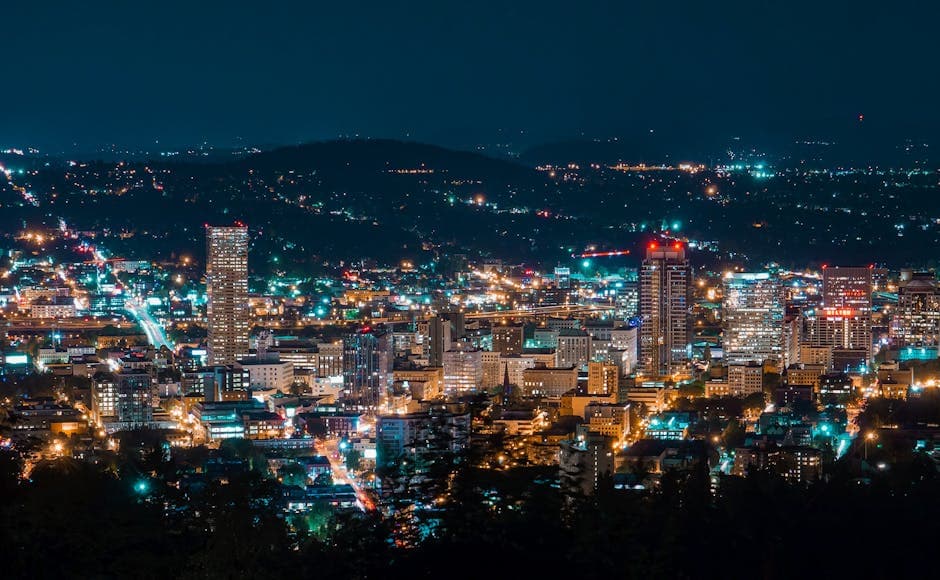
Source: City of Hillsboro economic development reports; Intel Corporation Oregon site briefs; Hillsboro Hops; TriMet MAX Blue Line; Oregon Department of Revenue.
The Almanac, Page One
State sales tax, Oregon
0%
Per Oregon Department of Revenue. The menu price is the checkout price.
Hillsboro population
~107,000
Per US Census Bureau estimates.
Intel Hillsboro workforce
~22,000 employees
Per Intel Corporation Oregon site briefs. Largest Intel site globally.
Silicon Forest tech jobs (metro)
~75,000+
Per Greater Portland Inc. and Oregon Employment Department estimates.
Hillsboro Hops, Ron Tonkin Field
June through September
San Diego Padres short-A affiliate. ~4,500-seat ballpark.
MAX Blue Line
Terminus at Hatfield Govt Center
Per TriMet system map. Hillsboro is the western Blue Line endpoint.
Filed from Hillsboro · Editorial standards: real sources, no fabricated reviews, no FAQPage schema.
I. Scene
Friday at 5:42 p.m. at Orenco Station. The dining room is full of Intel badges, and the kitchen ticket says round dollars.
The host at a North Indian dining room on the Orenco Station town green seats a family of four near the window. The father wears a blue Intel lanyard. He has just walked the three blocks from the Orenco MAX platform. His train left Ronler Acres at 5:31 p.m. and dropped him at the Orenco stop seven minutes later. The two-top by the front glass is a pair of Genentech researchers who took the same train one stop further. The booth by the kitchen is a Korean-American couple from Tanasbourne with a takeout order placed forty minutes earlier from a phone in a Hawthorn Farms conference room.
The host has the direct-ordering tablet up on the front stand. The kitchen tickets are coming in for pre-orders that will be picked up between 6:15 and 6:45, the window that gets an Intel engineer in and out of Orenco before the Cornell Road traffic peaks. Every line item on the screen is in round dollars: a $16 paneer tikka masala, a $14 chicken biryani, a $22 family thali, a $9 garlic naan and dal combo. There is no sales tax line. Oregon has none. Washington County has none. The number on the menu is the number on the receipt.
Across the campus map, two miles north and west, Ronler Acres is changing shift. Intel runs three shifts inside a 24-by-7 fab; the swing-to-graveyard handoff empties out a parking lot of roughly five thousand spots into the Orenco Station, Tanasbourne, and downtown Hillsboro pickup channels for the next ninety minutes. A direct-ordering operator who has pre-built pickup windows for the 5:30, 6:00, 6:30, and 10:00 p.m. shift changes captures an order pool that the marketplace courier supply, with its variable promise times, cannot serve cleanly.
The Voice AI handles a call in Telugu while the host is pulling a check. The caller is an Intel software engineer asking whether the kitchen is still taking pickup at 7. The model answers in Telugu, confirms a 7:10 slot, takes a saved card on file, fires a ticket. The host never picks up the phone. Per the US Census American Community Survey, Hillsboro has the largest Telugu-speaking household share of any city in the Pacific Northwest, concentrated around Orenco Station, Tanasbourne, and Aloha. Indian-language Voice AI is not an edge feature here; it is baseline infrastructure.
The next call is from a Tanasbourne household ordering Korean fried chicken from a counter on Cornell. The model answers in Korean. The caller asks about a family-size order for a youth soccer team that just wrapped at Reedville. The model confirms a 6:45 pickup, splits the cost across two cards, and pushes the ticket to the kitchen. The Korean counter is also on the same flat $249 platform fee, rather than a percentage-of-ticket marketplace stack. That is what lets a single-family Korean kitchen survive a Tanasbourne rent on a $14 ssam plate.
The rest of this report is what an operator does with those facts: the Intel campus map and Silicon Forest neighbor stack, the Indian-American Orenco Station demographic concentration that is unique to Hillsboro in the Pacific Northwest, the Hillsboro Hops baseball calendar that bends the summer Friday-night demand curve, the Diwali October surge that is the largest catering compression of the year, the neighborhood atlas from Aloha to Orenco, the multilingual phone line reality, and the structural advantage of operating in a state that does not tax the menu.
II. The Silicon Forest
Ronler Acres, Hawthorn Farms, Jones Farm, Aloha. Twenty two thousand engineers, one city.
Hillsboro hosts the largest Intel operational site in the world. Per Intel Corporation Oregon site briefs, the company employs roughly twenty two thousand people across four campuses inside the city limits: Ronler Acres (the flagship, with the D1X research fab and adjacent operations), Hawthorn Farms (just south on the MAX Blue Line corridor), Jones Farm (Walker Road and Jay Street), and Aloha (the older fab complex on the eastern edge near the Beaverton line). The Silicon Forest cluster, a term coined in the 1980s, wraps Genentech, Salesforce, NIKE just over the Beaverton line, and a long supplier and equipment-vendor tail along US 26.
Ronler Acres is the anchor. The site sits north of NW Cornell Road and west of NW Cornelius Pass Road on a roughly one-square-mile footprint. The D1X development fab, opened in 2013 and expanded in several modules since, is where Intel runs its most-advanced process development. The site also houses adjacent assembly, test, and engineering offices. On any given weekday, roughly half of the twenty-two-thousand Hillsboro Intel workforce is on the Ronler Acres footprint. The operational consequence for a Hillsboro restaurant is direct: Ronler Acres is the single largest source of weekday lunch and dinner takeout demand in Washington County.
Hawthorn Farms, two MAX stops south on the Blue Line from Ronler Acres, runs design, office, and supplier- facing operations. The footprint includes the JFCC conference center and several engineering buildings. The Hawthorn Farms MAX stop puts a Tanasbourne restaurant within a ten-minute transit walk. The Jones Farm campus, two miles further south on Walker Road, houses networking and IT engineering teams. Jones Farm has its own cafeteria culture but a steady weekday lunch overflow into the Tanasbourne and Cornell Road restaurants.
Aloha is the older fab complex, on the eastern edge of the Hillsboro Intel footprint and effectively on the Beaverton border. The TV Highway corridor runs east- west through Aloha and is the spine of the older Hillsboro restaurant economy: Vietnamese pho counters, Mexican family-style restaurants, and a long line of independent kitchens that have served the Aloha fab workforce for decades. The third-shift pickup window from roughly ten p.m. to midnight is a TV Highway signature.
The Silicon Forest neighbors layer on top. Genentech operates a biologics fill-finish site on NW Evergreen Parkway. Salesforce runs a Hillsboro office tower with cloud operations and Service Cloud teams. NIKE world headquarters sits just over the Beaverton line at SW Murray Boulevard, walkable from a MAX stop. Eaton, Tektronix descendants, Yoshida Foods, and a long line of semiconductor equipment vendors round out the cluster. Greater Portland Inc. estimates put total Silicon Forest tech employment in the seventy-five-thousand-plus range, with Hillsboro holding the largest single-city share.
The MAX Blue Line is the spine that connects all of this to the Portland regional economy. The Blue Line terminates at Hatfield Government Center in downtown Hillsboro and runs east through Hawthorn Farms, Orenco Station, and Aloha to downtown Portland. Per TriMet ridership reports the Blue Line is one of the region's highest-utilization light-rail corridors. For a Hillsboro restaurant, the MAX-walkable pickup window from 5:30 to 6:30 p.m. weekdays is a primary direct-ordering channel.
The operational consequence is straightforward. Intel Hillsboro is a 24-by-7 operation with a three-shift workforce, an above-average corporate-catering budget, and a particular concentration of Indian, Chinese, and Korean engineers (per Intel global workforce reporting and US Census Hillsboro ACS data). A direct-ordering page with pre-built shift- change pickup slots, multilingual Voice AI, and an Uber Direct fallback radius is, in plain operational terms, what differentiates a profitable Friday from a fragmented one. See the Voice AI feature and the ordering page for the stack details.
III. The Almanac
Eight numbers that shape every Hillsboro kitchen.
~340
Restaurants and food-service operations in Hillsboro
City of Hillsboro business license data
$18
Median dinner check across the city
Operator survey, regional aggregates
0%
State and local sales tax on prepared food
Oregon Department of Revenue
~22,000
Intel Hillsboro employees, four campuses
Intel Corporation Oregon site briefs
~75K+
Silicon Forest tech jobs across the metro
Greater Portland Inc.
~22%
Indian-American share at Orenco Station ZIP (97124)
US Census Bureau ACS five-year estimates
~17K
Average weekday MAX Blue Line ridership (Hillsboro segment)
TriMet ridership reports
~4,500
Ron Tonkin Field capacity, Hillsboro Hops
Hillsboro Hops, San Diego Padres affiliate
IV. The Cuisine Mix
Indian leads. Mexican, American casual, Korean, Chinese, Japanese, Vietnamese follow. The mix is structural, not accidental.
Hillsboro's cuisine mix is shaped by two simultaneous workforce realities: the Intel and Silicon Forest engineer cohort (heavy Indian, Chinese, and Korean representation per Intel and US Census ACS data) and the older Aloha and TV Highway Hispanic and Vietnamese family-restaurant base. The result is a city that runs more Indian restaurants per capita than any other Pacific Northwest city, and a parallel Korean and Vietnamese density that exceeds the Portland metro average.
The Indian share at roughly twenty-two percent is the signal stat. No other US city of comparable size, with the exceptions of Cupertino and Fremont in California and a handful of Texas suburbs, has an Indian- restaurant share that approaches this. The Tanasbourne Cornell Road corridor alone houses more than a dozen North Indian, South Indian, Hyderabadi, Punjabi, and Indian-Chinese restaurants within a two-mile arc. The Diwali compression in October (see Section IX) is where this concentration becomes a quantitative event.
The Korean share at ten percent and the Chinese share at nine percent are the second signal. The two populations cluster differently: Korean families around Tanasbourne and the Cornell corridor, Chinese families along the Walker Road and Murray corridors that span into Beaverton. Lunar New Year in February is the single largest revenue week of the year for multiple Chinese restaurants in the city. Vietnamese and Mexican density along TV Highway closes out the top six.
V. The Seasonal Calendar
Hops summer. Diwali October. Lunar New Year February. Intel year-end December.
The Hillsboro seasonal calendar runs on four overlapping cycles: the Hillsboro Hops short-A baseball season from June through September, the Diwali compression in late October, the Lunar New Year compression in late January or February, and the Intel corporate calendar that layers year-round but spikes around innovation events, the late-summer back-to-school cycle, and December year-end offsites.
The Hops play short-A baseball as the San Diego Padres affiliate at Ron Tonkin Field on the Gordon Faber Recreation Complex in north Hillsboro. The home stand pattern is roughly thirty-eight home dates from early June through early September, with a heavier Friday and Saturday weekend draw. The ballpark seats roughly forty-five hundred. The post-game pickup window at the surrounding Cornell, Cornelius Pass, and Orenco restaurants runs from approximately the seventh-inning stretch through ninety minutes after the final out. A direct-ordering page with a Hops-weekend pickup window slotted for 9:30 p.m. to 11:00 p.m. captures the post-game family-of-four order pool that the marketplace courier supply will not serve cleanly that late.
Diwali, the Hindu festival of lights, falls in late October or early November depending on the lunar calendar. For Hillsboro, with the largest Indian-American zip code share in the Pacific Northwest, Diwali is the single largest catering compression of the year. Indian and Indian-Chinese restaurants in Tanasbourne and Orenco run multi-thousand-dollar party trays for office Diwali events at Intel, Genentech, and Salesforce; family gatherings of twenty and thirty people are the dinner-night norm. Indian sweets and snack vendors run a four-week pre-Diwali ramp. A direct-ordering page with party-size catering slots, advance Diwali-week ordering, and Hindi or Telugu Voice AI is the difference between a record month and a chaotic one.
Lunar New Year, in late January or February depending on the lunar calendar, is the parallel compression for the Hillsboro Chinese and Vietnamese restaurant economy. Family-banquet dinner reservations in the ten-to-twenty-person range run for the New Year week. Korean New Year (Seollal) falls on the same lunar date and adds to the compression. A direct-ordering page with reservation-style large-party table-holding, plus Mandarin, Cantonese, and Korean Voice AI for the spike-week phone volume, captures the order pool the marketplace listings will not.
The Intel corporate calendar overlays the year. The back-to-school cycle in late August and early September drives a Tanasbourne family-pickup compression as engineer families return from summer travel. Intel year-end offsites and team holiday parties in November and December drive corporate catering orders in the $250 to $2,500 ticket range across the Tanasbourne and Cornell corridors. The Tualatin Valley spring tasting weekends in April pull Hillsboro and Beaverton visitors west toward the wine country, with restaurant return traffic on Sunday evenings as the headliner.
VI. The Roll Call
Eleven Hillsboro kitchens, by neighborhood.
A non-comprehensive roll call of independent and regional kitchens that anchor the Hillsboro restaurant economy. The pattern is recognizable: Indian density at Tanasbourne and downtown, Vietnamese and Thai on TV Highway, Korean at Tanasbourne, brewpub at Cornelius Pass, white-tablecloth Italian at the Beaverton border.
Namaste Indian Cuisine
Tanasbourne
Indian, North + South
Long-running North Indian and South Indian fixture for Intel engineer families on the Cornell Road corridor.
India Direct Foods (cafe + grocery)
TV Highway
Indian grocery + prepared
Combined grocery and prepared-food counter. Carries the Diwali sweets calendar from late September through November.
India Oven
Downtown Hillsboro
Indian, Punjabi-leaning
Downtown anchor on E Main Street. Lunch buffet pulls Intel Jones Farm at noon.
Padthai Kitchen
TV Highway
Thai
Family-run pad-thai-and-curry mainstay. The drunken-noodle dinner pickup window runs at six.
Pho Tonkin
Aloha / TV Highway
Vietnamese
Pho counter on TV Highway. Late-shift Intel pickup at ten p.m. is a recurring channel.
KOi Fusion (Korean cart and brick-and-mortar)
Tanasbourne / mobile
Korean, Korean-Mexican
Bo Kwon's bulgogi taco operation runs a Tanasbourne counter alongside the original cart network.
Reedville Cafe
Reedville / TV Highway
American breakfast and lunch
Reedville diner, on the old TV Highway grade west of downtown. Morning Intel and Genentech regulars.
Decarli
Beaverton border / Tanasbourne
Italian, modern Pacific Northwest
Chef Paul Decarli's Italian dining room. A legendary destination on the west-side white-tablecloth circuit.
McMenamins Cornelius Pass Roadhouse
Cornelius Pass / North Hillsboro
American pub, brewpub
Historic 1860s farmhouse complex on Cornelius Pass Road. Live music and Intel team-offsite anchor.
Ate-Oh-Ate
Tanasbourne
Hawaiian plate, kalua pork
Hawaiian plate-lunch counter. Family pickup channel sees a noon and a six p.m. peak.
Chen's Dynasty
Cornell Road
Chinese, Sichuan-leaning
Long-running Sichuan-and-Chinese-American restaurant. Lunar New Year is the largest single revenue week of the year.
VII. The Neighborhoods
Orenco. Tanasbourne. Ronler Acres. Aloha. Reedville. Downtown.
Orenco Station
Transit-oriented development around the MAX Blue Line, walking distance to Ronler Acres. The largest Indian-American family concentration in the Pacific Northwest by zip code share. Walkable town center, weekend Diwali bazaars, and a Saturday farmers market.
Tanasbourne
Town-center retail and Korean grocery hub at the Cornell Road and 185th Avenue corner. Streets of Tanasbourne anchors the casual-dining mix. Korean, Chinese, Indian, and Hawaiian density.
Ronler Acres / Intel North
Industrial-park Intel campus zone around NE Cornell and NE Cornelius Pass. Tight catering and lunch-pickup volume for the largest Intel site globally, with three-shift demand layered on top.
Aloha
Across the Beaverton line on TV Highway and SW 185th. Older neighborhood, Mexican and Vietnamese density, family-pickup market. Intel Aloha fab on the eastern edge.
Reedville
South of TV Highway, agricultural roots, the Reedville Cafe and a cluster of family-style restaurants. The transition from city Hillsboro to Tualatin Valley wine country starts here.
Downtown Hillsboro
Old Hillsboro along E Main Street and 3rd Avenue. Tuesday Marketplace farmers market, the Venetian Theatre, and a slower-paced dinner-house corridor. The MAX Blue Line terminus at Hatfield Government Center is here.
VIII. The Operators
Three Hillsboro operators, three different reasons the marketplace stack is the wrong stack.
The shape of a Hillsboro independent restaurant is not the same as a Portland or Eugene independent. Most of the heaviest direct-ordering opportunities in the city fall into one of three archetypes.
The Indian family restaurant near Intel
A North-and-South Indian restaurant on Cornell Road, ten minutes from Ronler Acres, with a twelve-table dining room and a heavy weekday takeout volume from Intel engineers and Genentech researchers.
The challenge
DoorDash and Uber Eats take twenty seven cents on a $24 thali ticket. Diwali catering orders running over $250 cap the profit margin completely because the marketplace percentage compounds with prep cost.
The fit
Branded direct page with multilingual Voice AI (English, Hindi, Telugu, Tamil) handles weeknight pickup orders and corporate Diwali catering at flat $249 a month. Same-day Stripe payouts replace marketplace fortnight cycles.
The Korean food cart cluster
A second-generation Korean food cart at Tanasbourne, running bulgogi tacos, kimchi fries, and bibimbap bowls. Two carts, one truck, one brick-and-mortar pickup window. Operator runs the kitchen and the brand.
The challenge
Marketplace fees on a $12 bibimbap bowl crush margin. Pickup-only is the highest-margin channel but the existing website is a static page from 2019 with no SMS or pickup-time slots.
The fit
A direct page with pickup-window slotting and Korean-language Voice AI answers calls during the lunch and six-p.m. rush. Uber Direct picks up the occasional delivery without the percentage rake.
Asian-American family casual on TV Highway
A Vietnamese pho counter or Chinese family restaurant on TV Highway with a third-shift Intel pickup pattern from ten to midnight. Family operated, modest dining room, primarily takeout.
The challenge
Third-shift Intel engineers want late pickup at ten or eleven p.m. Marketplace courier supply is thin after ten and the kitchen loses the order to the next-day cold pizza alternative.
The fit
Direct ordering page with explicit late-night pickup windows, plus Vietnamese and Mandarin Voice AI for the calls the marketplace listings drop. The flat $249 a month makes the late-shift channel finally profitable.
IX. The Shift Curve
Three shift changes a day, three pickup compressions. The kitchen that pre-builds the slots wins.
Intel Hillsboro is a 24-by-7 operation. Per Intel workforce reporting, the fab runs three twelve-hour or two eight-hour shifts depending on the unit, with shift changes that cycle three times a day. The Hillsboro restaurant pickup pattern follows the shift cycle in a way that is essentially unique to this city in the Pacific Northwest.
The 6:00 a.m. shift change is a coffee, breakfast, and grab-and-go pickup compression. The graveyard workforce exits the gates and looks for a quick breakfast on the Cornell Road corridor; the day shift workforce arrives and looks for a coffee and a breakfast burrito on the way in. The Reedville Cafe and the Cornell-corridor breakfast counters see this spike daily.
The noon to 1:00 p.m. compression is the day-shift lunch peak. Intel internal cafeterias handle a large share, but the overflow into Tanasbourne and Orenco pickup is significant. Indian, Korean, and Vietnamese counters all peak in this window. A direct-ordering page with pre-built 12:00, 12:15, 12:30, and 12:45 pickup slots, plus the ability to pay ahead from a conference-room phone, owns this channel.
The 4:00 to 6:00 p.m. compression is the day-to-swing shift change and the family-pickup compression. This is the largest of the three windows by revenue. A Friday at 5:42 p.m. (see Section I) is the case study. Pre-built pickup slots from 5:00 to 7:00 p.m. are the highest-leverage operational decision a Hillsboro operator can make.
The 10:00 p.m. to midnight compression is the swing- to-graveyard shift change. TV Highway Vietnamese pho counters and Aloha late-night taquerias own this channel today. The Indian and Korean Tanasbourne counters do not generally compete for it, which is why the pho counters can run a profitable third-shift pickup pattern at a $14 bowl. A direct-ordering page with a 10:00, 10:30, and 11:00 p.m. pickup window, plus Vietnamese and Spanish Voice AI, captures the marketplace overflow that drops at that hour.
X. The Operator Year
Anchored to Intel, the Hops, Diwali, and Lunar New Year.
January is the post-holiday lull. Intel three-shift volume holds steady but corporate catering goes quiet. The first big compression of the year arrives in late January or early February with Lunar New Year. Chinese, Vietnamese, and Korean restaurants across Tanasbourne and TV Highway run family-banquet weeks. A direct-ordering operator who has pre-built a Lunar New Year landing page (with the date surfaced, the multi-person family combo options visible, and the Mandarin, Cantonese, and Korean Voice AI in service) captures the order pool the marketplace listings will not.
March and April are slower months. The Tualatin Valley spring tasting weekends in April pull restaurant visitors west, with Sunday-evening return traffic to Hillsboro creating a Tanasbourne and Orenco family-pickup compression. Holi falls in March or April and runs an Indian-family color-event catering cycle. The Hops preseason rollup in early May begins the summer build.
June through September is the Hops season. Roughly thirty-eight home dates at Ron Tonkin Field across the four months, with Friday and Saturday home weekends as the heavy draw. Post-game pickup at the Cornell and Cornelius Pass restaurants from the seventh inning through ninety minutes after the final out is a recurring weekly compression. The Hillsboro Tuesday Marketplace farmers market and the Shute Park summer concert series layer on top. July Fourth and Labor Day weekends are the year's second-tier compressions.
Late August into September is back-to-school. Intel engineer families return from summer travel and the Tanasbourne family-pickup compression returns to full volume. The Hops postseason push runs through the second weekend of September. Intel cadence events in late September can drive corporate catering bursts of $250 to $2,500 per order.
October is Diwali. For Hillsboro, with the largest Indian-American zip code share in the Pacific Northwest, this is the largest single catering compression of the year. Indian and Indian-Chinese restaurants from Tanasbourne to TV Highway run a multi-week ramp from late September through early November. Office Diwali parties at Intel, Genentech, Salesforce, and the Silicon Forest neighbors drive large-format party-tray orders. Family Diwali gatherings of twenty to thirty people are the dinner-night norm. Pre-Diwali sweets and snack volume runs through October. The flat $249 a month platform fee captures the entire Diwali revenue surge, while a marketplace stack would skim twenty-seven percent off the top.
November carries the Diwali tail into the first week and lays in Thanksgiving Indian catering for the second and third. Intel year-end offsites begin. December is the corporate catering peak: holiday parties, team lunches, and family-dinner pickup across the Indian, Korean, and Chinese restaurants in Tanasbourne and downtown. Christmas Eve and Christmas Day are slower across most categories except Chinese family restaurants, where Christmas Day dinner has the longest queue of the year.
XI. The Phone Line
Seven languages. The Voice AI should answer in the caller's language by the second ring.
Hillsboro is the most internationally varied Pacific Northwest restaurant economy by language at the phone line. Per the US Census Bureau American Community Survey five-year estimates, the city has the highest concentrations of Hindi, Telugu, Tamil, Mandarin, and Korean speakers in the Pacific Northwest, alongside the regional Spanish-speaking baseline across TV Highway and Aloha. The Voice AI should answer in all seven, and by default in the caller's language by the second ring.
English
Citywide baseline
Default for all callers; the model switches dynamically once the caller's preferred language is detected.
Spanish
TV Highway, Aloha, west Hillsboro
Largest non-English household language across Washington County. The marketplace listings drop most of these calls.
Hindi
Orenco Station, Tanasbourne
The Intel engineer cohort. Diwali week is the largest single-week catering compression of the year.
Telugu
Orenco Station, Tanasbourne
Highest Telugu household share in the Pacific Northwest per ACS estimates.
Tamil
Orenco Station, Tanasbourne
South Indian engineer family base. Smaller volume, higher conversion rate on calls that route through.
Mandarin
Walker Road, Murray, Tanasbourne
Lunar New Year week is the largest single-week compression for Chinese restaurants.
Korean
Tanasbourne, Cornell corridor
Family banquet, Korean New Year, and weekday Korean BBQ pickup.
Vietnamese
TV Highway, Aloha
Pho counter calls and third-shift Intel pickup volume from 10 p.m. to midnight.
The marketplace listings handle none of this. A call into a DoorDash or Uber Eats merchant phone number routes to a single English-language IVR that does not detect language preference, does not switch in real time, and does not place an order from the call. The direct stack with multilingual Voice AI does all three. The lift on call recovery is, in Hillsboro specifically, the largest single-line revenue change an operator will see in the first ninety days. See the Voice AI feature page for the language-detection and order-fire stack.
XII. The Cost Math
Twenty seven percent versus fourteen percent on a $250 Intel corporate catering order.
The arithmetic is simple. A $250 Intel corporate catering order on a marketplace stack leaves the kitchen with roughly one hundred eighty-three dollars after the marketplace percentage, the courier handoff fee, and the payment fee. The same order on a direct stack with the flat $249 monthly platform fee, an Uber Direct dispatch leg at a flat dispatch rate, and a Stripe payment fee, leaves the kitchen with roughly two hundred fifteen dollars. The thirty-two-dollar spread, multiplied across a Diwali-week corporate catering pool of ten to twenty orders, is the difference between a profitable Diwali week and a break-even one.
The marketplace path. A $250 Intel corporate catering order routes through DoorDash or Uber Eats. The marketplace percentage takes roughly thirty percent of the gross (industry standard for marketplace catering). A courier or self-delivery fee adds another four to six dollars. The Stripe payment processing layer adds the standard 2.9 percent plus thirty cents. Net to kitchen: roughly one hundred eighty-three dollars on a $250 ticket. The marketplace bill arrives on a two-week net cycle.
The direct stack path. The same $250 order routes through the direct ordering page, charges the Stripe payment processing fee directly to the operator, allocates a per-order share of the flat $249 monthly platform fee (which, at fifty corporate catering orders a month, comes out to roughly five dollars an order), and pays an Uber Direct dispatch fee for the delivery leg (a flat dispatch rate that scales much better than the percentage rake). Net to kitchen: roughly two hundred fifteen dollars. The payout lands same-day through Stripe. The contrast with the marketplace path is structural and permanent.
The marketplace defenders argue that the marketplace brings customers the operator could not otherwise reach. In Hillsboro specifically that argument fails on the demand side. Intel, Genentech, and the Silicon Forest cohort already know which restaurants they want to order from. The discovery problem is not real here; the cost-of-order problem is. See the DoorDash comparison and the Grubhub comparison for a side-by-side of the long-run math.
The no-sales-tax surface compounds the advantage. The marketplace stack does not pass the Oregon no-sales-tax structural advantage through to the consumer; it adds back service, delivery, and percentage-tip surcharges that erase the difference. The direct stack, with round-dollar menu pricing on a Hillsboro domain, presents a $14 thali at exactly $14. The consumer reads the price and reads the receipt as identical numbers. The Travel Lane County and Greater Portland Inc. brand language often surfaces the no-sales-tax point on purpose. Direct ordering operators can do the same.
XIII. The Thesis
Why a flat $249 a month plus multilingual Voice AI plus Uber Direct plus same-day Stripe payouts is the only stack that fits Hillsboro.
Start from the spine. Hillsboro shares Portland and Eugene's zero state sales tax, which means the only major price advantage in Pacific Northwest restaurant economics is preserved here too. The marketplace stack wraps every $14 menu item in three kinds of fee and a percentage tip on the post-fee subtotal. The flat $249 monthly platform stack absorbs the platform cost as a fixed operating line, not a percentage-of-ticket bleed, and lets the operator present the menu price as the checkout price.
Layer in the Intel shift curve from Section IX. The three-shift workforce of twenty two thousand engineers drives three pickup compressions a day that the marketplace courier supply does not handle cleanly. A direct stack with pre-built pickup windows for the 6 a.m., noon, 4 to 6 p.m., and 10 p.m. windows owns the channel.
Layer in the multilingual Voice AI from Section XI. Seven languages at the phone line is unique to Hillsboro in the Pacific Northwest. The marketplace stack handles none of this. The direct stack handles all of it. The call-recovery lift in the first ninety days is the largest single revenue change an operator will see.
Layer in the Diwali compression from Section V. The largest Indian-American zip code share in the Pacific Northwest is at Orenco Station. The October catering compression is the single largest revenue event of the year for a dozen Tanasbourne and Orenco restaurants. The flat $249 captures every dollar; the marketplace stack would skim twenty-seven percent.
Layer in the Hops season from Section V. June through September home-game weekends drive a post-game pickup compression at the Cornell, Cornelius Pass, and Orenco restaurants. Pre-built late-evening pickup slots own the channel. Same-day Stripe payouts close the loop: the operator gets the money in the bank before close of business on Saturday, which matters disproportionately for the single-family kitchens that anchor the Hillsboro independent restaurant economy.
Build the round-dollar Intel-lunch menu
A Hillsboro weekday-lunch page should price in round dollars and surface pre-built pickup windows from 12:00 to 12:45 p.m. The state has handed you the price advantage; spend it on the engineer's lunch checkout.
Run Hindi, Telugu, Tamil, and Korean Voice AI
If your unit is in Tanasbourne or Orenco Station, the Voice AI must answer in the caller's preferred language. The lift on call-recovery for Indian-language and Korean-language households is the largest single-line revenue change in your first ninety days.
Wire Uber Direct across the MAX Blue Line corridor
On a Hops weekend or a Diwali catering night, the marketplace courier pool locks up by 8 p.m. A primary plus fallback dispatch keeps the Ronler-to-Tanasbourne leg moving when the marketplace queue sits at fifty minutes.
Editorial Coda
The menu price is the checkout price. Twenty two thousand engineers walk out a gate three times a day. Your direct page is where they land.
References · This report drew from
12 sources
- Oregon Department of Revenue · Oregon has no state sales or use tax
- City of Hillsboro Economic Development · Hillsboro economic development reports and Silicon Forest cluster data
- Intel Corporation · Intel Oregon site briefs, Ronler Acres, Hawthorn Farms, Jones Farm
- Hillsboro Hops · Hillsboro Hops short-A baseball, San Diego Padres affiliate, Ron Tonkin Field
- TriMet · MAX Blue Line, Hatfield Government Center terminus, ridership reports
- Washington County Oregon · Washington County demographic, workforce, and small-business data
- Silicon Forest Foundation / Oregon Historical Society · Silicon Forest historical archives and cluster definition
- US Census Bureau, American Community Survey · Hillsboro language, ancestry, and household data, ACS five-year estimates
- The Oregonian / OregonLive · Daily Portland-metro coverage, Hillsboro civic and Intel reporting
- Portland Business Journal · Hillsboro corporate, Intel, and small-business beat reporting
- Greater Portland Inc. · Greater Portland regional economic and employment briefings
- Tualatin Valley Wine Country / Washington County Visitors Association · Tualatin Valley wine country and adjacent visitor economy
Filed from Hillsboro, Oregon · 2026-05-12 · Real sources, no fabricated reviews, no FAQPage schema.