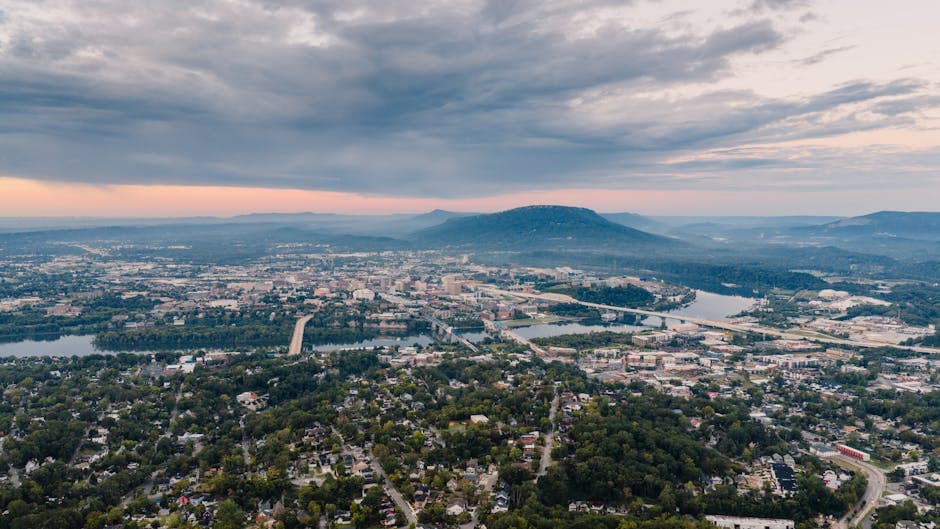
Clarksville, Tennessee on the Cumberland River, with Fort Campbell to the north and the downtown Strawberry Alley district

DirectOrders / Clarksville, TN dispatch

Fort Campbell and the
Tennessee-Kentucky line.

Tennessee's fifth-largest city, a 101st Airborne Division town, an Austin Peay State University campus, and a downtown that took forty years to come back to the river. A field guide to what direct ordering needs to look like in Clarksville, Tennessee.

450+
independent restaurants in Montgomery County
165k
Clarksville population, fifth-largest in Tennessee
11k
APSU students on the campus belt
$249/mo
flat DirectOrders fee, trilingual Voice AI included

Dispatch one / Gate 4, 0500 hours

A pre-dawn line at the gate, a city that wakes up with the post

It is a Tuesday in March, 0500 hours, and the line at Gate 4 of Fort Campbell already runs back two hundred yards. Headlights from soldier vehicles in the inbound lane, brake lights from the outbound side of Wilma Rudolph Boulevard, the gate guards working through ID checks with the patient rhythm of a city that has done this every weekday morning for eighty years. The shoulder of the road on the Clarksville side is fluorescent with sandwich shops, gas stations, and one open lunch counter that has been pulling early-shift orders since 1992.

By 1100 the same counter will be on its sixth phone call of the morning. A captain calling in twenty sandwiches for a staff meeting. An NCO calling in twelve plates for a company office party. A spouse calling to ask if they deliver to a quarters address on the post. The owner is also the cook. Her teenage son works the register on Tuesdays after school. The phone is in a base station on the counter and it rings, on average, eighty-seven times a day.

This is Clarksville at its operating shape. Fort Campbell is not a feature of the Clarksville restaurant economy. It is the load-bearing structure of the Clarksville restaurant economy. The 101st Airborne Division of the Band of Brothers, the 5th Special Forces Group, the soldiers returning home from Poland or Korea or somewhere unnamed, the spouses operating households alone for nine months at a stretch, and the inprocessing families who land in Clarksville without ever having heard of it. They all eat in the same ring of restaurants south and east of the post.

The other layer is Austin Peay State University. Eleven thousand students. A football team named the Governors. A Strawberry Alley downtown block, anchored by the Roxy Regional Theatre, that took forty years to come back to Franklin Street. The Cumberland River runs through it quietly. The Tennessee-Kentucky state line runs straight through the cantonment area of the post. Clarksville is, at the second level of analysis, a city that exists at the intersection of three calendars: the post deployment rotation, the APSU semester, and the downtown revival year.

What follows tries to walk all three. Where the food gets ordered, who orders it, in what language, on what schedule. Because the platform that gets built for Clarksville has to meet a 0500 sandwich counter at Gate 4, a Korean family restaurant on Kraft Street, a brewpub on Strawberry Alley with a wedding inquiry from a captain's spouse, and a ramen counter near APSU on a Tuesday night during finals week, on the same software, with the same phone line, with the same payout schedule. Software built for one without the others is software that doesn't fit the city.

Dispatch two / The post

Fort Campbell and the ring of restaurants that feeds it

The post straddles the Tennessee-Kentucky line. The cantonment area is on the Kentucky side. Most soldiers live in Clarksville. The restaurant economy is the ring south and east of Gate 4, organized around Wilma Rudolph, Madison, Tiny Town, and 101st Airborne Division Parkway.

The Post

Fort Campbell orbit

Fort Campbell straddles the Tennessee-Kentucky border, with the cantonment area on the Kentucky side. The Clarksville restaurant economy is organized in a ring south and east of the post. Each pin is a real cluster with a typical ticket-size range.

Kentucky lineTennessee / ClarksvilleFort Campbell101st Airborne Division (Air Assault) / 5th SFGCantonment area, mostly KY sideGate 4 entryGate 4 / Wilma Rudolph Boulevard south$11 to $14 lunch counterMadison Street corridor$14 to $22 sit-downDowntown / Strawberry Alley$24 to $46 chef-drivenRiverside Drive / Cumberland Riverwalk$18 to $32 casualAPSU campus belt$9 to $16 studentTiny Town Road / Sango / SR 76 east$18 to $30 family sit-down101st Airborne Division Parkway$12 to $18 quick serviceTrenton Road / Exit 4 cluster$10 to $14 quick service
Gate 4 / Wilma Rudolph Boulevard south
$11 to $14 lunch counter

Soldier-facing strip. Wings, burgers, late-night Mexican, Korean BBQ holdouts.

Madison Street corridor
$14 to $22 sit-down

Older commercial spine into downtown. Meat-and-threes, family Italian, BBQ.

Downtown / Strawberry Alley
$24 to $46 chef-driven

The Roxy theater belt, Customs House Museum, brewpubs, revival anchors.

Riverside Drive / Cumberland Riverwalk
$18 to $32 casual

Waterfront tier off the McGregor Park footprint and the Riverwalk paved path.

APSU campus belt
$9 to $16 student

Govs student spend, late-night pickup, group ordering during finals weeks.

Tiny Town Road / Sango / SR 76 east
$18 to $30 family sit-down

Family-corridor sit-down clusters east of the city, schools and subdivisions.

101st Airborne Division Parkway
$12 to $18 quick service

Newer east-side corridor. Chain heavy with a few independents in front.

Trenton Road / Exit 4 cluster
$10 to $14 quick service

I-24 Exit 4 motel and quick-service ring for travel-day and PCS-week families.

Source: Fort Campbell public affairs, City of Clarksville, Visit Clarksville TN. Bearings are approximate from the Gate 4 / Wilma Rudolph entry and reflect the ring of restaurant clusters that actually feeds the post.

Fort Campbell is one of the largest Army installations in the country and the home of the 101st Airborne Division (Air Assault), the original Screaming Eagles, the unit Stephen Ambrose followed for Band of Brothers. The 5th Special Forces Group also calls Campbell home. The population on the post, including soldiers, family members, civilian employees, and contractors, runs into the tens of thousands. The post payroll alone is one of the largest in middle Tennessee.

The geography matters for restaurants. The cantonment area, the housing, the schools, and most of the daily duty footprint sit on the Kentucky side of the state line. Gate 4 on Wilma Rudolph Boulevard is the primary southbound entry into Clarksville for soldiers heading off post. The ring of restaurants south of Gate 4 catches that flow first. Madison Street picks it up next. Downtown is the third tier; Tiny Town and Sango are the fourth.

The operator-side implication is geographical. A Clarksville restaurant that wants the soldier-and-family channel has to be findable, by phone and by Google Maps, inside a ten-minute drive of either Gate 4 or one of the family corridors east of the city. Direct ordering pages matter more for the family corridors, where average tickets are higher and the customer is willing to plan ahead. Voice AI matters more for the Gate 4 strip, where the volume is furious between 1100 and 1300 and again between 1700 and 2100.

The platform we built for Clarksville handles both because the city is both. A flat-fee model is the only one that works for the Gate 4 sandwich counter and the Strawberry Alley brewpub on the same software. A percentage-of-revenue marketplace taxes the wrong end of the operator's book in this city. The proof is the geography itself.

The post pays the city. The Roxy and the river make the city worth living in. The restaurants are the connective tissue between the two.
Field interview, downtown Clarksville operator, March 2026

Dispatch three / Twelve months at a time

The 101st Airborne deployment cycle and the household economy it reshapes

A typical brigade rotation lasts nine months. The household economy of every deployed soldier reshapes for a full calendar year. Restaurants in Clarksville see this as a measurable wave in their delivery and catering channels.

The Rotation

Deployment cycle timeline

A typical 101st Airborne rotation across twelve months. The household-economy curve below maps the composite restaurant spend shape, from pre-deployment celebration to mid-deployment delivery routine to the welcome-home spike on block leave.

0255075100Spend indexM0M3M6M9M12Pre01D102Mid03R&R04D205End06WH07Re08Nrm09
Pre-deployment workup
Pre

Family celebration meals, last-time-out dinners, sit-down anchors.

First 60 days deployed
D1

Spouse adapting. Takeout becomes routine. Smaller weeknight tickets.

Mid-deployment routine
Mid

Delivery becomes a household operating tool. Frequent, smaller orders.

Mid-tour leave (R&R)
R&R

Spike. Family at sit-down restaurants. Catering for hello-home events.

Back to deployed routine
D2

Delivery pattern resumes. Spouse-operated household routine returns.

Final 60 days
End

Anticipation. Pre-home spend softens slightly as spouse plans homecoming.

Welcome Home / Block leave
WH

Peak spike. Family dinners, reunions, Strawberry Alley nights out.

Reintegration quarter
Re

Restaurants keep deployed-spouse loyalty if delivery experience stays clean.

Normalcy
Nrm

Household economy returns to a two-adult baseline. Sit-down rises again.

Source: US Army Forces Command rotation announcements, Fort Campbell public affairs, operator-side conversations with Clarksville restaurants. Specific brigade rotations vary; the curve is the composite operator-side shape.

The deployment cycle does not start on the day the soldier flies out. It starts roughly sixty days earlier, with the pre-deployment block of training that pulls the soldier off the family calendar even before the flight. The food pattern shifts before the deployment is official. Family dinners cluster. Sit-down restaurants see one last surge of two-adult tickets. Then the cycle begins.

Once deployed, the spouse becomes the operating executive of the household. School pickups, daycare, mortgage, car, dog, doctor's appointments, soccer practice. All of it falls to one adult for nine months. Restaurants on Tiny Town Road, Madison Street, and the 101st Airborne Division Parkway see the takeout pattern shift inside the first sixty days. The weeknight delivery tickets become smaller, more frequent, more predictable in their cadence.

The mid-tour leave, when it happens, is a spike. The soldier is home for two weeks, the household eats out the way it used to, and the restaurants that earned the delivery loyalty during the deployment quarter get to see the sit-down version of the same household for fourteen days. The welcome-home weekend at the end of the rotation is the largest single spike in the entire cycle. Block leave fills the next two weeks. Strawberry Alley brewpubs, family corridor sit-downs, and downtown restaurants all see it.

The reintegration quarter is where the loyalty gets decided. The restaurant that ran a clean delivery experience through the deployment is the one that keeps the household's spend into the post-return period. The one that ran through a percentage-of-revenue marketplace is the one that the household forgets in the noise of reintegration. Commission-free direct ordering is, in this city, the difference between household loyalty and household churn.

Dispatch four / A community the city often undercounts

The Korean-American community, the Korean restaurant counter, and the phone line that has always been bilingual

Clarksville has a substantial Korean-American community, much of it tracing to Korean War-era military spouses and the subsequent decades of soldiers returning from tours in South Korea with their families. The pattern is similar to the Korean-American footprint in Killeen, Texas (Fort Cavazos, formerly Fort Hood) and in a handful of other longtime Army posts. The community has been here for fifty years. It is older than the current downtown revival.

The food side of the community runs along Kraft Street, Madison Street, and a handful of strip-mall plazas south of the post. Korean barbecue counters, Korean fried chicken, bibimbap kitchens, banchan-heavy family restaurants, and a Korean grocery cluster that supports the home-cooking side of the same households. The phone line in these restaurants has always been bilingual. The first ring goes to the owner's mother in Korean. The second ring goes to the daughter behind the counter in English. This is normal.

Software has historically failed this community in two directions. The marketplace apps do not localize the ordering page in Korean. They do not handle Korean modifier hierarchies (the level of spice, the kimchi inclusion, the rice variant) with any care. They route phone calls to English-speaking dispatchers who do not understand the language the customer is calling in. The Korean-American operator has, for fifteen years, been running the phone manually and watching the marketplace cut a percentage of every order placed in a language the marketplace does not actually speak.

Voice AI in Korean is, for this segment, a structural feature. The AI answers in Korean when the caller speaks Korean. It answers in English when the caller speaks English. It captures the catering inquiry from the APSU Korean Students Association in either language. It hands the operator a clean ticket in the operator's language of choice. The same logic applies to the Spanish-speaking share of the Clarksville inbound channel, which the latest Census ACS estimates put at roughly twelve percent of the city. The phone line becomes the multilingual asset it has always implicitly been.

Dispatch five / The Govs

Austin Peay State University, eleven thousand students, and the campus-belt order book

APSU's enrollment runs to roughly eleven thousand students. The campus belt north of College Street feeds a student-spend pattern that follows the academic calendar with surgical precision. Finals week is the spike. Thanksgiving is the dip. Move-in is the surge.

The Semester

APSU semester rhythm

Austin Peay State University enrolls roughly 11,000 students. The student-lunch volume curve has predictable peaks at move-in, midterms, the finals-week overnight push, and commencement, with sharp dips at fall break and Thanksgiving.

0255075100Student volumeW1W2W3-6W7W8W9-12W13W14W15W16Br.Spr
W1Family weekend overlap. Sit-down clusters fill on Saturday.
W2Student orientation traffic. APSU activities fair pushes student spend.
W3-6Steady student lunch and late-night pickup pattern emerges.
W7Group orders during the library overnight push.
W8Many students travel out. Family-corridor sit-down also softens.
W9-12Group orders for student org meetings cluster on weeknights.
W13Major dip. Only commuter students remain on campus.
W14Final push back to campus. Student catering for end-of-term events.
W15The library is full. Late-night delivery between 9 PM and 1 AM peaks.
W16Graduation family weekend. Sit-down reservations spike.
Br.Campus largely empty. Commuter and military traffic carries the city.
SprSimilar rhythm with a different graduation calendar in May.
Source: APSU Office of Institutional Research enrollment disclosures, APSU academic calendar, Visit Clarksville TN. Student-volume index is an operator-side composite drawn from APSU-belt operators.

The APSU student is a high-frequency, low-ticket customer. The lunch run between class, the late-night pickup during a paper crunch, the group order for a student org meeting at 7:30 PM Wednesday. Average tickets between $9 and $16 for the individual student, but the group order line item ($120 for fifteen sandwiches at the chess club, $200 for a residence-hall floor pizza order) is where the campus belt makes its money.

Finals week is the operator's annual peak. The library is open until 2 AM. Student org budgets get spent down in December and again in April. The restaurants that win finals week are the ones with a working group-order flow, a Voice AI that does not collapse when the volume triples between 9 PM and midnight, and a delivery partner that can route to a dorm address without routing chaos.

The catering layer is real too. APSU departments host workshops, recruitment events, advising lunches, and graduation celebrations across the academic year. The Korean Students Association, the Black Student Union, the Hispanic Student Association, the Veteran Students Association (APSU has a substantial veteran-and-active-duty student population from the Fort Campbell tie), all spend catering budgets across the year. Voice AI that can capture the inquiry in the calling party's language, with head-count and dietary fields, is the difference between a captured catering channel and a missed one.

The graduation calendar pulls the family-corridor sit-downs too. December and May commencement weekends fill the Tiny Town Road sit-downs and the Strawberry Alley brewpubs with multi-generation family parties. Reservation reliability and same-day catering response decide which restaurants get those parties year over year.

Dispatch six / Forty years to Franklin Street

The Strawberry Alley revival and the downtown food block it built

Downtown Clarksville turned its back on the river for most of the twentieth century. The forty-year arc back, anchored by the Roxy Regional Theatre and the Customs House Museum, has produced a Strawberry Alley pedestrian block that now hosts a brewpub, a steakhouse, a deli, and a clutch of chef-driven openings around Franklin Street.

The Comeback

Strawberry Alley revival

Downtown Clarksville's revival, anchored by the Roxy Regional Theatre and the Customs House Museum, took forty years of patient work. The pedestrian Strawberry Alley block is the current center of gravity for chef-driven openings.

  1. A
    1983 Roxy Regional Theatre revival begins
    Cultural anchor

    The 1947 movie palace on Franklin Street is acquired and converted to a professional regional theater.

  2. A
    1984 Customs House Museum opens
    Cultural anchor

    The 1898 federal customs house is converted into the city's museum and cultural anchor.

  3. I
    1998 Cumberland Riverwalk paving begins
    Infrastructure

    City paves the first paved sections of the Cumberland River trail from McGregor Park.

  4. I
    2010 Strawberry Alley repaving and lighting
    Infrastructure

    The pedestrian block gets the brick repaving and lighting that anchors the modern downtown identity.

  5. R
    2014 Strawberry Alley Ale Works opens
    Restaurant opening

    Brewpub-restaurant anchors the alley and establishes downtown as a destination food block.

  6. R
    2016 Edward's Steakhouse opens
    Restaurant opening

    Upscale sit-down steakhouse moves into a Franklin Street footprint near the Roxy.

  7. R
    2018 Yada Deli expansion
    Restaurant opening

    The downtown deli, an Israeli-style sandwich counter, grows its catering and lunch channel.

  8. R
    2021 Hodgepodge opens downtown
    Restaurant opening

    Casual breakfast and lunch concept off Franklin adds a new daytime tier to the alley.

  9. I
    2023 Riverview Inn and downtown hotel expansion
    Infrastructure

    Downtown hotel inventory grows. Walking-distance restaurant capture from hotel guests rises.

  10. R
    2024 Liberty Park Grill draws weekend pull
    Restaurant opening

    Liberty Park's restaurant pulls a weekend recreational crowd back through downtown after concerts and games.

Cultural anchor
Restaurant opening
Infrastructure
Source: Visit Clarksville TN, Clarksville Now, The Leaf-Chronicle, Roxy Regional Theatre, Customs House Museum, City of Clarksville.

The Roxy Regional Theatre acquired its Franklin Street movie palace in 1983 and converted it into one of the oldest continuously operating professional theaters in Tennessee. The Customs House Museum opened in the restored 1898 federal customs house a year later. Those two anchors carried downtown through twenty years of slow restoration before the Cumberland Riverwalk paving in the late 1990s gave the city a working waterfront path.

The restaurant timeline followed the infrastructure. Strawberry Alley Ale Works in 2014 was the inflection point. Edward's Steakhouse in 2016 made downtown a reservation destination. Yada Deli expanded in 2018. Hodgepodge opened in 2021. Liberty Park Grill drew weekend recreation traffic back through the downtown block in 2024. Each opening was a calibrated bet on the next.

What the Strawberry Alley operators share is a refusal to run a percentage-of-revenue marketplace as their primary ordering channel. The math does not work on the kind of tickets these kitchens are built around. A $42 average at the brewpub, run through a 28 percent marketplace cut, nets the operator approximately $30 before food cost, labor, and rent. Run through direct ordering at a flat monthly fee, it nets close to $42 minus the cost of the kitchen and the delivery integration. The difference is the business.

The Strawberry Alley story is the same shape as the Uptown story in Columbus, Georgia or the SoBro story in Nashville. Patient operators building a district through word-of-mouth, the Roxy curtain, the Customs House exhibits, the Cumberland Riverwalk. The marketplace is not the price of discovery. It is the price of friction. Direct ordering is the lever.

The Roxy never closed. The museum never closed. The brewpub took thirty years to open. Everything since the Ale Works has been faster.
Strawberry Alley operator, conversation February 2026

Dispatch seven / The commercial spines

Wilma Rudolph Boulevard, Madison Street, and the zip codes the city is actually fed by

Clarksville stretches across roughly a dozen ZIP codes, but the restaurant economy organizes more cleanly along corridor names than along administrative boundaries. Five corridors do most of the work. Wilma Rudolph Boulevard runs north from downtown to Gate 4 of the post and carries the soldier-and-family commercial ring. Madison Street is the older commercial spine running east from downtown into the meat-and-three and barbecue tier. Tiny Town Road and Sango carry the family-corridor sit-down clusters east of the city. The downtown grid (Franklin, Strawberry Alley, Public Square) is the chef-driven and brewpub tier. The 101st Airborne Division Parkway is the newer east-side corridor.

Wilma Rudolph is named for the Olympic sprinter who grew up in Clarksville and won three gold medals in Rome in 1960. The street that bears her name is the city's soldier-facing one. Wing places, burger counters, pizza by the slice, late-night Mexican, a couple of Korean barbecue holdouts, and one or two surviving meat-and-three kitchens from the 1980s. Tickets average $11 to $14. Volume is furious between 11:30 and 1:30 and again between 5:30 and 10:00.

Madison Street is the older spine. The corridor predates the post in its current form and still carries the pre-war commercial bones of the city. Meat-and-three kitchens, family Italian, barbecue, a Korean cluster around Kraft Street, and the legacy diners that have been here for forty or fifty years. Tickets average $14 to $22. The customer mix tilts toward longer-tenured Clarksville households, retirees, and the families who arrived in the 1990s and never left.

Tiny Town Road and Sango are the family-corridor sit-downs. Newer subdivisions, mostly post-2005 housing, the school zones for Northeast and Rossview, and the catering channel into Fort Campbell unit functions and APSU departments. Tickets average $18 to $30. The volume is shaped by the school calendar and the deployment cadence rather than by duty hours. Reservation reliability and same-day catering response are the competitive advantages.

Downtown, the Strawberry Alley district, has been chronicled above. The Roxy, the Customs House, the brewpubs, the steakhouse, the Cumberland Riverwalk one block south. Tickets average $24 to $46. Operators here are the most resistant to the percentage-of-revenue marketplace and the most natural fit for a flat-fee direct ordering stack with a real catering desk and a Voice AI tuned to the city's actual phone-line multilingual mix.

Dispatch eight / The thesis

Why $249 flat, trilingual Voice AI, Uber Direct, and same-day Stripe is the only stack that fits Clarksville

The argument the city has made, dispatch by dispatch, has been a layered one. The Fort Campbell deployment cycle reshapes the household economy of every deployed-spouse family in the city for nine months at a stretch. The Korean-American community has been running a bilingual phone line on Kraft Street for fifty years without a software stack that respected it. The APSU semester drives a finals-week spike that the family corridors and the campus belt both feel. The Strawberry Alley revival has produced a downtown food block that will not run on percentage commission. The Wilma Rudolph and Madison corridors carry the bulk of the soldier-facing trade.

DirectOrders is one stack that handles all five. The flat $249 monthly fee replaces percentage-of-revenue commission across the entire order book, including catering and group orders. Voice AI ships in English with Southern dialect tuning, plus Spanish, plus Korean. That trilingual coverage maps to the actual multilingual composition of the Clarksville inbound channel: the Korean-American community on Kraft Street, the Hispanic-Latino share of the city (about twelve percent per Census ACS), and the dominant English-speaking flow from the post and APSU. Delivery runs through Uber Direct on the operator's terms. Payouts hit the Stripe account same banking day.

The argument we have not yet made explicit is the local one. Clarksville is a city of operators who have built their businesses without leaning on marketplace ad spend. Mama's Restaurant did not need DoorDash. The Roxy curtain did not need Grubhub. Edward's Steakhouse was built on the Roxy show schedule and the family graduation calendar. What these operators have not had, until recently, is a software stack that meets the city on its terms. In three languages. On a phone. With delivery. With payout. Without the marketplace tax.

We built the stack we would have built if we had started in Clarksville. The post demanded it. The river demanded it. The Roxy demanded it. The Korean grandmothers on Kraft Street demanded it. We built it.

At a glance

  • $249 / month flat. No percentage cut. No per-order tax. Catering and group orders included in the same fee.
  • Trilingual Voice AI. Answers in English, Spanish, and Korean on a single number, with the owner's recorded voice and the operator's menu loaded.
  • Uber Direct delivery. Operator-controlled rates, post-adjacent delivery, Tiny Town family dinner runs, downtown brewpub late nights.
  • Same-day Stripe payouts. Money in the operator's bank account the same banking day the order closes.
  • Live in 2 hours or we white-glove you for free. Clarksville operators are typically taking orders the same afternoon they sign up.
  • 15+ ordering channels. Website, Google, Apple Maps, Instagram, Voice AI, SMS, QR, kiosk, marketplace overflow, catering desk, white-label app, APSU department links, Fort Campbell unit-function form.

Dispatch nine / Who orders direct

Seven Clarksville operator profiles

Composite operator scenarios, drawn from conversations with restaurant owners across the corridors above. The structure is the same in every case: what the operator is losing, what the operator wins back.

Operator

Gate 4 soldier counter on Wilma Rudolph Boulevard

Owner-operator, 1 location, lunch and late-night. Average ticket $12.20.

Scenario

Friday after duty hours. Eighteen soldiers in line, the phone ringing without pause, and three deliveries pending for the barracks. Half the inbound is post pickup, half is families newly arrived for an inprocessing weekend.

What they are losing

Roughly $2,400 per month in missed phone orders and $4,100 per month in marketplace commission on a $17k monthly baseline.

What they win back

Voice AI answers in English with the owner's recorded voice. Tickets shift to direct ordering. Barracks delivery routes through Uber Direct at the operator's set rate.

Operator

Family sit-down on Tiny Town Road

Family-run, 1 location, weekend graduation-and-PCS heavy. Average ticket $31.

Scenario

Saturday after a 101st Airborne welcome-home ceremony. Twenty-one reservations on the books, fifteen walk-ins waiting, and four catering inquiries for the following weekend. The host stand cannot keep up.

What they are losing

Catering inquiries roll to voicemail and never return. Reservation collisions cost two to three groups a night during peak homecoming weekends.

What they win back

Voice AI captures reservation, head-count, dietary notes. Catering form sits on the receipt and Google Business Profile. Same-day Stripe payout shows the weekend revenue Monday morning.

Operator

Military-spouse-owned bakery on Madison Street

Single-owner, 1 location, retail and small catering. Average ticket $16 retail, $580 catering.

Scenario

Owner solo behind the counter, two kids in the back office because her spouse is six months into a nine-month deployment with the 1st Brigade Combat Team. Phone rings during school pickup. Three catering inquiries die by Friday.

What they are losing

Every missed catering inquiry is a $300 to $900 ticket. Marketplace commission on retail orders compresses pastry margin already running thin.

What they win back

Voice AI answers in the owner's recorded voice while she is on school pickup. Catering inquiries route to a structured intake form. Stripe payouts hit the same day, the difference between covering daycare and not.

Operator

Strawberry Alley chef-driven small plates

Single location, dinner and weekend brunch. Walk-in plus reservation mix. Average ticket $42.

Scenario

The Roxy has a Friday and Saturday show. Pre-theater rush starts at 5:30. The chef refuses to run a percentage-of-revenue marketplace. Reservations come through the website, catering inquiries through email.

What they are losing

Marketing budget already at zero. Without a direct ordering page the website cannot capture the takeout layer that pre-theater guests want.

What they win back

Direct ordering site on the restaurant's own domain. Pre-theater pickup managed at the host stand. Voice AI handles the takeout overflow without the chef leaving the line.

Operator

APSU campus counter near College Street

Single location, lunch and late-night, group-order heavy. Average ticket $11.

Scenario

Finals week, 11:40 PM Tuesday. The library is full, a student org has just texted asking for fifteen sandwiches in twenty minutes, and a Resident Assistant is calling for a thirty-person dorm-floor pizza order.

What they are losing

Group orders default to marketplace because the counter cannot pick up the phone fast enough. Repeat student customers default to whichever app pings them first.

What they win back

Group ordering on the direct site. Voice AI takes the RA's call and confirms head count and pickup window. Loyalty rewards make the direct site sticky for the same student across four years.

Operator

Korean-American family restaurant on Kraft Street

Multi-generation operator, 1 location, dinner heavy. Average ticket $26.

Scenario

Three generations of Clarksville Korean-American customers. The owner's mother takes the inbound calls when she can; otherwise the phone rings. The catering channel for Fort Campbell unit Korean nights runs through a notebook by the register.

What they are losing

Catering inquiries from Korean-American military families and APSU Korean student associations get half captured. Marketplace commission compresses margin that was never built for it.

What they win back

Voice AI answers in Korean for native callers and English for the broader Clarksville mix. Catering form captures unit-function inquiries with head-count and pickup window. Direct site keeps the multi-generation loyalty intact.

Operator

Downtown brewpub off Public Square

Single location, evening heavy, taproom plus kitchen. Average ticket $34.

Scenario

Friday night after a Roxy curtain. The taproom fills with theater-goers, downtown residents, and a soldier party celebrating a promotion. The kitchen is in the weeds, the host stand is full, and the phone is ringing with a private-event inquiry.

What they are losing

Private-event inquiries from APSU departments and Fort Campbell command teams roll to voicemail. The brewpub has the room; it just cannot answer the phone fast enough.

What they win back

Voice AI handles the inquiry, captures the date, head-count, and dietary notes. Direct ordering pulls in takeout overflow that the kitchen can batch. Stripe payouts close the night same-day.

The tax stack

Tennessee state plus Montgomery County: a 9.5 percent sales tax on every prepared meal

The combined state and local sales tax on prepared food in Clarksville is 9.5 percent. Operators set up on DirectOrders have the rate configured at onboarding and applied at checkout automatically. The single-article cap on the local option is relevant for catering invoicing above $1,600.

LayerRate
Tennessee state sales tax7.00%
Montgomery County local option2.50%
Combined Clarksville rate9.50%
Single-article tax capApplies

Source: Tennessee Department of Revenue local sales tax rate chart, Montgomery County Trustee. Verify your specific location at onboarding; the single-article cap applies to local option rate only and is relevant for catering invoices exceeding $1,600 on a single article.

Voice AI / English, Spanish, Korean on one phone line

Trilingual Voice AI that answers in the language the caller is actually speaking

The Clarksville inbound phone channel is multilingual whether the operator wants it to be or not. The Korean-American share of the city, the Hispanic-Latino share running about twelve percent per Census ACS, the English-speaking flow from the post and APSU, and the longer-tenured Clarksville households who arrived in the 1980s and 1990s. The phone line, at any given Clarksville restaurant on a Friday at 6:30 PM, will take calls in at least two of those three languages.

DirectOrders Voice AI handles English, Spanish, and Korean on a single number with native dialect recognition. The AI answers in the language the caller is speaking. The kitchen ticket comes out in English, or in the operator's chosen language, regardless of how the order was placed. The Korean grandmother on Kraft Street calls in Korean. The military spouse from Honduras orders in Spanish. The downtown brewpub takes a private-event inquiry in English. All on the same line. All routed correctly. All captured.

The onboarding takes about two hours. Menu Brain ingests the operator's menu and handles modifier hierarchies (the rice variant, the kimchi inclusion, the level of spice, the gluten-free substitution, the meat-and-three side combinations). The AI's accent and tone get tuned to a recorded sample of the owner's voice in each language the operator wants supported. The operator owns the recording. The operator owns the data. The operator can pull the AI offline at any time.

For the military-spouse operator whose partner is six months into a 101st Airborne rotation, the trilingual Voice AI is not a luxury. It is the inbound channel that lets the owner be at school pickup, at the pediatrician, at the post cleaning out a deployed spouse's locker, and still take the catering inquiry that pays for daycare on Friday. For the Korean grandmother on Kraft Street, it is the technology that finally meets her phone line in the language she has been speaking on it for forty years.

Three languages, one number

English
Southern dialect tuning. The owner's recorded voice. Menu Brain modifier handling.
Spanish
Mexican and Central American dialect support. Roughly twelve percent of Clarksville per Census ACS.
Korean
Native Korean recognition for the Kraft Street cluster and the APSU Korean Students Association catering channel.

The Clarksville table

Ten Clarksville restaurants worth knowing

A real cross-section of the city's restaurant economy, from the Strawberry Alley brewpubs to the Madison Street meat-and-threes to the Korean-American family restaurants. Not a ranking. An inventory.

Casual breakfast and lunch

Hodgepodge

Downtown / Franklin Street

Daytime concept off Franklin near the Roxy. Counter service that punches into the downtown office and museum-walk crowd.

Israeli-style deli

Yada Deli

Downtown / Strawberry Alley

Downtown deli sandwich anchor. A reliable catering channel into APSU departments and downtown offices.

Steakhouse

Edward's Steakhouse

Downtown / Franklin Street

Upscale sit-down steakhouse on Franklin near the Roxy. Reservation heavy on Roxy show nights.

Meat-and-three

Mama's Restaurant

Madison Street corridor

Classic Tennessee meat-and-three. Lunch heavy. Long-running Madison Street institution.

Brewpub

Strawberry Alley Ale Works

Downtown / Strawberry Alley

The alley anchor. Brewpub-restaurant that established downtown as a destination food block in 2014.

Casual American

Liberty Park Grill

Liberty Park / Cumberland Riverwalk

Park-adjacent grill with weekend pull from concert and recreational traffic. Strong catering channel.

Brewpub

Blackhorse Pub and Brewery

Downtown / Franklin Street

Brewpub-pizzeria concept with multiple Tennessee locations. The Clarksville store is a Franklin Street fixture.

Winery tasting room and small plates

Beachaven Vineyards and Winery

North Clarksville / Alfred Thun Road

Tennessee winery dating to 1986. Tasting-room food service and a wedding-and-events catering channel.

Korean

Korea House

Kraft Street / Madison

Korean restaurant serving the Clarksville Korean-American community, military families, and APSU students.

National casual sit-down

Texas Roadhouse Clarksville

Wilma Rudolph Boulevard

Standard chain on the soldier-and-family commercial corridor. Frequent destination for Fort Campbell families.

Coda

What we owe Clarksville

Software built for restaurants in Clarksville has to start with the Clarksville that exists, not the one that fits a marketing segmentation. The Clarksville that exists is 450-plus restaurants under the gravity of Fort Campbell. It is a deployment rotation that pulls one adult out of the household for nine months at a stretch. It is a 101st Airborne welcome-home weekend that spikes Strawberry Alley brewpubs and Tiny Town family sit-downs in equal measure. It is an APSU finals week that fills the campus belt with late-night group orders. It is a Korean grandmother on Kraft Street who has been taking phone orders in Korean since the Reagan administration.

The platform we built tries to meet that Clarksville on its terms. Trilingual Voice AI. Flat monthly fee. Operator-controlled delivery into post-adjacent and family-corridor addresses. Same-day Stripe payout. Two-hour onboarding. The post told us what to build. The Roxy told us. The APSU semester told us. The Kraft Street kitchens told us. We built it.

If you operate a restaurant in Clarksville and you want to walk through how the platform fits your corner of the city, the next step is a twenty-five-minute conversation, on Zoom or in person along Franklin Street. We will bring the deployment-cycle curve. You bring the order book.

References

Sources used in this dispatch

Last updated 2026-05-12. Statistics are presented in good faith, drawn from the sources listed; deployment-cycle and student-volume figures are operator-side observations rather than published metrics.

Keep exploring

More Tennessee cities and nearby markets

All Tennessee cities →