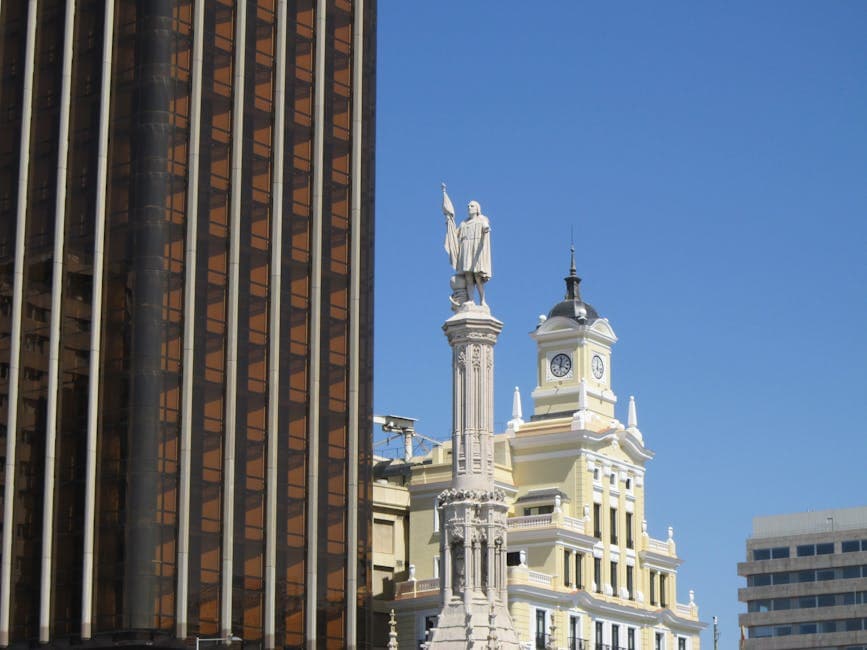
Columbus, Georgia on the Chattahoochee River, with the Uptown skyline and the Whitewater course

DirectOrders / Columbus, GA dispatch

Fort Moore
mealtimes.

Six hundred restaurants, one post that reshapes the calendar every nine weeks, the world's longest urban whitewater course, and an Uptown district that took forty years to come back to the river. A field guide to what direct ordering needs to look like in Columbus, Georgia.

600+
independent restaurants in Muscogee County
9 wks
OSUT graduation cadence at Fort Moore
2.5 mi
world's longest urban whitewater course
$249/mo
flat DirectOrders fee, Voice AI included

Dispatch one / National Infantry Museum, 10:47 AM

A graduation day, a parade field, and twelve hundred families looking for lunch

It is a Thursday in mid-May. The parade field at the National Infantry Museum, the polished stone soldiers under a flag that is half the size of a tennis court, is filling with families. Mothers in church dresses, fathers in baseball caps, grandparents with folding chairs, younger siblings already bored. Two graduating OSUT companies, roughly two hundred soldiers each, are about to step off in formation past their families for the first time in twenty-two weeks. The temperature on the asphalt parking lot is already 83 degrees.

By 12:15 PM the ceremony will be over, the soldiers will be released for the first time in over five months, and roughly twelve hundred family members will be looking for lunch within a twenty-minute drive of the museum. Some will go to the Country's Barbecue on Mercury Drive because Grandma remembers it from the 1980s. Some will go to Uptown because they have been told that is where the nicer restaurants are now. A significant share will follow the soldier's recommendation: whichever counter on South Lumpkin Road or Victory Drive has been their off-base mainstay for the last twenty-two weeks.

None of these restaurants is going to escape the next four hours. Tables will turn three times. Catering inquiries from the families flying out Sunday morning will arrive in real time, half by voicemail, half by email, a few by direct message on Instagram. The phone is going to ring continuously. Whichever operator answers the phone will eat. Whichever operator does not will watch the order go to the next pin on the Google Maps result.

This is Columbus, Georgia at peak shape. The pattern repeats every nine weeks, on overlapping OSUT and BCT cycles, three to four times a month across a calendar year. The food economy of the city is, at the first level of analysis, the food economy of the post that sits across South Lumpkin Road from it. Fort Moore (renamed from Fort Benning in 2023 after Lieutenant General Hal Moore and his wife Julia) is not a presence in the Columbus restaurant economy. It is the gravity of the Columbus restaurant economy. What follows tries to walk that gravity field, mile by mile and cycle by cycle.

Columbus is also a city that took forty years to remember it had a river. The Chattahoochee runs through Uptown, and Uptown turned its back on the river for most of the twentieth century. The Riverwalk and the Whitewater course pulled the city forward. The post pulls it sideways. The food story is what gets ordered when both pulls meet on a Saturday afternoon.

Dispatch two / The cycle

The Fort Moore graduation calendar and the cover spike it creates

OSUT for Infantry runs roughly twenty-two weeks. OSUT for Armor runs roughly twenty-two weeks. BCT runs ten. Across overlapping cycles, the post produces a graduation weekend roughly every two weeks. Each one pulls eight hundred to twelve hundred family members into the city for three to five nights.

The Cycle

Fort Moore graduation calendar

Twelve months of overlapping OSUT and BCT graduation weekends, plotted against a composite restaurant cover-spike index. The June through August stretch is the city's restaurant peak. Every flag is a Thursday-through-Sunday family weekend.

0255075100Cover indexJanFebMarAprMayJunJulAugSepOctNovDecOne graduation weekendComposite restaurant cover index
JanHoliday recovery. One graduation weekend.
FebBack to cadence. Family travel resumes.
MarSpring break overlap pulls extended families.
AprCherry blossom along the Riverwalk. Tourism layer adds on.
MayPre-summer peak. Memorial Day brings a fourth wave.
JunSummer surge. Three OSUT cycles can hit in a single month.
JulIndependence Day weekend overlap with grad weekend.
AugBack-to-school cycle. AIT moves layer in.
SepLabor Day weekend. School-year cadence returns.
OctSteady. Convention Center events add a tier.
NovVeterans Day weekend draws regional pilgrimage.
DecHoliday block leave. Soldiers travel out, families arrive in.
Source: Fort Moore public affairs cycle announcements, Maneuver Center of Excellence training calendar, Visit Columbus, GA. Cover-spike index is an operator-side observation, not a published metric.

The arithmetic of the graduation weekend is unforgiving for an operator who does not have it mapped. A typical OSUT company graduates roughly 180 soldiers. Each soldier averages 3.4 family members in town for the ceremony, per recent Visit Columbus surveys. That is approximately 610 incremental visitors per company. A typical Thursday Fort Moore parade graduates two to three companies on the same morning. The weekend cover spike, against a baseline Columbus weekend, is measurable on Friday afternoon and persists through Sunday brunch.

The food preference of the visiting family is also fairly predictable. Friday dinner is celebratory and tends toward sit-down. Saturday lunch is post-recovery and tends toward Country's Barbecue, Mike and Ed's, or the soldier's recommended counter. Saturday dinner is the variable one, splitting between Uptown chef-driven and family-friendly chains on Veterans Parkway. Sunday brunch is short, because most families have flights to make.

The operator-side implication is structural. A restaurant that wants to participate in graduation weekend revenue needs three things the marketplace apps handle poorly. First, a reservation channel that does not collapse when the inbound rate triples on a Friday afternoon. Second, a catering inquiry desk for the families who want to host Sunday brunch in a private room. Third, a Voice AI that can capture the inquiry when the host stand is in the weeds.

DirectOrders ships all three by default at $249 a month, which on the math of a single graduation weekend pays for itself before the soldier's family makes it back to Atlanta. The proof is the cover-index curve above. The opportunity is every Thursday between April and August.

Every nine weeks the parade field empties out at noon and twelve hundred families decide where to eat. If your phone is busy, somebody else just got the order.
Field interview, Uptown Columbus operator, April 2026

Dispatch three / Twelve months at a time

Deployment and return: what changes when a household loses, and gains, an adult

A nine-month deployment to Korea, Poland, or somewhere unnamed reshapes a household for the better part of a calendar year. The civilian spouse becomes the operating executive of the household. Daycare logistics, school pickups, soccer practice, doctor's appointments, mortgage, car payment, groceries, dog. All of it falls to one adult for nine months, with a four-day mid-tour break that does not really put the pieces back together.

The food economy of the deployed household shifts measurably. Dinner at home becomes harder, not easier. Takeout becomes routine, not occasional. Delivery becomes the difference between dinner happening and dinner being a granola bar. Restaurants on Veterans Parkway, Buena Vista Road, and Whittlesey Boulevard see this in their order data. The weeknight delivery tickets get smaller and more frequent.

When the soldier returns, the pattern shifts again. The two-week leave is celebration, restaurant-heavy. The first quarter back home is uneven: blocked sleep, the kids readjusting, the home routines being relearned. The restaurants that earned the deployed-household's delivery loyalty for nine months get to keep that loyalty into the post-return quarter, but only if they can sustain the experience without the marketplace eating the margin.

This is one of the structural reasons commission-free direct ordering matters in Columbus more than it does in most metros of comparable size. The restaurant that owns the deployed spouse's takeout pattern for the nine months of the deployment is making the operating model of the household work. A marketplace that takes 28 percent of every order is making the household's takeout cost meaningfully more, and the operator's margin meaningfully less. Direct ordering breaks the tax in both directions.

Dispatch four / The owner segment that built Columbus

Military-spouse-owned operators, and the impossible math of a solo restaurant during PCS season

If you walk the Uptown Columbus farmers market on a Saturday in October, you can pick out the operator segment that the city undercounts. The bakery stall whose owner is also wearing a baby. The pickle-and-jam vendor whose signage has a unit patch on it. The coffee roaster whose spouse is, this morning, taking the kids to the National Infantry Museum for an exhibit. The military spouse small business is not a marketing demographic in Columbus. It is the operating reality of a real percentage of the city's independent food businesses.

The economics of running a small restaurant or bakery as a military spouse are punishing in ways that the SaaS industry does not model. The owner is often the operating manager and the front-of-house and, when daycare falls through, the emergency caregiver. Permanent change-of-station orders can arrive with sixty days notice, in which case the business either has to sell, has to be left in trusted hands, or has to be wound down. The phone has to be answered, but the phone cannot always be answered.

Voice AI is, for this operator segment, not a luxury and not a gimmick. It is closer to a babysitter for the inbound channel. It answers in the owner's voice when the owner is on school pickup, in the pediatrician's waiting room, at the post cleaning out a deployed spouse's locker. It captures the catering inquiry that the owner would otherwise lose. It hands the operator a clean ticket when the owner is back at the counter. It does not replace the operator. It absorbs the physically impossible part of running a one-person business.

Same-day Stripe payout matters in this segment for related reasons. A military-spouse household's working capital tolerance is thin during a deployment. The difference between payout-on-Monday and payout-in-five-business-days is the difference between this Friday's payroll clearing and a payroll deferral. We have heard this exact framing from multiple Columbus operators we have talked to. It is not a slogan. It is a constraint.

Dispatch five / Forty years to the river

The Uptown revival and what it means for restaurant ordering

Uptown Columbus turned its back on the river for most of the twentieth century. The forty-year arc back to the water has produced a chef-driven Broadway, a Bay Avenue waterfront, and a slow but real restaurant identity that does not depend on a marketplace badge to be discovered.

The Comeback

Uptown Columbus revival timeline

Forty years of slow but real waterfront restoration, starting with the founding of Uptown Columbus Inc in 1985 and culminating in the current cluster of chef-driven and sit-down anchors along Broadway, Bay Avenue, and the Riverwalk.

  1. H
    1985 Uptown Columbus Inc founded
    Restoration

    Public-private partnership begins systematic historic district restoration.

  2. I
    1996 Riverwalk first segments complete
    Infrastructure

    Chattahoochee Riverwalk opens its first paved sections, anchoring waterfront food spots.

  3. I
    2004 RiverCenter for the Performing Arts opens
    Infrastructure

    1,800-seat venue draws regional dinner-and-show traffic to Bay Avenue.

  4. R
    2008 Houlihan's Columbus opens on Bay
    Restaurant opening

    First national casual-dining commitment to the revived Uptown waterfront.

  5. I
    2013 Whitewater course opens
    Infrastructure

    Eagle and Phenix dam removal converts the river into a 2.5-mile recreation engine.

  6. R
    2017 11th and Bay Southern Table opens
    Restaurant opening

    Marriott-adjacent fine-dining anchor formalizes Uptown's restaurant identity.

  7. R
    2019 Saltcellar opens on Broadway
    Restaurant opening

    Chef-driven small plates and craft cocktails establish a contemporary Uptown voice.

  8. R
    2021 Rusty Bull rooftop opens
    Restaurant opening

    Rooftop bar concept over Broadway adds a new evening tier to the district.

  9. I
    2023 Fort Benning renamed Fort Moore
    Infrastructure

    Renaming ceremony at the National Infantry Museum reshapes city identity overnight.

  10. R
    2024 Mabella Italian Steakhouse opens
    Restaurant opening

    Higher-tier sit-down Italian-steakhouse fills a long-empty Broadway anchor space.

Restoration
Restaurant opening
Infrastructure
Source: Uptown Columbus Inc, Historic Columbus, City of Columbus Department of Economic Development, Columbus Ledger-Enquirer.

The story most often told about Uptown is that the Whitewater course of 2013 saved it. That is half true. The more accurate story is that Uptown Columbus Inc, the public-private redevelopment nonprofit, started the work in 1985, and the Whitewater was the inflection point that turned thirty years of patient restoration into a regional weekend draw. The RiverCenter for the Performing Arts in 2004 was the cultural anchor. The Riverwalk in the late 1990s was the connective tissue. Each piece built on the prior.

The restaurant timeline followed the infrastructure. Houlihan's in 2008. 11th and Bay Southern Table in 2017. Saltcellar in 2019. Rusty Bull rooftop in 2021. Mabella Italian Steakhouse in 2024. None of these are accidents. Each is a calibrated bet by an operator that the Uptown district could sustain a higher-tier sit-down concept against the assumption that the river would keep pulling weekend visitors.

What the Uptown chef-driven concepts share is a refusal to run a percentage-of-revenue marketplace as their primary ordering channel. The math does not work on the kind of tickets these kitchens are designed around. A $47 average at Saltcellar, run through a 28 percent marketplace cut, nets the operator approximately $34 before food cost, labor, and rent. Run through direct ordering at a flat monthly fee, it nets close to $47 minus the cost of the kitchen and the delivery integration. The difference is the business.

The Uptown story, in short, is the same story as the BeltLine story in Atlanta, the SoMa story in Little Rock, the SoBro story in Nashville, and the Highland Park story in Dallas. The neighborhood was built by patient operators with their own marketing flywheel. The marketplace is not the price of discovery. It is the price of friction. Direct ordering is the lever.

The river came back in pieces. Houlihan's was the first one. We have been the second wave. Everything after the Whitewater opened in 2013.
Uptown operator, conversation March 2026

Dispatch six / The 2.5 miles

The Whitewater course and the weekend visitor economy

The world's longest urban whitewater run pulls regional weekend tourists from Atlanta, Auburn, Montgomery, and the Florida Panhandle. Each rapid corresponds to a section of the Riverwalk and a restaurant cluster within walking distance.

The Course

Whitewater run radial

The 2.5-mile Chattahoochee Whitewater course, longest urban run in the world. Five named rapids from Heaven's Gate at the Eagle and Phenix dam site down to Ambush at South Commons. Each rapid pulls a restaurant cluster off the Riverwalk.

Phenix City, AL bankColumbus, GA bank / RiverwalkII+Heaven's Gate / Class II+11th and Bay corridor, Saltcellar, Rusty Bull rooftop.IIICutbait / Class IIIHoulihan's Riverwalk, B. Merrell's catering channel.IIIHydroelectric / Class IIIUptown core: 11th and Broadway, Mabella Italian Steakhouse.IIIWave Shaper / Class IIIDillingham Street footprint, The Black Cow Cafe lunch crowd.IVAmbush / Class IVSouth Commons and downstream pickup, late-night Country's Barbecue.Eagle and Phenix put-inSouth Commons take-out
Heaven's Gate
Class II+

First-drop hydraulic at the Eagle and Phenix dam site.

11th and Bay corridor, Saltcellar, Rusty Bull rooftop.

Cutbait
Class III

Tight bend with a railway-track wave train.

Houlihan's Riverwalk, B. Merrell's catering channel.

Hydroelectric
Class III

The course's photogenic centerpiece. Drone shots taken here.

Uptown core: 11th and Broadway, Mabella Italian Steakhouse.

Wave Shaper
Class III

Engineered standing wave used for surfing demos.

Dillingham Street footprint, The Black Cow Cafe lunch crowd.

Ambush
Class IV

Final hard drop near the South Commons. Whitewater Express portage point.

South Commons and downstream pickup, late-night Country's Barbecue.

Source: Whitewater Express operator data, Visit Columbus, GA. Rapid levels reflect typical flow conditions; the course can be regulated to higher or lower classes from the Georgia Power dam.

Whitewater Express, the primary outfitter on the Columbus side, runs scheduled launches roughly hourly from spring through fall, with peak Saturdays in May and June pushing three hundred to four hundred rafters through the course in a single day. The course can also be run at higher water classes when the dam releases pulse, which the outfitters publish on a rolling schedule.

The restaurant impact is concentrated and predictable. The morning launches feed lunch demand between noon and 2:30. The afternoon launches feed dinner demand between 4:30 and 7:30. The visitors are wet, hungry, and operating on out-of-town time, which means they are unusually receptive to whichever restaurant is the first one they find with a ten-minute pickup option.

Direct ordering with a clean mobile experience is the capture mechanism. Hotel wi-fi, sometimes, but more often cellular on a Verizon or AT and T signal that has to load a menu, an order, and a payment within a window measured in seconds. The ordering page that opens in under a second on a phone is the page that gets the order. The page that takes four seconds to load loses to the marketplace because the marketplace is already cached on the visitor's phone.

This is one of the structural reasons performance-tuned ordering websites matter in tourism corridors more than they do in pure residential or commuter ones. The visitor is not going to retry. The visitor is going to default. Whichever default is fastest, wins.

Dispatch seven / Two households

The E-3 specialist, the O-4 family, and the radically different shapes of their restaurant dollar

Composite spend patterns for two real Columbus household profiles. The single soldier in the barracks orders frequently in small tickets. The field-grade officer family orders less often, in much larger tickets, on a different calendar.

The Households

Two military households, two different restaurant economies

A composite single E-3 specialist in the barracks, and a composite O-4 family in North Columbus with two school-age children, spend their restaurant dollars in radically different shapes. The operator who only courts one is leaving the other on the table.

Quick service and counter pickups
E-3 single
$240
O-4 family
$180

E-3 lunches off post drive this. O-4 family eats more meals at home.

Casual sit-down dinners
E-3 single
$90
O-4 family
$320

Family dinners on the weekend, weeknight pasta runs near North Columbus.

Bar tabs and late-night
E-3 single
$180
O-4 family
$60

Soldier social spend concentrates on Broadway and Veterans Parkway corridors.

Graduation-weekend dining
E-3 single
$40
O-4 family
$280

When family comes to visit, the O-4 household easily spends $700 in a weekend.

Catered events and unit functions
E-3 single
$0
O-4 family
$220

Officer and senior NCO households host change-of-command and farewell catering.

Delivery to barracks or quarters
E-3 single
$160
O-4 family
$110

Barracks E-3 delivery is high frequency, smaller tickets. O-4 delivery is family-sized.

E-3 single specialist, barracks
O-4 family, on-post or North Columbus quarters
Source: DFAS basic pay tables, DTMO BAH lookup for ZIP 31905, Columbus operator-side conversations on customer mix. Values are illustrative monthly patterns, not precise readings.

The E-3 specialist in the barracks is a high-frequency, low-ticket customer. The lunch run to the counter on South Lumpkin Road, the late-night bar-tab pickup off Veterans Parkway, the barracks delivery on a weeknight when the dining facility is unappealing. The pattern is twenty to forty tickets a month at an average of $10 to $14. The marketplace is happy to serve this customer and earn its cut.

The O-4 family is a low-frequency, high-ticket customer. The family dinner on Friday at B. Merrell's. The Sunday brunch at 11th and Bay. The change-of-command catering for forty people in a private room. The marketplace serves a fraction of this customer's spend, because most of it is reserved or catered, not delivery.

The operator that wants both has to handle both. A direct ordering page for the barracks delivery and the late-night pickup. A reservation and catering inquiry desk for the family dinner and the change-of-command. Voice AI to handle the overflow on both. This is the shape of the platform that fits Columbus. A single percentage-of-revenue marketplace catches one half and surrenders the rest of the margin.

The math, on a six-month operator window, is straightforward. A restaurant that captures the O-4 family's catering channel even once a quarter recovers the entire annual cost of the DirectOrders platform in two weekends. The barracks delivery channel is gravy on top. This is why the flat-fee model works in this city specifically. The high-margin tickets are not the high-frequency ones, and a percentage cut taxes the wrong end of the operator's order book.

Dispatch eight / The geography

South Lumpkin Road, Buena Vista Road, and the zip codes the city is actually fed by

The city of Columbus stretches across roughly a dozen ZIP codes that organize the restaurant economy more cleanly than the official neighborhood boundaries do. Five of those ZIPs do most of the work. 31903 covers South Columbus and the South Lumpkin Road counter strip that feeds Fort Moore soldiers off post. 31905 is the on-post ZIP, the formal addressing for Fort Moore quarters and barracks. 31906 is the Cusseta Road and Buena Vista Road family corridor. 31907 covers Midtown and the Macon Road soul-food belt. 31901 covers Uptown.

The South Lumpkin Road strip is the soldier-facing one. Wing places, burger counters, pizza by the slice, late-night Mexican, a couple of Korean barbecue holdouts from earlier deployment cycles. Tickets average $10 to $14. Volume is furious between 11:30 and 1:30 and again between 5:30 and 10:00. Voice AI handles the volume of phone-order traffic that the counter staff cannot, especially in a kitchen that is already at the maximum line throughput.

Buena Vista Road is the family-corridor one. Sit-down chains, local family-run Italian, soul food, a strong barbecue contingent. Tickets average $24 to $36. The volume is shaped by the school calendar and the weekend graduation cadence rather than by duty hours. The operators here win on reservation reliability, catering responsiveness, and the quality of the post-meal delivery experience to the families staying at the airport-zone hotels on Veterans Parkway.

Macon Road, between Wynnton and Edgewood, is the soul-food belt. Multi-generation operators, lunch heavy, catering channel deep into Fort Moore unit functions and local congregations. Tickets average $12 to $18 for the counter, $400 to $1,200 for the catering inquiry. Direct ordering plus a catering inquiry form on a phone-first site recovers the catering channel that has historically run through a paper notebook by the register.

Uptown, ZIP 31901, has been chronicled above. The Broadway and Bay Avenue chef-driven concepts, the Riverwalk waterfront, the pre-theater RiverCenter demand. Tickets average $32 to $58. The operators here are the most resistant to the percentage-of-revenue marketplace and the most natural fit for a flat-fee direct ordering stack with a real catering desk.

Dispatch nine / The corporate layer

The Aflac, AUO, and Convention Center lunch economy

Aflac, the country's largest provider of supplemental insurance, is headquartered in downtown Columbus in a campus along Wynnton Road and Veterans Parkway that houses several thousand employees. The Aflac corporate lunch economy is the largest non-military corporate eating pattern in the city, and it does not arrive via marketplace app. It arrives via standing catering orders, scheduled delivery windows, and inquiry forms routed through executive assistants.

The other meaningful corporate lunch driver is the cluster of operations around AUO and the broader Columbus Convention and Trade Center, which hosts roughly two hundred events a year, from regional medical conferences to denominational gatherings to industry expos. The Convention Center catering window is consistent: breakfast delivered by 7:30, midmorning coffee service, plated lunch by 12:00, midafternoon snack service, evening reception. The operators that win the Convention Center channel run a catering inquiry desk that can confirm head count, dietary restrictions, and delivery window inside twenty minutes of the inquiry.

Direct ordering plus Voice AI plus an SMS-friendly catering desk plus same-day Stripe payout is, on paper, the only stack that fits this layer of the Columbus restaurant economy. Marketplace apps do not have a catering product. They do not have an inquiry desk. They cannot route a phone call to a Spanish-speaking catering coordinator inside the operator's staff. They take a percentage and they hand back a delivery order. The Aflac executive assistant who places thirty-seven lunch orders a week is not going to use them.

Dispatch ten / The thesis

Why $249 flat, Voice AI in the owner's voice, Uber Direct, and same-day Stripe is the only stack that fits Columbus

The argument the city has made, dispatch by dispatch, has been a layered one. The Fort Moore graduation calendar makes the reservation and catering desks the highest-leverage pieces of the ordering stack. The deployment-and-return cycle makes commission-free delivery the difference between margin and surrender for the operators serving the deployed-spouse household. The military-spouse-owned bakery makes Voice AI the babysitter for the inbound channel when the owner cannot be at the counter. The Uptown revival makes the case against percentage-of-revenue marketplaces in a single waterfront district. The Whitewater corridor makes performance-tuned ordering pages the capture mechanism for the weekend visitor economy.

DirectOrders is one stack that handles all five. The flat $249 monthly fee replaces percentage-of-revenue commission across the entire order book, including catering. Voice AI ships in English with Southern dialect tuning, plus Spanish, which covers the meaningful non-English share of the Columbus inbound channel. Delivery runs through Uber Direct on the operator's terms, which is the only way the barracks delivery, the Veterans Parkway hotel-room delivery, and the Buena Vista Road family dinner make sense economically. Payouts hit the operator's Stripe account the same banking day, which is the difference between a healthy cash cycle and a working-capital hole during a deployment cycle.

The argument we have not yet made explicit is the local one. Columbus is a city of operators who have built their businesses without relying on marketplace ad spend. Country's Barbecue did not need DoorDash. The Black Cow did not need Grubhub. 11th and Bay was built on word of mouth and the Marriott concierge desk. What these operators have not had, until recently, is a software stack that meets the city on its terms. In two languages, sometimes more. On a phone. With delivery. With payout. Without the marketplace tax.

We built the stack we would have built if we had started in Columbus. The post demanded it. The river demanded it. The Uptown demanded it. We built it.

At a glance

  • $249 / month flat. No percentage cut. No per-order tax. Catering included in the same fee.
  • Voice AI in the owner's voice. Answers the phone in English with Southern dialect tuning, plus Spanish when the operator needs it.
  • Uber Direct delivery. Operator-controlled rates, barracks delivery, Veterans Parkway hotel-room delivery, Buena Vista family dinner runs.
  • Same-day Stripe payouts. Money in the operator's bank account the same banking day the order closes.
  • Live in 2 hours or we white-glove you for free. Columbus operators are typically taking orders the same afternoon they sign up.
  • 15+ ordering channels. Website, Google, Apple Maps, Instagram, Voice AI, SMS, QR, kiosk, Yelp passthrough, search ads, marketplace overflow, catering desk, white-label app, hotel concierge code, soldier recommendation links.

Dispatch eleven / Who orders direct

Six Columbus operator profiles

Composite operator scenarios, drawn from conversations with restaurant owners across the corridors above. The structure is the same in every case: what the operator is losing, what the operator wins back.

Operator

Soldier-targeted counter near Victory Drive

Owner-operator, 1 location, lunch and late-night. Average ticket $11.40.

Scenario

Friday after duty hours. The line is twenty soldiers deep, the phone is ringing, and the door is propped open because the AC cannot keep up. Half the inbound calls are barracks orders, half are families on Veterans Parkway hotels.

What they are losing

Roughly $2,200 per month in missed calls plus $3,800 per month in marketplace commissions on a $15k baseline.

What they win back

Voice AI handles the phone in English with a Southern dialect that matches the owner's voice. Tickets shift to direct. Barracks delivery routes through Uber Direct at the operator's set rate.

Operator

Family sit-down on Buena Vista Road

Family-run, 1 location, weekend graduation-family heavy. Average ticket $34.

Scenario

Saturday after a Sand Hill graduation. Twenty-three reservations on the books, fourteen walk-ins waiting, and three catering inquiries from families flying out Sunday morning. The host stand is on fire.

What they are losing

Catering inquiries go to voicemail and never get returned. Reservation conflicts cost two to three groups a night during peak grad weekends.

What they win back

Voice AI captures the reservation, the dietary notes, the head count. A catering form sits on the receipt and the Google Business Profile. Same-day Stripe payout shows the weekend's revenue Monday morning.

Operator

Military-spouse-owned bakery, Midtown

Single-owner, 1 location, retail and small catering. Average ticket $18 retail, $640 catering.

Scenario

Owner is solo behind the counter with two kids in the back office because her spouse just deployed for nine months. Phone rings during school pickup. Three catering inquiries die in voicemail by Friday.

What they are losing

Every missed catering inquiry is a $400 to $900 ticket. Marketplace commissions on retail orders compress an already thin pastry margin.

What they win back

Voice AI answers in the owner's recorded voice while she is on school pickup. Catering inquiries route to a structured intake form. Stripe payouts hit the same day, which is the difference between covering daycare and not.

Operator

Uptown chef-driven small plates

Single-location, dinner and weekend brunch. Walk-in plus reservation mix. Average ticket $47.

Scenario

RiverCenter has a show Friday and Saturday. Pre-theater rush starts at 5:30. The chef will not run a percentage-of-revenue marketplace under any condition. Reservations come through the website, catering inquiries through email.

What they are losing

Marketing budget is already at zero. Without a direct ordering page the website cannot capture the takeout layer that pre-theater patrons want.

What they win back

Direct ordering site under the restaurant's own domain. Pre-theater pickup window managed at the host stand. Voice AI handles the takeout overflow without the chef abandoning the line.

Operator

Whitewater-corridor casual seafood

Single-location, weekend tourism heavy, weekday quieter. Average ticket $28.

Scenario

Saturday in May. Whitewater Express has booked 400 rafters across four launches. Half of them will walk into the restaurant between 1:30 and 4:30 with wet shoes and a phone. Online ordering needs to handle a 90-minute pickup window.

What they are losing

Walk-in surge swamps the line. Customers default to the marketplace because the in-house ordering page is slow.

What they win back

Mobile-first ordering page loads in under a second on hotel wi-fi. Whitewater Express partner code prints on the receipt. Uber Direct handles the room delivery for the Marriott and the Courtyard.

Operator

Soul food institution off Macon Road

Multi-generation operator, 1 location, lunch heavy. Average ticket $14.50.

Scenario

Three generations of Columbus residents have eaten here. The fryer has not stopped since 1978. The owner's daughter is trying to build the takeout and catering channel without losing the in-person counter regulars.

What they are losing

Catering inquiries from churches, Fort Moore unit functions, and small business lunches go through a notebook by the register. Half are mis-keyed. Quarter never get called back.

What they win back

Direct ordering page captures the catering form. Voice AI takes the unit-function inquiries with full date and head-count fields. The counter regulars still see the same face behind the register.

The tax stack

Georgia state plus Muscogee County: a 7 percent sales tax on every prepared meal

The combined state and local sales tax on prepared food in Columbus is 7 percent. Operators set up on DirectOrders have the rate configured at onboarding and applied at checkout automatically.

LayerRate
Georgia state sales tax4.00%
Muscogee LOST1.00%
Muscogee SPLOST1.00%
Muscogee OLOST1.00%
Combined Columbus rate7.00%

Source: Georgia Department of Revenue jurisdiction sales tax rate chart, Muscogee County Tax Commissioner. Verify your specific location code at onboarding; rates can shift on the SPLOST and OLOST renewal cycles.

Voice AI / the babysitter for the inbound channel

Voice AI that answers when the owner is doing school pickup and the spouse is somewhere in Poland

The military-spouse-owned operator is the clearest test of whether Voice AI is a luxury feature or a load-bearing piece of the ordering stack. A solo-owner bakery whose proprietor is also the primary caregiver for two children during a nine-month deployment cannot be at the counter, on the phone, and at the elementary school simultaneously. The phone is going to ring, repeatedly, during the windows when the owner is not at the counter.

DirectOrders Voice AI answers in the owner's recorded voice, in the owner's chosen dialect, with the operator's menu loaded in a Menu Brain that understands modifiers, allergens, and dietary notes. It captures the catering inquiry, the head-count, the pickup window, the contact phone. It hands the operator a clean ticket when the operator is back at the counter. It does not pretend to be human, and it does not replace the human. It absorbs the part of the operator's job that is physically impossible to do while at a pediatrician's appointment.

The onboarding for Voice AI takes roughly two hours start to finish. The Menu Brain ingests the operator's PDF menu, handles the modifier hierarchy, and tunes the AI's accent to a recorded sample of the owner's voice. Once live, the AI handles inbound calls outside duty hours, during the lunch rush spike, and during whatever windows the owner sets. The operator owns the recording. The operator owns the data. The operator can pull the AI offline at any time.

For the military-spouse operator specifically, the value is not the technology. The value is the part of the day that comes back. The school pickup that no longer competes with the lunch rush. The pediatrician's appointment that no longer kills a $640 catering inquiry. The hour with the kids in the evening that no longer disappears into the inbox. The technology is downstream of that. The technology is plumbing.

The Columbus table

Ten Columbus restaurants worth knowing

A real cross-section of the city's restaurant economy, from Uptown chef-driven concepts to the soul-food institutions to the family-corridor sit-down anchors. Not a ranking. An inventory.

Modern Southern

11th and Bay Southern Table

Uptown / Marriott Columbus

Anchor of Uptown fine dining. Bay Avenue waterfront. Catering channel into hotel events.

Cafe + lunch counter

The Black Cow

Uptown / Broadway

Daytime sandwich and salad counter that punches into the office-worker lunch market.

Chef-driven small plates

Saltcellar

Uptown / Broadway

Cocktail-forward small plates concept. Pre-theater RiverCenter draw.

Casual American

Houlihan's Columbus

Uptown / Riverwalk

Riverwalk casual-dining anchor, opened during the 2008 Uptown wave.

Barbecue + counter

Country's Barbecue

Broadway and Mercury (multiple)

Local barbecue institution since 1975. Brunswick stew, pulled pork, sweet tea by the gallon.

Rooftop bar and grill

Rusty Bull

Uptown / Broadway

Rooftop concept added a new evening tier to Broadway in 2021.

Italian steakhouse

Mabella Italian Steakhouse

Uptown / Broadway

Higher-tier sit-down opened in a long-empty Broadway anchor space.

Scratch-kitchen American

B. Merrell's

Whittlesey Boulevard / North Columbus

North Columbus family sit-down with strong catering channel and a deep wine list.

Tex-Mex

El Vaquero

Multiple, including Veterans Parkway

Long-running Tex-Mex chain across Columbus, Phenix City, and Auburn-Opelika.

Soul food

Pure Soul Food

Macon Road corridor

Soul food kitchen serving multi-generation Columbus regulars and Fort Moore catering.

Coda

What we owe Columbus

Software built for restaurants in Columbus has to start with the Columbus that exists, not the one that fits a marketing segmentation. The Columbus that exists is six hundred restaurants under the gravity of Fort Moore. It is a graduation calendar that produces a family weekend roughly every two weeks, with eight to twelve hundred visitors per cycle. It is a Whitewater course pulling weekend tourism off Interstate 185 from Atlanta and Interstate 85 from Auburn-Opelika. It is an Uptown district that took forty years to come back to the river. It is a soul-food belt on Macon Road that has been catering Fort Moore unit functions since before the post was renamed.

The platform we built tries to meet that Columbus on its terms. Voice AI in the owner's voice. Flat monthly fee. Operator-controlled barracks and hotel-room delivery. Same-day Stripe payout. Two-hour onboarding. The post told us what to build. The river told us. The Uptown chefs told us. The military-spouse-owned bakery told us. We built it.

If you operate a restaurant in Columbus and you want to walk through how the platform fits your corner of the city, the next step is a twenty-five-minute conversation, on Zoom or in person along Broadway. We will bring the cover-spike chart. You bring the order book.

References

Sources used in this dispatch

Last updated 2026-05-12. Statistics are presented in good faith, drawn from the sources listed; graduation-cadence and cover-spike figures are operator-side observations rather than published metrics.

Keep exploring

More Georgia cities and nearby markets

All Georgia cities →