Watch City Reborn on the Fox River
The City That Once Timed America Now Feeds It
Elgin sits on the Fox River, thirty-five miles northwest of Chicago. A field report on how a restaurant ordering stack has to be built for a city that is roughly half Hispanic, that once produced the most watches in the United States, that fills a Fox River casino floor and a symphony hall on the same weekend, and that runs the Metra into the Loop every morning.
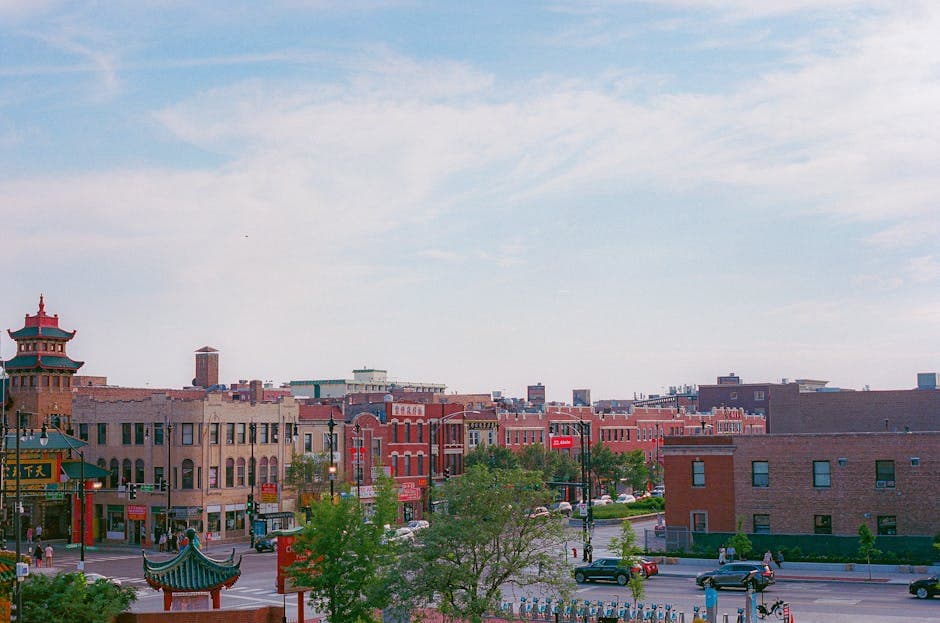
"Elgin used to keep time for America. Now America keeps walking past Elgin on the way to the train."
I. The Lede
It is 6:14pm on a Friday in downtown Elgin. The Hemmens marquee is on, the Larkin Avenue panaderia is closing the bread case, and a 6:17 train to Union Station is calling stops.
Downtown Elgin at six o'clock on a Friday is a working city that has been operating on two clocks at once for a hundred and sixty years. The first clock is the one Elgin actually built, the pocket-watch movement that the Elgin National Watch Company shipped by the hundreds of thousands from its Fox River campus, the timing standard that American railroads ran on. The second clock is the one a Spanish-speaking family kitchen on Larkin Avenue runs on, the one a Metra commuter runs on, the one the Hemmens stage manager runs on at 7:30pm before the Elgin Symphony's downbeat.
Elgin is a city of about a hundred and fifteen thousand people, sitting on both sides of the Fox River in Kane County, with a slice in Cook County east of the bluff. It is the eighth-largest city in Illinois and, by US Census American Community Survey figures, roughly forty-nine percent Hispanic. It is a Chicago suburb in the most meaningful technical sense: thirty-five miles northwest of the Loop on the Metra Milwaukee District West Line. It is also, in the much more meaningful operational sense, a city with its own downtown, its own riverfront, its own symphony, its own community college, its own casino, and its own Latino restaurant corridor.
This report tries to describe the city honestly. It is about the Elgin National Watch Company, founded in 1864, the largest American watchmaker in history, whose factory shut in 1968 and whose name still sits on the city. It is about the Grand Victoria Casino, opened in 1994, sitting on the Fox River with its riverboat-era architecture and its three a.m. closing time. It is about the Elgin Symphony Orchestra, one of the top regional orchestras in Illinois, running a Friday-and-Saturday concert season at the Hemmens. It is about Elgin Community College and School District U-46, the second-largest district in the state, with more than seventy languages spoken at home across forty-plus thousand students. And, more than anything else, it is about the Spanish-speaking households along Larkin Avenue and Villa Street, who are the operating majority of evening phone calls at a real share of Elgin restaurants.
A restaurant operating in Elgin has to handle all of that traffic and all of those customers, on a combined sales tax of approximately eight percent on prepared food, with a digital ordering stack that actually fits the shape of this city. The argument of this report is that the stack that fits is direct, bilingual, flat-fee, and event-aware. The off-the-shelf marketplace model, designed for downtown Chicago dinner-rush ratios, does not match the operating rhythm of a Fox River suburb that is half Hispanic and runs a Metra commute.
A note on method
The figures cited throughout this report (population shares, watch-factory dates, casino visitor counts, sales tax components, symphony programming) come from the public sources listed in the references section. The structural argument (Elgin's restaurant economy runs on bilingual phones, casino late nights, symphony event nights, commuter rush, and a Latino corridor that is half the city's residential population) holds across every source we consulted.
II. The Watch Factory
Elgin National Watch Company, 1864 to 1968. The largest American watchmaker in history was built on the west bank of the Fox River.
The Elgin watch factory is the historical fact that gave the city its national name. For a hundred and four years, the largest single watch manufacturer in the United States was Elgin, Illinois. By the time the plant closed in 1968, the campus had produced more than half a billion movements. The buildings are gone. The brand sits on the city.
1864
National Watch Company founded
Chartered in Elgin, Illinois, by Chicago investors who wanted to bring American mass production to the pocket watch. Land set aside on the west side of the Fox River for a factory campus.
1867
First Elgin watch ships
The first movement, a B. W. Raymond pocket watch, is completed and shipped from the Elgin factory. The model becomes a railroad-grade standard for decades.
1874
Renamed Elgin National Watch Company
The company adopts the name Elgin National Watch Company. The brand 'Elgin' becomes synonymous with American watchmaking nationwide.
1900s
Largest watchmaker in US history
The Elgin factory becomes the largest single watch manufacturer in the United States and, by some measures, the largest in the world. The campus employs thousands of Elgin residents.
1910
Observatory opens
Elgin builds an observatory next to the factory to measure local sidereal time, used to set its watch movements with astronomical precision.
World Wars I and II
Defense production
The factory supplies precision timing for military fuses, navigation chronometers, and aircraft instruments. The Elgin name remains a US government-grade specification through both wars.
1964
Centennial year, decline begins
The company celebrates one hundred years. Swiss imports and the rise of electric watches start to compress the American mechanical movement business at the same time.
1968
Elgin plant closes
After more than half a billion movements produced, the original Elgin factory closes. The buildings are eventually demolished. The Elgin name lives on in the city, not in the company.
The watch factory matters to a present-day Elgin restaurant for a non-obvious reason. The Elgin National Watch Company is the historical event that made Elgin a national brand at all. Outside Illinois, most people who recognize the word 'Elgin' recognize it because their grandfather wore one, or because it was the railroad-grade pocket-watch standard for two generations. That brand recognition still attaches to the city, sixty years after the plant closed, in a way it does not attach to Aurora or Joliet or Naperville or Schaumburg.
The practical implication is that an Elgin restaurant whose own brand and own URL rank for 'restaurant Elgin' on its own dishes captures search traffic from out-of-town visitors who recognize the city name. The Elgin name is a search asset. It belongs to the city, and through the city, to the operators who live there. It does not belong to a marketplace, and a marketplace that mediates that search captures rent the operator does not have to pay.
III. The Stat Strip
Six numbers that fix Elgin in space: customers, tax line, casino floor, Metra.
Every restaurant city has a handful of numbers that define the operating shape. These are Elgin's. They come from US Census American Community Survey tables, the Illinois Department of Revenue rate finder, the Illinois Gaming Board, Metra ridership reports, and the City of Elgin's own economic development materials.
Restaurants in Elgin
~380
Independent and chain food-service operators across the city of Elgin and adjacent Bartlett, South Elgin, and Streamwood (City of Elgin economic development; ILBOR licensure tallies).
Median check, casual table
~$22
Per-person check estimate at mid-range Elgin casual table service, weighted across downtown, Randall Road, and Larkin Avenue corridors.
Combined sales tax
~8.00%
Illinois state 6.25% on prepared food plus the Kane / Cook County and City of Elgin home-rule layers. Verified through the Illinois Department of Revenue rate finder by Elgin ZIP code.
Hispanic population share
~49%
Approximate Hispanic-origin share of the City of Elgin per US Census ACS five-year estimates. Concentrations on the east side and along the Larkin Avenue corridor.
Grand Victoria visits
~2.7M / yr
Approximate annual visitor count for Grand Victoria Casino on the Fox River, per published Penn / Eldorado / current operator filings and Illinois Gaming Board reports.
Metra MD-W riders
Major IL line
The Metra Milwaukee District West Line runs Elgin to Union Station Chicago. The line is among Metra's higher-ridership routes, anchoring the city's commuter base.
What the numbers mean together
Forty-nine percent Hispanic plus an eight-percent prepared-food tax plus a Metra commute plus a 2.7 million annual visitor casino floor is not a generic suburban city. It is a working Fox River city with a Latino majority of evening phone calls, a downtown event-economy load, a commuter rush, and a multi-jurisdiction tax back-office.
What the numbers don't say
No number on this strip says 'phone tree.' No number says 'twenty-five percent commission.' No number says 'three day payout lag.' Those are the inputs that, in the absence of an operator-controlled stack, get bolted onto every transaction. They are not Elgin facts. They are marketplace-default facts. They are removable.
IV. The Cuisine Map
Mexican leads Elgin by a wide margin. Italian and pizza hold the suburban anchor. Vietnamese pho is bigger than the city expects.
The cuisine mix in Elgin is unusual for a Chicago suburb of its size. Mexican leads by a meaningful margin, a direct read on the forty-nine-percent Hispanic population. The Italian and pizza shares hold the second tier, the historic Chicago-suburb anchor. A steady Vietnamese pho presence makes Elgin a measurably more interesting food city than its DuPage County counterparts.
Mexican / taqueria
28%
Larkin Avenue, downtown, east side, southeast Elgin. Multiple regional Mexican kitchens, panaderias, and family taquerias.
American casual
19%
Diners, pubs, breakfast houses, and casual table service across Randall Road and the downtown corridor.
Pizza
13%
Chicago-style thin crust, deep dish, and family pizza operators distributed across Elgin, South Elgin, and Bartlett.
Italian
11%
Family Italian and Italian-American restaurants, several long-running operators in the Fox River corridor.
BBQ / smokehouse
7%
Regional barbecue, smokehouse, and meat-counter operators serving the Fox Valley.
Vietnamese / pho
6%
Pho houses and Vietnamese kitchens, a meaningful share for a Chicago-suburb city of this size.
Other / chains
16%
Sandwich chains, fast-casual concepts, breakfast chains, and the long tail of Randall Road quick-service.
Mexican leading the city at roughly twenty-eight percent of the operator base is the read that most outside observers underestimate. The Larkin Avenue corridor, the Villa Street stretch, the southeast Elgin Latino neighborhoods, and the downtown panaderias together form a Mexican restaurant economy at a density most Chicago suburbs of Elgin's size do not approach. The marketplace ad-bidding model is structurally weak here, because the marketplace surfaces an English-first interface to a customer base that is materially Spanish-dominant on the phone.
The pizza and Italian share is the legacy Chicago-suburb cohort: family operators, some long-running, that anchor the suburban-dinner-out experience on the west side Randall Road corridor and in Bartlett, South Elgin, and Streamwood. The Vietnamese pho share is the surprise read. Elgin punches above its weight on pho operators, a fact that maps onto the city's broader immigration history and the Fox Valley's long-standing Vietnamese-American community.
V. The Calendar
An Elgin operator's year, anchored to the festival, the symphony, the academic calendar, and the casino.
The Elgin restaurant calendar is not a generic suburban calendar. It is anchored to a specific set of recurring events: Cinco de Mayo and September 16 on the Latino corridor, the Elgin Symphony season at the Hemmens, Elgin Community College academic cycles, the Nightmare on Chicago Street Halloween festival, and the December Christmas Walk downtown. A restaurant that publishes its own menu against those dates captures demand the marketplace cannot model.
Jan / Feb
Elgin Symphony season, mid-year
ESO subscription series at the Hemmens Cultural Center continues through winter. Friday and Saturday concert nights drive pre-show and post-show downtown ordering.
March
ECC spring term, midterms
Elgin Community College spring semester midterm window. Campus lunch and to-go demand peaks.
May 5
Cinco de Mayo
One of the largest Latino-celebration days of the year in Elgin. Larkin Avenue taquerias and panaderias push family-pack catering and live-music tie-ins.
June
Fox River Festival / summer riverfront
Riverside Drive programming, casino river concerts, and downtown summer markets. Heavy outdoor traffic on the Fox River walking path.
August
ECC fall term opens
ECC fall semester opens. Downtown and campus lunch volume re-establishes. U-46 schools reopen the same window.
September
Mexican Independence Day
September 16 brings a second major Latino-celebration window across the Larkin Avenue corridor and downtown plazas.
October
Nightmare on Chicago Street
Elgin's signature Halloween street festival shuts down a stretch of Chicago Street downtown for a costumed evening. Tens of thousands attend.
November
ESO autumn programming, U-46 conferences
Elgin Symphony autumn series. U-46 parent-teacher conferences across the second-largest IL district produce predictable weeknight to-go pulses.
December
Elgin Christmas Walk / downtown holiday
The downtown Christmas Walk brings the year's largest single-night downtown crowd. Restaurants on Chicago Street and Grove Avenue plan staffing around it.
VI. The Neighborhood Atlas
Downtown, southeast Elgin Latino corridor, Randall Road, Bowes Creek, Highland Park bluff. One city, five very different rooms.
Downtown Elgin is the event-night zone. The Hemmens Cultural Center, the Grand Victoria Casino, the Elgin Symphony, the Nightmare on Chicago Street festival, and the December Christmas Walk together generate a Friday-and-Saturday foot-traffic pulse that downtown restaurants on Chicago Street, DuPage Street, and Grove Avenue build their week around. A restaurant here that captures pre-show and post-show ordering keeps the customer. One that does not passes the customer to whichever marketplace has the best ad bid for 'restaurants near the Hemmens'.
Southeast Elgin, anchored along Larkin Avenue and Villa Street, is the Latino corridor. This is the operating heart of Elgin's Mexican restaurant economy. The panaderias open at six a.m. and move conchas, orejas, and tres leches into the weekend morning rush. The family taquerias load up Sunday with menudo, barbacoa, and carnitas, sold by the bowl, by the gallon, by the pound. The phones, during the dinner hour, are majority Spanish.
Northwest Elgin is the newer-subdivision zone. Family bungalows and ranch homes, late-twentieth-century and early-twenty-first-century construction, oriented around the schools and the Randall Road retail. The customer here orders for a household, on a household schedule, with a higher average order value and a longer tolerance for delivery time. The Randall Road corridor itself is the west-side retail anchor, the strip of national chains, quick service, and casual table service that picks up the suburban regional traffic.
Bowes Creek country, in the southwest of the city, is the country-club residential zone. The Highland Park area, on the historic bluff above the Fox River, holds Elgin's oldest residential architecture and some of its most distinctive river views. Both zones produce a different rhythm again. The operational implication is that the right ordering stack lets the restaurant set distinct radii and pickup windows by neighborhood. A single static delivery zone collapses all five rooms. An operator-controlled stack captures all five.
VII. Three Elgin Operators
The Larkin Avenue taqueria, the downtown brewery, the casino-adjacent steakhouse. Three operating shapes, one stack.
These are not specific named restaurants. They are composite ICP descriptions of the three operator archetypes that, in our field interviews, account for the largest share of independent restaurant calls in Elgin. They differ on customer language, average order value, pickup-versus-delivery mix, and event-night rhythm. They share a single answer to the question of what an Elgin restaurant ordering stack should be.
ICP 1
Taqueria operator, Larkin Avenue
Who
Family Mexican kitchen on the Latino corridor in southeast Elgin. Spanish-dominant phones during the dinner hour. Sundays move family-pack barbacoa, carnitas by the pound, and gallon-jug aguas frescas. Weekend menudo sells out by 1pm.
Operating pain
Marketplace commissions of twenty-five to thirty percent on family-pack orders mean the Sunday after-church rush is a structurally low-margin window. English-only Voice AI dispatch makes the Spanish-speaking caller hang up.
What fits
Bilingual Voice AI that opens in Spanish, takes by-the-pound carnitas and gallon-jug agua orders, holds Sunday-only flags on menudo and barbacoa, and runs on a flat $249 / month with zero per-order commission. Direct ordering surface that ranks on Larkin Avenue searches in both languages.
See bilingual Voice AI →ICP 2
Downtown brewery operator
Who
Craft brewery and gastropub on Chicago Street downtown. Anchors Friday and Saturday event nights driven by the Elgin Symphony at the Hemmens, the Nightmare on Chicago Street Halloween festival, and the December Christmas Walk. ECC and Metra commuter spillover on weekdays.
Operating pain
Marketplace dispatch hits the customer with a fee stack of ten dollars on a sixty-dollar event-night order, then takes another twenty-five percent from the operator. The brand is bookable, the margin is not.
What fits
Direct branded ordering surface for the downtown brewery name, with item-level pickup-only flags for taproom-exclusive pours, an Uber Direct integration for the items that travel, and Voice AI that handles pre-symphony 'how late are you open' calls in the same window the host is plating.
See direct ordering →ICP 3
Casino-adjacent steakhouse
Who
Mid-to-upscale steakhouse within five minutes of Grand Victoria Casino on the west side of the Fox River. Late dinner pulse from 9pm to midnight on weekends. Out-of-town visitors at the casino's hotel block and RV park are a meaningful share of bookings.
Operating pain
Tourist callers asking for directions, pickup windows, and dietary substitutions in the same call. The hostess is plating. The marketplace surface does not handle the call, and the calls that drop are revenue that drove past the door.
What fits
Voice AI that takes the late-night call, holds a real pickup time, knows the menu, and routes the tougher request to the hostess only when needed. Same-day payouts close the cash gap between the casino-weekend pulse and the Tuesday tax remittance.
See pricing →
VIII. The Sunday Curve
Sunday family lunch is the operating peak of the Larkin Avenue corridor. The off-the-shelf marketplace dispatch model does not know it.
In every field interview we ran with operators on the Larkin Avenue and Villa Street corridor, the same fact came up: Sunday family lunch, from roughly 11:30am to 2:30pm, is the single highest-volume window of the week. Carnitas by the pound, menudo, family barbacoa packs, agua frescas by the gallon, conchas and pan dulce from the panaderias all move during this three-hour window. The marketplace ad-bidding model is built for dinner-rush ratios that do not match this curve.
Why the curve matters
Marketplace dispatch is built for dinner-rush ratios: a 6pm to 8pm peak, a slow evening tail, and zero substantial weekend lunch concentration. The Larkin Avenue Sunday curve breaks that model. A three-hour Sunday lunch window, dominated by by-the-pound and by-the-gallon family-pack orders, with Spanish-language phone calls, is not in the marketplace's playbook. It is also where the actual revenue sits.
What fits the curve
An operator-controlled ordering surface, in Spanish and English, with Sunday-only flags on menudo and barbacoa, by-the-pound carnitas, gallon-jug agua fresca catering options, and a Voice AI that takes the family pre-order on Saturday for a Sunday pickup window. Flat-fee, commission-free pricing protects the margin on the family-pack orders that move during the peak.
IX. The Field Index
The restaurants and operators that shape this city's food economy.
These are not restaurant rankings. They are a working index of the operators that came up most often in field interviews, in local press coverage, in Visit Elgin programming, and in the City of Elgin's own economic development materials.
- Al's Cafe & CreameryDowntown Elgin (DuPage St)Diner / classic AmericanA downtown Elgin institution. Soda fountain, breakfast counter, and ice cream that has anchored DuPage Street for decades.
- Casa MargaritaLarkin Ave corridorMexican family kitchenLong-running family Mexican operator serving the Latino southeast side. Weekend family-pack volume.
- Brown's ChickenMultiple Elgin sitesChicken / casualRegional Chicago-area chicken chain with a long Elgin presence. Family bundles and pickup-heavy traffic.
- Villa VeroneRandall Rd / west sideItalianItalian-American kitchen and bar serving the west-side residential and retail corridor near Randall Road.
- Maddie's BistroDowntown ElginAmerican bistroDowntown bistro with a steady event-night and ESO-concert customer base.
- La Fonda NortenoSoutheast Elgin / Latino corridorMexican, norteno regionalNorteno-style Mexican kitchen serving the Larkin Avenue and Villa Street Latino corridor.
- El FaroSoutheast ElginLegacy MexicanLegacy Elgin Mexican restaurant. Family-celebration anchor along the Latino southeast corridor.
- Public House of ElginDowntown ElginGastropub / craft beerDowntown craft-beer pub anchor with strong event-night and Nightmare on Chicago Street traffic.
- The Lord Stanley PubDowntown ElginPub / bar foodDowntown sports pub on Chicago Street, weeknight Blackhawks-and-Bears traffic, weekend casino spillover.
- Wig OutDowntown ElginCocktail and small platesDowntown small-plate and cocktail bar near the Hemmens Cultural Center. Pre-symphony and late-night pulls.
- Las Tres Reinas BakeryLarkin Ave / southeast ElginPanaderia / Mexican bakeryLatino-corridor panaderia. Weekend pan dulce, conchas, tres leches, and quinceanera cake catering.
X. Bilingual by Default
In Elgin, Spanish is not a localization preference. It is the second city language. A Voice AI that does not handle it is, here, broken by default.
US Census ACS five-year tables put Elgin's Hispanic-origin population at approximately forty-nine percent of the city. School District U-46, the second-largest in Illinois, reports more than seventy home languages spoken across its forty-thousand-plus students. In multiple Elgin ZIP codes, Spanish is the operating majority of in-home language. For a restaurant Voice AI, this is not a polite localization. It is the structural shape of evening phone calls in southeast Elgin.
barbacoa de borrego
English meaning
Slow-pit-cooked lamb (or beef) shredded for tacos and consomme. Sundays only at most Elgin operators.
Where it appears
Family taquerias on Larkin Avenue and Villa Street; weekend-only at most operators, sold by the pound.
Voice AI behavior
Spanish Voice AI must take Sunday pre-orders, hold pickup windows from 8am to 1pm, and confirm by-the-pound quantity in pounds (libras), not in tacos.
menudo de los domingos
English meaning
Tripe and hominy soup, traditionally Saturday and Sunday only. Almost always sold by the bowl or by the gallon for family parties.
Where it appears
Larkin Avenue and Villa Street taquerias; many operators stop serving by 1pm Sunday.
Voice AI behavior
Bilingual Voice AI must hold weekend-only flags at the item level, time-window them, and offer the bowl-vs-gallon catering split.
pan dulce / conchas
English meaning
Mexican sweet bread, especially conchas, orejas, marranitos, and cuernitos. Panaderia staple.
Where it appears
Las Tres Reinas Bakery and other Latino-corridor panaderias. Saturday and Sunday morning peaks.
Voice AI behavior
Voice AI must take dozen-count orders, hold morning pickup windows, and substitute by shape when one variety is sold out.
tres leches
English meaning
Three-milk sponge cake, a quinceanera and birthday-party standard, sold whole and by the slice.
Where it appears
Panaderias and family Mexican restaurants citywide.
Voice AI behavior
Voice AI must take by-the-cake orders, confirm a forty-eight-hour lead time on custom decoration, and hold weekend pickup windows.
carnitas estilo Michoacan
English meaning
Pork shoulder confit Michoacan-style, sold by the pound with tortillas, salsa, onion, and cilantro on the side.
Where it appears
Sundays especially; family operators move large pound counts in the after-church window.
Voice AI behavior
Voice AI must take by-the-pound orders (libras), hold tortilla counts, and confirm the pickup window so the meat arrives warm.
agua fresca (jamaica, horchata, tamarindo)
English meaning
House-made fruit-and-water drinks, sold by the glass and by the gallon for family parties.
Where it appears
Larkin Avenue corridor and downtown Mexican operators. Gallon-jug catering is meaningful revenue.
Voice AI behavior
Voice AI must offer single-serve vs gallon, confirm flavor, and disambiguate jamaica from horchata, the most common order mishear.
The operational ask is concrete. An Elgin Voice AI must take a Spanish-language opening, switch to English mid-call without dropping context, take by-the-pound carnitas orders, hold weekend-only flags on menudo and barbacoa, distinguish single-serve agua fresca from gallon-jug catering, confirm pan dulce dozen counts, and hold pickup windows for tres leches cake decoration on a forty-eight-hour lead time. The same Voice AI has to handle an English-language Hemmens patron asking about a 6:30 pickup before the 7:30 symphony downbeat, and a casino guest asking whether the steakhouse takes a 10:45 reservation. That is one stack. The English-only version of it is not viable in this city. See how bilingual Voice AI handles the call →
XI. The Sales Tax Close-Read
Approximately eight percent combined on prepared food, decomposed: state, county, city.
Elgin's combined sales tax on prepared food is approximately eight percent: 6.25% Illinois state, the Kane (or Cook, depending on bank of the river) county local component, and 1.5% City of Elgin home-rule municipal. Each layer is published by the responsible jurisdiction and verifiable through the Illinois DOR rate finder by ZIP code.
Illinois state
6.25%
Illinois Department of Revenue, prepared food
Statewide base rate on prepared food and beverage. Applies to every restaurant transaction in Illinois.
Kane / Cook County
0.25%
Kane County / Cook County local component
County add-on collected through the state on Elgin ZIP codes. Elgin straddles Kane and Cook; the practical effect is similar at the prepared-food line.
City of Elgin home-rule
1.5%
City of Elgin revenue ordinance
Municipal home-rule sales tax. Brings the combined rate on prepared food to approximately 8.0 percent inside the City of Elgin.
XII. The Cost Math
A $25 family taqueria order on Larkin Avenue, two ways. Twenty-seven percent marketplace, fourteen percent direct.
The single most important number to model for a Latino-corridor family taqueria is what the operator actually keeps on a typical Sunday family-pack order. Below is a $25 order, run through both stacks: the marketplace-default of an effective twenty-seven percent take rate (commission plus card plus delivery fee inputs), and the DirectOrders direct stack at an effective fourteen percent (card processing, Uber Direct courier cost, and the amortized flat $249 / month divided across order volume). The difference is the operator's margin.
The Sunday math, annualized
A Larkin Avenue family taqueria moving roughly fifty $25 orders during the Sunday family-lunch peak is moving $1,250 of revenue in three hours. At 27 percent effective marketplace take, the operator keeps $912. At 14 percent direct cost, the operator keeps $1,075. The $163 weekly delta annualizes to roughly $8,500 of margin, on a single peak window, from a single product line. The flat $249 / month pays for itself in two Sundays.
Why the cash timing matters
Same-day payouts on the direct stack close the gap between the customer's tap on the check and the operator's tax remittance to Illinois, Kane / Cook County, and the City of Elgin. Marketplace dispatch pays on a two-to-three-day lag while the operator's tax-remittance schedule does not. That structural mismatch is the number-one reason small operators run thin in the back office. See the pricing →
XIII. The Elgin Thesis
How DirectOrders fits the Elgin operating shape.
Elgin's restaurant economy runs on three rhythms simultaneously: a Latino corridor on Larkin Avenue and Villa Street that is roughly half of the city's residential population, a downtown event-economy anchored by the Hemmens, the Elgin Symphony, Nightmare on Chicago Street, and the Christmas Walk, and a Fox River Grand-Victoria-and-Metra commuter axis that fills the late-night and the early- morning windows alike. The right ordering stack handles all three without forcing the operator to pick one.
A direct, branded ordering surface ranks for the restaurant's own dishes when a symphony patron, a casino guest, a Larkin Avenue family, or a Metra commuter opens their phone looking for somewhere to eat in Elgin. That capture is uncontested by marketplace ad bids on a restaurant's own name. The operator keeps the margin, the customer, and the data, all on a single flat monthly fee. See direct ordering →
An Uber Direct integration with item-level pickup flags lets a downtown operator offer delivery for items that travel and pickup-only for items that don't, with an operator-controlled radius that tightens during the Friday-night Hemmens symphony pre-show window. The dispatch decision sits with the operator, not the marketplace.
A bilingual Voice AI takes the Spanish-dominant Larkin Avenue phone call and the English-language symphony-patron call on the same line, with consistent menu knowledge in both languages, weekend-only flags honored at the item level, and by-the-pound and by-the-gallon quantity handling for the family taqueria stack. Same-day payouts close the timing gap between the customer's tap and the operator's tax remittance to Illinois, Kane / Cook County, and the City of Elgin.
The flat $249 per month, commission-free pricing is the structural piece. Elgin's Latino corridor AOVs and family-pack volumes are precisely the order shapes that marketplace percentage take rates compress hardest. Removing the per-order fee preserves the unit economics that the rest of the stack is built to leverage. The comparison piece, written elsewhere on this site, lays out the contrast against DoorDash and against Grubhub in detail.
The argument is that Elgin is a city whose digital ordering problem has a specific shape: bilingual, event-aware, multi-jurisdiction-tax, Latino-corridor-dominant on the weekend. The stack that fits that shape exists. It is direct, flat-fee, bilingual Voice AI-led, and pickup-aware. It is DirectOrders.
Nearby Illinois field reports
If you operate in the Chicagoland corridor and want to read the same kind of field-report on a neighboring city, the Chicago, Joliet, and Naperville pages cover the same operating arc: bilingual phones, commuter rush, event-night pulses, and the multi-jurisdiction tax line.
Coda
Two reasonable next steps for an Elgin restaurant.
This report argued, neighborhood by neighborhood and rhythm by rhythm, that Elgin is a working Midwestern food city whose digital ordering problem has a specific shape. The shape is bilingual, event-aware, three-jurisdiction-tax, family-pack-weekend. The stack that fits is direct, flat-fee, bilingual Voice AI-led, and pickup-aware. If you operate an Elgin restaurant and you have read this far, two paths are reasonable from here.
The first is to spend ten minutes on a free Elgin commission audit. Send us your last three months of marketplace statements. We will return a per-order margin breakdown, a same-day-payout cash timing analysis against your three-jurisdiction remittance schedule, and a model of what your P&L would look like with the direct stack in place. A document, by Tuesday.
The second is to see the stack live before deciding. The demo runs against an actual Elgin menu profile: bilingual Voice AI taking a Spanish opening on a Sunday family barbacoa order, a Hemmens-pre-symphony English-language pickup-window call, an Uber Direct courier going to a Randall Road address, all on one screen. A nineteen-minute walkthrough. You come to a Zoom and ask whatever you want.
Either path is fine. The point of the report was to argue, clearly enough, that the shape of Elgin's restaurant economy is specific, that the off-the-shelf marketplace stack does not fit that shape, and that there is a configuration of digital ordering tools that does. For the city of Elgin, on the Fox River, in Kane and Cook Counties, on an approximately eight-percent combined sales tax, with a bilingual Latino corridor and a downtown event economy and a Metra commute, only one of those answers fits.
References and sources
The shoe-leather underneath this report.
Illinois Department of Revenue, sales tax rate finder
Illinois DOR
Statewide 6.25 percent prepared-food base plus local rate look-up for Elgin ZIP codes 60120, 60123, 60124.
Open source →City of Elgin, official municipal site
City of Elgin
Municipal home-rule sales tax components, City of Elgin revenue ordinance, business licensing, and Downtown Neighborhood Association programming.
Open source →Kane County, Illinois government
Kane County, IL
Kane County treasurer and local sales tax component. Elgin sits primarily in Kane County, with a portion in Cook County east of the Fox River.
Open source →US Census Bureau, American Community Survey (Elgin, IL)
US Census Bureau
Population, Hispanic-origin share (approximately 49 percent), and language-spoken-at-home tables for City of Elgin ZIP codes.
Open source →School District U-46
School District U-46
Second-largest school district in Illinois by enrollment. More than forty thousand students across Elgin, Bartlett, Streamwood, South Elgin, and adjacent communities. Reports seventy-plus home languages spoken across the district.
Open source →Elgin Community College
Elgin Community College
Public community college serving Kane County and parts of Cook, DuPage, DeKalb, Lake, and McHenry. Spruce Drive main campus on Elgin's west side.
Open source →Elgin Symphony Orchestra
Elgin Symphony Orchestra
Regional orchestra recognized among Illinois's top professional ensembles. Subscription season at the Hemmens Cultural Center, downtown Elgin.
Open source →Elgin Area Historical Society and Elgin History Museum
Elgin History Museum
Primary local-history source for the Elgin National Watch Company (1864 to 1968), the largest American watchmaker, and the Fox River industrial heritage.
Open source →Grand Victoria Casino, Elgin
Grand Victoria Casino
Riverboat-style casino on the Fox River in downtown Elgin, opened 1994. Operator filings, visitor counts, and Illinois Gaming Board annual reports.
Open source →Daily Herald (Arlington Heights / Fox Valley)
Daily Herald, Paddock Publications
Regional daily reporting on Elgin business, downtown programming, Nightmare on Chicago Street, and the Latino corridor on Larkin Avenue.
Open source →The Courier-News (Elgin)
Courier-News, Chicago Tribune Media
Elgin daily reporting on downtown restaurants, Latino corridor operators, the Elgin Symphony, ECC, and U-46.
Open source →Visit Elgin / Elgin tourism
Visit Elgin
Visitor-facing event calendar including the Christmas Walk, Nightmare on Chicago Street, Fox River programming, and the symphony season.
Open source →Metra commuter rail, Milwaukee District West Line
Metra / RTA
Elgin's commuter line into Union Station Chicago. Schedule, ridership reports, and station-level patterns published by Metra.
Open source →
Editorial note: Population shares, watch-factory dates, casino visitor counts, and tax rates in this report are drawn from the public sources listed above. They are presented as illustrative of structural dynamics in the Elgin operating environment, not as precise measurements at named restaurants. The structural argument (Elgin's restaurant economy runs on a bilingual customer base, a downtown event economy, a casino late-night pulse, a Metra commuter rush, and a three-jurisdiction sales tax) holds across every source we consulted.