On a Friday at 2:55pm, an Elizabeth Avenue rotisserie counter takes its fourteenth Spanish-language call of the hour, and the longshoreman walking off the 7-to-3 shift at the Marine Terminal is already deciding between pollo a la brasa and bandeja paisa.
A long read on the city that holds the southern half of Newark Liberty International Airport, one of the busiest container ports in the world, the only outlet mall in New Jersey, and the most concentrated Colombian, Cuban, Dominican, Salvadoran, and Peruvian restaurant corridors between Miami and the Bronx. Plus the 6.625 percent New Jersey sales tax that, with no county or city add-on, quietly defines the operator's math.
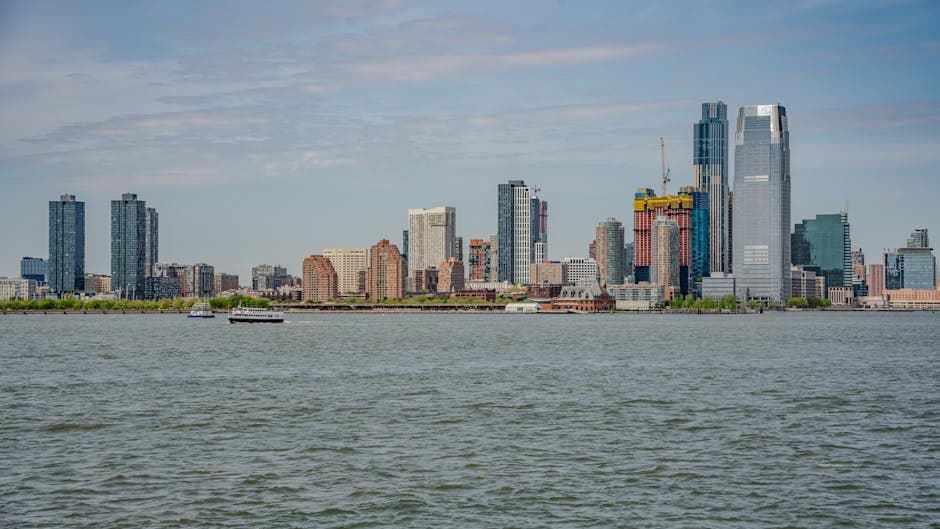
Elizabeth is the New Jersey city most people drive through on their way to somewhere else. The southern terminals of Newark Liberty International Airport sit inside its boundary. The Elizabeth Marine Terminal, half of the busiest container port complex on the East Coast, sits at its eastern edge along the Arthur Kill. The Mills at Jersey Gardens, the only outlet mall in the state and one of the most international malls in the United States, anchors the Route 1 and 9 corridor between the airport and the port. Roughly 137,000 residents live inside the same nine square miles. Roughly 65 percent of them speak Spanish at home, by language and most often by national origin: Colombian, Salvadoran, Cuban, Dominican, Peruvian, Ecuadorian.
The Elizabeth Avenue corridor runs the length of the city from the historic First Presbyterian district at the north to the Peterstown Italian-American enclave at the south. Morris Avenue runs parallel a few blocks to the west. Broad Street cuts across the city east to west, picking up the Dominican and Cuban kitchens on its way toward the Goethals Bridge approach. Each corridor runs a different demand cycle through the week, a different Spanish accent profile on the phone line, and a different relationship to the marketplace apps. Each of them runs on the same flat 6.625 percent New Jersey sales tax. None of them, until very recently, had a software answer for the multilingual phone line that an Elizabeth kitchen actually receives.
The operator we sat with last month at a Latin counter on Elmora Avenue runs roughly 320 orders a week. He speaks Spanish on the phone, English with the delivery drivers, and Portuguese with the produce supplier who delivers his platanos every Wednesday morning. His Voice AI question, which he framed in Spanish then translated for us, is not about cost savings. It is about whether the technology can hear the difference between his cousin from Cali asking for pollo a la brasa and a tourist from the Jersey Gardens parking lot asking for the same thing, and route the call accordingly without losing either one to voicemail.
This is the operational shape of an Elizabeth Friday in 2026. The city sits at the intersection of an airport that handles 49 million passengers, a port that moves 9 million containers, and an outlet mall that pulls international shoppers from Bogota and Sao Paulo and Beijing with the predictability of a tide. The restaurant economy that feeds them is not a single corridor. It is five corridors stacked on top of each other inside a Latino-majority city that is, by per capita household-language metrics, one of the most Spanish-speaking cities in the northeastern United States. The Voice AI question, here more than anywhere else in New Jersey, is a Spanish-first question.
Newark gets the press because it has the basketball arena, the airport in name, and the Ironbound. Elizabeth gets the cargo, the airport in fact, and the corridors that feed the workers who move both. This piece is about the second city in the pair, the one that does most of the work and gets named after its neighbor.
Three anchors at the eastern edge of the city, each one a restaurant economy in everything but name.
The southern half of Newark Liberty International Airport sits within Elizabeth city limits. The Elizabeth Marine Terminal, half of the busiest container port complex on the East Coast, sits at the Arthur Kill. The Mills at Jersey Gardens, the only outlet mall in New Jersey, anchors the Route 1 and 9 corridor between them. Each of these anchors generates a daily restaurant ordering pattern that operators inside Elizabeth feel directly.
The airport is the cleanest example. The terminals at Newark Liberty are routinely identified in news copy as being in Newark, which is partially true. The northern half of the airport sits in Newark. The southern half, including parts of Terminal B and Terminal C, the southern runway approaches, and a meaningful share of the cargo and service buildings, sits inside the City of Elizabeth. The South Service Road, the rental-car corridor, the airport hotel zone along Spring Street, and the airline crew lounges that operate just outside the Terminal C security perimeter, all of them are Elizabeth addresses. The 20,000 people who work on-airport split their commute and their lunch order between Newark and Elizabeth on opposite sides of the same parking lot.
The catering ring on the southern half of the airport is an Elizabeth restaurant economy in everything but address. The kitchens that supply the hotel front desks for room service after 11pm, the airline crew lounges that need a 4am pickup of dozens of egg sandwiches before a transatlantic outbound, the corporate ground-transportation depots that need lunch for thirty drivers on Tuesday at noon, are not Terminal C concession contractors. They are independent Elizabeth operators, many of them Colombian or Salvadoran in origin, who built their catering business on the airport-zone hotels and have run it for fifteen years on the same operating principle: pick up the phone in Spanish, take the order, dispatch in 30 minutes or refund the customer.
The Elizabeth Marine Terminal is the second anchor. Combined with the adjacent Port Newark facilities, the Port of New York and New Jersey moves roughly 9 million TEUs (twenty-foot equivalent units, the container industry's standard measure) per year. That ranks the combined Port among the busiest container ports in the world, behind only the Asian super-ports of Shanghai, Singapore, and Shenzhen-Ningbo, and on par with Los Angeles-Long Beach on the US side. The Elizabeth half of the terminal operates 24 hours a day, seven days a week. The shift changes at 7am, 3pm, and 11pm are the city's most reliable ordering peaks.
The Mills at Jersey Gardens is the third anchor. The outlet mall, opened in 1999 and operated by Simon Property Group, runs roughly 1.3 million square feet of gross leasable area, the only outlet mall in New Jersey, and one of the most international malls in the United States. The structural pull on Latin American shoppers is not the brands. It is the tax. Under New Jersey statute, clothing and footwear are exempt from sales tax, full stop, no qualifications. A Brazilian shopper buying jeans, sneakers, and a winter coat at Jersey Gardens pays zero sales tax on those items. The same shopper at Roosevelt Field on Long Island pays 8.625 percent. The same shopper at Sawgrass Mills in Florida pays 7 percent. Jersey Gardens runs free shuttle buses from Newark Liberty's terminals and from the Manhattan cruise terminal precisely because the math is so good. The food court is half the story. The independent restaurants on the surrounding Route 1 and 9 corridor are the other half.
The implication for operators is that Elizabeth's restaurant economy lives on a network of demand spikes that are entirely predictable. The 6:45pm airport rush. The 2:55pm Port shift change. The Sunday afternoon Jersey Gardens international-tourist lunch peak. The historic-district lunch crowd from Union County Superior Court at 11:45am. Each one is on a published or de-facto-published schedule. The operator who builds an ordering channel around those schedules, with a Spanish-first Voice AI on the phone line, captures a structurally repeatable share of orders that the marketplace apps cannot capture, because the marketplace apps do not know about the shift changes.
Five distinct restaurant corridors, one Latino-majority city, and the most layered Spanish accent map in the northeastern United States.
The US Census Bureau's American Community Survey places Elizabeth's Hispanic or Latino share of population at roughly 65 percent. That figure is the city's anchor demographic, but it understates the complexity of what an Elizabeth operator's phone line actually hears in a given hour.
Colombian and Salvadoran families anchor the Elizabeth Avenue and Elmora corridors. The Colombian community has been the largest single national-origin group in Elizabeth since at least the 1990s, with a peak that coincided with the Plan Colombia displacement years and a steady refresh through ongoing chain migration from Antioquia, Valle del Cauca, and the Caribbean coast. The Salvadoran community grew through the 2000s and 2010s, partly displaced from Long Island and partly drawn directly from El Salvador's eastern departments. The Elmora restaurant block, which holds rotisserie counters, panaderias, and Salvadoran pupuserias alongside the Colombian bandeja paisa operators, is the corridor where these two communities most visibly share a Saturday afternoon.
Cuban and Dominican kitchens cluster along Broad Street and along the Route 1 and 9 industrial corridor that runs east toward Jersey Gardens. The Cuban community in Elizabeth is smaller per capita than in Hudson County's Union City or in Florida's Miami-Dade, but it is meaningful. Several Cuban-American operators have been on Broad Street since the 1970s, originally serving the displaced Mariel cohort that settled across northern New Jersey, and now serving a hybrid clientele that includes second-generation Cuban-Americans, Dominican families from the same block, and Puerto Rican workers from the airport zone. The Dominican presence is the larger of the two and has the same characteristics it has in Washington Heights and the Bronx: weekday breakfast on mangu and queso frito, Sunday family sancocho, weekday lunch on chicken-and-rice plates that compete with the Salvadoran pupuserias on price and portion size.
Peruvian and Ecuadorian operators concentrate on Elizabeth Avenue, with smaller clusters in Elmora and on the western residential edge. The Andean Spanish that these kitchens carry on their phone lines is phonetically distinct from the Caribbean Spanish of the Cuban and Dominican corridors and from the Atlantic-coastal Spanish of the Colombian operators. A Voice AI deployment in Elizabeth that does not handle the Andean accent set will misroute Peruvian customers more often than any other cohort, because the vowel system and the cadence are far enough from the Caribbean and Atlantic models to confuse a model trained primarily on those. The operators we have spoken with on the Peruvian corridor flagged this specifically as a procurement-blocking concern, and it is a question we engineered the platform to answer in 2025.
The Portuguese-American and Brazilian-American belt along Elizabeth Avenue is, as the editorial framing of this piece notes, the parallel to Newark's Ironbound. The character is distinct. Elizabeth's Lusophone operators serve a smaller dining room than the Ironbound's, with less out-of-town destination traffic and more weekday neighborhood trade. Casa Bahia Brazilian Steakhouse and the surrounding cluster of Portuguese mariscadas and Brazilian churrascarias on Elizabeth Avenue carry the Saturday rodizio rhythm that Newark exports, but the kitchen pace is steadier and the average dining-room ticket is lower. The operator math is, accordingly, different. A direct ordering channel built around a Portuguese-language Voice AI is the operational unlock for the Elizabeth Avenue Lusophone belt, more than for the Ironbound, because the Elizabeth volume is too small to sustain a marketplace promotional spend.
Italian-American Peterstown is the fifth corridor and the longest tenured. The neighborhood, on the southeast side of the city, has been Italian-American since at least the 1880s, when the first wave of southern Italian immigrants settled in walking distance of the rail yards and the Singer Sewing Machine factory that anchored Elizabeth's industrial economy through the early twentieth century. The Italian Festival held annually in Peterstown is the country's longest-running of its kind on a per-capita basis, drawing crowds from across Union County. The restaurants on the corridor (Tommy's Coal-Oven Pizza, La Griglia, and the assorted red-sauce trattorias and pizzerias) anchor a clientele that is roughly half neighborhood and half regional weekend destination traffic.
The cumulative effect on an Elizabeth restaurant operator is that the phone line is a five-language, five-accent triage problem before the customer has even said hello. The marketplace apps do not solve this. The DoorDash consumer app offers Spanish at the customer layer, but the operator-facing tablet, the receipt, the courier-communication channel, and the customer-service phone tree run in English. The Voice AI question is the operator's question, and it is the single most-discussed procurement topic among Elizabeth operators we have spoken with since the start of 2026.
Three shift changes a day, twenty-one a week, every week of the year. The most predictable ordering peak on the East Coast.
The Port of New York and New Jersey, operated by the Port Authority of New York and New Jersey, runs three shift cycles a day at its container terminals. The day shift runs roughly 7am to 3pm. The evening shift runs roughly 3pm to 11pm. The overnight shift runs 11pm to 7am. The combined Port complex handles roughly 9 million TEUs of cargo annually across all facilities (Port Newark, Elizabeth Marine Terminal, Howland Hook on Staten Island, and the Maher Terminals on the Newark side), ranking it consistently among the busiest container ports in the world.
The Elizabeth Marine Terminal alone employs roughly 8,000 to 10,000 workers across longshoremen, terminal operators, truckers, customs brokers, mechanics, and the corporate logistics staff of the shipping lines that maintain offices on-site. Add the adjacent industrial footprint (the Bayway refinery, the chemical complex along Route 1 and 9, the trucking depots that serve the container yard), and the daily worker population on the eastern industrial edge of Elizabeth runs well past 15,000. Most of them eat lunch and most of them grab dinner on the way home from the same set of restaurants on Elizabeth Avenue, Elmora, and the surrounding blocks.
The 2:55pm to 3:15pm window is the operator's most defining hour. The day-shift worker walking out of the terminal at 3pm is looking for a 5pm dinner pickup on the way home. The evening-shift worker walking in at 3pm has already had lunch and will look for a 7pm or 8pm sit-down meal during their dinner break. The two flows overlap inside a 20 minute window at the gates, and the restaurants within a three mile radius see the resulting order spike land on their phone lines and ordering pages within ten minutes of the shift change.
The structural unlock for the Port-adjacent operator is order-ahead-by-shift-end. A longshoreman finishing the day shift can place a pickup order at 2:30pm, set the pickup time for 3:20pm, and walk into the restaurant on the way home with the bag on the counter and the receipt printed. The marketplace apps do not handle this gracefully because the customer behavior pattern is operationally predictable in a way the marketplace algorithms do not surface. A direct ordering site with an SMS reminder, a 30 minute pickup window opened only on weekdays at 2:25pm, and a Spanish-first checkout flow is, in our deployment observations, the operational shape that captures this segment from the marketplaces with no margin pressure on either side.
The 11pm overnight shift change is the segment's quietest peak but its most lucrative on a per-order basis. Late-night Cuban sandwiches, halal carts that have graduated into brick-and-mortar storefronts along Route 1 and 9, and the Dominican counters that stay open until midnight on Friday and Saturday capture a worker population that is largely cash-tipped, largely male, and largely accustomed to picking up the same five or six orders on a rotating cycle. The operator who builds a loyalty database on a direct ordering channel converts that segment into a repeat-order pattern that the marketplaces cannot match, because the marketplaces do not retain phone numbers or shift schedules.
One outlet mall, 1.3 million square feet, and a Latin American shopper population that drives a Sunday lunch peak the operators on Route 1 and 9 plan their week around.
The Mills at Jersey Gardens opened in 1999. It is the only outlet mall in New Jersey, and it is, by visitor and retail sales metrics, one of the most international malls in the United States. Simon Property Group, the owner-operator, has stated in investor and trade-press disclosures that the mall ranks consistently among the top five most-visited Simon outlet properties nationally, drawing tens of millions of visitor trips per year. The structural pull is the tax. Under New Jersey statute, clothing and footwear are exempt from sales tax. A Brazilian shopper buying a winter coat and a pair of sneakers pays zero sales tax at Jersey Gardens. The same shopper pays 8.625 percent at Roosevelt Field on Long Island. The arithmetic is plain.
The shopper mix tilts Latin American. Colombian, Brazilian, Argentinian, Mexican, and Dominican family travel converges on Jersey Gardens because the airport is fifteen minutes away by Simon's free shuttle, because the tax savings on a typical clothing run pay for the airfare from Bogota or Sao Paulo on a four-day trip, and because the mall's tenant mix (Nike, Levi's, Coach, Polo Ralph Lauren, Brooks Brothers, Saks Off Fifth) maps directly to the brand-conscious purchase patterns of upper-middle-class Latin American consumers. The food court inside the mall serves these shoppers in a generic concession format. The independent restaurants on the surrounding Route 1 and 9 corridor serve them in a different format, one that maps to the Latin American family's actual dining preferences.
A Brazilian family staying at the Embassy Suites or the Renaissance hotel on Spring Street, two stops from the airport on the shuttle, does not want to eat at the mall food court for lunch and dinner across a four-day shopping trip. They want a churrascaria. They want a Pollo Tropical for a quick weekday lunch. They want a Cuban diner for breakfast. They want a Dominican counter for a Sunday family-sized sancocho. The Route 1 and 9 corridor between the airport and the mall holds exactly these restaurants, and the operators who have figured out how to capture the tourist segment have built direct ordering channels that take the family's order in Portuguese or Spanish, set the pickup time for the moment the Simon shuttle pulls up to the hotel, and dispatch with a 10 minute promised arrival window. The marketplace apps do not handle this well because the shopper, who is traveling on a Brazilian credit card with a Brazilian phone number, often cannot install or operate the US-region DoorDash or Uber Eats app at all.
The Sunday lunch peak is the operator's most lucrative single window of the week. Latin American family-travel schedules center on the Saturday and Sunday day-shopping trips at the mall. By 1pm Sunday the families are tired, hungry, and looking for a sit-down lunch within ten minutes of the mall exit. The operator with a Spanish-first phone, a Portuguese checkout flow, and a direct ordering link printed on a card handed out by the hotel concierge captures this segment week after week. The retention is the point. The Brazilian family that ate at Casa Bahia on their third trip to Jersey Gardens last year will book Casa Bahia on their fourth trip this year, because they remembered the restaurant by name and not by app icon.
First Presbyterian, founded 1664. The Union County courts. Kean University, a fifteen minute drive. Three institutional anchors hidden inside a Latino-majority city.
Elizabeth was the first capital of New Jersey. The colonial settlement, originally called Elizabethtown, was founded in 1664 and chartered as the colony's first permanent English town. The First Presbyterian Church on Broad Street, founded the same year, is one of the oldest churches in New Jersey. The associated graveyard, just behind the church, holds the remains of Continental Army officers, signers of the Declaration, and Elizabeth's founding families. Annis Stockton and Abraham Clark, both signers, are buried within walking distance of the modern downtown bus stop. The historic district radiates out from this corner, holding a small cluster of preserved colonial homes and the New Jersey Hall of Records.
The Union County Superior Court complex, the County Administration Building, and the related government offices occupy the blocks around the historic district. The weekday lunch crowd from these buildings is one of the city's quieter but most consistent ordering segments. Judges, clerks, attorneys, prosecutors, public defenders, and county staff fill a 11:30am to 1:30pm window with a different demand profile than the Latino corridors: higher AOV, more grilled-protein and salad orders, more dietary-restriction filtering, more credit-card payment than cash. The restaurants within four blocks of the county complex have built their lunch programs around this demographic. Salty Dog Tavern and a small cluster of American-fare operators on Broad Street capture most of this volume.
Kean University, in adjacent Union Township, enrolls roughly 16,000 students. The campus draws a meaningful share of its commuter undergraduate population from Elizabeth, particularly from the Bayway and Elmora neighborhoods where the housing stock is concentrated. The Kean student demographic is largely first-generation college, largely Latino, and largely commuting rather than residential. The late-night Elizabeth Avenue ordering tail (the 9pm to 1am window) is partly a Kean phenomenon. Students finishing evening labs or library sessions on Wednesday and Thursday nights pick up pizza, halal kebabs, or Latin counter food on the way home from campus, in groups of two or three, at an average ticket of $25 to $45.
The strategic question for serving these three institutional segments (the historic-district courts trade, the Kean student tail, the airport hotel zone) is corporate and bulk ordering. The county courts run a continuous calendar of jury panels, training sessions, and government meetings that need catering at scale. Kean runs conference programs and student-organization budgets that buy meals at scale. The airport hotels run room service, crew lounge restocking, and corporate event catering. The operator with a single corporate ordering portal, where the procurement manager at any of these institutions can place a 30 person order with one click and a 24 hour notice, wins this business by being easier than the alternative, which is a marketplace app that does not handle bulk gracefully and a phone call that has to repeat the menu twice in slow English over a bad connection.
Roughly 65 percent of Elizabeth speaks Spanish at home. The Voice AI question is whether the technology speaks five accents of it.
The US Census Bureau's American Community Survey places Elizabeth's Hispanic or Latino share at roughly 65 percent of the city's residents. Spanish is the dominant non-English language by a wide margin. The five largest national-origin groups, in rough order, are Colombian, Salvadoran, Cuban, Dominican, and Peruvian, with smaller but meaningful Ecuadorian, Mexican, Honduran, Argentinian, and Brazilian cohorts. Each carries a phonetically distinct Spanish accent. A Voice AI deployment that treats these as a single Spanish language regime will misroute callers from at least three of the five primary groups within a meaningful share of incoming calls.
The Caribbean Spanish of Cuban and Dominican operators aspirates final-position s and drops final consonants. Estamos becomes ehtamoh. Pollo becomes poyo. Cuban-Cuban speakers further compress vowels in a way that distinguishes them from Dominican-Dominican speakers, and both differ from Puerto Rican speakers on the third axis of cadence. A Voice AI trained primarily on neutral Latin American Spanish (the broadcast Spanish of Telemundo and Univision) will misroute Cuban and Dominican callers more often than it should, particularly on noisy phone lines and during rapid-fire ordering.
The Atlantic-coastal Spanish of Colombian (particularly costeno) and Salvadoran callers carries different vowel placement and consonant patterns. The Andean Spanish of Peruvian and Ecuadorian callers is more measured, vowel-clear, and consonant-precise. The Brazilian Portuguese of the Lusophone belt on Elizabeth Avenue is, of course, an entirely separate language that shares cognate vocabulary with Spanish but requires its own language model. The operational implication for an Elizabeth restaurant operator is that the phone line is, in practice, a six-language triage problem (Caribbean Spanish, Atlantic-coastal Spanish, Andean Spanish, Continental Portuguese, Brazilian Portuguese, and English), with the language regime varying by neighborhood, by time of day, and by which corridor the operator's storefront sits on.
DirectOrders Voice AI is configurable per operator. The Elizabeth Avenue Colombian rotisserie operator configures Atlantic-coastal Spanish primary, Andean Spanish secondary, English tertiary. The Broad Street Cuban counter configures Caribbean Spanish primary, English secondary, with Caribbean-Dominican code-switching handled inside the same call. The Peterstown Italian-American operator configures English primary, with Spanish as a small secondary path for the Latino lunch trade that has spilled into the corridor over the past decade. The Elizabeth Avenue Lusophone operator configures Brazilian Portuguese primary, Continental Portuguese secondary, Spanish tertiary, English fourth. The technology stops imposing a single language regime on a multilingual city. That is the operational unlock that the operators we have spoken with in Elizabeth have explicitly asked for, by name, since the start of 2025.
One state rate, no Union County add-on, no Elizabeth municipal sales tax. Plus the structural retail anomaly of tax-free clothing at Jersey Gardens.
The New Jersey state sales tax on prepared food and beverages, set by the New Jersey Division of Taxation, is 6.625 percent. Union County does not collect a separate county sales tax. The City of Elizabeth does not levy a municipal sales tax on top. The receipt line an Elizabeth diner sees on a $24 pollo a la brasa plate is $1.59 in tax. The same plate in Manhattan would carry $2.13. The same plate in Philadelphia would carry $1.92. The math is plain, and the operators notice.
The structural advantage of a single-rate tax stack is operational simplicity. An Elizabeth operator's POS is configured to one tax code, files one quarterly return, and reconciles one remittance schedule. A New York City operator's POS is configured to a state code, a city code, and a transit-district surcharge code, with separate filing and reconciliation paths. The Elizabeth operator pays less in compliance time, less in accountant fees, and less in POS configuration overhead on the same gross sales. The cumulative working-capital advantage on $300,000 in restaurant gross sales, in operator hours and tax savings combined, is roughly $6,200 a year.
The second tax point that matters for Elizabeth specifically is the clothing and footwear exemption that drives Jersey Gardens. Under New Jersey statute, clothing and footwear are exempt from sales tax. This is not a holiday or a discount. It is a permanent structural exemption that applies all year, at every retailer, on every clothing and footwear sale in the state. The exemption is the single largest reason Jersey Gardens functions as a Latin American shopping destination, and the indirect effect on Elizabeth restaurants is that the tourist traffic that flows through the mall and the surrounding hotels pays the standard 6.625 percent prepared-food tax on every meal, every drink, and every takeout box, with no city or county overlay. The receipt is, by the standards of metropolitan New York, unusually clean.
| Tax layer | Rate | Note |
|---|---|---|
| NJ state sales tax on prepared food | 6.625% | Single statewide rate, no municipal add-on. Effective since January 1, 2018, per the New Jersey Division of Taxation. |
| Union County sales tax | 0.000% | County governments in NJ do not collect a separate sales tax on restaurant sales. Union County is no exception. |
| Elizabeth municipal sales tax | 0.000% | New Jersey does not permit municipalities to levy a local sales tax on top of the state rate. Elizabeth therefore carries no city add-on. |
| Combined effective rate | 6.625% | The receipt line an Elizabeth diner sees. Compare with 8.875% in NYC and 8.0% in Philadelphia. The 2.25 point Manhattan delta is the structural reason a meaningful share of Latin American shoppers at Jersey Gardens cross the Goethals Bridge from Staten Island and the Outerbridge from Brooklyn rather than shop at Manhattan retail. |
Five corridors, three anchor segments, one platform, one flat fee. The lever is the same in each one.
Elizabeth is five restaurant corridors and three anchor segments stitched together inside a nine square mile city. The Elizabeth Avenue Colombian and Salvadoran spine. The Broad Street Cuban and Dominican belt. The Elmora rotisserie cluster. The Peterstown Italian-American enclave. The Lusophone Elizabeth Avenue Portuguese-and-Brazilian band. Plus the three anchor segments that overlay all of them: the airport zone catering, the Port shift-change kitchen day, and the Jersey Gardens international shopper traffic. Each corridor and each segment faces a slightly different version of the same operational problem. The phone rings more than the staff can pick up. The marketplace fees compress the margin past the point where the kitchen can hire the line cook it needs. The customer relationship lives on a third-party platform the operator does not own.
DirectOrders is $249 a month for a single location, $349 a month for a small group. That fee gets a branded ordering site at the operator's own URL, indexed in Google and AI search, with menu language configurable for English, Spanish (with Caribbean, Atlantic-coastal, and Andean accent paths), Portuguese (Continental and Brazilian), and additional languages on request. It gets multilingual Voice AI on the operator's existing phone number, with configurable primary, secondary, and tertiary language routing. It gets Uber Direct and DoorDash Drive dispatch integration covering Elizabeth, Union County, and the airport-port industrial belt at flat per-order delivery cost. It gets same-day Stripe payouts, which for a Friday Port shift-change rotisserie counter closing at 11pm means Saturday morning the bank already has Friday's revenue.
Run the breakeven for an Elizabeth Avenue rotisserie counter doing 450 orders a month at an average ticket of $28. Total monthly gross is $12,600. Marketplace fees at a roughly 25 to 28 percent effective rate (counting commission, promoted listings, and payment processing) run between $3,150 and $3,530 a month. DirectOrders flat fee plus Stripe processing on the same $12,600 gross is roughly $645 a month. Net monthly savings: between $2,505 and $2,885. Annual savings at constant volume: between $30,100 and $34,600 per location. The Voice AI captures additional missed phone orders that were never in the marketplace baseline, which adds, in our deployment observations, between $14,000 and $32,000 in recovered revenue depending on the operator's pre-deployment missed-call rate.
The non-financial argument is the customer-asset argument. An Elizabeth operator on a marketplace is a tenant on someone else's distribution channel. The Colombian grandmother who orders pollo a la brasa via DoorDash is the marketplace's customer; the operator does not own her phone number, her order history, or her preference for the leg quarter over the breast. A direct ordering customer is the operator's customer in every meaningful sense. The operator decides when to text the Sunday sancocho regulars about a special on Saturday's mariscada, when to email the Peterstown lunch regulars about the new gnocchi night on Thursday, and when to push the Brazilian rodizio schedule to the Jersey Gardens hotel concierge list. The customer relationship, which is the actual asset of a restaurant business, is portable across software platforms and not portable across marketplaces.
We sell software, not magic. An Elizabeth operator doing 30 orders a month is too small for our pricing to make sense, and we will say so on the first call. An operator doing 400 orders a month, multilingual phone line, mixed walk-in and pickup and delivery, who has not yet built a direct channel is, in our analysis, leaving between $30,000 and $70,000 a year on the table depending on segment. We can compress that recovery into a 60 to 90 day rollout that does not require the operator to change POS, change kitchen workflow, or hire a marketing manager. The kitchen keeps cooking. The phone gets answered, in the Spanish the caller spoke first. The customer relationship belongs to the operator, not to a marketplace.
Ten real Elizabeth kitchens that anchor the corridors this piece describes.
Two ways to start, neither of them dramatic.
If you operate an Elizabeth restaurant and you have read this far, the next move is small. There are two reasonable doors.
The first is a 30-minute walkthrough on a video call. We will look at the operator's current marketplace mix, talk through the specific math for the corridor they fall into (Elizabeth Avenue Latino, Broad Street Caribbean, Elmora rotisserie, Peterstown Italian-American, or Elizabeth Avenue Lusophone), and show what a branded ordering site indexed for the relevant Google and AI search terms looks like in Spanish, Portuguese, and English. No deck, no pitch. Book a walkthrough.
The second is the pricing page, which is the answer for an operator who wants to read the numbers before they speak to a person. The flat fee structure is plainly stated, the included features are listed, the breakeven point at typical Elizabeth volumes is documented. Read the pricing.
The kitchen keeps cooking. The phone gets answered, in the Spanish the caller spoke first. The customer relationship belongs to the operator, not to a marketplace.