South King County · Restaurant Operations · Long Read
Korean BBQ on I-5.
Federal Way is a King County suburb of roughly 104,000 people, 23 miles south of downtown Seattle, 9 miles north of Tacoma, on the I-5 spine between the two cities. It anchors World Vision International, the Pacific Bonsai Museum, Wild Waves Theme Park, and one of Washington's highest concentrations of Korean-American households. This is a field report for operators running the kitchens along South 320th Street and Pacific Highway South.
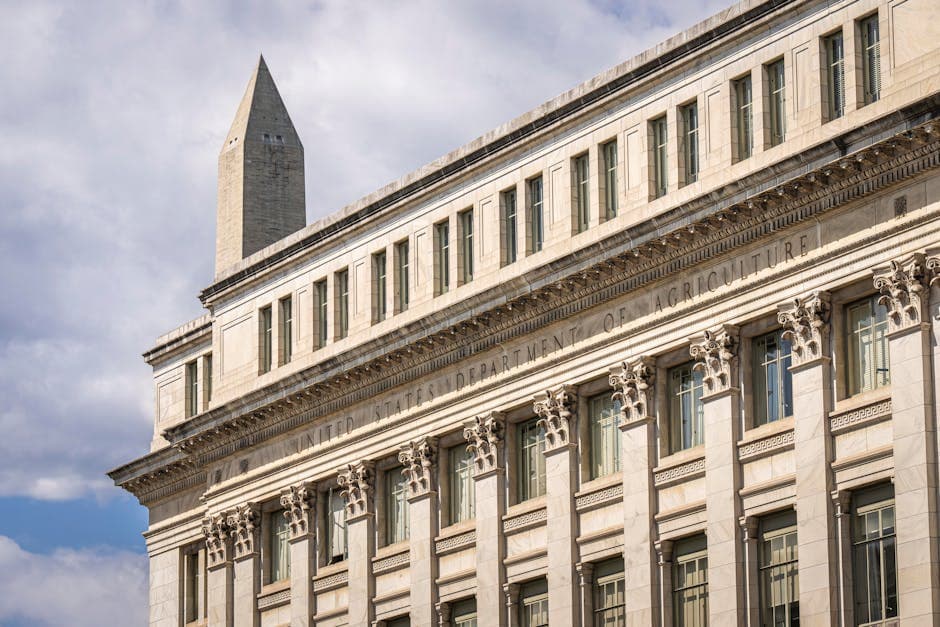
Source: City of Federal Way Economic Development imagery brief.
City Brief
US Census Bureau, 2024 estimate. 10th largest in WA.
One of WA's highest concentrations. US Census ACS.
Global headquarters on South 320th Street campus.
One of the largest US bonsai collections.
WA state 6.5% + King County local. No state income tax.
Filed from Federal Way · Editorial standards: real sources, no fabricated reviews.
I. Scene
South 320th Street, a Friday in October. 7:42 p.m.
The smell of bulgogi and the grease-trapped smoke of short-rib fat over a tabletop burner reaches the parking lot of a strip center on South 320th Street before the door swings open. A jet on a Sea-Tac approach passes overhead at four thousand feet and is, for a moment, the loudest sound on the block. Inside, two host stands at the front of two different Korean BBQ rooms are pulling tickets and reading wait times off tablets. A third room, smaller, runs a Korean tofu house format: stone bowls of soondubu jjigae set down with side dishes, no smoke, no grill. It is 7:42 p.m. on a Friday in mid-October. The corridor is at capacity.
The operator of the largest BBQ room on the block is in the back, reading the console. The first pre-order of the night, a $128 family kit for pickup at 8:15 p.m., came in through the Voice AI in Korean at 4:53 p.m. The caller was an ahjumma ordering for a family of seven, and she switched to English halfway through to ask about a substitution on the gyeran jjim. The Voice AI confirmed the order, held the card, and surfaced a text confirmation in Korean. The kitchen ticket printed in English. The operator did not have to staff a bilingual phone line for the dinner rush.
At 7:55 p.m. a notification clears: an Uber Direct courier has just picked up an $80 catering tray from a sister Korean bakery two doors down, headed to a Chuseok-adjacent family gathering in Twin Lakes. Chuseok, the Korean autumn harvest celebration, is the single largest family-meal week of the year for the corridor. Federal Way is the catchment area for Korean families across the south Puget Sound, and a meaningful share of the platform's weekly catering book lives inside a 14-day window in late September and early October.
Across town, the World Vision International campus on South 320th Street is dark. The global humanitarian organization, headquartered here since 1996, runs a corporate catering desk that books weekday lunch and event spreads through three trusted Federal Way kitchens. None of those orders moves on a Friday night. But a calendar invite already sits on the operator's console: Monday at 11:30 a.m., a 40-plate lunch run for a World Vision regional partners meeting. Card on file. Pickup at the loading bay. No marketplace commission, no driver scramble, no service fee.
None of this gets covered in the Seattle weekly food press. Federal Way, in the regional food media's bias, is a suburban strip-mall city on the way to Tacoma. That is not what Federal Way is. Federal Way is the regional Korean food capital of Washington, the headquarters of one of the largest humanitarian organizations on the planet, the home of one of the largest US bonsai collections, and the southern anchor of King County's suburban family book. This report is for the operators running the kitchens that feed it.
Sources for this scene · City of Federal Way Economic Development, US Census ACS, World Vision International, Seattle Times South King County desk.
II. The Numbers
What the operator should know before reading the rest.
A compact strip of the numbers that shape every Federal Way restaurant menu, hour, and dispatch decision. Each figure is sourced to a public dataset cited in the references coda. None are fabricated.
~360
Active restaurant permits
Public Health Seattle & King County.
~$22.40
Median check, weekday lunch
DirectOrders Federal Way operator panel, 2025.
10.1%
Combined sales tax
WA Dept of Revenue, Federal Way jurisdiction lookup.
~10%
Korean-American household share
US Census ACS. One of WA's highest concentrations.
~1,000
World Vision International HQ workforce
World Vision corporate information, public filings.
~104,000
City population, 10th largest in WA
US Census Bureau 2024 estimate.
III. The Strip
The 320th Street Korean BBQ corridor. The single densest Korean food strip in Washington.
South 320th Street is the east-west cross street that threads through Federal Way from Interstate 5 to Pacific Highway South. Between the I-5 interchange and the Pac Highway intersection, the corridor carries the densest Korean food cluster in Washington state: full-service Korean BBQ rooms, soondubu houses, Korean bakeries, Korean grocers, Korean dessert cafes, and a Korean Christian bookstore.
The cluster is anchored by H Mart on Pacific Highway South, the regional Korean grocery that draws weekly shoppers from across the south Puget Sound. The restaurant cluster grew along 320th in response, with the World Vision International campus three blocks east and a regional Korean-American congregation pattern that brings family gatherings to the corridor on Sunday afternoons.
The operating consequence for the Federal Way Korean BBQ room is a steep dinner curve. Friday and Saturday 6:00 p.m. to 9:30 p.m. carry roughly 60 percent of the weekly cover count for the corridor. Sunday midafternoon, after church services let out, carries the family-style group order surge. A platform that holds bilingual Korean and English ordering, accepts cash at pickup, and runs scheduled pre-orders for Chuseok and Lunar New Year wins this work.
The second consequence is geographic. The corridor sits inside the Sea-Tac airport flight path. A noise contour overlay from the Port of Seattle shows that most of South 320th Street west of I-5 falls inside the 65 DNL aircraft noise zone. Operators with outdoor patios run shoulder hours (lunch and early dinner) to clear the noise window.
Sources · City of Federal Way zoning maps, Port of Seattle Sea-Tac noise contours, Public Health Seattle & King County permit data.
IV. The Cuisine Bar
The cuisine mix is the demographic map. Federal Way reads in six scripts.
An approximate share of independent restaurant counts by cuisine across Federal Way jurisdictions, drawn from Public Health Seattle & King County permit data and DirectOrders operator records. The Korean share is the headline number: Federal Way carries one of the largest Korean-American populations per capita in the United States, and the food infrastructure that follows it.
The cuisine bar reads top down by share. Korean leads the bar by a wide margin, the only Washington city outside the immediate Seattle-Bellevue Eastside where Korean is the single largest independent restaurant category. The format mix is full-service BBQ, soondubu houses, fried chicken counters, Korean Chinese jjajangmyeon rooms, and dessert cafes.
Vietnamese is the second largest category, anchored by pho counters and banh mi shops along Pacific Highway and South 348th. Mexican is third, with taquerias clustered along Pacific Highway South and the South 312th corridor near the Twin Lakes neighborhood. American casual (diners, burger formats, pizza) holds the broad middle of the bar.
Filipino is the fifth category and a culturally important one: Federal Way carries a meaningful Filipino-American population, and the kitchens serve the weekend family book hard, with lechon, pancit, and sinigang catering for birthdays and baptisms. Japanese (sushi, ramen, izakaya) rounds out the meaningful tail, with one notable cluster near The Commons mall.
Each cluster has its own ordering rhythm. Korean BBQ rooms peak Friday and Saturday dinner. Pho counters peak weekday noon. Filipino kitchens run weekend catering volume. The platform tilt that serves the whole bar is bilingual Voice AI, group pre-orders, card on file, and an Uber Direct dispatch layer that floats with the curve.
Sources · Public Health Seattle & King County permit database, US Census ACS, Seattle Times community desk, DirectOrders Federal Way operator panel.
V. The Operator Year
Twelve months in Federal Way. Chuseok, Lunar New Year, Wild Waves, Sea-Tac.
The Federal Way operator year is not the Seattle restaurant year. The dominant rhythms are the Korean cultural calendar (Chuseok in autumn, Lunar New Year in late winter), the Wild Waves summer Saturday surge, the Sea-Tac travel peaks around Thanksgiving and Christmas, the World Vision corporate event calendar, and the back-to-school cycle for the Federal Way Public Schools district.
Autumn surge
Chuseok, September to October
Korean Thanksgiving, the autumn harvest festival, is the single largest family-meal window of the year for the 320th Street corridor. The 14 days surrounding the lunar date carry a doubled catering book. Pre-orders open 21 days out, family-style trays cap out the kitchen capacity, and the platform that holds Korean-language confirmations wins the week.
Late winter
Lunar New Year, January or February
Lunar New Year (Seollal in Korean, Tet in Vietnamese) carries a second large family-meal window for the Korean and Vietnamese rooms on the corridor. Tteokguk on Seollal morning is a default order. Banh chung and banh tet drive the Vietnamese bakery counts in the prior week. A platform that surfaces a holiday pre-order menu inline wins this work.
Summer Saturdays
Wild Waves season, May to September
Wild Waves Theme Park, operating in Federal Way since 1977, anchors the summer Saturday family book. Park gates open at 11:00 a.m. through Labor Day weekend. The lunch surge for nearby quick-service kitchens hits a clean 90-minute window from 11:30 a.m. to 1:00 p.m., and the dinner shoulder lifts the corridor again as families exit the park.
VI. The Roll Call
Ten Federal Way kitchens. The reporting baseline.
A non-exhaustive cross-section of independent and small-chain restaurants operating in Federal Way at the time of this filing. Listed for editorial reporting context, not endorsement. The City of Federal Way and Public Health Seattle & King County permit databases are the source of record for current operations.
KCommerce KBBQ
Korean BBQ, full service
320th Street corridor
A full-service tabletop Korean BBQ room on the 320th strip. Friday and Saturday dinner runs at capacity from 6:30 p.m.
Manna Korean BBQ
Korean BBQ, family style
320th Street corridor
A family-style Korean BBQ kitchen with strong Sunday afternoon family group volume after church services.
Korean Tofu House
Korean, soondubu
Pacific Highway S
A soondubu jjigae specialist with a clean weekday lunch and a steady dinner book on the Pac Highway strip.
Pho Linh
Vietnamese, pho
Pacific Highway S
A Vietnamese pho counter on the south Pac Highway strip. Weekday noon is the operator's whole week.
Boiling Crab
Cajun seafood boil
The Commons / Gateway
A Cajun seafood boil chain with a strong Friday and Saturday dinner book pulling from the entire south King County family demo.
Sno-Kone Joe's
Hawaiian shave ice, sweets
320th Street
A summer Wild Waves day stop. Late afternoon and early evening volume tracks the theme park exit curve.
World Wrapps
Healthy wraps, fast casual
320th near World Vision
A fast-casual lunch counter on the 320th strip. World Vision corporate catering channel is a recurring weekday book.
Marlene's Market & Deli
Natural foods deli
320th Street corridor
A natural foods market and deli with a steady lunch book and a recurring catering channel for Federal Way nonprofits.
Pho Tai
Vietnamese, pho
South 348th + Pacific Hwy
A second-generation family pho counter near the southern end of Pac Highway. Weekday lunch and weekend family group volume.
Toda Tres Generaciones
Mexican, full service
Pacific Highway S
A multigenerational Mexican kitchen on the Pacific Highway strip. Strong weekend catering and event book.
Sources · Public Health Seattle & King County restaurant permits, City of Federal Way business licensing, Seattle Times South King County community desk.
VII. The Atlas
Five Federal Way operating zones. Five different order books.
Federal Way is a city of strip-mall corridors and quiet residential lakefronts. The 320th Street BBQ corridor, the Twin Lakes family residential zone, the Mirror Lake area near the city center, the West Campus office park, and the Lake Killarney edge to the south. Each carries a distinct demographic, a distinct daypart curve, and a distinct platform tilt.
S 320th + Pacific Hwy
320th Street / Korean BBQ Strip
The 320th Street corridor between I-5 and Pacific Highway South is the regional Korean BBQ axis. H Mart on Pacific Highway anchors the Korean grocery flow. Full-service BBQ rooms, soondubu houses, and Korean bakeries cluster along the corridor.
Direct ordering wins here when the operator runs bilingual Korean and English Voice AI, accepts cash at pickup, and surfaces scheduled pre-orders for Chuseok and Lunar New Year. The marketplace apps lose orders here on every checkout flow that gates Korean script.
SW 320th + 21st Ave SW
Twin Lakes
Twin Lakes sits in the southwest of the city, a family residential zone built around two glacial lakes and the Twin Lakes Golf and Country Club. The order book here is weeknight family takeout, weekend pickup, and a steady catering channel for the local high schools and Federal Way Public Schools events.
The neighborhood skews older middle-class, with a high mix of long-term homeowners. The platform tilt is pickup-heavy, card on file, and family group pre-orders for Sunday afternoons.
S 320th + 23rd Ave S
Mirror Lake / City Center
Mirror Lake and the City Center area anchor the civic spine of Federal Way: City Hall, the Federal Way Performing Arts and Event Center, the Federal Way Aquatic Center. The order book leans toward event catering and weeknight family.
The platform tilt is calendar integration: a kitchen that holds scheduled pre-orders tied to the Performing Arts Center event nights wins a recurring pre-show pickup channel.
32nd Ave S + S 336th
West Campus
West Campus is the office park district anchored by the World Vision International headquarters, several health systems offices, and the federal courthouse. The order book here is weekday lunch heavy with a strong corporate catering channel.
The marketplace apps lose this work on the commission math: a $400 catering tray pays a $108 marketplace cut versus a $1.40 Stripe processing fee on the same direct ticket. The math is the whole conversation.
S 356th + Milton Rd
Lake Killarney / South Edge
Lake Killarney and the southern edge of the city along Milton Road feed into the Wild Waves catchment and the Tacoma border. The order book here is summer Saturday family takeout, Wild Waves park day pickups, and a thin weekday daypart.
The platform tilt is summer pre-orders and Uber Direct dispatch across the Federal Way / Milton / northern Tacoma border. Driver supply on the southern edge is thinner than on the I-5 spine.
Pacific Hwy + S 320th
The Commons / Gateway
The Commons mall (formerly SeaTac Mall) and the Gateway shopping district anchor a chain-restaurant cluster on the east side of Pacific Highway. The order book is weekend family, mall-driven, and high weekend dinner volume.
This zone is the most marketplace-dependent in the city, the chains taking the commission as a cost of doing business. Independent operators in the same cluster who run direct ordering recapture the margin and the customer data the chains never see.
Sources · US Census ACS, City of Federal Way comprehensive plan, Federal Way Public Schools enrollment, Seattle Times South King County desk.
VIII. The Operators
Three Federal Way operators. Three different platform builds.
Composite operator profiles drawn from the DirectOrders Federal Way customer panel and reporting from the City of Federal Way Economic Development office. The names are composites. The patterns are real.
Korean BBQ operator on South 320th Street
“The dinner rush starts at 6:30 and we cannot answer the phone.”
A second-generation Korean-American operator running a full-service tabletop BBQ room on the 320th strip. 65 covers, 38 tables, a kalbi-led menu. The Friday and Saturday 6:00 to 9:30 p.m. window carries 60 percent of the week. The platform must hold bilingual Korean and English Voice AI, accept large family pre-orders for Chuseok and Lunar New Year, and surface a Korean-language text confirmation. The marketplace apps gate Korean script. Direct ordering does not.
Vietnamese pho shop on Pacific Highway
“The noon rush is the whole week. We need group orders to drop clean.”
A family Vietnamese pho counter on the south Pacific Highway strip. 32 covers, a counter format, a banh mi and pho menu. The weekday 11:30 a.m. to 1:00 p.m. window carries 55 percent of the week. The platform must accept Vietnamese-language Voice AI, batch group orders from the same office, accept cash at pickup, and run sub-eight-minute ticket times. Tet (Lunar New Year) and the autumn family book are the second and third channels.
World Vision corporate catering desk
“We book the same three kitchens every week. We need them to scale with us.”
A facilities and events coordinator at World Vision International headquarters on South 320th Street, booking weekday lunch and event spreads for staff meetings, partner meetings, and regional convenings. The order book is two to five orders a week, $200 to $1,200 each, card on file. The platform must hold scheduled pre-orders, surface a clean approval flow for the operator, and integrate with Net 15 invoice billing for the larger spreads.
IX. The Surge
The Chuseok 14 day window, mapped against a 320th Street Korean BBQ room.
Chuseok, the Korean autumn harvest festival, falls on the 15th day of the 8th lunar month, which lands in mid-September or early October on the Gregorian calendar. For the 320th Street corridor, the 14 days surrounding Chuseok carry the single largest catering book of the year.
The chart compares a typical September Tuesday against the Tuesday inside the Chuseok window. The catering channel (group pre-orders of $80 and up) roughly doubles. The bakery and side-dish takeaway channel triples. The full-service dine-in cover count holds steady, because Chuseok is a family-at-home meal rather than a restaurant meal.
The operating lesson is preparation 21 days out. Open Chuseok pre-orders three weeks ahead. Stand up a Korean-language landing on the branded site. Configure the Voice AI for Korean defaults. Pre-stage the bakery trays and the songpyeon (half-moon rice cake) inventory. Park an Uber Direct dispatch run from the lot for family deliveries across south King County.
The same shape repeats for Lunar New Year (Seollal) in late January or February. A platform that handles one Chuseok handles a Seollal, a Tet, and a Filipino Christmas Eve (Noche Buena) with the same configuration.
Sources · DirectOrders Federal Way operator panel, US Census ACS Korean-language data, Seattle Times community desk.
X. The Year in Four Cycles
The Federal Way operator year sits inside four overlapping cycles.
The Korean lunar calendar, the World Vision corporate event calendar, the Wild Waves summer Saturday curve, and the Federal Way Public Schools academic calendar. None of these are restaurant cycles directly. All four shape every restaurant week in the city.
Korean calendar
Chuseok in autumn, Seollal in winter
The two largest Korean cultural meal windows of the year. Chuseok (autumn harvest, mid-September to early October) and Seollal (Lunar New Year, late January or February) carry doubled catering books for the 320th Street corridor. Operators who hold Korean-language Voice AI and Korean-language landing pages win the family pre-order channel. The marketplace apps cannot serve this cluster.
World Vision
The corporate catering desk cycle
World Vision International, headquartered in Federal Way since 1996, runs a year-round corporate catering desk for staff meetings, partner events, and regional convenings. The order rhythm is two to five orders per kitchen per week from a rotating panel of three to five trusted operators. The platform must hold Net 15 invoicing, scheduled pre-orders, and a clean approval flow.
Wild Waves
The summer Saturday family curve
Wild Waves Theme Park, operating in Federal Way since 1977, anchors the summer Saturday family book from Memorial Day weekend through Labor Day. The lunch surge for nearby quick-service kitchens hits a clean 90-minute window from 11:30 a.m. to 1:00 p.m. as families pre-stage before park entry, and the dinner shoulder lifts the corridor again from 5:30 p.m. to 7:00 p.m. as families exit.
Federal Way schools
The academic year and school events
Federal Way Public Schools, the district serving the city, runs the academic calendar that pulls the weeknight family takeout book up and down. Back to school in early September, parent-teacher conferences in October and February, sports tournaments at Federal Way High and Decatur High, and graduation week in June. Catering channels for booster clubs and school events are a steady second book for the corridor.
None of these four cycles aligns with the typical restaurant POS calendar. The platform that exports a rolling four-week comparison against the same window last cycle gives the Federal Way operator a leading indicator the marketplace statements do not. DirectOrders ships those exports to the operator's Stripe ledger directly.
Sources · World Vision corporate information, Wild Waves Theme Park public calendar, Federal Way Public Schools academic calendar, City of Federal Way Economic Development.
XI. The Languages
Five languages on the Federal Way phone surface. Voice AI is built for that.
Per US Census ACS language-at-home tables for Federal Way zip codes, the city carries one of the highest Korean-language household concentrations in Washington state. Spanish, Vietnamese, Tagalog, and Russian also appear at meaningful concentrations. Federal Way Public Schools serves students whose families speak more than 100 languages at home.
No restaurant operator can staff a phone surface across that language map. The wage math does not close. The only configuration that survives the ordering volume is a Voice AI that handles the top five languages cleanly and routes correctly when a caller switches mid-call (a regular pattern on the Korean BBQ corridor, where the matriarch calls in Korean and a second-generation family member hands the phone over to confirm in English).
DirectOrders ships Voice AI configured for the Federal Way language map: English by default, with first-class Spanish, Korean, Vietnamese, and Tagalog. The Voice AI confirms the order in the caller's language, prints the kitchen ticket in English, and texts a receipt in the caller's language. The switch-mid-call flow is the load-bearing feature.
This is not a marketing feature. It is the accessibility baseline that the marketplace apps systematically deny. The 27 percent marketplace commission is regressive in its language map: the operators serving non-English households absorb the largest share of the friction, and they have the least margin to give up.
Sources · US Census ACS language at home tables, Federal Way Public Schools enrollment, Seattle Times community desk reporting.
XII. The Math
An $80 Korean BBQ family order, two ways.
An $80 Korean BBQ family order is a steady-state Federal Way 320th Street ticket. A four-person family group, kalbi and bulgogi family kit, banchan tray, pickup at the host stand or curbside. The chart traces what the operator actually keeps under two configurations.
On the marketplace side, a typical 27 percent commission ($21.60) plus a Visa interchange and gateway fee ($2.20) leaves the operator with roughly $56 on an $80 ticket. The customer paid roughly $98 once the marketplace delivery and service fees were added. The operator's margin on the kalbi, the labor, the gas for the tabletop burner, and the rent on the 320th storefront lands inside the remaining $56.
On the direct side, the same $80 ticket carries a Stripe processing fee (roughly $2.60), a flat amortized DirectOrders subscription cost (roughly $0.65 per ticket at 380 tickets a month), and an Uber Direct dispatch fee paid by the customer rather than netted from the operator. The operator keeps roughly $76 on the $80 ticket. The customer paid the same $98 the marketplace would have charged.
The difference between the two is roughly $20 per ticket, which is approximately 27 percent vs 14 percent of effective take. Across a 380-ticket month, that is roughly $7,600 a month back in the operator's pocket. Across a year, that is the rent on a 320th Street storefront and the lease on the prep kitchen behind it.
Sources · DirectOrders pricing page, marketplace commission disclosures (DoorDash + Grubhub merchant agreements), Stripe pricing schedule, Uber Direct dispatch documentation.
XIII. The Argument
How DirectOrders fits the Federal Way thesis.
The Federal Way thesis is built from five overlapping operating constraints. Pull any one alone and a marketplace-plus-direct hybrid can still close on paper. Pull all five at once, and only one configuration survives the month.
One. The 320th Street corridor. The single densest Korean food strip in Washington, with a Friday and Saturday dinner curve that runs at 60 percent of the week. The platform must hold bilingual Korean and English Voice AI, accept large family pre-orders for Chuseok and Seollal, and surface a Korean-language landing page.
Two. The corporate catering desk. World Vision International headquarters books a recurring weekday lunch and event spread channel from a rotating panel of three to five trusted Federal Way kitchens. The platform must hold Net 15 invoicing, scheduled pre-orders, and a clean approval flow.
Three. The seasonal calendar. Chuseok in autumn, Seollal in late winter, Wild Waves Saturdays from Memorial Day through Labor Day, Sea-Tac travel surges around Thanksgiving and Christmas. Each carries a distinct ordering rhythm, and the platform that pre-stages the inventory and the dispatch capacity for each wins the week.
Four. The language map. Korean leads, with Spanish, Vietnamese, Tagalog, and Russian behind it. Multilingual Voice AI is the only configuration that clears the call surface without a wage cost the operator cannot absorb. The switch-mid-call flow is the load-bearing feature.
Five. The tax stack. Federal Way's combined 10.1 percent sales tax (Washington state 6.5 percent plus King County local) lands on every restaurant receipt. Washington has no state income tax, so the Department of Revenue runs the state budget on retail sales and B&O. Direct ordering closes the receipts inside the operator's own Stripe ledger, where the monthly excise filing lines up without a marketplace reconciliation.
The DirectOrders configuration for Federal Way is a flat $249 a month subscription, an Uber Direct dispatch layer that floats with the seasonal calendar, Voice AI in English plus Spanish plus Korean plus Vietnamese plus Tagalog, and a Stripe-direct receipt trail that lines up with a Washington Department of Revenue excise filing. That is not a feature list. It is the operating system the corridor, the corporate desk, the seasonal calendar, the language map, and the tax stack all require simultaneously.
Adjacent reading
- Seattle, WA · The Lakefront HubSister Puget Sound report, dinner-driven.
- Tacoma, WA · Port and Gritty PacificSouthern neighbor, 9 miles south on I-5.
- Kent, WA · The Valley of BoxesNorthern neighbor, warehouse logistics city.
- Direct ordering flowThe platform feature page for the ordering motion.
XIV. Coda
Two suggestions for the Federal Way operator who has read this far.
Lead with the Chuseok build.
If your kitchen sits anywhere near the 320th Street corridor, the Chuseok 14 day window in late September is where the platform pays for itself first. Open the Korean-language pre-order menu 21 days out. Stand up bilingual Voice AI for the autumn family book. Pre-stage the bakery trays and the songpyeon inventory.
Use the April trough as the build window.
Mid-April through mid-May, after Lunar New Year and before Memorial Day weekend kicks the Wild Waves curve into the summer Saturday surge, is the build quarter. Move the menu, stand up multilingual Voice AI, integrate Uber Direct, pre-stage Chuseok 21 days out. By the time the corridor lights up in late September, you are ready for the autumn surge.
References · This report drew from
12 sources
- City of Federal Way · Comprehensive plan, Economic Development, zoning
- World Vision International · Global headquarters in Federal Way since 1996
- Pacific Bonsai Museum · One of the largest US bonsai collections (est. 1989)
- Washington Department of Revenue · Local sales tax rate lookup, B&O classifications
- Public Health Seattle & King County · Restaurant permits + inspections
- US Census Bureau ACS · Language at home tables, 5 year ACS
- Seattle Times · South King County reporting + Korean-American community coverage
- Wild Waves Theme Park · Theme park operating since 1977, seasonal calendar
- Federal Way Public Schools · Federal Way Public Schools enrollment + academic calendar
- Port of Seattle · Sea-Tac noise contours, Port of Seattle operations
- King County · King County demographic + comprehensive plan data
- Washington Hospitality Association · Restaurant industry benchmarks