South Sound · Restaurant Operations · Long Read
Port and Gritty Pacific.
Tacoma is not a smaller Seattle. It is a working port city of roughly 220,000 people running on container freight, military payroll, and an old smelter town's stubborn refusal to be gentrified out of itself. This is a field report for operators from Stadium District to Hilltop on running a restaurant in the South Sound.
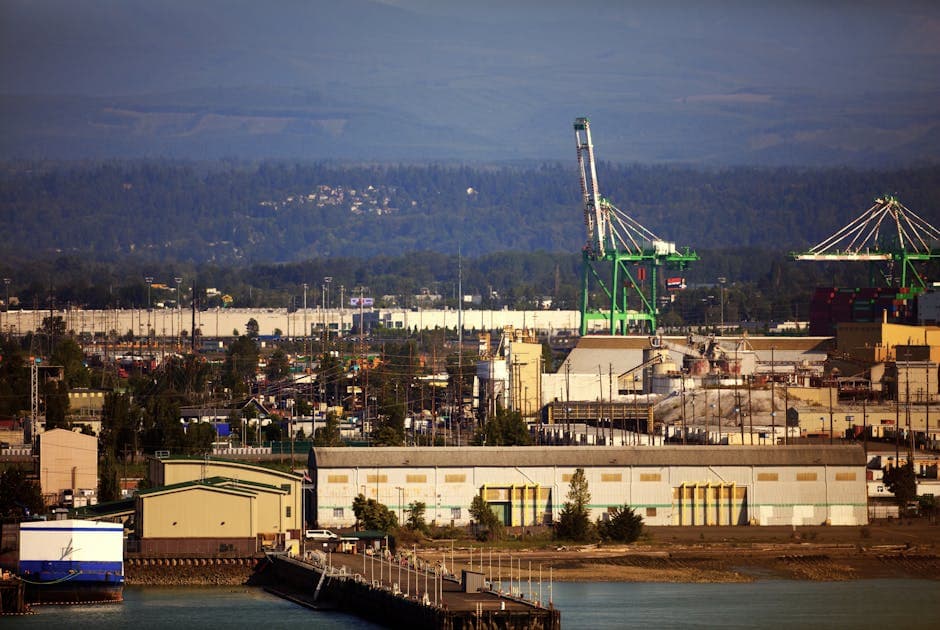
Source: Port of Tacoma + Travel Tacoma + Pierce County imagery brief.
City Brief
US Census Bureau, 2024 estimate.
Active duty + DOD civilian, US Army Garrison JBLM.
Container moves, Northwest Seaport Alliance.
Largest car museum in North America.
WA state 6.5% + local, Department of Revenue.
Filed from Tacoma · Editorial standards: real sources, no fabricated reviews.
I. Scene
Stadium District, a Tuesday in November. 5:42 p.m.
The light on North 1st has already gone. The neon sign over the wine bar two doors down hums on at 4:58 p.m. and stays on until close. Stadium High School sits at the end of the block, a Gothic brick castle that doubled as the high school in Heath Ledger's Ten Things I Hate About You, and the afternoon dismissal has long ago washed out of the neighborhood. What is left is the dinner crowd, which in Stadium District has been a chef-driven crowd since the neighborhood's restaurant renaissance broadly dated by the Seattle Times South Sound desk to the years just after 2010.
The operator unlocks her back office and pulls up the console. The first ticket of the dinner service is a phone order: a four-top reservation cancellation that became a pickup for two, plus a side. The order came in on the Voice AI in Korean because the caller's last two orders had been in Korean and the system remembered. Tacoma's Korean community is older than its current visibility suggests; the South Sound has hosted a Korean military spouse population since the Korean War, and the second-generation operators running BBQ houses and tofu rooms in Lakewood and Federal Way still field a meaningful share of their orders by phone.
At 6:04 p.m. a JBLM mess hall coordinator calls in a catering pre-order for the next morning's officer breakfast, forty plates, gate pickup at 0630. The Voice AI confirms the order, holds the card, and pings the kitchen at 5:30 a.m. to start. This is not a feature the operator paid for. It is the operating motion the operator depends on, because forty plates of breakfast at 6:30 a.m. cannot be staffed with phone hold music and a paper ticket.
At 6:31 p.m. a notification comes through that an Uber Direct delivery has cleared Tacoma Dome traffic and dropped a $112 pre-show order at a hotel on Pacific Avenue. The Dome holds an event tonight. The operator did not need to schedule extra delivery capacity; the dispatch fee floats on demand, and the order rode on the platform's infrastructure rather than the operator's own driver pool.
None of this is glamorous. None of this gets covered in the Seattle weekly food press, because Tacoma is, in the regional food media's bias, the place people think they already know. They do not. Tacoma is the city in Washington that runs on container freight, on uniforms, on a restored downtown core anchored by a glass museum and a AAA baseball stadium, and on chef-driven blocks tucked inside Stadium, Proctor, and Hilltop. This report is for the operators running those blocks.
Sources for this scene · The News Tribune, Seattle Times South Sound desk, Travel Tacoma + Pierce County.
II. The Base
Joint Base Lewis-McChord is a city of forty thousand on Tacoma's south flank.
Joint Base Lewis-McChord, the merged footprint of the former Fort Lewis and McChord Air Force Base, is the largest military installation on the West Coast and one of the largest in the country. Per US Army Garrison JBLM public affairs, the installation supports a population often cited above 40,000 between active duty service members, Department of Defense civilians, and on-base contractor staff. Add the families resident in the surrounding South Sound and the figure climbs further.
This is the single largest concentrated employer in Pierce County. Its effect on the Tacoma restaurant economy is not abstract. It is catering volume. It is a Wednesday officer breakfast, a Friday afternoon retirement luncheon, a Monday morning new-arrivals brief, and a 0530 mess hall supplement when the contract caterer is short. The orders are large, the lead times are short, and the pickup windows are gate-controlled. A platform that cannot model a forty-plate pre-order with a 0630 gate-pickup time stamp does not win this business.
The base also generates a steady consumer dining flow off-base. Lakewood, DuPont, Steilacoom, and the south Tacoma corridor along South Tacoma Way carry restaurants that have built their dinner book around military spouse ordering patterns: family-sized portions, Filipino, Korean, Vietnamese, and Tex-Mex menus, weekend pickup rather than delivery, and a meaningful share of orders still placed by phone. The marketplace apps do poorly here because the household checkout flow is not their format.
For the Tacoma operator with a catering capacity, the JBLM channel is not a side project. It is the steadiest recurring weekday business in the South Sound, and it rewards platforms that handle scheduled pre-orders, card-on-file for unit fund accounts, and dispatch windows tied to gate-side pickup. DirectOrders is built for that workflow because the workflow is the only one that closes the contract.
One more note. Spouse turnover in the JBLM population is roughly every three years on a typical orders cycle. That is why phone orders matter. The order pattern is rebuilt with new arrivals every PCS season, and the operator that picks up on the first ring (or whose Voice AI does) wins the next three years of household dinner.
Sources · US Army Garrison JBLM public affairs, Pierce County Economic Development, The News Tribune base reporting.
III. The Port
Commencement Bay moves two million containers a year. Most of them feed the city.
The Port of Tacoma, operated jointly with the Port of Seattle under the Northwest Seaport Alliance, moves a container volume above two million TEUs in a typical year. The orange cranes on Commencement Bay are the visual shorthand for the city, the way the Space Needle is for Seattle, but the cranes do the actual work. The port supports tens of thousands of jobs in Pierce County alone, per Port of Tacoma economic impact reporting.
The effect on restaurant operations runs in two directions. First, the port and its rail head bring a weekday workforce into the tideflats and the South Tacoma industrial belt: longshore labor on the ILWU contract, truckers staging at Frederickson and Fife, rail crews working the BNSF spurs, customs brokers along Pacific Highway East. That workforce eats early, eats fast, and eats in volume. A lunch counter on East 11th or near the Lincoln Avenue overpass with a clean pickup menu and a sub-eight-minute ticket time has a weekday base that downtown chef-driven restaurants cannot touch.
Second, the freight economy is cyclical. Container volumes track the trans-Pacific trade cycle, the Hapag-Lloyd and ONE alliance reroutes, and the West Coast labor calendar. A port slowdown shows up in Tacoma lunch counts within two weeks. Operators who watch the NWSA monthly TEU release as a leading indicator can pre-emptively shift their staffing and menu to the lower base before the receipts soften. A platform that exports weekday lunch volume to a comparable rolling window helps the operator see the shift before the bank does.
Finally, the port carries a more sober legacy. The Asarco smelter on the east bay shoreline, which closed in 1985 and was demolished in 1993, left a Superfund legacy of arsenic and lead in Tacoma soil that the EPA and Washington Department of Ecology have spent decades remediating. The city carries that history, and the operators who know their neighborhood carry it too. It informs the gritty self-image Tacoma has earned and does not apologize for.
Sources · Port of Tacoma annual report, Northwest Seaport Alliance, EPA Region 10 Asarco remedial action records.
IV. The Car Museum
165,000 square feet of cars, and the largest car museum in North America.
LeMay America's Car Museum, on a rise overlooking Tacoma Dome and the I-5 corridor, opened in 2012 with what the museum and Travel Tacoma describe as 165,000 square feet of exhibit space and a permanent collection drawn from Harold LeMay's three-thousand-plus vehicle hoard. By the museum's own description and broad coverage in The News Tribune and the national automotive press, it is the largest car museum in North America.
The museum draws a Saturday and Sunday family visitor economy that the rest of Tacoma's downtown tourism trail feeds off. The walking corridor from the museum down Pacific Avenue to the Glass Museum, Union Station, and Tacoma Art Museum is a half-mile civic spine. Visitor density on this spine peaks between 11 a.m. and 4 p.m. on weekends in the dry season (May through September). Pacific Avenue restaurants and Dome District quick-service operators can build a Saturday lunch book entirely off this foot traffic if their ordering flow is guest-checkout fast.
The other side of the museum's effect is event volume. LeMay hosts member nights, car club gatherings, vendor shows, and corporate venue rentals on a steady weeknight cadence. Catering and food truck slots tied to those events are part of the operating book for downtown operators who pay attention. The platform that supports event-tied pre-order codes (named after the event, valid only during the event window) wins this work.
The pattern repeats across Tacoma's small but real cultural anchor set: LeMay, the Museum of Glass with the Chihuly Bridge of Glass over I-705, the Washington State History Museum, Tacoma Art Museum, the Pantages and Rialto theaters in the theatre district, the Tacoma Dome, and Cheney Stadium for Rainiers home games. Each anchor generates a predictable foot pulse on a predictable calendar, and each pulse rewards the operator who can pre-stage product without buying a marketplace ad to announce it.
Sources · LeMay America's Car Museum, Travel Tacoma + Pierce County, Tacoma Art Museum, Museum of Glass, Broadway Center for the Performing Arts.
V. The Atlas
Stadium, Proctor, Hilltop. Three chef-driven blocks, three different operating motions.
The Tacoma restaurant story since roughly 2010 is the story of three districts that turned over to chef-driven operations while the rest of the city kept doing what it had always done. Same platform, three different configurations of it, with different language maps, different price points, and different night-time densities.
North 1st + Tacoma Ave N
Stadium District
Stadium runs on a dense evening crowd: wine bars, an Italian room or two, a long-running French bistro, and a chef-driven new-American block that the News Tribune food coverage has been tracking since the early 2010s. The dinner book carries the operator. Lunch is real but smaller, and brunch on weekends is the secondary peak.
Direct ordering succeeds here when the operator runs a branded reservations-plus-pickup flow tied to a steady regular base. Voice AI handles the after-9 p.m. call pressure. Same-day Stripe payouts keep cash flow matched to a daily wage cycle.
North 26th + Proctor
Proctor District
Proctor runs on a daytime neighborhood economy. A Saturday farmers market in season, a coffee culture that reads more North Tacoma than working waterfront, bakeries, lunch counters, ice cream, and a tight cluster of family-owned dinner rooms. The order book is daytime-heavy with a steady early-evening tail.
Direct ordering wins in Proctor when the channel supports a regular's loyalty rhythm: saved cards, recurring orders, a clean pickup choreography on a busy Saturday. The Voice AI matters less here than in Stadium or Hilltop. The mobile UX and pickup workflow matter more.
MLK Jr Way + 11th
Hilltop
Hilltop is Tacoma's historic African American neighborhood and the site of the most rapid chef-driven turn of the last decade. Soul food legacy operators on Martin Luther King Jr Way share blocks with new BBQ, West African, Ethiopian, and Caribbean kitchens. Hilltop coverage in The News Tribune has framed this turn as both opportunity and contested ground.
Direct ordering in Hilltop requires Voice AI that handles the order languages the neighborhood actually speaks at the kitchen counter, and a fee structure that does not extract margin from operators already navigating displacement pressure. The flat-fee configuration is not a marketing line. It is the baseline that lets the operator stay open.
A practical note for the operator stretching across two of these districts (Stadium plus Hilltop is a common pairing for chef-driven second locations): the ordering platform has to handle two distinct ordering rhythms on one back office. That means location-aware menu trees, a single Stripe account with split reporting per location, and a single Voice AI that knows which location the caller is dialing. The marketplace apps solve this by treating the second location as a separate business, with all the duplicated work that implies. A platform built around the operator, not the app store listing, solves it differently.
Sources · The News Tribune, Seattle Times South Sound, US Census ACS 5-Year Estimates, Travel Tacoma + Pierce County.
VI. The Universities
Puget Sound and UW Tacoma. Two student economies, two ordering rhythms.
The University of Puget Sound, on the north end of the city near the Proctor and Stadium districts, is a small private liberal arts campus of roughly 2,200 students by the institution's own published enrollment summary. Its effect on Tacoma restaurant operations is local and concentrated: a tight ring of dinner traffic on weekday evenings, a parent weekend bump in October, a graduation weekend lift in May, and a summer trough when residential students leave.
UW Tacoma, the University of Washington's downtown Tacoma campus on Pacific Avenue, runs differently. With enrollment in the high single-digit thousands by UW's published headcount, UW Tacoma is built around a commuter and working-adult student body, with classes clustered into evening blocks for working students. The effect on the downtown restaurant economy is a Tuesday through Thursday 5 p.m. to 8 p.m. surge of working adults eating dinner near campus before night class.
A direct-ordering operator on Pacific Avenue, Broadway, or in the Dome District can build a recurring book off this weekday-evening commuter-student wave by tagging menu items as quick-service eligible (under twelve minutes from order to bag), accepting pre-orders with fifteen-minute pickup windows tied to class start times, and accepting employer or VA education benefits cards on the same checkout flow.
The summer drop is real. Roughly half the student ordering volume disappears between mid-June and mid-September. Operators who treat this as a planning window rather than a survival window come out of summer with the menu refreshed, the platform upgraded, and the staff training cycled. The dry quarter is the build quarter.
Sources · University of Puget Sound institutional research, UW Tacoma enrollment summary, UW Office of the Registrar.
VII. The Cone
The Museum of Glass and the bridge that turned Tacoma's downtown back on.
The Museum of Glass opened in 2002 on Dock Street along Thea Foss Waterway. Its 90-foot stainless steel hot shop cone has been the city's most recognizable single piece of architecture for two decades, and per the museum's published programming summary, the hot shop runs live glass-blowing demonstrations on a daily public schedule. The Chihuly Bridge of Glass, a 500-foot pedestrian span that crosses I-705 to connect the Museum of Glass with Union Station and the Washington State History Museum, opened the same year.
The bridge is more than a piece of public art. It is the infrastructure that re-stitched downtown Tacoma to its waterfront after the freeway split them in the 1960s. Walk it at 4 p.m. on a Saturday in June and you see the downtown that Tacoma's civic class has been working on for two decades: visitors moving between the museum cluster, the courthouse blocks, the theater district, and the restaurants along Pacific Avenue. The food and beverage economy that fills the ring around the bridge is the most concentrated tourist-adjacent restaurant spend in the city.
For an operator on Pacific Avenue between South 17th and South 25th, the Bridge of Glass corridor is the highest foot count window of the week, peaking Saturdays and Sundays between 11 a.m. and 4 p.m. The visitor is not a repeat customer. The visitor is a single-ticket conversion that the operator either captures on first paint or does not capture at all. Guest checkout matters. Account creation as a checkout tax does not survive here.
The Glass Museum, Dale Chihuly's connection to the city (he was born in Tacoma in 1941), and the bridge are also a piece of the city's identity in a way that matters for marketing copy. A restaurant in Tacoma can lean on the glass legacy in a way that a restaurant in Seattle cannot. The city is small enough that the cultural anchors are a few blocks away from every chef- driven kitchen downtown. A platform that lets the operator photograph well and ship a clean visual identity is part of the operating motion, not the marketing budget.
Sources · Museum of Glass, Chihuly Studio, City of Tacoma Office of Arts and Cultural Vitality, The News Tribune.
VIII. The Event Calendar
Rainiers home games and Tacoma Dome concert nights. Two predictable surges.
Cheney Stadium, on the west side of the city, hosts the Tacoma Rainiers, the AAA affiliate of the Seattle Mariners in the Pacific Coast League. The Rainiers play a 70-plus home game regular season schedule from April through September. Per the franchise's public attendance reporting, weeknight games regularly draw in the low five-figure range and weekend games scale higher. The ring around the stadium, Sixth Avenue, the Stadium District, and the Highway 16 corridor, absorbs pre-game dinner from roughly 4:30 p.m. and post-game pickup until 11 p.m.
The Tacoma Dome, a 23,000-seat venue downtown near I-5, hosts the city's largest concert and event schedule. The Dome's published 2024 and 2025 calendars carry national touring acts, the Tacoma Sea Dragons arena soccer, and major regional graduations and rodeos. A Dome event night collapses the surrounding restaurant window into a one-hour pre-show surge from 5:30 to 6:30 p.m. and a forty-minute post-show dispersion starting at 10:30 p.m.
The marketplace apps fail in a specific way during Dome event nights. Driver supply collapses around the arena because every available driver is parked waiting for surge from inside the venue. Posted ETAs balloon. Customers cancel. The operator loses revenue on completed tickets that go unfulfilled.
The direct ordering playbook for Dome and Rainiers nights is different. Pre-orders open seven days out, with event-tagged pickup windows. The branded site promotes pickup as the default during the pre-show hour, with Uber Direct dispatch as the backup for orders outside the venue ring. Voice AI absorbs the dinner-hour call surge that no reservations host can staff. Same-day Stripe payouts settle the night before the next morning open.
Sources · Tacoma Rainiers (Pacific Coast League), Tacoma Dome operator filings with the City of Tacoma, Tacoma Venues & Events, The News Tribune sports desk.
IX. The Tax Stack
Tacoma's combined sales tax is 10.3 percent. Every receipt is a Department of Revenue audit trail.
Per the Washington Department of Revenue local sales tax rate lookup, Tacoma's combined retail sales tax rate stands at 10.3 percent, made up of the Washington state portion (6.5 percent) and the local Tacoma and regional transit additions. That makes Tacoma's rate among the highest combined retail sales rates in the state, and at every restaurant receipt is where the rate lands.
Washington does not have a state income tax. The state budget runs on retail sales, business and occupation (B&O), and excise revenue. For an independent restaurant operator, this means the point-of-sale system, the online ordering system, and the catering invoicing flow all have to produce a clean monthly excise tax filing trail. Marketplace platforms historically obscure this trail because they are billed as a single line item and the per-ticket breakdown lives in their ledger, not the operator's.
DirectOrders ships receipts and per-ticket tax breakdowns directly to the operator's Stripe account, with an exportable monthly summary that lines up against the Washington Department of Revenue excise return. The operator is not paying an accountant to reconcile a marketplace statement against the actual taxable activity. That is hours per month back on the operator's ledger.
Source · Washington Department of Revenue local sales tax rate lookup, B&O tax classifications for restaurants.
Washington state portion
Statewide retail sales tax base.
Tacoma local portion
City of Tacoma + Pierce County add-ons.
Regional transit (Sound Transit RTA)
Sound Transit district.
Tacoma combined rate
Lands on every restaurant receipt.
What this means on the receipt
A $50 ticket in Tacoma carries roughly $5.15 in combined sales tax. The marketplace platforms typically obscure that line in the operator's monthly statement. DirectOrders posts it to the operator's Stripe ledger, where it lines up with a Department of Revenue excise return without manual reconciliation.
X. The Languages
Filipino, Korean, Vietnamese. The three South Sound communities the marketplace apps serve worst.
The South Sound carries one of the largest concentrations of Filipino Americans in the Pacific Northwest, anchored in part by the long-running US Navy and US Army recruitment history, the military spouse population at JBLM, and a multi-generational settlement that the Filipino American National Historical Society has documented since the Society's founding in Seattle in 1982. Pierce County's Filipino population shows up in the order book through family-sized portions, weekend lechon and pancit catering, turon and bibingka pickups, and a steady weekday lunch rhythm around the Lakewood and South Tacoma corridor.
The Korean community in the South Sound carries a similar military spouse heritage going back to the post-Korean War immigration wave, and the food infrastructure that followed: Korean BBQ houses, tofu restaurants, and grocery-attached kitchens concentrated in Lakewood, Federal Way, and the South Tacoma Way corridor. The Vietnamese community, more recent in arrival, runs the same map differently with pho specialists, banh mi counters, and family-run rice plate restaurants on Sprague Avenue and along the Pacific Highway. Together these three communities form a meaningful share of the Tacoma restaurant operator base, and they are the share most damaged by the marketplace commission structure.
The operating consequence is multilingual Voice AI. Tagalog. Korean. Vietnamese. Spanish for the working Spanish-speaking household in South Tacoma, Lincoln District, and along Pacific Avenue. A platform that handles those four languages on the phone surface is not offering a premium feature. It is offering the baseline accessibility the marketplace apps systematically deny. The wage math from the Seattle field report applies here too: an independent operator cannot afford to staff a multilingual phone surface during dinner. The Voice AI is what the operator runs instead.
The other consequence is receipt format. Many households in these communities pay in cash, on pre-loaded debit, or on family-shared cards. The platform that assumes a Visa-signed checkout flow is the default loses orders the operator never sees. A guest checkout that accepts saved cards, Apple Pay, Google Pay, and treats cash at pickup as a clean first-class path captures orders the marketplace apps bounce.
Sources · US Census ACS 5-Year Estimates (Pierce County language at home), Filipino American National Historical Society, The News Tribune South Sound community coverage.
XI. The Argument
How DirectOrders fits the Tacoma thesis.
The Tacoma thesis is built from five overlapping operating constraints. Pull any one alone and a marketplace-plus-direct hybrid can still close on paper. Pull all five at once, and only one configuration survives the month.
One. The JBLM payroll. Forty thousand active duty and Department of Defense civilian staff, with families, generate the steadiest weekday catering and household pickup base in Pierce County. A platform that handles gate-pickup scheduled pre-orders and unit-fund cards wins this book.
Two. The port. Container freight cycles drive a working lunch counter economy that closes the weekday at sub-eight-minute ticket times, and a rolling NWSA TEU release that lets operators see the next two weeks before the bank does.
Three. The chef-driven block. Stadium, Proctor, and Hilltop each carry a dinner book that depends on a branded site, reservations integration, voice back-up, and same-day Stripe payouts. The 10.3 percent sales tax stack closes inside the operator's own Stripe ledger, not a marketplace statement.
Four. The cultural anchors. LeMay, the Museum of Glass, the Bridge of Glass, the Pantages and Rialto theaters, Cheney Stadium, the Tacoma Dome. Each anchor generates a predictable event pulse that rewards pre-order codes and pickup choreography. Marketplace apps fail inside the event ring because driver supply collapses there.
Five. The language map. Tagalog, Korean, Vietnamese, and Spanish are the four South Sound order languages that the marketplace apps serve worst. Multilingual Voice AI is not a premium add. It is the baseline that closes orders the marketplace English default drops every night.
The DirectOrders configuration for Tacoma is a flat $249 a month subscription, an Uber Direct dispatch layer that floats with the event calendar, Voice AI in four-plus languages, and a Stripe-direct receipt trail that lines up with a Washington Department of Revenue excise filing. That is not a feature list. It is the operating system the JBLM payroll, the port, the chef-driven blocks, the anchor calendar, and the language map all require simultaneously.
XII. Coda
Two suggestions for the operator who has read this far.
Start with the catering channel.
If you have any history of feeding JBLM, a Rainiers home stand, a Dome event, or a downtown museum night, the catering channel is where the platform pays for itself first. Stand up scheduled pre-orders with gate-pickup time stamps and card-on-file billing this week.
Use the summer trough as the build window.
Mid-June through mid-September is when the student volume drops and the port lulls. That is your migration quarter. Move the menu, stand up multilingual Voice AI, integrate Uber Direct, pre-stage the Rainiers playoff window in early September. By the time the Dome calendar opens for fall, you are ready.
References · This report drew from
16 sources
- Port of Tacoma · Annual report & container throughput
- Northwest Seaport Alliance · TEU throughput, terminal operations
- US Army Garrison JBLM · Workforce + community programming
- Washington Department of Revenue · Local sales tax rate lookup, B&O classifications
- US Census Bureau ACS · 5-Year language & demographic estimates, Pierce County
- Tacoma-Pierce County Health Department · Food establishment permits + inspections
- Travel Tacoma + Pierce County · Visitor data + downtown corridor research
- LeMay America's Car Museum · Exhibit space + collection
- Museum of Glass · Hot shop programming + Chihuly Bridge
- Tacoma Art Museum · Cultural anchor calendar
- Tacoma Rainiers · Schedule + attendance, Pacific Coast League
- Tacoma Venues & Events / Tacoma Dome · Event calendar + city operator filings
- University of Puget Sound · Institutional research
- University of Washington Tacoma · Enrollment summary, urban-serving campus
- The News Tribune · South Sound reporting desk
- Seattle Times · South Sound + business desk