Northern Arizona · Restaurant Operations · Long Read
Dark Sky City and the Pluto Discovery.
A seven thousand foot town on Historic Route 66, the seat of Coconino County, the gateway city for Grand Canyon tourists, home of Northern Arizona University, of Lowell Observatory (where Clyde Tombaugh discovered Pluto on February 18, 1930), of Arizona Snowbowl on the San Francisco Peaks, and the world's first International Dark Sky City. Flagstaff is built on four tributaries (canyon, campus, peaks, sky) feeding one ledger.
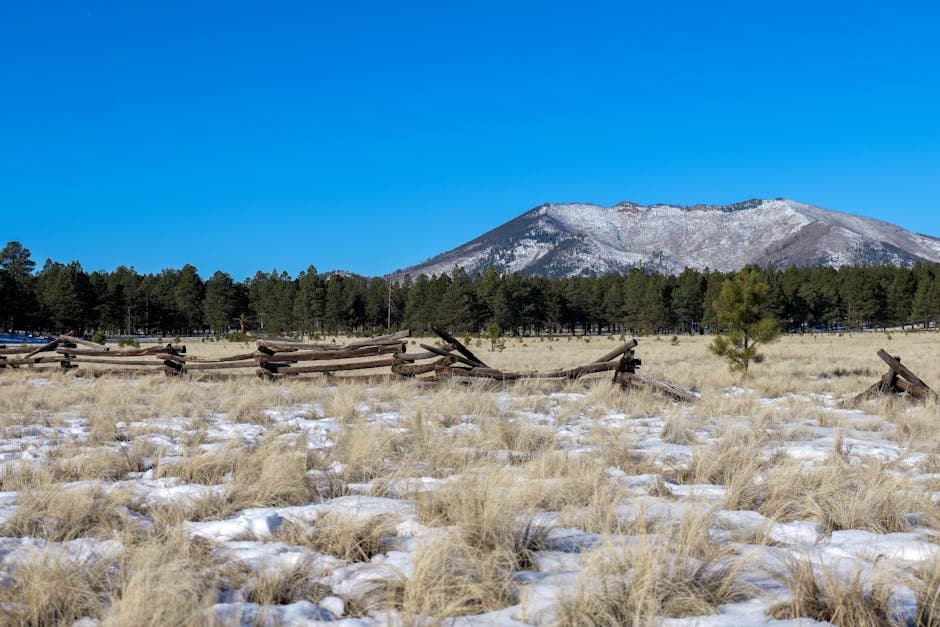
Sources: City of Flagstaff, Lowell Observatory, NAU, Arizona Snowbowl, Visit Flagstaff, International Dark-Sky Association.
The Almanac, Page One
Combined sales tax
9.181%
AZ 5.6% + Coconino 1.3% + Flagstaff 2.281%. Per AZ Dept of Revenue.
City population
~78,000
Coconino County seat. Per US Census Bureau ACS estimates.
Elevation
7,000 ft
Ponderosa pine forest on the southern Colorado Plateau.
NAU enrollment
~30,000
Northern Arizona University, founded 1899. Per NAU public reporting.
Lowell Observatory founded
1894
Pluto discovered Feb 18, 1930 by Clyde Tombaugh.
Filed from Flagstaff · Editorial standards: real sources, no fabricated reviews, no FAQPage schema.
I. Scene
Friday, 4:18 p.m. on Aspen Avenue. A powder report from Snowbowl, a Grand Canyon family at the host stand, and a Lowell Observatory volunteer collecting a takeout box on the way up Mars Hill.
Aspen Avenue, in Downtown Flagstaff, sits at seven thousand feet on the southern edge of the Colorado Plateau. The ponderosa pines along the curb line are real pine, not ornamental. The brick storefronts on the north side of the street are the 1880s and 1890s Flagstaff Townsite buildings, rebuilt after fires through the 1890s; the Hotel Monte Vista marquee at the corner of San Francisco Street has been blinking since 1926. Two doors down, a Diablo Burger line cook is plating a local-beef patty on the brand-stamped English muffin that is the kitchen's signature, and a four-top has just asked whether the kitchen does a Diablo Burger to go for a Grand Canyon tour group leaving at 6 a.m.
The phone at the host stand rings. A skier coming down US 180 from Snowbowl wants to order four burgers and three fries for pickup in forty minutes; the powder report has landed and the parking lot at the base lodge has been a queue since lunch. A second ring is a Lowell Observatory volunteer at Mars Hill, calling in a vegetarian Cottage Place dinner for a visiting astronomer who flew in from the Lowell Discovery Telescope site at Happy Jack and needs to eat before the seven thirty public program. A third ring is in Spanish, a back-of-house lead from a Southside kitchen calling to confirm a staff family meal pickup; the Voice AI takes the order in Spanish and prints the ticket in English to the line.
Outside the window, the San Francisco Peaks rise to twelve thousand six hundred thirty three feet on the northern horizon (Humphreys Peak, the highest point in Arizona). A Honda Pilot with a Grand Canyon sticker on the rear window, a Phoenix dealer plate, and a roof-rack pulls past the curb. Inside the Pilot are four kids in fleece, two parents in REI puffies, and a brown paper bag from Macy's European Coffeehouse already half empty. They are staying at one of the Route 66 motels on the East Flagstaff strip, did the South Rim today, and will do the North Rim tomorrow if the weather holds. They are not coming back to Aspen Avenue tonight; they are looking for a dinner order to take back to the motel.
Across Heritage Square, a knot of NAU students is walking south back toward campus along South San Francisco Street. It is the second week of August, Welcome Week, and the campus is at thirty thousand for the first time since May. The Pizzicletta line has been out the door since six. The Beaver Street Brewery, the city's first brewpub (1994), is queued onto the sidewalk. Mother Road Brewing, the Route 66 themed taproom on Mike's Pike, has both food trucks out and a line for both of them. Tinderbox Kitchen on South San Francisco is on a forty five minute wait.
Above all of this, after the sunset rotates off the Peaks and the sodium lights down on Route 66 dim under the International Dark Sky lighting code, the dome at Lowell Observatory opens. The thirteen-inch astrograph that Clyde Tombaugh used to discover Pluto on February 18, 1930 is still in place. The public program will run until ten. The volunteer who picked up the Cottage Place dinner has it on a tray in the visitors center; the visiting astronomer eats while reviewing imagery from the Lowell Discovery Telescope at Happy Jack, forty miles south of town. This is the spine of the Flagstaff argument. The rest of this report is what an operator does with that fact.
II. Lowell + Pluto
Mars Hill, 1894. The thirteen-inch astrograph that found Pluto on February 18, 1930.
Lowell Observatory was founded on Mars Hill, immediately west of Downtown Flagstaff, in 1894 by Bostonian astronomer Percival Lowell. The site was chosen for its altitude, dry air, and dark skies. The 1929 thirteen-inch astrograph, installed in a custom dome on the hill, was the instrument that Clyde Tombaugh used to discover Pluto on February 18, 1930, by comparing photographic plates with a blink comparator. Pluto's discovery is, to date, the only named planet (later reclassified as a dwarf planet) found from the continental United States.
The Pluto discovery story is the kind of detail that shapes the city's identity in a way few mid-size US cities can match. Tombaugh was a twenty four year old Kansas farm kid hired in 1929 to operate the blink comparator and search for the long-suspected Planet X. He spent his days exposing photographic plates with the new thirteen-inch astrograph and his evenings comparing pairs of plates with the comparator, looking for any point of light that moved between exposures against the fixed background of stars. On February 18, 1930, working with plates exposed in January, he found one. The discovery was announced on March 13, 1930, on what would have been Percival Lowell's seventy fifth birthday.
The observatory now runs a public visitor program with more than one hundred thousand visitors a year. The Clark refractor (1896), the Pluto Discovery Telescope dome (built 1929), the Putnam Collection Center, and the new Astronomy Discovery Center anchor the campus. The Lowell Discovery Telescope, a 4.3 meter primary mirror instrument completed in 2012, sits forty miles south of town at Happy Jack and is the largest research telescope operated by a Flagstaff institution. The observatory is an independent, privately operated nonprofit; it collaborates with NAU, the US Naval Observatory Flagstaff Station, and the National Park Service on Dark Sky research.
The restaurant implication is direct: a substantial share of Lowell visitors come from outside the United States, and a higher-than-average share have a deeper-than-average attachment to the Pluto story. The post-program dinner pickup at 9:30 p.m. on a clear winter night is a consistent, predictable demand pulse downtown that the operator who is on duty captures. Diablo Burger, Pato Thai, Karma Sushi, and Coppa Cafe all see a Mars Hill returner pulse at that hour. A direct-ordering page that opens a 9 p.m. dinner pickup window catches that wallet; a marketplace listing that closes its food roster at 9 does not.
Lowell drives one other operator-facing seasonal pulse: the Pluto Discovery Day anniversary on February 18. The observatory hosts an annual program with public lectures, Tombaugh family appearances in the past, and a citywide marketing campaign tied to the Dark Sky brand. Downtown operators with a Pluto-themed dish or a winter heated patio open through the event week book a higher average check than the same week the year before. The marketing value of the date is one the Visit Flagstaff (Discover Flagstaff) team has been pulling for two decades.
III. The Industry, by the Numbers
Roughly four hundred restaurants. A 9.181 percent combined sales tax band. Thirty thousand NAU students. Six million Grand Canyon visitors arriving through this city each year.
Restaurants in city
~400
Per Discover Flagstaff dining directory and the AZ Restaurant Association.
Median dinner check
$22 to $32
Per Discover Flagstaff dining surveys and operator interviews.
AZ state sales tax
5.6%
Per Arizona Department of Revenue.
Coconino County tax
1.3%
Per Arizona Department of Revenue county schedule.
Flagstaff city tax
2.281%
Per City of Flagstaff Tax & Licensing.
Combined tax
9.181%
Sum of state + county + city. The number on every Flagstaff check.
NAU enrollment
~30,000
Northern Arizona University, founded 1899.
Grand Canyon visitors
~6 million/yr
South + North Rim combined. Per National Park Service. Flagstaff is the gateway city.
Snowbowl summit
11,500 ft
Agassiz Peak chairlift. Per Arizona Snowbowl.
Snowbowl snowfall
260+ inches/yr
Average annual snowfall on the San Francisco Peaks. Per Snowbowl official.
Dark Sky designation
2001
World's first International Dark Sky City. IDA designation.
Elevation
7,000 ft
Ponderosa pine forest. Cold winters, monsoon summers.
Two of those numbers anchor every operator's pricing conversation. The combined 9.181 percent sales tax band (Arizona 5.6 percent plus Coconino County 1.3 percent plus City of Flagstaff 2.281 percent) is roughly the same as Phoenix and Tucson but applied to a check that the visitor is more likely to round up. The Grand Canyon visitor pool of roughly six million a year is the single largest outside-Flagstaff demand driver; even at modest capture rates (US 89 and I-40 both run through town on the way to the South Rim) the visitor wallet is the line that separates a Flagstaff operator from a peer mountain town.
NAU's thirty thousand enrollment is the third anchor. It is one of the three Arizona university systems (with ASU at Tempe and the University of Arizona at Tucson) and its Flagstaff campus runs a year-round residential undergraduate, graduate, and online operation. The campus calendar punches the year into very predictable beats: August move-in pulls the largest single-week takeout volume of the year, December finals + winter break empties the campus and shifts demand to the Snowbowl visitor pool, and May commencement runs the highest fine-dining check.
IV. The Cuisine Mix
American casual, Mexican, Asian, pizza, brewpub, Italian. The shape of the Flagstaff restaurant roster.
The cuisine mix in Flagstaff trends toward American casual and Mexican as the two largest plates, with Asian, pizza, and brewpub each holding a meaningful share. The chef-driven fine-dining tier (Cottage Place, Brix, Tinderbox, Coppa) is small but punches above its share on average ticket. The brewpub roster (Beaver Street, Mother Road, Historic) is outsized for a city of this size; founded as far back as 1994 (Beaver Street is one of the longest-running brewpubs in Arizona), this is a real cluster.
Mexican as the second largest plate is not the Tex-Mex of a southern Texas town; it is a Sonoran-and-Northern Mexico influenced regional kitchen, with carne asada, pollo asado, sopa de tortilla, and a meaningful share of Northern Mexican breakfast plates (machaca, huevos rancheros, chilaquiles). El Charro Cafe in Tucson is the Arizona standard; Flagstaff operators run a more family-and-college oriented version of the same idea. The back-of-house staff in a meaningful share of the Mexican roster is Spanish-first, and bilingual phone ordering is a baseline.
The Asian tier punches above its share for a city this far inland: a sushi bar (Karma) that holds Downtown Friday and Saturday volume, a Thai program (Pato Thai) that runs a consistent NAU and Downtown lunch and dinner draw, and a small but real Vietnamese cluster east of Downtown. The pizza tier splits between the Pizzicletta Neapolitan format on South San Francisco Street and the NAU late-night format that Fratelli Pizza runs across multiple locations.
The brewpub tier is the part where Flagstaff most resembles Bend, Oregon. Beaver Street Brewery opened in 1994 in the Southside, becoming Flagstaff's first brewpub and one of the longest-running Arizona breweries. Mother Road Brewing followed on Mike's Pike with a Route 66 themed taproom and Tower Station IPA. Historic Brewing has a tap on East Flagstaff. Lumberyard Brewing runs a brewpub format. The food check on each of these operators is the line that has to feed the beer; the direct-ordering page lets the operator route the customer back to the bar after pickup.
The coffee and bakery tier is small in count but loud in identity. Macy's European Coffeehouse on South Beaver has been open since 1980 and is the campus and Southside vegetarian-leaning standard. Late For The Train on East Route 66 is the second campus-and-Downtown coffee anchor. The breakfast and morning-pickup volume in Flagstaff (Grand Canyon families heading out, NAU students heading to class, Lowell volunteers heading up Mars Hill) is a meaningful share of the daily count, and the direct-ordering page that books a 6 a.m. preorder pickup wins the family wallet that the marketplace cannot.
V. The Operator Year
NAU academic year, Grand Canyon April through October, Snowbowl December through April, Route 66 June, Festival of Science September, fall foliage October, monsoon July through September.
The Flagstaff operator year layers four big calendars (NAU, the Grand Canyon, Snowbowl, and the Dark Sky / event program) on top of the summer monsoon and the high shoulder seasons. The result is a year that rarely fully collapses: even the slowest week of the year (the second week of December, after NAU finals and before Snowbowl peaks) still has a 6.4 percent occupancy across the Route 66 motel ring.
August move-in week is the largest single-week pulse of the year. NAU runs a Welcome Week event sequence across Downtown and the campus, the parents drop off the students and check into the Route 66 motels, and the campus convenience stores, the Pizzicletta and Fratelli lines, the late-night Diablo Burger pickup window, and the Macy's morning crowd all spike together. The operator who has the August move-in week prebooked into the direct-ordering page's catering channel is the operator that books the year.
The Grand Canyon high season is April through October. The South Rim, the closer of the two rims, is roughly 80 miles north of Flagstaff via US 180 and AZ 64; the North Rim, open seasonally roughly mid-May through mid-October, is roughly 215 miles via US 89 and AZ 67. Visitor volumes peak July (the National Park Service publishes monthly visitation; July routinely runs at one million plus visitors at the South Rim). The Flagstaff breakfast pickup window between 6 and 9 a.m. is the largest visitor-driven daypart of the year through this window.
Snowbowl runs roughly December through early April, subject to natural and made snow. The Snowbowl lift to Agassiz Peak puts skiers at eleven thousand five hundred feet, and the chairlift to the summit is one of the highest in the United States. Powder Fridays and Saturdays pull a 4 p.m. to 7 p.m. pickup window on Fort Valley Road back into Downtown that mirrors the Mt. Bachelor pulse in Bend. The operator who lets a skier place a preorder at the Snowbowl base parking lot for pickup forty minutes later captures the ticket that the next operator down the road loses.
The Flagstaff Festival of Science (ten days, late September into early October) is the single largest Dark Sky and astronomy event of the year. Free programming runs across Lowell Observatory, NAU, the US Naval Observatory Flagstaff Station, the Museum of Northern Arizona, and the City of Flagstaff. Visiting researchers, families, and astrophotographers fill the Downtown and Southside dinner houses for a week and a half. Operators who tag their menu in a Festival of Science wrapper on the direct page (a Pluto-themed dessert, a Galaxy-themed cocktail) routinely book a 12 to 18 percent average ticket lift through the event week.
The summer monsoon, roughly mid-July through early September, is the operator's wildcard. Afternoon thunderstorms build on the Peaks and roll east across town between 2 and 5 p.m.; flash flooding can close Route 66 corridor patios with thirty minutes notice. The operator who runs the direct-ordering channel can shift a patio reservation to a pickup window in real time and hold the ticket. The marketplace channel cannot route that fast.
Fall foliage in early to mid October pulls a weekend leaf-peeper pulse along US 180 to the Inner Basin trail and the Snowbowl Road. The aspen color on the Peaks is roughly two weeks of pure photography weather and a North Fort Valley Road pickup ring fills the Snowbowl shoulder. Late October through Thanksgiving is the operator's thinnest stretch (the only stretch where more than one big anchor goes dark at the same time: Grand Canyon high season closes, Snowbowl has not opened, NAU is between events). The operator who runs a fall-shoulder local-and-staff loyalty push books that stretch.
VI. The Operator Roster
Fourteen Flagstaff kitchens that anchor the conversation.
These are not endorsements and not a complete roster; every Flagstaff operator (those listed here and the many that are not) gets the same offer. This is the cluster of kitchens that the Discover Flagstaff dining directory, the Arizona Daily Sun food reporting, and a long roster of national writeups (Bon Appetit, the Phoenix New Times, Saveur) cite as the operator-defining set.
Downtown / Heritage Square
Diablo Burger
Local-beef burgers on a brand-stamped English muffin. A Downtown Heritage Square fixture and a national writeup magnet.
Downtown
Mountain Oasis International
Global menu across pan-Asian, Mediterranean, and Mexican comfort plates. A long-running Aspen Avenue dinner house.
Downtown / Aspen Avenue
Brix Restaurant & Wine Bar
Chef-driven Italian-influenced dinner program in a Downtown brick building. Local sourcing across the menu.
West / Cottage Avenue
Cottage Place Restaurant
White-tablecloth dinner house in a 1909 craftsman cottage on West Cottage Avenue. The city's longest-running fine dining program.
Southside
Tinderbox Kitchen
Chef-driven contemporary American on South San Francisco Street. Patio in the Southside arts district.
Southside
Pizzicletta
Wood-fired Neapolitan pies and gelato on South San Francisco Street. Imported flour, Vesuvius tomatoes, and Southside cool.
Southside
Beaver Street Brewery
Flagstaff's first brewpub (1994) and one of the longest-running Arizona breweries. Wood-fired pizza, fish and chips, the original house IPA.
Southside
Mother Road Brewing
Route 66 themed brewery on Mike's Pike. Tower Station IPA and a Southside taproom with food trucks parked outside.
Downtown
Karma Sushi Bar
Downtown sushi bar on Aspen Avenue. The campus-and-Downtown raw bar standard.
Southside
Tourist Home All Day Cafe
Cuban-influenced breakfast and brunch in a restored 1909 tourist home on South San Francisco Street. The Cuban sandwich is a signature.
NAU / Downtown / East Flag
Fratelli Pizza
Local pizza chain with multiple Flagstaff locations. NAU late-night and family pickup volume.
Downtown
Pato Thai Cuisine
Downtown Thai house on East Birch Avenue. Curries, noodles, and a consistent NAU and Downtown lunch and dinner draw.
North / Cedar Avenue
Coppa Cafe
Chef-driven small-plates dinner house on East Cedar Avenue, north of Downtown. Pasta-forward, locally sourced.
Southside / Beaver Street
Macy's European Coffeehouse
Open since 1980 on South Beaver. Vegetarian-leaning bakery cafe; a campus-and-Southside institution.
The pattern that runs across this list is independence. The chains (Outback, Olive Garden, the highway interchange roster on East Flagstaff) are present and have their place but no one in Flagstaff is making the case for a national franchise to define this city. The brand is Diablo Burger, Cottage Place, Beaver Street, Pizzicletta, Tinderbox. These operators run their unit economics on the food line, not on a franchise royalty. The direct-ordering stack is the channel that lets the food line breathe.
VII. The Atlas
Downtown, Southside, NAU, Sunnyside, Greenlaw, Cheshire, Fort Valley. The six districts (plus outer corridors) of a city that fits between Mars Hill and the Peaks.
Downtown / Historic Route 66 anchors the city. Aspen Avenue, Birch Avenue, San Francisco Street, and Route 66 itself form a roughly six-block grid of brick and stone Townsite-era storefronts. Heritage Square hosts the summer concert series, the Christmas tree lighting, the Pluto Discovery Day public program. The dinner pickup window peaks 5:30 to 7:30 p.m.; walking density means a substantial share of orders are pickup.
Southside, south of the BNSF tracks, is the brewpub and arts district. South San Francisco Street, Mike's Pike, South Beaver. Beaver Street Brewery, Mother Road Brewing, Pizzicletta, Tinderbox, Tourist Home, Macy's. The neighborhood was historically working-class and Latino, has gentrified through the 2010s and 2020s, but still anchors a meaningful share of the city's Spanish-first labor force.
NAU is bounded roughly by South Knoles Drive, South San Francisco, McConnell, and Lone Tree. The campus is walkable to both Downtown and Southside (roughly a fifteen minute walk to Aspen Avenue from the campus center). Late-night pickup, weekday lunch, and breakfast pickup volumes all flow from the campus into the Southside and Downtown operator rings.
Sunnyside is the historic Latino neighborhood north of Downtown, across the tracks. Long-tenured Flagstaff families, lower median home prices, mom-and-pop kitchens, and a meaningful share of the city's back-of-house labor lives here. East Flagstaff (Greenlaw and the East Flag commercial belt) is along Route 66 east from Downtown out to the I-40 / US 89 interchange; the Route 66 motel ring and the family delivery channel are both here.
Cheshire / West Side and Fort Valley anchor the western and northwestern residential band, with Fort Valley Road (US 180) running north out of town toward the Museum of Northern Arizona, the Arboretum, and Snowbowl. The pickup ring along Fort Valley Road catches the powder-day returners and the leaf-peeper pulse.
The outer corridor adds US 89 north (to Wupatki and Sunset Crater National Monuments and on to Page), US 180 northwest (to Snowbowl and Grand Canyon South Rim via Tusayan and AZ 64), I-40 east and west (to Albuquerque and to Kingman and Las Vegas), and I-17 south (to Phoenix). Each anchors a separate visitor stream and the Flagstaff operator ring is the fueling-and-feeding band that all four streams pass through.
VIII. The Operator Personas
Three operators we built this stack for.
The Flagstaff customer mix splits along three durable lines: the Downtown brewery operator pulling a beer-plus-food local-and-tourist crowd, the NAU student concept feeding the campus calendar, and the Grand Canyon family ordering a breakfast at 5:45 a.m. on the way out. The direct-ordering stack reads each of these differently.
ICP 01
The Downtown brewpub operator
Beaver Street, Mother Road, Lumberyard, Historic Brewing tap. Beer plus food check, a Friday evening 5:30 to 8:30 pickup pulse, a Lowell Observatory volunteer doing a 9:15 p.m. dinner pickup on the way up Mars Hill, a 4:18 ski returner from Snowbowl, an NAU faculty couple after a Festival of Science talk.
What this operator runs on
- Branded ordering page with round-dollar menu pricing across food and beer.
- Voice AI that answers in Spanish for the back-of-house staff family-meal pickup at 4 p.m.
- Uber Direct fallback that reaches Route 66 motels on East Flagstaff.
- Same-day Stripe payouts.
- Pickup windows of fifteen minutes or less during the Snowbowl powder Friday pulse.
ICP 02
The NAU student concept
Pizzicletta, Fratelli Pizza, the late-night Diablo Burger window, the Macy's morning. Roughly thirty thousand student wallets concentrated within a fifteen minute walk of Downtown and the Southside. Late-night ordering, weekday lunch, breakfast pickup. August move-in is the single largest week of the year.
What this operator runs on
- Catering channel pre-bookable for August move-in week.
- 11 p.m. to 1 a.m. late-night pickup window for the campus run.
- Push-notification loyalty program tied to the NAU calendar (finals, homecoming, commencement).
- Multi-location dispatch across Fratelli's three or more stores.
- Direct ordering page that the NAU social channels can deep link into.
ICP 03
The Grand Canyon family breakfast
A family of four staying at a Route 66 motel, doing the South Rim that day. They want a breakfast preorder at 5:45 a.m., picked up by 6:15, eaten on the road. Macy's, Late For The Train, Tourist Home, the diner format on East Route 66. April through October is the high season; the breakfast pickup window between 6 and 9 a.m. is the largest visitor-driven daypart of the year.
What this operator runs on
- Open-for-preorder at 5:30 a.m., pickup by 6 a.m.
- Branded ordering page in English, Spanish, and a hello to a growing Navajo language community visiting from the Navajo Nation east of Flagstaff.
- Map-pin and Route 66 motel quick-pickup directions.
- Family menu format with kids meals and Grand Canyon trail snack bundles.
- Same-day Stripe payouts so the operator has cash before the family pulls onto AZ 64.
IX. Snowbowl Day Pattern
The Snowbowl ski day, hour by hour. Where the 4:18 pickup wave hits the Downtown and Southside ring.
Arizona Snowbowl sits on the western flank of the San Francisco Peaks, fourteen miles north of Downtown Flagstaff via US 180 (Fort Valley Road) and Snowbowl Road. The base lodge is at nine thousand two hundred feet; the Agassiz Peak chairlift terminus is at eleven thousand five hundred feet, one of the highest lift termini in the United States. The Arizona Gondola, opened in recent years, runs to the same upper-mountain altitude. A typical ski day at Snowbowl runs roughly 9 a.m. to 4 p.m.; the drive back to Downtown is forty five minutes.
The day starts on US 180 outbound. The 7 to 8 a.m. window is the breakfast preorder pickup window: Macy's, Late For The Train, and the Tourist Home all see a spike. Skiers grab a coffee and a breakfast burrito, fuel the car at the Maverik on the way out of town, and head up Snowbowl Road. The lifts open at 9. The morning runs clear; the lunch crowd hits the Hart Prairie base lodge or the Agassiz upper-mountain dining at noon.
The afternoon is the operator-facing slice. Lifts close at 4 p.m.; the parking lot fills with skiers loading gear; the line of cars heading south on Snowbowl Road to US 180 starts at 4:15 and runs until 5:30. The phone rings on US 180 inside cell range start at 4:25 and peak through 5. Skiers want a four-burger and three-fry pickup at 5:30 from a Fort Valley Road, Northside, or Downtown operator. Mother Road, Beaver Street, Diablo Burger, and the Lumberyard Brewing taproom on Phoenix Avenue all see the same wave.
The operator who lets a skier place an order at the Snowbowl base parking lot at 4:05, on intermittent cell signal, for pickup at 5:30 in Downtown captures the ticket. The operator whose ordering page is slow to load on a weak signal loses the same ticket to the next operator down the road. Snowbowl powder Friday cell range is real (the resort is at the edge of Verizon coverage; AT&T runs spottier); the direct ordering page that does not assume a fast LTE connection is the page that gets the order.
The evening tail runs from 7 p.m. through the Dark Sky hours. Ski-day skiers staying in Flagstaff for the weekend take a 7 to 8:30 dinner reservation. Pizzicletta, Tinderbox, Brix, and Coppa book a substantial share of their winter Friday and Saturday seats from the Snowbowl returner pool. A Lowell Observatory program at 7:30 adds a side flow: the visitor parks at Mars Hill at 7, attends the program, and looks for a 9:15 dinner pickup on the way out.
X. The Four Anchors
NAU, Grand Canyon, Snowbowl, Dark Sky. Four calendars on the same wall.
The NAU calendar is the most predictable of the four. Late August move-in, mid-October homecoming, the Thanksgiving emptying, December finals plus winter break, January return, February to April mid-semester grind, May commencement, June to early August summer session at one-third volume. The operator who anchors the year on the NAU calendar runs a baseline floor of weekday and weekend volume across Downtown and the Southside. Restaurants within a fifteen-minute walk of campus (Pizzicletta on South San Francisco, Diablo Burger on Heritage Square, Macy's on South Beaver, Pato Thai on East Birch) hold the closest exposure.
The Grand Canyon calendar is April through October on the South Rim, mid-May through mid-October on the North Rim. Visitor volumes peak July (one million plus visitors at the South Rim per the National Park Service monthly visitation reports), with strong shoulder volume through June and August and a meaningful tail into October. The Flagstaff breakfast pickup window between 6 and 9 a.m. is the largest visitor-driven daypart of the year through this window. The operator who books a 5:45 a.m. preorder pickup catches the family that the marketplace channel (still calling for a 9 a.m. courier) cannot reach.
The Snowbowl calendar is December through April, subject to natural snow on the San Francisco Peaks and the made-snow allocation that the resort operates with. Powder Fridays and Saturdays pull a 4 to 7 p.m. pickup wave from Fort Valley Road into Downtown and the Southside (described in section IX). Snowbowl is a day resort (no major lodging on the mountain), which means the dinner economy after a ski day is in Flagstaff, not at the base. Beaver Street, Mother Road, Lumberyard, and Diablo Burger run roughly twenty percent of their winter weekend ticket through this window.
The Dark Sky / event calendar is the year's small but high-leverage layer. Pluto Discovery Day on February 18, the Flagstaff Festival of Science (ten days, late September), International Dark Sky Week (in April), and a roster of public observing nights at Lowell, the US Naval Observatory Flagstaff Station, and the NAU astronomy program all anchor visitor volume that overlaps the off-peak Grand Canyon and between-season Snowbowl stretches. Operators with a Festival of Science menu wrapper see a measurable lift; operators who open a late-night dinner window after Lowell programs see the highest single-event profitability per cover.
The operator year, on paper, layers as follows. The weekday floor is the NAU calendar (August through May). The weekend amplifier in summer is the Grand Canyon visitor pool (April through October). The weekend amplifier in winter is the Snowbowl ski pulse (December through April). The event accelerators are the Dark Sky calendar (Pluto Day in February, Festival of Science in September, Dark Sky Week in April), Route 66 Days in June, fall foliage in October. The five weeks of true thinness in the year (mid-October through mid-November, plus the second week of December) are the operator's loyalty-drive weeks.
XI. The Language Layer
Voice AI in English and Spanish, plus a hello to a growing Navajo language community.
Flagstaff sits roughly fifty miles west of the Navajo Nation boundary at Cameron and Tuba City. The Navajo Nation, the largest tribal reservation in the United States by land area, has a roughly two hundred fifty thousand enrolled population. Navajo (Dine bizaad) is one of the most widely spoken Indigenous languages in the US. A meaningful share of Flagstaff's Indigenous visitor flow (NAU students from the Nation, weekend shoppers from Cameron and Tuba City coming into town for groceries and dinner, families coming through on the way to Phoenix medical appointments) is Navajo-first or bilingual. The Hispanic population is closer to twenty percent of the city.
Spanish
~20% of city
Per US Census Bureau ACS five-year estimates. Spanish-first kitchen labor across the brewpub and Mexican rosters; Spanish-speaking customer flow concentrated in Sunnyside, Southside, and along the Route 66 corridor. Voice AI in Spanish is a baseline feature, not an upsell.
Navajo (Dine bizaad)
Growing community
NAU enrolls a meaningful share of Navajo Nation students. The Native American Cultural Center at NAU and the Indigenous and American Indian Studies departments anchor a growing campus and visitor population. Welcome line in Navajo and an English fallback transcript is the right early step.
English
Primary
The default channel. The direct-ordering page renders in English by default. Voice AI answers in English by default, switches to Spanish on detected language, and offers a Navajo greeting line for operators with substantial Indigenous customer flow.
The point of the language layer is not virtue signaling; it is conversion. A Spanish-first caller who reaches an English-only call tree hangs up roughly half the time. A Spanish-first caller who reaches a Spanish-fluent Voice AI completes the order at substantially the same rate as an English caller. The same principle applies to a Navajo-first elder calling from Cameron to ask whether the kitchen has a vegetable soup tonight: the call is a real ticket and the operator who routes the call to a language layer captures it.
XII. The Cost Math
27 percent vs 14 percent on a fifty dollar Grand Canyon tourist family order. Where the marketplace stack costs the operator the year.
Run the math on a typical Grand Canyon tourist family order in Flagstaff: a fifty dollar breakfast subtotal, ordered on Route 66 at 6:15 a.m. for pickup at 6:30, a family of four heading to the South Rim. Stripe charges roughly 2.9 percent plus thirty cents on the card. The combined sales tax band is 9.181 percent (Arizona 5.6 + Coconino 1.3 + Flagstaff 2.281). Then the structural question: how is the operator delivering the order, and what does each channel cost?
On the marketplace channel, the operator pays a commission tier (typical, across DoorDash, Uber Eats, Grubhub marketplace listings) of roughly 25 to 30 percent. On a fifty dollar order that runs $12.50 to $15 a ticket. The operator keeps the menu subtotal minus that commission, minus the Stripe payment processing, minus the sales tax (which passes through to the state, not to the operator). The operator's effective burden vs the menu subtotal lands at roughly 27 percent.
On the direct-stack channel, the operator pays a flat $249/month platform fee. Spread across a hundred orders a month (a conservative number for a Flagstaff operator who is running on direct), the platform fee allocates to roughly $2.49 a ticket. Add the same Stripe payment processing and the same sales tax pass-through, and the operator's effective burden vs the menu subtotal lands at roughly 14 percent. The 13-point spread is the year. On a Flagstaff operator running thirty thousand dollars a month in direct ordering revenue, the savings is roughly thirty nine hundred dollars a month, or forty seven thousand dollars a year.
The math gets sharper when you layer in the typical Flagstaff ticket mix. A brewpub running a 35 percent food cost and a 22 percent beer cost cannot absorb a 25 to 30 percent commission on a $50 ticket. The marketplace channel is the channel that loses the brewpub money on every food order shipped through it; the only reason to be on the marketplace channel is customer acquisition. The customer who finds the operator on DoorDash should be moved to the direct page on their second order. The direct-ordering page gives the operator the customer database, the marketing channel, and the unit economics to do that.
The cost-math arithmetic is the operator's decision tree on its own. Run the marketplace channel for discovery. Run the direct channel for repeat. Push catering, breakfast preorders, family-size bundles, and Lowell-volunteer late dinners onto direct from day one. Layer Voice AI for the inbound phone in English and Spanish; layer Uber Direct dispatch for the East Flag and outer-corridor delivery the marketplace cannot reach; collect same-day Stripe payouts. The fourteen percent burden line is the line that holds the year.
XIII. The Thesis
Why a flat $249 a month plus bilingual Voice AI plus Uber Direct plus same-day Stripe payouts is the only stack that fits this city.
Start from the spine. Flagstaff is a seven thousand foot town built on four tributaries (NAU, the Grand Canyon, Snowbowl, and the Dark Sky calendar) feeding one ledger, layered on a 9.181 percent combined sales tax band, a ponderosa pine cool-mountain climate, and a Spanish and (growing) Navajo language customer flow that the marketplace channel does not see. A marketplace stack that ignores all of that and treats Flagstaff like a national franchise market is destroying the city's actual unit economics. A direct stack at a flat $249 a month does not.
Layer in the NAU calendar from section X. The August move-in pulse is the largest single-week event of the year and is bookable into the catering channel of a direct page. The December finals-and-break trough is the loyalty-driver week of the year and is bookable into the email and push channel of a direct page. The weekday lunch and breakfast volume is the baseline floor of the year. The marketplace channel sees none of that calendar; it treats August move-in week and the second week of December as identical.
Layer in the Snowbowl pulse from section IX. The 4 p.m. to 7 p.m. ski-day pickup window between December and April is the highest-leverage winter daypart of the year for a Downtown or Fort Valley Road operator. A Voice AI that catches inbound calls from the Snowbowl base parking lot, on intermittent cell signal, and an Uber Direct fallback that holds promise times below thirty minutes during the powder-Friday surge, are the two single-largest operational levers a Flagstaff operator pulls during ski season.
Layer in the Grand Canyon family from section VIII. The 5:45 a.m. preorder pickup window, the family bundle pricing, the trail snack add-on, the Route 66 motel map-pin instructions, the bilingual ordering page in English and Spanish, and the same-day Stripe payout so the operator has cash in the bank before the family pulls onto AZ 64. None of those features exist on a marketplace listing; all of them exist on the direct-stack platform.
Layer in the Dark Sky calendar from section II and X. The Pluto Discovery Day on February 18, the Festival of Science in late September, the Dark Sky Week in April, and the public observing nights at Lowell and the US Naval Observatory Flagstaff Station all anchor visitor volume that overlaps the off-peak stretches. The direct-ordering page lets the operator wrap the menu in a Pluto-themed dessert, a Galaxy-themed cocktail, a Festival of Science prix fixe. The marketplace listing does not.
Layer in the language layer from section XI. Spanish-language ordering on the inbound phone, plus a Navajo greeting line for operators with substantial Indigenous customer flow, plus a default English channel for the visitor base, captures conversion that the marketplace simply cannot. Same-day Stripe payouts close the loop: the operator gets the money in the bank before close of business.
Build the direct ordering page
A Flagstaff page that prices in round dollars at 9.181 percent inclusive checkout, opens a 5:30 a.m. breakfast preorder window, and quotes the same menu number the visitor sees on the chalkboard.
Set up bilingual Voice AI
Spanish-language call recovery is the largest single-line revenue change a Flagstaff operator with substantial back-of-house Hispanic workforce will see. Add a Navajo greeting line for operators with substantial Indigenous customer flow.
Switch off the commission tax
The 13-point spread between marketplace and direct ($14 vs $27 of effective burden per $50 order) compounds across the year. Move repeat customers to direct; keep marketplace as discovery only.
Editorial Coda
Seven thousand feet, four tributaries, one Dark Sky code, one ledger. Run it direct.
Nearby Arizona Editions
Flagstaff is the highland counterweight to the Sonoran Desert metros to the south. Two and a half hours down I-17 is Phoenix; an hour down AZ 89A is Sedona. Each Almanac edition runs its own ledger.
References · This report drew from
14 sources
- Arizona Department of Revenue · AZ state sales tax (TPT), county and city schedules
- US Census Bureau · Population estimates, language and demographic ACS
- City of Flagstaff · City tax rate, planning, neighborhood map
- Coconino County · County tax rate and economic reporting
- Lowell Observatory · Lowell Observatory history, Pluto Discovery Telescope, public programs
- Northern Arizona University · Enrollment, academic calendar, campus programs
- Arizona Snowbowl · Snowbowl elevations, lifts, snowfall, season
- Visit Flagstaff (Discover Flagstaff) · Dining directory, event calendar, visitor reporting
- International Dark-Sky Association (IDA) · Flagstaff as the world's first International Dark Sky City (2001)
- National Park Service · Grand Canyon National Park visitation, South + North Rim
- National Park Service · Wupatki National Monument + Sunset Crater Volcano
- Arizona Daily Sun · Local reporting on dining, brewery scene, NAU, Snowbowl
- Flagstaff Festival of Science · Festival of Science programming and history
- US Naval Observatory · Astrometry, Naval Observatory Flagstaff Station