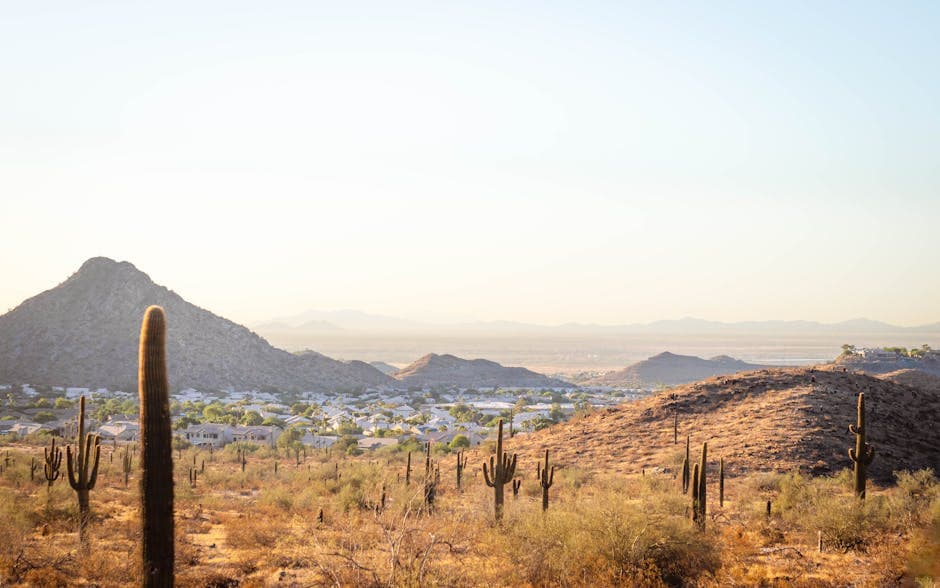
Scottsdale Old Town at golden hour with Camelback Mountain in the distance, saguaro silhouettes against a Sonoran sunset sky, and walkable Mid-Century resort architecture in the foreground
A Scottsdale, Arizona Field Guide

The resort capital of the desert.

Scottsdale runs more AAA-rated resorts per capita than any US metropolitan area, hosts the largest-attended PGA event in the world for one week every February, and packs the social epicenter of the Cactus League into the walkable Old Town core every March. The dining economy that sits on top of all three is one of the most concentrated luxury and golf and spa hospitality markets in North America. DirectOrders is built for it.

250+
resorts and hotels inside city limits (Experience Scottsdale)
~700K
WM Phoenix Open four-day gate (The Thunderbirds)
8.05%
combined sales tax on prepared food (AZ DOR + Scottsdale)
~600
restaurants and bars in greater Scottsdale (Experience Scottsdale)
I. Saturday, the second weekend of February

The single busiest restaurant night in the Sonoran Desert.

Old Town Scottsdale, 6:42 PM, Phoenix Open Saturday

The host stand on Marshall Way has been quoting a 95-minute wait since 4 PM. The reservation book on the iPad shows every fifteen-minute slot filled through 10:30. The bar is three deep. The four-top in the back corner is on its fourth turn of the night. The chef is firing carne asada and yellowtail crudo at a rate her summer service has not seen since the last Phoenix Open.

Outside, Scottsdale Road and Camelback are running 2.4 miles to the mile in Uber surge pricing. Inside the TPC Scottsdale gates a few miles north, the WM Phoenix Open Saturday gate has crossed 200,000 spectators for the third consecutive year. The 16th hole, the par-3 stadium hole where 16,000 fans throw beer cans at bad tee shots, is winding down for the evening but the after-tournament crowd is now pouring into Old Town. Marshall Way, 5th Avenue, the Waterfront, the Entertainment District: every walkable block of Old Town is at Friday-night capacity squared.

Three blocks east, Scottsdale Stadium is dark for the night, but the Cactus League opens in nine days and the catering inbox already has 41 confirmed group orders queued for the home schedule. Two blocks south, the Bird's Nest concert venue (the tournament's official late-night entertainment, headlining country and EDM acts every Phoenix Open Thursday through Saturday) is sold out. The Fairmont Princess, the Phoenician, Mountain Shadows, Sanctuary, the Phoenix Marriott Resort Tempe at the Buttes: every Scottsdale-corridor resort is at 96 percent or higher occupancy and has been since the Tuesday before the tournament.

This is the operating reality the Scottsdale restaurant is built to serve. One week a year, the Phoenix Open delivers 700,000 visitors to a single Sonoran weekend. Six weeks a year, the Cactus League adds 1.7 million fans across the Valley. Six months a year, the snowbirds and the resort guests run the patio economy at 90 percent occupancy. The kitchen in question turns ninety-five covers tonight before the ten o'clock seating. The owner has not seen the inside of her office since 11 AM. The point-of-sale will print receipts until 1:15 AM. The morning brunch shift starts at 7.

II. The People's Open

Seven hundred thousand people. Four days. One golf course.

The Waste Management Phoenix Open (sponsorship-rebranded the WM Phoenix Open) is the largest-attended PGA Tour event in the world. It is held the first or second weekend of February at TPC Scottsdale's Stadium Course in north Scottsdale and is run by The Thunderbirds, a 55-member Phoenix-area civic organization. The four-day gate has crossed 700,000 multiple times since 2017. The Saturday gate has set the single-day attendance record on the PGA Tour repeatedly. The chart below traces the four-day attendance arc.

0K50K100K150K200K145KThursdayRound 1195KFridayRound 2210KSaturdayRound 3150KSundayFinal round16TH HOLE PEAKsingle-day PGA recordDaily gate (attendance)WM PHOENIX OPEN, FOUR-DAY GATE AT TPC SCOTTSDALE
Thursday145K

Practice rounds wrap. Sponsor villages open. Q1 pickup volume builds.

Friday195K

Cut day. Corporate suites fill. Old Town and the Bird's Nest start serving in earnest.

Saturday210K

The peak day. The 16th hole party. Single-day gate routinely crosses 200,000.

Sunday150K

Sunday final round. The Bird's Nest closes. Old Town brunch and patio volume hold late.

Daily figures are tournament-style estimates rounded to the nearest 5,000; total four-day gate runs roughly 700K and has crossed 700,000 multiple times since 2017 per The Thunderbirds tournament reporting and PGA Tour attendance summaries.

The Saturday peak (and the 16th hole)

The Phoenix Open's signature hole, the par-3 16th, is a fully enclosed stadium hole with grandstand seating for roughly 16,000 fans surrounding the green. It is the only golf hole on the PGA Tour where spectators are actively encouraged to boo bad shots and where Tiger Woods once made a hole-in-one (2015) to a stadium-roar worthy of an NBA arena. Saturday at the 16th is the most-televised single-hole moment in golf and the attendance peak of the four-day tournament.

For Scottsdale restaurants, the implication is direct. Old Town pickup volume Saturday between 4 PM and 7 PM is the highest single three-hour window of the calendar year. North Scottsdale tournament-proximity catering volume on Saturday morning (cold-platter format, sponsor-tent dropoff, golf-villa group orders) has historically been the largest single catering day many operators see all year.

The Thursday build, the Sunday cool-down

Thursday's gate builds from the practice rounds and the Wednesday pro-am. Friday is the cut day and is when corporate sponsor blocks fill the suites at full strength. Sunday is the final round, with the gate cooling to roughly 150,000 as the trophy ceremony wraps and the post-tournament charter flights load. Each day has a distinct dining profile.

Thursday is the lightest dinner volume and the heaviest brunch volume of the week (sponsors host pre-Open events). Friday and Saturday are peak everything, Saturday especially. Sunday is the long-brunch and early-dinner day, with the volume tapering before 9 PM. Restaurants that publish a different operating schedule for each day of the tournament (different hours, different menus, different catering windows) tend to outperform restaurants that treat the four days as a single peak block.

The Bird's Nest economy

The Bird's Nest is the tournament's official Thursday-through-Saturday concert venue, capacity roughly 6,500, hosting major country, hip-hop, and EDM headliners across the three nights. Recent headliners have included Kane Brown, Eric Church, Diplo, and Marshmello. The 9 PM to 1 AM after-show window funnels thousands of fans directly into Old Town Scottsdale's late-night dining and entertainment district.

The Bird's Nest customer is a different cohort from the Saturday golf gate. Younger, more bachelorette and group-travel, more late-night-format orders, more shareable-plate, more cocktail-driven. Restaurants that publish an after-Bird's-Nest hours-of-operation page in their menu funnel are capturing a window that the marketplaces, with their standard delivery cutoffs, structurally cannot serve.

The 90-day catering pre-book

Tournament catering inquiries for the WM Phoenix Open open in early November, three months before the February event. Sponsor blocks at the Birds Nest, corporate suites at the 16th, charter-flight crew meals, golf-villa group orders, and post-tournament private parties at the resorts all book on the November-to-mid-January window. A restaurant that publishes a dedicated WM-Phoenix-Open catering page on November 1 with per-head pricing, dietary breakdowns, and a single catering-inbox email address tends to capture meaningfully more of the corporate spend than one that handles inquiries ad-hoc.

The marketplaces will not handle this. The volume is too high, the customization too specific, and the delivery windows too tight for a single-driver dispatch model. Catering at Phoenix Open scale is a direct channel or it does not happen.

What this means for the technology stack

A Phoenix Open weekend is a stress test of the entire restaurant stack. Walk-up at Old Town capacity squared. Catering pre-orders queued ninety days back. Late-night Bird's Nest post-show surge. SMS to the snowbird list announcing tournament hours. The platform either holds it together on one ledger or fragments. DirectOrders runs all of it on a single order ledger. The patio printer, the catering inbox, the Voice AI line, the Saturday SMS push, the marketplace fallback when you choose to be on them. Same software.

III. The resort corridor

Two hundred fifty resorts in a thirty-mile strip.

Greater Scottsdale (including Paradise Valley and Carefree at the south and north ends) hosts roughly 250-plus AAA-rated resorts and hotels per Experience Scottsdale's published lodging inventory. That is more resorts per square mile than any other US city, and the corridor concentrates more AAA Five Diamond resorts than any single municipality outside Hawaii. The atlas below traces twelve of the marquee properties across four resort categories.

CAMELBACKMcDOWELLPINNACLE PEAKARIZONA CANALSCOTTSDALE RDLOOP 101TPC SCOTTSDALEWM Phoenix Open hostSCOTTSDALE STADIUMSF Giants spring trainingTHE SCOTTSDALE RESORT CORRIDORAAA Five DiamondFour DiamondBoutique / designDedicated spa / wellness

Fairmont Scottsdale Princess

five diamond
North Scottsdale

AAA Five Diamond. Bourbon Steak by Michael Mina. WM Phoenix Open partner property and the host hotel for the tournament's biggest sponsor blocks.

The Phoenician

five diamond
Camelback foothills

AAA Five Diamond. 250 acres on the south slope of Camelback Mountain. Mowry and Cotton, J&G Steakhouse. The classic Scottsdale destination resort.

Sanctuary on Camelback

four diamond
Paradise Valley adjacent

Mid-century desert modern resort on Camelback Mountain. elements restaurant. Spa Sanctuary. Boutique scale (109 casitas), outsized chef-driven program.

Mountain Shadows

four diamond
Paradise Valley adjacent

Reopened 2017 as a modernist tribute to the original 1959 resort. Hearth '61 restaurant. The Short Course par-3 golf. Camelback-facing terrace dining.

Boulders Resort

four diamond
Carefree (far north)

On a granite-boulder outcropping at the north edge of the metro. Palo Verde restaurant. Two Jay Morrish-designed golf courses. Spa Boulders.

Four Seasons Troon North

five diamond
North Scottsdale

AAA Five Diamond. Talavera. Casitas-only configuration. Troon North golf adjacency. The reference North Scottsdale destination.

Hotel Valley Ho

boutique
Old Town

1956 Mid-Century Modern landmark. ZuZu and OH Pool. A walking-distance Old Town anchor that defines the Scottsdale design-forward boutique tier.

JW Marriott Camelback Inn

four diamond
Paradise Valley

1936 founding-era resort. Lincoln Steakhouse and BLT Steak. Spa Camelback. Heritage property in the heart of the Paradise Valley resort cluster.

Westin Kierland

four diamond
North Scottsdale

Adjacent to Kierland Commons and Scottsdale Quarter. Family-oriented programming. Brittlebush Bar and Grill. Kierland Golf Club's three nine-hole loops.

Andaz Scottsdale

boutique
Paradise Valley adjacent

Hyatt Andaz desert-bungalow design. Weft and Warp Art Bar and Kitchen. Mid-Century revival programming.

Civana Wellness Resort

spa
Carefree

Dedicated wellness resort. Terras restaurant. Plant-forward menu programming. Wellness-stay positioning.

Omni Scottsdale Montelucia

five diamond
Paradise Valley

Andalusian-Spanish architecture. Prado restaurant by chef Claudio Urciuoli. Joya Spa. Camelback-facing.

Source: Experience Scottsdale lodging directory. Scottsdale operates more AAA-rated resorts and hotels per capita than any US metropolitan area, with roughly 250-plus properties inside the city limits.

The Scottsdale resort corridor's dining tier is the highest concentration of $80-$180 per cover restaurants in the Southwest. Bourbon Steak at Fairmont Scottsdale Princess, Talavera at Four Seasons Troon North, J&G Steakhouse at The Phoenician, elements at Sanctuary on Camelback, Hearth '61 at Mountain Shadows, Mowry & Cotton at The Phoenician, ZuZu at Hotel Valley Ho, Prado at Omni Scottsdale Montelucia, Palo Verde at the Boulders, and Lincoln Steakhouse at JW Marriott Camelback Inn collectively run thousands of resort-tier covers per week during the November-through-April peak season.

The technology stack the resort-tier operator wants is meaningfully different from the casual operator. The resort dining customer is occasion-driven (anniversary, business closing dinner, post-round group at Troon North), has a higher wine-pair attach rate (roughly 2x metro mean), is more likely to book through OpenTable or the concierge desk than walk in, and expects multilingual confirmation. The kitchen runs longer prix-fixe menus, more table-side service, more chef's table programming. The point-of-sale needs to handle pre-payment for tasting menus, deposits for chef's table reservations, and gift-card programs that resort guests use to send out for anniversaries and birthdays after they fly home.

For Old Town and North Scottsdale restaurants outside the resorts but adjacent to them, the resort guest is a high-margin spillover channel that lasts six months a year. A walking-distance Old Town independent that captures even 5-8 percent of weekly traffic from resort guests staying three to five miles away gains a meaningful trip multiplier. The operating play is to be findable on the resort concierge's tablet, be reservable in English and Spanish (and ideally Mandarin and French for international groups), and confirm bookings with the international-number guest profile working on the first try.

The resort-tier dining program also runs the most-photographed plates in the metro. Talavera, elements at Sanctuary, and Hearth '61 generate Instagram-engagement volumes that anchor the resort's broader marketing. The kitchen and the marketing team operate in concert. The technology that surfaces the menu, the receipt, and the post-meal follow-up has to match the press credibility of the kitchen.

IV. The Cactus League

Scottsdale Stadium is the social epicenter of the Cactus League.

15
MLB teams across the Cactus League
2
teams in Scottsdale: Giants + D-backs (Salt River)
~1.7M
Cactus League attendance Feb-Mar (CLBA)

The San Francisco Giants have trained at Scottsdale Stadium continuously since 1984. The ballpark seats roughly 12,000 and sits in the heart of Old Town Scottsdale, two blocks east of the Marshall Way Arts District and three blocks east of 5th Avenue. The Salt River Fields complex at Talking Stick, on the Salt River Pima-Maricopa Indian Community land six miles north of the stadium, hosts the Arizona Diamondbacks and the Colorado Rockies (shared facility, capacity roughly 11,000) and opened in 2011 as the first MLB spring training facility ever built on tribal land.

Between the two facilities, Scottsdale operators handle two Cactus League team home schedules and a meaningful share of the visiting-team traveling-fan traffic across the full six-week window. Old Town walk-up dining runs at peak capacity from approximately 11 AM to 11 PM on every Scottsdale Stadium home day. Pre-game pickup volume (the 90-minute window before 1:05 PM first pitch) is the second-highest volume window of the calendar after Phoenix Open Saturday.

The Cactus League customer cohort is heavily snowbird (the spring training schedule is timed exactly to the tail end of the snowbird season), heavily out-of-state, heavily two-week-vacation in vacation rentals and resort condos rather than hotels, and heavily group-travel (golf buddies, fantasy-baseball weekenders, parents with college-aged kids on spring break). The operating profile is meaningfully different from the WM Phoenix Open cohort even though the two events overlap by roughly seven days.

The dining play for the Cactus League visitor: a clean menu page that publishes pre-game-pickup hours, a catering inbox that handles group bookings, a tab-pay handoff for groups of eight to twelve, and an SMS receipt that the visiting fan can forward to their group. The marketplaces will not auto-handle pre-game pickup-window logistics. The Scottsdale restaurant that publishes its own does. Group catering during the Cactus League routinely books 30-45 days in advance and runs 15-25 percent higher per-head than walk-in.

V. Old Town

Seven sub-districts inside a 1.2-square-mile walkable core.

Scottsdale was founded as a 320-acre townsite in 1894 by Winfield Scott, an Army chaplain and citrus farmer. The original grid still defines Old Town's walkable core. Inside the 1.2-square-mile boundary, seven distinct sub-districts each carry their own programming, retail mix, and dining cadence. The atlas below traces them.

ARIZONA CANALSCOTTSDALE RDINDIAN SCHOOL RDWaterfrontMarshall Way Arts5th AvenueMain Street / BrownEntertainmentCivic CenterStadium DistrictSFN

Old Town Main Street

Original 1894 townsite
Main Street and Brown Avenue

The original Scottsdale grid. Hash House A Go Go, Reata Pass, Old Town Tortilla Factory. Western-themed storefronts and the highest density of art galleries west of Santa Fe.

5th Avenue Shopping District

Post-war retail expansion, 1950s
5th Avenue between Goldwater and Scottsdale Road

Boutiques, jewelers, and the original Native American and Western art galleries. Sugar Bowl ice cream parlor (a 1958 Scottsdale institution).

Marshall Way Arts District

Gallery district, 1980s
Marshall Way and Stetson Drive

ArtWalk every Thursday night (the longest-running weekly gallery walk in the US, since 1975). Bronze, contemporary, and Southwestern fine art. Roughly 90 galleries.

Scottsdale Waterfront

Master-planned redevelopment, 2005
Along the Arizona Canal between Scottsdale Road and Goldwater

Mixed-use canal-front retail and dining. Olive and Ivy, House Brasserie, The Mission. Anchored by Soho Scottsdale and Scottsdale Fashion Square's expansion bridge.

Entertainment District

Nightlife corridor, 2000s
Indian School and Camelback Roads near Saddlebag Trail

The dense bar-and-club cluster: Maya Day and Nightclub, Riot House, El Hefe. Weekend bachelorette economy. Late-night order volume runs 11 PM to 2 AM.

Civic Center

Civic plaza, 1968
Around Scottsdale Civic Center Mall

Scottsdale Museum of Contemporary Art (SMoCA), Scottsdale Center for the Performing Arts, Civic Center Library. Public-event programming year-round.

Stadium District

Cactus League core
Drinkwater Boulevard around Scottsdale Stadium

Scottsdale Stadium (San Francisco Giants spring training, capacity 12,000). The single most concentrated walk-up dining surge in the Cactus League during the March home schedule.

Old Town Scottsdale is the highest-density restaurant district in Arizona by dining-square-foot per square-mile and by per-cover average ticket. The walkable core sits between Camelback Road on the north and Indian School Road on the south, anchored by Scottsdale Road running through the middle and bounded by Drinkwater Boulevard on the east and Goldwater Boulevard on the west. The seven sub-districts each operate as a distinct dining sub-economy, with different walk-up cadences, different open hours, and different customer cohorts.

The Marshall Way Arts District's weekly Thursday ArtWalk (running continuously since 1975, making it the longest-running weekly gallery walk in the United States) is one of the more underleveraged dining moments in the metro. Roughly 90 galleries open their doors from 7 PM to 9 PM every Thursday for the public, and the adjacent restaurants run a measurable Thursday-night uplift through the cooler months. The Entertainment District two blocks north (around Saddlebag Trail and Indian School) is the other half of the equation: the bachelorette economy concentrates in Maya Day and Nightclub, Riot House, and the cluster of bars along the eastern edge of Old Town, and the late-night dining drift between 11 PM and 2 AM is meaningfully larger than most operators acknowledge.

The Scottsdale Waterfront, an early-2000s master-planned redevelopment along the Arizona Canal, is the newest piece of Old Town. Olive & Ivy, House Brasserie, Toca Madera, and The Mission anchor the canal-front dining strip. The pedestrian bridge over the canal connects directly to the Scottsdale Fashion Square mall. That short walk from luxury retail to canal-front dining defines a specific Saturday-afternoon spend pattern that no other Old Town sub-district captures.

The Stadium District at the southeast corner of Old Town anchors the Cactus League social economy. The bars and restaurants within a two-block radius of Scottsdale Stadium (Don & Charlie's, the rebuilt iconic spring-training restaurant, plus Tommy Bahama, Citizen Public House, FnB, Virtu Honest Craft) operate at 3-5x their baseline volume during Giants home windows. FnB has won James Beard Best Chef Southwest and runs the most-acclaimed seasonal vegetable program in Arizona.

VI. The retail anchor

Scottsdale Fashion Square is the largest mall in the Southwest.

~2M
square feet of retail at Scottsdale Fashion Square
240+
stores and restaurants under one roof
~30M
estimated annual visitors (Macerich reporting)

Scottsdale Fashion Square is the flagship Macerich-owned shopping center and the largest enclosed mall in the Southwestern United States by gross leasable area. The property runs roughly two million square feet of retail and houses Neiman Marcus, Nordstrom, Macy's, Saks Off 5th, Apple, Tesla, the Cheesecake Factory's flagship Arizona unit, Toca Madera, Ocean 44, Nobu, and Ra Sushi alongside roughly 240 stores total. It is directly bridge-connected to the Scottsdale Waterfront and walkable from the heart of Old Town.

Fashion Square's annual visitor count runs roughly 30 million across the year per Macerich's published investor reporting. That foot-traffic feeds two distinct dining channels: in-mall premium-casual (the Cheesecake Factory, Ra Sushi, the food hall additions) and the walking-distance independent dining cluster across the canal. Restaurants outside the mall that publish a clear pickup-from-Fashion-Square workflow (a short walk and a clean curbside handoff) capture meaningful spillover from the mall's $200-per-trip-plus shopper cohort.

The other Fashion-Square-adjacent dining channel is corporate catering. The Optima Camelview office and residential complex, the Galleria Corporate Centre, the Scottsdale Quarter Class A buildings, and the Talking Stick Cultural Center collectively house tens of thousands of weekday workers within a ten-minute drive of Old Town. Weekday office catering (lunch dropoff for sixteen to forty heads, no-fee direct order, next-day reorder) is the channel most Scottsdale operators systematically underserve. The catering inbox and the per-head menu page are the operating tools that capture it.

Old Town's combination of luxury retail anchor, walkable canal-front dining, resort-tier guest spillover, and corporate-catering weekday volume is a four-channel dining economy that very few US districts can match. Williamsburg in Brooklyn matches the walkability. Beverly Hills matches the luxury anchor. The Las Vegas Strip matches the resort density. Old Town Scottsdale matches all three and adds the Phoenix Open and the Cactus League on top.

VII. The hiking shoulder

Pinnacle Peak, Camelback, and the McDowell Mountains.

Scottsdale runs the McDowell Sonoran Preserve, a 30,500-acre municipal preserve at the eastern edge of the city (per City of Scottsdale Preserve management reporting). It is the largest urban preserve in the United States and contains roughly 200 miles of hiking, mountain-biking, and equestrian trails through Sonoran Desert. The preserve runs from Pinnacle Peak at the north (a 3,169-foot granite summit with one of the most popular trailheads in Arizona) to the McDowell Mountains at the east. Combined with Camelback Mountain at the south and Phoenix Mountain Preserve to the west, greater Scottsdale offers more accessible desert hiking acreage than any US metro of comparable size.

The hiking traffic anchors a specific dining shoulder economy. The trailhead-to-restaurant ramp on a typical Saturday is the 11 AM to 1 PM lunch window (post-hike, pre-pool, pre-shopping), the 4 PM to 6 PM late-lunch window (longer-hike completers and the Camelback-summit-and-back cohort), and a meaningful weekday morning trail-to-breakfast window from approximately 8 AM to 10:30 AM during the November-through-April cool season. North Scottsdale and Carefree restaurants near the Pinnacle Peak and Lost Dog Wash trailheads capture the largest share.

The hiking customer is overwhelmingly local resident and snowbird (March is the peak month, when the snowbird-trailhead overlap is largest), is health-conscious, orders heavier on bowls, salads, and lean protein, and runs higher repeat-visit frequency than the resort guest. A loyalty program tied to a trailhead-adjacent restaurant compounds visit-by-visit across the cool-season window. That cohort behaves meaningfully more like the Boulder, Colorado dining customer than like the Vegas Strip dining customer that anchors a different Scottsdale cohort.

VIII. The tax math

8.05 percent on prepared food in Scottsdale.

The breakdown

  • State of Arizona Transaction Privilege Tax (TPT)5.60%
  • Maricopa County component0.70%
  • City of Scottsdale general retail / restaurants1.75%
  • Combined Scottsdale rate on prepared food8.05%

Scottsdale's combined sales tax on prepared food and restaurant sales runs 8.05 percent: the 5.6 percent State of Arizona TPT, the 0.7 percent Maricopa County component, and the 1.75 percent City of Scottsdale portion. The rate is published on the Arizona Department of Revenue Transaction Privilege Tax rate tables and on the City of Scottsdale's tax and licensing page. The 1.75 percent city portion is higher than Phoenix's 2.3 percent (which sits at 8.6 percent combined) for general retail but lower for the restaurants-and-bars classification, putting Scottsdale slightly below the Phoenix municipal rate at the bar.

The operational implication: restaurants need a point-of-sale and an online-ordering stack that handles the three-component tax math correctly, files the AZ TPT-EZ monthly with the state, and reconciles the Scottsdale city-portion separately. Most operators outsource this to an accountant, but the platform has to feed the accountant clean per-period totals broken out by state, county, and city. DirectOrders exports period totals in the three-component breakdown so the monthly TPT-EZ filing is a single CSV upload, not a spreadsheet reconciliation exercise.

IX. The hospitality economy

A luxury, golf, and spa hospitality monoculture, and what that does to dining.

Scottsdale's economy is fundamentally hospitality-driven. The City of Scottsdale's published economic development data shows hospitality, food service, and tourism collectively dominate the city's employment mix, with the resort and dining sectors among the largest single private-sector employer categories. Roughly half the city's sales tax revenue derives from the visitor economy in published year-on-year reporting. That is a luxury-tourism monoculture by US-city standards, more concentrated than Las Vegas (which has gaming as a separate pillar) and more concentrated than Hawaii (which has agriculture and federal spending diversifying it).

The implication for restaurants is structural. The seasonal swing is sharper here than almost anywhere in the country. November through April runs at full luxury-resort-economy intensity. May through October runs at roughly half capacity, with the kitchen surviving on summer-locals, staycation rates, and the small share of business travelers who come because corporate rates are 60-70 percent cheaper than peak season. The same patio that books at $180 per cover in February serves a $60 per cover summer-special menu in August. The same kitchen runs two distinct operating regimes.

Scottsdale's golf course count exceeds 200 within a fifteen-mile radius, anchored by TPC Scottsdale, Troon North, Grayhawk, Talking Stick, the Boulders, Desert Mountain, and Camelback Golf Club. The golf-resort guest is the largest single dining demographic the city serves. The post-round customer profile (afternoon and early evening, group-of-four, higher beer and cocktail attach, hungry, decision-making fast) is a specific operating cadence that a restaurant near a marquee course can program around.

The spa economy is the third pillar. Spa Sanctuary, Joya Spa at Montelucia, the Well & Being Spa at Fairmont Princess, Spa Camelback Inn, Spa Boulders, and Civana's full-property wellness programming collectively run thousands of spa-day visits per week during the cool season. The post-spa dining cadence is healthier, lighter, more wine-and-tea, more salad-and-fish. A restaurant near a spa corridor that programs around the post-spa customer captures a high-margin, high-repeat-visit cohort that most operators do not even acknowledge as a discrete demographic.

X. The thesis

How DirectOrders fits Scottsdale.

The argument is not that DirectOrders is a generic restaurant ordering platform that also runs in Scottsdale. The argument is that the specific stack we ship is the one stack we know of that handles the Phoenix Open catering build, the Cactus League pre-game pickup window, the resort spillover concierge handoff, the spa and trailhead repeat-visit loyalty, and the 8.05 percent three-component tax math together, on a flat $249 per month, commission-free.

1. The catering inbox

Phoenix Open volume needs a direct channel.

Phoenix Open catering inquiries open in November and book three months out. The marketplaces structurally cannot handle the volume, the customization, or the delivery-window logistics. DirectOrders publishes a dedicated catering page per restaurant, with per-head pricing, dietary breakdowns, and a single inbox. Same software handles Cactus League pre-game-pickup, weekday office catering, and Bird's Nest after-show late-night.

2. Concierge-grade Voice AI

English, Spanish, and the international guest.

Resort-tier dining gets concierge calls in multiple languages. Voice AI handles the second-ring pickup on Spanish reservation requests, takes the order, sends the SMS receipt to the guest's international number, and confirms in the language the guest used. Voice AI is the difference between capturing the resort concierge call and losing it to voicemail.

3. Uber Direct + DoorDash Drive

Dispatch without the marketplace tax.

Resort-spillover orders, Scottsdale Fashion Square pickup-and-delivery, and Phoenix Open after-tournament delivery to vacation rentals need delivery infrastructure without the 30 percent commission. Uber Direct and DoorDash Drive let the operator dispatch on a per-trip fee (roughly $7-$12 in Scottsdale) and keep the customer relationship.

4. Same-day Stripe payouts

Cash flow that matches the seasonal swing.

Scottsdale's six-on-six-off seasonal model is unforgiving on working capital. The summer regime depends on cash flow timing more than any other US luxury restaurant market. Same-day Stripe payouts shorten the receivables gap and let the operator carry seasonal staff and inventory across the swing without a bridge-financing detour.

5. The customer database

Snowbirds, golfers, and spa repeats stay in your file.

Every direct order writes the customer record (home zip, language, order history, hiking-cohort vs resort-cohort vs Phoenix-Open-cohort) into the operator's database. The Minnesota return address persists. The Father's Day email goes to the customer-owned list. The September patio-reopen SMS goes to a loyalty audience the operator owns end-to-end. That asset compounds across seasons.

6. The 15 channels, one ledger

Phoenix Open Saturday on the same software.

Web, app, QR, Voice AI, kiosk, tablet, Instagram, Google profile, catering inbox, marketplaces (when you choose them), chat. The TPC catering printer in February and the patio QR in March and the spa-corridor pickup in November write to the same order ledger. No stack-swap between regimes. Three-component tax reporting exports clean CSVs for the monthly TPT-EZ filing.

The stack a Scottsdale operator wants.

Flat $249/month. Commission-free direct ordering. Concierge-grade multilingual Voice AI. Uber Direct and DoorDash Drive dispatch on demand. Same-day Stripe payouts. A customer database that survives the May shoulder. Fifteen capture channels on one order ledger. Built once, runs Phoenix Open Saturday and the August summer-special at the same time on the same software.

XI. Coda

Built for the resort capital.

Scottsdale was incorporated in 1951 with a population of roughly 2,000. The resort economy was already there: the original Camelback Inn opened in 1936, Mountain Shadows opened in 1959, the Phoenician opened in 1988. The city grew up around the resorts, not the other way around. Old Town kept its 1894 grid. The McDowell Sonoran Preserve protected the desert at the eastern edge. The PGA Tour event grew from a small Thunderbirds charity tournament in 1932 to the largest-attended PGA event in the world by 2017.

The technology stack a Scottsdale restaurant chooses has to match this scale of hospitality. Phoenix Open Saturday volume on the same software that runs the August summer-special. The Cactus League pre-game pickup window on the same ledger as the November-resort-tier prix-fixe. The Marshall Way ArtWalk Thursday on the same customer database as the Pinnacle Peak trailhead-breakfast cohort. One stack. One ledger. Same software. Flat $249 a month.

Sources and citations

Daily attendance figures for the Phoenix Open chart are tournament-style estimates rounded to the nearest 5,000 against the four-day total reported by The Thunderbirds and the PGA Tour. Resort spillover, post-Bird's-Nest, and trailhead dining cadence claims draw on the DirectOrders metro panel and Experience Scottsdale visitor-pattern reporting.

Keep exploring

More Arizona cities and nearby markets

All Arizona cities →