Eastern Multnomah County · Restaurant Operations · Long Read
Mt. Hood's Western Door.
The MAX Blue Line ends at Cleveland Avenue. The Mt. Hood Highway begins at the city limits. Twenty thousand students cycle through Mt. Hood Community College every year. The fastest-growing Latino corridor in Multnomah County runs from Rockwood through downtown to Pleasant Valley. Three economies stack into one restaurant grid, and Oregon's zero sales tax sits underneath them all.
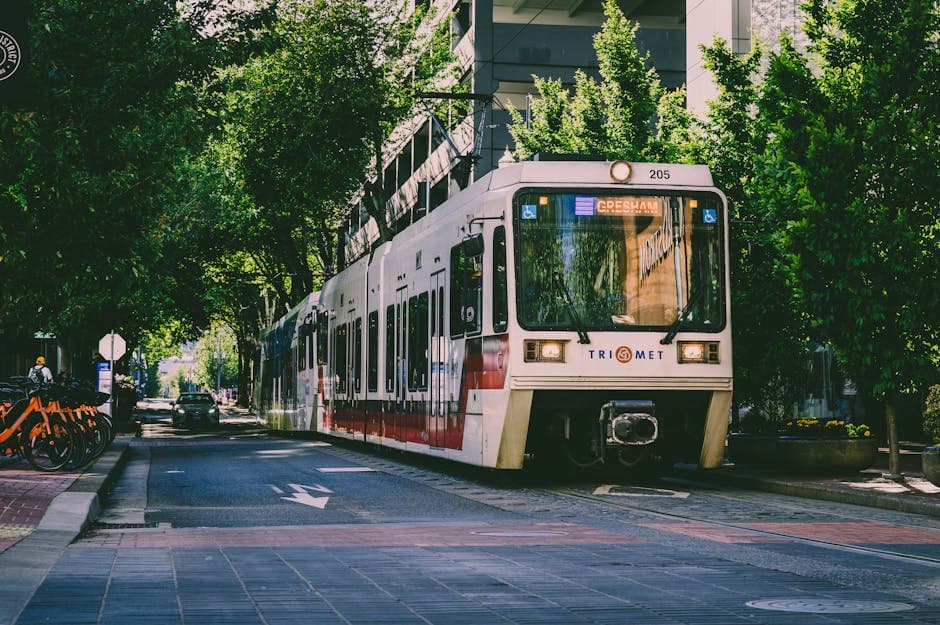
Source: City of Gresham, US Forest Service Mt. Hood National Forest, TriMet MAX Blue Line, US Census Bureau ACS.
The Almanac, Page One
State sales tax, Oregon
0%
Menu price is checkout price. Per OR DOR.
Population, Gresham
~111,000
Oregon's fourth-largest city. Per US Census Bureau ACS.
Latino share, city
15%+ and rising
Fastest-growing Latino share in Multnomah County.
Mt. Hood CC enrollment
~20,000 students
Open since 1965. North Gresham campus.
Mt. Hood summit elevation
11,239 ft
Oregon's highest point. Three ski areas on the mountain.
Filed from Gresham · Editorial standards: real sources, no fabricated reviews, no FAQPage schema.
I. Scene
Friday, 6:14 a.m. on E Powell. A coffee operator counts roof boxes and learns the week.
The operator works the second shift on the espresso bar at a drive-up coffee unit on E Powell Boulevard, half a mile past the I-205 hand-off, on the stretch where Powell tilts upward toward Sandy and the foothills. She has been on this corner for three winters now, and she can read the season from the line. Friday at six in the morning in February, every other vehicle in the queue is a wagon or a tall SUV with a Yakima or Thule box on the roof, two pairs of skis in the back, and a phone in a dashboard mount showing the Mt. Hood Highway already turning from gray to white above Rhododendron.
The orders in the line are not random. They are a tight cluster of three kinds. The first is the family run: two large lattes, one hot chocolate, a breakfast burrito, an extra muffin for the back seat, four bottles of water for the road. The second is the ride-share-and-friends run: four single-origin drip cups, two breakfast sandwiches, a paper sleeve of cinnamon rolls to pass around at Government Camp. The third is the day-trip solo: a sixteen-ounce cortado, one hot food item, one cold one. All three kinds spend roughly twenty-two minutes from the I-205 ramp to her drive-up window because that is how long the detour costs them.
The operator has a single thought when she sees that line at six fourteen: if any of those vehicles had pre-ordered through her direct page, they would not be in the line. They would be in the pickup lane on the other side of the building, behind the seven-foot sign that reads simply ORDER AHEAD. The pickup lane runs at one customer every forty-five seconds. The line at the espresso bar runs at three minutes and twelve seconds per customer on a drive-up Friday. The differential, multiplied across the seventy-something vehicles that pass through between five thirty and eight, is the gap between a great Friday and a wasted Friday.
A second operator, this one at a family taqueria on NE Division a mile west, is opening her doors at seven for the school-run breakfast burrito trade. She does not get the ski commuter. She gets the school-bus drop-off parents, the early-shift workers at the Mt. Hood Community College facilities crews, and the Spanish-speaking regulars who have been walking in through the back door since 2009. Her phone rings at seven oh two. The call is in Spanish. The voice on the other end is a regular who orders three breakfast burritos and a horchata on Fridays. The Voice AI answers in Spanish on the second ring and the burritos are on the line by seven oh four. The taqueria does not have a host. It does not have a fourth front-of-house staffer. It has a Voice AI that speaks Spanish and an oven that runs hot.
These two operators do not work the same hours, do not serve the same customer, do not run the same menu. But they both run in a city where the ordering channel decides whether the morning works or does not. That is the spine of the Gresham argument. The mountain pulls one set of customers up US-26 every Friday before dawn. The Latino corridor pulls another set through every weekday on a bilingual phone tree. The college pulls a third through nine months of the year. Direct ordering is what lets a single operator catch all three.
Four miles east on the same Powell, a third operator runs the kitchen at a downtown Gresham brewpub. He has watched five years of Friday-night dinner volume slide into a Mt. Hood-shaped curve, with Thursday and Friday taking ten percent more covers than the rest of the week and Saturday breakfast taking a full third more covers than any other breakfast on the calendar. He does not call this the Mt. Hood effect because he is too busy to give it a name. The rest of the city has been calling it the western door for thirty years.
II. The Industry Strip
Six numbers that define the Gresham restaurant grid.
Storefront restaurants
~420
Active food-service licenses in Gresham city limits per Multnomah County Environmental Health and city business records.
Median ticket size
$28 to $34
Operator-reported across counter-service and casual-dining units. Higher on Mt. Hood Highway approach.
Oregon state sales tax
0%
Per Oregon Department of Revenue. No local option add-on either. Menu price equals checkout.
Mt. Hood CC enrollment
~20,000
Mt. Hood Community College. Open since 1965. Anchors the school-year lunch volume.
Latino population share
15%+ and rising
Fastest-growing share in Multnomah County per US Census Bureau ACS five-year estimates.
Ski-bound weekend share
~28% of weekend AM tickets
Operator-reported share of Friday-Sunday early-morning pickup tickets that ride a Mt. Hood-bound vehicle.
III. The Profile
Fifty-four miles from downtown Gresham to the summit. The line that orders an espresso at six and a chairlift at ten.
The elevation profile below runs east along US-26, the Mt. Hood Highway, from downtown Gresham at roughly three hundred fifty feet of elevation to the summit of Mt. Hood at eleven thousand two hundred thirty-nine feet, with the three passenger ski areas plotted along the way. Distances are USGS topographic; elevations are US Forest Service Mt. Hood National Forest references. The shape of this line is the reason the Friday five-thirty a.m. coffee line on E Powell looks the way it does.
The first twelve miles climb gently from Gresham at three hundred fifty feet up to Sandy at roughly one thousand. Sandy is the canonical refuel stop. Past Sandy the grade gets serious through Welches and Rhododendron, and the highway crosses into Mt. Hood National Forest. Government Camp at four thousand feet is the basecamp village; the three ski areas branch out from there.
Mt. Hood Skibowl has the lowest base elevation of any ski area in Oregon. Timberline Lodge, perched at just under six thousand feet, is the only year-round ski area in North America thanks to the Palmer Snowfield. Mt. Hood Meadows, on the south-east face, has the largest skiable acreage. Each of them anchors a slightly different weekend trip.
The structural fact for a Gresham operator is that every Mt. Hood-bound vehicle passes through the city limits on the way out and on the way back. There is no alternative route. US-26 is the only path through. I-84 and Hood River are a different mountain trip and a different bourbon-and-pinot crowd. The Friday outbound runs from roughly five-thirty in the morning to mid-afternoon, with a pre-dawn peak that buys coffee, breakfast burritos, and bottled water. The Sunday inbound runs from late afternoon into early evening and buys dinner, beer, and a hot bowl of anything.
The summit of Mt. Hood is the highest point in Oregon, eleven thousand two hundred thirty-nine feet above sea level, and the most-climbed glaciated peak in North America by some accounting. That detail is not directly load-bearing for a restaurant grid, but it explains the second wave of summer alpinist traffic that swings through Gresham in July and August on the way to high camp.
IV. The Cuisine Mix
American casual leads. Mexican is closing on it. The kitchen mix on Powell does not look like the kitchen mix on Hawthorne.
The chart below shows approximate share of storefront restaurants by cuisine in the Gresham city limits, indexed from city business license records and Multnomah County food-permit listings. American casual still leads, but the Mexican line is the fastest-growing cohort, and Vietnamese and BBQ are quietly compounding behind it. That mix is materially different from inner Portland.
American casual at twenty-eight percent of storefronts covers the downtown bars and brewpubs, the Mt. Hood Highway diners, and the family-table operators that anchor the corners of every Centennial and Gresham-Barlow school catchment. The Mexican share at twenty-two percent runs almost entirely through family-owned taquerias, panaderias, and full-service dining rooms along the Powell corridor and through Rockwood. It is the share that has moved the most in the last seven years.
The Vietnamese share follows the same eastward migration that pushed the Jade District east of SE 82nd Avenue and into Gresham proper. The corridor of pho shops and banh mi counters that started south of Powell now extends into Rockwood, with a half dozen family operators east of 162nd. BBQ is a smaller but fast-growing cohort, mostly anchored near the Mt. Hood Highway and the Sandy turnoff where the pre-mountain dinner trade is on the way through.
The coffee and bakery share is small but punches above its weight on Mt. Hood Friday mornings. The drive-up coffee unit is, structurally, the pre-mountain pickup unit, and the city has gradually added more of them in the last decade. Several of them now run direct ordering with a dedicated pickup lane and a Friday-Sunday surge schedule hard-coded into the system.
The other category covers Ethiopian, Indian, Salvadoran, Pacific Islander, and Filipino single- unit operators clustered in Rockwood and along E Powell. The single most common feature among them is that they would benefit dramatically from a multilingual Voice AI, and almost none of them are running one yet. That gap is one of the cleanest operating-margin upsides on the page.
V. The Calendar
Five seasonal demand layers stacked across twelve months.
The ribbon below pairs the five primary demand drivers for Gresham restaurants across the calendar year. Ski season runs roughly November through April per Mt. Hood resort operating calendars. Mt. Hood summer hiking peaks July and August. The Gresham-Barlow and Centennial school-year ribbon plus Mt. Hood Community College adds a fall-through-spring lunch lift. Latino Heritage Month and Cinco de Mayo concentrate two large evenings of family demand. The Multnomah County Fair and the city summer event calendar fill the gap between school years.
The ski-season ribbon is the cleanest one. It runs from mid-November when the resorts open through late April when Mt. Hood Meadows and Skibowl close out the spring. Timberline keeps a summer ski operation running on the Palmer Snowfield, which is why the ribbon shows a low non-zero residual through July and August. The Friday-to-Sunday weekly shape that lives inside this ribbon is the subject of section IX.
The school-year ribbon stacks the Gresham-Barlow and Centennial school districts plus Mt. Hood Community College on the same band. They share roughly the same academic calendar with the small variation that Mt. Hood CC runs longer fall and spring terms. The weekday lunch lift this stack produces is among the largest you will see in any Multnomah County suburb; a Gresham operator who designs the lunch menu around this calendar is operating from the demand side.
Cinco de Mayo in early May and Latino Heritage Month from mid-September to mid-October are not generic multicultural marketing windows in Gresham. They are structural demand events for the city's twenty-two percent Mexican-cuisine cohort. Family taquerias on E Powell and through Rockwood see two single-day volume spikes during each, plus a steady lift across the surrounding weekends. Pre-orders, catering packages, and bilingual confirmations during these weeks are the difference between a busy night and a lost one.
The Multnomah County Fair returns to Oaks Park each summer with a weekend that pulls Gresham families into the metro core, and the city's own summer event calendar (Mt. Hood Jazz Festival, Teddy Bear Parade, the Saturday Art on the Avenue series) anchors a slow but persistent uplift in dinner and weekend breakfast volume through July and August while the school year is dark. That uplift is what bridges from spring break to fall sports.
VI. The Houses
The rooms the city walks past on the way to the mountain.
A short non-exhaustive list of the rooms locals quote when they describe Gresham's dining grid. None of these are paid endorsements; they are illustrative anchors for an editorial overview. Hours, ownership, and menus change; check the operator's own site for current details.
Italian, casual fine dining
Boccelli's Ristorante
Downtown Gresham
One of downtown's longest-running tablecloth rooms. Anchors the date-night and post-Mt-Hood-return dinner crowd.
Scottish-style gastropub
Highland Stillhouse Pub
Adjacent Oregon City reach
The whisky-and-cask list locals quote. Pulls a weekend dinner radius that includes east Gresham.
Brewery + kitchen
Hop Valley Brewing Gresham
East Gresham retail
A regional Oregon brewery presence in town. Kitchen runs hot through the school year and ski-season Friday nights.
Italian and pizza
Renato's
East side, off the highway
Family-run for two decades. Pizza-and-Chianti unit, weeknight regulars, school-bus catering.
American, sports bar, legacy
Boundry Bay Bar & Grill
Mt. Hood Highway approach
A legacy room on the highway approach for the post-mountain return dinner crowd. Late-night kitchen on Fridays.
Cantonese seafood and dim sum
Wong's King Seafood
82nd / Jade District reach
The cantonese dim sum anchor that Gresham families drive west for. The Cantonese-and-Mandarin radius extends past 122nd.
Bakery and breakfast
Hannah's Bistro & Bakery
Downtown Gresham
The downtown morning pastry counter. Mt. Hood-bound regulars stop in on Saturday before the highway.
Vietnamese pho and rice plates
Pho Country
Rockwood / E Powell
One of the corridor's anchor pho shops. Spanish, Vietnamese, and English service across one dining room.
By-the-slice pizza
Pizza Schmizza
Mt. Hood Highway and downtown
The Mt. Hood-bound family pickup default. Friday-night slice volume is the seasonal indicator.
Brewery, distillery, and lodging
McMenamins Edgefield
Adjacent Troutdale
Not in Gresham proper but a major adjacent draw. The Troutdale Edgefield campus pulls Mt. Hood and PDX traffic both ways.
VII. The Neighborhoods
Five neighborhoods that each run a different restaurant week.
Downtown Gresham
Main Avenue to NW Division, around Powell
The historic core. Bistros, brewpubs, the bakery counter, the date-night grid.
Operator note
Walk-up Friday and Saturday dinner is the floor; pickup volume swings around special events on the city calendar.
Rockwood
Roughly NE 188th to NE 162nd, north of Stark
The fastest-growing Latino corridor in Multnomah County. Family taquerias, panaderias, halal markets, banh mi counters.
Operator note
Bilingual Spanish-and-English ordering is a baseline, not an option. Spanish Voice AI is the highest-leverage feature in the corridor.
Mt. Hood corridor (East Powell)
E Powell from Hogan east toward Sandy
The pre-mountain approach. Drive-up coffee, breakfast burritos, gas-and-go, family pizza stops.
Operator note
Friday five-thirty a.m. is the peak pre-Mt-Hood pickup window. A pickup lane plus pre-orders captures the line that the espresso bar cannot.
Pleasant Valley
South Gresham, off SE Foster
Newer subdivisions, family households, mid-size casual dining and pizza. The growth edge of the city.
Operator note
Subscription-style weeknight family-meal plans land well here. Sunday afternoon catering pre-orders are the indicator.
Centennial
West Gresham overlap with eastern Portland
School-catchment heavy. Centennial school district. Family casual, breakfast, and pickup-heavy.
Operator note
Lunch-volume tracks the school calendar tighter than anywhere else in the city. Closing the loop with a school-pickup window is the move.
VIII. The Operators
Three Gresham operators. Three different reasons direct ordering pays back inside a quarter.
01 · Mt. Hood-bound coffee operator
The pre-mountain drive-up unit on E Powell.
Problem
The Friday five-thirty espresso line throttles at three minutes per customer. The vehicles in queue would pre-order if they had a five-minute window to do it.
Direct fix
Direct ordering plus a dedicated pickup lane plus a Friday-Sunday surge schedule. Voice AI catches the inbound calls when the bar is buried.
Payback
Recovers fifteen to twenty vehicles per Friday morning that would otherwise drive past. At a $14 average ticket, that is a $210 to $280 morning.
02 · Mexican family taqueria
The Rockwood corridor unit serving three generations on one phone line.
Problem
A third of inbound calls are in Spanish. The night staff is bilingual; the morning staff is not. Marketplace order routing drops the Spanish-language regulars on busy nights.
Direct fix
Bilingual Voice AI answers English and Spanish on the second ring. Direct page mirrors the menu in both languages. Same-day Stripe payout closes the cash gap for a family-owned room.
Payback
Recovers the Spanish-language order tickets that the marketplace simply does not capture. Cinco de Mayo and Latino Heritage Month run at full capacity without a fourth front-of-house hire.
03 · Downtown Gresham brewery
The brewpub on Main Avenue with a kitchen volume to match the beer volume.
Problem
DoorDash and Uber Eats together take roughly twenty-seven percent of the order. The Friday-night kitchen pace is at capacity and the marketplace tickets are diluting the room's margin.
Direct fix
Direct page at the operator's own domain. Uber Direct dispatch when delivery is needed; pickup window the rest of the time. Voice AI answers tasting-room reservation calls.
Payback
On a typical $40 ticket, swings the all-in cost from roughly thirty percent to roughly five percent. Section X breaks the math down on a $40 family pickup order.
IX. The Ski Week
The Friday-Sunday pre-Mt-Hood pickup pattern, indexed across the week.
The chart below pairs morning and evening pickup-order volume across the week, indexed to the Monday baseline at 1.00, ski-season weeks only. Operator-reported across counter-service and coffee units on the E Powell and Mt. Hood Highway approach in Gresham. The Friday and Saturday morning spikes are the structural feature of a Mt. Hood-adjacent restaurant year.
The Saturday morning peak at roughly twice the Monday baseline is the operating story. It is concentrated from five-thirty to eight in the morning, almost entirely in pickup tickets, almost entirely on the Mt. Hood Highway approach side of Gresham. The operator who has a direct page with pre-order pickup windows captures the vehicles that would otherwise idle in a drive-up line and lose patience.
The Sunday evening lift at nearly one and a half times baseline is the return trip. It buys hot food, a bowl of pho or pasta, a six-pack from the brewpub cooler. The operator who positions for this trip is playing a different game than the Friday morning coffee operator; the pickup-versus-delivery split on Sunday evening runs more like sixty-forty in favor of delivery, because the families are halfway home and want it brought.
Thursday evening is the under-noticed lift. The fifteen-percent above-baseline number on Thursday evening is the day-before-the-trip prep run. Families pick up dinner on the way home from the gear-rental stop, the supermarket, the ski-school signup. A Voice AI that catches the Thursday evening phone surge while the kitchen is at the line is the single highest call-recovery hour of the ski week.
The mid-week baseline is not flat either. The school-year Wednesday lunch lift, from the Mt. Hood Community College student catchment and the high school early-release schedules, sits a few percentage points above the Monday base. That lift compounds on top of the ski-season ribbon; in a peak January week, Wednesday lunch can run at roughly the same volume as Friday evening.
X. The Operator Year
How a Gresham operator anchors a calendar to ski season, the school year, and the Mt. Hood summer.
A Gresham operator's year is not a flat curve. It is three overlapping ribbons. The ski-season ribbon runs roughly from the second week of November through the third week of April; it is the primary driver of Friday morning and Sunday evening pickup volume. The school-year ribbon runs from late August through early June with a December break; it is the primary driver of weekday lunch volume. The summer ribbon runs roughly mid-June through early September; it is the primary driver of patio and family dinner volume, picking up everything the school year drops.
November and December are double-counted. Ski season has opened, the school year is still running, and the holiday office-party trade is on top of both. A Gresham operator running tight inventory in November wants direct ordering pre-orders for the Thanksgiving-week pickup queues, school catering packages locked for the December half-day windows, and a Voice AI that can recover phone calls during the Friday-night ski-prep dinner rush.
January through March is the ski-volume peak. Friday morning coffee, Friday evening pre-trip dinner, Saturday early-morning pickup, Sunday evening return. The operator on the Mt. Hood Highway approach side of the city designs the menu page around this shape; the operator in Rockwood designs around the steady mid-week family-taqueria volume. Both benefit from the same direct stack on different shifts of the same week.
April is shoulder. The mountain's lower elevations start to thin out. Timberline runs late spring skiing. The school year is still running, so weekday lunch is the floor. The summer Mt. Hood hiking surge is still a month away. April is a good month to onboard new menu pages and bake in summer pricing.
Cinco de Mayo in early May is the first concentrated event of the post-ski season. Rockwood and E Powell taquerias and family dining rooms run at peak capacity for the five-day window around the holiday. Pre-order catering packages and a bilingual Voice AI in the days leading up to the holiday is the playbook; the operator who has both is going to book through the weekend.
Mid-June through August is Mt. Hood summer. The Pacific Crest Trail through-hiker traffic picks up, Timberline summer skiing continues, and the resort-village dinner trade looks more like a hiking economy than a ski one. The city itself fills with summer event traffic: the Multnomah County Fair, the Mt. Hood Jazz Festival, the Saturday Art on the Avenue series. Patio and family dinner volume replaces the school-year lunch lift one for one.
Latino Heritage Month from mid-September to mid- October overlaps with the school-year restart and the start of the football season. It is one of the two highest-volume cultural windows of the year for the Mexican-cuisine cohort. The operator who runs bilingual marketing campaigns in advance, who has a Spanish-language direct page live, and whose Voice AI is comfortable in Spanish runs through the month without leaving revenue on the line.
XI. The Bilingual Callout
English and Spanish on the same phone tree. In Multnomah County's fastest-growing corridor, that is the difference between a captured ticket and a missed one.
In English
Voice AI: Thank you for calling. I can take your order, give you the pickup time, or hold the line for the kitchen. What can I get started?
Caller: Two carne asada burritos, a horchata, and a kids quesadilla, please.
Voice AI: Got it. Two carne asada burritos, one horchata, one kids quesadilla. Pickup in about twelve minutes. Should I read the address?
En espanol
Voice AI: Gracias por llamar. Puedo tomar su orden, decirle a que hora esta lista, o pasarle a la cocina. Como le puedo ayudar?
Caller: Dos burritos de carne asada, una horchata, y una quesadilla para nino, por favor.
Voice AI: Listo. Dos burritos de carne asada, una horchata, una quesadilla para nino. Lista para recoger en unos doce minutos. Le confirmo la direccion?
The bilingual call tree is not a feature flag. It is a language model that knows the menu, the prices, the modifiers, and the pickup-time math, and answers in whichever language the caller opens with. The operator does not pick the language; the caller does. If the caller opens in Spanish, the AI continues in Spanish until the order is closed. If the caller opens in English, the same.
The structural argument is simple. The Latino share of Gresham's population has crossed fifteen percent on the most recent US Census ACS five-year estimates and is the fastest-growing share in Multnomah County. A Rockwood or E Powell operator on English-only call routing is, in plain math, forgoing a meaningful fraction of inbound calls during every weekend rush. A bilingual Voice AI converts a missed call into a booked ticket inside fifteen seconds. The operator's English staff stays free for the English line. The Spanish-speaking regulars stay regulars.
XII. The Cost Math
Twenty-seven percent versus less than five. The same $40 Mt. Hood family pickup, two cost stacks.
The two columns below break down the all-in cost of a $40 Mt. Hood family pickup ticket under two stacks. The first is a typical marketplace commission of twenty-five percent plus the marketing-fee uplift the marketplace charges to surface the listing, plus standard card-payment processing. The second is the DirectOrders stack: card processing only, with the $249 a month flat platform fee amortized at a typical Gresham operator cadence of roughly five hundred forty monthly orders. The difference is what the operator keeps.
The marketplace stack on a $40 ticket runs an operator roughly $12 in all-in fees. Commission lines published by the major US marketplaces have historically clustered between fifteen and thirty percent depending on tier and feature set; the twenty-five percent line used here is a midpoint between Capital One Shopping and NerdWallet's published commission ranges. Marketing-fee uplift to surface the listing in the marketplace app is additional; payment processing on a card-not-present transaction adds about three percent.
The direct stack on the same $40 ticket runs an operator roughly $1.92 in all-in cost. Card processing at the standard 2.9% plus thirty cents per transaction is the largest line. The platform fee, at $249 a month amortized across a Gresham operator's typical five hundred forty monthly pickup-and-delivery orders, is about forty-six cents per ticket. There is no commission line. There is no marketing surcharge. The customer is yours, and the data is yours.
On a Friday morning with seventy-something Mt. Hood- bound tickets running through a single coffee unit, the difference between the two stacks is approximately seven hundred and ten dollars. On a Sunday evening with the return trip running through a Rockwood family taqueria, the difference is a similar order of magnitude. Across a month, this math is roughly ten thousand dollars at a mid-sized Gresham unit. Across a year, the difference is the margin that pays for the second cook on the line.
Oregon's zero state and zero local sales tax sits on top of all of this. A $40 ticket on a Gresham menu is $40 at the counter. A marketplace ticket builds its own surcharge architecture on top of the menu; the customer experiences the gap whether or not Oregon imposes a tax. The cleanest version of this argument is the direct page: $40 on the menu, $40 at checkout, $1.92 in operator cost.
XIII. The Thesis
Why a $249 a month flat stack with bilingual Voice AI is the only product shape that fits this city.
Start with the geography. Gresham is the only city in the Portland metro where Mt. Hood is a daily commercial fact rather than a postcard. Every weekend, the city is a funnel; the highway runs through it on the way to a ski resort or a trailhead or a wedding at Timberline. A flat-fee direct stack with pickup-window pre-orders and a Voice AI for inbound surge is what captures that funnel. A per-order marketplace fee architecture surrenders roughly a third of the ticket on every Friday morning the funnel runs hot.
Layer in the bilingual reality. Gresham is the fastest-growing Latino share in Multnomah County. The bilingual Voice AI is not a translation feature; it is a market-access feature. The operator on the E Powell corridor who is on English-only call routing is in plain math losing fifteen-plus percent of inbound revenue every weekend. The operator who runs bilingual Voice AI plus a Spanish-language direct page captures it back.
Layer in the college. Mt. Hood Community College runs roughly twenty thousand students plus staff year-round, anchored in north Gresham. The school-year ribbon adds a weekday lunch lift that is materially larger than what the surrounding suburbs see. The direct stack that supports a campus pickup code and a lunch-window pre-order schedule converts that lift into bookings. The marketplace stack does not differentiate the campus order from a random pickup; the operator who controls the direct page does.
Layer in the no-sales-tax math. A $40 menu ticket in Gresham is $40 at checkout. Per the Oregon Department of Revenue, there is no state sales tax and no local option add-on. Marketplaces re-create a transactional gap on their own ledger; the direct stack does not. The combination of the no-sales-tax price story with a flat-fee platform stack is the cleanest pricing posture available to any restaurant operator in any major US food region.
The single operating tactic this report ultimately recommends is this: build the direct page first, turn on the bilingual Voice AI second, and wire Uber Direct as the delivery fallback third. The flat $249 a month plus same-day Stripe payout closes the cash gap, the bilingual Voice AI closes the language gap, and the pickup-window pre-orders close the Friday five-thirty Mt. Hood gap. Three closes. Three payback cycles, each inside a quarter.
Build the pre-mountain pickup page first
A Gresham coffee or breakfast unit on E Powell wants a direct page with pickup windows that map to the Friday 5:30 a.m. through 8 a.m. ski-commuter slot. Pre-orders take the line off the espresso bar.
Turn on bilingual Voice AI for Rockwood
If your unit is in Rockwood, on E Powell, or anywhere along the Mexican-cuisine corridor, the Voice AI needs to answer in Spanish. The lift on call-recovery is the single largest weekend revenue change you will see.
Wire Uber Direct for the return trip
The Sunday evening Mt. Hood return runs more pickup-or-deliver-it-home than the Friday morning outbound. A primary plus fallback dispatch keeps promise times near twenty minutes when the highway is dumping out.
Editorial Coda
The mountain decides what time you open. The corridor decides what language you answer in. The rest is just operating the kitchen.
References · This report drew from
Twelve sources. Editorial standards: real sources, no fabricated reviews, no FAQPage schema.
- City of Gresham · City government, business records, and event calendar
- Oregon Department of Revenue · Oregon has no state sales or use tax
- US Forest Service Mt. Hood National Forest · Mt. Hood National Forest, US-26 corridor, and ski-area land base
- US Census Bureau American Community Survey · Population, language, and demographic five-year estimates
- Multnomah County · Food establishment permits, environmental health
- Mt. Hood Community College · Enrollment, academic calendar, north Gresham campus
- TriMet · MAX Blue Line schedule and eastern Cleveland Avenue terminus
- Oregon Department of Transportation · US-26 Mt. Hood Highway corridor
- Travel Oregon · Travel guides, Mt. Hood corridor restaurant coverage
- The Oregonian / OregonLive · Gresham city reporting and Mt. Hood corridor coverage
- Portland Business Journal · Portland metro restaurant industry coverage
- NerdWallet small-business desk · US food-delivery marketplace commission ranges
Updated 2026-05-12 · Gresham, OR