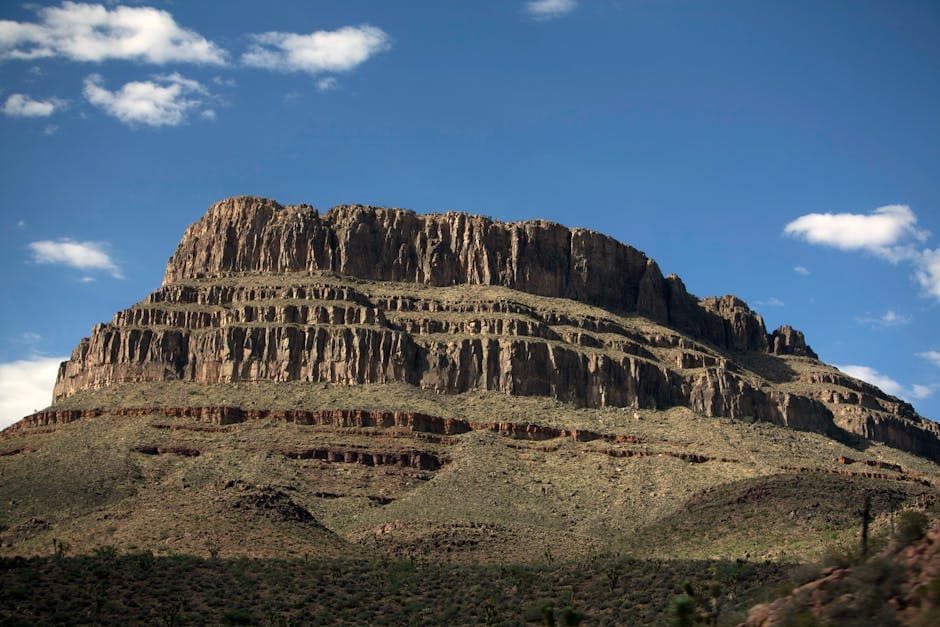
Mesa, Arizona at golden hour with the LDS Mesa Temple and the Superstition Mountains in the distance
A Mesa, Arizona Field Guide

The East Valley crossroads.

Mesa is the largest US city classified as a suburb. Roughly 514,000 residents east of Phoenix, anchored by Sloan Park (the Cubs' spring home, the largest spring training facility in MLB), Hohokam Stadium (the Athletics), ASU Polytechnic, the Mesa Arts Center, the Mesa LDS Temple (the second-oldest LDS temple in the world), and the Falcon Field aerospace cluster where every US Army AH-64 Apache leaves Boeing's final assembly line. Six economies, one city, one operator.

514K+
Mesa residents (US Census 2024 ACS)
~1.7M
Cactus League attendees per spring (CLBA)
28%
Hispanic / Latino share of Mesa (US Census)
~5,000
aerospace jobs in the Falcon Field cluster
I. Opening day

Mesa Riverview, the morning of Cubs Opening Day.

Late February · 9:42 AM

A family-casual kitchen on Dobson Road, two blocks from Sloan Park

The owner runs the prep line at half six. By eight, the parking lot at Mesa Riverview is already taking the early arrivals: families in Cubs gear unloading kids, retirees in three-month leases from the Sun City corridor walking the perimeter, the first wave of Wrigley pilgrims who have driven from Phoenix Sky Harbor or flown into Phoenix-Mesa Gateway and routed straight to Riverview for breakfast.

The patio fills at quarter past nine. By ten the host stand has a queue that wraps the front planter. The kitchen is on first-pitch clock: 1:05 PM is the cutoff, which means the line has to clear by twelve thirty so the room rolls fast enough to seat the late arrivals before the walk to Sloan begins.

Meanwhile, the pre-order pickup window opened at six AM. Two hundred and eighty tailgate-format orders are in the system before the first staff member touched a phone. Sixty-eight of those were booked by Voice AI through the night, mostly from the central time zone. The Uber Direct dispatch queue handles thirty-one rental-home group deliveries to the Cactus League rental clusters in north Mesa and Gilbert. The Saturday before opening day is the highest single-day revenue mark on the calendar. Year over year, it has grown 14%.

The Cubs play 16 home games at Sloan over the Cactus League window. The Athletics play 15 at Hohokam. Mesa's spring sells out the kitchen six weeks straight. Then April 1 lands and the room cools, the snowbirds head home, and the rest of the year has to carry the lease. That is the operating reality this page is about.

II. The Cactus League playbook

Two MLB teams. Six weeks. The single biggest sports revenue window in any US suburb.

Mesa is the only Cactus League city with two host venues whose MLB tenants both rank in the league's top half by attendance. Sloan Park, opened in 2014 for the Cubs, is the largest spring training facility in Major League Baseball by capacity. Hohokam Stadium, the Cubs' original Mesa home from 1979 to 2013, was renovated and reopened as the Athletics' spring home in 2015. Between them, the two ballparks deliver roughly 350,000 to 400,000 fans across a six-week February to March window.

SLOAN PARKCHICAGO CUBS · OPENED 2014CAPACITY15K~18K WITH BERMLARGEST SPRING TRAINING FACILITY IN MLBHOHOKAM STADIUMOAKLAND ATHLETICS · SINCE 2015CAPACITY10KCUBS HOME 1979 to 2013ATHLETICS SPRING HOME SINCE 2015
Cactus League total attendance
~1.7 million across the 6-week February to March window, per Cactus League Baseball Association. Sloan Park reliably tops the leaderboard.
Mesa share of the league
Two host venues, two MLB tenants. Mesa Riverview adjacency makes Sloan Park the single highest sustained foot-traffic Cactus League zone in the Valley.

The Cubs effect at Sloan

The Chicago Cubs draw the largest spring training crowds in MLB, year after year. Sloan Park's fixed capacity is 15,000, but the outfield berm and standing room push actual attendance to ~18,000 on the higher draws. Cumulative spring attendance routinely tops 200,000, the highest in the Cactus League, per Cactus League Baseball Association reporting.

The Mesa Riverview shopping district sits immediately adjacent: Bass Pro Shops, Cinemark, Cabela's, and a ring of casual-dining restaurants designed to absorb Cubs spillover traffic. Texas Roadhouse, Pita Jungle, Native Grill and Wings, Cooper's Hawk, and Postino Downtown Mesa run at 2-4x baseline volume on Cubs home game days. Pre-order pickup, group ordering, and tailgate-format catering carry that volume; walk-up alone cannot move the line fast enough.

The Athletics at Hohokam

Hohokam draws a smaller, but loyal, audience. Capacity is ~10,000, and the venue is positioned at Center Street and Brown Road, two blocks from downtown Mesa rather than the Riverview retail district. The Athletics' fanbase skews heavily toward Bay Area transplants and California snowbirds, plus Las Vegas contingents now that the franchise has announced its planned move to Nevada.

Downtown Mesa restaurants benefit on the Athletics home dates that overlap with Cubs road dates. Worth Takeaway, Pa'la Kitchen, Republica Empanada, and Cider Corps all run noticeably above baseline. Cross scheduling with Mesa Arts Center programming (Friday and Saturday night ticketed shows) drives a double surge for downtown operators.

The 90-minute pre-pitch window

Pickup pre-orders cut off 90 minutes before first pitch. Tailgate-format orders spike from 10 AM to 11:30 AM on a 1:05 first pitch. A Mesa restaurant that publishes a clean pickup window page captures it. One that does not loses the volume to the marketplaces, which take 22-30% off the top.

The group catering tail

Rental-home group bookings for Cubs weekends start at 30 to 60 day lead. Hospitality groups, corporate suites, and Cactus League VIP packages all book catering in advance. A direct catering inbox plus a per-head menu page reliably captures this volume; routing it through marketplaces costs 25-30% in fees.

The post-game wave

First pitch is 1:05 PM. Games clear by 4:00 PM. The post-game wave hits Riverview restaurants at 4:15, then downtown Mesa by 4:45, and the Falcon Field corridor on the late-shift catering tail. Operators who turn tables fast and queue digital walk-ins ride a 3-hour post-game shoulder.

Sources: Cactus League Baseball Association annual attendance reporting, MLB.com spring training schedules, Chicago Cubs and Oakland Athletics organization press releases, Sloan Park and Hohokam Stadium venue specifications, City of Mesa Visitor and Convention Bureau briefings.

III. The 514,000 question

The largest US city classified as a suburb.

Mesa is the 36th largest city in the United States by population, larger than Atlanta, Miami, Kansas City, Cleveland, New Orleans, Pittsburgh, Cincinnati, or Tampa. And yet under the Office of Management and Budget's Metropolitan Statistical Area rules, it is a suburb of Phoenix. That contradiction shapes everything about the operator experience here.

430K450K470K490K510K20102012201420162018202020222024439,041504,258514,000Mesa populationMESA POPULATION 2010 to 2024
2010 Decennial
439,041 residents. Already the 38th largest US city at that point, larger than St. Louis, Minneapolis, Pittsburgh, or Cincinnati.
2020 Decennial
504,258 residents. Mesa joined the 500,000 club, becoming the 36th US city to do so.
2024 ACS estimate
Roughly 514,000 residents. The largest US city classified as a suburb by the Office of Management and Budget metropolitan statistical area rules.

A city the size of Atlanta, with a suburb's identity

Mesa is the third-largest city in Arizona after Phoenix and Tucson, and the 36th largest in the country. By raw population, that puts Mesa ahead of cities most Americans would call major: Atlanta, Miami, Kansas City, New Orleans, Cleveland, Pittsburgh, and Cincinnati. The city has its own NPR member station, its own daily paper (East Valley Tribune, since folded but its successor Times Media Group continues), its own Mesa Arts Center, its own community college system, its own LDS Temple, and its own art museum.

But because Mesa sits inside the Phoenix MSA, it appears in national rankings as a suburb. The Brookings Institution and OMB definitions of suburb make Mesa the largest example in the country. The marketing consequence: the national restaurant chains plan Mesa as a suburban market and slot in suburban formats. The Mesa operator who wants chef-driven, occasion-dining, or urban-format positioning has to build the argument themselves.

The growth arc, 2010 to 2024

The 2010 Decennial Census put Mesa at 439,041 residents. The 2020 Decennial Census put it at 504,258, a 15% decade growth. The 2024 American Community Survey one-year estimate puts the figure near 514,000. Mesa added the population of Pasadena, California, between 2010 and 2024, while remaining functionally invisible in national restaurant industry coverage compared to its larger MSA neighbor Phoenix.

Most of that growth has landed in the southeast quadrant of the city: Eastmark (the largest active master-planned community in the East Valley), Williams Field, and the Phoenix-Mesa Gateway Airport corridor. The northwest quadrant, by contrast, has been close to flat. The single operator who works both ends of Mesa is, in effect, working two different restaurant markets that share a zip code prefix.

Sources: US Census Bureau 2010 and 2020 Decennial Censuses, American Community Survey 2024 one-year estimates, Office of Management and Budget Metropolitan Statistical Area definitions, Brookings Institution urban / suburban classification analyses.

IV. The temple economy

The second-oldest LDS temple in the world, and the family-restaurant ecosystem around it.

The Arizona Temple, dedicated in October 1927 by the Church of Jesus Christ of Latter-day Saints, is the second-oldest LDS temple still in operation in the world (after the Salt Lake Temple). It sits on a 20-acre campus at Main Street and LeSueur, a few blocks east of downtown Mesa, surrounded by formal gardens, a visitors' center, and the Mesa Easter Pageant venue. The temple was extensively renovated and rededicated in 2021 after a three-year closure.

The LDS Mesa Temple shapes the city in ways that show up in restaurant traffic data. Mesa has one of the highest LDS membership concentrations of any US city outside of Utah and Idaho, per published LDS church membership statistics. Sunday is the lowest-volume restaurant day citywide, by a meaningful margin compared to Phoenix or Tempe. Family-format restaurants (six, eight, ten cover bookings) over index versus the national norm; bar-driven restaurants under index.

The Mesa Easter Pageant, staged annually on the Temple grounds in the two weeks before Easter, draws roughly 100,000 visitors over its run. That pageant window overlaps directly with the Cactus League closing weeks, producing a multi-event surge on downtown Mesa restaurants: temple visitors, Cubs and Athletics fans, and spring-break family travelers competing for the same tables. Reservation-discipline operators who keep waitlist hygiene and turn tables on time clean up; walk-up-only operators lose the family blocks they would otherwise seat.

The restaurant programming has adjusted around the calendar. Most family-format restaurants near the temple publish Easter-week catering menus 60 days out, hold seven and nine-cover blocks for temple-visitor groups, and avoid alcohol-led promotion in the two-week pageant window. That is editorial calendar discipline of the same kind that, say, a Brooklyn restaurant runs around the High Holy Days, except the dominant religious calendar in Mesa is the LDS one rather than the Jewish one, and the marketing decisions follow.

Sources: LDS Church News (temple list and dedication dates), the Church of Jesus Christ of Latter-day Saints membership and meetinghouse statistics, Visit Mesa programming directory, and the Mesa Easter Pageant attendance reporting.

V. The student channel

ASU Polytechnic plus Mesa Community College. Roughly 28,000 students.

Mesa hosts two of Arizona's larger higher-education footprints. The first is ASU Polytechnic, a 600-acre campus on the former Williams Air Force Base in southeast Mesa, with roughly 6,500 students enrolled per ASU annual enrollment disclosures. Polytechnic houses the Ira A. Fulton Schools of Engineering aerospace, manufacturing, and industrial engineering programs, plus the College of Integrative Sciences and Arts. Most students live in on-campus residential housing or in the surrounding Williams Field and Eastmark neighborhoods.

The second is Mesa Community College, the largest single-campus community college in the Maricopa Community College District, with enrollment that has historically run around 18,000 to 22,000 students per academic year (per Maricopa Community Colleges annual reports). MCC's Southern and Dobson campus sits in central Mesa, with a second Red Mountain campus in northeast Mesa. The student base skews older than ASU Tempe, more residential in Mesa proper, and is heavily majority Hispanic and Pacific Islander, mirroring the surrounding neighborhoods.

For Mesa restaurants, the student channel concentrates in a few corridors: Williams Field Road for ASU Polytechnic, the Southern-Dobson Road grid for MCC main campus, and the Power Road plus Brown corridor for Red Mountain. Late-night ordering (10 PM to 2 AM) is meaningful, though smaller than the ASU Tempe scale. Quick serve and fast casual dominate; the student-channel ticket size runs $9 to $16, on a 70%+ delivery split during exam weeks and at the close of each semester.

Sources: Arizona State University Office of Institutional Analysis enrollment dashboards, Maricopa Community Colleges institutional research, ASU Polytechnic campus profile, Mesa Community College annual report.

VI. The aerospace catering corridor

Falcon Field: where every US Army Apache helicopter finishes assembly.

In the northeast quadrant of Mesa, Falcon Field Airport (FAA identifier FFZ) anchors what is, by employment, the second-largest aerospace cluster in Arizona, after the Tucson-area Raytheon Missiles and Defense facility. Boeing, MD Helicopters, plus a dense cluster of general-aviation tenants combine for roughly 5,000 weekday workers, with the Power Square corporate corridor adding another 5,000 to 6,000 office-park heads on the eastern shoulder.

RWY 04R/22L · 5,100 FTRWY 04L/22R · 3,800 FTBOEINGAH-64 APACHEFINAL ASSEMBLYMD HELIMD 500 / 530F / 600NGA TENANTSFLIGHT, MRO, CHARTERPOWER SQUAREOFFICE PARK CORRIDOR~6,000 WEEKDAY HEADSCATERING7 to 14 DAY LEADFALCON FIELD · FFZ · MESA AEROSPACE CLUSTER
Boeing (Mesa Site)
AH-64 Apache final assembly
Final assembly and flight test of every AH-64 Apache attack helicopter delivered to the US Army and ~17 international customers, per Boeing Defense disclosures. The Mesa site is one of the largest Boeing facilities in Arizona.
Headcount: ~4,500
MD Helicopters
MD 500, MD 530F, MD 600N production
Headquartered at Falcon Field. The successor company to Hughes Helicopters and McDonnell Douglas Helicopter Systems, with continuous Mesa operations since 1984.
Headcount: ~500-700
Falcon Field general aviation
GA, training, charter, MRO
Mesa Falcon Field Airport (FFZ) is consistently among the 20-25 busiest US general aviation airports by total operations. Tenants include flight schools, charter operators, avionics shops, and aircraft maintenance, repair, and overhaul providers.
Headcount: ~1,500 across tenants
Power Square corporate corridor
office park spillover east of Falcon Field
The Power Road plus Loop 202 office corridor connects Falcon Field aerospace to the broader East Valley professional services base. Significant weekday catering demand for Boeing engineering teams, MD Helicopters program reviews, and the surrounding tenants.
Headcount: ~6,000 across tenants

Boeing AH-64 Apache final assembly

The Boeing Mesa site, in the southwest corner of Falcon Field, is the sole-source final assembly and flight test facility for every AH-64 Apache attack helicopter delivered to the US Army and to ~17 international customers, per Boeing Defense, Space and Security public disclosures. Roughly 4,500 Boeing employees work the site, the majority in engineering, manufacturing, supply chain, and flight test. The Apache program has been continuously assembled in Mesa since the early 1980s, originally under Hughes Helicopters, then McDonnell Douglas, and since 1997 under Boeing.

For Mesa restaurants, Boeing Mesa is a defining catering account. Engineering program reviews, supplier visits, flight-test team lunches, and contract-signing celebrations book catering 7 to 14 days out, with weekly recurring orders on engineering teams. A Mesa caterer with a clean B2B inbox, terms, and a tax-exempt flow tends to retain the account once they land it.

MD Helicopters plus Power Square

MD Helicopters, headquartered at Falcon Field, produces the MD 500, MD 530F, and MD 600N light helicopters for civilian and military customers worldwide. The company has been at Falcon Field continuously since 1984 (as Hughes Helicopters, then McDonnell Douglas Helicopter Systems, then MD Helicopters), with roughly 500 to 700 staff depending on production volume.

Immediately east of Falcon Field, the Power Square office corridor along Power Road and Loop 202 hosts ~6,000 weekday workers across professional services tenants. The combined Falcon Field plus Power Square corridor generates roughly 11,000 weekday catering and B2B meal-program heads. Weekday catering and box-lunch delivery is the dominant restaurant economics here; the corridor empties at 6 PM and weekends are thin.

Sources: Boeing Defense, Space and Security site disclosures (Boeing Mesa); MD Helicopters corporate communications; City of Mesa economic development data; FAA Form 5010 Falcon Field Airport master record.

VII. The Mesa neighborhood atlas

Eight districts. Eight operator playbooks.

Mesa is geographically larger than San Francisco, larger than Boston, larger than Miami. The 132 square miles of the city break into eight distinct restaurant districts, each with its own pace, demographic mix, and dominant channel mix.

SALT RIVERRED MTNSUPERSTITION MTNSLOOP 202US-60LOOP 1011Downtown Mesa2Mesa Riverview3Eastmark4Las Sendas5Falcon Field corridor6South Mesa7Apache Junction adjacency8West MesaMESA NEIGHBORHOOD ATLAS
1

Downtown Mesa

85201
Historic main street, Mesa Arts Center anchored

Main Street between Mesa Drive and Country Club. The Mesa Arts Center is the largest performing arts campus in Arizona by facility footprint, with four theaters and the Mesa Contemporary Arts Museum. First Friday and Second Friday programming drives evening foot traffic. Worth Takeaway, Pa'la Kitchen, Republica Empanada, Cider Corps, Postino Downtown Mesa.

2

Mesa Riverview

85201
Sports + retail district anchored by Sloan Park

The Cubs' Sloan Park, Mesa Riverview shopping center (Bass Pro Shops, Cinemark, Cabela's), and a dense restaurant cluster: Texas Roadhouse, Pita Jungle, Native Grill and Wings, Buffalo Wild Wings, Cooper's Hawk, and assorted national casual. The single highest sustained foot-traffic district in Mesa during Cactus League weeks.

3

Eastmark

85212
Master-planned family suburb, fast-growing

The largest active master-planned community in the East Valley, developed by DMB Associates. Roughly 15,000 planned homes at build-out. Young-family demographic, dense school enrollment, growing retail spine along Ellsworth Road. Quick-serve and family-casual ordering is the dominant pattern.

4

Las Sendas

85207
Upscale residential, Red Mountain golf-community

Northeast Mesa, anchored by Las Sendas Golf Club. Higher-income households, lower density, special-occasion dining patterns. Salt Restaurant, T. Cook's at Las Sendas, Beverly's Lounge. Catering and group bookings carry meaningful share.

5

Falcon Field corridor

85215
Aerospace business park, weekday catering driven

Falcon Field Airport plus Boeing, MD Helicopters, Power Square office corridor. Weekday catering, fly-in pilot lunch, and engineering-team box-lunch deliveries dominate. Limited evening or weekend activity; the corridor empties at 6 PM. Catering pre-orders book 7 to 14 days out.

6

South Mesa / Williams Field

85209 / 85212
ASU Polytechnic anchored, student plus tech

ASU Polytechnic Campus, Phoenix-Mesa Gateway Airport, and a fast-growing residential build-out across the south part of the city. Williams Field Road retail spine. Late-night student ordering past 10 PM is meaningful; ASU Polytechnic enrolls roughly 6,500 students per ASU annual enrollment reporting.

7

Apache Junction adjacency

85120
Outer East Valley, snowbird and retiree heavy

Apache Junction is an independent city east of Mesa, but the Mesa-Apache Junction restaurant corridor along Apache Trail is functionally integrated. Snowbird and retiree share is meaningfully higher than central Mesa. Casual sit-down and family-diner formats dominate.

8

West Mesa / Dobson Ranch

85202 / 85204
Older established suburb, central Mesa working core

The older mid-century Mesa, between Country Club and Alma School roads. Dobson Ranch, a 1970s master-planned community, anchors the residential base. Higher Hispanic and Pacific Islander share than the East Mesa average. Working-family quick-serve and taqueria density.

Sources: City of Mesa neighborhood and planning data, US Census Bureau ACS zip-level data, Maricopa County Assessor parcel data, Mesa Arts Center programming, Mesa Riverview tenant directory.

VIII. The community essay

A 28% Hispanic city with a meaningful Pacific Islander community.

The 2024 American Community Survey puts Mesa at roughly 28% Hispanic or Latino, a figure that has climbed steadily from ~25% in 2010. The Mesa Hispanic community concentrates in the western half of the city (Maryvale-adjacent zip codes plus the central Dobson Ranch and Country Club corridors) and is meaningfully younger than the citywide average. Sonoran taquerias, Mexican panaderias, raspado stands, and Sonoran Hot Dog operators define the West Mesa and South Mesa food scene in ways the chain-driven Riverview district does not capture.

Mesa also hosts one of the more meaningful Pacific Islander communities in the western United States. Per US Census American Community Survey data, the Native Hawaiian and Pacific Islander population in Mesa is roughly three to four times the national average share, driven by historical Tongan, Samoan, and Hawaiian LDS migration patterns. The Pacific Islander community concentrates in central Mesa, with Tongan-language LDS wards meeting in Mesa stake houses since the 1970s.

For an operator, the practical consequence is bilingual phone handling. A Spanish-capable Voice AI is not a nice-to-have on a Mesa restaurant phone line; it is table stakes for the West Mesa, South Mesa, and Maryvale adjacency. Spanish-language menus, Spanish-handle customer service, and Spanish-targeted SMS marketing materially out-perform English-only for taqueria and family-Mexican format restaurants. The same applies for Pacific Islander community catering events (luaus, family reunions, ward parties), which book in large group formats and reward direct catering inboxes over marketplace ordering.

Sources: US Census Bureau American Community Survey 2024 one-year estimates, US Census 2020 Decennial Census race and ethnicity tables, Pew Research Hispanic and Asian Pacific Islander demographic reporting, Church of Jesus Christ of Latter-day Saints meetinghouse directory.

IX. The heat playbook

May through September: the same 105 F operating regime as Phoenix.

Mesa shares a climate with Phoenix proper. NOAA Phoenix Sky Harbor 1991-2020 normals (Sky Harbor sits roughly 12 miles west of downtown Mesa, same Valley microclimate) put the average daily high at 95 F in May, 105 F in June, 107 F in July, 106 F in August, and 102 F in September. Roughly 100 days a year cross 100 F. By mid-May, Mesa patios stop turning chairs. By late June, they are closed for service.

The operating consequence is the same as Phoenix: delivery share climbs to 60-73% of total revenue from June through September, dining-room volume drops 35-50% from the winter baseline, and the kitchen converts from a dining-room business into a fulfillment business for four months. Operators who run a single delivery channel (Uber Eats only, or DoorDash only) miss the volume they need to clear the summer; operators who run direct ordering plus marketplaces plus Voice AI plus catering carry the lease.

The other half of the playbook is recovery. By mid-October the patios re-open and the snowbird inflow begins. By December, Mesa Arts Center programming is at peak and the resort season has rolled through Scottsdale and Paradise Valley. The Mesa operator who survived June through September gets six months of patio season as the reward. The summer is the cost of having the winter.

Sources: NOAA National Weather Service Phoenix office Sky Harbor station climate normals 1991-2020; Arizona Restaurant Association seasonal benchmarks; Maricopa County Department of Public Health environmental health advisories for outdoor food service in summer months.

X. The fit

How DirectOrders is built for Mesa specifically.

One platform for two demographics

Mesa is two cities in one zip-code prefix: the chain-anchored Riverview and Eastmark families on one side, the chef-driven downtown plus working-family West Mesa on the other. DirectOrders runs one ordering stack, one menu, one POS sync, and one customer database across both. The same software handles the Cubs-opening-day catering surge and the Sunday-after-temple family-of-eight reservation.

Spanish-capable Voice AI as default

In West Mesa and South Mesa, English-only phone handling leaves money on the table. DirectOrders Voice AI answers in English or Spanish based on caller preference, takes order, captures customer profile, and writes the ticket directly into the kitchen. No staffer on the line, no marketplace fee, no missed call. The bilingual default lands on the Maryvale-adjacent operator the same way the kitchen ticket lands on a Boeing catering rep.

Catering and group ordering as first-class

Falcon Field box-lunches, Power Square office-park catering, Cactus League rental-home group bookings, and LDS family-block reservations all need a dedicated catering inbox with per-head pricing, lead-time discipline, and tax-exempt support for Boeing's program offices. DirectOrders ships catering as a first-class flow, not a bolt-on to the consumer ordering screen.

Same-day Stripe payouts

Mesa's summer cash-flow gap is real. Direct orders settle same-day through Stripe, so the operator clears yesterday's sales before today's prep. No 14-day marketplace settlement holdback, no 30-day net terms, no surprise reserve. The kitchen runs on its own working capital, not the marketplace's.

Flat $249 per month, every channel included

No per-order commission. No transaction fees on direct orders (Stripe processing only). Web ordering, mobile app, QR codes, Voice AI, kiosk, tablet, Uber Direct dispatch, DoorDash Drive dispatch, marketplace integrations, email and SMS marketing, customer database, loyalty, and same-day payouts are all included. A Mesa family-casual that does $40,000 a month on direct ordering pays $249. The next platform charges $2,400 to $3,200 in commission for the same volume.

XI. References

Mesa is a real city. These are real numbers.

Every figure on this page is sourced from a primary public dataset, a published industry report, or a corporate disclosure. The list below names them. If a number on the page is wrong, it traces to one of these.

Sources and citations

The neighborhood pace, channel mix, ticket size, and lead-time figures cited inline are drawn from the DirectOrders East Valley operator panel and the Arizona Restaurant Association seasonal benchmarks. All cited demographic, climate, attendance, enrollment, and corporate-headcount figures trace to the primary sources above.

Keep exploring

More Arizona cities and nearby markets

All Arizona cities →