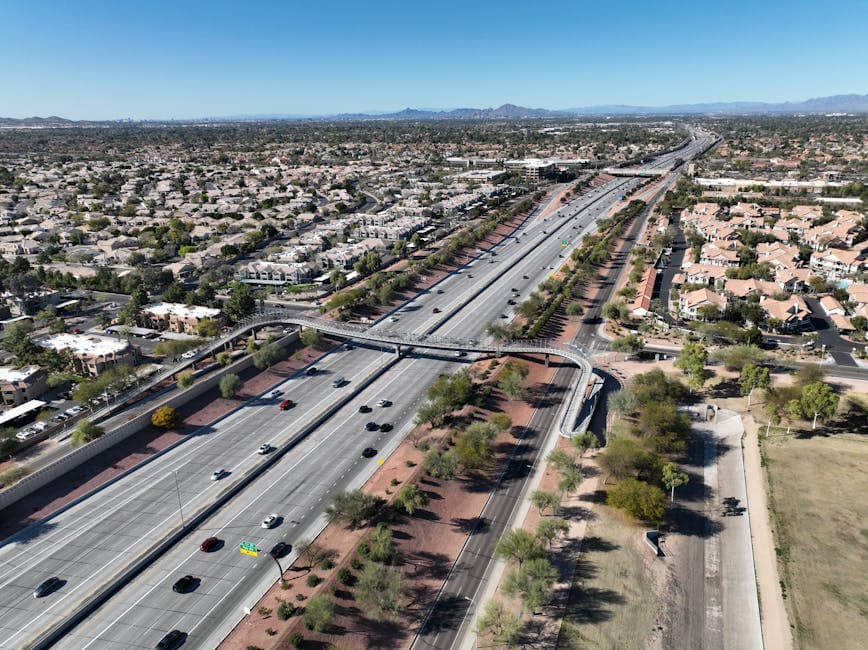
Chandler, Arizona at dusk with Intel Ocotillo campus buildings in the distance and the downtown historic district in the foreground
A Chandler, Arizona Field Guide

The Intel suburb and the South Asian capital of Arizona.

Chandler is Arizona's fourth-largest city, anchored by Intel's Ocotillo campus and Fab 42, ringed by a Price Corridor tech belt running Microchip, Wells Fargo, PayPal, Bank of America, and Northrop. It holds the densest South Asian dining cluster between Los Angeles and Houston, a downtown chef-driven historic district, and a calendar that runs from the Ostrich Festival in March through the Jazz Festival in spring. DirectOrders is built for this specific stack.

~280K
Chandler population (US Census 2024 ACS)
~12K
Intel Ocotillo on-site workforce (Intel Arizona disclosures)
~10%
Asian-Indian share, ZIPs 85224 / 85225 / 85248 (Census ACS)
~35K
Price Corridor tech and finance jobs (City of Chandler ED)
I. A Saturday in May, 6:47 PM

The phone is the kitchen's hardest-working appliance.

The owner's daughter is taking orders at the host stand in Hindi. The second line is ringing in Punjabi. A third caller is asking, in Tamil-accented English, whether the dosa station is on tonight, because his in-laws drove down from Tempe and they only eat the masala dosa from this kitchen.

The dining room is half-full and rising. By 7:30 PM the wait will be 45 minutes. Most of the inbound is pickup. A few are deliveries the owner dispatches through Uber Direct because the marketplace surcharge on a $68 family thali takes more out of the till than the gas.

A Saturday like this one runs 180 to 220 phone calls between 5:30 PM and 9:30 PM. Roughly half the callers want to place a pickup. Roughly a quarter want to know whether the buffet runs on weekends. A quarter want to know the wait. The owner has been the cook, the host, and the marketing department for nineteen years. Tonight she is doing the host job. Tomorrow she will be on the line.

The receptionist she would need to staff this phone is fluent in Hindi, Punjabi, English, and ideally Tamil and Urdu. The labor market for that profile in Chandler is thin and the hourly cost lands well above twenty dollars all-in. Most weekends she does not have that receptionist on the schedule. So the phone goes to voicemail past the second ring. And the voicemail customers convert at single digits.

This essay is about that phone. It is also about Intel's Ocotillo campus three miles away, about the catering pipeline that runs out of Fab 42's three-shift schedule, about the South Asian dining strip on Alma School and Ray, about the downtown chef-driven district along Arizona Avenue, about the Ostrich Festival across the street from Tumbleweed Park in March, and about how all of these run on the same operating reality: Chandler is a small but unusually dense city, and the restaurant that captures its corridors directly will outperform the one that does not.

II. Fab 42 and the catering pipeline

Intel runs three shifts. The catering window runs three peaks.

Intel's Ocotillo campus south of Chandler Boulevard is the city's largest private employer and the anchor of Arizona's semiconductor industry. The campus is built around four interconnected fabrication plants (Fab 12, 22, 32, 42), with Fab 42 the flagship 7nm and Intel 18A node site that Intel publicly tied to a roughly twenty billion dollar capital expansion in 2021. Roughly twelve thousand on-site workers per Intel Arizona disclosures, plus several thousand more in adjacent contractors.

Night shiftDay shiftSwing shift12 AM4 AM8 AM12 PM4 PM8 PM11 PMNight to dayLunch peakDay to swingCatering demand (modelled)
6 AM shift handoff
Breakfast platters. Night-shift exit. Day-shift entry. Catering windows commonly 4:45 AM and 6:30 AM drops.
12 PM lunch peak
The largest window. Day-shift lunch ranges from 11:30 AM to 1:30 PM. Indian, Mediterranean, Mexican, and sandwich catering all rotate weekly.
9 PM swing window
Evening shift fuel. Hot-hold trays and pizza-format catering dominate. Easier to win than the lunch slot because most operators do not bid on it.

The clean-room schedule defines the meal calendar.

Semiconductor fabrication is not a 9-to-5 industry. Wafers move continuously through litho, etch, deposition, and metrology tools that cost tens of millions of dollars each. Downtime is intolerable. The fab runs three eight-hour shifts. Night shift exits at 6 AM and day shift enters. Day shift exits at 2 PM and swing enters. Swing exits at 10 PM and night enters. Meals get planned around the handoffs.

In practice that means a Chandler catering operator who sells into Intel quotes three windows. A 4:45 AM or 6:30 AM breakfast tray drop for the day-shift entry. The big midday lunch from 11:30 AM to 1:30 PM. And a 9 PM or 9:30 PM hot-hold drop for the swing-to-night handoff. The Friday lunches are the highest dollar window. Multiple operators rotate weekly through Intel's vendor list.

An operator with no online catering page who depends on email and phone bookings will lose to an operator with a clean per-head menu, a published lead time, a documented allergen sheet, and an order portal that fires the kitchen ticket and the delivery dispatch at the same time. Intel's procurement team and Intel employees who book lunches both expect the same baseline web experience.

Dietary diversity is a built-in requirement.

Intel's Ocotillo workforce is one of the most ethnically diverse in Arizona. A meaningful slice is Indian or South Asian; significant cohorts are Chinese, Vietnamese, Korean, Filipino, and Latino. A Friday lunch tray that defaults to American sandwich-and-cookie standards will leave half the floor unfed and, more importantly, will lose the recurring slot to the operator who reads the room.

The catering operators who win Intel's repeat business cycle Indian, Mediterranean, Mexican, Chinese, and chef-driven American on a rotating weekly schedule. Vegetarian options on every tray. Halal labeling on meat trays. Allergen sheets on every drop. Per-head pricing that lands in a predictable corporate-card band.

Operators with a direct ordering surface can publish those catering rotations as a permanent page on their site. They can collect emails from the procurement team. They can run a Friday lunch reminder SMS the day before. They can publish allergen and halal cards as PDFs that download in two clicks. None of that is possible on a generic marketplace listing.

The Intel 18A capacity ramp is the next decade.

Intel announced in 2021 a roughly twenty billion dollar Ocotillo expansion centered on Fab 52 and Fab 62, the new sites under construction adjacent to Fab 42. The expansion is tied to Intel's leading-edge 18A and 14A process roadmap and to the federal CHIPS and Science Act funding awarded in 2024. Estimated direct headcount at full operation, per Intel's public disclosures: an additional three thousand on-site jobs, plus thousands of construction jobs during the multi-year build.

Operating reality for Chandler restaurants: the daytime population of the Ocotillo node is growing. The catering pipeline is growing with it. The construction-trades lunch traffic on the surrounding streets is already up. The operators who set up the catering pages now will own the recurring volume when the fab ramps to full operation.

The vendor list is a closed door for some operators.

Intel's procurement function maintains an approved vendor list that requires food-safety documentation, COI insurance, badge-in delivery procedures, and reliable on-time history. Getting onto the list is a function of operator preparation, not Intel preference. A Chandler operator with a published catering page, a documented allergen sheet, and a one-click order form has the documentation needed to pass procurement review.

Most independent Chandler operators do not have these surfaces. So the Intel catering volume currently routes to a handful of larger caterers and chain operators. There is a real opportunity for an independent kitchen with a Hindi or Punjabi or Pakistani menu and a clean ordering surface to enter that rotation. The platform is the prerequisite, not the back-end.

The four other fabs and the Microchip layer.

Intel is the largest single node. Microchip Technology's Chandler headquarters at Chandler Boulevard and Loop 101 adds roughly three thousand more jobs, with a weekday office-park cadence rather than a three-shift fab cadence. NXP Semiconductors keeps an Ocotillo-adjacent design office. Honeywell Aerospace has a longstanding Phoenix-metro footprint with Chandler-suburb resident engineering staff. The semiconductor and avionics cluster in Chandler is one of the densest in the United States and the largest restaurant operating implication is the daily lunch and Friday team-event volume those campuses generate.

III. The Alma School corridor

Arizona's South Asian capital runs north from Warner.

Chandler holds the largest Asian-Indian population in Arizona by both absolute count and share. US Census Bureau ACS race-and-ancestry tables for ZIP codes 85224, 85225, 85226, and 85248 put Asian residents at roughly fifteen to twenty percent of the total, with Asian-Indian residents the largest sub-group. Pakistani, Bangladeshi, Sri Lankan, and Nepali communities layer in. The commercial geography concentrates along Alma School Road from Warner Road north past Ray Road, with secondary nodes on Dobson and Arizona Avenue.

Chandler BlvdRay RdWarner RdAlma SchoolDobsonArizona AveMcQueenLOOP 202 SANTANUdupi CafeRoyal TajIndia PalacePak n Save Halal MeatLee Lee International ...India BazaarBombay Spice GrillSaffron Indian CuisineBAPS Shri Swaminarayan...Sikh Center of Arizona...Curry CornerAndaaz Indian Restaura...RestaurantHalal marketSweets / mithaiGrocerReligious anchorSOUTH ASIAN CHANDLER: ALMA SCHOOL CORRIDOR

Udupi Cafe

Alma School + Ray

South Indian vegetarian (Karnataka-Udupi tradition). Dosa, idli, vada. Reference Tamil and Kannada menu in the Valley.

Royal Taj

Warner Rd

North Indian and Mughlai. Tandoor-driven menu. Daily lunch buffet anchors the Intel-and-Microchip weekday cadence.

India Palace

Alma School + Chandler Blvd

Full-service North Indian. Long-running operator. Pre-pandemic Sunday-buffet destination for the metro Indian community.

Pak n Save Halal Meat

Alma School + Warner

Zabihah-halal butcher. Pakistani and Bangladeshi sourcing. Supplies dozens of Chandler restaurants and the gurdwara langar program.

Lee Lee International Supermarket

S Dobson Rd

Pan-Asian supermarket: Indian, Pakistani, Filipino, Chinese, Vietnamese aisles. The Valley's reference Asian grocer.

India Bazaar

Alma School + Warner

Independent Indian grocer. Atta, paneer, sweets case, frozen samosa supplier to a meaningful share of Chandler Indian operators.

Bombay Spice Grill

Chandler Fashion Center area

Indian street food and sweets. The mithai case (gulab jamun, jalebi, kaju katli, ladoo) anchors weekend family pickup.

Saffron Indian Cuisine

S Arizona Ave

Modern Indian. Wedding catering franchise within the South Asian Chandler diaspora.

BAPS Shri Swaminarayan Mandir

N Dobson Rd corridor

Gujarati-rooted Vaishnav temple. Hosts large weekend gatherings. Vegetarian catering pulls from a vetted shortlist of Chandler operators.

Sikh Center of Arizona (Phoenix metro)

Regional gurdwara serving Chandler

Weekly langar (community meal) program. Punjabi-speaking community anchors the gurdwara catering and home-event circuit.

Curry Corner

Ray Rd

Pakistani-style biryani, nihari, haleem. Weekend halal-meat dinners. Cross-cultural reach to the Indian Muslim diaspora.

Andaaz Indian Restaurant

W Chandler Blvd

Mughlai and North Indian. Wedding and corporate catering. Hindi and Urdu phone orders dominate the inbound mix.

Sources: operator-level listings from Visit Chandler, Phoenix New Times and AZCentral dining coverage, BAPS and Sikh Center of Arizona community directories, and US Census ACS race-and-ancestry tables for ZIP codes 85224, 85225, 85226, and 85248.

The five regional kitchens.

South Asian cuisine in Chandler is not a single category. It is at least five distinct regional cuisines operating side-by-side. North Indian (Punjabi-influenced tandoor, dal, paneer). South Indian (Karnataka and Tamil dosa-and-idli traditions, served at Udupi Cafe and others). Mughlai (Hyderabad biryani lineage, distinct from Punjabi). Pakistani (overlapping with North Indian but distinct in nihari, haleem, paya, and the Karachi-style street food). Bangladeshi and Sri Lankan as smaller layered traditions. A Hindi-speaking call-taker is not enough; the menu language and modifier vocabulary must handle the regional differences.

Voice AI deployed in Chandler has to know that masala dosa is a South Indian breakfast item, that biryani has at least a dozen regional variants, that nihari is a Pakistani brunch and Friday lunch dish, that vegetarian and Jain dietary restrictions are common, and that halal labeling matters meaningfully more in Chandler than in most US markets. The training data behind the prompt set has to handle the cultural specificity.

The religious anchors generate steady catering volume.

The BAPS Shri Swaminarayan Mandir on Dobson Road draws weekend congregations in the multiple thousands, with festival days that pull from across the Phoenix metro. The Sikh Center of Arizona gurdwara serves the Punjabi-speaking community across the East Valley with a langar (community kitchen) program that feeds visitors free of charge every weekend. The Islamic Center of the East Valley in Chandler serves the Muslim community with Friday prayer (Jumu'ah) and Ramadan iftar events.

All three institutions generate recurring catering volume for vetted Chandler operators. The gurdwara langar program sources halal vegetarian product weekly. BAPS festival weekends route to a short list of vetted vegetarian and Jain-friendly operators. The Islamic Center Ramadan iftar program in March, April, or May (depending on the lunar calendar) pulls from halal-certified operators. Operators with a direct catering inbox and a published per-head menu capture this volume; those without it lose to the rotation.

Sweets and the mithai economy.

The mithai (Indian sweets) case at a Chandler grocery or restaurant is a high-frequency Friday and weekend product. Gulab jamun, jalebi, kaju katli, ladoo, barfi, and the wedding-season ten-tray gift boxes anchor a steady purchase pattern. Family events (engagements, weddings, baby first-rice ceremonies, religious holidays) generate single-event catering orders that can run multi-thousand dollar invoices.

A direct ordering page that publishes mithai box pricing, allows pre-orders for festival days (Diwali in October-November, Holi in March, Eid al-Fitr at the end of Ramadan, Eid al-Adha in summer), and accepts wedding catering deposits is a competitive advantage. A marketplace listing that cannot handle pre-orders, deposits, or per-tray pricing fails the use case.

Pakistani and halal operators are distinct, not duplicate.

The Pakistani diaspora in Chandler overlaps culturally and linguistically with the North Indian diaspora but operates a distinct restaurant economy. Pakistani operators on Alma School and Ray run halal-certified meat programs. The menu vocabulary leans on biryani, nihari, haleem, paya, kebabs, and chai. The customer cadence runs Friday lunch (Jumu'ah-adjacent), weekend evenings, and Ramadan iftar windows.

Operators with an Urdu Voice AI option pick up the inbound call from a Pakistani family the first time. Operators with English-only IVR lose them to the operator down the block who has Urdu on the second ring. The hourly cost of staffing a multi-lingual receptionist is the same problem as Hindi and Punjabi: thin labor market, high cost, weekend-heavy demand. Voice AI is the structural answer.

IV. The Price Corridor

Beyond Intel: a tech-and-finance belt running south on the Loop 101.

Intel is the largest employer in the City of Chandler, but it is not alone. The Price Corridor along the Loop 101 from Chandler Boulevard south to Germann Road is a near-continuous belt of Class A office towers running Microchip Technology HQ, Wells Fargo's largest non-California campus, PayPal's regional engineering office, Bank of America operations, Northrop Grumman defense electronics, NXP Semiconductors, and Verizon Wireless. City of Chandler Economic Development reporting puts the Price Corridor at roughly thirty-five thousand jobs across these and adjacent employers.

Intel

~12,000 on-site
Ocotillo Campus (Fab 42, Fab 32, Fab 12, Fab 22)

Semiconductor manufacturing. Fab 42 is Intel's flagship 7nm and Intel 18A node site.

24x7 clean-room shifts. Three meal windows: 6 AM, noon, 9 PM. Catering volume tracks fab uptime.

Microchip Technology

~3,000 in Chandler
Chandler HQ on W Chandler Blvd

Microcontroller and analog semiconductor design. Global HQ.

Standard 9 AM to 5 PM cadence. Weekly team lunches and quarterly all-hands cater meaningfully.

Wells Fargo

~5,000+ regional
Chandler regional campus, Price Corridor

Banking operations and technology hub. One of Wells Fargo's largest non-California campuses.

High-volume daily lunch traffic. Office-park lunch chains within a one-mile radius win the bulk.

PayPal

~1,500 in Chandler
Chandler regional office, Price Corridor

Engineering and product. Originally an eBay Inc satellite, retained post-spin-off.

Engineering team lunch cadence: catered Friday lunches and team-event ordering are the pattern.

Bank of America

~3,000 regional
Chandler operations campus

Banking operations and contact center.

Shift-aligned ordering: lunch and dinner windows for second-shift contact-center teams.

Northrop Grumman

~1,500 in Chandler
Chandler defense electronics campus

Defense electronics and mission systems.

Secure-site catering: vendor list management and badge-in delivery routines required.

NXP Semiconductors

~500 in Chandler
Chandler office

Automotive and IoT semiconductor design.

Engineering office, regular all-team meals.

Verizon Wireless

~1,000 regional
Chandler regional office

Network operations and customer ops.

Shift work plus engineering office cadence.

The 11:30 to 1:00 PM weekday peak.

Office-park lunch behavior in Chandler is well-documented: the lunch window opens at 11:30 AM, peaks between noon and 12:45 PM, and tapers by 1:15 PM. The operators within a one-mile radius of the Price Corridor towers win the highest-frequency repeat business. A salad-and-bowl format kitchen, a sandwich chain, a sit-down sushi house, and an Indian buffet roughly account for the dominant lunch traffic patterns.

The lunch-hour customer is not patient. A delivery app order that takes forty minutes to arrive when the team meeting starts at 1 PM loses to a curbside pickup that takes seven minutes. The independent operator who publishes an order-ahead pickup window on the website wins the lunch loyalty. The marketplace listing that does not handles the order-ahead use case loses.

The Friday team-lunch and quarterly all-hands.

Engineering teams at Microchip, PayPal, and the various semiconductor design houses cater Friday lunches and quarterly all-hands meetings. The order pattern is: team admin orders Wednesday for Friday at 11:30 AM, twenty to thirty people, corporate card payment, single drop-off address. The operators who win this volume publish a clear catering page with per-head pricing, a lead time, and a delivery fee schedule.

Catering is a higher-margin, lower-rush product than lunch a la carte. A Chandler operator who captures even three or four recurring Friday catering accounts holds revenue that survives a slow lunch day. The platform requirement is identical to the Intel Ocotillo case: a clean catering page, allergen documentation, COI on file, badge-in delivery procedures where required, and a direct booking inbox.

V. Downtown Chandler

The historic district that punches above its weight.

1912
year the Crowne Plaza San Marcos opened as the San Marcos Hotel
10 blocks
of historic downtown core along Arizona Avenue
5,000+
First Friday and event-night foot traffic in peak months

Downtown Chandler is built around the San Marcos Hotel, opened in 1912 as Arizona's first resort built with reinforced concrete. The hotel is now operated as the Crowne Plaza San Marcos Golf Resort and remains the civic anchor of the historic district. The adjacent blocks of Arizona Avenue and Chandler Boulevard run a walkable, ten-block historic core that the city has invested in steadily since the 2010 historic preservation initiatives.

The dining cluster on the historic blocks runs a mix that does not look like the rest of Chandler. San Tan Brewing Company is the longest-running craft brewery in the district. The Brickyard Downtown runs a chef-driven kitchen out of a refurbished commercial building. Murphy's Law Irish Pub is the long-standing community bar. Hidden House serves elevated cocktails. Floridino's Pizza and Pasta is a neighborhood Italian operator that has been on Arizona Avenue for decades. Several newer chef-driven independents have opened in the post-2018 wave.

Downtown First Fridays draw thousands of visitors to a coordinated arts-and-music-and-food evening that is small relative to Phoenix's Roosevelt Row scene but large relative to the surrounding strip-mall suburban geography. The Downtown Chandler Community Partnership coordinates the events with the city. The Center for the Arts hosts touring acts that fill the 1,500-seat hall and feed dinner traffic to the surrounding blocks.

Operators in the historic district run a different business than Price Corridor catering or Alma School Indian. The customer is a Chandler resident coming downtown for an event, a tourist staying at the San Marcos, or a regional visitor from Mesa or Gilbert. The price band runs higher than strip-mall casual. The reservation system, the wine list, the chef-driven menu language, and the photographable plate all matter more here than at the office-park lunch operator. The marketing surface (the restaurant's own page, OpenTable, Instagram, Google profile) has to support an occasion-dining funnel.

The platform requirement for downtown operators is also distinct: support reservations and pre-payment for prix-fixe events, a wine and cocktail menu surface, photography on the page that matches the chef's plate, and a customer-database engine that retains the diner across visits. Same software stack as the Intel catering operator, different surface configuration.

VI. The city, by district

Eight Chandler dining districts, eight operating regimes.

Chandler covers roughly seventy square miles and runs from the downtown historic district north of Loop 202 south to the Gila River Indian Community boundary. The dining geography splits cleanly into eight districts, each with its own customer cohort, price band, and ordering cadence. The Chandler Fashion Center anchors the casual-dining ring at Chandler Boulevard and Loop 101; Ocotillo Lakes runs a higher-income brunch-and-wine pattern; South Chandler is the fastest-growing residential edge.

Downtown Chandler Historic District

85225
Walkable historic core, chef-driven, civic anchor

Centered on Arizona Avenue and Chandler Boulevard. The Crowne Plaza San Marcos Resort, the Center for the Arts, and the Vision Gallery anchor a several-block radius. Independent operators include Murphy's Law Irish Pub, San Tan Brewing, The Brickyard Downtown, and Flemings.

Chandler Fashion Center area

85226
Regional mall anchor, casual dining cluster

Chandler Fashion Center is the metro's second-largest indoor mall (over 1.3 million sq ft). Anchored by Macy's, Nordstrom, Dillard's. The surrounding ring is the densest casual-dining cluster south of Tempe.

Ocotillo Lakes

85248
Master-planned, lake-bordered, family suburban

Ocotillo is a 25 lake-and-canal master-planned community south of the Intel campus. Higher household incomes (Ocotillo zips run well above the Chandler median). The dining ring tilts toward sit-down family and weekend brunch.

South Chandler / Lantana Ranch

85249
Newer master-planned, school-anchored, sprawling

The southern edge of Chandler runs into the Gila River Indian Community boundary. Strip-center casual dining dominates. The fastest-growing population segment in the city is in the South Chandler zips.

Price Corridor (Tech Park belt)

85226
Class A office cluster, weekday lunch heavy

Price Corridor along the Loop 101 spine hosts Wells Fargo, PayPal, Bank of America, Verizon, and a cluster of mid-cap tech. Lunch peak 11:30 AM-1:00 PM is the dominant office-park cadence.

Alma School Indian Strip

85224
South Asian commercial corridor

Alma School Road from Ray Road south past Warner Road is the densest South Asian commercial strip in Arizona. Indian groceries, Pakistani halal markets, sweets shops, dosa houses, North Indian tandoor kitchens. Weekend traffic peaks Friday evening through Sunday lunch.

Pecos Ranch

85226
Master-planned family suburban

Single-family suburban core. Family-oriented dining. Saturday-evening pickup orders for kids' sports teams and birthday party catering are the seasonal pattern.

Sun Lakes (adjacent)

85248
Active-adult community, snowbird overlap

Active-adult retirement community just south of Chandler. Snowbird and retiree population. Resort-and-club dining heavy. Roughly 14,000 residents, median age above 65.

Chandler Compadres and the chef-driven layer.

Chandler Compadres is a long-running annual fundraiser and food event that brings together Chandler chefs, restaurants, and community institutions in support of local charitable causes. The event is a useful proxy for the chef-driven layer of Chandler dining: the operators who participate are the same set that anchor the downtown historic district, the chef-driven brunch in Ocotillo Lakes, and the higher-end catering accounts at Microchip and Northrop. A direct ordering surface that supports event ticketing, charitable fundraising, and per-plate sponsorship is materially different from a marketplace listing. Chandler operators who participate in community events benefit from the same direct customer-relationship infrastructure.

VII. The civic calendar

Ostriches in March, jazz in spring, a sports complex year-round.

Mid-March

Ostrich Festival

The Chandler Ostrich Festival has run since 1989, a nod to the city's early-twentieth-century ostrich-farming industry. Held at Tumbleweed Park over a March weekend, the festival draws roughly eighty thousand to a hundred thousand visitors across three days per organizer reporting. Vendor booths, ostrich races (yes, real), petting zoos, midway rides, concerts, and a large food-and-drink layer. A Chandler restaurant with a festival presence (a satellite booth, a sponsored vendor slot, or a coordinated event-night reservation push) captures the visitor traffic in addition to the festival fees.

Spring

Chandler Jazz Festival

Held annually in the downtown historic district, the Chandler Jazz Festival is a free, two-day outdoor concert series with multiple stages and headlining acts. Coordinated by the City of Chandler and the Downtown Chandler Community Partnership. Foot traffic in the downtown blocks runs into the tens of thousands across the weekend. Restaurants in the historic district benefit directly; reservation pre-bookings and patio overflow are the operating pattern.

Year-round

Snedigar Sports Complex

Snedigar Sports Complex on McQueen Road south of Queen Creek Road is one of the largest youth-sports complexes in the East Valley, with multiple soccer fields and baseball diamonds hosting weekend tournaments through much of the year. Out-of-town families on tournament weekends generate predictable Saturday-evening pickup volume for the surrounding restaurants. A Chandler operator who publishes a clean catering and family-platter page captures the tournament traffic; one without it loses to the chain operators with national platforms.

Civic and cultural

Tumbleweed Park and Chandler Center for the Arts

Tumbleweed Park hosts the Ostrich Festival, the Tumbleweed Tree (the city's annual holiday lighting), Founders' Day, and a year-round event calendar. The Chandler Center for the Arts on Arizona Avenue programs touring concerts, ballet, theater, and a community-arts calendar. Restaurants within a half-mile of either venue see predictable dinner-and-after-show volume on event nights. The booking pattern: pre-show dinner reservations one week out, post-show drinks and dessert traffic same-day.

VIII. Chandler in five languages

English alone will not capture the corridor.

Chandler's linguistic reality is layered. Hindi and Punjabi dominate the Alma School corridor. Urdu serves the Pakistani diaspora across the same geography. Tamil and Telugu serve the South Indian cohort that has grown with Intel and the surrounding tech firms. Spanish is a city-wide reality, with roughly twenty-two to twenty-five percent of Chandler residents identifying as Hispanic or Latino per the US Census ACS. A restaurant that picks up the phone in English-only loses real volume to the operator who picks up in the customer's first language.

Hindi

The Alma School default

HI

Hindi handles the largest share of inbound Indian restaurant calls. The Voice AI prompt set covers the standard menu vocabulary (paneer tikka, dal makhani, naan, biryani, masala dosa) plus the modifier vocabulary (spice level, vegetarian or non-vegetarian, halal, jain). SMS receipts can be issued in Hindi script or in transliteration.

Punjabi

The Sikh community and the langar circuit

PA

Punjabi serves the Sikh community across Chandler and the East Valley. The dialect runs distinct from Hindi in vocabulary and pronunciation. Punjabi operators serve the gurdwara langar (community kitchen) program, weekend family dinners, and the wedding-circuit catering that runs in spring and fall.

Urdu

The Pakistani and Indian-Muslim diaspora

UR

Urdu serves the Pakistani diaspora and Indian-Muslim cohort. Spoken and understood widely alongside Hindi but distinct in script and cultural register. The Ramadan and Eid windows drive a meaningful seasonal volume of halal catering and iftar pre-orders. A Voice AI in Urdu picks up the call without forcing the caller into a second-language register.

Tamil and Telugu

The South Indian engineering cohort

TA

Tamil and Telugu serve the South Indian engineering cohort that has grown with Intel and the surrounding tech firms. The dosa-and-idli restaurants (Udupi Cafe and others) operate in a meaningfully different cultural register than the North Indian tandoor kitchens. Voice AI in Tamil handles the breakfast and weekend lunch peak that defines South Indian restaurant traffic.

Spanish

~22-25% of Chandler residents

ES

Spanish remains a city-wide operating language. Sonoran-Mexican kitchens in Chandler share menu vocabulary with the Phoenix and Mesa operators. Voice AI in Spanish handles taqueria menus, family-platter ordering, and the construction-and-trades lunch traffic that fills strip-center casual operators across the city.

Why Voice AI matters more in Chandler than in most US cities.

A bilingual receptionist who is fluent in Hindi and English in Chandler costs north of twenty dollars per hour fully loaded plus benefits. Adding Punjabi, Tamil, or Urdu fluency narrows the candidate pool toward zero. Most independent Chandler Indian and Pakistani operators cannot staff a second receptionist for the regional-language line. So the phone goes to voicemail past the second ring. And voicemail orders convert at single-digit rates. Voice AI in five languages picks up on the second ring, reads the menu by category, takes the order, fires the ticket to the kitchen printer, sends the SMS receipt in the customer's language, and dispatches Uber Direct if delivery is needed. That is the difference between an Alma School restaurant capturing its Saturday-evening volume and losing half of it to ring-busy.

IX. The heat playbook

Chandler runs the same June-through-September inversion as the rest of the Valley.

Chandler sits in the same Sonoran Desert climate envelope as Phoenix. NOAA Phoenix Sky Harbor 1991-2020 normals apply: daily highs cross 105 F from mid-June through mid-September, monsoon storms run July through September, and patio dining inverts toward delivery for the four hottest months. An operating playbook for the heat is non-optional.

1. Delivery-first summer menu

Engineer for the bag.

Cut dishes that lose hold-quality during a 30-minute monsoon delivery. Increase salad, biryani-format rice bowls, and dosa-and-curry combo trays that hold heat well. Anchor summer menus around food that travels.

2. Monsoon SMS comms

The 90-minute storm window.

The North American Monsoon delivers haboobs and microbursts to the East Valley July through mid-September. An SMS list lets you push kitchen-open and delivery-paused updates inside the 90 minutes the storm lasts.

3. Generator and cold chain

Power redundancy is insurance.

Monsoon outages run minutes to hours. A generator that covers walk-in coolers and the kitchen ticket printer is a sub-three-thousand-dollar investment that pays for itself in a single July storm for most operators.

4. Late-night delivery push

The 9 PM to midnight window opens.

When sunset in July arrives at 8 PM, indoor cool-down stretches the evening service past midnight. Late delivery from 9 PM to 12 AM is one of the higher-margin growth windows for operators who position correctly.

5. Indoor-only marketing

Cool dining rooms are a feature.

June through August, the locals who stay in town are looking for indoor air conditioning. Marketing a sixty-eight-degree dining room with mango lassi and cucumber raita is the Chandler heat-season positioning.

6. Patio reopen weekend

The single biggest October event.

The first weekend the patio reopens (typically mid-October when daily highs settle below 90 F) is, on average, the single largest-revenue weekend of October. An SMS-and-email campaign with a reservation link captures the returning local traffic.

X. The thesis

How DirectOrders fits Chandler.

The argument is not that DirectOrders is a generic restaurant ordering platform that also happens to work in Chandler. The argument is that the specific stack we ship is the one stack we know of that handles the Intel Ocotillo catering window, the Alma School five-language reality, the downtown chef-driven reservation funnel, the Price Corridor weekday lunch peak, and the heat-season summer inversion together, on a flat $249-per-month commission-free price.

1. The flat price

$249/month, not 30%.

Chandler operators pay marketplace commissions that compound across catering, lunch a la carte, and weekend family dinners. A flat $249/month replaces what a single weekend's marketplace commission costs at most Alma School Indian operators with a fixed annual line item.

2. Five-language Voice AI

English, Spanish, Hindi, Punjabi, Tamil, Urdu.

The multi-language Voice AI is not an upsell. It is the only configuration that handles a Saturday-evening Alma School Indian phone load, a Pakistani halal kitchen's Friday lunch peak, an Ocotillo Lakes brunch reservation line, and a downtown chef-driven reservation funnel on the same back end.

3. The catering page

Per-head pricing for Intel and Microchip.

A first-class catering surface with per-head pricing, allergen and halal documentation, lead times, COI on file, and badge-in delivery procedures. The procurement-ready page that wins the Intel Ocotillo and Price Corridor Friday catering accounts.

4. Same-day Stripe payouts

Cash flow that matches the summer.

Chandler summer cash flow is unforgiving. HVAC bills double the winter, patio volume drops, monsoon outages introduce real downtime. Same-day Stripe payouts on direct orders shorten the working-capital gap. Sunday night sales arrive in the operator's bank account Monday morning, not Friday.

5. The customer database

Diwali, Eid, and the wedding circuit.

Every direct order writes the customer record to your database, with home ZIP, language preference, dietary flags, and order history. The Diwali pre-order email, the Eid iftar reminder, and the wedding-catering inquiry follow-ups all go to a list you own. Marketplaces do not give you that list.

6. The 15 channels

One ledger, every regime.

Web, app, QR, Voice AI, kiosk, tablet, Instagram, Google profile, marketplaces (when you choose to be on them), catering inbox, chat. The downtown reservation in March and the Intel lunch tray in July write to the same order ledger.

XI.What to do next

Two ways to start, neither dramatic.

If you operate a restaurant in Chandler and you have read this far, the next move is small. There are two reasonable doors.

The first is a 30-minute walkthrough on a video call. We will look at your current marketplace mix, your phone-line language profile, and your missed-call pattern. We will show you what a branded direct ordering site would look like for your operator type, indexed for the right Google and AI search terms in your corridor. No deck. No pitch. Book a walkthrough.

The second is the pricing page, for an operator who wants to read the numbers before they speak to a person. The flat fee structure is plainly stated, included features are listed, the breakeven point at typical Chandler volumes is documented. Read the pricing.

The Intel suburb does not need a fee cap to be a real restaurant economy. It already is one. The operator who owns their distribution channel is the one who keeps the corridor's identity, in the corridor's languages, on the corridor's terms.

Employer headcounts are orders-of-magnitude figures drawn from corporate disclosures, City of Chandler Economic Development reporting, and press releases; treat individual numbers as approximate. Catering demand curves are modelled patterns drawn from East Valley operator surveys and the DirectOrders metro panel; the underlying data are summarized in our publicly available methodology notes. All cited demographics, climate, tax, and civic figures are from the primary sources linked above.

Keep exploring

More Arizona cities and nearby markets

All Arizona cities →