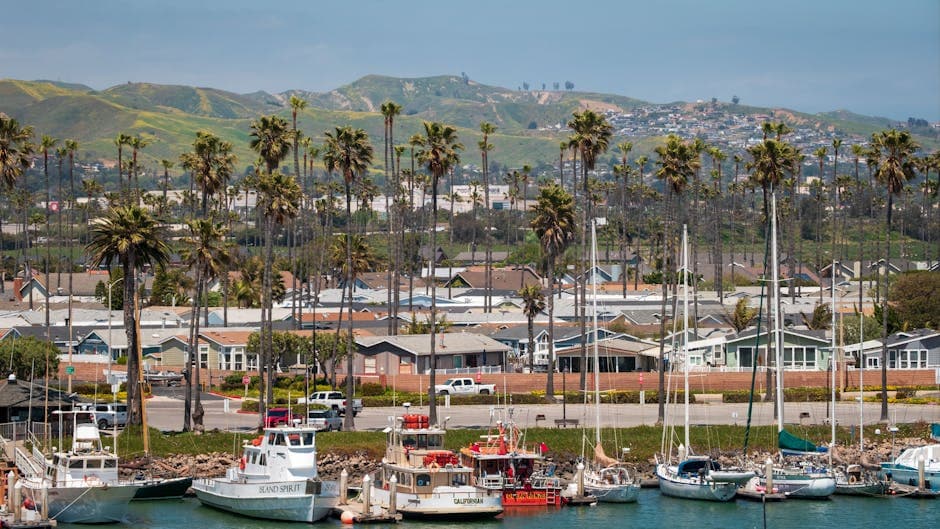
Strawberry Capital. SeaBee port. Channel Islands gateway.
A long read on why an Oxnard restaurant runs four separate economies (agriculture, military, port, tourism) and why direct ordering with bilingual Voice AI is the only channel that can serve all four at once.
City
Oxnard, CA
Geography
~205K residents, ~74% Hispanic
Topic
Fields, fleet, freight, ferries
It is 11:18am on the second Saturday of May. The California Strawberry Festival is open, the shuttle buses from College Park are full, and a small family-run mariscos counter on South Oxnard Boulevard has just taken its 42nd phone order of the morning.
Of the 42 calls, 27 came in Spanish. Eleven came in English. Three were a switch in the middle of the call from Spanish to English. One was a bilingual catering ask from a SeaBee battalion family services coordinator at Naval Base Ventura County, who needed 80 ceviche tostadas delivered to NCBC Port Hueneme at 5pm sharp for a homecoming reception. The other order was a tour group of 14 arriving at Channel Islands Harbor on the 2pm boat back from Anacapa, who wanted shrimp aguachiles ready for pickup at 3:15pm.
The line cook missed the catering call because the kitchen phone rang while the fryers were screaming. He picked up the second time. The English-speaking tour caller hung up after eight rings because the family that runs the counter does not staff a phone person on Saturdays during festival weekend. By 11:30am, two of the three biggest tickets of the day, $586 in catering plus a $182 group pickup, were either lost or recovered only because the same customer called a third time.
The festival outside is on track to draw ~75,000 attendees across the two days. The fields east of the city are in the middle of peak strawberry harvest. NBVC is on a homecoming cycle. The Channel Islands National Park concessionaire's ferries are running every 90 minutes. The Port of Hueneme has a BMW car carrier offloading on the Pleasant Valley Road side. The Mariscos counter exists in the middle of all of that. A pickup is not a marketplace order; it is a 17 word phone conversation that decides whether the catering, the group pickup, the ag-shift breakfast at 5am tomorrow, and the boat-pickup tour all happen.
Marketplaces are not built for that conversation. They are built for one product, one language, one ticket pattern. Oxnard has at least four products (catering, group pickup, ag-shift breakfast, harbor-tourist takeaway), three languages (Spanish, English, plus enough Mixteco households in the field workforce that any agribusiness restaurant should accommodate it), and ticket patterns that range from a $12 breakfast burrito at 5:10am to a $9,800 SeaBee homecoming spread. A 28% commission on the bilingual mariscos counter on South Oxnard Boulevard is a 28% commission on the wrong unit. Direct ordering, with a bilingual phone-line AI and pre-batched delivery via Uber Direct, is the only channel structurally fit for what Oxnard actually is.
The rest of this piece walks the four economies one by one, then the legal stack (AB 1228, SB 478), then the tax math (7.75% combined Oxnard sales tax), and ends with how DirectOrders fits the bill at the brick step.
~30% of the United States fresh strawberry crop ships from Ventura County.
The single most important agricultural fact about Oxnard is that it is the urban center of a county that produces roughly thirty percent of the fresh strawberries eaten in the United States. The numbers below come from the Ventura County Crop Report 2024, the California Strawberry Commission, and the City of Oxnard's own festival programming.
Visualization 1 of 5
The strawberry fields of Ventura County.
Oxnard sits inside ~9,500 acres of fresh strawberry.
Ventura County is the second-largest strawberry-producing county in the United States, behind only Monterey. The fields run from Camarillo through Oxnard to the Santa Clara River mouth, and Oxnard is the urban center sitting in the middle of them. The annual California Strawberry Festival in mid-May draws ~75,000 attendees to Strawberry Meadows of College Park.
Sources: California Strawberry Commission (production share, festival reporting); Ventura County Agricultural Commissioner Annual Crop and Livestock Report 2024 (acreage, gross value, rank); City of Oxnard / California Strawberry Festival (attendance, dates, venue at Strawberry Meadows of College Park, since 1984).
The fields begin south of Camarillo, run through the Oxnard Plain, and stop at the Santa Clara River mouth on the north edge of town. At peak harvest, April through July, the workforce numbers in the tens of thousands, and a substantial share of those workers is indigenous Mexican (Mixteco, Zapotec, Triqui) rather than Spanish-mother-tongue. The Mixteco/Indigena Community Organizing Project estimates ~20,000 Mixteco speakers in Ventura County, one of the largest concentrations in California, and the field labor force is the reason. The agribusiness restaurant on Rose Avenue or South Oxnard Boulevard that opens for ag-shift breakfast at 5am is feeding that workforce, in those languages.
The economic scale is significant. The Ventura County 2024 crop report puts strawberries at roughly $662 million in gross value, the single largest crop in the county. Even at a thin operator margin, the ag economy generates roughly 13,000 farmworker jobs in the immediate Oxnard area and several thousand more in packing, refrigeration, trucking, and ag-machinery service. The trucking, in particular, anchors a Friday-night and Sunday-morning order pattern for the family taquerias that line Pleasant Valley Road and the Ventura Freeway frontage roads.
Then there is the festival. The California Strawberry Festival has run since 1984 in Strawberry Meadows of College Park, mid-May, two days. Attendance has historically peaked around 75,000 across the weekend. Charity proceeds since founding have surpassed five million dollars. The traffic, the food vendor counts, and the parking dynamics are the single most operationally disruptive weekend of the year for downtown Oxnard, second only to the Cinco de Mayo parade weekend at Plaza Park. A restaurant in walking distance of College Park sees roughly 4 to 7 times its baseline order volume across those two days.
The strawberry economy shapes the rest of the city. The chefs at the chef-driven concepts (The Annex, Twenty88, Cielito Lindo Ventura) sometimes feature local-strawberry seasonal menus. The bakeries (La Mexicana, El Comalito, Las Olas) make strawberry pan dulce variations in season. The mariscos counters fold strawberry into a citrus aguachile in April and May. A direct ordering page that can carry a seasonal menu, with image-driven ordering and Spanish-language product descriptions, is the right shape for that pattern. A marketplace flow that forces every menu into the same template is the wrong one.
The agribusiness rhythm also drives the early-morning order pattern that is unique to Oxnard relative to almost every other US restaurant city. Field workers start at 5am. The taquerias near the field corridors are open at 4:45am. A Voice AI that handles the 4:50am Spanish call for two breakfast tortas plus a coffee, with the order ready in the parking lot at 5:05am, is a real product requirement. A marketplace whose customer service desk does not open until 7am cannot answer the operator question that the operator has at 5:09am.
Oxnard is the strawberry capital. That single fact reshapes the restaurant calendar, the menu rhythm, the language of ordering, and the operator workforce. Direct ordering is the channel built around that fact. Marketplaces are not.
~17,000 SeaBees, aviators, and civilians. The catering economy of NBVC.
Naval Base Ventura County is the consolidated installation joining the Naval Construction Battalion Center at Port Hueneme and Naval Air Station Point Mugu. It is the largest Navy SeaBee base on the US West Coast and the home of the Pacific sea range. The catering economy that orbits it is steady, planned, and bilingual-blind: most of the customer base is English-first, but a meaningful share of base civilians and contractor crews speak Spanish as a first language.
Visualization 2 of 5
Naval Base Ventura County, by the numbers.
Two sites, ~17,000 active duty + civilians.
NBVC is the consolidated installation that combines Naval Construction Battalion Center Port Hueneme and Naval Air Station Point Mugu. It is the largest Navy SeaBee base on the US West Coast and the parent command for the Pacific sea range. The map below sketches the two sites and the catering customer segments for an Oxnard restaurant.
Sources: Naval Base Ventura County Public Affairs (consolidated installation profile, personnel totals); Naval Construction Battalion Center Port Hueneme command profile; Naval Air Station Point Mugu / Naval Air Warfare Center Weapons Division (sea range overview, ~36,000 sq mi airspace); Commander Navy Installations Command. Personnel totals are rounded to publicly reported figures and fluctuate with deployment cycles.
Port Hueneme is the headquarters of the Naval Construction Force (the SeaBees), the Navy's combat engineers. The base hosts roughly 5,500 personnel at any one time, and the deployment cycle is the single largest operational pattern driving catering demand. Battalion pre-deployment dinners, homecoming receptions, change-of-command ceremonies, and training graduations each generate scheduled catering orders that range from $2,400 for a small-unit pinning ceremony to $9,800 for a full battalion homecoming spread. The orders are typically placed 7 to 21 days in advance.
Point Mugu is the air station. It hosts the Naval Air Warfare Center Weapons Division, the test wing, and a substantial civilian engineering workforce. The total Point Mugu footprint, including civilians and contractors, is approximately 11,500 personnel. The Pacific sea range, run from Mugu, controls roughly 36,000 square miles of restricted airspace and ocean for missile tests, drone testing, and fleet exercises. The catering pattern here is different: smaller, more frequent, often midweek, driven by test program milestones, contractor lunches, and engineering all-hands meetings.
The recurring office-lunch demand from Office of Naval Research, NAVAIR engineering, and the major defense contractors (Northrop Grumman, Raytheon, Lockheed Martin, Naval Sea Systems Command teams) is the most underappreciated piece of the NBVC catering economy. These are not battalion-scale events; they are 20 to 60 person working lunches that happen 2 to 4 times a week per program. The restaurant that becomes the default for one of them holds the contract for years. Direct ordering with a corporate catering channel, lead-time rules, dietary restriction tagging, and net-30 invoicing is the table-stakes minimum.
There is also the Friday-night and deployment-send-off family pickup pattern. Spouses and dependents on base order in bulk for family dinners on Fridays, especially during pre-deployment weeks. These are not catering tickets in the formal sense; they are 6 to 14 person family pickups with a coordinated order from a single contact. A direct ordering page with a saved family order, repeat-order recall, and a bilingual phone option captures these. The marketplace flow, designed for individual delivery, mishandles them, because the customer wants pickup at the base gate, not delivery to a residential address.
Security and gate access are the additional wrinkles. NBVC is a controlled-access military installation. Most non-base couriers cannot enter without an escort. The right operational pattern is pickup at a named base contact (the family services office, the catering coordinator, the contractor PoC), or delivery to a specific contractor office outside the gate. A direct ordering platform with order notes that survive the kitchen-to-pickup-to-handoff chain, bilingual capability, and dispatch flexibility is the operational fit. Marketplace dispatch, optimized for residential drop-off, is not.
The only deep water commercial port between LA and the Bay.
The Port of Hueneme is small compared to the megaports at LA / Long Beach and Oakland, but it is the only commercial deep water berth between them. The Oxnard Harbor District has built a focused operation around automobiles, refrigerated cargo, and project freight. The dock workforce, the trucking layer, and the warehouse workers downstream are a steady consumer base for Oxnard restaurants north and west of the harbor.
Visualization 3 of 5
The Port of Hueneme. The only deep water commercial port between LA and SF.
Five commodities, one channel-deep berth.
The Port of Hueneme, run by the Oxnard Harbor District, is California's only deep water commercial port between Los Angeles and the Bay Area. Its specialty is roll-on roll-off automotive and refrigerated cargo. The diagram below maps the five commodity bays and the workforce that drives the nightly off-shift restaurant demand.
Sources: Port of Hueneme / Oxnard Harbor District Annual Economic Impact reports; California State Lands Commission (deepwater port designations); Del Monte Fresh Produce (Hueneme as Pacific banana gateway); BMW Group Plant Hueneme Vehicle Distribution Center; Oxnard Harbor District commodity profiles. Channel depth is approximate and varies with maintenance dredging cycles.
The port handles roughly $10 billion in annual cargo value, per the Oxnard Harbor District's most recent economic impact reporting, and supports approximately 13,800 jobs across the region (dock, drayage, trucking, distribution, inspection). For decades, Hueneme has been one of the top US ports for fresh BMW imports, and the line of new vehicles in the Pleasant Valley Road yard waiting on outbound transport is one of the city's quietly iconic sights. Mercedes-Benz, Volkswagen, Tesla, and Volvo all move through the same yards.
Bananas and tropical fruit are the second pillar. Del Monte's Pacific Coast hub at Hueneme has been the gateway for refrigerated fruit imports into the West Coast for years. The refrigerated cargo workflow runs ship to truck under continuous cold chain, with USDA and FDA inspection facilities on site. That cold chain feeds the produce wholesale operations that line the eastern edge of Oxnard near Rose Avenue, which in turn supply the city's restaurants, including its largest agribusiness restaurants and supermarket chains.
Ventura County citrus and avocados move in the other direction: outbound. Sunkist-affiliated growers ship navels, lemons, and grapefruits out of Hueneme to Pacific Rim markets. Mission Produce, the largest avocado distributor in the world (headquartered in Oxnard), uses the port for inbound off-season fruit and outbound shipments. Project cargo (offshore wind turbine components, Navy ordnance, heavy machinery) lands and ships from the channel-deep berth that LA / Long Beach cannot always accommodate.
The restaurant pattern that follows is night-shift density. Dock workers run staggered shifts, longshoremen rotate at unusual hours, and the trucking layer (drayage drivers shuttling between the port and the warehouses near Camarillo and Ventura) eats at 1am and 3am as often as at noon. The 24-hour taquerias and the late-night drive-through windows on Channel Islands Boulevard and on the 101 frontage serve that traffic. A direct ordering page that surfaces the 1am ordering availability, with a Spanish-language phone fallback, captures it. A marketplace whose late-night dispatch coverage is thin in non-LA cities does not.
There is also an event layer at the port. The Oxnard Harbor District hosts an annual Banana Festival in summer (free admission, food vendor stalls), industry tours, and project-cargo press days. Each generates short-burst catering demand that runs through downtown Oxnard kitchens. The same pattern applies to the cruise calls that occasionally berth at Hueneme. The restaurants that build a port-events catering pipeline run several thousand-dollar tickets every quarter that operators without the pipeline never see.
The Channel Islands National Park gateway: five islands, one ferry pier.
Channel Islands Harbor in Oxnard is the primary jumping-off point for Channel Islands National Park, the least-visited national park west of the Mississippi River by acreage and one of the most operationally distinctive in the system. Ferries run from Oxnard and Ventura. The day-trip and overnight-camper traffic concentrates on a small set of restaurants along Harbor Boulevard and at the marina.
The visitor count to Channel Islands National Park is small relative to Yosemite or Grand Canyon (typically in the 300,000 to 400,000 annual range, per the National Park Service), but the per-visitor restaurant capture rate is high. The reason is operational. Most park visitors take a day trip via Island Packers, the park concessionaire, leaving the mainland between 8am and 10am and returning between 1pm and 5pm. Food is not sold on the islands. Visitors pack a lunch on the way out and look for a sit-down meal on the way back.
The corridor that captures this traffic runs along Harbor Boulevard and the marinas at Channel Islands Harbor. The seafood-driven restaurants there (Yolanda's, The Lookout, Anacapa Brewing's harbor location, Hook's Landing) see a predictable Friday-through-Sunday afternoon surge. A direct ordering page with pre-order pickup, group dining, and ferry-schedule-aware availability windows fits the pattern. Marketplace flow, which assumes a generic delivery window from a residential customer, does not.
There is also the overnight-camper traffic, smaller but higher-ticket. Backcountry campers heading to Santa Cruz or Santa Rosa take the early ferry, stock up at the marina the night before, and return three to five days later wanting a sit-down meal and a real shower. The restaurant that builds a camper-greeting pickup channel (a 4pm pickup window on Sunday, named by the customer, with a Spanish-and-English ready notification) captures it. A direct ordering platform that supports a scheduled-pickup channel and a saved customer profile is the right tool.
~74% Hispanic. The phone line is half the order channel.
Oxnard's demography is the structural reason direct ordering with a bilingual Voice AI line is not optional in this city. The numbers below are pulled from US Census American Community Survey 2024 tables. The translation into restaurant economics is one of the most concrete in any city we cover.
Visualization 4 of 5
Oxnard is one of the most Hispanic-majority cities in California.
~74% Hispanic. The phone line is half the order channel.
The Spanish-language order is not a niche request in Oxnard. It is the modal order. Roughly 62% of Oxnard residents speak Spanish at home (US Census ACS 2024), and Ventura County's Mixteco-speaking community is estimated at ~20,000 (Mixteco/Indigena Community Organizing Project), one of the largest in California. A restaurant whose phone line, ordering page, and Voice AI all assume English is mathematically writing off the majority of its market.
Sources: US Census Bureau, American Community Survey 2024 (Hispanic origin tables, language spoken at home, foreign-born share, all for Oxnard city); Mixteco/Indigena Community Organizing Project (MICOP) estimate of Mixteco-speaking population in Ventura County. Numbers rounded to nearest whole percent and nearest thousand for legibility.
Oxnard is one of the most Hispanic-majority cities in California, alongside Salinas, Santa Maria, and the Imperial Valley belt. The 2024 ACS estimate puts the Hispanic or Latino share at roughly 74%, with Mexican-origin residents the dominant subgroup. About 62% of Oxnard residents age 5 or older speak Spanish at home, a much higher share than the LA County figure (~36%) or the California state figure (~28%). The foreign-born share is approximately 36%, and median age is ~31 years, several years younger than the state median.
The implication for restaurants is immediate. A walk-in customer at a downtown mariscos counter is more likely to place the first half of the order in Spanish than in English. A phone call to a family taqueria after 8pm is overwhelmingly in Spanish. A catering call from a quinceanera planner is in Spanish. A field-shift breakfast order at 4:55am is in Spanish, occasionally in Mixteco. A bilingual phone-line AI that detects the language on the first turn and stays in it is the table-stakes minimum for the customer service half of the operator's day.
Voice AI in Spanish is not Voice AI in English with a translation pass on top. The phonetic patterns are different. The ordering grammar is different (Spanish question forms differ from English declarative orders). The cultural defaults are different (the customer expects a polite escalation that an English-trained model often skips). A platform that ships Spanish as a first-class language, not as a secondary toggle, is the platform that captures the order. DirectOrders supports Spanish, English, Mandarin, Korean, Persian, and several others at the same first-class level, and an Oxnard operator who turns on Spanish-first Voice AI sees the call abandonment rate drop sharply within the first month.
The Mixteco layer is real but operationally narrower. The 20,000 Mixteco speakers in Ventura County are concentrated in the farmworker community and in the eastern Oxnard neighborhoods around the strawberry fields. Most are bilingual in Spanish as a second language. The restaurant that builds an explicit Mixteco-friendly customer experience (a printed Mixteco translation of the top 12 menu items, a Spanish-Mixteco wall card, a Mixteco-speaking line cook acknowledged on the phone) builds a moat that no national marketplace will ever replicate. The Mixteco/Indigena Community Organizing Project's resources are a good starting point for any operator who wants to do this seriously.
The bilingual realities also show up at the menu translation layer. A direct ordering page that displays the menu in Spanish, with Spanish-language item descriptions written by a native speaker, ranks for Spanish-language Google queries in Oxnard. The marketplace aggregator page, which auto-translates from English, does not. The restaurant's own Spanish-language ordering page wins those searches.
Downtown, RiverPark, the Harbor: seven anchor districts of Oxnard.
The restaurant economy of Oxnard is anchored to seven distinct districts, each with its own zip, its own primary customer profile, and its own dispatch geometry. The map below sketches the seven; the paragraphs that follow connect each to the right order channel.
Visualization 5 of 5
Seven restaurant districts of Oxnard.
Downtown to RiverPark to Channel Islands Harbor.
Oxnard's restaurant economy splits cleanly into seven anchor districts. Downtown / 5th Street and Heritage Square draw the historic Victorian-era wedding and event spend. Carriage Square and S Oxnard Boulevard hold the working-class taqueria spine. RiverPark is the master-planned village with chain and indie restaurants side by side. Channel Islands Harbor is the waterfront. Plaza Park anchors Cinco de Mayo and the Saturday market. The map below sketches the seven, each with its zip and primary draw.
Sources: City of Oxnard Downtown Specific Plan; Heritage Square Oxnard programming and venue map; The Collection at RiverPark master site plan (Shea Properties); Channel Islands Harbor (Ventura County Harbor Department); Plaza Park (Oxnard Parks and Recreation); Oxnard College fact sheet (Ventura County Community College District). Zip codes from USPS lookup.
Heritage Square (93030) is the eleven-building Victorian and Craftsman complex on South C Street, restored in the 1980s and now operated as a wedding, wine, and event venue. Restaurants nearby pick up the wedding-rehearsal-dinner and the after-wedding-brunch business. Pre-order catering is the channel; the lead time is two to six weeks. A direct ordering page with a catering channel and corporate invoicing fits cleanly.
Downtown Oxnard and 5th Street (93030) is the historic commercial spine. The Cinco de Mayo parade route runs through here, the Saturday farmers market sets up nearby, and the independent restaurants (Cielito Lindo, La Dolce Vita, Twenty88, The Annex) anchor the corridor. Walk-in traffic is good but cyclical. The off-hours order is where direct ordering wins.
The Collection at RiverPark (93036) is the master-planned open-air shopping and dining village on the north edge of the city, near the 101. Chain anchors share the space with independents. The customer profile is car-centric, suburban, and trends younger and English-first. A direct ordering page sized for the chain-adjacent local-independent competition is critical: the local independent wins on brand searches and on Spanish-language searches that the chains do not target.
Channel Islands Harbor (93035) and the marina restaurants run the ferry-traffic and waterfront-dining channel discussed earlier. Plaza Park (93030) anchors Cinco de Mayo and the smaller civic events on the south end of downtown. Carriage Square and South Oxnard Boulevard (93033) are the working-class Mexican corridor: taquerias, mariscos counters, panaderias, pollo a la brasa, agua fresca stands. This is the corridor where bilingual Voice AI and 24-hour ordering capture the most volume per restaurant.
Oxnard College and Rose Avenue (93033) is the student lunch corridor, plus the agribusiness restaurant zone that feeds the strawberry-field workforce. The ag-shift breakfast pattern is concentrated here; so is the late-night drive-through demand. A 24-hour direct ordering surface, with the kitchen-window pickup option that does not require courier dispatch, fits.
The seven districts share an Oxnard property: walkability is variable, parking is generally available, and the dispatch radius is small (most direct-ordering Uber Direct deliveries in Oxnard run under 4 miles). The Channel Islands Harbor to Downtown route is roughly 3.6 miles; the RiverPark to Downtown route is roughly 4.2 miles; Oxnard College to Heritage Square is roughly 2.8 miles. Per-delivery costs are favorable; restaurant-controlled dispatch is operationally simple.
Two California laws shape the Oxnard P&L. Here is the dollar accounting.
The $20 fast food minimum wage
AB 1228 set the hourly minimum at $20 for limited-service chains (QSR) with 60 or more US locations. Independent restaurants and full-service operators in Oxnard pay the California statewide minimum, currently $16.50 per hour (indexed annually), unless the city sets a higher rate. Oxnard does not have a separate city minimum wage above the state floor.
P&L impact for an Oxnard independent doing $1.0M/yr: labor cost rises 3 to 6 percent if the restaurant pays at the boundary of the state minimum and the QSR threshold (typical for fast-casual operators competing for crew). For a restaurant running 30 percent labor, that is $30,000 to $60,000 of new annual cost. Direct ordering savings on commission typically offset a meaningful share of that.
The junk fee law (transparent pricing)
SB 478 prohibits advertising a price that does not include all mandatory fees, with the exception of taxes and government fees. Restaurants must disclose all service charges, packing fees, and any other mandatory line item in the headline price at the time of ordering. The California Attorney General clarified in June 2024 that disclosure (not elimination) is the requirement.
P&L impact for an Oxnard restaurant: minimal direct cost, meaningful compliance cost. Marketplace apps have inconsistent compliance: some show all-in pricing, some still surface fees only at checkout. A direct ordering page controls the display logic end to end. Compliance is straightforward; the customer trust dividend is real.
Sources: California Department of Industrial Relations, Fast Food Minimum Wage Order (effective April 1, 2024); California Attorney General Office (SB 478 implementation guidance, June 2024); City of Oxnard does not currently set a minimum wage above the state floor (verified via California Department of Industrial Relations local minimum wage lookup).
Oxnard combined sales tax: 7.75 percent. Read the stack.
California's statewide base sales tax is 7.25 percent. Ventura County adds a county district tax. The City of Oxnard adds a city district tax. The combined rate that an Oxnard restaurant collects on every taxable food sale is 7.75 percent (CDTFA city tax rate lookup, Oxnard, all city zips 93030 through 93036). The breakdown below shows where each piece goes.
On a $42 ticket at an Oxnard restaurant, the sales tax line is $3.26, and the all-in customer price is $45.26. The restaurant remits the $3.26 to the California Department of Tax and Fee Administration on a quarterly or annual filing schedule, depending on volume. The CDTFA portal handles the allocation across state, county, and city automatically; the operator only needs to enter taxable gross by district.
The marketplace flow complicates this. Marketplace facilitator laws in California require the marketplace (DoorDash, Uber Eats, Grubhub) to collect and remit sales tax on behalf of the restaurant for marketplace-channel orders. That sounds like a simplification but introduces a reconciliation step: the restaurant's POS records the gross sale, the marketplace remits the tax, and the operator's bookkeeper must verify that what the marketplace remitted matches what the POS expected. Disputes are common.
Direct ordering with DirectOrders processes the sale through the restaurant's own payment processor (Stripe). The restaurant collects the 7.75 percent tax on the gross, deposits to its own bank, and remits to CDTFA directly. The reconciliation step disappears because there is only one accounting path. The compliance work goes down; the audit trail goes up.
How DirectOrders fits the four economies of Oxnard.
Four economies, one platform. The agribusiness shift takes a 5am Spanish phone order through a bilingual Voice AI line. The Naval Base catering coordinator places a scheduled, lead-time-aware ticket through the catering channel with corporate net-30 invoicing. The Port of Hueneme dock-shift driver picks up a late-night order through a 24-hour direct ordering page sized for the actual hours the kitchen runs. The Channel Islands ferry traveler pre-orders a pickup for their 3:15pm return through a scheduled-pickup window that survives the marketplace category gap. None of these patterns work cleanly through DoorDash, Uber Eats, or Grubhub. All of them work through a single direct ordering surface.
Bilingual is not a feature toggle. It is the core product surface. Spanish-first Voice AI, Spanish menus written by a native speaker, Spanish-language customer service flows, and Spanish-language email and SMS notifications are the table-stakes minimum in a city that is ~74 percent Hispanic. DirectOrders ships Spanish as a first-class language across all channels (web, phone, SMS, email, the kitchen display) without an add-on fee.
The catering channel is built for the NBVC pattern, the Heritage Square wedding pattern, and the Port Banana Festival pattern simultaneously. Lead-time rules, dietary tagging, corporate invoicing with net-30 terms, customer profiles that remember the last six battalion homecomings, and a single inbox where the chef sees all of it. A marketplace flow that funnels every catering inquiry through a generic delivery form misses the operational density that Oxnard's catering economy actually rewards.
The dispatch geometry is small and friendly. Most Oxnard direct ordering deliveries run under 4 miles. Uber Direct's per-delivery cost on a small radius is favorable. The restaurant retains the choice of which deliveries to dispatch via courier and which to keep as pickup; the pickup channel is operationally simpler and the customer is often closer than a marketplace assumes.
The pricing is flat at $249 per month with zero per-order commission. For an Oxnard restaurant doing $90,000 monthly with 40 percent off-premise share, the marketplace blended commission cost (DoorDash + Uber Eats + their stacked fees, at roughly 25 percent blended) is approximately $9,000 a month. DirectOrders plus Uber Direct (1,100 deliveries at roughly $7.49 each plus a $249 subscription) is approximately $8,488 a month. The net delta is modest in dollar terms (~$512 a month) but enormous in structural terms: the restaurant owns the customer relationship, the data, and the bilingual experience that marketplaces cannot replicate.
| DoorDash commission (40% off-premise, blended 22%) | $7,920 |
| Uber Eats commission | $720 |
| Marketing / sponsored stacked fees | $360 |
| Monthly total | $9,000 |
| DirectOrders subscription | $249 |
| Uber Direct (1,100 deliveries × ~$7.49) | $8,239 |
| Spanish-first Voice AI | $0 |
| Monthly total | $8,488 |
Four economies. One platform. Two paths.
Talk to our Oxnard implementation lead. Thirty minutes covers the strawberry-shift breakfast pattern at your specific address, the Naval Base catering pipeline you should be on, the Spanish-language Voice AI flow you need on the phone line, and the dispatch math for your kitchen. Or browse the pricing page directly. Both work.
Where the numbers came from. Where to read more.
- US Census Bureau ACS 2024, Oxnard city profile and language tables
- California Strawberry Commission (production share, festival reporting)
- Ventura County Agricultural Commissioner Annual Crop Report 2024
- City of Oxnard / California Strawberry Festival programming
- Naval Base Ventura County Public Affairs (personnel, command profile)
- Naval Construction Battalion Center Port Hueneme command profile
- NAS Point Mugu / Naval Air Warfare Center Weapons Division
- Port of Hueneme / Oxnard Harbor District economic impact reports
- Del Monte Fresh Produce (Hueneme Pacific banana gateway)
- BMW Group Plant Hueneme Vehicle Distribution Center
- National Park Service, Channel Islands National Park
- Island Packers (park concessionaire ferry operator)
- Mixteco/Indigena Community Organizing Project (MICOP)
- California Department of Tax and Fee Administration city tax lookup
- California Department of Industrial Relations (AB 1228 minimum wage)
- California Attorney General Office (SB 478 implementation guidance)
- VC Star and Los Angeles Times local reporting
- Thousand Oaks, CA~15 mi south; Conejo Valley corridor
- Simi Valley, CA~25 mi east; Ronald Reagan Library catering
- Los Angeles, CA~60 mi southeast; the 5pm drive-time piece
- Santa Ana, CAAnother Hispanic-majority CA city of similar scale
- Bakersfield, CACentral Valley ag-economy analogue
- Commission calculatorPlug in volume, see the Oxnard dollar drag
- Bilingual Voice AI demoHear a Spanish-first ordering flow
- Uber Direct dispatchRestaurant-owned dispatch for short radii
- Catering channelLead-time rules, net-30 invoicing for NBVC
- PricingFlat $249 / mo. Zero per-order commission.