Pacific Northwest · Cross-River Operations · Long Read
One Mile North of Portland. A Different State.
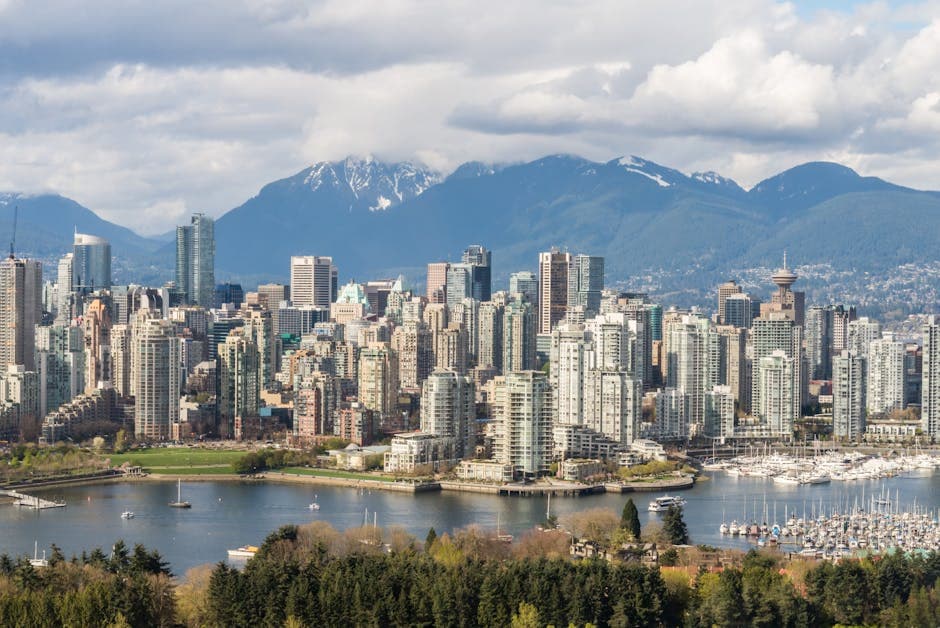
From the Vancouver Waterfront you can see the PDX skyline across the Columbia River. The bridge in your sightline is the I-5 Interstate Bridge, a 1917 truss span carrying roughly seventy-five thousand southbound trips a day. Washington has no state income tax. Oregon has no state sales tax. The two policies braid together into a cross-river economy that no other US metro runs quite like Vancouver does.
Source: Washington Department of Revenue, Oregon Department of Revenue, ODOT / WSDOT I-5 bridge counts, City of Vancouver.
The Almanac, Page One
State personal income tax, WA
0%
WA constitution forbids a state personal income tax (WA DOR).
State sales tax, OR
0%
Oregon has no state or local sales tax (OR DOR).
Vancouver combined sales tax
8.5%
WA 6.5% + Clark County 1.2% + Vancouver 1.9% (WA DOR, 2025 rate).
I-5 Interstate Bridge
~75K southbound trips / day
Per ODOT / WSDOT bridge counts (Interstate Bridge Replacement Program).
Burgerville founding
Vancouver, 1961
George Propstra opens the first unit on SE McLoughlin (Burgerville company history).
Filed from Vancouver · Editorial standards: real sources, no fabricated reviews, no FAQPage schema.
I. Scene
Friday, 6:42 p.m. on the Grant Street Pier. Portland is the skyline across the water.
The pier is two hundred and ten feet of cantilevered concrete projecting south over the Columbia River, the first piece of the Vancouver Waterfront to open in 2018 and still its most photographed. The operator running the wine bar two blocks back from the Renaissance Trail watches the early-summer light drop on the river and counts the runners and strollers heading west toward Esther Short Park. The skyline she is looking at from her patio is downtown Portland: US Bancorp, the Wells Fargo Center, the Big Pink. She can see Oregon clearly from her bar. She does not have to drive to it.
The customer who just ordered the Walla Walla Sweet onion board on the patio paid eight dollars and fifty cents on a hundred dollars of bill. That is the Washington reality. Washington has a 6.5% state sales tax. Clark County layers a 1.2% county piece. The City of Vancouver layers a 1.9% city piece. The combined rate at the Renaissance Trail patio is exactly 8.5%, per the Washington Department of Revenue rate lookup. A hundred-dollar tab is a hundred and eight dollars and fifty cents at the card reader.
Two miles south, across the I-5 Interstate Bridge in the same customer's hometown, a hundred-dollar tab is a hundred-dollar tab. Oregon has no state sales tax. Portland has no local sales tax. The price on a Portland menu is the price the Portland customer pays. The operator at Grant Street Pier knows this because half her dinner crowd drove north over a bridge specifically because Vancouver had a Costco, a Trader Joe's, an Old Navy and a Best Buy where Portland had only tax-free Portland prices. The bridge runs both directions for different reasons.
The operator does not have to memorize the cross-river tax code. She has to design her ordering page around it. Her pickup page assumes a customer who has come from across the bridge for the meal itself, not for the price story. Her delivery zones do not cross the river, because Uber Direct cannot economically run a courier across a 1917 truss bridge through Friday rush-hour traffic. Her bilingual Voice AI answers in Spanish for the Mill Plain and Fourth Plain corridor and, increasingly, in Russian for a community whose Old Believer congregations have been anchored in Woodland and Battle Ground for fifty years.
Behind her, on Officers Row, the twenty-one restored 19th century officers' residences sit on E Evergreen Boulevard under American flags. The Fort Vancouver National Historic Site, the 1825 Hudson's Bay Company fur-trade outpost that gave the city its name, is the federal land on the other side of the parade ground. Pearson Field, one of the oldest continuously operated airfields in the country (1905), runs its runway along the southern edge of the historic site. This is a city with two centuries of weight under it and a ten-year-old waterfront on top of it. The ordering page has to know both eras.
Two more cars roll into the parking lot. The operator glances at the kitchen ticket on the thermal printer. Two more covers booked at 7:15. The river goes copper, the Portland skyline goes amber, and the bridge between them stays exactly what it has been since 1917: the connective tissue that makes Vancouver a Vancouver question and not just a Portland suburb.
II. The Cross-River Tax Advantage
Washington has no state income tax. Oregon has no state sales tax. The bridge in between moves seventy-five thousand southbound trips a day.
The diagram below traces the four primary flows across the I-5 Interstate Bridge: who crosses, what they cross for, and which side of the river holds the tax advantage on each leg. Rates and policy facts are as reported by each state's Department of Revenue (linked in the references coda).
Start with the resident math. The Washington Department of Revenue publishes a single clear policy fact: Washington state has no personal income tax. The state constitution (Article VII) has been read by the Washington Supreme Court to forbid one without an amendment, and the most recent amendment attempts have failed at the ballot. Vancouver residents who commute south to a Portland or Hillsboro employer pay no Washington income tax on those wages. Oregon, meanwhile, has a top marginal state personal income tax of 9.9% on wages, one of the highest in the country, per the Oregon Department of Revenue tables.
The catch is that Oregon taxes the income of nonresidents who earn that income inside Oregon. A Vancouver resident with a Portland job still owes Oregon state income tax on the Portland wages, which is the part the household spreadsheet rarely models cleanly. The full income-tax arbitrage works for a Vancouver resident with a Vancouver or remote-Washington job, not a Portland job. That subset of households (Vancouver living, Vancouver working) is the clean tax win and the demographic Vancouver chambers and economic-development offices recruit most aggressively.
Reverse the flow. Vancouver shoppers driving south for non-grocery retail (clothing, electronics, furniture, tools, services) pay Oregon's 0% state sales tax on those purchases. Bring the receipt back across the bridge and the household has saved 8.5% on the purchase versus buying the same item in Vancouver. This is not a small flow. The Jantzen Beach Center and Lloyd Center long anchored Washington-plates-in-the-lot retail; the post-2020 e-commerce shift has compressed it but not erased it. Big- ticket purchases (a new computer, a couch, a refrigerator) still draw Vancouver plates south over the bridge.
The bridge itself is the constraining infrastructure. ODOT and WSDOT joint counts (and the Interstate Bridge Replacement Program's public planning documents) put weekday southbound traffic on the I-5 Interstate Bridge at roughly seventy-five thousand vehicles per day, with northbound counts in the same range. The two parallel truss spans (a 1917 northbound deck and a 1958 southbound deck) are operating well over their original design capacity, and the Interstate Bridge Replacement Program is the joint Oregon-Washington-federal effort to build a replacement crossing this decade.
For a Vancouver restaurant operator, the cross-river tax dynamic shows up in three places. First, on pricing: a Vancouver menu price plus 8.5% combined sales tax has to compete with a Portland menu price plus zero. The round-dollar pricing trick that works in Portland (a $14 menu is a $14 check) is not available in Vancouver. The operator who tries to round the Vancouver menu to $14 still presents a $15.19 check at the card reader. Second, on catchment: the Vancouver Waterfront and Cascade Park draw Portland diners specifically as a non-price experience (river view, parking, less downtown congestion). Third, on staffing: the operator's cooks and dishwashers often live across the river in Oregon because Oregon offers a deeper rental market north of the Columbia for similar rents.
What direct ordering does in this dynamic is preserve the Vancouver operator's margin against the bridge friction tax. A Portland customer who searches for a Vancouver Waterfront restaurant on a marketplace pays a Marketplace fee on top of the 8.5% Washington sales tax, and the courier dispatch has to cross the bridge, which most marketplace economics will not support. A direct stack makes the trip-to-pickup the primary fulfillment model and lets the operator capture the cross-river demand without paying a percentage to a third party that does not, in practice, dispatch reliable couriers across the I-5 bridge during rush hour.
III. Burgerville, 1961
A Pacific Northwest QSR founded on McLoughlin Boulevard. Sixty-four years later it still anchors the Vancouver identity.
The timeline below traces Burgerville from the 1961 founding on SE McLoughlin Boulevard through the 2018 union vote that made its workers the first formally recognized fast-food union in the United States. The chain is small (roughly forty units across Oregon and Southwest Washington) and the corporate office still sits in Vancouver.
George Propstra opened the first Burgerville on SE McLoughlin in 1961, naming the operation after the Vancouver community that walked in for opening day. The concept was a regional QSR built on Pacific Northwest ingredients: Tillamook cheddar on the burger, a seasonal Walla Walla Sweet onion ring in summer, a hazelnut milkshake from Willamette Valley orchards. None of those signature items survives a national QSR procurement spreadsheet; all of them survive in Vancouver because the chain stayed regional on purpose.
The footprint expanded modestly through the 1960s and 1970s along SR-14 and into the Portland metro, then held steady at roughly forty units. The Columbian and Vancouver Business Journal have documented the chain's repeated ownership transitions through this period, including the Holland family acquisition. The unit count is the point: Burgerville chose discipline over expansion. The chain has refused franchise applications outside the Cascadia corridor for sixty-plus years.
In 2018, workers at five Portland-area Burgerville units voted to form the Burgerville Workers Union, which the National Labor Relations Board recognized as the first formal fast-food union in the United States. The negotiation that followed produced a contract, scheduling protections, and a body of labor-relations case law that the rest of the QSR sector watched closely. Whatever a given operator thinks of the politics, the precedent is Vancouver-rooted.
What the Burgerville model tells a Vancouver independent operator is that the regional identity is the moat. A Vancouver burger shop, taqueria, pho house, or pizzeria that goes deep on Willamette Valley produce, Country Natural Beef sourcing, or NW Marionberry pie filling sells a story that a regional QSR chain has already proved the Vancouver customer will pay for. The direct ordering page is the place to tell that story unmediated: hero shots of the supplier, the farm, the harvest week, the chef. A marketplace listing surrounds the same story with thirty competing burrito boxes.
Burgerville also sets the customer's baseline for what a Vancouver QSR ticket looks like. Locals know what Tillamook on a patty costs at the chain; a Vancouver independent prices in that context. A direct ordering page that puts the burger photo and the Tillamook line front and center benchmarks against a customer expectation that has been calibrated for sixty-four years.
IV. The Waterfront
Thirty-two acres of formerly cut-off riverfront, reopened in stages since 2018. The biggest new public space in Southwest Washington.
The diagram below traces the Vancouver Waterfront layout along the Columbia River, including the Grant Street Pier, the Renaissance Trail, the new mixed-use towers, and the riverfront restaurant axis. Build phasing and operator tenants drawn from City of Vancouver permits, Visit Vancouver USA, and Vancouver Business Journal coverage.
For a century the BNSF rail cut and a chain of paper-mill and lumber-yard parcels separated downtown Vancouver from its own river. The redevelopment that opened in stages starting in 2018 reconnects the city to the Columbia for the first time since the timber era. The thirty-two-acre site sits along the river south of the railroad cut, with pedestrian and bicycle connections under the tracks to Esther Short Park and Main Street.
The Grant Street Pier (opened 2018) is the project's most photographed structure: a two-hundred-and-ten-foot cantilever projecting into the river, supported by a single mast and steel cable system. The Renaissance Trail runs east-west along the river. The first wave of ground-floor restaurants (WildFin, Twigs, Stack 571, others) opened along the trail through 2019 and 2020, with subsequent waves through the 2020 to 2024 phasing. Vancouver Business Journal has maintained the most consistent local trade-press accounting of the openings.
The operational reality of a Waterfront restaurant is that the customer arrives across the bridge or down the pedestrian connectors from Main Street, sits with a river view, and tips visibly above the Vancouver baseline. The check averages here run higher than the East Vancouver Mill Plain corridor. The seasonal seasonality is steep: June to September is the patio compression; January is a soft month with the Columbia fog rolling under the I-5 bridge piers. A direct ordering page handles the seasonal shift by switching the hero between patio shots and indoor-river-window shots and by emphasizing pickup over delivery year-round, since delivery does not cross the bridge cleanly.
The Waterfront also concentrated retail and hospitality in a way that Vancouver had not previously had. Hotels, event spaces, and a planned future event center anchor weekend traffic that lifts every Renaissance Trail restaurant's Friday and Saturday covers. The pre-order pickup window for a Saturday 7 p.m. reservation can be set by the ordering page as early as 9 a.m. that morning, and the customer who lives in Camas, Felida, or East Vancouver will absorb the pickup math without complaint because it saves the parking search.
The thesis for a Waterfront operator on direct ordering is straightforward: the project itself is the discovery channel. The customer who walked the Renaissance Trail and ate at the patio comes back to the operator's domain to book pickup the next time. The operator owns that customer relationship in full. A marketplace listing deletes the project's discovery value because every Waterfront restaurant gets surrounded by every other Waterfront restaurant in the same scroll.
V. Fort Vancouver & Pearson Field
Hudson's Bay Company, 1825. One of the oldest US airfields, 1905. The history under the city makes the city itself.
In 1825 the Hudson's Bay Company established Fort Vancouver on the north bank of the Columbia River as the administrative and supply headquarters of its Columbia Department, which covered the Pacific Northwest fur trade from Russian Alaska to Spanish California. Chief Factor John McLoughlin (the McLoughlin of McLoughlin Boulevard, where Burgerville opened in 1961) ran the post for two decades. The fort, the parade ground, and the surrounding land are now the Fort Vancouver National Historic Site, administered by the US National Park Service.
Officers Row, the line of twenty-one restored 19th-century officers' residences on E Evergreen Boulevard, dates to the late 1800s when the US Army garrison occupied the site as Vancouver Barracks. The houses are now event spaces, offices, and the Marshall House (1886). The stretch between Officers Row and the historic site is the densest concentration of pre-1900 architecture in Southwest Washington.
Pearson Field, immediately south of the historic site and north of the Columbia River, began flight operations in 1905, which makes it one of the oldest continuously operating airfields in the United States. It was the terminus of the first transpolar flight from Moscow in 1937 (Valery Chkalov landed his ANT-25 on the field after a sixty-three-hour flight; the Chkalov monument is on the west end of the airfield). The Pearson Field Education Center runs a small museum on the site. The runway is still active general aviation today.
What this matters for a restaurant operator is the customer routing on a weekend. The Fort Vancouver National Historic Site pulls Saturday and Sunday family traffic from across the Vancouver metro and from Portland across the bridge. Officers Row hosts weddings and event catering bookings year-round. Pearson Field's Aviation Day in early summer brings several thousand visitors. A direct ordering page that knows about these weekends can pre-stage pickup-window slots and route event-catering inquiries through a dedicated form on the operator's own domain.
The heritage axis also matters for the Russian community whose history with Vancouver is the longest in Southwest Washington outside Hudson's Bay itself. Chkalov's 1937 landing is more than a museum piece; it is one of the cultural anchors that explains why Vancouver hosts a growing Russian Old Believer community that has been anchored north in Woodland and Battle Ground since the 1960s. The Voice AI on a Mill Plain or Hazel Dell restaurant that handles Russian-language ordering is a feature with deep local provenance, not a generic multilingual checkbox.
VI. The District Atlas
Downtown, Officers Row, the Waterfront, Hazel Dell, Mill Plain east, Cascade Park, Salmon Creek. The city is wider than the downtown core.
The map below names the primary restaurant districts in Vancouver, with rough quadrant placement against the Columbia River, I-5, and the city's major arterials. Coordinates are layout-only.
Downtown Vancouver is the historic Main Street grid, roughly Mill Plain to 6th Street between Broadway and Columbia. Esther Short Park (the city's 1853 town green) anchors the west end. Independent cafes, breweries, and a small but durable restaurant row line Main Street north of the railroad cut. The customer here walks in, eats in, and orders pickup for the family back home in Felida or Salmon Creek.
Officers Row and the Fort Vancouver district sit east of downtown along E Evergreen Boulevard. The catering and event volume is the biggest revenue lever in this district. A direct ordering page that includes a separate event-catering form and a pre-order menu for Marshall House and Officers Row Houses tenants captures volume the marketplace cannot reach.
Hazel Dell, north of the city along I-5 and Highway 99, is the unincorporated Clark County strip that for decades played the role of Vancouver's big-format retail and restaurant arterial. Burgerville has a unit here. The strip is car-dependent, the parking is ample, and the customer mix skews to families and trades. Pickup is the dominant channel.
Vancouver Mall sits at NE Thurston Way and Vancouver Mall Drive, a mid-century regional mall with Macy's, JCPenney, and a Round1 entertainment center as anchors. The food-court and adjacent quick-serve units run on volume during back-to-school and the holiday window. East of the mall, the Mill Plain corridor stretches as the city's longest restaurant axis, running from Andresen Road east to 192nd Avenue. Cascade Park, around Mill Plain and SE 164th Avenue, is the east-side gravity center, with the largest single concentration of independent restaurants outside downtown.
Salmon Creek, north of the city, anchors a growing medical-office and student economy around the WSU Vancouver campus and PeaceHealth Southwest Medical Center. Weekday lunch volume from medical staff is the primary order pattern. The neighborhood pho houses, the Mexican counter operators, and a small but real Eastern European bakery cluster all pull steady direct-pickup volume.
VII. The Bridge
Two truss spans, 1917 and 1958, well over capacity. A replacement bridge is the longest-running infrastructure fight in the Pacific Northwest.
The I-5 Interstate Bridge is the only direct surface link between Vancouver and Portland inside the Vancouver city limits. The northbound span dates to 1917; the southbound span dates to 1958. The combined deck carries roughly one hundred and fifty thousand vehicles per day across the Columbia River, with rush-hour southbound back-ups stretching well into Vancouver and northbound back-ups stretching into the Rose Quarter on the Portland side. ODOT, WSDOT, and the Interstate Bridge Replacement Program publish the joint counts.
For a Vancouver restaurant operator, the practical constraint is that any cross-river delivery is a non-starter during rush hour. Uber Direct cannot reliably promise a Portland-to-Vancouver or Vancouver-to-Portland delivery in under forty minutes during the 4 p.m. to 7 p.m. window. This is not a marketplace flaw; it is a bridge throughput reality. The direct ordering page that defaults to pickup for any cross-river customer is more honest with the customer than a marketplace that promises a thirty-minute window it cannot keep.
The Interstate Bridge Replacement Program is the joint Oregon-Washington-federal effort to plan and build a new cross-Columbia crossing. The current draft program contemplates a higher-capacity replacement with light rail or bus rapid transit, multimodal paths, and a navigation channel that lifts the constant marine-traffic bridge openings that compound the rush-hour problem today. Construction timelines are years out and politically contested; restaurant operators planning a capital investment in the riverfront should not assume the replacement bridge inside the next five years.
The strategic implication is that pickup-first ordering is not a niche channel in Vancouver. It is the dominant fulfillment model for any operator whose customer base straddles the river. The direct ordering page should put pickup windows above delivery windows, default to a fifteen-to-twenty-minute pickup-ready promise, and route cross-river customers through pre-order rather than same-hour requests. The Voice AI should confirm pickup times verbally and avoid promising bridge-crossing delivery.
VIII. Bilingual Ordering
Spanish along Fourth Plain and Mill Plain. Russian Old Believer in Woodland and Battle Ground. A direct stack answers both.
The US Census Bureau ACS five-year estimates put Vancouver's Hispanic and Latino share above the Clark County average, concentrated along the Fourth Plain Boulevard corridor west of I-205 and along the Mill Plain corridor between Andresen and 112th. Mexican, Salvadoran, and Guatemalan family operators anchor a quietly large taqueria and pupuseria economy along these arterials. A direct ordering page that runs Spanish as a first-class language (menu, checkout, confirmation, SMS receipt) and a Voice AI that answers and orders in Spanish on the first ring is the floor expectation for these corridors, not a future feature.
Separately, the Russian Old Believer community north of Vancouver in Woodland and Battle Ground has been anchored in Clark County for sixty-plus years. Congregations preserve liturgical Old Slavonic alongside spoken Russian, and the demographic skews family-restaurant and catered-event in its order patterns. The Voice AI on a Hazel Dell or Salmon Creek restaurant that handles Russian-language calls captures a community that has been served poorly by national marketplace call trees for two decades. The growth direction here is steady, not explosive; the operator who builds for it now sets the relationship for a decade.
The third linguistic layer in Vancouver is Ukrainian, a smaller but persistent corridor that overlaps with the Russian-speaking Old Believer community in some social circles and is distinct in many others. Operators in Hazel Dell and along NE 78th Street routinely take Ukrainian-language inquiries; a Voice AI that politely differentiates the two on greeting protocol (and does not collapse them) is the responsible build.
Direct ordering with multilingual support is the rare product feature where the deployment math is genuinely local. The operator who runs an English-only call tree on a Fourth Plain taqueria, a Mill Plain pho house, or a NE 78th Street Russian bakery is, in plain math, forgoing a meaningful share of inbound revenue every week. The competitor who deploys the bilingual stack first claims the customer relationship for the long term.
IX. The 8.5% Combined Rate
State 6.5%, Clark County 1.2%, City of Vancouver 1.9%. The Washington Department of Revenue rate lookup says exactly that.
The Washington Department of Revenue publishes a public rate lookup that returns the combined state plus local sales tax rate for any address inside the state. For an address inside the City of Vancouver, the lookup returns a combined rate of 8.5%, composed of the 6.5% Washington state piece, a 1.2% Clark County piece, and a 1.9% City of Vancouver piece. The 1.9% city piece includes a voter-approved Vancouver public safety component that Vancouver residents passed at the ballot.
For prepared food and beverage served by a restaurant, the same 8.5% combined rate applies. Washington does not separately tax restaurant meals at a higher rate; the standard combined rate is the restaurant rate. Some grocery exemptions exist for cold prepared items sold without a seating area; the rules are documented in WA DOR rule 458-20-244 and an operator should rely on a tax professional for category lines.
The operational implication for a Vancouver direct ordering page is that the menu price is the pre-tax price and the checkout adds the 8.5% line. The receipt should show the tax line explicitly so the customer can compare to the marketplace listing they may also be seeing. The marketplace presents a tax-included headline price that conceals where the 8.5% lands; the direct page is allowed to be honest about it.
The competitive context against Portland is the part worth saying plainly. A Vancouver operator cannot match a Portland $14 menu at a $14 check. The Portland menu price is the Portland check. The Vancouver menu price is the Vancouver check plus 8.5%. The Vancouver operator wins on river view, parking, less downtown congestion, fewer fees on the cross-river customer who drives north for the meal, and the regional sourcing story (Walla Walla, Tillamook, Willamette) that the Burgerville lineage already established as a paid-for identity. The 8.5% is the headwind. The cross-river experience is the tailwind. A direct ordering page is the place to merchandise the tailwind.
X. The Vancouver Thesis
How a flat $249 a month, bilingual Voice AI, pickup-first fulfillment, and same-day Stripe payouts fit a cross-river city the marketplace does not understand.
Start from the cross-river spine in section II. Vancouver is a city whose customer base bifurcates across a 1917 truss bridge. Half the dinner crowd at the Vancouver Waterfront drove north from Portland; half the office lunch crowd in Cascade Park lives in Vancouver and works remotely or commutes south. A marketplace that wraps every order in a service fee, a delivery fee, a small-cart fee, and a courier dispatch that cannot reliably cross the I-5 bridge during rush hour is fighting the geography. A direct stack that defaults to pickup-first, owns the customer email and phone, and presents the menu and tax line honestly is aligned with how Vancouver actually orders.
Layer in the Burgerville lineage from section III. The regional QSR with a Vancouver corporate office that has refused franchise applications for sixty-plus years is the customer's baseline for a Pacific Northwest quick-serve ticket. An independent Vancouver operator running direct can tell the same regional sourcing story (Walla Walla, Tillamook, Willamette) on their own domain, unmediated, with the photography and the supplier names front and center. A marketplace listing surrounds the same story with thirty competing burrito boxes.
Layer in the Waterfront discovery from section IV. The project itself is the marketing channel. The customer who walked the Renaissance Trail, stopped at Grant Street Pier, ate at the patio, comes back to the operator's domain to book pickup. The flat $249 line replaces a per-order percentage that erases the Waterfront discovery value. Same-day Stripe payouts let the operator close the books on a Saturday Waterfront-volume day before the kitchen closes.
Layer in the Spanish and Russian corridors from section VIII. The bilingual Voice AI is the feature the marketplace does not have. Fourth Plain Boulevard, Mill Plain east, NE 78th Street are not going to be served by an English-only call tree. They are going to be served by a model that answers the phone in Spanish (or Russian) on the second ring and confirms back in the same language. That is a direct-stack feature. It does not exist in a marketplace product.
Build pickup-first for the cross-river customer
Default the direct page to pickup windows above delivery windows. Set the pickup-ready promise at fifteen to twenty minutes. Route cross-river requests through pre-order, not same-hour delivery.
Run bilingual Voice AI on Fourth Plain
Spanish on the first ring for Fourth Plain Boulevard and Mill Plain east. Russian on the first ring for Hazel Dell and NE 78th. The Voice AI confirms back in the same language and captures the customer.
Merchandise the regional sourcing story
Tillamook, Walla Walla, Willamette, Country Natural Beef. The Burgerville lineage already paid for the customer expectation. Put the supplier names and the harvest week on the hero of the direct page.
Editorial Coda
Vancouver is not a Portland suburb. It is a Washington city across a Columbia River bridge, with its own tax code, its own founding chain, and its own waterfront. The ordering page should know all three.
References · This report drew from
13 sources
- Washington Department of Revenue · Sales and use tax rate lookup (Vancouver 8.5% combined)
- Washington Department of Revenue · Washington state has no personal income tax
- Oregon Department of Revenue · Oregon personal income tax tables (top marginal 9.9%)
- Oregon Department of Revenue · Oregon has no state or local sales tax
- Interstate Bridge Replacement Program (ODOT / WSDOT) · I-5 Interstate Bridge traffic counts, replacement program
- US National Park Service · Fort Vancouver National Historic Site (Hudson's Bay 1825)
- Pearson Field Education Center · Pearson Field history (1905, Chkalov 1937 transpolar)
- City of Vancouver, WA · Vancouver Waterfront, Esther Short, district pages
- Burgerville · Burgerville company history (1961 founding, regional sourcing)
- US Census Bureau ACS · 5-year language and demographic estimates, Clark County
- Vancouver Business Journal · Local business and Waterfront phased opening coverage
- The Columbian · Clark County daily news, Burgerville union, Waterfront features
- Visit Vancouver USA · Visitor data and neighborhood guide