Restaurant Customer Retention: 10 Strategies That Actually Work
Proven customer retention strategies for restaurants. Learn how to keep guests coming back, increase repeat orders, and build long-term revenue without spending more on acquisition.
Updated Jul 11, 2026
Retention Metrics
Retention Rate
0%
Repeat Orders
3.2x
LTV Increase
+45%
Churn Reduced
-62%
TLDR
Acquiring a new restaurant customer costs $10-25, while re-engaging an existing one costs $1-3 through email or SMS. A strong retention rate is 30-40% of first-time customers returning within 60 days, with top performers reaching 50%+. The 10 strategies in this guide cover loyalty programs (members spend 12-18% more per order), personalized offers based on order history, and email/SMS cadences that keep your restaurant top of mind.
Why Retention Beats Acquisition
Every restaurant owner obsesses over getting new customers. Billboards, Instagram ads, influencer deals, delivery app promotions. All of it focused on one thing: new faces through the door.
Here is the problem. Acquiring a new customer costs 5-7x more than keeping an existing one. The average restaurant spends $10-25 to acquire a single new customer through paid channels. Getting that same customer to come back costs $1-3 through email or SMS.
Repeat Customers Cost Less and Spend More
Reaching a repeat customer costs a fraction of winning a new one, and they tend to spend more per order.
Sources: cost and spend figures from the post, industry benchmarks, DirectOrders analysis.
The math is not even close. A restaurant doing $40,000/month in online orders with a 20% repeat rate is leaving tens of thousands on the table compared to one running at 45%. That gap is not about marketing spend -it is about retention strategy.
How a 5% Retention Gain Lifts Profit
A small increase in the share of customers who come back raises profit far more than the retention number alone suggests.
Sources: Bain and Company retention research, industry benchmarks, DirectOrders analysis.
Know Your Numbers First
Before you implement any retention tactic, you need to know where you stand. Two numbers matter most.
Repeat order rate. What percentage of your customers place a second order within 60 days? Pull this from your POS or ordering platform. If you are below 25%, you have a retention problem. If you are 25-40%, you have room to grow. Above 40%, you are doing well -the strategies below will push you further.
Customer lifetime value (LTV). How much does the average customer spend with you over their entire relationship? If your average order is $35 and the average customer orders 4 times before they disappear, your LTV is $140. Every retention tactic below is designed to increase that number.
If you do not have a way to track these numbers, your first step is building a customer database that captures every order and ties it to a customer profile. You cannot improve what you cannot measure.
Strategy 1: Build a Loyalty Program That People Actually Use
Most restaurant loyalty programs fail because they are too complicated or the rewards take too long to earn. The fix is simple: make the first reward attainable in 2-3 visits and keep the rules dead simple.
"Spend $1, earn 1 point. 100 points = $10 off." That is a program people understand. No tiers, no multipliers, no blackout dates.
The data backs this up. Loyalty members order 20% more frequently and spend 12-18% more per order than non-members. If you are not running a loyalty program, you are ignoring one of the most reliable retention tools available. For a deep dive on designing one that works, read our complete guide to restaurant loyalty programs.
Strategy 2: Use Email and SMS to Stay Top of Mind
The restaurant down the street is not better than you. They are just more memorable because they show up in your customer's inbox every week.
Email and SMS are the two highest-ROI channels for restaurant retention. Email gives you space for storytelling, photos, and detailed offers. SMS gives you urgency and near-guaranteed visibility with 98% open rates.
A simple retention cadence: one email per week (new specials, behind-the-scenes, or a featured dish) and one SMS per week (a flash deal, reorder reminder, or event notification). That is enough to keep your restaurant in the consideration set without being annoying. To make it hands off, run this cadence as automated marketing flows.
Read our restaurant email marketing guide for templates and timing strategies that drive repeat orders.
Strategy 3: Personalized Offers Based on Order History
Generic "20% off your next order" coupons are lazy. They train customers to wait for discounts. Personalized offers based on what a customer actually orders convert at 3-5x the rate.
If a customer orders pad thai every two weeks, send them this on day 13: "Your pad thai is waiting. Free spring rolls when you order today." That is a message that feels relevant, not spammy.
Your ordering platform should track order history and make this data accessible. If it does not, you are flying blind. Platforms like DirectOrders marketing tools let you segment customers by order frequency, recency, and favorite items -then send automated offers that match.
Strategy 4: Consistent Quality Is the Silent Retention Engine
No marketing trick overcomes a bad experience. If a customer's second order is worse than their first, they are gone. This sounds obvious, but inconsistency is the number one reason customers do not come back.
The fix is operational, not marketing. Standardize recipes. Check every bag before it leaves. Time your deliveries. Make sure the food that arrives at a customer's door at 7:45 PM is the same quality they would get sitting at table 12 at 7:00 PM.
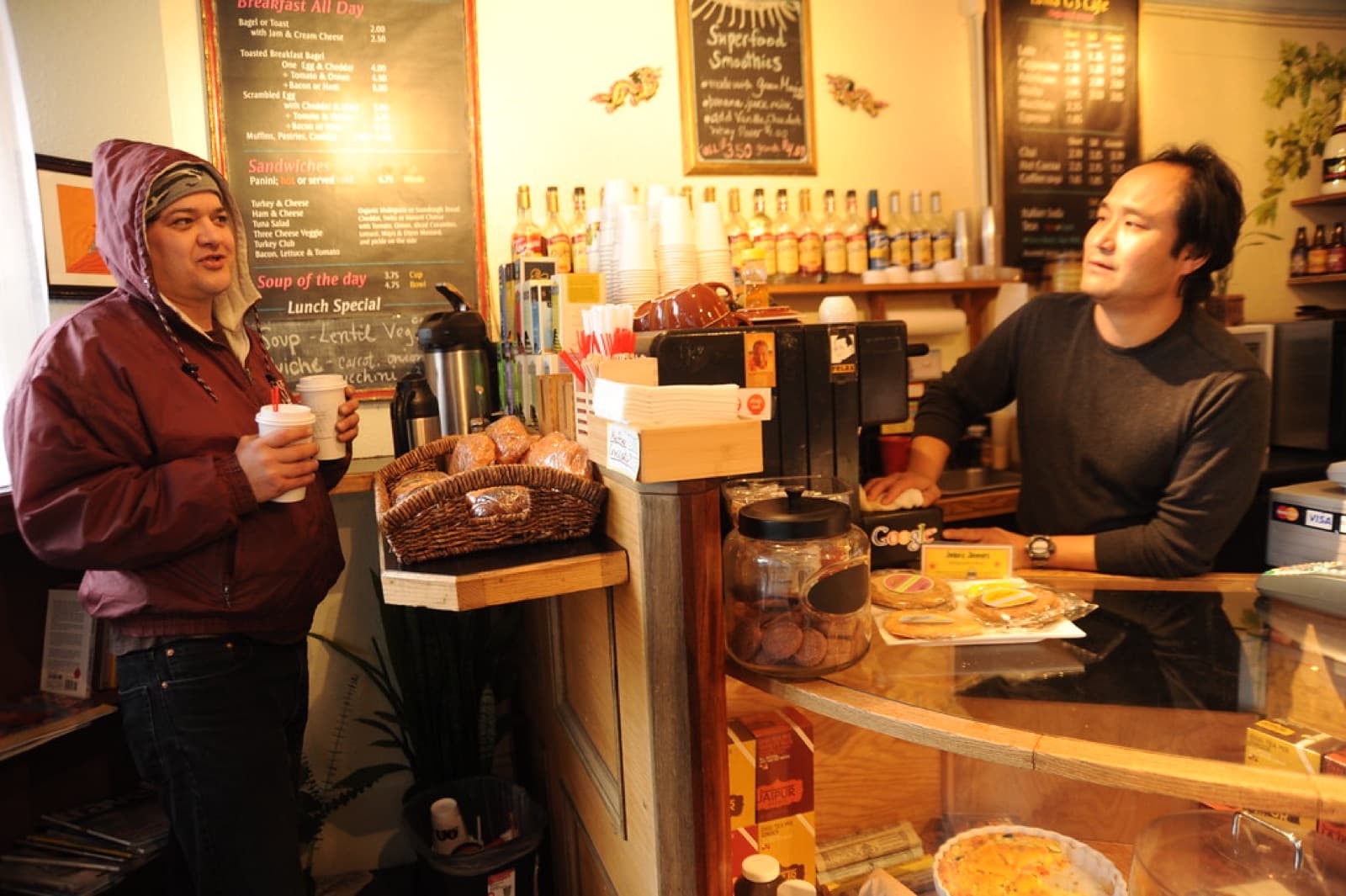
Conduct a weekly quality audit. Order from your own restaurant through every channel -your website, your app, your delivery partners. Eat the food. Rate the experience. Fix what is broken. This one habit does more for retention than any coupon code ever will.
Strategy 5: Speed Wins Repeat Business
Delivery speed is the single biggest predictor of customer satisfaction for online orders. A study by Deloitte found that 60% of consumers say speed of service is one of their top three factors when ordering food online.
If your quoted delivery time is 45 minutes and you deliver in 35, you just created a positive surprise. If you quote 30 and deliver in 50, you just lost a repeat customer.
Two things to focus on. First, quote accurate times -slightly padded is better than optimistic. Second, optimize your kitchen workflow for online orders so they do not compete with dine-in during peak hours. Dedicated prep stations for online orders can cut fulfillment time by 20-30%.
Strategy 6: Birthday and Anniversary Rewards
Birthday emails have a 481% higher transaction rate than standard promotional emails. That is not a typo. People expect to be celebrated, and a restaurant that remembers their birthday earns serious loyalty.
Collect birthdays during checkout or loyalty signup. Then automate a message 3-5 days before the date: "Happy birthday, Maria. A free dessert is waiting for you this week -on us." Include a one-click ordering link.
This costs you the price of one dessert. In return, you get a high-AOV order (birthday celebrations usually involve multiple people) and emotional loyalty that no discount can replicate. Anniversaries work the same way -"It has been one year since your first order with us. Here is $10 on us to celebrate."
Strategy 7: Close the Feedback Loop
When a customer has a bad experience and complains, your response determines whether they come back. Restaurants that respond to complaints within 1 hour retain 70% of those customers. After 24 hours, the retention rate drops to 15%.
Set up automated feedback requests after every order. A simple "How was your order?" with a 1-5 star rating takes 10 seconds for the customer and gives you early warning on problems. If someone rates below 3 stars, trigger an immediate alert to your manager.
The recovery offer matters too. "We are sorry your order was not up to our standards. Here is $10 off your next order so we can make it right." That $10 saves a customer whose LTV might be $500+. The math always works in your favor.
Strategy 8: Build Community Around Your Restaurant
The restaurants with the strongest retention are not just places to eat. They are gathering points for a community. This does not require a big budget -it requires intention.
Host a monthly event. A tasting night, a cooking class, a charity fundraiser, a trivia night. Promote it through your email list and social channels. Invite your top 50 customers by name.
Feature customers in your content. "Customer of the Month" posts, photos of regulars (with permission), shoutouts for milestone orders. When people see themselves reflected in your brand, they feel ownership. That emotional connection is what turns a customer into a regular.
Strategy 9: Exclusive Menu Items for Repeat Customers
Give your loyal customers something they cannot get anywhere else. An exclusive menu item available only to loyalty members or customers who have ordered 5+ times creates a sense of belonging and rewards repeat behavior.
This works especially well with limited-time items. "This week only, loyalty members get access to our new truffle mushroom burger before anyone else." Scarcity plus exclusivity drives orders.
You do not need a whole separate menu. One or two exclusive items per month is enough. Rotate them to keep things fresh. Announce them through email and SMS to your customer database -this alone can drive a 15-20% spike in orders during the week the exclusive drops.
Strategy 10: Same-Day Payouts for Better Service
This one is not obvious, but it directly impacts retention. When your restaurant gets paid the same day orders come in, your cash flow improves. Better cash flow means better ingredients, fully staffed shifts, and no corners cut on quality.
Restaurants waiting 7-14 days for delivery app payouts often face cash crunches that force compromises. They skip the premium ingredients. They run short-staffed on slow nights. Those compromises show up in the customer experience.
Same-day payouts eliminate this cycle. You earn on Monday, you have the cash on Monday. Your operations stay consistent, your quality stays high, and your customers notice -even if they cannot articulate why your food is always reliable. Calculate how much faster cash flow changes your margins.
How to Measure Your Retention Strategy
Track these four metrics monthly. They tell you everything you need to know.
Repeat order rate. The percentage of customers who order more than once in a 60-day window. Target: 35%+.
Customer lifetime value. Average total revenue per customer over their relationship with you. Track this quarterly and watch for upward trends.
Churn rate. The percentage of active customers who stop ordering over a 90-day period. If this is above 60%, your retention strategies are not working.
Net Promoter Score (NPS). Ask customers "How likely are you to recommend us to a friend?" on a 0-10 scale. Promoters (9-10) are your retention engine. Detractors (0-6) tell you where to focus.
The Retention Flywheel
Retention is not a one-time project. It is a flywheel that compounds over time.
Better food and service lead to repeat orders. Repeat orders build your customer database. A larger database makes your email, SMS, and loyalty programs more effective. More effective marketing drives more repeat orders. The cycle accelerates.
The restaurants that win in 2026 are not the ones spending the most on ads. They are the ones keeping the customers they already have and turning each one into a repeat buyer, a reviewer, and a referrer.
Start with one strategy from this list. Implement it this week. Measure the results in 30 days. Then add the next one. Within six months, you will have a retention engine that generates predictable revenue without increasing your acquisition spend.
Your first move: make sure you are capturing customer data on every order. If you are not, nothing else on this list works. Read our guide on building your restaurant customer database to get that foundation in place. Then come back here and start stacking strategies.
Frequently Asked Questions
A strong restaurant retention rate is 30-40%, meaning 30-40% of first-time customers return for a second order within 60 days. Top-performing restaurants with active retention strategies reach 50%+. If your rate is below 20%, there is a significant opportunity to improve.
Related resources
Related Articles
0 pts
150 more for free meal
Restaurant Loyalty Programs: How to Build One That Works
A practical guide to designing, launching, and measuring a restaurant loyalty program that actually drives repeat orders and increases customer lifetime value. Covers points, visit, tier, cashback, and subscription models plus a six-point evaluation framework.
Pankaj Avhad
Repeat orders
100% kept
Restaurant Marketing Automation: 5 Flows That Pay
Five trigger-based flows set once that drive repeat direct orders on autopilot: welcome, winback, birthday, abandoned cart, and review requests.
Pankaj Avhad
AI Search
Voice
First-party
Loyalty
Restaurant Marketing Trends 2026: 5 Channels That Work
Restaurant marketing trends for 2026: AI search, SMS at 98% open rates, short-form video, loyalty ROI, and a realistic budget mix for independents.
Pankaj Avhad