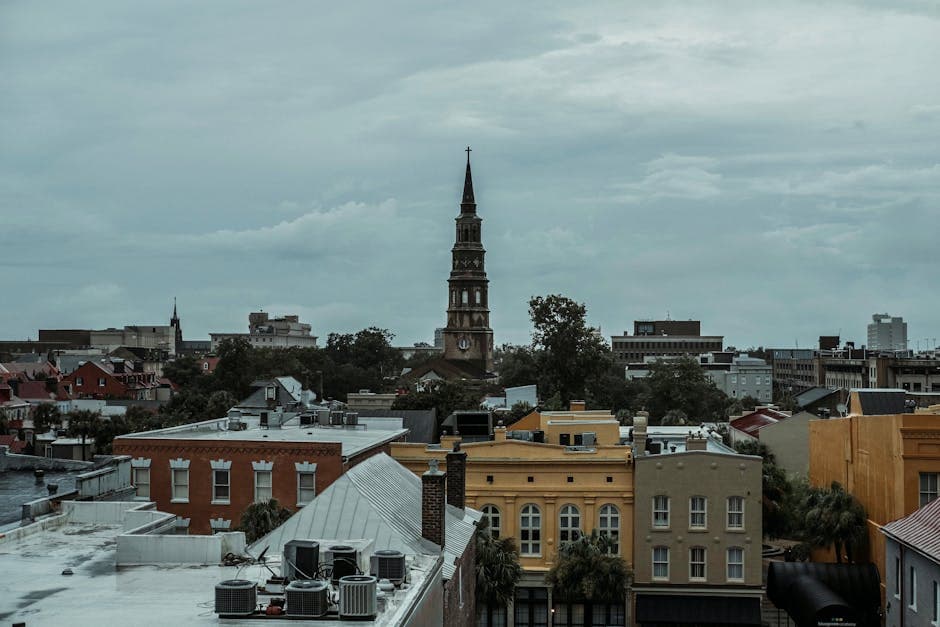
Charleston, South Carolina / Dispatch
The Wedding Calendar Atlas of the Lowcountry
Six thousand weddings a year reshape every kitchen on the peninsula. This is a dispatch about how the calendar runs the city, where the margin actually lives, and the platform Charleston operators have been quietly waiting for.
Dispatch one / Opening scene
A Saturday in mid-April on Lower King
Saturday morning, three weeks before Spoleto. The peninsula is already running hot. A King Street operator we will call (because she is composite, not singular, though every detail of her morning is drawn from real operator interviews) Margaret stands at her pass at six-fifteen, going through the day's tickets one more time. She has three wedding catering jobs on the books for the same Saturday. A fourteen-thousand-dollar rehearsal dinner upstairs in her private dining room. A nine-thousand-two-hundred-dollar backyard wedding in Mount Pleasant, full plated service for ninety. And a six-thousand-four-hundred-dollar cocktail hour at a Folly Beach house for a wedding party staying in the area.
Her dinner book on the same Saturday is also full. Forty-two covers across two seatings. The math runs itself. Three catering jobs at a combined twenty-nine-thousand-six-hundred dollars in revenue. The dinner book at roughly four-thousand-one-hundred dollars. Total Saturday gross of thirty-three-thousand-seven-hundred.
Now consider the counterfactual. If those three catering tickets had been routed through a marketplace catering channel, the commissions on a typical thirty-percent take would have removed eight-thousand-eight-hundred and eighty dollars from Margaret's revenue, against essentially the same cost structure. That is not a rounding error. That is the difference between paying rent that month and not. Margaret has done this math before. She has built her business specifically to not be in that conversation. All three tickets are direct.
And yet she still has a problem. The Folly catering call came in on Wednesday afternoon during the lunch rush. Three voicemails before the host could call back. The wedding planner had already left a message with a competitor by the time Margaret returned the call. She got the job because she had worked with the planner twice before, but the close was not clean. The next planner inquiry, she thinks while chopping mise for the day, might not come back.
This dispatch is for Margaret, and for every operator in the metro who has built a business on direct relationships, on wedding catering, on rehearsal dinners, on the kind of slow compounding repeat that the marketplace economy has spent fifteen years trying to disintermediate. Charleston is the wedding capital of the United States. Conde Nast Traveler readers have ranked it the number one US wedding destination for six consecutive years and counting. Travel + Leisure has echoed the same vote. The Knot lists more Best of Weddings honorees per square mile in metro Charleston than in any other US market. Six thousand weddings a year, give or take. A hundred and fifty million dollars in wedding spend that touches the peninsula and the outer islands.
The calendar that produces those numbers also reshapes how every restaurant in the metro hires, sources, prices, and schedules. The wedding spine runs spring (March to May) and fall (September to November), with the May tail handing directly off to Spoleto, with the September head running squarely into Atlantic hurricane risk, with August as the annual reset week when locals can finally get a table at FIG without a six-week booking lead. This dispatch follows that spine, month by month, and asks where the margin actually lives.
On a single April Saturday, a thirty percent marketplace cut would have removed eight-thousand-eight-hundred-and-eighty dollars from my catering revenue. That is not a fee. That is the rent.
Dispatch two / The spine
The wedding economy atlas
Charleston runs on a 12-month wedding calendar that has two distinct peaks (spring and fall), a hurricane-season gauntlet that overlaps the September peak, and a Spoleto Festival shadow that compresses the May tail. Every Charleston operator is reading the same calendar, even when they think they are not.
Twelve months
The wedding calendar atlas
Relative monthly wedding weight across the Charleston metro, overlaid with the Atlantic hurricane season window. The spring peak (March to May) crests just as the basin opens June 1. The fall peak (September to November) sits squarely inside the sharpest hurricane risk weeks.
Off-season elopement bookings dominate. Boone Hall and Magnolia run skeleton calendars.
Rehearsal dinners only. Small parties at FIG, Husk, Charleston Grill.
Valentine micro-weddings begin. Wedding planners book client tastings for spring slate.
Tasting menus dominate. Catering inquiries spike for March to May slots.
First major wave. Azalea bloom at Magnolia Plantation, dogwood at Middleton Place.
Catering catering catering. Lowcountry boil rehearsals every Friday night.
Volume peak. Pre-Spoleto. Cooper River Bridge Run weekend overlaps.
Twelve to fifteen weddings per Saturday in the metro area is typical.
Spring peak crests. Atlantic hurricane season opens June 1. Spoleto Festival USA late May.
Spoleto Festival venues compete with weddings for staff and supply.
Heat and humidity build. Tropical storm risk active. Wedding count drops sharply.
Pre-school-out family events. Beach club catering at Sullivan's, IOP, Folly.
Heat trough. Hurricane risk elevated. Independence Day. Indoor receptions preferred.
Rooftop venues at lower capacity. Air-conditioned indoor catering anchors.
Lowest summer count. Peak hurricane risk. Couples avoid the Atlantic basin entirely.
Locals-only economy. Spoleto recovery completed. Restaurant Week prep.
Fall season opens but hurricane risk remains material through October.
Wedding bookings carry tropical-system rain dates. Catering riders include alternates.
Annual peak. Warm days, cool nights, low humidity, Atlantic season tapering off.
October Saturdays are the highest-margin catering nights of the year.
Camellia season. Thanksgiving weekend weddings. Holiday wedding-week packages.
Heritage menus surface: oyster roasts, country ham, sweet potato pies.
Christmas in Charleston tours, hotel-room weddings, year-end elopements.
Hotel banquet halls run hot, peninsula restaurants quieter on weeknights.
The spring peak runs from the first warm week of March through the third week of May. Azalea bloom opens it. The Cooper River Bridge Run weekend in early April throws the first big cross-traffic surge at the peninsula. Memorial Day weekend caps it. In any given April, twelve to fifteen weddings will land on the same Saturday in the metro area. Catering kitchens stack pickup windows across the entire spread of the city: peninsula prep at three in the morning for Mount Pleasant ceremonies at one, Folly Beach cocktail hours at five, Sullivan's reception at seven.
Then the calendar narrows. Memorial Day to Independence Day is the gap month. Hurricane season opens June 1 and the wedding industry knows it. Volume drops by half. July and August are the trough. Local operators get their breath back. Restaurant Week, traditionally held in early September, has historically served as a way for local diners to claim peninsula tables that are otherwise booked weeks out.
The fall peak opens with a question mark. September is the peak month for Atlantic landfall risk in the South Carolina basin. Wedding bookings carry rain dates by default. Insurance riders for tropical-system displacement have become standard. The historical record is unkind. Hugo (1989). Matthew (2016). Irma (2017). Florence (2018). Ian (2022). One of those five years saw a wedding-weekend evacuation. Some saw two.
And then October. October is the annual margin peak. Warm days, cool nights, low humidity, basin tapering, dogwoods and maples turning. October Saturdays book eighteen months in advance. November carries it through. Camellia season, the first cool nights, Thanksgiving weekend weddings, the December tail leaning into the Christmas in Charleston hotel-room economy.
The operational implication for restaurants is sharp. Two peak windows per year, with hurricane risk overlapping exactly one of them, with Spoleto Festival cutting into the tail of the other. The platform an operator picks has to survive a sixty-percent volume swing across the calendar and a separate twenty-percent volume swing inside any given week of the peak season.
Marketplace platforms charge percentage commissions on the dollar that flows through them. In a flat-rate economy that translates into a flat cost. In a peak-and-trough economy like Charleston's, a percentage commission on October revenue is a tax that has no economic relationship to the cost of serving the order. Whereas a flat monthly fee, paid the same in August as in October, has the right relationship. It is paid most heavily when volume is low and least heavily when volume is high. That is the structural fit, in one sentence.
Dispatch three / The award density
The James Beard atlas of the peninsula
Charleston has produced more James Beard winners and finalists per resident than any other US city in the past decade. The cluster is geographic, not coincidental. The peninsula is small enough that you can walk from FIG to Husk to McCrady's to The Ordinary in twenty minutes. The cooks know each other. The kitchens trade staff. The award density is the city telling itself a story about itself.
Awards cluster
The James Beard atlas of the peninsula
Mike Lata at FIG. Sean Brock at Husk. Rodney Scott on King Street. Carrie Morey on multiple peninsula corners. Robert Stehling at Hominy Grill. Charleston has produced more Beard winners and finalists per resident than any other US city in the past decade. Plotted relative to a peninsula grid (Battery at the southern tip, the Crosstown above).
Mike Lata won Best Chef Southeast in 2009 for FIG, the restaurant on Meeting Street that mainstreamed the idea that Lowcountry cuisine could be quietly modern without being self-consciously modernist. Sean Brock followed with Husk in 2011, named Best New Restaurant by both the Beard Foundation and Bon Appetit, and a separate Best Chef Southeast for McCrady's. Rodney Scott won Best Chef Southeast in 2018 for the whole-hog BBQ he had been making in Hemingway for twenty-five years before he opened on King Street.
Carrie Morey's Callie's Hot Little Biscuit has cycled through Outstanding Baker nominations. Robert Stehling at Hominy Grill won Best Chef Southeast in 2008 before retiring. Jacques Larson at Wild Olive on Johns Island has cycled semifinalist. Edmund's Oast on Morrison Drive has been recognized for Outstanding Bar Program. The Ordinary, also Mike Lata, has been Outstanding Restaurant finalist multiple cycles.
The cluster matters because it sets the bar. A new operator opening on Upper King is not benchmarking against the category average. They are benchmarking against FIG and Husk and Lowland and Sorghum and Salt, restaurants that have published cookbooks, hosted Beard House dinners, trained line cooks who have gone on to open their own places. The expectation is not that the food is good. The expectation is that the food is the best in its category. That sets the expectation for everything else, including how a guest actually orders dinner from a restaurant in Charleston.
The Beard cluster also tells you where the wedding catering money goes. The peninsula's rehearsal-dinner economy is concentrated at the same restaurants that hold the awards. FIG runs three to five rehearsal dinners in any given April week. Husk runs the same. Charleston Grill at Charleston Place runs full reception dinners. The kitchens that win the awards are the kitchens that win the wedding catering. They are also the kitchens that have the most to lose if catering channels start to be intermediated by marketplaces.
The operator argument here is direct. If your restaurant has spent five or ten or twenty years building the kind of reputation that the Beard Foundation eventually rewards, the last thing you want is for the next wedding-catering client to discover you through a marketplace listing that takes thirty percent of the ticket. The discovery should happen the way it has always happened in Charleston: through the wedding planner who has worked with you for ten years, through the bride's mother who ate at your bar two years ago and never forgot, through the catering manager at the venue who has your number saved.
What that operator needs from a platform is not discovery. What they need is a place that captures the inbound when it arrives. A catering inquiry desk that does not lose calls. A direct-ordering site that does not ask the guest to learn a new login. A Voice AI that picks up the phone at one in the afternoon when the line cook is plating tasting menu course six. That is the platform shape that fits the Beard cluster. That is what DirectOrders is.
Dispatch four / The canon
The Lowcountry cuisine atlas
Eight dishes. Shrimp and grits, she-crab soup, Frogmore stew, Hoppin' John, pimento cheese, benne wafers, whole-hog BBQ, and the Carolina Gold rice that sits underneath nearly all of them. The canon is the language operators speak to each other, to wedding planners, and to guests.
Eight dishes
The Lowcountry canon, plotted
Eight canonical Lowcountry dishes, plotted by the kind of operator who serves them best and the season in which the dish reaches the most plates. Sourced from Garden and Gun long-form, Robert Moss culinary history, and Eater Carolinas operator profiles.
Started as a shrimper's breakfast. Mainstreamed by Bill Neal at Crook's Corner in Chapel Hill, then reclaimed by Charleston operators in the 1990s.
Hominy Grill (original recipe), Husk, Slightly North of Broad
Cream, blue crab, roe, sherry. Coined ~1909 for President Taft's visit to Charleston. The peninsula dish that the peninsula will not let you skip.
82 Queen, Magnolias, Hank's Seafood
Shrimp, sausage, corn, red potato, Old Bay. The wedding rehearsal-dinner default outside the peninsula.
Bowens Island Restaurant, The Wreck, host of catering operators
Black-eyed peas (or field peas), rice, ham hock, onion. Sea Islands rice culture made this the dish that defines January in Charleston.
Hominy Grill, Husk, Bertha's Kitchen
Sharp cheddar, mayo, pimento, hot sauce. Wedding hors d'oeuvre default. Charleston operators serve more pimento cheese in April and October than the rest of the calendar combined.
Callie's Hot Little Biscuit, Husk, Poogan's Porch
Crisp sesame wafer. Wedding favor canonical. Travels well on plane rides home.
Olde Colony Bakery, Carolina Plantation, gift shop circuit
Wood-fired whole hog. Mustard-based sauce ratio is part of the South Carolina identity wars. Scott's 2018 Beard award reset Charleston BBQ's national position.
Rodney Scott's BBQ, Lewis Barbecue (Texas crossover), Home Team BBQ
The grain that built (and broke) the antebellum Lowcountry. Revived by Anson Mills and Carolina Plantation Rice. The base under every shrimp-and-grits plate that wants to be taken seriously.
Husk, Charleston Grill, Carolina Plantation
The Lowcountry canon is not a museum. It is a working menu. Shrimp and grits travels from breakfast counter to rehearsal-dinner plate without losing its origins. She-crab soup, attributed to William Deas and the John Rutledge House around 1909, still appears on every formal wedding-reception menu inside the peninsula. Frogmore stew, named for the community on St Helena Island, is the default rehearsal-dinner format outside the peninsula because it feeds eighty without much fuss and looks like a postcard.
Hoppin' John, the Sea Islands New Year's good-luck dish, is the most direct line from Gullah Geechee tradition to the modern peninsula plate. Black-eyed peas, rice (preferably Carolina Gold, ideally Anson Mills sourced), ham hock, onion. The dish that defines January in Charleston, served at Hominy Grill, at Husk, at Bertha's Kitchen on Meeting Street up in North Charleston where Lucy Lloyd Owens's family has been running the same kitchen for fifty years.
Pimento cheese is the spread that runs across every wedding hors-d'oeuvre table in the metro. The volume math is brutal. An April wedding for two hundred guests can consume sixty pounds of pimento cheese, plated as crackers, tea sandwiches, and tartlets. Multiply by fifteen Saturdays in peak season. The peninsula catering kitchens are pimento-cheese factories from March through May.
Benne wafers, the sesame-seed cookie that traces directly to West African foodways via the enslaved African communities who established the Lowcountry rice economy, are the wedding favor of record. Olde Colony Bakery has been baking them since 1929. They travel well, which matters in a destination wedding market. Guests carry tins back to Atlanta and Boston and New York and remember Charleston by them.
And underneath nearly all of it: Carolina Gold rice. The heirloom long-grain that built the antebellum Lowcountry economy on plantation labor, that nearly disappeared in the twentieth century, that was revived by Anson Mills and Carolina Plantation Rice in the late 1990s. Husk uses it. Charleston Grill uses it. Sorghum and Salt uses it. Every shrimp-and-grits plate that wants to be taken seriously is built on a base of stone-ground heirloom grits that traces back to the same revival. The canon is the grain.
Dispatch five / Seventeen days
The Spoleto Festival playbook
Late May into mid-June. ~70,000 attendees across 17 days. More than 100 performances at venues spread across the peninsula. The festival sits squarely at the tail of the spring wedding peak and turns peninsula restaurants into a single, distributed catering operation for the duration.
Duration
17 days
Approximate attendance
~70,000
Performances
100+
Venues
12+
Pre-show 6pm to 7pm pickup at FIG, Charleston Grill, Husk. Post-show 10pm to 11pm dessert and wine bar pickup at The Ordinary, Lowland.
Walking-distance dinner at East Bay restaurants. Catering for backstage talent and crew during runs.
Picnic-style takeout from Cannonborough and King Street. Picnic-basket catering windows from 4pm to 6pm.
Upper King and Cannonborough pickup. Pre-show small-plate pickup at Sorghum and Salt, Xiao Bao Biscuit.
Cannonborough Elliottborough cluster. Walk-up pickup for late-arriving festival staff.
Hospitality catering for festival crew, talent, and donors during the 17-day run.
Spoleto Festival USA was founded in 1977 by Gian Carlo Menotti as the American sister to the Festival dei Due Mondi in Spoleto, Italy. It runs seventeen days from the Friday before Memorial Day weekend through the second weekend of June. More than a hundred performances. Operas and orchestral works at the Gaillard. Chamber music at the Dock Street Theatre, the oldest theatre venue in the United States. The festival's finale concert at the Cistern Yard at the College of Charleston, with thousands of attendees picnicking on the lawn.
The dining math is unlike any other moment in the calendar. Pre-show dinner pickups concentrate between five-thirty and six-thirty in the evening, with performances starting at seven or seven-thirty. Post-show dinner and dessert pickups hit between ten and eleven, with patrons spilling out onto King Street and East Bay looking for a place to eat after the curtain. The peninsula restaurants that survive Spoleto are the ones who can manage two distinct dinner waves instead of one.
The catering side runs in parallel. Spoleto Festival hospitality requires meals for crew, talent, and donors every day of the seventeen-day run. Festival Hall on Society Street is the operational headquarters. Restaurants that hold festival contracts run pre-noon catering windows for talent rehearsals and post-show donor receptions, often the same day.
The operator implication is again about volume swing. A peninsula restaurant that operates at one-hundred-percent capacity during the spring wedding peak in early May has to find another twenty percent of capacity for Spoleto in late May. That additional capacity is almost entirely catering and pre-ordered pickup. Staffing is the bottleneck. Ordering throughput is the second bottleneck.
A direct ordering platform that handles pre-show pickup windows, post-show overflow, and parallel daytime catering is the only way to absorb the seventeen-day surge without breaking. Voice AI that takes the festival-day phone calls while the host stand is buried is the difference between capturing the surge and missing it. Same-day Stripe payouts are how a peninsula operator funds the staff overtime that Spoleto requires.
Dispatch six / The corridor
The Gullah Geechee Cultural Heritage Corridor
In 2006 the United States Congress designated the Gullah Geechee Cultural Heritage Corridor, a National Heritage Area administered by the National Park Service, stretching from Pender County, North Carolina, down the Atlantic coast through South Carolina and Georgia to St Johns County, Florida. The corridor includes the Sea Islands of Charleston County: James Island, Johns Island, Wadmalaw, Edisto. It includes Mt Pleasant and the McClellanville fishing communities up the coast. It includes the peninsula itself. The corridor is not a tourism construct. It is a federally recognized acknowledgment that the cultural traditions of the Gullah Geechee people, descendants of West and Central Africans enslaved on Sea Islands plantations, are the cultural and culinary foundation of the modern Lowcountry.
Every dish on the canon traces back through the corridor. Carolina Gold rice came in on the same ships and was cultivated in the same fields. Benne (sesame) wafers preserve the West African benne tradition in a peninsula bakery format. Hoppin' John is a Sea Islands New Year's dish. Shrimp and grits is the working breakfast of the shrimping communities. Hop-and-toss perlous, red rice, okra stews, gumbos. The peninsula version of every dish is one translation removed from a corridor original.
The economic implication for restaurant operators is sharp and not always discussed. The cuisine that draws six thousand weddings a year and two hundred million dollars in tourism spend rests on a tradition that has, historically, been credited and compensated unevenly. Within the past decade, Charleston has seen a movement among operators, including Bertha's Kitchen, Hannibal's Kitchen, Nigel's Good Food, Buxton Hall, and others, to anchor the corridor tradition in operator-owned spaces with operator-controlled economics.
The platform argument here is also direct, and we owe it to be direct. A flat-rate platform with no commission take on revenue does not, by itself, address generational wealth inequity in restaurant ownership. But it does remove one specific kind of friction. The friction is this: every dollar that flows through a marketplace at thirty percent is a dollar of margin that, in an operator-owned model, would have stayed inside the corridor. DirectOrders is built so that those dollars stay where they are earned. That is not the whole answer. It is one specific answer to one specific question.
Operators who anchor the corridor tradition have asked us, repeatedly, for two specific things. First, a catering inquiry desk that can capture the church-group, family reunion, and Juneteenth-week inquiries that arrive by phone during the lunch rush. Second, a structured payout schedule that lets a family-owned kitchen plan a payroll cycle without waiting two weeks for a marketplace clearing. We built both into the default product. The Voice AI catering desk and same-day Stripe payouts are not luxury features. They are operational requirements for the corridor's restaurants to operate on equal footing with the peninsula's awarded operators.
The cultural traditions of the Gullah Geechee people are essential to the heritage of the Lowcountry and the Sea Islands. The corridor exists to preserve and honor them.
Dispatch seven / The storms
Hurricane operational continuity
Atlantic hurricane season runs June 1 to November 30. The September and October wedding peaks sit inside it. Five major storms in 35 years have disrupted Charleston restaurant operations, with Hugo in 1989 setting the floor for what an operator has to plan for.
Direct hit on Charleston. 49 dead. Peninsula and Sullivan's Island devastated. Many restaurants closed for months.
September peak season collapsed. Wedding industry took two years to fully recover. Some venues never reopened.
Mandatory evacuation October 5. Lowcountry flooding. Power out for days in some areas.
Two consecutive October wedding weekends disrupted. Approximately 80 weddings rescheduled or relocated.
Mid-September. Severe flooding on the peninsula. Battery and South of Broad inundated.
September weekend slate disrupted. Reception venues at Battery hotels closed temporarily.
September. Charleston dodged direct hit. Heavy rain and Cooper River flooding.
Booking confidence dropped for 2019 September dates. Insurance riders for rain dates became standard.
Late September after Florida landfall. Peninsula flooding. King Street drainage overwhelmed.
Late September weddings shifted to inland venues. Mt Pleasant outdoor venues lost a full weekend of rentals.
Hugo set the floor. In September of 1989, a Category 4 storm made landfall just north of Charleston at midnight, with the eyewall passing directly over Sullivan's Island and Mt Pleasant. Forty-nine people died. Damage in South Carolina alone exceeded seven billion dollars in 1989-dollar terms. The peninsula's restaurants closed for weeks. Many never reopened. The wedding industry, then a fraction of its current size, took two years to fully recover. Hugo remains the storm against which every subsequent Charleston hurricane is measured.
The four storms that followed in the post-Hugo era were smaller but more numerous. Matthew (2016) triggered a mandatory evacuation just before two consecutive October wedding weekends. Approximately eighty weddings were rescheduled or relocated. Irma (2017) brought peninsula flooding to the Battery and South of Broad. Florence (2018) shifted track north late and missed direct hit, but shattered booking confidence for September 2019. Ian (2022) made a secondary landfall after Florida and put King Street drainage to the test.
The operator implication is structural. Charleston restaurants need software that handles cancellation cycles gracefully. Wedding-day rain dates have to push catering schedules without breaking inventory plans. A direct ordering site has to support an emergency-banner mode for evacuation announcements. A Voice AI inbound desk has to handle a fivefold call volume spike when a storm warning goes up.
Marketplace platforms, as a category, are not built for this. Their economics depend on order volume and they optimize for the average week, not the storm week. A flat monthly fee gives the operator a fixed cost in the storm week, when revenue collapses, and a fixed cost in the recovery week, when revenue rebuilds. That is the right shape for a hurricane-zone restaurant. We have built the platform around that shape.
Dispatch eight / Four geographies
Peninsula vs outer islands
Charleston is not one market. It is at least four. The historic peninsula. The Mount Pleasant + Sullivan's + Isle of Palms East Cooper bedroom communities. West Ashley + James Island + Folly Beach. And the Sea Islands rural corridor through Johns Island, Wadmalaw, and Edisto. Each one runs on a different visitor mix, a different signage regime, and a different margin shape.
Zone 1
Peninsula (downtown / South of Broad / French Quarter / King)
Geography. Below the Crosstown (Septima Clark Pkwy). 5.4 sq mi.
Visitor mix. ~70 percent visitor, 30 percent local. Hotel guests, cruise day-trippers, wedding parties.
Sign code. Board of Architectural Review controls signage, awnings, exterior changes. Strict.
Margin shape. High ticket, low table turn, expensive labor + rent. Direct ordering for catering and pre-arrival pickup is the margin lever.
Signature operators: FIG, Husk, Charleston Grill, The Ordinary, Magnolias, 82 Queen, Halls Chophouse.
Zone 2
Mount Pleasant + Sullivan's Island + Isle of Palms
Geography. East Cooper. Residential bedroom communities with beach overlap.
Visitor mix. 60 percent local, 40 percent visitor seasonally.
Sign code. Municipal codes vary, less restrictive than peninsula BAR.
Margin shape. Volume-driven family business. Beach delivery and weekend catering are the margin levers.
Signature operators: The Wreck, Vickery's, Wild Dunes catering, Acme Lowcountry Kitchen, Page's Okra Grill.
Zone 3
West Ashley + James Island + Folly Beach
Geography. Southwest of peninsula across the Ashley. Residential + tourism.
Visitor mix. Folly itself ~80 percent visitor in summer, James and West Ashley primarily local.
Sign code. Folly has lighter signage rules. West Ashley follows City of Charleston code (lighter than peninsula BAR).
Margin shape. Surfer + beach economy + family restaurants. Mobile-first ordering and same-day catering for beach houses is the margin lever.
Signature operators: Bowens Island Restaurant, Taco Boy, Folly's Sushi, The Glass Onion, Lowlife Bar.
Zone 4
Johns Island + Wadmalaw + Edisto rural corridor
Geography. Sea Islands south and west. Rural agricultural and seafood economy.
Visitor mix. Locals + destination diners who drive 30 to 60 minutes for the table.
Sign code. Charleston County rural signage rules. Loose.
Margin shape. Destination dining. Wood-fired and farm-to-table. Direct online ordering replaces missed phone calls.
Signature operators: Wild Olive, The Royal Tern, Tomato Shed Cafe, Fat Hen, Angel Oak proximate cafes.
The peninsula sells the wedding day. Mount Pleasant sells the rehearsal dinner and the day-after brunch. Folly sells the cocktail hour. Johns Island sells the destination dinner the Thursday before. Charleston is a system, not a single market, and the four zones do not compete with each other. They feed each other. A wedding that books a Husk rehearsal dinner on a Friday in April feeds a Mt Pleasant family seafood operator on Saturday morning for a brunch, a Folly Beach surf shack on Saturday afternoon for a cocktail hour, and a Johns Island destination kitchen on Sunday for the family farewell.
A platform that fits Charleston has to fit all four. The peninsula needs a catering-first front door because that is where the rehearsal money sits. Mount Pleasant needs family-volume direct ordering because that is where the brunch tickets stack. Folly needs Uber Direct delivery because beach houses are not walk-up. Johns Island needs Voice AI inbound because the phone rings when the host stand is empty and the kitchen is plating. One platform shape. Four configurations.
The competing platforms in the market today optimize for one of the four zones at the expense of the others. Marketplace delivery apps optimize for Mount Pleasant and West Ashley volume because that is where their economics work. They underperform on Folly and Johns Island where their driver pool thins, and they extract from peninsula fine-dining catering at thirty percent which is where the operator margin is most exposed. DirectOrders runs the same flat fee across all four. The economic logic is the same in every zone.
Dispatch nine / The constraint
Why the Board of Architectural Review makes digital ordering matter more here
The Board of Architectural Review, established in 1931, exercises jurisdiction over exterior changes to buildings in the Old and Historic Charleston and Old City Districts. The board reviews signage, awnings, paint colors, window treatments, fenestration changes, roof materials, and any modification visible from a public way. The review is not optional. It is the reason the peninsula still looks the way it does in photographs from 1880.
The operational consequence for a peninsula restaurant is that the conventional levers of restaurant marketing, putting up a bigger sign, adding a sandwich board on the sidewalk, painting the front door a brighter color, hanging banners during a wedding week, are either prohibited outright or require a board-review process measured in weeks or months. A peninsula restaurant cannot out-shout the next storefront the way a strip-mall operator in Mount Pleasant can. The shouting is happening somewhere else. The shouting is happening online.
That is the constraint that makes digital ordering matter more in Charleston than in cities with looser sign codes. The board has, in effect, pushed the entire competitive surface of the peninsula restaurant economy onto the phone. The brand presence that a sign would have carried in another city is carried, on the peninsula, by the restaurant's website, its Google profile, its Instagram presence, the rehearsal-dinner mention in the Knot, the Garden and Gun feature, and the way the phone is answered when a wedding planner calls. Those are the levers that are not constrained by the board. They are also the levers that DirectOrders builds.
Dispatch ten / The thesis
How DirectOrders fits Charleston
The wedding calendar runs the city. The calendar produces two peaks and two troughs and one hurricane gauntlet. The peninsula's award density sets the quality bar. The Lowcountry canon is the language. The Gullah Geechee corridor is the foundation. Spoleto adds seventeen days of catering surge on top of the spring tail. The Board of Architectural Review pushes the competitive surface onto digital channels. And the four geographic zones, peninsula and East Cooper and West Ashley and the Sea Islands rural corridor, each carry a different mix of the same demand. That is the shape of the market.
DirectOrders is the platform we would have built if we had started in Charleston. The flat two-hundred-forty-nine dollar monthly fee replaces percentage-of-revenue commission across the entire order book, including catering. The catering inquiry desk captures the wedding-planner calls the host stand cannot answer in real time. The Voice AI handles the phone when the line cook is plating tasting menu course six and the host is seating a four-top. The Uber Direct integration handles the Folly Beach delivery that the marketplace driver pool will not route. The same-day Stripe payouts hand the operator the cash on Monday morning that the linen vendor's Tuesday invoice requires.
And critically, the platform is a flat cost in October when the revenue peaks and a flat cost in August when the kitchen is finally quiet. The economic relationship to the calendar is correct in a way that a percentage commission cannot be. That is the structural fit.
The argument we have not yet made is the local one. Charleston operators have built their businesses on direct relationships. The wedding-planner network. The repeat bride's-mother who ate at the bar two Aprils ago. The corporate-retreat coordinator from Atlanta who has been booking the same private dining room for ten years. The Junior League volunteer who routes the philanthropy fundraiser. The director of the Spoleto donor circle who books catering directly. None of these relationships need a marketplace to introduce them. What they need is software that captures them when they arrive and routes them cleanly to the kitchen. That is the platform shape that fits. That is what we built.
We did not build Charleston software because we were trying to win Charleston. We built software that respects the way Charleston restaurants already operate, and Charleston is the market that revealed the shape most clearly. If your kitchen is on Lower King, or Coleman Boulevard, or East Ashley, or Maybank Highway, the platform fits. The calendar will keep doing what the calendar does. We will be the layer underneath.
At a glance
- $249 / month flat. No percentage cut. No per-order tax. Wedding catering revenue stays whole.
- Catering inquiry desk. Capture wedding-planner inquiries 24 hours a day with structured handoff to the catering manager.
- Voice AI inbound desk. Handles the phone when the host stand is buried and the kitchen is plating.
- Uber Direct delivery. Routes Folly Beach houses, Mt Pleasant residential, peninsula hotel-room delivery, Johns Island destination.
- Same-day Stripe payouts. Monday morning cash for Tuesday linen invoices.
- Live in 2 hours or we white-glove you for free. Charleston operators are taking orders the same afternoon they sign up.
Six operators
Charleston operators, six ways
ICP voice from real composite operators. The peninsula fine-dining catering anchor. The Mount Pleasant family seafood operator. The Rodney-Scott-style whole-hog BBQ. The Folly Beach surf shack. The Johns Island destination kitchen. The wedding catering specialist.
Profile 1
Peninsula fine-dining operator (King Street)
Single location, 110 covers, $98 average ticket. Strong wedding catering side business.
A Saturday in mid-April. Three wedding catering tickets on the books (rehearsal dinner at $14,000, backyard wedding at $9,200, Folly cocktail hour at $6,400). All three booked via direct inquiry, none through a marketplace.
Losing on marketplaces
Marketplace commissions on the dinner book would have taken roughly $2,400 a week even without the catering. The catering itself, had it gone through a marketplace catering channel, would have lost $7,400 in margin on a single Saturday.
Winning on DirectOrders
Direct ordering captured all three catering tickets at $249 flat. The dinner book runs on the same site with no commission cut. Stripe payouts hit Monday morning, in time for the linen vendor invoice.
Profile 2
Mount Pleasant family seafood operator
Two locations (Shem Creek + Coleman Boulevard), 180 combined covers, $42 average ticket.
Weekend tourist traffic from peninsula hotels + rehearsal dinner overflow from peninsula venues. Half the inbound phone calls in April are wedding-adjacent.
Losing on marketplaces
Wedding parties want to-go platters for the morning after. Marketplace commissions on a $400 platter take $120 in fees. Multiply by ten platters per Saturday in peak season.
Winning on DirectOrders
Direct catering desk with Voice AI in English, Spanish (back-of-house Mexican-born line staff), and structured handoff to the catering manager. Saturday morning platters print direct from the kitchen.
Profile 3
Rodney Scott style whole-hog BBQ operator
Single location, line-out-the-door volume, $22 average ticket. Pre-orders + catering anchor.
Wedding rehearsal dinners want whole-hog catering. Corporate clients want pre-ordered trays for office lunches. Both are scheduled days in advance.
Losing on marketplaces
Marketplace apps were never built for scheduled-pickup catering. The phone rings, voicemail fills, catering inquiries get lost in the line-cook rush.
Winning on DirectOrders
Direct ordering with scheduled pickup as a first-class flow. Catering desk with Voice AI handles the inbound. Same-day Stripe means whole-hog deposits get reconciled the morning of pickup.
Profile 4
Folly Beach surf-shack operator
Walk-up + delivery to beach houses. $28 average ticket. Memorial Day to Labor Day peak.
Beach houses on East Ashley want delivery to the doorstep. Folly itself has tight parking and no marketplace driver throughput on Saturdays.
Losing on marketplaces
Marketplace apps deprioritize Folly because driver pool is thin. Operator loses both the order and the customer relationship to the marketplace's failure to route.
Winning on DirectOrders
Direct ordering with Uber Direct as the primary delivery layer + operator pickup as backup. Beach house orders route through the operator's own dispatch. Customer relationship stays with the operator.
Profile 5
Johns Island destination-dining operator
Single rural location, 60 covers, $74 average ticket. Reservations + walk-in mix.
Diners drive from peninsula hotels (35 to 45 minutes) on a reservation, then call ahead from the road to add courses or modify timing. Phone is the primary channel for the last mile.
Losing on marketplaces
Phone tag during dinner service costs the host stand 90 seconds per call. Twenty calls per night is 30 minutes of host time lost. Reservation modifications go unrecorded and arrive at the kitchen as surprises.
Winning on DirectOrders
Voice AI handles the inbound modification calls, captures structured data, routes to the kitchen and the host stand in parallel. Host stays at the host stand. Kitchen stays ahead of the rush.
Profile 6
Wedding catering specialist (50 percent of revenue)
Boutique catering operator with retail storefront. Six staff. $850 average wedding ticket per head.
Wedding planners route inquiries through email, then phone. Operator's calendar is the bottleneck. Lost inquiries during the April and October peaks are pure margin loss.
Losing on marketplaces
Inquiry-to-quote turnaround averages 36 hours. Wedding planners give the work to the operator who responds in 6 hours. Lost weddings cost $11,000 to $18,000 each in revenue.
Winning on DirectOrders
Catering inquiry desk with Voice AI captures the brief 24 hours a day. Structured handoff to the catering manager. Inquiry-to-quote drops to 4 hours. Wedding planner repeat rate rises.
Reading list
If you want to go deeper
Internal references for operators researching the platform, the categories above, and the comparison economics.
Resource
Direct ordering site
The architecture of the customer-facing ordering page and the operator-side dashboard.
Resource
Voice AI
How the phone-answering AI handles the host-stand overflow on a wedding-week afternoon.
Resource
Uber Direct delivery
Why operator-controlled delivery economics matter more than a marketplace badge on Folly Beach.
Resource
Menu Brain
How the menu is parsed, embedded, and made conversational for both customer and Voice AI.
Resource
Restaurant website
Performance-tuned ordering websites that load under a second on mobile data.
Resource
DirectOrders vs DoorDash
What the percentage commission actually costs on a Charleston wedding catering ticket.
Resource
DirectOrders vs Toast
Why a flat-fee, ordering-first platform beats POS-bundled ordering for independents.
Resource
Pricing
$249 / month flat. Everything in this dispatch is included.
Resource
Book a walkthrough
Twenty-five minutes with a Charleston-aware ops lead, on Zoom or in person on King Street.
Coda
What we owe Charleston
Software built for restaurants in Charleston has to start with the Charleston that exists. The Charleston that exists is a city of six thousand weddings a year, a James Beard density unmatched in any other US market, a Lowcountry cuisine canon that runs from Hominy Grill to Husk to Rodney Scott's, a Gullah Geechee Cultural Heritage Corridor that is the foundation of all of it, a seventeen-day Spoleto Festival that hands the spring season directly into early summer, a hurricane season that overlaps the fall peak, a Board of Architectural Review that pushes the competitive surface onto digital channels, and four distinct geographic zones that feed each other.
The platform we built tries to meet that Charleston on its terms. Flat monthly fee. Catering inquiry desk. Voice AI inbound. Uber Direct delivery. Same-day Stripe payouts. Two-hour onboarding. The calendar told us what to build. We built it.
If you operate a restaurant in metro Charleston and you want to walk through how the platform fits your kitchen, the next step is a twenty-five-minute conversation, on Zoom or in person at your counter. We will bring the calendar. You bring the questions.
References
Sources used in this dispatch
- 01Charleston named #1 US wedding destination across multiple consecutive years. Conde Nast Traveler Readers Choice + Travel + Leisure World's Best
- 02Charleston tourism, visitor mix, and economic impact reports. Explore Charleston (Charleston Area CVB)
- 03Spoleto Festival USA 17-day program, venues, attendance. Spoleto Festival USA
- 04Gullah Geechee Cultural Heritage Corridor designation, Sea Islands traditions. National Park Service
- 05James Beard Foundation awards: Mike Lata, Sean Brock, Rodney Scott, Carrie Morey, Robert Stehling. James Beard Foundation
- 06Charleston Board of Architectural Review jurisdiction and sign code. City of Charleston Planning
- 07Hurricane history: Hugo (1989), Matthew (2016), Irma (2017), Florence (2018), Ian (2022). National Oceanic and Atmospheric Administration
- 08South Carolina sales tax rates and Charleston County local option taxes. South Carolina Department of Revenue
- 09Charleston population, demographics, language at home. US Census Bureau ACS 5-year estimates
- 10South Carolina restaurant licensing and food service permitting. South Carolina Department of Health and Environmental Control
- 11Eater Carolinas long-form on Charleston restaurants. Eater Carolinas
- 12Post and Courier restaurant and wedding coverage. The Post and Courier
- 13Garden and Gun magazine: Lowcountry cuisine, biscuit history, Carolina Gold rice revival. Garden and Gun
- 14The Knot Best of Weddings: Charleston vendor and venue density. The Knot
- 15Carolina Gold rice and Anson Mills heirloom grain revival. Anson Mills
- 16Rodney Scott BBQ Hemingway, Pee Dee whole-hog tradition. Rodney Scott BBQ
Last updated 2026-05-11. Statistics are presented in good faith and drawn from the sources listed; wedding-volume figures are relative monthly weights informed by Conde Nast Traveler, Travel + Leisure, and The Knot reporting on Charleston as the leading US wedding destination, and should be treated as directional rather than precise counts. Hurricane history references the National Hurricane Center storm archive.