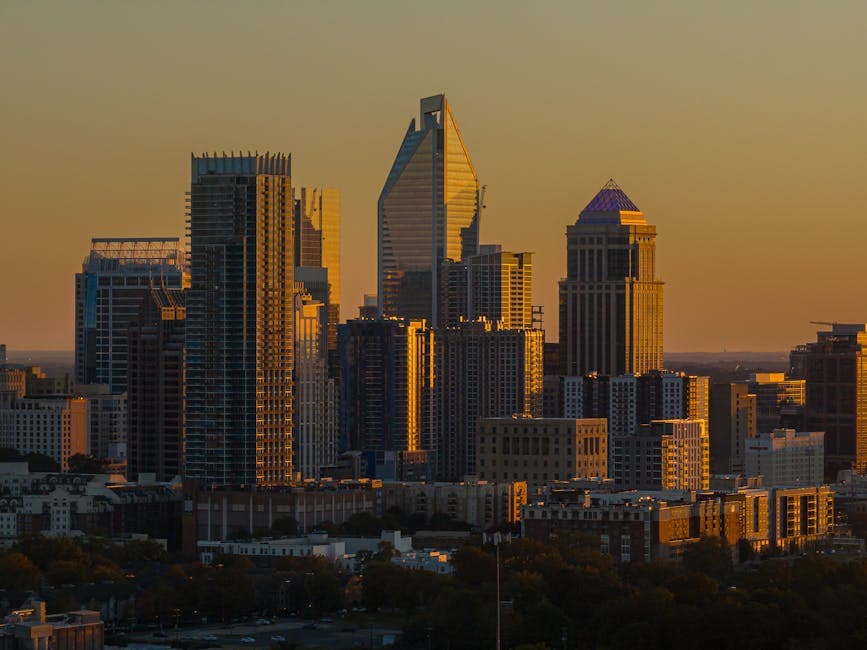
Eleven oh eight on a Wednesday, College Street loading dock.
How a single direct-ordered catering hand-off rewrote the math for one Charlotte restaurant, and what a banking capital teaches every operator in town about owning the demand they already earned.
Scene one · 100 block of College Street
A loading dock, four catering trays, and a number a marketplace would have taken.
At eleven oh eight on a Wednesday in late April, Maria K. is standing behind her chef counter in a third-generation Uptown sandwich shop, three blocks off Tryon, watching her catering lead load four warming trays into a rolling cart. The cart will be wheeled across College Street to the loading dock at the back of the Bank of America Corporate Center, where a corporate assistant from a wealth-management team on the forty-second floor will sign for it. The hand-off is scheduled for eleven thirty. The order is a Tuesday-to-Thursday standing in a banker's book: twelve assorted sandwiches, three salad platters, two trays of the kitchen's house-cured pimento cheese with a stack of Saltines, a sleeve of locally baked pecan bars, and a four-gallon urn of unsweet iced tea because in Charlotte you ask, always, you do not assume sweet.
The ticket totals eighteen hundred and forty-seven dollars. Maria knows that number without looking. She knows it because the assistant at the wealth team booked it directly through her shop's ordering page yesterday afternoon, the way the assistant has been booking it for fourteen consecutive weeks. The order rolled into the kitchen printer at three thirty-eight. The deposit cleared overnight. The card on file was charged at six this morning when the kitchen marked the prep complete. The funds will land in Maria's operating account on the same business day. There is no commission. There is no marketplace skim. The eighteen forty-seven is hers, less ingredient cost and labor, less the 7.25 percent in combined Mecklenburg sales tax that the platform calculated, withheld, and will remit on her behalf.
Two years ago, the same order would have moved through a third-party catering marketplace. Maria knows that number too, because she ran it the first month her direct portal went live and she has not let herself forget. The marketplace contract was thirty percent on catering tickets. Thirty percent of eighteen forty-seven is five hundred fifty-four dollars and ten cents. Per order. Per week. For fourteen straight weeks this winter alone, that is seven thousand seven hundred fifty-seven dollars and forty cents that would have been wired to a logo in California instead of staying inside a building on West Fourth Street where a line cook named Tomas needs his hours.
This is what Uptown does to a restaurant in Charlotte. The towers concentrate demand. They put a quarter of a million white-collar people inside ten blocks every weekday between roughly nine and five, and they hand a fraction of them a corporate AmEx and a Slack channel called #lunch-orders and they tell them to feed the team. The demand is real. It is repeatable. It is forecastable inside two-week deal calendars. And it is, for any restaurant that owns its own demand surface, by far the most profitable revenue in the building. The only question Charlotte operators have to answer is who collects the thirty percent: a logo, or you.
The rest of this page is for operators answering that question. We have written it the way a Charlotte restaurant owner would actually use it: with a map of the corporate towers that drive the weekday catering economy, with an atlas of the Lexington-versus-Eastern barbecue divide that bisects every casual-Friday platter order, with a stacked calendar of the Panthers and the Hornets and Charlotte FC and the NASCAR weekends that distort every September through May, with a tour of the South End chef-driven corridor along the Blue Line, with a long look at the Central Avenue Latino corridor in East Charlotte, with a 7.25 percent close-read of the sales tax math that every NC restaurant must reconcile quarterly, and with one argument for what changes when you stop renting your own demand from a logo. Maria's shop is doing this already. The rest of the city has the same opportunity, if it wants it.
Section II
The Uptown banking catering map
Eight corporate towers concentrated inside zip codes 28202 and 28244 generate the catering economy that defines Charlotte restaurant operations. The composition matters as much as the headcount: this is a banking-and-law town first, with utility, retail-tech, and industrial HQs layered on. The order patterns reflect the work the buildings do.
Figure 1
The Uptown Catering Ledger
Eight corporate towers concentrated within a roughly six-block grid. Bubble size reflects publicly disclosed Charlotte campus workforce.
Combined daytime workforce
~59K
- 14K
Bank of America Corporate Center
100 N Tryon St · 28202 · Banking HQ
Charlotte HQ. The 60-story tower at Trade & Tryon anchors the Uptown skyline. Catering volume concentrates Tue/Wed/Thu noon.
- 24K
Three Wells Fargo Center
401 S Tryon St · 28202 · Banking East Coast HQ
Wells Fargo's East Coast operating HQ. The combined Three Wells Fargo + Duke Energy Plaza cluster is the densest weekday lunch micro-market in the city.
- 9.0K
Truist Headquarters Tower
214 N Tryon St · 28202 · Banking HQ
Post-BB&T / SunTrust merger HQ. Smaller footprint than BofA but trades higher catering frequency per head.
- 4.5K
Duke Energy Plaza
525 S Tryon St · 28202 · Utility HQ
Duke Energy's new 40-story HQ. Lower turn than banks but consistent Friday team-lunch volume.
- 1.2K
Honeywell HQ
300 S Tryon St · 28202 · Industrial HQ
Relocated to Uptown in 2019. Mid-week catering pull on quarterly cycles aligned to investor cadence.
- 2.0K
Lowe's Tech Hub
300 S Brevard St · 28202 · Retail Tech
Lowe's Charlotte technology center. Engineering-heavy catering profile: late-morning breakfast tacos, sandwich platters.
- 0.8K
Moore & Van Allen LLP
100 N Tryon St · 28202 · Law
Largest Charlotte law firm by attorney count. Routinely orders working-lunch trays for deal teams during M&A closings.
- 3.5K
EpiCentre / NASCAR Hall District
210 E Trade St · 28202 · Hospitality / Mixed-use
Adjacent to Spectrum Center. Game-day surge customer for surrounding catering kitchens and ghost-brand spinouts.
Sources: Charlotte Center City Partners 2024 State of the Center City, Charlotte Regional Business Alliance economic profile, public Bank of America / Wells Fargo / Truist HQ disclosures. Tower placement is schematic, not survey-grade.
Start with the obvious. Bank of America is headquartered in Charlotte. The sixty-story Corporate Center at the corner of Trade and Tryon is not just an office building; it is the centerpiece of the city's skyline, the building that anchors municipal pride and municipal cuisine in roughly equal measure. The Charlotte campus workforce, per the bank's public filings and Charlotte Center City Partners' 2024 State of the Center City report, sits in the neighborhood of fourteen thousand people. They do not all eat lunch out every day, but enough of them do, enough days of the week, that the building alone reshapes the kitchens within four blocks of its loading dock.
Wells Fargo is the second pole. The bank's East Coast operating headquarters at Three Wells Fargo Center on South Tryon concentrates roughly twenty-four thousand employees across its adjacent Charlotte campus, again per Charlotte Regional Business Alliance and the bank's own community-impact disclosures. The Wells campus skews younger and more technical than the BofA tower, and the catering order book reflects that: more sandwich-and-salad rotations, more dietary-restriction flags, more recurring Tuesday and Thursday standings than the all-hands Wednesday rhythm next door.
The third pole is Truist, the bank formed by the 2019 merger of BB&T and SunTrust. Truist's Charlotte HQ tower at Tryon and Sixth is smaller than Bank of America's footprint, with roughly nine thousand seats, but Truist orders more often per head. A working theory among Uptown caterers is that smaller, post-merger banks lean harder on team-bonding lunches to stitch together two formerly distinct cultures. Whatever the cause, Truist runs hotter on a per-employee basis. If you are a catering kitchen inside three blocks of 214 North Tryon, the building you want to win is Truist.
Beyond banking, Duke Energy's new forty-story headquarters on South Tryon added another four-and-a-half thousand white-collar seats to the south end of the Uptown grid in 2023. Honeywell's industrial-HQ relocation to South Tryon in 2019 added another twelve hundred, with quarterly-cadence catering bursts tied to its investor-day calendar. Lowe's Tech Hub on South Brevard, the home-improvement retailer's Charlotte technology center, added roughly two thousand engineers, who order breakfast tacos more often than any other corporate building in the city. Moore & Van Allen, the largest local law firm by attorney count, runs roughly eight hundred deal-team lunches a year through a single catering coordinator. And the EpiCentre block between Trade and Fifth, anchored to Spectrum Center, absorbs the game-day surge that the Hornets and the touring concerts and the touring family shows all push into a single after-work catering window.
What you do not see on the schematic, but should: the underground concourse. Bank of America Corporate Center, Duke Energy Plaza, and the Three Wells Fargo Center tower complex are all connected by a network of below-grade walkways and elevators that mean a catering tray can be wheeled from a loading dock at College Street to a conference room at the back of a Wells trading floor without ever crossing daylight. This is operationally important. It is the reason a chef inside the right four-block radius can do an eleven thirty-five hand-off and have hot food on the table by eleven forty-five.
It is also the reason direct ordering matters more in Charlotte than almost anywhere else. A marketplace driver picking up the same tray would queue at the front of the building, scan a QR code at security, wait for an elevator the public uses, and arrive in a conference room twenty minutes late while the steak salads sweat. A direct order, dispatched against a recurring corporate-account profile with loading-dock instructions baked into the customer record, lands on time. The Uptown buildings reward operators who own the relationship.
The buildings on this map collectively employ, on a weekday peak, somewhere on the order of fifty-eight thousand to sixty-three thousand people inside a six-block grid. Charlotte Center City Partners' 2024 estimate of total Center City daytime workforce is approximately ninety-five thousand, of which roughly seventy percent sits inside this corporate-tower core. That is the catering market. It is large, it is concentrated, and it is, increasingly, choosing direct.
Section III
The Carolinas barbecue atlas, and why Charlotte sits on the fault line
North Carolina is the only US state with two distinct, regionally codified, defended-with-the-honor-of-a-flag barbecue traditions. To run a Charlotte restaurant intelligently you must be fluent in the difference. Marketplaces will not be. You should be.
Figure 2
The Carolinas Barbecue Atlas
North Carolina is the only US state with two distinct, regionally codified barbecue styles. Charlotte sits roughly on the fault line and gets both, in unequal measure.
Lexington / Western Piedmont
Lexington style
- Cut
- Pork shoulder
- Sauce
- Tomato + vinegar + pepper (the 'dip')
- Slaw
- Red slaw, no mayo (the 'dip' poured over it)
- Sides
- Hush puppies, brunswick stew, baked beans
- Smoke
- Hickory + oak, indirect heat
- Region
- Northwest of Charlotte: Lexington, Salisbury, Statesville, into Winston-Salem
Charlotte sits roughly 50 miles southeast of the Lexington epicenter. The pork-shoulder-and-red-slaw template is the default expectation for most Charlotte-born diners.
Eastern North Carolina
Eastern style
- Cut
- Whole hog
- Sauce
- Cider vinegar + crushed pepper, no tomato
- Slaw
- White slaw, mayo-based, on top of the sandwich
- Sides
- Hush puppies, collards, fried okra
- Smoke
- Oak primarily, sometimes hickory, longer pit time
- Region
- East of I-95: Goldsboro, Wilson, Greenville, down to Wilmington
Eastern-style is the older tradition, arguably the original North Carolina barbecue. Charlotte gets it through transplant pitmasters and tournament-circuit competitors but it is not the local default.
Sources: NC Barbecue Society, Our State magazine, John Shelton Reed and Dale Volberg Reed (Holy Smoke: The Big Book of North Carolina Barbecue, UNC Press), Eater Carolinas.
Cross the state from Charlotte east to the coast and you cross a culinary frontier. Western North Carolina barbecue, also called Lexington style after the small Piedmont town that codified it, is built on pork shoulder. The shoulder gets cooked low and slow over hickory and oak for ten to fourteen hours, then chopped or sliced and served with a sauce called the dip, which is tomato thinned with cider vinegar, salt, pepper, and a dash of red-pepper flake. The slaw, crucially, is red: cabbage tossed in the same dip rather than mayonnaise. The plate is rounded out with hush puppies, Brunswick stew, and sometimes a pile of baked beans.
Eastern North Carolina barbecue, the older of the two traditions, is built on the whole hog. Every part of the animal goes in the pit, low and slow over oak, and the meat is chopped together so the lean and the fat balance out across each forkful. The sauce is vinegar and crushed red pepper, no tomato, sometimes a whisper of sugar. The slaw is white, mayo-based, and it goes on top of the sandwich rather than on the side. Hush puppies are required. Collards or fried okra are typical. Brunswick stew sometimes appears, sometimes does not.
The fault line runs, roughly, along the I-95 corridor. Greensboro and the Triad sit firmly in Western territory. Raleigh straddles the divide more than its proud Easterners will admit. Wilmington, Goldsboro, Wilson, Tarboro, Greenville all defend the Eastern tradition with the conviction of people defending an inheritance. Charlotte sits about fifty miles southeast of Lexington proper, which puts the city firmly on the Western side of the line. But Charlotte is a transplant city. Roughly thirty percent of Mecklenburg County residents were born outside North Carolina, per US Census ACS 2024. They bring their own loyalties.
For Charlotte operators this matters in three concrete ways. First, your menu copy is read by a customer base that is split. If you label your dish "BBQ" without specifying a school, you will lose half of a long-tenured local and half of a homesick transplant in roughly equal measure. Be specific. Say Lexington-style chopped pork shoulder. Say whole-hog Eastern. Say which slaw goes where. Customers reward specificity in this category in a way they do not reward it in, say, pizza.
Second, the catering implication is real. Corporate teams in Uptown will order barbecue platters for Friday team lunches at a rate that no other cuisine in the city matches. The buildings that house transplants, particularly Wells Fargo and Lowe's and the law firms with strong NYC and Atlanta recruiting pipelines, will gravitate to Eastern. Native Charlotte teams, including most of the BofA platforms with long local-hire histories, will lean Lexington. Your direct catering portal should reflect this. Default the platter offerings to a clear school. Offer the other as a labeled alternate.
Section IV
The sports trifecta calendar
Roughly seventy home regular-season events a year across three major-league teams sit inside or directly adjacent to Uptown. That is a near-continuous twelve-month event load, with peaks that any Charlotte operator must staff for and lulls that any Charlotte operator must underwrite for.
Figure 3
The Charlotte Sports Trifecta, by Month
Regular-season home events for the Panthers, Hornets, and Charlotte FC, stacked. Postseason adds, NASCAR weekends overlap.
Panthers
7
Hornets
36
FC
17
Panthers (NFL)
Bank of America Stadium. 8 to 9 regular-season home games, Sept through Dec, mostly Sundays. Game-day surge hits a 12-block radius of Uptown plus South End walk-up traffic.
Hornets (NBA)
Spectrum Center. 41 regular-season home games, Oct through April. Two or three games a week, mostly weeknights. Pre-game catering windows at adjacent Trade Street kitchens.
Charlotte FC (MLS)
Bank of America Stadium (shared). 17 regular-season home matches, Feb through Oct, mostly Saturday nights. Mint Street / Graham Street pre-match corridor catering is a distinct micro-event.
Sources: NFL Carolina Panthers schedule, NBA Charlotte Hornets schedule, MLS Charlotte FC schedule, Charlotte Regional Visitors Authority event guide. Counts are regular-season home only; postseason and preseason add to load.
Bank of America Stadium, on Mint Street at the western edge of Uptown, hosts both the Carolina Panthers (NFL) and Charlotte FC (MLS). The shared stadium model is unusual at the major-league level, and it creates an oddly continuous traffic pattern: Charlotte FC's Major League Soccer season opens in late February and runs through October, the Panthers' NFL home schedule runs Sundays September through December, and the two essentially never overlap. A Charlotte operator in the Mint Street corridor sees nine months of stadium traffic with only a short July gap.
Spectrum Center, just three blocks east on East Trade Street, hosts the Charlotte Hornets across forty-one regular-season home games from late October through mid-April. Hornets games are mostly weeknights. The pre-game catering window for surrounding kitchens runs roughly five to six thirty, the in-game beverage and quick-bite trickle continues through eight, and the late-night post-game push concentrates on a four-block radius of bars between Trade and Fifth. Layered onto the NBA calendar are roughly thirty arena concerts and family shows per year, which read to the local restaurant economy as additional Hornets-equivalent events.
The combined total is unusual for a US city of Charlotte's size. Roughly eight to nine Panthers home games, plus forty-one Hornets home games, plus seventeen Charlotte FC home matches, plus arena concerts and family-show nights, plus postseason possibilities for any of the three. Call it seventy-plus major-event days a year, in addition to a continuous Uptown corporate-tower lunch load. A Charlotte restaurant within a six-block radius of either stadium is, in a real sense, running a multi-day-of-the-week event business with a corporate-catering trunk strapped to its back.
The operational implication is that staffing models that work in cities with a single sports tenant or with stadium clusters that share a season are insufficient here. Charlotte schedules require a roster that can flex across NFL Sundays, MLS Saturday nights, NBA weeknights, and corporate weekday lunches in different combinations every week of the year. The kitchens that handle this well are the ones that have automated the rest of their operations: a direct-ordering portal that handles eighty percent of catering volume without a person on the phone, voice-AI that handles the inevitable game-day phone surge, and a payouts cadence that does not slip when the bookkeeper is at a Hornets game.
One more note. The Charlotte FC fanbase, which only stood up its franchise in 2022, skews younger and more digital-native than either the Panthers or the Hornets followers. They book pre-match catering through Instagram links, they tip via app, and they expect a direct-ordering experience that holds up to the standards they get from coffee shops and brewpubs. Restaurants that have not yet caught up to that expectation are leaving the matchday revenue on the table.
Section V
South End: a Blue Line corridor of chef-driven new builds
Ride the Blue Line south from Uptown for ten minutes and you are in a different Charlotte. South End began the 2000s as a corridor of textile warehouses and surface parking lots immediately south of the I-277 inner loop. The Lynx Blue Line, which opened in 2007 and connects Uptown to the UNC Charlotte campus and beyond, was the lever. Inside fifteen years South End became the densest concentration of chef-driven new-build restaurants in the metro, anchored by a band of converted industrial spaces between East Park Avenue and Atherton Mill.
The corridor reads, today, as the front edge of Charlotte's independent dining scene. Clark Barlowe's Heirloom, originally opened in 2014 in nearby Westover Hills, is the spiritual ancestor: a hyper-local, all-North-Carolina-sourcing concept that helped articulate what Charlotte fine dining could look like outside the SouthPark steakhouse template. Sam Hart's Counter, a fifteen-seat tasting-menu room that opened in 2021 in nearby Plaza Midwood, is the current standard-bearer. Both are widely credited by Eater Carolinas and Charlotte Magazine for redrawing the city's expectations of what an independent kitchen could attempt in this market.
Down the line, Optimist Hall, the converted Highland Park textile mill at the Blue Line's 25th Street stop, opened in 2019 as Charlotte's flagship food hall. It hosts roughly twenty independent food stalls under one roof: a Vietnamese pho counter, a NC barbecue concept, a Caribbean roti stall, a Detroit-style pizza window, a coffee roaster, a wine bar. The structure of a food hall, which puts twenty small independent kitchens behind a single door, magnifies the cost of any third-party platform tax. A thirty-percent marketplace bite at Optimist scales to twenty small operators losing margin on the same shared overhead.
The South End operating profile is, accordingly, different from Uptown's. The corridor leans Friday and Saturday dinner, with growing weeknight traffic from the residential conversions stacked above the retail. Brunch is large. Catering is smaller in absolute dollars than Uptown's banking-tower volume, but it is more frequent, more chef-driven, and more sensitive to story. South End diners want to know which farm the pork came from. They want the chef's name on the menu. They want the direct-ordering page to look like the restaurant's Instagram, not like a marketplace template.
This is the population for which direct ordering exists in its purest form. A South End chef-driven concept's twelve-month strategy is essentially an exercise in compounding a relationship with a local clientele who would actively prefer to order from the restaurant directly. The marketplace was a tax on that relationship, not a generator of it. Removing the tax does not reduce demand; it returns the margin.
Section VI
East Charlotte and the Central Avenue Latino corridor
Drive Central Avenue east from the city center, past the Plaza Midwood retail strip, past Eastway Drive, into the zip codes 28212 and 28215, and you are in the densest Latino business corridor in the Carolinas. Mecklenburg County's Hispanic and Latino share, per US Census Bureau ACS 2024, is approximately sixteen percent. That share is concentrated heavily along the Central Avenue spine and in the adjacent neighborhoods around the former Eastland Mall site, which the city is now redeveloping into a mixed-use anchor.
The restaurants here are mostly Mexican, mostly Honduran, mostly Salvadoran, with growing Colombian and Venezuelan presences. Compare Foods on Independence Boulevard, the Compare grocery chain's flagship Charlotte store, is the anchor that sustains the corridor's ingredient supply chain. The dining options range from taquerias the size of a single shipping container to multi-generational sit-down kitchens with full bars and tres leches displays. Charlotte Observer and Axios Charlotte have profiled the corridor repeatedly; Eater Carolinas treats it as one of the under-covered great food neighborhoods of the Southeast.
What this corridor has not had, until recently, is digital ordering infrastructure that meets it on its terms. The marketplace apps that dominate suburban Charlotte do not work well in East Charlotte for two reasons. First, language: many of the kitchens operate primarily in Spanish, and the marketplace menus do not. Second, payments: a meaningful share of corridor customers pay cash or use prepaid cards rather than the marketplace-required credit instruments, and many of the owners would prefer not to carry a thirty-percent commission line on a menu that is already priced near the floor.
A direct-ordering portal that supports Spanish, that handles cash and split tender at the counter, and that returns full margin to the owner, fits this corridor in a way that a marketplace contract simply cannot. Voice-AI in Spanish is, separately, the single largest unmet operations need in this part of the city: the phone is still where most catering orders come in for Central Avenue kitchens, and the staffing model for a full-Spanish reservation desk does not pencil for an operation the size of most corridor kitchens. We have built voice-AI in Spanish into the DirectOrders platform for exactly this case.
If you are an operator on the Central Avenue corridor reading this, the technology is here, in your language, configured for the way you actually run your kitchen. We are happy to show you, in person, in Spanish, the way the demo works.
Section VII
The Concord ring: NASCAR weekends at Charlotte Motor Speedway
Twelve miles northeast of Uptown, just over the Cabarrus County line in Concord, sits Charlotte Motor Speedway: a 1.5-mile quad-oval that is the historical and contemporary heart of NASCAR. The track hosts two major Cup Series events each year. The Coca-Cola 600, run on the Sunday of Memorial Day weekend, is the longest race on the NASCAR calendar at six hundred miles and is one of the four traditional crown-jewel races of the sport. The Bank of America Roval 400, run in early October, is a hybrid road-course-and-oval race that is part of the playoff schedule. Either weekend pulls a six-figure crowd into Cabarrus County and rebuilds the demand pattern for every restaurant in a thirty-mile radius for three to four days.
The Coca-Cola 600 weekend is the one Charlotte operators feel most acutely. Memorial Day Friday into Memorial Day Monday, the I-77 and I-85 corridors carry six-figure inflows of out-of-state visitors, many of them campground- or hotel-staying for the duration of the race week. Concord proper sees the largest direct surge, but the spillover reaches South End, NoDa, Plaza Midwood, and Uptown for the dinner and late-night windows when the track is closed. The Roval 400 weekend in October is smaller but more concentrated, sharing its weekend with the Panthers home schedule and the Hornets preseason.
For a Concord-ring kitchen, NASCAR is the single defining operational reality of the year. The race weekends generate roughly twice the volume of any other weekend, and they pull staffing and inventory commitments months in advance. The kitchens that handle race weekends well have, almost without exception, automated their ordering surface: direct portal, recurring corporate-account profiles for the race teams and the hospitality concessionaires, voice-AI to absorb the inevitable phone overflow when the queue at the front-of-house host stand is forty deep.
For a Uptown or South End kitchen, NASCAR is a secondary surge that you should still plan for. Race-week visitors who are staying near downtown Concord drive into Uptown for non-race-day dinners. The pattern is predictable enough that catering teams should pre-build a Coca-Cola 600 weekend menu and a Roval 400 weekend menu, both surfaced through the direct-ordering page, with surge staffing reserved.
Section VIII
The CIAA Tournament playbook
Late February brings the CIAA Tournament. The Central Intercollegiate Athletic Association, the oldest historically Black athletic conference in the country, has held its men's and women's basketball tournament in Charlotte across most of the last two decades, with the event splitting time between Spectrum Center and the Bojangles Coliseum / Charlotte Convention Center cluster. CIAA week is, by long-standing tradition, one of the defining Black cultural weeks in the American South. The Charlotte Regional Visitors Authority estimates the event's annual economic impact at $40 to $50 million.
For restaurants, CIAA week is a four-day surge that mirrors Coca-Cola 600 weekend in volume but is shaped differently in geography. The crowd concentrates in Uptown, in NoDa, in Plaza Midwood, and in the historically Black West Charlotte corridor along Beatties Ford Road. Catering bookings for alumni events, fraternity and sorority brunches, and corporate hospitality suites surge in the two weeks leading in. Restaurants that have built relationships with CIAA-affiliated alumni networks across the prior twelve months win the bookings; restaurants that have not built those relationships find themselves on Saturday at five with under-allocated kitchens and customers driving past them to a competitor that took a phone call last October.
The lesson, again, is relational: direct ordering plus a customer record that survives twelve months beats marketplace acquisition every time.
Section IX
The 7.25 percent close-read
NC state
4.75%
Mecklenburg
2.50%
Combined
7.25%
North Carolina charges a 4.75 percent state sales tax on prepared food. Mecklenburg County adds 2.50 percent in combined local options, which on a prepared-food line item gives a combined Charlotte rate of 7.25 percent. Across the Uptown 28202 zip code that is the rate every catering invoice carries. Some neighboring jurisdictions inside the metro carry slightly different combined rates (Concord and the rest of Cabarrus County, for example, combine to 7.00 percent under different local-option splits), so multi-location operators in the Charlotte ring must be careful with which jurisdiction each transaction is sourced to.
Where this matters for direct ordering is in marketplace remittance behavior. The third-party platforms remit sales tax on the restaurant's behalf under North Carolina's marketplace facilitator law (NCGS 105-164.4J). The remittance is correct; the problem is visibility. Many Charlotte operators do not see a clean line-item reconciliation of marketplace-remitted tax until quarterly review, by which point any rate-mapping errors have compounded across the prior thirteen weeks. With direct ordering, the platform calculates 7.25 percent on the invoice, displays it as a separate line on the receipt, and remits it on the same schedule as your in-house POS. There is no quarterly surprise.
For founder-operator restaurants this is genuinely one of the underrated reasons to bring catering and high-ticket online orders onto a direct portal. The bookkeeping is cleaner. The reconciliation is faster. The audit defense is in your hands. The North Carolina Department of Revenue publishes the full prepared-food sales-and-use guidance at ncdor.gov/taxes-forms/sales-and-use-tax; we recommend every Charlotte operator read it once a year.
Section X · The argument
How DirectOrders fits Charlotte
The argument for direct ordering in Charlotte is, in the end, a single argument repeated across five different audiences. The audiences are Uptown banking caterers, Carolinas barbecue houses, South End chef-driven concepts, Central Avenue Latino kitchens, and Concord NASCAR-ring kitchens. The argument is the same in each case: the demand belongs to the restaurant, not to the marketplace. Every other operating decision in a Charlotte kitchen flows from that single recognition.
For the Uptown banking caterer, direct ordering is the difference between Maria's eighteen forty-seven landing in her operating account versus five hundred fifty-four of it landing in California. Multiply that by fourteen weeks of standing orders and the question answers itself.
For the Lexington-style pit master, direct ordering means your menu copy says "chopped pork shoulder with red slaw" in a way that the marketplace template cannot, and your customer record remembers the booking from last September's Panthers home opener and re-surfaces the same order this September without a phone call.
For the South End chef-driven independent, direct ordering means the page that takes the order looks like an extension of your dining room, not like a Walmart aisle. The story you tell on your menu, on Instagram, on a chef-collaboration dinner, lives on a single domain you own, with a single customer record you control.
For the Central Avenue corridor kitchen, direct ordering means the platform speaks Spanish, the voice-AI takes the catering call in Spanish, the receipts print in Spanish, and the thirty-percent marketplace tax that would have flattened your already thin operating margin is simply not part of the math.
For the Concord NASCAR-ring kitchen, direct ordering means Coca-Cola 600 weekend volume that you have already pre-built menus for, pre-staffed for, and pre-paid for, instead of a thirty-percent commission bite on the largest revenue weekend of your year.
We can show you the platform on your menu, with your prices, with your zip-code-specific tax rate, with your barbecue school correctly labeled, with your loading-dock instructions baked into your corporate-customer records, inside two hours. The demo is free. The setup is white-glove. If we cannot get you to live in two hours, we will white-glove you for free until you are. The Charlotte Wednesday at eleven oh eight is yours to keep.
Live in two hours, or we white-glove you for free
Bring Charlotte's Wednesday at eleven oh eight onto your own ledger.
See the platform configured for the way Charlotte restaurants actually work: Uptown corporate catering, Carolinas barbecue, sports-trifecta weekends, NASCAR ring, Central Avenue Spanish-language voice-AI.
Charlotte neighborhoods served
28202, 28244
Uptown (Center City)
Banking towers + sports venues
28203
South End
Blue Line light rail chef-driven corridor
28205
NoDa (North Davidson)
Arts district, breweries, late-night
28205
Plaza Midwood
Indie chef incubator, walkable
28277
Ballantyne
Southern office park + family dining
28212, 28215
East Charlotte / Eastland
Central Avenue Latino corridor
28210, 28211
SouthPark
Premium retail + fine dining
28025, 28027
Concord (Speedway ring)
NASCAR + Charlotte Motor Speedway
Sources & further reading
Page last updated 2026-05-11. Figures sourced or contextualized to the citations above. Workforce counts reflect publicly disclosed Charlotte HQ campus headcount; treat as order-of-magnitude rather than exact. Sports-event counts are regular-season home only.