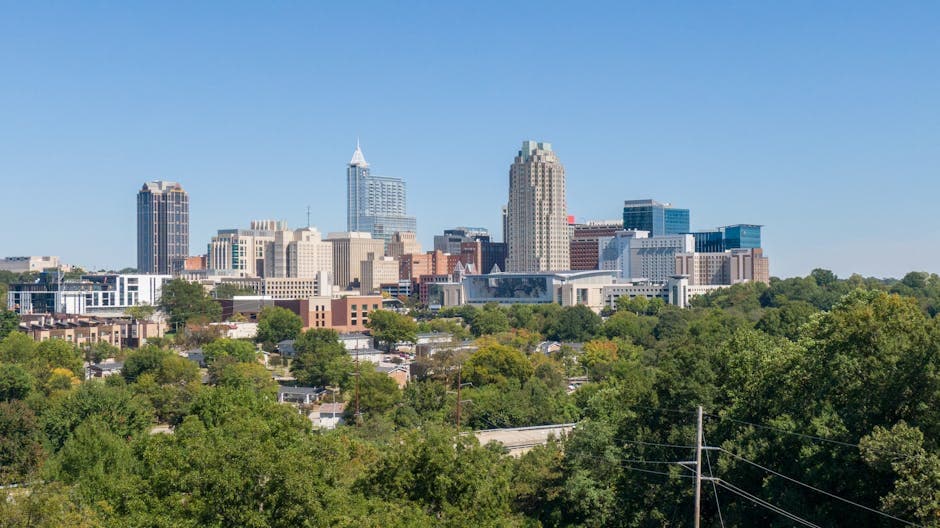
Ten forty on a Wednesday, a Glenwood South kitchen loads a van for RTP.
How a single direct-ordered catering run from Raleigh to the IBM campus rewrote the math for a chef-owned restaurant, and what the Research Triangle teaches every operator in the Triangle about owning the demand they already earned.
Scene one · Glenwood Avenue, north of Hillsborough
A van, four catering trays, and twelve miles down I-40 to Cornwallis Road.
At ten forty on a Wednesday in late April, Joel R. is standing in the prep alley behind his Glenwood South kitchen, three blocks north of the Capitol, watching his catering lead seal the lids on four warming trays. The trays go into a Sprinter van. The van will exit the inner-loop onto Wade Avenue, turn south onto I-440, then west onto I-40, and twelve miles later it will pull into the loading bay behind Building 002 of the IBM Research Triangle Park campus on Cornwallis Road. The hand-off is scheduled for eleven thirty. The order is a Tuesday-and-Thursday standing in a software-team manager's calendar: sixteen assorted sandwich halves on Joel's house sourdough, three trays of mixed-greens salad with buttermilk-pecan vinaigrette, two trays of his kitchen's house-pulled Eastern-style whole-hog with two cruets of vinegar-pepper on the side, a stack of hush puppies kept warm in foil, and a four-gallon urn of sweet iced tea because in Raleigh, on a Wednesday, you ask, and most rooms say yes.
The ticket totals nineteen hundred and twelve dollars. Joel knows that number without looking. He knows it because the manager booked it directly through his restaurant's ordering page yesterday afternoon, the way the manager has been booking it for eleven consecutive weeks. The order rolled into his kitchen printer at four oh four. The deposit cleared overnight. The card on file was charged at six this morning when the kitchen marked the prep complete. The funds will land in Joel's operating account on the same business day. There is no commission. There is no marketplace skim. The nineteen-twelve is his, less ingredient cost and labor, less the 7.25 percent in combined Wake County sales tax that the platform calculated, withheld, and will remit on his behalf.
Two years ago, the same order would have moved through a third-party catering marketplace. Joel knows that number too, because he ran it the first month his direct portal went live and he has not let himself forget. The marketplace contract was thirty percent on catering tickets. Thirty percent of nineteen-twelve is five hundred seventy-three dollars and sixty cents. Per order. Per week. For eleven straight weeks this spring, that is six thousand three hundred nine dollars and sixty cents that would have wired to a logo in San Francisco instead of staying inside a building on Glenwood Avenue where his sous chef Maria needs her hours and his catering lead Rosa needs a raise.
This is what the Research Triangle does to a restaurant in Raleigh. RTP concentrates demand inside a triangle of pines that, on a weekday, holds something close to fifty thousand white-collar people across roughly three hundred companies, with IBM and Cisco and SAS and Lenovo and Biogen and GSK and Fidelity at the top of the org chart. They do not all order lunch from outside vendors. But enough of them do, enough days of the week, that an operator in Raleigh proper, twelve miles east of the park, can build a catering trunk that runs Tuesday through Thursday with standing orders. The demand is real. It is repeatable. It is forecastable inside two-week sprint calendars. And it is, for any restaurant that owns its own demand surface, by far the most profitable revenue inside the I-440 beltline. The only question Triangle operators have to answer is who collects the thirty percent: a logo, or you.
The rest of this page is for operators answering that question. We have written it the way a Raleigh restaurant owner would actually use it: with a map of the RTP corporate anchors that drive the weekday catering economy, with an eleven-day playbook for the NC State Fair in late October, with an atlas of the Eastern North Carolina whole-hog tradition that still anchors the region's barbecue identity, with a tour of the Glenwood South and Fayetteville Street and Five Points chef-driven corridors, with a look at NC State Wolfpack and Carolina Hurricanes game-day operations across Carter-Finley and PNC Arena, with an essay on Ashley Christensen and what Poole's Diner taught the rest of the city, with a chapter on the Latino and Indian and Vietnamese communities whose kitchens are increasingly the most interesting in the metro, and with one argument for what changes when you stop renting your own demand from a logo. Joel's restaurant is doing this already. The rest of the Triangle has the same opportunity, if it wants it.
Section II
The Research Triangle Park catering map
Research Triangle Park, founded in 1959 between Raleigh and Durham, is the largest research park in the United States by acreage. Roughly seven thousand acres of longleaf pine forest are stitched together into a campus of about three hundred companies and a workforce that the Research Triangle Foundation pegs at somewhere near fifty thousand on a weekday peak. For a Raleigh restaurant, RTP is the catering market.
Figure 1
The Research Triangle catering map
Seven anchor employers spread across RTP and the adjacent Cary, Morrisville, and Durham edges. Bubble size reflects publicly disclosed Triangle-region workforce.
Combined RTP-region workforce
~32K
- 10K
IBM Research Triangle Park
3039 Cornwallis Rd · 27709 · Enterprise Software / Cloud / AI
IBM's largest US campus outside Armonk. Software development, Red Hat (IBM-owned), Watson teams. Catering pattern: structured Tue/Wed/Thu noon, frequent client visits with formal sit-down trays.
- 5.5K
Cisco Systems RTP
7025 Kit Creek Rd · 27709 · Networking / Cybersecurity
Cisco's second-largest global campus. Heavy engineering pull, frequent multi-floor sandwich rotations, larger Wednesday all-hands catering blocks tied to product cycles.
- 5.0K
SAS Institute (Cary HQ)
100 SAS Campus Dr, Cary · 27513 · Analytics Software
SAS HQ in Cary, immediately west of Raleigh. Famously employee-centric (subsidized on-campus dining), so external catering tends to be event-driven rather than recurring lunch.
- 2.5K
Lenovo North America HQ
8001 Development Dr, Morrisville · 27560 · Computing Hardware HQ
Lenovo's North America HQ, on the western edge of RTP. International executive visits drive a higher share of upscale dinner catering than the average RTP tenant.
- 1.5K
Biogen Manufacturing Campus
5000 Davis Dr · 27709 · Biopharmaceutical
One of Biogen's largest global manufacturing campuses. Lab and GMP shift workers drive a non-standard catering window (early morning, late afternoon shift handoffs).
- 4.0K
GSK (GlaxoSmithKline) RTP
5 Moore Dr · 27709 · Pharmaceutical R&D
GSK's US R&D headquarters. Pharma R&D culture leans heavily on conference-room working lunches, so the catering profile is high frequency, moderate ticket size.
- 3.0K
Fidelity Investments RTP
100 New Millennium Way, Durham · 27709 · Financial Services
Fidelity's largest Southeast operations hub. Financial-services catering profile: smaller, more recurring trays, predictable Tue/Wed quarterly cycles.
Sources: Research Triangle Foundation of North Carolina, individual corporate disclosures (IBM, Cisco, SAS, Lenovo, Biogen, GSK, Fidelity), Triangle Business Journal employer rankings. Anchor placement is schematic, not survey-grade.
Start with the largest tenant. IBM's RTP campus, on Cornwallis Road, is the company's biggest US site outside Armonk. Per IBM's own community-impact disclosures and Triangle Business Journal's annual employer rankings, the Triangle workforce is in the neighborhood of ten thousand people across software development, cloud, AI, and the Red Hat division that IBM acquired in 2019 and kept headquartered in Raleigh. They do not all eat lunch from outside vendors every day. But enough of them do, enough days of the week, that the campus alone reshapes the catering operations of any Raleigh kitchen willing to drive twelve miles west.
Cisco is the second pole. Cisco's RTP campus on Kit Creek Road is the company's second-largest globally, with roughly fifty-five hundred employees across networking, cybersecurity, and the Webex / collaboration business unit. Cisco runs younger and more engineering-heavy than IBM, and the catering profile reflects that: more sandwich-and-salad rotations, more dietary-restriction flags, more recurring Tuesday and Thursday standings than the all-hands Wednesday rhythm that anchors IBM.
SAS Institute, in Cary, sits at the western edge of the Triangle. The analytics-software company's campus, with roughly five thousand employees, is famously self-contained: the on-campus dining program is one of the most generous in American corporate America, with subsidized full-service cafes that take a meaningful share of what would otherwise be outside-catering demand. The implication for Raleigh operators is not that SAS does not order out. It is that SAS orders out for events, not for everyday lunch. Win the events.
Lenovo's North America headquarters sits in Morrisville, on the western edge of RTP, with roughly twenty-five hundred employees. Lenovo's international leadership rotation creates an unusual catering profile compared with the rest of the park: more frequent upscale dinner bookings driven by visiting Beijing and Shanghai executives, more sit-down rather than tray-style. Biogen's manufacturing campus on Davis Drive and GSK's pharmaceutical R&D campus on Moore Drive together add another fifty-five hundred lab and R&D personnel, with a non-standard catering window driven by GMP shift handoffs and conference-room working lunches respectively. Fidelity Investments runs its Southeast operations hub from a Durham campus on the northern edge of the park, with roughly three thousand employees and a financial-services catering profile that mirrors what Charlotte's bank towers generate, scaled down.
The geography of RTP is what makes it operationally distinctive. The park is not a downtown grid. It is a roughly seven-thousand-acre wedge of pine forest with corporate buildings set back from the road and separated by hundreds of yards of green canopy. A catering delivery is a twelve-minute drive between buildings, not a four-minute walk. The implication: routing matters more than in any downtown catering operation. A direct-ordering portal that knows the difference between Building 002 of IBM and Building 003 of IBM, that has the right loading-dock instructions baked into the recurring corporate-account record, that prints a turn-by-turn from your kitchen door to the destination loading bay, beats a marketplace driver who is looking at a campus map for the first time, every time.
There is one more pattern worth flagging. The catering load at IBM, Cisco, and the pharma campuses is increasingly multi-day. A team that orders Tuesday is the same team that orders Thursday, often with the same head count and the same dietary profile. A direct-ordering portal that re-surfaces the prior order as a one-click reorder turns a six-step booking into a single tap. A marketplace cannot do this with the same intimacy because the customer record is not yours; it is the marketplace's. This is the operational reason that the Raleigh kitchens running on direct ordering are pulling away from the kitchens still renting their corporate book from a third-party logo.
The Triangle is also a place where the catering inquiry still arrives by phone more than half the time. RTP managers in their late forties and fifties still pick up the receiver. Voice AI that books the order in the same booking grammar as a human catering lead, that knows the seven anchor employer accounts and their loading-dock quirks, that issues a confirmation email in under thirty seconds, is the operational addition that turns the phone from a staffing problem into an asset. We have built this into the DirectOrders platform with that specific use case in mind.
Section III
The NC State Fair 11-day playbook
For eleven days every October, the NC State Fairgrounds in West Raleigh becomes the largest single food-and-beverage event in the Carolinas. Roughly one million attendees over the run, per the North Carolina Department of Agriculture and Consumer Services. For an operator inside the I-440 beltline, the fair is half a month of distorted demand patterns that you either plan for or you do not.
Figure 2
The NC State Fair 11-day playbook
Late October. NC State Fairgrounds, West Raleigh. Roughly one million attendees across eleven days, per North Carolina Department of Agriculture and Consumer Services.
Sample run, total attendance
~10,350K
Weekend peaks (Sat / Sun)
The two Saturdays draw the largest single-day crowds, frequently triggering capacity-pause gate closures by midafternoon. Weekend nights pull the largest concert and grandstand audiences. Vendor inventory and labor models must front-load supplies for Saturday, then rebuild Friday night.
Weekday cadence (Mon to Thu)
Discount and heritage days (School Day, Hispanic Heritage Day, Senior Citizens, College Day) reshape the demographic by hour. Weekday afternoons after 3pm carry the largest family surge. Tuesday and Wednesday are the inventory burn-down days vendors plan promotions around.
Sources: North Carolina Department of Agriculture and Consumer Services (NC State Fair), Greater Raleigh Convention and Visitors Bureau, News & Observer fair coverage. Per-day attendance is an illustrative profile drawn from multi-year published totals; actual day-by-day breakdowns are not always disclosed.
The North Carolina State Fair has run continuously since 1853, with only a small handful of war-year and pandemic-year cancellations. The current fair occupies a permanent three-hundred-acre site at the corner of Hillsborough Street and Blue Ridge Road, immediately west of NC State's main campus, immediately east of PNC Arena and Carter-Finley Stadium. The fair runs the third Thursday of October through the fourth Sunday, eleven days inclusive, with gates typically opening at 8am and closing late evening.
For vendors on the midway and in the food courts, the fair is its own world: dozens of permanent and pop-up concession kitchens running at peak surge from before noon through nine or ten at night, with the famous turkey legs, the deep-fried-something-different-every-year, and the Krispy Kreme cheeseburger that became a meme. But for restaurants in Glenwood South, Fayetteville Street, Five Points, and the rest of inside-the-beltline Raleigh, the fair shapes demand differently. Lunch traffic shifts to lighter, faster, more grab-and-go because customers are heading to or coming from the fair. Dinner traffic spikes on the two weekend Saturdays, both for diners who do not want to eat fair food and for diners winding down from a fair afternoon.
The two Saturdays, in particular, are the planning problem. Both routinely trigger capacity-pause gate closures at the fairgrounds by midafternoon, which pushes overflow into adjacent restaurants. The two weeknight after-school windows (the Friday of School Day, and the Thursday of College Day) generate concentrated family and student surges that hit Hillsborough Street kitchens between 3 and 7pm. The Sunday evenings, particularly Closing Sunday, run later than usual because vendors and their families decompress in town once the fair gates close.
The operational playbook for a Raleigh kitchen is to pre-build a fair-week menu on the direct ordering portal, surface a clearly-named "State Fair Survival" lunchbox that travels well and can be picked up in under three minutes, staff the front-of-house heavier on the two Saturdays, lighter midweek, and reserve a delivery slot block for the two weekend evenings when fairgoers want food sent to their hotels. This is exactly the kind of one-time event-cycle reshaping that a marketplace will not help you with. Your direct portal will, because you own the menu and the schedule.
One more note. Fair workers, the vendors and the carnival staff, are themselves a meaningful catering customer for eleven straight days. They are based on-site, they want food other than what they cook, they pay cash or quick-tap credit, and they tip well. Kitchens within a short drive of the fairgrounds entrance who pre-build an off-menu vendor-special at workable price points capture this entire micro-market for the duration of the run.
Section IV
The Eastern North Carolina whole-hog tradition
The vinegar-pepper, whole-hog school of barbecue is the older of the two North Carolina traditions and, by long custom, the default Raleigh expectation. Set against Lexington, Memphis, and Central Texas, the differences are not preference; they are doctrine. Marketplace platforms cannot tell them apart. Your menu must.
Figure 3
Eastern North Carolina BBQ, against the four US capitals
The whole-hog, vinegar-pepper tradition is the older of the two NC styles and the default Raleigh expectation. Set against Lexington, Memphis, and Central Texas, the differences are not preference; they are doctrine.
Eastern North Carolina
Raleigh homeEastern NC
- Cut
- Whole hog
- Sauce
- Cider vinegar + crushed red pepper, no tomato
- Slaw
- White, mayo-based, on top of the sandwich
- Sides
- Hush puppies, collards, fried okra
- Smoke
- Oak primarily, sometimes hickory, 12 to 18 hours
- Origin
- Goldsboro, Wilson, Greenville (1 hour east of Raleigh)
The default Raleigh expectation. Whole-hog, vinegar-pepper. The Skylight Inn USA in Ayden and Sam Jones BBQ in Winterville hold the lineage; B's Barbecue in Greenville is the Sunday pilgrimage.
Lexington / Western NC
Lexington
- Cut
- Pork shoulder
- Sauce
- Tomato + vinegar + pepper (the 'dip')
- Slaw
- Red slaw, no mayo, dressed with the dip
- Sides
- Hush puppies, Brunswick stew, baked beans
- Smoke
- Hickory + oak, indirect heat
- Origin
- Lexington, Salisbury (2 hours west)
The western half of the state. Pork shoulder, red slaw. Raleigh diners with Piedmont roots will request it explicitly; new arrivals from the Triad expect it.
Memphis
Memphis
- Cut
- Pulled pork shoulder + dry-rub ribs
- Sauce
- Sweet tomato base, often served on the side
- Slaw
- Mustard or mayo-based, sometimes on the sandwich
- Sides
- Beans, slaw, white bread
- Smoke
- Hickory, indirect heat
- Origin
- Memphis TN (10 hours west)
Sweet and saucy. Raleigh diners use it as a reference point when they mean 'the BBQ you see on TV.' Almost never the local default.
Central Texas
Texas
- Cut
- Beef brisket
- Sauce
- Minimal. Salt and pepper bark, sauce on the side or none
- Slaw
- Optional, not regional
- Sides
- Pickles, white onion, white bread, beans
- Smoke
- Post oak, low and slow 14+ hours
- Origin
- Austin, Lockhart TX (18 hours west)
Brisket-forward. The cuisine of Texan transplants and the catering category that Triangle tech recruits ask for by name when their old Austin office had Franklin on Fridays.
Sources: NC Barbecue Society, John Shelton Reed and Dale Volberg Reed (Holy Smoke: The Big Book of North Carolina Barbecue, UNC Press), Texas Monthly BBQ coverage, Memphis in May World Championship Barbecue Cooking Contest, Eater Carolinas.
Eastern North Carolina barbecue is, by the Reed and Reed canonical definition in Holy Smoke (UNC Press), built on the whole hog. Every part of the animal goes in the pit: shoulder, ham, belly, ribs, the works. The cook runs low and slow over oak for somewhere between twelve and eighteen hours, with hickory sometimes added late for finishing aroma. When the meat is done, it is chopped, sometimes coarsely, sometimes finely, sometimes both in alternating layers, so that the lean and the fat balance out across each forkful. The sauce is vinegar and crushed red pepper, with a whisper of sugar and a pinch of salt; tomato is absent and, in eastern tradition, suspect.
The slaw is white, mayonnaise-based, and it goes on top of the sandwich. Hush puppies are required, not optional. Collards, fried okra, and sometimes Brunswick stew round out the plate. The dining room is, in tradition, a wood-paneled room with concrete floors and a screen door. The pilgrimage sites are the Skylight Inn USA in Ayden, Sam Jones BBQ in Winterville, and B's Barbecue in Greenville, each roughly an hour east of Raleigh. The James Beard Foundation has recognized Sam Jones and Vivian Howard among other Eastern NC cooks.
Compare with Lexington, the western North Carolina capital two hours west of Raleigh. Lexington uses pork shoulder, not whole hog. The sauce is tomato-based, called "the dip," thinner than Memphis but redder than Eastern. The slaw is red, made by tossing cabbage in the dip rather than in mayonnaise. The split is geographic: roughly along I-95, with Greensboro and the Triad on the Lexington side and Goldsboro and Wilson on the Eastern side. Raleigh sits east of the line, which is why the local default leans Eastern.
Compare with Memphis. Memphis uses pork shoulder, sometimes ribs, often dry-rubbed for the rib presentation. The sauce is sweet, tomato-based, and served on the side. Brunswick stew is rare. White bread, slaw, and baked beans are the standard sides. Raleigh diners use Memphis as a reference point when they mean "the BBQ you see on TV." It is almost never the local default. Compare, finally, with Central Texas. Texas is brisket, not pork. Salt and pepper bark on the brisket, sauce on the side or none at all, pickles and white onion on butcher paper. The cuisine of Texan transplants and the cuisine that Triangle tech recruits ask for by name when their old Austin office had Franklin BBQ on Fridays.
For Raleigh operators, the practical implication is menu copy. If you label your dish "BBQ" without specifying a school, you will lose half of a long-tenured local and half of a homesick transplant in roughly equal measure. Be specific. Say whole-hog Eastern-style. Say which slaw goes where, on the side or on the sandwich. Specify the wood, the sauce composition, the hush puppy treatment. Customers in this category reward specificity in a way they do not reward it in pizza, in burgers, in pasta. The Eastern tradition is a lineage that diners feel themselves to be part of. Your menu copy should honor that.
Section V
NC State Wolfpack game day, Carter-Finley to Hillsborough Street
NC State University's main campus sits on Hillsborough Street, less than two miles west of the State Capitol and immediately east of the NC State Fairgrounds. Enrollment hovers around thirty-eight thousand students across undergraduate and graduate programs, per the university's 2024 fact book, which puts NC State among the largest US public universities by headcount. The school's athletic identity is the Wolfpack: red and white, football and men's basketball as the marquee sports, ACC competition.
Carter-Finley Stadium, the football home, holds roughly fifty-seven thousand. Home football Saturdays in the fall are an operational reality for every Raleigh restaurant inside a five-mile radius of campus. The Wolfpack runs six to seven home games per regular season, plus the occasional bowl-related home game. Tailgating begins six hours before kickoff in the parking lots between the stadium and PNC Arena, which sits immediately south. Catering bookings for tailgates run heavy on whole-hog trays, fried chicken, mac and cheese, and the kind of regional sides that travel well in covered pans. The walk from the stadium back to the Hillsborough Street and Cameron Village corridors after the game is, by long tradition, a slow one with multiple food and drink stops between the end zones and the bar stools.
PNC Arena, across the parking field from Carter-Finley, is the home of both the Wolfpack men's and women's basketball programs and the Carolina Hurricanes. NC State home men's basketball games run from November through early March, with roughly sixteen ACC home dates per season. The arena has hosted the school's ACC Tournament home dates and, periodically, NCAA Tournament early-round games. For restaurants on Hillsborough Street and in the Glenwood South corridor, the basketball season layers onto the football season in a way that creates a roughly nine-month window of regular sports-driven traffic.
The operational playbook for a Hillsborough Street restaurant during football Saturdays is to pre-build a tailgate menu on the direct ordering portal with pickup windows starting at six in the morning, staff the kitchen for a 9am-to-noon peak, then reset for the post-game wave that runs from kickoff-plus-three-hours through closing. A Cameron Village or Five Points kitchen further from the stadium captures the post-game dinner shift in a more conventional pattern. A direct portal lets you reset the menu and the pickup-window schedule for every individual home weekend, which a marketplace template will not do at the granularity required.
For NC State alumni and Wolfpack-affiliated boosters, the relational dimension of game day matters as much as the operational dimension. Alumni who graduated decades ago return to Raleigh on home weekends with their families and book the same kind of pre-game brunch they had as undergraduates, at the same kind of restaurant. The restaurants that have built a twelve-month customer record (direct ordering, not marketplace) re-surface the brunch booking as a one-click reorder. The restaurants that have not built that record send out a generic email blast and hope. The pattern, repeated every fall and winter, compounds.
Section VI
Ashley Christensen, Poole's Diner, and the modern Raleigh dining grammar
In 2007, the chef Ashley Christensen reopened the lunch counter at 426 South McDowell Street, a downtown Raleigh space that had operated as Poole's Pie Shop since 1945, and rebuilt it as a dinner-only Southern restaurant called Poole's Diner. The room kept the original double horseshoe counter, the original tin ceiling, the original chalkboard menu format. What it added was a contemporary, ingredient-driven Southern menu and a cocktail program that taught the rest of the city what a serious downtown Raleigh dining room could look like. Christensen won the James Beard Foundation Award for Best Chef Southeast in 2014 and the JBF Outstanding Restaurateur award in 2019, the latter recognizing the AC Restaurants group as a whole.
AC Restaurants today operates five concepts in Raleigh: Poole's Diner, Beasley's Chicken + Honey (chicken-and-waffles, on Wilmington Street), Fox Liquor Bar (a basement cocktail room beneath Poole's), Death & Taxes (live-fire dinner counter on Hargett), and Bridge Club (a rooftop bar at the Bridge in downtown Raleigh). The portfolio is, by any honest measure, the most influential independent restaurant group in the Triangle. Eater Carolinas, the News & Observer dining section, and Charlotte Magazine's sister publication in Raleigh have all written some version of the same essay over the last decade: that Poole's is what made downtown Raleigh credible as a dining city.
What the AC story teaches every other Raleigh independent is the value of owning the room and the booking. Poole's does not run a marketplace-routed reservation. The waitlist is in-person and same-day, walk-in only. Beasley's is the AC concept that handles takeout and catering directly, on a portal under the AC Restaurants domain. The choice is intentional: AC has spent fifteen years building a customer record and an operational identity, and it would be operationally and reputationally damaging to hand thirty percent of those customers to a marketplace logo that prints its name above AC's on the receipt.
The lesson, for Triangle independents at any scale, is that the catering and takeout surface is not a side venture; it is an extension of the dining room. The story that AC tells inside Poole's, with the horseshoe counter and the chalkboard menu and the cocktail program, must continue on the page that takes the Thursday catering order. A marketplace template cannot tell that story. A direct portal can. The choice is one of identity, not just margin.
The other lesson is the AC succession story. Christensen has spent the back half of the 2010s and the early 2020s training the next generation of Raleigh chefs inside her kitchens. Several of her former sous chefs have opened their own restaurants: Crawford & Son at Person and Lane (Scott Crawford), Stanbury on Person Street, the now-closed Garland on Martin Street, and Brewery Bhavana in the Warehouse District. Each of these alumni concepts has, in turn, built its own takeout and catering surface as a direct portal rather than as a marketplace listing. The AC influence on the Raleigh dining grammar is not just culinary; it is operational.
Section VII
Glenwood South, Fayetteville Street, Five Points: the chef-driven corridors
Three distinct corridors radiate from the State Capitol and together form the spine of independent Raleigh dining. Each carries a different operational profile, a different customer base, and a different relationship with the catering and takeout surface.
Figure 4
The downtown Raleigh dining atlas
Three chef-driven corridors radiate from the Capitol: Glenwood South to the northwest, Fayetteville Street running south through the state-government spine, Five Points / Hayes Barton sitting just north of the inner loop.
Sources: Greater Raleigh Convention and Visitors Bureau, News & Observer dining coverage, Eater Carolinas Raleigh maps, Visit Raleigh neighborhood guides, AC Restaurants website (Poole's, Beasley's, Bridge Club, Fox Liquor Bar). Restaurant placement is schematic.
Glenwood South runs north and west of the Capitol along Glenwood Avenue, from the Peace Street intersection up through the Five Points fringe. The corridor is the dense bar-and-restaurant axis of downtown Raleigh, with roughly forty independent bars and kitchens within a six-block stretch. Sullivan's Steakhouse, 42nd Street Oyster Bar, Hibernian Pub, and a long roster of newer chef-driven concepts share sidewalk space. The customer base skews younger, weekend-heavy, and walk-in. Catering volume is smaller than Fayetteville Street's on a dollar basis but more frequent on a transaction basis: smaller bachelor parties, smaller bridal-shower brunches, smaller pre-game tailgate trays.
Fayetteville Street, running south from the Capitol to Memorial Auditorium, is the formal civic spine of downtown. Pedestrianized in part and re-opened to traffic in 2006 (after a forty-year experiment as an outdoor mall), the street is anchored by the Raleigh Convention Center at its southern end and by the Capitol grounds at its northern end. State government, convention business, and the law-firm corridor that orbits the state-government buildings together generate a weekday lunch and catering economy that no other Raleigh corridor matches per square foot. Poole's sits one block east of Fayetteville at McDowell. The operational profile is institutional: large standing orders for state agencies and law firms, less weekend volume, predictable Tuesday-through-Thursday cadence.
Five Points, north of the inner loop where Glenwood Avenue, Whitaker Mill Road, Fairview Road, and a couple of others meet, is the residential-leaning chef incubator of the city. The Hayes Barton neighborhood that surrounds it is among Raleigh's wealthiest, and the dining options reflect a knowledgeable, returning, neighborhood-rooted clientele. Crawford & Son at the corner of Person and Lane, and Stanbury further south on Person Street, both grew out of the AC alumni network and both run direct ordering with a customer record built across years rather than weeks. The Five Points operational profile is small-room, high-margin, brunch-heavy on weekends, and dinner-driven on weeknights.
Cameron Village, west of downtown and the oldest planned shopping village in the Southeast (opened 1949), and the Warehouse District, south and west of the convention center in a band of converted industrial buildings, fill in the rest of the inside-the-beltline dining map. The Warehouse District in particular is where Brewery Bhavana, James Beard-recognized for its dim sum and beer program, has become a national-press anchor. Each of these corridors carries a slightly different catering profile, but they share one operational truth: the customers want to order from the restaurant, not from a marketplace.
For an operator running one of these rooms, the direct ordering surface is, in effect, an extension of the dining room. The story you tell on the wall, on Instagram, on the menu chalkboard, must continue on the page that takes the Thursday catering order. A marketplace template does not let you continue that story. A direct portal does.
Section VIII
Carolina Hurricanes game day at PNC Arena
The Carolina Hurricanes are the NHL's only major-league professional sports franchise in North Carolina. PNC Arena, on Edwards Mill Road in West Raleigh, sits between Carter-Finley Stadium and the NC State Fairgrounds and hosts the team's forty-one regular-season home games from October through mid-April, with a typical six-to-eight game playoff run on top in years the team makes the postseason. The arena holds roughly nineteen thousand for hockey and serves the same venue dual-duty as the NC State Wolfpack basketball home.
The Hurricanes' cultural moment, recognizable to anyone who follows the league or watches Carolina sports, is the post-goal "Storm Surge" celebration the team built into a national meme during their 2018 to 2020 stretch of playoff runs. The Storm Surge made the Hurricanes one of the highest-profile franchise stories in the NHL and rebuilt the team's local fan base across the Triangle. For Raleigh operators, the practical implication is that Hurricanes game nights, mostly weeknights, generate a roughly two-hour pre-game catering window and a more diffuse post-game three-hour dining window that radiates out from PNC Arena toward Glenwood South and the Warehouse District.
The operational playbook is to pre-build a hockey-night menu, surface it on the direct portal during the regular season, staff the kitchen heavier on the eight or so prime-time Saturday games, and reserve a delivery slot block for the arena-adjacent hotels (the corporate Hurricanes fan base buys hotel rooms inside the Edwards Mill / Wade Avenue cluster and orders dinner in). A direct portal that pre-routes the delivery into the right loading area at the right time saves twenty minutes versus a marketplace driver guessing.
For restaurants on Hillsborough Street and the Glenwood South corridor, Hurricanes games stack on top of Wolfpack basketball games in a way that means PNC Arena is, in effect, generating between forty-one and fifty-five regular-season hockey-or-basketball events per year, plus playoff possibilities, plus concert and family-show calendar. That is a roughly weekly cadence of arena-adjacent dining demand. Plan the kitchen for it, plan the portal for it, and the year compounds.
Section IX
The Triangle's Latino, Indian, and Vietnamese kitchens, and bilingual ordering
The most interesting restaurants in the Triangle right now are increasingly not on Fayetteville Street. They are along Capital Boulevard north of the I-440 beltline, on Avent Ferry Road south of NC State, on Buck Jones Road in Cary, on Old Wake Forest Road, in strip-mall anchor positions scattered across the Triangle's suburban geography. Wake County's Hispanic and Latino population, per US Census Bureau ACS 2024, is approximately ten and a half percent and growing; the Indian-American population, anchored to RTP's tech recruitment, is one of the fastest-growing communities in the metro per Triangle Business Journal and the News & Observer; the Vietnamese-American community, established in Raleigh and Cary since the late 1970s, runs some of the longest-tenured family restaurants in the region.
The Latino corridor along Capital Boulevard and the Avent Ferry strip leans heavily Mexican (Oaxacan and Pueblan family kitchens are particularly well-represented), with growing Honduran, Salvadoran, Colombian, and Venezuelan presences. The Indian-American restaurant cluster in Cary and Morrisville, immediately adjacent to RTP, includes some of the best South Indian dosa and Indo-Chinese kitchens on the East Coast and serves a customer base that includes a meaningful share of RTP engineering teams ordering catering. The Vietnamese restaurant community, centered along Western Boulevard and in the Pleasant Valley shopping centers, runs an extraordinary pho-and-banh-mi network that has, over four decades, become woven into the everyday Triangle food culture.
What these three communities share, beyond the obvious culinary distinctions, is a digital-ordering gap. The marketplace apps that dominate suburban Raleigh do not work well in any of the three for two compounding reasons. First, language: many of the kitchens operate primarily in Spanish, Hindi or Tamil, or Vietnamese, and the marketplace customer-facing menus do not. Second, payments: a meaningful share of these customers pay cash or use prepaid cards rather than the marketplace-required credit instruments, and many of the owners would prefer not to carry a thirty-percent commission line on a menu that is already priced near the floor.
A direct-ordering portal that supports Spanish, Hindi, Tamil, and Vietnamese, that handles cash and split tender at the counter, and that returns full margin to the owner, fits these corridors in a way that a marketplace contract simply cannot. Voice AI in Spanish (and increasingly in other languages) is the single largest unmet operations need we encounter in these conversations: the phone is still where most catering orders come in for these kitchens, and the staffing model for a multilingual reservation desk does not pencil for an operation the size of most family restaurants. We have built bilingual voice AI into the DirectOrders platform with these communities specifically in mind. If you are an operator in any of these corridors reading this, the technology is here, in your language, configured for the way you actually run your kitchen.
Section X · The argument
How DirectOrders fits Raleigh
The argument for direct ordering in Raleigh is, in the end, a single argument repeated across five different audiences. The audiences are RTP corporate caterers, Eastern North Carolina pit masters, Glenwood South and Fayetteville Street chef-driven independents, Wolfpack and Hurricanes game-day kitchens, and the Latino and Indian and Vietnamese family restaurants whose kitchens form the most interesting cuisine in the Triangle right now. The argument is the same in each case: the demand belongs to the restaurant, not to the marketplace. Every other operating decision in a Raleigh kitchen flows from that single recognition.
For the RTP corporate caterer, direct ordering is the difference between Joel's nineteen-twelve landing in his operating account versus five-seventy-three of it landing in California. Multiply that by eleven weeks of standing orders and the question answers itself. The IBM and Cisco and SAS and Lenovo and Biogen and GSK and Fidelity teams are, increasingly, choosing to book directly. The kitchens that are ready to receive those bookings are the ones with a direct portal already running.
For the Eastern North Carolina pit master, direct ordering means your menu copy says "whole-hog with vinegar-pepper on the side, white slaw on top, hush puppies" in a way that a marketplace template cannot, and your customer record remembers the booking from the last home Wolfpack weekend and re-surfaces the same order for the next Saturday without a phone call.
For the Glenwood South or Fayetteville Street independent, direct ordering means the page that takes the order looks like an extension of your dining room, not like a Walmart aisle. The story Ashley Christensen has told at Poole's for eighteen years, that Scott Crawford tells at Crawford & Son, that Brewery Bhavana tells in the Warehouse District, lives on a single domain you own, with a single customer record you control. The catering ticket carries your brand, not a logo from California.
For the Wolfpack and Hurricanes game-day kitchen, direct ordering means Carter-Finley Saturday volume and PNC Arena Tuesday-night volume that you have already pre-built menus for, pre-staffed for, and pre-paid for, instead of a thirty-percent commission bite on every standing tailgate order across the fall and winter.
For the Latino, Indian, and Vietnamese family restaurant, direct ordering means the platform speaks your language, the voice AI takes the catering call in your language, the receipts print in your language, and the thirty-percent marketplace tax that would have flattened your already thin operating margin is simply not part of the math.
We can show you the platform on your menu, with your prices, with your zip-code-specific tax rate, with your Eastern-style barbecue correctly labeled, with your RTP loading-dock instructions baked into your corporate-customer records, inside two hours. The demo is free. The setup is white-glove. If we cannot get you live in two hours, we will white-glove you for free until you are. The Raleigh Wednesday at ten forty is yours to keep.
Live in two hours, or we white-glove you for free
Bring Raleigh's Wednesday at ten forty onto your own ledger.
See the platform configured for the way Raleigh restaurants actually work: RTP corporate catering, Eastern NC whole-hog, NC State Fair eleven-day surge, Wolfpack and Hurricanes game days, bilingual voice AI for the Triangle's Latino and Indian and Vietnamese kitchens.
Raleigh districts served
27603, 27605
Glenwood South
Chef-driven bars + nightlife corridor
27601
Fayetteville Street
Downtown spine, state govt + convention
27608
Five Points
Hayes Barton + chef incubator
27609
North Hills
Midtown mixed-use, family + corporate
27605
Cameron Village
Historic shopping village, lunch + brunch
27603
Warehouse District
Converted industrial, breweries + concerts
27709, 27560, 27513
Research Triangle Park
Corporate catering anchor
27607
Hillsborough Street / NCSU
Wolfpack campus corridor
Sources & further reading
Page last updated 2026-05-11. Figures sourced or contextualized to the citations above. Workforce counts reflect publicly disclosed Triangle-region campus headcount; treat as order-of-magnitude rather than exact. NC State Fair attendance is an illustrative profile drawn from multi-year published totals; day-by-day breakdowns are not always disclosed.