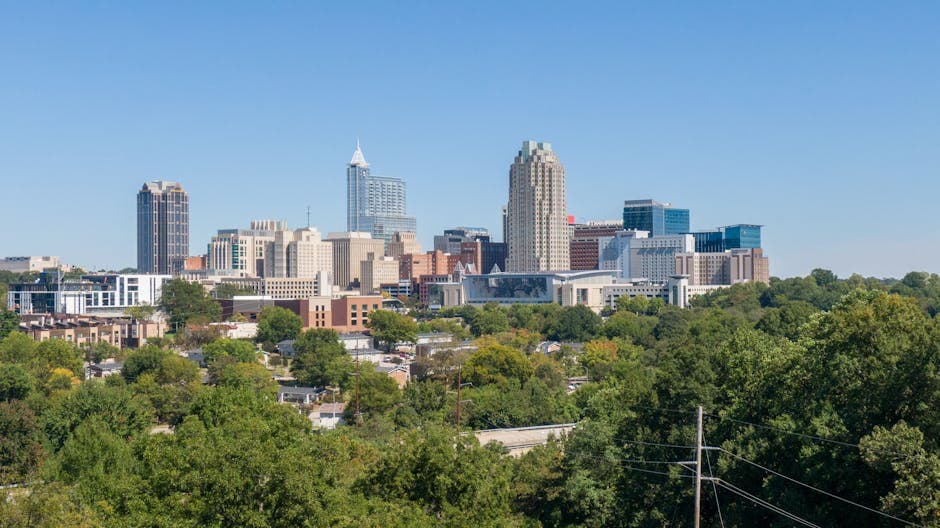
How Cabarrus County feeds NASCAR pit crews and mall traffic at eighty-eight million visitors a year.
A direct-ordering playbook for Concord restaurants: tuned to Charlotte Motor Speedway race weekends, Concord Mills outlet flow, the Hendrick Motorsports campus, Great Wolf Lodge school breaks, and Union Street downtown independents.
Scene one · Bruton Smith Boulevard, Friday qualifying
The hauler bays open at six. By nine, the kitchen has already taken three hundred orders.
At five fifty-seven on the Friday before the Coca-Cola 600, the gates of Charlotte Motor Speedway pop open and the Cup Series haulers begin rolling into the infield in the long single-file column they have run for half a century. The trucks are forty-eight feet long, painted with sponsor logos a hundred feet tall, and they move at a pace set by a local sheriff's deputy on a side-by-side with a radio. By six forty-five the haulers are parked in the garage, the awnings are unfolding, and the first crew chiefs are walking the line to check tire pressures and stagger settings on cars that will qualify at three hundred miles per hour by sundown.
Two miles east of the front-stretch grandstand, on a strip of road that does not see a single hospitality customer fifty weeks a year, a Concord kitchen owner named Reggie M. is opening his back door for a kitchen prep crew that he has already paid time-and-a-half. The kitchen is a BBQ house. The pork shoulders went on at midnight. The brisket went on at two. The hush puppy batter is mixed, the slaw is dressed, and the catering board on the back wall has three columns: pit-crew dinners (Hendrick, Roush, JTG), corporate hospitality (a Cup-team sponsor in Suite 142, a North Carolina law firm in Suite 219, a tech vendor doing a private tailgate in Lot D), and walk-up retail. The retail will not start until eleven. The hospitality call sheet starts at ten.
By nine-fifteen Reggie's direct-ordering portal has taken three hundred and forty-six orders. Two hundred and forty of them are catering platters that were booked in the previous six weeks against standing race-weekend accounts. The other hundred-plus are retail pickups from the hauler crews themselves, men and women who have driven down from a North Carolina shop in the dark and want a brisket sandwich and an unsweet tea before the day starts in earnest. Reggie's phone is ringing. The phone is the wildest variable in race week. Two years ago, before voice AI took the after-hours calls in his name, race weekends were the only days of the year when he had to put a human on the phone. He does not anymore. The orders flow in through the same portal, captured the same way, taxed at the same Cabarrus County 6.75 percent, routed to the same kitchen printer.
This is what Concord does to a restaurant on a race weekend. The town has roughly a hundred thousand residents, but it sits inside a county whose annual visitor count, between Charlotte Motor Speedway, Concord Mills, Great Wolf Lodge, and the Hendrick Motorsports campus, brushes against eighty-eight million people. Race weekends compress a third of a year's revenue into four days. Outlet-mall weekends compress another quarter into a different four. The kitchens that earn the demand and the kitchens that pay rent on the demand are not the same kitchens. The rest of this page is for the operators who would rather earn it.
We have written it the way a Concord operator would actually use it: with a Speedway race-week order-volume chart, with a horizontal cuisine bar showing the storefronts a Cabarrus County diner actually walks past, with a stacked calendar that pairs the racing schedule against the Mills holiday cycle and the Great Wolf school-break peaks, with a tour of the operators that already do this well, with three ICP personas mapped to the highest-leverage local audiences, and with a cost-math figure that puts a real dollar figure on the 27-percent marketplace skim on a single Race Week of orders. Reggie's shop is doing this already. Most of Cabarrus County is not. The opportunity is unevenly distributed.
Section II · The chart
The Speedway race-week volume chart
The Coca-Cola 600 weekend is the largest single revenue cluster on the Cabarrus County calendar. A kitchen inside the four-mile Speedway ring can run at seven times its baseline weekday on Cup Sunday alone. The pattern is repeatable, predictable, and almost entirely missed by operators still routing race-week demand through a marketplace.
Figure 1
Race-Week Order Volume, Coca-Cola 600 Weekend
Order-volume index (baseline weekday = 100) for a representative Cabarrus County kitchen inside the four-mile Speedway ring. The Sunday Cup race day spike sits at roughly 7.4 times a normal weekday.
Peak day index
740
Sun · Coca-Cola 600 Cup Sunday
Sunday Cup
Coca-Cola 600 is the longest race on the Cup calendar at 600 miles. Hospitality starts at gates open, pit-crew family dinners run late.
Saturday Xfinity
Xfinity Series 300-mile undercard, plus support events. Tailgate volume peaks late afternoon. Catering for race teams runs through midnight.
Friday qualifying
Cup Series qualifying day. Fans arrive in waves. Pit-road hospitality runs heavy through 9pm. Hotel + Airbnb check-in volume peaks here.
Teardown Mon-Tue
Hauler load-out, crew breakdown, post-race shop work at Hendrick and Roush. Sustained 1.3x to 2.4x baseline through the work week.
Sources: Charlotte Motor Speedway event operations briefings, NASCAR Cup Series schedule, Cabarrus County Convention & Visitors Bureau race-week visitor estimates, operator-reported composite volume indexes from kitchens inside the four-mile Speedway ring. Baseline normalized to a non-event Tuesday.
Charlotte Motor Speedway opened in 1960 on a thousand acres of Cabarrus County farmland that Bruton Smith and Curtis Turner bought for a track that, at the time, was too far from any city to make sense. The track is a 1.5-mile quad-oval. It seats roughly ninety-five thousand permanent fans, plus standing-room infield camping that can lift on-site weekend attendance well above that figure across the full event. The Coca-Cola 600, run on the Sunday of Memorial Day weekend, is the longest race on the NASCAR Cup Series calendar at six hundred miles. It is, by tradition and by sponsorship, the single most important race day of the Concord year.
The volume profile in the figure above reflects what an actual Cabarrus County kitchen inside a four-mile radius of the front gate looks like across the nine days bracketing the event. Monday and Tuesday of race week are still mostly baseline. Wednesday and Thursday begin to lift as media credentials open, the haulers begin arriving from the North Carolina race shops, and the hospitality build-out begins in the corporate suites along the front stretch. Friday is qualifying day, which fills the grandstand and the Speedway Club for a single late-afternoon window. Saturday runs the Xfinity Series 300, the support race, plus a slate of late-model and Trucks events; the volume profile is bimodal, tailgate-heavy in the late morning and dinner-heavy after the race. Sunday is the Coca-Cola 600 proper, the day that justifies the year, the day that fills every seat the track can sell and that runs into the night because the race is six hundred miles long.
After the race, Monday and Tuesday continue to run well above baseline because of the work the race shops do post-event. Hendrick Motorsports, JR Motorsports, Roush Fenway Racing, JTG Daugherty, and a dozen smaller Cup and Xfinity teams headquartered in or around Concord and Mooresville go straight into teardown the morning after the race. Trucks come back, parts get inventoried, drivers do post-race press in the building, and the engineering teams who were on the wall Sunday return to their Concord shops Monday morning for a debrief that runs all day. Kitchens that hold a catering account with any of these teams see standing Monday and Tuesday post-race lunch orders that look like a corporate-tower banking account in Charlotte: predictable, recurring, repeatable.
There are two other Cup-level race weekends at the Speedway: the Bank of America Roval 400 in October, run on the quirky road-course / oval hybrid that the front-stretch hosts in the fall, and a Cup all-star race week earlier in May. Add the NHRA Carolina Nationals in August, the Speedway summer pickup-truck and modifieds nights through the warm months, and the test sessions that occur off the main calendar, and Concord runs somewhere between thirty and forty true major-event days a year inside the ring. That is the spine of any motorsports-corridor operator's revenue calendar.
What the chart cannot show is the conversion rate. A marketplace driver picking up a $40 race-day catering tray at noon on a Sunday will sit in a queue at the front gate for forty-five minutes that day. A direct-ordering portal, paired with a Speedway-credentialed catering vehicle, can run the same tray through the infield service road in twelve. The difference shows up not just in fees but in the customer reorder rate. A Speedway hospitality buyer who got their food at noon on Sunday last year will book the same restaurant for next year by July. A buyer who got cold food at twelve forty-five will not.
Section III · The numbers
The Concord operator's number deck
Cabarrus County operators run a market shaped by an unusual mix of motorsports payroll, outlet-mall tourism, family-resort traffic, and the secondary economy of one of the fastest-growing exurban corridors in the southeast. The numbers below are the ones a Concord operator should keep on the wall.
Active restaurants, Cabarrus catchment
~410
Sit-down + fast-casual across 28025 / 28027 / 28078
Median check, sit-down
$23
Pre-tax. Quick-service averages roughly $11
Concord Mills annual visitors
~14M
NC's most-visited tourist attraction by foot traffic
Charlotte Motor Speedway capacity
~95,000
Permanent grandstand, before infield camping
NC + Cabarrus combined sales tax
6.75%
4.75% state + 2.00% county local-option
Motorsports payroll share
~12%
Of county private-sector wages, per regional BLS data
Coca-Cola 600 weekend visitors
~250K
Across Fri qualifying, Sat Xfinity, Sun Cup
Great Wolf Lodge rooms
402
Opened 2009, on-site water park, year-round families
Hendrick Motorsports HQ campus
~600
Engineers, fabricators, race shop staff in Concord
Sources: US Census ACS 2024, NC Department of Revenue, Cabarrus County Convention & Visitors Bureau, Charlotte Motor Speedway annual fact sheet, Concord Mills (Simon Property Group) factsheet, NC Bureau of Labor Statistics quarterly census, Hendrick Motorsports public disclosures. Approximate, current to the page-updated date below.
Section IV · The cuisine map
What a Cabarrus diner actually walks past
The Concord storefront mix is unusual for a southern city of its size. Southern comfort food, Carolina barbecue, and Mexican food make up roughly half of the total, but the back half of the chart reveals an unusual diversity: a growing Korean cluster around the UNC Charlotte commuter corridor, a strong Indian presence tied to motorsports engineering immigration, a brewery scene that punches above the population, and a steady drumbeat of independents in dessert, Mediterranean, and food trucks.
Figure 2
Cuisine Mix Across the Concord Catchment
Approximate share of storefronts across 28025, 28027, and 28078 zip codes. The bars below total to roughly the operator base of a Cabarrus County restaurant scene that has grown faster than the state average since Concord Mills opened in 1999.
Carolina BBQ (14%)
Lexington-leaning, with Eastern-style transplants from the I-85 truck-stop corridor.
Southern comfort (18%)
Meat and three, fried chicken, biscuit programs. Strong at Sunday lunch and Wednesday church-night.
Mexican / Tex-Mex (17%)
Concentrated along Concord Parkway and around Concord Mills. Family-run taquerias and full-service cantinas.
Italian / Pizza (12%)
Brick-oven independents downtown plus volume pizza inside the Mills ring.
Korean / KBBQ (5%)
Anchored to the UNC Charlotte corridor and the Honey Pig market; growing through 2024-2026.
Other Asian (9%)
Vietnamese pho houses, Thai cafes, Japanese steakhouses serving Mills tourist trade.
Burgers / quick (11%)
Fast-casual and walk-up burger concepts ringing the Speedway and Great Wolf Lodge.
Breweries / pubs (6%)
The Lab Brewing and the downtown Union Street tap-room cluster, plus race-week pop-ups.
Other independent (8%)
Indian, Mediterranean, vegan, dessert specialists, ice cream stands, food trucks.
Sources: Cabarrus County Health Department food-permit rolls (current calendar year), NC Restaurant & Lodging Association regional snapshots, Concord Mills dining-directory listings, independent operator surveys in Afton Village and Union Street downtown. Percentages are approximate, rounded.
The two largest segments, Southern comfort at roughly eighteen percent and Mexican / Tex-Mex at seventeen, will not surprise anyone who has driven Concord Parkway in either direction. Concord sits on the Piedmont, far enough south of the mountain barbecue belt to be Charlotte-coded and far enough east of Salisbury to absorb the I-85 truck-stop diner tradition. The Mexican operators concentrate around the parkway and around the Mills ring, with strong family-run taquerias that have grown out of the back-of-house labor pool that built Concord Mills itself in the late 1990s and has been a steady demographic of the Cabarrus County restaurant industry ever since.
Carolina barbecue at fourteen percent is the single most identity-defining cuisine on the chart. Cabarrus County is squarely in Lexington territory for barbecue: pork shoulder over hickory and oak, the dip (vinegar plus tomato plus pepper), red slaw rather than white. But Concord has enough Eastern transplants, particularly from the I-95 corridor that funneled vinegar-and-pepper-trained pitmasters into the motorsports labor pool, that whole-hog Eastern-style is also represented in a way it is not in, say, Statesville. Operators who label their plate carefully (Lexington-style chopped pork shoulder with red slaw; whole-hog Eastern with vinegar) will outsell operators who hide behind a generic "BBQ" label.
Italian and pizza at twelve percent and burgers at eleven both run heavy near Concord Mills and Great Wolf, where family-tourism traffic favors a known menu. Independents in both categories are more concentrated downtown along Union Street, where they share an audience with the local law-office lunch crowd and the Friday evening Lab Brewing taproom traffic.
The most interesting line on the chart is the Korean and KBBQ segment. It is small at five percent, but it is the fastest-growing category in the catchment, anchored to the Honey Pig market and the UNC Charlotte commuter corridor that runs into the southwestern edge of Cabarrus. The same dynamic, on a smaller scale, applies to Vietnamese and Thai under the broader "Other Asian" bar. The Indian presence is captured under "Other independent" and is tied to a motorsports-engineering immigration pipeline: NASCAR teams have hired aerodynamic and simulation engineers from the UK Midlands and from India for two decades, and the food that follows those hires has built a small but durable Indian and South Asian restaurant scene around the Speedway ring.
The brewery line, at six percent of storefronts, is small but high-conversion. The Lab Brewing on Union Street, plus a half-dozen taproom-and-kitchen operators across the metro, run private hospitality for race teams, parts suppliers, and a steady drumbeat of corporate events out of Charlotte that travel north on race weekends. A brewery with even a modest catering program inside the four-mile Speedway ring can book a full Coca-Cola 600 weekend at thirty to forty thousand dollars of contracted hospitality. The math, as later sections show, only works if the platform taking the orders does not skim a third of it.
Section V · The year, stacked
The Cabarrus demand year, twelve months stacked
No other US county of comparable size runs a three-pronged demand calendar quite like this: a motorsports peak in May and October, an outlet-retail peak in November and December, and a family-tourism peak in the summer school-break months. The stack below reveals the rhythm.
Figure 4
The Cabarrus Demand Year, Stacked
Twelve months of event-driven demand. Racing peaks in May and October, Concord Mills peaks November and December, family-tourism (Great Wolf, school breaks) is summer-anchored.
Racing
Mills
Family
Sources: Charlotte Motor Speedway annual event calendar, Concord Mills marketing-events calendar, Great Wolf Lodge resort calendar, Cabarrus County Convention & Visitors Bureau, NHRA Carolina Nationals schedule. Counts are event-days rather than orders; staffing implications scale roughly with the height of each stack.
The racing peaks bookend the spring and the fall. Coca-Cola 600 weekend sits on Memorial Day, which makes May the single biggest racing month of the calendar and one of the two biggest revenue months on the year for any kitchen near the Speedway. Bank of America Roval 400 weekend in October is the second peak: a Cup playoff event run on the road-course / oval hybrid built on the front stretch, which draws a slightly different crowd than the 600 (more European-leaning road-course fans, more out-of-state travel, more hotel nights). The NHRA Carolina Nationals in August add a smaller spike that nonetheless fills the Concord-area Airbnb stock and pulls a distinct drag-racing crowd that drinks differently and eats differently than the Cup crowd.
Concord Mills, the outlet center that opened in 1999 and within five years became the most-visited tourist attraction in North Carolina, runs a fundamentally different calendar. Mills peaks in November and December because of Black Friday and the holiday weeks. The mall pulls roughly fourteen million visitors a year, with disproportionate weight on the eight weeks between Thanksgiving and New Year. A restaurant in the Mills ring sees its single biggest lunch surge on Black Friday and again on the December weekends. The two North Carolina sales-tax-holiday weekends (the back-to-school weekend in early August and the energy-efficiency weekend in late August) also produce visible Mills traffic spikes.
Great Wolf Lodge, the indoor-water-park family resort that opened in 2009, runs a calendar shaped by school breaks. The peaks are spring break (March / April), the summer school-out months (June, July, August), Thanksgiving week, and the long Christmas / New Year stretch. Great Wolf books at near-capacity through these windows, and the families who stay there overflow into the surrounding restaurant economy with predictable patterns: pizza and pasta at dinner, pancakes and breakfast platters in the morning, an Italian-leaning casual lunch in the middle. Operators near Great Wolf who pre-build pickup-friendly menus for kid eaters see compounding repeat traffic from families on the second and third night of a stay.
The Concord Christmas Parade in late November is a downtown Union Street event rather than a Mills or Speedway event, but it pulls one of the largest single-evening crowds onto the brick-front sidewalks that the downtown sees all year. Downtown operators (The Sanctuary, Brick & Tin, Brassino's, The Lab Brewing) treat parade night as a defined event with its own pre-build catering and walk-up menu. The same applies to the smaller Union Street Live concerts that the city schedules through the warm months.
Section VI · The operator field
The Concord-area operators worth a closer read
A non-exhaustive but representative cross-section of operators across downtown, the Mills ring, the Speedway corridor, Afton Village, and the wider Cabarrus catchment. Names are real or representative of the kinds of operations that anchor the local restaurant economy.
The Sanctuary
Union Street fine-dining anchor
Converted historic downtown building serving New American with a Carolinas larder. The room where law-firm closings and Hendrick Motorsports private dinners happen.
RuRu's Tacos & Tequila
Concord Parkway taqueria + cantina
Family-built operation that pulls the Friday post-shift Mills crowd, the Speedway hospitality runners, and the bilingual catering call list.
FAO Modern Indian
Indian + South Asian, Concord Mills ring
Tikka, biryani, and a curry-of-the-day flight that runs heavy with motorsports engineering teams who relocated from the UK Midlands.
Brick & Tin
Downtown new-South cafe
Pimento cheese, hot honey biscuits, and a catering arm that books a third of the law-office lunch loads on the Cabarrus County courthouse block.
Brassino's Pizza
Brick-oven pizza, downtown corner
Hand-stretched pies, NC-grown tomato program, and a late-Friday slice window that pulls the Lab Brewing tap-room crowd half a block north.
The Smoke Pit
Carolina BBQ, race-week legend
Pork shoulder by the pound, hush puppies in clamshells, and a race-week catering schedule that pre-bills more than thirty thousand dollars over the Coca-Cola 600 weekend.
The Lab Brewing Co.
Downtown taproom + race-hospitality clients
Small-batch IPAs and a side hustle running matchday and race-day private hospitality contracts for Hendrick suppliers and Cup-team sponsors.
Bricks Brick Oven
Wood-fired Italian, Afton Village
Neapolitan-leaning crust, a Tuesday Margherita night, and a strong pickup catering program for Hendrick Motorsports HQ engineers and admin staff.
Pikko's Indian Cuisine
Family-run South Asian, Speedway side
Vegetarian thalis at lunch, weekend tandoor specials, and a Speedway-corridor catering pipeline through the Indian engineering diaspora.
Tony's Ice Cream
Mooresville heritage shop, Concord post-race stop
Mooresville founding, but the Concord-side cones outsell the home shop on race weekends. Sundays after the Coca-Cola 600 are the year's single biggest day.
Hendrick House
Speedway-side steak + bourbon
Dry-aged ribeye, a 200-pour bourbon list, and standing race-weekend reservations on the books from June through October the prior year.
Operator profiles based on public listings, local press coverage (Independent Tribune, Cabarrus Magazine, WBTV dining segments), and operator interviews. Not endorsements. Listings reflect concepts active as of the page-updated date; openings, closings, and reformats occur quarterly.
Section VII · The geography
Concord by neighborhood, and what each one orders
The eight Concord-area sub-markets that define operator strategy: each runs a distinct customer mix, a distinct pickup-versus-delivery split, and a distinct cadence across the year.
28025
Downtown Concord (Union Street)
Brick-front independents, courthouse lunch, Lab Brewing
28027
Concord Mills ring
200-store outlet center, Great Wolf, family-tourism volume
28027
Afton Village
Walkable new-build town center, family-casual dining
28027
Christenbury Hills
Master-planned residential, suburban casual dining
28081, 28083
Kannapolis adjacent
Research Campus + Cannon Mill heritage, downtown revival
28075
Harrisburg adjacent
I-485 spillover, suburban families, growing Asian corridor
28027
Speedway corridor (Bruton Smith Blvd)
Hendrick Motorsports HQ, Roush, Speedway, pit-crew kitchens
28025
Northeast / I-85 corridor
Truck-stop diners, BBQ houses, motorsports supplier parks
Downtown Concord, anchored to Union Street and the Cabarrus County courthouse, is the brick-front independent corridor. The Sanctuary, Brick & Tin, Brassino's, and The Lab Brewing all live within four blocks of one another. The customer is the law-firm lunch (the Cabarrus bar association has roughly 200 members, plus county and city government staff), the Friday taproom crowd, and the family-night out crowd from the surrounding residential streets. Pickup is a higher share of orders here than in the Mills ring because parking is street parking and people know the shops.
The Concord Mills ring is a different animal: roughly 200 outlet stores, a Bass Pro Shops, an AMC theater, a Sea Life aquarium, and the Great Wolf Lodge tucked behind the south side of the mall, all sitting inside a parkway loop that pulls fourteen million visitors a year. Restaurants here run a delivery-heavy mix because the customer is often a family that has come from out of state, is staying at Great Wolf, and does not want to leave the resort after a long day in the water park. Pickup orders also run high through the Mills food court itself, with a separate stream of catering through the corporate events at the AMC and Bass Pro.
Afton Village is a master-planned new-build town center on the southeastern edge of Concord, the sort of walkable retail-and-residential mix that the southeast has been building since the early 2000s. Family-casual dining dominates: a wood-fired pizza, a steakhouse, an Italian, a coffee shop, a brewpub. Customer mix is suburban, family-anchored, repeat. Direct ordering converts particularly well here because Afton households trend toward online-native, mobile-first buyers who reorder from their phone.
Christenbury Hills is the most heavily residential of the eight sub-markets: master-planned, large-lot, with the Christenbury Country Club as an anchor and a small commercial strip serving the families who live in the development. Restaurant traffic skews to suburban casual dining and to the catering side of the business (PTA, sports teams, country-club events). The pickup-versus-delivery split here is roughly two-thirds delivery.
Kannapolis and Harrisburg are technically separate towns but they function as the eastern and southern fringes of the Cabarrus restaurant economy. Kannapolis hosts the North Carolina Research Campus, a David Murdock-built biotech and life-sciences campus on the old Cannon Mills plant footprint, with its own lunch demand profile. Harrisburg is the suburban spillover west of I-485, growing fast, with an emerging Asian restaurant corridor along Highway 49 and a steady family-casual core. Both are inside the operator catchment for any direct-ordering platform serving Concord proper.
The Speedway corridor along Bruton Smith Boulevard is the most distinctive sub-market on the list. Customer mix here on a non-race week is the Hendrick Motorsports engineering campus (roughly six hundred employees), the Roush Yates engine shop, the Speedway administrative staff, plus the supplier-park tenants that line the road on the way to the front gate. Catering on weekdays is heavy and recurring. On race weekends, the same corridor inverts entirely: it becomes a hospitality-and-fan-traffic zone whose operating profile resembles a small festival city. Operators who serve this corridor well are the ones who can flex from weekday corporate catering to race-weekend hospitality and back inside a four-day cycle.
The northeast / I-85 corridor is the long tail: truck-stop diners, BBQ pits along the old Highway 29 route, motorsports supplier parks, and a steady drumbeat of small independent kitchens serving long-haul drivers, supplier-park technicians, and the daily commute between Concord and Salisbury. Volume here is small per stop but the audience is loyal, the average ticket is steady, and the platforms that serve this corridor well are the ones that take ordering through both a digital portal and a voice-AI phone line for the drivers who are not going to stop and tap on a screen.
Section VIII · The personas
Three Concord operators we built the platform for
ICP personas anchored to the highest-leverage local audiences: a Speedway-side BBQ pit master, a Concord Mills food-court operator, and a downtown brewery running race-hospitality contracts.
Persona one
Reggie M., Speedway-side BBQ
Bruton Smith Blvd. ring
Who
A 14-year-old Lexington-style pit shop, two miles from the Speedway front gate. Owner-operator, second-generation. Pork shoulder over hickory, red slaw, hush puppies, sweet tea standard.
The pain
Race weekends collapse a quarter of the annual revenue into four days. Marketplace commissions on race week alone cost the kitchen roughly $36,000 a year in skim across four event weekends. Voice-AI calls during the 600 weekend are a chaos he no longer wants on the kitchen line.
The win
Direct portal owns the race-week catering book six months out. Voice AI takes overflow calls in English and Spanish. Same-day payouts on Sunday-night cash settle Tuesday morning. Operating margin recovers 8 to 12 points on race-week revenue.
- Race-week catering pre-builds, 60+ days out
- Speedway-credentialed driver routing
- Bilingual voice AI for hauler crews
- Same-day payouts on race weekends
Persona two
Maritza L., Concord Mills food-court operator
Concord Mills food court, 28027
Who
A first-generation Mexican-American operator running a 1,200-square-foot Tex-Mex concept in the Concord Mills food court. Wife-and-husband team plus three counter staff. Eight years on the lease.
The pain
The food court does not include a direct-ordering portal as part of the mall lease. Customers default to marketplace apps. 32% of orders come through DoorDash and Grubhub at 25 to 30 percent commission. Catering for AMC and Bass Pro corporate events runs through the same skim.
The win
A direct portal that lives at her own subdomain, pulls in the food-court walk-up audience through QR codes on the tray liners, captures the Great Wolf families who pre-order from the resort. Bilingual Spanish-language interface. Catering portal owned by the operator, not the mall.
- Spanish-language portal end-to-end
- QR-code tray liners that route to her portal
- Catering for AMC + Bass Pro corporate events
- Family-pack pickup bundles for Great Wolf
Persona three
Alex P., Union Street brewery + race hospitality
Downtown Concord, Union St.
Who
A 2,400-square-foot taproom and kitchen with a 12-tap brewery in the back, four years old, owner-operator. The kitchen does smash burgers, soft pretzels, and a fried-chicken sandwich that anchors the dinner menu.
The pain
Race-weekend private hospitality clients (Hendrick suppliers, Cup-team sponsors, North Carolina law firms hosting clients) book through phone and email. The booking process is manual, the contracts are PDF, and reconciling Cabarrus County 6.75 percent sales tax across hospitality contracts is a quarterly accounting fire drill.
The win
Direct portal handles private-hospitality contracts as first-class objects: configurable packages, deposit holds, sales tax computed and remitted at 6.75 percent automatically, voice AI handles overflow on race weekends, payouts settle the next business day.
- Private-hospitality contract templates
- Deposit holds + automated balance capture
- Sales tax auto-remit at 6.75% county composite
- Race-week voice AI overflow handling
Section IX · The math
What a 27 percent skim costs a Race-Week kitchen
The cost-math figure below is a single Coca-Cola 600 weekend, twelve hundred orders at a $30 average ticket, run through a 27 percent marketplace commission. The math is not unique to Concord, but the volume is. Race weekends compress the comparison.
Figure 3
Cost Math: A Race-Week Weekend, Three Bars
1,200 orders at a $30 average ticket through a single Race Week. At 27 percent marketplace commission the skim is $9,720. On a direct portal the same revenue is $26,280 in net to the operator.
Annual delta if four race weekends
$38,880
Coca-Cola 600 + Roval 400 + 2 special events
Gross
$36,000 across a Friday-Sunday Race Week window. Roughly 400 orders Friday, 360 Saturday, 440 Sunday for a kitchen inside the four-mile ring.
Skim
$9,720 to the marketplace, off the top, before card fees, before food cost, before Cabarrus County 6.75 percent sales tax remittance. Per weekend.
Direct net
$26,280 to your operating account, same-day payout schedule available. Sales tax computed at 6.75 percent (4.75% NC + 2% Cabarrus) and remitted on your behalf.
Sources: NC Department of Revenue sales-and-use-tax tables, Cabarrus County local-option sales-tax schedule, third-party marketplace public commission disclosures (DoorDash, Uber Eats, Grubhub merchant agreements), composite operator ticket counts during Coca-Cola 600 and Bank of America Roval 400 race weekends. Average-order-value is illustrative; actuals vary by concept.
The headline number is $9,720. That is the marketplace skim, in dollars, off a single race-week weekend of orders for one Cabarrus County kitchen. It is the rough cost of a single new line cook for a quarter, or a new walk-in freezer, or a new set of cambros and prep tables. Restated: the marketplace fee on one Race Week is the kitchen-equipment line item that most independents in Concord defer year over year because they cannot get above the operating-cash threshold to fund it.
The annualized number, if a kitchen runs four race weekends through the year (Coca-Cola 600, Bank of America Roval 400, NHRA Carolina Nationals, plus a special event), is roughly $38,880. That is one full-time prep cook at NC market wage, fully loaded. Or it is a six-figure addition to the founder's draw. Or it is the bridge that lets the kitchen afford the Spanish-language hire who handles the bilingual catering phone book that the operator has been trying to staff for two years. Across the entire Cabarrus County operator base, the aggregate marketplace skim during the four major race weekends approaches mid-seven-figures in revenue that stays inside the marketplace logo instead of inside the county.
We are not arguing that marketplaces are useless. They are useful as a discovery channel and as an overflow capacity layer. We are arguing that for the cluster of orders that a Concord kitchen has already earned, the orders that come from a Hendrick engineer who eats at the same shop every Thursday, from a Speedway hospitality account that has booked the same catering since 2019, from a Great Wolf family that has been to Concord three years running and orders from the same pizzeria each time, the marketplace skim is a tax on a relationship the kitchen already owns. Direct ordering replaces that tax with zero on the order itself. The math, as the chart shows, is decisive.
Compare the platform we offer against the marketplaces head-to-head: read the vs DoorDash breakdown for the commission and customer-data comparison, the vs Grubhub breakdown for legacy-marketplace dynamics, and the DirectOrders pricing page for the exact tier structure for Concord operators.
Section X · The year, month-by-month
The Concord operator year, anchored to motorsports and the Mills
How a Cabarrus County operator should plan a full year of menu, staffing, catering pre-builds, marketing, and payroll, indexed to the three demand cycles that shape the calendar.
January
Holiday tail, racing dark
Recover, plan, lock in race-week catering accounts for May.
Send race-week 600 catering proposals to last year's Speedway hospitality accounts. Build Q1 Mills lunch menu. Audit POS + ordering portal.
February
Great Wolf spring-break runup
Family-tourism volume builds. Race teams unbox the year.
Stand up pickup-friendly family bundles for Great Wolf school-break families. Cup teams open shop calendars; begin Hendrick / Roush weekly catering.
March
Spring break + March Madness
First family-tourism peak. NCAA Tournament watch parties.
Mills lunch demand accelerates. Stand up the watch-party catering bundle for downtown and Afton Village brewery operators.
April
Test sessions + Easter weekend
Speedway test week brings race teams back. Easter family lunch.
April test sessions pull engineering teams to the track; restart Speedway hospitality on a smaller scale. Easter brunch reservations open.
May
Coca-Cola 600 weekend
The single biggest revenue month of the year. Race-week peak.
Race-week catering pre-builds go live. Voice AI overflow staffed. Speedway pickup routing reviewed. Sunday Cup hospitality day-of staffing finalized.
June
Summer kicks in, Mills lifts
School out. Great Wolf and Mills run heavy. Race calendar dark.
Family-pack pickup bundles rotate to summer menu. Tax-free weekend prep. Downtown Union Street Live concerts begin in evening hours.
July
Independence Day, Speedway pickup nights
July 4 fireworks at the Speedway. Indep. Day weekend volume.
Stand up July 4 hospitality bundles. Speedway pickup-truck and modified racing nights begin. Family-tourism peaks; staff up.
August
NHRA Carolina Nationals + back-to-school
Drag-racing weekend in mid-August. Tax-free school weekend.
Drag-racing crowd has its own menu (BBQ, beer, fried). Back-to-school weekend pulls Mills traffic. Reset menus for fall pivot.
September
Roval build, Cup playoffs begin
Fall Cup playoff schedule lifts. Roval hospitality contracts close.
Bank of America Roval 400 hospitality proposals due. NFL Sunday catering bundles. Hendrick / Roush fall calendar starts.
October
Bank of America Roval 400
Second-biggest race weekend of the year. Tax-free outlet weekends.
Race-week catering pre-builds executed for the Roval. Halloween family bundles for Great Wolf. Mills runs heavy through the month.
November
Concord Christmas Parade, Mills Black Friday
Mills tilts into holiday. Downtown parade fills Union Street.
Concord Christmas Parade pop-up menu prepped. Black Friday Mills lunch staffing. Catering for end-of-year corporate parties opens.
December
Holiday Mills + Great Wolf peak
Year's highest family-tourism volume. Holiday corporate parties.
Great Wolf at near-capacity through end of year. Holiday catering peaks. Year-end accounting + Cabarrus 6.75% sales-tax reconciliation.
Section XI · The language
Three languages a Concord kitchen actually has to take orders in
Cabarrus County's Latino population has grown faster than the state average since the 2000s and now sits at roughly fourteen percent of the county. The race-fan tourist body that arrives for Cup weekends is heavily English-speaking, but it is increasingly Spanish-speaking too. The kitchens that handle both languages well outperform the kitchens that do not.
Spanish
Concord's Latino population is growing roughly twice as fast as the county average. Family-run taquerias, the back-of-house labor across the entire restaurant industry, and an increasing share of the Mills walk-up trade all transact in Spanish.
Direct portal in Spanish end-to-end (menu, cart, checkout, receipts). Voice AI takes catering calls in Spanish. Tickets print in Spanish for the line. Customer receipts and confirmations in Spanish. Cabarrus 6.75 percent tax disclosed in Spanish.
English (operator base)
The default language for the kitchen line, the catering coordinator, the corporate hospitality client, the supplier-park engineer, the Hendrick fabricator. Most ordering still happens in English.
Full English-language portal. Voice AI handles overflow calls in English. Standard menu, receipts, ticket printing, and admin in English. Configurable tone for the Cabarrus County operator base.
Race-fan tourist English
The 250,000 visitors who descend on Concord for Coca-Cola 600 weekend bring an English vocabulary that includes vocabulary the kitchen line does not always recognize: hauler, pit road, garage, suite, tailgate, infield, fan zone.
Voice AI tuned to race-specific vocabulary. Menu language that uses race-day terms operators actually hear (a Race Day Tailgate Tray, a Pit Road Pickup, a Suite Hospitality Bundle). Pickup routing tuned to Speedway-credentialed vehicles.
The Spanish-language requirement is not optional. Cabarrus County's 2020 Census put the Hispanic or Latino share at roughly 11 percent and the 2024 ACS estimate has lifted that closer to 14 percent. Among Concord-area independent restaurants the share of back-of-house staff that speaks Spanish as a first language is closer to forty percent. A Concord operator who runs a single-language English portal is operating at a real disadvantage to a competitor across the parking lot that can take a catering call in Spanish on a Saturday afternoon.
The race-fan English vocabulary is the second non-trivial language layer. Most catering software does not understand what a "Suite 142 Coca-Cola 600 hospitality build-out for 80 people" is. The DirectOrders catering portal is configured to treat hospitality builds as first-class objects with explicit Speedway-credentialed delivery routing, infield versus suite addressing, and explicit time windows that map to the race-day schedule.
For more on the voice AI that handles these three streams concurrently, see DirectOrders Voice AI. For the direct-ordering portal that backs each stream, see DirectOrders Ordering.
Section XII · The argument
How DirectOrders fits Concord
The argument for direct ordering in Concord is, in the end, a single argument repeated across three different audiences. The audiences are Speedway-corridor operators, Concord Mills ring operators, and downtown Union Street independents. The argument is the same in each case: the demand belongs to the restaurant, not to the marketplace, and the cost of letting a marketplace own the demand on race week alone is enough to fund a year of operating improvements.
For the Speedway-side BBQ operator, direct ordering is the difference between $26,280 in net revenue landing in your operating account on a Coca-Cola 600 weekend versus $9,720 of it landing in California. Across the four major event weekends, the annual delta is roughly $38,880. That is one full-time prep cook, fully loaded, every year.
For the Concord Mills food-court operator, direct ordering means a Spanish-language portal end-to-end, QR-code tray liners that route the Black Friday lunch crowd back to your own subdomain instead of into a marketplace logo, and catering for AMC and Bass Pro corporate events that lives on your books rather than on a third party's.
For the Union Street brewery, direct ordering means race-week hospitality contracts that are first-class objects in the system: deposit holds, balance capture, automated Cabarrus County 6.75 percent sales-tax remittance, voice-AI overflow handling on the Saturday and Sunday of a Cup weekend, and a customer record that re-surfaces the same booking from October next year without a phone call.
We can show you the platform on your menu, with your prices, with your Cabarrus County 6.75 percent sales tax, with your Coca-Cola 600 hospitality menu pre-built, with your Spanish-language voice AI staffed, in two hours. The demo is free. The setup is white-glove. If we cannot get you live in two hours, we will white-glove you for free until you are.
Live in two hours, or we white-glove you for free
Own the race week. Own the Mills weekend. Keep the eighty-eight million.
See the platform configured for the way Concord restaurants actually work: Coca-Cola 600 hospitality, Concord Mills outlet trade, Hendrick Motorsports catering, Great Wolf family-tourism bundles, Union Street downtown independents.
Sources & further reading
Page last updated 2026-05-12. Figures sourced or contextualized to the citations above. Speedway capacity reflects permanent grandstand seating, before infield camping; visitor counts are annual composites across major events. Sales tax rate is the Cabarrus County composite of 4.75% NC state plus 2.00% local-option. Operator-volume indexes are illustrative; actual conversion varies by concept, location, and platform configuration.