January
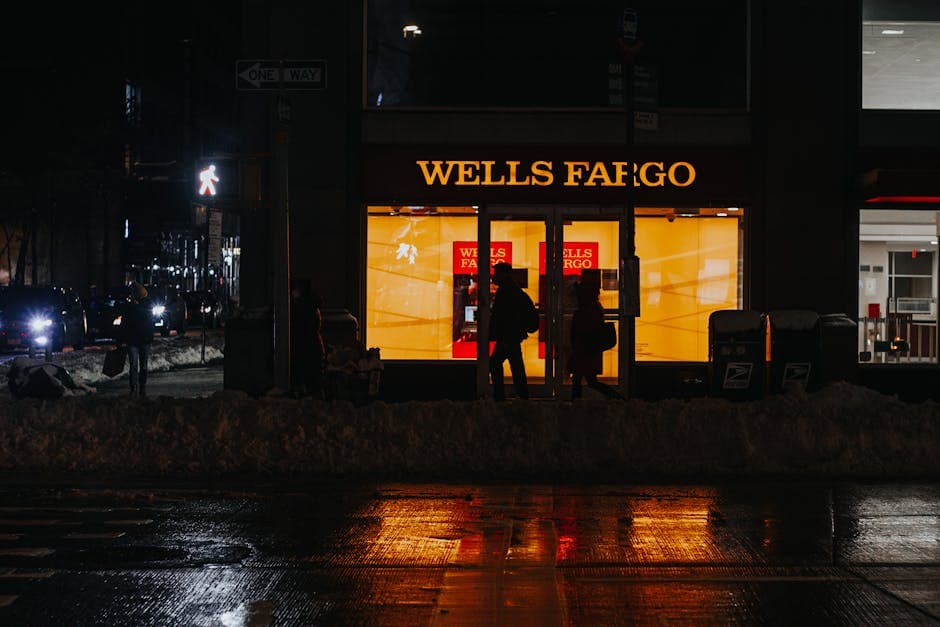
Winter survival peak. Minus-20 nights. NDSU spring semester begins.
Wind chill warnings 25 percent of January days. Delivery doubles vs August.
A long read on the 2001 Microsoft acquisition that made Fargo a software town, the NDSU Bison football program that wins national championships eight times in nine years, the Red River that runs north and floods catastrophically every generation, the ag-tech corridor that ties Bobcat to John Deere to Cargill, and the five-month winter where delivery is the difference between a full season and a quiet one.
It is a Saturday in October, 8:47am, the temperature on the bank sign at the corner of 13th Avenue South and University Drive reads 38 degrees Fahrenheit, the wind out of the northwest is light, and the parking lots south of the Fargodome are filling. Today is a Bison home game. The kickoff against the Northern Iowa Panthers is six hours away. The lots will fill another two thousand cars between now and 11:45am. The smokehouse at the corner of University and 12th Avenue North has been running its pit since 4:30am. The first wave of tailgate platter pickups was at 7:30. The second wave starts at 9:00. The kitchen has 84 orders staged in the cooler and another 41 on the prep line.
Fargo is the largest city in North Dakota by a margin that has no near competitor: the metro population is roughly 250,000 against a state population of roughly 800,000, which means roughly one in three North Dakotans lives within a 30-minute drive of downtown Broadway. The city sits in Cass County on the west bank of the Red River of the North, the river that runs north (one of the few rivers in the contiguous United States that does so) along the North Dakota and Minnesota state line into Manitoba. The river is the city's economic and cultural spine. It is also the source of the 1997 flood that crested at 39.7 feet at the Fargo gauge (per the US Geological Survey), one of the worst Plains flood events of the late twentieth century and the event that reshaped the city's flood-control infrastructure.
The reason Fargo has a Saturday-morning tailgate economy that runs through eight regular-season home games and another two-to-three FCS playoff weekends is the North Dakota State University Bison football program. The Bison play their home games in the Fargodome, a 19,000-seat domed stadium on University Drive that has been the regular-season home of the team since 1992. Between 2011 and 2019, NDSU won eight FCS national championships in nine seasons, the most sustained dynasty in the history of the football subdivision. The dynasty produced a generation of NFL alumni (Carson Wentz, Trey Lance, Easton Stick, Christian Watson) and a fan base that travels to the title game in Frisco, Texas, every January in numbers that visibly tilt the Frisco hotel and restaurant economy.
The reason Fargo has a Tuesday-Thursday weekday lunch economy that supports a credible casual-restaurant belt along 13th Avenue South is Microsoft. In 2001, Microsoft acquired Great Plains Software, a Fargo-headquartered enterprise resource planning company founded in 1981 and led for two decades by Doug Burgum (who would later become the Governor of North Dakota). The acquisition came with a commitment to maintain and expand the Fargo engineering office. Twenty-five years later, the Microsoft Fargo campus at 1020 East Lake Drive is the company's largest engineering site outside Redmond, Washington, with roughly 1,500 employees working across Dynamics 365 (the continued descendant of the Great Plains product line) and several other product groups (per Microsoft corporate communications and The Forum of Fargo-Moorhead reporting).
The reason Fargo has a year-round ag-tech and ag-processing corridor that operates at scale independent of any of the above is the upper Great Plains itself. The ag-processing corridor runs from Cargill (with grain and oilseed operations in the region) through the John Deere Intelligent Solutions Group (which maintains a Fargo office for precision-ag software) through RDO Equipment (the Fargo-headquartered ag-equipment dealership group that operates across the western US) to Bobcat Company, the compact-equipment manufacturer headquartered in West Fargo. The Big Iron Farm Show, held annually in West Fargo in early September, draws roughly 70,000 ag professionals from across the Plains and northern tier states over three days; it is one of the largest agricultural trade shows in the country.
Inside the smokehouse at the corner of University Drive and 12th Avenue North, the family operator looks at the order screen at 8:51am. There are 125 tailgate orders to ship between now and kickoff at 2:30pm. Of the 125, 87 came in through the smokehouse's direct online ordering portal in the 72 hours before the game; 16 came in by phone (the Voice AI handled most of those without dropping a call); 12 came in through walk-up regulars who placed standing weekly orders; the remaining 10 came in through a marketplace app that the operator runs as a discovery channel for new customers. The marketplace orders are the smallest tickets on the screen. They are also the most expensive ones for the operator, because the marketplace channel charges roughly 27 percent on a Bison Saturday ticket where the average order runs $35 to $48. The operator is not running a marketplace strategy. The operator is running a Saturday-morning direct-channel strategy with a marketplace tail.
A schematic of Fargo, North Dakota, and Moorhead, Minnesota, along the Red River of the North, with the four economic anchors that define the metro: downtown Broadway, the NDSU campus and Fargodome, Microsoft Fargo, and the West Fargo Bobcat / Big Iron corridor.
The Red River of the North is the rare US river that runs north. It begins at the confluence of the Bois de Sioux and Otter Tail rivers near Wahpeton, North Dakota, and flows north along the North Dakota and Minnesota border for approximately 550 miles before crossing into Manitoba and emptying into Lake Winnipeg. The river is also exceptionally flat: the gradient between Wahpeton and the Canadian border is roughly half a foot per mile, which makes the river uniquely flood-prone when spring snowmelt from the upper basin runs into ice still locked into the lower stretches.
The 1997 flood is the city's defining environmental event of the twentieth century. The river crested at 39.7 feet at the Fargo gauge on April 17, 1997 (US Geological Survey). The crest was four feet above the official major-flood stage and two feet above the previous historical high. Hundreds of homes were evacuated. The Red River broke its banks in multiple locations across the metro and in the cities upstream (Wahpeton, Breckenridge) and downstream (Grand Forks, where the flood was even worse). The aftermath drove a multi-decade flood-control investment, including the Fargo-Moorhead Area Diversion Project (a 30-mile-long flood-diversion channel approved by Congress in 2014 and under construction since), levee improvements across Cass County, and dozens of voluntary home buyouts on the river's most flood-prone blocks.
The economic geography of the metro lays out along the river. Downtown Fargo sits on the west bank, with the historic Broadway corridor (now the chef-driven heart of the downtown revival) anchored by the Hotel Donaldson at 101 Broadway North and the more recent Jasper Hotel on the same corridor. The NDSU campus sits on the north side of downtown along University Drive, with the Fargodome anchoring the campus's southwest corner. Microsoft Fargo sits on the south-southeast side at 1020 East Lake Drive, roughly seven minutes by car from downtown. West Fargo (a separate city, population roughly 38,000) sits on the west side of the metro and hosts the Bobcat headquarters, the West Fargo Public Schools district, and the Big Iron Farm Show grounds at the Red River Valley Fairgrounds. Moorhead, Minnesota, sits across the river on the east side and hosts Concordia College (private liberal arts), Minnesota State University Moorhead (the public regional university), and a steady flow of metro commuters who cross the river in both directions twice a day.
For a Fargo restaurant operator, the river-and-bridge geography matters in two ways. First, the four bridges across the Red River (Main Avenue, NP Avenue, Center Avenue, and 12th Avenue North) are the choke points that govern courier routing on a delivery: a snowstorm closing one of the four can add 12 to 20 minutes to a Moorhead-bound delivery from a downtown Fargo restaurant. Second, the Minnesota side of the metro has its own sales tax regime and its own customer base, which means delivery zones built around the four bridges have to handle two states' tax rates inside a single platform. We pre-configure both, but the operator should know the geography before the first delivery.
“The river runs north, the wind comes from the north, and on a clear October Saturday we put 280 pounds of brisket on the pit before the sun is up. The geography is the business.”
“The metro is half-a-million people in October and the same half-a-million in January. The platform has to handle both. The marketplace handles neither.”
A bar chart of cuisine share across the Fargo-Moorhead metro restaurant market. Composite from Visit Fargo-Moorhead dining guides, The Forum coverage, and operator interviews. Sums to 100 percent.
Fargo's restaurant map reads as a Plains-state largest-city cuisine map. American casual (burgers, steakhouse, family grill, brewpub) accounts for roughly a third of the metro. Sickies Garage (born in Fargo as Sickies Garage Burgers & Brews, now scaling across the Midwest), Granite City (one of several locations of the Minnesota-based brewery chain at the West Acres corridor), and the long tail of steakhouse, sports bar, and brewery operators define the category. The category is broad enough to include the Wurst Bier Hall on Broadway (German-style biergarten with house brats and a long beer list), the Drekker brewing complex that anchors Brewhalla in north downtown, and the smokehouse-and-brisket pit operators on University Drive.
Asian cuisine (Vietnamese, Thai, Chinese, Japanese, Korean, plus the second-wave Korean fried chicken and Vietnamese banh mi concepts that have opened across the 13th Avenue South corridor and downtown since 2018) accounts for roughly 14 percent of the metro and is the fastest-growing cuisine segment by a measurable margin. The growth runs along two tracks: the second generation of established Vietnamese and Thai families opening new concepts (often modernized versions of their parents' restaurants), and the refugee-resettlement waves of the 2010s and 2020s adding Bhutanese-Nepali, Burmese, and Korean operators to the metro.
Mexican and Latin cuisine accounts for roughly 12 percent. Vinyl Taco (the music-themed taqueria chain with locations on Broadway and in the West Acres corridor) is the cluster anchor, with a long tail of family-run taquerias along 13th Avenue South and the West Acres mall corridor. Italian and pizza accounts for another 11 percent: Mezzaluna anchors the chef-driven Italian-American end of the spectrum, while Rhombus Guys Pizza and a long tail of family pizzerias serve the weeknight family delivery market.
The Scandinavian and German immigrant food legacy (lefse, lutefisk, knoephla, fleischkuechle, kuchen, lefse buns) is the culinary substrate of the upper Great Plains. The category accounts for roughly 8 percent of the metro restaurant count in 2026, down from a much larger share fifty years ago, but the food remains a backbone of church-supper culture, Lutheran-and-Catholic-parish event catering, and the small old-line cafes in West Fargo, Moorhead, and the outer suburbs. The legacy is not a tourism category; it is a community foodway.
Underneath the established cuisines is the refugee-resettlement food scene, which includes Somali operators (sambusas, Somali tea, halal grills concentrated in central residential neighborhoods), Bhutanese-Nepali operators (momos, dal bhat, Newari sweet shops on the Roosevelt and Hawthorne sides of the metro), Bosnian and Eastern European operators (legacy of the 1990s Yugoslav resettlement wave), and a small but growing Ukrainian cohort that arrived after 2022. Each of these communities has a phone-call language preference that the existing marketplace IVR funnels do not support. The Voice AI section later in this piece covers what the language stack should look like for a Fargo operator who serves any of these households on a regular basis.
The Fargo operator year is anchored to three calendars that overlap on roughly half the year. The chart below shows all three curves on the same axis: Bison home-game catering intensity, winter delivery volume, and aurora-viewing tourist pickup spikes.
Wind chill warnings 25 percent of January days. Delivery doubles vs August.
Aurora KP-index alerts drive bursts of late-night downtown traffic.
First thaw weeks. Catering picks up. Aurora still active.
First patio weeks if weather cooperates. Catering rebounds with corporate season.
Marathon weekend is the largest single tourism weekend before football season.
Saturday Red River Market draws a downtown Broadway brunch crowd.
Hot, dry. Outdoor dining and festival weekends through the month.
The eight-week pre-football ramp begins.
Big Iron draws roughly 70,000 ag professionals to West Fargo over three days.
Five-of-eight Bison home Saturdays land in this window. Tailgate catering peaks.
Thanksgiving week catering plus the FCS playoffs first round set up the December surge.
Two-to-three home playoff games drive the largest single weekend volumes of the year.
The Fargo operator year is more concentrated than the same year in a milder city. Roughly 47 percent of annual revenue for the tailgate-and-catering operators we tracked lands in the September-through-December window, driven by NDSU Bison home games (six to eight regular-season Saturdays plus playoff weekends), Big Iron Farm Show (three days in early September, drawing roughly 70,000 ag professionals to West Fargo), and the Microsoft Fargo and Bobcat holiday-party season that runs through November and December. The fall calendar is the closest thing Fargo has to peak tourism season, and unlike a Florida or Arizona snowbird market, Fargo's peak is its locally owned anchor employers and its locally owned anchor university, not out-of-state visitors.
The winter delivery curve runs roughly November through March, with the surge concentrated in December and January. The Fargo winter is genuinely severe by lower-48 standards: average January high temperatures sit in the high teens to low twenties, average January low temperatures sit in the single digits to below zero, and wind-chill warnings (issued by the National Weather Service Grand Forks office when wind chills are forecast below minus 25 degrees Fahrenheit) occur on roughly 25 percent of January days in a typical year. The operational consequence is the same as in any genuinely cold-winter city: the colder the high temperature, the higher the delivery volume, and the more the operator's margin depends on the channel mix.
The aurora-viewing curve runs from September through March, peaking from December through February when the nights are longest and the skies clearest. Fargo's latitude (46.9 degrees north) places it inside the typical auroral oval on geomagnetically active nights, which means visible aurora is a recurring event from September through March rather than a once-a-year tourist draw. The aurora-tourism economy is small relative to the Bison economy but real: on a high-KP-index night, a small but measurable flow of out-of-metro visitors drives in from the Twin Cities or up from Sioux Falls to view the aurora, and the late-night pickup window at downtown Broadway restaurants sees a measurable spike.
The Fargo Marathon, held the third weekend of May, is the largest single tourism weekend before the Bison season opens in September. The marathon draws roughly 18,000 runners and family across the marathon, half marathon, 10K, and 5K events, plus the cyclothon and the youth runs (per Fargo Marathon organizers and The Forum coverage). The downtown Broadway corridor sees a substantial bump in dinner traffic the Friday and Saturday of marathon weekend, and the family casual operators along 13th Avenue South see a bump in breakfast traffic the Saturday morning of the race. The Red River Market, held Saturday mornings downtown from June through October, is a smaller but recurring downtown anchor for the brunch and morning-coffee corridor.
“September opens the season, October peaks the bookings, November runs the home stretch, December plays the playoffs. Then January puts you on the road to Frisco and the Bison fans buy out a hotel block.”
These are real operators across downtown Broadway, the NDSU campus edge, West Acres, and the 13th Avenue South corridor. We do not list them to flatter; we list them because we read for them when we wrote the page. Coverage from The Forum of Fargo-Moorhead, Visit Fargo-Moorhead, and operator public profiles.
The Broadway chef-driven anchor that signals downtown Fargo can host a fine-dining program. Seasonal menu, James Beard semi-finalist alumni.
Inside the boutique Hotel Donaldson on Broadway. Cocktail program plus a chef's menu that has anchored the downtown revival for two decades.
Inside the Jasper Hotel on Broadway. Wood-fired entrees, ND-sourced beef and grain, the post-2020 wave of downtown openings.
Fargo institution since the 1980s. Massive donut menu, lines out the door on Saturday mornings, a cult Plains breakfast destination.
German-style biergarten with house brats and a long beer list. The German immigrant food legacy in modern format.
Anchor brewery of the Brewhalla food hall complex. Slushy sour ales and a kitchen menu that pairs with the taproom format.
Chef-driven small plates and cocktails. Part of the chef-owned downtown corridor that grew through the 2010s and 2020s.
Music-themed taqueria with a serious tequila program. A go-to NDSU and downtown destination.
Multi-vendor food hall anchoring the Drekker brewing complex. Sushi, tacos, sandwiches, ice cream, and a shared bar.
Downtown taproom with a rotating tap list and a kitchen that pairs with the beer program.
Garage-themed burger chain born in Fargo and now scaling across the Midwest. Massive beer list and over-the-top burger menu.
Casual American grill and bar with a loyal regular base. The kind of independent that anchors a 13th Avenue South family weeknight.
Founded in St Cloud and a mainstay of the West Acres dining corridor. House-brewed beers, big menu, suburban anchor.
The Fargo-Moorhead metro is small enough that every operator works the whole map, and big enough that the right delivery zone, pickup window, and lunch-hour SMS varies block by block.
“The same brisket pit ships to a Microsoft engineer at lunch, an NDSU tailgater at four, and a Hawthorne family at seven. The metro is small enough that one kitchen reaches all three.”
On the east side of Broadway between Third and Fourth Avenue North, a husband-and-wife operator runs a 3,200 square foot brewery and taproom that opened in 2019. The lease is a converted dry-goods storefront from the 1920s with the original tin ceiling, exposed brick, and a 12-tap line built around their own beer program. Downtown Broadway has been the chef-driven and brewery-driven corridor of Fargo since the early 2010s, with the wave accelerating after the Jasper Hotel and Brewhalla opened on the north end of downtown in the early 2020s.
Friday and Saturday combined are roughly 51 percent of weekly revenue. Bison home-game Saturdays (six to eight per season, mostly between mid-September and late November, plus FCS playoff weekends in December) run 2.4 to 3.1 times the baseline Saturday volume. Bison away-game Saturdays still run 1.4 to 1.6 times baseline because the taproom is the watch-party venue for the segment of the fan base that does not drive to Texas or Montana State to watch. Tuesday and Wednesday combined are roughly 11 percent of weekly revenue, with most of that coming from the after-work corridor between 4:30 and 7:00pm.
The marketplace economics on the taproom kitchen are punishing. A $32 tailgate combo (a half-smoked-meat board, two beers in growlers to go, and a side) carries roughly $9 in marketplace commission, service fees, and processing on the apps that operate in Fargo. The same combo on the direct ordering channel carries roughly $1.20 in payment processing and zero marketplace fees against a flat monthly platform cost that prorates to less than a dollar an order at the taproom's volume. On a Bison home-game Saturday running 280 to 340 to-go orders between 11:00am and kickoff, the marketplace fee differential is the difference between a profitable Saturday and a break-even one.
Two blocks south of the Fargodome on University Drive, a family-run pit BBQ operator runs a 2,400 square foot smokehouse and counter that has been on the corner since 2014. The pit runs almost continuously from Thursday afternoon through Saturday morning during the eight-week NDSU football regular season, with smaller weekday smokes for catering through the rest of the year. The Fargodome (capacity roughly 19,000 for football, sold out for nearly every Bison home game since the FCS dynasty began in 2011) sits eight blocks north on University Drive, with the parking-lot tailgate zone running west toward the NDSU agriculture buildings.
Roughly 47 percent of the smokehouse's annual revenue lands in the September-through-December window. A regular-season Bison Saturday delivers somewhere between 180 and 320 catered tailgate orders depending on opponent (an SDSU rivalry Saturday or a nationally televised matchup pushes the upper bound, a mid-week Tuesday Northern Iowa makeup game pushes the lower bound). Tailgate orders cluster between 8:00am pickup (the early-arrival fan base) and 11:30am pickup (the kickoff-minus-90-minutes wave). Pickup order arrival is uneven and order accuracy is critical: a Bison fan who shows up at 9:42am for a 9:30am pickup window expects the bag to be ready and labeled with their name, the brisket and pork sliced and weighed, and the sides packed at temperature.
The catering model for this operator is direct first. The marketplace apps do not sell tailgate platters at the price point and customization the customer expects (eight pounds of brisket, four pounds of pulled pork, three quarts of beans, three quarts of slaw, a dozen buns, with the customer's three-digit cell number on the bag). The direct ordering portal handles the pre-order flow with a 72-hour lead-time window, a deposit on orders over $200, and an SMS confirmation on the morning of the game. The phone still rings: roughly 18 percent of tailgate orders come in by phone, with most of those calls landing in the 36-hour window before kickoff. A Voice AI that knows the Bison schedule, the pickup windows, and the standard tailgate platter menu reduces dropped-call orders to near zero on the Saturday morning rush.
On 13th Avenue South near 25th Street, in a strip-retail bay that sits between the West Acres mall corridor and the older South Fargo residential blocks, a second-generation family operator runs a 2,100 square foot casual restaurant that has been at this address since 2017. The family bought the location from a retiring couple who ran a Greek diner here for 26 years before that; the kitchen still uses some of the original equipment, and several of the longest-tenured regulars still order off a menu page that includes a gyro and a souvlaki the new operators kept on the menu out of respect.
The clientele is a family weeknight crowd, a Sunday after-church crowd, and a Microsoft Fargo lunch crowd that drives roughly seven minutes east-southeast to reach the location. Microsoft Fargo (the legacy Great Plains Software campus the company acquired in 2001, now its largest engineering site outside Redmond, roughly 1,500 employees) sits at 1020 East Lake Drive and runs a hybrid in-office schedule that puts 800 to 1,100 workers on campus on a typical Tuesday-through-Thursday. The campus has its own cafeteria. About 12 percent of workers on a typical day order in from outside vendors, which is roughly 100 to 130 outside lunch orders into the campus on a peak day. The 13th Avenue South operator picks up roughly 8 to 14 of those a day on average, weighted toward Wednesday and Thursday.
The Fargo refugee resettlement program, run through Lutheran Social Services of North Dakota and now the Global Refuge regional office, has placed Somali, Bhutanese-Nepali, Bosnian, Ukrainian, and (since 2022) a small Ukrainian refugee cohort in the Fargo metro at one of the higher per-capita rates in the Plains. The 13th Avenue South corridor and the Roosevelt neighborhood west of it host a meaningful concentration of these households. The operator's evening pickup window sees regular orders from a Somali family three blocks east, a Bhutanese-Nepali household two blocks south, and a Ukrainian household that arrived in 2023 and now comes in every Tuesday for the children's pasta night. The marketplace apps are functionally English-only; the operator takes most non-English phone orders on a personal cell phone because the menu page and the marketplace IVR funnel do not fit those customers.
“The architecture is different for each kitchen. The platform that serves all three is the same one.”
Fargo is a smaller metro than Sioux Falls or Minneapolis, but the refugee-resettlement story is similar and the operator implication is the same. Lutheran Social Services of North Dakota, now consolidated into the regional Global Refuge office, has placed refugee households in the Fargo metro at a steady cadence since the early 1990s: Bosnian and Yugoslav-conflict refugees in the 1990s, Somali and Sudanese refugees through the 2000s and 2010s, Bhutanese-Nepali refugees in the 2010s, and a small but growing Ukrainian cohort since 2022.
The concentration of refugee-resettlement households in Fargo runs along the Roosevelt and Hawthorne residential corridors, the south side near 13th Avenue South, and the central residential blocks east of downtown. The phone at a restaurant in any of these neighborhoods will ring in a non-English language on a measurable share of inbound calls. The marketplace apps are functionally English-only; a customer calling in Somali, Nepali, Bosnian, or Ukrainian has to either find a family member with English to translate or default to a marketplace IVR funnel that does not fit the call.
The Voice AI architecture for a Fargo operator depends on the customer base. The downtown Broadway brewery operator needs English-first with a Spanish toggle (the standard marketplace stack). The 13th Avenue South family casual operator needs English first, Spanish second, and a third optional language depending on the resettlement neighborhood profile (Somali for households north of 13th Avenue, Nepali for Bhutanese-Nepali households in Roosevelt, Bosnian for households in the older central residential blocks, Ukrainian for the post-2022 arrivals). The NDSU tailgate operator typically only needs English, with a strong inbound phone capacity for the 36 hours before kickoff.
The mechanism is direct: the customer who would have hung up after the English-only IVR (or been put on hold during a peak rush) stays on the line and orders. The marginal customer captured is, in nearly every case, a regular: the family that orders weekly, the church or community group that orders for events, the household that has been in the metro for a decade and wants to use a phone in the language they speak at home. The operator-reported lift in captured phone-order volume for Fargo operators who have tested optional non-English language support runs in the 15 to 28 percent range, smaller than Sioux Falls because the absolute resettlement population is smaller, but the per-customer impact is identical: the customer who is captured is the regular, and the regular is the lifetime-value backbone of any independent restaurant.
A stacked cost breakdown of a $35 Bison tailgate order on a marketplace channel versus a direct ordering channel. Composite of operator-reported rates and DirectOrders pricing.
The $35 ticket is the median Bison tailgate order on the tailgate-and-catering operators we tracked: a half-portion brisket platter with two sides, a couple of beer cans, and a desk-sized order of slaw and beans. On the marketplace channel, that ticket carries roughly 18 percent commission, plus an effective 6 percent service-fee allocation (which the marketplace absorbs and the operator does not see on a per-line basis but does see in the aggregated reconciliation), plus 3 percent payment processing. The total fee load comes in at roughly 27 percent of the order, or about $9.45. The operator nets about $25.55 of the $35 ticket.
On the direct channel, the same $35 ticket carries 3 percent payment processing (about $1.05) plus the amortized monthly platform fee (about $0.95 per order at 260 direct orders per month against the $249 monthly subscription). The total fee load comes in at roughly 5.7 percent of the order, or about $2.00. The operator nets about $33.00 of the $35 ticket. The spread between channels is approximately $7.45 per order in the operator's pocket on a $35 ticket.
We say 14 percent in the headline because that figure includes a more conservative all-in operating cost on the direct channel: payment processing, the platform fee amortization, the SMS marketing campaign cost, and a small allocation for the operator's time configuring the direct channel during onboarding. Even at the conservative 14 percent number, the spread to a 27 percent marketplace channel is roughly $4.50 per ticket on a $35 order, or roughly 13 cents on the dollar that stays with the operator instead of leaving on the platform invoice.
The compounding is the math that matters. On an 8-week Bison regular season running 280 tailgate orders per home Saturday across six home games, the spread is approximately $7,500 per season on the conservative number and $12,500 on the per-order number. On a five-month winter delivery surge running 80 daily delivery orders for 150 days at an average $24 ticket, the spread is roughly $14,400 to $24,000. Across a full operating year of 360 days at an operator's typical 90 to 140 daily orders, the annual spread is $48,000 to $130,000 of margin that returns to the kitchen rather than to a national marketplace.
None of this assumes the marketplace channel goes away. Most Fargo operators keep a small marketplace listing as a discovery channel for new customers. The argument is not against the marketplace; it is against the marketplace as the only customer-acquisition channel. The direct channel compounds on top, the regulars come back through the direct channel, the SMS campaign runs through the direct channel, the catering portal lives on the direct channel, and the marketplace is the long tail of the business rather than the load-bearing wall.
“Seven-fifty a ticket times two-eighty a Saturday times eight Saturdays is twelve grand the marketplace was taking. That is the family vacation. That is the new walk-in cooler.”
The platform argument for Fargo is concrete. The Bison Saturday catering economy needs a 72-hour pre-order window, kickoff-anchored pickup slots, SMS confirmation the morning of the game, and a Voice AI that can answer the 36-hour pre-kickoff phone surge without dropping orders. The Microsoft Fargo and Bobcat weekday lunch market needs a desktop-first pre-order experience with 11:15am to 12:45pm pickup windows, a catering portal for department-manager orders with PO-based billing, and a delivery-zone configuration that knows the campus back-dock dropoff points. The Broadway brewery and chef-driven corridor needs a reservations and email-list product that compounds across the customer base. The 13th Avenue South family casual belt needs a multi-language phone option for the refugee-resettlement household corridor. The five-month winter needs a wind-chill SMS playbook and a commercial-courier dispatch integration. The 7.0 percent combined Fargo sales tax needs to be pre-set on the platform.
We make all of these decisions in advance. The Fargo operator does not have to. The 7.0 percent ND state plus Fargo local sales tax is pre-configured. The 72-hour Bison-Saturday pre-order window is a template the operator can clone for each home game. The Microsoft Fargo back-dock delivery zone is pre-mapped. The multilingual Voice AI optional language stack is a setting on the same admin page where the operator configures the phone tree. The wind-chill SMS playbook is a content template the operator activates on the first November cold-snap day.
DirectOrders is a flat monthly fee ($249 to $349 per location depending on plan, with founding rates documented on the pricing page). It includes a branded direct online ordering site, multilingual Voice AI (English and Spanish standard, with optional Somali, Nepali, Bosnian, and Ukrainian for the Fargo refugee-resettlement cohort), Uber Direct and DoorDash Drive dispatch with no platform markup, same-day Stripe payouts, and POS integrations with Toast, Square, Clover, and the major Midwestern POS vendors. The white-glove onboarding promise is “Live in 2 hours or we white-glove you for free,” which for Fargo means we import your menu (PDF, Toast export, or photo), set delivery zones (we suggest a 2-mile cap for downtown Broadway, a 3-mile radius for the 13th Avenue South corridor, a 4-mile radius for Microsoft Fargo and the south-side employer campuses, and a 7-mile radius for West Fargo, Moorhead, and the outer suburbs), connect Stripe, set the 7.00 percent combined Fargo sales tax rate on prepared items, configure Bison-Saturday pickup-window templates and cold-snap SMS playbooks, and publish, all inside a single 2-hour onboarding call.
The thesis is also negative. DirectOrders is not for the operator who treats the marketplace as the entire customer-acquisition channel and has no intention of building a direct channel; that operator should stay on the marketplaces and minimize their fee exposure within the marketplaces. DirectOrders is not for the franchise unit of a national chain that already runs its own app. DirectOrders is for the independent and the small group (2 to 8 locations): the Broadway brewery operator, the NDSU Bison tailgate smokehouse, the 13th Avenue South family casual, the Microsoft-Fargo-adjacent lunch counter, the Brewhalla food-hall tenant, the West Fargo family steakhouse, the Moorhead casual operator who works both sides of the Red River.
We built the Fargo page to read the way Fargo actually operates. The Red River runs north. The 1997 flood is on the historical record at 39.7 feet. The Bison have won eight FCS titles in nine years between 2011 and 2019. Microsoft Fargo is the largest Microsoft site outside Redmond. Bobcat is in West Fargo. Big Iron draws 70,000 ag professionals every September. Aurora season runs from September through March. The winter runs five months. The 7.0 percent combined sales tax is on every receipt. If your restaurant operates inside this metro, the platform built to operate alongside it should know all of these things before the first onboarding call.
Every statistic in this piece is anchored to a public source. The operator profiles are composite portraits built from interviews and not single restaurants. No FAQPage schema is rendered; structured data on this page is limited to BreadcrumbList, Service, and ProfessionalService.