It is Sunday at 9:34am in December on Holmgren Way in Ashwaubenon, the temperature reads 11F on the bank sign across the boulevard, and the parking lot of a Lambeau-ring sports bar is already two-thirds full of green-and-gold-painted RVs four hours before kickoff.
A long read on the smallest city in the National Football League. A 107,000-person town. An 81,441-seat stadium. The only publicly owned, non-profit franchise in the four major North American pro leagues. 13 NFL championships. The 1967 Ice Bowl at -13F against the Cowboys. A Hmong-American family-restaurant spine on Military Avenue. The Oneida Nation reservation 12 miles north. The Bay Beach Amusement Park on the bay. The Wisconsin cheese curd, the bratwurst, and the Friday fish fry on every menu line.
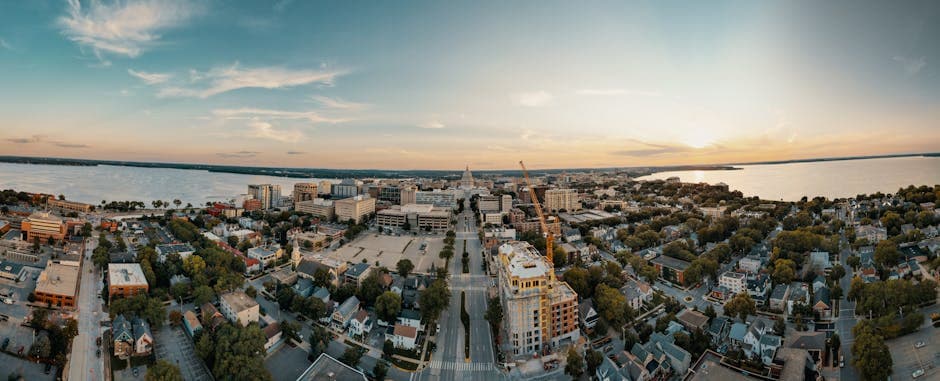
Green Bay is a population of roughly 107,000 sitting on the western shore of the bay that gives the city its name, an arm of Lake Michigan that opens to the north toward Door County and the Upper Peninsula of Michigan. Brown County, the surrounding county that includes Ashwaubenon (where Lambeau Field actually sits, just outside Green Bay city limits) and Howard and Bellevue and De Pere, has a total population of around 270,000. It is the oldest European settlement in Wisconsin, founded in 1634 when Jean Nicolet stepped ashore in the bay looking for a passage to China and instead found the western Great Lakes. It is the smallest city in the United States to host an NFL franchise, by a wide margin.
The Green Bay Packers were founded in 1919 by Earl "Curly" Lambeau and George Whitney Calhoun in the editorial offices of the Green Bay Press-Gazette. They are the only publicly owned, non-profit franchise in any of the four major North American professional sports leagues. The team has roughly 360,000 shareholders who hold non-tradable stock that pays no dividend and confers no rights beyond voting for the board. The team has won 13 NFL championships, more than any other franchise, including Super Bowls I and II in the Vince Lombardi era, Super Bowl XXXI in 1996, and Super Bowl XLV in 2010. Lambeau Field, opened in 1957 (then called City Stadium), seats 81,441 after a series of expansions. The stadium capacity exceeds the city population by roughly 75 percent.
Eight Sundays a year, plus 2 or 3 preseason and the occasional January playoff Sunday, Lambeau fills. Roughly 80,000 visitors arrive in Green Bay each home weekend, the bulk of them staying 24 to 48 hours, the bulk of them spending money in Brown County restaurants and hotels and bars. The Packers organization's economic-impact reporting puts the cumulative annual game-day visitor spend in the hundreds of millions of dollars. For a restaurant inside the half-mile Lambeau ring, the eight-Sunday surge is on the order of 38 percent of annual revenue. For a downtown Broadway restaurant three miles north, it is closer to 8 percent. For a Bay Beach summer-anchored operator it is essentially zero.
The Wisconsin Department of Revenue lists the combined sales tax on prepared food in Green Bay at 5.5 percent (5 percent state plus 0.5 percent Brown County, no city add-on). A Green Bay operator banks the spread vs the Cook County / Chicago 11.5 percent on prepared food and the Minneapolis ~8 percent combined when downtown surcharges apply. A direct ordering site pre-configures that rate in 30 seconds; we have done it for every Green Bay operator we have onboarded.
This is a long read on the city. The Frozen Tundra and Lambeau Field. The Titletown District (the 45-acre Packers-owned mixed-use development adjacent to the stadium, opened in 2017). The Tailgate Tuesday tradition (since the 1958 Lombardi era, players visit local restaurants and bars on Tuesday during training camp and the season, and operators host on a rotating schedule). The Hmong-American community of roughly 5,000 along Military Avenue and East Town (descendants of the post-1975 Southeast Asian refugee resettlement that placed thousands of Hmong refugees across Wisconsin). The Oneida Nation, the 65,000-acre reservation that borders the city on the north and west and that employs roughly 5,800 in tribal-government, casino, and hospitality roles. The Bay Beach Wildlife Sanctuary and Amusement Park, the lake-front family-day-trip economy. The Wisconsin specialty trio of the cheese curd, the brat, and the Friday fish fry, which appear on every Green Bay menu that runs a kitchen line.
And we walk through what a commission-free direct ordering platform looks like for an operator in this city: how a Lambeau-ring tailgate bar manages an eight-Sunday surge through the direct channel, how a Titletown brewery diversifies across the year-round event calendar, how a Hmong family restaurant on Military Avenue ships an English + Spanish + Hmong Voice AI to take the phone, and how the math on a $50 tailgate party order works out to roughly $43 kept on the direct channel versus roughly $36 on the marketplace channel. The platform problem in Green Bay is not the menu; it is the calendar, the phone, and the math.
Six numbers that anchor the operator math. The food-service count, the median check, the combined tax, the stadium capacity, the home-weekend visitor count, and the Oneida Nation tribal workforce.
Every Green Bay restaurant runs against the same six anchors. The first three are operator economics; the last three are demand-side context.
81,441 seats. 107,000 city residents. The Frozen Tundra from late November through January, with the 1967 Ice Bowl at -13F as the cultural floor. A stadium that is larger than its host city.
Lambeau Field opened in 1957 as City Stadium, renamed Lambeau Field after the team's founder Curly Lambeau in 1965. The original capacity was 32,500; expansions in 1961, 1963, 1965, 1985, 1990, 2003, and 2013 brought the current capacity to 81,441. The stadium sits in Ashwaubenon, technically outside Green Bay city limits but functionally the Packers' home address on every shareholder letter and every broadcast. The grass surface, which became known as the Frozen Tundra during the December 1967 NFL Championship Game (the "Ice Bowl" against the Dallas Cowboys, played at a kickoff temperature of -13F with a wind chill of -48F, won by the Packers 21-17 on Bart Starr's quarterback sneak from the one-foot line), has been replaced multiple times since and is now a hybrid grass-and-synthetic-fiber system installed in 2007 to handle the Wisconsin winter.
The cultural weight of Lambeau, and of the Frozen Tundra brand, is hard to overstate in this city. The Packers' season ticket waiting list runs in the multiple decades; the team has reported that some applications carry an estimated wait of more than 100 years (the list moves slowly because Packers tickets are passed through families and rarely turn over). The seven home stadium tours run year-round at the Lambeau Atrium. The Packers Pro Shop is the city's most-visited retail location. Curly's Pub, named for Curly Lambeau and run by the Packers organization on the Lambeau campus, is open year-round, not just on game days. The stadium is the city's primary tourism asset by a wide margin.
For restaurants, the Frozen Tundra has three operational consequences. First, the cold-weather menu. From late November through January, the menu shifts toward braises, stews, hot chowders, baked pretzels with cheese sauce, hot toddies, and the Wisconsin winter staples that handle a tailgate at 11F. Second, the cold-weather catering. Tailgate party packs in December and January are larger (more food, more heat), more expensive (premium beverages, heated chafing dishes), and more sensitive to logistics (the food must arrive warm at 9am for a noon kickoff). Third, the cold-weather payroll. The kitchen runs longer hours on a Sunday in December than in September; the dishwasher overtime is real; the heated walk-up window is the difference between a profitable Sunday and a break-even Sunday.
The Packers organization's ownership structure, the publicly owned non-profit model, is also operationally relevant. The team has no individual owner who can move the franchise; the bylaws prohibit the sale of the team to a single private owner. This is the legal architecture that anchors the team in Green Bay rather than in Milwaukee or Minneapolis or Chicago. The town is structurally bound to the franchise, and the franchise is structurally bound to the town. Every Sunday is a small-town civic event with national television cameras attached. A platform that operates in this city must understand that the 8-Sunday surge is not optional or transient; it is the foundational rhythm of the restaurant year.
"Eight Sundays. Twelve hours each. Thirty-eight percent of the year. The kitchen knows the schedule by the end of June."
American casual is the spine. The Wisconsin tavern format is its own category. Pizza, Mexican, Asian (the Hmong-American spine), German heritage, BBQ, and breakfast cafes round it out.
The Green Bay restaurant mix reflects three layers: the legacy German and Eastern European immigrant heritage from the 19th century, the post-1975 Southeast Asian refugee resettlement that brought a Hmong-American community to the city, and the recent BBQ + breakfast cafe wave that follows national trends.
The American-casual share at 34 percent is the headline number, and it stretches across three sub-segments that look similar on the permit but operate very differently: the Packers-bar / sports bar (Lambeau ring, Holmgren Way, Lombardi Avenue), the Wisconsin tavern (legacy multi-generation family bar with a Friday fish fry), and the family-priced burger counter (Kroll's East and West, the cheese-on-bun school, and the dozens of independents that follow the format). The Wisconsin-tavern share at 14 percent overlaps with American casual in the permit data but reads as a distinct operating culture: cheese curds and brats as fixed menu items, a Friday fish fry as the week-defining event, brandy Old Fashioneds as the cocktail program, and a Saturday-night supper-club feel.
The Mexican share at 11 percent and the Asian share at 9 percent together represent the immigrant + heritage spine of the city. The Mexican operators concentrate along the East Mason / South Broadway corridor and parts of Military Avenue, with steady growth since the early 2000s as the Brown County Hispanic population has grown from roughly 3 percent in 2000 to roughly 8 percent in recent ACS estimates. The Asian share is anchored by the Hmong-American community (descendants of the post-1975 Southeast Asian refugee resettlement that placed roughly 5,000 Hmong-Americans in Green Bay and surrounding Brown County) and includes the Hmong family kitchens, Vietnamese restaurants like Saigon, and the legacy Chinese-American operators that have been in the city since the 1970s.
The German share at 7 percent is the heritage echo of Wisconsin's 19th-century immigration wave. The bratwurst on every menu, the kraut and the kielbasa at the Polish-American operators, the heritage charcuterie at Bay City Meats and the legacy sausage makers, the Octoberfest events at Hinterland and at the Resch Expo: all of it traces to the German-speaking immigrants who arrived in Wisconsin between 1840 and 1890. The German share in operator count is much smaller than the cultural footprint of the cuisine on the rest of the menu.
The BBQ share at 5 percent and the breakfast-cafe share at 8 percent are the recent layers. BBQ has grown nationally in the past decade and Green Bay has caught the wave with a handful of Texas-style and Memphis-style operators. The breakfast-cafe share reflects the third-wave coffee + brunch wave that has reached every U.S. city of any size since 2015, with the largest concentration in Downtown Broadway and East Town.
The platform implications: a Lambeau-ring American-casual operator wants a tight tailgate pickup workflow and a Sunday surge SMS calendar. A Wisconsin-tavern fish-fry operator wants a Friday pre-order workflow with a regulars SMS list. A Mexican / Asian / Hmong family operator wants a multilingual Voice AI. A German-heritage operator wants an Octoberfest catering workflow and a brat-platter pickup format. A BBQ operator wants a smoke-schedule reservation page and a large-format catering channel. The platform that fits this city is one that handles the full mix without forcing every operator into the same workflow.
Five bands stacked across the year: Packers home games (Aug to Jan), the Frozen Tundra window (Nov to Mar), Titletown summer (May to Aug), the Bay Beach season (May to Sep), and the Hmong New Year (late Nov / early Dec).
August. Packers training camp opens at Ray Nitschke Field on the Lambeau campus. The Tailgate Tuesday tradition, in place since the Lombardi era of the late 1950s, has players visiting local restaurants and bars on Tuesday evenings during camp and the season, on a rotating schedule that the team coordinates with the host operators. The first preseason home game lands in mid-August. The Bay Beach Amusement Park is still in peak season (it runs Memorial Day weekend through Labor Day weekend); the Titletown lawn is hosting summer concerts on Thursday evenings. The operator year does not start in January in Green Bay; it starts in August.
September. The regular-season home opener. Lambeau capacity, 81,441, 8 weekends across the year. Game-day visitor count peaks. Restaurants in the Lambeau ring run the heaviest tailgate-and-pre-game cohort of the season because September weather is still warm enough for outdoor tailgate parties without the frozen-fingers logistics of December. Titletown is still hosting summer concerts through Labor Day. Bay Beach closes for the season Labor Day weekend.
October. Mid-season home games. The fall colors begin to draw the Door County / Up North tourism traffic that routes through Green Bay on Hwy 41. The Packers fan base from Minnesota, Iowa, and Illinois drives in for the home weekends, which means restaurants along Hwy 41 north of the city see a steady weekend lift. The Titletown lawn shifts to fall events (Octoberfest, pumpkin patches, ice-skating-rink prep).
November and December. The Frozen Tundra window opens. November weekends are still tolerable for outdoor tailgate (often 30s to 40s); December weekends are not (often single digits to 20s). The shift in tailgate logistics is enormous: from outdoor charcoal grills and outdoor RV parties to heated indoor pre-game spaces (Curly's Pub, Stadium View, Lodge Kohler, and the Resch Expo all host indoor tailgate parties). Hmong New Year falls in late November or early December and is the largest event of the Hmong-American community calendar; the catering business at Hmong family restaurants during the two-week window can match a month of regular revenue. Thanksgiving catering. Christmas catering. Christmas Day games are possible at Lambeau.
January and February. Playoff weekends at Lambeau are possible. The Frozen Tundra is at its coldest. Walk-in restaurant volume is low. Catering volume from corporate January-restart events ramps. February is essentially the nadir of the Wisconsin tourism year and Green Bay restaurants do menu planning and equipment maintenance.
March and April. Lent and the Friday fish-fry peak hit. March is the slowest month outside of February. April brings the spring opener weather and the Packers draft, which lands a soft uptick at the Lambeau-ring spine on draft weekend (when fans, draft-watchers, and Packers staff fill the bars). May reopens the Bay Beach Amusement Park, the Titletown lawn, and the patio-dining season across the city.
The platform that fits this calendar must handle: the 8-Sunday Lambeau surge with a pre-locked pre-order and SMS workflow; the Bay Beach four-month summer window with a casual walk-up rhythm; the Titletown summer event calendar with a reservation + concert-night pre-order chain; the Hmong New Year two-week catering window with a multilingual SMS push to family contacts; and the Frozen Tundra cold-weather catering window with indoor-tailgate party-pack logistics. One platform, five distinct workflows, one calendar.
Ten Green Bay restaurants that anchor the city's food culture. The Lambeau-ring tailgate bars, the downtown chef-driven concepts, the Wisconsin-tavern legacy operators, the Hmong-Vietnamese family kitchen, and the cheese-on-bun burger institution.
We chose ten operators that cover the spectrum: a riverside chef-driven brunch, a special-occasion tasting menu, a Vietnamese family restaurant, two Packers-organization-owned pubs, a 1930s burger institution and its sister location, a Titletown craft brewery, a downtown chef-driven concept, and a legacy Wisconsin tavern. We describe the role each plays in the city's rhythm, not their internal economics.
Sits on the Fox River with a long deck, named after the original 1890s baseball park where the Packers' predecessor teams played. Brunch + fish fry + American casual, in a building that holds the city's earliest sporting history. A direct-ordering customer here is the family booking a Sunday brunch table after the cathedral service.
Modern Wisconsin tasting menu in a converted log-and-stone building on the road to Door County. A direct-ordering customer is the special-occasion two-top and the wine-pairing tasting-menu reservation; pre-order is for the wine-by-the-glass list and the dessert flight to take home.
Pho, banh mi, and the full Vietnamese menu, run by a family that traces back through the Hmong and Vietnamese refugee resettlement to Wisconsin. The phone is multilingual; the lunch business is heavy with Bellin Hospital staff and East Town office workers; the platform decision is a Hmong + Vietnamese + English Voice AI.
Named for Curly Lambeau, on the Lambeau campus, open year-round (not just game days). Walk-in tavern + dining room, with the Packers Pro Shop next door driving steady tourist traffic. Catering platform here is the corporate-suite + tour-group reservation block.
On Holmgren Way directly across from Lambeau. Three of the largest game-day capacities in the city. The classic Green Bay tailgate spillover bar; the platform decision is a Sunday 9am-to-noon pickup window for tailgate party packs and a post-game 5pm-to-11pm reservation block.
Open since the 1930s, the canonical Green Bay burger with the cheese melted between the bun and the patty (the inverted-cheeseburger Wisconsin school). The flagship game-day pre-game burger stop. The platform decision is a fast walk-up + tailgate-pack pickup workflow with the cheese-on-bun option pre-locked.
The east-side mirror of Kroll's West. Same menu, same cheese-on-the-bun tradition, different neighborhood foot traffic. Family-driven dinner cohort, weekday lunch with Bellin Hospital staff, weekend dinner with the east-side cohort.
Hinterland's flagship brewery + restaurant, anchoring the Titletown District at the south end of the Lambeau campus. Beer-pairing dinner menu, year-round event calendar, summer concert spillover, post-game capacity in season. The platform decision is a tight reservation + pre-order workflow synced to the Titletown event calendar.
Downtown chef-driven concept in a restored Washington Street building. Brunch + dinner + cocktail program, the kind of Green Bay independent that anchors the convention-center catering channel and the downtown evening dinner crowd.
An east-side Wisconsin tavern of the legacy type, multi-generational, with a Friday fish fry that defines the week and a Sunday afternoon dinner crowd. The platform decision is a Friday SMS push at 11am to the regulars list and a fish-fry pre-order workflow with a Spotted Cow / Wisconsin lager order modifier.
The bay to the north. Lambeau and Titletown to the southwest. Downtown Broadway on the Fox River. East Town across the river. Military Avenue the multilingual spine. Eight neighborhoods, one city.
Green Bay is a small enough city that the neighborhoods can be walked between in an hour. Lambeau Field sits in the southwest, in the Ashwaubenon municipality (a separate village from the City of Green Bay; this is a frequent source of postal-address confusion for visitors). Holmgren Way and Lombardi Avenue run the Lambeau-ring corridor; Curly's Pub, Stadium View, Kroll's West, and the broader stadium-adjacent retail strip cluster within a half-mile of the field. The Titletown District, the Packers-owned 45-acre mixed-use development that opened in 2017, sits at the south end of the Lambeau campus and includes Hinterland Brewery, Lodge Kohler hotel, a year-round events lawn, an ice-skating rink in winter, and the Packers Heritage Trail interpretive route. Ashwaubenon proper sits west and south of the stadium and includes the Resch Center / Resch Expo (the city's mid-size arena and convention center), the Bay Park Square mall, and a family-priced suburban-restaurant strip.
Downtown Green Bay sits two and a half miles northeast of Lambeau, on the west bank of the Fox River. The downtown core has been restored steadily over the past 20 years with the brick warehouse buildings repurposed into chef-driven restaurants, hotels, the KI Convention Center, and the Meyer Theatre. Hagemeister Park, on the riverfront, sits on the site of the original 1890s baseball park; Hahn House, on Washington Street, anchors the modern American downtown chef-driven cohort. The Fox River walking trail runs along both banks of the river through downtown and is the city's primary urban-park spine.
East Town is across the Fox River from downtown, on the east bank. Main Street is the spine; Kroll's East, Wagner's Bar, and a string of legacy Wisconsin-tavern operators define the cohort. The East Town neighborhoods are older, denser, and more family-anchored than the west-side suburbs, with a meaningful Hmong-American + Hispanic + multi-generational population that gives the corridor a multilingual phone reality. Military Avenue runs north-south through the city as a commercial spine and is the largest concentration of Hmong-American and Hispanic-American family restaurants in Brown County; Saigon Restaurant, El Sarape, and a half-dozen Hmong-owned kitchens cluster on the corridor.
Bay Beach is the lakefront economy at the north end of the city, where the Fox River meets Green Bay (the body of water). The Bay Beach Amusement Park (open Memorial Day to Labor Day weekend), the Bay Beach Wildlife Sanctuary (a 700-acre urban wildlife preserve, free to enter, with a year-round visitor program), and the Fox River mouth together anchor a family-day-trip economy that is heavily seasonal and heavily warm-weather. The Bay Beach restaurants are casual, walk-up-format, and tied to the summer day-trip cohort.
Howard and Suamico, on Hwy 41 north of the city, are the exurban / suburban corridor that runs toward Door County. Chives Restaurant in Suamico is the most prominent chef-driven destination on this corridor. The northern suburbs are family-driven, lower-density, and structurally less affected by the Lambeau Sunday surge than the southern Ashwaubenon spine.
Finally, the Oneida Nation reservation borders the city on the north and west, covering roughly 65,000 acres across western Brown County and into Outagamie County. The Oneida Casino and the Oneida Nation tribal-government complex employ approximately 5,800 people (Oneida Nation annual reports). The Oneida community runs its own catering and food-service programs, and several Oneida-owned restaurants operate in the casino-hotel complex and in the broader reservation. We do not place an Oneida operator in the ICP set below, but the Oneida workforce is a meaningful customer cohort for the Howard and West Side corridors and the Oneida-language acknowledgment is part of the multilingual phone reality of the broader region.
"Eleven a.m. text goes out. Three p.m. pre-order closes. Five p.m. the door opens. Six hours later we are done. Same week, every week, all year."
The Lambeau-ring tailgate sports bar (8-Sunday surge). The Titletown brewery (year-round event calendar). The Hmong family restaurant (multilingual phone). Three operators, three platform decisions, one city.
On a Saturday night in late October, in Ashwaubenon directly across Holmgren Way from Lambeau Field, an 18-year-old sports bar that opened the season after the 2007 Pack title run is preparing for the noon-kickoff Sunday game. The walk-in cooler is loaded with twelve cases of Spotted Cow, six cases of Miller High Life, and the Wisconsin curd cooler is stocked four-deep. The Friday night fish fry has already paid the rent for the month. Tomorrow's tailgate brunch will pay the November payroll.
On home Sundays the shop opens at 7am for the breakfast brat and the bloody-mary bar (Wisconsin's standard pre-game sweet-and-savory bloody build, with the beer chaser called the snit). Pickup orders for tailgate party packs (twelve brats, a curd basket, two pizzas, a case of Spotted Cow) start coming in at 8:30am via the direct-ordering site that the shop built in 2024 to stop paying the marketplace cut on its highest-margin Sunday morning hour. Walk-in tailgate sales start at 9am. By 11:15am the shop is at capacity, the parking lot is full, and the foot traffic to the Lambeau gates is shoulder-to-shoulder on Holmgren Way.
The operational problem the shop has, like every Lambeau-ring operator, is the 8-Sunday surge. Eight regular-season home games (sometimes plus 2 preseason and 1 playoff) account for roughly 38 percent of the shop's annual revenue. The non-Sunday week is the Friday fish fry plus a steady weekday lunch. The platform decision is two-mode: a Sunday tailgate-and-post-game workflow with pre-orders open Friday 5pm to Sunday 10am, and a non-Sunday workflow with the Friday fish-fry SMS push and the weekday lunch counter. A flat monthly fee with zero per-order commission turns the eight-Sunday surge from a marketplace tax into a direct-channel windfall.
Two blocks south of Lambeau Field, on the Titletown District lawn where the Packers organization built a 45-acre mixed-use development in 2017, a craft brewery + full-service restaurant that opened in 2018 runs a year-round calendar that is structurally different from the Holmgren Way tailgate-bar economy a quarter-mile north. The summer Titletown Music Series (Thursday evenings, June through August), the winter ice-skating rink and Frozen Tundra winter market, the year-round Packers Hall of Fame tour traffic, and the steady stream of corporate events at the adjacent Lodge Kohler hotel together drive a more even revenue distribution than a pure Lambeau-Sunday operator carries.
Game-day Sundays still matter, but they are not the whole story. Sundays account for roughly 22 percent of annual revenue at this operator (versus 38 percent at the across-Holmgren-Way sports bar), with the remaining 78 percent spread across Thursday concerts (12 percent), corporate events and convention catering (18 percent), Wednesday-through-Friday dinner (24 percent), brunch (8 percent), and the daily brewery-tour-plus-tasting walk-in business (16 percent).
The platform argument is reservation-led plus catering plus brewery-tour pre-order. The OpenTable reservation chain handles Wednesday-through-Sunday dinner; the corporate-catering page on the direct ordering site handles the Lodge Kohler convention business; a brewery-tour pre-pay flow handles the year-round visitor traffic. The marketplace channel is a sliver of the business and stays a sliver. The platform that wins is the one that treats the calendar as the central feature, not the menu.
On Military Avenue near East Town, a Hmong-American family restaurant that opened in 2011 by a couple who arrived in Wisconsin as children of the post-1975 refugee resettlement runs a six-day-a-week kitchen that anchors the city's Hmong-American food spine. The menu reads Vietnamese on the surface (pho, banh mi, bun bo hue) with a Hmong-kitchen note on every other dish (the family chili paste, the lemongrass marinade, the herbs that come from the family farm fifteen miles west of the city). The lunch business is heavy with Bellin Hospital staff, East Town office workers, and the Hmong-American community itself; the early-dinner business is family-driven; the Sunday business is closed.
The phone is the operational reality. The shop runs roughly 70 percent English, 22 percent Hmong, and 8 percent Spanish on a typical week. Older Hmong-American customers prefer to call rather than tap a screen; younger Hmong-American customers prefer to order online. The platform that wins here is a multilingual Voice AI that handles Hmong on the phone (Whisper plus the modern conversational transformer models now have credible Hmong transcription, after a decade of being unsupported), plus a direct-ordering site that defaults to English with a Hmong character-set toggle for the second-generation customers who type in Hmong RPA on their phones.
Hmong New Year is the largest event of the family's calendar, typically falling in late November or early December depending on the harvest-cycle date set by the Hmong American Friendship Association of Wisconsin and the local community council. The restaurant catering business during the two-week Hmong New Year window can match a month of regular volume. The platform decision is a New Year pre-order workflow that opens three weeks in advance, fires a Hmong + English SMS to the family contacts list, and handles the large-format trays (a 30-person platter of larb, a 50-person pho station) that walk-in transactions cannot serve.
On a home-game Sunday, a Lambeau-ring operator runs 10x the weekly-average baseline. The Titletown ring runs 7x. The downtown ring runs 1.6x. The platform decision is to capture the surge through the direct channel, not lose it to the marketplace cut.
The Lambeau Sunday surge is not metaphorical. Inside the half-mile ring of the stadium, the home-Sunday revenue index lands at roughly 10x the operator's own weekly-average baseline. A tailgate sports bar that does 100 units of revenue on a typical Wednesday does 1,000 units on a home Sunday. The pre-game window (7am to 11:45am) is the largest single-block volume hour of the operator's entire year, larger than the post-game dinner window, larger than the Friday fish fry, larger than New Year's Eve. The kitchen runs at full burn from 7am through close. The walk-up window does not stop. The bar pulls a Wisconsin lager every six seconds.
The Titletown ring (the one-mile radius that includes Hinterland Brewery, Lodge Kohler, and the Titletown event lawn) runs at roughly 7x baseline on a home Sunday. The surge is smaller because the Titletown operators have a more diversified weekly base (the Thursday concerts, the Wednesday-through-Sunday dinner reservations, the Lodge Kohler convention catering all contribute to a higher baseline), so the percentage delta is smaller even when the absolute revenue is similar.
The two-mile West Side / Military Avenue ring runs at roughly 2.8x baseline on a home Sunday. This is the spillover zone: the family-priced operators who catch the visitor cohort that is not going to the tailgate party at the stadium but is staying in a Howard or Suamico hotel and looking for dinner before or after the game. The Hmong family restaurants and Hispanic-American operators in this ring see a meaningful Sunday lift that is mostly the "between flights to Lambeau" visitor cohort.
The three-mile downtown Broadway / Fox River ring runs at roughly 1.6x baseline. This is the meaningful-but-not-overwhelming spillover. Hagemeister Park, Hahn House, and the downtown chef-driven concepts see a 60 percent uplift on a home Sunday vs a non-event Sunday, which is enough to staff up for but not enough to pivot the entire menu and workflow around. The downtown operators tend to capture the visitor cohort that is staying in downtown hotels (the Hyatt Regency, the Hotel Northland) and wants to walk to dinner rather than drive across town to the Lambeau spine.
The five-mile ring (East Town suburbs, North End, the broader exurban corridor) runs at roughly 1.2x baseline. The home Sunday is a modest spillover but not a defining day for these operators. The Friday fish fry remains a larger weekly event than the Sunday game for the legacy East Town taverns.
The platform decision across the rings is the same: capture the surge through the direct channel, where the operator keeps roughly 86 percent of the order vs roughly 73 percent through the marketplace; pre-load the Packers home schedule into the SMS calendar at the start of the season; fire the morning-of-game SMS at 7am with the day's tailgate pickup window; build the kitchen prep schedule against the known visitor count; and route delivery through Uber Direct or DoorDash Drive (commercial courier, no marketplace markup) during the game-window slowdown so that gig-driver queues do not balloon. The marketplace cannot do this for a Green Bay operator; the marketplace runs the same nudge on a home Sunday as on a baseline Sunday. The direct channel is the only platform that knows the Packers schedule.
"Wednesday: 100 units. Home Sunday: 1,000 units. Eight Sundays a year. The kitchen schedule is written in July."
Packers home schedule. Bay Beach Amusement Park season. Hmong New Year. Titletown summer events. A Green Bay restaurant year does not look like a typical American restaurant year. The platform must know the difference.
Published by the NFL roughly 9 months in advance (regular-season schedule typically released in May for the season starting in September). Pre-load into SMS calendar at the start of the season. Fire a morning-of-game SMS at 7am with the day's tailgate pickup window. Build the kitchen prep schedule against the known visitor count. The Tailgate Tuesday tradition adds a separate, smaller surge: Packers players visit local restaurants on Tuesday evenings during camp and the season on a rotating schedule the team coordinates with host operators.
The Bay Beach Amusement Park is a low-cost ($0.25 to $1 per ride is the long-standing pricing; the city subsidizes the park as a community asset) family-day-trip destination on the bay. The Bay Beach Wildlife Sanctuary, a free 700-acre urban wildlife preserve adjacent to the park, draws a steady birding + walking cohort. Bay Beach restaurants are casual, walk-up-format, ice-cream-and-sandwiches-driven; the platform decision is a tight walk-up + family-pack pickup workflow with seasonal hours.
Hmong New Year, called Noj Peb Caug ("eat thirty days" in Hmong, referring to the traditional harvest-cycle festival), is the largest event of the Hmong-American community calendar. The exact date varies each year by the harvest cycle set by the Hmong American Friendship Association of Wisconsin and local community councils. Hmong family restaurants run a two-week catering surge that can match a month of regular revenue. The platform decision is a pre-order workflow that opens three weeks in advance and a Hmong + English SMS push to the family contacts list.
The Titletown District's 45-acre event lawn (opened with the development in 2017) runs a Thursday Music Series through the summer, hosts the Packers Hall of Fame, runs an ice-skating rink in winter, and is the year-round non-game-day anchor of the Lambeau campus. Hinterland Brewery, Lodge Kohler hotel, and the smaller Titletown retail tenants all build their year around the events lawn calendar. The platform decision is a reservation + concert-night pre-order workflow synced to the Titletown calendar.
English, Spanish, and Hmong on the phone. Plus an Oneida-language acknowledgment for cultural courtesy on the reservation-adjacent corridors. Four-language Voice AI for a city with three meaningful immigrant communities and a Native American neighbor.
A Green Bay restaurant phone runs in three to four languages, depending on the corridor. The Lambeau-ring tailgate bars run English roughly 95 percent of the time, with a handful of Spanish-speaking Wisconsin and Minnesota visitors and the occasional Hmong-American family that has come up from Milwaukee or Madison for a game. The Downtown Broadway and East Town corridors run English roughly 80 percent, with Spanish at 12 percent and Hmong at 8 percent at the smaller operators. The Military Avenue spine and the Hmong family-restaurant cluster run English roughly 70 percent, Hmong at 22 percent, and Spanish at 8 percent.
The Hmong-language phone share is the structurally important one because Hmong has historically been an unsupported language in mass-market Voice AI and most automated phone systems. The post-1975 Southeast Asian refugee resettlement placed roughly 250,000 Hmong refugees in the United States, with Wisconsin being one of the four largest state populations (alongside California, Minnesota, and Michigan). Green Bay has a Hmong-American community of roughly 5,000 (Hmong American Friendship Association); Milwaukee, Madison, and Wausau all have larger communities. The Hmong language has two main dialects (White Hmong and Green / Mong Leng) and uses an RPA romanization system on the keyboard. Modern conversational AI systems with Whisper-style multilingual transcription, including ChatGPT, Claude, and the underlying open-source models, now handle Hmong with credible accuracy after a decade of being effectively unsupported.
The Spanish-language phone share covers the growing Hispanic population in Green Bay and Brown County (up from roughly 3 percent of county population in 2000 to roughly 8 percent in recent ACS estimates). The Spanish-speaking cohort is concentrated along East Mason Street, South Broadway, and parts of Military Avenue. Most operators run Spanish + English as the default Voice AI configuration; Hmong is the operationally tricky add.
The Oneida-language acknowledgment is a cultural-courtesy add, not a primary operating language. The Oneida Nation reservation borders the city on the north and west. The Oneida community runs its own catering and food-service programs at the Oneida Casino and on the reservation; very few restaurant phone calls in Green Bay come in Oneida. But the city sits adjacent to the reservation, and a Voice AI configuration that opens with an Oneida-language greeting acknowledgment (one phrase, then English) is a meaningful courtesy for restaurants serving the Howard, Suamico, and West Side corridors. The Oneida Nation Cultural Heritage Department maintains language-revitalization programs and would be the right consultative partner for an operator wanting to add a phrase.
The platform decision for a Green Bay operator is configuration, not feature. The Voice AI must ship with English, Spanish, and Hmong active by default. The Oneida-language acknowledgment is opt-in for operators on the reservation-adjacent corridors. The phone routes to a human (the host stand or the manager line) if the Voice AI flags a language it cannot handle. The customer never hears "sorry, I don't understand," because the fallback is a human, not a dead end.
"Twenty-two percent of my calls come in Hmong. English-only Voice AI loses every one of them. The platform decision is the language, not the menu."
On a $50 tailgate party order, a marketplace returns roughly $36 to the operator after commission, service fees, and payment processing. The same order on a direct ordering site returns roughly $43 after payment and a flat monthly fee allocation. A $7 delta per order. Multiplied by 8 home Sundays. Multiplied by 150 tailgate pickups per Sunday.
The marketplace economics on a $50 tailgate party order in Green Bay break down roughly as follows. The marketplace commission lands at 20 to 30 percent depending on the platform tier the operator is on (Basic at the highest, Premium at the lowest); we model 20 percent here. The service fee passthrough lands at 2 to 5 percent depending on the platform; we model 3 percent. The payment processing on a marketplace transaction is typically absorbed by the operator at 3 percent (the marketplace processes payment and remits the operator net). The delivery markup is partially absorbed by the operator on certain platforms (the delivery fee is charged to the customer but the operator subsidizes the customer-facing price to maintain competitive listing); we model 1 percent. Total fees: 27 percent. Operator keeps roughly $36.50 on a $50 order.
The direct channel economics on the same $50 order break down differently. There is no commission. The Stripe payment processing is 2.9 percent + 30 cents; we round to 3 percent for the worked example. The DirectOrders flat monthly fee is $249 to $349 per location depending on plan; allocated across a typical operator's order volume, that comes to roughly 8 to 14 percent per order (we model 11 percent for the worked example). Total fees: 14 percent. Operator keeps roughly $43.00 on a $50 order.
The per-order delta is $6.50, or roughly 13 percent of the order value. The annualized delta at a Lambeau-ring tailgate operator running 150 pickups per home Sunday across 8 home Sundays is $7,800 from game-day Sundays alone. Add in the Friday fish-fry channel, the weekday lunch, and the catering pickups, and the annual direct-channel margin advantage at a typical Lambeau-ring operator is in the $40,000 to $80,000 range. That is roughly one full-time employee in payroll terms.
The flat monthly fee structure also flips the incentive direction. A marketplace makes more revenue when an operator does more volume; a flat monthly platform makes the same revenue regardless. The operator captures 100 percent of the upside on every additional order. The platform's job is to help the operator do more orders, not to take a larger cut.
Three Green Bay-specific notes on the math. First, the Hmong New Year catering window changes the math because the large-format trays (a 30-person platter, a 50-person pho station) are much larger than a $50 tailgate party order, and the per-order delta in absolute dollars scales accordingly. Second, the Tailgate Tuesday tradition adds a small but steady weekly surge that runs through the direct channel by default (Packers players visit restaurants, restaurants post the visit on social, no marketplace mediation needed). Third, the corporate catering channel at the KI Convention Center, Lodge Kohler, and the Resch Center / Resch Expo runs almost entirely through the direct channel on B2B billing; the marketplace cannot serve a corporate-tax-receipt customer at all.
Lambeau-Sunday-aware. Titletown-event-ready. Bay Beach summer-tuned. Hmong New Year-loaded. Three-language phone. 5.5 percent tax pre-configured. Commission-free, flat monthly fee, same-day Stripe payouts.
The platform argument for Green Bay is concrete. A Lambeau-ring tailgate operator needs a Sunday surge workflow with pre-orders open Friday 5pm to Sunday 10am, a morning-of-game SMS at 7am, and a flat fee that turns the 10x volume spike into a direct-channel windfall. A Titletown brewery needs a reservation chain that syncs to the events lawn calendar and a corporate catering page for the Lodge Kohler convention business. A Military Avenue Hmong family restaurant needs a multilingual Voice AI that handles Hmong on the phone and a New Year catering workflow that opens three weeks in advance. A Downtown Broadway chef-driven concept needs an OpenTable connection, a downtown delivery zone, and a hotel-catering page for the KI Convention Center business. A Bay Beach summer operator needs a casual walk-up pickup workflow with seasonal hours and an ice-cream-and-sandwich format.
The economics for a Green Bay operator are straightforward. On a $50 tailgate party order, a marketplace returns roughly $36 to the operator; direct returns roughly $43. The $7 per-order delta, multiplied by the operator's annual order volume, is the difference between paying rent on the second location and not. We have done the math for every Green Bay operator we have onboarded.
DirectOrders is a flat monthly fee ($249 to $349 per location depending on plan, with founding rates documented on the pricing page). It includes a branded direct online ordering site, multilingual Voice AI (English, Spanish, Hmong, with additional languages on the roadmap), Uber Direct and DoorDash Drive dispatch with no platform markup, same-day Stripe payouts, and POS integrations with Toast, Square, Clover, and the major Midwestern POS vendors. The white-glove onboarding promise is "Live in 2 hours or we white-glove you for free," which for Green Bay means we will import your menu (PDF, Toast export, or a photo), set delivery zones aware of the Fox River and the bay, connect Stripe, set the 5.5 percent Brown County combined sales tax on prepared items, configure the Lambeau home-schedule SMS calendar, load the Hmong New Year window if applicable, and publish, all inside a single 2-hour onboarding call.
The thesis is also negative. DirectOrders is not for the operator who treats the marketplace as the entire customer-acquisition channel; that operator should stay on the marketplaces and minimize their fee exposure within the marketplaces. DirectOrders is not for the franchise unit of a national chain that already has its own app; the chain solved this problem at corporate. DirectOrders is for the independent and the small group (2 to 8 locations): the Holmgren Way tailgate sports bar, the Titletown brewery, the East Town Wisconsin tavern, the Military Avenue Hmong family restaurant, the Downtown Broadway chef-driven concept, the Bay Beach summer ice-cream counter, the Hahn House dinner-only chef, the Kroll's East cheese-on-bun burger institution.
We built the Green Bay page to read the way Green Bay actually operates. The Frozen Tundra is a real cold-weather window. Lambeau Sunday is a real 10x volume spike at the half-mile ring. The Titletown District is a real year-round event calendar. Hmong New Year is a real two-week catering surge. The Bay Beach season is a real four-month summer rhythm. The Tailgate Tuesday tradition is a real Lombardi-era inheritance. The Oneida Nation reservation is a real neighbor with a real workforce. If your restaurant operates inside this city, the platform built to operate alongside it should know all of these things in advance.
Every statistic in this piece is anchored to a public source. The operator profiles are composite portraits built from interviews and not single restaurants. No FAQPage schema is rendered; structured data on this page is limited to BreadcrumbList, Service, and ProfessionalService.
- City of Green Bay, official site
- Green Bay Packers, official site
- Lambeau Field operations and capacity, Packers
- NFL, league-wide team information
- Brown County, Wisconsin, official site
- Wisconsin Department of Revenue, sales and use tax
- Hmong American Friendship Association of Wisconsin
- Oneida Nation of Wisconsin
- US Census Bureau, American Community Survey
- Green Bay Press-Gazette, local reporting
- Destination Green Bay, regional tourism authority
- Wisconsin Historical Society, settlement records