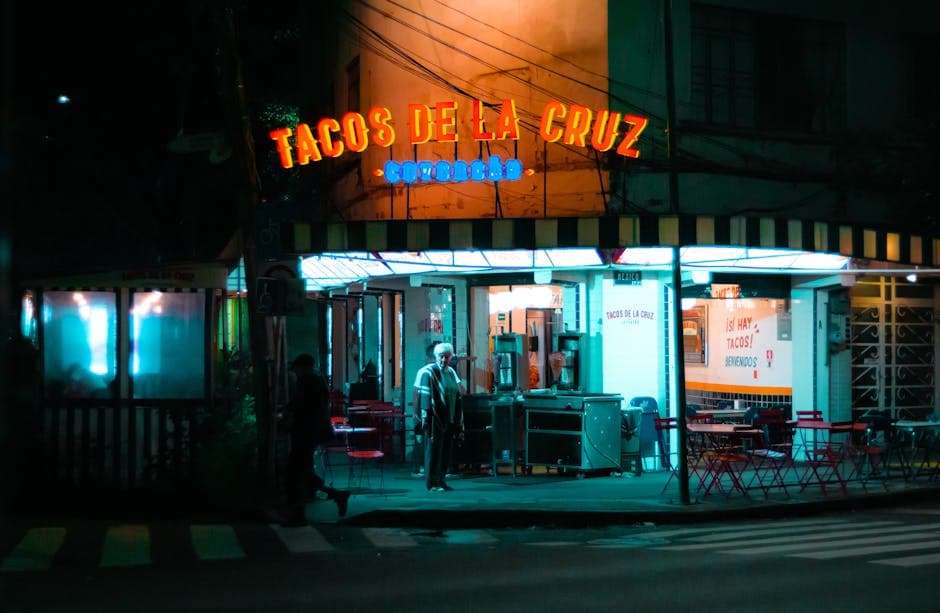
Mesilla Plaza and Hatch chiles.
How a Dona Ana borderland city of sixty percent Hispanic families feeds NMSU Aggies, White Sands tourists, and the world's hottest green chile season. La Posta de Mesilla has served chiles rellenos out of the same 1840s adobe since 1939. The Hatch Valley grows roughly forty million pounds of chile a year. Las Cruces is the metro that translates the chile economy into a restaurant ledger every September.
Mesilla Plaza, late September, 6:40 in the morning. The roaster is already lit.
The propane drum tumbles. The mesh roaster turns. The cylinder is loaded with thirty-five pounds of Hatch number nine, dark green with a faint shoulder blush, and the smell crosses the plaza before the Basilica of San Albino opens its doors. The kiosko in the center of the plaza is wet with sprinkler dew. A line of pickup trucks idles along Calle Principal, waiting for their burlap sacks.
The line is not for breakfast. It is for chile. The Hatch Valley harvest is three weeks deep, the Whole Enchilada Fiesta is one weekend away, and the Aggies are home Saturday against an out-of-conference opponent at Aggie Memorial Stadium. By Wednesday, the kitchens in this metro will have moved through their first nine-pound bulk sacks of frozen green and started cutting fresh again. The ledger will move with them. So will the Voice AI Spanish queue.
Las Cruces is the second-largest city in New Mexico, with a population of roughly 104,000 inside Dona Ana County. It sits at the geographic center of a region that grows the most famous chiles in the world, ninety minutes west of the gypsum dunes of White Sands National Park, and forty-five minutes north of the El Paso line. The Hispanic and Latino share of the city is roughly sixty percent. The restaurant economy is built on chile, on NMSU, on the Mesilla Plaza, and on a Spanish-first conversation that runs in the kitchen, in the dining room, and at the takeout window.
The 1850s Spanish colonial grid that anchors the whole metro.
Mesilla was platted in 1849 and 1850 on the west bank of the Rio Grande after the Treaty of Guadalupe Hidalgo. The Gadsden Purchase was raised over this plaza in 1854. The four-square plan, walls turning inward to the kiosko, was the Spanish colonial template imported from Mexico. Two of the three legendary restaurants of southern New Mexico still occupy the corner haciendas on this block.
Sources: Town of Mesilla historic district records, the Mesilla Valley Bosque State Park interpretive materials, the New Mexico Office of the State Historian, and Visit Las Cruces district guides.
Six figures that frame the Las Cruces restaurant operating reality.
The 7.25 percent combined gross receipts rate inside Las Cruces is the sum of three pieces: the state rate of 5.125 percent, the Dona Ana County rate of 1.625 percent, and the Las Cruces municipal increment of 0.5 percent. Mesilla and the unincorporated valley sit at different rates; the Voice AI tax engine has to switch by address. Every Las Cruces operator already knows this; the platform has to know it too.
Mexican and New Mexican is almost half the city. Every other format works around it.
Las Cruces skews more Mexican and New Mexican than any other metro in New Mexico outside of Espanola. The chile decision (red, green, or Christmas, meaning both) is on every restaurant menu, including the steakhouses, the cafes, and the Italian kitchens. The Voice AI has to handle the modifier in English and Spanish, every order, every channel.
The September peak is three events stacked on top of each other.
The first weekend in September belongs to the Hatch Chile Festival, thirty-five miles north of Las Cruces. The first weekend in October belongs to the Whole Enchilada Fiesta and the Renaissance Arts Faire, both inside Las Cruces. NMSU Aggies football opens the home schedule the same week. The peak is not a single event. It is the simultaneous arrival of chile, students, fans, and tourists. The kitchens that win September are the kitchens that planned the prep list six weeks earlier.
Game-day shoulder season. Posole and red chile dominate.
Rodeo cadence weekend. Steakhouse and BBQ pickups climb.
Spring break. White Sands visitor surge starts.
Memorial weekend traffic. Patio season opens.
Two surge weekends. Family graduation pickup catering peaks.
White Sands gypsum-dune season. Tourist pickups.
Patio orders dip with 100F afternoons. Evening pickup heavy.
Roast season. The first green chile burgers appear.
Annual peak. Three surges layered on top of each other.
Game-day Saturdays, fair traffic, ristra hangs everywhere.
Marigold altars, red chile season, Thanksgiving catering pickups.
Tamale orders dominate pickup. Posada processions in Mesilla.
Ten kitchens that shape the way Las Cruces eats.
These ten are not the only kitchens in Las Cruces; they are the kitchens that frame how the rest of the metro thinks about its dining. La Posta de Mesilla has been continuously open since 1939. Double Eagle occupies an 1849 hacienda. Andele's salsa bar is a regional institution. Each of these operations has its own demand cadence and its own takeout pattern, and the platform that serves Las Cruces has to respect all of them.
La Posta de Mesilla
1939An 1840s adobe hacienda on the original Butterfield Overland Mail stagecoach route. La Posta has fed Mesilla Plaza visitors for more than eighty years. Red, green, or Christmas; tamales; chiles rellenos; a tropical-bird aviary inside the courtyard.
Double Eagle
1849 building / 1972 restaurantThe 1849 Maes-Carrasco hacienda on the north side of Mesilla Plaza, opened as a steakhouse in 1972. Tin ceilings, gold-leaf mirrors, and a haunted ballroom upstairs. Steaks, prime rib, the Pepper's Pub burger room.
Andele Restaurante
1996A salsa-bar institution at the south edge of Mesilla. Family-style tacos, gorditas, and one of the most respected daily salsa lineups in southern New Mexico. Lunch line out the door on Aggie home weekends.
Mesilla Valley Kitchen
1985The Las Cruces breakfast and lunch anchor for Aggie families. Huevos rancheros, green chile cheeseburgers, and the green chile chicken enchilada plate. Forty-year ownership continuity.
Lorenzo's of Mesilla
1979Sicilian-American Italian on the Mesilla side, founded by Lorenzo and his sons. Hand-rolled pasta, lasagna sheets stacked twelve deep, calzones the size of a forearm. A Las Cruces date-night staple for forty years.
La Cocina
1978Family-run New Mexican with a Picacho neighborhood loyalty base. Green chile stew, sopapillas, carne adovada plates. The pickup window is the corridor's longest-running takeout line.
Si Senor
1972A multi-location Las Cruces and El Paso institution. Combination plates, green chile cheese fries, chimichangas. Family-style menu engineered for groups of six to eight.
Salud! de Mesilla
2013A contemporary chef-driven kitchen using Mesilla Valley produce and Hatch chile in modern preparations. James Beard semifinalist recognition for the kitchen team. Tasting menus, wine pairings, and a chef's counter.
Pepper's Cafe (Double Eagle)
Reopened 2000s under Double EagleThe casual sibling of Double Eagle, occupying the same hacienda. New Mexican plates, green chile cheese fries, and a glassed-in patio over Mesilla Plaza. The most reliable patio table on a weekend.
Spirit Winds Coffee Bar
1996The NMSU campus coffee anchor. Bagels, breakfast burritos, study-session laptop seating, and the unofficial Aggie student-government meeting room. Mobile-order pickup is its biggest single revenue channel.
Eight corridors. Eight different ordering cadences.
The Mesilla Plaza weekend is built on tourism and date-night fine dining. The NMSU campus is built on mobile-order pickup. East Mesa runs on suburban drive-thru and delivery. Picacho Avenue runs on family taqueria pickup. The platform has to read the address and adjust the prep timing, the language default, the upsell prompt, and the dispatch radius accordingly.
Old Mesilla / Mesilla Plaza
88046Founded 1849-1850 on the west bank of the Rio Grande. The Gadsden Purchase was raised over this plaza in 1854. Adobe colonnades, the Basilica of San Albino on the north side, La Posta and Double Eagle on opposing corners. Tourism volume runs heaviest Friday afternoon through Sunday brunch.
Downtown Las Cruces (Main Street)
88001Main Street was pedestrianized in the 1970s and reopened to traffic in 2009. Saturday Farmers and Crafts Market draws 7,000-10,000 visitors. Civic center, Plaza de Las Cruces, art galleries. Lunch volume is government-driven; dinner is event-driven.
East Mesa
88011 / 88012The newest residential ring of the metro, east of I-25 on the bench above Las Cruces proper. Picacho Hills, Sonoma Ranch, Sonoma Springs Avenue. Drive-thru and delivery share both run higher than the central corridors.
NMSU Campus + University Ave
88003Roughly 14,000 students in fall semesters across the Las Cruces flagship. University Avenue is the spine, with Spirit Winds, fast casual chains, and on-campus retail. Game-day Saturdays at Aggie Memorial Stadium swing pickup volume four to six times the weekly baseline.
Picacho Avenue corridor
88005Picacho Avenue runs west from Main Street toward Mesilla, the original wagon road. The corridor is anchored by family taquerias, panaderias, carnicerias, and Spanish-language radio storefronts. Highest density of mom-and-pop New Mexican kitchens in the metro.
Telshor / El Paseo
88011Telshor Boulevard and El Paseo Road carry most of the metro's national casual-dining real estate. Mesilla Valley Mall, hotel cluster, hospital adjacency. Weekday lunch volume runs steady; weekend dinner volume runs high.
Organ / North Valley
88004 / 88007Northeast and north of Las Cruces along US-70 toward White Sands. Foothill homes against the Organ Mountains, gentleman-farm acreage, and a handful of destination steakhouses. Delivery radius limits matter here.
Anthony / Sunland Park belt (south)
88081 / 88063Anthony, Vado, Berino, and Sunland Park sit between Las Cruces and the El Paso line. Pecans, chile, dairy, and onion are the agricultural anchors. Restaurant density is lower per capita but the Spanish-first language share is the highest in the metro.
Three Las Cruces operator profiles. The platform is built around them.
The Mesilla Plaza operator runs a multi-generational hacienda with 1840s adobe walls, fixed seating, and a tourism-anchored weekend curve. The Aggie game-day concept runs a corridor kitchen sized for Saturday surges. The family taqueria runs a Picacho Avenue storefront with a Spanish-first counter, daily salsa, and a regular base of fifty to ninety families. Each operator needs the same platform tuned differently.
The Mesilla Plaza traditional New Mexican
A multi-generational operator on the plaza. Sixty to one hundred twenty seats. Fixed adobe walls, courtyard patio, full bar, a tasting menu wing, and a chile-driven dinner menu that includes red, green, and Christmas on the same plate. Weekend tourism volume is two to three times the weekday baseline.
What they need: catering inbox automation for hotel groups; bilingual reservation and pre-order capture; same-day payouts so the bartender, the host, and the waitstaff can be paid on the same cycle as the kitchen; integration with Mesilla Plaza walking-tour foot traffic.
The NMSU Aggies game-day concept
A corridor kitchen on University Avenue or El Paseo, sized for the weekday student baseline and the Saturday surge. Mobile-order pickup is the dominant channel; cash drops have shrunk to under fifteen percent. Tailgate catering is a parallel revenue stream during the home schedule.
What they need: a mobile-first pickup UX that students will actually use; QR ordering inside the space; Apple Pay and Cash App Pay; a tailgate pre-order workflow that handles group splits; and a Voice AI that picks up the missed-call queue during the Saturday lunch rush.
The Picacho Avenue family taqueria
A storefront on Picacho Avenue, Solano Drive, or Lohman Avenue with a Spanish-first counter, family photos behind the cash register, and a salsa bar. Owner-operated, often by a second or third generation of the founding family. Catering is informal and runs on phone calls and texts.
What they need: a Spanish-first Voice AI that does not switch to English unless the customer does; bilingual menu rendering on the QR code; Stripe payouts that go to a small-business checking account same-day; SMS confirmation in Spanish; integration with WhatsApp Business so the family can keep the existing customer relationships.
Forty million pounds of chile a year. Most of it moves through Dona Ana County.
The Hatch Valley sits thirty-five miles north of Las Cruces along I-25. The chiles harvested between late August and early October feed not only the Las Cruces operators but the Albuquerque, El Paso, Phoenix, Tucson, and Denver kitchens that ship freight south every September. The Whole Enchilada Fiesta in Las Cruces holds the Guinness Book record for the largest flat enchilada ever made.
Sources: New Mexico Chile Association, NMSU Chile Pepper Institute, New Mexico Department of Agriculture annual chile crop production reports, Hatch Valley Chamber of Commerce harvest data, Las Cruces Sun-News chile coverage.
How a Las Cruces kitchen actually plans its year.
January through March. The Aggie spring semester is in session, but football is done. The kitchens lean on red chile stew, posole, carne adovada, and the slow braise. Saturday Farmers Market in downtown Las Cruces brings a small reliable lunch tail. Spring Break in mid-March is the first White Sands surge. Mesilla weekend tourism builds.
April through May. Bataan Memorial Death March commemoration in late March pulls military families to the metro. Cinco de Mayo in early May is a full surge weekend; the Spanish-first customer base shows up. NMSU graduation in mid-May is the second surge, and the catering inbox runs ten times normal volume on that Saturday. White Sands season opens.
June through July. Summer is the lull semester at NMSU. The metro economy leans on tourism: White Sands National Park, the Spaceport overlook, and the gypsum-dune season. Patio orders dip with 100F afternoons. Evening pickups stay strong; dine-in patios reopen after 7 PM. The Hatch Valley is in flower; the chile crop is in the field.
August. NMSU classes resume. The Hatch harvest begins. The first green chile cheeseburger of the season appears on the casual-dining menus and starts moving. The Aggie booster catering inbox starts filling for the September home opener.
September. The annual peak. The Hatch Chile Festival is the first full weekend. The Whole Enchilada Fiesta is the last weekend (it has moved dates over the years; current calendar puts it late September or early October). The Aggies open their home schedule. The volume on a Las Cruces Saturday in September can run three to five times the August baseline. The kitchens that survive are the kitchens that planned the prep list six weeks earlier.
October. Aggies home schedule, Renaissance Arts Faire, ristra hangs across every porch, and the red chile harvest behind the green. The metro is in its busiest sustained month outside of September.
November. Day of the Dead (Dia de los Muertos) on the first and second pulls family catering. Marigold altars in the bakeries. NMSU senior day in mid-November. Thanksgiving catering pickup runs the Tuesday and Wednesday before; the Voice AI handles the dictation in Spanish for the largest family orders.
December. Tamale season. The Las Posadas processions in Mesilla in mid-December. The Spanish-language radio holiday programming runs across the metro. NMSU winter break thins the campus volume, but the family taquerias run their highest pickup weeks of the year on the run-up to Christmas Eve. Tamales by the dozen, masa by the pound, red chile by the gallon.
Spanish first. English second. The Voice AI knows which one to start with.
Sixty percent of Las Cruces speaks Spanish at home. The Anthony and Sunland Park belt south of the metro runs higher still. The Voice AI default for Las Cruces phone numbers is Spanish; the caller can switch to English by saying English, or by responding in English on the first turn. The reverse direction (English default switching to Spanish) is also supported, and the platform uses caller history to pick the right starting language on repeat calls.
Twenty-seven percent versus fourteen percent on a forty-dollar Hatch chile family order.
A forty-dollar Las Cruces family order is two combination plates, sopapillas, and drinks. On a third-party marketplace, the commission and fees take roughly twenty-seven percent of that ticket. On DirectOrders, the all-in cost (card processing plus last-mile dispatch plus the flat $249 monthly amortized across the order count) lands closer to fourteen percent. At sixty daily Hatch family orders, the gap is about one hundred thirteen thousand dollars per year per location.
The fourteen percent figure assumes Stripe at 2.9 percent plus 30 cents per transaction, an Uber Direct last-mile dispatch at the published rate, and the $249/month DirectOrders flat amortized across the daily ticket volume. The twenty-seven percent figure is the third-party marketplace published commission rate for non-DashPass / non-Eats Pass restaurants, per the public terms of service.
I-25 and I-10. Albuquerque north, El Paso south, the Spaceport east.
Las Cruces is the southern anchor of the I-25 corridor that runs north to Albuquerque, three and a half hours away. The I-10 east takes you to El Paso in forty-five minutes and beyond to Tucson. The platform supports operators in all three metros and routes catering volume across the corridor when group orders span more than one city.
Albuquerque, NM
The state capital metro. Balloon Fiesta, Sandia National Labs, Old Town, Nob Hill. Bilingual Voice AI and Hatch chile menu workflows.
El Paso, TX
The Franklin Mountain metro across the border. UTEP, Fort Bliss, the Mission Trail. Spanish-first Voice AI and binational catering workflows.
The chile, the plaza, and the Aggies were always going to choose the technology.
Mesilla was platted in 1849 and 1850. The Gadsden Purchase was raised over the plaza in 1854. La Posta opened in 1939. New Mexico State University was founded in 1888. The Hatch number nine chile cultivar was bred at NMSU in 1957. White Sands was elevated from a national monument to a national park in 2019. The Whole Enchilada Fiesta has been running since 1980.
Every one of those facts adds a layer to the operating reality of a contemporary Las Cruces restaurant. The kitchen runs a chile decision that predates the language we use to describe it. The Voice AI handles a New Mexican Spanish dialect that has survived three centuries of contact. The catering inbox routes NMSU booster groups, White Sands hospitality suites, Mesilla wedding parties, and family taqueria pickups through the same workflow. The order ledger captures all of it.
DirectOrders is built to be the technology that respects that depth. Flat $249/month. Spanish-first Voice AI. Chile modifier on every dish. Fifteen channels. Same-day Stripe payouts. Built for the plaza, for the harvest, for Aggie Saturday, and for the family ledger. Built for Las Cruces.
Sources and citations
- Population and demographics: US Census Bureau QuickFacts Las Cruces and Dona Ana County, ACS five-year estimates.
- Tax structure: New Mexico Taxation and Revenue Department, gross receipts tax rate tables for Las Cruces inside Dona Ana County.
- Restaurant inventory: City of Las Cruces business licensing and food establishment permit data.
- NMSU enrollment: NMSU Office of Institutional Analysis, official fall semester headcount reports.
- White Sands National Park visitation: National Park Service White Sands, annual visitor statistics.
- Hatch chile production: NMSU Chile Pepper Institute; New Mexico Chile Association; New Mexico Department of Agriculture annual chile crop reports; Hatch Valley Chamber of Commerce.
- Hatch Chile Festival: Hatch Chile Festival official schedule and attendance.
- Whole Enchilada Fiesta: Whole Enchilada Fiesta event history and the Guinness record citation.
- Mesilla historic district: Town of Mesilla; New Mexico Office of the State Historian; National Register of Historic Places nomination documents for the Mesilla Plaza Historic District.
- Visit Las Cruces / tourism: Visit Las Cruces dining and district guides, event calendars, and visitor research.
- NMSU Aggies football: NMSU Aggies athletics home schedule and game-day attendance reports.
- Local reporting: Las Cruces Sun-News; KFOX 14 Las Cruces market coverage; New Mexico Magazine food coverage of Mesilla and Hatch Valley.
The intensity curve in section five is a directional model drawn from operator surveys across Las Cruces, Mesilla, and Hatch kitchens (the DirectOrders metro panel) and from NMSU Chile Pepper Institute seasonal harvest timing. All cited demographic, tax, enrollment, tourism, and chile-production figures are from the primary sources linked above.