Northern New Mexico · Restaurant Operations · Long Read
Oldest State Capital.
A 1610 Spanish plaza at seven thousand two hundred feet, the oldest state capital in the United States, the only US city that legally cannot deviate from adobe, the most concentrated gallery district in the country on Canyon Road, an Indian Market that draws roughly one hundred thousand visitors in August, a Santa Fe Opera season that runs June through August, and a New Mexican kitchen where the state question (red, green, or Christmas) shows up on every check.
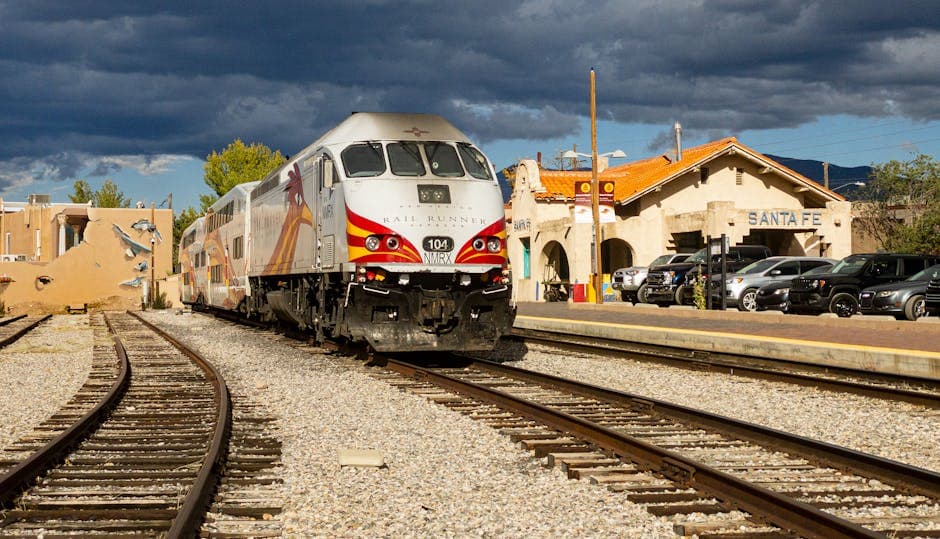
Sources: City of Santa Fe, NM Taxation and Revenue, SWAIA, Santa Fe Opera, TOURISM Santa Fe, Georgia O'Keeffe Museum.
The Almanac, Page One
Combined sales tax
~7.125%
NM 5.125% + Santa Fe County 1.5% + Santa Fe City 0.5%. Per NM Taxation and Revenue.
City population
~88,000
Santa Fe County seat. Per US Census Bureau ACS estimates.
Elevation
7,200 ft
Highest state capital in the United States. Pinon-juniper foothills.
Founded
1610
By Spanish governor Pedro de Peralta. Oldest state capital in the US; 4th-oldest US city.
Indian Market visitors
~100,000
Santa Fe Indian Market, since 1922. Per SWAIA.
Filed from Santa Fe · Editorial standards: real sources, no fabricated reviews, no FAQPage schema.
I. Scene
5:42 p.m. on Canyon Road. A First Friday gallery walk, an opera-season seven-thirty curtain twelve miles north, and a Southside family picking up green chile enchiladas under a ristra on the porch.
Canyon Road, in Santa Fe, runs uphill from Paseo de Peralta to Cristo Rey Church in a little under a mile. On the first Friday of the month, between roughly five and seven in the evening, roughly one hundred art galleries hold coordinated openings on this stretch. The galleries pour wine, the artists stand in their booths, the visitors walk the length, and the dinner-house ring around the Plaza books a steep seven o'clock wave.
A line cook at Geronimo, the Canyon Road fine-dining anchor in a 1756 adobe, has been on the stove since two. The bar is full at five thirty. A reservation system shows eighty seven covers booked between six and nine. El Farol, the 1835 cantina three doors uphill, has its flamenco room set for the eight thirty show and is plating tapas at the bar in Spanish from the back to the front. A couple from Houston with two tickets to The Marriage of Figaro at the Santa Fe Opera at seven thirty is asking whether Geronimo can do a forty-five minute service. The answer is yes, because the kitchen has been doing it twice a night six nights a week for twenty-eight years.
Twelve miles north on US 84/285, on a hilltop in the Tesuque village just outside the city, the Santa Fe Opera amphitheater is filling. The Opera was founded in 1957 by John Crosby; the current Stewart Crosby Theater was rebuilt in 1998 with a partial roof that leaves the desert horizon open behind the stage. The season runs late June through late August. Tailgating in the lot before the show is a Santa Fe tradition; champagne and takeout from a Plaza restaurant on the tailgate of an SUV under the New Mexico sky is the picture every opera-going visitor brings home.
Six miles south of the Plaza, on Airport Road in the Southside, a family of five from Cerrillos Road is pulling into the parking lot of a New Mexican kitchen that has been in the same family for two generations. The owner's mother is at the counter, the owner's son is on the line. Tonight is Wednesday; the order is green chile cheese enchiladas, posole, sopapillas, and a kids' quesadilla. The phone rings in Spanish; the Voice AI answers in Spanish and prints the ticket in English to the line. The check is forty-six dollars and change. The family will be home in seven minutes.
In the second weekend of August, the Plaza will be closed to cars and the Santa Fe Indian Market will fill ten city blocks. In the last Friday of August, a forty-foot effigy named Zozobra will burn at Fort Marcy Park in front of fifty to sixty thousand people. Between now and Labor Day, the city will pass through Spanish Market, the International Folk Art Market, the Indian Market, the Burning of Zozobra, Fiestas de Santa Fe, the Wine and Chile Fiesta, and the Opera close. The operator who runs all of that on a single direct-ordering ledger is the operator who books the year.
This is the spine of the Santa Fe argument. The Plaza is older than every state capital in the United States. The Pueblo Revival adobe is mandatory by zoning. The galleries on Canyon Road are denser than anywhere else in the country. The Indian Market is the largest of its kind in the world. The Voice AI on the inbound phone in English and Spanish closes the loop on the seventy percent of phone calls that the marketplace channel cannot answer. The rest of this report is what an operator does with all of those facts on a single ledger.
II. The Plaza and Canyon Road
A 1610 Spanish plaza, a 1610 Palace, and a half-mile gallery road with roughly one hundred galleries in less than a mile.
The Plaza was laid out in 1610 by Spanish governor Pedro de Peralta as the centerpiece of the new capital of Nuevo Mexico. The Palace of the Governors, on the north side of the Plaza, was completed the same year and has been a government building continuously since; it is the oldest such building in the United States. Canyon Road, a half mile east, runs from Paseo de Peralta uphill to Cristo Rey Church. The art-gallery cluster on Canyon Road, in less than a mile of road, is the most concentrated gallery district in the country.
The Plaza ring is the city's hospitality core. La Fonda on the Plaza (the inn on the corner since 1922 in the current building, but the site of an inn since the Spanish founding), the Inn of the Anasazi, the Hotel St. Francis, the Hotel Chimayo, and the Drury Plaza all sit within four blocks of the Plaza. The Cathedral Basilica of St. Francis, the Loretto Chapel, the San Miguel Mission (the oldest church building in the continental United States, ca. 1610), the Roundhouse (the state capitol four blocks south), and the New Mexico Museum of Art all anchor the walkable core.
Pueblo Revival adobe in the historic district is not a style; it is a zoning code. The 1957 Historic District ordinance requires that every new building in the core read as adobe, with flat or low-pitched roofs, earthen tones, vigas, projecting roof beams, deep-set windows, and portal arcades. Santa Fe is the only US city with a citywide architectural mandate of this kind. The brand value of a Plaza storefront is uniquely durable.
Canyon Road is the gallery cluster. The road runs from Paseo de Peralta at the bottom uphill to Cristo Rey Church at the top; the gallery density is highest in the middle three or four blocks. The First Friday gallery walk (the first Friday of each month, May through October peak season) is the primary marketing event. The Christmas Eve farolito walk on Canyon Road, when thousands of paper-bag lanterns line the road and the gallery rooftops, is the city's signature winter tradition; a Santa Fe operator who opens a Canyon Road dinner room with a heated patio on Christmas Eve runs the highest single-night ticket of the year.
The dinner-house ring on and around Canyon Road (Geronimo, El Farol, The Compound, The Tea House, Vinaigrette, Tesuque Village Market up the road) and the Plaza-adjacent fine-dining cluster (Sazon, Coyote Cafe, La Boca, Restaurant Martin, Joseph's on Agua Fria) carry the visitor-facing fine-dining dinner. The Plaza-adjacent New Mexican cluster (The Shed, Tomasita's, Tia Sophia's, La Choza, Cafe Pasqual's) carries the lunch and breakfast wallet. The Southside and Agua Fria roster carries the family-and-staff dinner that holds the year.
III. The Industry, by the Numbers
Roughly four hundred restaurants. A 7.125 percent combined sales tax band. One hundred thousand Indian Market visitors. An Opera season that books an entire summer.
Restaurants in city
~400
Per TOURISM Santa Fe dining directory and the NM Restaurant Association.
Median dinner check
$32 to $48
Plaza and Canyon Road dinner check skews high. Per TOURISM Santa Fe dining surveys.
NM state gross receipts tax
5.125%
Per NM Taxation and Revenue Department.
Santa Fe County tax
1.5%
Per NM Taxation and Revenue county schedule.
Santa Fe City tax
0.5%
Per City of Santa Fe Finance Department.
Combined tax
~7.125%
The number on every Santa Fe check.
Indian Market visitors
~100,000
Largest Native American art market in the world. Per SWAIA.
Canyon Road galleries
~100
In less than a mile of road. Most concentrated US gallery district.
Santa Fe Opera season
Jun-Aug
Roughly forty performances. ~85,000 attendees per season. Per Santa Fe Opera.
Founded
1610
Oldest state capital in the US; 4th-oldest US city.
Elevation
7,200 ft
Highest state capital in the United States.
Adobe zoning
Mandatory
Historic District ordinance (1957). Only US city with a Pueblo Revival mandate.
Two of those numbers anchor every operator's pricing conversation. The combined 7.125 percent sales tax band (New Mexico 5.125 percent gross receipts plus Santa Fe County 1.5 percent plus Santa Fe City 0.5 percent) is one of the lower combined rates in any tourism-heavy small city in the southwest. The dinner-check range of roughly thirty-two to forty-eight dollars in the Plaza and Canyon Road ring is the second; both numbers feed directly into the marketplace-versus-direct math in Section XII.
The Santa Fe Indian Market visitor pool (roughly one hundred thousand visitors in late August across two days on the Plaza) and the Santa Fe Opera season visitor pool (roughly eighty five thousand season attendees across June through August) are the third and fourth. Together they pull a visitor wallet into the Plaza, Canyon Road, and Tesuque dining ring that no other small US city comes close to matching in a tourism-density sense. The operator who is set up for both events on a single ordering ledger is the operator who books the year.
IV. The Cuisine Mix
New Mexican, American casual, Mexican, French, Italian, Asian. The shape of the Santa Fe restaurant roster.
The cuisine mix in Santa Fe leans New Mexican (red, green, and Christmas) at roughly thirty one percent of the roster, the highest such share of any city in the United States. American casual is the second largest plate, with Interior Mexican (distinct from Northern New Mexican) and a meaningful fine-dining tier rounding out the upper tier. The French category, modest in absolute count, is outsized given the city's population: Mark Miller's Coyote Cafe in the 1980s and the Bishop's Lodge legacy program both anchored a chef-driven French training pipeline that holds to this day.
New Mexican as the largest plate is the defining Santa Fe fact. The Shed, La Choza, Tomasita's, Tia Sophia's, Cafe Pasqual's, The Plaza Cafe, and a long Southside taqueria roster all run on red, green, and Christmas (both); blue corn enchiladas, posole, carne adovada, sopapillas, chile rellenos, breakfast burritos smothered. The chile supply chain runs through Hatch (two hundred miles south) for green and Chimayo (an hour north) for red. The state question (red or green) is on every menu.
The fine-dining tier (Geronimo, Sazon, Coyote Cafe, Restaurant Martin, Joseph's, Compound, La Plazuela at La Fonda, Anasazi, La Casa Sena) holds the dinner-check amplifier. Mark Miller's Coyote Cafe, opened in 1987, founded the Modern Southwestern movement; Bobby Flay cooked there, Mark Kiffin owns and runs The Compound today, and a generation of Santa Fe chefs came through the kitchen. Sazon (James Beard Best Chef Southwest 2022 for Fernando Olea) carries the interior Mexican fine-dining standard.
The French tier is small in count but punches above its weight. L'Olivier, Bouche, Le Petit Comptoir at Bishop's Lodge, and the kitchen at the Inn of the Anasazi all run a French-trained dinner. The Bishop's Lodge legacy goes back to the 1920s; the modern revival of the property under Auberge has a fine-dining program that draws an opera-and-arts visitor pool. The Italian tier (Osteria d'Assisi, Il Piatto, La Boca, Andiamo) runs a similar pattern: smaller in count, dense in quality.
The Mexican (interior) tier is distinct from the New Mexican and from the Southside taqueria. Sazon, Los Potrillos, El Comal, and the Southside interior-Mexican roster run Oaxacan, Pueblan, and Mexico City formats (mole, tlayudas, cochinita pibil). The Asian tier (Mu Du Noodles, Shibumi, Izanami at Ten Thousand Waves, Jambo Cafe for pan-African with Asian overlap) is small but anchors the late-night and post-Opera dinner pool.
V. The Operator Year
Opera season June through August, Indian Market in August, Spanish Market and Folk Art Market in July, Zozobra the Friday before Labor Day, farolitos on Christmas Eve.
The Santa Fe operator year layers five big calendars (Opera, Indian Market, Spanish + Folk Art Markets, Fiestas + Zozobra, and the Christmas Eve farolito tradition) on top of the First Friday gallery walks and the locals' winter ski season. The result is a year with very specific peak weeks where booking the right channel is the difference between an annual gross and a record gross.
The Santa Fe Opera season runs late June through late August. The amphitheater is twelve miles north on US 84/285 in Tesuque. The season hosts roughly forty performances across four or five productions; tickets run from a fifteen-dollar standing-room seat to a four hundred fifty-dollar premier orchestra seat. Tailgating in the parking lot before each show, typically with a takeout dinner from a Plaza catering kitchen, is an inviolable Santa Fe ritual. Opera season is the highest hotel-rate period of the year by a wide margin; the La Fonda, the Inn of the Anasazi, the Hotel St. Francis, and the Hotel Chimayo all double or triple summer opera-week rates.
The Santa Fe Indian Market runs on the third weekend of August on the Plaza. SWAIA (the Southwestern Association for Indian Arts) has run the Market since 1922; it draws roughly one hundred thousand visitors over two days and features twelve hundred Native American artists from more than two hundred tribes selling work directly to collectors. It is the largest Native American art market in the world and the highest-grossing single weekend of the year for every Plaza-adjacent restaurant. The Market is followed the next weekend by the Burning of Zozobra (Friday) and Fiestas de Santa Fe (the weekend after).
Spanish Market (last weekend of July) is run by the Spanish Colonial Arts Society and features traditional Spanish Colonial artists working in santos, tinwork, weaving, and straw appliqué. The International Folk Art Market (second weekend of July) on Museum Hill is run by the International Folk Art Alliance and features two hundred plus folk artists from sixty plus countries; it is the largest folk art market in the world by attendance. Both Markets pull a visitor wallet into the Plaza and Museum Hill dining ring through July.
The Burning of Zozobra, on the Friday before Labor Day, draws roughly fifty to sixty thousand spectators to Fort Marcy Park to watch a forty-foot puppet known as Old Man Gloom burn at dusk. The event has been held since 1924, originally a Will Shuster invention; it kicks off Fiestas de Santa Fe (the weekend after), the three-day commemoration of the 1692 Spanish reconquest of Santa Fe by Don Diego de Vargas, the oldest continuously held civic celebration in the United States. The combined Zozobra plus Fiestas plus end-of-Opera weekend is a ten-day visitor pulse.
The Christmas Eve farolito walk on Canyon Road is the year's signature winter tradition. Thousands of paper-bag lanterns are lit along the gallery walls and rooftops; thousands of visitors walk the half-mile in single file. The Canyon Road dinner rooms (Geronimo, El Farol, The Compound) book the night a year in advance, and a heated patio operator who opens a takeout farolito-walk pickup window books the highest single-night ticket of the year for a small restaurant.
The First Friday gallery walks on Canyon Road run year round but peak May through October. Ski Santa Fe (the lift to Tesuque Peak at twelve thousand seventy five feet, sixteen miles up Hyde Park Road) runs roughly late November through early April. The Wine and Chile Fiesta in late September is the city's end-of-season culinary celebration. The Recoleta, a contemporary art fair in November, draws a smaller but dense gallery-buyer pool.
VI. The Operator Roster
Twelve Santa Fe kitchens that anchor the conversation.
These are not endorsements and not a complete roster; every Santa Fe operator (those listed here and the many that are not) gets the same offer. This is the cluster of kitchens that the TOURISM Santa Fe dining directory, the Santa Fe New Mexican food reporting, and a long roster of national writeups (Saveur, Bon Appetit, the New York Times) cite as the operator-defining set.
Plaza / Downtown Historic
Cafe Pasqual's
Plaza-adjacent breakfast and dinner legend on Don Gaspar. James Beard recognized; the New Mexican breakfast of record since 1978. Katharine Kagel's program; the chilaquiles and the huevos motulenos are city standards.
Plaza / Sena Plaza
The Shed
In the 1690s Sena Plaza courtyard since 1953. Red chile mole, blue corn enchiladas, and a one-hour lunchtime line that has not broken in seventy years.
Railyard / Guadalupe
La Choza
The Shed's sister kitchen on Alarid, west of the Plaza. Same red chile recipe, more parking, and the locals' weekday lunch standard.
Canyon Road
Geronimo
Canyon Road's anchor fine-dining room in a 1756 adobe. Globally influenced contemporary American, twenty-eight years in the same space, and the Canyon Road gallery dinner of record.
Canyon Road
El Farol
Tapas bar and cantina on Canyon Road since 1835. Santa Fe's oldest continuously operating restaurant, a flamenco room on weekends, and the gallery-walk anchor.
Railyard
Tomasita's
Railyard New Mexican stalwart since 1974. Sopaipillas, red and green, and a margarita that anchored the Railyard before the Railyard was the Railyard.
Plaza / Downtown Historic
Tia Sophia's
Plaza-adjacent diner since 1975. Breakfast burrito (smothered, Christmas) origin story claim, a counter-and-booth room a block off the Plaza.
Plaza / Water Street
Coyote Cafe
Mark Miller's 1987 Modern Southwestern flagship on Water Street, just off the Plaza. Founded the Modern Southwestern movement; Bobby Flay, Mark Kiffin, and a generation of Santa Fe chefs came through this kitchen.
Agua Fria / South Capitol
Joseph's Culinary Pub
Joseph Wrede's Agua Fria Street dinner house. Modern American with a Northern New Mexican spine; a 2013 James Beard Best Chef Southwest semifinalist program.
Plaza / Old Santa Fe Trail
El Meson
Spanish tapas, paella, and flamenco on Old Santa Fe Trail. A late-night Plaza-adjacent room with a deep sherry list.
Plaza / Sena Plaza
La Casa Sena
Sena Plaza courtyard fine dining since 1983, in the 1860s Sena hacienda. Wine list strength, a courtyard patio under cottonwoods, and a Cantina room with singing servers.
Plaza / Don Gaspar
Sazon
Fernando Olea's interior Mexican on Don Gaspar near the Plaza. Mole tasting menu, Oaxacan-rooted, James Beard Best Chef Southwest 2022.
The pattern that runs across this list is depth of tenure. El Farol has been open since 1835. The Shed has been open since 1953. Cafe Pasqual's opened in 1978. Coyote Cafe opened in 1987. Tomasita's opened in 1974. Geronimo has held the same Canyon Road adobe since 1990. These are not pop-up rooms. A Santa Fe operator who runs a twenty-year program holds a brand value that no chain can displace; the direct-ordering page lets the brand keep its customer database, its marketing channel, and its unit economics through that tenure.
VII. The Atlas
Plaza, Canyon Road, Eastside, Railyard, Tesuque, Southside, Las Campanas, Museum Hill. The districts of a city that sits between the Sangres and the Jemez.
Plaza / Downtown Historic is the city's hospitality core: the 1610 Plaza itself, the Palace of the Governors, the Cathedral Basilica, La Fonda on the Plaza, the Inn of the Anasazi, the New Mexico Museum of Art, the Loretto Chapel, the San Miguel Mission, and a dense Pueblo Revival storefront ring carrying Cafe Pasqual's, The Shed, Tia Sophia's, The Plaza Cafe, La Plazuela at La Fonda, Coyote Cafe, Sazon, and the high-end hotel-bar dinner cluster.
Canyon Road carries the gallery cluster: roughly one hundred art galleries in less than a mile, the densest gallery district in the United States. Geronimo and El Farol anchor the dinner houses; the Tea House and Vinaigrette anchor the lunch-and-tea cluster. First Friday openings and the Christmas Eve farolito walk are the road's defining events. Eastside (Old Santa Fe Trail, Camino del Monte Sol, Acequia Madre) is the gallery-adjacent residential band, the city's oldest streets.
Railyard / Guadalupe is the former AT&SF rail yard redeveloped through the 2000s into a mixed-use district with SITE Santa Fe (contemporary art museum), the Farmers Market (year-round, the largest in northern New Mexico), Violet Crown Cinema, REI, and a casual-dining ring anchored by Tomasita's, La Choza, Cowgirl BBQ, and Vinaigrette. The Railyard runs the weekday lunch wallet that the Plaza fine-dining ring does not.
Tesuque adjacent, north of Santa Fe on US 84/285, is the artist-colony anchor and the Opera campus. The village proper has roughly two thousand residents but hosts a concentration of compound studios, Bishop's Lodge (a 1920s lodge revived under Auberge), Tesuque Casino, and the Tesuque Village Market (a long-running local kitchen with a famously good green chile cheeseburger). The Opera amphitheater sits on a hilltop between the city and the village.
Southside is the working-class Hispanic majority band south of I-25 along Cerrillos Road and Airport Road. The Southside taqueria density, the family-and-staff dinner volume, the school-district housing, and the day-labor and back-of-house labor force all live here. A meaningful share of the city's Spanish-first phone calls come from this band. The combined sales tax base from the Southside (and the Cerrillos Road big-box ring) underwrites the city budget.
Las Campanas, northwest of the city, is a master-planned golf and equestrian community with the city's highest income concentration; private-dinner catering is a meaningful share of the operator's catering pipeline. Museum Hill, off Old Pecos Trail, hosts the Museum of International Folk Art, the Museum of Indian Arts and Culture, the Wheelwright, and the Spanish Colonial museum; the four-museum complex anchors the daytime visitor pull south of the Plaza.
VIII. The Operator Personas
Three operators we built this stack for.
The Santa Fe operator mix splits along three durable lines: the Plaza fine-dining tourist operator, the Canyon Road gallery cafe, and the Southside Mexican family. The direct ordering stack reads each of these differently.
ICP 01
The Plaza fine-dining tourist operator
Coyote Cafe, Sazon, Geronimo, La Casa Sena, Restaurant Martin. Plaza or one block off Plaza. Average check $80 to $140 with wine. The visitor wallet from June through August (Opera) and from the third weekend of August (Indian Market), plus the Christmas Eve farolito walk on Canyon Road, anchors the year. The 7:30 Opera curtain is a forty-five minute prix fixe service the kitchen has been doing for twenty plus years.
What this operator runs on
- Branded ordering page with prix fixe pre-Opera menu, picnic catering, and First Friday tasting menu.
- Voice AI for inbound visitor calls in English with Spanish back-of-house overflow.
- Uber Direct dispatch from Plaza to the Opera south parking lot during season.
- Same-day Stripe payouts.
- Indian Market August blackout calendar with prepay required (no walk-ins, no marketplace).
ICP 02
The Canyon Road gallery cafe
Geronimo, El Farol, The Tea House, Vinaigrette on Canyon Road. Half-block off the gallery line. First Friday gallery walk pulls a five to seven evening wave; Christmas Eve farolitos pulls the year's biggest single night. The visitor mix is heavy on art collectors, gallery owners, and the post-Opera dinner pool. The average check is $55 to $90.
What this operator runs on
- Branded ordering page with a First Friday early-evening tasting menu and a Christmas Eve farolito walk pickup window.
- Voice AI for inbound visitor calls.
- Reservation system tied to the OpenTable First Friday calendar.
- Heated patio takeout window with a Canyon Road map-pin pickup flow.
- Same-day Stripe payouts.
ICP 03
The Southside Mexican family
A second-generation New Mexican kitchen on Airport Road, Cerrillos Road, or Agua Fria. Average check $14 to $26. The visitor mix is the local family pickup wallet: Wednesday dinner, Friday family takeout, Saturday catering for a quinceanera, Sunday menudo. The phone rings in Spanish more than half the time. The line stretches out the door at six o'clock on a Friday. The marketplace channel has been eating eighteen to twenty-eight percent of the check; the family does not have it to give.
What this operator runs on
- Branded ordering page that loads in under three seconds on a slow cellular signal.
- Voice AI in Spanish as the default; English on detected language.
- Pickup window in Spanish text confirmations.
- Family-meal bundles (six enchiladas, posole, sopaipillas, beans, rice) priced for $39 to $54.
- Same-day Stripe payouts so the family has cash before payroll on Friday.
IX. The Indian Market and Opera Patterns
The August Indian Market volume wall, hour by hour. The 7:30 Opera curtain pickup pattern, twelve miles north.
The third weekend of August is the single highest-grossing weekend of the year for every Plaza-adjacent kitchen. The Santa Fe Indian Market draws roughly one hundred thousand visitors over Saturday and Sunday, and the Plaza closes to cars from late Friday afternoon through Sunday evening. Booths fill ten city blocks; twelve hundred Native American artists from over two hundred tribes show work; the SWAIA preview ceremony on Friday evening and the best-of-show awards Saturday morning anchor the calendar. The graphic below is the operator-facing hour-by-hour pattern.
Saturday morning at Indian Market opens at seven. The Plaza is full by eight. The breakfast and brunch wallet from eight to eleven is the highest single-daypart pull of the year for The Shed, Cafe Pasqual's, Tia Sophia's, and the Plaza Cafe; all four routinely run forty-five minute to ninety minute waits across the daypart. The Plaza-adjacent dinner ring books a six-to-eight peak at full capacity Friday, Saturday, and Sunday; reservations close two weeks before the Market.
The Santa Fe Opera curtain is consistently 7:30 from late June through late August. The drive from the Plaza to the Opera parking lots on US 84/285 is twenty-five minutes in season traffic. Tailgating in the lot from 5:30 to 7:00 is the visitor-defining ritual: champagne from the trunk, a takeout dinner from a Plaza catering kitchen on the tailgate, the New Mexico sunset behind the amphitheater. The Plaza catering kitchen that runs a thirty-minute pickup window at 5:30 and a five-minute Uber Direct dispatch from there captures the season.
The post-Opera dinner pulse is a separate, smaller channel. The Opera lets out between 10:15 and 10:45 depending on the production length. The Plaza-adjacent dinner rooms that hold a 10:30 reservation (typically Coyote Cafe's Rooftop Cantina, The Bar at the Inn of the Anasazi, La Plazuela at La Fonda) catch the post-show wallet. A direct-ordering page that opens a 10:30 to 11:30 pickup window for visitors heading back to their hotels closes a tail that the marketplace channel cannot.
The Indian Market plus Zozobra plus Fiestas plus Opera stack runs from the third weekend of August through Labor Day weekend. It is the highest two-and-a-half-week visitor pulse of the year. Every Plaza-adjacent kitchen that prepays catering, prebooks reservations, blackouts marketplace listings, and holds a direct-ordering channel for repeat customers books the year in those seventeen days. The operator that does not is the operator that loses the year to the marketplace commission line.
X. The Four Anchors
Indian Market, Opera, Spanish Market, Zozobra. Four calendars on the same wall.
The Santa Fe Indian Market on the third weekend of August is the single largest visitor pulse of the year. SWAIA has run the Market continuously since 1922; it fills ten city blocks with booths, twelve hundred Native American artists from over two hundred tribes, and roughly one hundred thousand visitors across Saturday and Sunday. The Friday preview ceremony, the Saturday best-of-show awards, the Sunday Native fashion show, and the wraparound Indian Market Week programming (Native cinema, Native music, panel conversations) anchor the eight-day visitor calendar. Plaza-adjacent kitchens routinely book the entire weekend at full capacity two weeks out.
The Santa Fe Opera season runs late June through late August. Roughly forty performances across four or five productions. Tickets from a fifteen-dollar standing-room seat to a four hundred fifty dollar premier orchestra seat. Tailgating in the parking lot before each show is inviolable. The 7:30 curtain anchors a Plaza catering pickup window at 5:30 that the city's top dinner rooms have been running for thirty years. The marketplace channel does not understand the tailgate economy; the direct channel does.
Spanish Market (last weekend of July) and the International Folk Art Market (second weekend of July) fill July with two of the largest cultural-art markets in the Western Hemisphere. Spanish Market features traditional Spanish Colonial artists (santos, tinwork, weaving); Folk Art Market features two hundred plus folk artists from sixty plus countries. Both pull a collector and tourist wallet into the Plaza and Museum Hill dining ring; both are bookable into a direct-ordering catering channel a season in advance.
The Burning of Zozobra on the Friday before Labor Day kicks off Fiestas de Santa Fe, the oldest continuously held civic celebration in the United States, commemorating the 1692 Spanish reconquest of Santa Fe by Don Diego de Vargas. The Will Shuster-designed forty-foot puppet burns at Fort Marcy Park in front of fifty to sixty thousand spectators. The weekend after runs Fiestas with the Pregon, the Entrada, the Solemn Procession, the Mariachi Mass, and a Plaza-filling three-day celebration. The combined Zozobra plus Fiestas plus end-of-Opera plus Wine and Chile Fiesta runs ten days of full visitor saturation.
The operator year, on paper, layers as follows. The weekday floor is local (the state capital workforce, the school district, the medical center, and the Southside family pickup wallet). The weekend amplifier in summer is the visitor wallet (Opera, Markets, Zozobra, Fiestas). The weekend amplifier in winter is the Ski Santa Fe locals weekend plus the holiday farolito walk. The event accelerators are First Friday gallery openings on Canyon Road (year round) and Wine and Chile Fiesta in late September. The single thinnest stretch is the first ten days of November, between Wine and Chile and ski opening; this is the operator's loyalty-drive week.
XI. The Language Layer
Voice AI in English and Spanish. The Northern New Mexico Hispanic majority and the visitor English wallet, on the same phone line.
Santa Fe County is roughly fifty four percent Hispanic or Latino per the US Census Bureau ACS five-year estimates, one of the highest Hispanic-share US state-capital counties in the country. The city itself is closer to forty nine percent Hispanic or Latino. The Northern New Mexican Hispanic population (with roots that often go back four centuries to the original Spanish settlement of 1610) is culturally distinct from the more recent Mexican-American population concentrated in the Southside; both speak Spanish at home in meaningful share. The visitor wallet, by contrast, is heavily English-speaking and skews older and high-income.
Spanish
~54% of county
Per US Census Bureau ACS five-year estimates. Northern New Mexican Hispanic (often four centuries deep) plus more recent Mexican-American populations. Spanish-first kitchen labor across the New Mexican and Mexican rosters; Spanish-speaking customer flow concentrated in the Southside, Agua Fria, and the Cerrillos Road corridor. Voice AI in Spanish is a baseline feature.
English
Primary visitor
The visitor wallet (Opera, Indian Market, Spanish Market, Folk Art, gallery walk, Christmas Eve farolitos) is heavily English-speaking. The default channel for inbound visitor calls. Voice AI answers in English by default and switches to Spanish on detected language.
Native languages
Indian Market visitors
Santa Fe Indian Market draws artists from over two hundred tribes; visitor flow during Market Week (third week of August) carries Navajo, Tewa, Hopi, Lakota, and many more first speakers. A welcome line that recognizes Indigenous artists by name in English is the right early step for a Plaza operator.
The Voice AI math in Santa Fe is straightforward: a Spanish-first caller who reaches an English-only call tree hangs up roughly half the time. A Spanish-first caller who reaches a Spanish-fluent Voice AI completes the order at substantially the same rate as an English caller. On a Southside family kitchen running forty Spanish-first calls a week, the lift in completion rate from English-only to bilingual is between twelve and twenty orders a week, or roughly seven hundred orders a year. Same principle, same math: a bilingual phone line captures the wallet that an English-only line cannot.
XII. The Cost Math
27 percent vs 14 percent on an eighty-dollar Canyon Road gallery dinner. Where the marketplace stack costs the operator the year.
Run the math on a typical Canyon Road gallery dinner: an eighty dollar subtotal, two entrees plus a bottle for two, ordered for pickup at 5:45 on a First Friday before the gallery walk. Stripe charges roughly 2.9 percent plus thirty cents on the card. The combined gross receipts / sales tax band is 7.125 percent (New Mexico 5.125 percent plus Santa Fe County 1.5 percent plus Santa Fe City 0.5 percent). Then the structural question: how is the operator delivering the order, and what does each channel cost?
On the marketplace channel, the operator pays a commission tier (typical, across DoorDash, Uber Eats, Grubhub marketplace listings) of roughly 25 to 30 percent. On an eighty dollar order, that runs $20 to $24 a ticket. The operator keeps the menu subtotal minus that commission, minus the Stripe payment processing, minus the sales tax (which passes through to the state, not to the operator). The operator's effective burden vs the menu subtotal lands at roughly 27 percent.
On the direct-stack channel, the operator pays a flat $249/month platform fee. Spread across a hundred orders a month (a conservative number for a Canyon Road gallery-cafe operator on direct), the platform fee allocates to roughly $2.49 a ticket. Add the same Stripe payment processing and the same sales tax pass-through, and the operator's effective burden vs the menu subtotal lands at roughly 14 percent. The 13-point spread is the year. On a Canyon Road operator running fifty thousand dollars a month in direct ordering revenue, the savings is roughly sixty-five hundred dollars a month, or seventy-eight thousand dollars a year.
The math gets sharper when you layer in the typical Santa Fe ticket mix. A Canyon Road dinner room running a 34 percent food cost and a 22 percent wine cost cannot absorb a 25 to 30 percent commission on an $80 ticket. The marketplace channel is the channel that loses the operator money on every dinner shipped through it; the only reason to be on the marketplace channel is customer acquisition. The visitor who finds the operator on DoorDash should be moved to the direct page on their second order. The direct-ordering page gives the operator the customer database, the marketing channel, and the unit economics to do that.
The cost-math arithmetic is the operator's decision tree on its own. Run the marketplace channel for discovery. Run the direct channel for repeat. Push catering, Opera tailgate picnics, Indian Market weekend prepaid dinners, gallery walk pre-orders, and family pickup bundles onto direct from day one. Layer Voice AI for the inbound phone in English and Spanish; layer Uber Direct dispatch for the Las Campanas and Tesuque destinations the marketplace courier pool cannot reach reliably; collect same-day Stripe payouts. The fourteen percent burden line is the line that holds the year.
XIII. The Thesis
Why a flat $249 a month plus bilingual Voice AI plus Uber Direct plus same-day Stripe payouts is the only stack that fits this city.
Start from the spine. Santa Fe is a 1610 Spanish plaza at seven thousand two hundred feet, anchored by Pueblo Revival adobe zoning, the densest gallery district in the country on Canyon Road, the largest Native American art market in the world on the third weekend of August, a Santa Fe Opera season that books the summer, and a Hispanic-majority county whose Spanish-first phone calls outnumber the English ones on most kitchen lines. A marketplace stack that ignores all of that and treats Santa Fe like a national franchise market is destroying the city's actual unit economics. A direct stack at a flat $249 a month does not.
Layer in the Indian Market and Opera calendars from section IX. The third weekend of August is the highest single weekend of the year and is bookable into the catering channel of a direct page two months in advance. The Opera season from late June through late August anchors a 5:30 catering pickup window for tailgaters that the Plaza dinner houses have been running for thirty years. The Christmas Eve farolito walk on Canyon Road is the largest single-night winter ticket in the city.
Layer in the language layer from section XI. Spanish-language ordering on the inbound phone, with English as a detected-language fallback, captures the Southside family wallet and the back-of-house staff family-meal pickup. A Plaza operator with a primarily English-speaking visitor base still has a back-of-house Spanish-speaking staff that needs to be reachable on a family-meal pickup window. A Southside operator with a primarily Spanish-speaking customer base still has the occasional English visitor to serve. Bilingual is the default; both directions matter.
Layer in the cost math from section XII. The 13-point spread between marketplace (27 percent effective burden) and direct (14 percent effective burden) on an $80 Canyon Road dinner adds up to roughly six and a half thousand dollars a month for an operator running $50K a month through the channel. Over a calendar year, that is seventy-eight thousand dollars in cash that the marketplace commission line is taking off the food cost. A Santa Fe operator with a forty year tenure on Canyon Road cannot afford to give that up.
Layer in the Pueblo Revival adobe zoning from section II. A Plaza storefront is a uniquely durable brand asset because the zoning code prevents anyone from building a glass-and-steel competitor across the street. A direct-ordering page in that storefront's brand language (vigas, adobe, kiva fireplace, ristra hung at the entry) is a uniquely durable digital extension. The direct page lets the Plaza operator carry the centuries-deep adobe brand onto the customer's phone. The marketplace page does not.
Layer in the same-day Stripe payouts. A Santa Fe operator running a forty-year tenure does not have infinite working capital; cash flow through payroll week is a real constraint. Stripe's same-day payout sends the operator the gross of yesterday's ticket today, before lunch, before the back-of-house staff gets paid. The marketplace channel pays out on a weekly delay, sometimes longer.
Build the direct ordering page
A Santa Fe page that prices in round dollars at 7.125 percent inclusive checkout, opens a 5:30 a.m. Opera tailgate pickup window, and quotes the same menu number the visitor sees on the chalkboard at La Plazuela.
Set up bilingual Voice AI
Spanish-language call recovery is the largest single-line revenue change a Santa Fe operator with substantial Hispanic customer or back-of-house workforce will see. The phone rings in Spanish more than half the time on the Southside; the Voice AI answers in Spanish and prints the ticket in English to the line.
Switch off the commission tax
The 13-point spread between marketplace and direct ($14 vs $27 of effective burden per $80 order) compounds across the year. Move repeat customers to direct; keep marketplace as discovery only.
Editorial Coda
Seven thousand two hundred feet, four centuries of Plaza, one adobe code, one ledger. Run it direct.
Nearby New Mexico Editions
Santa Fe is the high-altitude capital counterweight to Albuquerque sixty miles south and Rio Rancho an hour south. Each Almanac edition runs its own ledger.
References · This report drew from
13 sources
- NM Taxation and Revenue Department · NM state gross receipts tax, county and municipal schedules
- US Census Bureau · Population estimates, language and demographic ACS
- City of Santa Fe · City budget, planning, Historic District zoning code
- Santa Fe County · County reporting, tax rate, economic development
- SWAIA (Southwestern Association for Indian Arts) · Indian Market history, visitor counts, artist roster
- Santa Fe Opera · Opera season calendar, productions, attendance
- Spanish Colonial Arts Society · Spanish Market history and programming
- International Folk Art Alliance · International Folk Art Market
- Burning of Zozobra (Kiwanis Club of Santa Fe) · Burning of Zozobra history, Will Shuster program
- Fiesta de Santa Fe Council · Fiestas de Santa Fe (oldest civic celebration in the US)
- TOURISM Santa Fe · Dining directory, event calendar, visitor reporting
- Georgia O'Keeffe Museum · Pueblo Revival, museum collection, cultural reporting
- Santa Fe New Mexican · Local reporting on dining, gallery, opera