It is Friday at 5:48pm in Walker's Point, the brandy Old Fashioneds are in their second pour of the night, and a chalkboard above the bar lists 18 names waiting for a 6:45pm fish plate.
A long read on the city that gave the country Pabst, Miller, Schlitz, and Blatz, the 11 days of Summerfest on the Lake Michigan lakefront, the Bucks championship era at Fiserv Forum, the Friday night fish fry that Wisconsin treats as a religious institution, and the Polish, German, Italian, Latino, and Hmong neighborhoods whose phones ring in five languages by lunch.
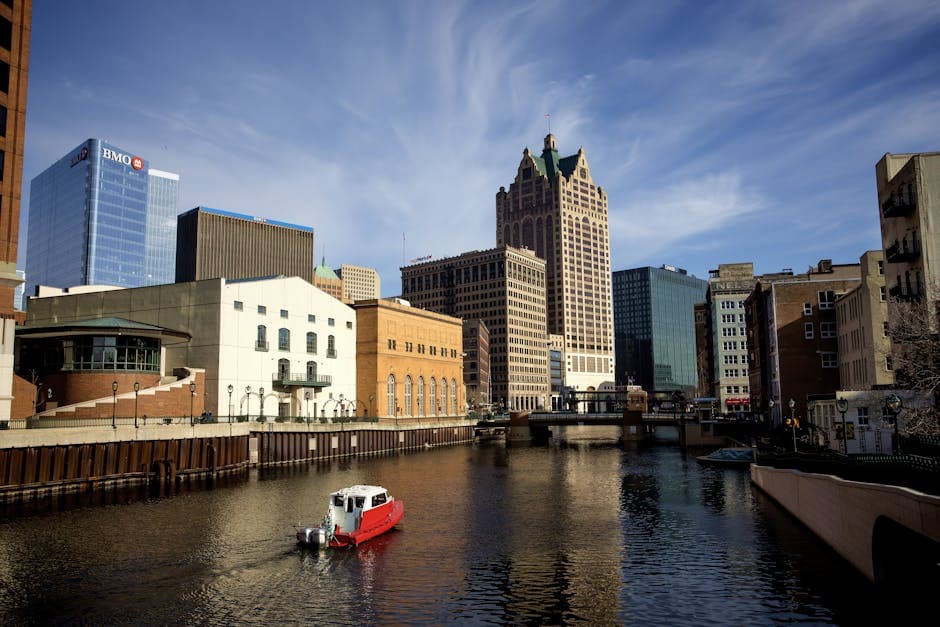
On a Friday in May, on the south end of 1st Street where the Walker's Point warehouse district turns into the riverfront, a supper club with a Schlitz neon in the window does its 22nd straight year of Friday-night fish fry. The bar opened in 1972 in a Cream City brick storefront that was a tied-house in the 1890s, a Polish butcher in the 1930s, and a corner tavern from 1949 forward. The wood paneling on the back wall came from a Schlitz brewery hospitality bar that closed in 1981 when the company was being unwound. The padded vinyl on the stools is original to the bar.
Friday night here is approximately 38 percent of the week's gross revenue. The fry runs 4:30pm to 9:30pm and serves three fish (lake perch from the Great Lakes, walleye from the same supply chain that feeds the Milwaukee Public Market, beer-battered cod for the price-sensitive plate), each served with potato pancake or marble rye and butter, vinegar-and-pepper coleslaw, and a brandy Old Fashioned poured with muddled cherry and orange the way Wisconsin requires. On a normal Friday the shop turns 220 covers at an average ticket of $26.40 for the plate plus drinks, which is roughly $5,800 between five hours.
The Friday fish fry is not a delivery event. It is a community ritual: you walk in, you order the Old Fashioned, you write your name on the chalkboard for a 6:45pm fish plate, you stand at the bar talking to your neighbor at the next stool. That part of the business does not need a tablet. The part that does need a tablet is the 60 to 80 fish-fry pickup orders the shop fills every Friday for the Polish, German, Italian, and Catholic Latino families that have kept meatless Fridays since their grandparents' grandparents kept them, the office crews at Schlitz Park and the BMO Tower who order family packs at 11:00am for 4:30pm pickup, and the half-dozen weekly delivery orders to lake-house renters in Bay View, the East Side, and Whitefish Bay.
Until last spring those pickup and delivery orders ran through DoorDash, Uber Eats, and Grubhub. The shop paid roughly $1,650 a month in commissions across the three marketplaces, and the daughter who took over the operation in 2018 (after a CIA degree and three years on the line in a Chicago kitchen) had been watching the math degrade since the marketplace fee bumps in 2023. Last February she sat down on a Sunday morning with the books and decided to switch.
The switch was small in shape and large in effect. She built a branded direct online ordering site, opened a Friday fish-fry pre-order window that runs from Thursday 11:00am through Friday 3:00pm, kept the marketplace listings on a reduced "drinks and chicken Parm" menu for customer acquisition, and started texting an SMS list of 540 fish-fry regulars at 11:00am every Friday with the three fish options and a one-tap pre-order link. By the end of Q3 the change had saved the shop $13,800 across the year, lifted average ticket by $3.10 (the direct site upsells the brandy Old Fashioned to-go in a sealed glass jar, which the marketplace cannot offer), and added a sustained channel of weekly regulars whose orders the marketplace would never have surfaced to her.
The math behind that decision is what every Milwaukee operator is doing on a Sunday morning with the books. Friday fish fry is not just a meal here. Friday fish fry is the most reliable weekly revenue event in any Wisconsin restaurant, and the technology stack that captures it is the technology stack that lets the business keep its margin.
In 1890 Milwaukee produced more beer per capita than any city on earth. The brand names are still on the buildings. The 21st century version is craft, and it sits in the same warehouses.
The four 19th-century giants that gave Milwaukee its identity were founded in a 21-year window between 1844 and 1865: Jacob Best in 1844 (which became Pabst), Valentin Blatz in 1846, Joseph Schlitz reorganized in 1849, and Frederick Miller in 1855. By the 1890s the city was producing more lager than any equivalent population on the planet (Milwaukee County Historical Society, Wisconsin Brewers Guild).
Pabst was the volume leader after Captain Frederick Pabst won the Best Brewing Company in 1864 by marriage and built it, by the time of his death in 1904, into the largest brewery in the United States. The blue-ribbon prize (won at the 1893 World's Columbian Exposition in Chicago) became the brand. The Pabst Mansion on Wisconsin Avenue, a 37-room Flemish Renaissance Revival pile from 1892, is now a museum. The Pabst Brewery campus on Juneau Avenue, after a long closure following the company's move to Texas in 1996, has been gradually redeveloped into housing, offices, and event spaces, with the original brewing hall now a tap-house. The history is visible from a quarter mile away.
Schlitz, "the beer that made Milwaukee famous," was the volume leader in the 1970s before a series of operational decisions (faster fermentation, ingredient substitutions, an early-1980s labor dispute) collapsed the brand. The Stroh Brewery Company bought Schlitz in 1982 and the brand has been a private-label specialty since. The Schlitz Park complex on the near North Side (the campus where Schlitz was brewed) is now an office park with the original gilded-globe water tower preserved as the icon. The Schlitz Audubon Nature Center in Bayside, on land Joseph Schlitz's family gave to the city, is one of the largest urban nature preserves in the country.
Miller is the only one of the four still brewing in Milwaukee at scale. The Miller Brewing Company campus on State Street in the Menomonee Valley still produces Miller Lite, Miller High Life, and the parent company's broader Molson Coors portfolio. The Miller Caves (lagering tunnels cut into the Menomonee Valley bluffs in the 19th century, which kept the beer at 45 degrees Fahrenheit before mechanical refrigeration) are part of the tour. The Brewers play at American Family Field, which was Miller Park from its opening in 2001 until the naming rights rolled in 2021. Frederick Miller's name is still on the campus, the cave, the park.
Blatz, the smallest of the four heritage names, was bought by Pabst in 1959 and the brand has lived a quieter life since. The original Blatz Brewing Company headquarters on Juneau Avenue, a Romanesque Revival pile from 1890, was redeveloped in the 2000s into the Blatz Building condominiums; the original Blatz Tied House (the brewery's downtown saloon) is now a restaurant.
The 21st-century version of Beer City is craft. Lakefront Brewery, founded in 1987 in a former coal-fired plant on the Milwaukee River in Riverwest, is the elder statesman: it produces Riverwest Stein lager year-round, hosts a Friday-night fish fry that is among the city's busiest (with a polka band, no less), and runs a tour that has been an essential Milwaukee experience for two generations. Sprecher Brewing Company, founded in 1985, brought back the German-style lagering tradition in a Glendale facility that also makes its iconic Sprecher root beer and cream soda. Third Space Brewing in Menomonee Valley, Eagle Park Brewing in Muskego with a Walker's Point taproom, Good City Brewing on Farwell Avenue, Black Husky Brewing in Riverwest, Company Brewing in Riverwest, Indeed Brewing's Milwaukee tasting room, and Vennture Brew Co.'s mixed-fermentation program have all opened in the past decade. The Wisconsin Brewers Guild lists more than 25 active craft producers inside the city limits.
"The four families built Milwaukee. The craft cohort kept the trade alive. The buildings did not move. The recipes evolved."
Summerfest is the largest music festival on earth by total attendance. 800,000-plus across 11 days, late June through July 4, on a 75-acre lakefront park half a mile from downtown.
Summerfest, produced by Milwaukee World Festival, Inc., runs annually on the Henry Maier Festival Park on Lake Michigan. Total run attendance is published each year and has hovered in the 800,000 to 900,000 range across the 11-day window in recent post-pandemic editions, with the Sunday off-day removed in 2018 to spread across three weekends. The festival sits a half-mile south of the Calatrava-designed Milwaukee Art Museum and three quarters of a mile east of the Walker's Point taproom corridor.
Summerfest began in 1968 as Mayor Henry Maier's answer to the question of how to bring the city back together after the 1967 civil rights demonstrations and a difficult civic decade. Maier had visited Munich's Oktoberfest and proposed an annual lakefront festival on a permanent park site, with multiple stages, beer halls, and concession midways. The first run, in 1968, drew roughly 75,000 across nine days. By 1999 the Guinness Book of World Records had certified the festival as the largest music event on earth by total attendance. The festival has been produced continuously since (with a pandemic-shifted 2020 cancellation and a 2021 reboot).
The festival site, Henry Maier Festival Park, is a 75-acre permanent venue on the lakefront just south of the downtown. Twelve stages run simultaneously from roughly noon to past midnight; the headliner amphitheater (the BMO Pavilion, formerly the American Family Insurance Amphitheater) seats 23,000; the side stages range from 1,500 to 5,000 capacity. Concession food is run by a tightly permitted network of Milwaukee operators (Saz's, Klement's sausages, Real Chili, Major Goolsby's, Greek Village, the Italian Community Center grill, dozens of others), with each operator running a stall as a multi-day commitment.
For Milwaukee restaurants off the festival grounds, the 11 days are an opportunity and an operational problem. Walker's Point, the Third Ward, Bay View, the East Side, and downtown experience an inbound traffic surge before and after each show day, with pre-festival dinner traffic concentrated 4:30pm to 6:30pm (festival gates open at 4pm on weekdays, noon on weekends) and post-festival drink and late-night traffic from 10:30pm forward. Restaurants outside the festival but inside the half-mile walk radius see a 25 to 40 percent uplift in evening volume on peak Saturdays; restaurants beyond a half mile but inside the city limits see a smaller but measurable lift driven by Airbnb visitors, hotel guests, and tour-package traffic.
The opening Thursday (typically with a $5 admission promotion before 4pm) is a top-three day of the run, driven by Milwaukee-area locals who treat it as the unofficial start of summer. The closing Saturday (July 4) overlaps with the festival's own fireworks display and is the single largest gate of the 11 days. The mid-run Tuesday and Wednesday are recovery days for the city; restaurants outside the lakefront see baseline-or-below dinner volume on those days as the city catches its breath.
The playbook for restaurants outside the festival is three lines. First, build a Summerfest-week menu that pairs with the festival diet: not the festival food, the festival recovery food. Cold seafood, ceviche, citrus salads, lighter pastas, anything that resets the stomach after eight hours of brats and cheese curds. Push that menu via SMS to your direct customer list on the morning of each show day; the marketplace push is too generic to differentiate. Second, on the opening Thursday and the closing Saturday, plan staffing for the late-night ripple (10:30pm to 1:30am) when post-festival traffic peels off the lakefront toward downtown, Walker's Point, and Brady Street. Third, for the entire 11-day run, switch dispatch toward commercial courier (Uber Direct, DoorDash Drive) and away from marketplace gig dispatch; the marketplace queues lengthen meaningfully during the festival because gig drivers chase the festival surge, and a 14-to-22-minute commercial-courier window is the difference between a hot dropoff and a cold one.
The Summerfest is also a customer acquisition opportunity that most Milwaukee operators undervalue. 800,000-plus attendees across 11 days, with a meaningful share traveling in from the Chicago metro, the Madison area, the Fox Valley, and the Twin Cities, means a QR code printed on a Summerfest-week table tent or a takeout bag can drive direct-channel SMS opt-ins at a rate the marketplace channel does not match. The list compounds; the marketplace customer never opts in to you.
And the festival lives differently for the chef-driven cohort in Bay View, Walker's Point, and Brady Street. Reservations for the second and final Saturdays move three to four weeks ahead. The opening-Thursday rush books almost like a New Year's Eve. The 9pm to 11pm window on every peak weekend day is sold out at the OpenTable level long before walk-in traffic arrives. A direct ordering site with a "pre-festival dinner pickup 4pm to 6:30pm" workflow, and a 10:30pm "post-festival late-night menu" workflow, captures both ends of the day without requiring the chef to add a second seating.
"Eleven days. Three weekends. One opening Thursday that runs like a homecoming. Plan your summer around it. Plan your dispatch around it."
The Bucks won the 2021 NBA Championship. The economic ripple is still measurable. The Brewers run an 81-game home schedule. Two stadium pulls, two different concentric ring effects.
Fiserv Forum, the Bucks' home court since 2018, sits at the north end of Westown on a campus the Bucks ownership group calls the Deer District (after the team logo and the Wisconsin-deer-camp culture). The 17,500-seat arena was built specifically to anchor a year-round entertainment district, with an exterior plaza that hosts pre-game and post-game gatherings, the BMO Harris Bradley Center memorial plaque, and a permanent outdoor screen for game-day broadcasts. The Bucks won the 2021 NBA Championship, the franchise's second after the 1971 title (the Kareem Abdul-Jabbar era), and the Game 6 closing victory at home was, by every economic-impact measure published since, the most consequential single sporting event in Milwaukee's 21st century. The Deer District viewing parties for the Finals run drew 65,000 fans on Game 6 night alone (Milwaukee Bucks, Visit Milwaukee).
The downstream effect of a Bucks home game on Westown, the Deer District, and Old World Third Street is roughly a 145 percent pre-game volume uplift in the half-mile ring (according to the chart above and operator interviews), with the Major League Baseball-style late-evening tail muted by basketball's 9:30pm to 10:30pm end time. Post-game traffic peels off the arena onto Old World Third, into Westown bars, and toward the Brady Street and Walker's Point taproom corridors. The chart shows the pre/post gap is meaningful: pre-game pulls hard, post-game still elevated but not as hard, because basketball ends close to last-call.
American Family Field, the Brewers' home park since it opened in 2001 (as Miller Park; the naming rights rolled in 2021 to American Family Insurance), sits four miles west of downtown in the Menomonee Valley with a 41,900 capacity and a retractable roof. The Brewers run an 81-game home schedule from late March (or April) through early October, with playoff appearances in nine of the past twelve seasons (Milwaukee Brewers / MLB). Unlike Fiserv Forum, American Family Field does not sit inside a walkable restaurant district; the surrounding area is parking lots and the Menomonee Valley industrial spine, and the bulk of pre-game dining happens either at the park itself (Friday's Front Row, Restaurant to be Named Later, the various local-concession partners) or in Walker's Point and the Third Ward before fans drive west to the game.
The result is that the Bucks ripple is sharper and more concentrated, and the Brewers ripple is broader and softer. The half-mile-ring effect for the Brewers is 62 percent pre-game (vs 145 for the Bucks) because the half-mile ring around AmFam is parking lot, not restaurant district. The 1-mile and 2-mile ring effects for the Brewers are roughly comparable to the Bucks at the same rings, because the 1-to-2-mile ring out of the ballpark hits Walker's Point and Bay View, which is where pre-game dinner happens.
For restaurant operators, the playbook is geography-specific. A Walker's Point or Westown operator who is inside the half-mile-ring of either stadium should pre-load reservations and takeout orders against the home schedule (which is published twelve months in advance for both teams), staff the bar heavier for post-game, and route delivery via commercial courier so the dispatch window does not balloon during peak ingress and egress. A Bay View or East Side operator who is in the 2-mile-ring should expect a modest dinner uplift, mostly walk-in and pre-game, and should add a "before the game" combo on the direct ordering site that bundles a starter, a main, and a drink for a fixed price the customer can grab on a 35-minute window.
"Tip-off at 7pm. Doors open at 4:30pm. Sixty pre-game takeout orders by 6:15pm. Game ends 9:48pm. Bar full again by 10:02pm. Plan against the schedule."
In Wisconsin, the Friday night fish fry is a religious institution, a cultural ritual, and the most reliable weekly revenue event in the restaurant year. A direct ordering site captures the part of it that delivers.
The Wisconsin fish fry tradition is older than the state itself. German and Polish Catholic immigrants brought meatless Fridays to the Great Lakes region in the 1830s and 1840s, and the lakefront fishing economy (perch, walleye, whitefish out of Lake Michigan; cod imported via the Great Lakes shipping trade after refrigerated rail in the 1880s) supplied the protein. By the time Prohibition ended in 1933, the Friday fish fry was a fixture in every Catholic parish hall, every tied-house tavern, every German Sauerkellner basement bar from Milwaukee to Green Bay. The Friday menu was a way to keep the tradition going in commercial restaurants once parishes scaled back parish-hall dinners after Vatican II in the 1960s.
Today the fish fry is everywhere in the state and definitively in Milwaukee. Lakefront Brewery in Riverwest pulls one of the largest weekly fries in the city, with a polka band on stage; the Friday Night Fish Fry at Kegel's Inn in West Allis has been running since 1924; Serb Hall (the Serbian-American Hall on West Oklahoma Avenue) does roughly 4,000 fish dinners across a single Friday night in Lent; Klinger's East in Riverwest, the Roman Coin in Bay View, the Bavarian Bierhaus, the Bavarian Inn in Glendale, dozens of corner taverns and supper clubs, and roughly half the chef-driven concepts in Walker's Point and Bay View all run a Friday-night fry. Wisconsin Department of Tourism research shows the fish fry is the single most identifiably Wisconsin restaurant ritual to out-of-state visitors.
The fish itself is regional. Lake perch (yellow perch, traditionally from the Great Lakes; some now sourced from Lake Erie or Canadian processors after the Lake Michigan commercial perch fishery was largely closed in the 1990s) is the premium plate, sold at $24 to $32 per dinner. Walleye is the next tier, in the $18 to $26 range. Beer-battered cod, the workhorse, is the value plate at $14 to $20 and the version most operators use to anchor a takeaway pickup pack. Each is served with potato pancake (the Polish version, with applesauce and sour cream) or marble rye and butter, vinegar-and-pepper coleslaw, and lemon. The fish is the ritual; the side is the regional identity test.
The brandy Old Fashioned is the fish fry's drink. Wisconsin is a brandy state (per capita brandy consumption in Wisconsin is roughly the highest in the country; Korbel California Brandy alone sells more than half its US volume in Wisconsin), and the Old Fashioned here is built with muddled cherry, muddled orange, brandy, simple syrup, and a soda top, garnished with the same cherry. Order it anywhere else and you get a whiskey Old Fashioned; order it in Milwaukee and you get brandy. The pairing with fish fry is part of the night.
The reason direct ordering captures the Friday tradition where the marketplaces cannot is operational. The fry runs in a tight five-hour window (4:30pm to 9:30pm), the kitchen is staffed for a known volume, the dining room is full or near-full from 5:30pm on, and the marginal customer is either a walk-in (who needs the dining room) or a pre-ordered pickup (who needs a 15-minute window the kitchen can plan for). The marketplace dispatch model, which puts an order into a queue and routes a gig driver on the platform's average time, fights against this. A direct ordering site with a pre-order window that opens Thursday at 11:00am and closes Friday at 3:00pm, plus a defined "pickup between 4:30pm and 6:00pm" or "between 6:30pm and 8:00pm" choice the customer makes at checkout, plus a Friday morning SMS to the regulars list, lines up the operations and the customer expectation. The Friday fish fry is not optimized for delivery in the marketplace sense; it is optimized for the customer who has been doing this on Fridays for forty years and wants the same plate, same time, same way.
"Six hundred regulars. One text at eleven. By three pm the pre-order window is closed and the kitchen knows what Friday looks like."
The South Side is Polish + Latino. The Third Ward is Italian + German. Bay View is post-Polish chef-driven. The phone rings in five languages by lunch on Mitchell Street.
Milwaukee's 19th- and early-20th-century immigration sequence built parish-anchored neighborhoods that still define the city's food map. Germans and Poles arrived first (1840s to 1880s); Italians, Croatians, Serbs, and a smaller Greek cohort followed (1890s to 1920s); the African-American Great Migration filled the Northside (1910s through 1960s); the Mexican-American community concentrated on the South Side (1950s forward); the Hmong arrived in the post-1975 Southeast Asian refugee resettlement. The parishes are still anchors. The phone language has changed.
The South Side, anchored by the Basilica of St. Josaphat (the Polish church completed in 1901 on the model of St. Peter's in Rome, with a 250-foot copper-clad dome that is the third largest in the United States), is now predominantly Latino. The 53204 and 53215 zip codes are roughly 60 percent Hispanic per US Census ACS, with a Polish, Croatian, and Serbian heritage layer that still shows up in the bakeries on 11th and Mitchell, in the kielbasa case at Bunzel's Old Fashioned Meat Market, and at the annual Polish Fest the second weekend of June. A South Side restaurant's phone runs in Spanish a majority of the time and in Polish on Sundays after the Basilica masses.
Old World Third Street and the Westown / Historic Third Ward corridor is the German + Italian heritage spine. Mader's German Restaurant on Old World Third has been continuously open since 1902 (with a brief Prohibition interruption); Karl Ratzsch's was the other century-old German house and closed in 2017 after 113 years; Usinger's sausage factory on Old World Third has been making German sausage since 1880. The Italian Community Center, built in 1990 on the Third Ward riverfront, runs Festa Italiana on the lakefront the third weekend of July. Sciortino's Bakery on Brady Street has been making Italian bread, cannoli, and cassata cake since 1948; Glorioso's Italian Market on Brady Street since 1946. The phone in these operators is mostly English, with Italian heritage still spoken by the second generation.
Brady Street and the East Side are the Italian-heritage social spine and the UWM university overlap. Brady Street Festival the last Saturday of July is the city's street-festival highlight (drawing 50,000+ over a single afternoon). The East Side from North Avenue to Capitol Drive serves the UW Milwaukee campus (28,000 students; international student cohort drives Korean, Indian, and Chinese restaurant clusters along Oakland Avenue). Brunch, late-night, and student-priced volume dominate. The phone is mostly English with a measurable Asian-language share, particularly Mandarin and Korean, in the UWM intl student rhythm.
Bay View, three miles south of downtown on the lakefront, is the post-Polish chef-driven neighborhood. The Polish heritage here is real (Immaculate Conception parish has been the anchor since 1869) but the modern Bay View is a chef-driven cluster: Goodkind (chef Katie Rose Pritchard and partners, since 2014), Honeypie (the small-batch baking institution), Lazy Susan, Foxfire, c. 1832, plus the Lakefront Brewery Friday fish fry. The KK Avenue spine (Kinnickinnic Avenue) is a brunch-heavy corridor with a steady stream of post-Summerfest and pre-game traffic.
Mitchell Street, between the South Side Polish heritage corridor and Layton Park, is the city's most polyglot food district. The Hmong American Friendship Association has its center in the neighborhood; Phongsavan Asian Market is one of the largest Hmong groceries in the Midwest; Mexican grocers and panaderias share blocks with surviving Polish bakeries. The phone here rings in Hmong, Spanish, and English in close to equal share at smaller operators. A multilingual Voice AI (English + Spanish + Hmong) is operating-reality, not a niche feature, in 53204 and 53215.
"Spanish for the lunch crowd. Hmong for the catering call. Polish for grandma on Sundays. English for the marketplace. Four phones. One restaurant."
Harley-Davidson has been headquartered in Milwaukee since 1903. The Museum is on the Menomonee River. The Homecoming Festival fills the city with motorcycles every other summer.
William Harley and Arthur Davidson built the first Harley motorcycle in a Milwaukee backyard shed at 38th and Highland in 1903. The company has been headquartered in the city for the 122 years since, with the assembly plants moving over time (Capitol Drive in Wauwatosa for the Big Twin engine, Pilgrim Road in Menomonee Falls for the Sportster line, the York PA final-assembly plant) but the corporate offices and the design studios remaining on Juneau Avenue. The Harley-Davidson Museum, opened in 2008 on a 20-acre campus on the Menomonee River two blocks south of downtown, houses the company archive, a rotating exhibit program, and one of the city's most-visited attractions (per Visit Milwaukee, the Museum draws roughly 300,000 annual visitors).
The Harley-Davidson Homecoming Festival, launched in 2023 around the 120th anniversary, is now an established summer event. The 2023 inaugural Homecoming brought roughly 90,000 attendees to Milwaukee over a four-day window in mid-July, with concerts at the Harley-Davidson Museum lawn, parade routes through downtown and the Menomonee Valley, and a saturation of motorcycles on the lakefront, in the Deer District, and along the Hoan Bridge. Subsequent editions (the festival has run annually since) have grown the format. For Milwaukee restaurants, Homecoming Festival weekend is comparable in intensity to a peak Summerfest Saturday, with a different demographic (older, motorcycle-cultured, brewery-heavy) and a different rhythm (saturated all day, peaks at lunch and dinner, falls off late evening rather than the Summerfest 10:30pm-onward late-night ripple).
The playbook for a Milwaukee restaurant during Homecoming is direct: build a "ride in for the day" lunch and an early dinner that pairs with the demographic. Bratwurst, schnitzel, smoked meats, Wisconsin cheese curds, and the Beer City craft taproom rotation work better than chef-driven small plates. The Walker's Point and Third Ward operators report a 30 to 50 percent uplift in lunch traffic on Homecoming Saturdays, with the lift concentrated 11:30am to 2:30pm rather than 4pm to 7pm. Direct ordering catches the "two bratwurst and a soft pretzel to-go" rider who wants to eat in the Museum's grass lawn rather than sit down indoors.
The Harley story matters to Milwaukee restaurants beyond the Homecoming. The company is a meaningful local employer; Harley executives, designers, and engineers are part of the lunch and after-work clientele in the Juneau Avenue and Menomonee Valley corridors; and the Museum is a Saturday-morning anchor that drives breakfast and brunch traffic to Walker's Point. For an operator in the half-mile ring of the Museum, the Saturday brunch crowd is structurally larger than at comparable distance from a non-Museum anchor, and a direct online ordering site with a Saturday brunch pickup window and a clear "across the street from the Harley Museum" merchant card is a sustained, year-round acquisition channel.
5 percent state, 0.5 percent Milwaukee County, 0 percent city. A combined 5.5 percent on prepared food, lower than most major US cities.
Wisconsin's state sales tax on prepared food is 5 percent. Milwaukee County adds a 0.5 percent county tax. The City of Milwaukee adds 0 percent at the city level. The combined rate on a restaurant's prepared-food sale inside the city of Milwaukee is 5.5 percent (Wisconsin Department of Revenue, current rate table). That is meaningfully lower than the comparable rate in Chicago (11.5 percent combined on prepared food in many zones), Minneapolis (roughly 8 percent combined when liquor and downtown surcharges are added), New York City (8.875 percent), or San Francisco (8.625 percent). The lower-tax environment is real and is one of the structural reasons a Milwaukee operator's margin math works on lower average ticket prices than a coastal-city counterpart.
The implication for the direct ordering channel is straightforward. On a $26.40 fish fry plate, the customer pays $27.85 with tax (a $1.45 tax line). On the same plate in Chicago, the customer would pay $29.44 (a $3.04 tax line). The $1.59 tax-rate spread is roughly six percent of average ticket, which compounds across a Friday night of 220 covers into approximately $349 of unfunded margin compared to running the same plate in Cook County. The Wisconsin operator banks that spread; the customer feels it as a more affordable plate; the city retains its reputation as a value food market with high-quality independent operators. A direct ordering site that pre-configures the 5.5 percent rate on prepared items, and that handles the liquor-tax differential separately for the brandy Old Fashioned and the Lakefront pints, is a 30-second configuration on a flat monthly platform, not a multi-week tax-engine integration.
The county half-percent is worth flagging. The 0.5 percent Milwaukee County tax was instituted in the 1990s and funds Miller Park (now American Family Field) bond repayment and general county operations. Restaurants in suburban Milwaukee County (Wauwatosa, West Allis, Greenfield, South Milwaukee, Glendale, Shorewood, Whitefish Bay) all collect the 5.5 percent combined rate. Restaurants in adjacent Waukesha County collect 5.0 percent (no county add-on). The cross-border tax difference is small but real, and an operator with locations in both counties needs the platform to set tax-by-location rather than by-account.
English, Spanish, Hmong, and Polish. In specific Milwaukee zip codes, multilingual Voice AI lifts captured phone-order volume by 20 to 30 percent vs an English-only line.
Milwaukee is more linguistically complicated than its reputation suggests. The South Side and Mitchell Street are Spanish-dominant during the workday (US Census ACS for 53204 and 53215 reports Spanish as the primary household language for 38 to 51 percent of residents). The Mitchell Street corridor is a Hmong cluster: the Hmong American Friendship Association is headquartered nearby, and roughly 10,000 to 12,000 Hmong Americans live in Milwaukee proper, with a larger cohort in Sheboygan and Wausau (Hmong American Women's Association, US Census). The South Side's Polish heritage survives in older operators and on Sundays; older Polish-speakers are a meaningful catering and bakery customer. Smaller cohorts (Serbian on West Oklahoma Avenue, Croatian on the South Side, Vietnamese on the East Side, Arabic in the Bay View Lebanese-American cluster, Burmese in the Riverwest refugee resettlement community) round out the city's phone-language profile.
Most restaurant Voice AI products on the market today are English-first with a Spanish toggle. That works for Phoenix or Houston. It is not enough for Milwaukee. A Voice AI configured for English plus Spanish plus Hmong plus Polish (and Vietnamese on the East Side roadmap, with Burmese as a fast-follow given the Riverwest community), built on transcription models that handle the language with credible accuracy (Whisper plus modern transformer conversational models now do, after a decade of being unsupported in the smaller languages), is the format that fits the Milwaukee phone reality.
Operator-reported numbers from the Milwaukee cohort testing multilingual Voice AI in the past 18 months consistently show a 20 to 30 percent lift in captured phone-order volume versus the English-only baseline, with the lift concentrated in the 53204, 53215, 53202, 53207, and 53211 zip codes. The mechanism is direct: the customer who would have hung up on an English-only IVR (or who would have been put on hold during a peak rush) stays on the line and orders. The marginal customer captured is, in most cases, a regular or a repeat catering account whose annual value compounds.
The four-language phone is not the entire strategy, but it is the highest-yield piece of digital infrastructure a Milwaukee operator on the South Side, Mitchell Street, or Walker's Point can install. It does not replace a direct online ordering site (which captures the customer who prefers mobile web). It does not replace marketplace listings (which still drive first-time customer acquisition). It does not replace the bilingual menu page (a customer still needs to read in their language even after the phone). It does add 20 to 30 percent of phone volume, which for a Mitchell Street operator can be the difference between two staff on the line and three, between a profitable Friday and a marginal one.
Beer City heritage. Friday fish-fry ready. Summerfest-aware. Bucks + Brewers schedule-aware. Four-language phone. 5.5 percent tax pre-configured. Commission-free, flat monthly fee, same-day Stripe payouts.
The platform argument for Milwaukee is concrete, not generic. The Friday fish fry economy needs a direct ordering site with a Thursday-11am-to-Friday-3pm pre-order window, an SMS that fires at 11am every Friday morning to the regulars list, and a clear pickup-window choice the customer makes at checkout; that is a product decision, not a marketing decision. The 11-day Summerfest run needs a pre-festival 4pm to 6:30pm dinner-pickup workflow and a post-festival 10:30pm-onward late-night workflow that the operator can configure once and re-use every year; that is a workflow decision, not a feature decision. The Bucks + Brewers home schedule (which publishes 12 months ahead) needs an SMS calendar the operator loads once for the season and the platform fires automatically the morning of every home game; that is an integration decision, not a configuration decision. The multilingual phone reality of Mitchell Street, the South Side, and Walker's Point needs a Voice AI that ships English plus Spanish plus Hmong plus Polish, not English plus a Spanish toggle; that is a model decision.
The economics for a Milwaukee operator are straightforward. On a $26.40 fish fry plate, a marketplace returns roughly $21.84 after capped commission, service fees, and payment processing. The direct channel returns roughly $25.60 after payment processing only. The spread of $3.76 per order, multiplied by a Milwaukee operator's typical 60 to 90 daily orders across a 360-day year, is a $81,000 to $122,000 annual margin difference. That is not a hypothetical; it is the operator's lease, payroll, or the family vacation taken after eleven years of running the kitchen.
DirectOrders is a flat monthly fee ($249 to $349 per location depending on plan, with founding rates documented on the pricing page). It includes a branded direct online ordering site, multilingual Voice AI (English, Spanish, Hmong, Polish, with Vietnamese and Burmese on the roadmap for the East Side and Riverwest), Uber Direct and DoorDash Drive dispatch with no platform markup, same-day Stripe payouts, and POS integrations with Toast, Square, Clover, and the major Midwestern POS vendors. The white-glove onboarding promise is "Live in 2 hours or we white-glove you for free," which for Milwaukee means we will import your menu (PDF, Toast export, or a photo), set delivery zones (we typically suggest a 2-mile cap for Walker's Point and Bay View, a 3-mile radius for Brady Street and the East Side, a 5-mile radius for the South Side, and a 7-mile radius for Wauwatosa Village and the suburban Hmong + Latino corridors), connect Stripe, set the 5.5 percent Milwaukee combined sales tax on prepared items, configure Friday fish-fry pre-order workflows where applicable, and publish, all inside a single 2-hour onboarding call.
The thesis is also negative. DirectOrders is not for the operator who treats the marketplace as the entire customer-acquisition channel and has no intention of rebuilding a direct channel; that operator should stay on the marketplaces and minimize their fee exposure within the marketplaces. DirectOrders is not for the franchise unit of a national chain that already has its own app; the chain solved this problem at corporate. DirectOrders is for the independent and the small group (2 to 8 locations): the Walker's Point supper club, the South Side Polish bakery, the Bay View chef-driven concept, the Brady Street Italian, the Mitchell Street bilingual grill, the Sherman Park soul food kitchen, the suburban Wauwatosa village bistro, and the Tosa, Greenfield, or Glendale operator running a single line and a phone that rings in two languages.
We built the Milwaukee page to read the way Milwaukee actually operates. Beer City is a real heritage. Summerfest is a real 11-day surge. Fiserv Forum and American Family Field are real schedule pulls. The Friday fish fry is a real weekly ritual. The South Side, Mitchell Street, Walker's Point, Bay View, Brady Street, and Riverwest are real neighborhoods with real parish anchors and real multilingual phones. If your restaurant operates inside this city, the platform built to operate alongside it should know all of these things in advance.
On Friday night in Walker's Point, on the south end of 1st Street where the warehouse district meets the river, a supper club with a beer-sign neon in the window does its 22nd season of Friday fish fry. The shop opened in 1972, was passed to a son in 1994, and now to a daughter who finished her CIA degree in 2018, came home, and rewired the kitchen. The bar has the original 1972 padded vinyl, the wood paneling on the back wall is from a Schlitz tied-house that closed in 1981, and the brandy Old Fashioned is poured with muddled cherry and orange the way Wisconsin requires.
Friday night is roughly 38 percent of the shop's weekly revenue. The fry runs from 4:30pm to 9:30pm and serves three fish (lake perch, walleye, beer-battered cod), with potato pancake or rye bread and butter, coleslaw, and a brandy Old Fashioned on the side. On a normal Friday in May the shop turns 220 covers at an average ticket of $26.40 for the fish plate plus drinks, which is roughly $5,800 in five hours. The kitchen plates 40 to 50 fish covers an hour at the peak between 6:30pm and 8:00pm, and the bar pours roughly 180 Old Fashioneds across the night.
The Friday fish-fry crowd is not a delivery crowd. It is a community ritual built around showing up at the bar, ordering an Old Fashioned, putting your name on the chalkboard for a 6:45pm fish plate, and waiting your turn with your neighbor at the next stool. That part of the business does not need a tablet. The part that does need a tablet is the 60 to 80 fish-fry pickup orders the shop does every Friday night for Polish + German + Italian Catholic families who keep meatless Fridays during Lent (and many year-round), the office crews around Schlitz Park who order family packs at 11:00am for 4:30pm pickup, and the half-dozen weekly delivery orders to lake-house renters in Bay View and on the East Side.
Marketplace fish fry orders are roughly 9 percent of the shop's Friday gross and roughly 22 percent of its annual delivery volume. The shop pays $1,650 a month in marketplace commissions across DoorDash, Uber Eats, and Grubhub. Last year the daughter sat down with the books on a Sunday morning in February, did the math, and switched to a flat monthly direct-ordering platform at $279 a month. She kept the marketplace listings on a reduced menu (drinks and chicken Parm only), built a branded direct site with a Friday fish-fry pre-order window that opens Thursday at 11am and closes Friday at 3pm, and ran the math again at the end of Q3. The change saved the shop $13,800 across the year and added an SMS list of 540 fish-fry regulars she texts at 11am every Friday.
Three blocks south of the Basilica of St. Josaphat on the South Side, a Polish bakery and grill has been open since 1979 in a Cream City brick storefront with the original Krakow-script signage and a back kitchen the original owner built himself. The current owner came over with his parents at age 8 in the early 1980s after the Solidarity strikes, took over the shop from his father in 2007, and runs it now with his wife and two kids who work weekends through high school.
Roughly 28 percent of revenue is grab-and-go bakery, 41 percent is in-store hot food at lunch and dinner, 22 percent is delivery and catering, and the rest is wholesale to Polish grocers across the south metro and a small Polish Catholic parish network in Racine, Kenosha, and as far north as Sheboygan. The phone rings in Polish roughly 18 percent of the time, in Spanish roughly 22 percent (the surrounding South Side is now predominantly Latino, per US Census ACS Milwaukee profile), and in English the balance. Pierogi orders for catering can run to 400 pieces per order during Polish Christmas Eve (December 24, Wigilia), Polish Easter, and the All Saints / All Souls weekend in early November.
The cross-generational customer is the hardest one for a marketplace app to capture. The grandfather in Greendale who calls in his Sunday pierogi order in Polish; the daughter who picks them up on her way home from the gym; the grand-daughter who orders the same pierogi for her UWM dorm via the marketplace at $0.99 delivery and a 22 percent service fee. The shop is paying twice for the same family. A direct online ordering site with a Polish-language menu page (curated, not Google-translated), plus a bilingual SMS list and a Hmong / Spanish Voice AI for the lunch phone, captures the daughter and the grand-daughter while keeping the grandfather on the rotary handset he has used for forty years.
On Brady Street, two blocks east of Humboldt and three blocks west of Lake Michigan, a 56-seat chef-driven concept has been open since 2017. The chef trained in Chicago, came home in 2015 to be closer to family, opened the East Side concept in 2017, and added a Bay View location on KK Avenue in 2023. The kitchen sources roughly 70 percent of produce from Wisconsin farms within 80 miles (Milwaukee Public Market, the West Allis Farmers Market, the Yuppie Hill egg supplier, the Mill Creek dairy network), with the rest from a small group of specialty importers for olive oil, vinegars, and seafood.
The business is reservation-led at dinner (OpenTable, with a 3 to 5 week lead time on Friday and Saturday nights) and walk-in for brunch (Saturday and Sunday, 9am to 2pm, often a 25 to 45 minute wait). Delivery is a small but steady part of the model: roughly 8 percent of weekly revenue, mostly weeknight orders for the family-sized braise-and-grain platters the chef priced to encourage takeout. Phone orders for catering trays come from the law firms and the small finance shops in the Northwestern Mutual tower and the BMO Tower downtown.
The Bay View location is a different animal: a smaller dining room (38 seats), a brunch-heavier schedule (open Wed through Sun), and a higher delivery share (roughly 18 percent of weekly revenue). The chef built a direct ordering site that defaults to Bay View pickup and routes delivery via Uber Direct (the marketplace markup on a $42 average ticket is the difference between making rent that month and not). The Bay View phone runs in English about 92 percent of the time; the remaining 8 percent is mixed Spanish, Hmong, Vietnamese, and a steady trickle of UWM international students. The direct ordering site does roughly 60 percent of takeout volume; the marketplaces do the remaining 40, mostly customer-acquisition for first-time guests.
Every statistic in this piece is anchored to a public source. The operator profiles are composite portraits built from interviews and not single restaurants. No FAQPage schema is rendered; structured data on this page is limited to BreadcrumbList, Service, and ProfessionalService.
- US Census Bureau, American Community Survey for Milwaukee, WI
- Wisconsin Department of Revenue, Sales and Use Tax
- Summerfest / Milwaukee World Festival, Inc.
- Milwaukee Bucks (NBA) official site, 2021 NBA Championship history
- Milwaukee Brewers (MLB) official site, American Family Field
- Visit Milwaukee, official tourism authority and economic impact studies
- Milwaukee Journal Sentinel, restaurant and business reporting
- OnMilwaukee, neighborhood and food reporting
- Wisconsin Brewers Guild, craft brewery directory
- Harley-Davidson Museum, Milwaukee, WI
- Milwaukee Art Museum, Quadracci Pavilion (Calatrava)
- Pabst Mansion, Pabst Brewing Company heritage
- Milwaukee County Historical Society, brewing and immigration archives
- Hmong American Women's Association, Milwaukee programs