On a Friday at 6:14pm on Wooster Street, the line outside Frank Pepe's runs three deep down the block, and the coal-oven char on the cornicione is the only argument anyone is going to settle tonight.
A long read on New Haven, the apizza capital of America. What a 1925 coal oven still does for the city's restaurant economy. How Yale's 14,000 students and Yale-New Haven Hospital's 14,000 employees shape the catering atlas. Why a 7.35 percent meals tax is the line on the receipt every operator prices around. And how a direct ordering channel works in a city whose food identity is a coal-fired pie.
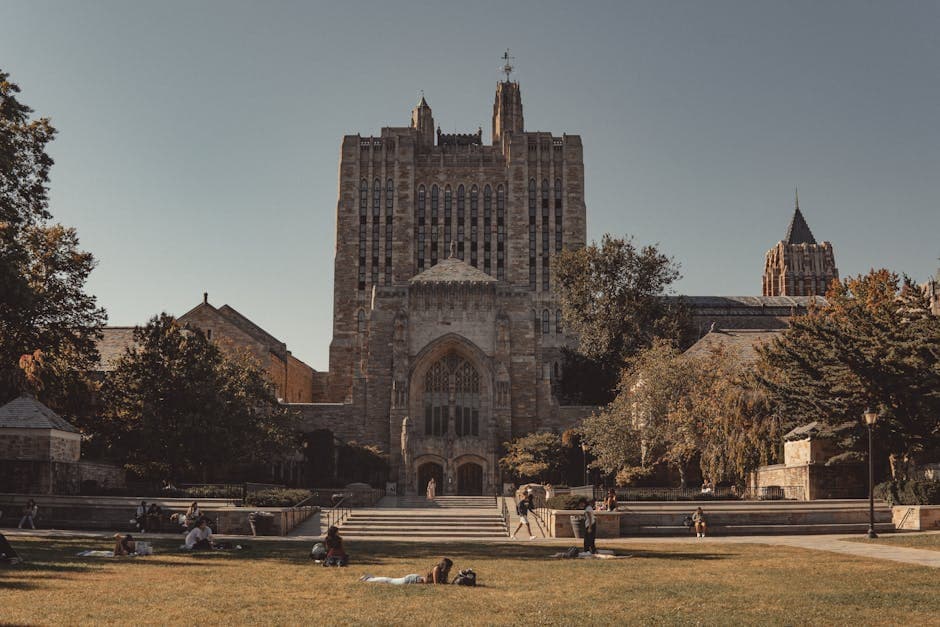
The line outside Frank Pepe's Pizzeria Napoletana, on a Friday at quarter past six in May, runs the length of three storefronts down Wooster Street and bends around the corner past the bakery. The customers waiting are an Italian-American grandmother with two grandchildren, a knot of Yale undergraduates in fleeces, a couple from Madison, Connecticut, who have driven forty minutes for the pies, and a hospital nurse just off shift in scrubs. The coal oven, fired since 1925, throws a heat the sidewalk can feel through the door.
Pepe's does not take reservations. Pepe's does not, on a Friday at 6:14pm, take phone orders for the dinner service. The line is the channel. What Pepe's has done, and what Sally's has done a few doors down since 1938, and what Modern Apizza has done on State Street since 1934, is build a customer base that drives across the New Haven metro to stand in line for a coal-fired tomato pie on a Friday night. Nobody on this line is here because of a marketplace listing.
That is the New Haven asymmetry, and it is the start of the argument. The city's flagship restaurants do not need DoorDash. The city's flagship restaurants need a different category of software, the kind that handles the pickup queue at peak, fields the Spanish-language calls from Fair Haven, takes the standing Tuesday catering order from a Yale-New Haven Hospital floor, and prices the meals-tax line on the receipt without making the customer do the math. The marketplace question is not the question for an apizzeria. The customer relationship is the question.
The remainder of this piece is a long, slow look at what that question actually looks like in a city of ~134,000 residents, anchored by a 1638 colonial green, two of the largest catering accounts in Connecticut (Yale and YNHH), and a coal-fired pizza tradition older than every other American regional pizza style except perhaps the Trenton tomato pie.
Apizza is not New York pizza. It is not Chicago pizza. It is a 700 degree coal oven and a Friday line.
The New Haven apizza (pronounced ah-beetz, in the dialect Frank Pepe brought from Maiori in the Amalfi Coast in 1925) is a coal-fired, oblong, asymmetrically shaped flatbread whose distinguishing feature, before any of the toppings or sauce decisions, is the leoparded blistered cornicione produced by a coal oven that runs hotter and drier than the wood or gas oven of the typical American pizzeria. Pepe's coal oven, as documented in the shop's own history at pepespizzeria.com, has been fired continuously since the original Wooster Street shop opened on June 12, 1925. The crust char on a Pepe pie is the only signature most New Haven locals consider non-negotiable.
The shop's most famous variant, and the New Haven pie that has traveled furthest in the broader American food press, is the white clam pie. Frank Pepe began making it some time in the mid-1960s using fresh shucked littleneck clams trucked in from the Long Island Sound shellfish beds, garlic, olive oil, oregano, grated pecorino, and no tomato. The result is not a substitute for tomato pizza. It is its own dish. The white clam pie is the canonical New Haven food, more characteristic of the city in the way the steamed cheeseburger is characteristic of Meriden or the lobster roll is characteristic of Connecticut shoreline towns.
Sally's Apizza opened in 1938, three doors down Wooster Street, founded by Salvatore Consiglio, Frank Pepe's nephew. Sally's makes a tomato pie with fresh mozzarella that is the canonical answer to the question "which is better, Pepe's or Sally's," a question Yale freshmen have been asked since at least the 1950s. The answer most longtime New Haven operators give is that the question is wrong: Pepe's is a clam pie shop, Sally's is a mozzarella pie shop, and the appropriate order on any given visit is to walk Wooster Street twice and eat at both. Salvatore Consiglio died in 1989, his sons ran the shop until 2017, and ownership passed to a group that has held the original Wooster Street location open while expanding to Stamford, Fairfield, and one Bridgeport storefront.
Modern Apizza, founded in 1934 by Tony Tolli and moved to State Street in 1936, is the apizza that many longtime locals quietly prefer for the simple reason that the Wooster Street line, as of any given Friday in 2026, runs forty-five minutes and the Modern line, on the same Friday, runs ten. The Italian Bomb at Modern, sausage, bacon, pepperoni, mushroom, onion, and pepper on a tomato base, is the shop's most-ordered pie and the one Modern's regulars will mention in the same breath as Pepe's white clam.
The youngest member of the canon, Bar (Brick Oven Pizza) on Crown Street, opened in 1991 with a wood-fired brick oven rather than the coal ovens of the Wooster Square shops, and its mashed potato pie, a thin layer of garlic mashed potato over the dough with no tomato and no cheese (or, in the more popular variant, with bacon scattered across the potato), is the contemporary expansion of the canon. The food press, in particular Eater's New Haven coverage, treats Bar as a legitimate fifth pillar even though the brick oven and the relative youth of the shop puts it outside the strict apizza tradition.
What distinguishes the New Haven style from the New York style, beyond the coal oven and the cornicione char, is the relative sparseness of cheese and the broad, almost pizza-bianco-like distribution of red sauce across the dough on the canonical tomato pie. A New York slice carries a uniform mozzarella blanket. An apizza carries dollops of cheese, often grated pecorino rather than fresh mozzarella, with broad stretches of bare red sauce visible between them. The Chicago deep dish, the Detroit square, the Roman al taglio are not even in the same conversation. Apizza is its own regional tradition, and the city's restaurant economy is shaped by the recognition that the tradition is a moat that no marketplace listing can either widen or narrow.
The four pillar shops, taken together, are the city's loudest expression of a more general restaurant pattern in New Haven: the operator's customer relationship is older than the operator's marketing channels, and the marketing channels exist to serve the relationship, not the other way around. That ordering of priorities, customer relationship first, distribution channel second, is the only ordering that survives a coal-oven shop opening in 1925 and still running on a Friday night a century later.
Fourteen thousand students, a 70,000 seat football bowl, and the calendar that runs from late August to mid-May.
Yale University, founded in 1701, anchors downtown New Haven from the Old Campus block at the northwest corner of the New Haven Green. The university enrolls roughly 14,000 students across Yale College (the undergraduate division, with approximately 6,500 students), the Graduate School of Arts and Sciences, the Schools of Law, Management, Medicine, Divinity, Drama, and the rest of the graduate and professional schools. The figure has been relatively stable for two decades and is documented at yale.edu. When the student population is in residence, between late August and mid-May, the city's downtown restaurant economy runs at one rhythm. When the students are away, between mid-May and mid-August, plus a three-week winter break in late December and early January, the rhythm is different.
The Yale Bowl, capacity 70,000, opened in 1914 on the western edge of the city near Yale-New Haven Hospital and the Westville neighborhood. It is the oldest collegiate football stadium in the United States and, on a Yale home Saturday in October or November, fills (or partially fills, depending on the opponent) with a tailgate population that generates a single-Saturday food and beverage volume the rest of New Haven's calendar does not match. The Harvard-Yale game (referred to locally as simply "The Game") alternates between New Haven and Cambridge, and the New Haven year, the typical operator's restaurant calendar's flagship weekend, is the Saturday that brings the most revenue of any single home-game day. The bowl's own history is documented at yalebulldogs.com.
The student economy, as restaurant operators experience it, divides into three predictable waves per academic year: move-in week in late August, when 6,500 undergraduates arrive with parents and the city sees a brief but intense lunch and dinner surge; parents' weekend in October, when the family-meal volume runs three to four times the typical weekend pace; and reading period plus finals in early May, when the late-night delivery volume to the residential colleges and the Old Campus dorms peaks. Operators who have built a direct ordering relationship with the Yale residential colleges' housing master offices, which is the channel most Yale-corridor operators use to land a standing weekly order, are the operators with the steadiest spring semester revenue.
The challenge of the Yale calendar is the inverse of the opportunity. Summer is quiet, in a way that surprises most operators who arrive in New Haven from a year-round market. Roughly twelve weeks of the year, between late May and mid-August, the downtown restaurant universe pares back hours, runs reduced menus, and in some cases closes one of the dining-service shifts entirely. Operators who do not build a year-round revenue base, the catering side, the YNHH side, the conference and event side, are operators who run cash-flow crunches in those quiet months. The healthier operators, in our observation, treat Yale as one of three or four anchor revenue lines, not as the whole of the revenue.
What this means for ordering software is that the Yale corridor needs a direct ordering surface that is fast on mobile (because Yale undergraduates order overwhelmingly from phones, and Yale graduate students from a mix of phones and laptops), is indexed in Google and AI search for the obvious Yale-adjacent queries (the late-night delivery query, the parents' weekend reservation query, the Game Day catering query), and accepts the Bursar-issued credit cards and the Yale staff IDs that some of the residential colleges authorize for charge-account ordering. A marketplace cannot do any of those things meaningfully. A direct channel can do all of them.
Fourteen thousand employees, a 1,541 bed hospital, and the catering pipeline that does not run on a marketplace.
Yale-New Haven Hospital, founded in 1826, is the flagship of the broader Yale New Haven Health system and operates a roughly 1,541 bed inpatient campus on the western edge of downtown, between the Yale School of Medicine and the Hill neighborhood. The system's main New Haven campus, per YNHH's own about page, employs roughly 14,000 people on the New Haven campus, which makes the hospital the largest single employer in New Haven County per the Connecticut Department of Labor. The figure is documented in the state's annual employer rankings at the Connecticut DOL labor-market information page.
What this means for the restaurant economy is that YNHH is the single largest catering account in New Haven, and the relationship between an operator and the hospital's procurement office is one of the most durable revenue streams a city operator can build. The orders look like this: a 35-tray sandwich order for a residency floor lunch meeting, four times a week, $1,400 to $2,200 per order. A morning bagel platter for a 6:30am surgical service handoff, three times a week, $300 to $500 per order. A team meal for an oncology unit during a long Friday shift, once a week, $700 to $1,100 per order. None of these orders, in our observation, run through a marketplace gateway. They run through a procurement contract, on net 30 or net 45 payment terms, paid via ACH.
The complication for the operator who is good at apizza but new to hospital catering is that the procurement contract is a different beast from the typical retail order. The procurement office is set up to handle vendor onboarding, W-9 documentation, certificate of liability insurance review, food-safety certification verification, and a quarterly performance review that the operator does not encounter on the consumer side of the business. The reward for clearing all of that is a revenue stream that does not have a Friday-Saturday-Sunday spike pattern, does not require a marketplace listing, and is robust to the Yale academic calendar that the rest of the operator's revenue is tied to.
The mistake we see most often is operators who try to fit a hospital catering relationship through a marketplace-style ordering channel. The marketplace, by design, optimizes for a high-frequency, low-AOV consumer flow. The hospital flow is the opposite: low frequency by order count (a recurring weekly schedule rather than dozens of one-off tickets), high AOV (often $1,500+ per ticket), and high relationship continuity. A 15 percent marketplace fee on a $1,500 ticket is $225, repeated four times a week, $900 a week, $46,800 a year. The hospital procurement office is not paying that fee. The operator is. And the fee is paying for an acquisition channel the operator does not need, because the customer is already a vendor on the operator's procurement list.
The right answer, for a New Haven operator with a YNHH relationship, is a direct ordering surface with a procurement-account login (one purchase order per ticket, billed weekly, paid net 30), a corporate-catering invoicing module that handles the W-9 paperwork and the quarterly performance reporting, and a kitchen-side schedule view that lets the operator see the week's recurring orders at a glance, the way a marketplace dashboard does not. The fee for that software, on a flat-monthly plan, is a fraction of the marketplace fee it replaces. For the segment of New Haven operators with a serious hospital relationship, the direct channel is not a margin improvement. It is a business model decision.
The Green was the first thing the colonists laid out. Everything else, including the apizza, came later.
The New Haven Green, the sixteen-acre rectangular common at the geographic and civic center of downtown, was laid out in 1638 by the Puritan colonists who founded the city. It is the original town green of New Haven, the central square of the nine-square plan the colony surveyed when the settlement was established, and one of the oldest continuously maintained public commons in the United States. The Green was designated a National Historic Landmark in 1970, and is administered today by the Committee of the Proprietors of Common and Undivided Lands at New Haven, which has held title since the seventeenth century. Documentation lives at newhavengreen.org.
Three churches sit on the Green itself: Center Church (United Church of Christ), built 1812 to 1815; United Church on the Green, built 1813 to 1815; and Trinity Church on the Green (Episcopal), built 1814 to 1816. The proximity of the three churches, on a single colonial common, is unusual for an American city of New Haven's size, and is the architectural signature most travel writers fix on when they describe the city. The Green also hosts the city's flagship outdoor events, including the New Haven Jazz Festival in July, the International Festival of Arts and Ideas in June, and the cherry blossom blooms in spring that signal the Wooster Square festival a few blocks east.
For restaurants, the Green is the lunchtime channel. The weekday lunchtime population on the Green, modeled from operator interviews and city event programming, runs to roughly 3,500 people on a typical sunny weekday between 11:30am and 1:30pm: Yale undergraduates and graduate students cutting between classes, downtown office workers from the Chapel Street commercial corridor, YNHH staff on a half-hour break, judges and lawyers from the courthouse complex on Elm Street, and a steady population of New Haven residents reading on the benches. Operators on Chapel, Crown, Temple, and Church Streets, the four blocks bordering the Green, see this population as the lunchtime customer base, and the operators who run a fast direct ordering channel for pickup and a curbside pickup window onto the Green-facing side of the building are the operators with the strongest lunchtime margin profile.
The Green is also the orientation point for the city's nine-square grid, which the colonial surveyors laid out in 1638 and which has shaped the city's restaurant geography ever since. East of the Green, Chapel Street runs to Wooster Square and the apizza district. North of the Green, Elm Street runs into Yale's Old Campus and the residential colleges. South of the Green, Church Street runs to the harbor and the I-95 corridor that crosses Long Wharf. West of the Green, York Street runs to the Yale School of Medicine and YNHH. The city's four flagship restaurant districts radiate from the Green like spokes from a hub, which is the colonial planning artifact most New Haven operators do not consciously think about and which nonetheless shapes the daily pattern of their orders.
What this means for ordering software is that a New Haven restaurant's pickup window, more than its delivery radius, is the operationally important channel. A customer on the Green at 12:15pm orders a pickup at 12:25pm and walks two blocks to the storefront, eats in the dining room or back on the Green. The marketplace's delivery courier model, designed for a residential dinner rush in a sprawled suburban geography, is the wrong tool for a downtown commercial corridor where the customer is already within a five-minute walk. The right tool is a direct pickup channel, a clear lunchtime queue, and a fast checkout flow on mobile. That is the channel a flat-fee software platform builds. It is not a channel any marketplace prioritizes.
Three districts, three completely different revenue mixes.
A typical New Haven operator's revenue mix is determined more by neighborhood than by cuisine. The Wooster Square dine-in line at Pepe's, the East Rock delivery base run by Yale graduate housing, and the Long Wharf catering volume run through corporate event accounts are three different businesses that all happen to sit inside the same six-square-mile city.
Wooster Square, east of downtown and east of the I-91 corridor that separates it from Fair Haven beyond, was the city's primary Italian-American immigrant district from the 1880s through the mid-twentieth century, and the apizzeria row on Wooster Street is the direct continuation of that history. The neighborhood is anchored visually by the cherry blossom trees that bloom in April along the central park, the Wooster Square park, and the annual Cherry Blossom Festival in late April draws roughly 40,000 visitors over the festival weekend. Restaurant revenue in Wooster Square skews heavily dine-in and walk-up takeout, with delivery a relatively small share by the standards of the rest of the city.
East Rock, north of downtown and bounded by the trap-rock ridge of East Rock Park, is the residential spine of Yale's graduate student population and is the neighborhood most readers of this piece who have a Yale connection will know best. State Street runs north through East Rock as the commercial spine, lined with bistros, cafes, and a handful of newer Asian-fusion and modern American restaurants whose business model is built around graduate-student weekly delivery orders. The revenue mix here flips: delivery is the dominant channel, dine-in is the secondary, and takeout is the smallest of the three. A Voice AI that fields the calls a busy East Rock kitchen cannot answer between 6 and 9pm, and a Google-indexed direct ordering site that converts the East Rock graduate-student search query, is the East Rock operator's signature operational need.
Long Wharf, south of downtown along the harbor and the I-95 corridor, is the city's industrial harbor edge and contemporary food-truck and brewery district. The neighborhood houses the Long Wharf Theatre (the Tony-recognized regional theater), the city's primary food-truck park, two warehouse-converted breweries, and the catering kitchens that serve the I-95 corridor's corporate events. Revenue mix here is catering-heavy: corporate event catering, theater pre-show catering, and the food-truck-as-catering-platform model that pairs a Long Wharf truck with an event venue. Operators in this district need a direct catering ordering channel more than they need a consumer-facing marketplace listing.
Beyond the three primary districts, the city's secondary neighborhoods, Fair Haven east of the I-91 corridor, the Hill south of YNHH, Dixwell northwest of downtown, Westville on the west side near the Yale Bowl, and Newhallville further north, each have their own dining identity. Fair Haven is the city's primary Latino neighborhood and the heart of the bilingual ordering story we cover in section VII. The Hill is the closest residential neighborhood to YNHH and is the neighborhood most YNHH staff who live in the city call home. Westville, near the Yale Bowl, is the only neighborhood whose restaurant economy fully synchronizes with the Yale football schedule. Each neighborhood is its own micro-market, and the right ordering software is the software that lets the operator see and serve each one without flattening it into a single marketplace experience.
Twenty-eight percent of New Haven is Hispanic. Most of the city's ordering software is not.
Roughly 28 percent of New Haven's population is Hispanic or Latino per the US Census Bureau's American Community Survey, with the largest single national-origin group being Puerto Rican. The Latino population is concentrated in Fair Haven, the Hill, and parts of the West River district, and the bilingual ordering question, English-speaking and Spanish-speaking customers reaching the same restaurant on the same phone line, is one of the most underbuilt operational gaps in the typical New Haven small restaurant. ACS estimates live at data.census.gov.
The operational reality is that a typical New Haven restaurant in a mixed neighborhood receives a sustained share of its inbound calls in Spanish, particularly during the dinner-rush window between 5pm and 8pm, when a host who is also expediting tickets cannot reliably switch from one language to the other on every other call. The result, in our observation, is a missed-call rate that is higher among Spanish-speaking customers than among English-speaking customers, not because the customer is less interested in ordering but because the call is more likely to go unanswered when the only available staff at that moment is a line cook whose Spanish is school-level rather than native.
The fix is not, in our view, hiring a dedicated bilingual host, which is a real cost line that most small New Haven restaurants cannot justify on a part-time basis. The fix is a Voice AI that detects the language in the first two seconds of the inbound call, branches to the appropriate language model, takes the order in the customer's native language, writes the order to the POS in either language, and prints the kitchen ticket in English regardless of which language the customer ordered in. The result is a call-handling rate that, in our deployments at restaurants of comparable demographic profile, runs above 90 percent across both languages during the same shift, against an unaided staff baseline of roughly 60 to 70 percent during peak.
The economic stakes are not abstract. A typical New Haven small restaurant doing 800 to 1,200 inbound calls a month, with a 30 to 40 percent missed-call rate during peak, is losing 50 to 80 orders a month that the customer would have placed if the phone had been answered. At an average ticket of $22, that is $1,100 to $1,760 a month in lost revenue, $13,200 to $21,000 a year. A bilingual Voice AI that recovers half of those missed calls is the most consequential single ordering-software upgrade most New Haven small operators can make. It costs less per month than two missed calls at an average ticket.
The dignity argument also matters and is rarely articulated. A Spanish-speaking customer who calls a New Haven restaurant and reaches an AI that takes the order competently in Spanish is a customer whose experience of the city's restaurant economy is qualitatively different from the customer who reaches a phone tree, a voicemail, or no answer at all. The bilingual Voice AI is, in this sense, not only an operational tool. It is an equity tool, and it is the tool most small-restaurant operators we work with in mixed-demographic neighborhoods cite as the feature their customers comment on most often after a deployment.
The state takes 6.35 percent on most sales and 7.35 percent on prepared meals. There is no local add-on, anywhere.
Connecticut's state sales tax is 6.35 percent on most taxable goods and services, codified under Connecticut General Statutes Chapter 219 and administered by the Connecticut Department of Revenue Services. Restaurant sales (and most takeout sales of prepared meals, beverages, and ready-to-eat foods) are taxed at the higher prepared-meals rate of 7.35 percent, which is the 6.35 percent base state rate plus a 1 percentage point additional meals tax added in 2019 under Public Act 19-117. There is no local add-on. Every restaurant in New Haven prices off the same tax stack as every restaurant in Hartford, Stamford, or Bridgeport, and that uniformity is a meaningful structural simplification compared to the city-by-city patchwork most operators in larger states navigate.
The practical implication is twofold. First, the operator does not have to compute, file, or remit any city or county sales tax. The state filing (Form OS-114 for the monthly or quarterly sales-tax return) is the complete picture. Second, the operator's pricing decision, sticker price plus the meals tax, is uniform across the state, which makes a multi-location operator's pricing display logic and POS configuration meaningfully simpler than the same decision in, say, Texas or Illinois.
"Connecticut's meals tax is one of the cleanest in the country to administer. The trade-off is that 7.35 percent is a meaningful sticker the customer reads on the receipt, and the operator has to think about it as part of the pricing decision rather than as an afterthought."
For a restaurant with an average ticket of $28, the meals tax adds roughly $2.06 to the customer's bill. For a family pie at one of the Wooster Square apizzerias at $26, the tax adds roughly $1.91. For a YNHH catering ticket at $1,500, the tax adds roughly $110.25, which the procurement office expects to see itemized on the invoice and which the operator's accounts-receivable system needs to compute correctly on every recurring weekly invoice. The right ordering software handles the meals-tax line natively, surfaces it to the customer at checkout, and posts it to the operator's general ledger as a separate line item rather than burying it inside the gross-sales total.
Two edge cases that matter for New Haven operators. First, certain food items that are not "prepared meals" under Connecticut's definition (whole-pie pizza sold cold and unsliced for off-premises consumption, for example, in a narrow set of conditions, or grocery-style items at a hybrid grocery-and-deli operator) may be taxed at the lower 6.35 percent rate rather than the 7.35 percent meals rate. The DRS publishes regulatory guidance on the meals-versus-grocery distinction, and the operator's POS configuration needs to handle the distinction correctly per item. Second, alcohol sold for off-premises consumption from a restaurant with a beer-and-wine permit is taxed at the standard 6.35 percent state rate, not the meals rate, and again the POS configuration needs to handle this correctly.
The simplest operational summary is: every Connecticut restaurant, including every New Haven restaurant, runs on a 7.35 percent meals tax with no local add-on, files monthly or quarterly with the state, and configures its POS to compute the meals rate correctly per item. The cleanness of the tax structure is one of the small but real advantages of operating in Connecticut, and it is a structural reason the state's restaurant accounting is simpler than the equivalent restaurant accounting in many larger states.
Four questions for a New Haven restaurant accountant who has watched the city's food economy from inside the books.
The interview below is a composite, drawn from public reporting in Eater and from our own conversations with New Haven and Connecticut restaurant operators. It is not an attribution to a specific real accountant.
What share of New Haven restaurant revenue runs through apizza specifically?
Hard to put a precise share on it because the city's pizzeria count itself is fluid, but the four pillar shops, Pepe's, Sally's, Modern, and Bar, together do estimated annual revenue in the eight figures, and the broader category of pizzerias operating in some recognizable variant of the New Haven style runs to roughly 40 to 60 active operators across the metro area. If you ask a New Haven restaurateur what the city's food identity is, the answer is apizza first and second and Italian-American everything else third.
What this means for the marketplace question is that the pizzeria segment, with average tickets between $18 and $42 depending on whether it is a single pie or a family order, is the most economically exposed to commission percentages in the city. A 15 percent cut on a $26 family pie that already runs on a thin food cost margin is a margin call disguised as a marketing channel.
How does the Yale calendar shape restaurant revenue?
It dominates it. Roughly 14,000 students plus an extended faculty and staff population means that move-in week in late August, parents' weekend in October, and the Harvard-Yale football weekend (which alternates between New Haven and Cambridge) are the three single highest revenue weekends of the calendar for any restaurant within a mile of the campus. The Yale Bowl, capacity 70,000, opened in 1914, is the country's oldest collegiate football stadium and on a home Saturday it generates a tailgate volume the rest of New Haven's calendar does not match.
Conversely, the winter break from mid-December through mid-January, plus the summer pause from late May through early August, is when downtown restaurants take their breath, do their renovations, and rotate their menus. Operators who do not run a catering side or a healthcare-account side, on the assumption Yale traffic is the whole revenue model, regularly run cash-flow crunches in those quiet months. The healthier operators have a Yale-New Haven Hospital catering relationship or a corporate-catering pipeline on Long Wharf to bridge them.
What's the role of Yale-New Haven Hospital in the food economy?
Bigger than most outsiders realize. YNHH employs roughly 14,000 people on the New Haven campus, which makes it the largest single employer in New Haven County per the Connecticut Department of Labor. A meaningful share of the city's catering volume, the 35-tray sandwich orders, the morning bagel platters, the unit-by-unit team meal during a long shift, runs through hospital catering accounts. A pizzeria with a YNHH catering relationship has a baseline revenue floor the typical neighborhood spot does not.
The complication is that hospital catering is run through purchase orders, net 30 or net 45 payment terms, and a procurement-office relationship that does not look like a typical Grubhub order. Operators who try to fit hospital catering through a marketplace gateway lose roughly 15 to 20 percent of the catering margin to fees that, in this segment, have no acquisition rationale. The hospital already knows the operator. The fee is paying for a customer the operator already has.
How does the 6.35 percent state sales tax shape pricing decisions?
Restaurant sales in Connecticut are taxed at the prepared-meals rate of 7.35 percent, which is the 6.35 percent base state rate plus a 1 percentage point additional meals tax that was added in 2019 under Public Act 19-117. There is no local add-on. Every restaurant in New Haven prices off the same tax stack as every restaurant in Hartford, Stamford, or Bridgeport.
What this means in practice is that the Connecticut operator has tax-line predictability that operators in many other states do not. There is no city-by-city patchwork to manage, no special-district add-on to compute, no quarterly local filing on top of the state filing. The trade-off is that the meals rate is meaningfully above the state's general sales tax rate, which is the line item the diner sees on the receipt and which shapes the menu pricing math for higher-AOV operators in particular.
The apizza shop, the East Rock bistro, the YNHH catering kitchen. Three different problems. One flat fee.
We do not run a marketplace. The argument we are making to a New Haven operator is narrower than that, and it is shaped by the specific structure of the city's restaurant economy. For an apizza shop on Wooster Street, the operationally important channel is a fast pickup queue and a direct ordering surface that handles a Friday night rush of 320 family pies without dropping a ticket. For an East Rock bistro, the operationally important channel is a Voice AI that fields the calls the kitchen cannot answer during the 6-to-9 dinner rush, plus a Google-indexed direct site that converts the Yale graduate-student search query. For a Long Wharf catering operator with a YNHH relationship, the operationally important channel is a procurement-account login, a corporate-catering invoicing module, and a net 30 / net 45 payment terms workflow.
DirectOrders is $249 a month for a single location, $349 for a small group. That flat fee gets a branded ordering site indexed for Google and AI search, bilingual Voice AI (English and Spanish at minimum, additional languages on request, including the Cantonese and Mandarin variants that some Yale-corridor operators ask for), Uber Direct and DoorDash Drive dispatch integration covering the New Haven metro at flat per-order delivery cost, same-day Stripe payouts so Friday's apizza revenue arrives Saturday rather than the following Wednesday, a corporate-catering invoicing module that handles the YNHH procurement workflow, and POS integration with the systems most New Haven operators already run on (Toast, Square, Clover, and SpotOn are the most common in the city).
Run the apizza-shop math. A typical Wooster Square apizzeria doing 1,400 orders a month at an average ticket of $26 is generating $36,400 a month in gross sales. Marketplace fees on that volume at a typical effective rate (capped commission plus voluntary advertising) run roughly $5,000 a month. DirectOrders flat fee plus Stripe processing on the same $36,400 gross is roughly $1,300 a month. Net monthly savings: approximately $3,700. Annual savings at constant volume: approximately $44,000 per location, which on a sole-location apizzeria is the difference between a marginal year and a strong one. The savings scale linearly with volume; the flat fee does not.
The non-financial argument matters more, in New Haven, than it does in many other markets. The apizza shops have been selling the same pies, in many cases, for ninety to one hundred years, and the customer relationship at Pepe's or Sally's is older than the existence of marketplaces, the existence of the internet, and the existence of most other restaurants in the city. The marketplaces do not have anything to teach a Wooster Square apizzeria about customer acquisition. What the apizzerias need is software that respects the customer relationship the shop has already built and that does not interpose itself between the shop and the customer for a percentage of every order. That is the argument. It is also the argument that resonates most clearly with operators whose business model is a Friday line, not a marketing funnel.
We sell software, not magic. A New Haven operator doing 30 orders a month is too small for our pricing to make sense, and we will tell them so on the first call. A New Haven operator doing 800 orders a month who has not yet built a direct channel is, in our view, leaving roughly $25,000 to $50,000 a year on the table, and we can usually compress that recovery into a 60 to 90 day rollout that does not require them to change POS, hire staff, or rebuild their kitchen workflow. The apizza is the moat. The direct channel is the way the moat actually becomes the bottom line.
Two ways to start, neither of them dramatic.
If you are a New Haven operator and you have read this far, the next move is small. There are two reasonable doors.
The first is a 30-minute walkthrough on a video call. We will look at the operator's current ordering mix, talk through the specific math for the segment they fall into (apizza, Yale corridor, YNHH catering, or one of the secondary neighborhoods), and show what a branded ordering site indexed for the relevant Google and AI search terms looks like. No deck. No pitch. We will use the operator's own POS data if they want, or our composite if they prefer. Book a walkthrough.
The second is the pricing page, which is the answer for an operator who wants to read the numbers before they speak to a person. The flat fee structure is plainly stated, the included features are listed, the breakeven point at typical New Haven volumes is documented. Read the pricing.
The apizza is the moat. The 1638 Green is the hub. Yale and YNHH are the anchor accounts. The direct channel is the way the operator owns the customer relationship that the city has spent four hundred years building.