1956Atwells Avenue
Joe Marzilli's Old Canteen
The pink-walled dining room is the most photographed in Federal Hill. White-tablecloth red-sauce institution; veal parmigiana and chicken alfredo are reference dishes.
How thirty-plus Italian restaurants on one neighborhood spine, the world's largest culinary school, three colleges with thirty thousand students, and a single seven percent sales tax decide whether a Providence restaurant makes money.
On a Sunday afternoon in late October, the line at Joe Marzilli's Old Canteen runs out the door before noon. By 1 PM, the pink-walled dining room is full of three-generation Italian-American families: the grandparents from Cranston, the parents from East Greenwich, the kids back from Providence College for the weekend. Two more families wait under the gilt mirror in the foyer. The host has a clipboard and four pens and a phone that has not stopped ringing.
Across Atwells Avenue, at Andino's, the dining room is the same scene with different last names. Half the tables ordered the veal saltimbocca; the other half ordered the chicken Sinatra. The pasta is rolled and cut behind the kitchen door before service. The waiter has worked here for nineteen years. The owner's grandson, fresh out of Johnson and Wales, runs the line on Sunday afternoons because that is the shift the family insists on.
Two blocks east, on Bradford Street, Camille's has been continuously operating since 1914. The frescoed ceiling has been re-painted three times since the Truman administration. The room has hosted Providence weddings, confirmations, retirement parties, and the occasional state-senator fundraiser since before the Patriarca family arrived. The pasta arrives on white tablecloths in heavy silver-rimmed dishes. The bill is closed by the maitre d' in pen. The Visa machine sits on a sideboard under a framed black-and-white photograph of the original 1914 staff.
Outside on the sidewalk, the Pinocchio statue at the western gateway of Atwells (Italians call it La Pigna, the pinecone, a regional symbol of welcome and abundance) tilts slightly toward Federal Street. Tourists photograph it from below. Bus tour groups loop the square at DePasquale, where Costantino's Venda Ravioli and Cafe Dolce Vita and Roma Gourmet Italian sit shoulder to shoulder. A teenager from Newton has just bought a half-pound of fresh ricotta at the Venda counter and will eat it with bread on the train ride back to Boston.
For most of America, Sunday afternoon is brunch. For Federal Hill, Sunday afternoon is the family meal that has not moved in three generations. The platform that the operator runs underneath this scene is not the topic of conversation. It is, however, the thing that determines whether the operator keeps the lights on the next Sunday and the one after that. This page is about that platform.
Providence is, in restaurant terms, a small dense city of about 190,000 people with the highest per-capita restaurant density in New England south of Boston and a regional cultural identity that does not exist anywhere else in the country. The Federal Hill Italian canon is one of the four pillars. The Johnson and Wales culinary pipeline is the second. The Brown plus RISD plus Providence College student economy is the third. WaterFire and the summer tourist economy are the fourth. This is the operator's playbook for running an ordering business across all four.
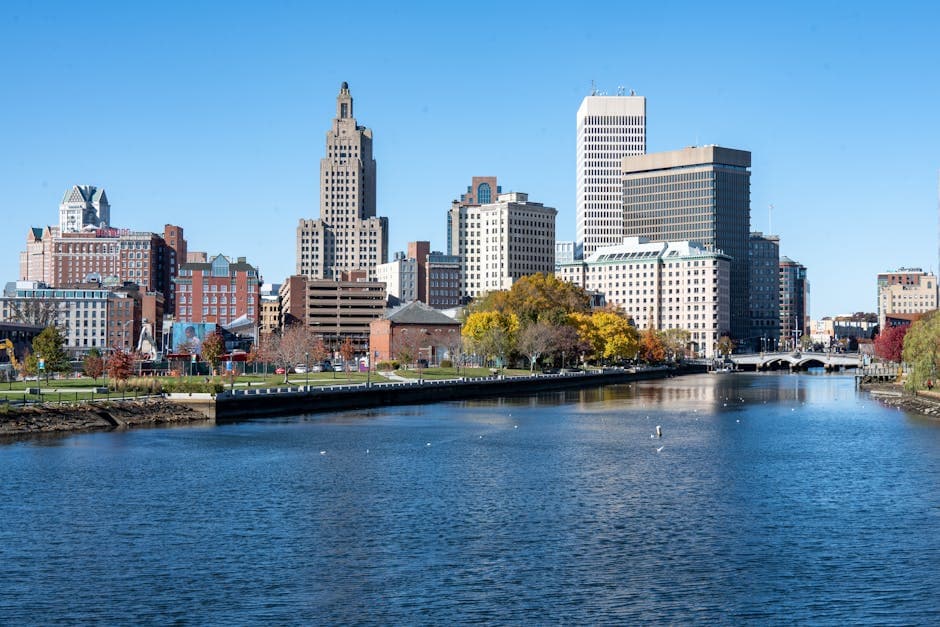
The largest Italian neighborhood in New England outside Boston's North End sits on a single arterial street less than a mile long. From the Pinocchio gateway arch at the western end to Knight Street at the eastern boundary, Atwells Avenue holds more than thirty Italian operations: family red-sauce houses opened between 1914 and the 1980s, modern Neapolitan rooms certified by the AVPN, century-old bakeries, fresh-pasta markets, and the prepared-foods counters that the rest of New England drives down on Saturday morning to stock for the week.
The numbers behind the Hill are unusual for an American neighborhood. Federal Hill covers approximately one square mile of dense three-story walk-ups, the corridor itself runs less than nine-tenths of a mile, and inside that footprint sit Camille's (1914), Scialo Bros. Bakery (1916), Caserta Pizzeria (1948 on Federal Street, just off the Hill), Joe Marzilli's Old Canteen (1956), Costantino's Venda Ravioli (1980), Roma Gourmet (1981), Mike's Kitchen (1981, technically Cranston), Cassarino's (1986), Pastiche Fine Desserts (1990), Massimo Ristorante (1992), Cafe Dolce Vita (1993), Pane e Vino (2003), Bacaro (2007, down the hill), and Trattoria Zooma (2007). That is fourteen institutions opened before 2010, all still operating, on or within two blocks of the same avenue.
The dining-room characters cluster into five categories. The classic red-sauce houses (Joe Marzilli's, Andino's, Camille's, Cassarino's) run white-tablecloth Italian-American with the family-meal Sunday afternoon ritual that defines the neighborhood. The modern rooms (Trattoria Zooma, Massimo, Pane e Vino, Bacaro) lean toward Northern Italian and Neapolitan, with serious wine programs and pastas closer to a Boston wine bar than a red-sauce house. The bakeries (Scialo Bros., Pastiche, Cafe Dolce Vita) anchor the morning and after-dinner ends of the operator's day. The Italian markets (Venda Ravioli, Roma) sell fresh pasta, imported cheese, and prepared foods to a customer who is feeding her family the next three nights at home. And the calamari-and-seafood specialists (Mike's Kitchen on Tabor Avenue, in Cranston rather than on the Hill but inseparable from it) cover the Rhode Island regional reference dish, which is fried calamari rings with sliced pepperoncini and garlic, in a way no other American state can claim.
The DePasquale Square at the center of the Hill, named for a former state senator, sits between Atwells Avenue and Spruce Street. The square has outdoor seating at Cafe Dolce Vita, an espresso bar, and a small fountain. On warm summer evenings, the square fills up the way a piazza in Florence might. Tour buses unload visitors here. Federal Hill is, among other things, a working tourist economy that has not lost its actual neighborhood; both functions run on the same blocks simultaneously, which is unusual.
The operating reality of the Hill is that pickup, walk-up, and dine-in all matter, and the marketplace channel is structurally weaker than it is for newer neighborhoods. Federal Hill customers know which restaurant they want. They are not browsing DoorDash. The grandmother from Cranston is calling Joe Marzilli's by phone because that is how she has always called Joe Marzilli's. The Pawtucket family arriving for an eighteenth-birthday dinner at Andino's booked the table three weeks ago through the restaurant's own website or by phone. The catering channel for the Italian markets (Venda, Roma) runs through email and the prepared-foods counter, not through a delivery app.
Direct ordering is the natural channel for the Hill because the customer is already direct. The operator decision is not whether to be on a marketplace; it is how to capture the phone order with a Voice AI when grandma calls at 6 PM on Sunday, how to make the catering quote land in the inbox within the hour, how to send the family that just dined a thank-you SMS with a returning-customer offer. The marketplace gets the long-tail tourist looking for cannoli. The direct ordering site gets the customer who has been coming since 1992.
The pink-walled dining room is the most photographed in Federal Hill. White-tablecloth red-sauce institution; veal parmigiana and chicken alfredo are reference dishes.
Founded as Camille's Roman Garden in 1914. One of the oldest continuously operating Italian restaurants in the United States. Multiple ownership eras; the room itself is the brand asset.
Family-run; pasta made fresh in-house daily. The wood-paneled main room hosts neighborhood weddings and confirmations in the way the rest of America has stopped doing.
Counter inside the Tabor Franchi Italian-American VFW Post 239 in Cranston. Fried calamari is the Rhode Island reference; the room has no menu posted and few seats.
Italian market and prepared-foods counter on DePasquale Square. The fresh ravioli case is the Federal Hill provisions reference; bus tours stop here.
Atwells Ave bakery since 1916. The wood-oven sfogliatelle and biscotti are the morning reference; the line wraps before First Communion season.
Sicilian-style square pies sold half-sheet or full-sheet. Off-Hill but the Federal Street pickup line on Friday nights is a Providence cultural artifact.
Spruce Street since 1990. Reference pastry counter for the modern Hill; the chocolate budino and seasonal fruit tarts are the Yelp gallery.
Modern Neapolitan room; wood-fired pizza certified by the Associazione Verace Pizza Napoletana. The Hill's first true 00-flour pie.
The name is misleading on purpose. The New York System is a Providence and Pawtucket institution that has, by the count of the James Beard Foundation, no actual New York provenance. Greek immigrants in the 1920s opened the first wiener houses and named them New York System to borrow the marketing pull of a more famous city. The wiener itself, the sauce, the technique, and the counter ritual are all Rhode Island originals.
The wiener itself is a small-diameter natural-casing dog made of a beef-veal-pork blend. The ratios are operator-specific and closely guarded; Olneyville N.Y. System, in business since 1953 and a James Beard America's Classics honoree in 2014, sources its meat from a Rhode Island butcher to a recipe its founders developed in the 1930s. The Original N.Y. System on Smith Hill, in business since 1927, is the senior of the two surviving houses; its sauce is, by reputation, slightly drier and more cumin-forward.
The wiener is built on a steamed long bun, never toasted. The order ritual is the recipe in sequence: yellow mustard first (squeeze-bottle, never spicy brown), then meat sauce (the defining layer), then raw chopped white onion (fine dice, applied generously), then celery salt across the top. The counterman traditionally lays each wiener across his forearm to dress all of them simultaneously: the gesture is a Providence cultural artifact that food-history writers have documented for fifty years.
The traditional order is two wieners with everything, coffee milk on the side. The coffee milk (Rhode Island's official state drink, declared by the General Assembly in 1993) is a glass of milk with coffee syrup stirred through; Autocrat is the dominant local brand. A plate of four with a coffee milk is a late-night Providence ritual that the hot-wiener houses run until 2 AM most nights.
For an operator running a wiener house or any restaurant adjacent to one, the channel reality is that the customer is local, repeat, and largely off-marketplace. The orders that show up on DoorDash are tourists. The orders that show up at the counter at 1:47 AM Saturday are regulars. Direct ordering with phone-line Voice AI handling the late-night call volume is the structural fit: a $7 wiener combo on a marketplace at 30 percent commission is $2.10 in fees on an order that has $1.20 of margin. The marketplace math does not work for the wiener houses, which is why almost none of them rely on it.
James Beard America's Classics 2014. Open late. Plate of four wieners, coffee milk on the side, a Del's lemonade in summer.
The senior of the two surviving NY System houses. Smith Hill location since 1927; counter-only; cash preferred.
Cross-river spillover house. Operators arm-laying technique is the same as Olneyville and Original; sauce is operator-specific.
Johnson and Wales University's College of Food Innovation and Technology, headquartered on the Downcity campus, runs the largest culinary degree program in the world by enrollment. Per JWU's public institutional fact pages, the university enrolls approximately sixteen thousand students globally across its campuses, with roughly six and a half thousand at the Providence flagship. The culinary college specifically (which includes pastry arts, baking, food and beverage operations, hospitality management, and the food entrepreneurship MBA) accounts for the largest single program enrollment.
The pipeline runs both directions. JWU students staff Federal Hill, downtown, and East Providence kitchens during externship rotations year-round; the externship-to-employment conversion rate is one of the highest of any culinary program in America. Operators on the Hill have, in many cases, hired their entire opening line out of one JWU graduating class. The grandson at Andino's on a Sunday afternoon is a JWU alumnus. The pastry counter at Pastiche is staffed by JWU pastry-arts graduates. The wood-oven pizzaiolo at Trattoria Zooma trained at JWU before completing the AVPN Naples certification.
The second direction of the pipeline is the chef who leaves Providence after graduating, opens a restaurant in Boston, New York, or Charleston, and ten years later opens a second restaurant back home in Providence because the labor pool is the cheapest in the Northeast for the quality available. The Beard Foundation maintains an active alumni list of JWU graduates who have won Beard Best Chef or Best New Restaurant awards; the count is in the dozens.
For an operator running a kitchen in Providence, the JWU pipeline is the single largest cost-of-talent advantage in the Northeast. A line cook with two years of JWU plus a externship at a Federal Hill room is, by the math the operator runs in his head, equivalent to a six-year line cook in Boston. The Providence room can hire that cook at $19 per hour where the Boston room would pay $26 for the same skill. The structural advantage compounds across the entire P&L: lower labor cost lets the room hold the menu price closer to suburban prices, which keeps the family dining segment alive, which keeps the room full on Tuesday night, which lets the operator close on Sunday.
The platform implication is short. A direct ordering platform that handles externship scheduling, shift-swap requests, multilingual phone-line answering when the bilingual JWU student takes a phone order in Mandarin from a Brown engineering professor, and same-day Stripe payout so a line cook can deposit her shift pay on her phone before walking home, is the platform that compounds the JWU advantage. The platform that does not, leaves the advantage on the table.
Whoever wins the JWU graduating class wins the next decade of Providence kitchens. The same logic applies to the technology stack underneath those kitchens.
Brown University (approximately 10,700 undergrad plus graduate), Rhode Island School of Design (approximately 2,600), Providence College (approximately 4,500), and Johnson and Wales (approximately 6,500 at the Providence campus) together enroll about 24,000 students inside the Providence city limits. Add Bryant, Roger Williams, URI Providence, and CCRI students who commute in, and the metro count clears 30,000.
Thayer Street is the campus restaurant corridor. East Side rooms run Sep through May at 1.4 to 1.7x baseline.
RISD students share Brown's Thayer Street block; the design and art audience also lives downtown and on the West Side.
Smith Hill takeout corridor runs heavy Thursday through Sunday during the academic year. PC parents flood the city for graduation weekend.
JWU students staff Federal Hill and downtown kitchens during externship rotations year-round. The talent pipeline runs in both directions.
Suburban campuses; less impact on PVD weekday dinner but meaningful for weekend brunch and graduation traffic in May.
The College Hill corridor (Brown plus RISD) is the densest student-restaurant overlap in the city. Thayer Street, the spine of the corridor, runs from Power Street to Cushing and holds roughly two dozen restaurants concentrated on three blocks. Pho counters, ramen rooms, Mexican spots, a Greek pita house, an Indian fast-casual concept, the durable Andreas Greek place that has been on Thayer since 1973. The customer is the Brown sophomore who will spend $1,200 on Thayer this semester and will form her ordering defaults in the first ten days back on campus.
The Providence College corridor is on Smith Hill and the Elmhurst boundary. The PC student is, statistically, more likely to be from Massachusetts, more likely to live in dorm housing through senior year, and more likely to order pizza late-night from the Smith Hill chain stores and independents. Caserta Pizzeria, just down Federal Street, is the PC student late-night reference; the Friday-night pickup line on Federal is half PC students and half neighborhood regulars.
The academic calendar amplitude is real but smaller than Boston's because Providence is, by population, much smaller. A 30,000-student academic-year inflow against a metro population of 1.6 million is a 1.9 percent population shift; against the city of Providence alone (190,000), it is closer to 16 percent. East Side restaurants, Smith Hill restaurants, and downtown rooms within walking distance of Brown, RISD, or PC dorms run 1.4 to 1.7x baseline from September through early May. The May graduation weekend (the third weekend of May for most PVD schools) is the year's second-highest revenue weekend.
The graduation parents are the operator opportunity that gets missed most often. A Brown family flies in from California for graduation weekend, books a hotel at the Omni or the Graduate, and eats out three times a day for four days. The restaurant that captures that family is the one that ranks for "best Italian Providence" on Google before the family lands. The restaurant that does not capture them gets the marketplace pickup order at 30 percent commission instead.
Direct ordering with Restaurant, Menu, MenuItem, and LocalBusiness schema markup is the structural fit for the graduation-weekend search. A claimed Google Business Profile linking to the direct ordering page captures the parent at zero commission. The marketplace surface captures her at 30 percent. Across forty thousand graduation-related orders per May across the Providence metro, the commission gap is the difference between a city of independents and a city of chain casualties.
A glass of cold milk with coffee syrup stirred in. The Rhode Island General Assembly declared Coffee Milk the official state drink in 1993, beating out Del's lemonade and Newport Storm in legislative committee. Autocrat is the dominant local syrup brand; Eclipse, which Autocrat acquired in 1991, is the senior label. Coffee Milk is poured at every wiener house, most diners, and many Italian rooms on the Hill. Adults drink it, kids drink it, the cafeteria at JWU pours it by the gallon.
Quahog clams, chopped, mixed with seasoned bread stuffing, sausage or chourico, and lemon, baked back in the half-shell. The Narragansett Bay quahog is the largest hard-shell clam on the East Coast and the structural ingredient. Stuffies are a Rhode Island summer staple at chowder houses, clam shacks, and the Italian-Portuguese seafood rooms on the East Bay. Iggy's Doughboys in Warwick, Champlin's in Galilee, and the Hot Club downtown all serve canonical versions.
Newport Creamery's house frappe (the Rhode Island name for a milkshake): three scoops of ice cream, milk, flavored syrup, blended until thick. The name was trademark-protected from the Bickford's of New England chain in the 1970s; Newport Creamery kept the name in Rhode Island after a settlement. The drink is "awful big and awful good." Newport Creamery still operates approximately a dozen locations across Rhode Island and Southeast Massachusetts.
These three specialties are the cultural shorthand for Rhode Island dining outside the Italian canon. They show up on menus across the state, in college cafeterias, at WaterFire concession stands, and in the gift baskets that Providence hotels put together for arriving wedding parties. The operator implication is simple: a direct ordering site that recognizes Coffee Milk as a beverage menu item with an upsell prompt at checkout, a stuffies portion option on the seafood menu, and a frappe-style milkshake category that does not autocorrect to "milkshake" in the customer-facing search, is the platform that respects the customer base.
WaterFire is the public art installation by Barnaby Evans first lit in 1994 to commemorate Providence's tercentennial. The piece lights approximately a hundred wood-fed braziers along the three rivers (Woonasquatucket, Moshassuck, and Providence) that converge downtown. The lightings run from May to early December. Per WaterFire Providence's public reports, the installation hosts approximately seventy lightings per year and draws roughly a million visitors annually.
WaterFire nights are downtown Providence's highest-revenue dinner windows. A full lighting on a Saturday in July brings approximately forty to sixty thousand visitors to the downtown rivers between 6 PM and midnight. The walkup volume at downtown rooms within four blocks of the Waterplace Park basin runs 2 to 3x baseline. Restaurants in the Westin / Omni hotel triangle, around Kennedy Plaza, and along Memorial Boulevard absorb most of the foot traffic.
Federal Hill, four blocks west of the WaterFire basin and on the other side of I-95, gets a meaningful spillover. The cohort of visitors that comes downtown for WaterFire and then walks to Federal Hill for dinner before the lighting is the Hill's single largest summer night-tourism segment. Joe Marzilli's, Andino's, Camille's, and Massimo all see reservation books fill ten days ahead of a Saturday lighting.
The operator playbook for WaterFire nights has four moves. One: pre-position inventory by Thursday for a Saturday lighting; the produce supplier and the courier dispatch both saturate Friday evening. Two: open reservations ten days out; the Hill rooms that take phone reservations should run Voice AI to handle the call volume because the host stand cannot answer eight phones simultaneously. Three: cap delivery zones to one mile during the 6 PM to 10 PM window because couriers cannot cross the downtown closures during a full lighting. Four: prepare for the post-event late-night spike between 9 PM and midnight as the basin empties and visitors look for one more drink and a dessert.
The platform decision is whether the direct ordering site can flip delivery zones, open WaterFire-specific reservation blocks, and accept pre-orders for pickup windows around the lighting times. The marketplace, structurally, cannot. The marketplace surface treats Saturday in July the same as Saturday in November. The platform that respects the WaterFire calendar is the platform that wins the night, the week, and the next two ratings on TripAdvisor.
Federal Hill spent much of the twentieth century as the headquarters of the Patriarca crime family, the New England arm of the Italian-American Cosa Nostra. The history is documented in dozens of US Department of Justice prosecutions between the 1960s and the 1990s, in the autobiographies of cooperating witnesses, and in the standard reference works on American organized crime. Raymond L. S. Patriarca operated his vending-machine cover business from a storefront on Atwells Avenue for decades. The neighborhood, the families, and most of the restaurants that opened during that era operated alongside that history.
The point of acknowledging the history is that it is part of the cultural identity that today's Federal Hill markets to visitors. Pinocchio statues, La Pigna welcome signs, the Italian flag colors painted on light poles, the bocce courts in DePasquale Square: all of these are deliberate civic-identity choices made by the neighborhood association and the city in the post-1990 decades to redefine the Hill as a heritage tourism destination rather than a crime story.
For an operator running a Hill room today, the heritage is part of the brand asset. A century-old family-run red-sauce house on Atwells in 2026 is not a cinematic mob set piece; it is a real restaurant with real grandchildren on the line and a real customer who is mostly an Italian-American grandmother from Cranston. The platform implication is to respect that reality. Voice AI on the phone line in English plus Italian-as-second-language is the right configuration for a Hill room. A direct ordering site that includes the family history in the About section, links to the JWU externship program for hiring, and runs the catering portal that lands the East Greenwich wedding luncheon is the right platform.
The heritage is not the marketing pitch. The heritage is the reason the customer is loyal. The platform that treats the loyalty as the asset is the platform that compounds the next thirty years of Federal Hill operating.
Rhode Island runs a 7.00 percent state sales tax with no local option. Per the RI Division of Taxation, the same rate applies to prepared meals across all 39 cities and towns. There is no Providence local meals tax, no Cranston add-on, no Newport surcharge. A wiener in Olneyville carries the same 7 percent as a veal saltimbocca in Federal Hill or a stuffed quahog in Newport.
The simplicity is the operator advantage. A multi-unit operator running rooms in Providence, Cranston, and East Providence does one tax configuration. A Hill restaurant that opens a sister room in Newport does not need to reconfigure the cart. A catering quote that crosses city lines does not need an asterisk. The Rhode Island 7 percent is, on a per-dollar basis, the most predictable line on the operator's P&L.
Across an $80,000 monthly online volume, the sales tax remits $5,600 per month to the RI Division of Taxation. A 25 percent marketplace commission on the same volume is $20,000 per month. The marketplace commission is, by definition, larger than the sales tax. It is also, unlike the sales tax, optional. The decision is whether to keep paying both, or to keep paying only the unavoidable one.
| Line | Marketplace | Direct |
|---|---|---|
| Ticket | $14.00 | $14.00 |
| RI sales tax (7%) | ($0.98) | ($0.98) |
| Marketplace fee (28%) | ($3.92) | $0.00 |
| Net to operator | $9.10 | $13.02 |
On 2,000 wiener combos per month, the commission difference is $7,840. On $80,000 monthly online volume at 28 percent commission, the annual recovery from switching to direct ordering is approximately $94,000 net of platform fee. The Rhode Island 7 percent sales tax is unchanged in either column.
Source: RI Division of Taxation; Square Future of Restaurants 2025 commission ranges.
Five things have to be true at once for a Providence operator to make money across the seasons. One: the Federal Hill family room has to take Sunday-afternoon phone reservations in English and Italian without dropping calls. Two: the wiener stand has to take a late-night Voice AI order between 1 AM and 2 AM without a human on the phone. Three: the East Side room serving Brown families on graduation weekend has to rank in "best Italian Providence" before the parent searches from California. Four: the WaterFire-night room has to flip delivery zones at 5:30 PM Saturday before the bonfires light. Five: the 7 percent sales tax has to flow through every receipt accurately without operator intervention.
DirectOrders is a flat $249 per month with no per-order commission. The Voice AI handles English plus Italian-as-second-language on the same phone line for a Federal Hill room; English plus Spanish for an Olneyville wiener stand serving the Latino West Side population; English plus Mandarin or Cantonese for a Thayer Street room serving Brown international students. Mid-call language switching is supported. Same-day Stripe payouts mean Saturday-night WaterFire revenue clears Monday morning, which matters for an operator whose Sunday-morning prep payroll runs higher than any other day.
Branded site that ranks for "best Italian Federal Hill", "hot wieners near me", "Providence graduation dinner", and "WaterFire restaurant" in Google search and AI Overviews captures the customer who knows what she wants and the customer who is searching for the first time. Restaurant, Menu, MenuItem, Offer, and LocalBusiness schema markup makes Google index the room as a separate entity from any marketplace listing. Per-item 7 percent RI sales tax with monthly remittance-ready Division of Taxation reports removes the quarter-close reconciliation pain.
The catering portal is the channel that quietly wins the Federal Hill economy. East Greenwich weddings, Cranston confirmations, Pawtucket family parties, and JWU graduation banquets all need the same operating capabilities: group order links shareable by email and SMS, scheduled pickup windows, lead-time rules, per-guest counts, allergen flagging, and a real catering quote that lands in the inbox within the hour. The room that has this portal wins the East Greenwich wedding. The room that does not, gets the marketplace pickup order at 30 percent commission instead, or loses the order entirely.
The argument is not that DirectOrders is the only platform that does each of these. The argument is that DirectOrders is the only platform that does all five in one stack with one set of payouts, one phone line, one menu, one tax configuration, and one customer database that compounds. Five integrations is five vendors and five reconciliations. One platform is one ledger and one closing.
Strategies for Providence operators competing in a small dense city where every block has a Federal Hill alumnus.
How PVD restaurants shift orders off DoorDash and Uber Eats without losing the marketplace customer entirely.
Rank in 'best Italian Federal Hill' and 'hot wieners near me' searches and capture intent at zero commission.
Turn first-time orders into repeat business across Brown, RISD, PC, and JWU academic calendars.
See what DoorDash and Uber Eats commission actually costs your Providence restaurant per month.
Providence is a small dense city with the largest Italian neighborhood in New England south of Boston, the world's largest culinary school, thirty thousand college students inside the city limits, seventy nights of bonfires on the rivers, and a single seven percent sales tax that does not move. The platform that runs all of it without forcing the operator to be the integration is the platform that compounds the next decade.