A Long Read From The Field
Three Rivers and Steel City
An investigation into Pittsburgh as a three-rivers, 446-bridge, hospital-and-university anchored, neighborhood-driven food city, and what direct ordering looks like for a town built where the Allegheny meets the Monongahela.
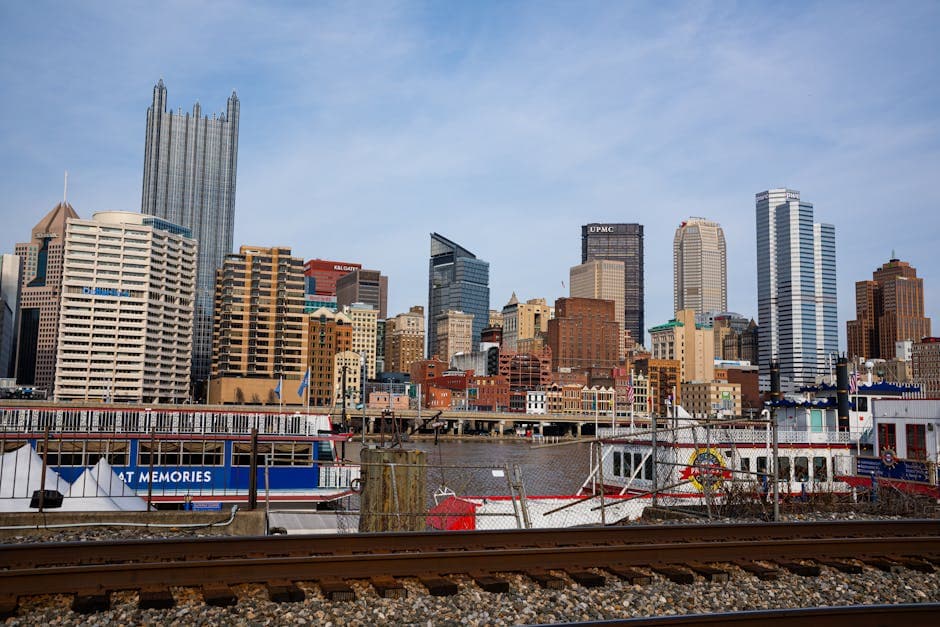
"Pittsburgh feeds itself out of a 1933 Strip District sandwich counter, a 95,000-employee health system, three colour-uniform sports franchises, and 446 bridges."
I. The Lede
It is 9:07am on a Saturday on Penn Avenue. The Strip District is full and a Polish deli counter is twenty-eight orders deep into a 240-order morning.
The counter sits in a narrow brick storefront on Penn Avenue, between an Italian-import deli that opened in 1902 and a coffee bar that opens at six. On Saturday mornings between nine and noon, the line for the Polish deli extends past the storefront window, past the next two doors, and bends around the corner toward Smallman. Pierogi by the dozen, kielbasa by the pound, smoked ham by the slice, and the family-recipe sauerkraut that the Polish-Catholic side of Pittsburgh has been buying here since the 1970s. There is no app. There is no QR code. There is a chalkboard, a phone, a paper-ticket roll, and a Saturday line.
The operator behind the counter has been there since five-thirty in the morning. She has prepped six hundred pierogi, sliced twelve kielbasa rings, packed ninety-three to-go orders for pickup between eleven and one, and turned away two catering requests for that evening because the volume cap was hit at eight-forty. She has a flip phone, a corded landline at the back, a notebook for catering, and a printed paper ticket roll that the staff tear off and clip to a magnetic strip behind her. There is no point-of-sale screen. There is no DoorDash tablet. There has not been one since the deli opened in 1971, and the Saturday line has not gotten shorter.
What there is, instead, is the kind of demand a marketing person would call constraint and a deli operator calls Saturday. The catering requests came from a UPMC residency program on Lothrop Street and from a Carnegie Mellon postdoc cohort that wanted a forty-person Eastern-European spread for a Sunday evening graduation dinner in Squirrel Hill. The phone orders are for pickup between eleven-fifteen and one-oh-five, the window when a Polish deli order can be carried out the door, into a car parked on Smallman, and home to Squirrel Hill or Mt. Lebanon for the Steelers noon kickoff. The walk-up orders are for three retired men who have been buying kielbasa here every Saturday for, by their own count, twenty-six years.
The operator's problem is not demand. The operator's problem is that there are seven channels of demand on a Saturday morning, and exactly one of her is at the counter. The phone rings, the line moves, the catering email her nephew set up three years ago has fourteen unread requests, and a courier from a marketplace app she signed up for in 2021 (and never actually used) is standing at the back of the line because his app routed him to this counter and he has no idea whether to ring the bell or get in line behind the customers.
This report is about Pittsburgh: a city that, more than almost any other in America, still feeds itself out of warehouse-row delis, neighborhood Italian restaurants, ninety-five-thousand-employee hospital campuses, and a sandwich counter that has been putting fries inside the bread since 1933. The digital ordering question here is fundamentally different from the question in Austin or Los Angeles. The Pittsburgh question is not "how do we acquire customers." The Pittsburgh question is "how do we handle the demand we already have without giving a 27% cut to a marketplace that did not put a single one of those customers in the line." That is a different problem, and it has a different answer.
The answer is direct. The shape of "direct" in Pittsburgh is what this report is about.
II. The Three Rivers and the 446 Bridges
Pittsburgh has more bridges than any city on Earth, Venice included. The food economy is shaped by the rivers.
At Point State Park downtown, the Allegheny River (flowing in from the northeast) meets the Monongahela River (flowing up from the south) to form the Ohio River. From that visible confluence the Ohio runs almost a thousand miles west to the Mississippi. The bridges that connect the city's neighborhoods across those rivers (and across the dozens of ravines and railroad cuts that score the terrain) total 446 in Allegheny County by the most-cited PennDOT-and-county inventory. That is more bridges than any other city on Earth, Venice included.
Three Rivers schematic
The Allegheny + the Monongahela form the Ohio at "The Point" downtown. 446 bridges span Allegheny County.
Allegheny County / PennDOT bridge inventory
Allegheny River
Flows in from the northeast
The cleaner, faster of the two source rivers. Carries the North Shore stadiums, Lawrenceville, the Strip District wholesale row, and the Sixteenth Street Bridge boundary between the Strip and the North Side.
Monongahela River
Flows up from the south
The slower, mineral-stained river. Runs the south flank of downtown along the Mon Wharf and divides the South Side from the central business district. Carries the steel-mill era memory of the Mon Valley.
Ohio River
Forms at the Point, flows west
Begins at the confluence at Point State Park downtown, the visible center of the Three Rivers identity. From the Point the Ohio runs almost a thousand miles west to the Mississippi.
Pittsburgh is the only major American city whose central business district is a triangular wedge of land at the confluence of two rivers. The Allegheny, the cleaner and faster of the two source rivers, flows in from the northeast through Lawrenceville and the Strip. The Monongahela, the slower river that drained the steel-mill economy of the Mon Valley for a century, flows up from the south past the South Side and the Mon Wharf. The two meet at the visible Point. From the Point, the combined waters flow west as the Ohio for nearly a thousand miles to the Mississippi.
The bridges are the visible consequence of that geography. The Allegheny County bridge inventory, which is the authoritative count for the Pittsburgh metro and the source of the most-cited "city of bridges" figure, totals 446. By any honest tally, that is more bridges than Venice, Italy (which lists roughly 400) and more than any city on Earth that publishes a public bridge count. Hamburg, Germany has more total spans, but Hamburg counts pedestrian-and-canal bridges that Allegheny County does not. The Pittsburgh number is, in plain terms, the largest count of road-and-pedestrian bridges in any single metro on the planet.
For a restaurant operator, that geography is not an abstraction. It is the dispatch problem. A pickup order from a Lawrenceville pizzeria to a North Side customer crosses one of the Allegheny bridges. A pierogi catering order from the Strip District to a South Side condo crosses the river twice (Allegheny to downtown, downtown across the Smithfield Street or Liberty Bridge to the South Side). A Squirrel Hill noodle order to a Carnegie Mellon dorm runs across the Schenley Park bridge complex. Every dispatch in Pittsburgh is, to a first approximation, a river-and-bridge problem.
That is one reason marketplace dispatch struggles here in ways it does not struggle in a flat Midwestern grid city. The bridges are the bottleneck. A courier delayed by Steelers Sunday traffic on the Fort Pitt Bridge cannot trivially reroute, because the alternate is the Liberty Tunnel, which is its own bottleneck. The Uber Direct dispatch model (call a courier when you have an order, not a fleet pre-positioned around the neighborhood) tolerates that bottleneck better than the marketplace model that depends on couriers idling within five minutes of every restaurant.
The rivers also shape the neighborhood structure. Lawrenceville and the Strip District are on the Allegheny. The South Side and South Side Works are on the Monongahela. Downtown sits at the Point. Oakland (Pitt and UPMC Presbyterian) and Squirrel Hill (Carnegie Mellon's neighbor) are east of downtown but separated from the rivers by the Hill District ridge. Bloomfield, Shadyside, and East Liberty form a contiguous belt of restaurant economy north of the Schenley Park complex. Each district has a different geography, a different demand pattern, and a different dispatch profile.
For a Pittsburgh restaurant in 2026, the digital ordering stack that actually fits the geography is one built around two assumptions. First, that dispatch is a bridge problem, not a flat-grid problem, so per-courier costs are real and surge-tolerance has to be a design choice. Second, that the demand baseline is already there, in a hundred-and-thirty-year-old Italian deli row, a ninety-five-thousand-employee hospital system, three pro sports franchises that share a single color uniform, and a Saturday morning Strip District line that has been forming since the Eisenhower administration.
The bridges, in other words, are not a tourism statistic. They are the operating reality of every Pittsburgh restaurant's pickup-and-delivery tail.
III. The Primanti Brothers Sandwich
Anatomy of the 1933 Pittsburgh sandwich: capicola, cheese, fries, slaw, and tomato inside the bread.
In 1933, on 18th Street in the Strip District, the Primanti brothers built a sandwich for overnight produce-truck drivers who needed to eat with one hand on the wheel. They put the fries and the cole slaw inside the bread, with the cheese and the meat. The architecture broke the rules of every other sandwich in America and became the Pittsburgh sandwich. The stack below is the standard build, top to bottom, as served at the original 18th Street counter and at every Primanti location since.
Stack diagram
Top to bottom, the architecture of a Primanti Brothers sandwich.
Top slice of Italian bread
~2 ozSoft, hand-cut. Holds the architecture together for the truck-driver walk back to the rig.
Tomato slices
~1 ozTwo slices, raw, beefsteak. The acid that cuts the meat and cools the fries.
Vinegar cole slaw
~2 ozInside the sandwich, not on the side. Vinegar-forward, cabbage cut fine. The signature Primanti structural choice.
French fries
~3 ozHot, salted, hand-cut. Stacked on the slaw, inside the sandwich. The 1933 Strip District invention that broke the rules of every other sandwich in America.
Provolone cheese
~1 ozA slice of mild provolone. The melt anchor between the fries and the meat.
Grilled meat (capicola, pastrami, or roast beef)
~4 ozThe protein course. Capicola is the most-cited Primanti benchmark. Pastrami and roast beef are the Strip-District alternates.
Bottom slice of Italian bread
~2 ozSame loaf. The sponge for the slaw vinegar and the cheese melt. The first piece to surrender under transit.
The Primanti Brothers sandwich was built in 1933 for a customer who could not put down what he was doing to eat. The 18th Street counter sat in the middle of the Strip District wholesale produce row, surrounded by trucks unloading at three in the morning, and the brothers built a sandwich that a driver could grip in one hand and eat on the seat of a truck without spilling a fry, dropping a tomato, or losing the slaw. The fries went in the sandwich, not next to it, because the brown paper bag on the truck seat could not hold a side of fries and a sandwich at the same time. The slaw went in the sandwich for the same reason. The Italian bread, hand-cut into thick slabs, was structural.
Ninety-three years later, the Primanti sandwich is codified. Italian bread top, two slices of beefsteak tomato, vinegar-forward cole slaw, hot hand-cut french fries, a slice of provolone, a stack of grilled capicola (or pastrami or roast beef as the alternate proteins), and the Italian bread bottom. The construction takes about thirty-five seconds at a busy counter. The architecture is forgiving: the slaw insulates the meat, the cheese binds the fries, the tomato cools the layer stack, and the only weakness is the bottom slice of bread, which absorbs vinegar from the slaw if the sandwich sits longer than about twelve minutes.
From a digital ordering perspective, the Primanti is one of the rare items that travels. The architecture was engineered for one-handed eating on a moving truck seat, so the architecture survives a fifteen-minute Uber Direct dispatch from the Strip District to the Cathedral of Learning in Oakland without meaningful integrity loss. The fries stay hot enough. The slaw stays cold enough. The provolone has melted into the fries by the time the courier hands it off, and the customer (a Pitt graduate student who has eaten exactly four hundred and one of these over the course of a five-year doctoral program) cannot meaningfully distinguish the takeaway sandwich from the one served at the counter.
That has commercial implications. Most regional American sandwiches collapse in transit. The Italian beef from Chicago. The cheesesteak from Philadelphia. The muffuletta from New Orleans. The Cuban from Tampa. All of them suffer measurably between counter and table when carried more than a few minutes. The Primanti, alone among that catalog, was built to survive transit. Direct ordering, with Uber Direct dispatch at courier cost and a Voice AI that can correctly say "extra slaw, no tomato, pastrami instead of capicola," is the right stack for this sandwich. The operator does not have to pay a marketplace 27% for the privilege of doing what the sandwich already does well by design.
And the Primanti is not just a Pittsburgh tourist purchase. The 18th Street counter still feeds a steady weekday lunch line from Strip District-area office workers, late-night dock workers, and the residency-program residents at UPMC Mercy a few blocks away. Multiply that operating pattern across two dozen other Pittsburgh sandwich counters and chef-driven rooms that have built their own Primanti-derivative menu items (the Lawrenceville short-rib version, the Bloomfield porchetta variant, the Squirrel Hill kosher pastrami homage), and the structural insight holds: the most-shippable Pittsburgh item is the one that was engineered for delivery before delivery was a category.
IV. The Hospital and University Economy
Roughly 143,000 medical, academic, and research workers inside the Pittsburgh city footprint.
UPMC, the University of Pittsburgh Medical Center, is the largest non-profit health system in Pennsylvania, with a system workforce of approximately 95,000 (heavily concentrated in Allegheny County). The University of Pittsburgh and Carnegie Mellon University, both in Oakland, together employ another 48,000 faculty, staff, and graduate workers. That is the demand baseline for the East End restaurant economy. Every weekday from 10am to 1pm and from 5pm to 7pm, the question is not whether tens of thousands of medical and academic workers want lunch and dinner from a local restaurant. The question is which one gets the call, and how.
Workforce by anchor
Approximate full-system workforce in and around Pittsburgh.
UPMC (University of Pittsburgh Medical Center)
The largest non-profit health system in Pennsylvania. Headquartered in the Steel Tower downtown. Major Pittsburgh campuses include UPMC Presbyterian, UPMC Shadyside, UPMC Mercy, UPMC Magee, and UPMC Children's Hospital in Lawrenceville.
Catering pattern: House food service for staff and patient trays. Independent restaurants supply residency meals, grand rounds catering, and the office orders that the central kitchens cannot turn around on three hours' notice.
University of Pittsburgh
Oakland campus. Approximately 28,000 students plus faculty and staff. The Cathedral of Learning anchors a campus that bleeds into UPMC Presbyterian on one side and Carnegie Mellon on the other.
Catering pattern: Constant departmental catering across schools of medicine, public health, engineering, and arts. Forbes and Fifth Avenue restaurants take heavy steady-state pickup volume.
Carnegie Mellon University
Adjacent Oakland-Squirrel-Hill border campus. Approximately 15,800 students and faculty across schools of computer science, engineering, design, and Tepper business.
Catering pattern: Research-program lunch orders, grant-conference catering, and the steady weekday lunch tail from Squirrel Hill and Shadyside restaurants three blocks away.
UPMC, the University of Pittsburgh Medical Center, is the largest non-profit health system in Pennsylvania and one of the largest integrated health systems in the United States. The system workforce, by UPMC's public facts and figures page, sits on the order of 95,000, with a heavy concentration in Allegheny County hospitals (UPMC Presbyterian in Oakland, UPMC Shadyside, UPMC Mercy on the Bluff, UPMC Magee for women's health, UPMC Children's in Lawrenceville). Inside those hospitals, an internal food-service operation handles cafeteria volume and patient trays. Outside, an entire restaurant economy services the demand the in-house kitchens cannot, do not, or will not cover.
The University of Pittsburgh, also in Oakland, runs a campus of roughly 33,000 students, faculty, and staff, and an in-house dining program that anchors the dorms and the Cathedral of Learning ground-floor cafe. The restaurants on Forbes Avenue and Fifth Avenue (the Oakland restaurant row that runs from the Petersen Events Center to Carnegie Library) absorb the catering tail: department-meeting lunches, grant-celebration dinners, residency-program orders, and the steady weekday lunch volume of a 33,000-person knowledge worker base.
Carnegie Mellon, three blocks east of Pitt across Schenley Park, is smaller (about 15,800 students plus faculty and staff) but proportionally more research-driven and more international. The CMU catering tail runs heavier on grant-conference orders (the School of Computer Science alone runs research-program lunches for sixty people on a Tuesday three times a month) and on Squirrel Hill and Shadyside restaurants three blocks east, where the faculty and graduate students actually live. The Casbah-and-Soba and Girasole-and-Mineo's pickup volume from CMU is a measurable share of those restaurants' weekday lunch revenue.
Together, that is somewhere on the order of 143,000 working adults inside a four-mile radius of Forbes and Fifth, all of them eating lunch and dinner roughly five days a week, the overwhelming majority of those meals not at hospital cafeterias or campus dining halls. The aggregate annual restaurant spend across that workforce is a number in the high nine figures, regardless of how conservatively you model the per-capita restaurant share of pay.
The operational requirements for that demand are precise: a phone that gets answered (Voice AI works here), a website that takes a 30-person order with allergen flags and a delivery window, a courier that can dispatch on schedule (Uber Direct does this even when Forbes is gridlocked with a Pitt basketball crowd), and a kitchen ticket that prints correctly the first time so the prep cook can start at 9:45 and not 10:30. None of those operational requirements demand a third-party marketplace. All of them are direct-ordering capabilities. The only thing a marketplace adds to this transaction is a 27% margin haircut, and the operator on the receiving end of a sixty-person grant-celebration catering order from the School of Computer Science does not have the per-order margin to give up.
V. The Strip District
Smallman and Penn, 16th to 26th. The Italian, Polish, and chef-driven market row of Pittsburgh.
The Strip District is a half-mile ribbon of warehouse-and-storefront brick that runs along the Allegheny River from 16th Street to 26th Street, on Smallman and Penn Avenues. It was Pittsburgh's wholesale produce-and-meat row for a century. Pennsylvania Macaroni Company has run an Italian-import deli at 21st and Penn since 1902. Wholey's has run its fish-and-meat counter since 1912. The Polish, Greek, and Italian markets that fed the Catholic immigrant Pittsburgh of the early 20th century still operate. Overlaid on top of that is a chef-driven generation of restaurants that opened through the 2010s and into 2026. The composition below is approximate, based on the published mix in Pittsburgh Magazine and Visit Pittsburgh listings.
Strip District composition
Approximate share of operator categories on Penn and Smallman between 16th and 26th.
Pittsburgh Magazine + VisitPittsburgh listings
- Italian markets and delis26% sharePennsylvania Macaroni Company, Sunseri's, Stamoolis Brothers (Greek-Italian crossover). The Italian-import anchor that has run Smallman Street for a century.
- Polish, Slavic, and Eastern European14% shareS&D Polish Deli, Wholey's smoked-meat counter, the pierogi and kielbasa retail row that feeds the Polish-Catholic Pittsburgh diaspora every weekend.
- Coffee, bakery, and pastry16% sharePrestogeorge, La Prima Espresso, Allegro Hearth Bakery, Mediterra Bakehouse. The Saturday morning anchors that pull the city through the Strip on coffee.
- Chef-driven restaurants and counters22% shareCure (Justin Severino's seasonal restaurant before its relocation), Bar Marco, Pusadee's Garden, Smallman Galley graduates. The current generation of Strip operators.
- Wholesale produce and seafood14% sharePenn Avenue produce row, Wholey's Market for fish and meat, Parma Sausage. The historic Strip purpose: wholesale supply for the city's restaurant industry.
- Specialty (cheese, spice, sweet)8% sharePittsburgh Spice Company, Reyna's Foods (Mexican), Lotus Food Company (Asian). The narrow-but-deep specialty counters that operators stock from.
The Strip District is not a renovated food hall. It is not a developer's invention. It is a working warehouse-and-storefront retail district that has been continuously operating along Smallman and Penn since the late 19th century. The Italian-import counters were here for the Italian Pittsburgh of 1900. The Polish delis were here for the Slavic-Catholic Pittsburgh of 1920. The Greek and Mediterranean import shops were here for the Greek-Pittsburgh of 1940. The chef-driven Bar Marco and Smallman Galley overlay was here for the 2010s. All four layers still operate, on the same six blocks, at the same time.
On a Saturday morning between nine and noon, the Strip is one of the densest pedestrian retail districts in the eastern United States outside of Manhattan and Center City Philadelphia. Penn Mac has a line out the door. Wholey's smoked-fish counter has a line. The pierogi counters at S&D and Sunseri's both have lines. La Prima Espresso has people three-deep at the bar. The chef-driven coffee shops and the brunch-counter dining rooms (Pamela's Strip location, Bar Marco) are running at capacity. The street is a moving river of foot traffic between sixteen and noon.
What this means for digital ordering is that the Strip District operator is, like the West Side Market vendor in Cleveland or the Reading Terminal vendor in Philadelphia, running the smallest unit of restaurant in America. Many Strip operators have no dining room. They have a counter, a chalkboard, and a Saturday line. The digital ordering question is not "how do we acquire customers." It is "how do we handle the Saturday demand without giving up Sunday's payroll to a marketplace."
The chef-driven overlay on top of the historic markets has a slightly different problem. Cure, Bar Marco, Pusadee's Garden, and the Smallman Galley graduate class run dining rooms with tasting-menu margins, and the marketplace haircut on their pickup tail is operationally untenable. A direct ordering site (branded, controlled by the operator) with a Voice AI on the reservation and pickup phone line, plus Uber Direct dispatch at courier cost for the occasional delivery order, is the stack that fits the Strip District chef-driven margin model.
And there is a third layer in the Strip that direct ordering needs to address: the wholesale-supply backbone. Penn Mac sells retail to weekend customers and wholesale to restaurants. Wholey's does the same. Parma Sausage does the same. A direct stack that lets a Pittsburgh restaurant operator place a Tuesday-morning Penn Mac order for fifteen pounds of capicola and four pounds of provolone, with delivery to the kitchen on Wednesday, is operationally equivalent to the b2b ordering layer that the Strip District has been running on faxes and phone calls for forty years. That is in scope for direct, and it is structurally out of scope for any consumer marketplace.
VI. Black and Gold, Three Franchises
The Steelers, Penguins, and Pirates all wear black and gold. The only American city where all three pro teams share a color scheme.
In 1948, the Pittsburgh Pirates adopted black-and-gold as their official colors. The Pittsburgh Steelers had already been wearing black-and-gold since their founding in 1933. In 1980, the Pittsburgh Penguins switched from blue-and-white to black-and-gold to match. Pittsburgh is the only American city where all three major-league pro franchises (NFL, MLB, NHL) share a single color uniform: the Steeler black, the city gold. It is the most-cited civic color identity in American sports.
September to January (NFL)
Pittsburgh Steelers
Acrisure Stadium (North Shore)
Capacity 68,400
Eight home Sundays per regular season. North Shore stadium across the Sixth Street Bridge from downtown. The Terrible Towel tailgate culture spills into the Strip and into North Side bars.
April to October (MLB)
Pittsburgh Pirates
PNC Park (North Shore)
Capacity 38,747
Eighty-one home games per regular season. Across the Roberto Clemente Bridge from downtown, with one of the most photographed skyline-and-river backdrops in the league.
October to April (NHL)
Pittsburgh Penguins
PPG Paints Arena (Uptown)
Capacity 18,387
Forty-one home regular-season games plus playoffs. East of downtown on Fifth Avenue. Pre-game and post-game crowd from Strip District, Bloomfield, and Lawrenceville restaurants.
The color uniformity is not just decorative. It produces a civic visual identity that no other American sports city has at the same density. On a Sunday in November, downtown Pittsburgh and the North Shore are a wall of black-and-gold from the Sixth Street Bridge through Acrisure Stadium and back across to the Strip District. The Terrible Towel, raised in unison at the close of every Steelers home game since 1975, is the most-cited fan tradition in American sports. The Pirates wear the same gold "P" against the same black field. The Penguins, since 1980, have built their identity around it.
For a restaurant operator, the practical implication is operational rhythm. Eight Steelers Sundays per regular season, plus playoff days. Eighty-one Pirates home games across an April-to-October baseball season. Forty-one Penguins home regular-season games plus playoffs. The combined home-game footprint runs almost continuously from late March through January. For downtown, North Shore, and Strip District operators, the question is not whether to plan for game day. The question is how to handle the surge without breaking the kitchen.
Steelers Sundays are the largest surge. Sixty-eight-thousand-plus fans walk the North Shore, the bridges from downtown fill up by ten in the morning, and the tailgating crowd spills back through the Strip and into Lawrenceville pre- and post-game. The operator stack for that surge is well understood: a phone that does not go to voicemail (Voice AI answers it), an online ordering site that can throttle pickup capacity (a direct platform allows that), and an Uber Direct dispatch that does not run out of couriers at the moment of peak demand. Marketplace dispatch, with couriers idling in zones, structurally fails this surge in ways an order-driven dispatch does not.
Penguins nights are forty-one home games. The PPG Paints Arena crowd is concentrated in Uptown along Fifth Avenue, and the pre-game restaurants in the Strip District and Bloomfield three blocks away absorb the dinner volume. Two surges, both predictable. Pirates summer weeknights are eighty-one home games, mostly evenings, with a lower per-night volume than Steelers Sundays but a higher cross-season total. For a North Shore or downtown operator, the Pirates schedule is the steady-state weekday revenue baseline for the entire summer. A direct ordering stack with a stable phone-answering Voice AI and a branded site lets the operator absorb that demand without giving up margin every night for six months.
A note on the geography: PNC Park and Acrisure Stadium share the North Shore, two-tenths of a mile apart along the Allegheny waterfront. A Saturday in summer with a Pirates afternoon game and a Penguins playoff evening (rare but real) puts two surges six hours apart on the same Saturday in the same two-stadium footprint. The direct ordering stack pays for itself across one weekend of that kind of double-header.
VII. The Neighborhood Atlas
Strip, Lawrenceville, Bloomfield, Squirrel Hill, Shadyside, South Side: six operating models.
Pittsburgh's chef-driven economy is not a single district. It is six neighborhoods, each with a separate operating model, a separate cuisine profile, and a separate demand baseline. The atlas below maps the rough geography and lists the anchors that define each neighborhood's restaurant identity.
Schematic atlas (not to scale)
Relative positions of Pittsburgh's chef-driven and heritage neighborhoods around the three rivers.
Lawrenceville
ZIP 15201Butler Street corridor along the Allegheny. The most-cited chef-driven district in Pittsburgh. A decade of openings from Cure, Spoon, Independent Brewing Company, Driftwood Oven, Lola Bistro alumni rooms, and the Smallman Galley graduate class.
- Cure (Justin Severino)Italian-influenced charcuterie, seasonal tasting
- Driftwood OvenWood-fired pizza, neighborhood anchor
- AptekaVegan Eastern European, James Beard semifinalist
- B52Vegan Middle Eastern
Strip District
ZIP 15222Smallman and Penn between 16th and 26th. The historic wholesale produce-and-meat row, with Italian markets, Polish delis, the Wholey's seafood counter, and a chef-driven overlay that grew through the 2010s and into 2026.
- Penn Mac (Pennsylvania Macaroni Co.)Italian-import deli since 1902
- Wholey's MarketSeafood and smoked meat counter
- Pusadee's GardenThai, indoor-outdoor seating
- Primanti Brothers (18th Street)The original 1933 Primanti counter
Bloomfield
ZIP 15224Liberty Avenue spine. Known as Pittsburgh's Little Italy. The Italian-heritage neighborhood that runs from the Bloomfield Bridge to the Penn Avenue line, with a steady second-generation Italian-American restaurant economy and a wave of newer openings.
- Pleasure Bar and RestaurantItalian-American, since 1950s
- Tessaro'sHardwood-grilled burgers
- Salty Pork Bits / CasbahMediterranean small plates
- Lot 17Late-night burgers and beer
Squirrel Hill
ZIP 15217Forbes and Murray Avenues. The Jewish-heritage neighborhood east of Carnegie Mellon. Walking distance to Pitt and CMU faculty housing. A dense, year-round restaurant economy that runs Sunday brunch through late-night Murray Ave noodle counters.
- Pamela's Diner (Murray Ave)Pittsburgh diner, Obama-cited hotcakes
- Mineo's PizzaSquare Sicilian, Murray Avenue anchor since 1958
- Everyday NoodlesHand-pulled Taiwanese, JBF nominated
- 61C CafeCoffee and pastry, neighborhood study anchor
Shadyside
ZIP 15232Walnut Street and Ellsworth corridors. The historically affluent East End neighborhood between Squirrel Hill and the East Liberty / Bakery Square redevelopment. Walking density across two retail spines, plus the medical-resident catering tail from UPMC Shadyside.
- GirasoleItalian, longtime Walnut Street anchor
- SobaPan-Asian, Big Burrito group
- Mad Mex (Shadyside)Tex-Mex and margaritas, Big Burrito
- Bartram House BakeryEuropean pastry, Penn Avenue
South Side / Carson Street
ZIP 15203East Carson Street, the longest continuous Victorian-era commercial main street in the United States. The Slavic-heritage South Side Flats that runs from the Birmingham Bridge to the South Side Works, with a late-night bar-and-restaurant density unmatched anywhere else in Pittsburgh.
- Nakama Japanese SteakhouseHibachi and sushi, Carson Street anchor
- Piper's PubBritish / Scottish pub, EPL crowd
- Dish OsteriaItalian, late-night chef-driven
- Smoke BBQ TaqueriaTexas barbecue meets Mexican
Lawrenceville, along Butler Street between the 40th Street Bridge and the Carnegie Library Lawrenceville branch, is the most-cited chef-driven district in Pittsburgh. A decade and a half of openings (Cure, Apteka, Driftwood Oven, B52, Spoon, Independent Brewing Company, Smallman Galley alumni rooms) has built a restaurant density on Butler Street that rivals any East End walking corridor. The Butler Street operating model is dining-room-first with a careful pickup tail, and the chef-driven margin model does not tolerate a marketplace haircut.
Bloomfield, along Liberty Avenue between the Bloomfield Bridge and the Penn Avenue line, is Pittsburgh's Little Italy. Pleasure Bar, Tessaro's, Lot 17, Pita's Royale, and a steady second-generation Italian-American restaurant economy that has run Liberty for half a century. The neighborhood demand baseline is mostly local and walking-distance, with a UPMC Shadyside catering tail from the medical residents who live in Bloomfield row houses. A direct ordering site with a Voice AI on the phone line handles that demand cleanly.
Squirrel Hill, along Forbes and Murray Avenues east of CMU, is the Jewish-heritage neighborhood that sits between Pitt-CMU and the residential East End. A dense, year-round restaurant economy that runs from Pamela's Diner breakfast through Mineo's Sicilian-square late lunch through Everyday Noodles Taiwanese hand-pull dinner. The catering tail to CMU and to the Carnegie Library Squirrel Hill branch is steady and weekday. The Jewish high holiday cycle (Rosh Hashanah, Yom Kippur, Passover, Hanukkah) drives predictable catering surges that the operator who runs a direct stack can plan against.
Shadyside, along Walnut Street and Ellsworth Avenue between Squirrel Hill and East Liberty, is the historically affluent East End neighborhood with a walking density across two retail spines. Casbah, Soba, Mad Mex, Girasole, and the Big Burrito Restaurant Group's flagship rooms anchor the chef-driven economy. The catering tail from UPMC Shadyside (the hospital is literally on the edge of the neighborhood) is the steadiest weekday lunch line on Walnut Street. Direct ordering is the operationally correct stack for these dining rooms.
The South Side, along East Carson Street between the Birmingham Bridge and the South Side Works, is the longest continuous Victorian-era commercial main street in the United States. Late-night Carson Street is a late-night bar-and-restaurant district at a density Pittsburgh does not have elsewhere. Nakama hibachi, Piper's Pub for English Premier League, Dish Osteria, and Smoke BBQ Taqueria anchor a Carson Street economy that runs from college-bar volume early in the night to chef-driven late-dining volume after ten. A direct stack with a Voice AI that can answer the phone at midnight (Voice AI doesn't go home at ten) is the operationally fitting stack for this district.
And the Strip District, treated as its own neighborhood above, is the connective tissue between all of these. The wholesale-supply backbone of Pittsburgh's restaurant economy runs through Penn Mac, Wholey's, Parma Sausage, and Pittsburgh Spice Company. Every operator in Lawrenceville, Bloomfield, Squirrel Hill, Shadyside, and the South Side stocks from the Strip District on Tuesday morning. A direct stack that can absorb that b2b ordering layer, in addition to the consumer pickup-and-delivery layer, is structurally a better fit for the Pittsburgh restaurant economy than any consumer-only marketplace.
VIII. Pierogi and Kielbasa
The Polish-Catholic Pittsburgh that built the Strip District, the South Side, and the Mon Valley.
Pittsburgh, like Cleveland and Buffalo, is a Polish-Catholic city. The waves of Polish, Slovak, and Czech immigration that came to the Mon Valley steel mills between 1880 and 1930 built the neighborhood structure of the South Side, the Strip District, Lawrenceville, Polish Hill, and the mill towns down the Monongahela. The pierogi and the kielbasa are not regional novelties here. They are the staple weekday lunch of a quarter-million Pittsburgh-area residents whose grandparents arrived through Ellis Island with names that ended in -ski, -czyk, and -wicz.
The pierogi at S&D Polish Deli in the Strip is hand-made in batches of three hundred every morning. Cheese, potato, sauerkraut, and mushroom are the year-round fillings. Sweet cabbage and prune appear seasonally. Kielbasa from Krakus Brand, from Parma Sausage on Cedarville Street, and from S&D's own counter, is sold by the ring, by the pound, and by the half-link. The Friday Lent calendar still drives a measurable share of South Side and Strip District pierogi volume from Ash Wednesday through Easter. The Polish Catholic high-holiday cycle (Christmas Eve Wigilia, Easter Swieconka, All Saints' Day) drives the year's largest catering surges.
The chef-driven overlay on top of that heritage is real. Apteka, the vegan Eastern European restaurant in Lawrenceville, has been a James Beard semifinalist multiple years for redefining pierogi-and-haluski-and-stuffed-cabbage in a contemporary vegan tasting-menu format. Pierogies Plus in McKees Rocks runs a wholesale pierogi operation that supplies Pittsburgh-area grocery stores and event venues. The Pittsburgh Pierogi Festival, held annually in the Strip District, draws crowds in the tens of thousands and operates as a community-and-commerce event in equal measure.
The operational implication for digital ordering is straightforward. A pierogi counter at the Strip District is the smallest-unit restaurant in America. It needs a phone that can take a Friday-morning catering call for forty-eight dozen, a website page that lists the day's fillings, and an Uber Direct dispatch when a Bloomfield row-house customer wants twelve dozen sent over for Wigilia. A Voice AI that can correctly say "two dozen cheese, one dozen sauerkraut, one dozen mushroom, pickup at 4:30" in English or in Polish is, in 2026, a measurable productivity gain over a handwritten ledger at a counter. None of this requires a marketplace.
The kielbasa side of the heritage runs on a similar pattern. A weekday lunch counter that sells kielbasa-and-haluski plates to Mon Valley steelworkers (or to the descendants of those steelworkers in the rebuilt mill towns of Homestead, Braddock, and Aliquippa) does not need acquisition. It needs throughput. The phone rings constantly on Friday between ten and noon. The catering email for the Polish-Catholic parish hall a mile away is on a Hotmail address the operator's daughter set up in 2011. A direct stack consolidates that demand into a clean operational interface, takes nothing on the back end, and keeps the heritage business running on the margin it needs to keep running.
IX. The 7% Sales Tax
Pennsylvania base sales tax 6% + Allegheny County 1% = 7% combined in Pittsburgh. A close-read for the operator.
Pennsylvania imposes a 6% state sales-and-use tax on most prepared food sold for immediate consumption. Allegheny County, the home county of Pittsburgh, levies an additional 1% local sales tax authorized under the Allegheny Regional Asset District (RAD) and county codes, putting the Pittsburgh combined sales tax on a prepared-food check at 7%. That rate is the headline operator number for any Pittsburgh restaurant POS system, marketplace integration, and direct ordering platform configuration.
The structural detail that matters for operators is who is responsible for remitting that tax. Under Pennsylvania law, the restaurant is responsible for collecting and remitting sales tax on prepared food. When a marketplace facilitator (DoorDash, Uber Eats, Grubhub) processes the transaction, Pennsylvania's marketplace-facilitator statute requires the facilitator to collect and remit on behalf of the restaurant. In practice, the way that interacts with operator-side accounting is messy: the operator sees a net deposit (gross less commission less tax already remitted by the facilitator), reconciles that deposit against POS-side gross sales, and books a sales-tax-remitted-by-third-party entry that has to clear cleanly when the state files come due.
Direct ordering is structurally cleaner. The operator collects the 7% on the customer charge, books it as deferred liability on the kitchen side, and remits to the Pennsylvania Department of Revenue on the operator's filing cycle (monthly or quarterly, depending on revenue). No facilitator middleman. No reconciliation between deposit-net-of-commission-and-third-party-remitted-tax and POS-side gross. The accounting is what it was before the marketplaces existed: gross sale, tax collected, net retained, tax remitted.
For a Pittsburgh operator running roughly $50,000 per month in marketplace gross, the practical effect of the marketplace-facilitator model is that the operator's accountant spends a meaningful share of monthly close-time reconciling marketplace-tax-remittance reports across three or four marketplaces. The clean accounting on a direct-ordering channel is a meaningful operating cost saving even before the commission savings. It is the sort of detail that does not show up in a marketplace acquisition pitch and that shows up immediately on the operator's accountant's invoice on close-day.
X. How DirectOrders Fits Pittsburgh
A direct stack for a three-rivers, hospital-and-university anchored, neighborhood-driven food city.
The argument of this report has been a structural one. Pittsburgh is not a marketplace acquisition market. The demand for Pittsburgh restaurants does not need to be manufactured by a third-party app: it is already there, in the Strip District line on Saturday morning, in the catering calls from UPMC and Pitt and Carnegie Mellon, in the eighty-one Pirates home games per summer, in the Steelers tailgate on the North Shore, in the pierogi orders for Wigilia that have been moving across the Sixth Street Bridge for a hundred years. The Pittsburgh operator's problem is not getting found. It is handling the demand that already exists, in a way that keeps the per-order margin intact across 446 bridges and three rivers.
That is what direct ordering is for. A flat $249-per-month price on the platform, an Uber Direct dispatch at courier cost (no markup), a Voice AI that can answer the phone in English or Polish or Italian or Spanish, a branded ordering site that the operator controls, and same-day payouts that let the operator pay prep cooks on Friday afternoon. None of those pieces requires a marketplace take. Each of them maps directly to a problem an operator at a Strip District deli, a Lawrenceville chef-driven room, a Bloomfield Italian-American counter, a Squirrel Hill noodle house, a Shadyside dining room, or a South Side Carson Street late-night bar is solving on a Saturday morning at eleven.
The Strip District deli operator needs a phone that gets answered when the line is twenty-eight orders deep. Voice AI handles that. The Carnegie Mellon School of Computer Science needs a sixty-person grant-celebration catering order with allergen lists at noon next Tuesday. A branded ordering site handles that. The Steelers Sunday tailgate needs a twelve-Primanti run from 18th Street to the North Shore parking lot at 11am. Uber Direct at courier cost handles that. The Bloomfield Italian-American operator with a Friday dinner rush needs same-day payouts so the prep cook gets paid for the prep. The platform handles that. Pennsylvania 6% state sales tax plus Allegheny County 1% equals 7% on the check, and the operator collects and remits cleanly without going through a marketplace-facilitator reconciliation. The platform handles that.
What the platform does not do, by design, is take 27% on the back end. Pittsburgh operators have margins that look like the rest of America's restaurant industry, which is to say slim. The marketplace haircut, in a city whose customer-acquisition problem is fundamentally solved by a 1933 Strip District sandwich counter, three pro sports franchises that wear the same color, and a 95,000-employee health system, is a pure tax on operator margin. The direct stack is the operationally and structurally correct alternative.
Pittsburgh has been feeding itself for more than a century out of warehouse-row delis on Penn Avenue, neighborhood Italian restaurants on Liberty Avenue, and ninety-five-thousand-employee hospital campuses in Oakland and Shadyside. The digital ordering stack that fits Pittsburgh is the one that respects that operating reality. Direct, low-margin, Voice-AI-led, dispatched at courier cost, and built for a city whose demand has been there since the steel mills were still running on the Monongahela.
Coda
Two paths from here, for a Pittsburgh operator.
If you operate a Pittsburgh restaurant (a Strip District deli, a Lawrenceville chef-driven room, a Bloomfield Italian-American counter, a Squirrel Hill noodle house, a Shadyside dining room, a South Side Carson Street late-night bar, a downtown Primanti or a North Shore tailgate counter) and you have read this far, two paths are reasonable from here.
The first is to spend ten minutes on a free Pittsburgh commission audit. Send us your last three months of marketplace statements. We will return a per-order margin breakdown, a Pennsylvania-and-Allegheny-County tax remittance timing analysis, and a model of what your P&L looks like with the direct stack in place. No call. No follow-up email loop. A document, by Tuesday.
The second is to see the stack live before deciding. The demo runs against an actual Pittsburgh menu (a Primanti-style sandwich, kielbasa-by-the-pound, pierogi by the dozen, a Squirrel Hill Sicilian-square slice). Voice AI on. Uber Direct on. Branded site live. A short walkthrough. We do not ship the demo to your phone. You come to a Zoom and ask whatever you want.
Either path is fine. The point of this report was to make the case clearly enough that the choice between marketplace dispatch and direct ordering is not a marketing question for Pittsburgh. It is an operational and a structural one. For a city built where the Allegheny meets the Monongahela, whose 446 bridges connect a food economy that has been working out of warehouse-row delis since the McKinley administration, only one of those answers fits.
Field index
Restaurants and operators cited in this report.
- Primanti Brothers (18th Street)Strip District, since 1933Pittsburgh sandwich
- Pennsylvania Macaroni Co. (Penn Mac)Strip District, since 1902Italian-import deli
- Wholey's MarketStrip DistrictSeafood and smoked meat
- Stamoolis BrothersStrip DistrictGreek and Mediterranean import
- S&D Polish DeliStrip DistrictPolish deli, pierogi, kielbasa
- Sunseri'sStrip DistrictItalian-American deli, sandwiches
- CureLawrencevilleItalian charcuterie, seasonal tasting
- AptekaLawrencevilleVegan Eastern European
- Driftwood OvenLawrencevilleWood-fired pizza
- Pusadee's GardenStrip DistrictThai, indoor-outdoor
- Pleasure Bar and RestaurantBloomfieldItalian-American
- Tessaro'sBloomfieldHardwood-grilled burgers
- CasbahShadysideMediterranean small plates
- GirasoleShadysideItalian
- Mineo's PizzaSquirrel HillSquare Sicilian pizza
- Pamela's DinerSquirrel Hill (Murray Ave)Pittsburgh diner
- Everyday NoodlesSquirrel HillHand-pulled Taiwanese noodles
- 61C CafeSquirrel HillCoffee, pastry
- Dish OsteriaSouth SideItalian, chef-driven
- Piper's PubSouth SideBritish / Scottish pub
- Nakama Japanese SteakhouseSouth SideHibachi, sushi
- Bar MarcoStrip DistrictChef-driven small plates
- Pamela's (Strip District location)Strip DistrictPittsburgh diner
- Allegro Hearth BakeryStrip DistrictBread, pastry
- La Prima EspressoStrip DistrictItalian coffee
- Klavon's Ice CreamStrip DistrictSoda fountain, ice cream
- Big Burrito Restaurant Group (Casbah, Soba, Mad Mex, others)East End and beyondMulti-concept group
References and sources
The shoe-leather underneath this report.
City of Pittsburgh
City of Pittsburgh
Municipal facts on the Three Rivers, the Point, downtown, and the historic neighborhoods.
Open source →Allegheny County bridge inventory
Allegheny County / PennDOT
Bridge inventory and inspection records. The 446-bridge figure for Pittsburgh as a 'city of bridges' is most often sourced to Allegheny County and PennDOT data.
Open source →UPMC facts and figures
UPMC
UPMC, the University of Pittsburgh Medical Center, is the largest non-profit health system in Pennsylvania. Public facts page covers system workforce, hospitals, and revenue.
Open source →University of Pittsburgh, Institutional Research
University of Pittsburgh
Pitt fact book: students, faculty, staff. Oakland campus institutional data.
Open source →Carnegie Mellon University Office of Communications
Carnegie Mellon University
CMU campus facts: students, faculty, research expenditures, schools and colleges.
Open source →Pittsburgh Steelers
Pittsburgh Steelers / NFL
Acrisure Stadium capacity, North Shore site, NFL home schedule.
Open source →Pittsburgh Pirates
Pittsburgh Pirates / MLB
PNC Park capacity, North Shore site, MLB home schedule.
Open source →Pittsburgh Penguins
Pittsburgh Penguins / NHL
PPG Paints Arena capacity, Uptown Fifth Avenue site, NHL home schedule.
Open source →Primanti Brothers, Strip District history
Primanti Brothers
Public-facing history page. The 1933 founding at 18th Street and the original truck-driver sandwich.
Open source →Pittsburgh Post-Gazette dining and food coverage
Pittsburgh Post-Gazette
Long-running Pittsburgh restaurant, food, and neighborhood reporting.
Open source →Pennsylvania Department of Revenue, sales and use tax
PA Department of Revenue
Pennsylvania base sales tax of 6%. Allegheny County imposes an additional 1% local sales tax, putting Pittsburgh at 7% combined.
Open source →Kraft Heinz Company (headquartered in Pittsburgh)
Kraft Heinz
Kraft Heinz, the parent of the Heinz brand, is co-headquartered in Pittsburgh, the legacy home of H.J. Heinz Company.
Open source →James Beard Foundation, Pittsburgh awards and nominations
James Beard Foundation
Pittsburgh chef and restaurant nominations and awards in the Beard archive.
Open source →Pittsburgh Magazine, dining coverage
Pittsburgh Magazine
Longform Pittsburgh food, restaurant, and neighborhood coverage.
Open source →Visit Pittsburgh (CVB)
VisitPittsburgh
Pittsburgh Convention and Visitors Bureau. Tourism and visitor economic-impact data.
Open source →
Editorial note: The workforce figures, vendor counts, bridge totals, and demand-pattern descriptions in this report are modeled from public sources (UPMC facts and figures, Pitt Institutional Research, Carnegie Mellon Office of Communications, Allegheny County and PennDOT bridge inventories, Pittsburgh Magazine, Pittsburgh Post-Gazette, Primanti Brothers public history, PA Department of Revenue) and from operator-side interviews. They are presented as illustrative of the structural dynamic of Pittsburgh's restaurant economy, not as precise measurements at named establishments.