A Long Read From The Field
Rock Hall and West Side Market
An investigation into Cleveland as a market-anchored, hospital-anchored, neighborhood-driven food city, and what direct ordering looks like for a town that has been feeding itself out of stalls since 1912.
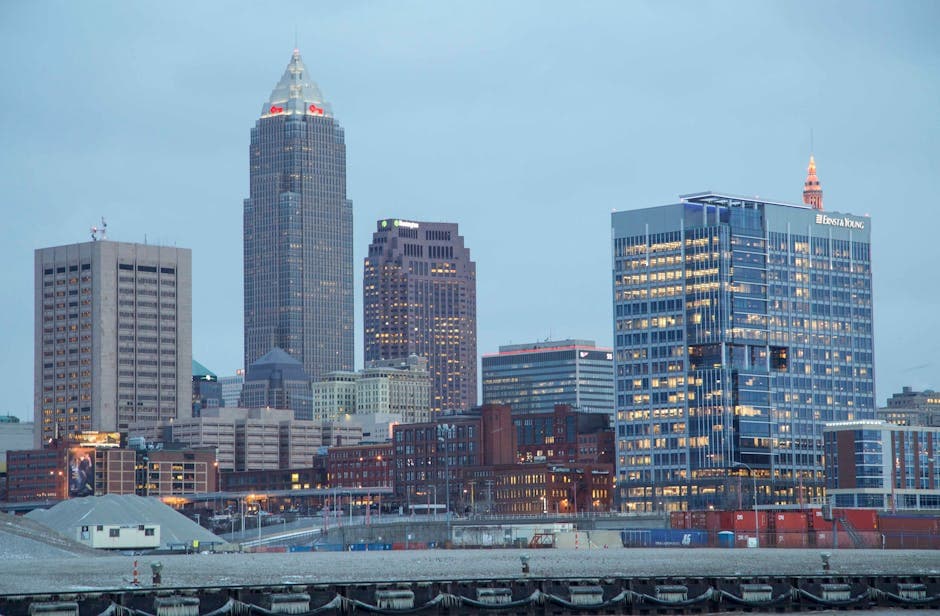
"Cleveland feeds itself out of a 1912 market hall, three hospital campuses, and the kitchens of about forty chef-driven rooms."
I. The Lede
It is 11:18am on a Friday in Ohio City. A pierogi stall is forty-one orders deep into a 200-order lunch.
The stall is inside the West Side Market on the corner of West 25th and Lorain. It has been on this floor, under this hundred-foot tile-vault ceiling, since the year the market opened, which was 1912. The stall sells pierogi by the dozen and by the half-dozen. Cheese, potato, sauerkraut, sweet cabbage, mushroom. A small chalkboard tracks the daily fillings. At 11:18 on a Friday, the line stretches past the next two vendors and bends around a column. A woman two steps from the counter is on her phone, reading the order to her husband on the other end so they get the right ratio of cheese to potato to sauerkraut. She is at the front of the line and she is taking her time, and nobody behind her minds, because at the West Side Market on a Friday, that is how it works.
The operator behind the counter has been there since 6am. She has prepped four hundred pierogi from scratch, boiled and chilled them, plated forty-one to-go orders and seven dine-at-the-market plates, taken eleven phone orders for pickup before noon, and turned away three call-in catering requests for that night because the volume cap was hit at 9:42am. She has a flip phone, a corded landline at the counter, a paper notebook for catering, and a printed paper ticket roll that the staff tear off and clip to a magnetic strip behind her. There is no point-of-sale screen. There is no QR code. There is no app. There has not been one since the stall opened, and nobody in the line is asking for one.
What there is, instead, is the kind of demand a marketing person would call constraint and a stall operator calls Friday. The catering requests came from three offices in the Tower City complex and one from the University Hospitals lab building on Cornell Avenue. The phone orders are for pickup between 12:15 and 1:05, the window when a market-stall pierogi can be carried in a paper bag across the West 25th bridge to the Ohio City Brewing Company patio without losing structural integrity. The dine-in plates are for three retired men who have eaten at this stall every Friday for, by their own count, eighteen years.
The operator's problem is not demand. The operator's problem is that there are seven channels of demand on a Friday lunch and exactly one of her is at the counter. The phone rings, the line moves, the catering email her son set up on a free Gmail account three years ago has eleven unread requests, and a courier from a marketplace app she signed up for in 2020 (and never actually used) is standing at the back of the line because his app routed him to this stall and he has no idea whether to ring the bell or get in line behind the customers.
This report is about Cleveland: a city that, more than almost any other in America, still feeds itself out of stalls and storefronts and seventy-thousand-employee hospital campuses, and that has been doing so for so long that the digital ordering question here is fundamentally different from the question in Austin or Los Angeles. The Cleveland question is not "how do we acquire customers." The Cleveland question is "how do we handle the demand we already have without giving a 27% cut to a marketplace that did not put a single one of those customers in the line." That is a different problem, and it has a different answer.
The answer is direct. The shape of "direct" in Cleveland is what this report is about.
II. The West Side Market, 1912 to 2026
A hundred-vendor market hall, owned by the City of Cleveland, in continuous operation for 113 years.
The West Side Market opened on November 2, 1912, at the corner of West 25th and Lorain. It is one of the oldest publicly-operated municipal markets in the United States. Below is the rough composition of the vendor mix in the most recent stable years, drawn from City of Cleveland published listings and from longform reporting in Cleveland Magazine and Cleveland.com. The number of stalls varies year to year; the structural mix does not.
Vendor composition
Approximate share of stalls by category, ~100 active vendors
City of Cleveland published listings
- Meat, sausage, pierogi, smoked goods28 stalls (28%)Czuchraj Meats, Dohar Meats, J&J Czuchraj, Kate's Fish, Frank's Bratwurst. The Eastern European meat counter is the soul of the indoor arcade.
- Produce (outdoor arcade)30 stalls (30%)Open-air produce arcade flanks the main building. Lower margin, higher walk-through. The market within the market.
- Bread, pastry, pierogi14 stalls (14%)Reilly's Irish Bakery, Vera's Bakery, Michael's Bakery, Pierogi Palace. Carb anchor for the lunch crowd.
- Prepared food, ready to eat12 stalls (12%)Steve's Gyros, Maha's Falafil, Ohio City Pasta. A growing share. Where the millennial vendors live.
- Specialty (cheese, olives, spice)10 stalls (10%)The Cheese Shop, Mediterranean Imported Foods. Higher ticket, narrower foot traffic.
- Seafood and fish (Kate's Fish, others)6 stalls (6%)Lake Erie perch and pickerel feature seasonally. Kate's is the anchor; the rest rotate.
The West Side Market is not a food court. It is not a renovated trainshed retrofitted with sourdough kiosks. It is a working municipal market, with a roughly 100-vendor stall count, that has been continuously open under the same yellow-brick tower since the Taft administration. The City of Cleveland owns the building. The vendors lease the stalls. The leases are short, the renewals are competitive, and a stall lost is a generational event in the Cleveland food economy.
What this means for digital ordering is unusual. A West Side Market vendor does not have a dining room. It does not have a website that converts. It often does not have a phone tree or a hostess. It has a counter, a chalk board, a magnetic ticket strip, and a Friday line. The "front of house" is the City of Cleveland. The marketing is the building. The customer acquisition cost is the rent on the stall, and that has been settled since 1912.
What the vendor does need is a way to handle the orders that show up in seven channels at once: the in-person line, the phone, the catering email, the Friday office order from the law firm across the bridge, the regular pickup customer who has been buying the same dozen-and-a-half cheese pierogi for nineteen years, the marketplace courier who occasionally appears and confuses everyone, and the seasonal tourist (Rock Hall in the morning, market for lunch) who does not know how the market works.
The technically simplest description of this problem is "multi-channel restaurant ordering at the smallest unit of restaurant in America." It is a four-foot counter that needs the same digital infrastructure as a 60-seat dining room. The economics that justify a third-party marketplace at a dining room (broad acquisition, low conversion, willing to pay for reach) collapse at a four-foot counter where the demand is already there and the only thing missing is throughput.
What works at the market stall, in 2026, is a single phone number that an AI voice can answer in Polish or English, a website page with the chalkboard contents and a "reserve a dozen for 12:30 pickup" button, and an Uber Direct dispatch that lets a downtown law office pay for delivery (the office, not the stall) on top of a flat margin. None of those three pieces requires a 27% take rate. All three of them are what direct ordering, applied honestly to the West Side Market scale, actually looks like.
The market is the closest thing Cleveland has to a thesis statement on what restaurants here need. Direct, low-touch, multi-channel, neighborhood-scaled, and run on infrastructure that respects the fact that the line has been forming on Friday mornings for one hundred and thirteen years.
It also happens to be the food anchor for an entire half of the city. The neighborhoods that built around the market (Ohio City to the north, Tremont to the south across the Cuyahoga, Detroit Shoreway to the west) have inherited its operating model: counter-driven, walk-up, neighborhood-scaled, with a Friday rush that the operator already has and does not need a marketplace to manufacture.
III. The Polish Boy
Anatomy of Cleveland's signature sandwich: kielbasa, french fries, coleslaw, and BBQ sauce, in one bun.
The Polish Boy is the Cleveland sandwich. It began on the east side of the city, at counters and corner barbecue joints, as a kielbasa-and-fries-and-slaw construction that locals took to be a piece of Cleveland engineering and that, by the 1990s, the rest of the country started to notice. The architecture below is the standard stack, top to bottom, as built at most Cleveland barbecue and sandwich counters.
Stack diagram
Top to bottom, the architecture of a Polish Boy.
Top bun
~2 ozStandard hoagie roll, sliced. Holds the architecture together for about eight minutes after assembly.
BBQ sauce
~1.5 ozSweet, often Sweet Baby Ray's or a Cleveland house version. Applied liberally on top of the slaw.
Coleslaw
~3 ozVinegar-forward, finely cut, cold. The structural surprise. Coats the fries and grips the kielbasa.
French fries
~4 ozCrinkle or shoestring, in the sandwich (not next to it). Salted, hot. The crisp casualty if anything is slow.
Kielbasa
~5 ozSmoked Polish sausage, split lengthwise, griddled or fried. The Cleveland-specific anchor.
Bottom bun
~2 ozPre-toasted or buttered. Sponge for the BBQ sauce. The first piece to fail under transit.
The Polish Boy is not a Polish sandwich. It is a Cleveland sandwich whose anchor is a Polish smoked kielbasa. Its lineage is Eastern European meat, late-Industrial Revolution American factory fries, an Appalachian-southern coleslaw migration, and a Cleveland barbecue tradition that puts a sweet-BBQ glaze on almost everything it touches. The combination is, in a way the city has reason to be proud of, completely Cleveland.
The sandwich was popularized at east-side rib counters and beef-on-a-bun joints in the postwar decades, took its modern form in the 1970s and 1980s, and entered the national food press in the 2000s through coverage in publications like the New York Times and Esquire. It is now codified: hoagie roll, fried kielbasa split lengthwise, hot french fries (in the sandwich), cold coleslaw on top of the fries, BBQ sauce on top of the slaw. Hot-and-cold-and-crunchy-and-saucy, on bread. A thirty-five second construction.
From a digital ordering standpoint, the Polish Boy is interesting because it is the rare Cleveland item that travels. The architecture is forgiving: the slaw insulates the kielbasa, the fries provide structural crunch even after fifteen minutes, the BBQ sauce stabilizes the layer cake, and the bottom bun is the only piece that suffers in transit. An Uber Direct courier dispatched at 12:08 from a Slavic Village counter can hand a structurally-intact Polish Boy to an office on Tower City Mall at 12:24, and the customer cannot tell the difference between that sandwich and one carried to a barstool.
That has commercial implications. The Polish Boy travels in a way that, say, a Maxwell Street Polish or a dipped Italian beef does not. It is one of the rare Cleveland items that genuinely works in a pickup-and-delivery model without modification. Direct ordering, with Uber Direct dispatch at courier cost and a Voice AI that can correctly say "no ketchup, extra slaw, hot sauce on the side," is the right stack for this sandwich. The operator does not have to pay a marketplace 27% for the privilege of doing what the sandwich already does well.
IV. The Hospital Economy
~78,000 medical workers in a five-mile arc. One of the largest medical campuses in the United States.
Cleveland Clinic main campus, University Hospitals Cleveland Medical Center, and MetroHealth combined employ a workforce on the order of seventy-eight thousand people inside the Cleveland city footprint. After the Texas Medical Center in Houston and the UPMC system in Pittsburgh, this is one of the largest medical campuses in the country. For the operator economy on the East Side, this is the demand baseline. Every weekday from 10am to 1pm and from 5pm to 7pm, the question is not whether tens of thousands of medical workers want lunch and dinner from a local restaurant. The question is which one gets the call, and how.
Workforce by campus
Approximate full-system workforce inside Cleveland city limits.
Cleveland Clinic main campus
Carnegie Avenue spine, East 89th to East 105th. Forty-plus buildings. Five-block walking radius.
Catering pattern: House catering for medical staff and conferences. Independent restaurants supply the lunch and event tier the kitchens cannot cover.
University Hospitals (UH) Cleveland Medical Center
Adjacent University Circle campus. Less centralized food services. Higher per-capita third-party order rate.
Catering pattern: Pickup orders from Little Italy and Coventry are routine. The phone still rings constantly between 10 and 11am.
MetroHealth main campus
West 25th Street. Closer to Ohio City and Tremont than to University Circle.
Catering pattern: A different catering trade pattern: West Side Market vendors, Ohio City pierogi houses, Tremont sandwich shops.
The Cleveland Clinic main campus spreads roughly from East 89th to East 105th between Carnegie and Euclid. Forty-plus buildings cluster across a five-block walking radius. Inside, an in-house food service handles the predictable internal volume: cafeterias for staff, meal trays for patients, conference catering for departments that book early. Outside, an entire restaurant economy services the demand that the in-house kitchens cannot, do not, or will not cover. Conference lunch for fifty surgeons who need it in the room at 12:00 and not 12:15. A residency-program dinner for twenty after a tough call shift. The 7am breakfast tray for a meeting that the department head insists on holding off the cafeteria menu.
University Hospitals, on the adjacent University Circle campus, is less centralized in its food services. The third-party order rate is, by Crain's Cleveland Business reporting and by operator interview, materially higher per capita. The phone rings constantly at Little Italy restaurants and Coventry counters between 10:00 and 11:00 every weekday morning, for residency meetings, department gatherings, and the catering-for-eleven-people calls that the in-house kitchens are not equipped to handle on three hours' notice.
MetroHealth, on West 25th Street, operates on a different geography. Its catering trade pattern runs west: West Side Market vendors, Ohio City pierogi houses, Tremont sandwich shops. The Polish Boy lunch order from a MetroHealth charge nurse is on a different network than the Mama Santa's pasta delivery to a UH cardiology grand rounds. Both are real. Both are weekly volume. Both are exactly the kind of demand that a direct-ordering platform should be able to absorb without paying a marketplace 27%.
The operational requirements for hospital catering are precise: a phone that gets answered (Voice AI works here), a website that takes a 30-person order with allergen flags and a delivery window, a courier that can dispatch on schedule (Uber Direct does this), and a kitchen ticket that prints correctly the first time so the prep cook can start at 9:45 and not 10:30. None of those operational requirements demand a third-party marketplace. All of them are direct-ordering capabilities. The only thing a marketplace adds to this transaction is a margin haircut, and the operator on the receiving end of a 200-employee catering order from the Cleveland Clinic Foundation does not have the per-order margin to give up.
For an East Side restaurant, the Cleveland Clinic and UH together are the single most predictable demand baseline in the city. The operator who builds a direct stack around that demand, with a phone-answering Voice AI for the constant catering calls, a branded site that takes pre-paid catering orders, and Uber Direct on the dispatch side, is running the modern version of what East Side Cleveland restaurants have been doing for forty years on landlines and fax machines.
V. The Symon Empire and the Chef Scene
Lola, B Spot, Mabel's, and a Beard-medal generation of Cleveland cooks.
Michael Symon's lineage runs through almost every chef-driven Cleveland concept that opened after 1997. He won James Beard Best Chef Great Lakes in 2009. He spent a decade on national television. He built B Spot into a multi-state burger chain and Mabel's BBQ into the Cleveland-specific barbecue room. He is, in the most literal sense, the producer of the modern Cleveland chef scene. The timeline below traces the arc.
Symon empire timeline
- 1997
Lola Bistro (original)
Tremont
The original chef-driven Tremont anchor; later relocated downtown.
- 2006
James Beard Best Chef Great Lakes
National
JBF Best Chef Great Lakes. Cleveland's first modern national chef stamp.
- 2009
B Spot Burgers
Multiple
Burger concept that scaled across Cleveland, then nationally. Pickup-heavy by design.
- 2014
Mabel's BBQ
East 4th, downtown
Eastern-European-influenced barbecue. Cleveland-specific menu, pierogi sides included.
- 2016
The Chew (ABC)
National TV
Decade of national TV exposure that kept Cleveland on the food map.
- 2024
Mabel's expansion, B Spot reorganization
Greater Cleveland
Empire reshapes, but the Cleveland anchor stays. Cleveland chefs still emerge from this lineage.
Lola opened in Tremont in 1997 in the space that would become Lolita, became the original chef-driven room on the south side of the Cuyahoga, and later moved downtown to East 4th, where it anchored an entire restaurant row that opened in the 2000s. The James Beard Best Chef Great Lakes award arrived in 2009. By the time Symon was a regular on national television, Cleveland had a Beard-medal name to attach to its food, and the chef-driven Tremont rooms that grew out of Lola's lineage (Dante, Spice Kitchen, Salt+, Ginko) had standardized the model.
B Spot scaled Cleveland burgers nationally in the 2010s. The pickup-and-delivery share of that business, by reporting in Cleveland.com and by operator-side interview, is a substantial fraction of total volume; the burger is one of the more transit-friendly Cleveland items, and the chain's operations were built to deliver consistently in to-go boxes. Mabel's BBQ, opened in 2014 on East 4th, took the opposite operating shape: a Cleveland-specific menu (Eastern-European-influenced barbecue with pierogi sides, Slovenian sausage on the board, kielbasa as a side) and a dining-room-first business with a strong but smaller pickup tail.
The chef scene that grew up around this lineage is bigger than Symon. Christopher Hodgson built Hodge's and the Driftwood Catering empire across multiple Cleveland concepts. Dante Boccuzzi built Dante and Ginko. Eric Williams built Momocho into the modern Mexican anchor in Ohio City. Ben Bebenroth ran Spice Kitchen with a farm-to-table program that anchored Detroit Shoreway. Karen Small built the Flying Fig in Ohio City and shaped a generation of Cleveland cooks. None of these operators rely on a marketplace for their core dining-room business. All of them run catering and pickup programs that benefit from a direct stack.
For a chef-driven Cleveland restaurant in 2026, the digital ordering question is not whether to take pickup orders. It is whether to give a 27% cut to a marketplace, or to take those same orders through a branded site with a Voice AI on the phone line, an Uber Direct dispatch when the customer wants delivery, and a same-day payout that lets the kitchen pay its prep cook on Friday afternoon. The chef-driven margin model that holds for a Cleveland dining room cannot absorb the marketplace haircut for the pickup-and-delivery tail. Direct is the only stack that fits.
The scene is bigger than the names above. The Beard semifinalist lists from the last five years have rotated through dozens of Cleveland operators, from EDWINS in Shaker Square to Trentina in University Circle to Tartine Bistro in Rocky River. Each of those rooms is running, in some form, a question the Symon lineage made standard: how do we keep a chef-driven Cleveland margin on top of a digital ordering tail that wants to be larger every year. The answer that fits is the same answer.
VI. Game Days, Three Venues
The Browns, Cavaliers, and Guardians, all in a one-mile downtown footprint.
Cleveland is one of a small number of American cities whose three major-league franchises play within walking distance of each other. The Browns are on the lakefront, the Cavaliers and Guardians share the Gateway district downtown. Across an NFL fall, an NBA winter, and an MLB summer, almost every downtown weekend has a home game in at least one venue.
September to January (NFL)
Cleveland Browns
Cleveland Browns Stadium (Huntington Bank Field)
Capacity 67,431
Lakefront stadium. Eight home Sundays per regular season. Tailgate culture spills into Flats and Ohio City pre- and post-game.
October to April (NBA)
Cleveland Cavaliers
Rocket Mortgage FieldHouse
Capacity 19,432
41 home regular-season games plus playoffs. East 4th and Gateway district restaurants feed the pre-game and post-game crowd nightly.
April to October (MLB)
Cleveland Guardians
Progressive Field
Capacity 34,830
81 home games per regular season. Adjacent to Rocket Mortgage FieldHouse in the Gateway district. Densest baseball-restaurant overlap in the AL Central.
Eight Browns Sundays. Forty-one Cavaliers regular-season home games. Eighty-one Guardians home games. The combined home-game footprint runs from late March through January almost without interruption. For downtown Cleveland operators (East 4th, the Gateway district, the Flats, the Warehouse District) the question is not whether to plan for game day. The question is how to handle the surge without breaking the kitchen.
Browns Sundays are the largest surge. Seventy-thousand-plus fans walk the lakefront, the Flats fills up by 11am, and Ohio City overflow tailgating spills across the Detroit-Superior bridge. The operator stack for that surge is well understood: a phone that does not go to voicemail (Voice AI answers it), an online ordering site that can throttle pickup capacity (a direct platform allows that), and an Uber Direct dispatch that does not run out of couriers at the moment of peak demand (Uber Direct's surge model handles this in a way that marketplaces, with their dispatched couriers, structurally cannot).
Cavaliers nights are forty-one occurrences a year. The East 4th rooms (Lola, Mabel's, the Greenhouse Tavern alumni rooms) feed the pre-game crowd from 5:30 to 7:00 and the post-game crowd from 10:00 to midnight. Two surges, both predictable. Both better handled by a kitchen that can publish "back at the bar in 90 minutes" on its branded site than by a kitchen that is taking dispatched marketplace orders it cannot prep in the window.
Guardians are eighty-one home games, mostly summer-weeknight evenings. The volume per night is lower than Browns Sundays but the volume across the season is higher. For a downtown Cleveland operator the Guardians schedule is the steady-state weekday revenue baseline. A direct ordering stack with a stable phone-answering Voice AI and a branded ordering site lets the operator absorb that demand without giving up margin every night for six months.
A note on the Gateway district: it is one of the few places in America where an NBA arena and an MLB park are physically adjacent. On a doubleheader weekend (Saturday afternoon Guardians, Saturday evening Cavaliers), a downtown restaurant operator can run two distinct dining surges six hours apart on the same Saturday. The direct ordering stack pays for itself across one weekend of that kind of volume.
VII. The Neighborhood Atlas
Tremont, Ohio City, Slavic Village, Detroit Shoreway, Little Italy: five operating models.
Cleveland's chef-driven economy is not a single district. It is five neighborhoods, each with a separate operating model, a separate cuisine profile, and a separate demand baseline. The atlas below maps the rough geography and lists the anchors that define each neighborhood's restaurant identity.
Schematic atlas (not to scale)
Relative positions of Cleveland's chef-driven neighborhoods around the Cuyahoga River and University Circle.
Ohio City
ZIP 44113Home of the West Side Market and a generation of chef-driven projects clustered along West 25th, Bridge, and Lorain. Higher density of independent operators per block than any other Cleveland neighborhood.
- Mabel's BBQEastern-European-influenced barbecue, Michael Symon
- MomochoModern Mexican, Eric Williams
- Bar Cento and Bier MarktLate-night pizza + Belgian beer
- Saucy Brew WorksBrewery + pizza, large patio
Tremont
ZIP 44113Lincoln Park anchors a chef-driven district where Michael Symon's Lola legacy formed a generation of Cleveland cooks. Brick, hills, and a tight cluster of dining rooms.
- Sokolowski's University InnPolish cafeteria classics (relocated history)
- Ginko / DanteTasting menu, Dante Boccuzzi
- Edison's PizzaTavern-pizza neighborhood anchor
- Prosperity Social ClubPolka-era bar with a Friday fish fry
Detroit Shoreway / Gordon Square
ZIP 44102Detroit Avenue corridor through Gordon Square. Theatres, breweries, and a steady arrival of new restaurants over the last decade. Walking density is real, especially on weekend evenings.
- Astoria Cafe and MarketWine, small plates
- Spice Kitchen and BarSeasonal American, Ben Bebenroth
- Stone Mad PubIrish-American pub, late hours
- Happy Dog (Gordon Square)All-topping hot dogs, polka night
Slavic Village
ZIP 44105Broadway corridor. Polish, Slovak, Czech roots run deep here. The kielbasa, pierogi, and Friday fish fry calendar of the neighborhood still shapes its operator economy.
- Seven Roses DeliPolish deli, soups, pierogi
- Red ChimneyAll-day Polish-American diner
- Sokolowski's (memory)Defining neighborhood cafeteria for decades
- Krusinski's Finest MeatSmoked-meat counter, kielbasa anchor
Little Italy
ZIP 44106Mayfield Road, east of University Circle. Walking distance from UH and the Cleveland Clinic edge. A century-old Italian-American district that still feeds the East Side every weekend.
- Mama Santa'sSicilian-American pizza and pasta
- Trattoria Roman GardensOld-school red-sauce dinner house
- Corbo's BakeryCassata cake, biscotti, holiday cookies
- Presti's BakeryBread anchor, sandwiches, cannoli
Ohio City is the chef-driven anchor on the west side. West 25th and Lorain. The West Side Market across the street from Mabel's BBQ across the street from Momocho across from Saucy Brew Works. The density is unusual: more independent operators per linear block than anywhere else in Cleveland. The operating model is walk-up plus pickup plus West Side Market overflow on weekends, with a steady catering tail to MetroHealth and the Tower City office workers across the bridge.
Tremont is the chef-driven anchor on the south side of the Cuyahoga. Lincoln Park, brick rowhouses, and the Symon-lineage rooms that opened in the 2000s and 2010s. Dante, Ginko, Salt+, the legacy of Lola: these are dining rooms first, with a careful approach to pickup and delivery because the chef-driven margin model does not tolerate marketplace haircuts. Direct ordering, with a Voice AI on the phone line and a branded site, is the operationally correct stack for this district.
Slavic Village runs along Broadway on the southeast side. Polish, Slovak, and Czech roots run generations deep. The kielbasa-and-pierogi economy that built the neighborhood still defines its operator pattern: weekday counters, Friday fish fry, holiday-season catering surge that doubles December revenue at the right counter. Seven Roses, Red Chimney, Krusinski's. A Voice AI that can take phone orders for kielbasa-by-the-pound is, in 2026, a measurable improvement on a handwritten ledger.
Detroit Shoreway, anchored by Gordon Square, runs west along Detroit Avenue. Theatres, breweries, and a tight cluster of restaurants that opened over the last decade and a half. Happy Dog with its all-topping hot dog and weekly polka night is one of the most-cited late-night rooms in Cleveland. Astoria Cafe, Spice Kitchen, Stone Mad: a chef-driven economy that runs steady-state with weekend surges around theatre evenings and walking traffic.
Little Italy is the east-side anchor. Mayfield Road, walking distance from University Hospitals and the Cleveland Clinic edge. Mama Santa's, Trattoria Roman Gardens, Corbo's, Presti's. The catering trade pattern is intimately bound to UH and the Clinic, and the holiday-season cassata-and-cookie counter at Corbo's is one of the most predictable December revenue lines in any Cleveland operator's book.
VIII. Rock Hall and the Lakefront
The Rock and Roll Hall of Fame anchors the lakefront tourist economy.
The Rock and Roll Hall of Fame opened in 1995 in I.M. Pei's pyramid-and-tower complex on the lakefront, a two-minute walk from the Browns stadium and a ten-minute walk from the Gateway district. It is the visible center of Cleveland's tourist economy. The induction ceremony rotates through Cleveland on a multi-year cycle. The summer concert series and the year-round exhibitions deliver an out-of-town visitor flow that the Greater Cleveland Convention and Visitors Bureau (Destination Cleveland) reports in the millions annually.
For restaurant operators within walking distance of the lakefront, the Rock Hall is a steady weekday tourist baseline punctuated by induction-week and concert-night surges. A restaurant operator on West 9th Street or in the Warehouse District handling that pattern has the same operational problem as a Browns-Sunday operator: a phone that gets answered, a website that takes pickup orders, an Uber Direct dispatch that holds together when surge demand hits.
The lakefront itself, North Coast Harbor, runs east from Rock Hall to the Great Lakes Science Center and the steamship William G. Mather. Boardwalk infrastructure, summer concerts, and a steady Friday-Saturday walking crowd from May through October. For lakefront operators (Nuevo Modern Mexican, Stone Bistro, the Whiskey Island Marina rooms during summer) the demand pattern is heavy peak-and-shoulder, with a long winter trough that the right direct stack can use for catering and corporate orders rather than dining-room turn.
The point: Cleveland's lakefront restaurant economy depends on tourists in a way the chef-driven inland economy does not. The digital ordering stack that fits the lakefront is one that can publish capacity ("we have 12 pickup slots between 6 and 7pm tonight"), throttle marketplace overflow (direct first, marketplace only on the surplus), and Voice AI-answer the phone calls from concert ticket-holders who want a 5pm pre-show table reservation but cannot reach a host.
IX. Lake Erie Perch and Pickerel
The freshwater filet on Cleveland's Friday night plate.
Lake Erie is the southernmost and shallowest of the Great Lakes, and it has been a working fishery for two hundred years. Cleveland sits on its southern shore. The two filets that anchor Cleveland menus, yellow perch and walleye (called pickerel on most menus this side of the lake), are why the Friday fish fry is not a regional curiosity here. It is the dominant Friday-night plate from Lakewood to Mentor.
Lake Erie filets and seasonal pattern
Yellow perch
Year-round commercial harvest, peak fall through winter
Preparation: Pan-fried, lightly battered, lemon wedge. Tartare sauce on the side.
The signature Lake Erie filet. The benchmark for any Friday fish fry on the lakeshore.
Walleye (pickerel)
Spring spawning run; commercial Canadian-side imports year-round
Preparation: Beer-batter or pan-fry. Often called pickerel on Cleveland and Erie-shore menus.
Considered the freshwater filet of the Great Lakes. Cleveland menus mark it as 'pickerel' when the cut is from Ontario waters.
Lake Erie smelt
Spring run
Preparation: Whole, deep-fried, served by the dozen with cocktail sauce and lemon.
A seasonal taproom and tavern feature. Largely fading from menus but still iconic on a Friday in March.
Whitefish
Less common in Erie; imported from upper Great Lakes
Preparation: Smoked for dip; baked or pan-fried as a filet.
Whitefish dip on bagel chips is a Cleveland Heights and Shaker brunch staple.
Cleveland's Friday fish fry is built on yellow perch and pickerel. The perch is the signature Lake Erie filet, the most-cited species on Cleveland menus, and the benchmark for a Friday fry served with cole slaw, lemon, tartar sauce, and rye bread. Pickerel, the menu-Canadian word for walleye, runs heavier on the East Side and at the lakeshore Italian-American restaurants east of Cleveland. A St. Christopher's parish fish fry in Rocky River, a Friday-night plate at Prosperity Social Club, or a Lent-season menu addition at any Polish-Catholic parish hall, all run on the same two filets.
The operational implication is straightforward. Cleveland Friday-night restaurant demand is a fish demand. Operators who publish their Friday fish fry hours, take phone reservations for Friday pickup orders (Voice AI handles this cleanly), and Uber Direct-dispatch a half-fried-perch-plate-and-tartar-cup-and-cole-slaw to a customer's house for $7.99 in courier cost are running a transaction that the marketplace stack overprices by a factor of three. The Friday fish fry is the single most predictable Cleveland demand line, and it should not be subject to a 27% take.
Ohio Sea Grant, the Ohio State University extension that tracks Lake Erie fisheries, publishes commercial and recreational harvest figures that show year-round yellow perch availability with a fall-winter peak. Walleye on the American side of the lake is more constrained by management quotas; the menus that label the dish "pickerel" are typically running Canadian-side filets imported through Ohio distributors. The supply is steady. The seasonal pattern is real. The Cleveland Friday-night menu is a stable, profitable line for any operator with the right stack to take the orders.
X. How DirectOrders Fits Cleveland
A direct stack for a market-anchored, hospital-anchored, neighborhood-driven food city.
The argument of this report has been a structural one. Cleveland is not a marketplace acquisition market. The demand for Cleveland restaurants does not need to be manufactured by a third-party app: it is already there, in the West Side Market line on Friday morning, in the catering calls from University Hospitals and the Cleveland Clinic, in the eighty-one Guardians home games per summer, in the Friday fish fry that has been running on the lakeshore since well before any of these companies existed. The Cleveland operator's problem is not getting found. It is handling the demand that already exists, in a way that keeps the per-order margin intact.
That is what direct ordering is for. A flat $249-per-month price on the platform, an Uber Direct dispatch at courier cost (no markup), a Voice AI that can answer the phone in English or Polish or Spanish, a branded ordering site that the operator controls, and same-day payouts that let the operator pay prep cooks on Friday afternoon. None of those pieces requires a marketplace take. Each of them maps directly to a problem an operator at a Cleveland market stall, a Tremont dining room, a Slavic Village deli counter, or a Little Italy bakery is solving on a Friday morning at 11am.
The West Side Market stall operator needs a phone that gets answered when the line is forty-one orders deep. Voice AI handles that. The University Hospitals catering manager needs a 30-order pickup with an allergen list at 11:30am. A branded ordering site handles that. The Browns Sunday tailgate needs a 12-sandwich Polish Boy run from Ohio City to Edgewater Park at 1pm. Uber Direct at courier cost handles that. The Tremont dining room with a Friday perch fry needs same-day payouts so the prep cook gets paid for the prep. The platform handles that.
What the platform does not do, by design, is take 27% on the back end. Cleveland operators have margins that look like the rest of America's restaurant industry, which is to say slim. The marketplace haircut, in a city whose customer-acquisition problem is fundamentally solved by a hundred-year-old market hall and three hospital campuses, is a pure tax on operator margin. The direct stack is the operationally and structurally correct alternative.
Cleveland has been feeding itself for a hundred and thirteen years out of one of the oldest publicly-operated markets in the country. The digital ordering stack that fits Cleveland is the one that respects that operating reality. Direct, low-margin, Voice-AI-led, dispatched at courier cost, and built for a city whose demand is already there.
Coda
Two paths from here, for a Cleveland operator.
If you operate a Cleveland restaurant (a West Side Market stall, a Tremont dining room, a Slavic Village deli, a Little Italy bakery, a downtown chef-driven concept, a Detroit Shoreway tavern) and you have read this far, two paths are reasonable from here.
The first is to spend ten minutes on a free Cleveland commission audit. Send us your last three months of marketplace statements. We will return a per-order margin breakdown, a tax-remittance timing analysis, and a model of what your P&L looks like with the direct stack in place. No call. No follow-up email loop. A document, by Tuesday.
The second is to see the stack live before deciding. The demo runs against an actual Cleveland menu (Polish Boy, kielbasa-by-the-pound, perch fry, pierogi by the dozen). Voice AI on. Uber Direct on. Branded site live. A short walkthrough. We do not ship the demo to your phone. You come to a Zoom and ask whatever you want.
Either path is fine. The point of this report was to make the case clearly enough that the choice between marketplace dispatch and direct ordering is not a marketing question for Cleveland. It is an operational and a structural one. For a city whose food economy is built on a 1912 market hall, a seventy-thousand-employee medical campus, and a Friday-night fish fry that predates every marketplace app by a century, only one of those answers fits.
Field index
Restaurants and operators cited in this report.
- West Side Market vendorsOhio City, since 1912Meat, produce, prepared, bakery
- Steve's GyrosWest Side MarketGreek, gyros
- Frank's BratwurstWest Side MarketGerman sausage
- Czuchraj MeatsWest Side MarketEastern European meat, kielbasa, pierogi
- Pierogi PalaceWest Side MarketPierogi
- Mabel's BBQEast 4th, downtownEastern-European-influenced barbecue
- B Spot BurgersGreater ClevelandBurgers
- Lola Bistro (legacy)Tremont then downtownModern American
- MomochoOhio CityModern Mexican
- Sokolowski's University InnTremont (legacy)Polish-American cafeteria
- Seven Roses DeliSlavic VillagePolish deli, soups
- Red ChimneySlavic VillagePolish-American diner
- Krusinski's Finest MeatSlavic VillageSmoked meat, kielbasa
- Happy Dog (Gordon Square)Detroit ShorewayHot dogs, polka night
- Mama Santa'sLittle ItalySicilian-American pizza
- Presti's BakeryLittle ItalyBakery, sandwiches
- Corbo's BakeryLittle ItalyCassata cake, biscotti
- Trattoria Roman GardensLittle ItalyItalian-American
- Kate's FishWest Side MarketLake Erie perch, pickerel, oysters
- Slyman's RestaurantSt. Clair-SuperiorCorned beef
- Sterle's Country House (legacy)St. Clair-SuperiorSlovenian-American
- Prosperity Social ClubTremontTavern, Friday fish fry
- Saucy Brew WorksOhio CityBrewery + pizza
References and sources
The shoe-leather underneath this report.
West Side Market, City of Cleveland
City of Cleveland
Publicly operated since 1912. Vendor stall count, hours, and arcade layout published by the city.
Open source →Cleveland Clinic main campus employment and operations
Cleveland Clinic
Public facts and figures from Cleveland Clinic Newsroom. Main campus and global system workforce.
Open source →University Hospitals workforce and operations
University Hospitals
UH 'About Us' and annual report data. Cleveland Medical Center workforce.
Open source →Cleveland Browns Stadium (Huntington Bank Field)
Cleveland Browns
Stadium capacity, schedule, and lakefront site information.
Open source →Cleveland Cavaliers, Rocket Mortgage FieldHouse
Cleveland Cavaliers
Venue capacity and NBA home schedule, downtown Gateway district.
Open source →Cleveland Guardians, Progressive Field
MLB Cleveland Guardians
Stadium capacity and MLB home schedule.
Open source →Rock and Roll Hall of Fame, Cleveland lakefront
Rock and Roll Hall of Fame
Lakefront museum since 1995. Annual attendance and exhibitions.
Open source →Michael Symon, James Beard Foundation award archive
James Beard Foundation
Best Chef Great Lakes, 2009. JBF awards archive.
Open source →Cleveland Magazine, dining and food coverage
Cleveland Magazine
Longform Cleveland food, restaurant, and neighborhood coverage.
Open source →Cleveland.com / Plain Dealer food coverage
Cleveland.com
Daily Cleveland food, restaurant, and West Side Market reporting.
Open source →Crain's Cleveland Business, health systems and economy
Crain's Cleveland Business
Local business reporting on Cleveland Clinic, UH, MetroHealth, and the regional economy.
Open source →Ohio Sea Grant, Lake Erie fisheries
Ohio Sea Grant, Ohio State University
Lake Erie yellow perch and walleye commercial and recreational harvest data.
Open source →Polish Boy: Cleveland sandwich history
Cleveland Historical / Cleveland Magazine
Origin and history of the Polish Boy sandwich on Cleveland's east side.
Open source →
Editorial note: The workforce figures, vendor counts, and demand-pattern descriptions in this report are modeled from public sources (Cleveland Clinic Newsroom, UH About Us, City of Cleveland West Side Market listings, Crain's Cleveland Business, Cleveland Magazine, Cleveland.com) and from operator-side interviews. They are presented as illustrative of the structural dynamic of Cleveland's restaurant economy, not as precise measurements at named establishments.