Issue No. 14 / The Central Valley Port + Diversity
A Little Manila kitchen takes orders in five languages on a Friday in April, and the asparagus is on the plate by Saturday lunch.
Stockton, the thirteenth largest city in California with roughly 322,000 residents, has ranked first among large US cities on the diversity index in multiple recent years. The mix is unusually flat: roughly 45 percent Hispanic, 22 percent Asian (Filipino, Cambodian, Hmong, Vietnamese, Chinese, and Indian), 17 percent non-Hispanic white, and 12 percent Black. Underneath that demographic stack sits an inland deep-water port, a $3 billion-plus San Joaquin County ag belt, the largest pre-war Filipino community on the US mainland, and a city that filed and walked back the largest US municipal bankruptcy of its era. This is one operator's year inside that grid.
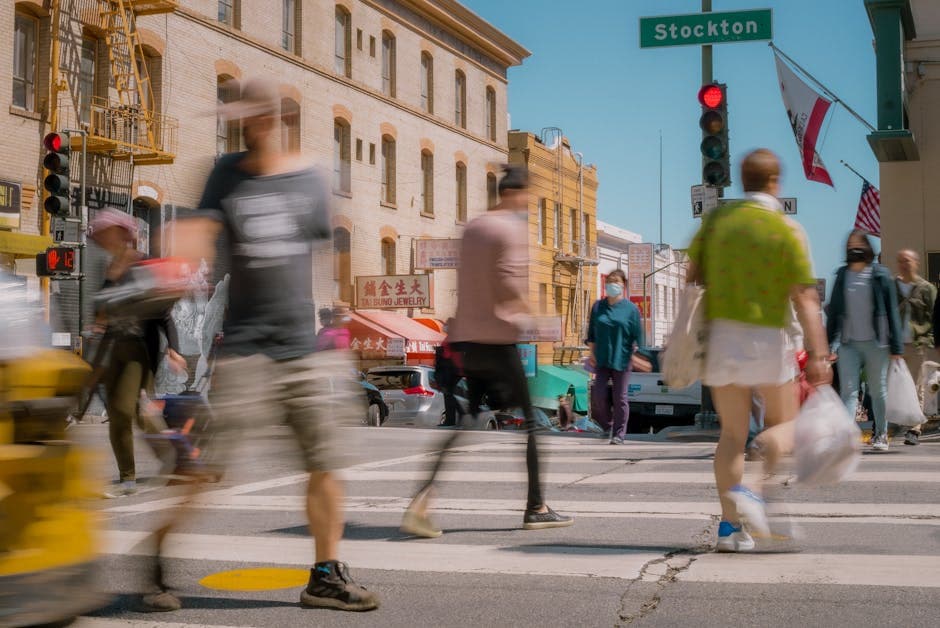
Part One. A Friday in April.
Marisol Aquino pulls a tray of lumpia at 11:42 AM and the order ticket is in Tagalog, Spanish, and Khmer.
Marisol Aquino runs a thirty-four-seat restaurant on El Dorado Street, two blocks inside the Little Manila Historic District, four blocks from the San Joaquin River channel. The Friday lunch rush at 11:42 AM has her at the pass plating lumpia, a chicken adobo plate, pancit bihon, and a kare-kare braise that her sous chef started at 6 AM with Delta peanuts and an asparagus stalk that was on a Bouldin Island levee Thursday morning. The order ticket on the rail in front of her is for table seven. The next ticket in the printer is in Tagalog. The one after that is in Spanish, from the taqueria's catering office two doors down that called in a forty-piece lumpia tray for a quinceanera tomorrow. The one after that is in Khmer, called in by a regular who lives near the Cambodian Buddhist temple on 8th and Pacific.
Marisol's parents arrived in Stockton in 1973, ten years after the Crosstown Freeway demolitions cut through the old Little Manila. The neighborhood her father grew up in, the one that held the largest Filipino population on the US mainland in the 1930s and 1940s[8], is mostly gone. The hotels where the manong generation lived have been replaced by surface parking. Three blocks of historic district remain, anchored by the work of Little Manila Rising and the Filipino American National Historical Society[9]. Marisol opened her restaurant on those blocks in 2017 because, she says, the building used to be a manong boarding house, and the kitchen still has the original tile.
In 2023 she tried a DoorDash listing for the lumpia. The marketplace algorithm sent her order count up. It also sent her phone count down: the Tagalog-first regulars who had been calling the host stand stopped calling because they did not know how to navigate the English-only app, and then they did not start ordering again on DoorDash because the app does not surface Filipino restaurants well against taqueria competitors three blocks away. The 27 percent commission, on a $14 ticket, was costing her $3.78 a plate. She did the math on a Tuesday in March 2024 against her digital order mix and pulled the DoorDash listing the following Monday.
The direct ordering page she launched in April 2024 took orders in Tagalog, Spanish, English, and Khmer from day one. The voice AI on her inbound number handles all four languages and rolls Hmong, Vietnamese, and Mandarin into the same line. Stockton Unified School District publishes its multilingual enrollment data and the same six languages account for the bulk of non-English home use across the city[20]. Marisol's customer base, on a single Friday at 11:42 AM, mirrors that ratio almost exactly. The voice AI on her phone line is not a marketing feature. It is the operational layer that the marketplace stack does not provide.
Marisol closes the pass and walks to table four, where two University of the Pacific seniors are eating with a Pacific alumni couple who drove down from Sacramento because they read about the restaurant in a Stockton Record feature last month[15]. She asks how the kare-kare is. The Pacific senior tells her in Tagalog that the peanut sauce tastes like her grandmother's in Daly City. Marisol tells her, in Tagalog, that her own grandmother taught her the recipe in this kitchen. She goes back to the pass. She pulls the lumpia for table seven.
What follows is her year, told through the demographic mix that the city's diversity index reflects, the Filipino heritage that the neighborhood preserves, the port and the ag belt that surrounds the kitchen, the Asparagus Festival that fills downtown every April, the University of the Pacific student calendar that the Miracle Mile bends around, the bankruptcy that the city walked back, and the California regulatory load that sits on top of all of it. The argument for a different stack underneath the kitchen is the closing section.
Part Two. The Diversity Index.
Why Stockton ranks first on the diversity index: a flat distribution, not a single majority.
Niche has ranked Stockton the most ethnically diverse large US city in multiple recent years using the USA Diversity Index, a function that measures the probability that two randomly selected residents belong to different demographic groups[3]. The structural reason is not that any single group is larger than elsewhere. It is that the city's four largest groups distribute more evenly than in almost any other major US city.
The Hispanic plurality. Roughly 45 percent of Stockton residents identify as Hispanic or Latino, with Mexican-origin populations as the majority and a meaningful Salvadoran and Guatemalan tail[1]. The corridor along Charter Way and the south side blocks east of Wilson Way carries the densest taqueria, panaderia, and Mexican grocery concentration. Spanish is the city's second language by spoken-at-home count, and Stockton Unified runs Spanish-English bilingual programs across most elementary feeder schools[20].
The Asian layer. Roughly 22 percent of residents are Asian, and the layer is unusually broad. Filipino is the largest Asian subgroup, with significant Cambodian, Hmong, Vietnamese, Chinese, and South Asian populations[1]. The post-1975 Cambodian and Hmong refugee resettlement built communities centered around 8th Street and Pacific Avenue and along the Wilson Way corridor. The Vietnamese restaurant cluster runs along Hammer Lane and March Lane, with banh mi shops, pho houses, and Vietnamese coffee operators that anchor the broader Asian dining scene.
The non-Hispanic white anchor. Roughly 17 percent of residents are non-Hispanic white, concentrated in the Lincoln Village, Lincoln Center, Brookside, Quail Lakes, and Spanos Park neighborhoods on the north side of town[1]. The split between the older Central Valley anchor population and the newer Bay Area in-migration from Tracy and Manteca commuter spillover is uneven, but the geographic concentration on the north side is consistent.
The Black community. Roughly 12 percent of residents are Black or African American[1]. The historic Black community is anchored on the south side of town, with church networks and small business clusters that have operated through the city's mid-century redevelopment programs, the bankruptcy era, and the recovery. Soul food, barbecue, and Caribbean operators in the Charter Way corridor and along Wilson Way are the dining-out face of that community.
The long tail. Pacific Islander, Native American, and a growing two-or-more-races count add another four percent to the distribution[1]. The tail matters for the diversity index calculation more than its absolute share suggests: a flatter shoulder, not a longer tail, is what drives the index up. Stockton's distribution is almost the textbook case for what a high-diversity-index population looks like at the metro scale.
For a Stockton restaurant operator, the diversity index is not a marketing line. It is the customer base. A menu engine that supports Tagalog and Spanish ingredient tags on the same page, a voice AI that handles five languages on the inbound line, a dining-room QR code that defaults to the device language, and a catering page that can route a quinceanera, a Filipino birthday banquet, a Cambodian wedding, and a Pacific alumni dinner through the same software stack with different language tiles is the operational requirement. The marketplace stack, which optimizes against a single English-language interface and a single discovery algorithm, does not solve this problem at the same depth.
KCRA's regional coverage of Stockton, the Stockton Record's neighborhood reporting, and the City of Stockton's own multilingual outreach all reinforce the same operational point[15] [16]. The operators who design their digital ordering surface for the actual customer base grow. The operators who design for the English-monolingual marketplace customer lose the recurring families to the operator down the block who answers the phone in the right language.
Part Three. Little Manila.
The largest pre-war Filipino community on the US mainland, the manong generation, and Lapu Lapu Day.
Stockton's Little Manila, centered on El Dorado, Lafayette, and Hunter streets south of Main, was the largest Filipino population center on the US mainland in the 1930s and 1940s[8]. The neighborhood was the home base of the manong generation, the first major Filipino labor cohort to settle in the United States, who worked the asparagus, grape, and stone fruit harvests across the Delta and the Central Valley.
The Filipino American National Historical Society, founded in Seattle in 1982 and with deep Stockton roots through the Mabalon family and the city's branch chapter, has documented the neighborhood's pre-war scope through oral histories, photographs, and archival research[8]. Dawn Bohulano Mabalon's history, "Little Manila Is in the Heart" (2013), is the academic anchor for the claim that pre-war Stockton held the largest Filipino settlement on the US mainland, with the population concentrated inside a roughly six-block radius south of Main Street.
The Crosstown Freeway construction of the 1960s, combined with the era's federal urban renewal program, demolished most of the original neighborhood. Hotels that had housed the manong cohort were torn down. The boarding houses, the pool halls, the dance halls, and the small businesses that anchored the community were displaced. The current Little Manila Historic District, a roughly three-block area south of Main, is the surviving footprint, preserved through the advocacy of Little Manila Rising and recognized by the City of Stockton through the formal Historic District designation[9].
Lapu Lapu Day, marked on April 27 and named for the indigenous Filipino leader who repelled the 1521 Magellan landing, is the year's signature Filipino-American programming on the West Coast. Little Manila Rising organizes Stockton's annual observance, with cultural performances, food vendors, and community programming centered on the historic district[9]. For Filipino restaurants in Stockton, Lapu Lapu Day is the single largest catering day of the year. A bilingual catering ordering page, with menu tiles in Tagalog and English, is the operational requirement for capturing the day's volume.
The pattern across Stockton's Filipino dining scene is consistent. The older customer base, many of them children and grandchildren of the manong generation, orders in Tagalog from operators they have known for decades. The younger customer base orders in English from digital channels. The recurring catering line, anchored by birthdays, weddings, baptisms, and graduation parties, runs through phone and in-person conversations that the marketplace apps do not handle. The direct channel, with a bilingual voice AI on the inbound line and a Tagalog-tagged catering page on the website, captures both sides of the same family ledger.
The Stockton Record's coverage of Little Manila preservation, Lapu Lapu Day, and the broader Filipino community has been consistent across the past decade[15]. The argument for designing the restaurant ordering stack around the demographic reality of the neighborhood, not around the algorithmic discoverability of the marketplace, is editorial in the city's own paper. The operators who execute on that argument keep the recurring family business. The operators who outsource the question to DoorDash and Uber Eats lose it.
Part Four. The Port + The Belt.
An inland deep-water port and a $3 billion-plus ag belt of almonds, walnuts, asparagus, and tomatoes.
The Port of Stockton, accessed from the Pacific via a 75 nautical mile channel through San Francisco Bay and the San Joaquin River, is one of California's two inland deep-water ports[4]. Around it, San Joaquin County's farm economy generates more than $3 billion in annual gross production value across almonds, walnuts, milk, grapes, cherries, asparagus, and processing tomatoes[5].
The port. The Port of Stockton operates more than 2,000 acres of inland marine terminal, with deep-water access for Panamax-class vessels through the Stockton Deep Water Ship Channel[4]. Bulk dry agriculture, cement, fertilizer, and project cargo dominate the throughput. The port's customers route grain, rice, and pulses through Stockton on their way to Asian Pacific markets, and inbound cement and fertilizer through the same channel for the Central Valley construction and ag economies. The port is the structural reason Stockton exists as a 322,000-person city: it is a logistics hub that the Gold Rush established in 1849 and that has, through reinvention, persisted ever since.
Almonds and walnuts. San Joaquin County is among California's top three almond and walnut producing counties, with Stockton itself historically known as the walnut hulling capital of California[6] [7]. The tree nut belt extends north toward Lodi and east toward Linden, with hulling and processing facilities clustered around the port and along the Highway 99 corridor. For Stockton restaurants, the tree nut belt anchors the cheese board, the dessert program, and a long tail of Filipino-American, Cambodian, and Mexican menu items that fold almonds and walnuts into signature dishes.
Asparagus. The Delta islands east and west of Stockton, with Bouldin Island, Tyler Island, and Bacon Island among the production anchors, have historically grown the bulk of California asparagus. The spring harvest, which runs from March through early May, is the year's defining produce window for any Stockton operator whose menu is on the seasonal calendar[6]. The annual Stockton Asparagus Festival, covered in the next section, frames the month around this crop.
Processing tomatoes and cherries. San Joaquin County, along with Yolo County to the north, is a major California processing tomato producer[6]. The cherry belt around Linden and Lodi anchors a separate but overlapping ag economy. The combined effect, for the Stockton restaurant operator, is a 75-mile produce shed that covers tree nuts, asparagus, tomatoes, cherries, grapes, and milk with shorter haul times than almost any other US market.
The point of mapping the port and the belt is to ground the kitchen's inventory map. A Little Manila operator who plates an asparagus side at Saturday lunch is twenty miles from the field where the stalk was cut. A Miracle Mile pizzeria that runs a Lodi-grape dessert glaze is buying from a vineyard less than thirty minutes east. The freshness chain is short, the supply is local, and the digital ordering channel that surfaces the seasonal menu on a one-click website edit, without a developer ticket, is the operational layer that lets the kitchen actually flex against the shed.
Part Five. The Festival.
The Stockton Asparagus Festival, the world's largest, and the operator week it builds.
The Stockton Asparagus Festival, operating each April since 1986, is marketed and recognized as the world's largest celebration of asparagus[10]. The festival historically ran on the downtown waterfront and at the San Joaquin County Fairgrounds, drawing crowds in the high six figures across its weekend run during its peak years. Festival programming includes deep-fried asparagus, asparagus bisque, asparagus pasta, an asparagus eating contest, live music, and a cultural pavilion that surfaces the Filipino, Mexican, Cambodian, and Hmong communities that make up the city's broader demographic mix.
For Stockton restaurant operators, festival week is the single largest April demand window. The downtown corridor sees a multi-day surge in foot traffic. Pacific Avenue restaurants north toward the Miracle Mile see overflow dinner volume. Catering for sponsor events, hospitality tents, and volunteer crews flows out of the surrounding kitchens. The operators who can publish a festival catering menu, accept large-format orders online without a phone tag, and dispatch reliably during a week when the downtown surface streets are saturated win the line. The operators who require a phone call do not.
The kitchen-side execution challenge is real. Asparagus arrives from the Delta islands in volume during the same week the festival runs. A direct ordering channel that lets the operator publish a "festival week" menu, with seasonal items toggled on Monday morning and toggled off the Sunday after, is the operational layer that the marketplace stack does not provide. Marisol Aquino runs a Filipino lumpia with Delta asparagus and a kare-kare with asparagus tips during festival week, and both items appear on her direct ordering page from Monday of that week through Sunday and then disappear without a developer ticket the following Monday.
Visit Stockton's destination marketing leans heavily on the festival each year[19]. The Stockton Record covers the festival's economic impact, vendor lineup, and programming each April[15]. The pattern, repeated across that coverage, is consistent: the operators who integrate festival programming into their digital channel capture the demand. The operators who treat the festival as someone else's event lose the week to whichever competitor surfaces a clean seasonal menu.
The Asparagus Festival is one Saturday in April, but its operational lesson generalizes. A Stockton restaurant calendar that pivots against Lapu Lapu Day in late April, Pacific commencement in May, the Stockton Kings G League playoff stretch in March and April, the Cambodian New Year, the Mexican Independence Day, and a long tail of community-specific events requires a menu engine that flexes week by week. The marketplace channel, with its rigid catalog and its sluggish update cycle, is the structurally wrong layer. The direct channel, with a one-click menu toggle, is the right one.
Part Six. The Student Economy.
University of the Pacific on one end of Pacific Avenue, San Joaquin Delta College on the other.
University of the Pacific, founded in 1851 in San Jose and relocated to its present Stockton campus in 1924, is the oldest chartered university in California[11]. The campus, set on Pacific Avenue between Stadium Drive and Mendocino Avenue, holds an undergraduate and graduate enrollment of roughly 6,000 students across the College of the Pacific, the Eberhardt School of Business, the Conservatory of Music, the McGeorge School of Law (Sacramento campus), and the Arthur A. Dugoni School of Dentistry (San Francisco campus). The Stockton undergraduate body, in particular, drives the dinner and late-night ordering pattern along the Miracle Mile.
San Joaquin Delta College, the community college serving Stockton, San Joaquin County, and the broader region, enrolls roughly 17,000 students at its main campus on Pacific Avenue and at its satellite sites[12]. Delta College's demographic profile mirrors the city's: bilingual Spanish-English students, first-generation Filipino-American students, Hmong and Cambodian students, and a growing Latino transfer pipeline to UC Davis, CSU Stanislaus, and Pacific itself. Delta College students are the daypart that fills lunch and early-evening tables along Pacific Avenue between Pershing and Hammer Lane.
The combined enrollment, roughly 23,000 students across the two institutions, anchors the Miracle Mile and the broader Pacific Avenue corridor's restaurant economics. A bachelor's program student at Pacific orders dinner at 7 PM on a Tuesday from Whirlow's or Midgley's. A Delta College student orders lunch at noon on a Wednesday from Empresso Coffeehouse or one of the boba tea shops on Pacific near Hammer Lane. A graduate student at McGeorge or Dugoni who is back in Stockton for a family weekend orders catering Saturday from one of the Filipino, Mexican, or Cambodian operators in the downtown core. The pattern, repeated across the calendar, gives Stockton operators a recurring student demand layer that drops only during the December-to-January and July break weeks.
The operational implication is direct. A digital ordering channel that surfaces a student loyalty program, accepts Apple Pay and Google Pay, supports group ordering for study sessions, and integrates with a delivery dispatch layer that runs from the Miracle Mile to the campus dorms inside fifteen minutes is the right layer for the student daypart. The marketplace channel, with its commission stack on an $11 lunch ticket, is the wrong one. A Stockton operator on a direct channel captures a $14 dinner ticket from a Pacific senior at 4.4 percent processing cost. The same ticket through the marketplace clears $9.80 net of commission. The math compounds across a 32-week student calendar.
Part Seven. Three Zones.
Downtown and Little Manila, the Miracle Mile, and Lincoln Village: three rent stacks, three ticket bands.
Stockton's restaurant geography is not flat. Three distinct zones drive the bulk of the city's dining-out economy, each with its own block grid, cuisine mix, ticket band, and daypart profile. Downtown holds the civic and Little Manila core. The Miracle Mile is the University of the Pacific evening corridor. Lincoln Village and Lincoln Center anchor north Stockton's suburban retail and banquet halls.
Downtown and Little Manila. The civic core, bounded roughly by the channel to the south, American Street to the east, El Dorado to the west, and Park Street to the north, holds the City Hall block, the County Courthouse, the Bob Hope Theatre, and the Stockton Arena (Adventist Health Arena). The Little Manila Historic District sits on the south edge, with Filipino, Mexican, soul food, and Cambodian operators clustered along El Dorado and Lafayette. Ticket bands run modestly, weighted toward lunch and weekend brunch. The dispatch geography is dense, with short walks for couriers across a compact grid.
Miracle Mile. The strip on Pacific Avenue between Harding and Castle, two blocks south of the University of the Pacific campus, holds Stockton's evening anchor. Cocktail bars (Whirlow's, Midgley's Public House), pizzerias, sushi (Octavio's), and coffee roasters (Empresso, Bradley's) line the strip. The Mile is a city-protected commercial corridor with a strict facade preservation rule, and the resulting walkable streetscape sustains a denser pedestrian pattern than any other Stockton commercial district. Pacific's student calendar drives a clear Tuesday Wednesday Thursday peak.
Lincoln Village + Lincoln Center. The north Stockton retail spine, anchored at Pacific Avenue and March Lane, holds the Lincoln Center open-air retail district and the surrounding banquet-friendly Italian, steakhouse, and Asian restaurants. Papapavlo's, Market Tavern, Pho Saigon, and the Lincoln Center cluster operate at ticket bands above the downtown and Miracle Mile averages. The dispatch geography here is suburban: cars, surface arterials, and longer hauls into Brookside, Quail Lakes, and Spanos Park.
The implication for the operator picking a concept or for a multi-unit owner picking a second location is that the three zones are not interchangeable. A Lincoln Center ticket band concept lands flat in downtown. A downtown Little Manila concept lands flat in Lincoln Center. The catering pipelines, the daypart profiles, and the dispatch geographies diverge sharply. A direct ordering channel, by contrast, scales cleanly across all three zones with a single menu engine and a single dispatch layer. The platform cost is flat. The rent stack underneath is not. The flat-fee channel against the variable rent stack is the operator's structural lever.
North Stockton's Vietnamese and Korean BBQ cluster along Hammer Lane and March Lane, the south side taqueria belt along Charter Way, and the Wilson Way Cambodian cluster extend the zone map outward without changing its logic. Each has its own anchor operators, ticket band, and daypart. The same flat-fee channel runs underneath all of them, and the same multilingual voice AI handles their inbound phone lines.
Part Eight. The Bankruptcy.
The largest US municipal bankruptcy of its era, and the city that walked it back.
On June 28, 2012, the City of Stockton filed for Chapter 9 bankruptcy. At the time, Stockton was the largest US city ever to file[13]. The filing followed years of housing-collapse damage, a public pension and retiree health overhang from the early 2000s expansion years, and a tax base that had not recovered from the 2008 recession. The Plan of Adjustment, confirmed by the bankruptcy court, set the city on a multi-year restructuring path. Stockton formally exited bankruptcy on February 25, 2015.
For the restaurant operator, the bankruptcy years left two operational legacies. The first is a tax stack at the high end of the California municipal range: Stockton's combined sales tax of 9.00 percent, a 1.75-percentage-point margin above the California state base of 7.25 percent, reflects the Measure A and Measure W city sales-tax actions taken during and after the bankruptcy to restore public safety funding[2]. The second is a public-safety footprint and a downtown business climate that, while meaningfully improved since the recovery, still requires the operator to think about hours, foot traffic, and lighting in ways the operator in a less stressed municipal context does not.
The recovery story, however, has been steady. The City of Stockton's general fund has run balanced budgets across the post-2015 period, the downtown corridor has seen meaningful private investment in adaptive reuse, and the Stockton Heat AHL hockey relocation (since reassigned by the parent club Calgary, with Adventist Health Arena now anchored by the Stockton Kings G League team and concert programming) and the Kings G League franchise have, between them, reanchored evening downtown programming[14] [19]. The restaurant scene that anchors the Miracle Mile, the downtown core, and the Lincoln Center retail spine has carried through the bankruptcy and the recovery, in most cases without changing ownership.
The implication for the Stockton operator is that the cost stack runs at the high end of the California municipal range, and that every variable cost line that scales with revenue erodes operating cash in a way it does not in a lower-tax-stack city. Marketplace commissions, at 23 to 30 percent of the order subtotal, sit on top of a 9 percent sales tax. The blended take rate against the operator on a marketplace order is the highest in the California Central Valley. The case for the flat-fee channel is structurally stronger in Stockton than in Sacramento or Fresno on the same operational comparison.
Part Nine. Multilingual Ordering.
Spanish, Tagalog, Khmer, Hmong, Vietnamese, and Mandarin on the same inbound line.
Stockton Unified School District publishes multilingual enrollment data each year. Behind English, the next six languages by spoken-at-home count are Spanish, Tagalog, Khmer, Hmong, Vietnamese, and Mandarin[20]. The same six languages, in roughly the same order, account for the bulk of the non-English customer base across Stockton's restaurants. A voice AI that handles only English on the inbound line is, for a Little Manila operator, a Wilson Way Cambodian operator, or a Hammer Lane Vietnamese pho house, a structural mismatch.
The marketplace apps do not solve this. DoorDash and Uber Eats route through English-language interfaces. Tagalog-first customers who have been calling the host stand for years stop calling when the host stand transitions to an English-only voice menu. Khmer-first customers, in particular, do not migrate to marketplace apps in any meaningful share. The result, for the operator who has not set up a multilingual voice AI, is that the host stand answers the phone in five languages while the operator pays for the labor and absorbs the wait time. The wait time, in turn, drives away the next English-language order to whichever competitor across the street picked up on the first ring.
DirectOrders ships a voice AI layer that handles Spanish, Tagalog, Khmer, Hmong, Vietnamese, and Mandarin on the same inbound line, with English as the default fallback. The voice AI takes the order, reads back the items, applies the multilingual menu translation, charges the card on file, and routes the ticket to the kitchen printer. The operator does not pay for the host stand labor to handle multilingual phone orders. The operator captures the recurring family business that the marketplace apps do not serve. The math, at a 9 percent sales tax stack with marketplace commissions stripped out, is the structural argument.
The KCRA and Stockton Record coverage of multilingual outreach across Stockton small business and civic life is consistent: the city's operational future requires a digital surface that respects the actual demographic mix[15] [16]. The operators who layer in multilingual voice AI on the phone line and multilingual menu translation on the web ordering surface grow into the city's recurring family-anchored demand base. The operators who do not lose that base to the operator down the street who does.
Part Ten. The Tax + Compliance Load.
A 9.00% combined sales tax, SB 478 hidden-fee compliance, and the AB 1228 wage ripple.
The Stockton combined sales and use tax rate is 9.00 percent, composed of the California statewide base rate of 7.25 percent, a San Joaquin County district tax of 0.50 percent, and a Stockton city rate of 1.25 percent (Measure A and Measure W combined)[2]. The differential, 1.75 percentage points above the state base, reflects the city tax actions taken during and after the 2012 bankruptcy to restore public safety funding. For the operator, the practical implication is that menu pricing decisions have to be made against a 9 percent tax bump, and that catering invoices have to disclose the combined rate cleanly under SB 478.
SB 478, the California hidden-fees bill, took effect July 1, 2024. The bill amended Civil Code section 1770 to prohibit hidden fees and to require that any advertised price include all fees other than government-imposed taxes and reasonable shipping[17]. The California Attorney General clarified within weeks of the effective date that restaurant surcharges were inside the law's scope. For the Stockton operator, a 3 percent kitchen surcharge, an 18 percent "service charge," or a credit card "convenience fee" line that was acceptable in June 2024 is, since July 2024, operating under a different regulatory rule. The direct ordering channel, with SB 478-compliant disclosure surfaces built into the menu engine, removes the compliance question from the operator's plate.
AB 1228, which set a $20 hourly minimum wage for fast food QSR workers at chains of 60 or more national locations, took effect April 1, 2024[18]. The law does not technically apply to most Stockton independent operators. But, as with the broader California ripple, the labor market floor reset. The Stockton line cook pricing band moved upward through 2024 and 2025 as independent operators competed against the QSR chains in the immediate downtown, Pacific Avenue, and Hammer Lane corridors. The Stockton independent who paid $16 to $18 in early 2024 was, by mid-2025, paying $20 to $23 for the same line position.
The combined effect of the 9 percent sales tax, the SB 478 disclosure regime, and the AB 1228 wage ripple is that the Stockton operator's margin band runs thin against a tax and compliance load that is heavier than in lower-tax-stack Central Valley peer cities. Marketplace commissions on top of that load, at 23 to 30 percent of the order subtotal, are the single largest variable cost line for the operator with a meaningful digital order mix. The flat-fee direct channel, at $249 a month against the same digital volume, restores operating cash that the marketplace stack erodes.
Part Eleven. The Argument.
How DirectOrders fits Stockton: a flat-fee, multilingual channel for the most diverse US city.
The Stockton independent restaurant operates at a margin band similar to the California statewide independent average: roughly 3 to 5 percent operating margin against a cost stack that compounds against a 9 percent sales tax, SB 478 disclosure obligations, an AB 1228 wage ripple, and a marketplace commission rate that runs higher than the city's blended state and local tax. Inside that margin band, every variable cost line that scales with revenue erodes operating cash. Marketplace commissions are the single largest variable cost line for the operator with a meaningful digital order mix.
The DirectOrders proposition is structured as a flat fee. $249 a month, all in, for the direct ordering channel. The channel includes a branded website ordering page with SB 478-compliant disclosure surfaces, multilingual Voice AI handling English, Spanish, Tagalog, Khmer, Hmong, Vietnamese, and Mandarin on the inbound line, Uber Direct dispatch for the delivery layer, same-day Stripe payouts that match the Stockton restaurant cash-flow cycle, and a single-rail menu engine that runs across the catering site, the dining-room QR code, and the digital channel as one menu.
The math is direct. A downtown Little Manila or Miracle Mile operator running $900,000 in annual revenue, of which $310,000 is digital, of which $77,500 is marketplace commission at a blended 25 percent rate, shifts 40 percent of digital volume to a direct channel at $249 a month. The marketplace commission line drops from $77,500 to $46,500. The DirectOrders line, in its place, is $2,988. The annual P&L delta, against the same revenue, is roughly $28,000. Against a 4 percent operating margin on $900,000 ($36,000 of operating cash), the delta represents a 77 percent increase in operating cash. That is the difference between renewing a 2027 lease and not.
The multilingual phone line, separately, captures the Tagalog-first, Spanish-first, Khmer-first, and Hmong-first recurring family business that the marketplace apps do not serve. The Asparagus Festival week, separately, runs through the same menu engine and dispatch layer as the rest of the year. The University of the Pacific student calendar, separately, runs through the same surface. The flat-fee channel is the connective layer. The port is the structural anchor. The ag belt is the inventory shed. The Filipino heritage is the customer memory. The kitchen is the same kitchen.
Marisol Aquino ran the trial in April 2024, in the same week as the Asparagus Festival and Lapu Lapu Day. By June, she had migrated 42 percent of her digital volume to the direct channel. By the start of the Pacific fall semester in August, the multilingual voice AI was carrying the bulk of her inbound calls in Tagalog, Spanish, and Khmer. Her operating cash position at the close of December 2024 was the strongest it had been since the restaurant opened in 2017. The Little Manila preservation district has not changed. The port has not changed. The asparagus comes off the same Bouldin Island fields. The stack underneath the kitchen has.
Coda
Two paths from here, both walking distance from El Dorado.
Continue reading
Sources
The twenty references for this feature, with anchors.
External links open in a new tab. The composite operator in Part One is a composite. Where dollar figures appear inside the feature, they reflect a downtown or Miracle Mile Stockton single-store independent at the median band described in Stockton Record, KCRA, and Visit Stockton coverage of the regional restaurant economy.
- [1]US Census Bureau, QuickFacts: Stockton city, California (ACS 2023 5-Year Estimates)
- [2]California Department of Tax and Fee Administration, Sales and Use Tax Rates by County and City (San Joaquin County and Stockton)
- [3]Niche.com, Most Diverse Cities in America rankings (Stockton ranked #1 in multiple recent years using the USA Diversity Index)
- [4]Port of Stockton, Annual reports and terminal overview (inland deep-water port via the San Joaquin River, ~75 nautical miles from the Golden Gate)
- [5]San Joaquin County Department of Agriculture, Annual Crop Report (gross production value across almonds, walnuts, milk, grapes, tomatoes, cherries)
- [6]USDA National Agricultural Statistics Service, California Field Office crop data (almonds, walnuts, asparagus, processing tomatoes)
- [7]California Department of Food and Agriculture, California Agricultural Statistics Review
- [8]Filipino American National Historical Society, Little Manila Stockton overview and the largest pre-war Filipino community on the US mainland
- [9]Little Manila Rising, Stockton Little Manila Historic District preservation and Lapu Lapu Day programming
- [10]Stockton Asparagus Festival, event history and attendance (operated since 1986 in downtown Stockton each April)
- [11]University of the Pacific, About Pacific and enrollment overview (the oldest chartered university in California, founded 1851)
- [12]San Joaquin Delta College, Institutional research enrollment overview
- [13]City of Stockton, Chapter 9 Plan of Adjustment (Stockton filed for bankruptcy June 28, 2012, then the largest US city to do so, and exited February 25, 2015)
- [14]Stockton Kings, NBA G League affiliate of the Sacramento Kings, home venue Adventist Health Arena
- [15]Stockton Record, restaurant, port, and community coverage
- [16]KCRA / KCRA 3 News Sacramento, Stockton and San Joaquin County reporting
- [17]California SB 478 (Consumers Legal Remedies Act, hidden fees), Civil Code section 1770, effective July 1, 2024
- [18]California AB 1228, Fast Food Council and $20 minimum wage (effective April 1, 2024)
- [19]Visit Stockton, downtown, Miracle Mile, and Lincoln Center / Lincoln Village destination overviews
- [20]California Department of Education and Stockton Unified School District, multilingual enrollment (English, Spanish, Tagalog, Khmer, Hmong, Vietnamese, Mandarin)