Issue No. 13 / The Central Valley Capital
A Tower District kitchen opens for Sunday brunch in raisin harvest, and the grid bends around eight billion dollars of crops.
Fresno County reports more than $8 billion in gross agricultural production a year, more than any other US county in most years, across 350-plus commodities led by almonds, grapes and raisins, pistachios, poultry, tomatoes, citrus, and milk. On top of that ag stack sits a city that is roughly half Latino, holds the second-largest Hmong community in the United States, contains a Pulitzer-winning Armenian heritage district, and packs Valley Children's Stadium on Bulldog Saturdays. This is one Tower District operator's year inside that grid.
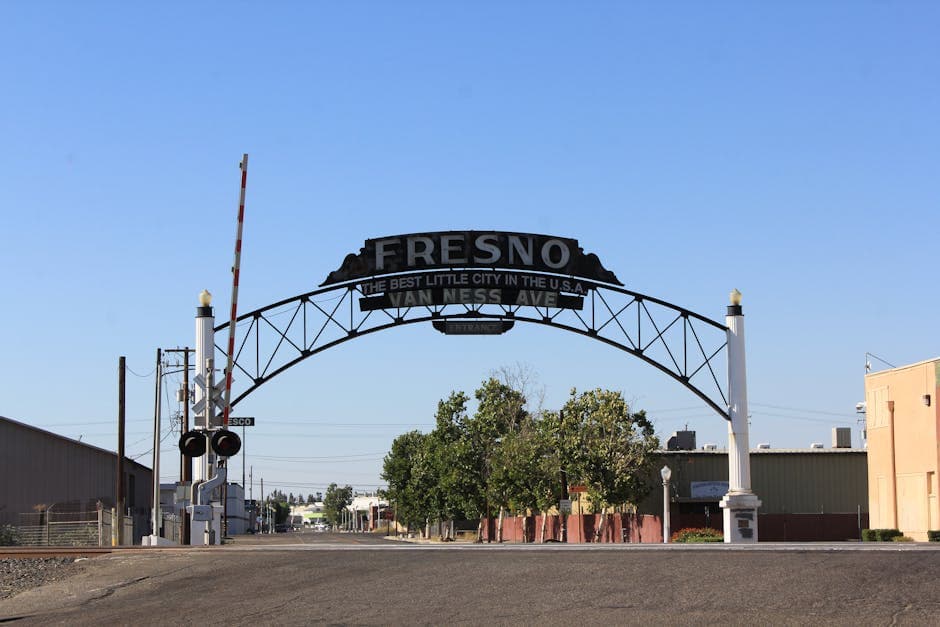
Part One. A Sunday in September.
Marisol Vargas opens Sunday brunch in the Tower District with a raisin compote that arrived on a flatbed two hours ago.
The Sunday brunch service at her forty-four-seat Tower District restaurant on Olive Avenue between Wishon and Van Ness opens at 9 AM, and Marisol Vargas has just walked a tray of warm sourdough toast topped with a Thompson-grape raisin compote, fresh ricotta from a Madera dairy, and a drizzle of orange-blossom honey from a Reedley apiary to table four. It is the last weekend of September, and the Selma raisin harvest is still on the trays in fields twenty miles south, drying in the late summer Central Valley sun. The Thompson grapes were on the vine eight weeks ago. They were on the paper drying trays between the vine rows seventeen days ago. They were rolled in to the Sun-Maid packing house outside of Kingsburg this Wednesday. They were in her walk-in at 6:30 AM this morning.
Marisol knows the timeline because she is the daughter of a Selma raisin grower who has been working a forty-acre Thompson vineyard since 1992. The Selma-Kingsburg-Fowler corridor, the heart of California raisin country, sits about thirty minutes south of the Tower District on Highway 99. Fresno County leads the United States in raisin and table-grape production, and the Central Valley as a whole produces essentially all of the country's commercial raisin supply[3] [5]. Her menu, chalked above the pass in three colors, lists the raisin compote with a single notation: "Selma Thompsons, dried 18 days." It is not a marketing line. It is an inventory statement her father would write the same way.
Marisol tried a DoorDash listing of her Sunday brunch plate in February of last year. The marketplace queue, which routes orders through a regional fulfillment cycle and adds delivery dispatch through a courier who arrives roughly forty minutes after the kitchen plates the food, cost her sixteen percent of her brunch eggs to a cold yolk on arrival, ricotta toast that had gone soggy, and a one-star review that read, in part, "The toast was wet." She pulled the brunch plate off DoorDash within three weeks. She is not a delivery-averse operator. She runs delivery aggressively. But marketplace dispatch on a Sunday brunch menu built around hot-then-cold composition was, in her case, a category error.
Her direct ordering page, which she set up with a Fresno State business school student doing a senior project in 2024, takes catering orders for Fresno State games on home Saturdays, for the Big Fresno Fair vendor concession in early October, and, increasingly, for Hmong New Year banquets in November and December at the Fresno Fairgrounds. The direct channel cleared $11,400 in catering last week against a Sun-Maid corporate office breakfast, a Fresno Unified School District procurement order from a bilingual program coordinator, and three Bulldog tailgate boxes. The dispatch was a courier her line cook walked two blocks west to a vehicle running south on Highway 41. The raisin compote did not lose its texture.
Marisol closes the pass, walks the dining room, and stops at table four. The regulars there, a couple from the Old Fig Garden neighborhood who have been eating brunch with her since the lease was signed in 2020, are halfway through the toast. They tell her the raisins taste like the ones her father used to bring to potlucks at the Sanger Armenian Apostolic Church when their kids went to school together in the nineties. She tells them the field is six miles from where his church sat before the freeway widened through Selma. She goes back to the pass. She pulls a citrus salad for table seven.
What follows is her year, told through the county that grows her food, the Hmong community that books her Saturday banquets in November, the Armenian heritage district that built the Tower above her dining room, the Hispanic majority that orders bilingual on the phone every weekday, the Bulldog stadium that fills her brunch on Saturday game weekends, the Big Fresno Fair that arrives in October, and the Valley smoke regulations that quietly shape every wood-fire kitchen in town. The math, when she ran it in March of last year against her digital order mix, did not add up against the marketplace stack. The argument for a different stack underneath the restaurant is the closing section.
Part Two. The Stack.
Eight billion dollars of crops, three hundred and fifty commodities, one county.
Fresno County reports annual gross agricultural production value above $8 billion, more than any other US county in most recent years[3]. The county sits at the geographic center of the San Joaquin Valley, the production heart of California agriculture and, by extension, of US tree nut, table grape, raisin, pistachio, and citrus supply.
Almonds. California produces roughly 80 percent of the world's almonds, and the San Joaquin Valley is the production heart of the crop[4] [5]. Fresno County alternates with Kern and Stanislaus for the top US almond producing county in any given year. The implication for Fresno restaurants is that the almond-based pastry, salad, and amaretto programs run against a local supply chain that is hours, not weeks, deep.
Grapes, raisins, and table grapes. Fresno County leads the United States in raisin and table grape production[3]. The Selma-Kingsburg-Fowler corridor, immediately south of the city, dries the country's commercial raisin supply on paper trays between vine rows from late August through early October. Sun-Maid Growers, the cooperative founded in 1912, is headquartered in Kingsburg and remains one of the county's largest agricultural employers. The implication for Fresno restaurants is that raisin and grape-based menu items, from compotes to charcuterie pairings to dessert programs, run against an inventory window measured in days.
Pistachios. California produces approximately 99 percent of US pistachios[4], with the production belt running along Highway 99 through Fresno, Kings, Kern, and Madera counties. The Wonderful Company orchards south of the city and the Setton Farms acreage west toward the I-5 are the largest commercial operations. For the Fresno operator, the pistachio program runs through processors located within a thirty-minute drive of the Tower District.
Poultry and dairy. Foster Farms, headquartered in Livingston in Merced County immediately north, anchors a Central Valley poultry economy that runs through Fresno County feed shed acreage and processing facilities. The dairy belt, which produces a significant share of California's milk, runs across Tulare, Kings, and Fresno counties. The Central Valley produces more milk than any other US region, and the Fresno restaurant cheese, butter, and milk supply runs against that supply chain.
Processing tomatoes and citrus. The Central Valley processing tomato belt runs through Fresno County, with growers concentrated west and south of the city. California produces roughly 90 percent of US processing tomatoes[5], and Fresno County is one of the top three producing counties. The citrus belt south of Fresno, running through Visalia and Lindsay in Tulare County, produces a meaningful share of US oranges and Sumo citrus, with seasonal volume hitting Fresno restaurant menus from November through April.
The structural implication. A Fresno operator building her menu against this stack has a supply-chain proximity advantage that almost no other US city replicates at this scale. The CDFA and the Fresno County Department of Agriculture publish the annual crop reports that anchor the figures above[3] [4]. The Fresno Bee and Fresnoland cover the agricultural economy continuously[11] [12]. The pattern across the coverage is consistent: operators who design menus around the seasonal calendar of the surrounding county outperform operators who source through national distribution chains. The marketplace fulfillment model, which optimizes against the lowest cost route through a regional dispatch hub, does not preserve the freshness premium that the Fresno-County ingredient stack delivers. The direct channel, with a runner or a five-minute courier, does.
GV Wire's regional business reporting on Fresno County agricultural exports and the Visit Fresno County tourism narrative around the Blossom Trail and the Fruit Trail both lean on the same fact base[13] [9]. The shed is the editorial frame. It is also the inventory map. The operator who reads the inventory map correctly wins her Sunday brunch service every week.
Part Three. The Hmong Capital.
Thirty thousand Hmong residents, Asia Plaza on Olive Avenue, and the November-December banquet stack.
Fresno is home to roughly 30,000 Hmong residents, the second-largest Hmong community in the United States after the Twin Cities of Minnesota[8]. The community arrived in waves after 1975 following the Secret War in Laos, and has, over five decades, built a commercial corridor anchored on Olive Avenue at Asia Plaza, on McKinley Avenue at Asian Village, and across the network of Hmong-owned businesses through southeast and central Fresno.
Hmong New Year in Fresno runs from mid-November through late December at the Fresno Fairgrounds, in multi-week programming organized by the Hmong American Community Inc and the Hmong Cultural Center of Fresno. The celebration draws on the order of 100,000 attendees across the multi-week run[8] [9], and it functions, for the Fresno Hmong operator, the same way the Tower Bridge Dinner functions for a Sacramento farm-to-fork operator: the single largest off-premise event concentration of the year.
The commercial anchors of the community are physical. The Asia Plaza shopping center on Olive Avenue at West Avenue, between the Tower District and the Highway 99 corridor, holds a cluster of Hmong-owned restaurants, bakeries, herbal medicine stores, and bridal-wear shops that has been operating since the late 1980s. The Asian Village center on McKinley and Blackstone holds a parallel cluster anchored by the Asian Village Market. The Fresno Council of Governments has tracked the commercial corridor's growth across more than two decades of regional reporting[18].
The phone-order pattern at a Hmong-owned restaurant on Olive Avenue or at the Asia Plaza food court is a Hmong-first conversation, often through a generational host stand where the older operator answers the phone in Hmong and the younger family member translates orders to the kitchen. The marketplace apps do not solve this problem. DoorDash and Uber Eats route through a text-first English-language interface that the older Hmong-first customer base does not use. The phone is the order channel. The bottleneck constrains revenue against a customer base that is loyal, recurring, and concentrated geographically.
Voice AI that handles English, Spanish, and Hmong on the same inbound line is the load-bearing feature for the Fresno Hmong corridor operator. Hmong is a tonal language with two principal dialects (White Hmong and Green Hmong) and a Romanized Popular Alphabet that the diaspora has standardized since 1953; modern speech-recognition stacks now handle the dialect range adequately for restaurant ordering. The Fresno Center and Hmong American Community Inc have, separately, documented the growing demand for native-language digital services across community-business interactions[8].
Fresno Bee coverage of the Hmong commercial corridor, and Fresnoland's reporting on the community's second-generation business growth, both document the same pattern[11] [12]. The operators who layer in a digital ordering surface that respects the phone-first, native-language customer pattern grow. The operators who route entirely through marketplace apps lose their older customer base to the operator across the street, and lose their younger customer base to marketplace commission against thin margins on ticket sizes that average $10 to $16.
Part Four. Armenian Town.
William Saroyan, the 1940 Pulitzer for The Time of Your Life, and the heritage district he never left.
Fresno's Armenian Town, the historic district bounded roughly by Ventura Avenue, M Street, San Benito Avenue, and Santa Fe Avenue immediately south of downtown, traces back to the 1880s, when Armenian immigrants from the Ottoman Empire began arriving in the San Joaquin Valley to work the fig, raisin, and stone fruit harvests. By the 1910s, Fresno held one of the largest concentrations of Armenian-Americans in the United States outside of Los Angeles, and the district had developed into a self-contained Armenian-language commercial and religious core, with the Holy Trinity Armenian Apostolic Church on M Street as its anchor.
William Saroyan, born in Fresno in 1908 to Armenian immigrant parents from Bitlis, won the Pulitzer Prize for Drama in 1940 for The Time of Your Life, then famously refused the prize on the grounds that commerce should not patronize the arts[15]. His novels and short stories, set largely in Fresno and the surrounding Central Valley, made the city a literary place. The William Saroyan House Museum on Griffith Way in north Fresno preserves his last residence. The William Saroyan Foundation administers the literary estate. The Holy Trinity church courtyard holds the Saroyan grave.
The City of Fresno's Armenian Town Heritage Trail, established by the Planning Department, marks the physical district with interpretive signage, and the city has, since the 1990s, maintained zoning protections for the surviving Armenian-era residential and commercial buildings[14]. Visit Fresno County markets the district alongside the Tower District and the Big Fresno Fair as one of the city's three principal cultural destinations[9].
For the Fresno restaurant operator, the Armenian heritage is not a passive historical fact. It is an active menu thread. Armenian-style lavash bread, basturma cured beef, the use of pomegranate molasses, the prevalence of cracked-bulgur pilafs, and the dried-fruit-and-nut-heavy pastry tradition all run through Fresno menus at restaurants whose grandparents arrived in the Selma raisin fields in the 1920s. Marisol Vargas, whose maternal family is Sanger Armenian and whose paternal family is Salinas Mexican, runs a Sunday brunch menu that braids the two traditions through the raisin compote, the rosemary lamb hash, and the pistachio-dusted Armenian-style donut on the dessert side. It is not a fusion. It is a family table.
The implication for the digital ordering channel is direct. A menu engine that can handle dish descriptions in three languages (English, Spanish, Armenian for the heritage program; English, Spanish, Hmong for the Olive Avenue corridor), that can hold seasonal items with the dried-fruit and tree-nut inventory of the Central Valley, and that can run the catering line for an Armenian church banquet on a Sunday in April or for a Saroyan Foundation literary dinner in May is the load-bearing technology layer. Marketplace channels, which optimize against generic-cuisine ordering taxonomies, lose the heritage menu in the process. The direct channel preserves it.
Part Five. The Tower.
The Art Deco theater at Olive and Wishon, and the chef-driven block grid that grew around it.
The Tower Theatre, the Streamline Moderne movie palace at 815 East Olive Avenue, opened in 1939 and gave its name to the neighborhood that grew around it. The blocks of Olive between Palm and Van Ness, and the cross streets through Fulton, Wishon, and Echo, hold the densest concentration of independent restaurants in Fresno, alongside the city's principal LGBTQ-friendly bar district, three independent live music venues, and a string of vintage stores and tattoo parlors that draw the regional alternative-culture economy. The City of Fresno's Tower District Specific Plan, last updated in the early 2000s, protects the district's Art Deco facades and small-lot commercial scale[14].
The chef-driven restaurant economy here runs from the gastropubs (Mia Cuppa, The Annex Kitchen) through the wine-bar dinner counters (Tioga Sequoia, Imperial Garden), the upscale Italian and Mexican operations (The Bowery Brews, Toledo's, Sequoia Brewing), and the bakery cafes (Frank's Pancho Villa, Batter Up Pancakes) into the dessert and ice cream tier (Splash Frozen Yogurt, Yem Cafe). Ticket bands run from $14 at lunch to $52 at the prix-fixe upper end. The Fresno Bee Food desk covers the Tower continuously, and Fresnoland has documented the post-2018 second wave of Tower District openings against a backdrop of rising commercial rents[11] [12].
The Tower's daypart profile is dinner-dominant, with a strong Sunday brunch tail. Friday and Saturday dinner draw from the entire metro and the surrounding Madera, Clovis, and Kingsburg communities. The Tower Theatre's first-run film and live music programming, alongside the Roger Rocka's Dinner Theater across Wishon Avenue, generates a 7 PM to 11 PM evening density that the marketplace apps cannot match: most marketplace orders compete against walk-up traffic that the restaurants are already turning at the door.
Marisol Vargas opened her Tower District concept in 2020 after eight years of running prep kitchens at two of the Tower's anchor operators. Her landlord is a third-generation Tower District building owner whose grandfather sold Armenian-style cured meats out of the storefront below in the 1940s. Her morning bread comes from a Tower bakery two blocks east. Her produce comes from the Capay Valley network and from her father's farm in Selma. Her direct ordering channel is, in her words, "the only piece of technology I have that scales the kitchen the way the kitchen actually works." That is the editorial statement her year, told below, is built around.
The block grid around the Tower Theatre is not interchangeable with the rest of Fresno. A downtown Fulton Mall concept lands flat in the Tower. A north Fresno Riverpark suburban template lands flat in the Tower. The walkability, the Art Deco character, and the chef-driven culture pattern hold the district together as a single, distinct restaurant economy that the direct ordering channel scales cleanly underneath.
Part Six. The Bilingual City.
Roughly half of Fresno is Latino, and the phone line ringing at noon answers in Spanish first.
Fresno is approximately 50 percent Hispanic or Latino, the largest Latino-majority population among California cities with more than half a million residents[1]. The community's roots run through generations of farmworker migration from Jalisco, Michoacan, Oaxaca, and the Mixteca region, with permanent settlement concentrated in southeast Fresno, west Fresno, and the suburban-adjacent communities of Parlier, Sanger, and Selma. The Fresno Unified School District operates Spanish bilingual programs at scale; California Department of Education data shows Spanish as the second-largest home language across the district by a wide margin[19].
The restaurant phone-order pattern at lunch and dinner across southeast Fresno, the Calwa corridor, and most of the taqueria density between Belmont and Jensen Avenues is Spanish-first. The host stand answers the phone in Spanish, takes the order, repeats it back in Spanish, and reads the address back from a printed map that the line cook references at expo. The labor cost of that pattern, across a thirty-seat taqueria operating at $12 average ticket, is a meaningful share of the operator's daytime labor stack.
The marketplace apps do not solve this problem. DoorDash, Uber Eats, and Grubhub route through a text-first English-language interface that the older Spanish-first customer base does not use. Where the customer is younger and bilingual, the marketplace channel competes against direct ordering on price and loses on margin: the operator paying a 23 to 30 percent marketplace commission on a $12 ticket has no room to mark the menu price up to recover the commission, and absorbs the cost against an already-thin taqueria margin.
Voice AI that handles English, Spanish, and a third language (Hmong on Olive Avenue, Armenian inside the heritage district program, Punjabi in the agricultural corridor where the South Asian community has grown since the 1990s) on the same inbound line is, for the Fresno restaurant operator, the load-bearing feature. The Fresnoland reporting on language-access patterns across local government and small business has, separately, documented the same gap that direct ordering can close[12].
The DirectOrders proposition for the bilingual Fresno operator is direct. Voice AI that handles English, Spanish, and Hmong on a single inbound number. A web ordering surface that supports Spanish-language menu tags, dish descriptions, and dietary callouts. A flat $249 monthly fee that does not compound against a corridor where ticket sizes run $9 to $16 and where a 23 percent commission would constitute a structural squeeze on a margin already pressured by the AB 1228 wage ripple and the SB 478 disclosure load. The flat-fee stack is, for this corridor, a survival argument before it is a growth argument.
Part Seven. Valley Children's Stadium.
Forty thousand Bulldog fans on a Saturday in October, and the tailgate catering pipeline that pays for it.
Valley Children's Stadium, the Fresno State football home venue at the corner of Bulldog Lane and Cedar Avenue in north Fresno, seats approximately 40,000 and consistently fills against a Mountain West Conference home schedule of six to seven Saturday afternoon games per fall season[10]. The Fresno State Bulldogs draw on a regional fan base that runs from the Bakersfield terminus of Highway 99 to the Sacramento Valley, with a dense core inside the Fresno metro itself. Home-game Saturdays are the largest single-day off-premise event of the year for north Fresno restaurants and a meaningful catering event for the Tower District operators.
The tailgate pipeline starts at 9 AM for a noon kickoff. Parking lots on Cedar Avenue and around the Save Mart Center fill with traditional Bulldog tailgates that, in the median case, are catered through online ordering from a Tower District, Bullard, or Fig Garden restaurant rather than cooked on site. The catering ticket runs $180 to $440 per twenty-person group, with markup on a barbecue or carnitas platter, a tray of street tacos, or a pan of pollo asado against a side rotation. The operator who publishes a clean catering menu, accepts online orders without a phone tag, dispatches reliably at 11 AM, and invoices cleanly against repeat tailgate group bookings owns the Saturday morning catering pipeline.
For Marisol Vargas, the Saturday Bulldog game weekend doubles her Sunday brunch reservation count: fans who tailgate Saturday return for brunch Sunday on their way out of town. The operational consequence is that the kitchen runs a Saturday morning catering line out the back door alongside the Saturday dinner service, then turns a Sunday brunch service against a reservation book that is 60 percent out-of-town. The direct ordering channel is the only technology layer that holds all three lines (catering output, dinner reservations, Sunday brunch reservations) inside a single menu engine.
The Fresno Bee Sports desk and GV Wire's Bulldog coverage both document the broader regional impact[11] [13]. The math, against the direct channel, is unambiguous: a single $440 Saturday catering ticket covers the $249 monthly platform fee plus a small margin in one transaction. A six-game home schedule that delivers six such tickets pays the channel for two and a half years.
Part Eight. The Fair.
Six hundred thousand attendees in twelve early-October days, one fairground, the largest fair in the Central Valley.
The Big Fresno Fair, run by the 21st District Agricultural Association, opens annually in the first week of October at the Fresno Fairgrounds on Kings Canyon Road and runs for twelve days. Recent attendance has consistently exceeded 600,000 across the run, making it one of the largest county fairs in California and the largest in the Central Valley[6].
The Big Fresno Fair's restaurant impact runs three ways. First, the on-site concession program awards booth space to roughly 30 to 40 local and regional food vendors across the twelve-day run, with revenue concentrated on the two weekend peaks that Figure 3 above charts. Second, the off-site catering pipeline for fair-related business meetings, corporate sponsorship dinners, and Bakersfield-to-Fresno traveling buyer hospitality is meaningful for the Tower District and downtown operators. Third, the surge in Highway 99 traffic in and out of the city in the first half of October generates a sustained restaurant lift across north Fresno, the Old Town Clovis dinner district, and the Tower District.
For the operator running a fair concession, the operational load is severe. The booth runs twelve days of fourteen-hour service, the menu has to hold against a peaked demand curve that doubles between Wednesday and Saturday, and the labor stack has to draw from outside the operator's standard staff base. The Big Fresno Fair has published vendor program guidelines and historical attendance data[6]. Visit Fresno County and the regional tourism press cover the fair's economic impact annually[9] [20].
The direct ordering channel solves a specific Big Fresno Fair operator problem. The fair concession operator can run a parallel pre-order line through the direct channel for fair guests who want to skip the booth line. The operator publishes the concession menu on a fair-week landing page, accepts pre-paid orders for pickup at the booth, and uses Voice AI to handle phone orders in three languages from fairgoers calling ahead while parked in the lot. The marketplace apps do not address the on-site fairgrounds dispatch problem at all.
Marisol Vargas has run a Big Fresno Fair concession three times. The first year, in 2022, the booth ran phone orders through her cell number, hand-tracked on a clipboard, with a host running tickets to the kitchen. The labor cost of that pattern, against the booth's $14,400 of fair-week revenue, ate meaningfully into the margin. The 2024 fair ran through the direct ordering page with Voice AI on the inbound, pre-paid pickup orders queued for the line, and a single host managing the booth window. The booth's fair-week revenue grew 22 percent. The labor cost dropped. The fair, in her words, "started paying like a fair."
The 21st District Agricultural Association manages the fair under a statewide network of county and district fairs that the California Department of Food and Agriculture oversees[4]. The Fresno Bee covers the fair's programming and economic impact annually[11]. The pattern, repeated across the coverage, is consistent: the fair is one of the largest single-event restaurant revenue concentrations in the Central Valley, and the operators who can run a clean digital ordering surface against it outperform the operators who cannot.
Part Nine. The Smoke Rules.
How the San Joaquin Valley Air District quietly shapes every Central Valley barbecue operator.
The San Joaquin Valley Air Pollution Control District, the regional air quality regulator covering eight counties from San Joaquin in the north to Kern in the south, administers some of the most restrictive wood smoke and outdoor combustion rules in California. The Valley's basin geography, ringed by the Sierra Nevada on the east and the Coast Range on the west, traps particulate matter, and the District's rules govern residential wood burning, commercial wood-fired ovens, agricultural burning, and outdoor cooking emissions across the metro[7]. The District operates the Valley's Check Before You Burn program annually from November through February, and it sets emission control requirements for commercial wood-fired equipment that differ from the rest of California.
For the Fresno barbecue, smoker, and wood-fired-oven operator, the implication is operational. The smoke output of a commercial offset smoker, a pellet grill running at sustained low temperature, or a wood-fired pizza oven has to comply with District rules that, in many cases, require either electronic emission controls, certified low-emission appliances, or modified operating hours during winter air advisory days. The Fresno Bee and Fresnoland have documented restaurant compliance friction with the District across multiple recent years[11] [12]. The Tower District barbecue operator and the Stockton Avenue Hmong charcoal-cooked street food operator both operate under the same regulatory load.
The District also runs an Open Burning program that restricts agricultural burning across the Valley, which, for the restaurant operator, is one removed: the agricultural waste management decisions of the surrounding county shape the seasonal air quality pattern that the District's winter advisory days fall inside. The result is that Central Valley restaurants run smoke and combustion-heavy menus under tighter operational windows than the same menus would face in Sacramento, Los Angeles, or the Bay Area.
For the digital ordering channel, the implication is that the menu engine has to flex against seasonal operating constraints. A barbecue menu that pivots toward indoor-oven preparations on a winter advisory week, or that surfaces a "today's available wood-cooked items" tag against the District's burn-day forecast, is the load-bearing feature. A direct ordering channel that lets the operator update the menu surface in minutes rather than waiting on a developer ticket is the only technology architecture that matches the District's operating cadence. The District publishes burn-day forecasts and rule updates on a continuous calendar[7].
Part Ten. The Argument.
How DirectOrders fits Fresno: a flat-fee channel underneath a Central Valley operator.
The Fresno independent restaurant operates at a margin band that runs slightly tighter than the California statewide average: roughly 2 to 4 percent operating margin against ticket sizes that average lower than coastal California and against a cost stack that, as documented above, compounds against an 8.35 percent City of Fresno sales tax, SB 478 disclosure obligations, an AB 1228 wage ripple, trilingual customer service load (English, Spanish, Hmong, with Armenian in the heritage program), San Joaquin Valley Air District smoke compliance for wood-fired kitchens, and seasonal ingredient volatility from the surrounding Fresno County crop calendar[2] [16] [17] [7].
Inside that margin band, every variable cost line that scales with revenue erodes operating cash. Marketplace commissions, at a blended 23 to 30 percent of the order subtotal, are the single largest variable cost line for the operator with a meaningful digital order mix. The DirectOrders proposition is structured as a flat fee. $249 a month, all in, for the direct ordering channel. The channel includes a branded website ordering page with SB 478-compliant disclosure surfaces, trilingual Voice AI handling English, Spanish, and Hmong on the inbound line (the language stack the Fresno corridor requires), Uber Direct dispatch for the delivery layer, same-day Stripe payouts that match the Fresno restaurant cash-flow cycle, and a single-rail menu engine that runs across catering, the dining-room QR code, and the digital channel as one menu.
The math is direct. A Tower District operator running $820,000 in annual revenue, of which $280,000 is digital, of which $67,200 is marketplace commission at a blended 24 percent rate, shifts 35 percent of digital volume to a direct channel at $249 a month. The marketplace commission line drops from $67,200 to $43,680. The DirectOrders line, in its place, is $2,988. The annual P&L delta, against the same revenue, is roughly $20,500. Against a 3 percent operating margin on $820,000 ($24,600 of operating cash), the delta represents an 83 percent increase in operating cash. That is, in many years, the difference between renewing the Tower District lease in 2028 and not.
The catering line, separately, captures the Bulldog tailgate pipeline, the Big Fresno Fair pre-order concession surface, and the Hmong New Year November-December banquet stack. The Asia Plaza and Olive Avenue corridor, separately, captures the Hmong-first phone order pattern the marketplace channel does not address. The southeast Fresno taqueria corridor, separately, captures the Spanish-first daytime phone order load on the same Voice AI. The Sun-Maid corporate office, the Foster Farms headquarters visits, the Fresno State athletic department catering line, the Bulldog booster gatherings, and the Fresno Unified School District procurement orders all run through the same single-rail menu engine. The flat-fee channel is the connective layer. The county is the supply chain. The community is the customer base. The District is the regulatory load. The kitchen is the same kitchen.
Marisol Vargas ran the trial against her catering line in March of 2024. By the Big Fresno Fair in October, the booth was running entirely off the direct site, with Voice AI handling Spanish-language phone orders from fair-goers and Hmong-language orders from the Asia Plaza network booking November banquets. By Hmong New Year in late November, the kitchen had run six $1,800-plus banquet tickets off the direct channel that, twelve months earlier, would not have crossed her radar. Her operating cash position at the close of December 2025 was the strongest it had been since the lease signing in 2020. The county has not changed. The Tower Theatre has not changed. The kitchen has not changed. The stack underneath the kitchen has.
Coda
Two paths from here, both walking distance from the Tower Theatre.
Continue reading
Sources
The twenty references for this feature, with anchors.
External links open in a new tab. The composite operator in Part One is a composite. Where dollar figures appear inside the feature, they reflect a Tower District Fresno single-store independent at the median band described in Fresno Bee Food, Fresnoland, and GV Wire coverage of the regional restaurant economy.
- [1]US Census Bureau, QuickFacts: Fresno city, California (ACS 2023 5-Year Estimates)
- [2]California Department of Tax and Fee Administration, Sales and Use Tax Rates by County and City (Fresno County)
- [3]Fresno County Department of Agriculture, Annual Crop and Livestock Report (gross production value)
- [4]California Department of Food and Agriculture, California Agricultural Statistics Review
- [5]USDA National Agricultural Statistics Service, California Field Office (almonds, grapes, raisins, pistachios, citrus)
- [6]Big Fresno Fair, attendance and event programming (operated by the 21st District Agricultural Association)
- [7]San Joaquin Valley Air Pollution Control District, residential and commercial wood smoke and outdoor combustion rules
- [8]Hmong American Community Inc and Fresno Center, Hmong New Year Fresno overview and community size estimates
- [9]Visit Fresno County, Tower District, Armenian Town, and Big Fresno Fair tourism overviews
- [10]Fresno State Athletics, Valley Children's Stadium and Bulldog football attendance data
- [11]Fresno Bee, restaurant, agriculture, and Tower District coverage
- [12]Fresnoland, nonprofit civic reporting on Fresno neighborhoods, housing, and agriculture
- [13]GV Wire, regional Fresno and Central Valley business and political reporting
- [14]City of Fresno, Tower District Specific Plan and Armenian Town Heritage Trail
- [15]William Saroyan Foundation, biographical context on the Pulitzer Prize for Drama (1940) and Fresno Armenian heritage
- [16]California SB 478 (Consumers Legal Remedies Act, hidden fees), Civil Code section 1770, effective July 1, 2024
- [17]California AB 1228, Fast Food Council and $20 minimum wage (effective April 1, 2024)
- [18]Fresno Council of Governments, Asian Plaza and Stockton Avenue / Olive Avenue commercial corridor reporting
- [19]California Department of Education and Fresno Unified School District, bilingual program enrollment (English / Spanish / Hmong)
- [20]Visit California and California Travel Association, Central Valley tourism corridor reporting