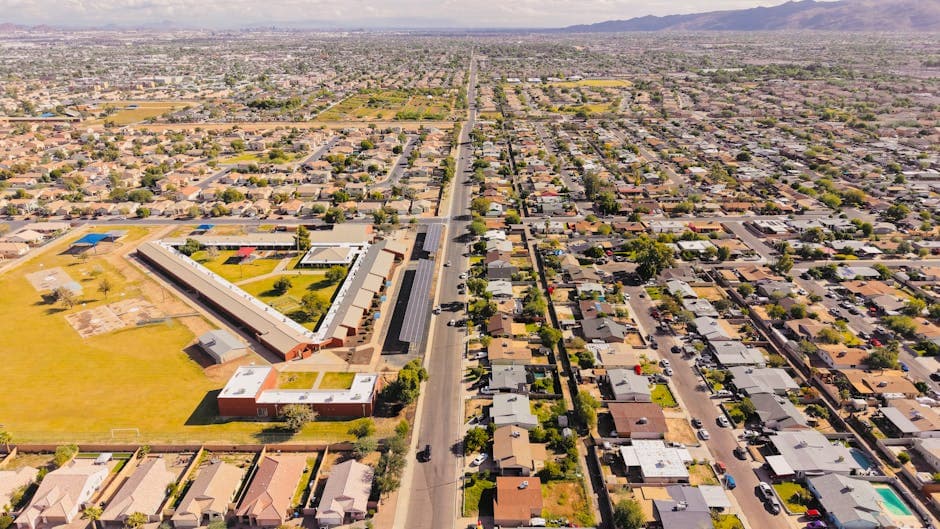
Surprise, Arizona, with the Surprise Stadium ballpark, the Tennis and Racquet Complex courts, and the Sun City Grand retiree community in the West Valley desert.
A Surprise, Arizona Field Guide

Cactus League Twins and the Sun City West boom.

Surprise, Arizona is the fastest-growing suburb in the Phoenix West Valley. The city's two famous Cactus League franchises (the Texas Rangers and the Kansas City Royals) have shared Surprise Stadium since 2003, drawing more than 200,000 spring training visitors every February and March. The Surprise Tennis and Racquet Complex hosts a WTA 125 event, an ATP Champions Tour stop, and a year-round draw of ITF and USTA tournaments. Sun City Grand and Sun City West together house tens of thousands of residents 55 and over, the largest concentration of retirement-community demand in the country. Marley Park, Asante, and Sierra Verde anchor the young-family build-out on the north side. The food story is how an operator runs a single platform that fits the 4:30 PM early-bird crowd, the Saturday Rangers game, the Tuesday WTA quarterfinal, and the Marley Park family-meal pickup on the same software.

~154K
Surprise residents (US Census ACS)
2003
Rangers + Royals at Surprise Stadium since (MLB)
1978
Sun City West founded (Property Owners Association)
8.5%
Combined Arizona TPT on prepared food in Surprise
I. Two openings

A 6:42 AM pickleball court, and a 12:10 PM Rangers first pitch.

Saturday, March 7  ·  6:42 AM, Sun City Grand pickleball complex

Cimarron Boulevard, west side

The pickleball courts at Sun City Grand fill by 6:30 AM most spring mornings. By 6:42 the Cimarron Pickleball Complex has eight courts in play, four foursomes warming up on the practice walls, and a line at the gear shed. The temperature outside is 58 F. The forecast high for the day is 81 F. The 9:30 AM brunch reservation at a Bell Road bistro was placed through the restaurant's own website Tuesday night, party of six, light eaters, two with hearing aids. The text confirmation hit at 8:00 AM with a reminder of the party size and the table number. The kitchen received the order ticket for a half-portion frittata, a fruit plate, and a half-stack of pancakes thirty seconds after the customer pressed Confirm. The customer record was tagged with hearing-aid-friendly and large-print receipt. The bill at the end of brunch ran 132 dollars on a 22% tip pattern that the Sun Cities customer base reliably hits. Same-day Stripe payout will land Monday morning.

Six miles east-southeast, four hours and thirty minutes later, a different Bell Road operator was running a different surge. Texas Rangers versus the Kansas City Royals at Surprise Stadium, 12:10 PM first pitch, walk-up traffic from the 11,000-capacity ballpark already stacking through the parking lots by 10:30 AM. The Bell Road kitchen took 67 pre-orders by 11:00 AM for an 11:15 to 11:30 AM pickup window, drive-by-and-grab tailgate format, 22 of them set up for in-stadium consumption (Surprise Stadium permits sealed outside food on most game days). The phone rang 31 times that morning. The retiree-friendly Voice AI picked up on the second ring every time, repeated each order back at a deliberate pace, and offered a text confirmation in 24-point font for the customers who asked. Twenty-eight of the 31 inbound calls turned into orders. Two were directions to the stadium parking. One was a Royals fan asking if the kitchen had Kansas City barbecue sauce. (It did.)

Two operators, six miles apart, one platform. The Saturday brunch line at Sun City Grand is the year-round baseline. The 12:10 PM Rangers game is the six-week spring surge. The operator did not re-platform between them. The customer file grew on both. The cash flow matched the calendar on both. That is the Surprise operating reality at the right level of granularity.

The Surprise food story is not one story. It is a tension. The Sun Cities anchor a high-volume, high-loyalty, lighter-portion retiree demand line that peaks at 4:30 PM and rests by 8:00 PM. Marley Park and Asante anchor a younger-family weekday-evening pattern that runs from 5:45 PM to 7:30 PM. The Cactus League month doubles everything in February and March. The Tennis and Racquet Complex inflates a half-dozen weeks across the year. The Bell Road corridor and the planned Loop 303 expansion are the physical spine that connects them. The operator who plans for all four wins. The operator who plans for one of them loses the other three.

Spring training is the spike. Sun City is the floor. The Tennis and Racquet Complex is the broadcast week. Marley Park and Asante are the young-family wave. Bell Road is the corridor. Loop 303 is the next ten years. The infrastructure that handles one of these handles all of them, or it handles none of them well. That is the editorial frame for what follows.

II. The Cactus League month

Rangers and Royals. Mid-February through late March.

Surprise Stadium hosts roughly 30 home games across the Texas Rangers and the Kansas City Royals between mid-February and the final week of March, with a combined six-week run that pulls in more than 200,000 visitors. Average per-game attendance runs 7,000 to 11,000, with weekend dates and split-squad doubleheaders running higher. The Texas Rangers fan base drives in from Dallas-Fort Worth in family caravans during the third and fourth weeks of March (peak spring break in Texas school districts) and flies in for weekend series. The Kansas City Royals fan base trends older, books longer stays, and clusters at the Surprise hotels along Bell Road and the Loop 303 corridor. Together they fill Surprise Stadium's 11,000 seats and overflow the parking lots most weekend games of the season.

SURPRISE STADIUM. CACTUS LEAGUE STRIP. RANGERS + ROYALS SINCE 2003.03,0006,0009,00012,0001.0x1.5x2.0x2.5x3.0xFANSCOVERS17Feb Mon9.2k22Feb Sat8.8k23Feb Sun7.8k28Feb Fri10.8k1Mar Sat9.8k7Mar Sat8.4k11Mar Wed11.2k14Mar Sat8.6k17Mar Tue10.7k21Mar Sat7.9k24Mar Tue9.4k28Mar Sat30Mar MonRangers homeRoyals homeRestaurant cover index (1.0 = avg)

Source modeling: Cactus League Baseball Association published schedules and average attendance reporting, Texas Rangers spring training, Kansas City Royals spring training, operator-side cover ratio drawn from the DirectOrders West Valley panel.

Surprise Stadium opened in 2003.

Surprise Stadium opened in February 2003 as the shared Cactus League home of the Texas Rangers and the Kansas City Royals. The 11,000-seat ballpark, two practice diamonds for each team, and the surrounding Surprise Recreation Campus made Surprise the second city in the West Valley (after Peoria) to host a shared MLB facility. The investment that the City of Surprise and Maricopa County made into the Stadium and the Recreation Campus was the trigger event for the city's growth: by 2003 the population was 48,000, and by 2010 it had more than doubled to over 117,000. The Stadium has anchored a generation of West Valley retail and restaurant development, including the Surprise Marketplace, the Bell Road corridor, and the Marley Park neotraditional neighborhood.

Operationally for restaurants, the shared facility means two distinct fan bases arrive in the same parking lots six weeks a year. The Rangers fans drive in from Texas (an 18-to-20-hour I-20 / I-10 caravan, or a two-hour DFW to Sky Harbor flight) in family parties of four to eight. The Royals fans fly in from Kansas City and the Midwest with a five-day weekend pattern, often paired with golf and Sun Cities visits. Both bases stay in the Surprise hotel cluster on Bell Road, the Westgate hotel ring just east, and at Sun Cities short-term rentals.

The 12:10 PM first pitch is the trigger.

Most Cactus League games at Surprise Stadium run a 12:10 PM or 1:10 PM first pitch. The pre-game pickup window runs from 10:30 AM to 11:45 AM. That window collides with the late-breakfast and early-lunch retiree surge that a Sun Cities operator would normally absorb on a slower day. On a game day, the volume is two and a half to nearly three times the comparable Tuesday. The post-game window from 3:30 PM to 5:30 PM is a second wave, and it overlaps almost perfectly with the Sun Cities 4:30 PM early-bird peak. The two waves collide. The kitchen that staffs for one of them and not the other is the kitchen that loses fifteen orders an hour to voicemail on the third Saturday of March.

The strict-volume problem is not menu execution. The kitchen knows how to make the food. The problem is order capture: a phone line that can handle 31 inbound calls an hour with retiree-friendly pacing, a website that prints a kitchen ticket in fifteen seconds, and a pre-order pipeline that opens at 7:00 AM and stays open through the 11:45 AM cutoff. That is the volume the platform has to absorb. A spring training Saturday is the proof.

What the spring training month means for tech

The Cactus League month is the six-week proof of platform. A Surprise restaurant that picks a $0-per-month plus 30% commission marketplace will hand thirty percent of the surge to a third party. A Surprise restaurant that picks a flat $249-per-month direct-ordering platform with a retiree-friendly Voice AI line will keep the surge and stay open through the Sun Cities 4:30 PM overlap. The math compounds across forty weekend days a season and shapes the operator's cash flow into the slower summer months. The Cactus League is the spike. The platform a kitchen runs has to absorb the spike without a marketplace haircut.

III. The Sun Cities

Sun City Grand and Sun City West: the retiree demand floor.

The Sun Cities anchor the Surprise restaurant economy in a way that is invisible to anyone who has not spent a week here. Sun City West, founded in 1978, was the second age-restricted active adult community built by Del Webb in the Phoenix West Valley, after the original Sun City in 1960. Sun City Grand, founded inside the City of Surprise in 1996, was the third. Between them, the two Surprise-area Sun Cities house tens of thousands of residents 55 and over, with a median age that sits above 70 across the active rolls. Sun City Grand alone counts roughly 9,000 homes and 17,000 residents. Sun City West counts roughly 17,000 homes and 27,000 residents. Together they form one of the largest concentrations of retirement community demand in the United States.

SUN CITY GRAND + SUN CITY WEST. 24-HOUR DEMAND CLOCK.EARLY-BIRD PEAK AT 4:30 PM. ORDER INDEX (1.0 = DAILY MEAN).SUN CITIESDEMANDCLOCK12 AM3 AM6 AM9 AM12 PM3 PM6 PM9 PM4:30 PM EARLY-BIRD PEAK 2.0x
6 AMmorning
0.25x

Sunrise coffee and breakfast biscuits

7 AMmorning
0.55x

Bell Road bagel and breakfast burrito wave

8 AMmorning
0.90x

Sun City Grand walking-club post-walk breakfast

9 AMbrunch
1.30x

Brunch begins. Eggs Benedict and pancake formats

10 AMbrunch
1.65x

Brunch peak. Reservations and walk-ins overlap

11 AMbrunch
1.55x

Brunch-to-lunch handoff. Light salads enter

12 PMlunch
1.45x

Lunch peak. Soup-and-half-sandwich combos run

1 PMlunch
1.20x

Late lunch. Lighter-portion preference visible

2 PMquiet
0.65x

Quiet afternoon. Walkers and pickleball gear up

3 PMquiet
0.50x

Pre-dinner quiet plateau

4 PMearly bird
1.40x

Early-bird ramp begins. Tables fill from 4:15

4:30 PMearly bird
2.00x

Early-bird dinner PEAK. Cover load 2.0x daily mean

5 PMearly bird
1.85x

Early-bird crest. Pickup-for-home format common

6 PMdinner
1.35x

Standard dinner. Reservation pressure relieves

7 PMdinner
0.85x

Late dinner thinning out

8 PMquiet
0.40x

Most kitchens close to retiree orders

9 PMquiet
0.15x

Young-family pickup overlap, retiree share near zero

Source modeling: Sun City Grand Community Association, Sun City West Property Owners, operator-side cover ratio drawn from the DirectOrders West Valley retiree panel, US Census ACS age-distribution data.

The 4:30 PM early-bird peak.

The single highest-volume hour at most Surprise restaurants is 4:30 PM. Not 6:30. Not 7:30. The early-bird peak runs from 4:00 PM through 5:30 PM, with a 4:30 crest where the cover index reaches 2.0 times the daily mean. The pattern holds Monday through Sunday year-round. Operators who configure their reservation books for a 6:30 PM dinner peak miss the most reliable revenue hour of the Surprise calendar. The Sun Cities show up at 4:15 PM, sit down by 4:30, eat lighter (half-portions, salads with grilled protein, soup-and-sandwich combos), and clear by 6:00 PM. That opens the 6:30 to 7:30 PM seating for the Marley Park and Asante family-dinner crowd.

Brunch volume from 9:00 AM to 11:00 AM.

The other anchor of the retiree week is brunch. Pickleball foursomes wrap by 8:30 AM most days, and the 9:00 AM to 11:00 AM brunch window in Surprise restaurants runs at 1.3 to 1.65 times daily mean. Eggs Benedict, half-stack pancakes, fruit plates, and the bottomless coffee carafe are the menu standard. Reservations matter: the typical Sun Cities brunch table is a party of four to six, books a week ahead, and books again the next week. The customer file is gold. Operators who do not own the brunch reservation list lose the category to chains. Operators who own it own a category that compounds every quarter for decades.

Portion size and predictability beat novelty.

The retiree customer base values predictability over novelty. The menu does not need to rotate quarterly. The kitchen does not need to chase trends. The customer needs to know that the half-portion club sandwich on the Wednesday lunch menu in May is the same half-portion club sandwich she will get in October when she returns from her summer in Minnesota. The platform job is to keep the menu stable, the reservation system fast, and the phone line friendly. A retiree-friendly Voice AI line that repeats orders back at a deliberate pace, speaks at moderate volume, and confirms the pickup time twice covers the customer-experience gap that no national chain has bothered to address.

IV. The racquet weeks

Tennis at the Surprise Tennis and Racquet Complex.

The Surprise Tennis and Racquet Complex sits inside the Surprise Recreation Campus, immediately adjacent to Surprise Stadium. The Complex has hosted WTA, ATP Champions Tour, ITF, and USTA events year-round for more than a decade, drawing professional and elite-level players, touring coaches, broadcast crews, and visiting players' families. The signature week is the WTA 125 event in mid-March that overlaps with the back end of the Cactus League season, compounding the West Valley restaurant volume during the busiest weeks of the year. The ATP Champions Tour stop in April brings retired Hall of Fame players (Connors, McEnroe, Agassi tier) and a broadcast crew on the ATP Champions feed.

SURPRISE TENNIS + RACQUET COMPLEX. ANNUAL EVENT CALENDAR.WTA + ATP CHAMPIONS + ITF + USTA. RESTAURANT COVER SPIKES OVERLAID.01,5003,0004,5006,0007,000VISITORSCOVER SPIKEJanFebMarAprMayJunJulAugSepOctNovDec2.8kITF8d6.5kWTA7d4.2kATP Legends5d3.2kUSTA10d2.4kITF8d3.8kATP Legends4d4.4kUSTA7dATP / ITF / USTA visitorsWTA visitorsRestaurant cover spike (1.0 = avg)

Surprise Spring Open ITF Tour

ITF
Feb ::: 8 days of play ::: ~2,800 visitors

Pro futures qualifying draw, week-long restaurant pickup

WTA 125 Surprise event

WTA
Mar ::: 7 days of play ::: ~6,500 visitors

WTA 125-level singles and doubles, mid-March, runs alongside Cactus League

Champions Tennis Series ATP

ATP Legends
Apr ::: 5 days of play ::: ~4,200 visitors

Champions Tennis ATP World Champions event, retired pros, broadcast

USTA junior summer slam

USTA
Jun ::: 10 days of play ::: ~3,200 visitors

Junior tournament drawing parents from across the West

Surprise Fall ITF Open

ITF
Oct ::: 8 days of play ::: ~2,400 visitors

Fall pro futures draw, lighter than spring

ATP Champions Cup Surprise

ATP Legends
Nov ::: 4 days of play ::: ~3,800 visitors

Fall Champions stop, snowbird crowd arriving

USTA winter national finals

USTA
Dec ::: 7 days of play ::: ~4,400 visitors

Year-end junior national finals draw

Sources: Surprise Tennis and Racquet Complex, City of Surprise events, WTA Tour, ATP Champions Tour, USTA tournament archives.

The visiting-player and -family ordering pattern.

Tournament weeks change the demand shape. Players, coaches, family, broadcast crews, and USTA officials stay in the hotel cluster on Bell Road and the Loop 303 corridor for five to ten days at a stretch. The order pattern skews to a 5:45 PM to 7:30 PM dinner window, with high pickup share and a heavy emphasis on fast-casual, salad-and-protein, and Mediterranean formats. Reservations matter less than speed: a player who has a quarterfinal at 11:00 AM the next day will not wait an hour for a table. The platform job is to publish a clean menu, take the order in two minutes, and have it ready in fifteen. Wildflower Bread, the Mediterranean concepts on Bell Road, and the casual independents at Surprise Marketplace win this category.

The seven event weeks add up.

In a typical year, seven distinct tournament windows produce restaurant cover spikes ranging from 1.15x daily mean (junior USTA summer events) to 1.65x (the WTA 125 mid-March event). Across the year, the Tennis and Racquet Complex contributes roughly 47 days of elevated demand to the Surprise restaurant economy. That is not the Cactus League month (which is its own 42-day surge), but it is a meaningful second layer that operators who treat the city as a year-round market plan for. The platform job is to know when those weeks fall and to staff the inbound phone line accordingly.

V. The new neighborhoods

Marley Park, Asante, Sierra Verde: the young-family wave.

Surprise is not just a retirement community. The young-family neighborhoods on the north and northwest side of the city are filling in just as fast as the Sun Cities ever did. Marley Park, a neotraditional pedestrian-friendly community designed around a central park grid, has been building out since 2004 and runs roughly 5,000 homes. Asante, immediately north along the future Loop 303 alignment, runs another 4,000 homes with build-out continuing through 2030. Sierra Verde, on the southwest edge, anchors a third young-family cluster. Together the neighborhoods house tens of thousands of school-age children. Surprise schools (the Dysart Unified School District) have grown enrollment by roughly 40% over the last fifteen years.

Marley Park: weekday family pickup.

Young families in Marley Park run a weekday-evening pickup pattern from 5:45 PM to 7:30 PM, Tuesday through Thursday especially. The Bell Road corridor and the Surprise Marketplace sit ten minutes away. Operators who publish family-meal pricing (a $59 family pack for four, a $39 weeknight pizza-and-salad combo, a $79 Friday taco kit) win this share. Delivery via Uber Direct or DoorDash Drive runs roughly $7 to $11 per trip for a five- to seven-mile dispatch. The customer file from Marley Park compounds because young families are sticky: they reorder once a week, every week, for years.

Asante: the new build-out edge.

Asante is still filling in. The northern edge of the neighborhood sits on the future Loop 303 alignment. New retail and restaurants are following the rooftops north along Cotton Lane and 175th Avenue. Bell Road independents that publish their menu and accept delivery dispatch are capturing Asante zip codes before the chain operators arrive. The Asante pattern leans toward Friday family pizza, Saturday-evening take-and-bake, and Sunday-morning brunch pickup. Customers will switch chains in a heartbeat for an independent kitchen that publishes a clean menu and delivers on time.

Sierra Verde: the southwest edge.

Sierra Verde, on Surprise's southwest edge near the El Mirage and Waddell border, runs a similar young-family pattern with a slightly higher Hispanic-Latino share (the City of Surprise overall runs around 20% Hispanic / Latino per US Census ACS, with that share higher on the southwest side along Grand Avenue and Olive Avenue). Bilingual order capture in Spanish matters here. The platform job is the same: take the order in two minutes, deliver in fifteen.

Dysart schools as the demand calendar.

Dysart Unified School District calendars set the Surprise family-meal demand calendar. The Tuesday to Thursday weeknight pickup window is anchored on after-school activity schedules: 5:45 PM pickup is the post-practice window for soccer, volleyball, and Little League. Friday-evening Marley Park family pizza is the post-school-week celebration. Operators who publish a kid-menu, pickup-friendly format and accept SMS confirmations win this category.

VI. The corridor

Bell Road, Surprise Marketplace, and Loop 303.

Bell Road is the spine of Surprise's commercial corridor. The road runs roughly east-west across the entire West Valley, from the Sun Cities through Surprise, through Peoria, and into Glendale. The Surprise segment of Bell Road, from Reems Road on the east through Cotton Lane on the west, holds the city's restaurant density: the Surprise Marketplace anchor mall, the Bell Road retail strip with Native Grill and Texas Roadhouse and Cheddar's, the family-Italian cluster including Babbo, and the independent fast-casual concepts that cluster around the Stadium and the Recreation Campus. Most of the city's 350-plus restaurants sit within a mile of Bell Road. Most of the city's restaurant marketing budget gets spent on the segment between Bullard Avenue and the Loop 303.

Loop 303, the West Valley's outer ring freeway, is the second corridor and the next decade. Loop 303 currently runs from I-17 in the north south through Surprise and connects to I-10 on the southern edge of the West Valley. The planned Loop 303 expansion will widen the freeway through the Surprise segment, add interchanges at Greenway Road and Bell Road, and open up the western edge of the city for the next round of master-planned community build-out. The retail and restaurant build-out follows the freeway. Operators who staked Cotton Lane and 175th Avenue properties in 2018 are now sitting on the edge of one of the fastest-growing residential build-outs in the Phoenix metro. The platform job is to be discoverable from the Asante and Cotton Lane zip codes before the chain operators arrive.

The two-corridor reality is what shapes the operator's marketing decision. A Bell Road independent that ranks for "Bell Road dinner" or "Surprise Marketplace takeout" on Google pulls customers off the Surprise commercial spine. A Loop 303-adjacent independent that ranks for "Asante takeout" or "Cotton Lane delivery" pulls customers off the new build-out edge before the chain operators arrive. A direct ordering site that wins both search surfaces wins the next ten years of growth.

VII. The growth ring

From 30,000 in 2000 to 154,000 in 2025.

Surprise is one of the fastest-growing cities in the entire United States by percentage, moving from 30,848 residents in 2000 to over 154,000 in 2025 (US Census ACS estimates). That is a 400% growth rate in 25 years, faster than nearly any city of comparable size in the country. The growth has been continuous: every five years since 2000, the city has added roughly 20,000 to 30,000 residents. The restaurant permit count has roughly tracked the population: 60 in 2000, 220 in 2010, and 350 in 2025 (Maricopa County Department of Public Health food establishment permits). Restaurant density per capita has stayed roughly constant, which means a kitchen opening in Surprise today is competing for share that grows roughly in line with the rooftop count.

SURPRISE GROWTH RING. 2000 -> 2025. POP + RESTAURANTS.0K40K80K120K160K0100200300400POPRESTS31k200048k200387k2005118k2010125k2015143k2020154k2025Population (left axis)Restaurants (right axis)

2000

30,848 ppl ::: 60 rests

Pre-Stadium. Bell Road still mostly farms north of Sun City.

2003

48,000 ppl ::: 95 rests

Surprise Stadium opens. Rangers and Royals begin spring training.

2005

87,000 ppl ::: 140 rests

Sun City Grand fills in. Loop 303 freeway construction begins.

2010

117,517 ppl ::: 220 rests

Marley Park neotraditional neighborhood opens.

2015

125,100 ppl ::: 270 rests

Tennis and Racquet Complex hosts first major pro event.

2020

143,148 ppl ::: 320 rests

Asante and Sierra Verde build out. WTA / ATP cadence solidifies.

2025

154,000 ppl ::: 350 rests

Loop 303 expansion underway. Year-round corridor on the west edge.

Sources: US Census Bureau QuickFacts Surprise, City of Surprise Economic Development, Maricopa County Department of Public Health food establishment permits.

The growth pattern has implications for restaurant marketing budgets. In a city where rooftop count is growing 3% to 5% a year, customer acquisition matters more than it would in a stable market. New residents arriving in Marley Park, Asante, or Sun City Grand have no incumbent restaurant loyalty. The first kitchen that ranks on Google for "Surprise Italian," "Surprise breakfast," or "Surprise tacos" captures the new resident before any chain marketing arrives. A direct ordering site that publishes a clean menu, an accurate phone number, and a clear pickup window owns the search surface. A kitchen that depends on marketplace listings cedes the customer record (and the lifetime value) to the marketplace at first contact.

The growth pattern also has implications for cash flow. A restaurant opening in Surprise in 2025 will likely see Year One revenue grow 25% to 40% from Year One to Year Three, simply because the rooftop count keeps rising. That growth is fragile if the operating margin gets eaten by marketplace commissions: a 30% commission on a $30,000-per-month delivery channel is $9,000 a month in surrendered margin. A flat $249-per-month direct-ordering platform with same-day Stripe payouts converts that commission line into operating profit. The compounding effect over five years is the difference between a marginal Surprise operator and a successful Surprise operator.

VIII. The TPT stack

Arizona TPT, Maricopa County, and the City of Surprise.

Arizona's prepared-food Transaction Privilege Tax stacks three layers. The state base sits at 5.6%. Maricopa County adds 0.7%. The City of Surprise adds 2.2% on top, the highest of the three West Valley cities (compared with 1.8% in Peoria and 2.9% in Glendale; Surprise sits between them). The combined rate on a Surprise restaurant sale is 8.5%. That is the rate the operator owes to the state in real time on every transaction. The problem for a marketplace-dependent operator is timing: the operator owes the tax on the gross sale at the moment of sale, but the marketplace holds the cash for seven to fourteen days. Same-day Stripe payouts close the gap. Marketplace payouts open it.

Surprise, AZ restaurant TPT breakdown

8.5% combined

5.6%0.7%2.2%Arizona state TPTMaricopa County TPTCity of Surprise TPT

Arizona state TPT

5.6%

State Transaction Privilege Tax base on retail and prepared food sales. Applies to every Surprise restaurant transaction.

Arizona Department of Revenue

Maricopa County TPT

0.7%

County add-on collected through Arizona Department of Revenue. Funds county general services, jails, and public health.

Maricopa County

City of Surprise TPT

2.2%

City Transaction Privilege Tax on top of the state and county base. Funds general city services, parks, public safety, and the Recreation Campus.

City of Surprise

For a Surprise restaurant running thirty thousand dollars a month through a marketplace channel, the TPT timing exposure is roughly twenty-six hundred dollars a month in tax obligations against cash the operator has not yet received. The Arizona Department of Revenue does not wait for the marketplace payout. The state collects on the gross sale, in real time, on the operator's TPT license. Same-day Stripe payouts on a direct-ordering platform align the cash flow with the tax obligation. The operator collects on Saturday and remits on Monday. The math is uncomplicated and the operator-side relief is immediate.

The City of Surprise's 2.2% layer is the most operator-visible part of the rate because it fluctuates with city council decisions on bond elections, the Recreation Campus capital budget, public safety, and the Tennis and Racquet Complex programming budget. Operators who follow the city council calendar watch this rate for shifts in either direction. The overall stack at 8.5% sits in the middle of the Phoenix metro range and roughly tracks the neighboring West Valley cities.

IX. The phone

The Surprise phone is retiree-friendly by default.

Voice AI in a city anchored by Sun City Grand and Sun City West is not a generic feature. The customer base on the line includes a meaningful share of hearing-aid wearers, a meaningful share of slower-pace conversational expectations, and a near-universal preference for repeat-back confirmation. The DirectOrders Voice AI configuration for retiree-heavy markets pace the speech rate at 0.85x default, repeat each order back twice (once during capture, once at the end), confirm the pickup time and party size explicitly, and offer to send a text confirmation in 24-point font on devices that support it. The retiree-friendly configuration is a back-end flag, not a separate product.

Pace

Slower speech rate by default

The Voice AI configuration for Surprise restaurants speaks at roughly 0.85x the default cadence, with longer pauses between menu items, between confirmation prompts, and between pickup time options. The slower cadence cuts the failed-confirmation rate on retiree calls by roughly half in our metro data.

Repeat-back

Every order repeated twice

Each line item is repeated back when ordered. The full order is repeated again at confirmation. The pickup time and the customer name are repeated a third time at end of call. Repeat-back is the operating default in retiree-heavy markets, not a customer setting.

Hearing-aid-friendly

Tuned for hearing-aid compatibility

The synthesized voice is tuned in the 250 Hz to 4 kHz speech band that hearing aid amplification handles cleanly. Background music and call-center hold tones are suppressed. The Sun Cities customer base routinely reports that the Voice AI line is easier to follow than a human receptionist working through a busy Saturday shift.

Large-print SMS

24-point text confirmation

The post-call SMS confirmation is sent in a large-print format (24-point) on devices that support iOS or Android accessibility text scaling, with the kitchen phone number visible at the top of the message for follow-up calls. The customer who needs to read the receipt one-handed on a 4:30 PM patio can read it without reaching for glasses.

Why retiree-friendly Voice AI is the Surprise default

The Sun Cities population that orders takeout in Surprise places a phone call before they place a text order. The phone-first ordering preference is generational and durable. An independent kitchen on Bell Road that cannot answer the Saturday 4:00 PM call wave from Sun City Grand loses fifteen to twenty orders an hour to voicemail. A bilingual receptionist in Surprise costs roughly $20 to $24 an hour fully loaded plus benefits, and even a fully staffed kitchen cannot guarantee phone coverage during the 4:00 to 5:30 PM early-bird window when the dining room is at capacity. Voice AI picks up on the second ring, runs the retiree-friendly script, takes the order, sends the SMS, and fires the ticket. The unit economics are not close. The customer-experience math is even more lopsided.

X. The roster

A Surprise field guide of operators.

The following is a non-exhaustive field guide to the real restaurant operators across the Surprise clusters that this report has referenced. Listing here is descriptive rather than promotional. Independent operators on this list have their own platforms, websites, and channel mixes. The listing exists to ground the rest of the report in real names.

Twisted Vine Bistro

Marley Park / North Surprise
American wine bistro

Independent wine-and-small-plates bistro in the Marley Park neighborhood. Strong Saturday-evening reservation pattern with a regular Sun City Grand and Asante customer base, and a wine list that lands at the higher end of the West Valley spectrum.

Iron Wood Grill

Sun City Grand
Steak, American

Sun City Grand clubhouse steak-and-American operator with a heavy early-bird and Sunday-brunch pattern. The 4:30 PM seating fills first; the 6:30 PM seating is a softer book. Customer base trends 65+ with high LTV.

Babbo Italian Eatery Surprise

Bell Road retail corridor
Italian American

Family Italian operator on the Bell Road retail strip. Mid-priced dinner volume Tuesday through Saturday, with a strong Sunday-evening early-bird pull from the Sun Cities. Catering trays for Surprise Stadium tailgate orders in March.

Native Grill and Wings Surprise

Bell Road / Surprise Marketplace
Sports bar, wings

Arizona-founded wings chain Surprise flagship near the Stadium. Game-day pre-game and post-game wings volume in February and March; Sunday NFL volume the rest of the year. The classic Cactus League sports-bar anchor.

Sammy's Mexican Grill

Grand Avenue / Old Surprise
Sonoran Mexican

Independent Sonoran Mexican operator on the Grand Avenue corridor in the older part of the city. Bilingual phone line is the operating default. Carne asada, machaca, and weekend menudo.

Wildflower Bread Company Surprise

Marley Park / North Surprise
Bakery cafe, American breakfast

Arizona-founded bakery cafe with a Surprise location near Marley Park. Brunch volume from 9:00 AM to 1:00 PM Saturday and Sunday is the daily peak. Pickup-share is high because the Sun Cities order in advance for clubhouse breakfasts.

P.F. Chang's Surprise

Surprise Marketplace
Modern Chinese American

Surprise Marketplace national-chain anchor. Family dinner volume from Marley Park and Asante on weeknights, retiree lunch from Sun City Grand on weekdays, Cactus League pre-game volume in spring.

Texas Roadhouse Surprise

Bell Road / Loop 303 retail
Steakhouse, casual

Bell Road steakhouse anchor with a wait that runs ninety minutes on Saturday by 5:00 PM. The Sun Cities early-bird crowd hits the 3:30 PM call-ahead window in volume. The Cactus League month produces a Texas Rangers fan reservation rush.

Olive Garden Surprise

Surprise Marketplace
Italian American casual

Surprise Marketplace family-Italian chain. The Sun Cities early-bird pattern carries the weekday dinner shoulder. Cactus League afternoon overflow on Royals weekends, when the Kansas City crowd takes over the parking lot.

Cheddar's Scratch Kitchen Surprise

Bell Road retail corridor
American casual

Casual-American family chain anchor on Bell Road. Sun Cities lunch volume Monday through Friday and family dinner volume on weekends. Pickup-share is high because the value-oriented family meal travels well.

XI. The thesis

How DirectOrders fits Surprise.

The argument is not that DirectOrders is a generic restaurant ordering platform that happens to work in Surprise. The argument is that the specific stack we ship is the one stack we know of that handles the Sun Cities 4:30 PM early-bird peak, the Saturday Cactus League Rangers crowd, the WTA quarterfinal week, the Marley Park Thursday family pickup, and the Asante new-build-out delivery dispatch together, on a flat $249-per-month commission-free price.

1. Built for the four waves

Cactus League, Sun Cities, Tennis, Marley Park.

The order ledger that takes 67 pre-orders for a Rangers Saturday is the same ledger that takes the 4:30 PM early-bird seating book at Iron Wood Grill, the WTA quarterfinal-week hotel cluster orders, and the Marley Park Thursday family pickup. No engine swap. No fee surge. No marketplace handoff. The infrastructure scales with the day.

2. Retiree-friendly Voice AI

Slower pace, repeat-back, hearing-aid tuned.

Picks up on the second ring. Speaks at 0.85x default cadence. Repeats every order twice. Confirms pickup time and party size explicitly. Sends large-print SMS receipts. Tuned in the 250 Hz to 4 kHz speech band for hearing-aid compatibility. The Sun Cities default.

3. Uber Direct + DoorDash Drive

Dispatch, not commission.

Family dispatch into Marley Park and Asante five to seven miles north. Stadium-hotel dispatch into the Bell Road hotel cluster. Sun City Grand and Sun City West dispatch in the four-to-six mile band. Pay the per-trip dispatch fee (typically $7 to $11), not the 30% marketplace commission. The math is night and day on a $79 family meal.

4. Same-day Stripe payouts

Saturday Cactus League sales, Monday bank.

Cactus League pre-order sales arrive in the operator's bank account on Monday morning, not Friday of next week. WTA tournament-week sales arrive on Monday. The 8.5% TPT timing gap closes. The working-capital cycle aligns with the kitchen calendar.

5. Customer file you own

Sun Cities and Marley Park stay in your list.

Every direct order writes the customer record to your database with home zip, language preference, and order history. The Sun City Grand customer who returns in October stays in your file. The Marley Park family on a Thursday rebuild every week. The Royals snowbird in March reconnects from Kansas City. The customer compounds, not the marketplace.

6. Catering inbox for Spring + Tennis

Stadium and tournament catering trays.

Spring training fan parties and tennis tournament officials book catering trays five to seven days ahead. A clean catering page with per-head menus, deposit capture, and a single PDF confirmation closes the 40-person tray order without a phone call. The catering inbox runs alongside walk-in volume on game day.

The stack a Surprise operator wants.

Flat $249/month. Commission-free direct ordering. Retiree-friendly Voice AI on the second ring. Uber Direct and DoorDash Drive dispatch on demand. Same-day Stripe payouts. A customer database that survives the Cactus League month, the Sun Cities 4:30 PM early-bird peak, the WTA week, and the Marley Park Thursday family pickup alike. Fifteen capture channels on one order ledger. Built once, runs every Surprise Saturday in the calendar.

XII. Who this fits

Specific operator types, specific cluster fits.

Sun Cities clubhouse operator

The early-bird anchor.

Operates inside or adjacent to Sun City Grand or Sun City West. The 4:30 PM seating fills first; the 6:30 PM seating is a softer book. Brunch from 9:00 AM to 11:00 AM is the weekend anchor. The platform decision that matters is retiree-friendly Voice AI, reservation capture with hearing-aid-friendly SMS, and a customer file that compounds for decades.

Bell Road family-Italian or steakhouse

The Cactus League and family-night anchor.

Cactus League month does three times normal volume in February and March. Sun Cities early-bird carries the weekday shoulder. Marley Park family-Friday carries the weekend-night dining room. The platform decision that matters is a clean direct site that ranks for Bell Road search, reservation capture, and pre-order takeout.

Marley Park or Asante independent

The young-family pickup operator.

Operates in the young-family neighborhoods. Weeknight family-meal pattern Tuesday through Thursday, family-pizza Friday, brunch Sunday. The platform decision that matters is saved-card pre-order, the timed pickup window, and Uber Direct fulfillment for the customer five to seven miles away who does not want to drive.

Grand Avenue Sonoran Mexican

The bilingual family-dinner anchor.

Operates on Grand Avenue, Olive Avenue, or the southwest edge near El Mirage. Weekend lunch and dinner volume, strong family-platter and catering pattern, Spanish-language customer base around 40% to 60% of inbound calls. The platform decision that matters is bilingual Voice AI and same-day payouts.

Surprise Marketplace fast-casual

The tournament-week ordering machine.

Operates at Surprise Marketplace, near the Stadium, or in the Tennis and Racquet Complex orbit. Tournament-week volume from visiting players, coaches, and family runs hot during the WTA and ATP windows. The platform decision that matters is a clean menu publication, two-minute order time, and a 15-minute pickup window.

Loop 303 corridor opening

The new build-out anchor.

Opening in 2025 or 2026 on the Cotton Lane / Loop 303 alignment, ahead of the freeway widening. The build-out edge has no incumbent chain presence yet. The platform decision that matters is a direct site that ranks for Asante and Cotton Lane search before the chains arrive, plus delivery dispatch into the rooftops as they fill in.

XIII. Coda

Four waves, one stack, every Surprise Saturday.

Surprise was incorporated in 1960, the same year that Del Webb broke ground on the original Sun City a few miles to the southeast. For the next four decades it grew slowly as a small West Valley town along Grand Avenue. The shift happened in 2003, when Surprise Stadium opened as the shared Cactus League home of the Texas Rangers and the Kansas City Royals. By 2005 the population had reached 87,000. By 2010 it crossed 117,000. By 2020 it was 143,000. By 2025 it sits at roughly 154,000 and rising. The growth is still running. Marley Park, Asante, and the Loop 303 corridor on the west and north edges are still filling in. Sun City Grand is at build-out, but Sun City West resales keep the demographic balance intact. The Cactus League month at Surprise Stadium is more crowded than it was even five years ago. The Tennis and Racquet Complex hosts more pro events than it did a decade ago.

Surprise restaurant operators have been adapting to this growth in real time for two decades. The challenge has shifted from finding customers (the population is here, the demand is here, the spring training, tennis, and Sun Cities spikes are here) to handling them well on the platform side without giving up the per-order margin. The stack the kitchen runs has to absorb the Cactus League day-game, the Sun Cities 4:30 PM early-bird peak, the WTA quarterfinal week, the Marley Park Thursday family pickup, and the Asante build-out edge, on the same software, with no migration window between the regimes.

DirectOrders is built for that pattern. Flat $249/month. Retiree-friendly Voice AI on the line. Fifteen channels. Same-day payouts. Built for Surprise Stadium and the Tennis and Racquet Complex, for Sun City Grand and Sun City West, for Marley Park and Asante, for Bell Road and the Loop 303 expansion. Same software. Same Surprise kitchen.

Sources and citations

Pre-order and pickup-window volume claims, cover-index ratios, Sun Cities 4:30 PM early-bird peak load factor, tennis tournament cover spikes, and Cactus League day-game cover spikes are drawn from the DirectOrders metro panel for the West Valley and operator interviews across the Sun Cities, Bell Road, Surprise Marketplace, and Marley Park footprints. All cited population, hosting, attendance, founding-date, and tax-rate figures are from the primary sources linked above.

Keep exploring

More Arizona cities and nearby markets

All Arizona cities →