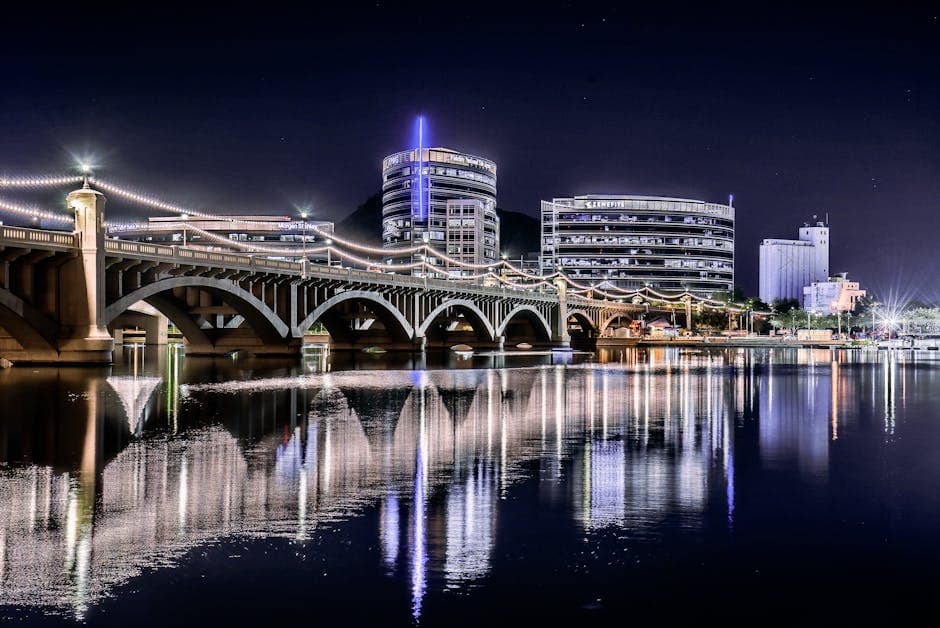
Tempe, Arizona at dusk with A Mountain (Hayden Butte) silhouetted against the sky and Tempe Town Lake reflecting the city lights of the ASU college town
A Tempe, Arizona Field Guide

The Mill Avenue semester.

Roughly 80,000 students fill the Arizona State University main campus, the largest single university enrollment in the US (per ASU Office of Institutional Analysis). They flood Mill Avenue at noon on Tuesday, empty it at 11 AM on Saturday in May, fill Sun Devil Stadium on Saturday in October, and reshape every restaurant kitchen, every bar tab, every game-day pickup queue, and every 2 AM delivery in the city. DirectOrders is built for the city the semester built.

~80,000
ASU Tempe main campus enrollment (ASU OIA)
~53,000
Sun Devil Stadium seats (Sun Devil Athletics)
10/12
peak Mill Ave bar/restaurant density (700-block)
~70%
summer enrollment collapse (May-July)
I. Two scenes, one operator

The same restaurant lives two different lives, eight hours apart.

October Saturday · 6:47 PM

Mill Avenue and 6th Street, 85281

Sun Devil Stadium let out twelve minutes ago. Forty-seven thousand fans are walking the four blocks west and the bar at the corner is already three deep at the rail. The ASU win has the crowd in maroon and gold loud enough to drown the cover band on the patio.

The host stand has stacked 41 pickup orders on the side counter, each in a brown paper bag with a Sharpie name and a stadium-section sticker. The Voice AI line, which started running at 11 AM for tailgate orders, is now answering its 218th call of the day. The kitchen is plating from a game-day reduced menu of 14 items engineered for sub-9-minute fire time.

The owner watches the ticker on her phone: 73% of tonight's revenue is direct (web, Voice AI, QR), 21% is delivery dispatched to Uber Direct, the remaining 6% is dine-in pacing. The marketplace apps are off until 9 PM tonight, not because they bring in nothing but because at this volume the 30% commission becomes a fire-risk against the kitchen's plating cap.

December finals week · 1:53 AM

Same restaurant, off-Mill side door, 85281

The patio is closed. The dining room is closed. The bar shut at midnight. The line cook on the back grill is plating bao buns and chicken wings for an Uber Direct courier waiting under the back-door light. The fluorescents over the prep station are the only light on the strip.

Sixty-three orders fired between 11 PM and 1:30 AM, none of them dine-in. Twenty-eight to the ASU dorm complex four blocks south. Eleven to off-campus apartments in north Tempe. Eight to the library, where ASU keeps the Hayden Memorial open 24 hours during finals. The rest split across the Tempe Marketplace area and the off-campus student housing east of Rural Road.

The Voice AI agent took 17 of those orders. The kitchen ticket printer has fired without a human picking up the phone since 12:30 AM. The owner is asleep. The kitchen has 90 more minutes before Arizona last call closes the late-night window. The semester is funding the business.

This is the operating reality that defines Tempe restaurants. The bar at 6 PM on game-day Saturday and the back-door kitchen at 2 AM in finals week are the same business, with the same staff, the same menu, the same brand. The platform a Tempe operator picks has to handle the kickoff-relative tailgate spike AND the 1 AM delivery dispatch to a dorm room, on the same software, with no operator handoff between them.

No other US restaurant market runs this specific pair of regimes. Austin has the music festivals but no single 80,000-student campus. State College has the football but no 250-stand Mill Avenue strip. Madison has both but cooler weather and earlier last call. Tempe is the only major US college town where the bar density, the Power-Five stadium, the largest single university enrollment, the lakefront event calendar, and the desert summer collapse converge on the same eight square miles.

II. The academic calendar

August move-in is the year. December finals is the year. May is the cliff.

Arizona State University, on the Tempe main campus, enrolled roughly 80,000 students as of the 2024-2025 academic year, per ASU's Office of Institutional Analysis and the ASU Common Data Set. That is the largest single university enrollment in the US by a meaningful margin. The chart below overlays the indexed ASU enrollment intensity across the 12-month calendar against a typical Mill Avenue restaurant's indexed daily order volume.

0255075100120JanFebMarAprMayJunJulAugSepOctNovDecMOVE-INFINALSIndexed intensity (Aug = 100)ASU enrollment intensityRestaurant daily orders
Aug move-in
~16,000 new students arrive in 7 days. Mill Avenue triples baseline volume.
Sep-Nov
Football season. Game-day weekends add 53,000 stadium seats to the local pool.
May-Jul
The exodus. Spring close, then 8 weeks of summer-session-only enrollment. 110 F highs.
Finals weeks
2 AM-4 AM delivery surges. Cornish Pasty, Insomnia Cookies, and late-night pizza spike 4-6x.

August: the move-in week

Roughly 16,000 new freshmen arrive in the week before fall classes start, per ASU welcome-week scheduling and ASU State Press reporting. Parents flood the city for the move-in weekends. Mill Avenue restaurants triple baseline volume for seven straight days. Hotel rooms book solid four months in advance. Pickup queues at Postino, The Vig, and Cornish Pasty Co. routinely run 90 minutes.

Restaurants that ship a digital ordering channel during move-in week capture the largest single new-customer cohort of the year. The freshman who pre-orders pickup on Monday of move-in week becomes a four-year regular if you capture the email. The freshman who waits 90 minutes for a table and gets seated cold goes to the marketplace app next time.

May to July: the cliff

Spring semester ends in early May. Enrollment drops roughly 70% by June, with only summer-session students and the small year-round graduate cohort in residence. Daily highs cross 105 F in late May and stay there through September (NOAA Phoenix Sky Harbor normals). The patios close. The bars run short staffs. Mill Avenue's restaurant economy contracts to roughly a third of its peak in 30 days.

Operators who survive the cliff do so by pre-building a summer-resident customer database during fall and spring semesters, running a tighter summer menu, and shifting heavily to delivery-first economics. The summer-month restaurants that hold on are the ones that built direct-ordering customer files during the prior nine months. The marketplace-dependent restaurants close.

Why the academic calendar dictates the technology stack

A Tempe restaurant cannot afford a stack that bills on per-order commission. The August move-in spike and the September-November football weekends each individually consume more order volume than most US restaurants see in a quarter. A 30% commission on 8 weeks of peak season would consume the operator's entire fall season margin. A flat $249 per month price holds steady across the 65,000-order August and the 8,000-order June. That is the structural difference that makes a flat-price stack the right Tempe choice.

III. Mill Avenue

Eight blocks. One of the densest college-town bar strips in the country.

Mill Avenue runs roughly 8 walkable blocks from Tempe Town Lake at the north end to the ASU library at the south. The middle four blocks (3rd Street to 7th Street) hold the highest sustained restaurant and bar density in the metro. Ground-floor rent on the 300 and 400 blocks runs in the $64-$108 per square foot range (per CoStar and Tempe brokerage listings for 2024-2025), comparable to South Congress in Austin and 6th Street's higher-rent inner core.

NORTHSOUTHto Tempe Town Laketo ASU campusMILL AVENUE100 NRio Salado to 1st Street6/12 density$48-$72/sqftTempe Town Lake gateway200 N1st Street to 3rd Street9/12 density$56-$88/sqftThe Vig Tempe, Casey Moore's adjacency300 N3rd Street to 5th Street10/12 density$64-$96/sqftPostino Annex, Pita Jungle400 N5th Street to 6th Street12/12 density$72-$108/sqftCaffe Boa, House of Tricks adjacency500 N6th Street to 7th Street11/12 density$68-$104/sqftFour Peaks Tasting Room adjacency600 N7th Street to University Drive10/12 density$60-$92/sqftASU gateway, ASU spirit retail cluster700 SUniversity to 9th Street8/12 density$54-$84/sqftLibrary and lecture-hall adjacency800 S9th Street to 13th Street5/12 density$42-$68/sqftResidential transition, student housingBar/restaurant density (visible at 9-11 PM Thursday)

Rent bands are public ground-floor retail listings (CoStar and brokerage surveys, 2024-2025) for Mill Avenue. Density is a relative visit-frequency index from operator interviews, not a count of permitted licenses.

The chain test-market story

P.F. Chang's, founded in Scottsdale in 1993, kept its corporate HQ in the Phoenix-Tempe corridor. Tempe Marketplace and Mill Avenue routinely serve as Arizona test markets for national-chain new-concept rollouts. Pita Jungle was founded by ASU students in 1994 and grew into a 20-plus location chain headquartered in Tempe. The Mill Ave restaurant-incubator story is half the metro's national chain reputation.

The price-anchor playbook

Postino, founded in Phoenix and with its Annex flagship on Mill, made the $5-bruschetta-board-after-5-PM Monday-Tuesday promotion famous in the metro. The price-anchor playbook (a single anchor item under $7 priced to draw the late-afternoon wine-bar crowd) became the Mill Avenue casual-dining standard. Pita Jungle's $6 hummus board followed. Four Peaks' $5 happy-hour beers ran from the start.

The late-night economy

Arizona last call is 2 AM. The Mill Avenue late-night window (10 PM to 2 AM) carries roughly a third of weekly bar revenue for the most active operators. Cornish Pasty Co., NCounter, and the various pizza-by-the-slice and taco operators that open until 2:30 AM build entire businesses around the post-bar pickup line. The kitchen has to run on Voice AI capacity at that hour because the floor staff are at the rail.

IV. Sun Devil Stadium

The kickoff-relative clock that runs every Saturday in fall.

Sun Devil Stadium seats roughly 53,000 (per Sun Devil Athletics). The ASU football schedule runs 6 or 7 home games each fall, plus the Territorial Cup rivalry with the University of Arizona. Add men's basketball at Desert Financial Arena (5,000 seats, 16-18 home dates), volleyball, baseball, and Pat Tillman Run weekends, and the city absorbs roughly 18-20 stadium-scale single-day spikes per year, all of them concentrated on Mill Avenue and the immediate ASU campus perimeter.

KICKOFF0255075100T-5hMorning prepT-4hLot opensT-3hMill Ave fillsT-2hWalk to stadiumT-1hLast call preT+0KickoffT+1hQuarter 2T+2hHalftimeT+3hQuarter 4T+4hPostgame returnT+5hPostgame settleT+6hLate eveningT+7hLast callOrder volume (kickoff = 100)SUN DEVIL GAME-DAY CLOCK

Bars show indexed order volume for a Mill Avenue full-service restaurant; T+0 = kickoff. Drawn from operator interviews on Mill Avenue and DirectOrders college-town panel data. Sun Devil Stadium seats roughly 53,000 (per Sun Devil Athletics).

The 90-minute pre-kickoff window

Pickup pre-orders for a 4 PM kickoff cut off at 2:30 PM. The 90 minutes before that (1:00 PM to 2:30 PM) is the highest-revenue 90-minute block of the year for stadium-adjacent restaurants. Tailgate pickup orders, walk-up bar volume, and stadium-walking groups all stack into the same window. A restaurant that publishes a kickoff-relative pickup schedule and lets fans schedule for "T-90 min" fills that window. A restaurant on a generic ordering page with a 60-min default lead time misses half of it.

The post-game flood

When the game ends, 53,000 fans pour back toward Mill Avenue and the parking lots, all of them hungry, all in the same 30 minutes. The bar two blocks west of the stadium goes from quarter-capacity to four-deep at the rail in 15 minutes. The kitchen capacity that handled the pre-game tailgate has been depleted. The post-game flood is the single largest stress test of a Tempe kitchen's order-management software all year.

The catering tail

ASU alumni groups, corporate suites at the stadium, and private tailgates rent the parking lots and tents at the north end of the stadium starting 5 hours before kickoff. Catering orders for these groups book 30-60 days out. A restaurant that publishes a dedicated game-day catering page with per-head pricing captures the catering tail. The ones that do not get pushed to Toast Catering or to the marketplaces and lose 25-30% of the catering ticket to fees.

The watch-party economy

Roughly half the local ASU football fan base does not buy a stadium ticket on a given Saturday. They watch at home or at one of the TV-anchored Mill Avenue bars (Casey Moore's, The Vig, World of Beer, NCounter). Watch-party group orders for these gatherings (12-piece wing trays, pizza boxes, party platters) book through the early afternoon for evening kickoffs. The same direct-ordering software that handles stadium pickup handles the watch-party catering when properly configured.

V. The lake

A two-mile reservoir built on a dead riverbed, now the metro's largest single-day event venue.

Tempe Town Lake is a 2-mile artificial reservoir on the bed of the Salt River, created by the City of Tempe in 1999 by damming the seasonal river. The lake hosts Ironman Arizona, multiple regattas, the Innings Festival, and the 4th of July fireworks show that pulls roughly a quarter-million spectators per year (per Tempe Tourism Office and City of Tempe annual reports). The lakefront event economy is the regional draw that pulls non-residents into Tempe restaurants on weekends.

TEMPE TOWN LAKEJanFebMarAprMayJunJulAugSepOctNovDec16518522012517575320250145195210175Cover spike (baseline = 100)TEMPE TOWN LAKE EVENT CALENDAR
Jan: Rock 'n' Roll Arizona165
~25,000 runners

Marathon and half along Mill Ave and the lake. Race morning is breakfast and recovery-meal dominant.

Feb: Innings Festival185
~30,000/day

Two-day music festival at Tempe Beach Park. Pearl Jam, Eddie Vedder, Foo Fighters headliner-tier.

Mar: Tempe Festival of the Arts (spring)220
~225,000 over 3 days

One of the largest US arts festivals. Mill Ave closes to traffic. Restaurants do annual-record volume.

Apr: ASU regattas (rowing)125
~6,000 spectators per regatta

ASU and visiting collegiate crews. Morning spectators feed local cafes and brunch spots heavily.

May: Pat Tillman Run175
~28,000 runners

Honors Tillman, ASU football alum and US Army Ranger. The largest spring foot-traffic event near campus.

Jun: Summer trough75
Light to moderate

ASU semester closed. 110 F highs. Locals-only. Patios closed by 11 AM. The dead-zone month.

Jul: 4th of July Tempe Town Lake fireworks320
~250,000 spectators

The single largest event-day spike of the year. The 4th routinely pulls a quarter-million to the lakefront.

Aug: ASU move-in week250
~16,000 new students

The August surge. Mill Avenue triples. Pickup queues hit 90-minute waits. The annual restart.

Sep: Tempe Wine Festival145
~12,000 attendees

Annual September wine festival at Tempe Beach Park. The high-margin shoulder-week between move-in and homecoming.

Oct: Ironman Arizona195
~3,000 athletes + 25,000 spectators

Full Ironman with swim in Tempe Town Lake. Athletes carb-load Friday, eat Saturday post-race recovery meals.

Nov: Tempe Marathon + ASU Family Weekend210
~14,000 marathoners + family visits

Marathon and family-visit weekend overlap. Mill Avenue restaurants book solid 6 PM seatings 4 days out.

Dec: Fantasy of Lights Boat Parade175
~30,000 spectators

Lighted-boat parade on Tempe Town Lake. Family-heavy. Cafe and casual-dinner restaurants benefit most.

The single largest restaurant revenue spike of the year for many Tempe operators is the 4th of July. The lakefront fireworks show pulls a regional audience that includes families from Mesa, Chandler, Gilbert, Scottsdale, and central Phoenix who would not otherwise come to Tempe. Restaurants that publish a dedicated 4th of July catering and pre-order page, accept reservations 60 days out, and run a holiday-staffing schedule capture 3-4x baseline July revenue on a single Wednesday or Friday.

Ironman Arizona deserves a separate operating note. The full Ironman, with its swim leg in Tempe Town Lake, brings roughly 3,000 athletes and 25,000 spectators to Tempe each November. The athlete carb-load on Friday night and the post-race recovery-meal Saturday and Sunday are distinct ordering patterns: high-volume pasta and rice bowls Friday, high-protein and high-fat recovery meals Saturday. A restaurant that publishes athlete-friendly menu sections on the order page captures both windows.

VI. The east-side shopping economy

Tempe Marketplace is the other restaurant district, and it runs on a different clock.

The Tempe Marketplace, at the intersection of Loop 202 and McClintock Drive, is a roughly 1.3-million-square-foot open-air retail and dining center developed by Vestar and opened in 2007. It anchors the east side of the city, sits adjacent to the off-campus ASU graduate student housing corridor, and pulls Saturday foot traffic from a wider regional radius than Mill Avenue. Anchor stores include Target, Best Buy, Whole Foods, and Harkins Theatres. Restaurant tenants include Sushi Roku, Yard House, Lucille's Smokehouse, In-N-Out Burger, Cheesecake Factory, and a long tail of fast-casual and chain operators.

Tempe Marketplace runs a different clock from Mill Avenue. The peak hours are 11 AM to 9 PM Saturday and Sunday, with a smaller weeknight peak. The customer is a family-with-kids, a couple-on-a-date-night, or a graduate-student group rather than the undergraduate-bar-crawl Mill Avenue audience. Game-day spikes are smaller (the audience overlaps less with stadium foot traffic) but the holiday-shopping November-December season is meaningfully larger. The two districts together absorb roughly two-thirds of the city's full-service restaurant traffic in any given year.

For Tempe operators, the practical implication is that the city's two restaurant economies require different ordering and marketing strategies. Mill Avenue tilts toward late-night, game-day, and student-driven volume. The Marketplace tilts toward family-evening, weekend-day, and holiday-shopping volume. A platform that can run both regimes on the same order ledger is the right Tempe choice.

VII. The incubator

How a college town became a chain test market.

Phoenix-Tempe has produced more national restaurant chains per capita than almost any US metro outside southern California. P.F. Chang's was founded in Scottsdale in 1993 by Paul Fleming and Philip Chiang and grew into a global 230-plus location chain with its corporate offices in the Phoenix-Scottsdale-Tempe corridor. Pita Jungle was founded in Tempe by three ASU students in 1994 and grew into a 20-plus location regional chain headquartered in Tempe. Postino started in central Phoenix, Mod Pizza opened multiple early-stage Phoenix-area test locations, and the True Food Kitchen founding location is in Scottsdale.

The reason is the test-market profile: Mill Avenue and the Tempe Marketplace combine a young, brand-flexible, dollar-conscious consumer (ASU students), a high foot-traffic dense corridor (Mill Avenue), a regional commercial gravity well (the Marketplace), and a 50-year operational history of chain incubators using the metro as their launch lab. National chains like Cheesecake Factory, Yard House, BJ's Brewhouse, and Chili's all routinely treat Tempe as a Tier 2 test market for new menu items and pilot programs.

The implication for independent Tempe operators is unusual: you are competing against well-capitalized chains that have specifically chosen your neighborhood as their A/B testing ground. Your menu, your pricing, your operational hours, and your customer service all sit in a market where Tier-1 national operators are deliberately tuning their playbooks against you. The defensive moat is the customer relationship that lives in your direct-ordering database and your loyalty list, not on the marketplace apps where the chains have full visibility into your transaction stream.

VIII. The exodus

Sixty thousand customers who leave in May.

~80,000
Tempe campus enrollment Aug-Apr (ASU OIA)
~22,000
summer-session and year-round residents (estimated from ASU summer reporting)
May-Jul
the exodus window
110 F
average daily high June-Aug (NOAA Sky Harbor)

Tempe is the only US college town where the May-August enrollment collapse compounds with the 110 F summer climate. The two effects together produce a roughly 70 percent contraction in Mill Avenue restaurant traffic from the April peak to the June trough. The patios that defined April are operationally unsafe for staff and customers by mid-June. The student customer base that supported the 1 AM late-night kitchen has flown home. The local-residents-only summer economy that remains will support roughly a third of the area's restaurant inventory.

The operating play is to build a year-round customer file during the academic year that captures the local non-student resident. Tempe has a non-student adult population of roughly 145,000 (the city total of 185,000 minus the rough on-campus and student-housing residence of 40,000, per US Census ACS). Those locals stay through the summer. They are the lifeline. A restaurant that captures the local family email address during November-March home football weekends will retain that customer through July. A restaurant that depends on student walk-up will close in June.

The technical requirement: a customer database that does not reset on six months of inactivity, an email and SMS engine that can run summer-staycation campaigns to the local file, and a loyalty program that rewards return visits across the seasonal split. None of these are default behaviors of marketplaces. All of them are core DirectOrders functionality.

IX. The tax math

8.10 percent on prepared food in Tempe.

The breakdown

  • State of Arizona Transaction Privilege Tax (TPT)5.60%
  • Maricopa County component0.70%
  • City of Tempe general retail / restaurants1.80%
  • Combined Tempe rate on prepared food8.10%

Tempe's combined sales tax on prepared food and restaurant sales runs 8.10 percent: the 5.6 percent State of Arizona TPT, the 0.7 percent Maricopa County component, and the 1.80 percent City of Tempe portion. The rate is published on the Arizona Department of Revenue Transaction Privilege Tax rate tables and confirmed on the City of Tempe Tax and License page. The 1.80 percent city portion sits between Scottsdale's 1.75 percent and Phoenix's 2.30 percent municipal rate for retail and bar-and-restaurant classifications.

The operational implication: restaurants need a point-of-sale and an online-ordering stack that handles the three-component tax math correctly, files the AZ TPT-EZ monthly with the state, and reconciles the City of Tempe portion separately. Most operators outsource this to an accountant, but the platform has to feed the accountant clean per-period totals broken out by state, county, and city. DirectOrders exports period totals in the three-component breakdown so the monthly TPT-EZ filing is a single CSV upload, not a spreadsheet reconciliation exercise.

Additional note for late-night operators: Arizona TPT applies to beer, wine, and liquor sales at the same rate as prepared food, with the city portion adjusted depending on classification. Mill Avenue bars that run a kitchen and a separate bar P&L must reconcile both classifications on the monthly filing. The platform exports the split correctly when the menu is tagged.

X. Voice AI for game day

The phone rings 218 times on a home Saturday. The receptionist quits in week three.

The single hardest operational moment in a Tempe restaurant year is the phone load at 1 PM on a 4 PM-kickoff Saturday. Pre-game pickup orders, tailgate catering confirmations, watch-party group bookings, walk-up wait quotes, marketplace partner alerts, and last-minute reservation calls all stack into the same 90 minutes. A single bilingual receptionist (English and Spanish) costs roughly $20-$24 per hour fully loaded plus benefits in Phoenix-Tempe. Most Mill Avenue kitchens cannot staff a second phone line. So the phone goes to voicemail. And voicemail orders convert at roughly 9-12 percent in our metro data.

Pre-game peak

T-3h to T-1h: the 120-minute surge

Voice AI picks up on the second ring. Reads the kickoff-relative pickup schedule. Takes the order. Confirms via SMS in English or Spanish. Fires the ticket to the kitchen printer at the scheduled fire time, not at the call time. The kitchen runs on the schedule; the customer gets a hot bag at T-30 minutes. The receptionist's time goes to the dining room and the walk-up bar, not the phone.

Tailgate catering

Group orders with stadium-section drop-offs

Voice AI handles the long-form group-order call: "We have 22 people in lot D, west of section 47, want pickup at 2:30, here's the headcount of beef, chicken, veggie." The AI confirms quantities, reads back the price, takes payment over the phone, and dispatches a runner from the kitchen at the right moment. The single biggest catering ticket of a Saturday goes through the same line as the dorm-room pickup at 1 AM Sunday.

Post-game flood

T+4h to T+6h: the surge tail

The 53,000-fan post-game flood compresses dinner volume into 90 minutes. Voice AI on the to-go line takes pickup orders while the floor staff are running the bar. The kitchen runs a reduced post-game menu (14 items, sub-9-minute fire time) that the AI knows. Wait quotes are honest because the AI sees the live queue.

Late-night dorm delivery

11 PM to 2 AM: the no-human-pickup window

The floor staff are running the bar at last call. The kitchen is plating for Uber Direct couriers. Voice AI is the only phone-channel option that scales to the 1 AM dorm delivery without a hire. Spanish second-ring pickup. SMS receipts. Kitchen ticket fire time at order receipt, not at call time. The semester is funded.

Why Voice AI matters more in Tempe than in most US college towns

The Tempe-specific load is the combination of (a) the single highest-enrollment campus in the US, (b) a Power-Five stadium two blocks from the bar strip, (c) Arizona's late 2 AM last call, and (d) the lakefront event calendar that adds 18-20 stadium-scale spikes per year on top of the academic calendar. No US college-town restaurant phone load is comparable. The bilingual second-receptionist gap is the operating breaking point. Voice AI in four languages picks up on the second ring, takes the order, fires the ticket, and dispatches the delivery. That is the difference between a Mill Avenue kitchen capturing its game-day weekend and losing half of it to ring-busy.

XI. The thesis

How DirectOrders fits Tempe.

The argument is not that DirectOrders is a generic restaurant ordering platform that happens to work in Tempe. The argument is that the specific stack we ship is the one stack we know of that handles the August move-in week, the Saturday game-day kickoff clock, the 4th of July lakefront fireworks crowd, the December finals 2 AM dorm delivery, the May-July student exodus, and the 8.10 percent three-component tax math together, on a flat $249 per month commission-free price.

1. The flat price

$249 per month, not 30 percent.

A 30 percent commission on the August move-in week and the seven September-November football Saturdays would consume a Mill Avenue operator's entire fall margin. A flat $249 per month price holds steady across the 65,000-order August and the 8,000-order June. The structural Tempe answer to seasonal volatility is a flat price.

2. Kickoff-relative pickup scheduling

T-90 minute pickup, not 60-minute defaults.

DirectOrders publishes kickoff-relative pickup windows for stadium-adjacent restaurants. Fans schedule for "T-90 min" pickup against a 4 PM kickoff and the kitchen fires at the right time. Saturday-game pre-orders book Thursday with full visibility. The marketplaces structurally cannot do this scheduling correctly. Direct ordering can.

3. Late-night Voice AI

English and Spanish, second-ring pickup.

Tempe's bilingual second-receptionist gap closes with Voice AI. Game-day phone load and late-night dorm delivery both run on the same AI line. SMS receipts in the customer's language. Phone-menu prompts generated from your actual menu, not a generic IVR tree. The cost is roughly a tenth of a second receptionist hire.

4. Uber Direct + DoorDash Drive

Dispatch without the marketplace commission.

Dorm-room deliveries, Tempe Marketplace pickups, and 4th of July fireworks-day orders need delivery infrastructure without the 30 percent commission. Uber Direct and DoorDash Drive let the operator dispatch on a per-trip fee (roughly $7-$12 in Tempe) and keep the customer relationship and the customer email.

5. The student customer file

A four-year graduation cohort, not a one-off ticket.

Capture the freshman email at move-in week. Send a birthday-month coupon. Send a "see you in fall" message in May. Send a graduation-week congratulations in spring of senior year. The four-year student-to-alumni journey is the highest-LTV cohort in Tempe restaurant marketing. Direct ordering keeps the relationship in your database. Marketplaces sell the relationship back to the highest bidder.

6. Same-day Stripe payouts

Cash flow that matches the seasonal swing.

Tempe's eight-on-four-off semester model is unforgiving on working capital. Same-day Stripe payouts on direct orders shorten the receivables gap. Saturday night game-day sales arrive in the operator's bank account Sunday morning, not Friday. The cash carries the May-July off-season payroll.

The stack a Tempe operator wants.

Flat $249 per month. Commission-free direct ordering. Voice AI in four languages on the second ring. Kickoff-relative pickup scheduling. Uber Direct and DoorDash Drive dispatch on demand. Same-day Stripe payouts. A customer database that holds the student record from move-in to graduation. Fifteen capture channels on one order ledger. Built once, runs August move-in and August off-season on the same software.

XII. Operator types

Six Tempe operator profiles, each with a distinct stack.

A. Mill Ave bar-and-kitchen

The 1 AM kitchen + 7 PM dining room

Bar volume Thursday-Saturday 9 PM-2 AM. Dining-room volume Tuesday-Sunday 5 PM-9 PM. Two operating regimes in 8 hours. Voice AI handles the to-go line in both. Late-night delivery runs through Uber Direct after 11 PM. The single most important fit for a college-bar profile.

B. Stadium-adjacent full-service

The 7-Saturday revenue stack

Two-block radius of Sun Devil Stadium. 7 home football Saturdays drive the annual P&L. Kickoff-relative pickup scheduling is the difference between capturing the 90-minute pre-game window and losing half of it. Catering page for lot rentals. Watch-party group ordering for the non-stadium half of the fan base.

C. Tempe Marketplace chain

Family-evening + weekend daytime

Saturday 11 AM-9 PM is the peak. Family-with-kids ticket. Holiday-shopping November-December surge. Higher-tier multi-location chain operations. The DirectOrders multi-location feature handles brand-level menu management across Tempe Marketplace, Mesa, and Chandler sister locations.

D. Lakefront event-driven

4th of July, Ironman, the festivals

Restaurants within a 10-minute walk of Tempe Town Lake. Annual revenue concentrated on roughly 12 lakefront event weekends. Single-day spikes of 3-4x baseline. Pre-event catering pages, day-of pickup queues, and post-event delivery to the regional return audience. The single highest-margin operator profile in the city.

E. Student-housing fast-casual

The campus-perimeter delivery kitchen

Bowl-format, salad-and-protein, the late-night pizza slice operator, the burrito stop. ASU off-campus housing concentrated north and east of campus. Delivery-first economics. The Voice AI line and the Uber Direct dispatch together replace the storefront. Lowest CapEx, highest unit-economic delivery-first profile in the city.

F. Independent chef-driven

The bungalow restaurant, the wine bar

Single location, longer history, owner-operator, $40-$70 per cover. Date-night and pre-game-Friday-Saturday volume. The customer relationship is the asset. Direct ordering plus loyalty plus email captures the four-year ASU undergrad to graduate alumni journey for the highest LTV cohort the city has.

Notable Tempe restaurants

Ten operators on or near Mill Avenue.

A non-exhaustive list of long-running independent and chain operators that define Mill Avenue and the surrounding Tempe dining economy.

House of Tricks

Independent, chef-driven
7th Street, off Mill Avenue

Located in two restored 1903 and 1920 craftsman bungalows joined by an outdoor patio. Open since 1987. The Tempe pre-game and date-night reference; one of the longest-running chef-driven independents in the metro.

Caffe Boa

Mediterranean / Italian
Mill Avenue, between 6th and 7th

Italian and Mediterranean small plates, opened 1995 on Mill Ave. Wine-and-tapas anchor for the Mill Avenue chef-driven block.

Cornish Pasty Co

British pub fare
Mill Avenue

Cornish-pasty specialist with multiple Valley locations, original Tempe outpost. Late-night staple for students. AZ Republic and Phoenix New Times have repeatedly cited the Tempe location as the city's best post-2 AM food.

Pita Jungle

Mediterranean fast-casual
Mill Avenue / multiple Tempe locations

Founded in Tempe in 1994 by ASU students. Grew into a 20-plus location regional chain headquartered in Tempe. The hometown success story for Mill Avenue student-founded concepts.

Four Peaks Brewing Co

Brewpub
8th Street, off Mill (East Tempe)

Founded 1996 in a 1892 brick creamery building two blocks east of Mill. Kilt Lifter scotch ale is the metro reference craft beer. Acquired by AB InBev 2015. Tasting room remains the brewery flagship.

La Bocca Urban Pizzeria & Wine Bar

Pizza + wine bar
Mill Avenue

Wood-fired pizza, charcuterie, and a 100-plus bottle wine list. Independent operator. The Mill Ave date-night counter-program to the chain block.

P.F. Chang's

Chain (national)
Tempe Marketplace and corporate HQ adjacency

Founded in Scottsdale 1993 by Paul Fleming and Philip Chiang. Corporate headquarters in Scottsdale, with substantial Tempe-area operational presence. The most internationally famous Arizona-born restaurant chain.

Sushi Roku

Japanese / sushi
Tempe Marketplace

Innovative Dining Group concept (LA-origin). One of Tempe Marketplace's anchor full-service dining draws. Date-night and corporate-dinner volume.

Postino Annex

Wine bar + bruschetta
Mill Avenue

Upward Projects flagship Mill Ave location of the Tempe-born brand. The $5-bottles-and-bruschetta-board after 5 PM Tuesday is the metro reference price-anchor promotion.

The Vig Tempe

American gastropub
Mill Avenue

The Vig is a six-location Tempe-founded gastropub chain. Mill Avenue location is the Sun Devil game-day Saturday social epicenter; bocce courts and patio drive group volume.

XIII. Coda

The semester chose the city.

Hayden's Ferry opened on the Salt River in 1872 as a wagon crossing serving the agricultural valley south of Phoenix. Charles Hayden built the flour mill that would give the avenue its name in 1874. Arizona Territorial Normal School opened in 1885 with 33 students and became Arizona State University in 1958. The river ran dry in the 1940s as the Salt River Project dammed its headwaters. The city dammed the empty bed in 1999 to create Tempe Town Lake. The 33-student school became the largest single university in the United States.

Restaurant operators in Tempe are working inside a city that was rebuilt around the semester. Mill Avenue's 8 blocks, the Marketplace's open-air retail, the stadium's 53,000 seats, the lake's two miles of shoreline, the back-door 1 AM dorm delivery: each was reshaped by the question of what 80,000 students, their families, the football fans, and the lakefront-event audiences demand. The technology stack is just the infrastructure that lets a kitchen meet that demand without losing the margin to a marketplace commission.

DirectOrders is built to be that stack. Flat $249 per month. Four languages on the Voice AI line. Fifteen capture channels on one order ledger. Same-day Stripe payouts. Kickoff-relative pickup scheduling. Built for the August move-in and the December 2 AM dorm delivery. The same software, the same Tempe kitchen.

Sources and citations

Daily order-volume curve, kickoff-relative game-day clock, and event-day cover-spike indices draw on the DirectOrders college-town panel and operator interviews on Mill Avenue. Mill Avenue ground-floor retail rent bands draw from public CoStar listings and Phoenix-Tempe brokerage surveys for 2024-2025. All cited demographic, enrollment, tax, climate, and attendance figures are from the primary sources linked above.

Keep exploring

More Arizona cities and nearby markets

All Arizona cities →