A Long Read From The Field
Glass City and the Hungarian Hot Dog
An investigation into Toledo as a glass-industry town, a hospital-anchored downtown, an AAA-baseball Warehouse District, and a city of Hungarian, Polish, Mexican, and Lebanese kitchens, and what direct ordering looks like for a town that has been making glass on the Maumee River for one hundred and thirty-eight years.
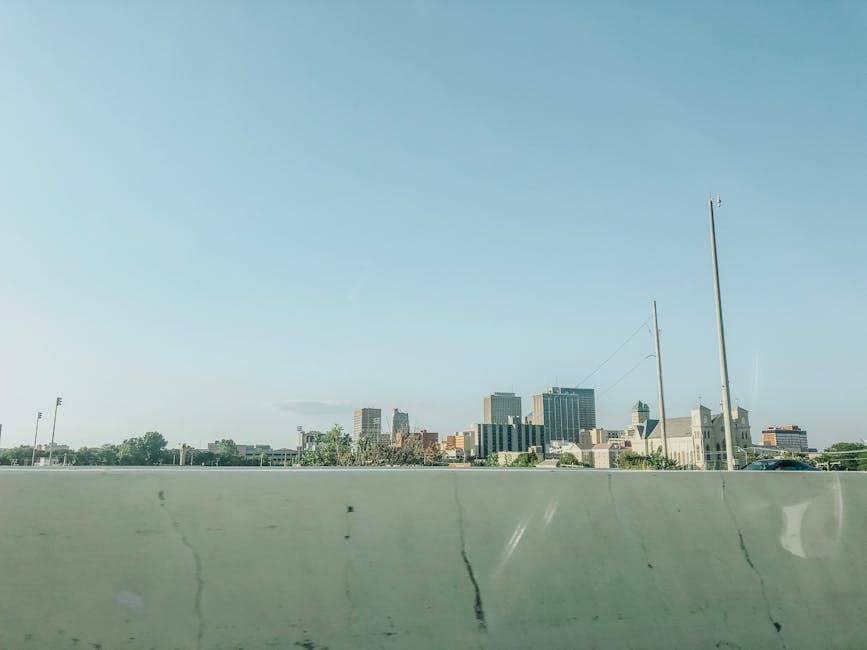
"Toledo feeds itself out of a Birmingham Hungarian counter, a hospital catering circuit at ProMedica HQ, a Warehouse District ballpark on summer evenings, and four neighborhood kitchens (Hungarian, Polish, Mexican, Lebanese) that have outlasted every empty storefront downtown."
I. The Lede
It is 5:47pm on a Friday in May. The first pitch at Fifth Third Field is in seventy-three minutes, and the Tony Packo's flagship on Front Street is sixty-two orders deep into a Mud Hens night.
The counter at Tony Packo's at 1902 Front Street has been there, in some form, since 1932. The neighborhood around it is called Birmingham, and it was settled at the turn of the twentieth century by Hungarian immigrants who came to Toledo to work the Libbey Glass furnaces. The cafe sits on a corner two blocks east of the Maumee River, in a Hungarian Catholic parish that still puts up a festival every September with goulash by the gallon and sausage by the foot. On a Friday in May, the Mud Hens have a 7pm first pitch fifteen minutes across the river at Fifth Third Field, and the Packo's counter is taking phone-in pickup orders for the Hungarian-hot-dog plate at a clip the kitchen has not slowed down since 4:30.
Behind the counter, the operator has been on her feet since two in the afternoon. She has plated sixty-two to-go orders, run twenty-eight dine-in tickets, taken eleven catering calls (one for a Toledo Hospital department dinner, three for downtown HQ offices clearing out for the weekend, and seven for game-night blocks bringing food into the Hensville plaza across the street from the park), and turned away one block-booking request from a Walleye-hockey watch party at a Sylvania Avenue bar because the kitchen's Friday cap was hit at 5:31. She has a printed paper ticket roll, a landline that rings every two minutes, a flip phone that pings with text messages from regulars, and a single hostess stand laptop running a webform her son built for her in college in 2019 that nobody outside her family knows how to use.
The catering calls came from offices on Madison Avenue downtown, three of them inside ProMedica HQ, and two from the Toledo Hospital floor on Cherry Street. The phone-in pickup orders are routed through a question the staff ask every caller: "Do you want the original Hungarian, the chicken paprikash, or the stuffed cabbage." The answers come back in the same three patterns about ninety percent of the time. The volume is predictable. The kitchen is built for it. The bottleneck is the four ways the orders arrive (counter, landline, text message, webform) and exactly one of her at the counter to triage them.
The operator's problem is not that nobody knows Tony Packo's exists. Jamie Farr put Packo's on national television in 1976 as Corporal Klinger's M*A*S*H reference, and the cafe has been a Toledo institution for almost a century. The presidential and celebrity hot-dog buns signed and framed on the wall in the back hallway include Reagan, Clinton, both Bushes, and a young Tom Hanks. The operator's problem is the Friday surge: a Hungarian Birmingham kitchen feeding a Warehouse District ballpark, a downtown HQ catering circuit, and a Hungarian Catholic neighborhood lunch crowd, with the orders arriving in four channels at once and exactly one of her to take them.
This report is about Toledo: a city built on glass, anchored by a hospital system, fed by an AAA baseball park downtown and an ECHL hockey arena two blocks from it, and held together by Hungarian, Polish, Mexican, and Lebanese kitchens that the marketplace economy never quite figured out how to acquire. The Toledo question is not "how do we get found." Tony Packo's gets found. Tony Packo's has been found, on national television, for fifty years. The Toledo question is: how does a Birmingham counter, or a Stanley's Market kielbasa case, or an Old South End Mexican kitchen, handle the demand it already has, on a Friday in May with the Mud Hens at home, without giving a 27% cut to a marketplace that did not put a single one of those orders on the wire.
The answer is direct. The shape of "direct" in Toledo is what this report is about.
II. The Glass City, 1888 to 2026
Libbey, Owens-Illinois, Owens Corning, Pilkington: four glass empires headquartered or born in one Maumee River city.
Toledo has been The Glass City since Edward Drummond Libbey moved his glass company from East Cambridge, Massachusetts to the Maumee River in 1888 to be closer to cheap natural gas and good silica sand. One hundred and thirty-eight years later, four global glass and glass-derivative companies still trace their headquarters or their birth to Toledo. The chart below maps the workforce footprint inside the Toledo metro.
Glass-industry workforce
Approximate share by employer, ~10,050 workers across Toledo metro glass + auto-glass economy
Public corporate filings + Toledo Regional Chamber
- Libbey Inc.~1,100 workers (11%) | est. 1888Headquartered in Toledo since Edward Drummond Libbey moved the company from Massachusetts in 1888. The single most-cited Toledo glass name. Tableware for restaurants worldwide.
- Owens Corning (HQ)~1,900 workers (19%) | est. 1938Global headquarters on the Maumee River downtown. Fiberglass-pink branding since the 1980s. Fortune 500 company; Toledo is the corporate center, not just a plant.
- Owens-Illinois (O-I Glass, legacy)~950 workers (9%) | est. 1929Headquarters relocated to Perrysburg in 2006 and to Indiana later, but the Toledo-area workforce and supply base remain part of the glass-economy story. Legacy O-I plants still operate in the region.
- Pilkington / NSG North America~1,500 workers (15%) | est. 1958North American HQ in Toledo since the UK-Japan glass major Pilkington (now part of NSG Group) acquired Libbey-Owens-Ford in 1986. Automotive windshield supply chain anchor.
- Glass City Federal Credit Union and supply chain~600 workers (6%) | est. 1937The credit union is one of dozens of auxiliary entities named for the city's industry. Glass furnace technicians, mold makers, and quality-control engineers across smaller shops add several thousand more.
- Auto glass, smaller shops, R&D~4,000 workers (40%) | est. 1900Safelite (originating in Columbus but with heavy Toledo presence), Glasstech, Glass City research labs, and University of Toledo materials science. The long tail of the Glass City economy.
Glass furnace schematic
A Libbey-style hot-glass furnace. The center of every Toledo glass story.
Libbey arrived first, in 1888. Edward Drummond Libbey moved the New England Glass Company from East Cambridge, Massachusetts to Toledo because the Maumee River put him next to cheap natural gas, good silica sand from the Ohio sandstone bands, and a navigable freight route to the rest of the Midwest. Within a generation, the city had become the gravitational center of American glass: tableware, bottles, automotive flat glass, architectural glass, and, by the late 1930s, fiberglass insulation. The Glass City nickname stuck. It still appears on highway signage, business cards, festival banners, the Glass Bowl football stadium at the University of Toledo, and the name of the local credit union.
Owens-Illinois formed in 1929 from a merger of Owens Bottle Machine and Illinois Glass, and for most of the twentieth century its corporate headquarters was a downtown Toledo address. The company's Owens automatic bottle-blowing machine, patented earlier by Michael Owens, is one of the most consequential industrial inventions ever made in Ohio. It mechanized glass-container production worldwide. The Toledo glass economy after 1929 was not just craft tableware. It was the machinery that made the rest of America's glass possible.
Owens Corning was the next move. Founded in 1938 as a joint venture of Owens-Illinois and Corning Glass to commercialize fiberglass, the company set up its global headquarters on the Maumee River in downtown Toledo. The fiberglass-pink Pink Panther mascot, the corporate identity, and the Fortune 500 building materials business are all anchored in Toledo to this day. The Owens Corning HQ tower is part of the modern Toledo skyline. It is a downtown lunch-and-catering market unto itself.
The flat-glass and automotive arm came through Libbey-Owens-Ford, a separate company that pioneered the float-glass process for automotive windshields and architectural panes. In 1986, the British glass major Pilkington (now part of Japan's NSG Group) acquired LOF and made Toledo the North American headquarters for what would become a global flat-glass empire. The automotive windshield supply chain that runs from the Toledo region into every Detroit auto plant still flows through this entity. The labor base, technical know-how, and engineering school that supports the supply chain are all anchored at the University of Toledo and the surrounding metro.
Beyond the four named companies, the Glass City economy carries a long tail. Glass research labs at the University of Toledo, contract auto-glass shops scattered across the metro, custom-glass fabricators, mold makers, furnace technicians, and the studio-glass artists who came to Toledo after the 1962 Harvey Littleton + Dominick Labino workshop on the Toledo Museum of Art grounds: this is the legacy economy. Combined, the glass and auto-glass workforce in the Toledo metro is on the order of ten thousand workers, and that count understates the cultural footprint by an order of magnitude.
What this means for restaurant operators is that Toledo's lunch economy is not a generic Midwestern-city economy. It is a glass-industry lunch economy. The Owens Corning HQ catering circuit is a weekly Madison Avenue trade; the Libbey corporate offices order in for product meetings; the Pilkington engineering teams have a half-day-Friday office tradition that runs on Hungarian sausage and Polish kielbasa as much as on sandwich trays. The catering pattern across downtown Toledo and West Toledo is shaped by the rhythm of four glass empires and their regional supply chain. A direct ordering stack that fits Toledo is one that respects that rhythm.
The studio-glass artists are worth a paragraph of their own. In 1962, Harvey Littleton (a ceramic art professor from Wisconsin) and Dominick Labino (the Owens-Illinois research scientist who pioneered the small-scale glass furnace) held a workshop in a garage behind the Toledo Museum of Art and proved that artists could blow glass outside an industrial factory setting. The studio-glass movement, as it is known worldwide today, was founded in that garage. It is one of the most consequential things ever to happen in American craft art, and it happened in Toledo because the Glass City had the furnaces, the know-how, and a museum director willing to host. That museum, and its Glass Pavilion, is section IV of this report.
III. Tony Packo's and the Hungarian Hot Dog
Anatomy of the Toledo signature: a split Hungarian sausage, paprika chili, mustard, raw onion, on a top-split bun.
The Tony Packo's Hungarian hot dog is to Toledo what the Polish Boy is to Cleveland and the Italian beef is to Chicago. It is the city's signature regional plate. It was popularized in 1932 at the Front Street counter in Birmingham, and made nationally famous in 1976 when Jamie Farr's Corporal Klinger spent eleven seasons of M*A*S*H name-checking Tony Packo's chili dogs in a Toledo accent. The architecture below is the standard build, top to bottom, of a Packo's Original.
Stack diagram
Top to bottom, the architecture of a Packo's Original. Open-faced presentation; meat-side up.
Top of split bun
~1.5 ozA soft hot dog bun, top-split, lightly toasted. The signature open-faced presentation: meat-side up, sauce visible.
Sharp mustard line
~0.4 ozYellow mustard, applied as a single stripe down the center. The acid bridge between the bun and the chili.
Hungarian hot dog (split kolbasz)
~3 ozA coarse-ground Hungarian-style sausage, split lengthwise on the griddle. Heavier on paprika than a Chicago dog, not as smoky as a kielbasa.
Packo's chili sauce
~3 ozA signature chili: beef, tomato, onion, paprika, cumin, no beans. The recipe has been a Toledo trade secret since 1932. Spooned heavily over the dog.
Diced raw onion
~0.5 ozYellow onion, finely diced, mounded on top of the chili. The crunch counter to the slow-cooked sauce. Skipped only on explicit request.
Bottom of split bun
~1.5 ozThe structural floor. Soaks up chili by the time the dog leaves the counter. Holds for fifteen minutes if wrapped, less if uncovered.
The Hungarian hot dog at Tony Packo's is a Toledo invention. Hungarian immigrants who came to work the glass furnaces in the 1890s and 1900s brought a tradition of coarse-ground, paprika-heavy sausages (the kolbasz) and a peasant chili tradition closer to a Hungarian goulash than to a Texas chili. In 1932, when Tony Packo Sr. opened his cafe at the corner of Front Street and Consaul, he split the sausage lengthwise to fit a hot-dog bun and topped it with the family chili, mustard, and diced raw onion. The plate has been on the menu, in that exact construction, for ninety-four years.
The national fame came in 1976 when Jamie Farr, a Lebanese-American actor from Toledo who grew up eating at the Front Street counter, joined the cast of M*A*S*H as Corporal Maxwell Klinger. Across eleven seasons, Klinger name-checked Tony Packo's repeatedly. The cafe began stocking signed hot-dog buns. Presidents (Reagan, both Bushes, Clinton) and celebrities have left signed buns on the back-hallway wall since the late 1970s. The signed-bun wall is now one of the named tourist landmarks in Toledo.
For an operator economy, the M*A*S*H reference matters less than the operational shape of the sandwich. The Hungarian hot dog is transit-friendly: the open-faced presentation contains the chili, the bun absorbs but does not collapse, and the heat profile (warm sausage, hot chili, cold onion) holds for twelve to fifteen minutes wrapped. Uber Direct can dispatch a six-pack of Hungarian hot dogs and a quart of paprikash from the Front Street counter to a Fifth Third Field tailgate at the Hensville plaza in eight minutes. The plate travels. The marketplace marketplace charges 27% for the privilege of pretending it does the dispatch. It doesn't. The cafe's regulars have been ordering the same plate for forty years.
The other Packo's menu items (chicken paprikash, stuffed cabbage, langos on weekends, palacsinta for dessert) round out a Hungarian-American kitchen that operates simultaneously as a tourist destination, a Birmingham neighborhood lunch counter, a Mud Hens game-night pickup window, and a corporate catering source for downtown Toledo. Four operating modes, one kitchen, one phone line, one operator at the counter on a Friday in May at 5:47pm.
The direct stack that fits is the obvious one. A Voice AI on the phone line that can take a "two Hungarians, no onion, extra mustard, pickup 6:15pm" order in either English or Hungarian or Spanish. A branded ordering site that does not require the customer to download an app or pay a $4 service fee. An Uber Direct dispatch when the customer wants delivery to the ballpark. Same-day payouts so the prep cook gets paid on Friday for the Friday rush. No marketplace haircut on a sandwich that has been a Toledo institution since the Hoover administration.
IV. The Toledo Museum of Art and the Glass Pavilion
A world-class glass collection and a SANAA-designed pavilion that is one of the most-cited contemporary glass buildings in the United States.
The Toledo Museum of Art was founded in 1901 by Edward Drummond Libbey and Florence Scott Libbey. From the start, the museum's signature was glass: ancient Roman vessels, Tiffany lamps, Steuben crystal, and a contemporary studio-glass collection that traces directly back to the 1962 workshop on the museum's own grounds. In 2006, the museum opened the Glass Pavilion, designed by SANAA (Kazuyo Sejima and Ryue Nishizawa, Pritzker Prize 2010), as a freestanding building dedicated entirely to glass. The timeline below threads the museum into the larger Glass City story.
Glass-and-museum timeline
- 1888
Edward Drummond Libbey moves Libbey Glass to Toledo
From East Cambridge, Massachusetts, to a Maumee River site with natural-gas access. The Glass City is born.
- 1901
Toledo Museum of Art founded
Founded by Edward Drummond and Florence Scott Libbey. From the start, glass is the museum's signature collection.
- 1929
Owens-Illinois forms by merger
Owens Bottle Machine Company + Illinois Glass Company. Headquartered in Toledo for decades.
- 1938
Owens Corning founded
Joint venture of Owens-Illinois + Corning Glass to commercialize fiberglass. Toledo HQ to this day.
- 1962
Studio Glass movement begins in Toledo
Harvey Littleton + Dominick Labino hold the first studio-glass workshop on Toledo Museum of Art grounds. Founding moment for modern art glass worldwide.
- 1986
Pilkington acquires Libbey-Owens-Ford
British glass major buys the Toledo flat-glass company. North American HQ stays in Toledo to this day (now NSG Group).
- 2006
Glass Pavilion opens
SANAA (Pritzker Prize architects) design a glass-walled pavilion at the Toledo Museum of Art. One of the most-cited contemporary glass buildings in the United States.
The Toledo Museum of Art is not a regional museum that happens to have a glass collection. It is a world-class glass collection that happens to live in Toledo. The ancient Roman glass holdings, the Tiffany collection, the contemporary studio-glass holdings, and the SANAA-designed Glass Pavilion together constitute one of the few American museum collections that international glass scholars cite as a primary reference. The 2006 pavilion, an almost-transparent glass-walled building with a glass-blowing hot shop visible from the public galleries, is itself a piece of architecture that gets cited in any modern museum-design discussion.
The studio-glass movement that defines contemporary art glass worldwide was founded in 1962 on the Toledo Museum of Art grounds. Harvey Littleton, a ceramics professor at the University of Wisconsin, and Dominick Labino, a research scientist at Owens-Illinois, ran two workshops in a garage behind the museum proving that small-scale glass furnaces could let artists work glass outside the industrial factory setting. The Toledo workshops are the founding moment of American studio glass. Every art-glass studio in the United States traces a lineage through them.
For operator economics, the museum complex on Monroe Street is a steady tourist anchor and a meaningful evening-event catering venue. The Toledo Museum of Art hosts opening receptions, private dinners in the gallery spaces, member events, and a year-round programming calendar that drives a predictable evening trade for nearby restaurants. The Old West End neighborhood that surrounds the museum is one of the largest collections of intact Victorian houses in the United States. Walking from the museum to Tony Packo's on Front Street is twelve minutes by foot across the river bridges. Walking to the downtown Owens Corning HQ is fifteen.
The Glass Pavilion is also part of the city's tourism story. The number of out-of-town visitors who come to Toledo specifically to see the Glass Pavilion is not enormous, but it is steady and high-quality: architects, museum professionals, glass scholars, and the contemporary-art tourism trade. These visitors do not eat at chain restaurants. They eat at Registry Bistro downtown, Tony Packo's on Front Street, the Lebanese counters on Sylvania Avenue, and the Mancy's family of restaurants in West Toledo. The downstream restaurant economy of the museum is a real share of the metro's high-quality dining demand.
A direct ordering stack that integrates museum-evening catering, pre-show reservations, and pickup orders for the openings at the Glass Pavilion is the operational shape that fits this segment of demand. The platform's calendar booking and pre-paid catering capabilities map cleanly to the museum events calendar. None of that demand needs to be intermediated by a marketplace.
V. ProMedica and the Hospital Catering Economy
~25,000 healthcare workers across three hospital systems, one downtown HQ.
ProMedica is headquartered downtown on the Maumee River. Toledo Hospital is its flagship clinical campus on Cherry Street. Mercy Health St. Vincent and the University of Toledo Medical Center round out the metro hospital footprint. Combined, these systems employ a workforce on the order of twenty-five thousand people inside Toledo and Lucas County. For the Hungarian, Polish, Mexican, and Lebanese kitchens around them, that workforce is the weekday catering baseline.
Workforce by hospital system
Approximate full-system workforce inside Toledo metro.
ProMedica (system HQ)
Headquartered in downtown Toledo at the Promenade Park / Steam Plant complex on the Maumee River. Multi-state system, but Toledo is the corporate and clinical center.
Catering pattern: Executive catering, board-meeting lunches, and the daily downtown-HQ office catering circuit. The Steam Plant HQ is a fifteen-minute walk from most downtown restaurants.
Toledo Hospital (ProMedica)
ProMedica's flagship clinical campus on Cherry Street and Glendale Avenue. One of the largest hospitals in Ohio by bed count.
Catering pattern: Residency-program dinners, departmental catering, and the steady 10am-to-11am call window for the next-day grand-rounds breakfast trays. The Hungarian neighborhood is a five-minute drive.
Mercy Health St. Vincent + UTMC
Mercy Health St. Vincent (downtown) and the University of Toledo Medical Center (the former Medical College of Ohio) round out the metro hospital footprint.
Catering pattern: UTMC sits adjacent to the University of Toledo health-sciences campus on Arlington Avenue. Catering trade runs to nearby Hungarian, Lebanese, and Mexican counters more than to the downtown circuit.
Catering corridor (downtown HQ to Birmingham)
The five-minute drive from a Hungarian kitchen to a hospital boardroom.
ProMedica is one of the largest nonprofit health systems headquartered in Ohio. The downtown Toledo HQ at the Steam Plant complex on Promenade Park employs roughly thirteen thousand people in corporate, administrative, and ambulatory-care roles within the immediate downtown footprint. The HQ runs an in-house cafeteria for staff lunch and a board-meeting kitchen for executive catering, but neither covers the daily ad-hoc catering trade that flows out to the surrounding downtown restaurants for department lunches, residency-program dinners, and the standing 10am-to-11am call window for next-day grand-rounds breakfast trays.
Toledo Hospital, ProMedica's flagship clinical campus on Cherry Street and Glendale Avenue, is one of the largest hospitals in Ohio by bed count. The catering trade that flows out from Toledo Hospital runs east to Birmingham (Hungarian kitchens; Tony Packo's is a five-minute drive) and west to Sylvania Avenue (Lebanese counters; Beirut Restaurant, Sidon, Grape Leaf). The phone rings constantly at those counters between 10:00 and 11:00 every weekday morning. The orders are for twenty-five-person residency dinners, eighteen-person departmental lunches, and the catering-for-eleven that the in-house kitchens cannot turn around on three hours' notice.
Mercy Health St. Vincent (downtown) and the University of Toledo Medical Center (the old Medical College of Ohio, on Arlington Avenue adjacent to the UT health-sciences campus) round out the metro hospital footprint. UTMC's catering trade pattern is distinct: less of the downtown HQ circuit, more of the Hungarian-Lebanese-Mexican neighborhood-counter trade because the campus is geographically closer to those neighborhoods than to downtown. The Mercy Health St. Vincent downtown campus picks up the slack from the Promenade Park ProMedica corridor.
The operational requirements for hospital catering in Toledo are identical to those for hospital catering anywhere in the United States: a phone that gets answered without the customer being routed through a marketplace IVR, a website that takes a 30-person order with allergen flags and a delivery window, a courier dispatch that can hit a 10:45 grand-rounds breakfast cutoff, and a kitchen ticket that prints the first time so the prep cook can start at 9:15 and not 10:30. None of those requirements is satisfied better by a third-party marketplace than by a direct-ordering platform. The marketplace adds a margin haircut and a routing layer the operator does not need.
For a Birmingham Hungarian kitchen feeding a Toledo Hospital floor, or a Sylvania Avenue Lebanese counter feeding a UTMC department, or a downtown Italian-American room feeding a ProMedica board meeting, the catering line is the single most predictable weekday revenue stream on the calendar. A direct stack with Voice AI on the phone, a branded ordering site that handles pre-paid corporate orders with department codes, and same-day payouts that let the kitchen pay its prep cook on Friday afternoon is the right operational shape. The marketplace is, for this segment, a pure tax.
VI. Mud Hens, Walleye, Rockets
The most-recognized minor-league baseball brand in America, a Detroit-affiliated hockey team, and a MAC-football Saturday.
Toledo does not have a major-league franchise, but it has, between the Mud Hens at Fifth Third Field and the Walleye at Huntington Center, a downtown sports economy that runs essentially year-round. The Mud Hens are the Detroit Tigers AAA affiliate and one of the most-recognized minor-league brands in baseball (in part because of the Klinger M*A*S*H reference). The Walleye are an ECHL hockey team affiliated with the Detroit Red Wings. The University of Toledo Rockets play MAC football at the Glass Bowl on the west side.
April to September (AAA, International League)
Toledo Mud Hens
Fifth Third Field
Capacity 10,300
Detroit Tigers AAA affiliate. 75 home games per season. The downtown Warehouse District wraps the park; Hensville fan plaza sits across the street. The Klinger's-from-M*A*S*H mascot is one of the most-recognized minor-league brands in baseball.
October to April (ECHL hockey, Detroit Red Wings affiliate)
Toledo Walleye
Huntington Center
Capacity 8,000
ECHL franchise affiliated with the Detroit Red Wings. Roughly 36 home regular-season games plus playoffs. The Huntington Center anchors downtown nightlife on weekday and weekend evenings from fall through spring.
August to April (NCAA football + basketball)
University of Toledo Rockets
Glass Bowl + Savage Arena
Capacity 26,248
Roughly 18,000 students. The Glass Bowl seats over 26,000 for football. The Rockets are MAC Conference; game-day demand on the west side runs through the University-District restaurants and the Sylvania Avenue corridor.
The Mud Hens play roughly seventy-five home games per season at Fifth Third Field, an open-air ballpark in the downtown Warehouse District that opened in 2002. The capacity is just over ten thousand. The Hensville fan plaza wraps the park on the third-base side, with restaurants, bars, and event spaces operated as part of the Mud Hens organization. Game-night demand spills directly into Maumee Bay Brewing in the Oliver House, Manhattan's Pub'N Cheer on Adams Street, and the Tony Packo's pickup window across the river in Birmingham. The Klinger-from-M*A*S*H mascot lineage made the Mud Hens cap one of the most-sold minor-league hats in America for decades.
The Walleye play roughly thirty-six regular-season ECHL home games at the Huntington Center, two blocks south of the ballpark. The hockey crowd is denser, indoors, and weeknight-heavy. Pre-game and post-game demand from October through April runs through the downtown bars and the Warehouse District kitchens. The Walleye Friday and Saturday night crowds overlap with the Mud Hens summer schedule for almost no weeks of the calendar; the result is that downtown Toledo has steady evening sports-and-bar trade essentially every month of the year.
The University of Toledo Rockets play MAC-conference football on Saturdays at the Glass Bowl, which seats more than twenty-six thousand on the west-side University District campus. Rocket game days run their own restaurant economy, mostly through the Sylvania Avenue corridor and the West Toledo Lebanese kitchens. The crowd is smaller than a Big Ten Saturday in Columbus, but it is steady, and it gives West Toledo operators a fall surge that complements the downtown Mud Hens spring-to-fall window.
The operational pattern for a downtown Toledo operator across these three venues is identical to the pattern in any other minor-league + college market: a predictable surge on game nights, a phone that needs to be answered without going to voicemail, an online ordering site that can throttle pickup capacity in 15-minute windows, and an Uber Direct dispatch that holds together when surge demand hits at 6:45pm on a Friday in May. The direct stack does this. The marketplace, with its higher courier cost and 27% take, does not.
A note on the Hensville plaza: it sits across the street from Fifth Third Field and contains restaurant and event spaces directly operated by the Mud Hens organization. For independent operators within walking distance (the Maumee Bay Brewing kitchen, the Cock 'n Bull on Adams, Registry Bistro, and the Tony Packo's pickup window two minutes across the river), the question is whether to be on the marketplace stack or on a direct stack when the 6:30pm pre-game rush hits. The direct stack pays for itself across a single Mud Hens homestand.
VII. Four Communities, Four Kitchens
Hungarian, Polish, Mexican, and Lebanese: the four immigrant-community kitchens that hold Toledo's restaurant economy together.
Toledo's neighborhood restaurant economy is not a single chef-driven district. It is four immigrant communities (Hungarian, Polish, Mexican, Lebanese) plus a downtown and Old West End anchor. Each community has its own neighborhood, its own parish festival calendar, its own catering trade with the surrounding hospitals and corporate HQs, and its own decades-deep restaurant lineage. The atlas below maps the rough geography.
Schematic atlas (not to scale)
Relative positions of Toledo's immigrant neighborhoods around the Maumee River.
Birmingham (Hungarian)
ZIP 43605East-side Hungarian neighborhood, founded by immigrants who came to work the Toledo glass factories starting in the 1890s. St. Stephen's Hungarian Catholic Church anchors the district. The Tony Packo's flagship at 1902 Front Street sits at the heart of Birmingham.
- Tony Packo's Cafe (Front Street)Hungarian hot dog, chicken paprikash, stuffed cabbage
- Csizmadia's Hungarian Bakery (legacy)Kifli, Hungarian pastry, holiday breads
- St. Stephen's Hungarian Festival (annual)Goulash, langos, sausage by the foot
- Birmingham Ethnic Festival vendorsAnnual Hungarian + multi-ethnic neighborhood block
Kuschwantz (Polish)
ZIP 43608North-side Polish district, historically called Kuschwantz, anchored by Polish parishes and the Lagrinka neighborhood across Lagrange Street. Pierogi, kielbasa, and Polish-American kitchens still set the operator pattern here.
- Stanley's MarketPolish kielbasa, deli, pierogi by the dozen
- Lagrange Street businessesPolish bakeries, sausage counters, Friday fish fry
- Polish-American festival circuitPierogi, paczki, polka-night kitchens
- Friday fish fry (Catholic parishes)Walleye, perch, cole slaw, rye bread
Old South End (Mexican)
ZIP 43609South-side Mexican district, anchored by St. Peter and Paul and a generations-deep Mexican-American community that came north for the auto-glass and tomato-canning jobs in the 1920s and after. Broadway and Western Avenue form the spine.
- El Camino RealMexican-American, fajitas, enchiladas, late-hour kitchen
- San Marcos Mexican RestaurantTex-Mex + Mexican-American, family-run
- Loma Linda's (East Toledo)Toledo-Mexican standard menu since 1955
- St. Peter and Paul Mexican festivalTamales, mole, posole, annual neighborhood event
West Toledo (Lebanese)
ZIP 43613Lebanese and broader Middle Eastern community concentrated on the west side along Sylvania Avenue and Talmadge Road. Toledo has one of the largest Lebanese populations per capita in the Midwest. Kibbe, hummus, and shawarma counters serve both the community and the hospital catering trade.
- Beirut RestaurantLebanese mezze, kibbe, lamb, falafel
- Byblos BistroModern Lebanese, weekend dinner crowd
- Grape Leaf DinerMediterranean diner, breakfast through dinner
- Sidon Lebanese GrillShawarma, mixed grill, hospital catering trade
Downtown / Old West End
ZIP 43604The downtown core wraps the Maumee River with the Owens Corning HQ, ProMedica HQ, Huntington Center, Fifth Third Field, and the Hollywood Casino just south of downtown. The Old West End sits west, with one of the largest collections of Victorian houses in the United States. Restaurant economics here are tied to game days, casino traffic, and the downtown HQ catering circuit.
- Registry BistroModern American, downtown dinner anchor
- Manhattan's Pub'N CheerDowntown pub, walking distance to Fifth Third Field
- Rosie's Italian Grille (suburban anchor)Toledo Italian-American, since 1953
- The Heights RooftopRenaissance Hotel rooftop, river view dining
Birmingham is the Hungarian neighborhood on the east side of the Maumee River. Hungarian immigrants who came to Toledo for the glass-furnace jobs in the 1890s and 1900s settled the district around St. Stephen's Hungarian Catholic Church. Tony Packo's at 1902 Front Street is the named flagship, but the neighborhood also runs a Hungarian festival every September, has had a bakery and butcher tradition for over a century, and still anchors the city's Hungarian-American identity. Birmingham is one of the few intact Hungarian-American neighborhoods in the United States.
Kuschwantz is the Polish neighborhood on the north side, anchored around Lagrange Street and the Polish-American parishes. The name is a local anglicization of Polish words for "cow's tail," referring to the shape of the original settlement boundary. The Polish-American kitchen tradition (kielbasa, pierogi, paczki for Fat Tuesday, the Friday fish fry through Lent) still shapes the operator economy here. Stanley's Market is the named kielbasa-and-pierogi counter. The Polish festival calendar across the year is a meaningful share of the catering trade on the north side.
The Old South End is the Mexican-American neighborhood, anchored around St. Peter and Paul on Broadway. Mexican migration to Toledo began in the 1920s with workers who came north for the auto-glass plants and the tomato-canning industry, and accelerated through the twentieth century. El Camino Real, San Marcos, and Loma Linda's (founded 1955) anchor a Mexican-American restaurant tradition that has been continuous in Toledo for ninety years. The St. Peter and Paul Mexican festival every fall is a major neighborhood event.
West Toledo, along Sylvania Avenue and Talmadge Road, is the Lebanese neighborhood. Toledo has one of the largest Lebanese-American populations per capita of any city in the Midwest. The community came in waves starting in the late nineteenth century, with the largest growth after World War II. Beirut Restaurant, Byblos Bistro, Grape Leaf, and Sidon together anchor a Lebanese kitchen tradition that serves both the community and the surrounding hospital-catering trade. Jamie Farr (the M*A*S*H Klinger actor) was himself a Lebanese-American Toledoan, which folded the Lebanese community story into the national M*A*S*H narrative.
Downtown Toledo and the Old West End round out the geography. The downtown core wraps the Maumee River with the Owens Corning HQ tower, the ProMedica Steam Plant HQ, Fifth Third Field, the Huntington Center, and the Hollywood Casino just south of downtown. The Old West End sits west of downtown and contains one of the largest collections of Victorian houses in the United States. Restaurant economics here are anchored by game days, the downtown HQ catering circuit, and the casino floor. Registry Bistro is the named downtown chef-driven anchor; the Heights Rooftop at the Renaissance Hotel runs the river-view trade.
What ties these five districts together, operationally, is that they all run with the same shape of demand: a heavy weekday lunch trade from the surrounding workforce, a Friday fish fry tradition rooted in Catholic parish calendars, a catering trade with the hospital systems and downtown HQs, and a game-night spillover when the Mud Hens are at home in summer or the Walleye are at home in winter. None of that demand is generated by a marketplace. All of it is the kind of demand that a direct stack with Voice AI on the phone, a branded ordering site, and Uber Direct on dispatch can absorb without giving up a quarter of every order.
VIII. Hollywood Casino Toledo
The Maumee River casino floor that opened in 2012 and reshaped downtown weekend traffic.
Hollywood Casino Toledo opened in 2012 on the Maumee River just south of downtown. It is one of the four Ohio casino-licensed properties under the 2009 Ohio constitutional amendment that legalized casino gaming in the state. The property runs a full casino floor, a buffet, several in-house restaurants, and a steady twenty-four-hour traffic pattern that brings out-of-town visitors into the south-downtown corridor in volumes the city had not previously seen.
For nearby restaurants (the south-downtown corridor, the West End anchors, and the Old South End Mexican kitchens that sit just across the river), the casino is a steady evening and late-night demand baseline. Casino visitors who eat outside the property tend to land at named Toledo rooms (Tony Packo's, Mancy's, Registry Bistro, Beirut Restaurant) rather than at generic chain kitchens. The casino has been a measurable lift to the high-end and named-independent dining trade in Toledo since 2012.
Operationally, casino-adjacent demand has a few specific characteristics. It runs later than typical weeknight demand. It is higher-ticket. It includes a meaningful share of corporate-entertainment and out-of-town-business-traveler trade. A direct ordering stack with reservation capabilities, a Voice AI that can take a 10:30pm pickup order in English or Spanish, and a same-day-payouts feature that lets the kitchen settle Friday tips on Friday is the operationally correct shape for this demand. The marketplace, with its 27% haircut and its 9pm dispatch caps, is structurally wrong.
IX. Lake Erie and the Maumee River
Walleye is Ohio's state fish. The Maumee River spring run is one of the largest in North America.
Toledo sits at the mouth of the Maumee River where it empties into the western basin of Lake Erie. The western basin is the most productive freshwater fishery in the United States and Canada. Every spring, hundreds of thousands of walleye run up the Maumee from the lake to spawn, and tens of thousands of anglers come to Toledo from across the Midwest to fish them. The fish anchor the city's Friday-night plate the way perch anchors Cleveland's.
Lake Erie + Maumee filets and seasonal pattern
Walleye
Spring run on the Maumee River (March to April), commercial year-round on the lake
Preparation: Beer-batter or pan-fry, lemon, tartar. The signature Toledo plate.
Ohio's state fish. The spring walleye run on the Maumee River, just upriver from Toledo, draws tens of thousands of anglers from across the Midwest every March and April.
Yellow perch
Year-round commercial harvest from Lake Erie
Preparation: Pan-fried, lightly battered. The Friday fish fry benchmark across Toledo's Catholic parishes.
The freshwater filet that defines the Lake Erie shore from Toledo east. Local taverns mark it as 'Lake Erie perch' with a premium over imported substitutes.
White bass
Spring run on the Maumee, May through June
Preparation: Pan-fry, blackened, or sandwich-style on rye.
The Maumee River white-bass run is one of the largest in North America. Toledo bars and taverns put up white-bass-sandwich specials through May.
Lake Erie smelt
Spring run, March
Preparation: Whole, deep-fried, served by the dozen with cocktail sauce and lemon.
Seasonal tavern feature. The Polish-Hungarian smelt fry tradition still anchors a handful of Toledo parish halls and clubs every spring.
Walleye is Ohio's state fish and the signature Toledo plate. The spring walleye run on the Maumee River, which peaks in late March and early April, is one of the largest walleye spawning runs in North America. Anglers come to Toledo from across the Midwest for it. The downstream restaurant trade is real: a beer-battered Lake Erie walleye plate, with lemon and tartar, is on every named Toledo menu through spring and most of the year. The Maumee Bay Brewing fish-and-chips is the named taproom version. The Polish-Catholic parish fish fry, the Hungarian neighborhood Friday plate, and the Lebanese-counter mixed-grill walleye preparation all run from the same supply chain.
Yellow perch is the other Lake Erie filet, year-round commercially. The Toledo perch trade runs through the same operators that run the walleye trade. Friday-night perch plates with cole slaw, lemon, tartar, and rye bread anchor the Catholic-parish fish fry calendar from Ash Wednesday through Easter and continue weekly across most of the year. White bass during the May-June Maumee run is a tavern-and-bar feature. Spring smelt fries, mostly in the Polish-American parishes, are a smaller but persistent annual tradition.
The Maumee River waterfront itself, downtown, has been redeveloped over the last fifteen years into a walkable corridor through Promenade Park. Summer concerts, the Glass City River Wall mural, and steady walking traffic from May through October give downtown operators a warm-weather demand baseline. The ProMedica Steam Plant HQ, the Owens Corning campus, and the Hollywood Casino all sit on or near the river. Restaurant operators with patio space or a river view (the Heights Rooftop, Maumee Bay Brewing) run a summer trade that is essentially a different business than their winter operation.
For a direct ordering operator, the operational implication is straightforward. Toledo's Friday-night restaurant demand is a fish demand, and Toledo's summer demand is a Maumee River patio demand. Both are predictable. Both run on phone calls, pickup orders, and short-radius delivery. Both should be on a direct stack with Voice AI taking the calls, a branded site accepting the orders, and Uber Direct dispatching the delivery at courier cost. The marketplace is, again, a tax on demand that the operator has already earned.
X. The Ohio Sales Tax Math
5.75% state plus 1.5% Lucas County: a combined 7.25% on prepared food, and a remittance schedule the operator has to actually meet.
Ohio's sales-tax structure is two-layer: a 5.75% state rate plus a county-level local rate. Lucas County, which contains Toledo, levies an additional 1.5%, for a combined 7.25% on prepared food and beverage sold at restaurants. Compared to Cuyahoga County (Cleveland, 8.0%) or Franklin County (Columbus, 7.5%), Toledo sits at the lower end of Ohio metro sales-tax rates, but the remittance schedule is identical and the audit risk is the same.
State rate
5.75%
Ohio's flat state sales tax on prepared food and beverage. Applies in every county.
Lucas County rate
+1.50%
Lucas County local sales tax stacked on top of the state rate. Applies in Toledo, Maumee, Sylvania, Oregon, and the rest of the county.
Combined Toledo rate
7.25%
The total combined rate that a Toledo restaurant operator owes on every prepared-food sale. The platform calculates, collects, and reports this on every direct order.
Ohio operates a monthly sales-tax remittance schedule for most restaurant operators, with quarterly reporting available for smaller operators below an annual revenue threshold. The Ohio Business Gateway is the state's online filing system. Returns are due on the twenty-third day of the month following the reporting period. Late filings incur penalties and interest. For a Toledo operator running a Friday-night fish fry and a Mud Hens-game-night pickup window, the volume across a busy summer month puts the sales-tax liability into a number that has to be remitted on time without exception.
The marketplace ordering ecosystem in Ohio operates under the state's marketplace-facilitator law: the platform (DoorDash, Uber Eats, Grubhub) is required to collect and remit sales tax on orders placed through its app. This sounds like a benefit to the operator. In practice, the marketplace's remittance is a black box, the operator's reconciliation against its own POS is often weeks late, and Ohio Department of Taxation audits routinely surface discrepancies between marketplace-reported sales and operator-reported sales that the operator is responsible for resolving. The simpler structure is a direct order on a direct stack, with the operator's own platform collecting and reporting the tax on a clean per-order basis.
The direct ordering platform handles this on the operator's behalf. Every direct order, every Uber Direct dispatch, every catering invoice is sales-tax-calculated at the 7.25% Toledo combined rate, broken out as a separate line, and reported monthly to the Ohio Business Gateway with an audit trail the operator can hand to a CPA. Same-day payouts include the post-tax operator share; the platform holds the sales-tax line in escrow and remits to Ohio on schedule. No reconciliation between marketplace statements and POS records. No black box. No surprise audit liability.
XI. How DirectOrders Fits Toledo
A direct stack for a glass-industry town with four immigrant kitchens and a Warehouse District ballpark.
The argument of this report has been a structural one. Toledo is not a marketplace acquisition market. The demand for Toledo restaurants does not need to be manufactured by a third-party app. It is already there, in the Birmingham Hungarian counter on Front Street, in the catering calls from ProMedica HQ and Toledo Hospital, in the seventy-five Mud Hens home games per summer, in the Maumee River walleye run that brings tens of thousands of anglers to the city every spring, in the Lebanese, Polish, and Mexican neighborhood kitchens that have outlasted every empty storefront downtown. The Toledo operator's problem is not getting found. It is handling the demand that already exists, in a way that keeps the per-order margin intact.
That is what direct ordering is for. A flat $249-per-month price on the platform, an Uber Direct dispatch at courier cost (no markup), a Voice AI that can answer the phone in English or Spanish or Hungarian or Arabic, a branded ordering site that the operator controls, same-day payouts that let the operator pay prep cooks on Friday afternoon, and a sales-tax engine that handles the 7.25% Toledo combined rate on every order. None of those pieces requires a marketplace take. Each of them maps directly to a problem an operator at a Birmingham Hungarian cafe, a Sylvania Avenue Lebanese counter, an Old South End Mexican kitchen, or a downtown chef-driven dining room is solving on a Friday afternoon at 5:47pm.
The Tony Packo's flagship needs a phone that gets answered when a Mud Hens game-night surge is sixty-two orders deep. Voice AI handles that. The Toledo Hospital catering manager needs a 30-order pickup with allergen flags for an 11am residency dinner. A branded ordering site handles that. The Warehouse District bar needs a 12-walleye-plate run from Maumee Bay Brewing to a Hensville plaza watch party. Uber Direct at courier cost handles that. The Sylvania Avenue Lebanese counter feeding a Saturday-night Walleye-hockey watch party needs same-day payouts so the prep cook gets paid for the Friday prep. The platform handles that. The Lucas County sales-tax engine, calculating and reporting 7.25% on every order, handles the remittance.
What the platform does not do, by design, is take 27% on the back end. Toledo operator margins look like the rest of America's restaurant industry, which is to say slim. The marketplace haircut, in a city whose customer-acquisition problem is fundamentally solved by a 1932 Hungarian counter, four glass empires, three hospital campuses, and a downtown ballpark, is a pure tax on operator margin. The direct stack is the operationally and structurally correct alternative.
Toledo has been making glass on the Maumee River since 1888. It has been feeding itself out of Hungarian, Polish, Mexican, and Lebanese kitchens for almost as long. The digital ordering stack that fits Toledo is the one that respects that operating reality. Direct, low-margin, Voice-AI-led, dispatched at courier cost, sales-tax-compliant, and built for a city whose demand is already there.
Coda
Two paths from here, for a Toledo operator.
If you operate a Toledo restaurant (a Birmingham Hungarian counter, a Kuschwantz Polish deli, an Old South End Mexican kitchen, a Sylvania Avenue Lebanese grill, a downtown chef-driven concept, a Warehouse District bar) and you have read this far, two paths are reasonable from here.
The first is to spend ten minutes on a free Toledo commission audit. Send us your last three months of marketplace statements. We will return a per-order margin breakdown, a Lucas County sales-tax timing analysis, and a model of what your P&L looks like with the direct stack in place. No call. No follow-up email loop. A document, by Tuesday.
The second is to see the stack live before deciding. The demo runs against an actual Toledo menu (Hungarian hot dog, chicken paprikash, walleye plate, pierogi by the dozen, Lebanese mezze). Voice AI on. Uber Direct on. Branded site live. A short walkthrough. We do not ship the demo to your phone. You come to a Zoom and ask whatever you want.
Either path is fine. The point of this report was to make the case clearly enough that the choice between marketplace dispatch and direct ordering is not a marketing question for Toledo. It is an operational and a structural one. For a city whose food economy is built on a Hungarian Catholic neighborhood, four glass empires, three hospital campuses, and a Detroit-affiliated AAA ballpark, only one of those answers fits.
Field index
Restaurants and operators cited in this report.
- Tony Packo's Cafe (Front Street)BirminghamHungarian-American hot dog, chili, paprikash
- Tony Packo's (multiple locations)Greater ToledoHungarian-American
- Stanley's MarketKuschwantz / LagrinkaPolish kielbasa, deli, pierogi
- El Camino RealOld South EndMexican-American
- San Marcos Mexican RestaurantOld South EndTex-Mex + Mexican-American
- Loma Linda'sEast ToledoToledo-Mexican
- Beirut RestaurantWest ToledoLebanese mezze, kibbe, lamb
- Grape Leaf DinerWest ToledoMediterranean diner
- Byblos BistroWest ToledoModern Lebanese
- Sidon Lebanese GrillWest ToledoShawarma, mixed grill
- Registry BistroDowntown ToledoModern American
- Rosie's Italian GrilleWest Toledo (Maumee suburb anchor)Italian-American
- Mancy's SteakhouseGreater Toledo (multiple)Steakhouse, Italian-American
- Manhattan's Pub'N CheerDowntown ToledoAmerican pub
- The Heights RooftopDowntown ToledoModern American
- Bambino's PizzaWest ToledoToledo-style pizza
- Marco's Pizza (HQ)Toledo HQAmerican pizza chain
- Inside the Five Brewing Co.SylvaniaBrewery + pub fare
- Maumee Bay Brewing Co.Warehouse DistrictBrewery + pub fare
- Earl's LunchEast ToledoDiner, all-day breakfast
- Schmucker's RestaurantSouth ToledoDiner, pies
- Ye Olde Cock 'n BullDowntown ToledoBritish-American pub
References and sources
The shoe-leather underneath this report.
Toledo Museum of Art and the Glass Pavilion
Toledo Museum of Art
Founded 1901 by Edward Drummond and Florence Scott Libbey. The SANAA-designed Glass Pavilion opened in 2006.
Open source →Libbey Inc. corporate history
Libbey Inc.
Edward Drummond Libbey moved the New England Glass Company to Toledo in 1888. Tableware operations are still headquartered in Toledo.
Open source →Owens Corning, corporate headquarters Toledo
Owens Corning
Fortune 500 building materials company headquartered on the Maumee River in Toledo since the company's 1938 founding.
Open source →Pilkington and NSG Group North America
Pilkington / NSG Group
NSG Group's North American glass operations headquartered in Toledo, the historic home of Libbey-Owens-Ford.
Open source →ProMedica health system
ProMedica
Toledo-headquartered nonprofit health system. Toledo Hospital is the flagship clinical campus.
Open source →Toledo Mud Hens, Fifth Third Field
Toledo Mud Hens
AAA affiliate of the Detroit Tigers. Fifth Third Field opened in 2002 in the Warehouse District. Approximately 75 home games per season.
Open source →Toledo Walleye, Huntington Center
Toledo Walleye
ECHL hockey franchise affiliated with the Detroit Red Wings; Huntington Center is their downtown home arena.
Open source →Tony Packo's Cafe, Birmingham neighborhood
Tony Packo's
Founded 1932 on Front Street in Birmingham. Made nationally famous by Jamie Farr's Klinger on M*A*S*H beginning in 1976.
Open source →Hollywood Casino Toledo, Penn Entertainment
Hollywood Casino Toledo
Opened 2012 on the Maumee River, just south of downtown. One of the four Ohio casino-licensed properties.
Open source →University of Toledo enrollment and Glass Bowl
University of Toledo
Approximately 18,000 students. The Glass Bowl, named for the city's industry, seats over 26,000 for Rocket football.
Open source →Ohio Department of Taxation: sales tax rates
Ohio Department of Taxation
State sales tax of 5.75% plus Lucas County's 1.5% local rate produces a combined 7.25% on prepared food and beverage in Toledo.
Open source →The Blade, Toledo daily newspaper
The Toledo Blade
Daily reporting on Toledo's restaurant, business, glass-industry, hospital, and neighborhood economy.
Open source →Ohio Sea Grant, Lake Erie and Maumee fisheries
Ohio Sea Grant, Ohio State University
Lake Erie yellow perch and walleye commercial and recreational harvest data; spring walleye run on the Maumee River.
Open source →Marco's Pizza, Toledo headquarters
Marco's Pizza
Founded 1978 in Maumee, Ohio. Headquartered in the Toledo metro; one of the largest regional pizza chains in the United States.
Open source →Studio Glass movement, Toledo origin
Toledo Museum of Art / Smithsonian
Harvey Littleton and Dominick Labino held the first studio-glass workshop on Toledo Museum of Art grounds in 1962, marking the founding of the modern studio-glass movement.
Open source →
Editorial note: The workforce figures, employer counts, and demand-pattern descriptions in this report are modeled from public sources (Libbey Inc., Owens Corning, Pilkington/NSG, ProMedica annual reports, Toledo Regional Chamber of Commerce, The Toledo Blade, Toledo Museum of Art, the Mud Hens and Walleye organizations, the Ohio Department of Taxation, and Ohio Sea Grant) and from operator-side observation. They are presented as illustrative of the structural dynamic of Toledo's restaurant economy, not as precise measurements at named establishments.