A Long Read From The Field
Black Wall Street and the Oil Capital
A long read on Tulsa as the historic Greenwood District, the Oil Capital of the World, an Art Deco city, and a Cherry Street chef-driven food economy. The operating constraints of the Juneteenth weekend, the Williams and ONEOK catering layer, Cain's Ballroom nights, and what the right digital ordering stack actually looks like for Tulsa.
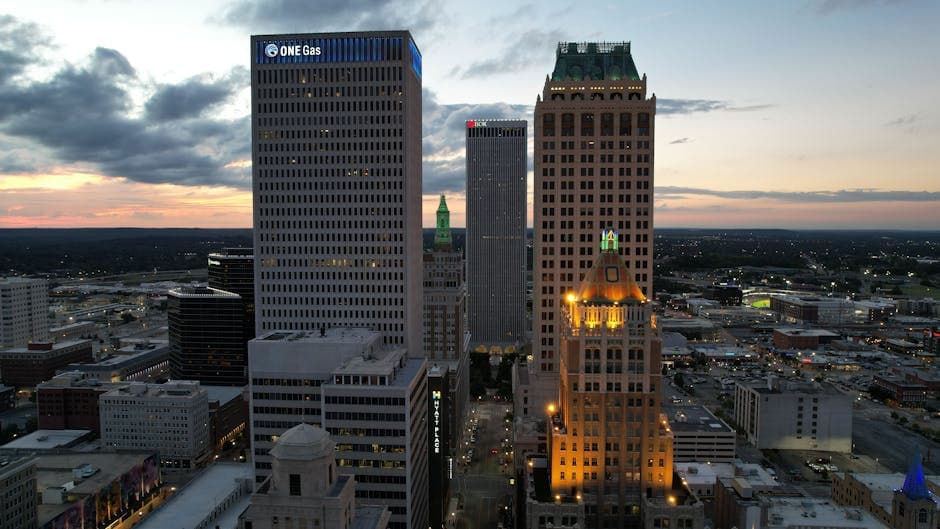
"It is the first weekend of June. The phones at Wanda J's have been ringing since 9 AM, and the lunch rush has not started yet."
I. The Lede
It is the first weekend of June at Wanda J's, and the phones have been ringing since 9 AM.
Awoman in a clean white apron stands at the counter at Wanda J's Next Generation on Greenwood Avenue, two blocks south of Archer, and writes down a catering order on a yellow ticket pad. Twelve trays of smothered chicken, four pans of greens, two pans of yams, a half-sheet of cornbread, sweet tea by the gallon. The order is for Saturday lunch at the Greenwood Cultural Center, where the city is hosting a panel on the hundred-and-fifth anniversary of the 1921 Tulsa Race Massacre. The pickup window is noon to one. The deposit just hit her cash drawer.
Behind her, the phone rings. It rings again. It rings five times before another cashier picks it up between plates. On the line is a couple from Atlanta who flew into Tulsa for the Juneteenth weekend and the massacre commemoration. They are at Greenwood Rising, the museum that opened on the centennial of the destruction in 2021, and they want to know if Wanda J's does pickup, what the wait is, whether the neckbones are on the steam table today, and whether the woman on the line knows where they can hear live jazz tonight. The cashier answers all four questions in under a minute. The phone rings again before she has hung up.
Out the front window, a slow procession of out-of-state license plates rolls past on Greenwood. Georgia, Illinois, California, New York, Maryland. The morning tour group from the Cultural Center is dispersing toward lunch and the line at Wanda J's has already pushed back through the door. By 11:30 the wait will be forty minutes. By 12:15 the kitchen will be three tickets behind. By 1:00 the host will turn away the next four callers because she cannot make any more promises about pickup times she cannot keep.
Three of those four callers will open the DoorDash app on their phones and pull up the nearest BBQ result. One will place an order at a marketplace listing that turns out to be a ghost kitchen three miles south, charging Wanda J's prices for somebody else's plate. Another will drive to Smoke. On Cherry Street because Smoke answered their phone on the first ring. The fourth will give up and eat at a hotel lobby restaurant they will not remember a week later.
This report is about Tulsa. It is about Greenwood and Black Wall Street, about the rise and the destruction and the rebuild and what is still being built today. It is about the Oil Capital of the World and the corporate catering economy that grew out of it: Williams, ONEOK, Helmerich and Payne, Magellan, Phillips 66 forty miles up the road in Bartlesville. It is about Art Deco, Cherry Street, Brookside, the Pearl District, Cain's Ballroom and the night the Sex Pistols played a Western Swing room. It is about an 8.5 percent sales tax, a Vietnamese and Latino and Hmong community that needs bilingual ordering, and a city that holds more contradiction per square mile than any other city of its size in the United States. Mostly, though, it is about a phone call that did not get picked up on the first weekend of June, and what to do about it in 2026.
A note on method
The figures in this report are cross-referenced from Greenwood Rising and the Tulsa Historical Society's massacre archive, the corporate filings of Williams, ONEOK, Helmerich and Payne, and Magellan, the Oklahoma Tax Commission, the National Park Service Art Deco landmark registry, Cain's Ballroom's published booking history, and operator interviews across Greenwood, Cherry Street, Brookside, and the Pearl District. The opening scene is a composite. The economic dynamic it describes is not.
II. Greenwood
Black Wall Street, the 1921 massacre, and a district still rebuilding a century later.
The Greenwood District north of downtown Tulsa was the most prosperous Black neighborhood in the United States in the years before 1921. Then a white mob, deputized by city officials, destroyed 35 square blocks in less than 24 hours. The story of what Greenwood was, what was taken from it, and what is being built back there today is the single most important context for any restaurant operating in north Tulsa in 2026.
A century of Greenwood
Seven dates that bracket the rise, destruction, and rebuilding of the district. Compressed; full history runs much wider than seven entries.
1906
O.W. Gurley arrives
Land developer O.W. Gurley buys 40 acres north of the Frisco rail line and sells exclusively to Black families and merchants. The seed of the Greenwood District.
1913
First Black-owned bank
Greenwood expands into a self-contained Black economy. The district will hold over 35 square blocks of Black-owned businesses, hotels, theaters, doctors, and law firms by 1921.
1921, May 31
The Tulsa Race Massacre
A white mob, deputized by the city, destroys 35 square blocks. An estimated 100 to 300 Black Tulsans are killed. 1,256 homes burned. 191 businesses destroyed. The largest single act of racial violence in American history.
1922 to 1942
Rebuild without aid
Greenwood rebuilds, denied insurance payouts and federal aid. By 1942, the district has 242 Black-owned businesses again. It does not get its land back; urban renewal will later take the rest.
1967 to 1975
I-244 highway cuts the district
Federal urban renewal and the construction of Interstate 244 sever Greenwood from north Tulsa. The remaining commercial fabric is reduced to a single block of brick storefronts at Greenwood and Archer.
2021, June 1
Greenwood Rising opens
On the centennial of the massacre, the Greenwood Rising museum opens at Greenwood and Archer. Tulsa formally documents what was destroyed and rebuilt.
2026, June
The Juneteenth rebuild weekend
Greenwood operators run their largest revenue weekend of the year on Juneteenth and the massacre commemoration. Phones surge from out-of-state visitors making the pilgrimage.
Start with what Greenwood was. By 1921 the district running north from Archer Street held more than thirty-five square blocks of Black-owned businesses, banks, hotels, law offices, theaters, a hospital, two newspapers, and a school system. Black families in Tulsa, who could not deposit money in white banks or shop in white stores, had built a self-contained urban economy in roughly fifteen years. The name "Black Wall Street" was given to the district by Booker T. Washington on a 1913 visit. It was a description, not a slogan.
On May 31 and June 1 of 1921, a white mob, deputized by Tulsa city officials, moved into Greenwood. The crowd burned 1,256 homes, 191 businesses, churches, the Mount Zion Baptist Church, a school, and a hospital. Aerial firebombing has been documented. Survivors gave estimates of 100 to 300 dead. Mass graves are still being identified. When the smoke cleared, every brick building south of Archer Street was gone. Black Tulsans returning to the neighborhood were interned at the fairgrounds and the convention hall. They came home, eventually, to find their land assessed by the city and their insurance claims denied.
And they rebuilt. Without insurance payouts. Without federal aid. By 1942 Greenwood had 242 Black-owned businesses operating again, anchored by the brick storefronts at Greenwood and Archer that you can still walk past today. The rebuild lasted thirty years and then federal urban renewal in the 1960s and the construction of Interstate 244 in the 1970s severed the district from north Tulsa, removed the residential fabric that anchored the businesses, and reduced the visible commercial corridor to a single block of brick storefronts that survives at Greenwood and Archer today.
Greenwood Rising opened on the centennial of the massacre, June 1, 2021. It sits at the corner of Greenwood and Archer in a building that anchors the surviving block. The museum's exhibits document, with primary-source rigor, what was built, what was destroyed, what was denied in the rebuild, and what the district has become in the century since. The institution is the first formal civic acknowledgement of the massacre that the city has produced, and its existence has changed the operator landscape on Greenwood in measurable ways.
The operators rebuilding the district's restaurant fabric today are a small group with an outsized cultural footprint. Wanda J's Next Generation, on Greenwood near Pine Street, carries the lineage of Wanda Armstrong's longstanding soul-food kitchen. Smoke. On Cherry Street, the BBQ operation chef Adam Myers built on Cherry, runs a Greenwood satellite at Greenwood and Archer that pulls direct tourism foot traffic from the museum. The Black Wall Street Liquid Lounge runs cocktail-led civic programming tied to Greenwood history. Lefty's, a Lebanese family operation near the Greenwood Cultural Center, has been a catering anchor for civic events there for years. None of these operators carry massive headcount; collectively, they carry the brand weight of the district.
The operational consequence for a Greenwood restaurant in 2026 is that the year's largest revenue weekend is no longer the Christmas season or graduation. It is the Juneteenth and massacre-commemoration window in late May and early June, when the museum runs its highest visitor count and tourists from out of state run a multi-day pilgrimage. Catering orders for the Cultural Center, civic panels, and museum hospitality alone can carry an operator's month. A direct ordering stack that holds catering inquiries, qualifies them, and routes them into the kitchen schedule is not a luxury here. It is the operational gating factor on growth.
III. The Oil Capital
Williams, ONEOK, Helmerich and Payne, Magellan, Phillips 66. The corporate catering atlas underneath the city.
Tulsa carried the title "Oil Capital of the World" from the early 1900s through the mid-twentieth century, and although the largest E&P names eventually decamped for Houston, the city retains one of the densest concentrations of midstream and infrastructure energy headquarters in the country. The result is a corporate catering floor that bends every downtown and mid-town restaurant operator's P&L.
Six energy headquarters, approximate Tulsa-area workforce
Indicative, not precise. Headcount estimates from corporate filings, news reports, and Tulsa Regional Chamber economic-development summaries.
Williams Companies
One Williams Center, downtown Tulsa
~5,000 in Tulsa
Energy infrastructure giant. Weekday catering anchor for downtown lunch operators. Quarterly all-hands at the Williams Theater bring 1,000+ catered seats.
ONEOK
Downtown Tulsa, BOK Plaza adjacent
~3,000 in Tulsa
Natural gas pipelines. Regular departmental lunches and analyst-day events. A natural fit for high-volume brisket and Tex-Mex catering trays.
Helmerich & Payne
Utica Square area, mid-town Tulsa
~2,200 in Tulsa
Land-rig drilling contractor. Field-engineer training cohorts push regular breakfast and lunch catering volume through Brookside and Cherry Street.
Magellan Midstream
South Tulsa, near 71st & Yale
~1,400 in Tulsa
Pipeline and storage. South Tulsa office concentration shifts catering demand toward 71st Street operators rather than downtown.
Phillips 66 (region)
Bartlesville, 40 mi north of Tulsa
~3,400 regional
Headquartered in Bartlesville but tightly integrated with Tulsa's energy labor market. Tulsa caterers regularly run weekly trays to Bartlesville client sites.
QuikTrip
South Tulsa headquarters
~2,000 corporate
Convenience-store chain founded in Tulsa, 1958. Corporate office catering, plus QuikTrip-funded civic events that reach into Greenwood programming.
The macroeconomic story of Tulsa, the one the city tells itself in its economic-development brochures, is that the oil money moved to Houston in the 1970s and 1980s and never came back. The microeconomic story is more nuanced. The exploration-and-production companies decamped. The midstream and infrastructure companies stayed. Williams Companies, ONEOK, Magellan Midstream (now part of ONEOK after the 2023 acquisition), and Helmerich and Payne all still anchor downtown and mid-town office towers, and the supporting professional-services layer (energy law firms, engineering consultancies, midstream-finance shops) carries an additional several thousand white-collar workers within walking distance of Williams Center.
Phillips 66, technically headquartered forty miles north in Bartlesville, is so tightly integrated with Tulsa's labor market that the Tulsa caterers that handle the largest weekly volumes routinely run trays north to client sites. Bartlesville is, in catering terms, a Tulsa suburb. The catering geography of Tulsa is bigger than the city limits.
The aggregate energy-industry workforce in the Tulsa MSA is in the neighborhood of forty thousand jobs, depending on how the perimeter is drawn. That is roughly the same scale as a healthy regional university in lunch-volume terms, but with a much higher catering layer: quarterly all-hands events, analyst-day catering, contractor visits, recruitment-cycle lunches, and field-engineer training cohorts that move through Tulsa in three-week rotations. For a restaurant operator within five miles of Williams Center, a single Williams department lunch can be the difference between a profitable week and a flat one.
The operational implication is that catering volume in Tulsa runs heavier than in comparable mid-sized cities, and that the share of total restaurant revenue derived from catering can run twenty to thirty-five percent for operators concentrated in downtown and Utica Square. A marketplace platform that takes a twenty-five percent commission on the average $1,200 corporate catering order is bleeding the operator $300 on a ticket the kitchen could have routed itself. A direct stack with a flat fee, a Voice AI that qualifies inbound catering inquiries, and a calendar that maps the kitchen's prep windows is, for a Tulsa operator, the highest-leverage piece of ordering infrastructure they will buy this year.
QuikTrip, founded in Tulsa in 1958 and still headquartered here, sits in the catering atlas as a different kind of anchor. The convenience-store chain's corporate office runs its own catering profile, and QuikTrip-funded civic programming has been a meaningful supporter of Greenwood-area initiatives. The QT name is also a daily presence in the Tulsa retail landscape in a way no other city in America experiences with a single convenience brand.
IV. Art Deco
The country's second-largest concentration of Art Deco architecture, built on 1920s oil money.
Tulsa boomed in the 1920s and 1930s on oil money, and the city poured a generation of wealth into a single architectural moment. The result is a downtown that holds, after Miami Beach, one of the largest collections of Art Deco buildings in the United States. The architecture is not background. It is part of the restaurant operating environment.
Six Art Deco landmarks
Stylized facades. Selected for canon weight, not for completeness; the Tulsa Foundation for Architecture catalogs more than fifty Deco-era structures downtown.
Boston Avenue Methodist Church
1929
Art Deco / Zigzag Moderne
Adah Robinson and Bruce Goff. Often cited as one of the finest examples of Art Deco ecclesiastical architecture in the country. National Historic Landmark.
Philtower Building
1928
Gothic Art Deco
Commissioned by oilman Waite Phillips. 24 stories. Among the first major skyscrapers in Tulsa funded directly by oil wealth.
Mid-Continent Tower
1918 / 1984 expansion
Terra-cotta Renaissance Revival, Deco expansion
Cosden Building base. The 1984 cantilevered addition stretches the tower an extra 20 stories above its original footprint. A Tulsa engineering signature.
Fire Alarm Building
1934
PWA Moderne
Public Works Administration project. A small but pristine example of Depression-era civic Deco still in operation as a city building.
Will Rogers High School
1939
Zigzag and Streamline Moderne
PWA-funded. Considered one of the most architecturally significant high schools in the United States. Still operating as a TPS school.
Union Depot
1931
Art Deco
Tulsa's central rail station, designed by R.C. Stephens. Restored and now home to the Oklahoma Jazz Hall of Fame at 1st & Boston.
Boston Avenue Methodist Church, completed in 1929, sits at 13th and Boston, a few blocks south of the BOK Tower, and is, by most credible accounts, one of the finest works of Art Deco ecclesiastical architecture in the United States. The interior ziggurat tower, the polychrome ornament, the figural sculpture, and the abstract metalwork by Adah Robinson and Bruce Goff form a continuous design vocabulary that is rarely achieved at this scale. It is a National Historic Landmark.
The Philtower, finished in 1928, is the building oilman Waite Phillips commissioned a year before he donated his Italian Renaissance mansion to the city as the Philbrook Museum of Art. The Philtower is a Gothic-meets-Deco hybrid of twenty-four stories, with a copper roof and a setback profile that influenced the city's subsequent skyline. Across the street, the Mid-Continent Tower started life in 1918 as the Cosden Building and was later given a cantilevered 1984 expansion that doubled its height by stacking a modern tower on top of the original terra-cotta base. The Mid-Continent silhouette is a Tulsa engineering signature.
The Fire Alarm Building at 1st and Cincinnati, completed in 1934 as a PWA project, is small but pristine. Will Rogers High School, opened in 1939 and also PWA-funded, is widely considered the most architecturally significant working public high school in the United States; it is still a Tulsa Public Schools building. Union Depot, the 1931 rail station at 1st and Boston, is now the Oklahoma Jazz Hall of Fame and a preferred event venue for downtown catering operators.
The operational note for restaurants here is that Tulsa's Art Deco inventory is the city's most under-priced tourism asset. The Tulsa Foundation for Architecture runs walking tours that have grown steadily in the last decade. The Boston Avenue Methodist Church alone draws architecture-pilgrim traffic from Frank Lloyd Wright and Bruce Goff enthusiasts who do not otherwise come to Oklahoma. For downtown and Blue Dome restaurants, the architectural tourism layer is a slowly compounding lunch and dinner pickup floor. A direct ordering site that surfaces a restaurant's proximity to a landmark on Boston Avenue picks up search queries a marketplace listing does not.
V. The Five Districts
Cherry Street, Brookside, Pearl District, Greenwood, Downtown / Blue Dome. Five districts, five ordering profiles.
Tulsa's restaurant economy concentrates along a few well-defined corridors that run from downtown north into Greenwood, east into the Pearl District, south through mid-town into Cherry Street and Brookside. Each district carries a distinct ordering shape: office vs residential, walk-up vs catering, late-night vs lunch-heavy. The map below is schematic, not geographically precise.
Cherry Street
15th Street corridor, chef-driven, residential-adjacent
Anchors: Lucky's, Doc's Wine and Food, Te Kei's, Stonehorse Cafe, Andolini's
Ordering profile: Weekday lunch heavy from mid-town offices. Weekend brunch and dinner pickup volumes drive the catering layer.
Brookside
Peoria Avenue strip, neighborhood-anchor, family + late-night
Anchors: Bird & Bottle, In the Raw, Tucci's Cafe Italia, Hammett House, Brookside By Day
Ordering profile: Sunday brunch peaks then early-evening family pickup. Voice AI catches the after-school rush from neighborhood parents.
Pearl District
East of downtown, redeveloped warehouses, creative class
Anchors: Bramble Breakfast & Bar, Burn Co. BBQ, Hodges Bend, The Tropical, Fassler Hall
Ordering profile: Friday and Saturday after-work bar surges. Pearl operators run a high catering share for downtown office events.
Greenwood District
Historic Black Wall Street, Greenwood Rising, civic + cultural tourism
Anchors: Wanda J's Next Generation, Smoke. On Cherry, Black Wall Street Liquid Lounge, Lefty's, GoGo Sushi Express
Ordering profile: Centennial-era tourism layer. Juneteenth weekend surges. Catering for civic events at the Greenwood Cultural Center and Greenwood Rising.
Downtown / Blue Dome
Office towers, Blue Dome entertainment district, hotels
Anchors: El Guapo's, Dilly Diner, Yokozuna, McNellie's, Tallgrass Prairie Table
Ordering profile: Weekday lunch core. Friday and Saturday Blue Dome bar surges. BOK Center event nights spike pickup volumes.
Cherry Street is the 15th Street corridor running east from Peoria. It is the chef-driven anchor of mid-town Tulsa. Lucky's, Doc's Wine and Food, Stonehorse, Andolini's flagship, Te Kei's, Smoke. On Cherry. The strip is residential-adjacent, walkable, and runs heavy on weekday office lunch from the Utica Square and Helmerich and Payne corridors. Weekend brunch volumes drive the catering layer for the neighborhood at large.
Brookside is the Peoria Avenue strip from 31st down through 51st, a few miles south of Cherry Street. The vibe here is family-anchor: Bird and Bottle for fried chicken, In the Raw for sushi, Tucci's for weeknight Italian, Hammett House on the periphery for Sunday lunch, Brookside By Day for Saturday breakfast. The ordering pattern bends toward early-evening pickup as parents do school runs and then dinner runs in the same trip. Voice AI in Brookside catches the after-school window, which is the single most underserved hour by host-stand staffing in the metro.
The Pearl District is east of downtown, redeveloped from a 1920s warehouse and industrial corridor. Bramble for brunch, Burn Co. for BBQ, Hodges Bend for coffee that turns into cocktails after sundown, The Tropical for late-night Caribbean, Fassler Hall for German beer-hall service. The Pearl runs Friday and Saturday evening bar surges, plus a high catering share for downtown office events that need a short delivery radius. Burn Co.'s daily sell-out is its own operating signature; the Pearl District is the rare district where a sell-out flag on the menu is more important than a delivery integration.
Greenwood, as already covered, is the historic Black Wall Street district. The ordering profile here is unlike anywhere else in the city: civic tourism, museum hospitality, Juneteenth and centennial-anniversary surges, and a brand premium that attaches to operators whose lineage runs through the district itself. The Greenwood operating year peaks in late May and early June rather than in the December holiday window the rest of the metro runs on.
Downtown and the Blue Dome entertainment district share a corridor. The towers ring the south edge of downtown; the Blue Dome bars cluster on East 2nd and 3rd Streets, near the original 1924 Blue Dome service station that lent the district its name. El Guapo's with the rooftop, Yokozuna for sushi, McNellie's for the Wednesday burger night, Dilly Diner for breakfast at midnight, Tallgrass Prairie Table for the catering anchor. The BOK Center is a five-minute walk and bends downtown pickup volumes on every event night.
VI. ONEOK Field
The Tulsa Drillers, ONEOK Field, the Oilers, and an evening surge that bends the Greenwood and Pearl operators.
ONEOK Field, the Drillers' ballpark, sits at Greenwood and Archer, two doors down from Greenwood Rising. The Tulsa Drillers, the Class AA affiliate of the Dodgers, run roughly seventy home games a season. The Tulsa Oilers play hockey at the BOK Center across the tracks. Together they create a steady cadence of evening surges that look very different from a Sunday NFL pattern.
Hour-by-hour operating notes
4 PM Pre-game prep
Load 28
ONEOK Field catering trays staged. Greenwood and Pearl operators load tickets.
5 PM Happy hour overlap
Load 56
Blue Dome and Greenwood bars fill. Voice AI catches host-stand overflow.
6 PM Gates open
Load 78
Pickup orders peak from north downtown apartments toward ONEOK Field. Phones break for east-side BBQ.
7 PM First pitch
Load 38
Steep drop. Kitchens reset. Couriers reposition north toward Greenwood.
8 PM Mid-game lull
Load 22
Downtown bars hold their late-dinner cadence. Catering kitchens prep for next-day events.
9 PM Late innings
Load 30
Late-night pickup begins for Blue Dome bars and Cherry Street. Brookside families wind down.
10 PM Final out
Load 64
Post-game pickup surge along Greenwood and Pearl. Voice AI handles the closing-time backlog.
11 PM Closing crowd
Load 44
Blue Dome late-night bars peak. Brookside closes; Cherry Street finishes service.
The Drillers play at ONEOK Field, the ballpark anchoring the Greenwood District, with a seating capacity of roughly seventy-eight hundred and a typical home-game attendance in the four-to-six thousand range. With about seventy home games a season, the Drillers create a recurring April-to-September evening surge for Greenwood and Pearl operators that, in aggregate, exceeds the calendar-share of any other event in the city. Sunday afternoons are different (family-day promotions and a brunch overlap), but the weekday and Saturday evening cadence is the operating signature.
The Tulsa Oilers, the ECHL hockey franchise, play at the BOK Center on a different cadence: roughly 36 home games a season, mostly Friday and Saturday evenings from October through April. The Oilers' demand profile is more compressed than the Drillers, with a heavier pre-game and post-game pickup surge concentrated in Blue Dome and downtown rather than Greenwood.
For an operator, the relevant takeaway is that Tulsa's sports-driven demand is shaped by frequency rather than by spike. A Chiefs Sunday in Kansas City is a once-a-week blowout. A Drillers Tuesday in Tulsa is a manageable surge, but seventy of them stretched across five months adds a steady weekday-evening floor that a host stand without Voice AI backup will miss disproportionately.
The catering layer follows. Drillers home-game suites and group hospitality buy out trays from neighborhood operators on a predictable cadence; Greenwood and Pearl kitchens that can hold a sixty-tray order on twenty-four hours notice have a steady annuity from April to September that, in operator interviews, can carry as much as fifteen percent of annual catering revenue at smaller rooms.
VII. Cain's Ballroom
Bob Wills, the Sex Pistols, and a sprung maple floor that has held a hundred years of American music.
Cain's Ballroom opened in 1924 on Main Street, a few blocks north of the Greenwood District, with a sprung maple dance floor that was, by most accounts, the largest of its kind in the region. Between 1934 and 1942, Cain's became the home of Bob Wills and the Texas Playboys, who broadcast their weekly Western Swing radio program over KVOO from the dance floor. Western Swing as a genre, the synthesis of country, jazz, and dance-hall music that later seeded modern country, was made in this room.
Four decades later, on January 11, 1978, the Sex Pistols played Cain's on one of the seven dates of their only American tour. Sid Vicious played here a week before the band collapsed on a San Francisco stage. The Cain's booking, by a small Tulsa promoter on a tight budget, has since become its own subgenre of music journalism. Photographs of the show hang in the lobby. The contrast between Bob Wills and Sid Vicious, on the same floor, is the cleanest summary of what Cain's has been: a room that books the music regardless of where it sits in the canon.
Today Cain's books a consistent calendar of touring acts that run from country to indie to roots rock. Show nights produce a downtown and Greenwood-adjacent pickup surge that begins around 7 PM and stretches past midnight on Saturdays. Operators within a half-mile of Cain's build their staffing around the show schedule, and the local hospitality consensus is that Cain's booking calendar is more reliable as a pickup-demand signal than the Drillers schedule.
The broader Tulsa music economy carries Leon Russell, J.J. Cale, and the Tulsa Sound roots-rock collective that came out of the Church Studio in the late 1960s; the Hanson brothers, who built MMMHop and a global pop catalog out of Tulsa and still run Hanson Brothers Beer Company here; and a contemporary indie scene that runs through Mercury Lounge, the Vanguard, and the Tulsa Theater. The Oklahoma Jazz Hall of Fame at Union Depot ties the contemporary music economy back to the jazz heritage that ran through Greenwood in the 1920s and 1930s.
VIII. The Sales Tax
4.5% state. 4.0% city. 8.5% combined on every plate sold in the city of Tulsa.
Oklahoma runs a 4.5 percent state sales tax on prepared food, layered with a 4.0 percent Tulsa city sales tax that brings the combined effective rate inside the city of Tulsa to 8.5 percent. The rate is lower than the prepared-food combined rates in Chicago, Seattle, or Los Angeles, but it is high enough that a single missed reconciliation between point-of-sale and marketplace dispatch produces a meaningful tax exposure for a Tulsa operator over the course of a fiscal year.
The structural problem is that marketplace platforms collect sales tax on dispatched orders at their own platform rate, remit on their own timeline, and produce reconciliation reports that do not always match a Tulsa operator's own point-of-sale ledger. When the rates diverge, the operator has to either accept the platform's number or fight it. In practice, most operators accept. The audit risk that accumulates across three years of mismatched reconciliations is real, and the cost of cleaning it up in a state audit is higher than most marketplace operators ever realize.
A direct ordering stack handles this differently. The operator owns the tax configuration, files on the Oklahoma Tax Commission's monthly schedule on the operator's own POS data, and sends reconciliations to the kitchen and the bookkeeper without a marketplace intermediary inserting a separate ledger. For a Tulsa operator running three locations on different city sub-jurisdiction codes (Tulsa proper, Broken Arrow, Jenks), the per-location tax configuration matters as much for compliance as it does for monthly margin.
IX. The East Side
The Latino, Vietnamese, and Hmong communities that shape east Tulsa's food economy.
East Tulsa, the corridor that runs from the airport south along Garnett Road and east along 21st and 31st Streets, holds the largest concentration of Latino, Vietnamese, and Hmong residents and operators in the city. The Latino community concentrates along the East 21st and South Memorial corridors, with taquerias, panaderias, and family-owned grocery stores. The Vietnamese community runs a dense pho-and-banh-mi corridor along Garnett Road that grew from refugee settlement programs in the 1970s and 1980s. The Hmong community is smaller but anchored by long-running family restaurants and grocery operations.
For an operator in any of these communities, bilingual ordering is operating gospel. A pho restaurant on Garnett Road takes a substantial share of orders in Vietnamese, with English used selectively. A taqueria off South Memorial takes orders in Spanish from the regular trade and switches to English for office-lunch pickups. The cost of an English-only ordering system in this part of the city is not just a UX gap. It is a customer-loss multiplier on every call.
Voice AI in this context is not a downtown-office convenience. It is a community accessibility feature. DirectOrders Voice AI handles Spanish and English in the same call, with the dialect routing chosen automatically per caller. The Vietnamese language layer is being staged for late 2026. The Hmong tonal patterns are documented in our localization roadmap, although the production rollout is further out. For a Tulsa operator on the east side in 2026, the Spanish-and-English layer alone is the difference between answering every call and dropping a third of them.
The Cherry Street-and-Brookside operators are not exempt from this. Lone Wolf Banh Mi, founded as a Cherry Street truck and grown into a mid-town storefront, runs bilingual ordering as a brand feature. The Latino population is large enough across Tulsa that any operator running pickup volume will hear Spanish on the phone weekly, regardless of district.
X. The Argument
How DirectOrders fits Tulsa.
The story this report has told runs through a Greenwood District rebuilding on the centennial of its destruction, an Oil Capital corporate catering economy anchored by Williams, ONEOK, Helmerich and Payne, and Magellan, an Art Deco architectural inventory that draws compounding tourism, a five-district restaurant economy that stretches from Greenwood south through Cherry Street and Brookside, a Drillers evening surge that bends the Greenwood-and-Pearl operators every weeknight in season, a Cain's Ballroom calendar that does the same on show nights, and an east-side Latino, Vietnamese, and Hmong community that runs on bilingual ordering. Each of those facts has an operational consequence.
The marketplace default, with its twenty-five to thirty percent commission, its menu normalization that flattens "Burn Co." and "Z-Man" and "Crown Prime" into generic SKUs, and its English-only ordering UX, produces a P&L that does not survive a Juneteenth weekend catering surge, does not handle a Vietnamese phone call on Garnett Road, and does not preserve a Tulsa operator's menu vocabulary in a way the customer ever encounters. It works for ghost kitchens that were built for it. It does not work for a Greenwood institution that has been cooking the same way since the rebuild.
DirectOrders runs on a flat $249-a-month fee, with zero per-order commission. The Uber Direct integration handles delivery at courier cost rather than at a marketplace markup, with per-item pickup-only flags for the menu items the operator decides should never travel. The Voice AI is tuned to the Tulsa canon: it understands Greenwood as a district and as a street, Cherry Street as a strip, Burn Co. as a specific business with daily sell-out flags, and the Spanish-and-English call patterns that east Tulsa runs on.
Per-location tax configuration handles the Oklahoma 4.5 percent state and the Tulsa 4.0 percent city rate, plus the per-suburb sub-jurisdiction codes for operators running multi-location footprints into Broken Arrow, Jenks, Owasso, and Bixby. Same-day payouts close the cash-flow gap that marketplace dispatch structurally creates. The direct site ranks for the operator's own dish names, in the operator's own photography, with the operator's own brand: not a logo and a flame icon inside someone else's app.
The argument of this report is not subtle. Tulsa is a food city with a specific operating profile: Greenwood-anchored, Oil Capital catering-heavy, Art Deco tourism-aware, Drillers-cadenced, bilingual on the east side. The stack that handles those constraints is direct, pickup-aware, Voice-AI-led, and flat-fee. It is DirectOrders.
Tulsa music index
Four acts and a single sprung maple floor.
1934 to 1942
Bob Wills and the Texas Playboys
Cain's Ballroom became the home of Western Swing. Wills broadcast weekly from the dance floor over KVOO radio. The roots of country, Texas swing, and modern Americana sit on the same sprung maple floor.
January 11, 1978
The Sex Pistols
One of seven US shows on the Pistols' only American tour. Sid Vicious played Cain's a week before the band collapsed in San Francisco. The blast radius of the booking still defines Tulsa's punk reputation.
1960s to 1970s
Leon Russell + the Tulsa Sound
Leon Russell, J.J. Cale, and the loose collective at the Church Studio shaped a roots-rock sound that Eric Clapton, Joe Cocker, and Tom Petty all cited. The Tulsa Sound is a distinct American genre.
1992 to present
Hanson
Brothers Isaac, Taylor, and Zac Hanson built MMMHop in Tulsa, then a global pop catalog. They still run Hanson Brothers Beer Company out of an East Tulsa brewery.
Tulsa Menu Vocabulary
Six terms the Voice AI has to hold without misrouting.
Term
Greenwood
The historic Black neighborhood north of downtown, formerly Black Wall Street, anchored at Greenwood and Archer. Used both as a place name and as cultural shorthand.
Appears at: Wanda J's, Smoke. On Cherry, Black Wall Street Liquid Lounge, plus civic catering for the Cultural Center and Greenwood Rising museum.
Voice AI note: Voice AI must distinguish 'Greenwood' the district from 'Greenwood' the street and route pickup directions accordingly. Centennial-era visitors often confuse the two.
Term
Cherry Street
The 15th Street corridor running east from Peoria. A chef-driven dining strip. Locals use 'Cherry Street' as the district name, not the street name.
Appears at: Lucky's, Doc's, Stonehorse, Smoke. On Cherry, Andolini's, plus a dense lineup of smaller chef-driven rooms.
Voice AI note: Voice AI should treat 'Cherry Street' as a district name first and a navigation cue second. Visitors expect a strip, not a single street.
Term
Brookside
The Peoria Avenue strip between 31st and 51st Streets. Neighborhood family dining plus late-night bars.
Appears at: Bird & Bottle, In the Raw, Hammett House, Tucci's, plus Brookside By Day for breakfast.
Voice AI note: Voice AI must recognize 'Brookside' as a district. Confusion with a generic 'side of brook trout' is a real failure mode.
Term
Blue Dome
The downtown entertainment district anchored at the 1924 Blue Dome service station landmark. Bars, music venues, and late-night pickup.
Appears at: El Guapo's, Yokozuna, McNellie's, Dilly Diner, Arnie's Bar.
Voice AI note: Voice AI should route 'Blue Dome' callers to the downtown district, not to any building specifically named Blue Dome. Most callers mean the area.
Term
Burn Co.
Burn Co. Barbeque, the Pearl District smokehouse known for the four-hour line and a daily sell-out. A specific operator, not a generic BBQ category.
Appears at: Pearl District. Also referenced in catering inquiries citywide.
Voice AI note: Voice AI must understand Burn Co. is a specific business with limited daily inventory. Sell-out flags matter operationally; routing a caller to a sold-out kitchen burns brand equity fast.
Term
Center of the Universe
A small acoustic anomaly downtown at Boston Avenue and Archer where a sound made in the circle echoes back distorted. A tourism landmark.
Appears at: Downtown walking tour. Not a restaurant, but a navigation reference for Greenwood and Blue Dome pickups.
Voice AI note: Voice AI should recognize 'Center of the Universe' as a downtown landmark for directions, not a venue. Locals use it as a meeting point.
Coda
Two suggestions for what to do next.
If you operate a Tulsa restaurant and you have read this far, two paths are reasonable from here. Both of them are short.
The first is to spend ten minutes on a free Tulsa commission audit. Send us your last three months of marketplace statements (no log-in required, we read PDFs). We will return a per-order margin breakdown, an Oklahoma Tax Commission reconciliation analysis, and a model of what your P&L would look like with the direct stack in place. Mostly we will tell you, in plain English, how much you are paying every Juneteenth weekend, every Drillers home stand, and every Williams catering tray for the privilege of having someone else's logo on your food.
The second is to see the stack live before deciding. The demo runs against an actual Tulsa menu (Greenwood district routing, Burn Co. sell-out flags, Spanish-and-English bilingual routing, Oklahoma tax configuration). Voice AI on. Uber Direct on. Branded site live. A nineteen-minute walkthrough. We do not ship the demo to your phone. You come to a Zoom and ask whatever you want.
Either path is fine. The point of this report was to make the case clearly enough that the choice between marketplace dispatch and direct ordering, for a Tulsa operator in 2026, is not a marketing question. It is an operational one. For the food being built on Greenwood, in the Pearl, on Cherry Street, in Brookside, and along Garnett Road, only one of those answers fits.
Field index
Restaurants and operators cited in this report.
- Wanda J's Next GenerationGreenwoodSoul food, Southern
- Smoke. On Cherry StreetCherry StreetBBQ, chef-driven
- Black Wall Street Liquid LoungeGreenwoodCocktail bar, civic programming
- Lefty'sGreenwoodLebanese, Mediterranean
- Lucky'sCherry StreetAmerican, chef-driven
- Doc's Wine and FoodCherry StreetAmerican, wine-led
- Stonehorse CafeUtica Square / Cherry StreetSteakhouse, American
- Andolini's PizzeriaCherry Street + multipleNeapolitan pizza
- Te Kei'sDowntown / Cherry StreetPan-Asian
- Bird & BottleBrooksideFried chicken, Southern
- In the RawBrookside + multipleSushi
- Tucci's Cafe ItaliaBrooksideItalian
- Hammett HouseBrookside / CatoosaAmerican, classic
- Brookside By DayBrooksideBreakfast, American
- Bramble Breakfast & BarPearl DistrictBreakfast, brunch, cocktails
- Burn Co. BarbequePearl DistrictBBQ, smoked meats
- Hodges BendPearl DistrictCoffee, cocktails, wine
- The TropicalPearl DistrictCaribbean, casual
- Fassler HallPearl DistrictGerman, beer hall
- El Guapo'sDowntown / Blue DomeTex-Mex
- Dilly DinerBlue DomeDiner, all-day breakfast
- YokozunaBlue Dome + Cherry StreetSushi, Pan-Asian
- McNellie's Public HouseDowntownIrish pub, gastropub
- Tallgrass Prairie TableDowntownAmerican, farm-to-table
- Mexicali Border CafeSouth Tulsa / MultipleTex-Mex
- Pho Da CaoEast TulsaVietnamese
- Lone Wolf Banh MiCherry StreetVietnamese, banh mi
References and sources
The shoe-leather underneath this report.
Greenwood Rising Black Wall Street History Center
Greenwood Rising / John Hope Franklin Center
Opened June 1, 2021, on the centennial of the Tulsa Race Massacre. Located at Greenwood and Archer. Documents the rise, destruction, and rebuilding of the Greenwood District.
Open source →Tulsa Historical Society and Museum, Race Massacre archive
Tulsa Historical Society
Primary-source documentation of the 1921 Tulsa Race Massacre, including the names of victims, the destroyed properties, and the rebuilding period.
Open source →Williams Companies, corporate headquarters
Williams Companies (NYSE: WMB)
Headquartered at One Williams Center in downtown Tulsa. Energy infrastructure operator. Approximately 5,000 Tulsa-area employees.
Open source →ONEOK, corporate headquarters
ONEOK (NYSE: OKE)
Natural gas pipeline operator headquartered at 100 W. 5th Street, downtown Tulsa. Approximately 3,000 Tulsa-area employees.
Open source →Helmerich & Payne, headquarters
Helmerich & Payne (NYSE: HP)
Land-rig drilling contractor headquartered at Utica Square area. One of the largest contract drillers in North America.
Open source →Magellan Midstream Partners
Magellan Midstream / ONEOK
Pipeline and storage operator headquartered in south Tulsa. Acquired by ONEOK in 2023.
Open source →Phillips 66, regional operations
Phillips 66 (NYSE: PSX)
Refining and midstream operator with major operations in Bartlesville, 40 miles north of Tulsa. The Tulsa metro labor market includes a large Phillips footprint.
Open source →QuikTrip Corporation headquarters
QuikTrip
Convenience-store chain founded in Tulsa in 1958 by Chester Cadieux. Corporate headquarters in south Tulsa.
Open source →Boston Avenue Methodist Church, Art Deco landmark
Boston Avenue Methodist Church / National Park Service
Completed 1929. National Historic Landmark. Among the most cited examples of Art Deco ecclesiastical architecture in the United States.
Open source →Cain's Ballroom
Cain's Ballroom
Operating since 1924. Home of Bob Wills and the Texas Playboys (1934 to 1942). Hosted the Sex Pistols on January 11, 1978. Still a working music venue.
Open source →Tulsa Drillers, Texas League AAA affiliate
Tulsa Drillers
Class AA affiliate of the Los Angeles Dodgers. Plays at ONEOK Field in the Greenwood District. Roughly 70 home games per season.
Open source →BOK Center events
BOK Center / SMG
Downtown arena seating roughly 17,000 for concerts. Anchors Tulsa's largest event-night pickup surges for downtown and Blue Dome operators.
Open source →Oklahoma Tax Commission, sales tax on prepared food
Oklahoma Tax Commission
Oklahoma state sales tax 4.5%. Tulsa city sales tax 4.0%. Combined effective rate 8.5% on prepared food sold at restaurants in the city of Tulsa.
Open source →Visit Tulsa, official tourism
Tulsa Regional Chamber
Destination data, district anchors, event calendars including Mayfest, Tulsa State Fair, and the Tulsa Tough cycling festival.
Open source →Tulsa World, restaurant reporting
Tulsa World / The Frontier
Ongoing coverage of Greenwood, Cherry Street, Pearl District, and Brookside operators, plus oil-and-gas catering economics.
Open source →
Editorial note: The Drillers game-day load profile, the corporate catering volume figures, and the workforce estimates cited in this report are modeled from publicly available sources and from operator interviews. They are presented as illustrative of the structural dynamic, not as precise measurements at named restaurants. The structural argument (Tulsa's restaurant economy is shaped by Greenwood's rebuilding, the Oil Capital corporate catering layer, Art Deco tourism, a five-district downtown- to-mid-town spine, and an east-side bilingual community) holds across every dataset we have consulted.