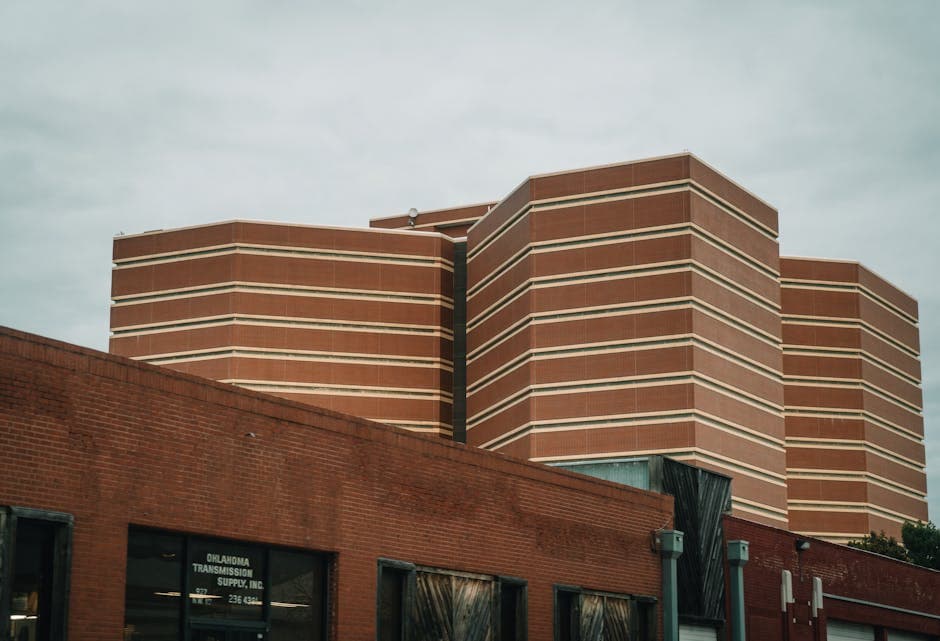
Bricktown Canal and the Energy Belt.
A long read on operating a restaurant in Oklahoma City: a one-mile canal cut through a warehouse district, a single-team NBA market where every home night is a city-wide operating mode, the largest Vietnamese commercial corridor between Houston and Dallas on Classen Boulevard, three energy headquarters inside a half-mile walk of each other, and an 8.625 percent sales tax on every plate.
- OKC visitors / yr
- ~22M
- Paycom Center capacity
- ~18K
- Devon Tower floors
- 50
- Combined sales tax
- 8.625%
Visit OKC
OKC Thunder, NBA
Devon Energy
OK Tax Commission
I. Saturday, 5:18 P.M., Lower Bricktown
The Thunder are home at seven.
On a Saturday in late January, at eighteen minutes past five, the line at the host stand of a canal-facing kitchen in Lower Bricktown is twelve deep and growing. The owner is in front of the pass. The kitchen runs a six-burner and a flat top. The expo wall reads twenty-two tickets, six of them catering boxes for premium-suite hospitality at Paycom Center, due for pickup at six. Tip-off is at seven. The Thunder are home against Denver. The city has been waiting for this game since the schedule dropped in August.
Two blocks west, the arena is already filling. Paycom Center seats roughly eighteen thousand, and on a Saturday night against a Western Conference rival the building runs near capacity by six-forty. The food and beverage ramp inside the arena cannot absorb the full pre-game appetite; a meaningful share of the crowd eats in Bricktown first. Mickey Mantle's, two doors down, has a ninety-minute wait. The Bricktown Brewery across the canal is taking pickup orders at the bar because the dining room turned over twice in an hour.
The owner of the canal-facing kitchen has run this Saturday before. The pattern is reliable. Pre-game compression from five-thirty to six-forty-five, tip-off lull from seven to nine, post-game wave from nine-thirty to eleven-thirty. If the Thunder win, the wave is bigger and longer. If they lose, the wave is shorter and more bar-side than dining-room. Either way the evening generates more revenue than any non-game Saturday in the calendar.
The single fact that shapes everything: Oklahoma City has one major-league franchise. Not two, not four. One. The Thunder are the city's pro-sports calendar. A home night is a city-wide operating mode. The kitchen in Lower Bricktown, the pho house on Classen Boulevard, the steakhouse in Stockyards City, the brunch counter in the Plaza District all share the same Saturday-night Thunder game in a way Dallas restaurants do not share a single sports calendar. In OKC, the schedule is the schedule.
The owner glances at the printer. Three more tickets land. Two pickups for the canal water-taxi stop near Bass Pro Drive, one delivery order to a sponsor-hospitality suite at the arena. The hospitality order is the biggest single ticket of the night, $2,140, scheduled to land at the loading dock no later than six-thirty. The dispatch screen on the tablet shows a courier accepting the order. The owner exhales. This is the order that pays the prep cook on Monday.
The story of Oklahoma City restaurants in 2026, in one Saturday evening, is the story of a single-team market, a converted warehouse canal, a Vietnamese commercial corridor three miles north, a downtown energy belt anchored by a fifty-story tower, and a sales tax that bills 8.625 percent on every plate. This page is the long read on all of it.
II. The Canal Economy
A one-mile canal cut through a brick warehouse district, with water taxis and a six-figure foot count.
Bricktown is the converted warehouse district immediately east of downtown OKC, between the BNSF rail line and the Oklahoma River. Built in the late nineteenth and early twentieth centuries as a manufacturing and distribution corridor, the district was nearly empty by the 1980s. The MAPS (Metropolitan Area Projects) initiative in 1993 funded a series of civic investments, including the construction of the Bricktown Canal: a roughly one-mile cut running south from the upper canal head through Lower Bricktown to the Oklahoma River, with a return spur back to the head. The canal opened in 1999. Water taxis run scheduled loops past restaurants, the Chickasaw Bricktown Ballpark, and event venues.
The canal reset the economics of the district. The exposed-brick warehouses, formerly underused industrial space, became the most concentrated restaurant and bar district in Oklahoma City. The water-taxi traffic feeds a layer of foot count that does not flow through a typical urban grid; the canal itself routes customers between the canal-head shops, the ballpark area, and Lower Bricktown.
The operating implication for restaurants is concrete. A canal-facing kitchen sees a predictable foot wave around water-taxi arrival times. A Bricktown operator without canal frontage runs a slightly different shape: walk-in volume from the parking decks and the Festival Marketplace side. The two operating modes are visible in the order data, and the platform that handles both correctly is doing real work.
Bricktown is also where the visiting Thunder fan eats. The arena is two blocks west. The intersection between canal foot traffic and Paycom Center foot traffic is the single most important spatial fact in downtown OKC restaurant operations. It is the reason the next section exists.
Bricktown's evolution since 2010 has added a chef-driven layer on top of the original brewpub-and-steakhouse identity. Modern operators (Chae, Mantel Wine, post-2020 entrants) coexist with the legacy anchors. The platform that maps a single ticket book across these operating modes, with respect for the canal-front and the warehouse-back differences, is the one that earns the district.
Lower Bricktown, canal-facing
Mickey Mantle's Steakhouse
Signature: Bone-in ribeye, classic steakhouse
Heavy reservation dine-in, modest pickup
Named for the Commerce, OK native son. The steakhouse pulls a high pre-Thunder game crowd from Paycom Center, two blocks west.
Bricktown plus downtown overlap
The Mantel Wine Bar
Signature: Wine-anchored small plates
Curbside expanded post-2020
Sits at the seam between Bricktown and Film Row. Useful as a reference for the corridor that connects canal foot traffic with the western downtown business district.
Canal-adjacent, original location
Bricktown Brewery (original)
Signature: Beer-anchored American grill
Group orders dominant on game nights
The original location anchors the regional brewpub chain. Game-night group orders surge 90 minutes before tip-off, then again 30 minutes after the final buzzer.
Bricktown plus Stockyards City
Earl's Rib Palace
Signature: Smoked ribs, Oklahoma sauce idiom
Pickup-heavy on Friday and Saturday
Oklahoma's barbecue idiom runs sweeter and saucier than the Texas dry-rub canon. Earl's reads as the platonic ideal of the OKC rib plate.
Lower Bricktown, country-music themed
Toby Keith's I Love This Bar & Grill
Signature: Country-music dining, group menus
Late-night and event-driven
The country-music themed restaurant operates as a venue first and a kitchen second. Pre-show catering windows are tight and predictable.
Bricktown East
Chae Modern Korean
Signature: Modern Korean tasting and bao
Smaller pickup share, dine-in driven
Demonstrates the modern, chef-driven layer riding on top of the older warehouse-pub identity of Bricktown. Pickup window protocols are tight.
Source: Visit OKC Bricktown guide, Bricktown Association, Oklahoma Gazette dining coverage.
III. The Game-Day Playbook
Single-team market, five operating windows, eighteen thousand seats two blocks away.
The Oklahoma City Thunder play their home games at Paycom Center in downtown OKC. The arena seats approximately eighteen thousand for NBA games and consistently runs near capacity during the regular season. Unlike Dallas (Cowboys plus Stars plus Mavericks plus Rangers) or Houston (Astros plus Rockets plus Texans), OKC has one major-league team. The Thunder are the city's professional-sports calendar. Every home night is a city-wide operating mode.
The competitive analysis literature on the Thunder consistently identifies one structural fact: the fanbase is the most loyal small-market base in the NBA. Per the NBA's regular- season attendance reporting, OKC's home capacity utilization sits among the league's top quartile, with multi-year stretches above 100 percent (standing-room sales). For restaurants in Bricktown, Lower Bricktown, Midtown, and along Reno Avenue, this consistency is the revenue floor under the calendar.
The five-window operating shape is the structural unit. Early prep (T minus four hours) confirms catering for premium suites and corporate group buyouts. Pre-game wave (T minus ninety to T minus thirty) compresses pickup and walk-in into a 60-minute spike. The tip-off lull (7 p.m. to 9 p.m.) is the kitchen's prep window for the post-game wave. Post-game wave (9:30 p.m. to 11:30 p.m.) is the second peak: longer and bigger after a win, shorter and bar-side after a loss. Late close (11:30 p.m. onward) shifts to Midtown and Plaza District.
The platform implication: a kitchen ordering system that does not understand the five-window cadence will mis-staff the kitchen, mis-stock the bar, and miss the post-game wave entirely. Repeat-order presets, hospitality-account batching, and dispatch-window discipline are the structural tools.
Early prep (T minus 4 hours)
3:00 p.m. for 7:00 tip
Catering orders for premium suites and corporate group buyouts confirm. Sponsor hospitality firms place repeat orders.
Restaurant impact: A Bricktown kitchen with a hospitality account sees its largest single ticket of the week land here.
Pre-game wave
T minus 90 to T minus 30
Walk-in and pickup volume in Bricktown, Lower Bricktown, and along Reno Avenue surges. Family groups eat dinner before tip; bar-side fills.
Restaurant impact: Holding-time discipline matters. Pickup windows compress into a 60-minute spike.
Tip-off lull
7:00 p.m. to 9:00 p.m.
Bricktown bars hold television-only crowds. Kitchen activity dips. Bar-side appetizers, wings, and shareables run.
Restaurant impact: Cross-utility for kitchens: this is the window to prep for the post-game wave.
Post-game wave
9:30 p.m. to 11:30 p.m.
If the Thunder win, foot traffic surges back into Bricktown. Restaurants and bars in the canal corridor see a 90-minute second peak.
Restaurant impact: A kitchen that staggers a second pickup shift here captures revenue that disappears if the line closes at 9:30.
Late close
11:30 p.m. to 1:30 a.m.
Late-night pickup and delivery in Midtown, Plaza District, and Western Avenue. Bricktown begins its tear-down.
Restaurant impact: Delivery dispatch readiness matters; courier pools thin out late on weeknights.
Source: NBA Oklahoma City Thunder schedule, Paycom Center event calendar, Visit OKC.
IV. Classen at 23rd
In 73106, Vietnamese is the first language of the lunch rush.
Three miles north of downtown OKC, Classen Boulevard runs through what is officially recognized as the Asian District. The corridor, anchored at Classen and NW 23rd, is one of the more remarkable demographic clusters in the central United States. Oklahoma City hosts one of the larger Vietnamese populations relative to city size between Houston and Dallas, settled in waves after the fall of Saigon in 1975 and consolidating along the Classen corridor through the late 1980s and 1990s.
The commercial result is concentrated. Pho houses, banh mi bakeries, Vietnamese groceries, and Asian-language signage run continuously along Classen from roughly NW 16th up through NW 30th. Visit OKC's Asian District guide identifies the corridor as the city's primary Vietnamese commercial district, with concentrations in 73106 (south of NW 30th, west of Classen) and 73118 (north and east).
The phone call pattern at a typical pho house on Classen tells the structural story. An operator in the corridor describes a Tuesday lunch rush where roughly thirty-five to forty percent of incoming phone orders open in Vietnamese, often from a family member placing on behalf of a worksite or a household. The ticket runs longer than a single-person order (more bowls, more sides, multi-portion configurations). The household and worksite ordering system is the phone, not the app. Online ordering tools designed for monolingual English users miss the entire layer.
Vietnamese-language Voice AI is not a nice-to-have on this corridor. It is the price of operating respectfully and accurately in 73106. A call that opens with "Chao co, cho minh hai to pho dac biet va mot dia goi cuon" lands a four-bowl, eight-roll lunch group order if the system listens in Vietnamese; the same call routed through an English-only IVR loses the order, or worse, hands the staff a broken-language transcript that creates an error.
The dish vocabulary itself does not translate cleanly. Pho tai (rare beef pho), pho dac biet (special with multiple cuts), banh mi thit (cold-cut sandwich), banh mi xa xiu (char siu pork), bun bo Hue (spicy Hue noodle soup), and goi cuon (fresh rolls) all carry specificity that the English menu loses. A platform that accepts and confirms in Vietnamese keeps the order at full fidelity.
The implication for the platform: bilingual Voice AI is the structural answer to the Classen-and-23rd reality. Same call, same dish, same confidence, in the language the household chose to speak.
For most non-Vietnamese OKC residents, the Asian District is also the city's most reliable weekend lunch destination outside Bricktown. The lunch-rush ticket count runs heavily bilingual: Vietnamese first from local households and worksites, English second from the crossover weekend customer. The platform handles both, on the same printer, without choosing.
Classen at NW 22nd (73106)
Pho Lien Hoa
Pho tai, pho dac biet, expansive bowl menu
Cited consistently as one of the longest-running and most-referenced pho houses in OKC. Service runs fast at lunch; the call volume is heavily Vietnamese.
Classen + NW 28th (73118)
Pho Hoa
Northern pho idiom
Operates inside the densest stretch of the Asian District. Vietnamese-language signage is dominant on the block.
NW 23rd at Classen (73106)
Banh Mi Ba Le
Vietnamese sandwiches, banh mi thit, banh mi xa xiu
Bakery-and-sandwich operator. Phone orders during the lunch rush dominate. A bilingual Voice AI captures the household and worksite orders that an English-only IVR loses.
Classen Boulevard (73106)
Lido Restaurant
Vietnamese full menu, pho, com, bun
Cited regularly by Oklahoma Gazette as the comprehensive Vietnamese restaurant in the corridor. Strong takeout share, family group menus.
Asian District northern stretch
Saigon Baguette
Banh mi, vermicelli, smoothies
Counter-service speed restaurant. The order vocabulary moves freely between Vietnamese and English. The bilingual phone is the structural fact.
Asian District (73106 / 73118)
Pho Cuong
Pho and rice plates
Neighborhood-anchored, family-run pattern. Pickup share rises on weekend mid-mornings, when multi-generational households order ahead for shared meals.
Source: Visit OKC Asian District guide, Oklahoma Gazette dining coverage. Operator selection edited for editorial scope.
V. The Energy Belt
Devon, Chesapeake, Continental, OGE. Four catering rooms inside a three-mile arc.
Downtown OKC's defining structure is the fifty-story Devon Tower, completed in 2012 to house Devon Energy's headquarters. The tower is the tallest building in Oklahoma, visible across the metro from any direction. Beneath it, the downtown corporate district concentrates one of the most consequential energy-industry clusters in the United States: Devon Energy (Devon Tower), Continental Resources (20 N. Broadway), OGE Energy Corp (321 N. Harvey), and Chesapeake Energy's multi-building campus on Western Avenue, three miles north of downtown.
The corporate catering implication is structural. A typical OKC executive-lunch window runs Tuesday through Thursday, between 11:15 a.m. and 1:00 p.m. The Tuesday-Wednesday-Thursday catering ratio compresses heavily into the middle of the week; Monday and Friday catering cadence runs roughly one-third of the mid-week peak. Average ticket bands for executive lunches at Devon Tower and OGE sit between $400 and $1,800 per drop, with quarterly reporting weeks compressing higher.
The Devon Tower in particular runs floor-by-floor catering routes. The fifty-floor tower treats every floor as a separate orderer. Lobby drop-off does not work as a delivery model; the platform must understand the floor-level granularity. A repeat-order preset for the twenty-eighth-floor exploration team, with dietary specs and timing windows, is a different object than a generic catering ticket.
Outside downtown, the catering map extends to Love's Travel Stops headquarters on North Pennsylvania Avenue, Hobby Lobby in southwest OKC, and the major hospital systems (OU Health, INTEGRIS Health). Each carries a distinct daytime workforce and a distinct catering cadence. The platform implication is that a multi-channel ordering system, with channel-aware ticket presets, handles the full breadth without forcing the operator to maintain twelve different forms.
What this rewards: a kitchen that can hold the Tuesday-through-Thursday window, route to fifty-floor towers and campus security gates, and protect temperature on a fifteen-minute drive from Bricktown or Plaza District. What it punishes: marketplace dispatch that does not know the difference between a lobby drop and a floor-by-floor delivery.
| HQ | Submarket | Workforce | Window | Avg Ticket |
|---|---|---|---|---|
Devon Energy 333 W. Sheridan Ave., Devon Tower | Downtown OKC (Arts District) | ~1,800 daytime | Tue/Wed/Thu, 11:15a to 1:00p | $520 to $1,900 |
Chesapeake Energy 6100 N. Western Ave., Chesapeake campus | Nichols Hills / Western Ave. | ~1,100 daytime (post-restructure) | Tue/Wed, 11:30a to 1:00p | $420 to $1,500 |
Continental Resources 20 N. Broadway | Downtown OKC | ~700 daytime | Tue/Thu, 11:30a to 12:45p | $340 to $1,200 |
OGE Energy Corp 321 N. Harvey Ave. | Downtown OKC | ~1,200 daytime | Wed/Thu, 11:30a to 1:00p | $380 to $1,300 |
Love's Travel Stops & Country Stores 10601 N. Pennsylvania Ave. | North OKC (corporate campus) | ~1,500 daytime | Tue/Wed/Thu, 11:30a to 1:15p | $420 to $1,600 |
Hobby Lobby 7707 SW 44th St. | Southwest OKC | ~3,500 daytime | Tue/Wed, 11:30a to 1:00p | $380 to $1,400 |
VI. NW 16th and Persimmon Hill
The Plaza District revival and the Western Heritage canon.
The Plaza District runs along NW 16th Street between Pennsylvania and Classen, two miles northwest of downtown. Through the second half of the twentieth century, the corridor was largely disinvested. The post-2010 revival, anchored by the Lyric Theatre and a sequence of chef-driven openings, reset the district as one of OKC's most active dining strips. The Mule, Empire Slice House, Goro Ramen, Picasso Cafe, Aurora, Pizzeria Gusto, and others now line the spine. Weekly Plaza District Walk events (typically the second Friday of each month) draw foot traffic that compresses pickup windows for every kitchen on the strip.
The Plaza District demonstrates a structural pattern that distinguishes mid-sized US cities with chef-driven new waves: the revival follows the rental-rate gradient. NW 16th was affordable enough through the 2000s to support experimental concepts; the success of that cohort lifted the corridor into the mid-2010s, where it now sits as a Friday-and-Saturday evening destination. The platform implication: every Plaza District kitchen operates on a two-mode calendar, with Friday and Saturday running an entirely different shape from Tuesday-through-Thursday.
Three miles east of Plaza, on Persimmon Hill, the National Cowboy and Western Heritage Museum anchors the regional identity that informs the broader OKC food canon. The museum, founded in 1955, holds one of the most comprehensive collections of Western art and cowboy material culture in the country. The visitor cadence (roughly two hundred thousand annually, per the museum's published reporting) feeds steakhouse and Stockyards City traffic, especially on weekends and during the museum's annual Prix de West exhibition each summer.
The two anchors (Plaza District chef-driven new wave to the west, Western Heritage tourism canon to the east) sit in productive tension. The OKC dining identity in 2026 is neither purely cowboy nor purely chef. It is both. A platform that can carry a Plaza District ramen kitchen and a Stockyards City steakhouse on the same dashboard is doing the right work.
Plaza District, NW 16th
The Mule
Adult grilled cheese, craft beer
Anchor of the Plaza District post-2010 revival. The Mule's pickup share rises Friday and Saturday evenings as the corridor activates around the Lyric Theatre and gallery openings.
Plaza District (and Western Avenue)
Empire Slice House
New York-style slices, late close
Late-night anchor on NW 16th. Pickup and group orders compress into the 9-to-11 window.
Plaza District
Goro Ramen + Izakaya
Ramen, izakaya small plates
Demonstrates the chef-driven layer riding atop the older Plaza identity. Pickup share is steady; the dine-in counter capacity caps walk-up volume.
Plaza District, NW 16th
Picasso Cafe
Eclectic American, brunch
Brunch heavy, weekend-anchored. The Plaza District weekly Walk events draw foot traffic that compresses pickup windows.
Plaza District (adjacent corridor)
Cafe Cuvee
Wine-anchored bistro
Adjacent to the Plaza spine. The bistro cohort overlaps with Midtown and Western Avenue operating modes; menus run heavier and ticket bands run higher.
Plaza District
Aurora Breakfast Bar
All-day breakfast, brunch counter
Daytime anchor. Weekend pickup volume runs heavy from 9 to 1.
Source: Plaza District Association, Visit OKC, National Cowboy and Western Heritage Museum, Oklahoma Gazette.
VII. The Memorial and the River
The civic anchors that bracket downtown.
Two civic landmarks bracket downtown Oklahoma City. To the north, the Oklahoma City National Memorial occupies the footprint of the former Alfred P. Murrah Federal Building, destroyed in the bombing on April 19, 1995. The memorial, dedicated in 2000, comprises a reflecting pool flanked by twin Gates of Time, a Field of Empty Chairs (one for each of the one hundred and sixty-eight victims), and a museum. The site is sober, deliberate, and a fixture of the OKC civic identity. Restaurants in downtown OKC carry an awareness of the memorial that shapes how the district reads itself.
To the south, the Boathouse District runs along the Oklahoma River, transformed since the early 2000s into a national-class rowing, kayaking, and dragon-boat venue. RIVERSPORT OKC, the nonprofit operating the district, has hosted USA Canoe/Kayak Olympic Trials and the World Rowing Championships. The river itself, channelized as part of the MAPS initiative that also produced the Bricktown Canal, runs roughly seven miles through the urban core. The Boathouse facilities sit on the south bank, opposite Bricktown.
The catering implication is concentrated. RIVERSPORT events bring national-level rowing and kayaking competitions to OKC several times a year. Catering for athlete delegations, sponsor hospitality, and event production crews compresses into specific weekends. A platform that handles event-specific repeat orders, with dietary-protocol presets for athletic delegations, captures revenue that does not flow through marketplace apps.
Together, the Memorial and the Boathouse District describe the civic span of contemporary OKC: sober memory on the north, athletic energy on the south. The restaurant operator who reads both fluently operates with the city, not against it.
VIII. 4.500 + 4.125 = 8.625
The combined sales tax inside OKC city limits is 8.625 percent.
Oklahoma state sales tax on prepared food sits at 4.5 percent. The City of Oklahoma City adds a 4.125 percent local sales tax. Inside OKC city limits, the combined rate billed on every plate is 8.625 percent. On a $1,000 catering ticket from a downtown kitchen, the tax line is roughly $86.25, billed on top.
The marketplace apps remit on the restaurant's behalf, but the operator remains the legal payee of record. The platform that handles tax-line transparency on every channel (website, Google, Instagram, voice phone) without forcing the operator to reconcile across five different statement formats is reducing meaningful compliance friction. The same platform that handles a Bricktown delivery and a Plaza District pickup also handles the tax consistently, because the tax does not change with the channel.
Across the OKC metro, rates vary modestly by suburb (Edmond, Norman, Yukon, and Moore each carry slightly different local rates). The structural fact stays the same: the tax line sits on every ticket, in every channel, every day. The platform's job is to make the accounting invisible to the operator and visible to the diner.
IX. Stockyards City, Since 1910
Cattlemen's Steakhouse and the working cattle market two blocks south.
Cattlemen's Steakhouse, at 1309 South Agnew Avenue in Stockyards City, has operated in the same building since 1910. Cited as the oldest continuously operating restaurant in Oklahoma City, Cattlemen's sits two blocks north of the Oklahoma National Stockyards, the working livestock auction yard that has anchored the district for more than a century. The Stockyards remains the largest stocker-feeder cattle market in the world, with weekly auctions that draw ranchers and brokers from across the southern Great Plains.
The menu is the Oklahoma steakhouse canon: bone-in ribeye, T-bone, prime rib on weekends, lamb fries (a Cattlemen's specialty, lamb testicles served as an appetizer), beans, slaw, bread. The dining room runs Formica tables and counter seating. The kitchen runs broilers. Diners include local ranchers in from the auction, downtown executives, OU game-weekend crowds, and a steady stream of national food tourism (Anthony Bourdain shot at Cattlemen's in 2008 and again later).
The platform implication for a 116-year-old steakhouse operating alongside a working cattle market is concrete. The phone is the primary channel. Reservations, takeaway, and weekend catering for OU football weekends and Western Heritage Museum visitors anchor the calendar. A modern Voice AI that respects the dining room's vocabulary (lamb fries, T-bone, beans, not "small plate" or "shared plate") and handles a forty-eight-person reorder for a convention catering account is doing the right work.
The cowboy food canon in Oklahoma extends beyond Cattlemen's. Smoke shops in Yukon and Norman, ranch-style operators along the Chisholm Trail corridor, and the OU game-weekend cohort all share a vocabulary that the platform needs to handle without flattening into a generic "American" menu category.
Stockyards City (1309 S. Agnew Ave.)
Cattlemen's Steakhouse
Signature: Bone-in ribeye, lamb fries, history
Operating in the same building since 1910. Cited as the oldest continuously operating restaurant in Oklahoma City. The Stockyards City context (livestock auction, working cattle market) is the through line.
Multi-location Oklahoma metro
Cowboy Chicken (legacy reference)
Signature: Wood-fired rotisserie chicken
Regional chain founded in Dallas with strong Oklahoma footprint. Listed as a reference for the rotisserie cohort that fills a lunch-catering gap alongside the steakhouses.
Pawhuska, OK (metro reference)
The Drummond Ranch (Pawhuska, OK)
Signature: Pioneer Woman Mercantile dining
Outside OKC proper but inside the regional cowboy-food canon. Listed to anchor the broader Oklahoma food identity that informs the OKC steakhouse and ranch idiom.
Source: Cattlemen's Steakhouse company history, Stockyards City Main Street, Visit OKC.
X. How DirectOrders Fits OKC
One stack across Bricktown, Classen, downtown, and Stockyards City.
An OKC-fit ordering platform must do five things at once. It must price predictably, because the alternative (marketplace commission) drains margin in proportion to ticket size at the worst possible moment, when the order is a $2,140 Thunder hospitality drop or a $1,800 Devon Tower team lunch. It must handle the five-window Thunder game-day cadence without operator intervention. It must answer the phone in Vietnamese on Classen Boulevard, every time. It must route corporate catering through floor-by-floor towers and campus security gates. And it must settle payouts the same day, because cash flow at a single-location restaurant on a single-team market is the difference between paying the prep cook on Monday and not.
DirectOrders builds that stack. The pricing line is flat: $249 per month, no per-order commission, no per-channel surcharge across the fifteen-plus channels we maintain (website, Google Search and Maps, Instagram, TikTok, Apple Maps, Alexa, Siri, voice phone, QR table, kiosk, marketplace passthrough, and more). The Uber Direct integration handles courier dispatch with corridor-aware routing through I-40, I-44, and the Kilpatrick Turnpike loop. Same-day payouts run on a Stripe and Adyen rail.
The Voice AI runs English and Vietnamese with mid-call language detection. The catering builder presets repeat orders by floor for Devon Tower and by campus zone for Chesapeake. The game-day cadence runs as a default operating mode on Thunder home nights, with pre-positioned courier capacity and post-game pickup-window discipline built into the schedule.
Put together, that stack is the answer to the Saturday-evening scene that opens this page. The hospitality drop at the arena lands on time. The Vietnamese order on Classen Boulevard runs at full fidelity. The Devon Tower repeat preset confirms on the twenty- eighth floor at 11:47. The Stockyards City steakhouse settles its weekend payouts on Sunday, not in seven business days. The kitchen pays the prep cook on Monday.
This is the platform-level answer to operating in Oklahoma City in 2026. The page is long because the city is complete.
Flat $249 / month
No commission per order. No per-channel surcharge across fifteen-plus channels. Predictable spend at the Thunder hospitality and Devon Tower ticket size where marketplace commission compounds the worst.
See pricing →Vietnamese plus English Voice AI
Bilingual voice answering with mid-call language detection. Built for the lunch rush call on Classen Boulevard that opens in Vietnamese, confirms two pho bowls and eight rolls in English, and thanks in Vietnamese.
How Voice AI works →Uber Direct dispatch
Corridor-aware courier routing through OKC's grid, I-40, I-44, and the Kilpatrick Turnpike. Pre-routed timing accounts for Thunder game-night compression in Bricktown.
Delivery stack →Same-day payouts
Stripe and Adyen rail with same-day settlement. The Monday prep-cook is paid on Monday, not seven business days after the Saturday Thunder win.
Payments →Corporate catering tools
Repeat-order presets for Devon Tower floors, Chesapeake campus zones, Love's HQ, and OGE Energy. Dispatch windows tuned to Tuesday-through-Thursday corporate windows.
Catering →Fifteen-plus channels
Website, Google Search and Maps, Instagram, TikTok, Apple Maps, Alexa, Siri, voice phone, QR table, kiosk, marketplace passthrough. One menu, one inventory, one report across Bricktown, Plaza, Stockyards.
Channels →XI. Editorial Coda
Three suggestions.
If you run a canal-facing kitchen in Bricktown or a brewpub anchor on the warehouse strip, book a thirty-minute walkthrough. We will map your weekly catering ledger against the Thunder home schedule, price the dispatch on a flat-fee basis, and stand up a five-window operating cadence that captures the post-game wave.
If you run a pho house on Classen or a banh mi bakery in the Asian District, open the demo. The Voice AI listens in Vietnamese first. The catering ticket builder writes in either language. The math changes after the first weekend.
If you run a downtown kitchen serving Devon Tower, Continental, or OGE, ask for the Devon-Tower preset walkthrough. We will configure floor-by-floor repeat orders, set the Tuesday-through- Thursday dispatch window, and run a parallel test against your current marketplace stack for two weeks.
Reading List and Sources
Where the numbers and the narrative come from.
Every number on this page traces to a primary source. The narrative draws on operator commentary in the Oklahoma Gazette, Visit OKC programming, Greater OKC Chamber major-employer reporting, NBA Oklahoma City Thunder schedule data, and The Oklahoman business and metro coverage.
Oklahoma City core stats
Visit OKC research and visitor reporting
OKC visitor volume, attraction attendance, and conventions. The visitor research feeds the seasonal compression analysis on this page.
https://www.visitokc.com/about/research-resources/
Bricktown Canal and water taxis
Visit OKC Bricktown district guide
Bricktown is OKC's converted warehouse entertainment district. The Bricktown Canal water taxis (1999-present) run a roughly one-mile loop past restaurants, ballpark, and event venues.
https://www.visitokc.com/things-to-do/bricktown/
OKC Thunder, Paycom Center
NBA / Oklahoma City Thunder official site
Paycom Center seats approximately 18,000 for Thunder home dates. As a single-major-league-team market, OKC concentrates pro-sports catering and event nights into the NBA home schedule.
https://www.nba.com/thunder/
Greater OKC Chamber major employers
Greater Oklahoma City Chamber
Authoritative list of OKC metro major employers. Devon, Chesapeake, Continental Resources, OGE, Love's, Hobby Lobby, OG&E, OU Medical, INTEGRIS Health all sit inside the OKC corporate catering map.
https://www.greateroklahomacity.com/economic-development/major-employers/
Devon Tower and Devon Energy
Devon Energy investor relations
Devon Tower in downtown OKC is 50 stories, the tallest building in Oklahoma. The headquarters concentrates corporate catering volume on the Arts District side of downtown.
https://www.devonenergy.com/about-us/
Chesapeake Energy campus
Chesapeake Energy company site
Chesapeake's headquarters at 6100 N. Western Avenue is a multi-building campus. Outside catering tends to land for executive lunches and recurring team offsites.
https://www.chk.com/about
Continental Resources
Continental Resources investor relations
Continental Resources is the Bakken-anchored independent exploration and production company headquartered downtown.
https://www.clr.com/about-us/
Oklahoma Tax Commission sales tax
Oklahoma Tax Commission
Oklahoma state sales tax on prepared food sits at 4.5 percent. City of Oklahoma City adds 4.125 percent for a combined rate of 8.625 percent inside city limits.
https://oklahoma.gov/tax/businesses/sales-and-use-tax.html
Oklahoma City National Memorial
Oklahoma City National Memorial & Museum
Memorial commemorating the April 19, 1995 bombing of the Alfred P. Murrah Federal Building. The site anchors downtown civic identity and is referenced in the OKC tourism arc.
https://memorialmuseum.com/
RIVERSPORT OKC Boathouse District
RIVERSPORT OKC
Boathouse District on the Oklahoma River, home to USA Canoe/Kayak and a regional rowing center. Hosts national and international championships, contributing to the OKC sports-tourism arc.
https://www.riversportokc.org/
National Cowboy & Western Heritage Museum
National Cowboy & Western Heritage Museum
On Persimmon Hill east of downtown OKC. The Western Heritage Museum is the anchor for the regional cowboy-food identity that informs the Stockyards City and steakhouse essay.
https://nationalcowboymuseum.org/
Plaza District Association
Plaza District OKC
Authoritative directory for Plaza District operators. The post-2010 revival of NW 16th Street anchors the chef-driven new wave in OKC restaurant identity.
https://plazadistrict.org/
Cattlemen's Steakhouse
Cattlemen's Steakhouse company history
Operating since 1910 in Stockyards City. Cited as the oldest continuously operating restaurant in Oklahoma City. The Stockyards (livestock auction yard) anchor the cowboy-food canon.
https://cattlemensrestaurant.com/about/
Asian District / Vietnamese community context
Visit OKC Asian District guide
The Asian District along Classen Boulevard between NW 23rd and NW 30th is anchored by one of the larger Vietnamese communities relative to city size in the central United States. Vietnamese-language signage and operations are dominant in 73106.
https://www.visitokc.com/things-to-do/asian-district/
Oklahoma Gazette dining longform
Oklahoma Gazette
Operator-driven reporting on OKC dining, Plaza District revival, Bricktown evolution, and the Asian District cohort. Informs much of the editorial context on this page.
https://www.okgazette.com/
The Oklahoman business and metro
The Oklahoman (NewsOK)
Local reporting on the OKC corporate community, the Thunder economic impact studies, and Bricktown commercial real estate.
https://www.oklahoman.com/business/
Oklahoma County food protection
Oklahoma City-County Health Department
Authoritative count of inspected food establishments in the City of Oklahoma City footprint.
https://www.occhd.org/services/food-protection-services
Census ACS county data
US Census ACS 5-Year (Oklahoma County)
Daytime workforce, language at home, and median income data used in the Asian District and corporate catering sections of this page.
https://data.census.gov/
City Files
Other long reads from the DirectOrders city desk.
City File No. 06 / Oklahoma City, OK / Updated 2026-05-11 / All DirectOrders city files
Editorial note: visitor counts, Thunder capacity, energy-belt headcounts, and Asian District demographic context trace to Visit OKC, NBA Oklahoma City Thunder reporting, Greater OKC Chamber major-employer pages, and US Census ACS 5-Year data. The Cattlemen's Steakhouse 1910 founding and continuous-operation reference traces to the company's published history; Bricktown Canal water taxi and MAPS investment context traces to Visit OKC and the City of Oklahoma City's MAPS program documentation.