A Long Read From The Field
Sliders, Sliders, and a 737 Fuselage
A long read on the Air Capital of the World as a manufacturing city, a hamburger origin city, a pizza origin city, and a Shocker basketball city. The operating constraints of aerospace shift changes, the Old Town and Delano scene, the Riverfest, and what the right digital ordering stack actually looks like for Wichita.
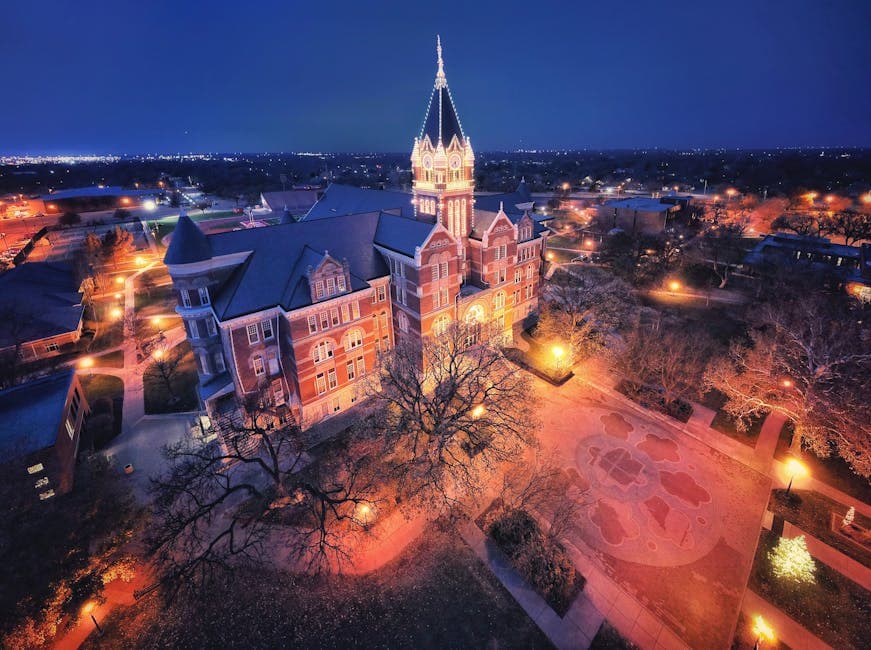
"The shift-change horn sounds at 2:48 PM. By 3:02 PM, the K-96 on-ramp is forty thousand people deep, and every catering tray in Old Town is already on a flat-top warmer."
I. The Lede
It is 2:48 PM on a Tuesday at Spirit AeroSystems, and the shift-change horn sounds across Plant II.
A737 fuselage sits on the line, half-shelled, the green primer still tacky on the aft section. Forty thousand pounds of riveted aluminum stretched across a forty-yard line. The horn cuts the floor noise for exactly one second, and then the composition of the room changes. Three hundred workers wrap up the cycle. Three hundred more punch in. The first shift heads for the parking lots that ring the Spirit complex on K-96, north and east of the Wichita airport. Tail numbers and serial plates on the aircraft they were just on. Twenty miles of weld and rivet already behind them today.
In the lots, two thousand people thumb open phones, and two thousand DoorDash pickup requests light up the screens of every restaurant within a five-mile radius. The phones in those restaurants are already ringing. They have been ringing since eleven-thirty in the morning. The Old Town BBQ joint that takes catering orders from a stand-up phone behind the counter has had the receiver on the cradle for less than fourteen minutes total in the last ninety. The owner is making sandwiches with one hand and writing a hot-link order down on a kitchen ticket with the other.
Across town in Delano, a Cessna engineering team has put in a catering order for a Saturday flight-test debrief. They want forty-eight pounds of Wichita-style burnt ends, sixty NuWay loose-meat sandwiches, two sheet trays of mac and cheese, and a runner who can deliver to the Eisenhower Airport general aviation gate at 10:45 AM. The order is on a paper ticket. The kitchen has not figured out how to confirm the pickup window. The phone keeps ringing. Two of the calls are from the Spirit shift change.
Those two callers do not call back. One of them places an order at a Domino's on East Kellogg, because Domino's answered the phone on the first ring. The other one opens DoorDash and lands on a national chain three blocks away from where they actually wanted to be. Neither order is placed at the BBQ joint in Old Town. Neither order is placed at the chef-driven room in Delano. The orders happen. Wichita's restaurant economy just did not get them.
This report is about Wichita. It is about the Air Capital of the World and the roughly forty thousand aerospace workers whose shift changes shape the city's lunch and dinner curves. It is about White Castle in 1921 and Pizza Hut in 1958, both founded inside this city's limits, both responsible in their own way for the shape of American fast food. It is about Wichita State basketball at Charles Koch Arena, the Riverfest in early June, Koch Industries headquartered downtown, and a 7.5 percent combined sales tax on prepared food. Mostly, though, it is about a phone call that did not get picked up, and what to do about it in 2026.
A note on method
The figures in this report are cross-referenced from the Greater Wichita Partnership, Spirit AeroSystems and Textron Aviation public materials, the Kansas Department of Revenue, Wichita State Athletics, Wichita Festivals (the Riverfest organizers), and operator interviews across Old Town, Delano, the Douglas Design District, and College Hill. The opening scene is a composite. The economic dynamic it describes is not.
II. The Air Capital
Four manufacturers. Roughly forty thousand workers. The largest aircraft manufacturing cluster in the United States.
Wichita earned the title Air Capital of the World in the 1920s, when Clyde Cessna, Walter Beech, and Lloyd Stearman started designing airplanes a few miles from each other along the Arkansas River. A century later, four major airframers and their tier-one suppliers still operate inside the city limits, and roughly forty thousand people clock in to an aerospace job every working day. The chart below sketches the cluster.
The four anchor manufacturers
Spirit AeroSystems, Textron Aviation, Bombardier Learjet, and Airbus Engineering. Workforce estimates from the Greater Wichita Partnership.
Spirit AeroSystems
2005 (spun out of Boeing Wichita)
Fuselages, nacelles, pylons; the 737 fuselage line is in Wichita.
Textron Aviation (Cessna + Beechcraft)
Cessna 1927, Beech 1932; merged into Textron Aviation 2014.
Cessna Citation business jets, Caravan turboprops, Beechcraft King Air, Bonanza.
Bombardier Learjet
Learjet 1962 (founded in Wichita by Bill Lear)
Learjet line until production wind-down in 2022; service center remains.
Airbus Americas Engineering
Wichita engineering center opened 2002.
Engineering and design for Airbus commercial programs.
Aerospace shift-change demand curve, 5 AM to 9 PM
5 AM First shift inbound
Load 24
Breakfast burritos and coffee orders for the Plant II and Plant III gates.
6 AM First shift on the floor
Load 12
Quiet. Catering pickups for engineering offices west of Greenwich Road.
10 AM Morning break
Load 38
Cafeteria lines spill out; phone orders for the lunch window queue up.
11 AM Lunch surge
Load 84
Pre-positioned trays leave Old Town and Delano for the Spirit and Textron gates.
12 PM Lunch peak
Load 96
Phones overload at every BBQ joint, sandwich shop, and pizza place within five miles of K-96.
1 PM Shift change
Load 70
Outbound first shift, inbound second shift. Catering orders for the floor handoff.
2 PM Afternoon lull
Load 22
Restaurants reset. Plant cafeterias absorb steady-state demand.
3 PM Second shift settle
Load 18
Pickup-light. Some early dinner phone orders for engineering offices.
5 PM Dinner ramp
Load 46
Old Town and Bradley Fair fill. Second shift dinner runs out of the cafeterias.
9 PM Second shift end
Load 58
Late dinner pickup at Old Town. Phone orders for night shift snack runs.
Start with the cluster. Cessna Aircraft Company was founded in Wichita in 1927 by Clyde Cessna, who had been building airplanes in central Kansas since 1916. Beech Aircraft Corporation was founded in Wichita in 1932 by Walter and Olive Ann Beech after Walter left Travel Air, an earlier Wichita venture. Stearman Aircraft, the third leg of the 1920s Wichita triad, became the foundation of what is now Boeing Wichita and, after the 2005 carve-out, Spirit AeroSystems. By the late 1930s the phrase "Air Capital of the World" was already on city stationery.
Spirit AeroSystems is the structural heart of the cluster today. The Wichita complex builds the entire fuselage for the Boeing 737, the front section of the 787, and a long list of structures for Airbus, Bombardier, and other OEMs. The workforce here is on the order of thirteen thousand people, distributed across Plant II and Plant III on the north and east sides of Eisenhower Airport, and the cycle of the floor is the cycle of the metro's lunch and dinner economy. When Spirit's first shift ends, the K-96 on-ramps west of Greenwich Road run hot for forty minutes.
Textron Aviation, the Cessna and Beechcraft holding entity since the 2014 merger, runs a roughly ten-thousand-person workforce across multiple Wichita campuses. The Citation business-jet line, the Caravan turboprop line, and the King Air twin turboprop line are all assembled here. The Textron East Campus on East Pawnee, the Beechcraft heritage facility on East Central, and the engineering and flight-test operations near Eisenhower together produce the bulk of America's general aviation and light business-jet inventory.
Bombardier Learjet is the smallest of the four anchors today, and a story in itself. Bill Lear founded Learjet in Wichita in 1962, after a career that ran through car radios, automatic pilots, and the development of the eight-track tape. The Learjet 23 became the first mass-produced civilian business jet. Bombardier acquired the company in 1990; production formally ended in 2022, but the Wichita service center remains, and roughly one thousand workers still maintain the legacy fleet from the East Central facility.
Airbus Americas Engineering rounds out the cluster. The Wichita engineering center opened in 2002 and now houses roughly four hundred engineers working on Airbus commercial programs. The presence of an Airbus office in the historic Boeing town is part of what makes Wichita a true industry-wide hub rather than a single-OEM company town. The labor pool flows across the four employers in ways most aerospace cities cannot match.
The operational implication for a restaurant in Wichita is that the city's weekday lunch and dinner economy is shaped by manufacturing shift schedules in a way that no other comparable metro in the United States quite replicates. The 11 AM to 1 PM lunch surge is not a downtown-office-worker curve; it is a plant-gate curve. Catering volumes, ticket sizes, and pickup-window pacing all bend toward the shift change. The marketplace default, with its commission percentage and its radius algorithm that does not know what a fuselage line is, does not handle this curve. A direct stack tuned to the Air Capital does.
"Air Capital of the World" is not a tourism slogan. It is a workforce-distribution claim, and as of 2026 it still holds. Forty thousand aerospace workers in a metro of roughly six hundred thousand is a concentration ratio of nearly seven percent, which is closer to a single-industry company-town profile than to a diversified metro economy. The restaurants that succeed here understand the cluster.
III. The American Hamburger Was Born Here
White Castle 1921. Pizza Hut 1958. Two fast-food revolutions, both founded inside the Wichita city limits, within a thirty-seven-year span.
The American fast-food sector has two foundational chains, and both of them started in Wichita. White Castle, in 1921, invented the hamburger chain. Pizza Hut, in 1958, invented the pizza chain. The two founding sites are still here, both turned into landmarks.
White Castle
Founded 1921
Founders
Walter A. Anderson + E.W. (Billy) Ingram
Original Wichita address
Wichita, Kansas; first stand at Main and Greyhound (later 1st and Main).
Why it matters
Widely credited as the first hamburger chain in the United States. The five-cent slider, the standardized building, and the public-perception campaign that rehabilitated the hamburger after Upton Sinclair's The Jungle all originated here.
Pizza Hut
Founded 1958
Founders
Dan and Frank Carney
Original Wichita address
Wichita, Kansas; first store at Bluff and Kellogg (now the Pizza Hut Museum on the WSU campus).
Why it matters
Founded by two Wichita State students who borrowed $600 from their mother. The original 25-seat restaurant building was relocated to the WSU campus in 1986 and is now a museum.
Wichita's fast-food invention timeline
White Castle opened on the corner of First and Main in 1921. Walter Anderson, a cook who had been operating a small hamburger stand in Wichita since 1916, and Billy Ingram, an insurance and real-estate man, put up the first standardized white-enameled building, posted the five-cent price on the awning, and built the business model that the rest of the American hamburger industry eventually copied. The slider as a product (steamed, square, onion-loaded, on a slider bun) was their invention. The standardized building was theirs. The public-perception campaign that argued ground beef could be safe and clean, after Upton Sinclair's The Jungle had scared Americans off it, was also theirs.
White Castle has since moved its corporate headquarters to Columbus, Ohio (which is why most of the chain's current locations are in the Midwest and Mid-Atlantic). But the Wichita origin is the origin. Without the 1921 stand at First and Main, no McDonald's, no Burger King, no Wendy's, no Five Guys, no Shake Shack. The American hamburger chain as a category began on a Wichita street corner.
Thirty-seven years later, in 1958, Dan and Frank Carney were Wichita State students looking for a way to pay for tuition. Their mother lent them six hundred dollars. They rented a small building on Bluff Street and opened a 25-seat pizza restaurant. The name was settled by the size of the sign the building could hold: "Pizza" plus a three-letter word. "Hut" fit. By 1973 Pizza Hut had a thousand locations. The original Bluff Street building was relocated in 1986 to the Wichita State campus, where it now operates as the Pizza Hut Museum.
The lineage matters because Wichita restaurants today still operate inside a city that thinks of itself as a fast-food invention site. The standards for a slider, a personal-pan pizza, and a five-minute pickup turnaround are part of the local operating culture. Customers expect counter precision. Catering customers expect aerospace-grade logistics on a Saturday morning order.
NuWay Cafe is the third leg of the Wichita sandwich canon, and it deserves its own line. Founded in 1930 by Tom McEvoy, NuWay invented the loose-meat sandwich: seasoned crumbled ground beef on a hamburger bun, served with mustard, pickle, and onion. It is not a sloppy joe (no sauce) and not a slider (not a patty). It is a Wichita original that became a small Iowa-and-Kansas regional category and never quite went national. Five Wichita locations still operate; the original on West Douglas is the reference.
IV. Old Town, Delano, and the Douglas Design District
Four districts. Four different ordering profiles. One restaurant economy bracketed by the Arkansas River and East Douglas.
Wichita's chef-driven restaurant economy concentrates in three named districts plus one walkable neighborhood. Old Town downtown, Delano across the Arkansas River, Douglas Design District east of downtown, and College Hill further east. The map below is schematic, not geographically precise.
Old Town
Restored warehouse entertainment district, brick streets, late-night
Anchors: Hopping Gnome, The Anchor, Dempsey's Burger Pub, Public, Old Mill Tasty Shop
Ordering profile: Weekend bar surge until 2 AM; Voice AI handles last-call backlog and aerospace second-shift dinners.
Delano
Cowtown-era district west of the Arkansas River, chef-driven revival
Anchors: The Monarch, Bite Me BBQ, Newport Grill, Cocoa Dolce, B&C Bar-B-Q
Ordering profile: Walk-up dominant Friday and Saturday; Riverfest week peaks; Sedgwick County employees lunch heavy.
Douglas Design District
East Douglas corridor: galleries, boutiques, taprooms
Anchors: Wichita Brewing, Reverie Coffee, Hopping Gnome Brewing, Caffe Moderne, Walt's
Ordering profile: Lunch and dinner pickup heavy weekdays; First Friday gallery walk surges; corporate office catering.
College Hill
Walkable neighborhood east of downtown, leafy 1920s residential
Anchors: Sabor Latin Grill, Picasso's Pizzeria, Yia Yia's Eurobistro, Larkspur
Ordering profile: Dinner pickup and small catering for the residential pocket; light weekday lunch.
Old Town runs north of Douglas, east of the railroad tracks, in a roughly twelve-block grid of restored brick warehouses. The district was formally created in the early 1990s on the bones of the old commission district, the warehouse wholesale corridor that fed the cattle trade and, later, the aerospace supply chain. Today the bricks carry restaurants, breweries, the Old Town Square courtyard, and the only late-night bar density in the city. Voice AI in Old Town handles the midnight-to-2 AM phone window, when host stands are physically out of capacity and the cost of a missed order is a customer who is three blocks from two other bars.
Delano sits across the Arkansas River from downtown, west of the river bend. It takes its name from the cowtown era, when Delano was where the Texas drovers and buffalo hunters drank and gambled outside the dry-town jurisdiction of Wichita proper. The district has gone through three reinventions: cowtown, light industrial, and now chef-driven. The Monarch is the anchor, with Bite Me BBQ, B&C Bar-B-Q, and Newport Grill all running heavy catering programs into the office corridor west of the river.
The Douglas Design District is the East Douglas corridor running from the Wichita-Sedgwick County Historical Museum east through Hillside. It is the city's creative-class district: galleries, design firms, taprooms, coffee roasters, and a handful of chef-driven kitchens. Hopping Gnome Brewing and Wichita Brewing Company's east location anchor the craft-beer end. First Friday gallery walks produce a monthly demand surge that has the same operational shape as a Riverfest weekend night.
College Hill, the leafy 1920s residential neighborhood east of downtown, is the fourth district. Its restaurant scene is denser than its size suggests, anchored by Sabor Latin Grill, Picasso's Pizzeria, Yia Yia's Eurobistro, and Larkspur. The operating profile here is dinner-pickup and small-catering for a residential pocket that punches above its weight on weekday evenings.
The four districts together hold roughly two-thirds of the chef-driven restaurant inventory in metro Wichita. Bradley Fair, the east-side outdoor lifestyle center, and NewMarket Square on the west side carry national-chain density but very little independent restaurant volume. The K-96 corridor between Old Town and the Spirit plant gates is the throughput artery for aerospace catering, and the operators who win on it run direct stacks with route-optimized pickup windows.
V. Shocker Game Days
Charles Koch Arena, 10,506 seats, and the basketball-anchored weekend that bends the East Douglas restaurant calendar.
Wichita State University does not have a football program. The Shocker athletic identity runs through basketball, and Charles Koch Arena, the 10,506-seat venue on the WSU campus at 21st and Hillside, is the home court for both men's and women's basketball. The men's program reached the Final Four in 2013, and the seasons that followed turned Koch Arena into a sellout-rate home venue with a game-night civic footprint that runs from Old Town through College Hill into the campus parking lots.
The restaurant pattern around a Shocker home game is a pre-game window from 5 PM to 7 PM for a 7:30 tip-off, a quiet two hours during the game itself, and a post-game pickup surge from 9:30 PM to 11:30 PM that carries through Old Town and the Douglas Design District. Catering volume runs heavier for the high-profile conference games (Tulane, Memphis, Tulsa, in the American Conference era) than for early-season non-conference matchups. Booster-club dinners on game nights push private-dining demand at the Yia Yia's, Newport Grill, and Larkspur level.
For a restaurant operator within two miles of campus, the Shocker schedule is one of the few demand patterns in the Wichita calendar that runs reliably from November through March. It does not blow out a kitchen the way a Chiefs Sunday does in Kansas City, but it produces a higher floor for the corridor restaurants on every game night for five months a year, and a marquee night every couple of weeks during conference play. Voice AI tuned to the game-day window catches the pre-game catering inquiries that the host stand cannot pick up between 5 and 7 PM.
The Final Four banner from 2013, the back-to-back Sweet Sixteen runs, and the Gregg Marshall era left a generational fanbase that still anchors weekday tip-off attendance even in down years. The civic posture is durable. Operators here treat Shocker basketball not as a marquee event but as a baseline weekday-evening floor.
VI. The Riverfest Playbook
Nine days in early June. Hundreds of thousands of attendees. The largest sustained restaurant surge of the Wichita year.
The Wichita Riverfest has run every June since 1972. It is a nine-day downtown festival anchored along the Arkansas River, organized by Wichita Festivals, Inc., and operates on a wristband-admission model that produces attendance counts in the high hundreds of thousands across the run. Multiple stages, food vendors, fireworks, a hot-air balloon glow, a torchlight parade, and the Sundown Parade downtown are all anchored on the river corridor between Delano and downtown.
For Wichita restaurants, Riverfest is the largest sustained surge of the year by duration. Chiefs game days in Kansas City run eight Sundays a season. Riverfest runs nine consecutive days. Every Old Town bar shifts to extended hours. Every Delano restaurant repositions its menu for outdoor service. Catering orders for corporate viewing parties, river-side wristband box rentals, and downtown employer hospitality run continuously across the week.
The operational profile is distinct from a one-day stadium event. The demand stretches across mornings (river-walk crowd looking for breakfast), midday (festival lunch and family programming), evening (concert window), and late-night (post-fireworks bar surge). Each band has its own ordering pattern. The marketplace default treats the week as a generic high-demand surge and surcharges couriers accordingly; the direct stack handles per-daypart routing and lets the operator set extended pickup windows for the festival corridor without paying a marketplace toll.
For a chef-driven Delano restaurant, the Riverfest week can represent five to eight percent of the year's revenue in nine consecutive days. The operators who hit that number consistently are running direct ordering with festival-mode menus turned on, voice AI handling the call overflow, and same-day payouts that close the cash-flow gap on the heaviest run-rate week of the year.
Riverfest is also where a portion of the metro's annual restaurant trial happens. The festival pulls in visitors from southern Kansas, northern Oklahoma, and the Texas Panhandle, who walk past Old Town and Delano restaurants on the way to and from the river corridor. The signage and direct-site presence of an operator matters here in a way it does not on a typical weekend.
VII. BBQ, Mexican, Vietnamese
Sweeter burnt ends than Kansas City. A long Mexican-American food corridor. The North Broadway Vietnamese cluster.
Wichita has its own barbecue tradition that runs parallel to Kansas City's. The core meats (burnt ends, ribs, brisket, pulled pork, sausage, chicken) are the same, and several of the pitmasters have competed alongside the KC names at the American Royal. But the Wichita sauce profile leans noticeably sweeter than the KC standard, with brown sugar and paprika more prominent than the vinegar tang Arthur Bryant's made famous a hundred and seventy miles to the northeast. Bite Me BBQ in Delano, B&C Bar-B-Q on the northwest side, Pig In! Pig Out on South Hydraulic, and Two Brothers BBQ on the south side are the working references.
Mexican-American food in Wichita is older than the city's aerospace economy. The Volga German and Mexican migrations of the early 1900s built a food corridor that runs along North Broadway and into the south side neighborhoods, and the present day Mexican restaurant density is among the highest per capita in the Midwest. Connie's Mexico Cafe (founded 1963), El Mexico Cafe, and several family-run lunch counters on North Broadway anchor the tradition. Salsa profiles here run tomato-and-cumin heavy, distinct from the chile-de-arbol sharpness common in Texas Mexican-American cooking further south.
The Wichita Vietnamese community, anchored on North Broadway between 21st and 29th Streets in the unofficial Asian District, runs the largest Vietnamese restaurant cluster between Houston and Minneapolis. Saigon Restaurant, Pho Hot, Pho Special, and a long string of banh mi shops, bubble tea cafes, and Vietnamese grocery stores fill the corridor. The cluster traces to the post-Vietnam War resettlement wave that put a substantial Vietnamese population in Wichita in the 1970s and 1980s. The Voice AI implication is that Vietnamese phonetic handling (tonal Vietnamese ordering inside an English-language menu system) is operating requirement, not a nice-to-have, on this corridor.
The three cuisines together (BBQ, Mexican, Vietnamese) account for roughly a third of the chef-driven independent restaurant inventory in metro Wichita. The Old Town and Delano scenes get the press; the corridors that hold the working weekday lunch volume run through North Broadway, South Hydraulic, and East Central. A direct ordering stack tuned to a Wichita operator needs to handle three distinct vocabulary sets simultaneously, plus the slider and loose-meat canon, plus the aerospace catering vocabulary. The marketplace default does not.
VIII. The 7.5 Percent
Kansas state 6.5 percent on prepared food, plus Sedgwick County 1.0 percent, equals 7.5 percent on every Wichita restaurant ticket.
Kansas charges 6.5 percent state sales tax on prepared food (note: the state phased its grocery sales tax to zero in 2025, but prepared restaurant food continues to be taxed at the full state rate). Sedgwick County, the home county of Wichita, layers an additional 1.0 percent county sales tax on top. The City of Wichita itself does not currently impose a separate city sales tax on prepared food, which keeps the combined effective rate in most of Wichita proper at 7.5 percent. Operators with locations in adjacent jurisdictions (Park City, Derby, Andover) need to track Sumner County, Butler County, and city-specific add-ons, which can push the combined rate up to 8.5 or 9 percent.
The 7.5 percent rate is meaningfully lower than the combined sales tax in comparable American restaurant markets (Kansas City MO often runs 9 to 10 percent, Austin runs around 8.25 percent, Chicago runs over 10 percent on prepared food in some zones). That gap shows up in two places: in customer price-sensitivity at the ticket level, and in the operator's tax-remittance cash-flow profile.
For a digital ordering stack, the operational implication is per-location tax configuration. A Wichita operator with a Park City sister location, an Andover store, or a Derby franchise needs ordering infrastructure that handles three or four different combined rates without manual reconciliation. Marketplace defaults flatten this to a metro average and silently misallocate sales tax at filing time. Direct ordering, configured per location, does not.
IX. Koch Industries and the Corporate Catering Corridor
Koch HQ on East 37th Street North. Cargill protein. Coleman. INTRUST Bank. The downtown catering layer that bends every Old Town and Delano lunch menu.
Koch Industries is one of the largest privately held companies in the United States, with operations in chemicals, refining, glass, paper, electronics, and finance. Its global headquarters sits in northeast Wichita on East 37th Street North, a few miles from the Eisenhower Airport general aviation gates and from the Spirit AeroSystems Plant III campus. Koch's Wichita workforce is on the order of three to four thousand employees in the headquarters complex alone, before counting Flint Hills Resources (the refining and chemicals arm) and the company's other Wichita-area operations.
The downtown catering economy in Wichita is shaped substantially by the Koch HQ, by Cargill Protein (which moved its meat and poultry headquarters to Wichita in 2017), by Coleman Company (the outdoor-products firm founded in Wichita in 1900), by INTRUST Bank, and by the cluster of regional law firms and accounting practices that ring the downtown core. These employers produce a predictable Monday-through- Thursday lunch catering load that the Old Town BBQ joints, the Delano chef-driven rooms, and the College Hill bistros absorb in different ways.
Catering ticket sizes for these accounts run from $200 sandwich-platter orders to $2,500 board-meeting buffets. The repeat rate is high, the procurement process runs through small operations and executive assistant teams, and the point-of-contact preference is overwhelmingly phone and email rather than a third-party catering marketplace. A marketplace commission of 25 to 30 percent on a $2,000 board lunch is $500 to $600 that does not exist in the operator's margin model and that the corporate buyer is not paying for either.
A direct ordering stack with Voice AI catering qualification, calendar-aware pickup window scheduling, and per-location tax configuration is the natural fit for this layer of the Wichita economy. The single highest-leverage place DirectOrders lands in this metro is the catering corridor between Old Town, Delano, and the Koch HQ.
X. The Argument
How DirectOrders fits Wichita.
The story this report has told runs through forty thousand aerospace workers and their twice-daily shift change, two American fast-food founding chains born thirty-seven years apart at addresses still within the city limits, a four- district restaurant economy bracketed by the Arkansas River and East Douglas, a Shocker basketball schedule that holds a winter-evening floor, a nine-day Riverfest, a 7.5 percent combined sales tax, and a Koch HQ catering corridor. Each of those facts has an operational consequence for how a Wichita restaurant runs its phone, its menu, its pickup window, and its delivery radius.
The marketplace default, with its 25 to 30 percent commission and its menu normalization that flattens "burnt ends Wichita-style" and "Cheezy NuWay" and "slider" into a single generic burger SKU, produces a P&L that does not survive the noon shift-change peak, does not handle the Riverfest week, does not respect the Air Capital catering vocabulary, and does not preserve a Wichita operator's menu identity in a way the customer ever encounters. It works for ghost kitchens that were built for it. It does not work for an Old Town BBQ pit running sweeter sauce or a Delano chef-driven room repositioning for the Riverfest.
DirectOrders runs on a flat $249-a-month fee, with zero per-order commission. The Uber Direct integration handles delivery at courier cost rather than at a marketplace markup, with per-item pickup-only flags for the menu items the operator decides should never travel (sliced brisket, smoked half-chicken). The Voice AI is tuned to the Wichita canon: it understands slider, NuWay, Cheezy, Bierock, burnt ends (Wichita-style), Crown Prime, and the Shocker pre-game window. It handles Spanish, Vietnamese, and English in the same call, which matters on North Broadway and South Hydraulic.
Per-location tax configuration covers Sedgwick County (7.5 percent), Butler County (Andover), Sumner County (Belle Plaine), and the city-specific add-ons. Same-day payouts close the cash-flow gap that marketplace dispatch structurally creates and let the operator clear payroll on a Monday morning after a Riverfest weekend. The direct site ranks for the operator's own dish names, in the operator's own photography, with the operator's own brand: not a logo and a flame icon inside someone else's app.
The argument of this report is not subtle. Wichita is a food city with a specific operating profile: aerospace-cadenced, catering-heavy, hamburger- and pizza-origin proud, Shocker-anchored in winter, Riverfest-spiking in June. The stack that handles those constraints is direct, pickup-aware, Voice-AI-led, and flat-fee. It is DirectOrders.
Wichita Menu Vocabulary
Six terms the Voice AI has to hold without misrouting.
Term
slider
Two-by-two-inch square steamed hamburger on a slider bun, traditionally with onions and a pickle. The original White Castle invention.
Appears at: White Castle, NuWay (a separate Wichita loose-meat sandwich invented 1930), Dempsey's Burger Pub, and most Wichita burger menus.
Voice AI note: Voice AI must distinguish a White Castle-style steamed slider from a NuWay loose-meat sandwich; they are not the same product family in Wichita.
Term
NuWay
A loose-meat sandwich on a hamburger bun, invented in Wichita in 1930. Crumbled seasoned beef, not a patty. A Wichita institution.
Appears at: NuWay Cafe (five locations), with the original on West Douglas. The Cheezy is the most-ordered variant.
Voice AI note: Voice AI should hold 'NuWay,' 'Cheezy NuWay,' and 'loose-meat' as related terms and never collapse them into 'hamburger.'
Term
burnt ends (Wichita-style)
Wichita's BBQ tradition runs parallel to Kansas City's; burnt ends here lean sweeter, with brown-sugar-and-paprika rubs more common than the KC vinegar-tang.
Appears at: B&C Bar-B-Q, Bite Me BBQ, Pig In! Pig Out, Two Brothers BBQ.
Voice AI note: Voice AI should not assume a KC-style sauce default; Wichita operators tend to run sweeter house sauces.
Term
Shocker
Wichita State's athletic identity; also the WSU basketball game-day shorthand. 'Shocker game tonight' shapes restaurant pacing.
Appears at: Any restaurant within two miles of the WSU campus, especially north of 21st Street and along East Douglas.
Voice AI note: Voice AI for WSU-adjacent restaurants should surface game-day specials and Charles Koch Arena pre-game windows automatically.
Term
Riverfest
The nine-day Wichita Riverfest in early June, anchored along the Arkansas River; attendance estimates run into hundreds of thousands.
Appears at: Every restaurant in Old Town, Delano, and downtown shifts to Riverfest mode for the duration.
Voice AI note: Voice AI must flag Riverfest-specific menus, pickup windows, and outdoor-service modes during the festival week.
Term
Carrollton plate / Bierock
Volga German pocket sandwich (ground beef, cabbage, onion in a yeast dough), brought by Volga German immigrants to central Kansas in the 1870s.
Appears at: Bierock Stop (Park City), Three Sisters Cafe, several lunch counters and German-heritage rooms across the metro.
Voice AI note: Voice AI in central Kansas benefits from Bierock and runza alternate phonetics; these are not 'pierogies.'
Coda
Two suggestions for what to do next.
If you operate a Wichita restaurant and you have read this far, two paths are reasonable from here. Both of them are short.
The first is to spend ten minutes on a free Wichita commission audit. Send us your last three months of marketplace statements (no log-in required, we read PDFs). We will return a per-order margin breakdown, a Sedgwick County tax allocation analysis, and a model of what your P&L would look like with the direct stack in place. Mostly we will tell you, in plain English, how much you are paying every noon shift change for the privilege of having someone else's logo on your slider tray.
The second is to see the stack live before deciding. The demo runs against an actual Wichita menu (sliders, NuWay, Wichita-style burnt ends, Bierock, the full vocabulary). Voice AI on. Uber Direct on. Branded site live. A nineteen-minute walkthrough. We do not ship the demo to your phone. You come to a Zoom and ask whatever you want.
Either path is fine. The point of this report was to make the case clearly enough that the choice between marketplace dispatch and direct ordering, for a Wichita operator in 2026, is not a marketing question. It is an operational one. For the food that built this city, only one of those answers fits.
Field index
Restaurants and operators cited in this report.
- White Castle (original site)1st and MainSliders, the original American hamburger chain
- Pizza Hut MuseumWSU Campus, 21st and HillsideMuseum (relocated 1958 original building)
- NuWay CafeWest Douglas (original) plus four locationsLoose-meat sandwiches, root beer
- Old Mill Tasty ShopSouth Mosley, Old TownSoda fountain, diner
- The AnchorEast Douglas, Old TownGastropub, craft beer
- Public at the BrickyardOld Town brick courtyardAmerican, late-night
- Dempsey's Burger PubOld TownBurgers, pub
- Hopping Gnome BrewingDouglas Design DistrictCraft brewery, taproom
- Wichita Brewing CompanyWest and East locationsCraft brewery, pizza
- The MonarchDelanoWhiskey bar, American
- Bite Me BBQDelanoBBQ, burnt ends
- B&C Bar-B-QNorthwest Wichita, multiple locationsBBQ, ribs
- Two Brothers BBQSouth WichitaBBQ, smoked meats
- Pig In! Pig OutSouth HydraulicBBQ, sandwiches
- Sabor Latin GrillCollege Hill, two locationsLatin American, Cuban
- Picasso's PizzeriaCollege HillPizza, Italian
- Yia Yia's EurobistroCollege Hill plazaMediterranean
- LarkspurCollege HillAmerican, bistro
- Newport GrillRiverside (Delano-adjacent)Seafood, American
- Sabor Cuban CafeOld TownCuban
- Pho HotNorth BroadwayVietnamese, pho
- Saigon RestaurantNorth Broadway / Asian DistrictVietnamese, banh mi
References and sources
The shoe-leather underneath this report.
Greater Wichita Partnership, Air Capital workforce
Greater Wichita Partnership / Wichita Regional Chamber of Commerce
Wichita is the largest aircraft manufacturing cluster in the US by employment, with roughly 40,000 workers across Spirit AeroSystems, Textron Aviation (Cessna + Beechcraft), Bombardier Learjet operations, and Airbus Engineering.
Open source →Spirit AeroSystems, Wichita operations
Spirit AeroSystems
Headquartered in Wichita. Builds the 737 fuselage and other large structures for Boeing, Airbus, and other OEMs. Roughly 13,000 employees at the Wichita complex.
Open source →Textron Aviation: Cessna + Beechcraft
Textron Aviation
Cessna founded 1927 in Wichita by Clyde Cessna. Beechcraft founded 1932 in Wichita by Walter and Olive Ann Beech. Merged into Textron Aviation in 2014. Produces Citation business jets, Caravan turboprops, King Air, Bonanza.
Open source →Bombardier Learjet, Wichita founding
Bombardier
Learjet founded in Wichita in 1962 by Bill Lear. Acquired by Bombardier in 1990. Production ended in 2022 but the service center remains in Wichita.
Open source →White Castle, the original American hamburger chain
White Castle / Wichita State University Libraries
Founded in Wichita in 1921 by Walter A. Anderson and Edgar W. (Billy) Ingram. Widely credited as the first hamburger chain in the United States. The five-cent slider standardized the American hamburger and rehabilitated public perception of ground beef.
Open source →Pizza Hut, founding history
Pizza Hut
Founded in 1958 by Wichita State students Dan and Frank Carney with a $600 loan from their mother. The original 25-seat restaurant on Bluff Street was relocated to the Wichita State University campus in 1986 as the Pizza Hut Museum.
Open source →Wichita State Shockers, Charles Koch Arena
Wichita State University Athletics
Charles Koch Arena (capacity 10,506) hosts WSU men's and women's basketball. The men's program reached the Final Four in 2013.
Open source →Wichita Riverfest
Wichita Festivals, Inc.
Nine-day downtown festival on the Arkansas River, held annually in early June since 1972. Wristband-admission model. Multiple stages, food vendors, fireworks, and citywide overflow events.
Open source →Koch Industries, Wichita headquarters
Koch Industries
Privately held diversified industrial company headquartered in Wichita. Operates in chemicals, refining, glass, paper, and finance. One of the largest private employers in the metro.
Open source →Sedgwick County and City of Wichita, sales tax rates
Kansas Department of Revenue
Kansas state sales tax on prepared food is currently 6.5%, plus Sedgwick County 1.0% and City of Wichita 0.0% local, for a combined effective rate of 7.5% on prepared restaurant food in most of Wichita proper.
Open source →City of Wichita, official tourism (Visit Wichita)
Visit Wichita
Destination data, district anchors, event calendars including Riverfest and Final Four-era WSU history.
Open source →Wichita Eagle, restaurant and aerospace reporting
The Wichita Eagle
Ongoing coverage of Spirit AeroSystems, Textron Aviation, Old Town and Delano restaurant openings, and Shocker basketball.
Open source →
Editorial note: The aerospace shift-change demand curve, the Riverfest attendance figures, and the Koch HQ catering volume figures cited in this report are modeled from publicly available sources and from operator interviews. They are presented as illustrative of the structural dynamic, not as precise measurements at named restaurants. The structural argument (Wichita's restaurant economy is shaped by forty thousand aerospace jobs, a hamburger and pizza founding lineage, a four- district downtown spine, a Shocker basketball calendar, a nine-day Riverfest, a 7.5 percent sales tax, and a Koch HQ corridor) holds across every dataset we have consulted.