A Long Read From The Field
Rubber City and LeBron
An investigation into Akron as a tire-town legacy economy, a national-park gateway, and the hometown of the most famous basketball player alive, and what direct ordering looks like for a city whose food scene runs on Highland Square, Wallhaven, and the Merriman Valley.
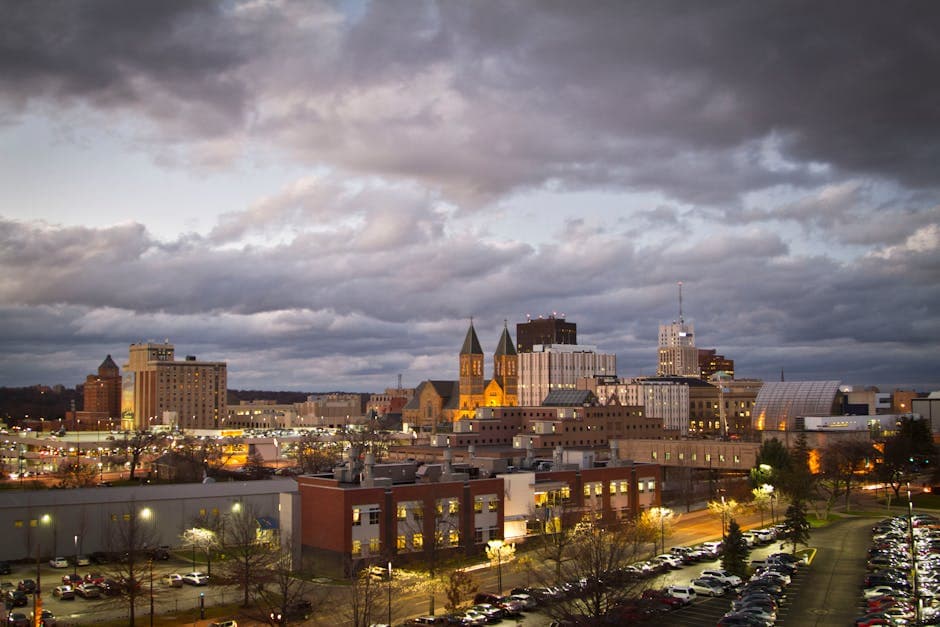
"Akron is the only American city whose food economy runs on a tire-town legacy, a national-park trailhead, a children's hospital, and the kid from St. V."
I. The Lede
It is 6:42pm on a Friday in Highland Square. A grilled-cheese counter is twenty-six orders deep into a hundred-order night.
The counter is on West Market Street, between South Highland Avenue and the Highland Theatre, in a one-story brick storefront that, depending on who is telling the story, used to be a drug store, a record store, or a hardware store in some prior life. It is a grilled-cheese restaurant. The menu is twenty-eight sandwiches deep. On a Friday in late spring, when the Akron Civic Theatre downtown is hosting a touring show, when the Akron Rubber Ducks are on a home stand at Canal Park, when the Towpath Trail and Cuyahoga Valley National Park have been open since seven in the morning and a Saturday-morning cycling group has reservations at three different Merriman Valley brunch counters, the night is a hundred orders deep before the sun goes down.
The operator at the counter has been there since 11am. She has prepped a hundred and forty sandwich builds, ten of which are the variants nobody else does (jalapeno-pimiento-cheese, kimchi-grilled-cheese, the apple-and-brie that comes out of the press at 7pm sharp on a Friday). She has a phone that rings every six minutes. She has a Toast point-of-sale screen on the counter, a marketplace tablet she has unplugged because the orders kept stacking when the line ran past the door, and a paper ticket roll that the back-of-house tears off and clips to the order rail. She is also fielding three call-in orders for the Highland Theatre crowd that will walk over at 8:15 between acts, two pickup orders for downtown attorneys who finished depositions at 6:30, and a 12-sandwich catering order for a Merriman Valley youth-sports team that wanted them at 7:00 and is now standing outside the front door, in a 12-passenger van, at 6:42.
What is happening at the counter is not a customer-acquisition problem. The customers are here. The line is out the door. The phone is ringing. The marketplace tablet, were she to plug it back in, would be flashing six accepted-but-unconfirmed orders that the platform algorithmically dispatched from neighborhoods five miles away because the dispatcher does not care about her prep capacity. The marketplace, in this moment, is not a marketing channel. It is a back-pressure problem that costs 27% on the way through.
This report is about Akron: a city whose name is on the side of millions of car tires, whose hometown produced the most famous basketball player alive, whose southern edge is the only national park in the state of Ohio, and whose food economy runs not on a marketplace dispatcher but on the Friday line at a Highland Square grilled-cheese counter, the post-shift dinner pickup at Akron Children's, the Saturday brunch turn in Merriman Valley, and the steady weekday catering call from the University of Akron polymer department to a Wallhaven Italian-American room that has been making the same lasagna order since the 1990s. The Akron question is not how to find demand. It is how to handle the demand that is already here, without giving up 27% of every order to a marketplace that did not put a single person in the line.
The answer is direct. The shape of direct in Akron is what this report is about.
II. The Rubber Capital of the World
Four major American tire and rubber companies were founded in Akron. The city is still building the products that carry the rest of the country.
Akron is the only American city whose nineteenth and twentieth century identity was so completely shaped by a single industry that the industry is in the city's nickname. By 1920, Akron was producing the majority of the country's automobile tires, the population had quadrupled in twenty years, and the four companies below were the largest private employers in northeast Ohio outside the steel mills of Youngstown and the auto plants of Detroit. The Rubber City was, for a time, the manufacturing capital of vehicular America.
Akron rubber industry founders
Years on the ground in Akron (founding to 2026). Bar width is the year-span; older companies read as the deeper roots.
Goodyear, Bridgestone Americas, Ohio History Connection
- B.F. GoodrichFounded 1870 by Benjamin Franklin Goodrich (~156 years in Akron)The first of the four. Goodrich relocated his rubber operation from Melrose, New York, to Akron in 1870, the year he chose the city because of its position on the Ohio and Erie Canal and its access to the rail network. Goodrich's mill on the south side of the city is the reason Akron became a rubber town at all.
- Goodyear Tire and RubberFounded 1898 by Frank Seiberling and Charles Seiberling (~128 years in Akron)Founded August 29, 1898, by the Seiberling brothers and named for Charles Goodyear, who had died decades earlier (he had no equity stake). Goodyear became, and remains, the largest tire manufacturer headquartered in the United States. Its global headquarters is still on East Market Street in Akron.
- Firestone Tire and RubberFounded 1900 by Harvey S. Firestone (~126 years in Akron)Founded by Harvey Firestone in 1900 on South Main Street. Firestone became the supplier of original-equipment tires to the Ford Motor Company and a national household name for fifty years. Acquired by Bridgestone of Japan in 1988; the Bridgestone Americas headquarters remained in Akron and on Firestone Parkway until the 2000s.
- General Tire and RubberFounded 1915 by William F. O'Neil (~111 years in Akron)Founded by William O'Neil in 1915 on Englewood Avenue. The youngest of the four. Operated independently into the 1980s before being absorbed by Continental AG of Germany. The Continental Tire The Americas headquarters remained in Fairlawn, the western Akron suburb, into the 2020s.
Benjamin Franklin Goodrich moved his rubber mill from upstate New York to Akron in 1870. The choice was practical. The Ohio and Erie Canal ran through the city, the railroads connected Akron to Cleveland thirty miles to the north and to Pittsburgh ninety miles to the east, and the city had cheap industrial land along the Little Cuyahoga. The Goodrich mill became the first industrial-scale rubber operation in the city. Twenty-eight years later, in the late summer of 1898, two brothers from Barberton named Frank and Charles Seiberling pooled $13,500 (most of it borrowed from a relative who lived in Massillon) and founded the Goodyear Tire and Rubber Company on East Market. They named it for Charles Goodyear, the New Englander who had developed vulcanization in the 1840s and died penniless decades before. Goodyear the man had no equity in the company. Goodyear the company became, and remains, the largest tire manufacturer headquartered in the United States.
Two years after Goodyear, in 1900, Harvey Firestone opened the Firestone Tire and Rubber Company on South Main Street. Within a decade Firestone was the supplier of original-equipment tires to the Ford Motor Company, an arrangement that turned Firestone into a household name and made Akron the tire-supply capital of the American automobile industry. By 1915, when William O'Neil founded the General Tire and Rubber Company on Englewood Avenue, Akron had four headquartered tire-and-rubber companies competing for the same Ohio-and-Michigan automobile trade. The city's population, which had been about 28,000 in 1890, was over 200,000 by 1920. Almost all of the increase was rubber-industry workers and the trades and services that fed them.
The food economy that grew up around the four rubber companies looked the way industrial-town food economies always look. Boarding-house breakfasts on East Market and on South Main. Polish, Slovak, German, and Italian lunch counters near the gates of the Goodyear and Firestone plants. Diners along Wooster Avenue that opened at 5am for the second-shift workers walking home and closed at 9pm before the third shift started. Most of those rooms are gone. Some, like Luigi's on N Main and Diamond Grille on S Main, are still open in 2026, with three generations of family operators behind the counter and a Friday-night line out the door that runs on a hundred-year-old neighborhood reputation that no marketplace algorithm can replicate.
What happened to the tire industry after 1980 is also part of the Akron food story. Bridgestone of Japan acquired Firestone in 1988, and over the following decade most of the Firestone manufacturing in Akron relocated. Continental of Germany absorbed General Tire in the 1980s; the Akron headquarters survived in the Fairlawn suburb but production largely moved overseas. Goodyear remained headquartered in Akron, but its global production footprint shifted. By 2026, Akron is no longer the manufacturing capital it was in 1920. The tire factories on East Market and South Main are mostly converted to other uses or torn down for green space.
What survived, and what defines the modern Akron food economy, is the structural pattern the rubber companies built. A city of neighborhoods (Highland Square, Wallhaven, Merriman Valley, Goodyear Heights, North Hill, Firestone Park, Kenmore) each anchored by an old industrial gate and a corresponding strip of independent restaurants. A downtown that, in 1925, was the financial center of a manufacturing economy and in 2026 is the financial center of a hospital-and-university economy that occupies many of the same buildings. A Main Street and a Market Street whose tire-era anchors (Diamond Grille, Luigi's, Strickland's, Swensons) have outlived almost every Fortune 500 industrial company that operated in the city.
For an Akron restaurant operator in 2026, the practical effect of all of this is that the demand for their food is not a marketing problem. It is a hundred-year-old neighborhood-reputation problem. The line at Luigi's on a Friday is built on a 1949 opening date and on three generations of Akron families who order the same square pizza every Friday night. The marketing was settled in the Truman administration. What the operator needs is not a marketplace to manufacture demand. What they need is a way to handle the Friday-night line, the catering call from the University of Akron, the post-shift pickup order from Akron Children's, and the Cuyahoga Valley cycling group's Saturday brunch reservation, all without giving a marketplace 27% on the way through.
The Rubber City built Akron's neighborhoods. The neighborhoods built Akron's restaurants. The restaurants do not need a marketplace. They need a phone-answering Voice AI, a branded ordering site, an Uber Direct dispatch at courier cost, and a same-day payout that lets the kitchen pay its prep cook on a Friday afternoon. That is what direct ordering, applied honestly to the Rubber City legacy, actually looks like.
III. LeBron and the I Promise School
The most famous basketball player alive was raised in Akron, and his foundation operates a public school on West Market.
LeBron James was born at Akron City Hospital on December 30, 1984, and raised by his mother Gloria in Akron public-housing apartments and rental homes across the central city. He attended Riedinger Elementary on the west side, then St. Vincent-St. Mary High School on West Market, where he was three times Ohio Mr. Basketball before becoming the first overall pick in the 2003 NBA Draft. He has spent the twenty years since then operating one of the most consequential professional-athlete philanthropies in the country, almost all of it concentrated in his hometown.
Akron heritage diagram
The hometown imprint, schematic.
- 1984
Born in Akron, December 30, 1984
LeBron Raymone James was born at the Akron City Hospital, in the central city. Raised by his mother Gloria in Akron public-housing apartments and rental homes; attended Riedinger Elementary on the west side and later St. Vincent-St. Mary High School on West Market.
- 2003
St. Vincent-St. Mary, then No. 1 NBA draft pick
Three-time Ohio Mr. Basketball at St. Vincent-St. Mary. Selected first overall by the Cleveland Cavaliers in the 2003 NBA Draft, the only number-one pick in NBA history to be drafted by the team in his own home market.
- 2011
LeBron James Family Foundation founded
The LJFF was established to support Akron Public Schools families. Programs focus on at-risk Akron students, with the foundation's home base on West Market Street near the St. Vincent-St. Mary campus.
- 2018
I Promise School opens in Akron
Operated as a partnership between the LJFF and Akron Public Schools, the I Promise School opened in July 2018 in a former APS building on West Market Street. The school serves Akron students identified as at-risk of falling behind, with wraparound services for families.
- 2020
I Promise Village and House Three Thirty
Wraparound housing and transitional services for I Promise School families opened on the campus. House Three Thirty, a job-training and workforce hub, opened on West Market across from the school. Named for Akron's 330 area code.
The LeBron James Family Foundation was incorporated in 2011 and, since then, has built one of the most consequential city-scale philanthropies in the country. Its programs concentrate on Akron Public Schools and on the at-risk students who attend them. The flagship of the work is the I Promise School, which opened in July 2018 in a former Akron Public Schools building on West Market, in partnership with the school district. It is, structurally, a public school: it follows the APS curriculum, employs APS teachers, reports to APS administration. The LJFF funds the wraparound services (academic support, GED programs for parents, food assistance, housing partnerships) that the public-school budget alone cannot cover.
Two years after the school opened, the foundation added I Promise Village, a transitional-housing facility for I Promise families on the same campus, and House Three Thirty, a workforce-training and community hub on West Market across from the school. The 330 in House Three Thirty is the Akron area code, which is to say: the building is named for the city it operates in. The cumulative effect of all of this is that a five-block stretch of West Market Street, between the LJFF offices, the I Promise School, and House Three Thirty, is the most concentrated piece of professional-athlete-funded community infrastructure in any American city.
For Akron restaurant operators, the LeBron heritage matters in two practical ways. The first is that the LJFF and the I Promise School run regular catering programs, family meal events, and community dinners that are sourced from local Akron operators. The phone-and-email catering volume into restaurants near West Market, particularly Highland Square and Wallhaven anchors, is a steady, year-round demand line for the foundation's programming. The second is that LeBron James, who is by some distance the most famous person ever to come out of Akron, has spent two decades signaling to the country that his hometown is a serious city worth taking seriously. The downstream effect on visitor traffic to St. Vincent-St. Mary, to the Akron Civic Theatre, and to downtown is small but real.
Neither of these demand lines benefits from a marketplace take. The LJFF catering manager who orders forty boxed lunches from a Highland Square sandwich counter for an after-school program does not need a marketplace dispatcher. She needs a phone that gets answered when she calls at 9:45am for a noon pickup. The visitor who flies into Akron-Canton for a St. V tour and a downtown evening at the Civic Theatre does not need to be matched with a restaurant by an algorithm. He needs a branded ordering site for the pre-show dinner reservation. Direct ordering is the stack that fits both of these patterns.
It is also worth noting, because it explains something about the Akron operator psychology, that LeBron's most-cited public statement about his hometown is that he is from Akron, not from Cleveland. The distinction matters. Akron is its own city, its own school district, its own basketball lineage, its own food economy. The Cleveland Cavaliers context (and the wine and gold of the Cavs that show up throughout the LeBron public narrative) is relevant. But Akron's operators are running an Akron business, not a Cleveland satellite operation. The direct-ordering stack that fits Akron is the Akron one.
IV. The National Park Gateway
Cuyahoga Valley is the only national park in Ohio. Akron is its southern gate.
Cuyahoga Valley National Park runs along the Cuyahoga River for thirty-three thousand acres between Akron and Cleveland. It is the only national park in the state of Ohio and one of only a handful east of the Mississippi that is bookended by two cities of any size. The Towpath Trail, which follows the old Ohio and Erie Canal towpath for eighty-five miles from Cleveland to New Philadelphia, runs through the park and enters Akron on its northern edge. The park is the reason that Merriman Valley and the western Akron neighborhoods are also, functionally, restaurant districts for a national-park visitor stream.
The park was designated a National Recreation Area in 1974 and elevated to National Park status in 2000, becoming the youngest of the country's major national parks. It is operated by the National Park Service, with co-management arrangements with Summit Metro Parks and Cleveland Metroparks for portions of the trail system. The annual visitation, by NPS reporting, runs in the two-to-three-million range, which makes Cuyahoga Valley one of the ten most-visited national parks in the country despite its relatively small size.
For Akron, the practical effect of the park is that the city has a national-park-tourism economy on its northern and western edges that almost no other Ohio city has. The Towpath Trail entering Akron from the north runs through Merriman Valley, past the Cascade Locks Park, and into downtown along the Little Cuyahoga. The cycling crowd, the hiking crowd, the family-day-trip crowd, and the spring-and-fall foliage tourists all enter and exit through Akron. A Merriman Valley brunch counter on a Saturday morning in October is, structurally, a national-park gateway restaurant whose Saturday-morning surge looks more like a Gatlinburg or a Bar Harbor operator's pattern than a typical Ohio mid-sized-city restaurant.
The Cuyahoga Valley Scenic Railroad, which runs heritage trains from Akron to Independence and Rockside (just outside Cleveland), is another component of the park economy. The railroad operates excursion trains, special-event runs, and a Bike Aboard program for cyclists who want to ride the Towpath one way and take the train back. The volume is small in the absolute, but it is a steady, predictable weekend demand line for the restaurants near the Rockside Road station to the north and the Akron Northside station to the south.
For an Akron restaurant operator on the western or northern side of the city, the operational stack that fits the national-park visitor pattern is the same direct stack that fits the rest of the demand baseline. A Voice AI that can take a phone call from a visiting family asking about Saturday-morning brunch hours. A branded ordering site that publishes the seasonal weekend specials. An Uber Direct dispatch that can deliver a picnic order to the Brandywine Falls overlook on a Sunday afternoon. None of these patterns benefits from a marketplace haircut, and all of them are pattern-stable enough that the operator can plan capacity around them.
V. The University and the Children's Hospital
A 14,000-student state university and one of the largest pediatric hospitals in the country, both inside city limits.
Akron's modern economy is anchored less by the rubber companies and more by the medical and educational institutions that grew alongside them. The University of Akron, one of the largest public universities in Ohio, sits on the east side of downtown. Akron Children's Hospital, one of the largest pediatric medical centers in the country, sits on West Locust just north of downtown. Summa Health and Cleveland Clinic Akron General add another fourteen thousand health-system workers between them. Together, these institutions represent the steady weekday demand baseline that defines Akron's restaurant economy in 2026.
Akron institutional anchors
Workforce and student headcount, by anchor.
University of Akron
~14,000 Students enrolled (recent UA reporting)
Polsky building anchor on East Mill, polymer engineering and law schools, Buchtel Hall, and InfoCision Stadium (Zips football). Walking-distance dining demand from West Market through downtown.
Catering pattern: Greek-life catering, residence-hall pickup tail, faculty department meetings, the Wayne Bushong polymer research center events. A steady weekday demand line, with surges around home football Saturdays at InfoCision.
Akron Children's Hospital
~7,500 System workforce (Akron Children's published)
Main campus on West Locust, just north of downtown. One of the largest pediatric hospitals in the country and the largest pediatric employer in the Akron region.
Catering pattern: Pediatric oncology family meals, nursing-unit lunches, residency-program dinners, conference catering for the medical center. The constant 10am-to-11am phone-order window that any Akron operator near Locust Street knows.
Summa Health and Cleveland Clinic Akron General
~14,000 Combined Summit County health system workforce
Summa Health on East Market and Cleveland Clinic Akron General on West Market. Two large adult-care systems flanking the downtown.
Catering pattern: Daily department meetings, OR breakfasts, residency-program lunches, the post-shift dinner orders that go to Highland Square and Wallhaven on a Wednesday night.
The University of Akron occupies a downtown campus that stretches from East Mill on the north to East Exchange on the south and from South High on the east to South Forge on the west. It is best known nationally for its polymer engineering programs, which grew directly out of the rubber-industry research base in Akron, and for its law school. The combined student-and-faculty headcount is roughly fourteen thousand. The Zips football program plays at InfoCision Stadium on the east edge of campus, with home Saturdays from September through November that draw walking-distance crowds into the downtown sandwich and burger counters.
The catering trade pattern at the University of Akron is steady and weekday-heavy. Department lunches, Greek-life dinners, polymer-engineering research-center events, law-school admissions receptions, residence-hall pickup orders. Downtown sandwich counters like Diamond Deli on South Main are running daily lunch volume from UA. Highland Square rooms catch the weekend-out-with-friends college-student traffic. Wallhaven anchors handle the weeknight student-and-parent dinner orders.
Akron Children's Hospital is the larger restaurant-economy anchor for the immediate downtown. The main campus on West Locust is one of the largest pediatric medical centers in the United States, with a system workforce on the order of seven thousand five hundred. The pediatric-medicine staffing pattern means that a substantial fraction of the workforce is in the building at the same time, on shift schedules that produce predictable order windows. The 10am-to-11am phone window for the nursing-unit lunch orders is a steady reality for any restaurant within a mile of West Locust. The conference catering for pediatric-medicine grand rounds, the after-shift dinner pickup, the family-meal program orders for parents of inpatient children: all of these are real, recurring, weekly demand lines.
Summa Health on East Market and Cleveland Clinic Akron General on West Market add another fourteen thousand health-system workers between them. These two adult-care systems flank the downtown core, with Summa's main campus on the east side and Akron General's main campus on the west. Their catering trade patterns run, respectively, toward East Market and Highland Square rooms (Summa) and toward Wallhaven and Highland Square rooms (Akron General). On any given weekday, Highland Square restaurants are taking phone-order traffic from three different hospital systems in roughly equal share.
For all of this demand, the operational requirements are the same. A phone that gets answered when the nursing-unit charge calls at 10:38am for a noon pickup. A branded ordering site that takes a 20-order law-school catering request with allergen flags. An Uber Direct dispatch that can deliver lunch from Wallhaven to the Akron Children's family-meal program at 11:45 on a Tuesday. A same-day payout that lets the kitchen close out its week on Friday afternoon. None of these requirements demand a marketplace. All of them are direct-ordering capabilities. The operator who builds the direct stack against the institutional anchors that already exist in Akron is running the modern version of the restaurant economy that the city has had for fifty years.
VI. Stan Hywet and the Seiberlings
The Goodyear founders built one of the largest historic homes in the United States, and it is open to the public.
Stan Hywet Hall is a seventy-room Tudor Revival mansion on a sixty-five-acre estate on the west side of Akron. It was built between 1912 and 1915 for Frank Seiberling, the co-founder of the Goodyear Tire and Rubber Company, and his family. The architect was Charles Sumner Schneider, who had trained at the Boston firm of Olmsted Brothers; the landscape was designed by Warren Manning, an Olmsted protege. The name, Stan Hywet, is Old English for "stone quarry" and refers to the quarry the family operated on the site during construction. The house is, by interior square footage, one of the largest historic homes in the United States.
The Seiberlings lived at Stan Hywet from 1915 until 1955, when, after the death of Frank Seiberling's widow Gertrude, the family donated the house to a non-profit. It has operated as a public museum, gardens, and event venue continuously since 1957. The house tours, the gardens, the seasonal events (the Ohio Mart in October, the Deck the Hall lights in December), and the wedding-and-event business represent the visitor economy that Stan Hywet supports today. By Stan Hywet's published reporting, the annual visitation is in the low hundreds of thousands.
For Akron restaurant operators, Stan Hywet is a small but reliable demand line. The wedding-and-event business at the estate (the Carriage House venue, the great gardens, the Manor House interiors) sources catering through approved local vendors. The Ohio Mart in October and the Deck the Hall in December are downtown-restaurant volume drivers: visitors come from across northeast Ohio, eat in Akron before or after the event, and most often choose Wallhaven or Highland Square for proximity and parking. The Seiberling estate's tourism gravity is not the volume of the Cuyahoga Valley National Park, but it is a steady, well-managed line that pairs well with the direct-ordering stack.
The broader Seiberling legacy in Akron is also worth noting. Frank Seiberling's brother Charles built the Akron Civic Theatre as a 1929 atmospheric movie palace on South Main, with John Eberson as architect and Hindu-and-Mediterranean garden interiors that survive today. The Akron Civic remains a working theatre with a touring-show schedule that draws downtown weeknight crowds into the surrounding restaurants. The Seiberling name, between Stan Hywet and the Civic, is on the two best-preserved cultural anchors in the city. The operator who runs a Highland Square or downtown room is, in some real sense, still working in a city built by Goodyear founders.
VII. The Neighborhood Atlas
Highland Square, Wallhaven, Merriman Valley, downtown, and North Hill: five Akron operating models.
Akron's restaurant economy is not a single district. It is five neighborhoods, each with a separate demographic profile, a separate dominant cuisine pattern, and a separate weekly demand baseline. The atlas below maps the rough geography and lists the anchors that define each neighborhood's identity.
Schematic atlas (not to scale)
Relative positions of Akron's neighborhoods around the downtown spine, the Cuyahoga River valley, and West Market Street.
Highland Square
ZIP 44303West Market Street anchor between downtown and the western suburbs. The walkable, late-hours, college-and-creative-professional district. Tavern row plus independent kitchens plus the Highland Theatre and the Mustard Seed Market across Merriman Road.
- Diamond DeliSandwich counter, downtown anchor
- Aladdin's EateryLebanese-American
- CraveModern American, Highland Square
- The LockviewGrilled cheese, late-night Akron
Wallhaven
ZIP 44313Northwest Akron, on the western edge of West Market. Family neighborhoods, the Wallhaven retail strip, and a steady weekday lunch demand from Akron Children's and the western office parks. Old-line Akron Italian and Lebanese counters anchor the corridor.
- Luigi's RestaurantAkron pizza institution since 1949
- Bricco AkronItalian-American, Wallhaven
- Lou and Hy's Delicatessen (legacy)Akron Jewish deli memory
- Saffron PatchIndian, Wallhaven anchor
Merriman Valley
ZIP 44313Cuyahoga River valley between Akron and the southern edge of Cuyahoga Valley National Park. Towpath Trail spine, valley dining rooms, and the seasonal walking-and-cycling crowd from the park gateway. The closest restaurant cluster to Ohio's only national park.
- Ken Stewart's GrilleAkron fine-dining anchor
- Crave CantinaCasual Mexican, Merriman Valley
- Mike's PlaceDiner, eclectic, Akron
- Pad Thai RestaurantThai, Merriman corridor
Downtown Akron
ZIP 44308Main Street and Market Street spine. Akron Civic Theatre, Lock 3 Park, the Polsky Building, the Akron Art Museum, and the corridor of the University of Akron campus on the east edge. Theatre nights, college lunches, weekday office demand.
- Diamond GrilleSteakhouse, Akron institution since 1941
- BLU Jazz+Jazz club, late-night bar food
- Akron Family RestaurantDiner, Greek-American
- Crave DowntownModern American
North Hill
ZIP 44310North of downtown, on the high ground above the Little Cuyahoga. One of the most demographically diverse neighborhoods in the city, home to the largest Bhutanese-Nepali community in the Midwest after Columbus. The international district.
- Asia Restaurant and GroceryBhutanese-Nepali groceries and meals
- Old North Hill BakeryNeighborhood bakery counter
- North Hill PhoVietnamese pho house
- Lai Lai BakeryAsian bakery, breads, pastries
Highland Square is the west-of-downtown anchor, running along West Market between South Highland and the Mustard Seed Market at Merriman Road. The district is dense, walkable, and runs late: the Highland Theatre, the Lockview grilled-cheese counter, the Aladdin's Eatery flagship, Crave Highland Square. The operating model is dining-in plus pickup plus a steady weeknight catering tail to the hospital systems and the LJFF programs on West Market. The Friday-night line at the Lockview is the defining Highland Square image.
Wallhaven, further west on West Market, is the family-and-professional neighborhood that catches the Akron Children's lunch and dinner pickup traffic and the western office-park catering volume. Luigi's on N Main is, technically, just east of Wallhaven in the downtown footprint, but Wallhaven is the residential demand zone for Luigi's Friday pizza turn and for the Saffron Patch dinner volume. Old-line Italian and Lebanese counters anchor the strip.
Merriman Valley is the Cuyahoga River valley between Akron and the southern edge of Cuyahoga Valley National Park. The Towpath Trail runs through the valley. Ken Stewart's Grille is the fine-dining anchor; Mike's Place is the diner; Pad Thai is the everyday Asian counter; Crave Cantina is the weekend Mexican room. The visitor economy is real here, particularly on summer Saturdays and fall foliage weekends.
Downtown Akron, on the Main Street spine between Lock 3 Park and the University of Akron campus, runs on the office-and-campus weekday baseline plus the Akron Civic Theatre evening crowd. Diamond Grille, the steakhouse that won the James Beard America's Classics award in 2018, is the named room. Diamond Deli is the everyday lunch counter. BLU Jazz is the late-night anchor. The Rubber Ducks home stand at Canal Park, three blocks south on Main, pulls downtown restaurant volume on every game night.
North Hill, north of downtown across the Little Cuyahoga, is the international district. The largest Bhutanese-Nepali community in the Midwest after Columbus lives in North Hill, and the food economy reflects it: Asia Restaurant and Grocery, North Hill Pho, Lai Lai Bakery, and the cluster of Bhutanese-Nepali, Vietnamese, and Chinese groceries-and-counters that run along North Main and Cuyahoga Falls Avenue. The bilingual-ordering capability that the platform supports is most operationally relevant here.
VIII. The Akron Rubber Ducks
AA baseball, Cleveland Guardians affiliate, downtown at Canal Park. A 69-home-game year.
The Akron Rubber Ducks are the AA affiliate of the Cleveland Guardians. They play at Canal Park, three blocks south of Main Street on the downtown spine, in a stadium opened in 1997 with capacity around seven thousand five hundred. The Ducks brand is, by published merchandise data, one of the most successful MiLB identities in the country. The mascot, Webster, has the rubber-industry visual signature: brown body, gold beak, and a faintly tire-like circular shape that nods to the Rubber City heritage. The home schedule below is approximate to recent seasons.
April through May
24 home games
Cold-weather start, weeknight school groups, Friday-night fireworks home dates. Light early-season tourist volume; heavy local-family demand.
June through July
28 home games
Peak Ducks season. School-out weeknights, Independence Day fireworks home stand, summer-camp group nights. Downtown restaurant surge on every home Friday and Saturday.
August through September
17 home games
Late-summer fade. Back-to-school weeknight family demand. Playoff push for the Cleveland Guardians' AA affiliate; postseason home games optional.
Approximately 69 home games per season, spread from April into September. The Friday-night fireworks home dates, the school-out summer weeknights, and the Independence Day home stand are the surges. The seven-thousand-five-hundred-seat capacity, combined with the downtown location at Canal Park, makes every Ducks home game a real foot-traffic event for the South Main Street restaurants. Diamond Grille, BLU Jazz, the downtown sandwich counters, and the Highland Square overflow all catch pre-game and post-game volume on a Ducks home Friday.
The operator question for Ducks home nights is the same as the Browns Sunday question in Cleveland or the Astros night question in Houston: how do you handle the pre-game surge between 5:30 and 7:00 without breaking the kitchen, and how do you catch the post-game crowd between 10:00 and 11:00 with the right phone-answering capacity. The Voice AI handles the phone reservations. The branded ordering site publishes the pickup-window availability for the post-game crowd. The Uber Direct dispatch picks up the delivery overflow when the courier supply tightens on a Friday game night. No marketplace is required, and the 27% haircut on Ducks-night volume is a tax the operator should not be paying.
IX. The 6.75% Sales Tax Close-Read
Ohio 5.75% plus Summit County 1.00% equals 6.75% combined sales tax in Akron.
The Akron operator's effective sales-tax obligation on most prepared-food sales is the Ohio state base plus the Summit County permissive rate. Below is the layered close-read. All rates are confirmed against the Ohio Department of Taxation county rate table.
Ohio + Summit County sales tax stack
State of Ohio sales tax
The Ohio state base rate, applied to most prepared food and beverage sales statewide.
5.75%
Summit County sales tax
The Summit County permissive sales tax. Applied on top of the state base. Funds county general operations and transit.
1.00%
Combined Akron rate
What an Akron operator collects on most prepared food orders. Confirmed against the Ohio Department of Taxation county rate table.
6.75%
The combined Akron rate of 6.75% is the rate the operator collects at the point of sale, on most prepared-food and non-grocery beverage transactions. Ohio's sales-tax treatment of food is layered: groceries (food for off-premises consumption that is not heated or prepared) are generally exempt at the state level, but prepared food, hot food, food eaten on premises, and most restaurant transactions are taxed at the full combined rate. The Department of Taxation publishes a definition that operators should review with their accountant, but the operational baseline for a restaurant in Akron is 6.75%.
Remittance is monthly for most Akron operators, with quarterly options available for smaller volumes. The platform's tax-handling stack collects the correct rate at checkout, remits to the Ohio Department of Taxation on the operator's behalf, and produces the audit-trail documentation that the Department's compliance reviews occasionally request. The operator does not have to think about whether the latest county rate is 6.75% or 7.00%; the platform handles the rate table and the remittance.
A note on rate stability: Summit County has held its permissive sales tax at 1.00% for many years, and the combined Akron rate has been stable at 6.75% across multiple recent rate-table publications. If the county rate changes (county sales-tax rates can change with voter approval), the platform updates the rate at the published effective date. The operator does not have to file paper update forms.
X. Bilingual Ordering
North Hill, Spanish-speaking workers, and the Bhutanese-Nepali community.
Akron is more linguistically diverse than its mid-sized-Ohio reputation suggests. North Hill is home to the largest Bhutanese-Nepali community in the Midwest after Columbus, with sizeable populations of Nepali, Hindi, and English speakers. The Spanish-speaking population across Kenmore, the southwest neighborhoods, and parts of Goodyear Heights is small relative to Cleveland or Columbus but operationally relevant for the restaurants that serve those neighborhoods.
For a North Hill restaurant operator, the practical effect is that a Voice AI that can take a phone order in Nepali or Hindi, and a branded ordering site that publishes a Nepali or Hindi menu translation, is not a feature for a niche. It is the operating reality of the neighborhood. The platform's bilingual ordering capability covers English plus Spanish at the baseline; the additional language support that North Hill operators occasionally request is on the roadmap as the volume justifies.
The point is operational, not aspirational. A North Hill bakery whose customer base reads Nepali more comfortably than English should have a digital ordering stack that respects that. Direct ordering, with a branded site that the operator controls, allows the operator to publish in the language that the customer speaks. A marketplace tablet does not.
XI. How DirectOrders Fits Akron
A direct stack for a Rubber-City-legacy, hospital-anchored, neighborhood-driven food economy.
The argument of this report has been a structural one. Akron is not a marketplace-acquisition market. The demand for Akron restaurants is not manufactured by a third-party app. It is already there, in the Friday line at the Lockview, in the 10am-to-11am phone window at Akron Children's, in the polymer-engineering catering call from the University of Akron, in the Saturday-morning Towpath cycling brunch in Merriman Valley, in the post-show Highland Theatre dinner crowd, in the Ducks home-game pre-game surge at Canal Park, in the Stan Hywet wedding-and-event catering line, and in the bilingual phone order from a North Hill family that has lived in Akron for fifteen years.
That is what direct ordering is for. A flat $249-per-month price on the platform, an Uber Direct dispatch at courier cost (no markup), a Voice AI that can answer the phone in English or Spanish or, for North Hill, on the roadmap in Nepali, a branded ordering site that the operator controls, and same-day payouts that let the operator pay prep cooks on a Friday afternoon. None of those pieces requires a marketplace take. Each of them maps directly to a problem an Akron operator at a Highland Square grilled-cheese counter, a Wallhaven Italian-American room, a Merriman Valley brunch counter, or a North Hill bakery is solving on a Friday evening.
The Highland Square operator needs a phone that gets answered when the line is twenty-six orders deep. Voice AI handles that. The Akron Children's nursing-unit catering manager needs a 30-order pickup with allergen flags at 11:30am. A branded ordering site handles that. The Merriman Valley Saturday-morning Towpath cycling group needs a delivery to Brandywine Falls at 11:00. Uber Direct at courier cost handles that. The downtown sandwich counter near Canal Park on a Rubber Ducks home Friday needs same-day payouts so the prep cook gets paid for the prep. The platform handles that.
What the platform does not do, by design, is take 27% on the back end. Akron operators have margins that look like the rest of America's mid-sized-city restaurant industry, which is to say slim. The marketplace haircut, in a city whose customer-acquisition problem is fundamentally solved by hundred-year-old neighborhood reputations, a 14,000-student state university, a seven-thousand-five-hundred-employee children's hospital, and a national park gateway, is a pure tax on operator margin. The direct stack is the operationally and structurally correct alternative.
Coda
Two paths from here, for an Akron operator.
If you operate an Akron restaurant (a Highland Square sandwich counter, a Wallhaven Italian-American room, a Merriman Valley brunch house, a downtown steakhouse, a North Hill bakery, a Goodyear Heights diner) and you have read this far, two paths are reasonable from here.
The first is to spend ten minutes on a free Akron commission audit. Send us your last three months of marketplace statements. We will return a per-order margin breakdown, a Summit County sales-tax remittance check, and a model of what your P&L looks like with the direct stack in place. No call. No follow-up email loop. A document, by Tuesday.
The second is to see the stack live before deciding. The demo runs against an actual Akron menu (Galley Boy from Swensons, Luigi's square pizza, the Lockview grilled cheese, a Diamond Grille steak board, a Pad Thai Merriman lunch). Voice AI on. Uber Direct on. Branded site live. A short walkthrough. We do not ship the demo to your phone. You come to a Zoom and ask whatever you want.
Either path is fine. The point of this report was to make the case clearly enough that the choice between marketplace dispatch and direct ordering is not a marketing question for Akron. It is an operational and a structural one. For a city whose food economy is built on a hundred-year-old tire industry, a fourteen-thousand-student state university, a children's hospital that anchors the downtown, the only national park in Ohio on its northern edge, and the most famous basketball player alive operating a public school on West Market, only one of those answers fits.
Field index
Restaurants and operators cited in this report.
- Luigi's RestaurantDowntown / N Main, since 1949Pizza, Italian-AmericanThe Akron pizza institution. Three generations on N Main. The benchmark Akron Friday pizza.
- Diamond GrilleDowntown / S Main, since 1941SteakhouseWood-paneled supper club. One of the named Akron rooms across decades; James Beard America's Classics 2018.
- Diamond DeliDowntown / S MainSandwich counterDowntown anchor sandwich counter. Weekday lunch line, catering tail to Summa and Akron Children's.
- Ken Stewart's GrilleMerriman ValleyAkron fine-diningValley dining-room anchor since the 1990s. The named Akron birthday-and-anniversary room.
- CraveHighland SquareModern AmericanHighland Square sit-down room. Brunch-and-dinner volume; a steady pickup tail to Wallhaven and west Akron.
- The LockviewHighland Square / S MainGrilled cheese, late-nightLate-hours grilled-cheese counter. The named Highland Square late-night room.
- Aladdin's EateryHighland SquareLebanese-AmericanAkron-born Lebanese chain; Highland Square is the home store. Vegetarian-heavy menu, pickup-friendly.
- Bricco AkronWallhaven / West MarketItalian-AmericanWest Market dining room with a Wallhaven catering tail. Akron's named Italian-American room west of downtown.
- Saffron PatchWallhavenIndianWallhaven Indian anchor. Lunch buffet, dinner pickup, weekend catering.
- Mr. Zub's Deli (legacy)Highland SquareSandwich counterThe Highland Square sandwich room across the Lockview era. A neighborhood touchstone.
- Mike's PlaceMerriman ValleyEclectic dinerAll-day diner with a deliberately oversized menu. Valley brunch institution.
- Crave CantinaMerriman ValleyMexicanValley Mexican room. A summer-Towpath-Trail walk-up demand baseline.
- Pad Thai RestaurantMerriman ValleyThaiValley Thai anchor. Pickup and delivery to the Riverwoods office complex and the Towpath cycling crowd.
- Asia Restaurant and GroceryNorth HillBhutanese-NepaliInternational-district anchor for the Bhutanese-Nepali community in North Hill.
- Lai Lai BakeryNorth HillAsian bakeryAsian bakery counter; bread, pastries, savory buns. The North Hill morning anchor.
- Akron Family RestaurantDowntown / AkronDiner, Greek-AmericanAkron's named all-day diner. Breakfast volume from downtown workers and University of Akron students.
- BLU Jazz+Downtown / S MainJazz, bar foodDowntown jazz club. Bar food and late-show menu. The named downtown evening room.
- Swensons Drive-InMultiple Akron and Summit CountyDrive-in, the Galley BoyAkron-founded drive-in chain since 1934. The Galley Boy double-cheeseburger is the named Akron-region drive-in burger.
- Strickland's Frozen CustardMultiple Akron and Summit CountyFrozen custardAkron-founded frozen custard since 1936. The named Akron summer dessert counter.
- Skyway Drive-InCuyahoga Falls / AkronDrive-in, the Slyman's-style sandwichCuyahoga Falls drive-in counter. Akron-region drive-in tradition.
References and sources
The shoe-leather underneath this report.
Goodyear Tire and Rubber Company history
Goodyear corporate site
Founding date, Seiberling brothers, Akron headquarters history.
Open source →B.F. Goodrich and Akron rubber industry history
Ohio History Connection
Benjamin Franklin Goodrich, the 1870 Akron rubber mill, and the Rubber City legacy.
Open source →Firestone Tire and Rubber Company history
Bridgestone Americas
Harvey Firestone founding, South Main Street Akron headquarters, Bridgestone acquisition.
Open source →LeBron James Family Foundation and I Promise School
LeBron James Family Foundation
I Promise School opening, I Promise Village, House Three Thirty workforce hub.
Open source →Akron Public Schools, I Promise School
Akron Public Schools
I Promise School program structure, partnership with LJFF, Akron student services.
Open source →Cuyahoga Valley National Park
National Park Service
Ohio's only national park. Towpath Trail, Brandywine Falls, the southern Akron gateway.
Open source →Stan Hywet Hall and Gardens
Stan Hywet Hall and Gardens
The Seiberling family estate, 70-room Tudor Revival, opened to the public 1957. One of the largest historic homes in the United States.
Open source →University of Akron, About
University of Akron
Enrollment, polymer engineering and law schools, InfoCision Stadium, Zips athletics.
Open source →Akron Children's Hospital, About
Akron Children's Hospital
System workforce, main campus on West Locust, pediatric programs.
Open source →Akron Rubber Ducks, Canal Park
MiLB Akron Rubber Ducks
AA affiliate of the Cleveland Guardians. Canal Park capacity, home schedule.
Open source →Akron Civic Theatre
Akron Civic Theatre
1929 atmospheric movie palace, downtown Akron, restored as a live-performance venue.
Open source →Ohio Department of Taxation, county sales tax table
Ohio Department of Taxation
Summit County combined sales tax rate, current effective rates.
Open source →Akron Beacon Journal
Akron Beacon Journal
Daily Akron news, food coverage, restaurant reporting.
Open source →Destination Akron / Greater Akron Chamber
Greater Akron Chamber
Greater Akron regional economic data, visitor guides.
Open source →
Editorial note: The workforce figures, enrollment numbers, and demand-pattern descriptions in this report are modeled from public sources (Goodyear corporate history, Bridgestone Americas, the LeBron James Family Foundation, Akron Public Schools, the National Park Service Cuyahoga Valley unit, the University of Akron, Akron Children's Hospital, Ohio Department of Taxation, MiLB Akron Rubber Ducks, and the Akron Beacon Journal). They are presented as illustrative of the structural dynamic of Akron's restaurant economy, not as precise measurements at named establishments.