Anschutz Medical · East Colfax · Most Diverse CO City
The Corridor.
Colorado's third largest city is also its most diverse. Roughly 390,000 residents speak more than 130 languages between them. The Anschutz Medical Campus moves about 25,000 healthcare workers through it every weekday. East Colfax Avenue runs the densest refugee restaurant corridor in the Rocky Mountain West. This is a field report for the operator inside that frame.
Source: US Census Bureau ACS, Colorado State Demography Office, City of Aurora.
Aurora Brief
Third largest in Colorado. US Census ACS.
Aurora Public Schools language services.
UCHealth, Children's Hospital, VA combined.
Active duty plus civilian personnel.
CO 2.9, county, Aurora 3.75. CDOR.
Filed from Aurora · Editorial standards: real sources, no fabricated reviews.
I. Scene
Tuesday lunch, East Colfax. The injera bakes through the morning and the phone never stops.
The Ethiopian operator opens her doors at 11:00 a.m. on a Tuesday on a stretch of East Colfax Avenue in Aurora that, between Yosemite Street and Peoria Street, holds the densest cluster of East African restaurants in the Rocky Mountain West. Her injera has been fermenting for four days. The doro wat has been on a low simmer since 7 a.m. The misir wat, the kik alicha, the gomen with spiced butter, the tibs cut to order. Aurora Public Schools lists more than 130 languages spoken in student homes across the district. A meaningful share of that linguistic life walks through her front door between 11:30 a.m. and 1:30 p.m.
The phone rings at 11:08 a.m. A nurse from the Anschutz Medical Campus, six miles east on Colfax, is ordering for a unit lunch: six veggie combos, two doro wat platters, extra injera. She is placing the order in English. At 11:14 a.m. the phone rings again. An aunt is ordering in Amharic for a community naming-ceremony dinner the following Saturday, twelve guests, pickup at 6 p.m. At 11:22 a.m. it rings a third time. A Somali neighbor two blocks down is ordering shiro and salad for her family's iftar that evening during Ramadan, partly in Somali and partly in English. Three phone calls. Three languages. Twenty minutes.
On a marketplace app, this restaurant is one tile among a thousand. The Amharic order does not happen. The Somali order does not happen. The Anschutz nurse pays a service fee, the operator pays a 28 percent commission, and the relationship with the customer routes through an algorithm written in California that does not know what doro wat is. On the direct ordering channel, the operator's own domain, with a multilingual Voice AI that answers in the caller's language at the first syllable, the three orders land in the kitchen ticket queue in three minutes each. The injera bakes. The relationships persist. The cash hits the operator's Stripe account the same day.
The rest of this report is the operating frame around that Tuesday lunch: the most-diverse-Colorado-city essay and the refugee resettlement history that built it, the Anschutz Medical Campus catering economy, the Buckley Space Force Base catering ledger, the Stanley Marketplace food hall renaissance, the corridor-by-corridor neighborhood atlas, the multilingual ordering case, the Cherry Creek State Park outdoor recreation spillover, the 2012 Aurora theater shooting and community recovery, the 8.5 percent combined sales tax close read, and the DirectOrders fit. This is the Aurora stack.
Sources for this scene · Aurora Public Schools, City of Aurora, Colorado State Demography Office, Colorado Refugee Services Program.
II. The Diversity Ledger
Colorado's most diverse city, built one resettlement decade at a time.
The Colorado State Demography Office and the Migration Policy Institute both consistently identify Aurora as the most racially and ethnically diverse city in Colorado. The 2020 decennial census, cross-checked against rolling American Community Survey estimates, shows no single race or ethnicity holds a majority share of the population. Aurora Public Schools serves more than 130 home languages across its forty thousand students. By the standard composite diversity indices used by the Brookings Institution, Aurora ranks among the most diverse mid-sized cities west of the Mississippi.
The reason is forty years of refugee resettlement. Since the early 1980s, Aurora has been one of the principal landing cities for refugee arrivals managed through the Colorado Refugee Services Program and its national partner agencies. The first significant Vietnamese cohort arrived in the late 1970s and early 1980s, settling along South Federal Boulevard in Denver and across the line into west Aurora. The first Russian and former Soviet arrivals followed in the late 1980s and 1990s, often anchored by the Jewish Family Service resettlement pipeline. Mexican migration, both refugee and immigrant, ran continuously through that period.
Through the 1990s and 2000s, the next waves landed. Bosnian resettlement in the mid 1990s. Ethiopian and Eritrean arrivals through Lutheran Family Services Rocky Mountains and the African Community Center. Somali resettlement through the late 1990s into the 2000s. Korean immigration, both refugee and economic, anchored a corridor along South Havana Street that became the dense H Mart-and-Korean-restaurant strip the Aurora Sentinel covers as a beat. Burmese and Bhutanese-Nepali resettlement in the late 2000s and 2010s through the African Community Center, the Burma Center, and the Bhutanese Community Association. Iraqi and Syrian arrivals through the 2010s. Afghan resettlement at scale in 2021 and 2022.
What that produces in restaurant geography is a city where the default daily encounter is multilingual. The Ethiopian restaurant on East Colfax sits next door to a Somali coffee house, which sits a block from a Mexican panaderia, which sits two blocks from a Vietnamese pho counter, which sits four blocks from a Korean barbecue. The customer crossing between these doors is, more often than the national average imagines, a multilingual customer.
For a digital ordering platform, that geography is not a branding question. It is a product specification. The Voice AI must detect Amharic, Somali, Spanish, Korean, Vietnamese, Russian, Arabic, and Burmese in addition to English. The menu vocabulary must hold the dish names in the operator's language, not in a translated approximation. The receipt has to print right. The order has to land in the kitchen queue in English, even if the customer placed it in Tigrinya. The stack either fits Aurora's actual customers or it does not.
Sources · Colorado State Demography Office, Migration Policy Institute, US Census ACS, Aurora Public Schools, Colorado Refugee Services Program.
III. Anschutz Medical
The largest medical complex between Texas and California sits inside Aurora's western edge.
The Anschutz Medical Campus occupies roughly 230 acres in west Aurora, on the site of the former Fitzsimons Army Medical Center. Three principal institutions share the campus: UCHealth University of Colorado Hospital, Children's Hospital Colorado, and the Rocky Mountain Regional Veterans Affairs Medical Center. Together, by the campus's own public reporting and University of Colorado Anschutz materials, the three institutions move roughly 25,000 combined healthcare workers, faculty, residents, and staff through the campus on a typical weekday. The University of Colorado Anschutz Medical Campus is widely described, by University of Colorado materials and by Colorado economic development reporting, as the largest academic medical complex between Texas and the West Coast.
What that produces, for an Aurora restaurant operator within a five mile radius, is one of the most reliable daytime catering economies in the state. A 6 a.m. shift change at Children's Hospital Colorado feeds two hundred PICU and NICU nurses who order breakfast in stacked sleeves of orders across the morning. A 7:30 a.m. department-meeting catering order for the cardiology division at UCHealth is fifteen breakfast burritos plus coffee, placed by an administrative assistant who needs a clean invoice and a guaranteed delivery window. A noon resident education lunch is sixty turkey sandwiches and salads, placed two days in advance, requiring itemized allergens.
None of those orders survive a 28 percent marketplace commission. The hospital's procurement cycle pays a corporate rate. The operator who wants the catering business has to net out a margin the marketplace simply does not leave on the table. The direct ordering channel, with a clean catering intake form, a same-day Stripe invoice that maps to the hospital's accounts payable system, and a Voice AI that the administrative assistant can call when she needs to add four vegetarian platters at the last minute, is what fits.
Layered on top: the Anschutz patient family economy. Children's Hospital Colorado is a regional pediatric referral center. Families travel from across the Rocky Mountain region, from Wyoming, Montana, Nebraska, and western Kansas, and stay in the Ronald McDonald House Charities Colorado facility on campus or in the surrounding Aurora hotel cluster along East Colfax. They order dinner from East Colfax restaurants every night they are in town. A direct ordering site with a clear delivery radius and a Voice AI that takes a tired parent's call at 9 p.m. is, in operational terms, the customer-care channel a marketplace simply cannot match.
The structural reading: Anschutz is not an event. It is a permanent daytime customer base of roughly 25,000 weekday workers plus an out-of-state patient-family demand on the surrounding hotel and short-stay zone. The direct ordering channel that captures the catering and the family dinner orders is the channel that pencils.
Sources · CU Anschutz Medical Campus, UCHealth, Children's Hospital Colorado, Rocky Mountain Regional VA Medical Center, Aurora Economic Development Council.
IV. Buckley
Nine thousand personnel, four flying wings, and the catering ledger that holds them.
Buckley Space Force Base, formerly Buckley Air Force Base before the 2021 redesignation under the establishment of the United States Space Force, sits in east Aurora on roughly 3,300 acres bounded by East Sixth Avenue and Mississippi Avenue. Buckley public affairs and Department of Defense materials report roughly 9,000 personnel on base, including active duty Space Force, Air Force Reserve, Colorado Air National Guard, and civilian Department of Defense employees. The 460th Space Wing, the principal host unit, runs missile warning, missile defense, and space surveillance operations from Buckley around the clock.
For a restaurant operator within the Buckley demand radius, roughly the eastern half of Aurora bounded by Quincy on the south and Sixth Avenue on the north, the base is a steady daytime and family-evening customer base. The catering volume falls in three patterns. First, official events: change-of-command ceremonies, promotion ceremonies, retirement ceremonies, and squadron-level recognition lunches, all paid through government procurement card rails that require a clean W-9 and a structured invoice. Second, off-duty family ordering from personnel living in the surrounding base-housing and apartment clusters, especially east Aurora and the Iliff and Buckley Road residential corridors. Third, deployment-and-return community dinners organized by squadron family readiness groups, often catered to base housing.
The military catering ledger has structural characteristics that differ from civilian catering. The procurement cycle runs through government purchase cards (the GPC system), which requires vendors to accept a card-not-present payment with a structured merchant category code and a digital invoice trail. The delivery windows are unforgiving: a 0830 promotion ceremony catering window does not slide to 0845. The base access process requires the catering driver to pre-clear through the visitor control center on Sixth Avenue or East Mississippi Avenue at least an hour in advance. None of this fits a marketplace workflow. A direct ordering channel with a catering intake form, a fixed delivery time, an itemized invoice, and operator-level control over driver dispatch handles it cleanly.
Layered on top, the off-duty family channel. Active duty Space Force and Air Force families living in east Aurora order dinner from their phones the way families anywhere order dinner, but their housing density and shift-rotation schedules produce a predictable demand curve. A direct ordering channel with pickup-first design (because a service member coming off a 12-hour swing shift will often pick up rather than wait for delivery) and a Voice AI that handles the call without a language barrier sits cleanly inside that demand.
The structural argument is the same as the Anschutz argument restated for the military side: Buckley is a permanent local demand base of roughly 9,000 personnel and their families. The operator who builds a direct catering channel and a Voice AI that can take a base administrative assistant's call at 0700 wins that ledger.
Sources · Buckley Space Force Base public affairs, 460th Space Wing, US Space Force, City of Aurora military relations.
V. Stanley
An aviation factory becomes a food hall. The adaptive-reuse case study Denver food media keeps quoting.
On the western edge of Aurora at the line with Stapleton, the Stanley Marketplace occupies the former Stanley Aviation factory, a roughly 140,000 square foot industrial building that once produced ejection seats for jet aircraft. The factory closed in 2014. A development team led by Flightline Ventures reopened the building in 2017 as a mixed-use marketplace anchored by independently owned food and beverage operators, small retail tenants, fitness and wellness operators, and a community event hall. The Denver Post, Westword, 5280 Magazine, and Eater Denver have collectively treated Stanley as the Mountain West adaptive-reuse case study of the post-2015 era.
The food and beverage roster at Stanley rotates, but the consistent shape is fifteen to twenty independent operators running stalls, full-service restaurants, breweries, coffee roasters, and small wine bars under one industrial roof. Comida, Annette, Cheluna Brewing, Logan House Coffee, and a rotating cast of others have anchored the marketplace at various points. The customer base is the surrounding Stapleton and west Aurora residential ring, plus a meaningful spillover from the Anschutz Medical Campus daytime workforce and from travelers staying in the East Colfax hotel cluster.
For digital ordering, Stanley is a different problem than a standalone restaurant. The hall operates with shared seating, shared parking, and a shared event calendar that includes weekly markets, monthly maker pop-ups, and a calendar of private bookings in the event hall. Operators in the hall routinely need to take orders for pickup-at-stall, dine-in at shared tables, and full-service catering for event-hall bookings. The direct ordering channel that fits is one that handles stall-level pickup with operator-specific branding, that publishes the Stanley calendar alongside the operator's hours, and that lets each stall run its own Voice AI workflow under the marketplace's shared roof.
What Stanley also is, in editorial terms, is a model. The adaptive-reuse case it makes (industrial building becomes independent-operator food and beverage hub anchored by a non-chain food and beverage roster) has been imitated in cities across the country since 2017. For Aurora restaurant operators, Stanley is also a visible referendum on what the city's independent food economy can become when the right adaptive buildings, the right operator selection, and a development team that prioritizes local independence over chain leases all align.
Sources · Stanley Marketplace public materials, Denver Post, Westword, 5280 Magazine, Eater Denver.
VI. The Atlas
Five corridors that hold Aurora's restaurant economy.
Aurora is geographically larger than San Francisco. Its restaurant economy splits along five principal corridors, each with a distinct demand profile and digital ordering requirement. The map at right is stylized, not strictly geographic, and is meant to anchor the corridor names against the major arterial roads that organize the city.
Original Aurora runs along East Colfax and East 13th Avenue west of Peoria Street. It is the city's historical core and holds the densest cluster of refugee-corridor restaurants, particularly Ethiopian, Eritrean, Somali, and Mexican operators along the Colfax stretch. The customer base is intensely local and intensely multilingual. Voice AI in the operator's language is non-negotiable.
East Colfax Avenue itself, east of Peoria toward Buckley, is the spine that connects Original Aurora to the base. It runs the corridor of hotels and short-stay properties that handle the Anschutz patient family overflow and the Buckley visiting guest demand. Restaurants along this stretch absorb a meaningful evening dinner demand from out-of-state families.
Hampden, running east-west along South Hampden Avenue south of Mississippi Avenue, holds a mix of mid-density residential, the Heather Gardens senior community, and a strip-mall restaurant economy that runs the breadth of cuisines you would expect: pho, Korean barbecue, taqueria, Indian, pizza, brewery, sushi. Pickup share is high. Direct ordering with operator-set radius matters.
Saddle Rock, in southeast Aurora north of Smoky Hill Road, is a planned-community residential ring with higher household income, higher delivery share, and a customer base that expects polished web ordering with allergens, modifiers, and scheduled orders. The neighborhood serves as a daytime bedroom community for Anschutz and the Denver Tech Center.
Murphy Creek, in northeast Aurora north of East Sixth Avenue and east of E-470, holds the city's newest residential growth and a younger family demographic. Restaurants here serve a daytime commuter pattern (Anschutz, Denver Tech Center, downtown Denver) and a strong weekend family-dinner pickup pattern. The direct ordering channel that captures this corridor's loyalty is the channel that wins the next decade of Aurora's growth.
Sources · City of Aurora planning, Aurora Economic Development Council, Aurora Sentinel neighborhood reporting.
VII. Multilingual by Default
Six languages on the phone before lunch is not a feature request. It is the operating reality.
The languages that show up on a typical Aurora restaurant's phone line in a single week, depending on corridor: English, Spanish, Amharic, Somali, Korean, Vietnamese, Russian, Arabic, Burmese, Nepali, Tigrinya, Oromo. A digital ordering platform designed against an English-default product specification, with Spanish bolted on as a translation toggle, misses the largest share of the customer base in the corridors that matter. It also misses the second-generation customers who code-switch fluidly inside a single phone call.
What that means for Voice AI design in Aurora is six concrete things. First, language detection at the first syllable, not after a prompt. Second, code-switching allowed mid-call (the customer who orders in Amharic and then reads back her phone number in English). Third, dish vocabulary held in the operator's source language, not in a translated English approximation. The doro wat is doro wat on the menu and on the receipt, not "spicy chicken stew." The bun bo Hue is bun bo Hue. The bibimbap is bibimbap. The chiles rellenos are chiles rellenos.
Fourth, regional voice training. The Spanish voice trained on Mexican and Central American conversational patterns, not Castilian Spanish that sounds wrong in a West Aurora context. The Korean voice trained on the Korean-American conversational norms of the South Havana corridor, not on a generic international Korean tutor. The Amharic voice trained against Ethiopian community speech patterns, with respect for the religious vocabulary, the fasting calendar, and the courtesy conventions that order Ethiopian conversation.
Fifth, fasting-calendar awareness. Many Aurora customers observe religious fasting calendars: the Ethiopian Orthodox fasting weeks, the Muslim Ramadan period, the Bhutanese-Nepali Hindu and Buddhist observances, the Eastern Orthodox Lenten weeks. A Voice AI that can suggest the appropriate menu options during fasting periods (the vegan combos at the Ethiopian restaurant, the iftar-suitable family platters at the Somali restaurant, the dairy-free options at the Bhutanese kitchen) is not building a feature. It is meeting the customer where the customer actually is.
Sixth, polite-form awareness. Several languages spoken in Aurora encode social hierarchy in their verb forms (Korean, Japanese, several South and Southeast Asian languages). A Voice AI that uses the correct register when speaking to an elder customer versus a younger customer is, in cultural terms, the difference between a respectful interaction and a discourtesy. The direct ordering platform that handles these conventions natively is the platform that fits Aurora's actual customer base.
Sources · Aurora Public Schools language services, Colorado Refugee Services Program, Migration Policy Institute language profiles, Ethnologue Colorado data.
VIII. The Reservoir
Cherry Creek State Park and the Aurora Reservoir set the weekend dinner curve.
Cherry Creek State Park, on the southwestern edge of Aurora at the southern end of Cherry Creek Reservoir, draws roughly 1.6 million visitors a year per Colorado Parks and Wildlife reporting, making it one of the most heavily visited state parks in Colorado. The park combines an 880 acre reservoir, a 12 mile multi-use trail loop, a swim beach, a marina, and rolling prairie that holds twelve miles of trail open to mountain bikers, runners, and horseback riders. Six miles southeast, the Aurora Reservoir holds an additional 820 acre lake with a swim beach, fishing access, and a quieter trail network that locals tend to prefer.
For an Aurora restaurant operator within ten miles of either reservoir, the weekend demand curve is a measurable Saturday and Sunday spike from late April through mid October. Trail users finish at the parking lots around 11 a.m. for the morning cohort, 3 p.m. for the afternoon cohort, and 7 p.m. for the evening cohort. The post-trail dinner order is reliably pickup-first (because the family in the car wants food in the car), reliably in the $30 to $60 ticket range, and reliably concentrated on cuisine the family can eat in twenty minutes without losing the day to a sit-down service window.
The direct ordering channel that captures this demand is the channel with a clear pickup window selector, a kitchen-side heat map that shows the Saturday afternoon spike before it arrives, and a Voice AI that handles the parent calling from the parking lot while the kids ride their bikes back to the car. Marketplace apps surface the closest twenty restaurants ranked algorithmically. A direct channel surfaces the restaurant the family already knows, the way the family already orders, with the family's preferred items pre-loaded.
Layered on the trail demand: the Aurora Reservoir's summer concert series, the seasonal swim-beach openings, and the holiday cookout traffic that fills the park lots on Memorial Day, Fourth of July, and Labor Day. These are not festival days at festival scale, but they are reliable bump days that add eight to twelve percent to a typical Saturday's evening order volume. An operator who knows the calendar plans for it.
Sources · Colorado Parks and Wildlife, City of Aurora Parks Recreation and Open Space, Aurora Reservoir public materials.
IX. Community Recovery
On the night of July 20, 2012, Aurora lost twelve neighbors. The community is still tending the grief.
In the late hours of July 19 and the early hours of July 20, 2012, a gunman entered a midnight showing of a film at the Century Aurora 16 theater on East Alameda Avenue. Twelve people were killed. Seventy were injured. The Aurora theater shooting reshaped a city, and the recovery has been a long community project. We write about it here briefly, with care, because no honest account of Aurora can omit it, and because the recovery is part of the place a restaurant operator works inside today.
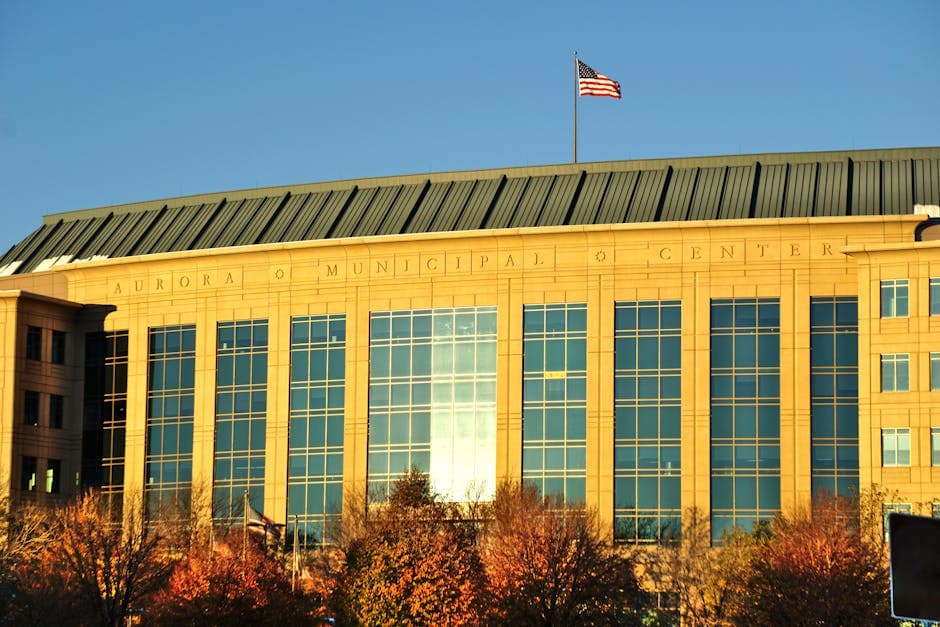
In the years since, the City of Aurora and the broader community have built and maintained a memorial: the 7/20 Memorial in Aurora Municipal Center grounds, designed in consultation with families of those lost. The Aurora Strong Resilience Center, opened with support from the Anschutz Foundation and other Colorado partners, has provided ongoing trauma-informed mental health services for survivors, first responders, and community members. Aurora Mental Health Center has carried the bulk of the long-term clinical care. The Aurora Sentinel and the Denver Post have continued to cover the recovery as a beat.
What that recovery has produced, alongside the grief, is a particular Aurora kind of civic care. Local restaurants have long participated in benefit nights, in scholarship dinners for survivors and family members, in fundraisers for the 7/20 Memorial Foundation, and in the community Thanksgiving and holiday catering programs that the Aurora Strong network organizes for first-responder families. None of this is marketing. It is a city continuing to be a city after a deep wound, and the food and beverage operators are part of how that continuing happens.
For a digital ordering platform, the relevance is small but real. A direct ordering channel that supports an operator's ability to dedicate a night, a menu item, or a recurring fundraising line item to a community recovery cause, with the proceeds routed cleanly through the operator's own books and not through a marketplace's withholding pipeline, is the channel that lets a restaurant be the kind of community neighbor Aurora has needed its restaurants to be. We say so here with care for the families who lost neighbors that summer night, and with deference to their ongoing memorial work.
Sources · City of Aurora 7/20 Memorial Foundation, Aurora Strong Resilience Center, Aurora Mental Health Center, Aurora Sentinel, Denver Post.
X. The Tax Stack
8.5 percent on prepared food. Three jurisdictions. One operator's books.
The combined sales tax on a prepared-food order in Aurora is roughly 8.5 percent, stacked across three layers. The Colorado Department of Revenue collects a state rate of 2.9 percent. The relevant county (Arapahoe for most of Aurora, Adams for the northern strip including the area around Stanley Marketplace, and a small piece of Douglas at the far south end) layers a county rate. The City of Aurora, under its home rule designation, collects a 3.75 percent municipal rate. The Regional Transportation District (RTD) and Scientific and Cultural Facilities District (SCFD) overlays bring the combined rate to roughly 8.5 percent depending on the precise parcel.
What that does to a restaurant's books, in operational terms, is impose a remittance discipline. The state portion is filed through Colorado Revenue Online on a monthly or quarterly schedule depending on volume. The Aurora municipal portion is filed separately through the Aurora Tax and Licensing Division. Arapahoe and Adams counties are state-collected, which simplifies things on the county side. But the operator is still managing two separate filings, two separate sets of deadlines, and two separate cash buckets that have to be kept ready against quarter-close.
Where marketplace platforms create operational risk is in the Colorado marketplace facilitator rules. Under SB19-006 and the subsequent CDOR guidance, the marketplace collects and remits sales tax on behalf of the operator for orders placed through the marketplace. The operator's tax workflow then becomes a reconciliation problem: are the marketplace's remittance records correct against the operator's books, and is the operator filing the right zero-amount returns to preserve the operator's standing with CDOR? Most operators we have spoken with describe this as the single most error-prone part of their monthly close.
On a direct ordering channel, the tax is collected and remitted by the operator on her own schedule, against her own CDOR account, with her own Aurora license number, on her own terms. Same-day Stripe payouts mean the cash to fund the remittance is in the operator's bank account the day the order is fulfilled. The operator funds the tax obligation from the order that created it, on a one-day cycle, not on a marketplace's weekly cadence. Across an event-week compression (a busy Anschutz catering week, a Buckley change-of-command stretch, a Cherry Creek State Park summer weekend), the working-capital difference compounds.
Sources · Colorado Department of Revenue, City of Aurora Tax and Licensing Division, Arapahoe County, Adams County.
XI. The Fit
The Aurora thesis, brought home to a single stack.
The argument of this report has been built one corridor at a time. Below: how the DirectOrders stack maps to each pressure point Aurora's operators actually feel. Flat $249 per month. Zero per-order commission. Multilingual Voice AI. Uber Direct dispatch at courier cost. Same-day Stripe payouts.
East Colfax
Voice AI in the operator's language.
Amharic, Somali, Spanish, Korean, Vietnamese, Russian, Arabic, Burmese. Detected at the first syllable. Code-switching mid-call. Dish vocabulary held in source language. Fasting-calendar aware. Polite-form aware.
Anschutz
Clean catering intake. Same-day Stripe.
Catering form for unit-lunch and department-meeting orders. Itemized allergens. Clean invoice to hospital accounts payable. Same-day payout means the operator funds Monday payroll out of Friday's catering.
Buckley
Government purchase card workflow.
GPC payment, structured invoice trail, fixed delivery windows that do not slide. Visitor control center pre-clearance fits the catering driver dispatch. Operator-controlled radius keeps Buckley deliveries in the kitchen's range.
Stanley Marketplace
Stall-level pickup with operator branding.
Hall operators keep their own brand on the ordering site under the Stanley umbrella. Pickup-at-stall workflow. Marketplace event calendar published alongside operator hours.
Cherry Creek State Park
Pickup-first weekend playbook.
Saturday and Sunday trail-traffic spike pattern. Pickup window selector. Voice AI takes the parking-lot call from the parent. Kitchen heat map shows the spike before it arrives.
The tax stack
Operator-remitted, same-day funded.
The operator's own CDOR account, the operator's own Aurora license number. Same-day Stripe means the cash to remit is in the operator's bank account the day the order is fulfilled. The marketplace reconciliation problem disappears.
Path 1
Start an Aurora store
Branded ordering site, multilingual Voice AI, Uber Direct dispatch, same-day Stripe. Onboarding for a typical Aurora independent runs about two hours from menu import to live order.
Begin onboarding →
Path 2
See the stack live
Nineteen-minute Zoom on an Aurora menu. Multilingual Voice AI on. Uber Direct integration on. Branded site live. Ask whatever you want.
Book the demo →
XII. Coda
Two suggestions for the Aurora operator.
Stand the platform up before the next Anschutz catering quarter.
Hospital procurement cycles run on a quarterly cadence. Build the branded site, configure the catering intake form, set the GPC and ACH payment rails, and have the Voice AI live by the start of the next quarter. The operator who is ready before the procurement officer goes shopping wins the catering ledger.
If you operate on East Colfax, audit the language coverage first.
Open the demo with the languages your phone actually receives. If the Voice AI does not handle Amharic or Somali or Vietnamese natively, you are not done. The Aurora operator's competitive advantage is the multilingual relationship the marketplace cannot reach.
References · This report drew from
20 sources
- US Census Bureau ACS · Population, household, language estimates
- Colorado State Demography Office · Colorado population, diversity composite indices
- Colorado Refugee Services Program · Refugee resettlement statistics, country of origin
- Migration Policy Institute · Migration profiles, US refugee admissions data
- Brookings Institution · Diversity indices, mid-sized US cities
- CU Anschutz Medical Campus · Workforce, campus size, three anchor institutions
- UCHealth · UCHealth University of Colorado Hospital
- Children's Hospital Colorado · Children's Hospital Colorado, pediatric referral region
- US Department of Veterans Affairs · Rocky Mountain Regional VA Medical Center
- Buckley SFB public affairs · Buckley Space Force Base, 460th Space Wing
- City of Aurora · City data, planning, neighborhoods, tax and licensing
- Aurora Economic Development Council · Aurora business climate, employer data
- Visit Aurora · Visitor counts, hotel data, event calendar
- Aurora Public Schools · Aurora-language student data, district services
- Colorado Parks and Wildlife · Cherry Creek State Park, Aurora Reservoir visitor counts
- Stanley Marketplace · Stanley Marketplace adaptive-reuse case study
- Aurora Sentinel · Local restaurant openings, neighborhood reporting
- Denver Post · Denver-metro restaurant coverage, Stanley + Aurora
- Colorado Department of Revenue · Colorado sales tax rates, marketplace facilitator rules
- City of Aurora / Aurora Strong · 7/20 Memorial Foundation, Aurora Strong Resilience Center